Mở bài
Chủ đề về ảnh hưởng của di sản văn hóa đến chương trình giảng dạy quốc gia là một trong những chủ đề xã hội – giáo dục thường xuyên xuất hiện trong kỳ thi IELTS Reading. Với tính chất đa chiều và liên ngành, đề tài này yêu cầu thí sinh không chỉ hiểu được nội dung bề mặt mà còn phải nắm bắt được các quan điểm, lập luận và mối liên hệ phức tạp giữa văn hóa truyền thống và hệ thống giáo dục hiện đại.
Trong bài viết này, bạn sẽ được làm quen với một đề thi IELTS Reading hoàn chỉnh gồm 3 passages với độ khó tăng dần từ Easy đến Hard. Đề thi được thiết kế dựa trên format chuẩn của Cambridge IELTS, bao gồm 40 câu hỏi đa dạng các dạng như Multiple Choice, True/False/Not Given, Matching Headings, Summary Completion và nhiều dạng khác.
Bên cạnh đề thi, bạn sẽ nhận được đáp án chi tiết kèm giải thích cụ thể về vị trí thông tin, kỹ thuật paraphrase và phương pháp làm bài hiệu quả. Phần từ vựng quan trọng được tổng hợp theo từng passage giúp bạn củng cố vốn từ học thuật cần thiết. Đề thi này phù hợp cho học viên từ band 5.0 trở lên, đặc biệt là những ai đang hướng tới band điểm 6.5-7.5.
1. Hướng dẫn làm bài IELTS Reading
Tổng Quan Về IELTS Reading Test
IELTS Reading Test kéo dài 60 phút với 3 passages và tổng cộng 40 câu hỏi. Mỗi câu trả lời đúng được tính 1 điểm, không có điểm âm nếu bạn trả lời sai. Điều quan trọng là phải phân bổ thời gian hợp lý cho từng passage:
- Passage 1 (Easy): 15-17 phút – Đây là passage dễ nhất với từ vựng và cấu trúc câu đơn giản, thông tin rõ ràng
- Passage 2 (Medium): 18-20 phút – Độ khó tăng lên với từ vựng học thuật và yêu cầu hiểu sâu hơn
- Passage 3 (Hard): 23-25 phút – Passage khó nhất với nội dung phức tạp, yêu cầu kỹ năng phân tích và suy luận cao
Lưu ý dành 2-3 phút cuối để chuyển đáp án vào Answer Sheet. Trong bài thi thật, bạn không có thêm thời gian cho việc này.
Các Dạng Câu Hỏi Trong Đề Này
Đề thi mẫu này bao gồm 7 dạng câu hỏi phổ biến trong IELTS Reading:
- Multiple Choice – Câu hỏi trắc nghiệm với 3-4 lựa chọn
- True/False/Not Given – Xác định thông tin đúng, sai hay không được đề cập
- Matching Headings – Nối tiêu đề phù hợp với các đoạn văn
- Sentence Completion – Hoàn thành câu với từ trong bài đọc
- Summary Completion – Hoàn thành đoạn tóm tắt
- Matching Features – Nối thông tin với các đặc điểm được liệt kê
- Short-answer Questions – Trả lời ngắn dựa trên thông tin trong bài
2. IELTS Reading Practice Test
PASSAGE 1 – Cultural Heritage in Primary Education
Độ khó: Easy (Band 5.0-6.5)
Thời gian đề xuất: 15-17 phút
The incorporation of cultural heritage into national educational curriculums has become increasingly important in the 21st century. As globalisation continues to shape societies worldwide, many countries have recognised the need to preserve their unique cultural identities through formal education. This trend reflects a growing awareness that cultural knowledge forms an essential foundation for children’s understanding of their place in the world.
In elementary schools across various nations, teachers are now integrating traditional stories, folk songs, and historical narratives into daily lessons. These cultural elements serve multiple purposes beyond simple entertainment. Research conducted by the International Education Foundation in 2019 showed that students who learned about their cultural background in school demonstrated higher levels of self-esteem and stronger community connections. The study, which involved over 5,000 students from 15 countries, found that cultural education helped children develop a sense of belonging and pride in their heritage.
Traditional crafts represent another significant component of culturally-informed education. In Japan, for instance, primary school children learn origami (paper folding) as part of their art curriculum. This practice not only develops fine motor skills but also connects students to centuries of Japanese artistic tradition. Similarly, in Mexico, schools teach students about traditional pottery techniques that have been passed down through generations. These hands-on activities allow children to experience their cultural heritage in a tangible and meaningful way.
The benefits of cultural heritage education extend to language development as well. Many countries with indigenous populations have introduced native language programmes into their primary curriculums. In New Zealand, the Māori language has been incorporated into mainstream education, with students learning both English and Te Reo Māori. This bilingual approach has proven successful in revitalising endangered languages while providing students with a deeper understanding of their country’s colonial history and indigenous cultures.
However, implementing cultural heritage programmes is not without challenges. Teachers often require specialised training to deliver culturally sensitive content effectively. In some regions, there is also debate about which aspects of cultural heritage should be prioritised in an already crowded curriculum. Educational authorities must balance the need to teach fundamental academic skills like mathematics and literacy with the desire to pass on cultural knowledge.
Despite these obstacles, the trend towards culturally-responsive education shows no signs of slowing. A 2021 survey by the Global Education Network found that 78% of parents believed schools should teach more about local cultural traditions. This parental support has encouraged many governments to expand their cultural education initiatives. Some countries have even made cultural heritage studies a compulsory subject from primary through secondary school.
The impact of these programmes can be observed in student behaviour and attitudes. Teachers report that lessons incorporating cultural elements generate higher levels of engagement than traditional teaching methods. Students show particular enthusiasm when elderly community members visit classrooms to share personal stories and demonstrate traditional skills. These intergenerational exchanges enrich the learning experience and create meaningful connections between young people and their cultural roots.
Looking ahead, technology is opening new possibilities for cultural heritage education. Virtual reality programmes now allow students to explore historical sites and experience traditional ceremonies without leaving the classroom. Digital archives make it easier for teachers to access authentic cultural materials, including historical photographs, traditional music recordings, and oral history collections. These technological tools complement rather than replace hands-on cultural experiences, providing students with multiple ways to engage with their heritage.
Questions 1-13
Questions 1-5: Multiple Choice
Choose the correct letter, A, B, C or D.
1. According to the passage, why have countries started including cultural heritage in their curriculums?
A. To improve students’ academic performance
B. To maintain cultural identity in a globalised world
C. To attract more international students
D. To reduce education costs
2. The 2019 study by the International Education Foundation found that cultural education helped students develop:
A. Better mathematical skills
B. Foreign language abilities
C. A sense of belonging
D. Scientific knowledge
3. In Japan, origami is taught in schools primarily to:
A. Prepare students for art careers
B. Connect students to Japanese tradition
C. Replace other art subjects
D. Compete with other countries
4. According to the passage, what percentage of parents supported teaching local cultural traditions?
A. 68%
B. 72%
C. 78%
D. 85%
5. Virtual reality programmes in cultural education are described as:
A. Replacing hands-on experiences
B. Too expensive for most schools
C. Complementing traditional methods
D. Less effective than textbooks
Questions 6-9: True/False/Not Given
Do the following statements agree with the information in the passage?
Write:
- TRUE if the statement agrees with the information
- FALSE if the statement contradicts the information
- NOT GIVEN if there is no information on this
6. The study on cultural education involved students from more than twenty countries.
7. Mexican schools teach traditional pottery techniques as part of their curriculum.
8. All teachers find it easy to deliver culturally sensitive content.
9. Students show more interest in lessons that include cultural elements.
Questions 10-13: Sentence Completion
Complete the sentences below.
Choose NO MORE THAN TWO WORDS from the passage for each answer.
10. In New Zealand, students learn both English and __ as part of a bilingual approach.
11. Educational authorities must balance teaching fundamental academic skills with passing on __.
12. Teachers report higher levels of __ when lessons incorporate cultural elements.
13. Digital archives provide teachers with easier access to __ for their lessons.
PASSAGE 2 – The Role of Cultural Heritage in Shaping National Identity
Độ khó: Medium (Band 6.0-7.5)
Thời gian đề xuất: 18-20 phút
The integration of cultural heritage into national educational frameworks represents far more than a simple pedagogical choice; it constitutes a strategic mechanism through which nations construct and reinforce collective identity. Educational systems have long served as instruments of nation-building, and the deliberate inclusion of culturally-specific content in curriculums reflects complex political, social, and historical considerations. This phenomenon has intensified in recent decades as countries grapple with the dual challenges of preserving distinctive cultural characteristics while preparing students for an increasingly interconnected global economy.
Historical analysis reveals that the relationship between cultural heritage and formal education has evolved significantly over time. During the colonial era, imperial powers often imposed their own educational systems on colonised territories, systematically suppressing indigenous knowledge systems and traditional learning practices. The post-colonial period witnessed a dramatic reversal of this trend, as newly independent nations sought to reclaim and revitalise their cultural identities through education. Countries such as Kenya, India, and Indonesia undertook comprehensive curriculum reforms aimed at decolonising education and recentring indigenous perspectives.
Contemporary approaches to cultural heritage education vary considerably across different national contexts. In Scandinavia, the concept of “folkbildning” (popular education) emphasises the transmission of cultural values through both formal schooling and community-based learning initiatives. This approach integrates traditional crafts, folk music, and historical narratives into a holistic educational philosophy that values continuity with the past while encouraging critical engagement with cultural traditions. The Nordic model demonstrates how cultural heritage education can be structured to promote both preservation and progressive social development.
Asian nations have adopted notably diverse strategies for incorporating cultural content into their educational systems. In China, the curriculum reform initiated in 2001 placed increased emphasis on traditional Chinese culture, including classical literature, calligraphy, and Confucian philosophy. This shift represented a conscious effort to counterbalance the perceived Westernisation of Chinese society and to cultivate national pride among younger generations. Similarly, South Korea’s “Hallyu” (Korean Wave) phenomenon has been supported by educational policies that promote Korean language, traditional arts, and historical awareness, both domestically and internationally.
The implementation of culturally-informed curriculums raises important questions about representation and inclusion. In multicultural societies, determining whose cultural heritage receives curricular emphasis can become a contentious political issue. Canada’s experience with indigenous education illustrates these challenges. Following the Truth and Reconciliation Commission’s recommendations, Canadian schools have begun incorporating First Nations, Métis, and Inuit perspectives into mainstream education. However, this process has required extensive consultation, teacher training programmes, and the development of culturally appropriate materials, highlighting the complexity of equitable cultural representation in education.
Research on the cognitive and social outcomes of cultural heritage education has produced compelling findings. A longitudinal study conducted by researchers at the University of Melbourne tracked 3,200 students over five years, examining the relationship between cultural curriculum content and various developmental indicators. The study found that students exposed to systematic cultural education demonstrated enhanced critical thinking skills, greater cultural competency, and improved cross-cultural communication abilities. Interestingly, these benefits extended beyond students from the dominant cultural group to include those from minority backgrounds, suggesting that well-designed cultural education can foster inclusive national identities.
Critics of cultural heritage education raise several substantive concerns. Some educators argue that an excessive focus on traditional cultural content may inadequately prepare students for the demands of modern professions and global citizenship. There are also concerns about cultural essentialism – the tendency to present cultures as static, homogeneous entities rather than as dynamic, contested, and internally diverse phenomena. Educational theorist Dr. Amara Okonkwo argues that effective cultural heritage education must avoid romanticising the past while encouraging students to critically examine how cultural traditions have evolved and continue to shape contemporary society.
The digital transformation of education has created new opportunities and challenges for cultural heritage pedagogy. Online platforms and digital repositories have made vast collections of cultural materials accessible to educators and students worldwide. The Europeana project, for instance, provides free access to millions of digitised cultural objects from European museums, libraries, and archives. However, the democratisation of access to cultural materials raises questions about intellectual property, cultural appropriation, and the authority to interpret and teach cultural content. Indigenous communities, in particular, have expressed concerns about the unauthorised use of sacred knowledge and culturally sensitive materials in educational settings.
Looking forward, the challenge for educational policymakers lies in developing culturally-informed curriculums that honour diverse heritages while fostering shared national values and preparing students for global citizenship. This requires moving beyond simplistic notions of cultural preservation towards more sophisticated understandings of how cultural knowledge can inform contemporary education. The most successful approaches will likely be those that treat cultural heritage not as a fixed body of content to be transmitted but as a dynamic resource for critical thinking, identity formation, and social cohesion.
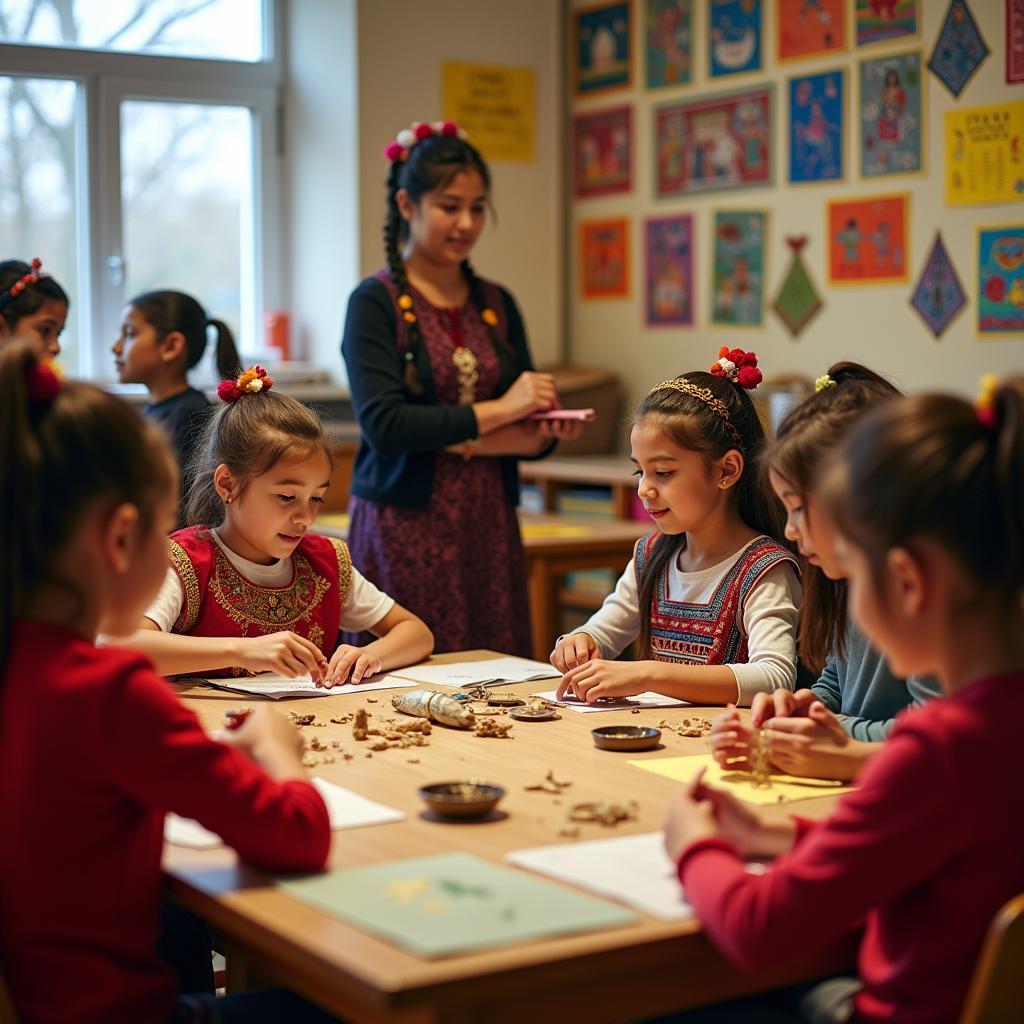 Học sinh tìm hiểu di sản văn hóa dân tộc qua các hoạt động giáo dục thực hành trong lớp học
Questions 14-26
Questions 14-18: Yes/No/Not Given
Do the following statements agree with the claims of the writer?
Write:
- YES if the statement agrees with the claims of the writer
- NO if the statement contradicts the claims of the writer
- NOT GIVEN if it is impossible to say what the writer thinks about this
14. Colonial powers encouraged the preservation of indigenous knowledge systems in their territories.
15. The Nordic model of cultural education successfully combines preservation with progressive development.
16. China’s 2001 curriculum reform was partly motivated by concerns about Western influence.
17. All multicultural societies experience political disputes over cultural representation in education.
18. Dr. Amara Okonkwo believes cultural traditions should not be examined critically.
Questions 19-22: Matching Headings
The passage has eight paragraphs (1-8). Choose the correct heading for paragraphs 3, 5, 6, and 7 from the list of headings below.
List of Headings:
i. Digital innovations in cultural education
ii. The colonial legacy in education systems
iii. Concerns about traditional cultural content
iv. Scandinavian approaches to cultural learning
v. Research findings on educational outcomes
vi. Challenges of multicultural representation
vii. The future of cultural heritage education
viii. Asian perspectives on curriculum design
19. Paragraph 3
20. Paragraph 5
21. Paragraph 6
22. Paragraph 7
Questions 23-26: Summary Completion
Complete the summary below.
Choose NO MORE THAN TWO WORDS from the passage for each answer.
The University of Melbourne conducted a study tracking over 3,000 students for 23. __ to examine the effects of cultural education. Students who received systematic cultural education showed improved 24. __ skills and better cross-cultural communication. These benefits were observed not only in students from the dominant group but also those from 25. __ backgrounds. The findings suggest that properly designed cultural education can help create 26. __ national identities.
PASSAGE 3 – The Dialectic Between Cultural Preservation and Educational Innovation
Độ khó: Hard (Band 7.0-9.0)
Thời gian đề xuất: 23-25 phút
The contemporary discourse surrounding the incorporation of cultural heritage into national educational curriculums has evolved into a sophisticated theoretical debate that transcends simplistic dichotomies between tradition and modernity. Educational scholars increasingly recognise that the question is not whether cultural content should be included in formal education, but rather how such integration can be accomplished in ways that are both pedagogically sound and socially transformative. This epistemological shift reflects broader changes in our understanding of cultural knowledge systems and their relationship to formal educational structures.
At the heart of this debate lies a fundamental tension between what educational theorist Pierre Bourdieu termed “cultural capital” and the democratising aspirations of modern educational systems. Bourdieu’s framework illuminates how educational institutions can simultaneously preserve and legitimate the cultural knowledge of dominant social groups while marginalising alternative knowledge traditions. When applied to the context of cultural heritage education, this analysis reveals the inherent political dimensions of curricular choices: decisions about which cultural elements to include, how they should be taught, and whose interpretations should be privileged inevitably reflect and reinforce particular power structures within society.
The postcolonial critique of Western-centric educational models has profoundly influenced contemporary approaches to cultural heritage curriculum development. Scholars such as Ngũgĩ wa Thiong’o and Linda Tuhiwai Smith have compellingly argued that the decolonisation of education requires more than the mere addition of indigenous content to existing curricular frameworks. Instead, they advocate for fundamental reconceptualisation of epistemological foundations – challenging the very assumptions about what constitutes legitimate knowledge, how learning should occur, and what purposes education should serve. This radical perspective has gained considerable traction in post-colonial contexts, where educational systems inherited from colonial administrations continue to privilege European languages, pedagogical methods, and knowledge paradigms.
Recent neuropsychological research has added an intriguing dimension to discussions about cultural heritage education. Studies utilising functional magnetic resonance imaging (fMRI) have demonstrated that exposure to culturally familiar stimuli activates distinct neural networks compared to culturally unfamiliar materials. Research conducted by Dr. Shinobu Kitayama at the University of Michigan revealed that participants from collectivist cultures showed enhanced neural activity in regions associated with social cognition when viewing culturally congruent scenarios, while those from individualist cultures exhibited greater activation in areas linked to autonomous processing. These findings suggest that cultural heritage education may operate at a neurological level, potentially influencing not merely explicit knowledge but fundamental cognitive processing patterns.
The implementation challenges associated with culturally-responsive pedagogy extend far beyond resource allocation and teacher training, encompassing deeper questions about epistemological authority and pedagogical authenticity. Who possesses the legitimate authority to teach cultural content? Must educators themselves be members of the cultural community whose heritage they teach? These questions have proven particularly vexing in contexts where cultural knowledge has traditionally been transmitted through oral traditions, experiential learning, and community-based initiation practices that resist translation into formal classroom settings. The Māori concept of “whakapapa” (genealogical connections), for instance, represents a holistic knowledge system that links personal identity, ancestral relationships, and spiritual understanding in ways that challenge compartmentalised disciplinary structures typical of Western educational institutions.
Comparative analysis of national approaches to cultural heritage education reveals fascinating variations that reflect divergent conceptualisations of the relationship between cultural particularity and universal human values. The French republican model, grounded in principles of laïcité (secularism) and universal citizenship, has traditionally resisted the explicit incorporation of particular cultural identities into public education, viewing such differentiation as potentially divisive and contrary to egalitarian ideals. In contrast, the Canadian multiculturalism model explicitly celebrates cultural diversity as a defining national characteristic, with educational policies designed to accommodate and promote multiple cultural traditions within a pluralistic framework. Meanwhile, nations such as Singapore have developed hybrid approaches that seek to balance shared national narratives with the recognition of constituent ethnic communities – Chinese, Malay, Indian, and others – each with distinct cultural heritage education requirements.
The assessment and evaluation of cultural heritage learning presents unique methodological challenges that have profound implications for curricular implementation. Traditional standardised testing methodologies, with their emphasis on measurable outcomes and comparative ranking, sit uncomfortably with cultural knowledge that may be experiential, context-dependent, and resistant to quantification. Some educators have advocated for alternative assessment approaches, including portfolio-based evaluation, community-engaged projects, and performance-based demonstrations that allow students to demonstrate cultural competency in more authentic contexts. However, such alternative methodologies raise concerns about reliability, validity, and comparability – particularly in high-stakes educational environments where assessment outcomes influence university admissions and career opportunities.
The globalisation of educational standards through initiatives such as the Programme for International Student Assessment (PISA) has created additional pressures on national educational systems to balance cultural particularity with international comparability. The PISA framework, which emphasises universal competencies in mathematics, reading, and scientific literacy, has been criticised for promoting a homogenised global curriculum that undervalues culturally-specific knowledge and skills. Paradoxically, while national governments increasingly emphasise cultural heritage education in policy discourse, the actual curricular time and resources devoted to such content may be constrained by pressures to improve performance on international assessments that do not measure cultural knowledge.
Looking toward the future, several emerging trends are likely to shape the evolution of cultural heritage education. Artificial intelligence and machine learning technologies are being employed to create adaptive learning systems that can personalise cultural content based on students’ individual backgrounds and learning preferences. Augmented reality applications are enabling students to experience historical environments and cultural practices with unprecedented immersion and interactivity. However, these technological innovations also raise important questions about algorithmic bias, digital divides, and the potential for technology to further commodify and decontextualise cultural knowledge.
The theoretical sophistication of contemporary cultural heritage education also reflects growing recognition that cultures are not static repositories of unchanging traditions but rather dynamic systems constantly being negotiated, contested, and reimagined by their practitioners. This perspective, influenced by cultural anthropology and postmodern theory, suggests that effective cultural heritage education should emphasise not merely the transmission of established knowledge but the development of critical capacities to engage, interpret, and participate in ongoing cultural production. Such an approach views students not as passive recipients of cultural traditions but as active agents capable of contributing to the evolution of their cultural heritage in contemporary contexts.
Ultimately, the challenge of integrating cultural heritage into national curriculums reflects broader questions about the purposes of education in democratic societies. Can educational systems simultaneously prepare students for economic productivity, cultivate critical citizenship, honour diverse cultural traditions, and promote social cohesion? The answer likely depends on our willingness to move beyond instrumental conceptions of education towards more holistic visions that recognise cultural knowledge as integral to human flourishing rather than merely as an instrumental resource for economic development or nation-building. The most promising approaches will be those that embrace complexity, resist reductionism, and recognise that cultural heritage education represents not a departure from rigorous academic learning but an enrichment that makes education more meaningful, relevant, and ultimately more effective.
 Giáo viên hướng dẫn học sinh khám phá di sản văn hóa truyền thống thông qua công nghệ hiện đại và phương pháp giảng dạy sáng tạo
Questions 27-40
Questions 27-31: Multiple Choice
Choose the correct letter, A, B, C or D.
27. According to the passage, the contemporary debate about cultural heritage in education focuses on:
A. Whether cultural content should be included at all
B. How cultural integration can be both sound and transformative
C. The costs of implementing cultural programmes
D. Which countries have the best cultural education systems
28. Bourdieu’s concept of “cultural capital” is used to explain:
A. The economic benefits of cultural education
B. How education can marginalise alternative knowledge traditions
C. Why some cultures are superior to others
D. The relationship between wealth and education
29. The postcolonial critique argues that decolonising education requires:
A. Adding indigenous content to existing frameworks
B. Translating Western materials into local languages
C. Fundamental reconceptualisation of epistemological foundations
D. Reducing the number of subjects taught
30. The fMRI research by Dr. Shinobu Kitayama suggests that cultural heritage education:
A. Is less effective than traditional teaching methods
B. May influence fundamental cognitive processing patterns
C. Only works in collectivist cultures
D. Should be avoided in modern curriculums
31. The PISA framework has been criticised for:
A. Being too expensive to implement
B. Focusing too much on cultural knowledge
C. Promoting a homogenised global curriculum
D. Excluding mathematics and science
Questions 32-36: Matching Features
Match each country/region with the correct characteristic of their approach to cultural heritage education.
Choose the correct letter, A-G.
Countries/Regions:
32. France
33. Canada
34. Singapore
35. Scandinavia
36. New Zealand (Māori context)
Characteristics:
A. Emphasises universal citizenship and resists particular cultural identities
B. Uses experiential learning and community-based practices
C. Explicitly celebrates cultural diversity as a national characteristic
D. Integrates traditional crafts through popular education
E. Balances shared narratives with recognition of ethnic communities
F. Focuses exclusively on indigenous languages
G. Rejects all forms of cultural education
Questions 37-40: Short-answer Questions
Answer the questions below.
Choose NO MORE THAN THREE WORDS from the passage for each answer.
37. What type of testing methodology sits uncomfortably with cultural knowledge that is experiential and context-dependent?
38. What kind of applications enable students to experience historical environments with unprecedented immersion?
39. According to contemporary perspectives, cultures are described as dynamic systems that are constantly being negotiated, contested, and what?
40. The passage suggests that cultural knowledge should be viewed as integral to human __ rather than merely an instrumental resource.
3. Answer Keys – Đáp Án
PASSAGE 1: Questions 1-13
- B
- C
- B
- C
- C
- FALSE
- TRUE
- FALSE
- TRUE
- Te Reo Māori
- cultural knowledge
- engagement
- authentic cultural materials (hoặc cultural materials)
PASSAGE 2: Questions 14-26
- NO
- YES
- YES
- NOT GIVEN
- NO
- iv
- vi
- v
- iii
- five years
- critical thinking
- minority
- inclusive
PASSAGE 3: Questions 27-40
- B
- B
- C
- B
- C
- A
- C
- E
- D
- B
- standardised testing methodologies (hoặc standardised testing)
- augmented reality applications (hoặc augmented reality)
- reimagined
- flourishing
4. Giải Thích Đáp Án Chi Tiết
Passage 1 – Giải Thích
Câu 1: B
- Dạng câu hỏi: Multiple Choice
- Từ khóa: countries, started including, cultural heritage, curriculums
- Vị trí trong bài: Đoạn 1, dòng 1-4
- Giải thích: Câu đầu tiên của passage nói rõ “As globalisation continues to shape societies worldwide, many countries have recognised the need to preserve their unique cultural identities through formal education.” Điều này được paraphrase thành “maintain cultural identity in a globalised world” ở đáp án B.
Câu 2: C
- Dạng câu hỏi: Multiple Choice
- Từ khóa: 2019 study, International Education Foundation, cultural education
- Vị trí trong bài: Đoạn 2, dòng 4-6
- Giải thích: Nghiên cứu “found that cultural education helped children develop a sense of belonging and pride in their heritage.” “Sense of belonging” chính là đáp án C.
Câu 6: FALSE
- Dạng câu hỏi: True/False/Not Given
- Từ khóa: study, students, more than twenty countries
- Vị trí trong bài: Đoạn 2, dòng 3-4
- Giải thích: Bài đọc nói “The study, which involved over 5,000 students from 15 countries” – chỉ 15 quốc gia, không phải hơn 20, do đó là FALSE.
Câu 10: Te Reo Māori
- Dạng câu hỏi: Sentence Completion
- Từ khóa: New Zealand, students learn, English, bilingual approach
- Vị trí trong bài: Đoạn 4, dòng 4-5
- Giải thích: “students learning both English and Te Reo Māori” – đáp án là Te Reo Māori, tên tiếng Māori.
Câu 13: authentic cultural materials
- Dạng câu hỏi: Sentence Completion
- Từ khóa: Digital archives, teachers, easier access
- Vị trí trong bài: Đoạn 8, dòng 3-4
- Giải thích: “Digital archives make it easier for teachers to access authentic cultural materials” – cụm từ cần điền là “authentic cultural materials” hoặc có thể chỉ “cultural materials” cũng được chấp nhận.
Passage 2 – Giải Thích
Câu 14: NO
- Dạng câu hỏi: Yes/No/Not Given
- Từ khóa: Colonial powers, encouraged, preservation, indigenous knowledge systems
- Vị trí trong bài: Đoạn 2, dòng 2-4
- Giải thích: Bài viết nói rõ “imperial powers often imposed their own educational systems on colonised territories, systematically suppressing indigenous knowledge systems” – họ đàn áp chứ không khuyến khích, do đó đáp án là NO.
Câu 15: YES
- Dạng câu hỏi: Yes/No/Not Given
- Từ khóa: Nordic model, cultural education, preservation, progressive development
- Vị trí trong bài: Đoạn 3, dòng cuối
- Giải thích: “The Nordic model demonstrates how cultural heritage education can be structured to promote both preservation and progressive social development” – khớp hoàn toàn với câu hỏi, đáp án YES.
Câu 19: iv
- Dạng câu hỏi: Matching Headings
- Vị trí: Đoạn 3
- Giải thích: Đoạn 3 bắt đầu bằng “Contemporary approaches to cultural heritage education vary considerably” và tập trung vào Scandinavia với khái niệm “folkbildning”. Tiêu đề phù hợp nhất là “iv. Scandinavian approaches to cultural learning”.
Câu 23: five years
- Dạng câu hỏi: Summary Completion
- Từ khóa: University of Melbourne, study, tracking, students
- Vị trí trong bài: Đoạn 6, dòng 2
- Giải thích: “A longitudinal study conducted by researchers at the University of Melbourne tracked 3,200 students over five years” – đáp án là “five years”.
Câu 26: inclusive
- Dạng câu hỏi: Summary Completion
- Từ khóa: well-designed cultural education, foster, national identities
- Vị trí trong bài: Đoạn 6, dòng cuối
- Giải thích: “well-designed cultural education can foster inclusive national identities” – từ cần điền là “inclusive”.
Passage 3 – Giải Thích
Câu 27: B
- Dạng câu hỏi: Multiple Choice
- Từ khóa: contemporary debate, cultural heritage, education, focuses on
- Vị trí trong bài: Đoạn 1, dòng 2-4
- Giải thích: “the question is not whether cultural content should be included in formal education, but rather how such integration can be accomplished in ways that are both pedagogically sound and socially transformative” – đáp án B paraphrase chính xác ý này.
Câu 28: B
- Dạng câu hỏi: Multiple Choice
- Từ khóa: Bourdieu’s, cultural capital, used to explain
- Vị trí trong bài: Đoạn 2, dòng 3-6
- Giải thích: “Bourdieu’s framework illuminates how educational institutions can simultaneously preserve and legitimate the cultural knowledge of dominant social groups while marginalising alternative knowledge traditions” – đáp án B chính xác.
Câu 32: A
- Dạng câu hỏi: Matching Features
- Từ khóa: France
- Vị trí trong bài: Đoạn 6, dòng 2-4
- Giải thích: “The French republican model, grounded in principles of laïcité (secularism) and universal citizenship, has traditionally resisted the explicit incorporation of particular cultural identities into public education” – khớp với đặc điểm A.
Câu 37: standardised testing methodologies
- Dạng câu hỏi: Short-answer Questions
- Từ khóa: testing methodology, sits uncomfortably, cultural knowledge, experiential, context-dependent
- Vị trí trong bài: Đoạn 7, dòng 1-3
- Giải thích: “Traditional standardised testing methodologies, with their emphasis on measurable outcomes and comparative ranking, sit uncomfortably with cultural knowledge that may be experiential, context-dependent” – đáp án là “standardised testing methodologies” hoặc “standardised testing”.
Câu 40: flourishing
- Dạng câu hỏi: Short-answer Questions
- Từ khóa: cultural knowledge, integral to human
- Vị trí trong bài: Đoạn 10, dòng 4-6
- Giải thích: “towards more holistic visions that recognise cultural knowledge as integral to human flourishing rather than merely as an instrumental resource” – từ cần điền là “flourishing”.
5. Từ Vựng Quan Trọng Theo Passage
Passage 1 – Essential Vocabulary
| Từ vựng | Loại từ | Phiên âm | Nghĩa tiếng Việt | Ví dụ từ bài | Collocation |
|---|---|---|---|---|---|
| cultural heritage | n | /ˈkʌltʃərəl ˈherɪtɪdʒ/ | di sản văn hóa | The incorporation of cultural heritage into national educational curriculums | preserve cultural heritage, protect cultural heritage |
| globalisation | n | /ˌɡləʊbəlaɪˈzeɪʃən/ | toàn cầu hóa | As globalisation continues to shape societies worldwide | rapid globalisation, economic globalisation |
| preserve | v | /prɪˈzɜːv/ | bảo tồn, giữ gìn | preserve their unique cultural identities | preserve traditions, preserve customs |
| integrate | v | /ˈɪntɪɡreɪt/ | hòa nhập, tích hợp | teachers are now integrating traditional stories | integrate into curriculum, fully integrated |
| self-esteem | n | /ˌself ɪˈstiːm/ | lòng tự trọng | higher levels of self-esteem | boost self-esteem, low self-esteem |
| tangible | adj | /ˈtændʒəbl/ | hữu hình, cụ thể | experience their cultural heritage in a tangible way | tangible results, tangible benefits |
| indigenous | adj | /ɪnˈdɪdʒənəs/ | bản địa, thổ dân | countries with indigenous populations | indigenous people, indigenous culture |
| bilingual | adj | /baɪˈlɪŋɡwəl/ | song ngữ | This bilingual approach has proven successful | bilingual education, bilingual speaker |
| revitalising | v | /ˌriːˈvaɪtəlaɪzɪŋ/ | phục hồi, làm sống lại | revitalising endangered languages | revitalising economy, revitalising community |
| crowded curriculum | n phrase | /ˈkraʊdɪd kəˈrɪkjələm/ | chương trình học quá tải | in an already crowded curriculum | overloaded curriculum, packed curriculum |
| intergenerational | adj | /ˌɪntədʒenəˈreɪʃənl/ | liên thế hệ | These intergenerational exchanges | intergenerational dialogue, intergenerational learning |
| virtual reality | n | /ˌvɜːtʃuəl riˈæləti/ | thực tế ảo | Virtual reality programmes now allow students | virtual reality technology, VR headset |
Passage 2 – Essential Vocabulary
| Từ vựng | Loại từ | Phiên âm | Nghĩa tiếng Việt | Ví dụ từ bài | Collocation |
|---|---|---|---|---|---|
| pedagogical | adj | /ˌpedəˈɡɒdʒɪkl/ | thuộc sư phạm | more than a simple pedagogical choice | pedagogical approach, pedagogical methods |
| strategic mechanism | n phrase | /strəˈtiːdʒɪk ˈmekənɪzəm/ | cơ chế chiến lược | constitutes a strategic mechanism | implement a mechanism, strategic planning |
| collective identity | n phrase | /kəˈlektɪv aɪˈdentəti/ | bản sắc tập thể | construct and reinforce collective identity | shared identity, national identity |
| systematically | adv | /ˌsɪstəˈmætɪkli/ | một cách có hệ thống | systematically suppressing indigenous knowledge | systematically review, systematically implement |
| post-colonial | adj | /pəʊst kəˈləʊniəl/ | hậu thuộc địa | The post-colonial period witnessed | post-colonial literature, post-colonial era |
| comprehensive | adj | /ˌkɒmprɪˈhensɪv/ | toàn diện | comprehensive curriculum reforms | comprehensive study, comprehensive plan |
| holistic | adj | /həʊˈlɪstɪk/ | toàn diện, tổng thể | holistic educational philosophy | holistic approach, holistic view |
| counterbalance | v | /ˈkaʊntəbæləns/ | cân bằng, đối trọng | to counterbalance the perceived Westernisation | counterbalance the effects, counterbalance criticism |
| contentious | adj | /kənˈtenʃəs/ | gây tranh cãi | can become a contentious political issue | contentious issue, contentious debate |
| longitudinal study | n phrase | /ˌlɒndʒɪˈtjuːdɪnl ˈstʌdi/ | nghiên cứu dọc | A longitudinal study conducted by researchers | conduct longitudinal study, longitudinal research |
| cultural competency | n phrase | /ˈkʌltʃərəl ˈkɒmpɪtənsi/ | năng lực văn hóa | greater cultural competency | develop competency, cultural awareness |
| essentialism | n | /ɪˈsenʃəlɪzəm/ | chủ nghĩa bản chất | concerns about cultural essentialism | biological essentialism, avoid essentialism |
| democratisation | n | /dɪˌmɒkrətaɪˈzeɪʃən/ | dân chủ hóa | The democratisation of access to cultural materials | democratisation of education, political democratisation |
| cultural appropriation | n phrase | /ˈkʌltʃərəl əˌprəʊpriˈeɪʃən/ | chiếm dụng văn hóa | raises questions about cultural appropriation | avoid appropriation, cultural sensitivity |
| social cohesion | n phrase | /ˈsəʊʃl kəʊˈhiːʒn/ | sự gắn kết xã hội | identity formation and social cohesion | promote cohesion, strengthen cohesion |
Passage 3 – Essential Vocabulary
| Từ vựng | Loại từ | Phiên âm | Nghĩa tiếng Việt | Ví dụ từ bài | Collocation |
|---|---|---|---|---|---|
| dialectic | n | /ˌdaɪəˈlektɪk/ | biện chứng | The dialectic between cultural preservation | dialectic relationship, dialectic process |
| epistemological | adj | /ɪˌpɪstɪməˈlɒdʒɪkl/ | nhận thức luận | This epistemological shift reflects | epistemological foundations, epistemological perspective |
| dichotomies | n | /daɪˈkɒtəmiz/ | sự phân đôi | transcends simplistic dichotomies | false dichotomies, binary dichotomies |
| pedagogically sound | adj phrase | /ˌpedəˈɡɒdʒɪkli saʊnd/ | vững về mặt sư phạm | pedagogically sound and socially transformative | educationally sound, methodologically sound |
| transformative | adj | /trænsˈfɔːmətɪv/ | mang tính chuyển đổi | socially transformative | transformative change, transformative learning |
| marginalising | v | /ˈmɑːdʒɪnəlaɪzɪŋ/ | gạt ra ngoài lề | marginalising alternative knowledge traditions | marginalising minority groups, marginalising voices |
| postcolonial critique | n phrase | /pəʊstkəˈləʊniəl krɪˈtiːk/ | phê phán hậu thực dân | The postcolonial critique of Western-centric models | critical theory, postcolonial studies |
| decolonisation | n | /diːˌkɒlənaɪˈzeɪʃən/ | phi thực dân hóa | the decolonisation of education requires | decolonisation movement, cultural decolonisation |
| fMRI | n | /ef em ɑːr aɪ/ | chụp cộng hưởng từ chức năng | Studies utilising functional magnetic resonance imaging | fMRI scan, fMRI study |
| collectivist cultures | n phrase | /kəˈlektɪvɪst ˈkʌltʃəz/ | văn hóa tập thể | participants from collectivist cultures | individualist vs collectivist, cultural orientation |
| epistemological authority | n phrase | /ɪˌpɪstɪməˈlɒdʒɪkl ɔːˈθɒrəti/ | quyền nhận thức luận | questions about epistemological authority | intellectual authority, academic authority |
| pedagogical authenticity | n phrase | /ˌpedəˈɡɒdʒɪkl ˌɔːθenˈtɪsəti/ | tính xác thực sư phạm | pedagogical authenticity | authentic learning, cultural authenticity |
| oral traditions | n phrase | /ˈɔːrəl trəˈdɪʃnz/ | truyền thống truyền miệng | transmitted through oral traditions | oral history, oral literature |
| compartmentalised | adj | /ˌkɒmpɑːtˈmentəlaɪzd/ | được chia thành nhiều ngăn | compartmentalised disciplinary structures | compartmentalised thinking, segmented approach |
| laïcité | n | /laɪɪˈsiːteɪ/ | chủ nghĩa thế tục (Pháp) | grounded in principles of laïcité (secularism) | French laïcité, secular principles |
| algorithmic bias | n phrase | /ˌælɡəˈrɪðmɪk ˈbaɪəs/ | thiên lệch thuật toán | raise important questions about algorithmic bias | data bias, technological bias |
| commodify | v | /kəˈmɒdɪfaɪ/ | hàng hóa hóa | further commodify and decontextualise | commodify culture, commodify education |
| instrumental conceptions | n phrase | /ˌɪnstrəˈmentl kənˈsepʃnz/ | quan niệm công cụ | move beyond instrumental conceptions of education | instrumental value, utilitarian approach |
 Tài liệu ôn thi IELTS Reading chủ đề ảnh hưởng của di sản văn hóa đến chương trình giáo dục quốc gia với đáp án chi tiết
Kết bài
Chủ đề “The Influence Of Cultural Heritage On National Curriculums” là một trong những chủ đề quan trọng và thường xuyên xuất hiện trong IELTS Reading, đặc biệt khi kỳ thi ngày càng chú trọng đến các nội dung xã hội, giáo dục và văn hóa toàn cầu. Qua đề thi mẫu hoàn chỉnh này, bạn đã được trải nghiệm ba passages với độ khó tăng dần, từ Easy (Band 5.0-6.5) qua Medium (Band 6.0-7.5) đến Hard (Band 7.0-9.0), mô phỏng chính xác cấu trúc của bài thi IELTS Reading thực tế.
Ba passages đã cung cấp góc nhìn đa chiều về cách di sản văn hóa ảnh hưởng đến chương trình giáo dục: từ việc triển khai các hoạt động văn hóa trong trường tiểu học, đến những thách thức về đại diện văn hóa trong xã hội đa văn hóa, và cuối cùng là những tranh luận lý thuyết sâu sắc về nhận thức luận và quyền lực trong giáo dục. Mỗi passage không chỉ kiểm tra khả năng đọc hiểu của bạn mà còn mở rộng hiểu biết về một vấn đề toàn cầu quan trọng.
Đáp án chi tiết kèm giải thích đã chỉ ra cách xác định thông tin chính xác, kỹ thuật paraphrase và phương pháp tiếp cận từng dạng câu hỏi. Phần từ vựng được phân loại theo ba mức độ giúp bạn xây dựng vốn từ học thuật cần thiết, không chỉ cho bài thi Reading mà còn cho cả Writing và Speaking.
Hãy sử dụng đề thi này như một công cụ tự đánh giá, luyện tập quản lý thời gian và hoàn thiện chiến lược làm bài của mình. Việc phân tích kỹ các câu trả lời sai và hiểu rõ lý do tại sao một đáp án đúng sẽ giúp bạn cải thiện đáng kể kỹ năng Reading. Chúc bạn ôn tập hiệu quả và đạt band điểm mong muốn trong kỳ thi IELTS sắp tới!