Mở Bài
Công nghệ xe tự lái (autonomous vehicles) đang là một trong những chủ đề nóng hổi nhất trong thế giới công nghệ hiện đại và cũng là một chủ đề phổ biến trong bài thi IELTS Reading. Chủ đề này thường xuyên xuất hiện dưới dạng các bài đọc liên quan đến khoa học, công nghệ và tương lai của phương tiện giao thông. Với sự phát triển không ngừng của trí tuệ nhân tạo và công nghệ cảm biến, việc hiểu về xu hướng này không chỉ giúp bạn mở rộng kiến thức mà còn chuẩn bị tốt hơn cho kỳ thi IELTS.
Trong bài viết này, bạn sẽ được trải nghiệm một bài thi IELTS Reading hoàn chỉnh với:
- Ba passages đầy đủ từ mức độ dễ đến khó (Easy → Medium → Hard) với tổng cộng hơn 2000 từ
- 40 câu hỏi đa dạng bao gồm 7-8 dạng câu hỏi khác nhau giống như trong đề thi thật
- Đáp án chi tiết kèm giải thích rõ ràng về cách tìm thông tin và paraphrase
- Từ vựng chuyên ngành được phân loại theo từng passage với phiên âm và ví dụ thực tế
- Chiến lược làm bài cụ thể cho từng dạng câu hỏi
Đề thi mẫu này phù hợp cho học viên từ band 5.0 trở lên, giúp bạn làm quen với cấu trúc đề thi thực tế và nâng cao kỹ năng đọc hiểu học thuật một cách bài bản.
Hướng Dẫn Làm Bài IELTS Reading
Tổng Quan Về IELTS Reading Test
IELTS Reading test kéo dài 60 phút và bao gồm 3 passages với tổng cộng 40 câu hỏi. Mỗi câu trả lời đúng được tính là 1 điểm, và không bị trừ điểm cho câu trả lời sai. Điểm số thô (raw score) sau đó được chuyển đổi thành band điểm từ 1-9.
Phân bổ thời gian khuyến nghị:
- Passage 1: 15-17 phút (độ khó thấp, câu hỏi trực tiếp)
- Passage 2: 18-20 phút (độ khó trung bình, cần paraphrase)
- Passage 3: 23-25 phút (độ khó cao, yêu cầu suy luận)
Lưu ý dành 2-3 phút cuối để chuyển đáp án lên answer sheet và kiểm tra lại.
Các Dạng Câu Hỏi Trong Đề Này
Đề thi mẫu này bao gồm các dạng câu hỏi phổ biến nhất trong IELTS Reading:
- Multiple Choice – Câu hỏi trắc nghiệm nhiều lựa chọn
- True/False/Not Given – Xác định thông tin đúng/sai/không được đề cập
- Matching Headings – Ghép tiêu đề với đoạn văn
- Sentence Completion – Hoàn thành câu
- Summary Completion – Hoàn thành đoạn tóm tắt
- Matching Features – Ghép đặc điểm với đối tượng
- Short-answer Questions – Câu hỏi trả lời ngắn
IELTS Reading Practice Test
PASSAGE 1 – The Dawn of Driverless Cars
Độ khó: Easy (Band 5.0-6.5)
Thời gian đề xuất: 15-17 phút
The concept of autonomous vehicles, or self-driving cars, has captured the imagination of scientists, engineers, and the general public for decades. What was once considered pure science fiction is now rapidly becoming a reality on roads around the world. These revolutionary vehicles use a combination of sensors, cameras, and artificial intelligence to navigate without human input, promising to transform the way we travel and live.
The history of autonomous vehicle technology dates back further than most people realize. The first experiments with automated driving systems began in the 1920s, when engineers tested vehicles that followed electromagnetic cables buried beneath roads. However, these early attempts were primitive compared to modern technology. The real breakthrough came in the 1980s when researchers at Carnegie Mellon University developed the Navlab, a series of autonomous vehicles that could navigate using computer vision. This project laid the groundwork for many of the technologies we see today.
Modern self-driving cars rely on an impressive array of technological components working together seamlessly. LiDAR (Light Detection and Ranging) systems use laser beams to create detailed 3D maps of the vehicle’s surroundings, detecting objects up to 200 meters away with remarkable precision. Radar sensors complement this by measuring the speed and distance of nearby vehicles, even in poor weather conditions when cameras might struggle. High-resolution cameras capture visual information about road signs, traffic lights, and lane markings, while ultrasonic sensors help with close-range detection during parking and low-speed maneuvers.
The “brain” of an autonomous vehicle is its artificial intelligence system, which processes vast amounts of data in real-time. These AI systems use machine learning algorithms that have been trained on millions of miles of driving data, learning to recognize patterns and make split-second decisions. For example, the system must distinguish between a plastic bag blowing across the road (which can be safely driven over) and a pedestrian (who must be avoided at all costs). This level of sophisticated decision-making requires enormous computing power and highly advanced software.
 Hệ thống cảm biến và công nghệ LiDAR trên xe tự lái hiện đại minh họa cho bài thi IELTS Reading
One of the most significant advantages of autonomous vehicles is their potential to dramatically reduce traffic accidents. Human error is responsible for approximately 94% of all road crashes, according to the National Highway Traffic Safety Administration. Distracted driving, fatigue, and impaired judgment due to alcohol or drugs would become non-issues with fully autonomous vehicles. Self-driving cars never get tired, never check their phones, and can react to dangerous situations in milliseconds – far faster than any human driver. Safety experts predict that widespread adoption of autonomous vehicles could save hundreds of thousands of lives globally each year.
Beyond safety, autonomous vehicles promise numerous other benefits for society. Traffic congestion could be significantly reduced as AI systems optimize routes and maintain steady speeds, preventing the stop-and-start traffic patterns that human drivers create. Fuel efficiency would improve for similar reasons, with computers calculating the most economical acceleration and braking patterns. For elderly people and those with disabilities who cannot drive themselves, autonomous vehicles would provide newfound independence and mobility. The need for parking spaces in city centers might decrease dramatically if self-driving cars can drop passengers off and then park themselves in more distant locations or even return home.
However, the path to fully autonomous transportation is not without challenges. Current technology still struggles in certain situations, such as heavy rain or snow that can obscure sensors, or construction zones with temporary signs and unexpected road layouts. There are also important questions about cybersecurity – if cars are controlled by computer systems, they could potentially be hacked by malicious actors. Regulatory frameworks need to be developed to address questions of liability when accidents do occur. If a self-driving car crashes, who is responsible – the passenger, the vehicle manufacturer, or the software company?
Despite these obstacles, major technology companies and traditional automotive manufacturers are investing billions of dollars in autonomous vehicle development. Companies like Waymo, Tesla, and Cruise are already testing self-driving vehicles on public roads in various cities, accumulating valuable real-world data. Many experts believe that fully autonomous vehicles operating in specific areas with ideal conditions could become common within the next five to ten years, though widespread adoption everywhere will likely take longer.
Questions 1-5: Multiple Choice
Choose the correct letter, A, B, C, or D.
-
According to the passage, the earliest experiments with automated driving
A. used artificial intelligence systems
B. followed electromagnetic cables under roads
C. were developed at Carnegie Mellon University
D. began in the 1980s -
What advantage do radar sensors have over cameras?
A. They can create 3D maps
B. They work better in bad weather
C. They detect traffic lights
D. They help with parking -
The passage states that human error causes approximately what percentage of road accidents?
A. 74%
B. 84%
C. 94%
D. 100% -
Which of the following is NOT mentioned as a benefit of autonomous vehicles?
A. Reduced traffic congestion
B. Better fuel efficiency
C. Lower vehicle prices
D. Increased mobility for disabled people -
According to the passage, current autonomous vehicle technology has difficulty with
A. highway driving
B. detecting pedestrians
C. heavy rain or snow
D. maintaining steady speeds
Questions 6-9: True/False/Not Given
Do the following statements agree with the information given in the passage?
Write:
- TRUE if the statement agrees with the information
- FALSE if the statement contradicts the information
- NOT GIVEN if there is no information on this
- The Navlab project used computer vision technology for navigation.
- LiDAR systems can detect objects up to 300 meters away.
- Autonomous vehicles will completely eliminate all traffic accidents.
- Some self-driving cars are already being tested on public roads.
Questions 10-13: Sentence Completion
Complete the sentences below.
Choose NO MORE THAN THREE WORDS from the passage for each answer.
- The AI system in autonomous vehicles must be able to make __ very quickly.
- Self-driving cars could be vulnerable to attacks from __ who hack into their computer systems.
- Questions about __ need to be answered when determining responsibility for accidents involving autonomous vehicles.
- Technology companies and traditional manufacturers are investing __ in developing autonomous vehicles.
PASSAGE 2 – Levels of Vehicle Automation and Their Implementation
Độ khó: Medium (Band 6.0-7.5)
Thời gian đề xuất: 18-20 phút
The Society of Automotive Engineers (SAE) has established a widely recognized classification system that defines six distinct levels of driving automation, ranging from Level 0 (no automation) to Level 5 (full automation). Understanding these levels is crucial for both industry professionals and consumers, as each represents significantly different capabilities, requirements, and implications for drivers and passengers. This standardized framework has become the benchmark for measuring progress in autonomous vehicle development and helps regulators create appropriate policies for each automation level.
Level 0 represents vehicles with no automation whatsoever – the driver must perform all aspects of the driving task at all times. Most vehicles manufactured before 2010 fall into this category. Level 1, termed “Driver Assistance,” includes vehicles with a single automated feature, such as adaptive cruise control that maintains a set distance from the vehicle ahead, or lane-keeping assistance that helps keep the car centered in its lane. However, the driver must remain fully engaged and ready to take control at any moment. These systems are designed to reduce driver workload rather than replace the driver’s vigilance.
Level 2 automation, called “Partial Automation,” represents a significant step forward. Vehicles at this level can control both steering and acceleration/deceleration simultaneously under certain conditions. Tesla’s Autopilot, General Motors’ Super Cruise, and similar systems are examples of Level 2 automation. The critical distinction is that despite the vehicle’s ability to handle multiple tasks, the human driver must continuously monitor the driving environment and remain prepared to intervene immediately. This requirement has led to considerable debate about the naming of such systems, as terms like “Autopilot” may suggest more capability than actually exists, potentially leading to complacency among drivers. Several high-profile accidents have occurred when drivers over-relied on Level 2 systems and failed to maintain proper attention.
The transition from Level 2 to Level 3, known as “Conditional Automation,” marks a fundamental shift in responsibility. At Level 3, the vehicle can handle all aspects of driving under specific conditions, and the human is no longer required to monitor the environment constantly. However, the system must be able to request human intervention with sufficient lead time, and the driver must be available to take control when requested. This creates a challenging situation known as the “handover problem.” Research has shown that humans are not particularly good at quickly reengaging with a task after a period of disengagement, especially one as complex and potentially dangerous as driving. Studies indicate it can take several seconds for a driver to regain full situational awareness after the vehicle requests manual control, and these seconds can be critical in emergency situations.
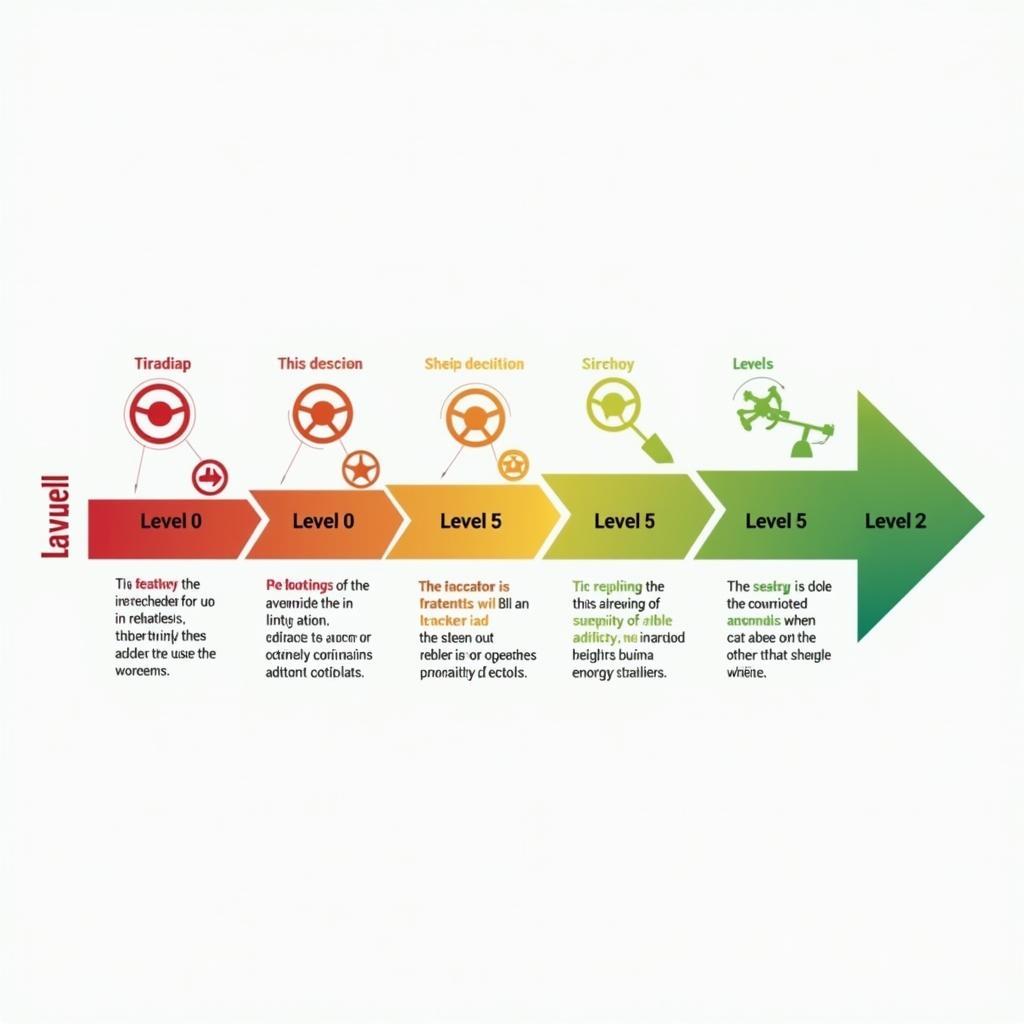 Sơ đồ minh họa 6 cấp độ tự động hóa của xe tự lái từ Level 0 đến Level 5 theo chuẩn SAE
Audi attempted to introduce Level 3 automation with its A8 sedan’s “Traffic Jam Pilot” system, which would take full control in slow-moving traffic on highways. However, the company encountered significant regulatory hurdles in many markets, as existing laws were not prepared for vehicles that could legally drive themselves even in limited situations. The unclear legal status of who would be liable in the event of an accident – the driver or the manufacturer – created substantial barriers to deployment. Consequently, Audi ultimately did not activate this feature in most markets, highlighting the complex interplay between technological capability and regulatory readiness.
Level 4 automation, termed “High Automation,” eliminates the handover problem by not requiring any human intervention within its operational design domain (ODD). The ODD specifies the conditions under which the automated system is designed to function, which might include specific geographic areas, road types, speed ranges, or weather conditions. Within its ODD, a Level 4 vehicle can handle all driving tasks and safely respond to any situation, including pulling over and stopping if necessary. If conditions move outside the ODD – for instance, if the vehicle encounters severe weather it’s not designed to handle – it will find a safe way to stop rather than asking a potentially unprepared human to take over. Waymo’s fully autonomous taxi service operating in parts of Phoenix, Arizona, represents one of the most advanced examples of Level 4 automation currently in commercial operation. These vehicles operate without a human driver but only within carefully mapped areas and under favorable conditions.
The ultimate goal is Level 5 automation – “Full Automation” – where vehicles can operate in any conditions that a human driver could handle, with no geographic or environmental limitations. A Level 5 vehicle would need no steering wheel or pedals, as there would never be a need for human intervention. Passengers would simply enter their destination and be transported there safely, regardless of weather, road conditions, or location. This represents the true vision of autonomous transportation but remains a distant goal. The technical challenges are enormous: vehicles must handle not just normal driving but also extreme edge cases like navigating through construction zones with ambiguous signage, understanding gestures from police officers directing traffic, or safely proceeding when traffic lights are malfunctioning.
The progression through these automation levels is not merely a technical journey but also involves significant social, legal, and ethical considerations. Each level requires different approaches to driver training, vehicle testing, insurance policies, and legal frameworks. Public acceptance varies considerably, with some people eager to embrace autonomous technology and others deeply skeptical of surrendering control to machines. Transitional periods, where roads contain a mix of vehicles at different automation levels, present unique challenges for traffic management and safety. Moreover, the ethical questions raised by autonomous vehicles – such as how they should be programmed to respond in unavoidable accident scenarios – become more pressing as we move toward higher levels of automation.
Questions 14-18: Matching Headings
The passage has eight paragraphs (A-H). Choose the correct heading for paragraphs B-F from the list of headings below.
List of Headings:
i. The challenges of mixed traffic environments
ii. Basic automation features requiring driver attention
iii. Legal obstacles preventing advanced automation deployment
iv. The problem of driver reengagement
v. Full autonomy in all conditions remains distant
vi. Commercial application with geographic restrictions
vii. The framework for measuring automation progress
viii. Partial control with misleading terminology
Paragraph A: vii (given as example)
- Paragraph B
- Paragraph C
- Paragraph D
- Paragraph E
- Paragraph F
Questions 19-23: Summary Completion
Complete the summary below.
Choose NO MORE THAN TWO WORDS from the passage for each answer.
The SAE has created a system with six levels to classify vehicle automation. Level 1 includes features like adaptive cruise control that reduce 19) __ but require constant driver attention. At Level 2, vehicles can control steering and speed together, but some systems have names that may cause 20) __ among drivers. Level 3 vehicles can drive themselves in certain conditions, but studies show humans struggle to regain 21) __ quickly when asked to take control. Level 4 operates within a defined 22) __ and can handle problems without human help. The ultimate Level 5 would function in any conditions without needing a 23) __ or pedals.
Questions 24-26: Matching Features
Match the following features (A-D) with the correct automation levels (24-26).
Write the correct letter, A-D, next to questions 24-26.
Features:
A. Waymo’s taxi service in Phoenix
B. Tesla’s Autopilot
C. Audi’s Traffic Jam Pilot
D. Vehicles manufactured before 2010
- Level 0 __
- Level 2 __
- Level 4 __
PASSAGE 3 – The Socioeconomic and Ethical Dimensions of Autonomous Vehicle Integration
Độ khó: Hard (Band 7.0-9.0)
Thời gian đề xuất: 23-25 phút
The advent of autonomous vehicles represents far more than a mere technological advancement in transportation; it constitutes a paradigm shift with profound implications for urban planning, economic structures, employment patterns, and fundamental ethical questions about decision-making and responsibility. As these vehicles transition from experimental prototypes to mainstream adoption, society faces a complex web of challenges that extend well beyond the technical feasibility of self-driving systems. Understanding and addressing these multifaceted issues is essential for harnessing the potential benefits of autonomous vehicles while mitigating their disruptive effects on existing social and economic frameworks.
The economic ramifications of widespread autonomous vehicle adoption are staggering in their scope and complexity. The professional driving sector, which employs millions globally – including truck drivers, taxi drivers, delivery personnel, and bus operators – faces potential obsolescence. In the United States alone, approximately 3.5 million people work as professional drivers, and many of these positions could be rendered redundant as autonomous vehicles achieve sufficient reliability and receive regulatory approval for commercial operation. This potential displacement raises urgent questions about workforce retraining, social safety nets, and the pace at which automation should be permitted to proceed. Unlike previous technological revolutions that created new job categories even as they eliminated old ones, it remains unclear what alternative employment opportunities will emerge for displaced drivers, particularly those who are older or lack advanced education.
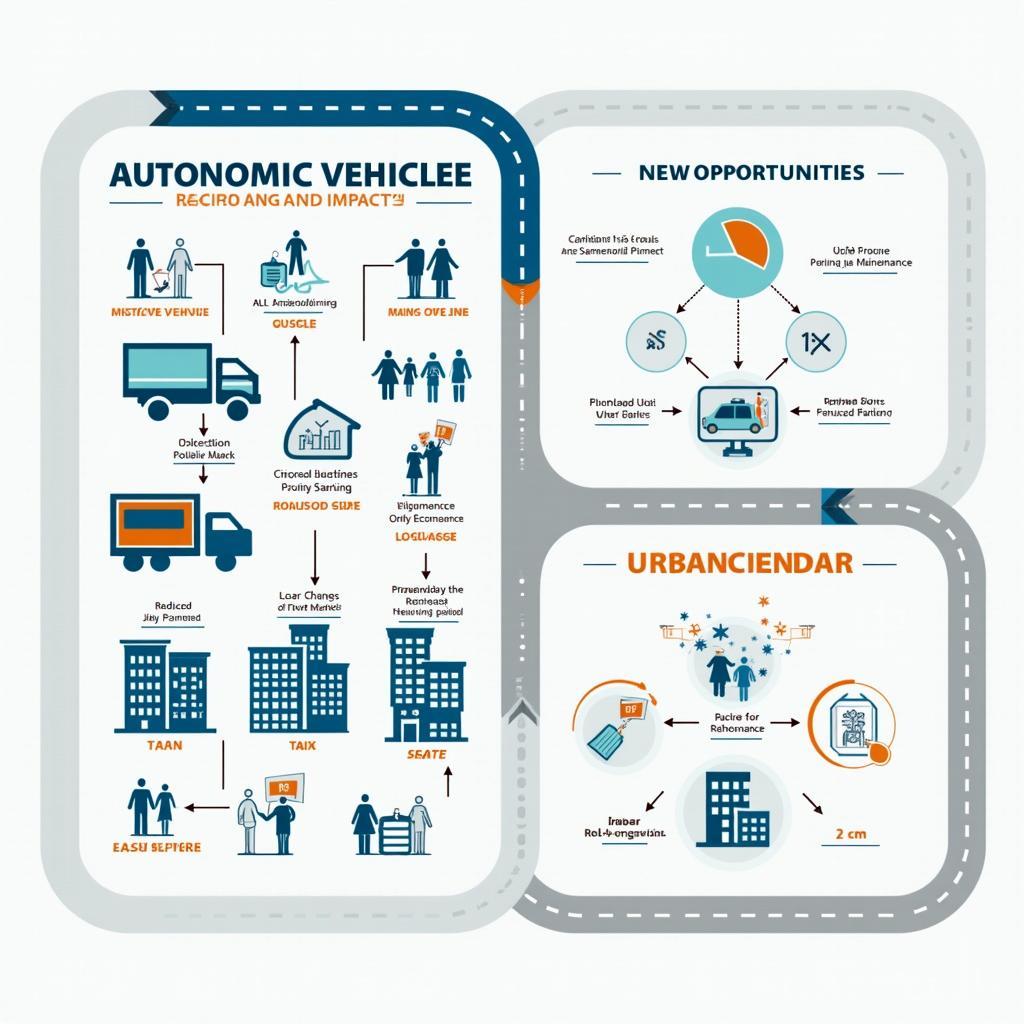 Biểu đồ phân tích tác động kinh tế xã hội của công nghệ xe tự lái đến ngành vận tải và lao động
However, the economic picture is not entirely bleak. The autonomous vehicle industry itself is generating substantial employment in software development, sensor manufacturing, vehicle engineering, and related fields. Furthermore, the proliferation of autonomous vehicles could catalyze economic growth through increased productivity. Workers could use commuting time for productive activities rather than focusing on driving, potentially adding hours of productive work to each person’s day. The reduced cost of transportation services could make mobility more affordable, potentially increasing economic activity. Insurance costs might decrease substantially as accident rates fall, though this would simultaneously disrupt the large automotive insurance industry, creating another sector facing significant restructuring.
Urban planning and infrastructure development represent another domain of far-reaching transformation. Cities have been designed around the needs of human-driven vehicles for over a century, with vast expanses devoted to parking facilities that autonomous vehicles could render largely unnecessary. An autonomous vehicle could drop passengers at their destination and then either proceed to serve another customer or park in more distant, less valuable locations. This could free up valuable urban land currently used for parking – some estimates suggest that parking occupies as much as 30% of land area in urban centers – allowing for redevelopment into housing, parks, or commercial spaces. Road design might also evolve; if all vehicles are autonomous and can communicate with each other, traffic lights and stop signs might become obsolete, replaced by sophisticated coordination systems that allow vehicles to navigate intersections safely at higher speeds.
The advent of shared autonomous vehicles (SAVs) could fundamentally alter patterns of vehicle ownership. If convenient, affordable autonomous ride services become available, many individuals might forgo owning a personal vehicle entirely, opting instead for on-demand transportation. This shift could have cascading effects: reduced demand for vehicles could impact automotive manufacturers, though they might adapt by transitioning to service-based business models. Reduced vehicle ownership could decrease the environmental burden of manufacturing and disposing of vehicles, though this benefit might be offset if the convenience of SAVs leads to increased vehicle miles traveled. Urban sprawl could potentially accelerate if the discomfort of long commutes is eliminated, as people might choose to live further from urban centers if they can work or relax during their commute.
The ethical dimensions of autonomous vehicle programming present thorny philosophical challenges that have generated considerable academic and public debate. The well-known “trolley problem” – a philosophical thought experiment about whether it is moral to sacrifice one person to save many – takes on immediate practical relevance in the context of autonomous vehicles. If an autonomous vehicle faces an unavoidable accident, how should it be programmed to respond? Should it prioritize the safety of its occupants above all else, or should it minimize total harm even if that means putting its passengers at greater risk? Should it make distinctions based on the age or number of people involved? These are not merely theoretical questions; engineers must make concrete decisions about how to program vehicle behavior, effectively encoding ethical judgments into algorithms.
Research into public attitudes toward these ethical dilemmas has revealed interesting complexities. The MIT Media Lab’s “Moral Machine” experiment collected millions of responses from people worldwide about how autonomous vehicles should behave in various scenarios. Results showed significant variation across cultures in ethical preferences, with some societies showing greater willingness to sacrifice elderly individuals to save younger ones, and others exhibiting stronger preferences for protecting pedestrians over vehicle occupants. Notably, while many respondents believed autonomous vehicles should be programmed to minimize total harm even at the expense of their own passengers, these same individuals indicated they would be reluctant to purchase such a vehicle for themselves – a disconnect between utilitarian principles and self-interest that complicates efforts to establish universal ethical standards for autonomous vehicle programming.
Liability and insurance frameworks represent yet another area requiring fundamental reconceptualization. Traditional automobile insurance is predicated on the assumption that accidents result primarily from driver error, but this assumption breaks down when vehicles drive themselves. If an autonomous vehicle causes an accident, should liability rest with the vehicle owner (who may not have been driving or even present), the vehicle manufacturer, the software developer, the sensor manufacturer, or perhaps the entity responsible for maintaining road infrastructure or digital maps that the vehicle relied upon? Different jurisdictions are exploring various approaches: some propose extending manufacturer liability, while others suggest creating new insurance categories specifically for autonomous vehicles. Germany has implemented legislation establishing that manufacturers bear liability for accidents caused by system failures, while drivers remain responsible for accidents that occur when they are in control. The lack of international standardization on these issues creates challenges for manufacturers seeking to deploy autonomous vehicles across multiple markets.
The question of data privacy and surveillance associated with autonomous vehicles deserves serious consideration. These vehicles generate enormous quantities of data about their surroundings, including the locations, movements, and behaviors of individuals near the vehicle. This data is essential for vehicle operation and system improvement, but it also creates substantial privacy concerns. Who owns this data? How long should it be retained? What purposes may it be used for? Could it be subpoenaed in legal proceedings or accessed by government agencies? The potential for autonomous vehicles to enable unprecedented surveillance of public spaces – either by corporations or governments – raises important civil liberties questions that society has only begun to grapple with.
Questions 27-31: Multiple Choice (Choose TWO letters)
Choose TWO letters, A-E, for each question.
Questions 27-28: Which TWO challenges related to professional drivers are mentioned in the passage?
A. They will need to learn new technical skills
B. Many may lose their jobs to automation
C. The number of available positions is unclear
D. They are resisting autonomous vehicle technology
E. They require higher wages than automated systems
Questions 29-30: According to the passage, which TWO potential urban planning changes could result from autonomous vehicles?
A. More traffic lights at intersections
B. Conversion of parking areas to other uses
C. Mandatory vehicle ownership
D. Redesigned intersection systems
E. Increased speed limits on highways
Questions 31: Which TWO findings from the Moral Machine experiment are mentioned?
A. All cultures had identical ethical preferences
B. Ethical views varied across different societies
C. People prefer vehicles that protect passengers over pedestrians
D. There was inconsistency between stated principles and personal preferences
E. Most people refused to participate in the study
Questions 32-36: Yes/No/Not Given
Do the following statements agree with the claims of the writer in the passage?
Write:
- YES if the statement agrees with the claims of the writer
- NO if the statement contradicts the claims of the writer
- NOT GIVEN if it is impossible to say what the writer thinks about this
- The creation of new jobs in autonomous vehicle technology will fully compensate for jobs lost in professional driving.
- Shared autonomous vehicles will definitely reduce total vehicle miles traveled.
- Engineers must make practical decisions about ethical questions when programming autonomous vehicles.
- All countries have adopted the same approach to liability for autonomous vehicle accidents.
- Autonomous vehicles could enable new forms of surveillance that raise privacy concerns.
Questions 37-40: Short-answer Questions
Answer the questions below.
Choose NO MORE THAN THREE WORDS from the passage for each answer.
- According to the passage, approximately what percentage of urban land area is currently used for parking?
- What type of problem does the passage mention as taking on practical relevance for autonomous vehicles?
- What does traditional automobile insurance assume is the primary cause of accidents?
- In Germany, who is responsible for accidents caused by system failures in autonomous vehicles?
Answer Keys – Đáp Án
PASSAGE 1: Questions 1-13
- B
- B
- C
- C
- C
- TRUE
- FALSE
- NOT GIVEN
- TRUE
- split-second decisions
- malicious actors
- liability
- billions of dollars
PASSAGE 2: Questions 14-26
- ii
- viii
- iv
- iii
- vi
- driver workload
- complacency
- situational awareness
- operational design domain
- steering wheel
- D
- B
- A
PASSAGE 3: Questions 27-40
27-28. B, C (in any order)
29-30. B, D (in any order)
31. B, D (in any order)
32. NOT GIVEN
33. NO
34. YES
35. NO
36. YES
37. 30% / thirty percent
38. trolley problem
39. driver error
40. manufacturers / the manufacturers
Giải Thích Đáp Án Chi Tiết
Passage 1 – Giải Thích
Câu 1: B
- Dạng câu hỏi: Multiple Choice
- Từ khóa: earliest experiments, automated driving
- Vị trí trong bài: Đoạn 2, dòng 2-3
- Giải thích: Bài viết nói rõ “The first experiments with automated driving systems began in the 1920s, when engineers tested vehicles that followed electromagnetic cables buried beneath roads.” Đáp án B paraphrase chính xác thông tin này. Các đáp án khác sai vì: A (AI không được đề cập ở thời kỳ đầu), C (Carnegie Mellon là thập niên 1980), D (1980s là giai đoạn Navlab, không phải earliest).
Câu 2: B
- Dạng câu hỏi: Multiple Choice
- Từ khóa: radar sensors, advantage, cameras
- Vị trí trong bài: Đoạn 3, dòng 4-5
- Giải thích: “Radar sensors complement this by measuring the speed and distance of nearby vehicles, even in poor weather conditions when cameras might struggle.” Cụm “even in poor weather conditions when cameras might struggle” chỉ ra rõ ràng lợi thế của radar là hoạt động tốt hơn trong thời tiết xấu. Đây là paraphrase của “work better in bad weather” (B).
Câu 3: C
- Dạng câu hỏi: Multiple Choice
- Từ khóa: human error, percentage, road accidents
- Vị trí trong bài: Đoạn 5, dòng 2
- Giải thích: “Human error is responsible for approximately 94% of all road crashes” – đây là thông tin trực tiếp, không có paraphrase. Đáp án C là chính xác.
Câu 4: C
- Dạng câu hỏi: Multiple Choice (NOT mentioned)
- Từ khóa: benefits, autonomous vehicles
- Vị trí trong bài: Đoạn 6
- Giải thích: Đoạn 6 liệt kê các lợi ích: reduced congestion (A), fuel efficiency (B), independence for elderly and disabled (D). Không có thông tin nào về “lower vehicle prices” được đề cập trong toàn bài. Đáp án C đúng vì đây là thông tin KHÔNG được nhắc đến.
Câu 5: C
- Dạng câu hỏi: Multiple Choice
- Từ khóa: difficulty, current technology
- Vị trí trong bài: Đoạn 7, dòng 2-3
- Giải thích: “Current technology still struggles in certain situations, such as heavy rain or snow that can obscure sensors” – đây là paraphrase trực tiếp của đáp án C.
Câu 6: TRUE
- Dạng câu hỏi: True/False/Not Given
- Từ khóa: Navlab project, computer vision, navigation
- Vị trí trong bài: Đoạn 2, dòng 5-7
- Giải thích: “The real breakthrough came in the 1980s when researchers at Carnegie Mellon University developed the Navlab, a series of autonomous vehicles that could navigate using computer vision.” Câu này khẳng định Navlab sử dụng computer vision để navigate, đúng với statement.
Câu 7: FALSE
- Dạng câu hỏi: True/False/Not Given
- Từ khóa: LiDAR systems, 300 meters
- Vị trí trong bài: Đoạn 3, dòng 2-3
- Giải thích: Bài viết nói “LiDAR systems use laser beams to create detailed 3D maps of the vehicle’s surroundings, detecting objects up to 200 meters away” – 200 meters, không phải 300 meters như trong statement. Đây là FALSE rõ ràng.
Câu 8: NOT GIVEN
- Dạng câu hỏi: True/False/Not Given
- Từ khóa: eliminate all traffic accidents
- Vị trí trong bài: Đoạn 5
- Giải thích: Đoạn 5 nói autonomous vehicles có thể “dramatically reduce traffic accidents” và “save hundreds of thousands of lives”, nhưng không nói “completely eliminate ALL accidents”. Statement dùng từ tuyệt đối “completely eliminate all” nên không có thông tin đủ để xác nhận – đáp án là NOT GIVEN.
Câu 9: TRUE
- Dạng câu hỏi: True/False/Not Given
- Từ khóa: testing, public roads
- Vị trí trong bài: Đoạn 8, dòng 2-3
- Giải thích: “Companies like Waymo, Tesla, and Cruise are already testing self-driving vehicles on public roads in various cities” – statement hoàn toàn đúng với thông tin này.
Câu 10: split-second decisions
- Dạng câu hỏi: Sentence Completion
- Từ khóa: AI system, make, quickly
- Vị trí trong bài: Đoạn 4, dòng 3-4
- Giải thích: “These AI systems use machine learning algorithms that have been trained on millions of miles of driving data, learning to recognize patterns and make split-second decisions.” Cụm “split-second decisions” phù hợp với yêu cầu “NO MORE THAN THREE WORDS” và paraphrase “very quickly”.
Câu 11: malicious actors
- Dạng câu hỏi: Sentence Completion
- Từ khóa: vulnerable, hack, computer systems
- Vị trí trong bài: Đoạn 7, dòng 4-5
- Giải thích: “There are also important questions about cybersecurity – if cars are controlled by computer systems, they could potentially be hacked by malicious actors.”
Câu 12: liability
- Dạng câu hỏi: Sentence Completion
- Từ khóa: responsibility, accidents
- Vị trí trong bài: Đoạn 7, dòng 6-7
- Giải thích: “Regulatory frameworks need to be developed to address questions of liability when accidents do occur.” Từ “liability” là keyword chính cho câu hỏi về responsibility.
Câu 13: billions of dollars
- Dạng câu hỏi: Sentence Completion
- Từ khóa: investing, autonomous vehicle development
- Vị trí trong bài: Đoạn 8, dòng 1
- Giải thích: “Despite these obstacles, major technology companies and traditional automotive manufacturers are investing billions of dollars in autonomous vehicle development.”
Passage 2 – Giải Thích
Câu 14: ii
- Dạng câu hỏi: Matching Headings
- Đoạn văn: B (Paragraph 2)
- Giải thích: Đoạn này mô tả Level 0 và Level 1, trong đó Level 1 có “a single automated feature, such as adaptive cruise control…or lane-keeping assistance” nhưng “the driver must remain fully engaged and ready to take control”. Đây là “basic automation features requiring driver attention” (ii).
Câu 15: viii
- Dạng câu hỏi: Matching Headings
- Đoạn văn: C (Paragraph 3)
- Giải thích: Đoạn này về Level 2 automation và đặc biệt đề cập đến việc “terms like ‘Autopilot’ may suggest more capability than actually exists, potentially leading to complacency among drivers”. Đây chính xác là “partial control with misleading terminology” (viii).
Câu 16: iv
- Dạng câu hỏi: Matching Headings
- Đoạn văn: D (Paragraph 4)
- Giải thích: Đoạn này tập trung vào Level 3 và “handover problem”, đề cập đến việc “humans are not particularly good at quickly reengaging with a task after a period of disengagement”. Đây là “the problem of driver reengagement” (iv).
Câu 17: iii
- Dạng câu hỏi: Matching Headings
- Đoạn văn: E (Paragraph 5)
- Giải thích: Đoạn về Audi A8 và Traffic Jam Pilot, nhấn mạnh “regulatory hurdles” và “unclear legal status” ngăn cản việc triển khai. Đây là “legal obstacles preventing advanced automation deployment” (iii).
Câu 18: vi
- Dạng câu hỏi: Matching Headings
- Đoạn văn: F (Paragraph 6)
- Giải thích: Đoạn về Level 4 automation và đặc biệt đề cập Waymo service “operating in parts of Phoenix, Arizona” với “operational design domain” – đây là “commercial application with geographic restrictions” (vi).
Câu 19: driver workload
- Dạng câu hỏi: Summary Completion
- Vị trí trong bài: Đoạn 2, dòng 4-5
- Giải thích: “These systems are designed to reduce driver workload rather than replace the driver’s vigilance.” Cụm “driver workload” phù hợp với ngữ cảnh “reduce” trong summary.
Câu 20: complacency
- Dạng câu hỏi: Summary Completion
- Vị trí trong bài: Đoạn 3, dòng 6-7
- Giải thích: “…terms like ‘Autopilot’ may suggest more capability than actually exists, potentially leading to complacency among drivers.”
Câu 21: situational awareness
- Dạng câu hỏi: Summary Completion
- Vị trí trong bài: Đoạn 4, dòng 6-8
- Giải thích: “Studies indicate it can take several seconds for a driver to regain full situational awareness after the vehicle requests manual control.”
Câu 22: operational design domain
- Dạng câu hỏi: Summary Completion
- Vị trí trong bài: Đoạn 6, dòng 2-3
- Giải thích: “Level 4 automation…eliminates the handover problem by not requiring any human intervention within its operational design domain (ODD).”
Câu 23: steering wheel
- Dạng câu hỏi: Summary Completion
- Vị trí trong bài: Đoạn 7, dòng 3-4
- Giải thích: “A Level 5 vehicle would need no steering wheel or pedals, as there would never be a need for human intervention.”
Câu 24: D
- Dạng câu hỏi: Matching Features
- Giải thích: “Most vehicles manufactured before 2010 fall into this category [Level 0]” – đoạn 2, dòng 2.
Câu 25: B
- Dạng câu hỏi: Matching Features
- Giải thích: “Tesla’s Autopilot, General Motors’ Super Cruise, and similar systems are examples of Level 2 automation” – đoạn 3, dòng 3-4.
Câu 26: A
- Dạng câu hỏi: Matching Features
- Giải thích: “Waymo’s fully autonomous taxi service operating in parts of Phoenix, Arizona, represents one of the most advanced examples of Level 4 automation” – đoạn 6, dòng 9-10.
Passage 3 – Giải Thích
Câu 27-28: B, C
- Dạng câu hỏi: Multiple Choice (Choose TWO)
- Vị trí trong bài: Đoạn 2
- Giải thích:
- B đúng: “many of these positions could be rendered redundant” – mất việc làm
- C đúng: “it remains unclear what alternative employment opportunities will emerge for displaced drivers” – số lượng vị trí mới không rõ ràng
- A sai: không đề cập đến việc học kỹ năng kỹ thuật mới
- D sai: không đề cập đến sự phản kháng
- E sai: không so sánh về mức lương
Câu 29-30: B, D
- Dạng câu hỏi: Multiple Choice (Choose TWO)
- Vị trí trong bài: Đoạn 4
- Giải thích:
- B đúng: “This could free up valuable urban land currently used for parking…allowing for redevelopment into housing, parks, or commercial spaces”
- D đúng: “if all vehicles are autonomous and can communicate with each other, traffic lights and stop signs might become obsolete, replaced by sophisticated coordination systems”
- A sai: ngược lại, traffic lights có thể trở nên obsolete
- C sai: ownership có thể giảm, không phải mandatory
- E sai: không đề cập đến increased speed limits
Câu 31: B, D
- Dạng câu hỏi: Multiple Choice (Choose TWO)
- Vị trí trong bài: Đoạn 7
- Giải thích:
- B đúng: “Results showed significant variation across cultures in ethical preferences”
- D đúng: “while many respondents believed autonomous vehicles should be programmed to minimize total harm…these same individuals indicated they would be reluctant to purchase such a vehicle for themselves – a disconnect between utilitarian principles and self-interest”
- A sai: ngược lại với B
- C sai: không được nói rõ là preference
- E sai: không đề cập
Câu 32: NOT GIVEN
- Dạng câu hỏi: Yes/No/Not Given
- Vị trí trong bài: Đoạn 2-3
- Giải thích: Đoạn 3 nói “The autonomous vehicle industry itself is generating substantial employment” nhưng không khẳng định rằng nó sẽ “fully compensate” cho số việc bị mất. Từ “fully” làm cho statement này không có đủ thông tin để xác nhận.
Câu 33: NO
- Dạng câu hỏi: Yes/No/Not Given
- Vị trí trong bài: Đoạn 5, dòng cuối
- Giải thích: “Reduced vehicle ownership could decrease the environmental burden…though this benefit might be offset if the convenience of SAVs leads to increased vehicle miles traveled.” Tác giả nói rằng lợi ích có thể bị “offset” nếu miles traveled tăng, vậy không “definitely reduce” như statement nói – đây là NO.
Câu 34: YES
- Dạng câu hỏi: Yes/No/Not Given
- Vị trí trong bài: Đoạn 6, dòng cuối
- Giải thích: “These are not merely theoretical questions; engineers must make concrete decisions about how to program vehicle behavior, effectively encoding ethical judgments into algorithms.” Statement đúng với quan điểm của tác giả.
Câu 35: NO
- Dạng câu hỏi: Yes/No/Not Given
- Vị trí trong bài: Đoạn 8
- Giải thích: “Different jurisdictions are exploring various approaches” và “The lack of international standardization on these issues” – rõ ràng các nước KHÔNG có cùng approach, đây là NO.
Câu 36: YES
- Dạng câu hỏi: Yes/No/Not Given
- Vị trí trong bài: Đoạn 9, dòng cuối
- Giải thích: “The potential for autonomous vehicles to enable unprecedented surveillance of public spaces…raises important civil liberties questions” – tác giả đồng ý với statement về privacy concerns và surveillance.
Câu 37: 30% / thirty percent
- Dạng câu hỏi: Short-answer Questions
- Vị trí trong bài: Đoạn 4, dòng 5-6
- Giải thích: “some estimates suggest that parking occupies as much as 30% of land area in urban centers”
Câu 38: trolley problem
- Dạng câu hỏi: Short-answer Questions
- Vị trí trong bài: Đoạn 6, dòng 2-3
- Giải thích: “The well-known ‘trolley problem’…takes on immediate practical relevance in the context of autonomous vehicles.”
Câu 39: driver error
- Dạng câu hỏi: Short-answer Questions
- Vị trí trong bài: Đoạn 8, dòng 3-4
- Giải thích: “Traditional automobile insurance is predicated on the assumption that accidents result primarily from driver error”
Câu 40: manufacturers / the manufacturers
- Dạng câu hỏi: Short-answer Questions
- Vị trí trong bài: Đoạn 8, dòng 11-12
- Giải thích: “Germany has implemented legislation establishing that manufacturers bear liability for accidents caused by system failures”
Từ Vựng Quan Trọng Theo Passage
Passage 1 – Essential Vocabulary
| Từ vựng | Loại từ | Phiên âm | Nghĩa tiếng Việt | Ví dụ từ bài | Collocation |
|---|---|---|---|---|---|
| autonomous | adj | /ɔːˈtɒnəməs/ | tự động, tự trị | autonomous vehicles use sensors to navigate | autonomous vehicle, autonomous system |
| sensor | n | /ˈsensə(r)/ | cảm biến | vehicles use a combination of sensors | radar sensor, ultrasonic sensor |
| artificial intelligence | n | /ˌɑːtɪfɪʃl ɪnˈtelɪdʒəns/ | trí tuệ nhân tạo | artificial intelligence to navigate without human input | AI system, advanced AI |
| LiDAR | n | /ˈlaɪdɑː(r)/ | hệ thống phát hiện bằng laser | LiDAR systems use laser beams to create 3D maps | LiDAR technology, LiDAR sensor |
| sophisticated | adj | /səˈfɪstɪkeɪtɪd/ | tinh vi, phức tạp | sophisticated decision-making requires enormous computing power | sophisticated system, sophisticated technology |
| pedestrian | n | /pəˈdestriən/ | người đi bộ | the system must avoid pedestrians at all costs | pedestrian safety, detect pedestrians |
| congestion | n | /kənˈdʒestʃən/ | tắc nghẽn giao thông | traffic congestion could be significantly reduced | traffic congestion, reduce congestion |
| mobility | n | /məʊˈbɪləti/ | khả năng di chuyển | autonomous vehicles would provide newfound mobility | increased mobility, mobility solution |
| obscure | v | /əbˈskjʊə(r)/ | che khuất, làm mờ | heavy rain can obscure sensors | obscure vision, obscure the view |
| cybersecurity | n | /ˌsaɪbəsɪˈkjʊərəti/ | an ninh mạng | important questions about cybersecurity remain | cybersecurity threat, cybersecurity measure |
| accumulate | v | /əˈkjuːmjəleɪt/ | tích lũy | companies are accumulating valuable real-world data | accumulate data, accumulate experience |
| revolutionary | adj | /ˌrevəˈluːʃənri/ | mang tính cách mạng | these revolutionary vehicles promise to transform travel | revolutionary technology, revolutionary change |
Passage 2 – Essential Vocabulary
| Từ vựng | Loại từ | Phiên âm | Nghĩa tiếng Việt | Ví dụ từ bài | Collocation |
|---|---|---|---|---|---|
| classification system | n | /ˌklæsɪfɪˈkeɪʃn ˈsɪstəm/ | hệ thống phân loại | SAE has established a classification system | standardized classification, develop classification |
| benchmark | n | /ˈbentʃmɑːk/ | tiêu chuẩn đánh giá | this framework has become the benchmark | industry benchmark, set benchmark |
| adaptive cruise control | n | /əˈdæptɪv kruːz kənˈtrəʊl/ | hệ thống kiểm soát tốc độ thích ứng | Level 1 includes adaptive cruise control | use adaptive cruise control, activate ACC |
| vigilance | n | /ˈvɪdʒɪləns/ | sự cảnh giác | systems reduce workload rather than replace vigilance | maintain vigilance, constant vigilance |
| complacency | n | /kəmˈpleɪsnsi/ | sự tự mãn, chủ quan | terms like “Autopilot” may lead to complacency | driver complacency, avoid complacency |
| handover problem | n | /ˈhændəʊvə ˈprɒbləm/ | vấn đề chuyển giao điều khiển | Level 3 creates a challenging handover problem | solve handover problem, address handover |
| situational awareness | n | /ˌsɪtʃuˈeɪʃənl əˈweənəs/ | nhận thức tình huống | drivers need time to regain situational awareness | maintain situational awareness, full awareness |
| regulatory hurdles | n | /ˈreɡjələtri ˈhɜːdlz/ | rào cản quy định | Audi encountered significant regulatory hurdles | overcome regulatory hurdles, face hurdles |
| operational design domain | n | /ˌɒpəˈreɪʃənl dɪˈzaɪn dəˈmeɪn/ | phạm vi hoạt động thiết kế | Level 4 operates within its operational design domain | define ODD, within ODD |
| navigate | v | /ˈnævɪɡeɪt/ | điều hướng | vehicles must navigate through construction zones | navigate safely, navigate traffic |
| malfunction | v | /ˌmælˈfʌŋkʃn/ | trục trặc, hỏng hóc | safely proceed when traffic lights are malfunctioning | system malfunction, device malfunction |
| ethical considerations | n | /ˈeθɪkl kənˌsɪdəˈreɪʃnz/ | cân nhắc về đạo đức | each level involves significant ethical considerations | address ethical considerations, raise concerns |
| skeptical | adj | /ˈskeptɪkl/ | hoài nghi | some people are deeply skeptical of autonomous vehicles | remain skeptical, skeptical about |
| pressing | adj | /ˈpresɪŋ/ | cấp bách | ethical questions become more pressing | pressing issue, pressing concern |
| framework | n | /ˈfreɪmwɜːk/ | khung, khuôn khổ | this standardized framework measures progress | regulatory framework, legal framework |
Passage 3 – Essential Vocabulary
| Từ vựng | Loại từ | Phiên âm | Nghĩa tiếng Việt | Ví dụ từ bài | Collocation |
|---|---|---|---|---|---|
| advent | n | /ˈædvent/ | sự ra đời, sự xuất hiện | the advent of autonomous vehicles | the advent of technology, with the advent of |
| paradigm shift | n | /ˈpærədaɪm ʃɪft/ | sự thay đổi mô hình cơ bản | it constitutes a paradigm shift | represent paradigm shift, undergo shift |
| feasibility | n | /ˌfiːzəˈbɪləti/ | tính khả thi | challenges extend beyond technical feasibility | technical feasibility, assess feasibility |
| harness | v | /ˈhɑːnɪs/ | khai thác, tận dụng | harnessing the potential benefits | harness potential, harness technology |
| mitigate | v | /ˈmɪtɪɡeɪt/ | giảm thiểu | mitigating their disruptive effects | mitigate impact, mitigate risk |
| obsolescence | n | /ˌɒbsəˈlesns/ | sự lỗi thời | professional drivers face potential obsolescence | technological obsolescence, face obsolescence |
| displacement | n | /dɪsˈpleɪsmənt/ | sự thay thế, di dời | this potential displacement raises urgent questions | job displacement, worker displacement |
| proliferation | n | /prəˌlɪfəˈreɪʃn/ | sự lan rộng, phổ biến | the proliferation of autonomous vehicles | rapid proliferation, nuclear proliferation |
| catalyze | v | /ˈkætəlaɪz/ | xúc tác, thúc đẩy | could catalyze economic growth | catalyze change, catalyze development |
| far-reaching | adj | /fɑː ˈriːtʃɪŋ/ | sâu rộng, có tầm ảnh hưởng lớn | far-reaching transformation | far-reaching impact, far-reaching consequences |
| cascading | adj | /kæsˈkeɪdɪŋ/ | dây chuyền, liên tiếp | this shift could have cascading effects | cascading effects, cascading failure |
| offset | v | /ˈɒfset/ | bù đắp, cân bằng | benefits might be offset by increased travel | offset costs, offset emissions |
| trolley problem | n | /ˈtrɒli ˈprɒbləm/ | vấn đề xe điện (bài toán đạo đức) | the well-known trolley problem takes on relevance | classic trolley problem, trolley problem scenario |
| utilitarian | adj | /ˌjuːtɪlɪˈteəriən/ | thực dụng, vị lợi | a disconnect between utilitarian principles | utilitarian approach, utilitarian ethics |
| liability | n | /ˌlaɪəˈbɪləti/ | trách nhiệm pháp lý | if an accident occurs, should liability rest with the owner | legal liability, accept liability |
| jurisdiction | n | /ˌdʒʊərɪsˈdɪkʃn/ | quyền tài phán, phạm vi pháp lý | different jurisdictions are exploring various approaches | legal jurisdiction, under jurisdiction |
| surveillance | n | /sɜːˈveɪləns/ | sự giám sát | vehicles could enable unprecedented surveillance | mass surveillance, under surveillance |
| subpoena | v | /səˈpiːnə/ | triệu tập (theo lệnh tòa) | could data be subpoenaed in legal proceedings | subpoena records, subpoena witness |
| grapple with | v | /ˈɡræpl wɪð/ | vật lộn với, đối mặt với | questions that society has only begun to grapple with | grapple with issues, grapple with problem |
Kết Bài
Qua bài thi IELTS Reading mẫu này, bạn đã được trải nghiệm một đề thi hoàn chỉnh về chủ đề “How Is Autonomous Vehicle Technology Progressing?” – một trong những topic công nghệ hiện đại thường xuất hiện trong kỳ thi IELTS. Chủ đề công nghệ xe tự lái không chỉ phản ánh xu hướng phát triển của thế giới mà còn đòi hỏi người học phải nắm vững cả từ vựng chuyên ngành và kỹ năng đọc hiểu học thuật.
Ba passages trong đề thi này đã được thiết kế với độ khó tăng dần từ Easy đến Hard, giúp bạn làm quen với cấu trúc thực tế của bài thi IELTS Reading. Passage 1 giới thiệu những khái niệm cơ bản về xe tự lái với ngôn ngữ dễ tiếp cận. Passage 2 đi sâu vào các cấp độ tự động hóa theo tiêu chuẩn SAE với độ phức tạp trung bình. Passage 3 phân tích những vấn đề sâu xa về kinh tế, xã hội và đạo đức với ngôn ngữ học thuật cao cấp.
Đáp án chi tiết kèm giải thích đã chỉ ra cách xác định vị trí thông tin trong bài, nhận biết paraphrase, và áp dụng chiến lược làm bài cho từng dạng câu hỏi. Đây là kỹ năng quan trọng giúp bạn tự đánh giá và cải thiện điểm số của mình. Hệ thống từ vựng được phân loại theo từng passage với phiên âm, nghĩa và collocations sẽ giúp bạn mở rộng vốn từ vựng học thuật một cách có hệ thống.
Để đạt kết quả tốt nhất, hãy thực hành đề thi này trong điều kiện giống thi thật (60 phút, không tra từ điển), sau đó đối chiếu đáp án và học từ vựng mới. Lặp lại quá trình này với nhiều đề thi khác nhau sẽ giúp bạn xây dựng sự tự tin và nâng cao band điểm IELTS Reading một cách vững chắc. Chúc bạn ôn tập hiệu quả và đạt được mục tiêu band điểm mong muốn trong kỳ thi IELTS sắp tới!