
Chủ đề về thiên nhiên và trải nghiệm ngoài trời luôn là một trong những đề tài phổ biến nhất trong IELTS Speaking. Đặc biệt, câu hỏi yêu cầu mô tả một chuyến đi bộ đáng nhớ trong rừng hoặc trên đường mòn thiên nhiên đã xuất hiện với tần suất cao trong các kỳ thi IELTS thực tế từ 2022 đến nay. Theo thống kê từ các trung tâm thi IELTS và diễn đàn học viên, chủ đề này xuất hiện khoảng 15-20% trong tổng số đề thi Speaking Part 2, với khả năng xuất hiện trong tương lai vẫn ở mức cao do xu hướng quan tâm đến sức khỏe và môi trường ngày càng tăng.
Chủ đề này không chỉ kiểm tra khả năng mô tả trải nghiệm cá nhân mà còn đánh giá vốn từ vựng về thiên nhiên, khả năng sử dụng thì quá khứ chính xác, và cách bạn diễn đạt cảm xúc, cảm nhận. Từ góc độ của một examiner, tôi nhận thấy nhiều học viên Việt Nam gặp khó khăn khi thiếu từ vựng cụ thể về cảnh quan tự nhiên và thường mô tả quá chung chung.
Trong bài viết này, bạn sẽ học được các câu hỏi thường gặp trong cả 3 Part của IELTS Speaking liên quan đến chủ đề này, bài mẫu chi tiết theo nhiều band điểm từ 6.0 đến 9.0, kho từ vựng chuyên sâu về thiên nhiên và hoạt động ngoài trời, cùng với chiến lược trả lời hiệu quả từ góc nhìn của một examiner có hơn 20 năm kinh nghiệm. Bạn cũng sẽ hiểu rõ sự khác biệt giữa các band điểm và cách cải thiện từng tiêu chí chấm.
IELTS Speaking Part 1: Introduction and Interview
Tổng Quan Về Part 1
Part 1 kéo dài 4-5 phút với các câu hỏi ngắn về cuộc sống hàng ngày và sở thích cá nhân. Đây là phần “warm-up” giúp bạn làm quen với giọng nói của examiner và tạo ấn tượng ban đầu. Chiến lược quan trọng nhất là trả lời tự nhiên nhưng vẫn mở rộng câu trả lời đến 2-3 câu, bao gồm: câu trả lời trực tiếp, lý do/giải thích, và ví dụ cụ thể nếu có thể.
Lỗi thường gặp của học viên Việt Nam trong Part 1 bao gồm trả lời quá ngắn chỉ với “Yes” hoặc “No”, sử dụng từ vựng quá đơn giản như “good”, “nice”, “beautiful” mà không có từ mô tả cụ thể hơn, và thiếu ví dụ thực tế từ cuộc sống bản thân. Examiner đánh giá cao những câu trả lời tự nhiên, có sự kết nối logic giữa các ý.
Các Câu Hỏi Thường Gặp
Question 1: Do you enjoy spending time in nature?
Question 2: How often do you go for walks in natural areas?
Question 3: Are there any forests or nature trails near your home?
Question 4: Did you enjoy nature walks when you were younger?
Question 5: What do you usually do when you’re in natural surroundings?
Question 6: Do you prefer walking in forests or by the sea?
Question 7: Have you ever gone hiking or trekking?
Question 8: Do you think it’s important to spend time outdoors?
Phân Tích và Gợi Ý Trả Lời Chi Tiết
Question: Do you enjoy spending time in nature?
🎯 Cách tiếp cận:
- Trả lời trực tiếp có hay không
- Đưa ra lý do cụ thể tại sao thích hoặc không thích
- Thêm ví dụ về hoạt động bạn thường làm trong thiên nhiên
📝 Sample Answer – Band 6-7:
Yes, I enjoy spending time in nature quite a lot. It helps me relax and forget about work stress. I usually go to parks or green spaces on weekends to walk around and breathe fresh air.
Phân tích:
- Điểm mạnh: Trả lời trực tiếp, có lý do (relax, forget stress), có ví dụ cụ thể (parks, weekends)
- Hạn chế: Từ vựng còn cơ bản (quite a lot, relax, fresh air), thiếu detail về cảm nhận cụ thể
- Tại sao Band 6-7: Câu trả lời đầy đủ và rõ ràng nhưng thiếu sophistication trong vocabulary và grammar structures. Ý tưởng đơn giản, chưa có depth.
📝 Sample Answer – Band 8-9:
Absolutely, I’m quite drawn to natural environments. There’s something incredibly rejuvenating about being surrounded by greenery and away from the hustle and bustle of city life. I try to escape to nearby nature reserves at least twice a month, where I find the tranquility really helps me recharge my batteries and gain a fresh perspective on things.
Phân tích:
- Điểm mạnh: Vocabulary phong phú và chính xác (drawn to, rejuvenating, hustle and bustle, tranquility, recharge batteries), grammar đa dạng (there’s something…about, where clause), ý tưởng sâu sắc hơn (gain fresh perspective)
- Tại sao Band 8-9: Sử dụng idiomatic expressions tự nhiên, collocations chính xác (natural environments, nature reserves), và diễn đạt cảm xúc một cách tinh tế. Câu trả lời fluent với appropriate pausing và intonation.
💡 Key Vocabulary & Expressions:
- be drawn to something: bị thu hút bởi cái gì đó
- rejuvenating (adj): làm trẻ hóa, làm tươi mới tinh thần
- hustle and bustle: sự nhộn nhịp, ồn ào
- tranquility (n): sự yên tĩnh, thanh bình
- recharge one’s batteries: nạp lại năng lượng
Question: How often do you go for walks in natural areas?
🎯 Cách tiếp cận:
- Nêu tần suất cụ thể (daily, weekly, monthly)
- Giải thích tại sao tần suất đó (bận rộn, thời tiết, khoảng cách)
- Có thể so sánh với quá khứ hoặc mong muốn tương lai
📝 Sample Answer – Band 6-7:
I go for walks in natural areas about once or twice a month. I’m quite busy with work during weekdays, so I only have time on weekends. When I have free time, I try to visit some parks or green areas in my city.
Phân tích:
- Điểm mạnh: Tần suất rõ ràng, có lý do (busy with work), có thời gian cụ thể (weekends)
- Hạn chế: Cấu trúc câu đơn giản, từ nối hạn chế (so), từ vựng basic (quite busy, free time, green areas)
- Tại sao Band 6-7: Thông tin đầy đủ nhưng thiếu variety trong sentence structures và vocabulary range còn limited.
📝 Sample Answer – Band 8-9:
To be honest, I’d say about two to three times a month, though I wish it could be more frequent. My work schedule can be quite demanding, which often leaves little room for outdoor activities during the week. That said, I make it a priority to venture out to nearby trails or forest areas whenever I get the chance, especially during the cooler months when the weather is more conducive to hiking.
Phân tích:
- Điểm mạnh: Discourse markers tự nhiên (To be honest, That said), vocabulary sophisticated (demanding, leaves little room for, venture out, conducive to), grammar phức tạp (relative clause với which, time clause với whenever), thể hiện nuance (wish it could be more, make it a priority)
- Tại sao Band 8-9: Câu trả lời mang tính conversational cao, sử dụng tentative language phù hợp (I’d say), và shows awareness of personal limitations while expressing desire to improve. Pronunciation rõ ràng với word stress chính xác.
💡 Key Vocabulary & Expressions:
- demanding (adj): đòi hỏi nhiều, vất vả
- leave little room for: để lại rất ít thời gian/cơ hội cho
- venture out: mạo hiểm đi ra ngoài
- conducive to (adj): thuận lợi cho
- make it a priority: ưu tiên điều gì đó
Question: What do you usually do when you’re in natural surroundings?
🎯 Cách tiếp cận:
- Liệt kê 2-3 hoạt động cụ thể
- Giải thích tại sao làm những hoạt động đó
- Có thể nói về benefits hoặc feelings
📝 Sample Answer – Band 6-7:
When I’m in nature, I usually just walk slowly and look at the trees and plants. Sometimes I take photos of beautiful views. I also like to sit down and listen to the sounds of birds and wind. It makes me feel peaceful.
Phân tích:
- Điểm mạnh: Liệt kê được nhiều hoạt động (walk, take photos, listen), có feeling (peaceful)
- Hạn chế: Động từ đơn giản (walk, look, take, sit, listen), thiếu adverbs và adjectives mô tả, cấu trúc câu repetitive
- Tại sao Band 6-7: Content adequate nhưng language resources limited, thiếu collocations và less common vocabulary.
📝 Sample Answer – Band 8-9:
I’m quite an active observer when it comes to nature. I love to take in all the details – the intricate patterns on tree bark, the way sunlight filters through the canopy, the subtle changes in vegetation. I’m also big on mindfulness, so I often pause to tune into the ambient sounds – rustling leaves, bird calls, the gentle murmur of streams. Occasionally, I’ll document these moments through nature photography, trying to capture the essence of the environment. It’s my way of being present and fully immersed in the experience.
Phân tích:
- Điểm mạnh: Vocabulary chuyên sâu và precise (intricate patterns, filters through, canopy, ambient sounds, rustling leaves, murmur), phrases sophisticated (take in, tune into, document, essence, being present), grammar varied (the way + clause, trying to capture), shows personal philosophy (mindfulness, being present)
- Tại sao Band 8-9: Demonstrates wide vocabulary range với topic-specific terms, uses less common expressions naturally, shows depth of thought về the experience. Pronunciation sẽ có appropriate sentence stress và intonation patterns.
💡 Key Vocabulary & Expressions:
- take in: tiếp nhận, quan sát kỹ
- intricate patterns: họa tiết phức tạp, tinh xảo
- filter through: lọc qua, rọi xuyên qua
- tune into: tập trung vào, lắng nghe
- rustling leaves: tiếng lá xào xạc
- be present: sống trong hiện tại, tập trung vào thời điểm hiện tại
IELTS Speaking Part 2: Long Turn (Cue Card)
Tổng Quan Về Part 2
Part 2 là phần độc thoại kéo dài 2-3 phút, trong đó bạn có 1 phút chuẩn bị với giấy và bút. Đây là phần quan trọng nhất để thể hiện khả năng nói liên tục về một chủ đề cụ thể. Chiến lược hiệu quả là sử dụng hết 1 phút để ghi chú keywords theo từng bullet point, không viết câu hoàn chỉnh vì không có đủ thời gian. Hãy nói đủ 2 phút và trả lời đầy đủ tất cả yêu cầu trong đề bài.
Khi kể về trải nghiệm trong quá khứ, hãy sử dụng thì quá khứ consistently và có thể thêm past continuous để mô tả background. Lỗi thường gặp của học viên Việt Nam là không sử dụng hết thời gian chuẩn bị, nói dưới 1.5 phút, hoặc bỏ sót bullet points quan trọng. Một số bạn còn mắc lỗi mixing tenses không hợp lý hoặc quá focus vào detail không quan trọng mà bỏ qua phần “explain” – phần ghi điểm cao nhất.
Cue Card
Describe A Memorable Walk In A Forest Or Nature Trail
You should say:
- When and where this walk took place
- Who you were with
- What you saw and experienced during the walk
- And explain why this walk was memorable for you
Phân Tích Đề Bài
- Dạng câu hỏi: Describe an experience/event (mô tả một trải nghiệm)
- Thì động từ: Chủ yếu là quá khứ (past simple, past continuous) vì đây là sự kiện đã xảy ra
- Bullet points phải cover:
- Thời gian và địa điểm cụ thể (không chỉ nói “last year” mà nên cụ thể hơn như “last autumn” hoặc tên địa điểm)
- Người đi cùng (nếu một mình thì giải thích tại sao)
- Những gì nhìn thấy và trải nghiệm (đây là phần chiếm nhiều thời gian nhất)
- Lý do memorable (phần này cực kỳ quan trọng – cần giải thích sâu về feelings và impact)
- Câu “explain” quan trọng: Đây là phần ghi điểm cao nhất vì examiner muốn nghe suy nghĩ sâu sắc, cảm xúc thật, không chỉ mô tả bề ngoài. Hãy nói về emotional impact, lessons learned, hoặc lasting impression.
📝 Sample Answer – Band 6-7
Thời lượng: Khoảng 1.5-2 phút
I’d like to talk about a memorable walk I took in Ba Vi National Park, which is about 50 kilometers from Hanoi. This happened last autumn, around October, when the weather was quite nice and cool.
I went there with three of my close friends who also enjoy outdoor activities. We decided to take a weekend trip to escape the city noise and get some fresh air. The journey took us about two hours by motorbike.
When we arrived at the park, we chose a trail that led up to a small temple on the mountain. The walk was quite challenging because it was quite steep in some parts. Along the way, we saw many different types of trees and plants. The forest was very green and peaceful. We could hear birds singing and insects making sounds. At some points, we had to cross small streams by stepping on rocks. The air was very fresh and clean, much better than in the city.
The most beautiful moment was when we reached a viewpoint halfway up the mountain. From there, we could see the whole forest below us covered in morning mist. It looked like a sea of clouds. We took many photos there and rested for about 20 minutes.
This walk was memorable for me for several reasons. First, it was my first time hiking in a real forest, not just a park. Second, the natural beauty was really impressive and different from what I usually see. Third, I felt very relaxed and healthy after the walk. It made me realize how important it is to spend time in nature and take a break from technology and city life. Since that trip, I’ve tried to go hiking more often.
Phân Tích Band Điểm
| Tiêu chí | Band | Nhận xét |
|---|---|---|
| Fluency & Coherence | 6-7 | Có thể nói liên tục với ít hesitation, sử dụng basic connectors (when, first, second), có logic rõ ràng nhưng thiếu sophisticated linking |
| Lexical Resource | 6-7 | Từ vựng adequate cho topic (trail, steep, mist, viewpoint) nhưng chủ yếu là common words, có repetition (quite, very), thiếu less common expressions |
| Grammatical Range & Accuracy | 6-7 | Sử dụng past tenses correctly, có một số complex sentences (when, because) nhưng chủ yếu là simple và compound sentences |
| Pronunciation | 6-7 | Rõ ràng và dễ hiểu, word stress cơ bản đúng, có thể có một số Vietnamese accent features nhưng không ảnh hưởng comprehension |
Điểm mạnh:
- ✅ Trả lời đầy đủ tất cả bullet points theo đúng thứ tự logic
- ✅ Có details cụ thể về địa điểm, thời gian, activities
- ✅ Giải thích được tại sao memorable với nhiều lý do
- ✅ Câu chuyện có beginning, middle, end rõ ràng
Hạn chế:
- ⚠️ Từ vựng repetitive với “quite”, “very”, “many”
- ⚠️ Thiếu descriptive adjectives và adverbs đa dạng
- ⚠️ Complex sentences còn limited
- ⚠️ Thiếu idiomatic expressions và collocations
 Cảnh đường mòn thiên nhiên tại Vườn Quốc gia Ba Vì với cây cối xanh tươi và ánh nắng ban mai
Nếu bạn đang tìm kiếm cách mô tả những trải nghiệm cảm xúc tích cực trong công việc, hãy tham khảo bài viết về Describe a time when you were very happy with your work để học cách diễn đạt feelings một cách ấn tượng hơn.
📝 Sample Answer – Band 7.5-8
Thời lượng: Khoảng 2-2.5 phút
I’d like to describe a particularly enchanting walk I took through the pristine forests of Cuc Phuong National Park in Ninh Binh province. This took place about eighteen months ago, during the spring season when nature was at its most vibrant.
I was accompanied by my cousin, who’s an avid nature enthusiast and amateur photographer. We’d been planning this trip for months, both of us yearning for a proper immersion in nature after being cooped up in the city for so long. The three-hour drive from Hanoi was well worth it.
The experience itself was absolutely mesmerizing. We embarked on the ancient tree trail, which winds through some of the oldest forest sections in Vietnam. What struck me immediately was the sheer biodiversity – towering dipterocarp trees that must have been centuries old, their gnarled roots creating natural sculptures on the forest floor. The canopy overhead was so dense that it created this cathedral-like atmosphere, with scattered rays of sunlight piercing through the leaves.
As we ventured deeper, we encountered several crystal-clear streams cascading over moss-covered rocks. The soundscape was incredible – a symphony of bird calls, rustling leaves, and the gentle babbling of water. We were fortunate enough to spot some rare wildlife, including a red-shanked douc langur – an endangered primate species. My cousin was absolutely thrilled and managed to capture some stunning shots.
What made this walk truly memorable was the profound sense of tranquility it brought me. In our fast-paced modern lives, we rarely get the chance to disconnect completely and be present in the moment. There was something almost meditative about walking through that ancient forest – it put my daily worries into perspective. The experience rekindled my appreciation for nature’s beauty and fragility. It also strengthened my bond with my cousin as we shared this awe-inspiring experience together. Since that walk, I’ve become much more conscious of environmental conservation and try to seek out similar experiences whenever possible.
Phân Tích Band Điểm
| Tiêu chí | Band | Nhận xét |
|---|---|---|
| Fluency & Coherence | 7.5-8 | Nói trôi chảy với minimal hesitation, sử dụng variety of cohesive devices (what struck me, as we ventured, what made this), logical progression, well-organized |
| Lexical Resource | 7.5-8 | Wide range với less common items (enchanting, pristine, gnarled, cathedral-like, soundscape), good collocations (avid enthusiast, sheer biodiversity, profound sense), some idiomatic language (cooped up, put into perspective) |
| Grammatical Range & Accuracy | 7.5-8 | Wide range of structures (relative clauses, participle clauses, that-clauses), consistently accurate, complex sentences used effectively |
| Pronunciation | 7.5-8 | Clear và easy to understand, appropriate intonation patterns, word stress accurate, features of connected speech present |
So Sánh Với Band 6-7
| Khía cạnh | Band 6-7 | Band 7.5-8 |
|---|---|---|
| Vocabulary | “very green and peaceful”, “birds singing” | “pristine forests”, “cathedral-like atmosphere”, “symphony of bird calls” |
| Grammar | “The forest was very green. We could hear birds.” | “The canopy overhead was so dense that it created this cathedral-like atmosphere” |
| Ideas | “It was beautiful and I felt relaxed” | “There was something almost meditative… it put my daily worries into perspective” |
📝 Sample Answer – Band 8.5-9
Thời lượng: 2.5-3 phút đầy đủ
I’d like to recount a truly transformative walk I experienced in the temperate rainforests of Hoang Lien National Park, nestled in the rugged highlands of Sapa, northern Vietnam. This took place in late September two years ago, during what locals call the “golden season” when the weather strikes the perfect balance between warmth and crispness.
I was joined by a small group of fellow hiking aficionados I’d met through an outdoor adventure club. What I particularly valued about this eclectic mix of companions was that each person brought a different perspective – we had a botanist, a landscape photographer, and a local H’mong guide whose ancestral knowledge of the forest proved invaluable. The synergy within our group really elevated the entire experience.
The trek itself was nothing short of extraordinary. We followed an off-the-beaten-path trail that snaked through various ecological zones, each with its own distinct character. The journey began in subtropical bamboo groves, where the rhythmic creaking of bamboo swaying in the breeze created an almost hypnotic ambiance. As we gained elevation, the landscape morphed into a primeval forest, dominated by massive rhododendron trees draped in verdant moss and delicate epiphytes.
What absolutely captivated me was the forest’s multilayered ecosystem. Our botanist companion pointed out indigenous orchid species clinging to tree trunks, while our guide explained the medicinal properties of various plants that his community had utilized for generations. The interplay between scientific knowledge and traditional wisdom added remarkable depth to what could have been merely a scenic walk.
There was this particularly poignant moment when we reached a secluded clearing where a centuries-old tree had fallen, creating a natural window through the canopy. The sight was breathtaking – layers of mountain ridges receding into the distance, shrouded in that ethereal mist Sapa is famous for. We sat in reverent silence for several minutes, each of us absorbed in our own thoughts. That moment of collective stillness felt almost sacred.
This walk has remained indelibly etched in my memory for several intertwined reasons. On a personal level, it represented a departure from my usually sedentary lifestyle and proved to me that I was capable of much more physical exertion than I’d given myself credit for. More profoundly, though, it instilled in me a visceral understanding of our interconnectedness with nature – something I’d previously only grasped intellectually. Witnessing the intricate web of life in that forest, and learning how the local H’mong people have lived in harmonious coexistence with it for centuries, made me fundamentally reassess my own relationship with the natural world.
The experience has had lasting repercussions. I’ve since become actively involved in forest conservation initiatives and have made conscious lifestyle changes to reduce my environmental footprint. Perhaps most significantly, it taught me that the most enriching experiences often come from stepping outside our comfort zones and immersing ourselves in environments that challenge our preconceptions. That walk wasn’t just memorable – it was genuinely life-altering.
Phân Tích Band Điểm
| Tiêu chí | Band | Nhận xét |
|---|---|---|
| Fluency & Coherence | 8.5-9 | Speaks fluently with minimal effort, rare repetition, wide range of cohesive devices used flexibly, develops topics fully and appropriately |
| Lexical Resource | 8.5-9 | Uses vocabulary with full flexibility and precision, sophisticated control of lexical features (temperate rainforest, ancestral knowledge, hypnotic ambiance, primeval forest), idiomatic usage natural |
| Grammatical Range & Accuracy | 8.5-9 | Full range of structures with full flexibility and accuracy, rare errors, complex structures maintained throughout (non-defining relative clauses, participle clauses, inversion, cleft sentences) |
| Pronunciation | 8.5-9 | Fully flexible intonation, features of native-like pronunciation throughout, effortless to understand |
Tại Sao Bài Này Xuất Sắc
🎯 Fluency Hoàn Hảo:
Không có hesitation hay self-correction, sử dụng discourse markers tinh tế (On a personal level, More profoundly, Perhaps most significantly) để signal changes in topic và level of depth. Pacing tự nhiên với appropriate pausing cho emphasis.
📚 Vocabulary Tinh Vi:
- “temperate rainforest” vs. “forest” – shows precise botanical knowledge
- “off-the-beaten-path trail” – idiomatic và natural
- “indelibly etched in my memory” – sophisticated alternative cho “memorable”
- “harmonious coexistence” – formal và abstract, appropriate cho discussing philosophy
- “visceral understanding” – powerful expression showing deep, instinctive comprehension
📝 Grammar Đa Dạng:
- Participle clauses: “nestled in the rugged highlands”, “dominated by massive rhododendron trees”
- Non-defining relative clauses: “our guide, whose ancestral knowledge proved invaluable”
- Cleft sentences: “What I particularly valued… was that…”
- Inversion: implied trong rhythm và structure
- Complex noun phrases: “the interplay between scientific knowledge and traditional wisdom”
💡 Ideas Sâu Sắc:
Không chỉ describe external events mà còn explore personal transformation, philosophical insights (interconnectedness with nature), và social dimension (learning from indigenous knowledge). Shows critical thinking về lasting impact và concrete actions taken afterwards (conservation involvement, lifestyle changes).
Follow-up Questions (Rounding Off Questions)
Examiner thường hỏi 1-2 câu ngắn sau Part 2 để transition sang Part 3. Đây là câu hỏi easier, chỉ cần trả lời 2-3 câu ngắn gọn.
Question 1: Do you think you’ll go back to that place again?
Band 6-7 Answer:
Yes, I definitely want to go back there someday. The experience was so good that I’d like to visit again, maybe with different friends or family members who haven’t been there yet.
Band 8-9 Answer:
Absolutely, I’m actually planning to return there next spring. The experience was so enriching that I’d love to explore some of the alternative trails I didn’t have time for. Plus, I’d like to bring my younger brother along – I think it would be a transformative experience for him as well.
Question 2: Would you recommend this walk to others?
Band 6-7 Answer:
Yes, I would definitely recommend it to people who like nature and outdoor activities. It’s a great place for anyone who wants to take a break from city life and see beautiful natural scenery.
Band 8-9 Answer:
Without hesitation. I’d recommend it to anyone seeking a genuine connection with nature, though I’d add the caveat that you need a reasonable level of fitness. What makes it particularly worthwhile is the combination of stunning scenery and the opportunity to gain insights into local ecology and culture – it’s far more than just a scenic walk.
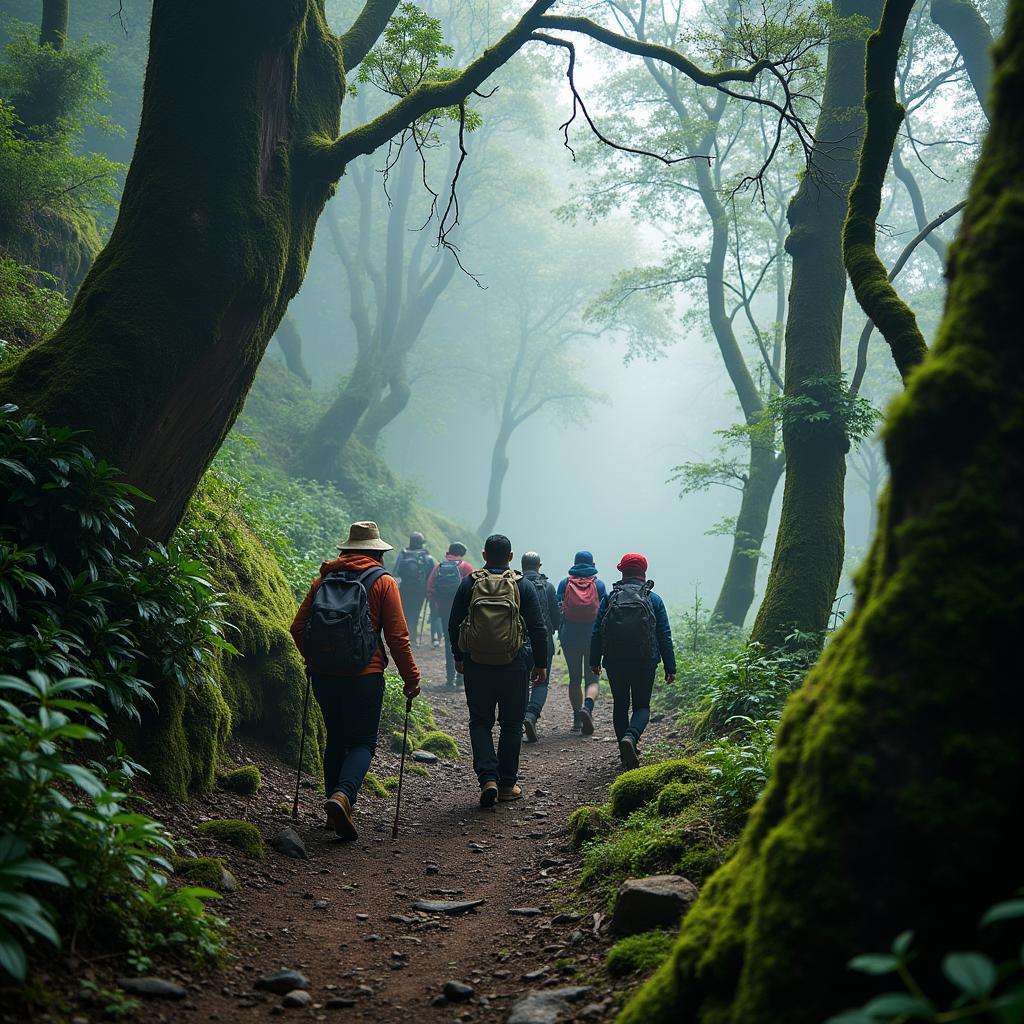 Nhóm phượt thủ đang trekking trên con đường mòn rừng Hoàng Liên với thảm thực vật nhiệt đới
IELTS Speaking Part 3: Two-way Discussion
Tổng Quan Về Part 3
Part 3 kéo dài 4-5 phút với các câu hỏi thảo luận trừu tượng và sâu sắc hơn, liên quan đến theme của Part 2. Đây là phần khó nhất vì yêu cầu phân tích, so sánh, đánh giá và đưa ra quan điểm cá nhân có lý lẽ chặt chẽ. Bạn cần xem xét nhiều góc độ của vấn đề, không chỉ personal experience mà còn social implications.
Chiến lược hiệu quả là mở rộng câu trả lời đến 3-5 câu với structure rõ ràng: direct answer → reason/explanation → example/evidence → consideration of other perspectives hoặc conclusion. Sử dụng discourse markers như “Well”, “Actually”, “I think” để bắt đầu, và “Having said that”, “On the other hand” để show balanced view.
Lỗi thường gặp của học viên Việt Nam trong Part 3 bao gồm trả lời quá ngắn và thiếu phân tích, không đưa ra lý lẽ rõ ràng để support opinion, thiếu từ vựng trừu tượng để discuss concepts, và không acknowledge complexity của issue. Examiner đánh giá cao candidates có thể discuss issues from multiple angles và use tentative language appropriately.
Các Câu Hỏi Thảo Luận Sâu
Theme 1: Environmental Benefits & Urban Life
Question 1: Why do you think people living in cities feel the need to visit natural places?
🎯 Phân tích câu hỏi:
- Dạng: Cause/Reason – yêu cầu explain motivations và reasons
- Key words: “people living in cities”, “feel the need”, “natural places”
- Cách tiếp cận: Đưa ra 2-3 reasons với explanation, có thể link đến modern lifestyle challenges, có thể mention psychological hoặc physical benefits
📝 Sample Answer – Band 6-7:
I think city people want to visit natural places because city life is very stressful. They work long hours and are always busy, so they need to relax. Natural places are quiet and peaceful, different from the noisy city. Also, the air in cities is polluted, but in forests or mountains, the air is fresh and clean. This is good for their health. Many people feel happier and more relaxed after spending time in nature.
Phân tích:
- Structure: Có opinion → multiple reasons (stress, pollution) → benefit statement nhưng chưa deep analysis
- Vocabulary: Basic và repetitive (very, many people, good for health)
- Tại sao Band 6-7: Answers the question adequately với clear reasons nhưng thiếu sophistication trong language và depth trong analysis. Không có nuanced view hoặc abstract concepts.
📝 Câu trả lời mẫu – Band 8-9:
Well, I believe there are several interconnected factors at play here. Primarily, urban environments tend to be characterized by what psychologists call “sensory overload” – the constant barrage of noise, artificial lighting, and visual stimulation that our brains weren’t evolutionarily designed to process. Natural settings offer a stark contrast, providing what researchers term “restorative environments” where our cognitive resources can replenish.
On top of that, there’s the psychological dimension. City dwellers often experience a sense of disconnection from the natural rhythms of life – everything is mediated by technology and human-made structures. This can lead to what some environmental psychologists call “nature deficit disorder” – not a clinical diagnosis, but rather a societal phenomenon where lack of nature contact manifests in increased stress, anxiety, and even diminished creativity. Visiting natural places becomes a way of reclaiming that primal connection.
From a more practical standpoint, there’s also the air quality issue you can’t ignore. Urban pollution has become such a pressing concern that even short excursions into greener areas can have measurable health benefits – cleansing the respiratory system and boosting immune function. So in essence, I’d argue it’s partly instinctive and partly a conscious response to the very real limitations and stressors of urban existence.
Phân tích:
- Structure: Well-organized với clear progression: Primary psychological reason → Secondary psychological dimension → Practical health aspect → Summary that acknowledges complexity
- Vocabulary: Sophisticated và precise (sensory overload, barrage of, evolutionarily designed, restorative environments, mediated by, manifests in, primal connection, pressing concern, excursions into)
- Grammar: Complex structures used naturally (what psychologists call, where our cognitive resources can replenish, what some psychologists call, relative clauses), passive voice for academic tone
- Critical Thinking: References research và psychological concepts, shows balanced view (instinctive vs. conscious), acknowledges complexity với “interconnected factors”
💡 Key Language Features:
- Discourse markers: Well (opening), Primarily (prioritizing), On top of that (adding), From a practical standpoint (shifting perspective), In essence (summarizing)
- Tentative language: I believe, tend to, can lead to, I’d argue
- Abstract nouns: sensory overload, disconnection, phenomenon, dimension, limitations
- Academic references: “what psychologists call”, “researchers term”, “environmental psychologists”
Question 2: Do you think the government should do more to protect natural areas?
🎯 Phân tích câu hỏi:
- Dạng: Opinion/Evaluation – should/shouldn’t questions
- Key words: “government”, “do more”, “protect natural areas”
- Cách tiếp cận: State position clearly → reasons supporting position → acknowledge potential counterarguments hoặc limitations → conclusion
📝 Sample Answer – Band 6-7:
Yes, I think the government should definitely do more to protect natural areas. These places are very important for the environment and for future generations. If we don’t protect them now, they might disappear because of development and pollution. The government has more power and money than individuals, so they can create laws and set up protected zones. They should also educate people about why nature is important. Some natural areas in Vietnam are already damaged, so we need to act quickly before it’s too late.
Phân tích:
- Structure: Clear position → reasons (importance, resources) → urgency statement
- Vocabulary: Basic (very important, might disappear, act quickly) với limited range
- Tại sao Band 6-7: Opinion is clear và supported với adequate reasons, nhưng lacking sophisticated argumentation và nuanced perspective. Grammar mainly simple và compound sentences.
📝 Câu trả lời mẫu – Band 8-9:
Absolutely, and I’d go so far as to say it’s not just desirable but imperative. Natural areas represent irreplaceable ecological assets that, once destroyed, cannot be reconstructed in any meaningful way – we’re talking about ecosystems that have evolved over millennia. Governments are uniquely positioned to provide the regulatory framework and enforcement mechanisms needed for effective conservation, something individual actions, however well-intentioned, simply cannot achieve at scale.
That said, I think the approach needs to be nuanced. It’s not just about designating more protected areas and restricting access – though that’s certainly part of it. Effective conservation requires striking a delicate balance between preservation and sustainable use. In Vietnam’s context, for instance, many rural communities derive their livelihoods from forest resources. Heavy-handed protection measures that disregard local needs often backfire, leading to resentment and even illegal exploitation.
What I’d advocate for is a more holistic strategy that includes robust legal protections, yes, but also adequate funding for park management, community engagement programs that give local people a stake in conservation, and economic incentives for sustainable practices. Countries like Costa Rica have shown that when done right, ecotourism can actually make conservation economically viable while raising awareness. The government’s role should be to create an enabling environment where protecting nature aligns with, rather than conflicts with, economic development.
Phân tích:
- Structure: Strong opinion → Justification with emphasis on uniqueness of government role → Acknowledgment of complexity and potential problems → Alternative approach with examples → Conclusion that shows sophisticated understanding
- Vocabulary: Wide range và precise (imperative, irreplaceable ecological assets, regulatory framework, enforcement mechanisms, designating, derive livelihoods, heavy-handed, backfire, holistic strategy, enabling environment, aligns with)
- Grammar: Full range of structures (so…that, something…cannot, that have evolved, that includes, where protecting nature aligns), passive constructions for formal tone, conditionals
- Critical Thinking: Shows awareness of trade-offs (preservation vs. sustainable use), acknowledges complexity (local communities’ needs), provides real-world example (Costa Rica), offers sophisticated solution rather than simplistic answer
💡 Key Language Features:
- Discourse markers: Absolutely (strong agreement), That said (introducing counterpoint), What I’d advocate for (stating position), yes (acknowledging previous point)
- Tentative language: I think, I’d advocate for, often backfire (not always)
- Abstract nouns: imperative, framework, mechanisms, conservation, resentment, exploitation, strategy, incentives
- Hedging and precision: not just…but, however well-intentioned, when done right
Khi thảo luận về vai trò của chính phủ và cộng đồng trong việc bảo vệ môi trường, bạn có thể tìm thấy những kỹ năng diễn đạt về expertise tương tự trong bài viết Describe a person who is very knowledgeable in their area of expertise.
Theme 2: Changes in Nature & Future Trends
Question 3: How do you think climate change is affecting forests and natural areas?
🎯 Phân tích câu hỏi:
- Dạng: Cause-Effect/Analysis
- Key words: “climate change”, “affecting”, “forests and natural areas”
- Cách tiếp cận: Identify multiple effects → provide evidence or examples → discuss implications → possibly mention solutions or future outlook
📝 Sample Answer – Band 6-7:
Climate change is affecting forests in many bad ways. First, temperatures are getting higher, which can kill some plants and trees that need cooler weather. Second, there are more forest fires now because it’s hotter and drier. Also, rainfall patterns are changing, so some areas get too much rain and flooding, while other areas don’t get enough water. This makes it difficult for trees to grow properly. Animals living in forests are also affected because their habitats are changing. If we don’t stop climate change, many forests might disappear in the future.
Phân tích:
- Structure: Multiple effects listed clearly (temperature, fires, rainfall, animals) với cause-effect relationships
- Vocabulary: Basic (many bad ways, getting higher, too much, don’t get enough)
- Tại sao Band 6-7: Covers main points adequately với clear examples nhưng lacks scientific terminology và sophisticated analysis. Grammar adequate nhưng mainly simple structures.
📝 Câu trả lời mẫu – Band 8-9:
The impacts are both far-reaching and multifaceted, to be honest. Most visibly, we’re seeing altered precipitation patterns that are creating what scientists call “climate stress” for forest ecosystems. Some regions are experiencing prolonged droughts that make forests more susceptible to wildfires – we’ve seen catastrophic fires in places like the Amazon and California that are unprecedented in their scale and intensity. These fires don’t just destroy trees; they release massive amounts of stored carbon back into the atmosphere, creating a vicious feedback loop that accelerates warming further.
On the flip side, other areas are getting excessive rainfall and flooding, which can waterlog soils and suffocate root systems. Temperature increases are also shifting the geographical ranges where certain species can survive – we’re seeing tree lines moving to higher elevations and higher latitudes. This disrupts entire ecosystems because forests aren’t just collections of trees; they’re intricate webs of interdependent species. When one element changes, it triggers cascading effects throughout the system.
Perhaps most concerning is the impact on biodiversity hotspots like tropical rainforests. These regions, which harbor the majority of Earth’s terrestrial species, are particularly vulnerable to temperature and moisture changes. We’re facing what some ecologists call a “sixth mass extinction”, with species disappearing at rates estimated to be 1,000 times higher than natural background rates. The loss isn’t just ecological – it’s also undermining the ecosystem services these forests provide, like carbon sequestration, water regulation, and soil stabilization that human societies depend on.
Looking ahead, the trajectory is troubling unless we implement dramatic mitigation measures. Some scientists talk about tipping points beyond which changes become irreversible. That said, there’s also emerging research into forest resilience and assisted migration strategies that could help some ecosystems adapt. It’s a race against time, essentially.
Phân tích:
- Structure: Introduction acknowledging complexity → Most visible effect with example → Opposite effect → Temperature effects on species → Focus on biodiversity concern → Future outlook with nuance
- Vocabulary: Scientific và sophisticated (far-reaching, multifaceted, altered precipitation patterns, catastrophic, unprecedented, vicious feedback loop, waterlog soils, suffocate root systems, biodiversity hotspots, carbon sequestration, tipping points, irreversible, assisted migration)
- Grammar: Complex structures throughout (that are creating, which can waterlog, we’re seeing tree lines moving, that human societies depend on), passive voice for scientific tone, participle clauses
- Critical Thinking: Multi-dimensional analysis (visible effects, cascading effects, biodiversity, ecosystem services, future scenarios), uses scientific terminology accurately, acknowledges uncertainty (some scientists, emerging research), shows awareness of interconnections
💡 Key Language Features:
- Discourse markers: To be honest (adding candor), Most visibly (prioritizing), On the flip side (contrasting), Perhaps most concerning (emphasizing), Looking ahead (future focus), That said (acknowledging counterpoint)
- Scientific terminology: precipitation patterns, climate stress, feedback loop, tree lines, biodiversity hotspots, ecosystem services, carbon sequestration, tipping points
- Hedging: scientists call, estimated to be, some ecologists, some scientists talk about
- Abstract nouns: impacts, susceptibility, disruption, extinction, trajectory, resilience, adaptation
Question 4: Do you think future generations will have the same opportunities to enjoy nature as we do today?
🎯 Phân tích câu hỏi:
- Dạng: Prediction/Future speculation với comparison
- Key words: “future generations”, “same opportunities”, “enjoy nature”
- Cách tiếp cận: Make prediction → provide supporting reasons → consider different scenarios (optimistic vs. pessimistic) → conclude with personal view
📝 Sample Answer – Band 6-7:
I’m not very optimistic about this. If we continue to damage the environment like we’re doing now, future generations will have fewer natural places to visit. Many forests are being cut down for development, and pollution is getting worse. Also, population is increasing, so there will be more people but less nature. However, if we take action now and protect natural areas better, maybe the situation can improve. Young people today seem more aware of environmental issues, so there’s some hope. It really depends on what we do in the next few years.
Phân tích:
- Structure: Clear position → reasons (deforestation, pollution, population) → hopeful alternative → conditional conclusion
- Vocabulary: Common words (not very optimistic, getting worse, take action, some hope)
- Tại sao Band 6-7: Addresses both negative và positive scenarios nhưng analysis lacks depth. Grammar adequate với some conditionals nhưng mainly simple structures.
📝 Câu trả lời mẫu – Band 8-9:
That’s quite a sobering question, and honestly, my outlook is cautiously pessimistic, though not entirely devoid of hope. If current trends persist – rampant deforestation, habitat fragmentation, unchecked urbanization – then no, future generations will undoubtedly have diminished access to pristine natural environments. We’re already seeing this trajectory in many parts of the world where children grow up in entirely artificial landscapes, their only contact with nature being manicured parks that bear little resemblance to genuine wilderness.
The numbers paint a stark picture – we’ve lost roughly 10% of the world’s wilderness areas just in the past two decades, and that rate is accelerating. By some projections, many of the natural areas we take for granted today could be severely degraded or even gone entirely within our grandchildren’s lifetimes. There’s also the qualitative dimension – even if some natural spaces survive, they may be so overcrowded or commercialized that the experience of genuine solitude and immersion in nature becomes increasingly rare, relegated to the privileged few who can afford remote eco-lodges.
Having said that, I don’t think we should succumb to complete fatalism. There are encouraging counter-trends worth noting. The global conservation movement has gained considerable momentum, with unprecedented levels of international cooperation on issues like biodiversity protection and habitat restoration. Countries like China have actually been reforesting at impressive scales. Technological advances in areas like precision agriculture might allow us to meet human needs while reducing our footprint. And there’s a genuine shift in consciousness, particularly among younger generations, who seem to grasp the urgency of environmental issues in ways previous generations didn’t.
So I’d say the answer hinges on the choices we make collectively over the next decade or two. This is a critical window. If we rise to the challenge – transitioning to renewable energy, implementing robust conservation policies, rethinking economic models that prioritize short-term profit over long-term sustainability – then yes, we can bequeath future generations a world where nature remains accessible and vibrant. But it requires unprecedented global action, and the clock is very much ticking.
Phân tích:
- Structure: Initial position with nuance (cautiously pessimistic) → Negative scenario with evidence → Quantitative data strengthening argument → Qualitative dimension → Acknowledgment of positive developments → Conditions for positive outcome → Conclusion emphasizing urgency
- Vocabulary: Sophisticated và precise (sobering, devoid of, rampant, trajectory, manicured parks, degraded, qualitative dimension, succumb to, fatalism, counter-trends, footprint, hinges on, bequeath, vibrant)
- Grammar: Full range expertly deployed (if current trends persist, by some projections, that bear little resemblance to, worth noting, who can afford, who seem to grasp), conditionals of various types, relative clauses, participle phrases
- Critical Thinking: Multi-layered analysis (quantitative and qualitative impacts), acknowledges both pessimistic and optimistic evidence, shows awareness of agency (choices we make), emphasizes time-sensitivity, provides concrete examples and data, considers socioeconomic dimensions (privilege, access)
💡 Key Language Features:
- Discourse markers: Honestly (candor), If current trends persist (conditional framing), Having said that (introducing counterargument), So I’d say (concluding)
- Tentative/hedging language: cautiously pessimistic, not entirely, by some projections, might allow, I’d say
- Emphatic language: undoubtedly, stark picture, unprecedented, very much ticking
- Abstract nouns: trajectory, dimension, solitude, fatalism, momentum, consciousness, urgency, sustainability
- Sophisticated verbs: persist, accelerating, relegated to, succumb to, hinges on, bequeath
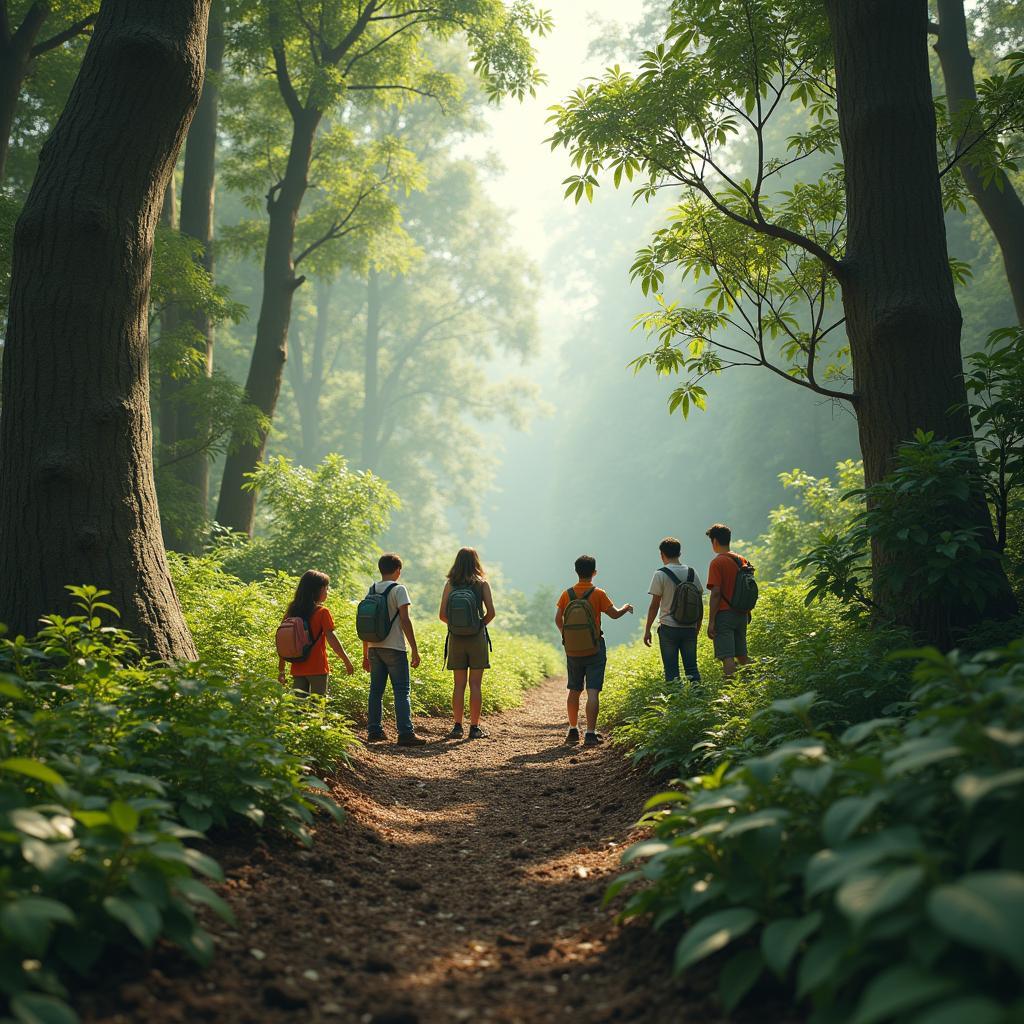 Hình ảnh tương lai bảo tồn rừng nhiệt đới với thế hệ trẻ tham gia trồng cây và nghiên cứu sinh thái
Theme 3: Cultural and Social Dimensions
Question 5: Are attitudes towards nature different between urban and rural populations?
🎯 Phân tích câu hỏi:
- Dạng: Compare and contrast
- Key words: “attitudes towards nature”, “different”, “urban and rural populations”
- Cách tiếp cận: Acknowledge differences exist → explain urban attitudes → explain rural attitudes → discuss reasons for differences → possibly mention convergence or changing patterns
📝 Sample Answer – Band 6-7:
Yes, I think there are big differences. Urban people often see nature as something special for relaxation and recreation because they don’t see it every day. They might go hiking or camping on weekends as a hobby. But for rural people, nature is part of their daily life and work. Farmers depend on nature for their livelihood, so they think about it in practical ways, not just for enjoyment. However, rural people might sometimes damage nature because they need to make money. Urban people usually care more about environmental protection because they don’t depend on nature directly for income.
Phân tích:
- Structure: Clear comparison với urban vs. rural perspectives, includes practical considerations
- Vocabulary: Basic (big differences, something special, part of daily life, care more about)
- Tại sao Band 6-7: Makes valid distinctions và includes practical dimension nhưng analysis somewhat simplistic, lacks nuance về diversity within groups, generalizations not well-qualified
📝 Câu trả lời mẫu – Band 8-9:
There are certainly marked differences, though I’d caution against overgeneralizing since both groups are far from homogeneous. Generally speaking, urban populations tend to romanticize nature – it becomes this idealized escape, imbued with almost spiritual significance as an antidote to urban stressors. Nature is often perceived through a recreational lens – something to be visited and experienced rather than something integral to daily survival. This can lead to what I’d call a “tourist mentality” where nature is appreciated aesthetically but not necessarily understood ecologically or systemically.
Rural populations, by contrast, typically have a more utilitarian relationship with nature, shaped by direct dependence on natural resources for livelihoods. There’s often a deeper, more intuitive understanding of ecological processes – seasonal patterns, soil quality, water cycles – born of practical necessity. However, this doesn’t automatically translate to conservationist attitudes. When you’re struggling to make ends meet, immediate economic needs often take precedence over abstract environmental concerns. The farmer clearing forest for cropland isn’t indifferent to nature’s value; he’s responding to pressing economic imperatives.
That said, these distinctions are becoming increasingly blurred. Urbanization means many “urban” residents are actually first-generation migrants who retain rural sensibilities. Meanwhile, global environmental discourse, disseminated through media and education, is shaping attitudes across both demographics. I’ve also noticed an interesting counter-trend where some urban populations in Vietnam are developing quite sophisticated environmental awareness – pushing for green policies, supporting conservation NGOs – while some rural communities, especially those benefiting from ecotourism, are becoming active stewards of natural resources they previously might have exploited unsustainably.
What’s crucial to recognize is that attitudes are malleable and context-dependent. Rather than essentializing urban-rural differences, we should focus on creating enabling conditions – economic opportunities, education, institutional support – that allow both groups to develop sustainable relationships with nature. The real division isn’t urban versus rural; it’s between those with the luxury of prioritizing long-term sustainability versus those forced into short-term survival thinking.
Phân tích:
- Structure: Acknowledge differences with qualification → Urban attitudes analyzed → Rural attitudes analyzed with nuance → Recognition of blurring boundaries with examples → Sophisticated conclusion that challenges the binary
- Vocabulary: Highly sophisticated (marked differences, homogeneous, romanticize, imbued with, antidote to, utilitarian relationship, conservationist attitudes, take precedence over, disseminated through, malleable, essentializing, enabling conditions)
- Grammar: Complex structures throughout (though I’d caution against, it becomes this escape, nature is perceived through, shaped by, born of, increasingly blurred, who retain, that allow both groups to develop)
- Critical Thinking: Avoids simplistic generalizations, acknowledges diversity within groups, provides nuanced analysis of both perspectives, recognizes changing dynamics, challenges the question’s implicit binary, reframes the issue in terms of structural conditions rather than cultural essences
💡 Key Language Features:
- Discourse markers: Generally speaking (qualifying), by contrast (comparing), That said (introducing complication), What’s crucial to recognize (emphasizing key point)
- Hedging and qualifying: certainly, I’d caution against, tend to, often, typically, doesn’t automatically
- Academic language: homogeneous, utilitarian, conservationist, demographic, malleable, essentializing
- Sophisticated verbs: romanticize, imbued with, perceived through, shaped by, disseminated through, prioritizing
Để hiểu rõ hơn về việc truyền đạt kiến thức và nuôi dưỡng thái độ tích cực với thiên nhiên, bạn có thể tham khảo thêm về describe a time when you helped someone improve their skills để học cách diễn đạt quá trình mentoring và skill development.
Question 6: How important is it for children to have experiences in nature?
🎯 Phân tích câu hỏi:
- Dạng: Evaluation/Importance question với focus on specific demographic (children)
- Key words: “how important”, “children”, “experiences in nature”
- Cách tiếp cận: State importance level → provide multiple dimensions of benefits (physical, psychological, cognitive, social) → support with evidence or examples → possibly address obstacles or solutions
📝 Sample Answer – Band 6-7:
I think it’s very important for children to spend time in nature. First, it’s good for their physical health because they can run around and exercise instead of sitting inside all day. Second, nature helps children learn about the environment and understand why we need to protect it. When children play outside, they also become more creative and imaginative. In cities, many children spend too much time on phones and computers, which is not healthy. Parents should take their children to parks or natural areas more often so they can have these benefits.
Phân tích:
- Structure: Clear position → multiple benefits listed (physical, educational, creative) → problem statement → recommendation
- Vocabulary: Basic (very important, good for, learn about, spend too much time)
- Tại sao Band 6-7: Covers several relevant points và logical flow nhưng lacks depth in analysis, no specific evidence or research mentioned, benefits described in general terms
📝 Câu trả lời mẫu – Band 8-9:
I’d argue it’s absolutely crucial, and increasingly so in our hyper-digitalized world. The benefits operate on multiple levels, all of which are supported by substantial research. From a developmental standpoint, nature provides what developmental psychologists call “loose parts play” – unstructured environments with diverse materials that stimulate creativity and problem-solving in ways that structured playgrounds or digital games simply cannot. When children build forts from branches or create imaginary worlds in forest settings, they’re developing executive function skills, spatial reasoning, and collaborative abilities.
There’s also compelling evidence regarding physical and mental health. Studies have shown that children with regular nature exposure have lower rates of obesity, improved immune function, and better motor skill development. Perhaps even more significant is the psychological dimension – research indicates that time in nature reduces symptoms of ADHD, alleviates anxiety and depression, and enhances overall well-being. The Japanese concept of “shinrin-yoku” or forest bathing is now backed by scientific studies showing measurable physiological benefits like reduced cortisol levels and improved cardiovascular function.
Beyond individual benefits, there’s a critical environmental dimension. Children who develop meaningful connections with nature early in life are statistically more likely to become environmentally conscious adults who advocate for conservation. Some researchers call this the “extinction of experience” problem – if children grow up disconnected from natural systems, they won’t understand or care about protecting them. You can’t love what you don’t know.
The challenge, of course, is that modern childhood, especially in urban Vietnam, is increasingly insulated from nature. Between academic pressures, screen time, and parental anxieties about safety, children spend unprecedented amounts of time indoors. What’s needed, I believe, is a multifaceted approach – incorporating nature-based learning into school curricula, creating accessible green spaces in urban areas, and perhaps most importantly, shifting cultural attitudes to recognize that unstructured outdoor play isn’t a luxury but a developmental necessity. Countries like Finland and Norway have pioneered outdoor kindergarten models that other nations, including Vietnam, could adapt to local contexts.
Phân tích:
- Structure: Strong opening statement → Developmental benefits with specific terminology → Physical and mental health evidence → Environmental/long-term dimension → Acknowledgment of obstacles → Proposed solutions with international examples
- Vocabulary: Highly sophisticated và specific (hyper-digitalized, loose parts play, executive function, spatial reasoning, shinrin-yoku, cortisol levels, extinction of experience, insulated from, multifaceted approach, pioneered)
- Grammar: Full range of complex structures (what psychologists call, ways that structured playgrounds cannot, when children build, research indicates that, children who develop, you can’t love what you don’t know), varied sentence types including exclamatives
- Critical Thinking: Multi-dimensional analysis (developmental, physical, psychological, environmental), references specific research concepts and cultural practices, acknowledges practical challenges, provides concrete solutions with international examples, shows awareness of local context (urban Vietnam)
💡 Key Language Features:
- Discourse markers: From a developmental standpoint (framing), Perhaps even more significant (emphasizing), Beyond individual benefits (expanding scope), The challenge of course (acknowledging problems), What’s needed (proposing solutions)
- Academic references: developmental psychologists, studies have shown, research indicates, some researchers call this, backed by scientific studies
- Emphatic language: absolutely crucial, compelling evidence, critical dimension, unprecedented amounts
- Abstract nouns: standpoint, dimension, benefits, consciousness, necessity, attitudes
- Sophisticated expressions: hyper-digitalized, loose parts play, extinction of experience, insulated from, multifaceted approach
Từ vựng và cụm từ quan trọng
Topic-Specific Vocabulary
| Từ vựng/Cụm từ | Loại từ | Phiên âm | Nghĩa tiếng Việt | Ví dụ | Collocation |
|---|---|---|---|---|---|
| pristine | adj | /ˈprɪstiːn/ | nguyên sơ, hoang sơ | The pristine forest had never been logged. | pristine environment, pristine wilderness, pristine conditions, pristine beauty |
| canopy | n | /ˈkænəpi/ | tán rừng, tầng lá phủ | Sunlight filtered through the dense canopy above. | forest canopy, tree canopy, dense canopy, canopy layer |
| biodiversity | n | /ˌbaɪəʊdaɪˈvɜːsəti/ | đa dạng sinh học | The rainforest has incredible biodiversity. | rich biodiversity, biodiversity hotspot, biodiversity loss, protect biodiversity |
| trail | n | /treɪl/ | đường mòn | We followed a narrow trail through the woods. | hiking trail, nature trail, mountain trail, forest trail |
| verdant | adj | /ˈvɜːdənt/ | xanh tươi, um tùm | The valley was covered in verdant vegetation. | verdant landscape, verdant hills, verdant forest, verdant meadows |
| rejuvenating | adj | /rɪˈdʒuːvəneɪtɪŋ/ | làm trẻ hóa, phục hồi | The walk was incredibly rejuvenating. | rejuvenating experience, rejuvenating effect, rejuvenating break, rejuvenating power |
| ecosystem | n | /ˈiːkəʊsɪstəm/ | hệ sinh thái | Forest ecosystems support countless species. | fragile ecosystem, diverse ecosystem, ecosystem services, ecosystem balance |
| foliage | n | /ˈfəʊliɪdʒ/ | tán lá, lá cây | The autumn foliage was spectacular. | dense foliage, lush foliage, autumn foliage, green foliage |
| tranquility | n | /træŋˈkwɪləti/ | sự yên tĩnh, thanh bình | I found great tranquility in the forest. | sense of tranquility, peaceful tranquility, seek tranquility, tranquility and calm |
| venture | v | /ˈventʃə(r)/ | mạo hiểm đi, dấn thân | We ventured deeper into the wilderness. | venture into, venture out, venture forth, venture off the path |
| meander | v | /miˈændə(r)/ | uốn khúc, đi lòng vòng | The trail meandered through the valley. | meander through, meander along, river meanders, path meanders |
| immersion | n | /ɪˈmɜːʃn/ | sự đắm chìm, nhập cuộc | Total immersion in nature is therapeutic. | complete immersion, full immersion, immersion in nature, cultural immersion |
| terrain | n | /təˈreɪn/ | địa hình | The terrain was rugged and challenging. | rough terrain, mountainous terrain, difficult terrain, varied terrain |
| ambient | adj | /ˈæmbiənt/ | xung quanh, môi trường | The ambient sounds of the forest were soothing. | ambient noise, ambient temperature, ambient sounds, ambient conditions |
| undulating | adj | /ˈʌndjuleɪtɪŋ/ | nhấp nhô, gợn sóng | The undulating hills stretched to the horizon. | undulating landscape, undulating terrain, undulating hills, undulating path |
| habitat | n | /ˈhæbɪtæt/ | môi trường sống | This forest is the habitat of rare birds. | natural habitat, wildlife habitat, habitat loss, habitat destruction |
| conservation | n | /ˌkɒnsəˈveɪʃn/ | bảo tồn | Forest conservation is crucial for the planet. | conservation efforts, wildlife conservation, conservation programs, environmental conservation |
| sustainable | adj | /səˈsteɪnəbl/ | bền vững | We need sustainable forest management. | sustainable practices, sustainable development, environmentally sustainable, sustainable use |
| rustle | v | /ˈrʌsl/ | xào xạc | Leaves rustled in the gentle breeze. | rustle in the wind, rustle of leaves, rustle softly, rustle through |
| secluded | adj | /sɪˈkluːdɪd/ | hẻo lánh, biệt lập | We found a secluded spot by the stream. | secluded area, secluded location, secluded spot, secluded path |
Idiomatic Expressions & Advanced Phrases
| Cụm từ | Nghĩa | Ví dụ sử dụng | Band điểm |
|---|---|---|---|
| off the beaten path/track | xa đường mòn quen thuộc, nơi ít người biết | We chose a trail that was completely off the beaten path. | 7.5-9 |
| a breath of fresh air | hơi thở của không khí trong lành; điều gì đó mới mẻ, dễ chịu | Getting into nature was like a breath of fresh air after weeks in the city. | 7-8 |
| in the middle of nowhere | ở giữa hư không, nơi hẻo lánh | The trail led us to a beautiful lake in the middle of nowhere. | 6.5-7.5 |
| back to nature | trở về với thiên nhiên | The trip was all about getting back to nature and disconnecting from technology. | 6.5-7.5 |
| a stone’s throw away | rất gần, chỉ một quãng ngắn | The forest was just a stone’s throw away from our accommodation. | 7-8 |
| take in the scenery | ngắm cảnh, thưởng thức phong cảnh | We stopped frequently to take in the breathtaking scenery. | 7-8 |
| commune with nature | giao cảm với thiên nhiên | Walking alone allowed me to commune with nature in a profound way. | 7.5-9 |
| at one with nature | hòa quyện với thiên nhiên | I felt completely at one with nature during that peaceful walk. | 7.5-8.5 |
| nature’s bounty | sự hào phóng/phong phú của thiên nhiên | The forest displayed nature’s bounty in every direction. | 8-9 |
| the great outdoors | môi trường ngoài trời, thiên nhiên rộng lớn | I’ve always been passionate about the great outdoors. | 7-8 |
| recharge one’s batteries | nạp lại năng lượng | The forest walk really helped me recharge my batteries. | 7-8.5 |
| get away from it all | thoát khỏi mọi thứ, nghỉ ngơi xa xôi | We needed to get away from it all, so we headed to the mountains. | 7-8 |
Discourse Markers (Từ Nối Ý Trong Speaking)
Để bắt đầu câu trả lời:
- 📝 Well,… – Dùng khi cần một chút thời gian suy nghĩ hoặc khi câu trả lời không hoàn toàn straightforward
- 📝 Actually,… – Khi bạn muốn đưa ra góc nhìn hơi khác hoặc surprising information
- 📝 To be honest,… – Khi nói thẳng, thật lòng về điều gì đó
- 📝 I’d say that… – Cách tentative để đưa ra quan điểm
- 📝 From my perspective,… – Nhấn mạnh đây là quan điểm cá nhân
Để bổ sung ý:
- 📝 On top of that,… – Thêm vào đó, hơn nữa
- 📝 What’s more,… – Thêm nữa, hơn thế nữa
- 📝 Not to mention… – Chưa kể đến, không nói đến
- 📝 Beyond that,… – Xa hơn thế, ngoài ra
- 📝 In addition to that,… – Thêm vào đó
Để đưa ra quan điểm cân bằng:
- 📝 On the one hand,… On the other hand,… – Một mặt… mặt khác
- 📝 While it’s true that…, we also need to consider… – Trong khi đúng là… chúng ta cũng cần xem xét
- 📝 That said,… – Đã nói như vậy nhưng, tuy nhiên
- 📝 Having said that,… – Mặc dù đã nói như vậy
- 📝 Admittedly,… but… – Phải thừa nhận rằng… nhưng
Để kết luận:
- 📝 All in all,… – Tóm lại, nhìn chung
- 📝 At the end of the day,… – Cuối cùng thì, suy cho cùng
- 📝 In essence,… – Về bản chất, điều cốt lõi là
- 📝 Ultimately,… – Sau cùng, cuối cùng
- 📝 All things considered,… – Xét mọi mặt thì
Để nhấn mạnh:
- 📝 What I find most [adj] is… – Điều tôi thấy… nhất là
- 📝 The thing that really struck me was… – Điều thực sự gây ấn tượng với tôi là
- 📝 Perhaps most importantly,… – Có lẽ quan trọng nhất là
- 📝 It’s worth noting that… – Đáng chú ý là
Grammatical Structures Ấn Tượng
1. Conditional Sentences (Câu điều kiện):
-
Mixed conditional: “If I hadn’t gone on that walk, I would still be feeling stressed today.” (Kết hợp quá khứ và hiện tại – nếu tôi không đi dạo hôm đó, hôm nay tôi vẫn còn căng thẳng)
-
Inversion for emphasis: “Had I known how beautiful it would be, I would have brought a better camera.” (Đảo ngữ để nhấn mạnh – nếu tôi biết đẹp như vậy, tôi đã mang máy ảnh tốt hơn)
-
Third conditional with “otherwise”: “We brought plenty of water; otherwise, we would have been quite uncomfortable.” (Mang nước đầy đủ, nếu không sẽ khó chịu)
2. Relative Clauses (Mệnh đề quan hệ):
-
Non-defining: “The ancient forest, which had stood for centuries, felt almost sacred.” (Khu rừng cổ thụ, đã tồn tại hàng thế kỷ, cảm giác gần như thiêng liêng)
-
Reduced relative clause: “The path winding through the valley was absolutely stunning.” (Con đường uốn khúc qua thung lũng tuyệt đẹp)
3. Passive Voice (Câu bị động):
-
Impersonal constructions: “It is thought that spending time in nature reduces stress levels significantly.” (Người ta cho rằng dành thời gian trong thiên nhiên giảm stress đáng kể)
-
It is believed/said that: “It is widely believed that forest bathing has therapeutic benefits.” (Người ta tin rộng rãi rằng tắm rừng có lợi ích chữa bệnh)
4. Cleft Sentences (Câu chẻ):
-
What-cleft: “What I found most remarkable was the absolute silence in the forest.” (Điều tôi thấy đáng chú ý nhất là sự tĩnh lặng tuyệt đối trong rừng)
-
It-cleft: “It was the sense of tranquility that made the experience unforgettable.” (Chính cảm giác thanh bình đã khiến trải nghiệm không thể quên)
5. Advanced Participle Constructions:
-
Present participle: “Walking through the ancient forest, I felt a profound connection to nature.” (Đi qua khu rừng cổ, tôi cảm thấy kết nối sâu sắc với thiên nhiên)
-
Perfect participle: “Having reached the summit, we were rewarded with spectacular views.” (Sau khi lên đến đỉnh, chúng tôi được chiêm ngưỡng cảnh tuyệt đẹp)
6. Inversion for Emphasis:
-
Negative adverbials: “Never before had I experienced such pristine natural beauty.” (Chưa bao giờ tôi trải nghiệm vẻ đẹp thiên nhiên nguyên sơ như vậy)
-
Only + time expression: “Only when I entered the forest did I realize how stressed I had been.” (Chỉ khi vào rừng tôi mới nhận ra mình đã căng thẳng như thế nào)
Nếu bạn muốn tìm hiểu thêm về cách mô tả những địa điểm mang lại cảm hứng và năng lượng tích cực, hãy xem bài viết về Describe a place where you go to feel inspired để có thêm vocabulary và ideas phong phú.
Chủ đề “describe a memorable walk in a forest or nature trail” là một đề tài phong phú cho phép bạn thể hiện nhiều khía cạnh khác nhau của khả năng Speaking. Với sự chuẩn bị kỹ lưỡng về từ vựng chuyên sâu, cấu trúc ngữ pháp đa dạng, và khả năng phân tích sâu sắc, bạn hoàn toàn có thể đạt được band điểm cao trong cả ba Part của IELTS Speaking test.
Điều quan trọng nhất là hãy thực hành thường xuyên với các sample answers, nhưng đừng học thuộc lòng – hãy internalize các structures và vocabulary để sử dụng một cách tự nhiên. Hãy nhớ rằng examiner đánh giá cao sự tự nhiên, spontaneity và khả năng express genuine ideas hơn là những câu trả lời được memorize. Khi nói về trải nghiệm trong thiên nhiên, hãy kết nối với cảm xúc thật của bản thân và personal experiences để câu chuyện của bạn trở nên convincing và engaging hơn.
Ngoài ra, việc tham gia các hoạt động ngoài trời thực tế cũng sẽ giúp bạn có nhiều experiences và vocabulary tự nhiên hơn để chia sẻ. Quan sát kỹ môi trường xung quanh, chú ý đến details về cảnh vật, âm thanh, và cảm xúc – tất cả những điều này sẽ làm phong phú thêm content khi bạn nói về chủ đề này. Cuối cùng, nếu bạn muốn tìm hiểu thêm về các truyền thống văn hóa liên quan đến thiên nhiên, hãy xem bài viết về describe a festival in your culture that you enjoy celebrating để mở rộng góc nhìn về mối quan hệ giữa con người và môi trường tự nhiên.
Chúc bạn thành công trong kỳ thi IELTS Speaking và có những trải nghiệm tuyệt vời trong thiên nhiên!



[…] […]
[…] các trải nghiệm đáng nhớ khác trong IELTS Speaking, bạn có thể tham khảo thêm describe a memorable walk in a forest or nature trail để làm phong phú thêm kỹ năng kể chuyện của […]