
Mở bài
Trong bối cảnh giáo dục truyền thông hiện đại, podcast đang trở thành một công cụ học tập sáng tạo và hiệu quả. Chủ đề “Podcast Creation In Media Studies Classes” không chỉ phản ánh xu hướng công nghệ giáo dục mà còn thường xuyên xuất hiện trong các đề thi IELTS Reading thực tế, đặc biệt ở Passage 2 và 3 với nội dung liên quan đến giáo dục, công nghệ và truyền thông.
Bài viết này cung cấp một bộ đề thi IELTS Reading hoàn chỉnh với 3 passages được thiết kế theo đúng chuẩn Cambridge IELTS, bao gồm:
- Passage 1 (Easy): Giới thiệu về podcast trong giáo dục
- Passage 2 (Medium): Ứng dụng podcast trong lớp học truyền thông
- Passage 3 (Hard): Phân tích học thuật về hiệu quả và thách thức
Mỗi passage kèm theo 13-14 câu hỏi đa dạng với đầy đủ đáp án chi tiết, giải thích cụ thể và từ vựng quan trọng. Đề thi này phù hợp cho học viên từ band 5.0 trở lên, giúp bạn làm quen với format thi thật và nâng cao kỹ năng làm bài một cách bài bản.
1. Hướng dẫn làm bài IELTS Reading
Tổng Quan Về IELTS Reading Test
Bài thi IELTS Reading kéo dài 60 phút với 3 passages và tổng cộng 40 câu hỏi. Mỗi câu trả lời đúng được tính 1 điểm, không bị trừ điểm khi sai.
Phân bổ thời gian khuyến nghị:
- Passage 1: 15-17 phút (độ khó thấp, câu hỏi trực tiếp)
- Passage 2: 18-20 phút (độ khó trung bình, cần paraphrase)
- Passage 3: 23-25 phút (độ khó cao, yêu cầu suy luận)
Lưu ý dành 2-3 phút cuối để chép đáp án vào Answer Sheet.
Các Dạng Câu Hỏi Trong Đề Này
Đề thi mẫu này bao gồm 7 dạng câu hỏi phổ biến nhất:
- Multiple Choice – Chọn đáp án đúng
- True/False/Not Given – Xác định thông tin đúng/sai/không đề cập
- Matching Information – Ghép thông tin với đoạn văn
- Sentence Completion – Hoàn thành câu
- Matching Headings – Ghép tiêu đề với đoạn văn
- Summary Completion – Hoàn thành tóm tắt
- Short-answer Questions – Trả lời ngắn
2. IELTS Reading Practice Test
PASSAGE 1 – The Rise of Educational Podcasts
Độ khó: Easy (Band 5.0-6.5)
Thời gian đề xuất: 15-17 phút
Podcasts in Modern Education
The integration of podcasts into educational settings has become increasingly prevalent over the past decade. Originally designed as a form of entertainment media, podcasts have evolved into powerful pedagogical tools that educators worldwide are embracing. In media studies classes particularly, the creation of podcasts offers students a unique opportunity to develop practical skills while engaging with theoretical concepts.
A podcast is essentially a digital audio file that can be downloaded or streamed via the internet. Unlike traditional radio broadcasts, podcasts are on-demand, meaning listeners can access them at their convenience. This flexibility makes them an ideal educational resource. Students can listen to course content while commuting, exercising, or during any free time, making learning more accessible than ever before.
In educational contexts, podcasts serve multiple purposes. Teachers use them to deliver lectures, provide supplementary materials, and share expert interviews. However, the most transformative aspect is when students themselves become podcast creators. This shift from passive consumers to active producers represents a fundamental change in how media literacy is taught.
Media studies programs have been at the forefront of this movement. These courses traditionally focus on analyzing media content, understanding production techniques, and examining media’s societal impact. By incorporating podcast creation into the curriculum, instructors provide students with hands-on experience that bridges theory and practice. Students learn not only how to critique media but also how to create it effectively.
The process of creating a podcast involves several key stages. First, students must conceptualize their topic and target audience. This requires careful consideration of what content will be engaging and relevant. Next comes the scriptwriting phase, where students develop their narrative structure and prepare their dialogue. The recording stage involves using audio equipment and learning basic sound engineering principles. Finally, students must edit their recordings, add music or sound effects, and prepare the final product for distribution.
Technical skills acquired through podcast creation are invaluable in today’s digital landscape. Students learn to use recording software, understand audio quality standards, and master editing techniques. These are transferable skills that have applications far beyond the classroom. Many media professionals now consider audio production expertise essential for career success.
Beyond technical abilities, podcast creation develops critical thinking and communication skills. Students must research their topics thoroughly, organize information logically, and present ideas clearly. They learn to consider their audience’s perspective and adapt their communication style accordingly. These soft skills are highly valued by employers across all industries.
Collaborative learning is another significant benefit. Many podcast projects require students to work in teams, with members taking on different roles such as host, researcher, audio technician, or editor. This collaboration mirrors real-world media production environments and teaches students about professional teamwork, project management, and meeting deadlines.
The accessibility of podcast technology has democratized media production. Unlike video production, which often requires expensive cameras and lighting equipment, podcasting can be started with relatively minimal investment. A basic microphone and free editing software are sufficient for beginners. This low barrier to entry ensures that all students, regardless of financial background, can participate fully in podcast creation activities.
Assessment methods for podcast projects vary but typically include evaluation of content quality, technical execution, creativity, and audience engagement. Some instructors use peer review systems, where students listen to each other’s podcasts and provide constructive feedback. This not only helps students improve but also develops their analytical skills as they learn to evaluate media critically.
The popularity of podcasts among young people makes this pedagogical approach particularly effective. Students are often already familiar with the podcast format as listeners, which reduces the learning curve and increases motivation. They can reference their favorite podcasts as inspiration while developing their own unique creative voice.
Looking forward, the role of podcasts in education is expected to expand further. As digital literacy becomes increasingly important, the ability to create and distribute audio content will be a fundamental skill for future media professionals. Educational institutions that incorporate podcast creation into their programs are preparing students for the evolving demands of the modern workplace.
Questions 1-13
Questions 1-5: Multiple Choice
Choose the correct letter, A, B, C, or D.
-
According to the passage, what is the main advantage of podcasts over traditional radio?
A) They are cheaper to produce
B) They can be accessed at any time
C) They have better sound quality
D) They are more entertaining -
What does the passage suggest is the most significant educational aspect of podcasts?
A) Teachers delivering lectures through them
B) Students listening to expert interviews
C) Students creating their own podcasts
D) Providing supplementary course materials -
The process of creating a podcast begins with:
A) learning to use recording equipment
B) writing the script
C) thinking about the topic and audience
D) editing the recordings -
According to the text, what makes podcast creation accessible to all students?
A) Free training courses
B) Teacher assistance
C) Low cost of equipment
D) Simple editing process -
Why are podcasts particularly effective with young people?
A) They prefer audio to video
B) They already listen to podcasts
C) They have more free time
D) They own better equipment
Questions 6-9: True/False/Not Given
Do the following statements agree with the information in the passage?
Write:
- TRUE if the statement agrees with the information
- FALSE if the statement contradicts the information
- NOT GIVEN if there is no information on this
- Podcasts were originally created for educational purposes.
- Media studies programs were among the first to use podcast creation in teaching.
- Video production requires more expensive equipment than podcast creation.
- All educational institutions now include podcast creation in their curriculum.
Questions 10-13: Sentence Completion
Complete the sentences below.
Choose NO MORE THAN TWO WORDS from the passage for each answer.
- Podcasts allow students to shift from being passive consumers to becoming __.
- Through podcast projects, students learn about working in teams, managing projects, and __.
- Assessment of podcast projects often includes a __ system where students evaluate each other’s work.
- The ability to create audio content will be a __ for future media professionals.
PASSAGE 2 – Implementing Podcast Projects in Media Studies Curriculum
Độ khó: Medium (Band 6.0-7.5)
Thời gian đề xuất: 18-20 phút
Pedagogical Frameworks for Podcast Creation
The systematic integration of podcast creation into media studies curricula represents a pedagogical innovation that aligns with contemporary theories of experiential learning. Educational theorists argue that authentic tasks—activities that mirror real-world professional practices—enhance student engagement and facilitate deeper understanding of subject matter. Podcast creation exemplifies this approach, providing students with tangible outcomes that extend beyond traditional academic assignments.
A. Theoretical Foundations
The constructivist learning theory, which posits that learners build knowledge through active engagement rather than passive reception, provides a robust framework for understanding why podcast creation is pedagogically effective. When students undertake podcast projects, they construct meaning through multiple modalities: researching content, crafting narratives, manipulating audio, and considering audience reception. This multi-dimensional engagement reinforces learning more effectively than conventional lecture-based instruction.
B. Curriculum Design Considerations
Implementing podcast creation requires careful curriculum planning. Instructors must balance technical skill development with conceptual understanding of media theory. A well-structured podcast module typically progresses through several phases. Initially, students analyze existing podcasts, examining narrative structures, audio techniques, and audience engagement strategies. This analytical phase establishes a foundation for their own creative work.
Subsequently, students receive instruction in technical fundamentals: microphone techniques, recording environments, audio editing software, and sound design principles. Many programs utilize a scaffolded approach, where students complete incremental exercises before embarking on their final projects. For instance, they might first record a brief introduction, then a short interview, before producing a complete episode.
C. Assessment Challenges and Solutions
Evaluating podcast projects presents unique challenges. Unlike traditional essays with established grading rubrics, podcasts require assessment criteria that encompass both technical proficiency and creative expression. Progressive educators have developed comprehensive assessment frameworks that evaluate multiple dimensions: content quality, research depth, narrative coherence, audio production standards, originality, and audience appropriateness.
Some institutions employ holistic assessment methods, where evaluators consider the overall effectiveness of the podcast rather than compartmentalizing individual elements. Others prefer analytical rubrics that assign specific weights to different competencies. Peer assessment has proven particularly valuable, as it encourages students to engage critically with their classmates’ work while developing evaluative skills they can apply to their own projects.
D. Student Outcomes and Skill Development
Research into podcast-based learning demonstrates significant positive outcomes across multiple domains. A study conducted at three universities found that students who completed podcast projects showed marked improvement in oral communication skills, research methodologies, and technical competencies compared to control groups following traditional curricula. Furthermore, students reported increased confidence in their creative abilities and greater understanding of media production processes.
The collaborative nature of many podcast projects cultivates essential professional competencies. Students learn to negotiate roles, manage workflows, resolve conflicts, and coordinate efforts toward common goals. These interpersonal skills are consistently cited by employers as critical attributes for workplace success, yet they are often underdeveloped in traditional academic settings.
E. Technology Integration and Digital Literacy
Podcast creation necessitates engagement with various digital tools, thereby advancing students’ technological literacy. Students must navigate different software platforms, understand file formats and compression algorithms, and consider distribution channels and hosting options. This technical fluency is increasingly essential in media-related careers, where professionals are expected to be versatile and adaptable across multiple platforms.
Moreover, podcast projects introduce students to digital distribution and audience analytics. Many students publish their podcasts on platforms that provide listener statistics, enabling them to analyze their audience reach and engagement patterns. This exposure to audience metrics demystifies how media organizations measure success and make content decisions.
F. Challenges in Implementation
Despite numerous benefits, implementing podcast creation programs is not without obstacles. Resource constraints represent a primary challenge. While basic podcasting equipment is relatively affordable, institutions serving many students require multiple recording spaces, adequate equipment, and technical support staff. Budget limitations can restrict the scale and quality of podcast programs.
Technical difficulties also pose challenges, particularly for students with limited prior experience. Learning audio editing software can be intimidating, and students may struggle with concepts like audio levels, noise reduction, and file management. Instructors must allocate sufficient class time for technical instruction while maintaining focus on content creation and conceptual learning.
G. Future Directions
The trajectory of podcast education suggests expanding applications. Some institutions are exploring interdisciplinary podcast projects, where media studies students collaborate with students from other departments to produce podcasts on specialized topics. For example, partnerships between media and science departments have resulted in podcasts that communicate complex research to general audiences, providing valuable science communication training.
Emerging technologies such as spatial audio and interactive podcasts present new pedagogical opportunities. As these formats gain popularity, media studies programs that incorporate them into their curricula will provide students with cutting-edge skills that differentiate them in the competitive job market. The continued evolution of podcast technology ensures that this pedagogical approach will remain relevant and dynamic for years to come.
 Sinh viên media studies đang thực hành tạo podcast trong phòng thu âm hiện đại của trường
Questions 14-26
Questions 14-18: Matching Headings
The passage has seven sections, A-G.
Choose the correct heading for each section from the list of headings below.
Write the correct number, i-x.
List of Headings:
i. The role of new technologies in podcast education
ii. Learning through active participation
iii. Obstacles facing podcast programs
iv. Planning effective podcast courses
v. Measuring student success in podcasting
vi. Professional skills gained through podcasting
vii. Understanding technical aspects of audio
viii. The future of interdisciplinary podcast projects
ix. Methods for grading podcast assignments
x. Benefits beyond technical abilities
- Section A
- Section B
- Section C
- Section E
- Section F
Questions 19-22: Yes/No/Not Given
Do the following statements agree with the views of the writer in the passage?
Write:
- YES if the statement agrees with the views of the writer
- NO if the statement contradicts the views of the writer
- NOT GIVEN if it is impossible to say what the writer thinks about this
- Traditional lecture-based teaching is more effective than experiential learning for media studies.
- Peer assessment helps students develop their ability to evaluate media critically.
- All students find audio editing software easy to learn.
- Podcast creation teaches skills that employers consider important.
Questions 23-26: Summary Completion
Complete the summary below.
Choose NO MORE THAN TWO WORDS from the passage for each answer.
Podcast creation in education is based on the constructivist learning theory, which suggests that students learn best through (23) __ rather than passively receiving information. A well-designed podcast course begins with students analyzing existing podcasts before learning (24) __. Assessment methods need to consider both technical skills and (25) __. Research shows that students who complete podcast projects improve their communication skills and gain (26) __ in their creative abilities.
PASSAGE 3 – Critical Analysis of Podcast Pedagogy in Higher Education
Độ khó: Hard (Band 7.0-9.0)
Thời gian đề xuất: 23-25 phút
The Epistemological Implications of Student-Generated Audio Content
The proliferation of student-generated podcasts within tertiary media education constitutes a paradigmatic shift in pedagogical epistemology, necessitating rigorous examination of both its efficacy and its theoretical underpinnings. While proponents herald podcast creation as a transformative pedagogical tool that reconciles theory with praxis, critical scholars interrogate whether this enthusiasm is substantiated by empirical evidence or merely reflects an uncritical embrace of technological determinism. This analysis synthesizes current research to elucidate the nuanced realities of podcast-based pedagogy, acknowledging both its affordances and limitations.
The pedagogical rationale for incorporating podcast creation derives from multiple theoretical frameworks. Constructivism, as articulated by Piaget and elaborated by Vygotsky’s sociocultural theory, posits that knowledge is actively constructed through meaningful engagement with authentic tasks. Podcast creation ostensibly fulfills these criteria, requiring students to synthesize disciplinary knowledge, manipulate technical tools, and produce artifacts with real-world applicability. However, critics contend that the mere act of producing content does not automatically guarantee deep learning. The cognitive load associated with mastering technical skills may inadvertently detract from conceptual engagement, particularly among students lacking prior technical proficiency.
Empirical investigations into podcast pedagogy yield contradictory findings. A longitudinal study by Harrison and colleagues (2019) demonstrated that students participating in podcast projects exhibited statistically significant improvements in metacognitive awareness and self-regulatory learning strategies compared to control cohorts. Conversely, Thompson’s (2020) meta-analysis of 47 studies revealed considerable heterogeneity in outcomes, suggesting that efficacy is contingent upon implementation quality, institutional context, and student characteristics. These divergent results underscore the complexity of isolating podcast creation as a discrete variable in multifaceted educational environments.
The assessment of student-generated podcasts presents epistemological challenges that transcend conventional grading paradigms. Traditional assessment rubrics, predicated on objectifiable criteria such as argumentation coherence and evidentiary support, prove inadequate for evaluating podcasts that integrate affective dimensions, aesthetic considerations, and multimodal literacies. Some scholars advocate for hermeneutic approaches that privilege interpretive understanding over reductive quantification, while others insist that valid assessment requires measurable criteria aligned with learning objectives. This tension reflects broader debates within education regarding the commensurability of creative and academic work.
Furthermore, the democratizing potential of podcast technology warrants critical scrutiny. While advocates emphasize the accessibility of basic podcasting equipment, this perspective may overlook persistent inequalities in digital access and cultural capital. Students from disadvantaged backgrounds may lack quiet recording spaces, reliable internet connections, or familiarity with digital production conventions. These structural barriers can inadvertently reproduce existing educational inequities rather than mitigating them. Equitable implementation requires institutional investment in resources and support systems that accommodate diverse student needs.
The collaborative dimensions of podcast projects introduce both opportunities and complications. Collaborative learning theory suggests that peer interaction facilitates cognitive development through negotiation of meaning and distributed expertise. However, group work in educational settings is often plagued by unequal participation, social loafing, and interpersonal conflicts. Without careful structure and accountability mechanisms, podcast collaborations may perpetuate these problematic dynamics. Individual contributions must be transparently documented and fairly evaluated to ensure equitable outcomes.
The technological literacy cultivated through podcast creation extends beyond instrumental competence to encompass critical engagement with digital culture. Students develop not only technical skills but also critical awareness of how audio media constructs narratives, positions audiences, and circulates within digital ecosystems. This metacognitive dimension—understanding the rhetorical and ideological work performed by media forms—represents a crucial learning outcome often underemphasized in discussions centered on technical proficiency.
Nevertheless, the institutional adoption of podcast pedagogy faces pragmatic constraints that temper idealistic visions. Resource allocation in higher education is increasingly contested, with departments competing for limited budgets. Establishing and maintaining podcast production infrastructure—including recording facilities, equipment, software licenses, and technical support—requires sustained investment that may be difficult to justify amid competing priorities. Moreover, faculty must acquire pedagogical expertise in facilitating podcast projects, which may necessitate professional development and curricular redesign.
The assessment of long-term outcomes remains underdeveloped. While short-term gains in engagement and technical skills are documented, longitudinal studies tracking graduates’ career trajectories are scarce. Do students who create podcasts demonstrate enhanced professional performance in media careers? Does podcast experience facilitate entrepreneurial ventures or freelance opportunities? These questions require rigorous follow-up research to substantiate claims about podcast pedagogy’s enduring value.
The ethical dimensions of student-generated content also merit consideration. When students produce podcasts that are publicly distributed, questions arise regarding intellectual property, informed consent from interview subjects, and institutional responsibility for content. Educational institutions must establish clear policies governing ownership, permissions, and liability to protect both students and interviewees. Furthermore, students must be educated about ethical podcasting practices, including accurate representation, avoiding harm, and respecting privacy.
Emerging formats such as narrative podcasts, documentary podcasts, and investigative journalism podcasts expand pedagogical possibilities while introducing new complexities. These sophisticated genres require advanced storytelling techniques, extensive research, and ethical rigor that exceed the scope of introductory courses. Advanced students may benefit from specialized instruction in these forms, but instructors must possess corresponding expertise or collaborate with industry professionals to ensure quality instruction.
In conclusion, podcast creation in media studies classes represents a pedagogical innovation with demonstrable benefits but also significant challenges. Its efficacy depends on thoughtful implementation, adequate resources, equitable access, and continuous assessment. Critical engagement with podcast pedagogy requires moving beyond techno-optimistic narratives to acknowledge the messy realities of educational practice. Future research should prioritize longitudinal studies, comparative analyses across institutional contexts, and investigations into how podcast pedagogy can be optimized for diverse student populations. Only through such rigorous inquiry can we develop a nuanced understanding of podcast creation’s role in contemporary media education.
 Nghiên cứu phân tích hiệu quả của việc tạo podcast trong giáo dục truyền thông đại học
Questions 27-40
Questions 27-31: Multiple Choice
Choose the correct letter, A, B, C, or D.
-
According to the passage, what is the main concern of critical scholars regarding podcast pedagogy?
A) It requires too much investment
B) It may be based on technological enthusiasm rather than evidence
C) Students lack technical skills
D) It takes too much class time -
The studies by Harrison and Thompson:
A) reached identical conclusions
B) both proved podcasts are ineffective
C) showed contradictory results
D) were conducted at the same institution -
The passage suggests that traditional assessment methods for podcasts are:
A) the most effective approach
B) preferred by all scholars
C) insufficient for evaluating podcasts
D) easy to implement -
According to the text, what is a potential problem with the accessibility of podcast technology?
A) Equipment is too expensive
B) Software is too complicated
C) Some students lack necessary resources and environments
D) Recording quality is poor -
The passage indicates that research on long-term outcomes of podcast pedagogy is:
A) comprehensive and conclusive
B) limited and needs further investigation
C) focused only on technical skills
D) conducted primarily by industry professionals
Questions 32-36: Matching Features
Match each statement with the correct person or study.
Write the correct letter, A, B, or C.
A. Harrison and colleagues
B. Thompson
C. Neither
- Conducted a study analyzing multiple previous research projects
- Found improvements in students’ metacognitive awareness
- Discovered that outcomes depend on how podcasts are implemented
- Tracked graduates’ career success after completing podcast projects
- Compared students who created podcasts with those who didn’t
Questions 37-40: Short-answer Questions
Answer the questions below.
Choose NO MORE THAN THREE WORDS from the passage for each answer.
- What type of theory did Vygotsky develop that supports podcast pedagogy?
- What might technical skill requirements take away from, according to critics?
- What must be transparently documented to ensure fair evaluation in group projects?
- What do students develop critical awareness of through podcast creation?
3. Answer Keys – Đáp Án
PASSAGE 1: Questions 1-13
- B
- C
- C
- C
- B
- FALSE
- TRUE
- TRUE
- NOT GIVEN
- active producers
- meeting deadlines
- peer review
- fundamental skill
PASSAGE 2: Questions 14-26
- ii
- iv
- ix
- vii
- iii
- NO
- YES
- NO
- YES
- active engagement
- technical fundamentals
- creative expression
- increased confidence
PASSAGE 3: Questions 27-40
- B
- C
- C
- C
- B
- B
- A
- B
- C
- A
- sociocultural theory
- conceptual engagement
- individual contributions
- digital culture
4. Giải Thích Đáp Án Chi Tiết
Passage 1 – Giải Thích
Câu 1: B
- Dạng câu hỏi: Multiple Choice
- Từ khóa: main advantage, podcasts, traditional radio
- Vị trí trong bài: Đoạn 2, dòng 3-5
- Giải thích: Bài viết nói rõ “Unlike traditional radio broadcasts, podcasts are on-demand, meaning listeners can access them at their convenience.” Đây chính là paraphrase của đáp án B “They can be accessed at any time”. Các đáp án khác không được đề cập như lợi thế chính.
Câu 2: C
- Dạng câu hỏi: Multiple Choice
- Từ khóa: most significant educational aspect
- Vị trí trong bài: Đoạn 3, dòng 4-6
- Giải thích: “However, the most transformative aspect is when students themselves become podcast creators” – từ “transformative” paraphrase với “significant” trong câu hỏi. Đáp án C là đúng.
Câu 3: C
- Dạng câu hỏi: Multiple Choice
- Từ khóa: process, begins with
- Vị trí trong bài: Đoạn 5, dòng 1-2
- Giải thích: “First, students must conceptualize their topic and target audience” – “conceptualize” tương ứng với “thinking about” trong đáp án C.
Câu 6: FALSE
- Dạng câu hỏi: True/False/Not Given
- Từ khóa: originally created, educational purposes
- Vị trí trong bài: Đoạn 1, dòng 2-3
- Giải thích: “Originally designed as a form of entertainment media” – mâu thuẫn trực tiếp với câu hỏi nói podcasts được tạo cho mục đích giáo dục. Đáp án là FALSE.
Câu 7: TRUE
- Dạng câu hỏi: True/False/Not Given
- Từ khóa: Media studies programs, first to use
- Vị trí trong bài: Đoạn 4, dòng 1
- Giải thích: “Media studies programs have been at the forefront of this movement” – “forefront” paraphrase với “first” trong câu hỏi.
Câu 10: active producers
- Dạng câu hỏi: Sentence Completion
- Từ khóa: shift from passive consumers
- Vị trí trong bài: Đoạn 3, dòng 6-7
- Giải thích: “This shift from passive consumers to active producers” – lấy chính xác hai từ từ bài.
Câu 12: peer review
- Dạng câu hỏi: Sentence Completion
- Từ khóa: assessment, students evaluate each other’s work
- Vị trí trong bài: Đoạn 10, dòng 3-4
- Giải thích: “Some instructors use peer review systems, where students listen to each other’s podcasts and provide constructive feedback” – “peer review” là đáp án chính xác.
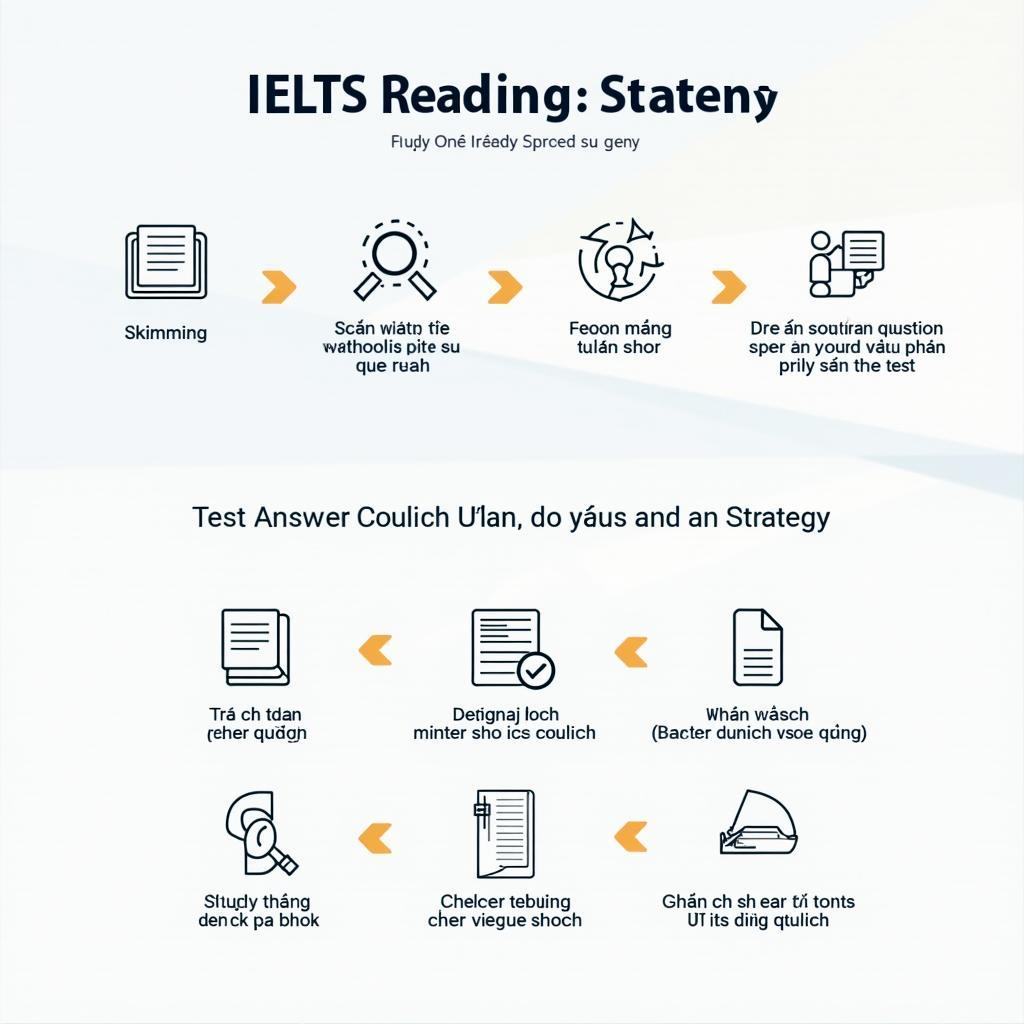 Hướng dẫn chi tiết các bước làm bài IELTS Reading về chủ đề podcast trong giáo dục
Passage 2 – Giải Thích
Câu 14: ii (Section A)
- Dạng câu hỏi: Matching Headings
- Giải thích: Section A nói về “constructivist learning theory” và việc học sinh “construct meaning through multiple modalities” – đây là học tập qua tham gia tích cực (active participation). Tiêu đề ii phù hợp nhất.
Câu 16: ix (Section C)
- Dạng câu hỏi: Matching Headings
- Giải thích: Section C tập trung hoàn toàn vào “Assessment Challenges and Solutions”, nói về “grading rubrics”, “assessment frameworks”, “peer assessment” – đây là các phương pháp chấm điểm podcast (methods for grading podcast assignments).
Câu 19: NO
- Dạng câu hỏi: Yes/No/Not Given
- Vị trí trong bài: Section A, câu cuối
- Giải thích: “This multi-dimensional engagement reinforces learning more effectively than conventional lecture-based instruction” – tác giả cho rằng podcast creation hiệu quả hơn, trái ngược với câu hỏi. Đáp án là NO.
Câu 20: YES
- Dạng câu hỏi: Yes/No/Not Given
- Vị trí trong bài: Section C, câu cuối
- Giải thích: “Peer assessment has proven particularly valuable, as it encourages students to engage critically with their classmates’ work while developing evaluative skills” – đồng ý với quan điểm trong câu hỏi.
Câu 23: active engagement
- Dạng câu hỏi: Summary Completion
- Vị trí trong bài: Section A, dòng 2-3
- Giải thích: “learners build knowledge through active engagement rather than passive reception” – lấy chính xác hai từ này.
Câu 26: increased confidence
- Dạng câu hỏi: Summary Completion
- Vị trí trong bài: Section D
- Giải thích: “students reported increased confidence in their creative abilities” – đây là kết quả nghiên cứu được đề cập.
Passage 3 – Giải Thích
Câu 27: B
- Dạng câu hỏi: Multiple Choice
- Từ khóa: critical scholars, main concern
- Vị trí trong bài: Đoạn 1, dòng 3-5
- Giải thích: “critical scholars interrogate whether this enthusiasm is substantiated by empirical evidence or merely reflects an uncritical embrace of technological determinism” – các học giả phê phán lo ngại rằng sự nhiệt tình có thể chỉ là do yêu thích công nghệ chứ không dựa trên bằng chứng. Đáp án B paraphrase ý này.
Câu 28: C
- Dạng câu hỏi: Multiple Choice
- Từ khóa: Harrison, Thompson
- Vị trí trong bài: Đoạn 3
- Giải thích: Harrison’s study “demonstrated statistically significant improvements” trong khi Thompson’s meta-analysis “revealed considerable heterogeneity in outcomes” – hai nghiên cứu có kết quả khác nhau, mâu thuẫn nhau.
Câu 29: C
- Dạng câu hỏi: Multiple Choice
- Từ khóa: traditional assessment methods
- Vị trí trong bài: Đoạn 4, dòng 2-4
- Giải thích: “Traditional assessment rubrics… prove inadequate for evaluating podcasts” – “inadequate” nghĩa là không đủ, paraphrase với “insufficient” trong đáp án C.
Câu 32: B (Thompson)
- Dạng câu hỏi: Matching Features
- Vị trí trong bài: Đoạn 3
- Giải thích: “Thompson’s (2020) meta-analysis of 47 studies” – meta-analysis là phân tích nhiều nghiên cứu trước đó.
Câu 33: A (Harrison and colleagues)
- Dạng câu hỏi: Matching Features
- Vị trí trong bài: Đoạn 3
- Giải thích: “A longitudinal study by Harrison and colleagues (2019) demonstrated that students… exhibited statistically significant improvements in metacognitive awareness”
Câu 37: sociocultural theory
- Dạng câu hỏi: Short-answer
- Vị trí trong bài: Đoạn 2, dòng 2-3
- Giải thích: “Vygotsky’s sociocultural theory” – ba từ chính xác từ bài.
Câu 38: conceptual engagement
- Dạng câu hỏi: Short-answer
- Vị trí trong bài: Đoạn 2, dòng 7-8
- Giải thích: “The cognitive load… may inadvertently detract from conceptual engagement” – kỹ năng kỹ thuật có thể làm giảm sự tập trung vào khái niệm.
Câu 40: digital culture
- Dạng câu hỏi: Short-answer
- Vị trí trong bài: Đoạn 7, dòng 2-3
- Giải thích: “Students develop… critical awareness of how audio media constructs narratives… within digital ecosystems” và “critical engagement with digital culture” – hai từ này là đáp án.
5. Từ Vựng Quan Trọng Theo Passage
Passage 1 – Essential Vocabulary
| Từ vựng | Loại từ | Phiên âm | Nghĩa tiếng Việt | Ví dụ từ bài | Collocation |
|---|---|---|---|---|---|
| integration | n | /ˌɪntɪˈɡreɪʃn/ | sự tích hợp, hòa nhập | “The integration of podcasts into educational settings” | integration into/with |
| prevalent | adj | /ˈprevələnt/ | phổ biến, thịnh hành | “has become increasingly prevalent” | increasingly prevalent |
| pedagogical | adj | /ˌpedəˈɡɒdʒɪkl/ | thuộc sư phạm, giáo dục | “powerful pedagogical tools” | pedagogical approach/method |
| embrace | v | /ɪmˈbreɪs/ | đón nhận, chấp nhận | “educators worldwide are embracing” | embrace change/opportunity |
| evolve | v | /ɪˈvɒlv/ | tiến hóa, phát triển | “podcasts have evolved into” | evolve into/from |
| on-demand | adj | /ɒn dɪˈmɑːnd/ | theo yêu cầu, khi cần | “podcasts are on-demand” | on-demand service/content |
| transformative | adj | /trænsˈfɔːmətɪv/ | có tính chuyển đổi | “the most transformative aspect” | transformative experience/power |
| curriculum | n | /kəˈrɪkjələm/ | chương trình học | “incorporating into the curriculum” | school curriculum |
| hands-on | adj | /hændz ɒn/ | thực hành, trực tiếp | “hands-on experience” | hands-on experience/training |
| bridge | v | /brɪdʒ/ | nối liền, kết nối | “bridges theory and practice” | bridge the gap |
| invaluable | adj | /ɪnˈvæljuəbl/ | vô giá, rất quý | “Technical skills… are invaluable” | invaluable experience/asset |
| transferable | adj | /trænsˈfɜːrəbl/ | có thể chuyển đổi | “These are transferable skills” | transferable skills |
Passage 2 – Essential Vocabulary
| Từ vựng | Loại từ | Phiên âm | Nghĩa tiếng Việt | Ví dụ từ bài | Collocation |
|---|---|---|---|---|---|
| systematic | adj | /ˌsɪstəˈmætɪk/ | có hệ thống, bài bản | “systematic integration” | systematic approach |
| align | v | /əˈlaɪn/ | liên kết, phù hợp | “aligns with contemporary theories” | align with |
| experiential | adj | /ɪkˌspɪəriˈenʃl/ | dựa trên kinh nghiệm | “experiential learning” | experiential learning |
| facilitate | v | /fəˈsɪlɪteɪt/ | tạo điều kiện, hỗ trợ | “facilitate deeper understanding” | facilitate learning/discussion |
| exemplify | v | /ɪɡˈzemplɪfaɪ/ | minh họa, là ví dụ | “Podcast creation exemplifies” | exemplify the approach |
| posit | v | /ˈpɒzɪt/ | đặt ra, cho rằng | “which posits that learners” | posit a theory |
| construct | v | /kənˈstrʌkt/ | xây dựng, tạo dựng | “construct meaning through” | construct knowledge |
| scaffolded | adj | /ˈskæfəldɪd/ | có bước đi cụ thể | “utilize a scaffolded approach” | scaffolded instruction |
| embark on | phrasal v | /ɪmˈbɑːk ɒn/ | bắt đầu, khởi công | “before embarking on their final projects” | embark on a journey |
| encompass | v | /ɪnˈkʌmpəs/ | bao gồm, bao hàm | “criteria that encompass both” | encompass a range |
| holistic | adj | /həʊˈlɪstɪk/ | toàn diện, tổng thể | “holistic assessment methods” | holistic approach/view |
| cultivate | v | /ˈkʌltɪveɪt/ | nuôi dưỡng, phát triển | “cultivates essential competencies” | cultivate skills/relationships |
| navigate | v | /ˈnævɪɡeɪt/ | điều hướng, xử lý | “Students must navigate different platforms” | navigate challenges |
| demystify | v | /diːˈmɪstɪfaɪ/ | làm sáng tỏ, giải mã | “exposure to audience metrics demystifies” | demystify the process |
| trajectory | n | /trəˈdʒektəri/ | quỹ đạo, xu hướng | “The trajectory of podcast education” | career trajectory |
Passage 3 – Essential Vocabulary
| Từ vựng | Loại từ | Phiên âm | Nghĩa tiếng Việt | Ví dụ từ bài | Collocation |
|---|---|---|---|---|---|
| proliferation | n | /prəˌlɪfəˈreɪʃn/ | sự gia tăng nhanh | “The proliferation of student-generated podcasts” | proliferation of |
| paradigmatic | adj | /ˌpærədɪɡˈmætɪk/ | mang tính mô hình | “a paradigmatic shift” | paradigmatic shift/change |
| epistemology | n | /ɪˌpɪstɪˈmɒlədʒi/ | nhận thức luận | “pedagogical epistemology” | epistemological approach |
| necessitate | v | /nəˈsesɪteɪt/ | đòi hỏi, cần thiết | “necessitating rigorous examination” | necessitate action/change |
| herald | v | /ˈherəld/ | tuyên bố, ca ngợi | “proponents herald podcast creation” | herald as |
| interrogate | v | /ɪnˈterəɡeɪt/ | chất vấn, xem xét | “critical scholars interrogate” | interrogate assumptions |
| substantiate | v | /səbˈstænʃieɪt/ | chứng minh, củng cố | “enthusiasm is substantiated by evidence” | substantiate claims |
| elucidate | v | /ɪˈluːsɪdeɪt/ | làm sáng tỏ | “to elucidate the nuanced realities” | elucidate the issue |
| affordance | n | /əˈfɔːdns/ | khả năng, tiềm năng | “acknowledging both its affordances” | affordances and limitations |
| ostensibly | adv | /ɒˈstensəbli/ | có vẻ như, bề ngoài | “ostensibly fulfills these criteria” | ostensibly true |
| inadvertently | adv | /ˌɪnədˈvɜːtntli/ | vô tình, không chủ ý | “may inadvertently detract from” | inadvertently cause |
| longitudinal | adj | /ˌlɒndʒɪˈtjuːdɪnl/ | theo thời gian dài | “A longitudinal study” | longitudinal study/research |
| heterogeneity | n | /ˌhetərədʒəˈniːəti/ | tính không đồng nhất | “considerable heterogeneity in outcomes” | heterogeneity in/of |
| contingent | adj | /kənˈtɪndʒənt/ | phụ thuộc vào | “efficacy is contingent upon” | contingent on/upon |
| hermeneutic | adj | /ˌhɜːmɪˈnjuːtɪk/ | thuộc diễn giải | “hermeneutic approaches” | hermeneutic analysis |
| commensurability | n | /kəˌmenʃərəˈbɪləti/ | tính có thể so sánh | “commensurability of creative work” | commensurability between |
| mitigate | v | /ˈmɪtɪɡeɪt/ | giảm nhẹ, làm dịu | “rather than mitigating them” | mitigate risks/effects |
| perpetuate | v | /pəˈpetʃueɪt/ | duy trì, kéo dài | “may perpetuate problematic dynamics” | perpetuate stereotypes |
 Bảng từ vựng quan trọng IELTS Reading chủ đề podcast và truyền thông kèm phiên âm
Kết bài
Chủ đề “Podcast creation in media studies classes” không chỉ phản ánh xu hướng giáo dục hiện đại mà còn thường xuyên xuất hiện trong các đề thi IELTS Reading thực tế. Ba passages trong bài viết này đã cung cấp đầy đủ các mức độ khó từ Easy đến Hard, giúp bạn làm quen với cấu trúc đề thi chuẩn Cambridge IELTS.
Những gì bạn đã luyện tập:
- 40 câu hỏi đa dạng với 7 dạng khác nhau, hoàn toàn giống thi thật
- Kỹ thuật xác định từ khóa và tìm thông tin trong passages dài
- Phương pháp paraphrase – hiểu cách IELTS diễn đạt lại ý nghĩa
- Quản lý thời gian cho từng passage theo độ khó tăng dần
- Từ vựng học thuật về giáo dục, công nghệ và truyền thông
Đáp án chi tiết kèm giải thích vị trí và cách paraphrase giúp bạn tự đánh giá chính xác năng lực hiện tại. Bảng từ vựng phân loại theo từng passage cung cấp nguồn học từ vựng có ngữ cảnh, giúp ghi nhớ hiệu quả hơn học từ rời.
Lời khuyên cuối: Hãy làm bài trong đúng 60 phút như thi thật, sau đó đối chiếu đáp án và phân tích từng câu sai để hiểu rõ lỗi của mình. Chú ý đặc biệt đến các câu True/False/Not Given và Yes/No/Not Given – đây là dạng câu hỏi nhiều thí sinh Việt Nam thường mắc lỗi nhất.
Chúc bạn ôn tập hiệu quả và đạt band điểm mục tiêu trong kỳ thi IELTS sắp tới!

