Mở bài
Biến đổi khí hậu đang tạo ra những thay đổi sâu sắc đối với ngành du lịch toàn cầu, đặc biệt là các điểm đến nổi tiếng. Chủ đề “Impact Of Climate Change On Global Tourism Hotspots” xuất hiện ngày càng thường xuyên trong IELTS Reading với tần suất khoảng 2-3 lần mỗi năm, phản ánh tầm quan trọng của vấn đề môi trường trong thế giới đương đại.
Bài viết này cung cấp một đề thi IELTS Reading hoàn chỉnh với ba passages tăng dần độ khó từ Easy đến Hard, bao gồm đầy đủ 40 câu hỏi đa dạng giống thi thật. Bạn sẽ được luyện tập với các dạng câu hỏi phổ biến như Multiple Choice, True/False/Not Given, Matching Headings, và Summary Completion. Đề thi đi kèm đáp án chi tiết có giải thích từng câu, giúp bạn hiểu rõ cách tìm thông tin và kỹ thuật paraphrase.
Bộ từ vựng chuyên ngành về môi trường và du lịch được tổng hợp kỹ lưỡng, phù hợp cho học viên từ band 5.0 đến 8.0+. Đây là tài liệu lý tưởng để bạn làm quen với format thi thật và nâng cao khả năng đọc hiểu học thuật.
Hướng dẫn làm bài IELTS Reading
Tổng Quan Về IELTS Reading Test
IELTS Reading Test kéo dài 60 phút với 3 passages và tổng cộng 40 câu hỏi. Mỗi câu trả lời đúng được tính 1 điểm, không trừ điểm cho câu sai. Điều quan trọng là bạn phải quản lý thời gian hiệu quả để hoàn thành toàn bộ bài thi.
Phân bổ thời gian khuyến nghị:
- Passage 1 (Easy): 15-17 phút cho 13 câu hỏi
- Passage 2 (Medium): 18-20 phút cho 13 câu hỏi
- Passage 3 (Hard): 23-25 phút cho 14 câu hỏi
Lưu ý dành 2-3 phút cuối để chuyển đáp án vào answer sheet. Không có thời gian bổ sung như phần Listening.
Các Dạng Câu Hỏi Trong Đề Này
Đề thi mẫu này bao gồm 7 dạng câu hỏi phổ biến nhất:
- Multiple Choice – Chọn đáp án đúng từ các phương án cho sẵn
- True/False/Not Given – Xác định thông tin đúng, sai hay không được đề cập
- Yes/No/Not Given – Đánh giá quan điểm của tác giả
- Matching Headings – Nối tiêu đề phù hợp với đoạn văn
- Summary Completion – Hoàn thành đoạn tóm tắt
- Matching Features – Nối thông tin với đặc điểm tương ứng
- Short-answer Questions – Trả lời ngắn gọn với giới hạn số từ
Mỗi dạng câu hỏi yêu cầu kỹ năng đọc hiểu khác nhau, từ tìm thông tin chi tiết đến hiểu ý chính và suy luận.
IELTS Reading Practice Test
PASSAGE 1 – Tourism Under Threat: Early Warning Signs
Độ khó: Easy (Band 5.0-6.5)
Thời gian đề xuất: 15-17 phút
The world’s most beloved tourist destinations are facing an unprecedented challenge that threatens their very existence. Climate change is no longer a distant threat but a present reality that is reshaping the global tourism landscape. From the pristine beaches of the Maldives to the snow-capped peaks of the Alps, popular vacation spots are experiencing dramatic transformations that could fundamentally alter or even eliminate them as viable tourist destinations.
The Maldives, a nation of 1,190 coral islands in the Indian Ocean, represents perhaps the most visible example of climate vulnerability in tourism. This tropical paradise attracts over 1.7 million visitors annually, drawn by its crystal-clear waters, vibrant coral reefs, and luxury resorts. However, with an average ground level of just 1.5 meters above sea level, the Maldives faces an existential threat from rising oceans. Scientists predict that if current trends continue, much of the country could become uninhabitable by 2100. The Maldivian government has already begun constructing artificial islands and sea walls in a desperate attempt to protect its tourism infrastructure, which accounts for approximately 28% of the nation’s GDP.
Coastal erosion represents another significant challenge facing beach destinations worldwide. In Thailand, the famous Maya Bay on Phi Phi Leh island was closed to tourists in 2018 after years of environmental degradation caused by a combination of climate change and overtourism. The bay, which gained international fame after appearing in the film “The Beach,” had been receiving up to 5,000 visitors daily. Rising sea temperatures contributed to coral bleaching, while increased wave action from changing weather patterns accelerated beach erosion. After a four-year closure, the bay reopened with strict visitor limits and shorter visiting hours to allow ecosystem recovery.
Mountain tourism destinations are experiencing equally dramatic changes. The Swiss Alps, which attract approximately 120 million visitors per year, are witnessing unprecedented glacial retreat. The Aletsch Glacier, the largest glacier in the Alps, has lost over 3 kilometers in length since 1870, with the rate of melting accelerating in recent decades. Ski resorts below 1,500 meters altitude are facing increasingly unreliable snow conditions, forcing many to invest heavily in artificial snow-making equipment. Some experts predict that by 2050, only resorts above 2,000 meters will have reliable natural snow cover throughout the winter season.
The impact extends beyond physical landscape changes to affect the timing and nature of tourist seasons. In Australia’s Great Barrier Reef, one of the world’s most popular diving destinations, rising ocean temperatures have triggered multiple mass bleaching events. The most severe episodes occurred in 2016 and 2017, affecting nearly two-thirds of the reef. While coral can recover from bleaching if conditions improve, repeated events leave less time for recovery, potentially leading to permanent damage. Tourism operators have reported that some visitors are now engaging in “last-chance tourism,” visiting the reef before it potentially disappears, ironically adding to the environmental pressure.
Wildlife tourism is also under threat as changing climates force animal migrations and alter habitats. In Africa’s Serengeti-Mara ecosystem, which attracts safari tourists from around the globe, shifting rainfall patterns are affecting the timing of the great wildebeest migration. This annual movement of over 1.5 million wildebeest, along with hundreds of thousands of zebras and gazelles, has occurred on a predictable schedule for generations. However, recent years have seen increasingly erratic migration patterns, making it harder for tour operators to guarantee wildlife viewing experiences that tourists expect.
Despite these challenges, the tourism industry is beginning to respond with innovative adaptation strategies. Many destinations are developing climate-resilient infrastructure, implementing strict environmental regulations, and diversifying their tourism offerings. The Caribbean island of Aruba has invested in renewable energy and water conservation systems to ensure sustainable tourism growth. Meanwhile, Nordic countries are promoting summer and autumn tourism to reduce dependence on winter snow sports.
The concept of sustainable tourism is gaining traction as both tourists and industry operators recognize the need for change. Green certification programs, carbon offset schemes, and eco-friendly accommodations are becoming more common. Some destinations are introducing visitor caps and seasonal closures to allow environmental recovery. These measures demonstrate that while climate change poses serious threats to global tourism hotspots, proactive management and conscious travel choices can help preserve these treasures for future generations.
Questions 1-6
Do the following statements agree with the information given in Passage 1?
Write:
- TRUE if the statement agrees with the information
- FALSE if the statement contradicts the information
- NOT GIVEN if there is no information on this
- The Maldives receives more than one million tourists each year.
- Maya Bay was permanently closed to all visitors in 2018.
- The Aletsch Glacier has completely disappeared since 1870.
- Some ski resorts are installing equipment to produce artificial snow.
- The Great Barrier Reef experienced its worst bleaching events in consecutive years.
- African safari operators offer money-back guarantees for wildlife sightings.
Questions 7-10
Complete the sentences below.
Choose NO MORE THAN TWO WORDS from the passage for each answer.
- The average height of land in the Maldives is only 1.5 meters above __.
- Tourism contributes approximately 28% to the Maldivian __.
- By 2050, reliable snow may only exist at ski resorts above __ meters.
- Some tourists visit threatened destinations in what is called “__.”
Questions 11-13
Choose the correct letter, A, B, C or D.
- What is the main reason Maya Bay was closed to tourists?
- A. To film a new movie
- B. Due to environmental damage
- C. Because of a natural disaster
- D. To build new facilities
- According to the passage, the Serengeti-Mara ecosystem is experiencing problems with:
- A. decreasing animal populations
- B. increased poaching activities
- C. unpredictable migration timing
- D. loss of vegetation cover
- The passage suggests that the tourism industry’s response to climate change includes:
- A. abandoning threatened destinations
- B. increasing tourist numbers to maximize profits
- C. developing sustainable practices and infrastructure
- D. focusing only on winter tourism
PASSAGE 2 – Economic and Social Ramifications of Climate-Induced Tourism Decline
Độ khó: Medium (Band 6.0-7.5)
Thời gian đề xuất: 18-20 phút
The intricate relationship between climate change and tourism extends far beyond environmental concerns, creating a complex web of economic and social consequences that ripple through communities worldwide. As global temperatures rise and weather patterns become increasingly erratic, destinations that have relied on tourism as their primary economic engine face unprecedented challenges in maintaining both their natural appeal and their socioeconomic stability.
The economic implications of climate-induced tourism decline are particularly severe for Small Island Developing States (SIDS) and least-developed countries (LDCs), where tourism often represents the predominant source of foreign exchange earnings and employment. In the Caribbean region, tourism accounts for approximately 15% of total GDP and employs one in seven workers. However, the increasing frequency and intensity of tropical cyclones and hurricanes, directly linked to warming ocean temperatures, pose an existential threat to this vital economic sector. Hurricane Irma in 2017 caused an estimated $10 billion in damage across the Caribbean, devastating the tourism infrastructure of multiple islands. Barbuda, which depended on tourism for 70% of its economy, saw its entire population temporarily evacuated, and recovery efforts continue years later.
The concept of “economic leakage” becomes particularly problematic when destinations must invest heavily in climate adaptation infrastructure rather than tourism development. Countries like Bangladesh and Vietnam, which have nascent but rapidly growing beach tourism sectors, must divert substantial resources to constructing flood defenses, storm-resistant buildings, and improved drainage systems. These capital-intensive investments, while necessary for survival, reduce the funds available for marketing, service improvement, and tourism product development, potentially creating a competitive disadvantage relative to less climate-vulnerable destinations.
Moreover, the relationship between The impact of climate change on the global economy and tourism creates a feedback loop that exacerbates existing inequalities. Wealthier nations and regions possess greater financial resilience and technological capacity to implement adaptation measures. Switzerland’s ski industry, for instance, has invested billions in state-of-the-art snow-making technology, covered glaciers with reflective blankets to reduce melting, and developed alternative summer tourism products. In contrast, developing mountain tourism destinations in Nepal and Peru lack the capital for such interventions, risking the loss of trekking and mountaineering tourism that provides livelihoods for thousands of indigenous communities.
 Tác động biến đổi khí hậu đến du lịch trượt tuyết vùng núi cao và sự suy giảm tuyết tự nhiên
The displacement of tourism-dependent populations represents another critical social dimension. In the Pacific, entire communities whose ancestral livelihoods revolved around tourism are facing forced relocation due to coastal inundation. Fiji has already begun the resettlement of several villages, including Vunidogoloa, whose inhabitants have lived in the same location for generations. Such relocations not only involve enormous logistical and financial challenges but also threaten cultural heritage, traditional knowledge systems, and social cohesion. The tourism industry that once provided economic sustenance to these communities becomes meaningless when the communities themselves must abandon their homes.
The phenomenon of “climate gentrification” is emerging in some destinations as wealthier areas invest in protective infrastructure while lower-income neighborhoods remain vulnerable. In Miami, a major tourism hub, property values in flood-prone coastal areas are declining while higher-elevation inland properties are appreciating. This trend threatens to displace the service workers who form the backbone of the tourism industry, creating labor shortages and increasing operational costs for tourism businesses. Similar patterns are observable in Venice, Bangkok, and other tourism cities facing climate-related flooding risks.
Insurance and investment dynamics are also shifting in response to climate risks, with profound implications for tourism development. Major international hotel chains and resort developers increasingly incorporate climate risk assessments into their site selection processes. Insurance companies are raising premiums or refusing coverage altogether for properties in high-risk zones. The reinsurance industry, which provides insurance to insurance companies, has become particularly conservative regarding coastal developments in hurricane-prone regions. This creates a vicious cycle: destinations most in need of tourism development to support climate adaptation efforts find it increasingly difficult and expensive to attract investment.
The temporal dimension of climate change impacts adds another layer of complexity. Unlike sudden natural disasters, the gradual degradation of tourism assets creates uncertainty that may be even more damaging to destination image and visitor confidence. A beach destination losing a few meters of coastline annually, or a coral reef slowly bleaching, may not generate dramatic headlines but steadily erodes the destination’s appeal. This “slow-onset crisis” makes it challenging for destination marketing organizations to maintain tourist interest while honestly communicating environmental changes.
However, some destinations are discovering opportunities within these challenges. Costa Rica has successfully repositioned itself as an ecotourism leader, attracting climate-conscious travelers interested in environmental conservation and sustainable practices. The country generates nearly 100% of its electricity from renewable sources and has pioneered payment for ecosystem services (PES) schemes that involve tourism businesses in forest conservation. This proactive positioning has allowed Costa Rica to maintain tourism growth even as traditional sun-and-beach competitors struggle with climate impacts.
The emergence of “climate refugees” from one tourism destination to another is also reshaping global tourism geography. As some locations become less viable, others may experience boom periods. Northern European destinations like Scotland and Scandinavia are seeing increased summer tourism as Mediterranean destinations become uncomfortably hot. However, this geographic redistribution of tourism flows presents its own challenges, as destinations receiving displaced visitors may lack adequate infrastructure and experience their own environmental pressures from sudden tourism surges.
Questions 14-18
Choose the correct letter, A, B, C or D.
- According to the passage, Small Island Developing States are particularly vulnerable because:
- A. they have small populations
- B. tourism is crucial to their economies
- C. they lack natural resources
- D. they are politically unstable
- The term “economic leakage” in this context refers to:
- A. money leaving the country through imports
- B. corruption in the tourism industry
- C. funds diverted from tourism to climate adaptation
- D. profits taken by foreign hotel chains
- What advantage do wealthier nations have in dealing with climate impacts on tourism?
- A. Better weather conditions
- B. More tourists visiting
- C. Greater resources for adaptation measures
- D. Stronger government regulations
- The relocation of villages like Vunidogoloa in Fiji threatens:
- A. only economic stability
- B. cultural heritage and social structures
- C. international relations
- D. agricultural productivity
- “Climate gentrification” in Miami refers to:
- A. building luxury hotels in poor areas
- B. higher areas becoming more valuable than coastal zones
- C. tourists preferring cooler climates
- D. government investment in flood defenses
Questions 19-23
Complete the summary below.
Choose NO MORE THAN TWO WORDS from the passage for each answer.
The insurance industry is responding to climate risks by raising (19) __ or refusing to provide coverage for properties in dangerous locations. The (20) __ industry, which insures insurance companies, has become especially careful about developments in areas prone to hurricanes. This creates difficulties for destinations that need tourism (21) __ to fund climate adaptation. Unlike sudden disasters, gradual environmental damage represents a (22) __ that slowly reduces a destination’s appeal. However, Costa Rica demonstrates that some countries can succeed by becoming (23) __ leaders and attracting environmentally conscious travelers.
Questions 24-26
Do the following statements agree with the claims of the writer in Passage 2?
Write:
- YES if the statement agrees with the claims of the writer
- NO if the statement contradicts the claims of the writer
- NOT GIVEN if it is impossible to say what the writer thinks about this
- Developing countries have the same capacity as wealthy nations to implement climate adaptation measures.
- The redistribution of tourists from hot to cooler destinations solves all tourism-related climate problems.
- Some destinations may benefit economically from climate change impacts on competing destinations.
PASSAGE 3 – Paradigmatic Shifts in Tourism Governance and Destination Management Under Climate Uncertainty
Độ khí: Hard (Band 7.0-9.0)
Thời gian đề xuất: 23-25 phút
The anthropogenic acceleration of climate change has precipitated a fundamental reassessment of tourism governance frameworks, compelling destination management organizations (DMOs), policymakers, and industry stakeholders to reconceptualize their approaches to destination planning, marketing, and sustainability. This paradigmatic shift transcends traditional adaptive management strategies, necessitating transformative changes in how tourism systems are conceived, regulated, and operationalized within an increasingly volatile and uncertain climatic context. The epistemological challenges inherent in managing tourism destinations under conditions of radical uncertainty demand novel governance structures, decision-making frameworks, and collaborative mechanisms that can accommodate non-linear change, threshold effects, and potential regime shifts in socio-ecological systems.
Contemporary destination governance models have historically operated under assumptions of relative environmental stability and incremental change. However, the non-stationary nature of climate impacts—wherein historical precedents no longer reliably predict future conditions—undermines the foundational assumptions of conventional strategic planning processes. Traditional destination life-cycle models, such as Butler’s Tourism Area Life Cycle (TALC), which posit predictable evolutionary trajectories from exploration through decline, prove inadequate when exogenous climate shocks can precipitate abrupt transitions between stages or entirely circumvent expected developmental pathways. This ontological inadequacy of existing theoretical frameworks necessitates the development of alternative conceptual apparatus capable of incorporating complexity, emergence, and discontinuity as central rather than peripheral considerations.
The integration of climate science into tourism planning engenders methodological challenges that extend beyond mere technical implementation. Climate models operate at spatial and temporal scales often misaligned with tourism planning horizons and jurisdictional boundaries. General Circulation Models (GCMs) typically provide projections at 50-100 kilometer resolution, whereas tourism micro-climates—the localized conditions that determine visitor comfort and activity viability—operate at scales of meters to kilometers. This scalar mismatch necessitates sophisticated downscaling techniques, yet such methods introduce additional uncertainty through the assumptions embedded in statistical or dynamical downscaling procedures. Furthermore, the probabilistic nature of climate projections, often expressed as ensemble means with confidence intervals, sits uncomfortably with the deterministic decision-making preferences of tourism industry stakeholders who seek clear guidance for capital-intensive investments.
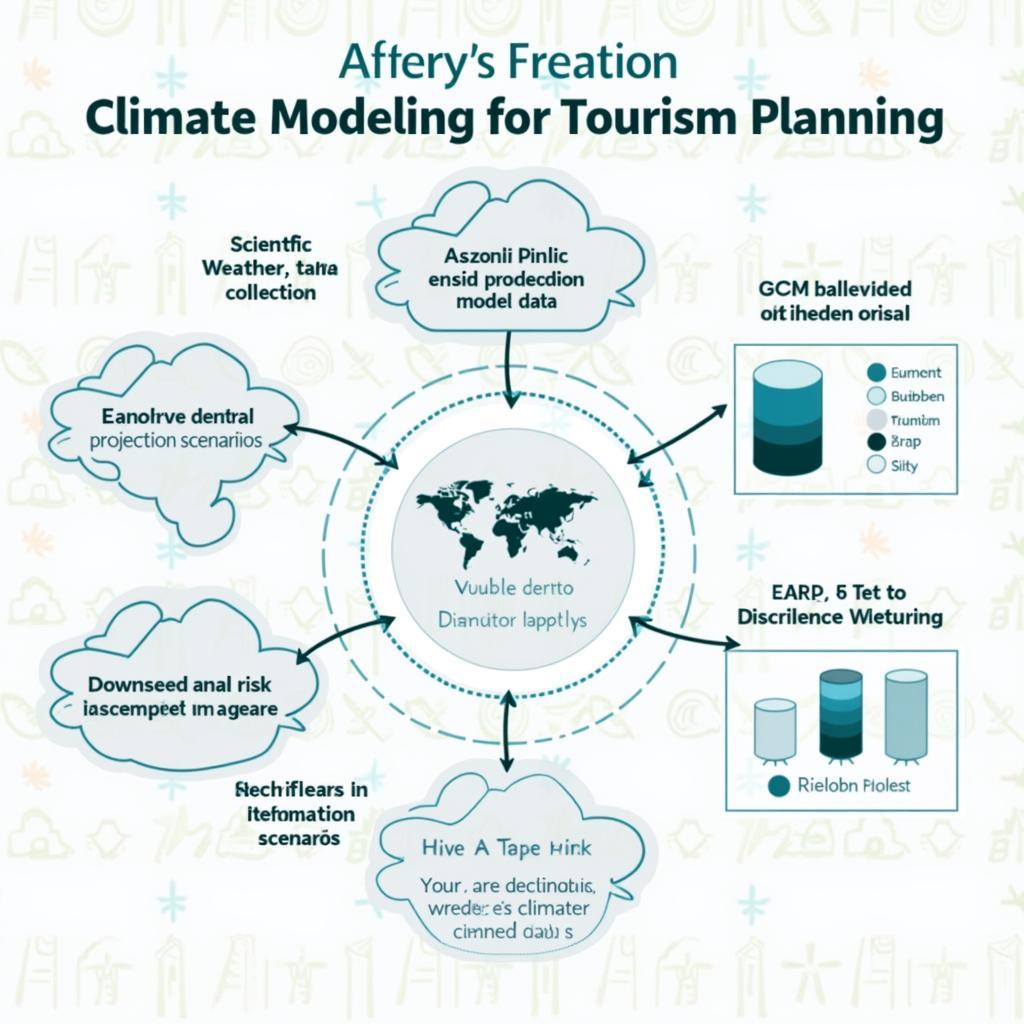 Mô hình dự báo khí hậu và ứng dụng trong quản lý điểm đến du lịch bền vững
The concept of adaptive capacity has emerged as a crucial analytical construct in understanding differential vulnerability across tourism destinations. However, operationalizing this concept reveals its multidimensional complexity. Adaptive capacity encompasses not only financial resources and technological capabilities but also institutional flexibility, social capital, knowledge systems, and political agency. Research by Becken and Hay (2012) demonstrates that destinations with strong collaborative governance structures, characterized by horizontal networks linking public, private, and civil society actors, exhibit greater adaptive capacity than those with hierarchical, siloed governance arrangements. Yet establishing such polycentric governance systems proves challenging in contexts characterized by entrenched power dynamics, competing interests, and institutional path dependencies.
The notion of “managed retreat” from tourism infrastructure in increasingly untenable locations represents perhaps the most philosophically contentious aspect of climate-responsive destination management. This strategy, which involves the planned abandonment and strategic relocation of tourism assets, contradicts deeply embedded assumptions about perpetual growth and continuous development that have historically characterized tourism expansion. The psychosocial dimensions of managed retreat are profound: it requires communities to acknowledge the irreversibility of environmental changes and accept the loss of place-based identities constructed over generations. In Australia’s Byron Bay, one of the nation’s premier beach tourism destinations, ongoing debates about coastal retreat policies have generated intense controversy, with property owners, local businesses, and environmental advocates advancing irreconcilable positions regarding acceptable risk levels and the distribution of adaptation costs.
Transformational adaptation, as distinct from incremental adjustments, implies fundamental changes in the attributes, location, or function of tourism systems. This concept aligns with recent theorizations in climate adaptation scholarship that distinguish between adaptations that maintain existing system configurations and those that facilitate transitions to alternative stable states. For tourism destinations, transformational adaptation might entail shifting from mass tourism to niche markets, from resource-intensive to low-impact activities, or from tourism-dependent to diversified economies. The Marshall Islands, facing existential threats from sea-level rise, exemplify this transformational imperative: the government has begun planning for potential population relocation while simultaneously attempting to preserve cultural sovereignty through digital nation-building initiatives and diasporic engagement strategies that maintain connections to ancestral territories even if physical habitation becomes impossible.
The temporal dynamics of climate adaptation introduce what scholars term “adaptation pathways“—sequential decision-making frameworks that recognize the contingent nature of adaptation choices and the need for flexibility as conditions evolve. Unlike traditional master planning approaches that specify fixed end-states, adaptation pathways acknowledge multiple possible futures and identify branching points where decisions must be revisited based on emerging conditions and updated information. The Dutch Delta Programme, which governs climate adaptation in a nation where tourism destinations face severe flood risks, employs this approach, establishing adaptation tipping points that trigger predefined responses when specific climatological or socioeconomic thresholds are exceeded. Implementing similar frameworks for tourism destinations requires developing appropriate indicators, monitoring systems, and institutional mechanisms for periodic reassessment—capacities that many destinations, particularly in the developing world, currently lack.
The ethical dimensions of climate adaptation in tourism governance raise profound questions about intergenerational equity, distributive justice, and moral responsibility. Tourism, as a discretionary and largely luxury activity, occupies an ambiguous position in discussions of climate justice. While tourism provides crucial livelihoods for millions in vulnerable regions, it simultaneously functions as a significant greenhouse gas emitter, with tourism-related emissions estimated at 8% of the global total. This creates what might be termed an “adaptation-mitigation paradox“: measures to adapt tourism infrastructure to climate impacts may increase the sector’s carbon footprint (for example, energy-intensive snow-making or air-conditioning), while effective mitigation strategies (such as reducing aviation) could devastate tourism-dependent economies. Resolving this paradox requires nuanced policy frameworks that balance immediate livelihood needs with long-term planetary sustainability—a balance that remains elusive in current international climate negotiations where tourism receives relatively limited attention despite its considerable economic significance.
Knowledge co-production—the collaborative generation of understanding between scientists, practitioners, and communities—has emerged as a promising governance innovation for addressing climate uncertainty in tourism contexts. Traditional linear models of expertise, wherein scientists generate knowledge that policymakers subsequently implement, prove inadequate when dealing with complex socio-ecological systems characterized by deep uncertainty and contested values. Co-productive approaches recognize the legitimacy and utility of diverse knowledge forms, including indigenous knowledge systems, local ecological knowledge, and practitioner experience, alongside formal scientific expertise. In Australia’s Kakadu National Park, a World Heritage site facing threats from sea-level rise and altered fire regimes, traditional owners have become integral partners in developing climate adaptation strategies, contributing knowledge of landscape dynamics accumulated over millennia and ensuring that adaptation approaches respect cultural protocols and sacred sites.
The emergence of anticipatory governance mechanisms represents another significant innovation in tourism’s response to climate uncertainty. Rather than merely reacting to impacts as they manifest, anticipatory governance seeks to proactively shape tourism systems to be inherently resilient. This involves scenario planning, horizon scanning for emerging risks, and embedding adaptive capacity in institutional design and physical infrastructure from inception. Singapore’s tourism sector exemplifies this approach: despite facing significant climate vulnerabilities including sea-level rise and urban heat island effects, the city-state has integrated climate considerations into tourism planning through initiatives like the “City in a Garden” vision, which leverages extensive green infrastructure for both climate regulation and tourist appeal, and the Marina Barrage, which functions simultaneously as flood protection, water supply, and tourism attraction.
Questions 27-31
Choose the correct letter, A, B, C or D.
- The main argument in the first paragraph is that:
- A. tourism organizations need better marketing strategies
- B. climate change requires completely new approaches to tourism management
- C. traditional governance models are adequate for climate challenges
- D. tourism should be banned in vulnerable areas
- According to the passage, Butler’s Tourism Area Life Cycle model is inadequate because:
- A. it was developed too long ago
- B. it doesn’t account for sudden climate-induced changes
- C. it only applies to beach destinations
- D. it focuses too much on economic factors
- The “scalar mismatch” problem refers to:
- A. differences between predicted and actual temperatures
- B. disagreements between scientists and tourism operators
- C. the gap between climate model resolution and tourism planning needs
- D. variations in tourism demand across seasons
- What does the passage suggest about destinations with “polycentric governance”?
- A. They are more bureaucratic and inefficient
- B. They have better adaptive capacity than hierarchical systems
- C. They require more financial resources
- D. They are only suitable for large countries
- “Managed retreat” in tourism context means:
- A. reducing the number of tourists temporarily
- B. closing destinations during extreme weather
- C. permanently abandoning and relocating tourism infrastructure
- D. improving marketing to attract different visitors
Questions 32-37
Complete the sentences below.
Choose NO MORE THAN THREE WORDS from the passage for each answer.
-
Climate projections are often presented as __ with confidence intervals, which can be challenging for industry decision-makers who prefer clear answers.
-
Becken and Hay found that destinations with strong __ linking various sectors show better ability to adapt to climate change.
-
The concept of __ involves making fundamental changes to tourism systems rather than small adjustments.
-
The approach called “adaptation pathways” recognizes __ and identifies points where decisions must be reconsidered.
-
Tourism creates a paradox because adapting infrastructure may increase the sector’s __ while reducing flights would harm tourism economies.
-
__ involves scientists, practitioners, and communities working together to generate understanding about climate adaptation.
Questions 38-40
Do the following statements agree with the claims of the writer in Passage 3?
Write:
- YES if the statement agrees with the claims of the writer
- NO if the statement contradicts the claims of the writer
- NOT GIVEN if it is impossible to say what the writer thinks about this
-
Historical climate data remains a reliable predictor of future conditions for tourism planning.
-
The Marshall Islands government is planning for potential population relocation while trying to maintain cultural identity.
-
Singapore has successfully integrated climate considerations into its tourism infrastructure from the planning stage.
Answer Keys – Đáp Án
PASSAGE 1: Questions 1-13
- TRUE
- FALSE
- FALSE
- TRUE
- TRUE
- NOT GIVEN
- sea level
- GDP
- 2,000
- last-chance tourism
- B
- C
- C
PASSAGE 2: Questions 14-26
- B
- C
- C
- B
- B
- premiums
- reinsurance
- development / investment
- slow-onset crisis
- ecotourism
- NO
- NO
- YES
PASSAGE 3: Questions 27-40
- B
- B
- C
- B
- C
- ensemble means
- collaborative governance structures / horizontal networks
- transformational adaptation
- multiple possible futures
- carbon footprint
- Knowledge co-production
- NO
- YES
- YES
Giải Thích Đáp Án Chi Tiết
Passage 1 – Giải Thích
Câu 1: TRUE
- Dạng câu hỏi: True/False/Not Given
- Từ khóa: Maldives, tourists, more than one million
- Vị trí trong bài: Đoạn 2, dòng 2-3
- Giải thích: Bài viết nói “This tropical paradise attracts over 1.7 million visitors annually” – 1.7 triệu lớn hơn 1 triệu, vì vậy câu này đúng.
Câu 2: FALSE
- Dạng câu hỏi: True/False/Not Given
- Từ khóa: Maya Bay, permanently closed, 2018
- Vị trí trong bài: Đoạn 3, dòng 1-2 và cuối đoạn
- Giải thích: Bài nói “was closed to tourists in 2018” nhưng sau đó “After a four-year closure, the bay reopened” – vậy không phải đóng cửa vĩnh viễn.
Câu 3: FALSE
- Dạng câu hỏi: True/False/Not Given
- Từ khóa: Aletsch Glacier, completely disappeared, 1870
- Vị trí trong bài: Đoạn 4, dòng 2-3
- Giải thích: Bài viết nói “has lost over 3 kilometers in length since 1870” – mất 3km chiều dài chứ không phải biến mất hoàn toàn.
Câu 4: TRUE
- Dạng câu hỏi: True/False/Not Given
- Từ khóa: ski resorts, artificial snow, equipment
- Vị trí trong bài: Đoạn 4, dòng 4-5
- Giải thích: Bài viết rõ ràng nói “forcing many to invest heavily in artificial snow-making equipment.”
Câu 5: TRUE
- Dạng câu hỏi: True/False/Not Given
- Từ khóa: Great Barrier Reef, worst bleaching, consecutive years
- Vị trí trong bài: Đoạn 5, dòng 2-3
- Giải thích: “The most severe episodes occurred in 2016 and 2017” – hai năm liên tiếp (consecutive years).
Câu 6: NOT GIVEN
- Dạng câu hỏi: True/False/Not Given
- Từ khóa: safari operators, money-back guarantees
- Vị trí trong bài: Đoạn 6
- Giải thích: Bài viết không đề cập đến việc hoàn tiền hay bất kỳ loại guarantee nào từ các nhà điều hành safari.
Câu 7: sea level
- Dạng câu hỏi: Sentence Completion
- Từ khóa: Maldives, average height, 1.5 meters
- Vị trí trong bài: Đoạn 2, dòng 4
- Giải thích: “with an average ground level of just 1.5 meters above sea level”
Câu 8: GDP
- Dạng câu hỏi: Sentence Completion
- Từ khóa: tourism, 28%, Maldivian
- Vị trí trong bài: Đoạn 2, câu cuối
- Giải thích: “which accounts for approximately 28% of the nation’s GDP”
Câu 9: 2,000
- Dạng câu hỏi: Sentence Completion
- Từ khóa: 2050, reliable snow, resorts
- Vị trí trong bài: Đoạn 4, câu cuối
- Giải thích: “by 2050, only resorts above 2,000 meters will have reliable natural snow cover”
Câu 10: last-chance tourism
- Dạng câu hỏi: Sentence Completion
- Từ khóa: visitors, threatened destinations
- Vị trí trong bài: Đoạn 5, câu cuối
- Giải thích: “some visitors are now engaging in ‘last-chance tourism'”
Câu 11: B
- Dạng câu hỏi: Multiple Choice
- Từ khóa: Maya Bay, closed, reason
- Vị trí trong bài: Đoạn 3, dòng 1-2
- Giải thích: “was closed to tourists in 2018 after years of environmental degradation” – do tổn hại môi trường.
Câu 12: C
- Dạng câu hỏi: Multiple Choice
- Từ khóa: Serengeti-Mara, problems
- Vị trí trong bài: Đoạn 6, câu cuối
- Giải thích: “recent years have seen increasingly erratic migration patterns” – thời gian di cư không thể dự đoán.
Câu 13: C
- Dạng câu hỏi: Multiple Choice
- Từ khóa: tourism industry response
- Vị trí trong bài: Đoạn 7-8
- Giải thích: Đoạn 7 nói về “climate-resilient infrastructure” và “sustainable tourism” ở đoạn 8, cho thấy ngành du lịch đang phát triển các thực hành bền vững.
Passage 2 – Giải Thích
Câu 14: B
- Dạng câu hỏi: Multiple Choice
- Từ khóa: SIDS, particularly vulnerable
- Vị trí trong bài: Đoạn 2, dòng 1-3
- Giải thích: “where tourism often represents the predominant source of foreign exchange earnings and employment” – du lịch là nguồn thu chính của nền kinh tế.
Câu 15: C
- Dạng câu hỏi: Multiple Choice
- Từ khóa: economic leakage, context
- Vị trí trong bài: Đoạn 3, câu đầu
- Giải thích: “must divert substantial resources to constructing flood defenses… These capital-intensive investments… reduce the funds available for marketing, service improvement” – tiền bị chuyển hướng từ phát triển du lịch sang thích ứng khí hậu.
Câu 16: C
- Dạng câu hỏi: Multiple Choice
- Từ khóa: wealthier nations, advantage
- Vị trí trong bài: Đoạn 4, dòng 2-3
- Giải thích: “Wealthier nations and regions possess greater financial resilience and technological capacity to implement adaptation measures.”
Câu 17: B
- Dạng câu hỏi: Multiple Choice
- Từ khóa: Vunidogoloa, Fiji, threatens
- Vị trí trong bài: Đoạn 5, câu cuối
- Giải thích: “threaten cultural heritage, traditional knowledge systems, and social cohesion” – đe dọa di sản văn hóa và cấu trúc xã hội.
Câu 18: B
- Dạng câu hỏi: Multiple Choice
- Từ khóa: climate gentrification, Miami
- Vị trí trong bài: Đoạn 6, dòng 2-3
- Giải thích: “property values in flood-prone coastal areas are declining while higher-elevation inland properties are appreciating” – khu vực cao hơn trở nên có giá trị hơn vùng ven biển.
Câu 19: premiums
- Dạng câu hỏi: Summary Completion
- Từ khóa: insurance, raising
- Vị trí trong bài: Đoạn 7, dòng 2
- Giải thích: “Insurance companies are raising premiums or refusing coverage”
Câu 20: reinsurance
- Dạng câu hỏi: Summary Completion
- Từ khóa: industry, insures insurance companies
- Vị trí trong bài: Đoạn 7, dòng 3-4
- Giải thích: “The reinsurance industry, which provides insurance to insurance companies”
Câu 21: development / investment
- Dạng câu hỏi: Summary Completion
- Từ khóa: destinations, need, climate adaptation
- Vị trí trong bài: Đoạn 7, câu cuối
- Giải thích: “destinations most in need of tourism development to support climate adaptation efforts” hoặc có thể dùng “investment” từ cụm “attract investment”
Câu 22: slow-onset crisis
- Dạng câu hỏi: Summary Completion
- Từ khóa: gradual damage, reduces appeal
- Vị trí trong bài: Đoạn 8, dòng 3-4
- Giải thích: “This ‘slow-onset crisis’ makes it challenging”
Câu 23: ecotourism
- Dạng câu hỏi: Summary Completion
- Từ khóa: Costa Rica, leaders, environmentally conscious
- Vị trí trong bài: Đoạn 9, dòng 1-2
- Giải thích: “Costa Rica has successfully repositioned itself as an ecotourism leader”
Câu 24: NO
- Dạng câu hỏi: Yes/No/Not Given
- Từ khóa: developing countries, same capacity, wealthy nations
- Vị trí trong bài: Đoạn 4
- Giải thích: Bài viết rõ ràng nói rằng các nước giàu có “greater financial resilience and technological capacity” trong khi “developing mountain tourism destinations in Nepal and Peru lack the capital” – vậy họ KHÔNG có cùng năng lực.
Câu 25: NO
- Dạng câu hỏi: Yes/No/Not Given
- Từ khóa: redistribution tourists, solves all problems
- Vị trí trong bài: Đoạn 10, câu cuối
- Giải thích: “However, this geographic redistribution of tourism flows presents its own challenges” – vẫn có thách thức riêng, không giải quyết tất cả vấn đề.
Câu 26: YES
- Dạng câu hỏi: Yes/No/Not Given
- Từ khóa: some destinations, benefit, competing destinations
- Vị trí trong bài: Đoạn 10, dòng 1-2
- Giải thích: “As some locations become less viable, others may experience boom periods” – một số điểm đến có thể được lợi.
Passage 3 – Giải Thích
Câu 27: B
- Dạng câu hỏi: Multiple Choice
- Từ khóa: main argument, first paragraph
- Vị trí trong bài: Đoạn 1, toàn đoạn
- Giải thích: Đoạn mở đầu nhấn mạnh “fundamental reassessment,” “reconceptualize their approaches,” và “transformative changes” – cho thấy cần phương pháp hoàn toàn mới.
Câu 28: B
- Dạng câu hỏi: Multiple Choice
- Từ khóa: Butler’s TALC, inadequate
- Vị trí trong bài: Đoạn 2, dòng 4-7
- Giải thích: “prove inadequate when exogenous climate shocks can precipitate abrupt transitions” – mô hình không tính đến những thay đổi đột ngột do khí hậu.
Câu 29: C
- Dạng câu hỏi: Multiple Choice
- Từ khóa: scalar mismatch
- Vị trí trong bài: Đoạn 3, giữa đoạn
- Giải thích: “Climate models operate at spatial and temporal scales often misaligned with tourism planning… GCMs typically provide projections at 50-100 kilometer resolution, whereas tourism micro-climates operate at scales of meters to kilometers” – khoảng cách giữa độ phân giải mô hình và nhu cầu lập kế hoạch du lịch.
Câu 30: B
- Dạng câu hỏi: Multiple Choice
- Từ khóa: polycentric governance
- Vị trí trong bài: Đoạn 4, giữa đoạn
- Giải thích: “destinations with strong collaborative governance structures… exhibit greater adaptive capacity than those with hierarchical, siloed governance arrangements”
Câu 31: C
- Dạng câu hỏi: Multiple Choice
- Từ khóa: managed retreat, meaning
- Vị trí trong bài: Đoạn 5, dòng 1-2
- Giải thích: “involves the planned abandonment and strategic relocation of tourism assets” – bỏ đi vĩnh viễn và di dời cơ sở hạ tầng.
Câu 32: ensemble means
- Dạng câu hỏi: Sentence Completion (max 3 words)
- Từ khóa: climate projections, confidence intervals
- Vị trí trong bài: Đoạn 3, cuối đoạn
- Giải thích: “the probabilistic nature of climate projections, often expressed as ensemble means with confidence intervals”
Câu 33: collaborative governance structures / horizontal networks
- Dạng câu hỏi: Sentence Completion (max 3 words)
- Từ khóa: Becken and Hay, linking sectors
- Vị trí trong bài: Đoạn 4, giữa đoạn
- Giải thích: “destinations with strong collaborative governance structures, characterized by horizontal networks linking public, private, and civil society actors” – có thể dùng cả hai cụm.
Câu 34: transformational adaptation
- Dạng câu hỏi: Sentence Completion (max 3 words)
- Từ khóa: fundamental changes, tourism systems
- Vị trí trong bài: Đoạn 6, dòng 1
- Giải thích: “Transformational adaptation, as distinct from incremental adjustments, implies fundamental changes”
Câu 35: multiple possible futures
- Dạng câu hỏi: Sentence Completion (max 3 words)
- Từ khóa: adaptation pathways, recognizes
- Vị trí trong bài: Đoạn 7, giữa đoạn
- Giải thích: “adaptation pathways acknowledge multiple possible futures and identify branching points”
Câu 36: carbon footprint
- Dạng câu hỏi: Sentence Completion (max 3 words)
- Từ khóa: adapting infrastructure, increase
- Vị trí trong bài: Đoạn 8, giữa đoạn
- Giải thích: “measures to adapt tourism infrastructure to climate impacts may increase the sector’s carbon footprint”
Câu 37: Knowledge co-production
- Dạng câu hỏi: Sentence Completion (max 3 words)
- Từ khóa: scientists, practitioners, communities, working together
- Vị trí trong bài: Đoạn 9, dòng 1
- Giải thích: “Knowledge co-production—the collaborative generation of understanding between scientists, practitioners, and communities”
Câu 38: NO
- Dạng câu hỏi: Yes/No/Not Given
- Từ khóa: historical data, reliable predictor
- Vị trí trong bài: Đoạn 2, dòng 2-3
- Giải thích: “the non-stationary nature of climate impacts—wherein historical precedents no longer reliably predict future conditions” – dữ liệu lịch sử KHÔNG còn đáng tin cậy.
Câu 39: YES
- Dạng câu hỏi: Yes/No/Not Given
- Từ khóa: Marshall Islands, population relocation, cultural identity
- Vị trí trong bài: Đoạn 6, cuối đoạn
- Giải thích: “the government has begun planning for potential population relocation while simultaneously attempting to preserve cultural sovereignty”
Câu 40: YES
- Dạng câu hỏi: Yes/No/Not Given
- Từ khóa: Singapore, climate considerations, planning stage
- Vị trí trong bài: Đoạn 10, câu cuối
- Giải thích: “the city-state has integrated climate considerations into tourism planning” và “embedding adaptive capacity in institutional design and physical infrastructure from inception” – tích hợp từ giai đoạn lập kế hoạch.
Từ Vựng Quan Trọng Theo Passage
Passage 1 – Essential Vocabulary
| Từ vựng | Loại từ | Phiên âm | Nghĩa tiếng Việt | Ví dụ từ bài | Collocation |
|---|---|---|---|---|---|
| pristine | adj | /ˈprɪstiːn/ | nguyên sơ, trong lành | pristine beaches of the Maldives | pristine condition, pristine environment |
| existential threat | n phrase | /ˌeɡzɪˈstenʃl θret/ | mối đe dọa sinh tồn | faces an existential threat from rising oceans | pose an existential threat |
| coastal erosion | n phrase | /ˈkəʊstl ɪˈrəʊʒn/ | xói mòn bờ biển | Coastal erosion represents another significant challenge | prevent coastal erosion, combat coastal erosion |
| environmental degradation | n phrase | /ɪnˌvaɪrənˈmentl ˌdeɡrəˈdeɪʃn/ | suy thoái môi trường | after years of environmental degradation | cause environmental degradation, reverse environmental degradation |
| coral bleaching | n phrase | /ˈkɒrəl bliːtʃɪŋ/ | hiện tượng san hô bạc màu | contributed to coral bleaching | mass coral bleaching, prevent coral bleaching |
| unprecedented | adj | /ʌnˈpresɪdentɪd/ | chưa từng có | unprecedented glacial retreat | unprecedented scale, unprecedented challenges |
| glacial retreat | n phrase | /ˈɡleɪʃl rɪˈtriːt/ | sự thoái lui của băng hà | witnessing unprecedented glacial retreat | rapid glacial retreat, accelerating glacial retreat |
| artificial snow-making | n phrase | /ˌɑːtɪˈfɪʃl snəʊ ˈmeɪkɪŋ/ | làm tuyết nhân tạo | invest heavily in artificial snow-making equipment | artificial snow-making technology |
| reliable snow cover | n phrase | /rɪˈlaɪəbl snəʊ ˈkʌvə(r)/ | lớp tuyết ổn định | will have reliable natural snow cover | maintain reliable snow cover |
| mass bleaching events | n phrase | /mæs bliːtʃɪŋ ɪˈvents/ | các đợt tẩy trắng hàng loạt | triggered multiple mass bleaching events | experience mass bleaching events |
| last-chance tourism | n phrase | /lɑːst tʃɑːns ˈtʊərɪzəm/ | du lịch cơ hội cuối | engaging in “last-chance tourism” | promote last-chance tourism |
| sustainable tourism | n phrase | /səˈsteɪnəbl ˈtʊərɪzəm/ | du lịch bền vững | The concept of sustainable tourism is gaining traction | develop sustainable tourism, sustainable tourism practices |
Passage 2 – Essential Vocabulary
| Từ vựng | Loại từ | Phiên âm | Nghĩa tiếng Việt | Ví dụ từ bài | Collocation |
|---|---|---|---|---|---|
| intricate relationship | n phrase | /ˈɪntrɪkət rɪˈleɪʃnʃɪp/ | mối quan hệ phức tạp | The intricate relationship between climate change and tourism | explore the intricate relationship |
| complex web | n phrase | /ˈkɒmpleks web/ | mạng lưới phức tạp | creating a complex web of economic consequences | a complex web of connections |
| socioeconomic stability | n phrase | /ˌsəʊsiəʊˌiːkəˈnɒmɪk stəˈbɪləti/ | ổn định kinh tế xã hội | maintaining their socioeconomic stability | ensure socioeconomic stability |
| economic leakage | n phrase | /ˌiːkəˈnɒmɪk ˈliːkɪdʒ/ | sự thất thoát kinh tế | The concept of “economic leakage” becomes problematic | reduce economic leakage, prevent economic leakage |
| nascent | adj | /ˈnæsnt/ | mới hình thành | nascent but rapidly growing beach tourism sectors | nascent industry, nascent market |
| capital-intensive | adj | /ˌkæpɪtl ɪnˈtensɪv/ | đòi hỏi nhiều vốn | These capital-intensive investments reduce funds | capital-intensive projects, capital-intensive industries |
| competitive disadvantage | n phrase | /kəmˈpetətɪv ˌdɪsədˈvɑːntɪdʒ/ | bất lợi cạnh tranh | creating a competitive disadvantage | overcome competitive disadvantage |
| feedback loop | n phrase | /ˈfiːdbæk luːp/ | vòng lặp phản hồi | creates a feedback loop that exacerbates inequalities | positive feedback loop, negative feedback loop |
| financial resilience | n phrase | /faɪˈnænʃl rɪˈzɪliəns/ | khả năng chống chịu tài chính | possess greater financial resilience | build financial resilience, enhance financial resilience |
| ancestral livelihoods | n phrase | /ænˈsestrəl ˈlaɪvlihʊdz/ | sinh kế tổ tiên | whose ancestral livelihoods revolved around tourism | protect ancestral livelihoods |
| forced relocation | n phrase | /fɔːst ˌriːləʊˈkeɪʃn/ | di dời cưỡng bức | facing forced relocation due to coastal inundation | undergo forced relocation |
| climate gentrification | n phrase | /ˈklaɪmət ˌdʒentriːfɪˈkeɪʃn/ | sự quý tộc hóa do khí hậu | The phenomenon of “climate gentrification” is emerging | climate gentrification effects |
| labor shortages | n phrase | /ˈleɪbə(r) ˈʃɔːtɪdʒɪz/ | thiếu hụt lao động | creating labor shortages and increasing costs | experience labor shortages, address labor shortages |
| climate risk assessments | n phrase | /ˈklaɪmət rɪsk əˈsesmənts/ | đánh giá rủi ro khí hậu | incorporate climate risk assessments into planning | conduct climate risk assessments |
| vicious cycle | n phrase | /ˈvɪʃəs ˈsaɪkl/ | vòng luẩn quẩn | This creates a vicious cycle | break the vicious cycle, trapped in a vicious cycle |
Passage 3 – Essential Vocabulary
| Từ vựng | Loại từ | Phiên âm | Nghĩa tiếng Việt | Ví dụ từ bài | Collocation |
|---|---|---|---|---|---|
| anthropogenic acceleration | n phrase | /ˌænθrəpəˈdʒenɪk əkˌseləˈreɪʃn/ | sự tăng tốc do con người | The anthropogenic acceleration of climate change | anthropogenic impact, anthropogenic factors |
| paradigmatic shift | n phrase | /ˌpærədɪɡˈmætɪk ʃɪft/ | sự thay đổi mô hình | has precipitated a paradigmatic shift | undergo a paradigmatic shift |
| destination management organizations | n phrase | /ˌdestɪˈneɪʃn ˈmænɪdʒmənt ˌɔːɡənaɪˈzeɪʃnz/ | tổ chức quản lý điểm đến | compelling DMOs to reconceptualize approaches | DMO strategies, DMO responsibilities |
| transformative changes | n phrase | /trænsˈfɔːmətɪv ˈtʃeɪndʒɪz/ | thay đổi mang tính chuyển đổi | necessitating transformative changes | implement transformative changes |
| epistemological challenges | n phrase | /ɪˌpɪstɪməˈlɒdʒɪkl ˈtʃælɪndʒɪz/ | thách thức về nhận thức luận | The epistemological challenges inherent in managing | epistemological framework, epistemological approach |
| radical uncertainty | n phrase | /ˈrædɪkl ʌnˈsɜːtnti/ | sự bất định triệt để | under conditions of radical uncertainty | face radical uncertainty, navigate radical uncertainty |
| threshold effects | n phrase | /ˈθreʃhəʊld ɪˈfekts/ | hiệu ứng ngưỡng | threshold effects and potential regime shifts | critical threshold effects, identify threshold effects |
| socio-ecological systems | n phrase | /ˌsəʊsiəʊ ˌiːkəˈlɒdʒɪkl ˈsɪstəmz/ | hệ thống xã hội-sinh thái | in socio-ecological systems | manage socio-ecological systems, resilient socio-ecological systems |
| non-stationary nature | n phrase | /nɒn ˈsteɪʃənəri ˈneɪtʃə(r)/ | bản chất không ổn định | the non-stationary nature of climate impacts | non-stationary conditions, non-stationary processes |
| exogenous climate shocks | n phrase | /ekˈsɒdʒənəs ˈklaɪmət ʃɒks/ | cú sốc khí hậu ngoại sinh | when exogenous climate shocks can precipitate | absorb exogenous climate shocks |
| ontological inadequacy | n phrase | /ˌɒntəˈlɒdʒɪkl ˌɪnˈædɪkwəsi/ | sự không thỏa đáng về bản thể | This ontological inadequacy of existing frameworks | ontological assumptions, ontological perspective |
| scalar mismatch | n phrase | /ˈskeɪlə(r) ˈmɪsmætʃ/ | sự không tương xứng về quy mô | This scalar mismatch necessitates sophisticated techniques | address scalar mismatch, scalar mismatch problem |
| downscaling techniques | n phrase | /ˈdaʊnskeɪlɪŋ tekˈniːks/ | kỹ thuật thu nhỏ quy mô | necessitates sophisticated downscaling techniques | apply downscaling techniques, statistical downscaling techniques |
| adaptive capacity | n phrase | /əˈdæptɪv kəˈpæsəti/ | năng lực thích ứng | The concept of adaptive capacity has emerged | build adaptive capacity, enhance adaptive capacity |
| polycentric governance | n phrase | /ˌpɒliˈsentrɪk ˈɡʌvənəns/ | quản trị đa trung tâm | establishing such polycentric governance systems | polycentric governance structures, polycentric governance approach |
| managed retreat | n phrase | /ˈmænɪdʒd rɪˈtriːt/ | rút lui có quản lý | The notion of “managed retreat” from infrastructure | implement managed retreat, managed retreat strategy |
| place-based identities | n phrase | /pleɪs beɪst aɪˈdentətiz/ | bản sắc gắn với địa điểm | loss of place-based identities constructed over generations | maintain place-based identities |
| transformational adaptation | n phrase | /ˌtrænsfəˈmeɪʃənl ˌædæpˈteɪʃn/ | thích ứng mang tính chuyển đổi | Transformational adaptation, as distinct from incremental adjustments | require transformational adaptation |
| adaptation pathways | n phrase | /ˌædæpˈteɪʃn ˈpɑːθweɪz/ | lộ trình thích ứng | introduce “adaptation pathways” frameworks | develop adaptation pathways, alternative adaptation pathways |
Kết bài
Biến đổi khí hậu đang tạo ra những thách thức chưa từng có đối với các điểm đến du lịch toàn cầu, từ những hòn đảo nhiệt đới cho đến các khu trượt tuyết trên núi cao. Chủ đề “Impact of climate change on global tourism hotspots” không chỉ phổ biến trong IELTS Reading mà còn phản ánh một trong những vấn đề cấp thiết nhất của thế giới đương đại.
Bộ đề thi mẫu này đã cung cấp cho bạn trải nghiệm hoàn chỉnh với ba passages tăng dần độ khó, từ Easy với thông tin rõ ràng về các tác động cụ thể, qua Medium với phân tích sâu về hệ quả kinh tế-xã hội, đến Hard với các khái niệm học thuật về quản trị và thích ứng. Tổng cộng 40 câu hỏi đa dạng dạng đã giúp bạn làm quen với format thi thật và rèn luyện các kỹ năng đọc hiểu khác nhau.
Đáp án chi tiết kèm giải thích từng câu không chỉ cho bạn biết đúng sai mà còn hướng dẫn cách tìm thông tin, nhận biết paraphrase và áp dụng chiến lược làm bài hiệu quả. Bộ từ vựng chuyên ngành được tổng hợp kỹ lưỡng sẽ là tài sản quý giá cho việc học từ vựng theo chủ đề, giúp bạn tự tin hơn khi gặp các bài đọc về môi trường và du lịch.
Hãy sử dụng đề thi này như một công cụ luyện tập thực chiến, tuân thủ thời gian quy định và tự đánh giá kết quả để xác định điểm mạnh và cải thiện điểm yếu. Chúc bạn đạt band điểm mục tiêu trong kỳ thi IELTS sắp tới!