
Mở bài
Chủ đề về bảo tàng tương tác và giáo dục (interactive museums and education) là một trong những đề tài phổ biến xuất hiện trong phần thi IELTS Reading. Với sự phát triển của công nghệ và phương pháp giảng dạy hiện đại, các bảo tàng không còn chỉ là nơi trưng bày tĩnh mà đã trở thành không gian học tập năng động, đặc biệt quan trọng đối với học sinh sinh viên. Chủ đề này thường xuất hiện trong các đề thi IELTS Academic với tần suất khoảng 15-20% mỗi năm, đặc biệt trong các passage về Education, Technology và Social Development.
Trong bài viết này, bạn sẽ được luyện tập với một đề thi IELTS Reading hoàn chỉnh gồm 3 passages từ dễ đến khó, bao gồm 40 câu hỏi đa dạng giống thi thật 100%. Đề thi được thiết kế bài bản với Passage 1 phù hợp band 5.0-6.5, Passage 2 cho band 6.0-7.5, và Passage 3 dành cho band 7.0-9.0. Bạn sẽ nhận được đáp án chi tiết kèm giải thích cụ thể, phân tích từ vựng quan trọng, và các chiến lược làm bài hiệu quả được rút ra từ kinh nghiệm thực tế.
Đề thi này đặc biệt phù hợp cho học viên Việt Nam từ band 5.0 trở lên đang muốn nâng cao kỹ năng Reading thông qua việc luyện tập với nội dung chất lượng, học thuật và gần gũi với format thi thật.
1. Hướng Dẫn Làm Bài IELTS Reading
Tổng Quan Về IELTS Reading Test
Bài thi IELTS Reading bao gồm 3 passages với tổng cộng 40 câu hỏi cần hoàn thành trong 60 phút. Đây là thời gian khá gấp gáp, do đó bạn cần phân bổ thời gian hợp lý:
- Passage 1 (Easy): 15-17 phút
- Passage 2 (Medium): 18-20 phút
- Passage 3 (Hard): 23-25 phút
Lưu ý rằng không có thời gian bổ sung để chuyển đáp án sang answer sheet như phần Listening, vì vậy bạn nên ghi đáp án trực tiếp trong lúc làm bài.
Các Dạng Câu Hỏi Trong Đề Này
Đề thi mẫu này bao gồm 7 dạng câu hỏi phổ biến nhất trong IELTS Reading:
- Multiple Choice – Câu hỏi trắc nghiệm
- True/False/Not Given – Xác định thông tin đúng/sai/không có
- Matching Information – Nối thông tin với đoạn văn
- Sentence Completion – Hoàn thành câu
- Matching Headings – Nối tiêu đề với đoạn văn
- Summary Completion – Hoàn thành tóm tắt
- Short-answer Questions – Câu hỏi trả lời ngắn
Mỗi dạng câu hỏi yêu cầu kỹ năng đọc hiểu khác nhau, từ scanning (tìm thông tin cụ thể) đến skimming (nắm ý chính) và detailed reading (đọc hiểu chi tiết).
2. IELTS Reading Practice Test
PASSAGE 1 – The Evolution of Interactive Museums
Độ khó: Easy (Band 5.0-6.5)
Thời gian đề xuất: 15-17 phút
Museums have undergone a remarkable transformation over the past few decades. Traditional museums, which primarily displayed artifacts behind glass cases with minimal explanation, have evolved into dynamic learning environments where visitors actively participate in the educational process. This shift towards interactive exhibitions has been particularly beneficial for student learning, offering hands-on experiences that make education more engaging and memorable.
The concept of interactive museums first gained prominence in the 1960s and 1970s when educators began to recognize that passive observation was not the most effective way to learn. The Exploratorium in San Francisco, founded in 1969, pioneered this approach by creating exhibits that visitors could touch, manipulate, and experiment with. This groundbreaking model demonstrated that when students physically engage with educational content, they develop a deeper understanding of complex concepts. The success of this approach quickly spread to other institutions worldwide.
Today’s interactive museums employ various technological innovations to enhance the learning experience. Touchscreen displays, virtual reality headsets, and augmented reality applications allow students to explore historical events, scientific principles, and artistic techniques in ways that were previously impossible. For example, at the British Museum, students can use tablet devices to view three-dimensional reconstructions of ancient artifacts, seeing how they looked in their original context. This immersive experience helps students connect abstract historical information with tangible reality.
Research has shown that interactive museums significantly improve knowledge retention among students. A study conducted by the University of Leicester found that students who visited interactive science museums retained 65% of the information they learned after three months, compared to only 30% retention from traditional classroom lectures. The multisensory engagement provided by interactive exhibits activates multiple areas of the brain simultaneously, creating stronger neural connections and more durable memories. When students can see, touch, and manipulate educational materials, they form meaningful associations that enhance long-term learning.
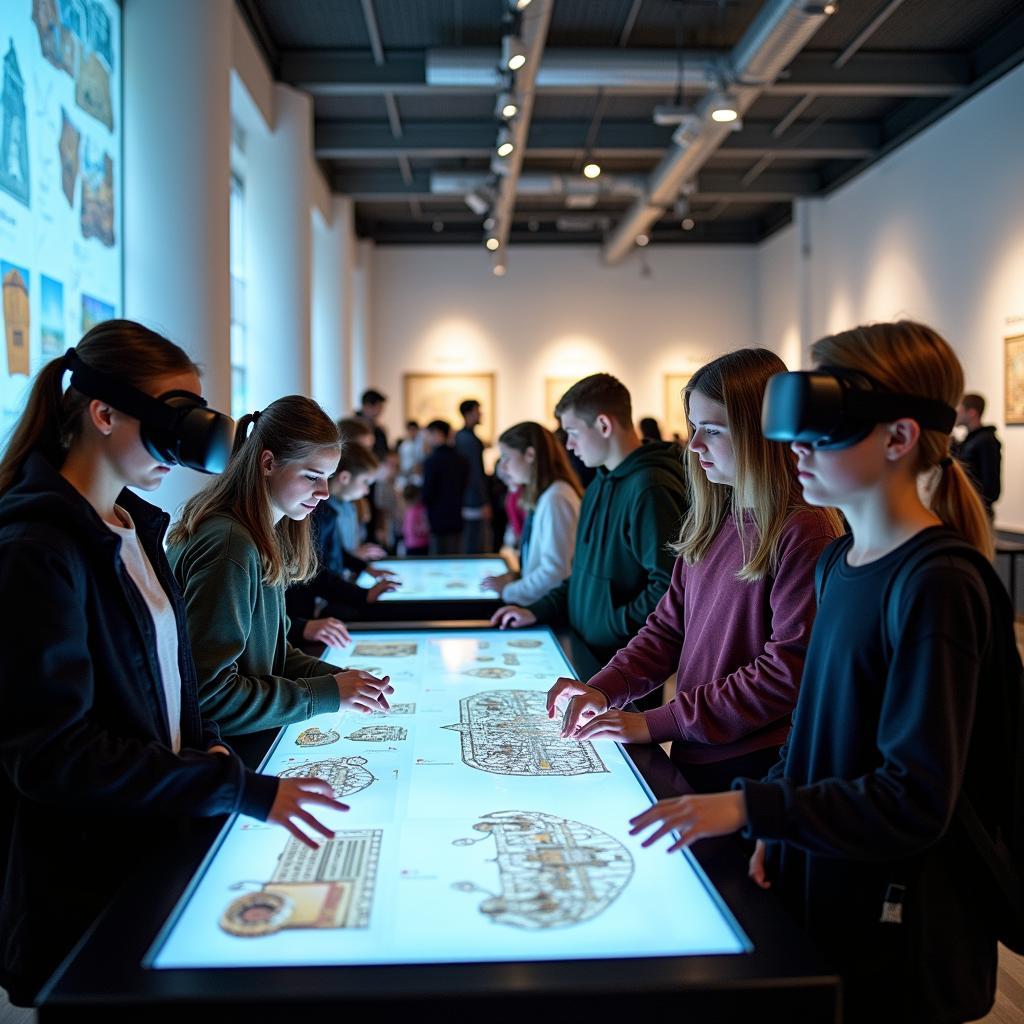 Học sinh tham gia trải nghiệm thực hành tại bảo tàng tương tác hiện đại với màn hình cảm ứng và công nghệ
Interactive museums also promote collaborative learning. Unlike traditional museums where students quietly observe exhibits individually, interactive spaces encourage group activities and discussions. Many museums now feature problem-solving challenges that require students to work together, fostering teamwork and communication skills. At the Science Museum in London, students participate in engineering workshops where they collaborate to build structures and test scientific principles. These cooperative activities not only make learning more enjoyable but also develop essential social competencies that students need in their academic and professional lives.
The flexibility of interactive museums makes them suitable for diverse learning styles. Visual learners benefit from vivid displays and demonstrations, while kinesthetic learners thrive when they can physically manipulate objects. Auditory learners appreciate the narrated explanations and guided discussions that accompany many exhibits. This inclusive approach ensures that all students, regardless of their preferred learning method, can access and understand the educational content. Teachers particularly value this adaptability because it allows them to address the varied needs of their students within a single field trip.
Furthermore, interactive museums help bridge the gap between theoretical knowledge and practical application. Students studying physics in the classroom might struggle to understand concepts like momentum and energy transfer from textbook descriptions alone. However, when they visit an interactive science museum and conduct experiments with pendulums or collision demonstrations, these abstract concepts become concrete and comprehensible. This experiential learning approach helps students see the relevance of their academic studies to the real world, increasing their motivation and engagement with the subject matter.
Museum educators have developed specialized programs specifically designed for school groups. These programs often align with national curriculum standards, ensuring that museum visits complement rather than replace classroom instruction. Many museums offer pre-visit materials that teachers can use to prepare students, and post-visit resources that help reinforce the lessons learned. This integrated approach maximizes the educational value of museum visits and helps teachers justify the time and expense involved in organizing field trips.
Questions 1-13
Questions 1-5: Multiple Choice
Choose the correct letter, A, B, C, or D.
-
According to the passage, traditional museums primarily:
- A. Encouraged hands-on learning
- B. Displayed objects with limited information
- C. Used advanced technology
- D. Focused on student interaction
-
The Exploratorium in San Francisco was important because it:
- A. Was the first museum ever built
- B. Displayed the most valuable artifacts
- C. Pioneered the interactive museum concept
- D. Only allowed students to visit
-
What percentage of information did students retain after three months from interactive museum visits?
- A. 30%
- B. 50%
- C. 65%
- D. 100%
-
Interactive museums promote collaborative learning by:
- A. Requiring silent observation
- B. Limiting group sizes
- C. Encouraging group activities and discussions
- D. Separating students from each other
-
The passage suggests that interactive museums are particularly valuable because they:
- A. Are cheaper than traditional museums
- B. Accommodate different learning styles
- C. Only focus on science education
- D. Replace classroom teaching entirely
Questions 6-9: True/False/Not Given
Do the following statements agree with the information given in the passage?
Write:
- TRUE if the statement agrees with the information
- FALSE if the statement contradicts the information
- NOT GIVEN if there is no information on this
-
The concept of interactive museums began in the 1960s and 1970s.
-
The British Museum uses tablet devices for all its exhibitions.
-
Students learn better when they can physically engage with educational materials.
-
Interactive museums are more expensive to maintain than traditional museums.
Questions 10-13: Sentence Completion
Complete the sentences below.
Choose NO MORE THAN TWO WORDS from the passage for each answer.
-
Interactive museums create stronger __ in the brain compared to traditional learning methods.
-
Museum educators develop programs that align with __ to complement classroom teaching.
-
The gap between theoretical knowledge and __ is reduced through interactive museum experiences.
-
Museums provide __ that teachers can use to prepare students before their visit.
PASSAGE 2 – Cognitive Benefits of Museum-Based Learning
Độ khó: Medium (Band 6.0-7.5)
Thời gian đề xuất: 18-20 phút
The pedagogical value of interactive museums extends far beyond simple entertainment or a break from regular classroom routines. Contemporary educational research has established that museum-based learning experiences trigger sophisticated cognitive processes that enhance students’ intellectual development in multiple dimensions. These institutions serve as catalysts for critical thinking, analytical reasoning, and creative problem-solving, skills that are increasingly vital in the 21st-century educational landscape.
Neuroscientific studies have revealed compelling evidence about how interactive museum experiences affect brain function and learning. When students engage with museum exhibits, particularly those involving hands-on manipulation and sensory-rich environments, their brains exhibit heightened activity in regions associated with memory consolidation and information processing. Dr. Maria Chen, a cognitive neuroscientist at Stanford University, conducted functional MRI scans on students before and after museum visits, discovering that interactive engagement triggered increased neural plasticity—the brain’s ability to form new connections. This finding suggests that well-designed museum experiences can literally reshape students’ cognitive architecture, creating more efficient learning pathways that benefit their overall academic performance.
The contextual learning facilitated by interactive museums addresses a fundamental challenge in education: the transfer problem. Students often struggle to apply knowledge learned in one context to different situations—a phenomenon that significantly limits the practical utility of classroom instruction. Interactive museums mitigate this issue by presenting information within authentic, meaningful contexts that mirror real-world applications. When students at a natural history museum examine geological specimens while simultaneously learning about tectonic processes through interactive simulations, they develop integrated mental models that are more easily transferable to new scenarios. This contextual embedding of knowledge creates robust conceptual frameworks rather than isolated facts, enabling students to apply their learning more flexibly.
Moreover, interactive museums excel at promoting metacognitive awareness—students’ ability to monitor and regulate their own thinking processes. Unlike passive learning environments where knowledge is simply transmitted from instructor to student, interactive museums require learners to make decisions, test hypotheses, and evaluate outcomes. This self-directed exploration cultivates metacognitive skills such as planning, monitoring comprehension, and adjusting learning strategies based on feedback. Research by Professor James Williams at Oxford University demonstrated that students who regularly visited interactive museums showed significantly enhanced metacognitive abilities, scoring 40% higher on self-regulated learning assessments compared to control groups who received equivalent instruction through traditional methods.
The social constructivist dimension of museum learning also merits careful consideration. When students explore interactive museums in groups, they engage in collaborative knowledge construction, negotiating meanings, challenging assumptions, and building upon each other’s insights. This dialogic learning process aligns with Vygotskian principles of education, where knowledge emerges through social interaction within the learner’s zone of proximal development. Museum environments naturally facilitate peer scaffolding, where more knowledgeable students support their classmates’ understanding, creating a distributed learning network that benefits all participants. Observational studies have documented that students in museum settings ask each other approximately three times more questions than in traditional classrooms, indicating heightened intellectual curiosity and cognitive engagement.
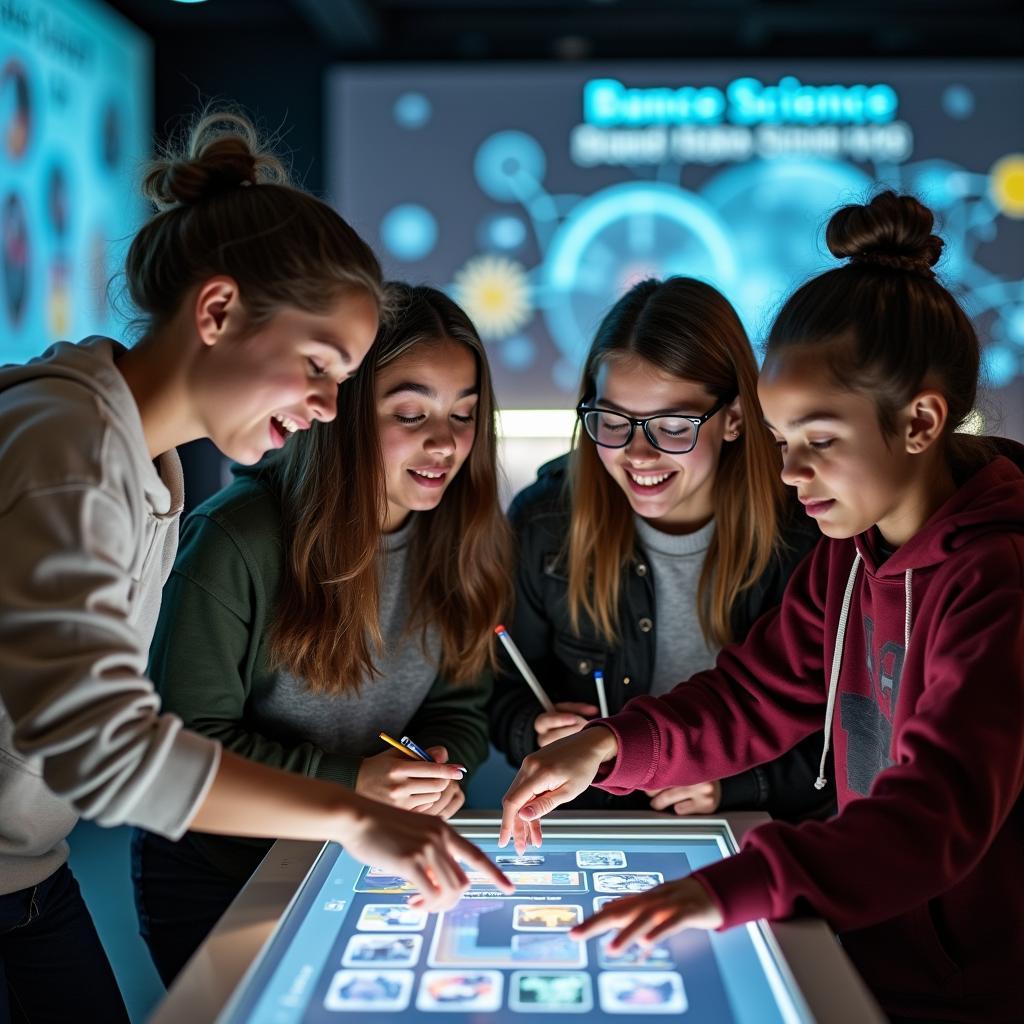 Nhóm học sinh thảo luận và phát triển tư duy phản biện qua hoạt động nhóm tại bảo tàng khoa học
Interactive museums also address the affective domain of learning, which encompasses attitudes, motivations, and emotional responses to educational content. Traditional classroom instruction often fails to generate genuine intrinsic motivation, with students viewing learning as an obligation rather than an opportunity. In contrast, the novelty, autonomy, and personal relevance characteristic of museum experiences activate dopaminergic pathways in the brain associated with reward and motivation. This neurochemical response creates positive associations with learning, potentially transforming students’ long-term educational trajectories. Longitudinal studies tracking students over five years found that those who participated in regular museum-based learning programs demonstrated 25% higher rates of academic persistence and were significantly more likely to pursue advanced education in science, technology, engineering, and mathematics (STEM) fields.
The multimodal nature of interactive museums accommodates the principle of differentiated instruction, a cornerstone of contemporary educational theory. Students possess diverse cognitive profiles, with varying strengths in linguistic, logical-mathematical, spatial, bodily-kinesthetic, and other intelligences as outlined in Howard Gardner’s multiple intelligences framework. Interactive museums, by their very design, present information through multiple representational formats—text, images, physical models, auditory explanations, and kinesthetic activities—ensuring that content is accessible to students regardless of their dominant intelligence type. This inclusive pedagogical approach reduces educational inequities and ensures that all learners can achieve meaningful comprehension.
Furthermore, interactive museums foster epistemological sophistication—students’ understanding of the nature of knowledge itself. By presenting multiple perspectives on historical events, displaying the evolution of scientific theories, or demonstrating how cultural artifacts have been interpreted differently across time periods, museums help students recognize that knowledge is not absolute but rather constructed, contested, and continually revised. This understanding is crucial for developing critical literacy, the ability to evaluate information sources, recognize bias, and construct evidence-based arguments. In an era of information overload and misinformation, these skills are arguably more important than any specific content knowledge.
Questions 14-26
Questions 14-18: Yes/No/Not Given
Do the following statements agree with the claims of the writer in the passage?
Write:
- YES if the statement agrees with the claims of the writer
- NO if the statement contradicts the claims of the writer
- NOT GIVEN if it is impossible to say what the writer thinks about this
-
Interactive museums only provide entertainment value without significant educational benefits.
-
Dr. Maria Chen’s research showed that museum visits can change the physical structure of students’ brains.
-
Students typically find it easy to apply classroom knowledge to real-world situations.
-
Interactive museums are more expensive to operate than traditional educational facilities.
-
Students who regularly visit museums score higher on self-regulated learning assessments.
Questions 19-23: Matching Information
Match each statement with the correct researcher or theory mentioned in the passage.
Write the correct letter, A-E, next to questions 19-23.
A. Dr. Maria Chen
B. Professor James Williams
C. Vygotskian principles
D. Howard Gardner
E. Longitudinal studies
-
Research involving functional MRI scans to study brain activity __
-
Theory related to the zone of proximal development __
-
Framework identifying different types of intelligence __
-
Research on metacognitive abilities and museum visits __
-
Studies tracking students’ academic persistence over five years __
Questions 24-26: Summary Completion
Complete the summary below.
Choose NO MORE THAN TWO WORDS from the passage for each answer.
Interactive museums help solve the 24) __, which refers to students’ difficulty in applying knowledge to different contexts. Museums present information in 25) __ that reflect real-world situations, helping students develop better understanding. Additionally, museums promote 26) __, which is students’ ability to monitor their own thinking processes.
PASSAGE 3 – Theoretical Frameworks and Future Directions in Museum Pedagogy
Độ khó: Hard (Band 7.0-9.0)
Thời gian đề xuất: 23-25 phút
The epistemological transformation of museums from repositories of cultural heritage to sophisticated pedagogical environments represents one of the most significant developments in educational practice of the past half-century. This metamorphosis reflects broader shifts in learning theory, moving away from behaviorist paradigms that conceived of education as the passive transmission of discrete facts, toward constructivist and connectivist models that emphasize active knowledge construction within complex, networked information ecologies. Understanding the theoretical underpinnings of effective museum-based pedagogy requires examining multiple disciplinary perspectives, including cognitive science, situated learning theory, embodied cognition, and distributed cognition frameworks, each of which illuminates different facets of how interactive museums facilitate deep, transformative learning.
The concept of situated cognition, pioneered by anthropologists Jean Lave and Etienne Wenger, posits that learning is fundamentally inseparable from the contexts in which it occurs. Knowledge, from this perspective, is not an abstract, decontextualized commodity that can be efficiently transmitted through lecture-based instruction and subsequently applied across diverse situations. Rather, understanding emerges through legitimate peripheral participation in communities of practice, where learners gradually acquire the discursive practices, conceptual tools, and epistemic values characteristic of particular domains. Interactive museums instantiate this pedagogical model by creating authentic practice environments where students engage in activities that mirror the actual work of scientists, historians, artists, and other professionals. When students conduct archaeological excavations in simulated dig sites, analyze primary source documents to construct historical narratives, or manipulate variables in virtual laboratory environments, they are not simply learning about these disciplines—they are participating in the situated practices that constitute disciplinary knowledge itself.
Extending beyond situated cognition, theories of embodied cognition argue that abstract reasoning is fundamentally grounded in sensorimotor experiences and that conceptual understanding emerges from bodily interactions with the physical world. This philosophical stance challenges the traditional Cartesian dualism that separates mind from body, suggesting instead that cognition is enacted through corporeal engagement with environmental affordances. Interactive museums leverage this principle by providing kinesthetic learning opportunities that activate proprioceptive and haptic feedback systems, creating grounded conceptual representations that are more cognitively accessible and durable than purely linguistic or visual information. Empirical research by Lindgren and Johnson-Glenberg has demonstrated that students learning physics concepts through full-body interactive simulations—where they physically enact gravitational forces or electromagnetic fields—develop significantly stronger conceptual understanding and can solve more complex transfer problems compared to students who learn the same content through traditional instruction or even screen-based simulations without embodied components.
 Học sinh sử dụng công nghệ thực tế ảo và thực tế tăng cường để khám phá nội dung giáo dục tại bảo tàng
Distributed cognition theory, developed by Edwin Hutchins and colleagues, provides yet another lens for analyzing museum-based learning. This framework reconceptualizes cognition not as a process occurring exclusively within individual minds, but as emergent phenomena distributed across people, artifacts, and environmental structures. In interactive museum contexts, cognitive processes are offloaded onto physical exhibits, technological interfaces, signage, and social interactions, creating extended cognitive systems that enhance students’ intellectual capabilities beyond what would be possible through individual mental effort alone. For instance, when students use interactive timelines to understand historical periods, three-dimensional molecular models to grasp chemical structures, or collaborative problem-solving stations that require coordinating multiple perspectives, they are engaging in distributed cognitive processes where understanding is scaffolded by the carefully designed material and social architecture of the learning environment. This perspective highlights why well-designed museum spaces can be so pedagogically powerful—they literally augment students’ cognitive capacity by embedding intellectual support within the environment itself.
The integration of digital technologies into museum environments has exponentially expanded their pedagogical possibilities while simultaneously raising important theoretical and practical questions. Augmented reality (AR) applications that overlay digital information onto physical exhibits, virtual reality (VR) experiences that transport students to otherwise inaccessible locations or time periods, artificial intelligence systems that provide personalized learning pathways, and big data analytics that track and optimize learning trajectories represent the cutting edge of museum-based educational technology. However, scholars such as Parry and Sawyer have cautioned against technological determinism—the assumption that digital tools inherently improve learning outcomes. Their research suggests that technology’s pedagogical value depends critically on how it is implemented within broader instructional designs that account for learning objectives, student characteristics, and theoretical principles of effective instruction. Poorly designed technological interventions can actually impede learning by introducing extraneous cognitive load, distracting from core content, or creating superficial engagement that prioritizes entertainment over intellectual depth.
Looking toward future directions, several emerging trends are poised to further transform museum-based learning. Personalized learning systems powered by machine learning algorithms can analyze individual students’ interaction patterns, knowledge gaps, and learning preferences, dynamically adjusting content difficulty, representational formats, and pacing to optimize educational outcomes for each learner. Social media integration enables museums to extend learning beyond physical visits, creating persistent learning communities where students continue discussing, reflecting upon, and building knowledge related to museum content. Citizen science initiatives facilitated by museums engage students in authentic research projects, contributing to genuine scientific knowledge while developing research skills and understanding of scientific methodology. Neurofeedback technologies that measure students’ attention, emotional engagement, and cognitive load in real-time could enable unprecedented precision in exhibit design and instructional optimization.
However, these promising developments must be approached with critical awareness of potential pitfalls. Issues of digital equity loom large—if advanced museum experiences increasingly require personal devices or specialized technological infrastructure, they risk exacerbating existing educational disparities rather than ameliorating them. Questions of data privacy and surveillance arise when museums collect detailed information about students’ behaviors, knowledge, and learning processes. The commodification of educational experiences threatens museums’ traditional public mission as technologies are sometimes implemented primarily to generate revenue streams rather than optimize learning. And perhaps most fundamentally, the reductionist impulse to measure and quantify all aspects of learning may overlook the ineffable but invaluable aspects of museum experiences—the sense of wonder, the unexpected insight, the transformative encounter with beauty or complexity that resists algorithmic optimization yet profoundly shapes students’ intellectual and personal development.
Therefore, while interactive museums represent powerful environments for student learning, their continued evolution requires ongoing critical reflection, empirical research, and theoretical sophistication. Museum educators, cognitive scientists, technology developers, and educational policymakers must work collaboratively to ensure that these institutions fulfill their potential as democratic spaces for transformative education, accessible to all students regardless of background and designed to cultivate not merely instrumental competencies but the intellectual curiosity, ethical sensibility, and aesthetic appreciation that constitute genuine educational flourishing.
Questions 27-40
Questions 27-31: Multiple Choice
Choose the correct letter, A, B, C, or D.
- According to the passage, situated cognition theory suggests that:
- A. Learning happens best in classroom settings
- B. Knowledge cannot be separated from its context
- C. Students should only learn abstract concepts
- D. Museums are less effective than traditional schools
- Embodied cognition theory challenges which traditional philosophical concept?
- A. Vygotskian principles
- B. Constructivist theory
- C. Cartesian dualism
- D. Behavioral learning
- What did Lindgren and Johnson-Glenberg’s research demonstrate?
- A. Screen-based learning is always superior
- B. Full-body simulations produce better understanding than traditional methods
- C. Physics cannot be learned through museums
- D. Traditional instruction is more effective than interactive learning
- According to distributed cognition theory, cognitive processes are:
- A. Only occurring in individual brains
- B. Spread across people, tools, and environments
- C. Impossible to measure or study
- D. Less important than physical activity
- The passage suggests that technological determinism is:
- A. The best approach to museum education
- B. A flawed assumption about technology and learning
- C. Supported by all educational researchers
- D. The future of all education
Questions 32-36: Matching Features
Match each concern with the correct category A-C. You may use any letter more than once.
A. Digital equity issues
B. Data privacy concerns
C. Educational philosophy issues
-
The risk of increasing educational disparities __
-
Questions about surveillance of students __
-
The potential loss of ineffable learning experiences __
-
Requirements for personal devices creating barriers __
-
The reductionist approach to measuring learning __
Questions 37-40: Short-answer Questions
Answer the questions below.
Choose NO MORE THAN THREE WORDS from the passage for each answer.
-
According to situated learning theory, what do learners gradually acquire when participating in communities of practice?
-
What type of systems do students engage in when they use interactive museum tools that coordinate multiple perspectives?
-
What type of initiatives allow students to contribute to genuine scientific knowledge?
-
What three qualities, alongside competencies, should museums cultivate according to the passage’s conclusion?
3. Answer Keys – Đáp Án
PASSAGE 1: Questions 1-13
- B
- C
- C
- C
- B
- TRUE
- NOT GIVEN
- TRUE
- NOT GIVEN
- neural connections
- national curriculum / curriculum standards
- practical application
- pre-visit materials
PASSAGE 2: Questions 14-26
- NO
- YES
- NO
- NOT GIVEN
- YES
- A
- C
- D
- B
- E
- transfer problem
- authentic/meaningful contexts (either answer acceptable)
- metacognitive awareness
PASSAGE 3: Questions 27-40
- B
- C
- B
- B
- B
- A
- B
- C
- A
- C
- discursive practices / conceptual tools / epistemic values (any one acceptable)
- distributed cognitive processes / extended cognitive systems (either acceptable)
- citizen science initiatives
- intellectual curiosity / ethical sensibility / aesthetic appreciation (all three required, any order)
4. Giải Thích Đáp Án Chi Tiết
Passage 1 – Giải Thích
Câu 1: B – Displayed objects with limited information
- Dạng câu hỏi: Multiple Choice
- Từ khóa: traditional museums, primarily
- Vị trí trong bài: Đoạn 1, dòng 2-3
- Giải thích: Bài đọc nói rõ “Traditional museums, which primarily displayed artifacts behind glass cases with minimal explanation” – các bảo tàng truyền thống chủ yếu trưng bày hiện vật với rất ít lời giải thích. “Minimal explanation” được paraphrase thành “limited information”.
Câu 2: C – Pioneered the interactive museum concept
- Dạng câu hỏi: Multiple Choice
- Từ khóa: Exploratorium, San Francisco, important
- Vị trí trong bài: Đoạn 2, dòng 3-5
- Giải thích: “The Exploratorium in San Francisco, founded in 1969, pioneered this approach” – từ “pioneered” cho thấy vai trò tiên phong của bảo tàng này trong mô hình tương tác.
Câu 3: C – 65%
- Dạng câu hỏi: Multiple Choice – Specific detail
- Từ khóa: percentage, retained, three months, interactive museum
- Vị trí trong bài: Đoạn 4, dòng 2-4
- Giải thích: Con số được nêu rõ: “students who visited interactive science museums retained 65% of the information they learned after three months”.
Câu 6: TRUE
- Dạng câu hỏi: True/False/Not Given
- Từ khóa: concept, interactive museums, 1960s and 1970s
- Vị trí trong bài: Đoạn 2, dòng 1-2
- Giải thích: “The concept of interactive museums first gained prominence in the 1960s and 1970s” – khớp chính xác với statement.
Câu 10: neural connections
- Dạng câu hỏi: Sentence Completion
- Từ khóa: stronger, brain, traditional learning methods
- Vị trí trong bài: Đoạn 4, dòng 5-6
- Giải thích: “activates multiple areas of the brain simultaneously, creating stronger neural connections” – đây là cụm từ chính xác trong bài.
Câu 12: practical application
- Dạng câu hỏi: Sentence Completion
- Từ khóa: gap, theoretical knowledge
- Vị trí trong bài: Đoạn 7, dòng 1
- Giải thích: “interactive museums help bridge the gap between theoretical knowledge and practical application” – cần lấy cụm “practical application”.
Passage 2 – Giải Thích
Câu 14: NO
- Dạng câu hỏi: Yes/No/Not Given
- Từ khóa: only entertainment, without educational benefits
- Vị trí trong bài: Đoạn 1, dòng 1-2
- Giải thích: Đoạn văn khẳng định “pedagogical value of interactive museums extends far beyond simple entertainment” – mâu thuẫn trực tiếp với statement cho rằng chỉ có giá trị giải trí.
Câu 15: YES
- Dạng câu hỏi: Yes/No/Not Given
- Từ khóa: Dr. Maria Chen, change physical structure, brains
- Vị trí trong bài: Đoạn 2, dòng 4-7
- Giải thích: “well-designed museum experiences can literally reshape students’ cognitive architecture” – từ “reshape” và “neural plasticity” chứng tỏ có sự thay đổi cấu trúc vật lý của não.
Câu 16: NO
- Dạng câu hỏi: Yes/No/Not Given
- Từ khóa: easy to apply, classroom knowledge, real-world
- Vị trí trong bài: Đoạn 3, dòng 1-3
- Giải thích: “Students often struggle to apply knowledge learned in one context to different situations” – từ “struggle” chỉ ra điều ngược lại với “easy”.
Câu 19: A – Dr. Maria Chen
- Dạng câu hỏi: Matching Information
- Vị trí trong bài: Đoạn 2, dòng 3-5
- Giải thích: “Dr. Maria Chen… conducted functional MRI scans on students” – thông tin khớp chính xác.
Câu 24: transfer problem
- Dạng câu hỏi: Summary Completion
- Từ khóa: difficulty applying knowledge, different contexts
- Vị trí trong bài: Đoạn 3, dòng 1-2
- Giải thích: “addresses a fundamental challenge in education: the transfer problem” – đây là thuật ngữ chính xác được sử dụng trong bài.
Câu 26: metacognitive awareness
- Dạng câu hỏi: Summary Completion
- Từ khóa: ability to monitor, own thinking
- Vị trí trong bài: Đoạn 4, dòng 1
- Giải thích: “interactive museums excel at promoting metacognitive awareness—students’ ability to monitor and regulate their own thinking processes”.
Passage 3 – Giải Thích
Câu 27: B – Knowledge cannot be separated from its context
- Dạng câu hỏi: Multiple Choice
- Từ khóa: situated cognition theory, suggests
- Vị trí trong bài: Đoạn 2, dòng 1-3
- Giải thích: “learning is fundamentally inseparable from the contexts in which it occurs” – paraphrase của đáp án B.
Câu 28: C – Cartesian dualism
- Dạng câu hỏi: Multiple Choice
- Từ khóa: embodied cognition, challenges, traditional philosophical
- Vị trí trong bài: Đoạn 3, dòng 3-4
- Giải thích: “This philosophical stance challenges the traditional Cartesian dualism that separates mind from body” – được nêu rõ ràng.
Câu 29: B – Full-body simulations produce better understanding
- Dạng câu hỏi: Multiple Choice
- Từ khóa: Lindgren and Johnson-Glenberg, research, demonstrate
- Vị trí trong bài: Đoạn 3, dòng 7-10
- Giải thích: “students learning physics concepts through full-body interactive simulations… develop significantly stronger conceptual understanding”.
Câu 32: A – Digital equity issues
- Dạng câu hỏi: Matching Features
- Từ khóa: risk, increasing educational disparities
- Vị trí trong bài: Đoạn 7, dòng 2-4
- Giải thích: “Issues of digital equity loom large—if advanced museum experiences increasingly require personal devices… they risk exacerbating existing educational disparities”.
Câu 37: discursive practices / conceptual tools / epistemic values
- Dạng câu hỏi: Short-answer Questions
- Từ khóa: situated learning, gradually acquire, communities of practice
- Vị trí trong bài: Đoạn 2, dòng 4-6
- Giải thích: “learners gradually acquire the discursive practices, conceptual tools, and epistemic values” – bất kỳ một trong ba cụm từ này đều được chấp nhận.
Câu 40: intellectual curiosity / ethical sensibility / aesthetic appreciation
- Dạng câu hỏi: Short-answer Questions – Yêu cầu đầy đủ
- Từ khóa: qualities, museums cultivate, alongside competencies, conclusion
- Vị trí trong bài: Đoạn cuối, dòng cuối cùng
- Giải thích: “cultivate not merely instrumental competencies but the intellectual curiosity, ethical sensibility, and aesthetic appreciation” – cần cả ba yếu tố.
5. Từ Vựng Quan Trọng Theo Passage
Passage 1 – Essential Vocabulary
| Từ vựng | Loại từ | Phiên âm | Nghĩa tiếng Việt | Ví dụ từ bài | Collocation |
|---|---|---|---|---|---|
| remarkable transformation | noun phrase | /rɪˈmɑːkəbl trænsfəˈmeɪʃn/ | sự chuyển đổi đáng chú ý | Museums have undergone a remarkable transformation | undergo a remarkable transformation |
| artifacts | noun | /ˈɑːtɪfækts/ | hiện vật, đồ tạo tác | displayed artifacts behind glass cases | ancient artifacts, cultural artifacts |
| dynamic learning environments | noun phrase | /daɪˈnæmɪk ˈlɜːnɪŋ ɪnˈvaɪrənmənts/ | môi trường học tập năng động | evolved into dynamic learning environments | create dynamic environments |
| interactive exhibitions | noun phrase | /ˌɪntərˈæktɪv ˌeksɪˈbɪʃnz/ | triển lãm tương tác | shift towards interactive exhibitions | design interactive exhibitions |
| passive observation | noun phrase | /ˈpæsɪv ˌɒbzəˈveɪʃn/ | quan sát thụ động | passive observation was not effective | rely on passive observation |
| groundbreaking model | noun phrase | /ˈɡraʊndbreɪkɪŋ ˈmɒdl/ | mô hình đột phá | This groundbreaking model demonstrated | develop a groundbreaking model |
| knowledge retention | noun phrase | /ˈnɒlɪdʒ rɪˈtenʃn/ | khả năng ghi nhớ kiến thức | significantly improve knowledge retention | enhance knowledge retention |
| multisensory engagement | noun phrase | /ˌmʌltiˈsensəri ɪnˈɡeɪdʒmənt/ | sự tương tác đa giác quan | The multisensory engagement provided | promote multisensory engagement |
| neural connections | noun phrase | /ˈnjʊərəl kəˈnekʃnz/ | kết nối thần kinh | creating stronger neural connections | form neural connections |
| collaborative learning | noun phrase | /kəˈlæbərətɪv ˈlɜːnɪŋ/ | học tập cộng tác | promote collaborative learning | facilitate collaborative learning |
| theoretical knowledge | noun phrase | /ˌθɪəˈretɪkl ˈnɒlɪdʒ/ | kiến thức lý thuyết | bridge the gap between theoretical knowledge | apply theoretical knowledge |
| experiential learning | noun phrase | /ɪkˌspɪəriˈenʃl ˈlɜːnɪŋ/ | học tập trải nghiệm | This experiential learning approach | promote experiential learning |
Passage 2 – Essential Vocabulary
| Từ vựng | Loại từ | Phiên âm | Nghĩa tiếng Việt | Ví dụ từ bài | Collocation |
|---|---|---|---|---|---|
| pedagogical value | noun phrase | /ˌpedəˈɡɒdʒɪkl ˈvæljuː/ | giá trị sư phạm | The pedagogical value of museums | demonstrate pedagogical value |
| sophisticated cognitive processes | noun phrase | /səˈfɪstɪkeɪtɪd ˈkɒɡnətɪv ˈprəʊsesɪz/ | quá trình nhận thức phức tạp | trigger sophisticated cognitive processes | involve sophisticated processes |
| catalysts | noun | /ˈkætəlɪsts/ | chất xúc tác, tác nhân | serve as catalysts for critical thinking | act as catalysts |
| neuroscientific studies | noun phrase | /ˌnjʊərəʊsaɪənˈtɪfɪk ˈstʌdiz/ | nghiên cứu thần kinh khoa học | Neuroscientific studies have revealed | conduct neuroscientific studies |
| neural plasticity | noun phrase | /ˈnjʊərəl plæˈstɪsəti/ | tính dẻo của thần kinh | triggered increased neural plasticity | enhance neural plasticity |
| cognitive architecture | noun phrase | /ˈkɒɡnətɪv ˈɑːkɪtektʃə/ | kiến trúc nhận thức | reshape students’ cognitive architecture | develop cognitive architecture |
| contextual learning | noun phrase | /kənˈtekstʃuəl ˈlɜːnɪŋ/ | học tập theo ngữ cảnh | The contextual learning facilitated | promote contextual learning |
| transfer problem | noun phrase | /trænsˈfɜː ˈprɒbləm/ | vấn đề chuyển giao kiến thức | addresses the transfer problem | solve the transfer problem |
| metacognitive awareness | noun phrase | /ˌmetəˈkɒɡnətɪv əˈweənəs/ | nhận thức siêu nhận thức | promoting metacognitive awareness | develop metacognitive awareness |
| self-directed exploration | noun phrase | /self daɪˈrektɪd ˌekspləˈreɪʃn/ | khám phá tự định hướng | This self-directed exploration cultivates | encourage self-directed exploration |
| social constructivist | adjective | /ˈsəʊʃl kənˈstrʌktɪvɪst/ | chủ nghĩa kiến tạo xã hội | The social constructivist dimension | apply social constructivist approaches |
| intrinsic motivation | noun phrase | /ɪnˈtrɪnsɪk ˌməʊtɪˈveɪʃn/ | động lực nội tại | generate genuine intrinsic motivation | foster intrinsic motivation |
| dopaminergic pathways | noun phrase | /ˌdəʊpəmɪˈnɜːdʒɪk ˈpɑːθweɪz/ | đường dẫn dopamine | activate dopaminergic pathways | stimulate dopaminergic pathways |
| multimodal nature | noun phrase | /ˌmʌltiˈməʊdl ˈneɪtʃə/ | bản chất đa phương thức | The multimodal nature of museums | exploit multimodal nature |
| epistemological sophistication | noun phrase | /ɪˌpɪstəməˈlɒdʒɪkl səˌfɪstɪˈkeɪʃn/ | sự tinh vi về nhận thức luận | foster epistemological sophistication | develop epistemological sophistication |
Passage 3 – Essential Vocabulary
| Từ vựng | Loại từ | Phiên âm | Nghĩa tiếng Việt | Ví dụ từ bài | Collocation |
|---|---|---|---|---|---|
| epistemological transformation | noun phrase | /ɪˌpɪstəməˈlɒdʒɪkl ˌtrænsfəˈmeɪʃn/ | chuyển đổi nhận thức luận | The epistemological transformation of museums | undergo epistemological transformation |
| repositories | noun | /rɪˈpɒzɪtəriz/ | kho lưu trữ | repositories of cultural heritage | serve as repositories |
| behaviorist paradigms | noun phrase | /bɪˈheɪvjərɪst ˈpærədaɪmz/ | mô hình hành vi học | moving away from behaviorist paradigms | challenge behaviorist paradigms |
| constructivist models | noun phrase | /kənˈstrʌktɪvɪst ˈmɒdlz/ | mô hình kiến tạo | toward constructivist models | adopt constructivist models |
| situated cognition | noun phrase | /ˈsɪtʃueɪtɪd kɒɡˈnɪʃn/ | nhận thức theo tình huống | The concept of situated cognition | theory of situated cognition |
| decontextualized commodity | noun phrase | /ˌdiːkənˈtekstʃuəlaɪzd kəˈmɒdəti/ | sản phẩm không có ngữ cảnh | not an abstract, decontextualized commodity | treat as decontextualized commodity |
| legitimate peripheral participation | noun phrase | /lɪˈdʒɪtɪmət pəˈrɪfərəl pɑːˌtɪsɪˈpeɪʃn/ | sự tham gia ngoại vi hợp pháp | through legitimate peripheral participation | engage in legitimate participation |
| embodied cognition | noun phrase | /ɪmˈbɒdid kɒɡˈnɪʃn/ | nhận thức được thể hiện qua cơ thể | theories of embodied cognition | research on embodied cognition |
| Cartesian dualism | noun phrase | /kɑːˈtiːziən ˈdjuːəlɪzəm/ | chủ nghĩa nhị nguyên Descartes | challenges the traditional Cartesian dualism | reject Cartesian dualism |
| proprioceptive | adjective | /ˌprəʊpriəˈseptɪv/ | thuộc về cảm giác vị trí cơ thể | activate proprioceptive feedback systems | proprioceptive feedback |
| distributed cognition | noun phrase | /dɪˈstrɪbjuːtɪd kɒɡˈnɪʃn/ | nhận thức phân tán | Distributed cognition theory | framework of distributed cognition |
| emergent phenomena | noun phrase | /ɪˈmɜːdʒənt fəˈnɒmɪnə/ | hiện tượng xuất hiện | as emergent phenomena | observe emergent phenomena |
| augmented reality | noun phrase | /ɔːɡˈmentɪd riˈæləti/ | thực tế tăng cường | Augmented reality (AR) applications | use augmented reality |
| technological determinism | noun phrase | /ˌteknəˈlɒdʒɪkl dɪˈtɜːmɪnɪzəm/ | chủ nghĩa quyết định công nghệ | cautioned against technological determinism | avoid technological determinism |
| extraneous cognitive load | noun phrase | /ɪkˈstreɪniəs ˈkɒɡnətɪv ləʊd/ | tải nhận thức không cần thiết | introducing extraneous cognitive load | reduce extraneous cognitive load |
| machine learning algorithms | noun phrase | /məˈʃiːn ˈlɜːnɪŋ ˈælɡərɪðəmz/ | thuật toán học máy | powered by machine learning algorithms | develop machine learning algorithms |
| neurofeedback technologies | noun phrase | /ˌnjʊərəʊˈfiːdbæk tekˈnɒlədʒiz/ | công nghệ phản hồi thần kinh | Neurofeedback technologies that measure | apply neurofeedback technologies |
| digital equity | noun phrase | /ˈdɪdʒɪtl ˈekwəti/ | công bằng kỹ thuật số | Issues of digital equity | promote digital equity |
Kết bài
Chủ đề “How Interactive Museums Promote Student Learning” là một trong những chủ đề quan trọng và thường xuyên xuất hiện trong kỳ thi IELTS Reading. Qua bài thi mẫu này, bạn đã được trải nghiệm một đề thi hoàn chỉnh với 3 passages có độ khó tăng dần, từ band 5.0-6.5 cho đến band 7.0-9.0, phản ánh chính xác cấu trúc và độ khó của đề thi IELTS thực tế.
Ba passages trong đề thi này đã cung cấp góc nhìn toàn diện về vai trò của bảo tàng tương tác trong giáo dục, từ lịch sử phát triển, lợi ích nhận thức, đến các khung lý thuyết phức tạp và xu hướng tương lai. Bạn đã được rèn luyện với 7 dạng câu hỏi khác nhau – từ Multiple Choice, True/False/Not Given đến các dạng nâng cao như Matching Features và Summary Completion – tất cả đều tuân theo format chuẩn IELTS.
Phần đáp án chi tiết không chỉ cung cấp câu trả lời đúng mà còn giải thích rõ ràng về vị trí thông tin, cách paraphrase, và kỹ thuật làm bài cho từng câu hỏi. Điều này giúp bạn không chỉ kiểm tra kết quả mà còn hiểu sâu về cách tiếp cận từng dạng câu hỏi một cách bài bản và khoa học.
Bảng từ vựng tổng hợp với hơn 40 từ và cụm từ quan trọng kèm phiên âm, nghĩa tiếng Việt, ví dụ cụ thể và collocation sẽ là tài liệu quý giá giúp bạn nâng cao vốn từ học thuật – yếu tố then chốt để đạt band điểm cao trong IELTS Reading. Hãy dành thời gian học kỹ những từ vựng này và áp dụng vào các bài đọc khác.
Để đạt kết quả tốt nhất, bạn nên làm lại đề thi này ít nhất 2-3 lần, tập trung vào việc cải thiện tốc độ và độ chính xác. Hãy phân tích kỹ những câu trả lời sai để hiểu rõ nguyên nhân và điều chỉnh chiến lược làm bài cho phù hợp. Chúc bạn học tập hiệu quả và đạt band điểm IELTS Reading như mong muốn!

