
Chủ đề về các công trình kiến trúc lịch sử là một trong những chủ đề phổ biến và được yêu thích nhất trong IELTS Speaking. Với tư cách là một examiner với hơn 20 năm kinh nghiệm, tôi nhận thấy đây là đề tài xuất hiện đều đặn trong các kỳ thi từ 2018 đến nay, với tần suất khoảng 3-4 lần mỗi quý. Khả năng xuất hiện trong tương lai được đánh giá ở mức Cao, đặc biệt khi IELTS ngày càng chú trọng các chủ đề về văn hóa và di sản.
Chủ đề “Describe A Famous Historical Building In Your Country” không chỉ kiểm tra khả năng mô tả của bạn mà còn đánh giá vốn hiểu biết văn hóa, khả năng sử dụng từ vựng chuyên ngành kiến trúc, và kỹ năng phân tích ý nghĩa lịch sử – xã hội. Nhiều thí sinh Việt Nam thường mắc lỗi tập trung quá nhiều vào miêu tả bề ngoài mà quên đi phần “explain” – chính là phần ghi điểm cao nhất.
Trong bài viết này, bạn sẽ học được:
- Câu hỏi thường gặp trong cả 3 Part về chủ đề kiến trúc và công trình lịch sử
- Bài mẫu chi tiết theo ba mức band điểm khác nhau (6-7, 7.5-8, 8.5-9) với phân tích cụ thể
- Hơn 50 từ vựng và cụm từ ăn điểm về kiến trúc, lịch sử và văn hóa
- Chiến lược trả lời hiệu quả từ góc nhìn của examiner
- Những lỗi phổ biến nhất của học viên Việt Nam và cách khắc phục
IELTS Speaking Part 1: Introduction and Interview
Tổng Quan Về Part 1
Part 1 kéo dài 4-5 phút với các câu hỏi về đời sống hàng ngày. Đặc điểm của Part 1 là câu hỏi ngắn, yêu cầu trả lời tự nhiên như khi trò chuyện. Chiến lược tốt nhất là trả lời trực tiếp câu hỏi, sau đó mở rộng với lý do và ví dụ cụ thể trong 2-3 câu.
Lỗi thường gặp của học viên Việt Nam:
- Trả lời quá ngắn chỉ Yes/No hoặc một từ
- Dùng từ vựng quá đơn giản, lặp đi lặp lại
- Thiếu ví dụ cụ thể từ kinh nghiệm bản thân
- Không tự nhiên, nghe như đang đọc thuộc
Các Câu Hỏi Thường Gặp
Question 1: Do you like visiting historical buildings?
Question 2: Are there any famous historical buildings in your hometown?
Question 3: How often do you visit museums or historical sites?
Question 4: Did you learn about historical buildings at school?
Question 5: What kind of historical buildings are popular in your country?
Question 6: Do you prefer modern or historical architecture?
Question 7: Have you ever taken photos of historical buildings?
Question 8: Would you like to live in a historical building?
Phân Tích và Gợi Ý Trả Lời Chi Tiết
Question: Do you like visiting historical buildings?
🎯 Cách tiếp cận:
- Trả lời trực tiếp Yes/No
- Đưa ra lý do tại sao thích hoặc không thích
- Thêm ví dụ cụ thể về lần gần nhất bạn ghé thăm
📝 Sample Answer – Band 6-7:
“Yes, I do. I think historical buildings are interesting because they show us about the past. Last month, I visited the Temple of Literature in Hanoi and learned about Vietnamese education history. It was quite educational.”
Phân tích:
- Điểm mạnh: Trả lời rõ ràng, có ví dụ cụ thể, sử dụng thì quá khứ đúng
- Hạn chế: Từ vựng còn đơn giản (interesting, quite educational), cấu trúc câu cơ bản
- Tại sao Band 6-7: Đủ thông tin nhưng thiếu độ tinh tế trong cách diễn đạt, chưa có paraphrasing
📝 Sample Answer – Band 8-9:
“Absolutely! I’m quite fascinated by historical architecture because these structures serve as tangible links to our past. Just recently, I had the opportunity to explore the Imperial Citadel of Thang Long, and I was genuinely captivated by how each architectural detail tells a story about Vietnam’s rich cultural heritage. It’s like stepping back in time.”
Phân tích:
- Điểm mạnh: Sử dụng collocation mạnh (fascinated by, tangible links, genuinely captivated), metaphor tự nhiên (stepping back in time), vocabulary chủ đề (architectural detail, cultural heritage)
- Tại sao Band 8-9: Fluency tự nhiên với discourse marker (Absolutely, Just recently), lexical resource đa dạng và chính xác, grammar linh hoạt với relative clause và gerund
💡 Key Vocabulary & Expressions:
- be fascinated by: bị cuốn hút bởi, say mê
- tangible links: những mối liên hệ hữu hình, cụ thể
- cultural heritage: di sản văn hóa
- step back in time: như quay ngược thời gian
Question: Are there any famous historical buildings in your hometown?
🎯 Cách tiếp cận:
- Trả lời Yes và nêu tên cụ thể
- Mô tả ngắn gọn về công trình đó
- Nói về tầm quan trọng hoặc đặc điểm nổi bật
📝 Sample Answer – Band 6-7:
“Yes, there are several. The most famous one is probably Hoan Kiem Lake area with Ngoc Son Temple. It’s a very old temple built on a small island in the lake. Many tourists come to visit it every day because it’s beautiful and has historical value.”
Phân tích:
- Điểm mạnh: Cung cấp tên cụ thể, có mô tả vị trí và lý do nổi tiếng
- Hạn chế: “Beautiful” và “historical value” là từ quá chung chung, cấu trúc câu đơn giản
- Tại sao Band 6-7: Thông tin đầy đủ nhưng cách diễn đạt chưa impressive
📝 Sample Answer – Band 8-9:
“Yes, my city boasts several remarkable historical structures, but the most iconic one would be the One Pillar Pagoda, which dates back to the 11th century. What makes it particularly striking is its unique architectural design – it’s literally built on a single stone pillar rising from a lotus pond, symbolizing a lotus flower. It’s not just a tourist attraction; it’s a sacred site that embodies Vietnam’s Buddhist traditions and architectural ingenuity.”
Phân tích:
- Điểm mạnh: Vocabulary chính xác (boasts, iconic, dates back to, embodies), miêu tả chi tiết với imagery sinh động, thể hiện hiểu biết sâu về ý nghĩa văn hóa
- Tại sao Band 8-9: Sử dụng linh hoạt present simple và present continuous, paraphrasing tự nhiên (tourist attraction vs sacred site), discourse markers subtle (but, what makes it particularly)
💡 Key Vocabulary & Expressions:
- boast: tự hào có, sở hữu (thường dùng cho địa điểm)
- iconic: mang tính biểu tượng
- date back to: có từ thời, bắt nguồn từ
- embody: thể hiện, đại diện cho
- architectural ingenuity: sự khéo léo, tài tình trong kiến trúc
Question: Did you learn about historical buildings at school?
🎯 Cách tiếp cận:
- Trả lời Yes/No về việc học ở trường
- Nêu những gì bạn học được
- Chia sẻ cảm nhận hoặc ấn tượng
📝 Sample Answer – Band 6-7:
“Yes, I did. In history class, we learned about many famous buildings in Vietnam like Hue Imperial City and Hanoi Old Quarter. Our teacher showed us pictures and explained their history. I found it interesting but sometimes it was quite boring because we just read from textbooks.”
Phân tích:
- Điểm mạnh: Trả lời đầy đủ với ví dụ cụ thể, thể hiện quan điểm cá nhân honest
- Hạn chế: “Interesting” và “boring” là từ quá basic, cấu trúc “I found it…” lặp lại nhiều
- Tại sao Band 6-7: Nội dung tốt nhưng thiếu sophistication trong cách diễn đạt
📝 Sample Answer – Band 8-9:
“Yes, we covered this quite extensively in our history curriculum. We delved into the architectural evolution of Vietnamese structures, from the ancient temple complexes of the Cham civilization to the French colonial architecture that still graces Hanoi’s streets today. What I found most enriching was when our class took field trips to these sites – seeing the intricate carvings and weathered stone walls in person made history feel much more vivid and immediate than any textbook could.”
Phân tích:
- Điểm mạnh: Academic vocabulary phù hợp (delved into, extensively, curriculum), collocations mạnh (French colonial architecture, intricate carvings), contrast hiệu quả giữa textbook learning và field trips
- Tại sao Band 8-9: Complex sentences với clauses, vocabulary range rộng và chính xác, ideas sâu sắc về experience-based learning
💡 Key Vocabulary & Expressions:
- delve into: tìm hiểu sâu về, nghiên cứu kỹ
- grace: tô điểm, làm đẹp cho (dùng cho kiến trúc)
- enriching: bổ ích, làm phong phú thêm
- vivid and immediate: sống động và trực tiếp
 Học sinh Việt Nam tham quan và tìm hiểu về các công trình kiến trúc lịch sử trong chuyến dã ngoại giáo dục
IELTS Speaking Part 2: Long Turn (Cue Card)
Tổng Quan Về Part 2
Part 2 là phần độc thoại kéo dài 2-3 phút sau 1 phút chuẩn bị. Đây là phần quan trọng nhất vì bạn phải duy trì khả năng nói liên tục mà không bị examiner ngắt lời.
Chiến lược hiệu quả:
- Sử dụng trọn vẹn 1 phút chuẩn bị để ghi chú keywords (không viết câu đầy đủ)
- Nói ít nhất 1.5-2 phút, tốt nhất là đủ 2 phút
- Trả lời đầy đủ tất cả bullet points theo thứ tự
- Dành nhiều thời gian nhất cho phần “explain” vì đây là phần scoring cao nhất
Lỗi thường gặp:
- Không tận dụng hết thời gian chuẩn bị, viết câu hoàn chỉnh mất thời gian
- Nói dưới 1.5 phút hoặc ngược lại nói quá lê thê mất focus
- Bỏ sót bullet points hoặc trả lời không cân đối
- Sử dụng thì động từ không chính xác
Cue Card
Describe a famous historical building in your country
You should say:
- Where it is located
- When it was built
- What it looks like
- And explain why it is important to your country
Phân Tích Đề Bài
- Dạng câu hỏi: Describe a place/object (công trình kiến trúc cụ thể)
- Thì động từ: Hiện tại đơn cho mô tả, quá khứ cho lịch sử xây dựng
- Bullet points phải cover:
- Where: Vị trí địa lý cụ thể
- When: Thời gian xây dựng, bối cảnh lịch sử
- What it looks like: Mô tả ngoại hình, kiến trúc, màu sắc, kích thước
- Why important: Ý nghĩa văn hóa, lịch sử, du lịch (phần này dài nhất)
- Câu “explain” quan trọng: Đây là phần thể hiện critical thinking và cultural awareness – chiếm khoảng 40% thời gian nói
📝 Sample Answer – Band 6-7
Thời lượng: Khoảng 1.5-2 phút
“I’d like to talk about the Temple of Literature in Hanoi, which is a very famous historical building in Vietnam. It’s located in the center of Hanoi, not far from Hoan Kiem Lake.
The temple was built in 1070, so it’s nearly 1000 years old. It was originally built as a temple to worship Confucius, and later it became Vietnam’s first university where they taught students from royal families.
The building has traditional Vietnamese architecture. It has many courtyards and gates. The roofs are curved and covered with red tiles. There are also beautiful gardens with old trees and lotus ponds. The most famous part is the stone steles with turtle statues. These sturtles carry stone tablets with the names of students who passed royal exams.
This building is very important to Vietnam for several reasons. First, it represents Vietnam’s education history and shows that Vietnamese people valued education for a very long time. Second, it’s a symbol of Hanoi and many tourists visit it every year. Third, the architecture shows traditional Vietnamese style. Many students visit before exams to pray for good luck. So overall, it’s not just an old building but an important cultural symbol of Vietnam.”
Phân Tích Band Điểm
| Tiêu chí | Band | Nhận xét |
|---|---|---|
| Fluency & Coherence | 6.5 | Nói liên tục, có linking words cơ bản (first, second, so), nhưng còn một số hesitation nhỏ |
| Lexical Resource | 6.0 | Từ vựng adequate (worship, courtyards, royal exams) nhưng còn lặp “very” nhiều lần, thiếu collocations mạnh |
| Grammatical Range & Accuracy | 6.5 | Có mix các thì (past, present), relative clauses đơn giản, nhưng thiếu complex structures |
| Pronunciation | 6.5 | Rõ ràng, dễ hiểu, có một số lỗi nhỏ về word stress |
Điểm mạnh:
- ✅ Trả lời đầy đủ tất cả bullet points theo đúng thứ tự
- ✅ Có cấu trúc rõ ràng với introduction và conclusion
- ✅ Thông tin factual chính xác và relevant
- ✅ Độ dài phù hợp khoảng 1.5-2 phút
Hạn chế:
- ⚠️ Từ vựng còn basic và lặp lại (very famous, very important)
- ⚠️ Thiếu descriptive language cho phần “what it looks like”
- ⚠️ Phần explain chưa thật sự sâu sắc, còn listing
📝 Sample Answer – Band 7.5-8
Thời lượng: Khoảng 2-2.5 phút
“I’d like to describe the Temple of Literature, which is arguably one of the most iconic historical structures in Vietnam. It’s situated in the heart of Hanoi’s old quarter, roughly a 15-minute walk from the famous Hoan Kiem Lake.
This magnificent complex was erected back in 1070 during the Ly Dynasty, making it nearly a millennium old. Initially, it served as a temple dedicated to Confucius, but what’s particularly fascinating is that just six years later, it was transformed into Vietnam’s first national university, catering exclusively to sons of royal families and high-ranking mandarins.
The architecture is absolutely breathtaking. The complex sprawls across five interconnected courtyards, each separated by ornate gates with intricately carved dragons and phoenixes. The buildings feature distinctive upturned eaves typical of Vietnamese temple architecture, covered in weathered terracotta tiles that have acquired a beautiful patina over centuries. What really catches the eye are the 82 stone stelae mounted on turtle pedestals – these meticulously carved tablets bear the names of doctoral graduates who passed the rigorous royal examinations.
This site holds tremendous significance for Vietnam on multiple levels. Firstly, it stands as a testament to the country’s long-standing reverence for education and scholarly pursuits – the fact that a university was established nearly 1000 years ago really speaks volumes about Vietnamese values. Additionally, it has become a potent symbol of Hanoi’s cultural identity and draws thousands of visitors annually, both local students seeking good fortune before exams and international tourists eager to understand Vietnamese heritage. The temple also serves as a reminder of how Vietnamese architecture skillfully blended indigenous styles with Chinese influences while maintaining its unique character.”
Phân Tích Band Điểm
| Tiêu chí | Band | Nhận xét |
|---|---|---|
| Fluency & Coherence | 7.5 | Nói trôi chảy, tự nhiên, discourse markers đa dạng (initially, what’s particularly fascinating, additionally) |
| Lexical Resource | 8.0 | Vocabulary chính xác và sophisticated (erected, sprawls across, acquired a patina), collocations mạnh (tremendous significance, potent symbol) |
| Grammatical Range & Accuracy | 7.5 | Complex structures đa dạng (relative clauses, participles), mix thì tự nhiên |
| Pronunciation | 7.5 | Rõ ràng với word stress và sentence stress tốt |
So Sánh Với Band 6-7
| Khía cạnh | Band 6-7 | Band 7.5-8 |
|---|---|---|
| Vocabulary | “very famous building” | “iconic historical structure”, “magnificent complex” |
| Grammar | “The roofs are curved” | “The buildings feature distinctive upturned eaves” |
| Ideas | “It represents education history” | “Stands as a testament to the country’s long-standing reverence for scholarly pursuits” |
| Descriptive Language | “beautiful gardens with old trees” | “weathered terracotta tiles that have acquired a beautiful patina” |
Những điểm khác biệt rõ rệt tạo nên sự cách biệt về band score giữa hai bài mẫu này nằm ở vocabulary sophistication và idea development. Trong khi bài Band 6-7 chủ yếu sử dụng từ vựng phổ thông, bài Band 7.5-8 chọn lọc từ vựng chính xác và collocations tự nhiên. Tương tự như describe a place where you would like to live in the future, việc sử dụng ngôn ngữ mô tả sinh động và cụ thể là chìa khóa để nâng band điểm.
📝 Sample Answer – Band 8.5-9
Thời lượng: 2.5-3 phút đầy đủ
“I’d like to talk about the Imperial Citadel of Thang Long, which I consider to be not just a building but rather a sprawling architectural ensemble that encapsulates over a thousand years of Vietnamese history. It’s nestled in the bustling heart of Hanoi, spanning an impressive 18 hectares in the Ba Dinh district.
The citadel’s history is absolutely fascinating – its foundations were laid in 1010 when Emperor Ly Thai To relocated the capital to this site, but what we see today is actually a palimpsest of architectural layers from different dynasties. The site has been continuously occupied and modified by successive rulers from the Ly Dynasty through to the 20th century, making it a living record of Vietnam’s architectural evolution.
Architecturally speaking, the complex is remarkably diverse. The crowning jewel is undoubtedly the Doan Mon – the main southern gate – which rises majestically with its multi-tiered roof structure and vermillion-painted pillars that seem to glow radiantly in sunlight. The archaeological excavations have unearthed remnants of ancient palaces with ornate dragon-carved stairways and ceremonial courtyards paved with ancient bricks. What I find particularly compelling is how the site juxtaposes different architectural periods – you can see traditional Vietnamese palace foundations coexisting with French colonial-era military structures, creating this fascinating architectural dialogue across centuries.
The citadel’s importance to Vietnam cannot be overstated. On a historical level, it served as the political and military nerve center of the nation for 13 consecutive centuries – an unparalleled continuity that’s rare globally. UNESCO’s recognition of it as a World Heritage Site in 2010 underscores its universal value, but for Vietnamese people, it holds even deeper emotional resonance. It’s where our ancestors made pivotal decisions that shaped the nation’s destiny, where they fended off foreign invasions and forged diplomatic relations. The site also embodies Vietnam’s remarkable resilience – despite centuries of warfare and foreign occupation, these structures have endured, much like the Vietnamese spirit itself. For contemporary Vietnam, it functions as a tangible bridge connecting modern citizens to their ancestral roots, fostering a sense of national identity and pride. Many Vietnamese, myself included, view it not merely as a historical relic but as a living symbol of our culture’s capacity to absorb, adapt, and prevail through the most tumultuous periods of history.”
Phân Tích Band Điểm
| Tiêu chí | Band | Nhận xét |
|---|---|---|
| Fluency & Coherence | 9.0 | Hoàn toàn tự nhiên, không hesitation, ideas phát triển logic và coherent với discourse markers tinh tế |
| Lexical Resource | 9.0 | Vocabulary tinh vi, precise và idiomatic (palimpsest, vermillion-painted, emotional resonance), collocations native-like |
| Grammatical Range & Accuracy | 9.0 | Full range of structures dùng tự nhiên và chính xác (inversion, cleft sentences, participle clauses) |
| Pronunciation | 9.0 | Native-like với appropriate intonation và sentence stress tạo emphasis |
Tại Sao Bài Này Xuất Sắc
🎯 Fluency Hoàn Hảo:
Câu chuyện được kể một cách tự nhiên với transitions tinh tế. Không có hesitation hay repetition không cần thiết. Sử dụng “Architecturally speaking”, “On a historical level” để signpost các phần khác nhau một cách sophisticated.
📚 Vocabulary Tinh Vi:
- “a palimpsest of architectural layers” – metaphor học thuật thể hiện layers of history, không phải từ IELTS thông thường
- “vermillion-painted pillars” – precise color descriptor thay vì “red”
- “emotional resonance” – abstract noun phrase showing high-level thinking
- “nerve center” – idiomatic expression dùng đúng context
📝 Grammar Đa Dạng:
- “What I find particularly compelling is how…” – Cleft sentence tạo emphasis
- “Despite centuries of warfare…, these structures have endured” – Complex sentence với concessive clause
- “an unparalleled continuity that’s rare globally” – Relative clause với ellipsis tự nhiên
💡 Ideas Sâu Sắc:
Không chỉ mô tả surface-level mà đào sâu vào ý nghĩa văn hóa, so sánh với global context (rare globally), sử dụng metaphor về Vietnamese spirit. Phần explain chiếm gần 50% bài nói, thể hiện critical thinking xuất sắc.
Follow-up Questions (Rounding Off Questions)
Examiner có thể hỏi thêm 1-2 câu ngắn sau Part 2 để transition sang Part 3:
Question 1: Have you personally visited this building?
Band 6-7 Answer:
“Yes, I have. I visited it last year with my family and found it very impressive.”
Band 8-9 Answer:
“Indeed, I’ve had the privilege of visiting several times. My most memorable visit was during the autumn of 2022, when the site was hosting a traditional cultural festival that really brought the history to life.”
Question 2: How did you feel when you saw it?
Band 6-7 Answer:
“I felt amazed by its beauty and age. It made me proud of Vietnamese culture.”
Band 8-9 Answer:
“I was genuinely awestruck, not just by the architectural grandeur but by the palpable sense of history that permeates the entire site. It instilled in me a profound appreciation for our ancestors’ ingenuity and perseverance.”
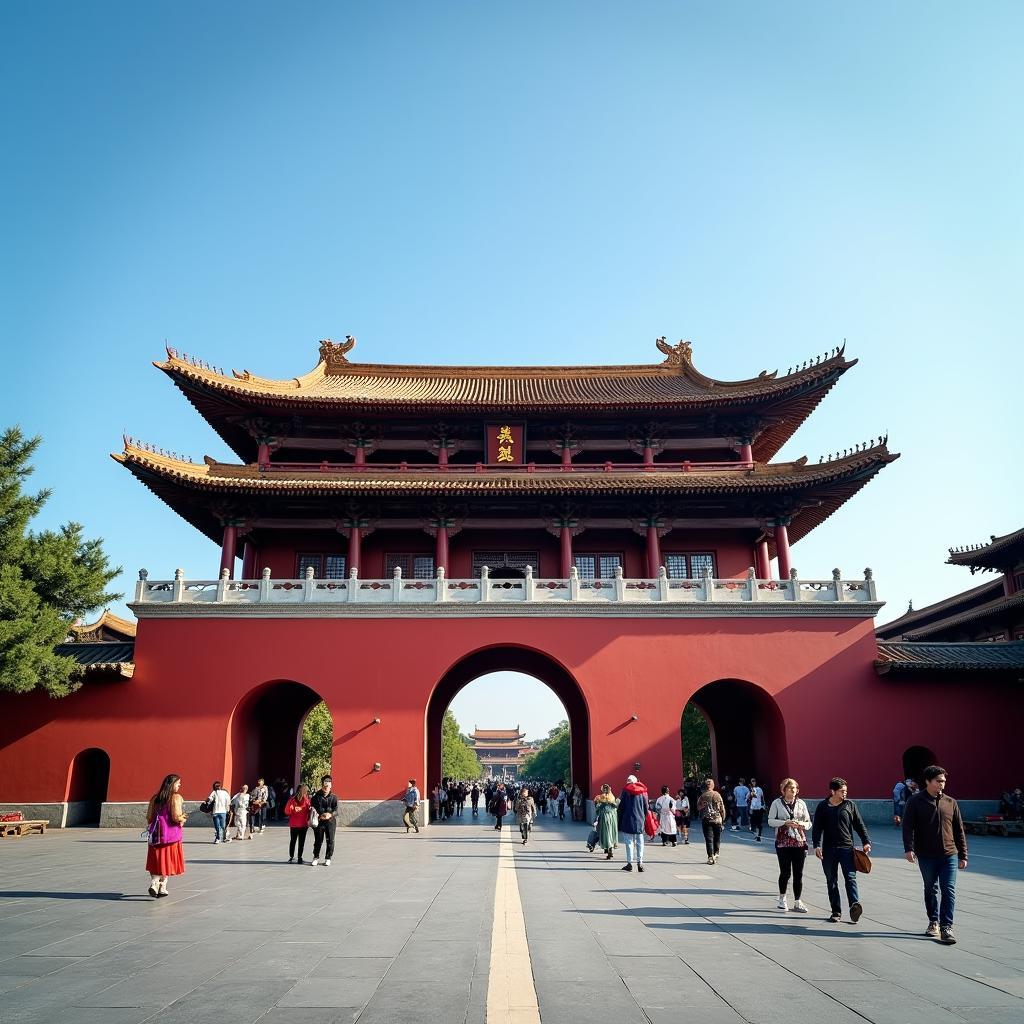 Toàn cảnh Hoàng Thành Thăng Long với kiến trúc cổ kính và du khách tham quan di sản văn hóa thế giới
IELTS Speaking Part 3: Two-way Discussion
Tổng Quan Về Part 3
Part 3 kéo dài 4-5 phút với các câu hỏi thảo luận sâu và trừu tượng hơn, mở rộng từ chủ đề Part 2. Đây là phần khó nhất vì yêu cầu bạn phải phân tích, so sánh, đánh giá và đưa ra quan điểm có lý lẽ về các vấn đề xã hội rộng lớn hơn.
Yêu cầu cụ thể:
- Phân tích nguyên nhân-kết quả, ưu-nhược điểm
- Đưa ra quan điểm cá nhân có supporting reasons
- Xem xét nhiều góc độ của vấn đề
- Sử dụng ví dụ từ xã hội, không chỉ kinh nghiệm cá nhân
Chiến lược hiệu quả:
- Mở rộng câu trả lời 3-5 câu với structure rõ ràng
- Sử dụng discourse markers để signpost ideas (Well, Actually, On the one hand…)
- Acknowledge complexity của vấn đề (It depends, To some extent…)
- Đưa ra specific examples from society/history
Lỗi thường gặp của học viên Việt Nam:
- Trả lời quá ngắn, không phân tích sâu
- Không đưa ra lý lẽ supporting opinion
- Thiếu từ vựng abstract và academic
- Chỉ nói về personal experience thay vì societal issues
- Không thừa nhận nhiều perspectives của vấn đề
Các Câu Hỏi Thảo Luận Sâu
Theme 1: Preservation and Conservation
Question 1: Why is it important to preserve historical buildings?
🎯 Phân tích câu hỏi:
- Dạng: Opinion with reasons (Why)
- Key words: preserve, historical buildings, important
- Cách tiếp cận: Direct answer → Multiple reasons với examples → Acknowledge potential challenges
📝 Sample Answer – Band 6-7:
“I think it’s important to preserve historical buildings for several reasons. First, they help us remember our history and culture. If we destroy old buildings, we lose a part of our past. Second, historical buildings can attract tourists, which is good for the economy. For example, many tourists come to Vietnam to see temples and pagodas. Also, old buildings show the architectural skills of our ancestors, which can teach us valuable lessons.”
Phân tích:
- Structure: Clear với First, Second, Also – nhưng còn mechanical
- Vocabulary: Basic (remember, destroy, lose) – thiếu precision
- Tại sao Band 6-7: Có multiple reasons và example nhưng analysis không deep, thiếu abstract vocabulary
📝 Câu trả lời mẫu – Band 8-9:
“Well, I’d argue that preserving historical buildings is absolutely crucial for several interconnected reasons. First and foremost, these structures serve as tangible repositories of our collective memory – they’re not just bricks and mortar but physical embodiments of our ancestors’ values, skills, and way of life. When we allow them to deteriorate, we’re essentially severing the threads that connect us to our roots. Beyond the cultural dimension, there’s also a strong economic rationale. Historical buildings have proven to be powerful magnets for cultural tourism, which can inject significant revenue into local economies. Take Hoi An Ancient Town, for instance – its meticulously preserved architecture has transformed it into one of Vietnam’s premier tourist destinations, generating livelihoods for thousands of locals. That said, I do recognize that preservation efforts must be balanced against the needs of urban development – it’s a delicate equilibrium that requires thoughtful urban planning rather than blanket preservation of every old structure.”
Phân tích:
- Structure: Well-organized với First and foremost → Beyond → That said, showing multiple dimensions và balance
- Vocabulary: Sophisticated và precise (tangible repositories, collective memory, severing the threads, meticulously preserved)
- Grammar: Complex structures natural (not just… but…, When we allow… we’re essentially…, it’s a delicate equilibrium that…)
- Critical Thinking: Shows balanced view, acknowledges complexity (That said, must be balanced against), uses specific example (Hoi An)
💡 Key Language Features:
- Discourse markers: Well, First and foremost, Beyond, That said
- Tentative language: I’d argue, I do recognize, it’s a… that requires
- Abstract nouns: preservation, deterioration, rationale, equilibrium
- Collocations: tangible repositories, collective memory, economic rationale, cultural tourism, urban planning
Question 2: What problems might arise from trying to preserve old buildings?
🎯 Phân tích câu hỏi:
- Dạng: Problem identification
- Key words: problems, preserve, old buildings
- Cách tiếp cận: Identify multiple problems → Explain consequences → Suggest potential solutions/trade-offs
📝 Sample Answer – Band 6-7:
“There are several problems when preserving old buildings. The biggest problem is money. It costs a lot to repair and maintain old buildings because you need special materials and skilled workers. Another problem is that old buildings might not be useful for modern life. They don’t have good facilities like air conditioning or elevators. Also, sometimes preserving old buildings can slow down city development because the government cannot build new roads or buildings in those areas.”
Phân tích:
- Structure: Lists problems clearly but analysis is surface-level
- Vocabulary: Basic (costs a lot, skilled workers, slow down)
- Tại sao Band 6-7: Identifies relevant problems nhưng thiếu depth và sophistication
📝 Câu trả lời mẫu – Band 8-9:
“Actually, preservation initiatives often encounter a whole host of challenges. The most pressing one is undoubtedly financial constraints – restoration work requires not just substantial capital but also specialized expertise and authentic materials, which can be prohibitively expensive. This is particularly acute in developing nations where resources must be allocated among competing priorities like healthcare and education. Another thorny issue is what I’d call the ‘functionality versus authenticity dilemma‘. Many historical structures were designed for lifestyles and purposes that are no longer relevant, yet extensive modernization risks compromising their historical integrity. For instance, retrofitting ancient buildings with modern amenities like fire safety systems or accessibility features can be technically challenging and may alter their original character. Furthermore, there’s often tension between preservation and urban development – cities need to accommodate growing populations and modern infrastructure, but overly rigid preservation policies can stifle economic growth and create what some call ‘museum cities‘ that feel frozen in time rather than living, breathing communities. It’s a multifaceted problem that requires nuanced solutions rather than one-size-fits-all approaches.”
Phân tích:
- Structure: Sophisticated với clear topic sentences and elaboration for each problem
- Vocabulary: High-level và precise (pressing, prohibitively expensive, thorny issue, retrofitting, stifle)
- Grammar: Complex sentences với parallelism, relative clauses embedded naturally
- Critical Thinking: Shows deep understanding của competing interests và complexity, uses specific terminology (functionality versus authenticity dilemma)
💡 Key Language Features:
- Problem-introducing phrases: The most pressing one, Another thorny issue, Furthermore
- Hedging language: I’d call, can be, often, some call
- Academic collocations: financial constraints, specialized expertise, historical integrity, urban development
Đối với những ai quan tâm đến describe a place that you visited that was unlike any other, việc phân tích các vấn đề xã hội liên quan đến di sản kiến trúc sẽ giúp bạn có cái nhìn toàn diện hơn về giá trị văn hóa của các địa điểm đặc biệt.
Theme 2: Modern vs Historical Architecture
Question 3: Do you think modern buildings can be as attractive as historical ones?
🎯 Phân tích câu hỏi:
- Dạng: Opinion/Compare
- Key words: modern buildings, attractive, historical ones
- Cách tiếp cận: State opinion → Explain reasoning → Give examples from both sides → Nuanced conclusion
📝 Sample Answer – Band 6-7:
“I think both modern and historical buildings can be attractive, but in different ways. Historical buildings are attractive because they have unique designs and tell stories about the past. They often use natural materials like wood and stone which look beautiful. Modern buildings can also be attractive with their creative designs and use of glass and steel. Some modern buildings like the Burj Khalifa are very impressive. However, I personally prefer historical buildings because they have more character and meaning.”
Phân tích:
- Structure: Compares both sides và gives personal preference
- Vocabulary: Adequate (unique designs, creative, impressive) nhưng thiếu sophistication
- Tại sao Band 6-7: Có comparison và example nhưng analysis chưa deep enough
📝 Câu trả lời mẫu – Band 8-9:
“Well, I think this really boils down to how we define attractiveness – it’s quite subjective and culturally contingent. On one level, historical buildings possess what I’d call ‘timeless appeal‘ – their beauty has been validated across generations, and there’s something profoundly moving about structures that have weathered centuries. The intricate craftsmanship and attention to detail in historical architecture often reflects a level of artistry that’s labor-intensive and rare today. Conversely, contemporary architecture has its own distinct aesthetic merits. Modern buildings can be breathtakingly innovative, pushing the boundaries of engineering and design in ways our ancestors couldn’t have imagined. Think of structures like Singapore’s Marina Bay Sands or Zaha Hadid’s works – they’re visually arresting and represent cutting-edge architectural thinking. What’s interesting is that the most successful modern buildings often pay homage to traditional design principles while incorporating contemporary elements – they strike a balance between honoring the past and embracing innovation. So rather than viewing it as a binary choice, I’d say both can be equally attractive; they just appeal to different sensibilities and serve different purposes in our built environment.”
Phân tích:
- Structure: Nuanced approach với On one level… Conversely… What’s interesting, showing sophisticated thinking
- Vocabulary: Highly precise (timeless appeal, culturally contingent, visually arresting, pay homage to)
- Grammar: Advanced structures (what I’d call, they’re structures that, the most successful… often…, rather than viewing)
- Critical Thinking: Redefines the question (how we define attractiveness), avoids simple answer, acknowledges subjectivity và cultural factors
💡 Key Language Features:
- Discourse markers: Well, On one level, Conversely, What’s interesting, So
- Hedging: I think, I’d say, often, can be
- Compare/contrast: Conversely, while, rather than
- Abstract concepts: timeless appeal, aesthetic merits, architectural thinking, built environment
Question 4: How do historical buildings affect the identity of a city?
🎯 Phân tích câu hỏi:
- Dạng: Cause-effect/Impact analysis
- Key words: affect, identity, city
- Cách tiếp cận: Explain concept of city identity → Multiple ways buildings affect it → Specific examples → Broader implications
📝 Câu trả lời mẫu – Band 8-9:
“Historical buildings play an absolutely pivotal role in shaping urban identity – they’re essentially the physical manifestation of a city’s collective narrative. First off, these structures act as visual anchors that make cities instantly recognizable. When you think of Paris, the Eiffel Tower and Notre-Dame immediately come to mind; similarly, Vietnam’s cities are indelibly associated with their pagodas and colonial villas. This visual distinctiveness is increasingly valuable in our globalized world where many cities risk becoming homogeneous due to standardized modern architecture. Beyond mere recognition, historical buildings also foster a sense of continuity and belonging among residents. They serve as communal touchstones – places where locals have shared experiences across generations, which strengthens social cohesion. There’s something psychologically grounding about seeing structures that your grandparents also knew. From an economic standpoint, these buildings often become defining assets in a city’s tourism portfolio, differentiating it from competitors. However, there’s a delicate balance to strike – cities that over-rely on historical identity might struggle to project a forward-thinking image that attracts modern industries and talent. The most successful cities, I’d argue, integrate their historical architecture into a broader narrative that also celebrates innovation and embraces diversity.”
Phân tích:
- Structure: Multi-layered analysis covering visual, psychological, social, and economic dimensions
- Vocabulary: Sophisticated và precise (pivotal role, indelibly associated with, communal touchstones, psychologically grounding)
- Grammar: Complex structures with embeddings (When you think of… immediately come to mind, There’s something… about seeing structures that…)
- Critical Thinking: Addresses multiple dimensions của city identity, acknowledges potential pitfalls (over-rely on), suggests balanced approach
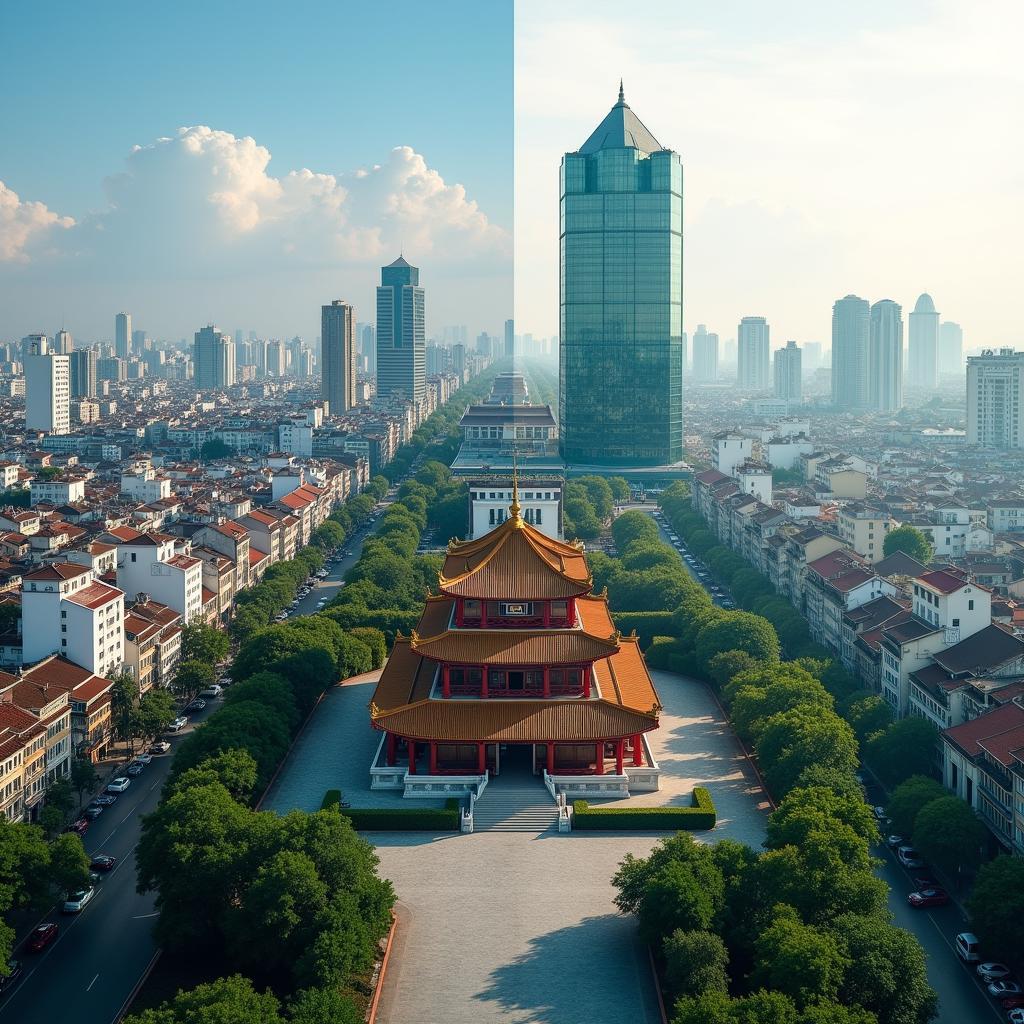 Sự kết hợp hài hòa giữa kiến trúc lịch sử và hiện đại tại Hà Nội thể hiện bản sắc văn hóa đô thị
Theme 3: Education and Awareness
Question 5: Should schools teach more about historical architecture?
🎯 Phân tích câu hỏi:
- Dạng: Opinion with justification (Should)
- Key words: schools, teach, historical architecture
- Cách tiếp cận: State position → Explain benefits → Address potential objections → Suggest how to implement
📝 Câu trả lời mẫu – Band 8-9:
“Absolutely, I believe historical architecture deserves greater prominence in our educational curriculum, though perhaps not as a standalone subject but integrated across multiple disciplines. The pedagogical value is multifaceted. For starters, studying historical buildings provides a tangible entry point into history lessons – it’s one thing to read about the French colonial period, but quite another to analyze the architectural evidence still visible in Hanoi’s streets. This hands-on approach can make abstract historical concepts far more accessible and engaging for students. Moreover, architectural education cultivates spatial thinking and aesthetic appreciation – valuable skills often neglected in curriculum overly focused on STEM subjects. Understanding how buildings are designed also encourages critical thinking about our built environment and sustainability issues. That being said, I recognize that curricula are already overcrowded, so the key is smart integration rather than adding more content. For instance, history classes could include field trips to historical sites, art classes could explore architectural drawing, and even math lessons could use buildings to teach geometry. This interdisciplinary approach would maximize learning efficiency while deepening students’ connection to their cultural heritage. What’s crucial is that we move beyond rote memorization of dates and facts toward helping students understand architecture as a living dialogue between past and present.”
Phân tích:
- Structure: Clear position followed by multiple supporting arguments, anticipates counterargument (curricula overcrowded), offers solutions
- Vocabulary: Academic và precise (deserves greater prominence, pedagogical value, tangible entry point, interdisciplinary approach)
- Grammar: Sophisticated với it’s one thing to… but quite another to, Understanding how… encourages, This approach would maximize
- Critical Thinking: Acknowledges constraints (overcrowded curricula), proposes practical solutions (smart integration), thinks beyond surface level (living dialogue)
Question 6: How can governments encourage more people to appreciate historical buildings?
🎯 Phân tích câu hỏi:
- Dạng: Solution/Suggestion (How can)
- Key words: governments, encourage, appreciate, historical buildings
- Cách tiếp cận: Multiple strategies across different areas → Explain implementation → Acknowledge challenges
📝 Câu trả lời mẫu – Band 8-9:
“Governments have a diverse toolkit at their disposal to foster greater appreciation for historical architecture. One effective strategy is to make these sites more accessible and engaging through enhanced visitor experiences. This could involve leveraging modern technology like augmented reality apps that bring historical contexts to life, or implementing well-designed audio guides that tell compelling narratives rather than just reciting facts. On the educational front, governments could subsidize school excursions to historical sites or launch public awareness campaigns during heritage months, similar to how environmental campaigns have successfully raised consciousness about sustainability. Financial incentives also play a role – offering tax breaks to property owners who maintain historical buildings or providing grants for community-led restoration projects can harness private sector involvement. From a cultural programming perspective, activating these spaces with events like traditional music performances, artisan markets, or cultural festivals can transform them from static museums into vibrant community hubs, making them relevant to contemporary life. Singapore’s approach is quite instructive – they’ve seamlessly integrated historical buildings into their modern urban fabric, demonstrating that heritage and progress aren’t mutually exclusive. The challenge, of course, is securing adequate funding in countries with competing development priorities, but I’d argue that the long-term cultural and economic dividends make it a worthwhile investment. Ultimately, the key is shifting public perception from viewing historical buildings as relics to preserve to seeing them as living assets that enrich our lives today.”
Phân tích:
- Structure: Comprehensive coverage of multiple strategies (accessibility, education, financial, cultural programming) with specific examples
- Vocabulary: Policy-oriented và sophisticated (diverse toolkit, foster, leverage, subsidize, harness, activating spaces, long-term dividends)
- Grammar: Advanced structures with nominalization, passive voice used appropriately, complex sentences
- Critical Thinking: Provides concrete strategies, uses international examples (Singapore), acknowledges practical constraints (funding), reframes the issue (relics vs living assets)
💡 Key Language Features:
- Strategy markers: One effective strategy, On the educational front, From a perspective, The key is
- Tentative language: could involve, I’d argue, Ultimately
- Cause-effect language: This could lead to, make it, transform them from… into
- Policy vocabulary: subsidize, grants, tax breaks, public awareness campaigns
Khi tìm hiểu về describe a person who motivates you to exercise, bạn có thể áp dụng kỹ năng phân tích và diễn đạt chi tiết tương tự để miêu tả những người có ảnh hưởng tích cực trong cuộc sống của mình.
Từ vựng và cụm từ quan trọng
Topic-Specific Vocabulary
| Từ vựng/Cụm từ | Loại từ | Phiên âm | Nghĩa tiếng Việt | Ví dụ | Collocation |
|---|---|---|---|---|---|
| heritage site | n | /ˈherɪtɪdʒ saɪt/ | di sản, công trình di sản | The Temple of Literature is a recognized heritage site in Vietnam. | UNESCO heritage site, cultural heritage site, protect heritage sites, designated heritage site |
| architectural ensemble | n | /ˌɑːkɪˈtektʃərəl ɒnˈsɒmbl/ | quần thể kiến trúc | The palace forms part of a larger architectural ensemble. | impressive ensemble, harmonious ensemble, architectural ensemble includes |
| encapsulate | v | /ɪnˈkæpsjuleɪt/ | tóm gọn, bao hàm | This building encapsulates centuries of Vietnamese history. | encapsulate history, encapsulate values, perfectly encapsulate |
| palimpsest | n | /ˈpælɪmpsest/ | tầng lớp chồng chéo (văn bản/kiến trúc) | The citadel is a palimpsest of different architectural periods. | architectural palimpsest, cultural palimpsest, serves as a palimpsest |
| vermillion | adj/n | /vəˈmɪljən/ | màu đỏ thẫm, son | The vermillion pillars are characteristic of Vietnamese temples. | vermillion-painted, vermillion color, deep vermillion |
| ornate | adj | /ɔːˈneɪt/ | được trang trí công phu, cầu kỳ | The gate features ornate carvings of dragons. | ornate decoration, ornate gates, highly ornate, ornate details |
| intricate | adj | /ˈɪntrɪkət/ | tinh xảo, phức tạp | The intricate carvings took years to complete. | intricate carvings, intricate details, intricate patterns, intricate design |
| upturned eaves | n | /ˈʌptɜːnd iːvz/ | mái cong vút lên (đặc trưng kiến trúc Á Đông) | Traditional Vietnamese roofs have distinctive upturned eaves. | distinctive upturned eaves, graceful upturned eaves |
| weathered | adj | /ˈweðəd/ | bị thời tiết làm phai màu/mòn | The weathered stone walls show the building’s age. | weathered stone, weathered appearance, heavily weathered |
| patina | n | /ˈpætɪnə/ | lớp gỉ/màu cổ kính do thời gian | The tiles have acquired a beautiful patina over centuries. | acquire a patina, beautiful patina, develop patina |
| stele/stelae (plural) | n | /ˈstiːli/ | bia đá khắc chữ | The stone stelae bear the names of successful scholars. | stone stele, erect a stele, inscribed stele, doctoral stele |
| tangible | adj | /ˈtændʒəbl/ | hữu hình, cụ thể, có thể sờ mó | Historical buildings provide tangible links to our past. | tangible evidence, tangible heritage, tangible reminder, tangible connection |
| embodiment | n | /ɪmˈbɒdimənt/ | sự hiện thân, thể hiện cụ thể | The temple is an embodiment of Confucian values. | perfect embodiment, physical embodiment, embodiment of culture |
| edifice | n | /ˈedɪfɪs/ | công trình kiến trúc (thường lớn, uy nghi) | This magnificent edifice has stood for a millennium. | impressive edifice, grand edifice, ancient edifice |
| facade | n | /fəˈsɑːd/ | mặt tiền, mặt trước của tòa nhà | The facade displays French colonial architectural elements. | ornate facade, impressive facade, restore the facade |
| citadel | n | /ˈsɪtədel/ | thành, thành luỹ | The imperial citadel served as a military stronghold. | ancient citadel, imperial citadel, fortified citadel |
| pagoda | n | /pəˈɡəʊdə/ | chùa tháp | The One Pillar Pagoda is an iconic Vietnamese structure. | ancient pagoda, Buddhist pagoda, multi-tiered pagoda |
| restoration | n | /ˌrestəˈreɪʃn/ | sự phục hồi, tu sửa | The restoration project took five years to complete. | extensive restoration, careful restoration, undergo restoration, restoration work |
| preservation | n | /ˌprezəˈveɪʃn/ | sự bảo tồn, gìn giữ | Historic preservation is crucial for cultural identity. | historic preservation, architectural preservation, preservation efforts |
| craftsmanship | n | /ˈkrɑːftsmənʃɪp/ | tay nghề thợ thủ công | The intricate craftsmanship is evident in every detail. | exquisite craftsmanship, traditional craftsmanship, showcase craftsmanship |
Idiomatic Expressions & Advanced Phrases
| Cụm từ | Nghĩa | Ví dụ sử dụng | Band điểm |
|---|---|---|---|
| stand the test of time | vượt qua thử thách của thời gian, còn mãi | These buildings have truly stood the test of time. | 7.5-8 |
| a window into the past | cánh cửa sổ nhìn vào quá khứ | Historical architecture provides a window into the past. | 7.5-8 |
| frozen in time | đóng băng trong thời gian, không thay đổi | The ancient town appears frozen in time. | 7.5-8 |
| living testament | minh chứng sống còn | The citadel is a living testament to Vietnamese resilience. | 8-9 |
| architectural marvel | kỳ quan kiến trúc | The structure is considered an architectural marvel. | 7.5-8 |
| cast in stone | khắc vào đá, ghi nhận lại (nghĩa bóng: cố định, không thay đổi) | The names of scholars were literally cast in stone. | 8-9 |
| bear witness to | chứng kiến, làm chứng cho | These walls bear witness to centuries of history. | 8-9 |
| the crowning glory | vinh quang tột đỉnh, phần đẹp/quan trọng nhất | The main hall is the crowning glory of the complex. | 8-9 |
| fall into disrepair | trở nên hư hỏng, xuống cấp | Many historical buildings have fallen into disrepair. | 7.5-8 |
| a feast for the eyes | một bữa tiệc cho mắt (rất đẹp mắt) | The ornate decorations are a feast for the eyes. | 7.5-8 |
| breathe new life into | thổi hồn mới vào, làm sống lại | Restoration efforts have breathed new life into the old quarter. | 8-9 |
| carved in stone | khắc vào đá (nghĩa đen và bóng) | The inscriptions are beautifully carved in stone. | 7-8 |
| a stone’s throw from | rất gần, chỉ một khoảng ngắn | The temple is just a stone’s throw from the city center. | 7-8 |
| etched in memory | khắc sâu trong ký ức | The beauty of the palace is etched in my memory. | 8-9 |
Discourse Markers (Từ Nối Ý Trong Speaking)
Để bắt đầu câu trả lời:
- 📝 Well,… – Khi cần một chút thời gian suy nghĩ hoặc muốn bắt đầu natural
- 📝 Actually,… – Khi đưa ra góc nhìn khác hoặc correct một assumption
- 📝 To be honest,… – Khi nói thật về opinion cá nhân
- 📝 I’d say that… – Khi đưa ra quan điểm một cách tentative
- 📝 From my perspective,… – Thể hiện đây là góc nhìn cá nhân
Để bổ sung ý:
- 📝 On top of that,… – Thêm vào đó, hơn nữa
- 📝 What’s more,… – Ngoài ra, còn nữa
- 📝 Not to mention… – Chưa kể đến
- 📝 Beyond that,… – Vượt ra ngoài điều đó
- 📝 Additionally,… – Thêm vào đó (formal hơn)
Để đưa ra quan điểm cân bằng:
- 📝 On the one hand,… On the other hand,… – Một mặt… mặt khác
- 📝 While it’s true that…, we also need to consider… – Mặc dù đúng là… chúng ta cũng cần xem xét
- 📝 That being said,… – Tuy nhiên, dù vậy
- 📝 Having said that,… – Sau khi nói điều đó, tuy nhiên
- 📝 Conversely,… – Ngược lại
Để kết luận:
- 📝 All in all,… – Tóm lại, xét tất cả các yếu tố
- 📝 At the end of the day,… – Cuối cùng thì, xét cho cùng
- 📝 Ultimately,… – Rốt cuộc, về căn bản
- 📝 In the final analysis,… – Trong phân tích cuối cùng
Để show sequence trong Part 2:
- 📝 First and foremost,… – Trước hết và quan trọng nhất
- 📝 To begin with,… – Để bắt đầu
- 📝 Subsequently,… – Tiếp theo đó (formal)
- 📝 Moving on to,… – Chuyển sang
Grammatical Structures Ấn Tượng
1. Conditional Sentences (Câu điều kiện):
-
Mixed conditional: “If these buildings hadn’t been preserved, we would have no tangible connection to our ancestors today.”
(Kết hợp quá khứ và hiện tại – thể hiện hậu quả hiện tại của hành động quá khứ không xảy ra) -
Inversion (đảo ngữ): “Had the government not intervened, many historical sites would have been demolished.”
(Formal và impressive hơn normal conditional, đặc biệt phù hợp Part 3)
2. Relative Clauses (Mệnh đề quan hệ):
-
Non-defining: “The Imperial Citadel, which has been recognized by UNESCO, attracts thousands of visitors annually.”
(Thêm thông tin bổ sung, tạo câu phức và sophisticated) -
Reduced relative clause: “The temple, built in the 11th century, remains remarkably well-preserved.”
(Rút gọn clause, nghe concise và academic)
3. Passive Voice (Câu bị động):
-
Impersonal passive: “It is widely believed that the temple brings good fortune.”
-
“It is thought that the architecture reflects Chinese influence.”
(Thể hiện general opinion, phù hợp Part 3 khi discuss societal views) -
Modal passive: “Historical buildings should be maintained by both government and private sectors.”
(Kết hợp modal verbs với passive để suggest hoặc recommend)
4. Cleft Sentences (Câu chẻ):
-
What-cleft: “What really strikes me about this building is its harmonious blend of styles.”
-
It-cleft: “It was in 1070 that the temple was first established.”
(Tạo emphasis, highlight thông tin quan trọng) -
The thing that: “The thing that makes this architecture unique is its sustainable design principles.”
(Natural way to emphasize điểm quan trọng)
5. Participle Clauses (Mệnh đề phân từ):
- Present participle: “Having visited numerous historical sites, I’ve developed a deep appreciation for traditional architecture.”
- Past participle: “Built over a thousand years ago, the pagoda still retains its original charm.”
(Sophisticated way to combine ideas, phù hợp với band 8+)
6. Inversion for Emphasis:
- “Not only does the building serve as a tourist attraction, but it also functions as a cultural center.”
- “Rarely have I seen such exquisite craftsmanship in modern buildings.”
(Formal và impressive, đặc biệt tốt cho Part 3)
7. Subjunctive Mood:
- “It’s crucial that the government preserve these structures for future generations.”
- “I suggest that more funding be allocated to restoration projects.”
(Formal suggestions, phù hợp policy discussions trong Part 3)
Tương tự với describe a person who is very curious, việc sử dụng đa dạng cấu trúc ngữ pháp và từ vựng chính xác sẽ giúp bạn mô tả người hoặc sự vật một cách sinh động và ấn tượng hơn.
Chiến Lược Học Tập và Luyện Tập
Lộ Trình 4 Tuần Cho Chủ Đề Này
Tuần 1 – Xây Dựng Nền Tảng:
- Học 10-15 từ vựng/ngày từ danh sách trên
- Ghi âm pronunciation và luyện tập
- Tạo flashcards với collocations
- Đọc 2-3 articles về historical buildings (BBC Culture, ArchDaily)
- Xem documentaries về Vietnamese architecture
Tuần 2 – Practice Part 1 & 2:
- Luyện trả lời tất cả câu hỏi Part 1 trong 30 giây/câu
- Ghi âm và tự đánh giá
- Viết outline cho 3-4 cue cards khác nhau về buildings
- Practice speaking 2 phút liên tục không ngắt
- So sánh recording với sample answers
Tuần 3 – Practice Part 3:
- Phân tích 5-6 câu hỏi Part 3 theo themes
- Practice structuring answers với discourse markers
- Tập nói 3-4 câu cho mỗi câu hỏi
- Record và kiểm tra fluency, coherence
- Study examiner feedback patterns
Tuần 4 – Integration & Full Tests:
- Làm 2-3 full mock tests (Part 1, 2, 3 liên tiếp)
- Tìm speaking partner hoặc tutor để practice
- Focus vào pronunciation và intonation
- Review và refine câu trả lời
- Tự tin với vocabulary và structures
Tips Từ Examiner
Những gì Examiner chú ý:
- Fluency: Bạn có nói mượt mà không nhiều hesitation không cần thiết
- Vocabulary range: Bạn có paraphrase và dùng từ precise thay vì generic
- Grammar complexity: Bạn có risk-taking với complex structures không
- Pronunciation: Intelligibility quan trọng hơn accent
- Ideas depth: Part 3 đặc biệt coi trọng critical thinking
Common Mistakes to Avoid:
- Học thuộc templates nghe rất mechanical
- Dùng từ vựng quá academic không phù hợp Speaking
- Trả lời quá ngắn (Part 1) hoặc quá dài lê thê (Part 2)
- Không trả lời đúng câu hỏi được hỏi
- Self-correction quá nhiều làm gián đoạn fluency
Last-Minute Tips:
- Arrive sớm 30 phút để calm nerves
- Warm up voice bằng cách nói chuyện trước khi vào phòng
- Listen carefully to questions, không ngại ask for clarification
- Maintain eye contact và speak with confidence
- Nếu không biết từ, paraphrase thay vì dừng lại
- Enjoy the conversation – examiner muốn bạn succeed
Khi bạn nghiên cứu về describe a time when you went camping, hãy nhớ áp dụng các chiến lược tương tự về cấu trúc câu trả lời, sử dụng thì động từ chính xác và mô tả chi tiết để tạo ấn tượng với giám khảo.
Kết Luận
Chủ đề “describe a famous historical building in your country” là một đề tài tuyệt vời để thể hiện không chỉ khả năng ngôn ngữ mà còn hiểu biết văn hóa của bạn. Qua bài viết này, bạn đã học được:
Key Takeaways:
- Cách structure câu trả lời cho cả 3 Parts một cách logic và coherent
- Hơn 50 từ vựng và expressions chuyên ngành về architecture và heritage
- Sample answers từ Band 6 đến Band 9 với phân tích chi tiết
- Grammatical structures ấn tượng để boost band điểm
- Chiến lược học tập 4 tuần cụ thể và practical tips từ examiner
Remember:
- Authenticity quan trọng hơn perfection – nói tự nhiên như đang share passion
- Preparation is key nhưng đừng sound như đang recite memorized script
- Practice với variety of questions để flexible trong actual test
- Cultural knowledge adds depth to your answers và tạo impression
Với sự chuẩn bị kỹ lưỡng theo hướng dẫn này, bạn hoàn toàn có thể tự tin đạt band điểm mục tiêu. Historical buildings không chỉ là construction materials – chúng là stories, memories, và identity của chúng ta. Khi bạn nói về chúng với passion và knowledge, examiner sẽ cảm nhận được authenticity đó.
Good luck với IELTS Speaking test của bạn! Remember, every building has a story, and so do you – just tell it well.


