
Chủ đề về thói quen ngủ trưa (napping habits) là một trong những chủ đề thường xuyên xuất hiện trong IELTS Speaking Part 1, đặc biệt từ năm 2020 đến nay. Đây là câu hỏi thuộc nhóm “Daily Routine” và “Health & Lifestyle” – hai nhóm chủ đề có tần suất xuất hiện cao trong các kỳ thi thực tế.
Theo thống kê từ các đề thi IELTS official tại Việt Nam và khu vực Châu Á, chủ đề về sleeping habits xuất hiện với tần suất trung bình đến cao, khoảng 15-20% các buổi thi trong năm 2023-2024. Dự đoán khả năng xuất hiện trong tương lai vẫn ở mức cao vì đây là chủ đề liên quan trực tiếp đến đời sống hàng ngày, dễ hỏi và phù hợp với mọi đối tượng thí sinh.
Bài viết này sẽ cung cấp cho bạn:
- Các câu hỏi thường gặp về chủ đề napping trong cả 3 Part
- Bài mẫu chi tiết theo từng band điểm (6-7, 7.5-8, 8.5-9) với phân tích cụ thể
- Kho từ vựng và cụm từ ăn điểm được giảng viên chấm thi khuyên dùng
- Chiến lược trả lời hiệu quả từ góc nhìn Examiner
- Các lỗi phổ biến của học viên Việt Nam và cách khắc phục
IELTS Speaking Part 1: Introduction and Interview
Tổng Quan Về Part 1
Part 1 kéo dài 4-5 phút với những câu hỏi ngắn gọn về cuộc sống hàng ngày, sở thích cá nhân và các chủ đề quen thuộc. Đây là phần “warm-up” để giúp thí sinh cảm thấy thoải mái trước khi chuyển sang các phần khó hơn.
Đặc điểm quan trọng:
- Câu hỏi ngắn, trực tiếp, dễ hiểu
- Yêu cầu trả lời về bản thân, kinh nghiệm cá nhân
- Không cần phân tích sâu hay quan điểm phức tạp
Chiến lược hiệu quả:
- Trả lời đủ 2-3 câu (không quá ngắn, không quá dài)
- Mở rộng bằng cách thêm lý do hoặc ví dụ cụ thể
- Sử dụng thì động từ chính xác (hiện tại đơn cho habits)
- Giọng điệu tự nhiên, tự tin
Lỗi thường gặp của học viên Việt Nam:
- Trả lời chỉ một câu ngắn (Yes/No) mà không mở rộng
- Dùng từ vựng quá đơn giản, lặp đi lặp lại
- Không đưa ra ví dụ cụ thể từ cuộc sống
- Ngập ngừng quá nhiều vì suy nghĩ từ vựng phức tạp
- Dùng “I think” quá nhiều ở đầu mỗi câu
Các Câu Hỏi Thường Gặp
Question 1: Do you take naps at noon?
Question 2: How long do you usually nap for?
Question 3: Did you take naps when you were younger?
Question 4: Do you think napping is important?
Question 5: What time do you usually feel sleepy during the day?
Question 6: Do you prefer to nap at home or somewhere else?
Question 7: Do many people in your country take afternoon naps?
Question 8: How do you feel after taking a nap?
Question 9: Do you think napping affects your nighttime sleep?
Question 10: Would you like to have more time to nap during the day?
Phân Tích và Gợi Ý Trả Lời Chi Tiết
Question: Do you take naps at noon?
Cách tiếp cận:
- Trả lời trực tiếp Yes/No
- Giải thích tần suất hoặc điều kiện
- Thêm lý do ngắn gọn
Sample Answer – Band 6-7:
“Yes, I do. I usually take a short nap after lunch when I have time. It helps me feel less tired in the afternoon and I can work better.”
Phân tích:
- Điểm mạnh: Trả lời rõ ràng, có lý do đơn giản, sử dụng “usually” để chỉ tần suất
- Hạn chế: Từ vựng cơ bản (tired, work better), cấu trúc câu đơn giản, thiếu chi tiết cụ thể
- Tại sao Band 6-7: Đáp ứng yêu cầu câu hỏi, có mở rộng nhưng từ vựng và grammar chưa đa dạng, ý tưởng chưa phát triển sâu
Sample Answer – Band 8-9:
“Actually, yes, I do try to squeeze in a quick nap during lunchtime, especially on weekdays. I find that even a 20-minute power nap can work wonders for my productivity levels in the afternoon. Without it, I tend to experience that post-lunch slump where my concentration just completely crashes.”
Phân tích:
- Điểm mạnh:
- Từ vựng sophisticated: “squeeze in” (tìm cách sắp xếp), “power nap”, “work wonders”, “productivity levels”, “post-lunch slump”, “completely crashes”
- Cấu trúc đa dạng: “I find that…” (complex sentence), “Without it, I tend to…” (conditional thinking)
- Ý tưởng cụ thể: nêu rõ thời gian (20 phút), tác động (productivity), và hậu quả nếu không ngủ
- Tại sao Band 8-9:
- Fluency: Tự nhiên, không hesitation, dùng “Actually” để mở đầu tự nhiên
- Vocabulary: Collocations chính xác (work wonders, post-lunch slump), từ vựng topic-specific
- Grammar: Cấu trúc câu phức, sử dụng present simple chính xác cho habits
- Pronunciation: Các từ như “squeeze in”, “crashes” cho thấy khả năng phát âm linh hoạt
Key Vocabulary & Expressions:
- squeeze in something: tìm cách sắp xếp thời gian cho việc gì (dù bận rộn)
- power nap: giấc ngủ ngắn (15-30 phút) để phục hồi năng lượng
- work wonders: có hiệu quả kỳ diệu, tuyệt vời
- productivity levels: mức độ năng suất làm việc
- post-lunch slump: trạng thái buồn ngủ, uể oải sau bữa trưa
- concentration crashes: sự tập trung sụt giảm mạnh
Question: How long do you usually nap for?
Cách tiếp cận:
- Nêu rõ thời gian cụ thể
- Giải thích tại sao chọn khoảng thời gian đó
- Có thể so sánh với quá khứ hoặc tình huống khác
Sample Answer – Band 6-7:
“I usually nap for about 30 minutes. I think this is enough time to rest but not too long, so I don’t feel tired when I wake up. Sometimes I sleep a bit longer on weekends.”
Phân tích:
- Điểm mạnh: Trả lời cụ thể về thời gian, có so sánh giữa ngày thường và cuối tuần
- Hạn chế: Dùng “I think” không cần thiết, từ vựng lặp lại (tired), cấu trúc câu đơn điệu
- Tại sao Band 6-7: Thông tin đầy đủ nhưng cách diễn đạt còn basic, thiếu vocabulary về sleep/rest
Sample Answer – Band 8-9:
“I typically limit myself to around 20 to 30 minutes, which is what experts call the optimal duration for a midday nap. Any longer than that and I risk entering deep sleep, which makes me feel groggy and disoriented when I wake up. I’ve learned through trial and error that this sweet spot gives me just enough rejuvenation without disrupting my nighttime sleep schedule.”
Phân tích:
- Điểm mạnh:
- Từ vựng chuyên môn: “optimal duration”, “entering deep sleep”, “groggy”, “disoriented”, “rejuvenation”, “disrupting”
- Cấu trúc câu phức tạp: “which is what experts call…”, “Any longer than that and I risk…”
- Ý tưởng sâu sắc: đề cập đến kiến thức khoa học (deep sleep), kinh nghiệm cá nhân (trial and error), và tác động đến giấc ngủ đêm
- Dùng metaphor: “sweet spot” (điểm hoàn hảo)
- Tại sao Band 8-9:
- Fluency: Mạch lạc, logic, các ý nối kết tự nhiên
- Vocabulary: Precise và sophisticated, collocations chuẩn (limit myself to, entering deep sleep)
- Grammar: Complex sentences, relative clauses, conditional structures
- Ideas: Shows understanding of science behind napping, personal experimentation
Key Vocabulary & Expressions:
- limit myself to: tự giới hạn bản thân ở mức
- optimal duration: khoảng thời gian tối ưu
- entering deep sleep: bước vào giấc ngủ sâu
- groggy: buồn ngủ, mệt mỏi (sau khi ngủ dậy)
- disoriented: mất phương hướng, lú lẫn
- sweet spot: điểm lý tưởng, hoàn hảo
- rejuvenation: sự trẻ hóa, phục hồi năng lượng
- disrupting: làm gián đoạn, phá vỡ
 Học viên đang luyện tập IELTS Speaking Part 1 về chủ đề thói quen ngủ trưa với giáo viên
Question: Did you take naps when you were younger?
Cách tiếp cận:
- Sử dụng thì quá khứ đơn
- So sánh giữa quá khứ và hiện tại
- Giải thích lý do thay đổi (nếu có)
Sample Answer – Band 6-7:
“Yes, I did. When I was a child, my parents made me take naps every afternoon. But when I became a teenager, I stopped taking naps because I thought they were boring and I wanted to play with friends instead.”
Phân tích:
- Điểm mạnh: Sử dụng đúng thì quá khứ, có sự so sánh giữa childhood và teenage years
- Hạn chế: Từ “boring” không chính xác cho context này, cấu trúc câu đơn giản
- Tại sao Band 6-7: Trả lời đầy đủ với timeline nhưng vocabulary và grammar chưa impressive
Sample Answer – Band 8-9:
“Absolutely. When I was in primary school, afternoon naps were actually mandatory – my parents were quite strict about maintaining a consistent nap schedule. However, as I transitioned into my teenage years, I gradually phased them out because I felt they were cutting into my social time. Looking back now, I realize how shortsighted that was, because I probably would have benefited enormously from that extra rest during such a demanding period of my life.”
Phân tích:
- Điểm mạnh:
- Từ vựng nâng cao: “mandatory”, “strict about maintaining”, “transitioned into”, “phased them out”, “cutting into”, “shortsighted”, “benefited enormously”, “demanding period”
- Cấu trúc phức tạp: “Looking back now, I realize…” (reflection), past perfect và conditional thinking
- Ý tưởng mature: thể hiện sự phản tỉnh, nhìn nhận lại quyết định quá khứ
- Timeline rõ ràng: primary school → teenage years → reflection now
- Tại sao Band 8-9:
- Fluency: Smooth transitions giữa các time periods, dùng “Absolutely” để bắt đầu tự nhiên
- Vocabulary: Sophisticated và precise, collocations xuất sắc
- Grammar: Mix của past simple, past continuous, past perfect, và conditional
- Critical thinking: Shows maturity và self-reflection
Key Vocabulary & Expressions:
- mandatory: bắt buộc, không thể bỏ qua
- strict about maintaining: nghiêm khắc về việc duy trì
- transitioned into: chuyển sang (giai đoạn khác)
- gradually phased them out: dần dần loại bỏ
- cutting into: cắt giảm, chiếm mất (thời gian)
- shortsighted: thiển cận, không nhìn xa trông rộng
- benefited enormously: có lợi ích rất lớn
- demanding period: giai đoạn đòi hỏi nhiều, áp lực
Question: Do you think napping is important?
Cách tiếp cận:
- Đưa ra opinion rõ ràng
- Cung cấp 1-2 lý do hỗ trợ
- Có thể thêm personal experience hoặc general observation
Sample Answer – Band 6-7:
“Yes, I think napping is important. It helps people rest and feel more energetic. Many people feel tired after lunch, so a short nap can help them work better for the rest of the day.”
Phân tích:
- Điểm mạnh: Opinion rõ ràng, có lý do hỗ trợ đơn giản
- Hạn chế: Từ vựng basic (tired, energetic, work better), thiếu specific examples hoặc nuance
- Tại sao Band 6-7: Đáp ứng yêu cầu cơ bản nhưng thiếu depth và sophistication
Sample Answer – Band 8-9:
“I’d say it really depends on the individual and their lifestyle, but generally speaking, yes, napping can be incredibly beneficial. Research has shown that short naps can enhance cognitive function, boost creativity, and even strengthen memory consolidation. That said, it’s not a one-size-fits-all solution – some people find that napping makes them feel lethargic or interferes with their nighttime sleep. So while I’m generally in favor of napping, I think people need to figure out what works for their own body clock.”
Phân tích:
- Điểm mạnh:
- Từ vựng sophisticated: “incredibly beneficial”, “enhance cognitive function”, “boost creativity”, “memory consolidation”, “one-size-fits-all solution”, “lethargic”, “interferes with”, “figure out what works”
- Cấu trúc balanced: đưa ra positive points + acknowledge limitations
- References to research: thể hiện kiến thức rộng
- Nuanced thinking: “depends on the individual”, “not one-size-fits-all”
- Tại sao Band 8-9:
- Fluency: Well-organized với clear introduction, supporting points, và conclusion
- Vocabulary: Academic và precise, topic-specific terminology
- Grammar: Complex structures: “Research has shown that…”, “while I’m generally in favor of…”
- Critical thinking: Shows balanced view, acknowledges complexity, demonstrates intellectual maturity
Key Vocabulary & Expressions:
- depends on the individual: tùy thuộc vào từng cá nhân
- incredibly beneficial: có lợi ích cực kỳ lớn
- enhance cognitive function: cải thiện chức năng nhận thức
- boost creativity: thúc đẩy sáng tạo
- memory consolidation: củng cố trí nhớ
- one-size-fits-all solution: giải pháp áp dụng cho tất cả mọi người
- lethargic: uể oải, thiếu sinh lực
- interferes with: can thiệp, gây cản trở
- generally in favor of: nhìn chung ủng hộ
- figure out what works for their own body clock: tìm ra điều phù hợp với nhịp sinh học của mình
IELTS Speaking Part 2: Long Turn (Cue Card)
Tổng Quan Về Part 2
Part 2 là phần độc thoại kéo dài 3-4 phút, bao gồm 1 phút chuẩn bị và 2 phút nói liên tục. Đây là phần thử thách nhất về mặt fluency vì bạn phải nói một mình mà không được ngắt quãng.
Thời gian phân bổ:
- 1 phút chuẩn bị: ghi chú ý tưởng (keywords only, không viết câu)
- 2 phút nói: examiner sẽ nghe không ngắt lời
- Examiner có thể dừng bạn nếu nói quá 2 phút hoặc hỏi thêm 1 câu nếu bạn dừng sớm
Đặc điểm quan trọng:
- Phải cover tất cả các bullet points trong cue card
- Bullet cuối cùng thường là “explain/describe how you feel” – đây là phần quan trọng nhất
- Cần maintain fluency trong suốt 2 phút
- Không được hỏi lại examiner hoặc xin clarification
Chiến lược hiệu quả:
- Sử dụng hết 1 phút để plan (jot down keywords cho mỗi bullet point)
- Phân bổ thời gian đều: mỗi bullet point khoảng 30-40 giây
- Dành nhiều thời gian nhất cho bullet “explain” cuối cùng
- Sử dụng discourse markers để transition giữa các ý (Moving on to…, As for…, Regarding…)
- Nếu hết ý trước 2 phút, elaborate thêm bằng examples, comparisons, hoặc personal reflections
Lỗi thường gặp của học viên Việt Nam:
- Không sử dụng hết 1 phút chuẩn bị, vội vàng bắt đầu nói
- Nói không đủ 1.5 phút (quá ngắn)
- Bỏ sót một hoặc nhiều bullet points
- Dành quá ít thời gian cho phần “explain” quan trọng
- Dừng giữa chừng và nhìn examiner chờ được hỏi thêm
- Lặp lại ý tưởng vì không plan kỹ
- Sử dụng quá nhiều filler words (um, uh, you know)
Cue Card
Describe a time when you took a nap and felt refreshed
You should say:
- When and where this happened
- How long you napped for
- What you did before and after the nap
- And explain why this nap was particularly refreshing for you
Phân Tích Đề Bài
Dạng câu hỏi: Describe a past experience/event
Thì động từ chính: Past tenses (past simple, past continuous, past perfect) vì đây là một sự kiện đã xảy ra trong quá khứ
Bullet points phải cover:
- When and where: Cần rõ ràng về thời gian (cụ thể hoặc khoảng thời gian) và địa điểm
- How long: Đưa ra duration cụ thể của giấc ngủ
- What you did before and after: Context của giấc ngủ – activities surrounding it
- Explain why particularly refreshing: Đây là phần QUAN TRỌNG NHẤT – cần elaborate nhiều nhất, giải thích feeling, impact, reasons
Câu “explain” quan trọng:
Đây là nơi bạn ghi điểm cao nhất. Examiner muốn nghe:
- Cảm xúc, feelings chi tiết
- So sánh với other naps hoặc normal state
- Impact cụ thể đến activities sau đó
- Personal reflection về experience
Lưu ý về tense:
- Past simple cho main events: “I took a nap”, “It happened”
- Past continuous cho background: “I was feeling exhausted”
- Past perfect cho events trước đó: “I had been working all morning”
- Would/could cho hypothetical trong reflection: “I wouldn’t have been able to…”
Sample Answer – Band 6-7
Thời lượng: Khoảng 1 phát 45 giây đến 2 phút
“I’d like to talk about a nap I took last summer during my university break. It was around 2 PM on a very hot afternoon, and I was at home in my bedroom.
I remember that morning I helped my mother clean the house for about three hours. It was really tiring because we moved furniture and washed all the windows. After lunch, I felt very sleepy and tired, so I decided to take a nap.
I slept for about one hour and a half. When I woke up, I felt much better. My body wasn’t tired anymore and I had more energy.
This nap was particularly refreshing because I was really exhausted before sleeping. Also, my room was cool and quiet, which helped me sleep deeply. After the nap, I was able to study for my exam in the evening, and I felt more focused than usual. Without that nap, I think I would have been too tired to study effectively.
So that’s why I remember this nap as particularly refreshing and helpful.”
Phân Tích Band Điểm
| Tiêu chí | Band | Nhận xét |
|---|---|---|
| Fluency & Coherence | 6-7 | Nói được liên tục nhưng có một số pauses nhỏ. Sử dụng basic linking words (also, so, after). Các ý được tổ chức logic nhưng chưa sophisticated |
| Lexical Resource | 6-7 | Từ vựng adequate cho topic (exhausted, focused, refreshing) nhưng còn repetitive (tired, very tired). Thiếu collocations và idiomatic expressions |
| Grammatical Range & Accuracy | 6-7 | Sử dụng được mix của past simple, past continuous đúng. Có câu phức (Without that nap, I think…) nhưng chủ yếu là simple và compound sentences. Ít lỗi ngữ pháp |
| Pronunciation | 6-7 | Rõ ràng, dễ hiểu. Có thể có một số lỗi phát âm nhỏ nhưng không ảnh hưởng communication |
Điểm mạnh:
- Trả lời đầy đủ tất cả bullet points
- Có structure rõ ràng, dễ follow
- Sử dụng đúng past tenses
- Đưa ra context và explanation hợp lý
- Kết luận tốt ở cuối
Hạn chế:
- Từ vựng còn basic và repetitive (tired xuất hiện nhiều lần)
- Thiếu descriptive language về feelings và environment
- Câu trúc đơn điệu, chủ yếu là simple sentences
- Thiếu personal reflection sâu sắc
- Không có idiomatic expressions hoặc advanced vocabulary
- Có thể ngắn hơn 2 phút một chút
 Thí sinh IELTS đang tự tin trình bày bài nói Part 2 về trải nghiệm giấc ngủ trưa đáng nhớ
Sample Answer – Band 7.5-8
Thời lượng: Khoảng 2 phút 15 giây
“I’d like to describe a particularly memorable nap I took about six months ago, which left me feeling absolutely rejuvenated. This happened on a Saturday afternoon in late autumn, and I was at my university library.
Leading up to that nap, I’d been burning the candle at both ends for nearly a week. I was in the middle of cramming for my final exams while simultaneously working on a major research project. That particular morning, I’d been at the library since 7 AM, plowing through chapters of my textbook and making revision notes. By around 2 PM, I could feel my concentration waning significantly, and I was basically just staring blankly at the pages without actually absorbing any information.
So I decided to surrender to my exhaustion and found a quiet corner in the library’s rest area. I dozed off for approximately 40 minutes – not too long, but just enough to recharge my batteries.
What made this nap so refreshing was several factors. Firstly, I think my body was genuinely crying out for rest after days of sleep deprivation. Secondly, the library environment was conducive to good sleep – it was comfortably temperature-controlled, and the background noise was just a gentle hum of activity rather than jarring sounds.
But most importantly, when I woke up, I experienced what I can only describe as mental clarity that I hadn’t felt in days. It was like someone had wiped clean a foggy windshield. I returned to my studies feeling reinvigorated, and I managed to power through another four hours of productive revision. Looking back, I’m convinced that without that strategic nap, I would have hit a wall and wasted the entire afternoon in a state of zombie-like unproductivity.”
Phân Tích Band Điểm
| Tiêu chí | Band | Nhận xét |
|---|---|---|
| Fluency & Coherence | 7.5-8 | Speaks at length without noticeable effort. Uses a range of cohesive devices effectively (Leading up to, Firstly, But most importantly). Clear progression of ideas |
| Lexical Resource | 7.5-8 | Uses wide range of vocabulary với natural collocations (burning the candle at both ends, cramming for, plowing through, recharge my batteries). Some less common items used appropriately. Occasional imprecision but overall skillful |
| Grammatical Range & Accuracy | 7.5-8 | Uses a variety of complex structures (past perfect, relative clauses, participle clauses). Good control with only occasional minor errors. Flexible use of structures |
| Pronunciation | 7.5-8 | Clear and understandable with sustained appropriate intonation. Word stress and sentence stress generally well-managed |
So Sánh Với Band 6-7
| Khía cạnh | Band 6-7 | Band 7.5-8 |
|---|---|---|
| Vocabulary | “very tired”, “focused” | “burning the candle at both ends”, “concentration waning”, “mental clarity”, “reinvigorated” |
| Grammar | Simple past: “I helped my mother clean” | Past perfect continuous: “I’d been burning the candle at both ends”, Reduced relative clause: “without that strategic nap” |
| Description | Basic: “my room was cool and quiet” | Detailed: “comfortably temperature-controlled, background noise was just a gentle hum of activity rather than jarring sounds” |
| Ideas | Surface level: “I felt much better” | Deep reflection: “mental clarity”, “like someone had wiped clean a foggy windshield”, “state of zombie-like unproductivity” |
Sample Answer – Band 8.5-9
Thời lượng: 2 phút 30 giây đầy đủ
“I’d like to recount what I consider to be one of the most restorative naps I’ve ever experienced, which took place during an unexpectedly grueling hiking trip in Da Lat last spring. This particular incident really drove home the importance of listening to your body’s needs.
Setting the scene, my friends and I had embarked on what was supposed to be a leisurely trek through the pine forests surrounding the city. However, we’d grossly underestimated both the distance and the challenging terrain. By midday, after approximately five hours of continuous exertion with only brief water breaks, we reached a scenic plateau overlooking the valley below. While my companions wanted to press on, I was completely and utterly spent – my legs were trembling, I had a pounding headache, and I could feel my energy reserves running on empty.
I made the decision to call it quits temporarily and found a shaded spot beneath a large pine tree. Using my backpack as a makeshift pillow, I drifted off within minutes. The nap lasted roughly 35 to 40 minutes, which, unbeknownst to me at the time, turned out to be the ideal duration for what’s known as a restorative power nap.
What made this nap extraordinarily refreshing was multifaceted. On a physiological level, my body was clearly in desperate need of recovery. The physical exertion had taken its toll, and my muscles were screaming for rest. But beyond that, the environmental factors were perfectly aligned for quality sleep. The gentle mountain breeze, the rhythmic rustling of pine needles, and the dappled sunlight filtering through the branches created an almost meditative ambiance. There’s something inherently therapeutic about sleeping in nature – far removed from the incessant buzz of urban life and technology.
Upon waking, I experienced what I can only describe as a profound sense of renewal. It wasn’t just that my headache had subsided or that my muscles felt less fatigued – though they certainly did. It was more holistic than that. I felt mentally recharged, my mood had lifted considerably, and I had this renewed enthusiasm for continuing the hike. Remarkably, I actually outpaced most of my friends during the afternoon portion of our trek.
In retrospect, this experience taught me a valuable lesson about the restorative power of sleep and the importance of not pushing through exhaustion when your body is sending clear signals. It also reinforced my belief that sometimes the best way to be productive isn’t to grind relentlessly, but rather to take strategic breaks that allow for genuine recovery. That 40-minute nap quite literally transformed what could have been a miserable afternoon into one of the most memorable and enjoyable segments of the entire trip.”
Phân Tích Band Điểm
| Tiêu chí | Band | Nhận xét |
|---|---|---|
| Fluency & Coherence | 8.5-9 | Speaks fluently with only rare repetition or self-correction. Develops topics fully and appropriately. Uses cohesion in a sophisticated way (Setting the scene, In retrospect, Remarkably). Natural flow of speech |
| Lexical Resource | 8.5-9 | Uses vocabulary with full flexibility and precision in all topics. Uses idiomatic language naturally and accurately (call it quits, running on empty, taken its toll, grind relentlessly). Rare minor errors in word choice |
| Grammatical Range & Accuracy | 8.5-9 | Uses full range of structures naturally and appropriately. Consistent grammatical control with only very occasional minor errors. Complex structures are used with sophistication (past perfect, reduced clauses, inversion) |
| Pronunciation | 8.5-9 | Uses a full range of pronunciation features with precision and subtlety. Sustains flexible use of features throughout. Fully understandable with L1 accent having minimal effect |
Tại Sao Bài Này Xuất Sắc
Fluency Hoàn Hảo:
- Nói liên tục trong hơn 2.5 phút không hesitation
- Transitions mượt mà giữa các ý (Setting the scene → describing the nap → explaining why refreshing → reflection)
- Self-correction tối thiểu và tự nhiên (“roughly 35 to 40 minutes”)
Vocabulary Tinh Vi:
- Idiomatic expressions xuất sắc: “burning the candle at both ends” được nâng cấp thành “grossly underestimated”, “call it quits”, “running on empty”, “taken its toll”, “grind relentlessly”
- Topic-specific vocabulary: “restorative nap”, “physiological level”, “meditative ambiance”, “holistic”
- Collocations chính xác: “continuous exertion”, “dappled sunlight”, “profound sense of renewal”, “strategic breaks”
- Descriptive language: “gentle mountain breeze”, “rhythmic rustling”, “incessant buzz”
Grammar Đa Dạng:
- Past perfect: “we’d grossly underestimated”, “my headache had subsided”
- Reduced relative clauses: “a scenic plateau overlooking the valley”
- Present participle clauses: “Using my backpack as a makeshift pillow”
- Cleft sentences: “What made this nap extraordinary was…”
- Inversion for emphasis: “Remarkably, I actually outpaced…”
- Complex conditionals: “what could have been a miserable afternoon”
Ideas Sâu Sắc:
- Multi-layered analysis: physiological + environmental + psychological factors
- Personal growth narrative: lesson learned từ experience
- Vivid sensory details: tạo imagery rõ nét cho listener
- Reflection và critical thinking: “In retrospect”, so sánh productivity approaches
- Connection to broader themes: nature vs urban life, strategic rest vs grinding through
Follow-up Questions (Rounding Off Questions)
Examiner thường hỏi 1-2 câu ngắn sau khi bạn kết thúc Part 2. Đây là câu hỏi transition sang Part 3, nên trả lời ngắn gọn, tự nhiên.
Question 1: Do you often take naps in nature like that?
Band 6-7 Answer:
“Not really. That was quite special. Usually I nap at home in my room because it’s more convenient and comfortable.”
Band 8-9 Answer:
“I wish I could say yes, but realistically, that was quite an exceptional circumstance. More often than not, I find myself napping in the far less romantic setting of my bedroom or occasionally on the sofa. That said, the experience has definitely made me more inclined to seek out opportunities for outdoor rest when possible.”
Question 2: Did you continue hiking after that nap?
Band 6-7 Answer:
“Yes, I did. After the nap, I felt much better and had more energy, so I could finish the hike with my friends.”
Band 8-9 Answer:
“Absolutely. In fact, I was surprised by how much my stamina had bounced back. We managed to complete the remaining portion of the trail without any issues, and I actually found myself setting the pace for the group during the descent. It really testified to the power of even a brief rest.”
IELTS Speaking Part 3: Two-way Discussion
Tổng Quan Về Part 3
Part 3 là phần thảo luận sâu nhất trong IELTS Speaking, kéo dài 4-5 phút với các câu hỏi trừu tượng, phân tích và đánh giá về chủ đề liên quan đến Part 2.
Thời gian: 4-5 phút
Đặc điểm quan trọng:
- Câu hỏi trừu tượng, theoretical, về society, trends, future
- Yêu cầu phân tích, so sánh, đánh giá, speculate
- Không chỉ về personal experience mà về general observations
- Examiner có thể challenge opinions của bạn để test ability to discuss
Yêu cầu:
- Đưa ra quan điểm cá nhân có lý lẽ rõ ràng
- Phân tích nhiều góc độ của vấn đề
- Sử dụng examples từ society, không chỉ cá nhân
- Thừa nhận complexity và nuance của issues
- Sử dụng tentative language (might, could, tend to) khi speculate
Chiến lược hiệu quả:
- Mở rộng câu trả lời (3-5 câu minimum)
- Structure: Direct answer → Reason/Example 1 → Reason/Example 2 → Conclusion/Nuance
- Sử dụng discourse markers: Well, Actually, To be honest, On the one hand…
- Đưa ra balanced view khi có thể
- Don’t be afraid to say “It depends…” và explain different scenarios
- Paraphrase câu hỏi trong answer để show understanding
Lỗi thường gặp của học viên Việt Nam:
- Trả lời quá ngắn (1-2 câu) như Part 1
- Chỉ nói về personal experience thay vì general trends
- Thiếu lý lẽ hỗ trợ opinion
- Không acknowledge different perspectives
- Thiếu từ vựng abstract và academic
- Sử dụng “I think” quá nhiều mà không có “Some people believe…”, “It could be argued that…”
- Câu trả lời quá definite, không tentative (always, never thay vì often, tend to)
Các Câu Hỏi Thảo Luận Sâu
Theme 1: Health and Lifestyle Impact
Question 1: Why do you think some people refuse to take naps even when they’re tired?
Phân tích câu hỏi:
- Dạng: Cause/Reason question (Why…)
- Key words: refuse, even when tired (contradictory behavior cần explain)
- Cách tiếp cận:
- Acknowledge the paradox
- Đưa ra 2-3 reasons khác nhau (cultural, practical, personal beliefs)
- Use examples từ observation hoặc research
- Có thể kết thúc bằng personal opinion
Sample Answer – Band 6-7:
“I think there are several reasons. First, some people believe that napping is lazy or a waste of time. They think they should always be productive and working. Second, some people worry that if they nap during the day, they won’t be able to sleep at night. Also, in some workplaces, taking naps is not acceptable, so people can’t do it even if they want to.”
Phân tích:
- Structure: Có multiple reasons nhưng còn basic
- Vocabulary: Adequate (lazy, waste of time, productive) nhưng không sophisticated
- Tại sao Band 6-7: Trả lời đủ câu hỏi với reasons hợp lý, nhưng thiếu elaboration và advanced language. Không có examples cụ thể hoặc nuance
Sample Answer – Band 8-9:
“Well, I think this boils down to a combination of cultural conditioning and practical constraints.
From a cultural standpoint, particularly in many high-achieving societies, there’s this pervasive notion that rest equals idleness, and idleness is somehow morally reprehensible. People have been indoctrinated with the idea that constant productivity is the hallmark of success, so taking a nap – even when their body is crying out for it – feels like an admission of weakness or lack of discipline.
On a more practical level, many modern workplaces simply aren’t conducive to napping. Open-plan offices, tight deadlines, and the ever-present pressure to appear busy make it nearly impossible for people to catch forty winks even if they wanted to. There’s also this lingering concern about how napping might throw off their nighttime sleep schedule, which is a legitimate worry for some people, though research suggests that short naps don’t necessarily disrupt nocturnal sleep patterns.
What’s particularly ironic is that by refusing to nap when fatigued, people are often operating at diminished capacity for the remainder of the day, undermining the very productivity they’re trying to protect. It’s a classic case of shortsighted thinking prioritizing the appearance of busyness over actual efficiency.”
Phân tích:
- Structure: Well-organized với clear thematic divisions (cultural → practical → irony/conclusion). Each point được elaborate thoroughly
- Vocabulary:
- Sophisticated phrases: “boils down to”, “pervasive notion”, “morally reprehensible”, “indoctrinated”, “hallmark of success”
- Topic-specific: “conducive to”, “catch forty winks”, “throw off”, “nocturnal sleep patterns”, “operating at diminished capacity”
- Grammar:
- Complex structures: “by refusing to nap when fatigued, people are often…” (gerund phrase)
- Relative clauses: “which is a legitimate worry”
- Cleft sentence: “What’s particularly ironic is that…”
- Critical Thinking:
- Analyzes multiple angles (cultural + practical)
- Acknowledges counterargument (“legitimate worry”)
- Points out irony và contradiction
- Uses tentative language appropriately (“suggests”, “for some people”)
Key Language Features:
- Discourse markers: Well, From a cultural standpoint, On a more practical level, What’s particularly ironic
- Tentative language: I think, many, often, suggests, tend to
- Abstract nouns: cultural conditioning, practical constraints, productivity, efficiency
- Academic expressions: boils down to, pervasive notion, indoctrinated, undermining
 Cuộc thảo luận chuyên sâu trong IELTS Speaking Part 3 về tác động xã hội của thói quen ngủ trưa
Question 2: How has the attitude towards napping changed over the years in your country?
Phân tích câu hỏi:
- Dạng: Compare (past vs present), Social change
- Key words: attitude, changed, over the years
- Cách tiếp cận:
- Describe past attitude first
- Contrast với present situation
- Explain reasons for change
- Có thể predict future trend
Sample Answer – Band 6-7:
“In the past, I think more people in Vietnam took naps, especially in rural areas. It was very normal for people to rest after lunch because of the hot weather. But nowadays, especially in cities, fewer people take naps because they’re too busy with work. Young people think napping is old-fashioned. However, some companies are starting to provide rest areas for employees, so maybe attitudes are changing again.”
Phân tích:
- Structure: Có comparison past/present nhưng còn đơn giản
- Vocabulary: Basic (normal, busy, old-fashioned)
- Tại sao Band 6-7: Answer the question adequately với timeline rõ ràng, nhưng lacks depth và sophisticated language
Sample Answer – Band 8-9:
“That’s a fascinating question, actually, because I think we’re witnessing quite a dramatic shift in attitudes, though it’s somewhat paradoxical.
Traditionally, napping was deeply ingrained in Vietnamese culture, particularly in rural communities where the midday heat made it almost imperative to rest. It was seen as a perfectly natural and sensible practice – even offices and shops would wind down for a couple of hours in the early afternoon. This was so normalized that people who didn’t nap were actually considered rather unusual.
However, with rapid urbanization and the adoption of Western work culture over the past few decades, there’s been a marked decline in napping, especially among the younger generation in cities. The nine-to-five grind and the glorification of busyness made napping seem incompatible with modern professional life. It became stigmatized as something only the elderly or unemployed did.
Interestingly though, we’re now seeing a pendulum swing back towards recognizing the value of napping. Some forward-thinking companies, particularly in the tech sector, have started implementing nap rooms and flexible work schedules that accommodate short rest periods. This is partly influenced by research from places like Google and NASA that has validated the cognitive benefits of power naps. So while napping fell out of favor during Vietnam’s economic boom, it’s gradually being rehabilitated – though now it’s framed in terms of productivity optimization rather than simply yielding to the heat and tiredness.
I’d say we’re in a transitional phase where attitudes are quite fragmented: some view it as outdated, others as a wellness practice, and still others as a productivity tool. It’s quite a nuanced landscape that reflects Vietnam’s position between traditional values and modernization.”
Phân tích:
- Structure: Excellent organization: traditional period → shift period → current trend → summary/reflection. Clear timeline với smooth transitions
- Vocabulary:
- Sophisticated change vocabulary: “dramatic shift”, “marked decline”, “pendulum swing back”, “fell out of favor”, “rehabilitated”, “transitional phase”
- Cultural terms: “deeply ingrained”, “normalized”, “stigmatized”, “traditional values vs modernization”
- Academic language: “implementing”, “accommodate”, “validated”, “cognitive benefits”, “fragmented”, “nuanced landscape”
- Grammar:
- Perfect tenses for changes: “we’re witnessing”, “there’s been a marked decline”, “has validated”
- Complex sentences: “This was so normalized that people who didn’t…”
- Passive voice: “it’s framed in terms of…”, “it’s gradually being rehabilitated”
- Critical Thinking:
- Acknowledges paradox và complexity
- Multiple perspectives (traditional vs modern, different demographic groups)
- Analyzes causes of change (urbanization, Western influence, new research)
- Recognizes current fragmentation của attitudes
Key Language Features:
- Change vocabulary: shift, decline, swing back, fell out of favor, rehabilitated
- Contrast markers: However, Interestingly though, rather than
- Hedging language: somewhat, quite, gradually, I’d say
- Abstract concepts: attitudes, values, modernization, productivity optimization
Theme 2: Work Culture and Productivity
Question 3: Do you think companies should provide nap facilities for their employees?
Phân tích câu hỏi:
- Dạng: Opinion + Should question (recommendation)
- Key words: companies, should provide, nap facilities
- Cách tiếp cận:
- State clear position (Yes/No/It depends)
- Provide arguments for your position
- Acknowledge counterarguments
- Conclude with nuanced view
Sample Answer – Band 6-7:
“Yes, I think it’s a good idea. If employees are tired, they can’t work well, so a short nap would help them be more productive. Some big companies like Google already do this, and their employees are very successful. However, it might be difficult for small companies because they don’t have much space or money for these facilities.”
Phân tích:
- Structure: Clear position → reason → example → counterpoint
- Vocabulary: Basic (tired, productive, successful)
- Tại sao Band 6-7: Answer adequately với position rõ ràng và reasoning, nhưng lacks sophistication và depth
Sample Answer – Band 8-9:
“I’d say that in principle, yes, but with some important caveats.
On the one hand, the business case for nap facilities is actually quite compelling when you look at the research. Studies have consistently shown that well-rested employees are significantly more productive, creative, and less prone to errors than their sleep-deprived counterparts. A 20-minute nap can yield returns in terms of enhanced cognitive performance that far outweigh the time investment. Companies like Google and NASA have pioneered this approach and have seen tangible benefits in terms of employee output and satisfaction.
That being said, the success of such facilities hinges on several factors. Firstly, there needs to be a supportive organizational culture where taking a nap isn’t viewed as slacking off but rather as strategic recovery. Without this cultural buy-in, even the most lavish nap rooms will go unused because employees will fear being perceived as lazy. Secondly, the implementation needs to be thoughtful – providing quiet, dark spaces with appropriate amenities like reclining chairs or sleep pods, rather than just designating a random empty room.
From a practical standpoint, I recognize that not all companies – particularly small or medium-sized enterprises – have the financial bandwidth or physical space to create dedicated nap facilities. In these cases, more flexible alternatives might work better, such as allowing employees to take brief rests at their desks or extending break times to accommodate short naps elsewhere.
Ultimately, I believe the focus should be less on the physical facility itself and more on fostering a workplace culture that acknowledges and respects employees’ physiological needs. Whether that manifests as a formal nap room or simply more understanding and flexibility around rest, the underlying principle remains the same: recognizing that sustained productivity requires periods of recovery.”
Phân tích:
- Structure: Position → Arguments for (with research) → Conditions/caveats → Practical considerations → Philosophical conclusion. Very balanced và sophisticated
- Vocabulary:
- Academic: “caveats”, “compelling”, “hinges on”, “tangible benefits”, “organizational culture”, “cultural buy-in”, “financial bandwidth”, “underlying principle”
- Professional terms: “output and satisfaction”, “strategic recovery”, “lavish nap rooms”, “sleep pods”, “dedicated facilities”
- Nuanced expressions: “well-rested employees”, “sleep-deprived counterparts”, “perceived as lazy”, “fostering a workplace culture”
- Grammar:
- Conditional: “Without this cultural buy-in, even the most lavish nap rooms will go unused”
- Relative clauses: “where taking a nap isn’t viewed as…”
- Gerunds: “providing quiet spaces”, “recognizing that sustained productivity…”
- Participle phrases: “particularly small or medium-sized enterprises”
- Critical Thinking:
- Addresses multiple stakeholders (large companies, SMEs, employees)
- Considers both physical và cultural aspects
- Acknowledges research evidence
- Provides alternatives for different contexts
- Moves beyond surface answer to deeper principle
Question 4: How might working from home affect people’s napping habits?
Phân tích câu hỏi:
- Dạng: Speculation/Prediction (How might…)
- Key words: working from home, affect, napping habits
- Cách tiếp cận:
- Use tentative language (might, could, likely to, tend to)
- Consider multiple effects (positive and negative)
- Analyze different types of people/situations
- Support with logic or examples
Sample Answer – Band 6-7:
“I think working from home makes it easier for people to take naps because they have more freedom and privacy. They don’t need to worry about what colleagues think. However, some people might nap too much and become lazy, which is not good for their work. Also, some people might feel that they should always be available for work calls, so they don’t take naps even at home.”
Phân tích:
- Structure: Positive effect → negative effect → limitation
- Vocabulary: Simple (easier, freedom, lazy, available)
- Tại sao Band 6-7: Adequate speculation với both sides, nhưng lacks depth và sophisticated reasoning
Sample Answer – Band 8-9:
“This is actually quite a multifaceted issue that’s been playing out in real-time since the pandemic accelerated the shift towards remote work.
On the positive side, working from home undoubtedly removes many of the logistical and social barriers that previously inhibited workplace napping. People have the luxury of their own bed or couch, complete privacy, and the autonomy to structure their day as they see fit. For many, this has translated into more strategic and restorative napping. Rather than pushing through afternoon fatigue in an office, they can take a 20-minute nap and emerge refreshed – something that would have been nearly impossible or socially awkward in a traditional office setting.
However, the reality is more nuanced than simply “more freedom equals more naps.” Counterintuitively, some people find they nap less when working from home because the boundaries between work and rest blur. There’s this perpetual sense that they should be “on call” or available, which creates a psychological barrier to fully disconnecting for a nap. This is exacerbated by the fact that home environments can be full of distractions – household chores, family members, the temptation to check work emails – that make it difficult to actually wind down for quality rest.
Moreover, there’s an interesting dichotomy emerging. For self-disciplined individuals who can compartmentalize work and rest, remote work is probably a boon for healthy napping habits. But for others who struggle with time management or setting boundaries, it could backfire – they might either nap too much, encroaching on productive work time, or feel too guilty to nap at all because their workspace and sleep space have merged.
Looking ahead, I suspect we’ll see a more intentional approach to napping as remote work becomes normalized. People are learning to establish clearer routines and designated rest periods, treating naps as scheduled breaks rather than guilty pleasures. Some forward-thinking companies are even explicitly encouraging rest breaks as part of their remote work policies, which could legitimize the practice and alleviate the guilt some people feel.”
Phân tích:
- Structure: Introduction acknowledging complexity → Positive effects → Negative/complex effects → Individual differences → Future prediction. Extremely well-organized and comprehensive
- Vocabulary:
- Sophisticated: “multifaceted issue”, “logistical and social barriers”, “counterintuitively”, “perpetual sense”, “exacerbated”, “dichotomy”, “compartmentalize”, “encroaching on”, “legitimize”, “alleviate”
- Speculative language: “undoubtedly”, “likely”, “probably”, “could”, “I suspect”, “Looking ahead”
- Abstract concepts: “autonomy”, “psychological barrier”, “boundaries”, “intentional approach”
- Grammar:
- Perfect infinitives: “would have been nearly impossible”
- Present perfect continuous: “has been playing out”
- Complex conditionals: “For self-disciplined individuals who can…”
- Gerunds and participles: “Rather than pushing through…”, “treating naps as…”
- Critical Thinking:
- Acknowledges real-world context (pandemic)
- Considers paradoxes (more freedom but less rest)
- Distinguishes between different personality types
- Analyzes both individual và organizational factors
- Makes informed prediction về future trends
- Uses evidence-based reasoning
Key Language Features:
- Speculation markers: might, could, probably, I suspect, Looking ahead
- Contrast markers: However, Counterintuitively, Moreover
- Acknowledging complexity: This is a multifaceted issue, the reality is more nuanced, there’s an interesting dichotomy
Theme 3: Cultural and Generational Differences
Question 5: Do you think attitudes towards napping differ between generations?
Phân tích câu hỏi:
- Dạng: Compare and contrast (generational differences)
- Key words: attitudes, differ, between generations
- Cách tiếp cận:
- Compare older và younger generations
- Explain reasons for differences (cultural, technological, lifestyle)
- Provide examples
- Acknowledge exceptions or nuances
Sample Answer – Band 6-7:
“Yes, I think so. Older people usually think napping is normal and healthy because that’s what they did when they were young. But younger people, especially those working in cities, might see napping as a waste of time because they’re very busy and want to be productive all the time. Also, young people use smartphones a lot, so even when they have free time, they prefer to check social media instead of sleeping.”
Phân tích:
- Structure: Clear contrast between older và younger generations
- Vocabulary: Basic (normal, healthy, waste of time, busy, productive)
- Tại sao Band 6-7: Answers the question với clear comparison, nhưng lacks sophisticated analysis và language
Sample Answer – Band 8.5-9:
“Absolutely, and I think these generational divides are quite stark when it comes to napping, though perhaps not always in the predictable directions.
Older generations, particularly those who grew up in more agrarian societies or during periods when the pace of life was slower, tend to have a more accepting and normalized relationship with napping. For them, the siesta culture or afternoon rest was simply woven into the fabric of daily life – it wasn’t questioned or intellectualized, it was just what you did when you felt tired. There’s also this pragmatic wisdom from lived experience: they’ve seen firsthand how rest sustains energy and health over the long term.
Younger generations, however, have a more complicated and often contradictory relationship with napping. On one level, many millennials and Gen Z individuals have been inculcated with the hustle culture mentality – this idea that every moment should be monetized or optimized. Through this lens, napping can feel like a betrayal of their ambitious goals, a sign that they’re not working hard enough. Social media amplifies this by constantly bombarding them with images of perpetually productive peers, creating an exhausting culture of comparison.
Paradoxically though, these same younger generations are also the ones most exposed to and receptive to wellness trends and scientific research about sleep optimization. Many are acutely aware of concepts like sleep debt, circadian rhythms, and biohacking – they might use apps to track their sleep or follow influencers who advocate for proper rest. So while there’s cultural pressure against napping, there’s also a growing subset who approach it very strategically and intentionally as part of their overall wellness routine.
What’s particularly interesting is how technology mediates this generational difference. Younger people might be less inclined to nap because they’re tethered to their devices – even their downtime is filled with scrolling and doom-browsing. Whereas older generations, who have a less compulsive relationship with technology, might find it easier to actually switch off and rest.
In essence, I’d say older generations have a more straightforward, uncomplicated acceptance of napping, while younger generations are caught in this tension between wellness awareness and productivity anxiety, all mediated through the distorting lens of social media and technology.”
Phân tích:
- Structure: Introduction → Older generations → Younger generations (contradictions) → Technology factor → Synthesis. Extremely sophisticated with multiple layers of analysis
- Vocabulary:
- Advanced: “generational divides”, “stark”, “agrarian societies”, “woven into the fabric”, “inculcated”, “hustle culture”, “monetized”, “betrayal”, “acutely aware”, “biohacking”, “tethered to”, “doom-browsing”, “compulsive relationship”, “distorting lens”
- Sociological terms: “siesta culture”, “lived experience”, “culture of comparison”, “wellness trends”, “circadian rhythms”
- Nuanced expressions: “predictable directions”, “contradictory relationship”, “paradoxically though”, “growing subset”, “mediated through”
- Grammar:
- Participle clauses: “particularly those who grew up…”
- Cleft sentences: “What’s particularly interesting is how…”
- Present perfect: “have been inculcated”, “have a less compulsive relationship”
- Complex sentences with multiple clauses
- Critical Thinking:
- Analyzes multiple dimensions (cultural, technological, psychological)
- Identifies paradoxes and contradictions within groups
- Considers how technology mediates behavior
- Distinguishes between surface attitudes and deeper complexity
- Synthesizes multiple factors into coherent conclusion
- Avoids oversimplification
Key Language Features:
- Contrast vocabulary: However, Paradoxically though, Whereas, In essence
- Hedging and nuance: tend to, might, perhaps, I’d say, growing subset
- Abstract nouns: mentality, betrayal, pressure, awareness, anxiety, tension
- Sociological language: generations, culture, society, trends, norms
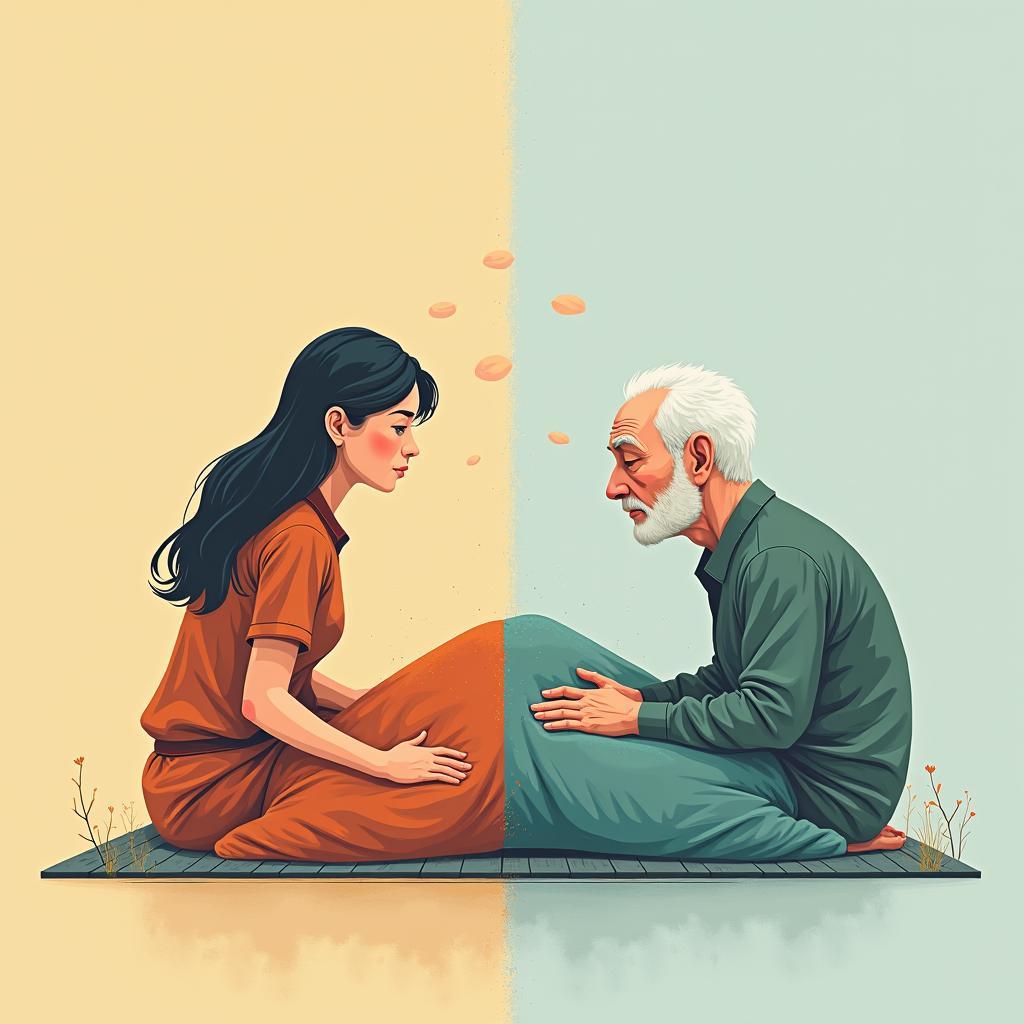 Sự khác biệt giữa các thế hệ về thái độ và thói quen ngủ trưa trong xã hội hiện đại
Question 6: How do cultural attitudes towards napping vary around the world?
Phân tích câu hỏi:
- Dạng: Compare across cultures (global perspective)
- Key words: cultural attitudes, vary, around the world
- Cách tiếp cận:
- Mention specific countries/regions with different attitudes
- Explain reasons for cultural differences (climate, work culture, traditions)
- Show breadth of knowledge
- Avoid stereotyping
Sample Answer – Band 6-7:
“Different countries have different attitudes towards napping. In Spain and some Mediterranean countries, people take siestas in the afternoon, and it’s very normal there. In Asian countries like Vietnam and China, many people also take naps. But in Western countries like the USA or UK, napping is less common because people think it makes them look lazy. I think these differences come from climate, work culture, and traditions in each country.”
Phân tích:
- Structure: Examples from different regions → reasons for differences
- Vocabulary: Simple (normal, common, lazy, climate, traditions)
- Tại sao Band 6-7: Provides adequate examples và basic reasons, nhưng lacks depth và sophisticated cultural analysis
Sample Answer – Band 8.5-9:
“This is a fascinating area where we see remarkable cultural diversity, and I think the variations stem from a complex interplay of climate, economic development, religious traditions, and prevailing work ethics.
Mediterranean cultures, particularly Spain, Greece, and parts of Italy, have the most deeply entrenched siesta tradition. This makes perfect pragmatic sense given the sweltering midday heat in these regions – it’s simply too oppressive to work or be active during the hottest hours. But beyond climate, there’s also a cultural philosophy that prioritizes work-life balance and recognizes that humans aren’t designed to be continuously productive machines. The siesta is emblematic of a broader approach to life that values leisure and recovery.
In East and Southeast Asian countries, napping attitudes are quite varied and evolving. Traditionally, countries like China and Vietnam had strong napping cultures, partly influenced by climate and agricultural rhythms. In Japan, there’s even a concept called “inemuri” – the practice of sleeping in public spaces which, interestingly, isn’t stigmatized but rather seen as evidence of hard work and dedication. However, with rapid modernization and the adoption of intense work cultures, particularly in urban centers, these traditional napping practices are somewhat in decline, though they haven’t disappeared entirely.
Anglo-Saxon cultures – the UK, US, Canada, Australia – have historically been more ambivalent or even hostile towards napping. This likely traces back to the Protestant work ethic that equated rest with moral laxity. The industrial revolution further cemented the idea of continuous, structured work hours that left little room for midday rest. Even today, napping in these cultures can carry connotations of laziness, self-indulgence, or lack of commitment, though this is gradually shifting as wellness research gains traction.
Latin American countries present an interesting middle ground. Countries like Mexico and parts of Central America have siesta traditions, but they’re often less formalized than in Mediterranean countries and more contingent on individual circumstances and socioeconomic status.
What’s particularly noteworthy is that these cultural attitudes aren’t static – they’re in flux. Globalization, increased cross-cultural exchange, and the dissemination of sleep science research are eroding some traditional boundaries. We’re seeing pockets of pro-napping sentiment emerging even in historically nap-averse cultures, particularly among progressive companies in the tech sector. Conversely, traditional napping cultures are facing pressure from global capitalism that demands round-the-clock productivity.
Ultimately, I think these cultural variations underscore a fundamental tension between biological needs – humans are naturally inclined towards biphasic sleep patterns – and socially constructed work norms. The cultures that have maintained strong napping traditions have, perhaps, stayed more aligned with our innate physiology, while others have prioritized economic models that override these natural rhythms.”
Phân tích:
- Structure: Introduction → Mediterranean → East/Southeast Asia → Anglo-Saxon → Latin America → Evolution/change → Philosophical conclusion. Comprehensive global tour với sophisticated synthesis
- Vocabulary:
- Exceptional sophistication: “remarkable cultural diversity”, “interplay”, “deeply entrenched”, “sweltering midday heat”, “emblematic”, “stigmatized”, “ambivalent”, “moral laxity”, “cemented”, “contingent on”, “in flux”, “dissemination”, “eroding boundaries”, “nap-averse”, “biphasic sleep patterns”, “innate physiology”
- Cultural/geographical terminology: “Mediterranean cultures”, “Anglo-Saxon cultures”, “Protestant work ethic”, “industrial revolution”, “globalization”
- Nuanced expressions: “middle ground”, “pockets of sentiment”, “gradually shifting”, “gains traction”, “override natural rhythms”
- Grammar:
- Complex relative clauses: “which, interestingly, isn’t stigmatized but rather…”
- Present perfect: “have maintained”, “have stayed aligned”
- Passive constructions: “can be seen as”, “are being eroded”
- Participle phrases: “particularly in urban centers”
- Critical Thinking:
- Demonstrates broad geographical knowledge
- Analyzes multiple causative factors (climate, religion, economics, history)
- Recognizes evolution and change in attitudes
- Identifies tension between biology and society
- Avoids stereotyping by acknowledging internal diversity
- Synthesizes information into broader philosophical insight
- Shows intellectual sophistication
Key Language Features:
- Geographical organization: Clear progression across world regions
- Causal language: stem from, traces back to, due to
- Change and evolution vocabulary: evolving, in decline, in flux, eroding, shifting, gradually
- Academic hedging: likely, perhaps, somewhat, often, tend to
- Cultural sensitivity: Avoids absolute statements, acknowledges diversity within cultures
Từ Vựng và Cụm Từ Quan Trọng
Topic-Specific Vocabulary
| Từ vựng/Cụm từ | Loại từ | Phiên âm | Nghĩa tiếng Việt | Ví dụ | Collocation |
|---|---|---|---|---|---|
| power nap | n | /ˈpaʊər næp/ | Giấc ngủ ngắn phục hồi năng lượng (15-30 phút) | “I usually take a quick power nap during lunch break.” | take/have a power nap, 20-minute power nap, strategic power nap |
| post-lunch slump | n | /pəʊst lʌntʃ slʌmp/ | Cơn buồn ngủ sau bữa trưa | “Many people experience a post-lunch slump around 2 PM.” | experience/suffer from a post-lunch slump, combat the post-lunch slump |
| groggy | adj | /ˈɡrɒɡi/ | Buồn ngủ, mệt mỏi lơ mơ (sau khi ngủ dậy) | “If I nap too long, I feel groggy when I wake up.” | feel groggy, look groggy, wake up groggy |
| rejuvenation | n | /rɪˌdʒuːvəˈneɪʃn/ | Sự phục hồi, trẻ hóa năng lượng | “A short nap provides mental and physical rejuvenation.” | experience rejuvenation, sense of rejuvenation, physical/mental rejuvenation |
| optimal duration | n | /ˈɒptɪməl djʊˈreɪʃn/ | Khoảng thời gian tối ưu | “The optimal duration for a nap is 20-30 minutes.” | optimal duration, ideal duration, recommended duration |
| deep sleep | n | /diːp sliːp/ | Giấc ngủ sâu | “Avoid entering deep sleep during daytime naps.” | enter/fall into deep sleep, deep sleep stage, achieve deep sleep |
| disoriented | adj | /dɪsˈɔːriəntɪd/ | Mất phương hướng, lú lẫn | “Long naps can leave you feeling disoriented.” | feel disoriented, become disoriented, leave someone disoriented |
| cognitive function | n | /ˈkɒɡnətɪv ˈfʌŋkʃn/ | Chức năng nhận thức | “Napping enhances cognitive function and memory.” | enhance/improve cognitive function, cognitive function decline, maintain cognitive function |
| memory consolidation | n | /ˈmeməri kənˌsɒlɪˈdeɪʃn/ | Củng cố trí nhớ | “Sleep plays a crucial role in memory consolidation.” | memory consolidation process, facilitate memory consolidation |
| productivity levels | n | /ˌprɒdʌkˈtɪvəti ˈlevlz/ | Mức độ năng suất | “A short nap can boost your productivity levels.” | boost/increase productivity levels, maintain productivity levels, high/low productivity levels |
| lethargic | adj | /ləˈθɑːdʒɪk/ | Uể oải, thiếu sinh lực | “Without proper rest, people become lethargic.” | feel lethargic, become lethargic, lethargic state |
| circadian rhythm | n | /sɜːˈkeɪdiən ˈrɪðəm/ | Nhịp sinh học 24 giờ | “Napping at the wrong time can disrupt your circadian rhythm.” | disrupt circadian rhythm, natural circadian rhythm, maintain circadian rhythm |
| sleep deprivation | n | /sliːp ˌdeprɪˈveɪʃn/ | Thiếu ngủ | “Chronic sleep deprivation has serious health consequences.” | suffer from sleep deprivation, effects of sleep deprivation, combat sleep deprivation |
| restorative | adj | /rɪˈstɔːrətɪv/ | Có tác dụng phục hồi | “A restorative nap can work wonders for your energy.” | restorative nap, restorative sleep, restorative rest |
| concentration waning | v phrase | /ˌkɒnsənˈtreɪʃn ˈweɪnɪŋ/ | Sự tập trung suy giảm | “I could feel my concentration waning by mid-afternoon.” | concentration waning, energy waning, attention waning |
| mental clarity | n | /ˈmentl ˈklærəti/ | Sự minh mẫn, tỉnh táo về mặt tinh thần | “After the nap, I experienced remarkable mental clarity.” | mental clarity, lack of mental clarity, achieve/gain mental clarity |
| drowsiness | n | /ˈdraʊzinəs/ | Cơn buồn ngủ | “Afternoon drowsiness is very common after lunch.” | experience drowsiness, combat drowsiness, overcome drowsiness |
| alertness | n | /əˈlɜːtnəs/ | Sự tỉnh táo, cảnh giác | “Napping improves alertness and reaction time.” | improve/increase alertness, maintain alertness, reduced alertness |
| fatigue | n | /fəˈtiːɡ/ | Sự mệt mỏi | “Physical and mental fatigue require adequate rest.” | experience/suffer from fatigue, combat fatigue, chronic fatigue |
| siesta | n | /siˈestə/ | Giấc ngủ trưa (phong cách Tây Ban Nha) | “The Spanish siesta is a well-established cultural practice.” | take a siesta, traditional siesta, afternoon siesta |
Idiomatic Expressions & Advanced Phrases
| Cụm từ | Nghĩa | Ví dụ sử dụng | Band điểm |
|---|---|---|---|
| catch forty winks | Ngủ một giấc ngắn | “I just need to catch forty winks before the meeting.” | 7.5-9 |
| burning the candle at both ends | Làm việc quá sức, ngày đêm không nghỉ | “I’ve been burning the candle at both ends studying for exams.” | 7.5-9 |
| hit a wall | Đạt đến giới hạn về năng lượng | “By 3 PM, I usually hit a wall and need a break.” | 7.5-8 |
| recharge one’s batteries | Nạp lại năng lượng | “A quick nap helps me recharge my batteries for the afternoon.” | 7.5-8 |
| out like a light | Ngủ say ngay lập tức | “I was so exhausted, I was out like a light within seconds.” | 7-8 |
| work wonders | Có hiệu quả kỳ diệu | “Even a 20-minute nap can work wonders for productivity.” | 7.5-8.5 |
| run on empty | Hoạt động khi hết năng lượng | “Without proper rest, you’re just running on empty.” | 7.5-8.5 |
| take its toll | Gây ảnh hưởng tiêu cực dần dần | “Lack of sleep really takes its toll on your health.” | 8-9 |
| call it quits | Dừng lại, nghỉ ngơi | “When I felt exhausted, I decided to call it quits and nap.” | 7.5-8 |
| power through | Cố gắng tiếp tục dù mệt | “Rather than power through fatigue, it’s better to rest.” | 7.5-8.5 |
| dead on one’s feet | Mệt đến mức đứng không vững | “After the long hike, I was dead on my feet.” | 7.5-8 |
| squeeze in | Cố gắng sắp xếp thời gian cho | “I try to squeeze in a short nap during lunch break.” | 7-8 |
| drift off | Buồn ngủ và ngủ thiếp đi | “I drifted off within minutes of lying down.” | 7-8 |
| doze off | Ngủ gật | “I sometimes doze off while reading in the afternoon.” | 6.5-7.5 |
| sleep like a log | Ngủ say sưa | “During my nap, I slept like a log for 30 minutes.” | 7-7.5 |
Discourse Markers (Từ Nối Ý Trong Speaking)
Để bắt đầu câu trả lời:
- Well,… Khi cần suy nghĩ một chút trước khi trả lời
- Actually,… Khi đưa ra góc nhìn khác hoặc thông tin bất ngờ
- To be honest,… Khi nói thật, thành thật
- I’d say that… Khi đưa ra quan điểm cá nhân
- From my perspective,… Từ góc nhìn của tôi
- In my experience,… Theo kinh nghiệm của tôi
Để bổ sung ý:
- On top of that,… Thêm vào đó
- What’s more,… Hơn nữa
- Not to mention… Chưa kể đến
- Additionally,… Thêm vào đó (formal)
- Furthermore,… Hơn thế nữa
- Beyond that,… Ngoài ra
Để đưa ra quan điểm cân bằng:
- On the one hand,… On the other hand,… Một mặt… mặt khác
- While it’s true that…, we also need to consider… Mặc dù đúng là… nhưng ta cũng cần xem xét
- That being said,… Tuy nhiên (sau khi đưa ra một ý)
- Having said that,… Sau khi nói điều đó
Để làm rõ hoặc elaborate:
- What I mean is… Ý tôi là
- In other words,… Nói cách khác
- To put it another way,… Diễn đạt theo cách khác
- More specifically,… Cụ thể hơn
Để đưa ra examples:
- For instance,… Ví dụ
- Take… for example Lấy… làm ví dụ
- A case in point is… Một ví dụ điển hình là
- To illustrate this,… Để minh họa điều này
Để kết luận:
- All in all,… Tóm lại
- At the end of the day,… Cuối cùng thì
- Ultimately,… Rốt cuộc thì
- In essence,… Về bản chất
Để thể hiện sự không chắc chắn (hedging):
- I would say… Tôi muốn nói rằng
- It seems to me that… Có vẻ với tôi rằng
- To some extent,… Ở một mức độ nào đó
- Generally speaking,… Nói chung thì
Grammatical Structures Ấn Tượng
1. Conditional Sentences (Câu điều kiện):
Mixed conditional:
- Formula: If + past perfect, would + bare infinitive
- Ví dụ: “If I hadn’t taken that nap, I wouldn’t be able to concentrate now.”
- (Nếu tôi không ngủ trưa lúc đó, bây giờ tôi sẽ không thể tập trung.)
Third conditional:
- Formula: If + past perfect, would have + past participle
- Ví dụ: “If I had known how refreshing it would be, I would have started napping earlier.”
- (Nếu tôi biết nó sẽ refreshing đến thế, tôi đã bắt đầu ngủ trưa sớm hơn.)
Inversion for emphasis:
- Formula: Had + subject + past participle, subject + would have…
- Ví dụ: “Had I not taken that power nap, I would have struggled through the afternoon.”
- (Nếu tôi không ngủ trưa ngắn đó, tôi đã phải vật lộn suốt buổi chiều.)
2. Relative Clauses (Mệnh đề quan hệ):
Non-defining relative clauses:
- Ví dụ: “The Spanish siesta, which typically lasts 1-2 hours, is deeply rooted in Mediterranean culture.”
- (Giấc ngủ trưa Tây Ban Nha, vốn thường kéo dài 1-2 giờ, có nguồn gốc sâu xa trong văn hóa Địa Trung Hải.)
Reduced relative clauses:
- Ví dụ: “People working long hours often struggle to find time for naps.”
- (Người làm việc nhiều giờ thường gặp khó khăn trong việc tìm thời gian ngủ trưa.)
3. Passive Voice (Câu bị động):
It is + past participle + that…
- Ví dụ: “It is widely believed that short naps improve cognitive function.”
- (Người ta tin rộng rãi rằng giấc ngủ ngắn cải thiện chức năng nhận thức.)
Advanced passive constructions:
- Ví dụ: “Napping has been shown to enhance memory consolidation and creativity.”
- (Ngủ trưa đã được chứng minh là tăng cường củng cố trí nhớ và sáng tạo.)
4. Cleft Sentences (Câu chẻ):
What + subject + verb + is/was…
- Ví dụ: “What I find most refreshing about naps is the mental clarity they provide.”
- (Điều tôi thấy refreshing nhất về giấc ngủ trưa là sự minh mẫn tinh thần chúng mang lại.)
The thing that…
- Ví dụ: “The thing that makes napping difficult for many people is the stigma attached to it.”
- (Điều khiến ngủ trưa trở nên khó khăn đối với nhiều người là sự kỳ thị gắn liền với nó.)
5. Participle Clauses (Mệnh đề phân từ):
Present participle:
- Ví dụ: “Feeling exhausted after the morning workout, I decided to take a restorative nap.”
- (Cảm thấy kiệt sức sau buổi tập sáng, tôi quyết định ngủ một giấc để phục hồi.)
Past participle:
- Ví dụ: “Deprived of sleep for several days, many students struggle to concentrate.”
- (Bị thiếu ngủ nhiều ngày, nhiều sinh viên gặp khó khăn trong việc tập trung.)
6. Gerunds and Infinitives (Danh động từ):
Complex gerund phrases:
- Ví dụ: “Rather than pushing through fatigue, taking strategic breaks proves more effective.”
- (Thay vì cố gắng vượt qua sự mệt mỏi, việc nghỉ ngơi chiến lược chứng tỏ hiệu quả hơn.)
7. Advanced Comparatives:
The + comparative…, the + comparative…
- Ví dụ: “The more sleep-deprived you are, the more beneficial a short nap becomes.”
- (Càng thiếu ngủ bao nhiêu, giấc ngủ ngắn càng có lợi bấy nhiêu.)
Chiến Lược Tổng Quát Để Đạt Band Cao
Fluency & Coherence
Band 6-7:
- Nói được liên tục với một số hesitation
- Sử dụng basic linking words (and, but, so, because)
- Có thể self-correct đôi khi
Band 8-9:
- Nói trôi chảy, tự nhiên với minimal hesitation
- Sử dụng sophisticated discourse markers
- Self-correction minimal và natural
- Develop ideas logically và fully
Tips để cải thiện:
- Practice thinking in English, không dịch từ tiếng Việt
- Record yourself và listen back để identify pauses
- Learn discourse markers và practice using them naturally
- Don’t memorize answers – practice ideas và vocabulary instead
Lexical Resource
Band 6-7:
- Từ vựng adequate cho topic
- Một số less common vocabulary
- Có thể có lỗi word choice nhưng không ảnh hưởng communication
Band 8-9:
- Wide range của vocabulary với precision
- Idiomatic language used naturally
- Collocations accurate
- Paraphrasing skillful
Tips để cải thiện:
- Learn vocabulary in collocations, không học từ đơn lẻ
- Read widely để expose yourself to natural English
- Practice paraphrasing common words
- Use vocabulary actively in speaking practice
Grammatical Range & Accuracy
Band 6-7:
- Mix của simple và complex sentences
- Generally accurate với một số errors
- Limited range of structures
Band 8-9:
- Full range of structures used naturally
- Consistently accurate
- Complex structures for appropriate purposes
Tips để cải thiện:
- Don’t force complex grammar – use it when natural
- Master một số advanced structures và use them comfortably
- Focus on accuracy trong basic structures trước
- Record và analyze your grammatical errors
Pronunciation
Band 6-7:
- Generally clear và understandable
- Có thể có L1 accent nhưng không ảnh hưởng nhiều
- Basic intonation patterns
Band 8-9:
- Clear với sustained appropriate intonation
- Word stress và sentence stress well-managed
- L1 accent có minimal effect
Tips để cải thiện:
- Shadow native speakers để practice intonation
- Focus on word stress và sentence stress, không chỉ individual sounds
- Record yourself và compare với native speakers
- Practice linking words together naturally
Lời Khuyên Cuối Cùng Từ Examiner
1. Be Natural và Authentic:
Examiner muốn nghe bạn communicate naturally, không phải recite memorized answers. Nếu bạn học thuộc, họ sẽ nhận ra ngay và band điểm sẽ bị ảnh hưởng nghiêm trọng.
2. It’s Okay to Say “I Don’t Know” – But Elaborate:
Nếu không biết exact answer, hãy thành thật và explain why hoặc đưa ra speculation. Ví dụ: “To be honest, I’m not entirely sure about that, but I would imagine that…”
3. Don’t Panic About Vocabulary:
Nếu quên một từ, paraphrase it. Khả năng paraphrase thực ra là sign của strong language skills. Ví dụ: Nếu quên “drowsiness”, có thể nói “that sleepy feeling you get in the afternoon.”
4. Extend Your Answers – But Stay Relevant:
Part 1: 2-3 câu
Part 2: 2+ phút đầy đủ
Part 3: 3-5 câu với depth
Nhưng đừng ramble – mọi ý phải relevant to the question.
5. Show Range, Don’t Show Off:
Sử dụng advanced vocabulary và grammar khi natural, không force. Một answer simple nhưng accurate và natural tốt hơn một answer full của big words được dùng incorrectly.
6. Practice, Record, Analyze:
- Practice with real IELTS questions
- Record yourself
- Listen back critically
- Identify areas for improvement
- Focus on một aspect at a time
7. Think About Ideas, Not Just Language:
Có ý tưởng thú vị và developed well quan trọng như vocabulary và grammar. Practice thinking about các topics từ nhiều angles.
8. Manage Your Nerves:
- Remember examiner muốn bạn succeed
- Take a breath trước khi answer
- Smile và maintain eye contact
- If you make a mistake, don’t dwell on it – continue
9. Time Management in Part 2:
- Sử dụng đầy đủ 1 phút preparation
- Jot down keywords, không viết câu hoàn chỉnh
- Aim for 2 phút full – examiners appreciate candidates who can sustain speech
10. Be Yourself:
Your personality can shine through while using good English. Examiners appreciate candidates who are engaging, thoughtful, và genuine.
Chúc các bạn học viên đạt band điểm mong muốn trong IELTS Speaking! Remember, improvement takes time và consistent practice. Focus on communicating effectively rather than achieving perfection, và band điểm cao sẽ follow naturally.



[…] Những người thường xuyên phải quản lý giấc ngủ và nghỉ ngơi hiệu quả cũng đối mặt với thách thức tương tự về thời gian, bạn có thể tìm hiểu thêm qua do you take naps at noon ielts speaking part 1. […]