Chủ đề về quảng cáo nhắm đến đối tượng trẻ em là một trong những đề tài phổ biến và gây tranh cái trong IELTS Writing Task 2. Đề tài này thường xuyên xuất hiện trong các kỳ thi thực tế vì nó liên quan đến vấn đề xã hội quan trọng, đồng thời yêu cầu thí sinh phải cân nhắc nhiều khía cạnh khác nhau từ kinh tế, đạo đức đến bảo vệ trẻ em.
Qua kinh nghiệm giảng dạy IELTS hơn 20 năm, tôi nhận thấy học viên Việt Nam thường gặp khó khăn với dạng đề này vì cần phải thể hiện quan điểm rõ ràng trong khi cân bằng các lập luận trái chiều. Nhiều bạn có xu hướng chỉ tập trung vào một mặt của vấn đề hoặc không đưa ra được ví dụ thuyết phục.
Trong bài viết này, bạn sẽ học được:
- 3 bài mẫu hoàn chỉnh từ Band 5-6, Band 6.5-7 đến Band 8-9
- Phân tích chi tiết điểm số theo 4 tiêu chí chấm của IELTS
- 15+ từ vựng và cụm từ “ăn điểm” cao liên quan đến chủ đề
- 6 cấu trúc câu nâng cao giúp bạn ghi điểm cao
- Những lỗi sai phổ biến của học viên Việt Nam và cách khắc phục
Các đề thi thực tế đã xuất hiện về chủ đề này bao gồm:
- “Some people believe that advertising targeted at children should be banned. To what extent do you agree or disagree?” (British Council, tháng 3/2022)
- “Advertisements are becoming more and more common in everyday life. Is it a positive or negative development?” (IDP, tháng 9/2021)
- “Should the government regulate advertisements aimed at children?” (IELTS Academic, tháng 6/2023)
Đề Writing Task 2 Thực Hành
Some people think that advertisements targeting children should be banned because they have negative effects on young people. Others believe that such advertisements provide useful information to children and their parents. Discuss both views and give your own opinion.
Dịch đề: Một số người cho rằng quảng cáo nhắm đến trẻ em nên bị cấm vì chúng có ảnh hưởng tiêu cực đến người trẻ tuổi. Những người khác tin rằng những quảng cáo như vậy cung cấp thông tin hữu ích cho trẻ em và cha mẹ chúng. Thảo luận cả hai quan điểm và đưa ra ý kiến của bạn.
Phân tích đề bài:
Dạng câu hỏi: Đây là dạng “Discuss both views and give your opinion” – một trong những dạng đề phổ biến nhất trong IELTS Writing Task 2. Bạn cần:
- Thảo luận quan điểm thứ nhất (quảng cáo nên bị cấm)
- Thảo luận quan điểm thứ hai (quảng cáo cung cấp thông tin hữu ích)
- Đưa ra ý kiến cá nhân của bạn (có thể ủng hộ một bên hoặc đưa ra quan điểm cân bằng)
Các thuật ngữ quan trọng:
- “Targeting children” = nhắm đến trẻ em như đối tượng chính của quảng cáo
- “Banned” = cấm hoàn toàn, không chỉ đơn thuần là giới hạn hay kiểm soát
- “Negative effects” = tác động tiêu cực (cần làm rõ những tác động cụ thể nào)
- “Useful information” = thông tin có giá trị (cần giải thích tại sao lại hữu ích)
Những lỗi thường gặp của học viên Việt Nam:
- Chỉ thảo luận một quan điểm và bỏ qua quan điểm còn lại
- Không đưa ra ý kiến cá nhân rõ ràng ở phần mở bài và kết bài
- Sử dụng ví dụ quá chung chung như “children buy unhealthy food” mà không phân tích sâu
- Nhầm lẫn giữa “banning” (cấm hoàn toàn) và “regulating” (quản lý, kiểm soát)
- Thiếu sự cân bằng giữa hai body paragraph – một đoạn dài, một đoạn ngắn
Cách tiếp cận chiến lược:
Bạn nên cấu trúc bài viết theo 4 đoạn:
- Mở bài: Paraphrase đề bài + nêu rõ bài viết sẽ thảo luận cả hai quan điểm + đưa ra thesis statement (ý kiến của bạn)
- Body 1: Thảo luận quan điểm thứ nhất với 2-3 lý do và ví dụ cụ thể
- Body 2: Thảo luận quan điểm thứ hai với 2-3 lý do và ví dụ cụ thể
- Kết bài: Tóm tắt lại hai quan điểm + nhấn mạnh ý kiến cá nhân
Với dạng đề này, bạn có thể:
- Ủng hộ mạnh mẽ một bên (ví dụ: “While X has some merits, I strongly believe Y”)
- Đưa ra quan điểm cân bằng (ví dụ: “Both views have validity, but I believe a middle ground is needed”)
 Quảng cáo nhắm đến trẻ em và những ảnh hưởng tiêu cực đến sự phát triển của trẻ
Bài Mẫu Band 8-9
Bài viết Band 8-9 phải thể hiện được sự tinh tế trong cách triển khai ý tưởng, sử dụng từ vựng đa dạng và chính xác, cùng với các cấu trúc ngữ pháp phức tạp nhưng tự nhiên. Bài mẫu dưới đây minh họa cách một thí sinh xuất sắc xử lý dạng đề “Discuss both views”.
The proliferation of child-targeted advertising has sparked considerable debate, with some advocating for a complete prohibition due to its detrimental impacts, while others contend that such marketing provides valuable information. Although I acknowledge the informational benefits, I am inclined to believe that the psychological and social harm inflicted on young audiences outweighs any potential advantages.
Those who support banning advertisements aimed at children present several compelling arguments. Firstly, young minds lack the cognitive maturity to discern persuasive intent, making them particularly vulnerable to manipulative marketing tactics. Research has consistently demonstrated that children under eight cannot distinguish advertising from entertainment, leading them to accept commercial messages uncritically. Furthermore, the proliferation of advertisements for unhealthy products, particularly fast food and sugary beverages, has been inextricably linked to the childhood obesity epidemic. In countries like the United States, where such advertising remains largely unregulated, rates of childhood obesity have soared to unprecedented levels. Beyond physical health concerns, these advertisements also foster materialistic values and exert undue pressure on parents to purchase products, often creating familial tension.
Conversely, proponents of child-directed advertising argue that it serves educational and informational purposes. Certain advertisements, particularly those for books, educational toys, or healthy food products, can indeed introduce children and parents to beneficial options they might otherwise overlook. Moreover, in a free-market economy, commercial speech is considered a fundamental right, and companies argue they should be permitted to market their products to all demographics, provided they adhere to ethical standards. Some also contend that parental guidance, rather than government intervention, should be the primary mechanism for mediating children’s exposure to advertising.
Having weighed both perspectives, I believe the evidence overwhelmingly supports stricter regulation, if not an outright ban, on advertisements targeting children. The inherent power imbalance between sophisticated marketing corporations and developmentally vulnerable children creates an exploitative dynamic that society should not tolerate. While information about beneficial products has merit, this can be communicated through channels that empower parents to make informed decisions, rather than manipulating children directly. Countries like Sweden and Norway, which have implemented comprehensive bans on child-targeted advertising, have demonstrated that commercial interests can coexist with robust child protection policies.
In conclusion, though advertisements may occasionally provide useful information, the psychological manipulation, health consequences, and materialistic values they promote among vulnerable young audiences constitute sufficient grounds for severe restrictions or prohibition. Protecting children from commercial exploitation should take precedence over corporate marketing freedoms.
(Word count: 318)
Phân Tích Band Điểm
| Tiêu chí | Band | Nhận xét |
|---|---|---|
| Task Response (Hoàn thành yêu cầu) | 9.0 | Bài viết thảo luận đầy đủ và cân bằng cả hai quan điểm với độ sâu ấn tượng. Ý kiến cá nhân được nêu rõ ràng ngay từ mở bài và được củng cố xuyên suốt bài viết. Các ý tưởng được phát triển hoàn toàn với ví dụ cụ thể (nghiên cứu về trẻ dưới 8 tuổi, tình hình béo phì ở Mỹ, chính sách của Thụy Điển và Na Uy). |
| Coherence & Cohesion (Mạch lạc & Liên kết) | 9.0 | Cấu trúc logic hoàn hảo với sự phân đoạn rõ ràng. Sử dụng đa dạng các linking devices tinh tế như “Conversely”, “Moreover”, “Having weighed both perspectives” mà không lạm dụng. Mỗi đoạn văn có chủ đề rõ ràng và phát triển mạch lạc theo trình tự logic. |
| Lexical Resource (Từ vựng) | 9.0 | Từ vựng phong phú, chính xác và phù hợp ngữ cảnh: “proliferation”, “detrimental impacts”, “cognitive maturity”, “inextricably linked”, “exert undue pressure”, “inherent power imbalance”. Sử dụng collocations tự nhiên như “compelling arguments”, “unprecedented levels”, “free-market economy”. Không có lỗi từ vựng. |
| Grammatical Range & Accuracy (Ngữ pháp) | 9.0 | Đa dạng cấu trúc câu phức tạp: mệnh đề quan hệ rút gọn (“making them particularly vulnerable”), câu nhượng bộ (“Although I acknowledge…”), cấu trúc bị động (“have been inextricably linked”), mệnh đề phân từ (“provided they adhere…”). Không có lỗi ngữ pháp đáng chú ý. |
Các Yếu Tố Giúp Bài Này Được Chấm Điểm Cao
-
Thesis statement mạnh mẽ và tinh tế: Câu “Although I acknowledge the informational benefits, I am inclined to believe that the psychological and social harm… outweighs any potential advantages” thể hiện sự cân nhắc chín chắn, không cực đoan nhưng vẫn có lập trường rõ ràng.
-
Sử dụng bằng chứng cụ thể: Bài viết không chỉ đưa ra ý kiến mà còn dẫn chứng nghiên cứu (“children under eight cannot distinguish advertising from entertainment”), thống kê thực tế (tình hình béo phì ở Mỹ), và ví dụ quốc gia (Thụy Điển, Na Uy).
-
Collocations học thuật tự nhiên: Các cụm từ như “compelling arguments”, “cognitive maturity”, “undue pressure”, “inherent power imbalance” cho thấy khả năng sử dụng tiếng Anh học thuật ở mức độ cao mà không gượng ép.
-
Cân bằng hoàn hảo giữa hai body paragraphs: Body 1 (108 từ) và Body 2 (85 từ) đều được phát triển đầy đủ, thể hiện sự công bằng trong việc thảo luận cả hai quan điểm trước khi đưa ra ý kiến cá nhân.
-
Topic sentences hiệu quả: Mỗi đoạn bắt đầu bằng câu chủ đề rõ ràng: “Those who support banning…”, “Conversely, proponents of child-directed advertising…”, “Having weighed both perspectives…” giúp người đọc dễ dàng theo dõi luồng ý tưởng.
-
Kết bài mạnh mẽ và nhất quán: Đoạn kết không chỉ tóm tắt mà còn nhấn mạnh lại quan điểm với ngôn ngữ thuyết phục: “Protecting children from commercial exploitation should take precedence over corporate marketing freedoms.”
-
Sử dụng từ nối đa dạng và tinh tế: Thay vì lạm dụng “Firstly, Secondly, Finally”, bài viết sử dụng các cách nối ý tự nhiên hơn như “Furthermore”, “Beyond physical health concerns”, “Moreover”, “Conversely”, “Having weighed both perspectives”.
Bài Mẫu Band 6.5-7
Bài viết Band 6.5-7 thể hiện khả năng viết tốt với ý tưởng rõ ràng, từ vựng phù hợp và cấu trúc câu khá đa dạng. Tuy nhiên, bài viết ở band này vẫn có những hạn chế nhất định về độ tinh tế trong cách diễn đạt và chiều sâu phân tích so với Band 8-9.
In today’s world, advertising aimed at children has become a controversial topic. Some people think that these advertisements should be completely banned because they harm young people, while others believe they give useful information to children and parents. This essay will discuss both sides and give my personal opinion.
On the one hand, there are several reasons why advertisements targeting children should be banned. First of all, children are easily influenced by what they see on TV or the internet because they cannot understand that advertisements are trying to sell products. For example, when children see colorful advertisements for toys or fast food, they immediately want to buy these things and ask their parents to get them. This creates problems in families because parents may not have enough money or may not want to buy unhealthy products. Moreover, many advertisements promote junk food like sweets, soft drinks, and burgers, which can lead to health problems such as obesity and diabetes in children. According to research, countries with more food advertising have higher rates of childhood obesity. Additionally, these advertisements make children become materialistic and focus too much on buying things instead of other important values.
On the other hand, some people argue that child-targeted advertising has positive aspects. Firstly, some advertisements can educate children about useful products such as books, educational toys, or healthy food options. Parents can learn about new products that might be good for their children’s development. Secondly, in a free market, companies have the right to advertise their products to all customers, including children. If parents are responsible and guide their children properly, they can help them understand which products are good and which are not. Furthermore, banning all advertisements might be too extreme, and it would be better to have regulations that control what kind of products can be advertised to children.
In my opinion, while advertisements can sometimes provide information, the negative effects on children are more serious. Children are vulnerable and cannot protect themselves from clever marketing strategies. Therefore, I believe that strict regulations should be put in place to limit advertisements for unhealthy products, even though a complete ban might not be necessary. Parents also need to play an active role in teaching their children about advertising.
In conclusion, although child-directed advertising may have some benefits in terms of information, the harmful effects on children’s health and behavior are significant. A balance between protecting children and allowing commercial freedom needs to be found.
(Word count: 280)
Phân Tích Band Điểm
| Tiêu chí | Band | Nhận xét |
|---|---|---|
| Task Response (Hoàn thành yêu cầu) | 6.5 | Bài viết thảo luận cả hai quan điểm và đưa ra ý kiến cá nhân, tuy nhiên việc phát triển ý tưởng còn thiếu chiều sâu. Các ví dụ được đưa ra khá chung chung (toys, fast food, junk food) mà không có chi tiết cụ thể. Ý kiến cá nhân xuất hiện muộn (chỉ ở body paragraph cuối) thay vì được nêu rõ ngay từ mở bài. |
| Coherence & Cohesion (Mạch lạc & Liên kết) | 7.0 | Cấu trúc bài viết logic và dễ theo dõi với các đoạn văn được tổ chức rõ ràng. Sử dụng linking words phù hợp nhưng còn đơn điệu: “First of all”, “Moreover”, “Additionally”, “On the other hand”, “Firstly”, “Secondly”. Việc chuyển tiếp giữa các ý còn hơi cứng nhắc. |
| Lexical Resource (Từ vựng) | 6.5 | Từ vựng đủ để truyền đạt ý tưởng với một số collocation tốt như “easily influenced”, “targeting children”, “materialistic”, “strict regulations”. Tuy nhiên, còn lặp lại một số từ như “children”, “products”, “advertisements”. Thiếu từ vựng học thuật cao cấp và paraphrasing chưa đa dạng. |
| Grammatical Range & Accuracy (Ngữ pháp) | 7.0 | Sử dụng khá đa dạng cấu trúc câu bao gồm câu phức và câu ghép. Có một số cấu trúc tốt như “when children see…, they immediately want…” và mệnh đề quan hệ “that control what kind of products…”. Một số lỗi nhỏ về cách diễn đạt nhưng không ảnh hưởng đến sự hiểu. |
So Sánh Với Bài Band 8-9
1. Độ phức tạp của thesis statement:
- Band 8-9: “Although I acknowledge the informational benefits, I am inclined to believe that the psychological and social harm inflicted on young audiences outweighs any potential advantages.”
- Band 6.5-7: “This essay will discuss both sides and give my personal opinion.”
- Phân tích: Bài Band 8-9 đưa ra lập trường ngay từ đầu với ngôn ngữ tinh tế (“I am inclined to believe”), trong khi Band 6.5-7 chỉ thông báo cấu trúc bài viết mà không nêu quan điểm.
2. Cách sử dụng ví dụ:
- Band 8-9: “Research has consistently demonstrated that children under eight cannot distinguish advertising from entertainment” + “Countries like Sweden and Norway, which have implemented comprehensive bans…”
- Band 6.5-7: “For example, when children see colorful advertisements for toys or fast food, they immediately want to buy these things”
- Phân tích: Band 8-9 sử dụng bằng chứng cụ thể từ nghiên cứu và ví dụ quốc gia thực tế, trong khi Band 6.5-7 đưa ra ví dụ chung chung mà ai cũng biết.
3. Từ vựng và collocations:
- Band 8-9: “cognitive maturity”, “manipulative marketing tactics”, “inextricably linked to”, “inherent power imbalance”
- Band 6.5-7: “easily influenced”, “health problems”, “become materialistic”, “strict regulations”
- Phân tích: Band 8-9 sử dụng từ vựng học thuật chính xác và collocations tự nhiên, Band 6.5-7 dùng từ phổ thông nhưng vẫn phù hợp.
4. Độ phức tạp ngữ pháp:
- Band 8-9: “The proliferation of child-targeted advertising has sparked considerable debate, with some advocating for a complete prohibition due to its detrimental impacts, while others contend that…”
- Band 6.5-7: “Some people think that these advertisements should be completely banned because they harm young people, while others believe they give useful information”
- Phân tích: Band 8-9 sử dụng cấu trúc phức tạp với nhiều mệnh đề nhúng, Band 6.5-7 dùng cấu trúc đơn giản hơn nhưng vẫn chính xác.
5. Cách kết luận:
- Band 8-9: Nhấn mạnh lập trường mạnh mẽ: “Protecting children from commercial exploitation should take precedence over corporate marketing freedoms”
- Band 6.5-7: Kết luận chung chung: “A balance between protecting children and allowing commercial freedom needs to be found”
- Phân tích: Band 8-9 có quan điểm quyết đoán và thuyết phục, Band 6.5-7 còn mơ hồ và thiếu sức thuyết phục.
Để hiểu rõ hơn về các quy định và tác động của quảng cáo đối với trẻ em, bạn có thể tham khảo thêm bài viết về should advertising targeted at children be regulated để có cái nhìn toàn diện hơn về vấn đề này.
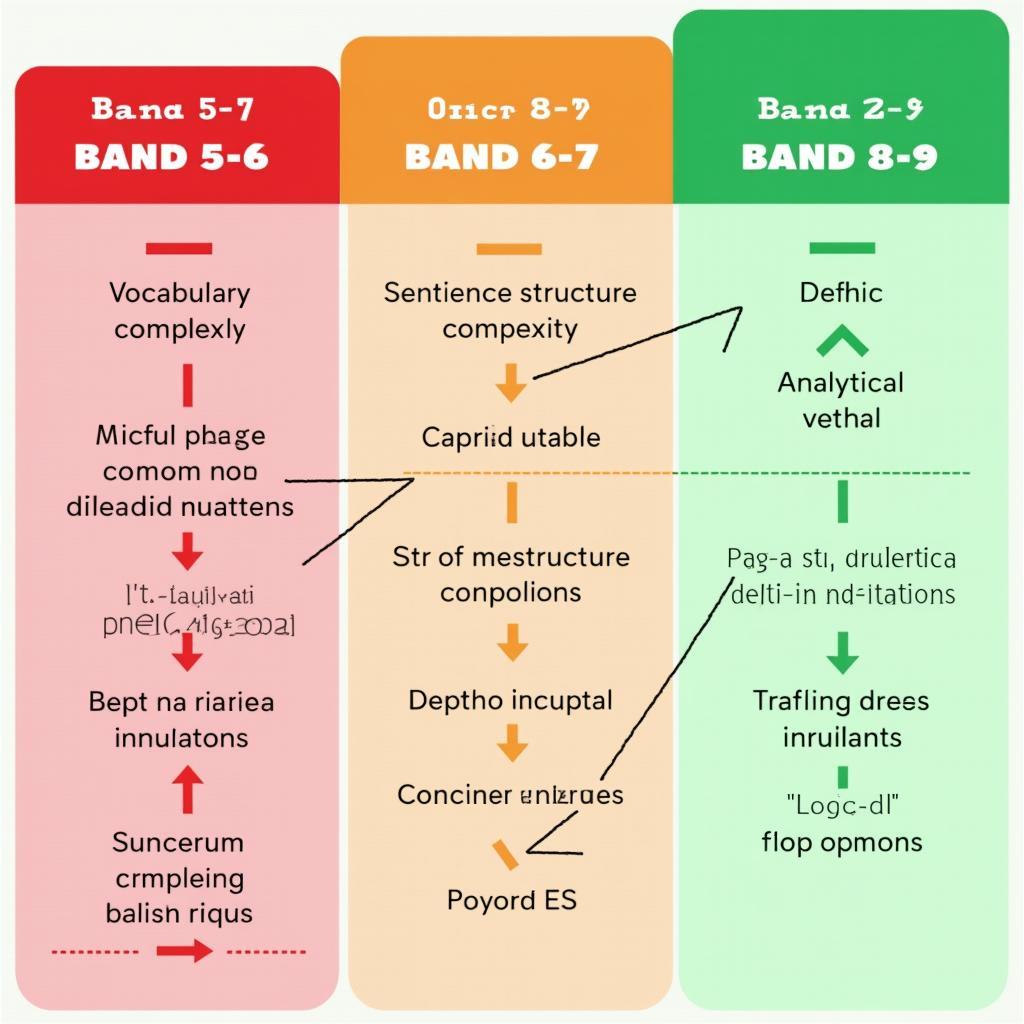 So sánh đặc điểm của các bài mẫu IELTS Writing Task 2 ở các band điểm khác nhau
Bài Mẫu Band 5-6
Bài viết Band 5-6 thể hiện khả năng truyền đạt ý tưởng cơ bản nhưng còn nhiều hạn chế về từ vựng, ngữ pháp và cách tổ chức ý. Đây là mức điểm phổ biến của học viên Việt Nam mới bắt đầu luyện thi IELTS.
Nowadays, there are many advertisements on television and internet for children. Some people think these advertisements are bad and should be stopped, but other people think they are good because they give information. I will discuss both opinion in this essay.
First, advertisements for children have many bad things. Children is very young and they don’t know about advertisement is for selling products. When they watch advertisement about toys, candies or fast food on TV, they want to buy it immediately. They will ask parents to buy for them and if parents don’t buy, children will be sad or angry. This make problem in family. Also, many advertisement is about unhealthy food like hamburger, chips and soft drink. If children eat these food too much, they will become fat and not healthy. In my country Vietnam, many children now are overweight because they eat junk food from advertisement. Another bad thing is children will want to buy many things and they become too much care about money and shopping.
Second, some people say advertisement for children is useful. Some advertisement tell about good products like book or educational toy that can help children learn better. Parents can know about these products from advertisement. Also, company have right to advertise their products to everyone include children. If parents teach children good, children can understand which product is good or bad.
But I think the bad effects of advertisement is more than good effects. Children cannot protect themselves from advertisement because they are too young. So I think government should make rule to control advertisement for children, especially for unhealthy food and expensive toys.
In conclusion, advertisement for children have both good and bad sides. But I believe the bad sides are more serious, so there should be some control on these advertisement to protect children.
(Word count: 267)
Phân Tích Band Điểm
| Tiêu chí | Band | Nhận xét |
|---|---|---|
| Task Response (Hoàn thành yêu cầu) | 5.5 | Bài viết đề cập đến cả hai quan điểm và có ý kiến cá nhân, nhưng việc phát triển ý tưởng còn rất hạn chế và mang tính lặp lại. Thiếu ví dụ cụ thể và chi tiết hỗ trợ. Ý kiến cá nhân không nhất quán – xuất hiện cả ở body paragraph và conclusion. |
| Coherence & Cohesion (Mạch lạc & Liên kết) | 5.5 | Có cấu trúc cơ bản 4 đoạn nhưng việc tổ chức ý còn lộn xộn. Sử dụng linking words đơn giản và lặp lại: “First”, “Second”, “Also”, “But”. Một số ý tưởng không được nối kết logic (ví dụ đoạn 2 nhảy từ vấn đề gia đình sang béo phì rồi sang vật chất mà không có liên kết). |
| Lexical Resource (Từ vựng) | 5.5 | Từ vựng hạn chế và lặp lại nhiều: “advertisement” xuất hiện 16 lần, “children” 14 lần, “products” 5 lần. Có một số lỗi về word choice: “too much care about money”, “teach children good”. Paraphrasing rất hạn chế, chủ yếu copy từ đề bài. |
| Grammatical Range & Accuracy (Ngữ pháp) | 5.5 | Chủ yếu sử dụng câu đơn và câu ghép đơn giản. Nhiều lỗi ngữ pháp ảnh hưởng đến sự hiểu: “Children is” (subject-verb agreement), “advertisement is for selling” (sai cấu trúc), “if parents don’t buy, children will be sad” (thiếu comma), “make problem” (thiếu article). Sử dụng thì động từ chưa chính xác. |
Những Lỗi Sai Của Bài – Phân Tích & Giải Thích
| Lỗi sai | Loại lỗi | Sửa lại | Giải thích |
|---|---|---|---|
| “I will discuss both opinion” | Danh từ số ít/số nhiều | “I will discuss both opinions” | “Both” (cả hai) luôn đi với danh từ số nhiều. “Opinion” là danh từ đếm được nên phải thêm “s” khi có “both”. |
| “Children is very young” | Sự hòa hợp chủ-vị | “Children are very young” | “Children” là danh từ số nhiều nên phải dùng “are”, không dùng “is”. Đây là lỗi cơ bản nhất mà học viên Việt Nam thường mắc phải. |
| “they don’t know about advertisement is for selling products” | Cấu trúc câu | “they don’t know that advertisements are designed to sell products” | Sau “know” cần dùng “that” để dẫn mệnh đề danh từ. Ngoài ra, “advertisement” cần ở dạng số nhiều và dùng “are designed to” thay vì “is for” để học thuật hơn. |
| “they want to buy it immediately” | Đại từ | “they want to buy them immediately” | “Toys, candies or fast food” là số nhiều nên phải dùng “them” thay vì “it”. |
| “This make problem in family” | Sự hòa hợp chủ-vị + Article | “This creates problems in families” | “This” là chủ ngữ số ít nên động từ phải thêm “s”. “Problem” là danh từ đếm được nên cần dùng số nhiều hoặc có “a/the”. “Family” cần số nhiều vì đang nói chung. |
| “many advertisement is about” | Danh từ số nhiều + Động từ | “many advertisements are about” | “Many” (nhiều) luôn đi với danh từ số nhiều và động từ số nhiều. Phải dùng “advertisements are” thay vì “advertisement is”. |
| “they will become fat” | Word choice | “they will become obese” hoặc “they will gain excessive weight” | “Fat” là tính từ không lịch sự trong văn viết học thuật. Nên dùng “obese” hoặc “overweight” hoặc cụm từ lịch sự hơn. |
| “children now are overweight” | Vị trí trạng từ | “many children are now overweight” | Trạng từ thời gian “now” thường đặt giữa chủ ngữ và động từ, hoặc cuối câu, không đặt giữa chủ ngữ và tính từ bổ nghĩa. |
| “become too much care about money” | Cấu trúc sai | “become too materialistic” hoặc “become overly concerned with material possessions” | Không thể dùng “become + too much + verb”. Cần dùng tính từ sau “become” hoặc cấu trúc “become concerned with/about”. |
| “company have right” | Article + Sự hòa hợp | “companies have the right” | Khi nói chung về nhiều công ty dùng số nhiều “companies” + “have”. “Right” cần có “the” vì đang nói về quyền cụ thể. |
| “include children” | Sai động từ | “including children” | Khi liệt kê ví dụ, cần dùng “including” (giới từ), không dùng “include” (động từ). |
| “If parents teach children good” | Sai loại từ | “If parents teach children well” | Sau động từ “teach” cần trạng từ “well”, không dùng tính từ “good”. “Good” chỉ đứng sau động từ “be” hoặc trước danh từ. |
| “the bad effects of advertisement is more than” | Sự hòa hợp chủ-vị | “the negative effects of advertising are greater than” | “Effects” là số nhiều nên dùng “are”. “Advertising” (danh động từ) học thuật hơn “advertisement”. “Greater than” phù hợp hơn “more than” khi so sánh mức độ. |
Cách Cải Thiện Từ Band 6 Lên Band 7
1. Cải thiện Task Response:
- Vấn đề: Ý tưởng chung chung, thiếu ví dụ cụ thể
- Giải pháp: Thay vì viết “many children are overweight because they eat junk food”, hãy cụ thể hóa: “According to a 2022 study by Vietnam’s Ministry of Health, childhood obesity rates have increased by 30% over the past decade, correlating with increased exposure to fast-food advertising.”
- Thực hành: Với mỗi ý chính, hãy tự hỏi “How?” và “Why?” ít nhất 2 lần để đào sâu ý tưởng.
2. Cải thiện Coherence & Cohesion:
- Vấn đề: Lạm dụng “First, Second, Also” và nối ý không mượt
- Giải pháp: Học cách sử dụng các liên từ tinh tế hơn:
- Thêm ý: “Furthermore”, “Moreover”, “In addition to this”
- Tương phản: “Conversely”, “On the contrary”, “Nevertheless”
- Nguyên nhân-kết quả: “Consequently”, “As a result”, “This leads to”
- Thực hành: Viết lại đoạn văn của bạn bằng cách thay thế tất cả “First, Second” bằng các linking phrases phức tạp hơn.
3. Cải thiện Lexical Resource:
- Vấn đề: Lặp từ “advertisement”, “children”, “products” quá nhiều
- Giải pháp: Tạo một “synonym bank” trước khi viết:
- Advertisement → commercials, marketing campaigns, promotional content
- Children → young audiences, minors, youngsters, youth
- Products → goods, merchandise, commodities
- Thực hành: Sau khi viết xong bài, đánh dấu tất cả từ lặp lại và thay thế ít nhất 50% bằng từ đồng nghĩa.
4. Cải thiện Grammatical Range & Accuracy:
- Vấn đề: Chỉ dùng câu đơn và câu ghép đơn giản
- Giải pháp: Học và thực hành 3 cấu trúc câu phức mỗi tuần:
- Tuần 1: Mệnh đề quan hệ (which, who, that)
- Tuần 2: Mệnh đề trạng ngữ (when, while, although)
- Tuần 3: Cụm phân từ (Having considered…, Being vulnerable…)
- Thực hành: Viết lại mỗi câu đơn trong bài của bạn thành câu phức bằng cách kết hợp 2 ý liên quan.
5. Chiến lược chung:
- Đọc bài mẫu Band 7+ mỗi ngày và phân tích cấu trúc
- Viết outline chi tiết (5-7 phút) trước khi viết bài chính
- Dành 3-5 phút để check lỗi ngữ pháp cơ bản (subject-verb agreement, articles, tenses)
- Luyện viết 1 bài mỗi 2 ngày và nhờ người khác chấm
- Học thuộc 5 collocations mỗi ngày liên quan đến chủ đề phổ biến
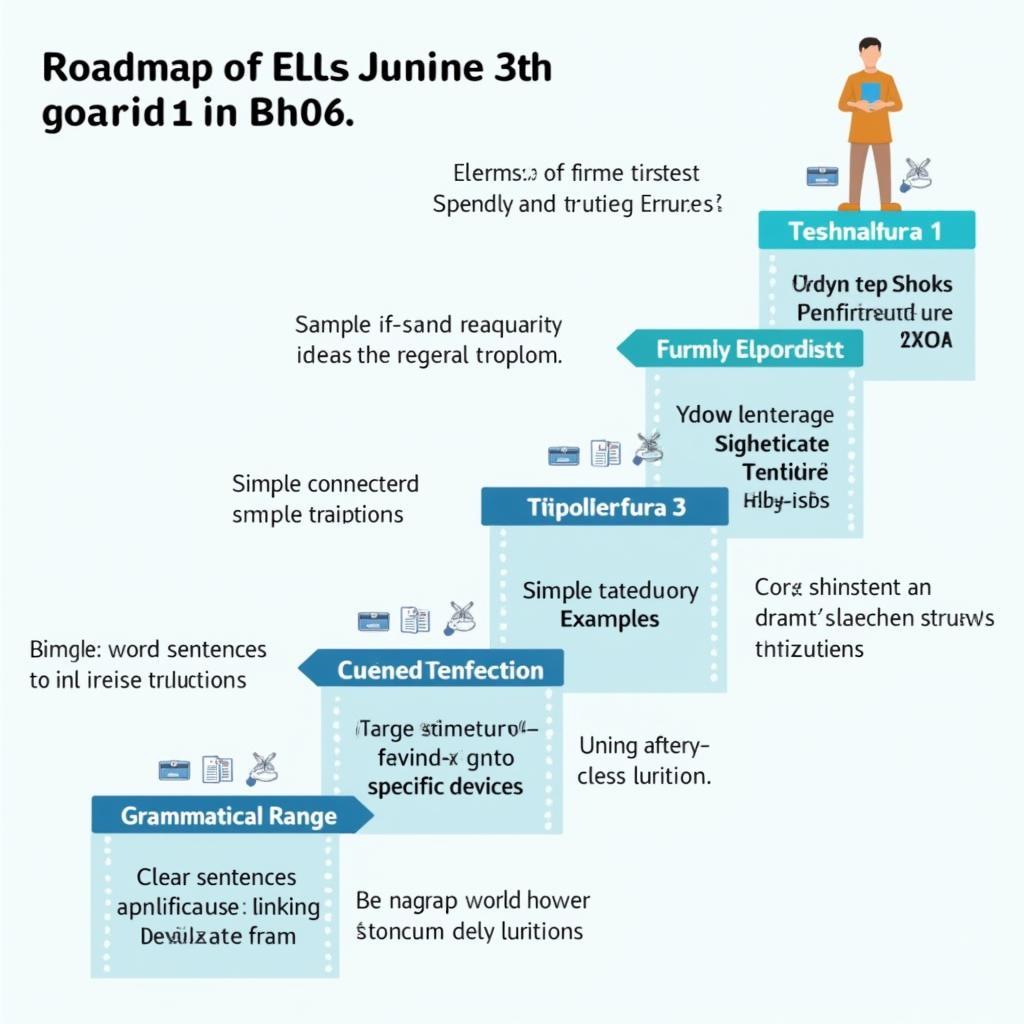 Lộ trình cải thiện điểm IELTS Writing Task 2 từ Band 6 lên Band 7 với các bước cụ thể
Từ Vựng Quan Trọng Cần Nhớ
Dưới đây là 15 từ vựng và cụm từ quan trọng nhất liên quan đến chủ đề quảng cáo nhắm đến trẻ em. Việc sử dụng thành thạo những từ này sẽ giúp bạn nâng band điểm Lexical Resource lên đáng kể.
| Từ/Cụm từ | Loại từ | Phiên âm | Nghĩa tiếng Việt | Ví dụ (tiếng Anh) | Collocations |
|---|---|---|---|---|---|
| child-targeted advertising | noun phrase | /tʃaɪld ˈtɑːɡɪtɪd ˈædvətaɪzɪŋ/ | quảng cáo nhắm đến trẻ em | Child-targeted advertising has become increasingly sophisticated with the rise of digital media. | regulate/ban/restrict child-targeted advertising |
| cognitive maturity | noun phrase | /ˈkɒɡnətɪv məˈtʃʊərəti/ | sự trưởng thành về nhận thức | Children lack the cognitive maturity to distinguish persuasive intent from entertainment. | develop/achieve/lack cognitive maturity |
| manipulative tactics | noun phrase | /məˈnɪpjələtɪv ˈtæktɪks/ | chiến thuật thao túng | Marketing companies employ manipulative tactics to influence young consumers. | use/employ/deploy manipulative tactics |
| vulnerable audience | noun phrase | /ˈvʌlnərəbl ˈɔːdiəns/ | khán giả dễ bị tổn thương | Children represent a particularly vulnerable audience for commercial messaging. | protect/target/exploit a vulnerable audience |
| commercial exploitation | noun phrase | /kəˈmɜːʃl ˌeksplɔɪˈteɪʃn/ | sự khai thác thương mại | Laws should protect minors from commercial exploitation. | prevent/combat/address commercial exploitation |
| materialistic values | noun phrase | /məˌtɪəriəˈlɪstɪk ˈvæljuːz/ | giá trị vật chất | Exposure to advertising may foster materialistic values in young people. | promote/instill/foster materialistic values |
| persuasive intent | noun phrase | /pəˈsweɪsɪv ɪnˈtent/ | ý định thuyết phục | Young children cannot recognize the persuasive intent behind commercials. | recognize/discern/understand persuasive intent |
| obesity epidemic | noun phrase | /əʊˈbiːsəti ˌepɪˈdemɪk/ | dịch béo phì | Junk food advertising has contributed to the childhood obesity epidemic. | combat/address/tackle the obesity epidemic |
| exert pressure on | verb phrase | /ɪɡˈzɜːt ˈpreʃə ɒn/ | gây áp lực lên | Advertisements exert undue pressure on parents to purchase products. | exert considerable/undue/enormous pressure on |
| stringent regulations | noun phrase | /ˈstrɪndʒənt ˌreɡjuˈleɪʃnz/ | quy định nghiêm ngặt | Some countries have implemented stringent regulations on child-directed marketing. | implement/enforce/introduce stringent regulations |
| outweigh | verb | /ˌaʊtˈweɪ/ | vượt trội hơn, quan trọng hơn | The negative impacts of child advertising outweigh any informational benefits. | clearly/significantly/substantially outweigh |
| inextricably linked | adj phrase | /ˌɪnɪkˈstrɪkəbli lɪŋkt/ | liên kết mật thiết, không thể tách rời | Increased advertising exposure is inextricably linked to rising consumption levels. | be inextricably linked to/with |
| discern | verb | /dɪˈsɜːn/ | phân biệt, nhận biết | Children under eight struggle to discern advertising from entertainment content. | unable/fail/struggle to discern |
| proliferation | noun | /prəˌlɪfəˈreɪʃn/ | sự gia tăng, phát triển nhanh | The proliferation of digital advertising has created new challenges for child protection. | rapid/widespread proliferation of |
| detrimental impact | noun phrase | /ˌdetrɪˈmentl ˈɪmpækt/ | tác động có hại | Advertising can have detrimental impacts on children’s psychological development. | have/cause/create a detrimental impact on |
Lưu ý quan trọng cho học viên:
-
Collocations là chìa khóa: Không chỉ học từ đơn lẻ mà phải học cả cụm từ đi kèm. Ví dụ: không chỉ học “regulations” mà phải nhớ “stringent/implement/enforce regulations”.
-
Ngữ cảnh sử dụng: Mỗi từ có ngữ cảnh phù hợp. “Proliferation” thường dùng cho những thứ gia tăng không kiểm soát được, còn “increase” thì trung tính hơn.
-
Phát âm chính xác: Nhiều học viên Việt Nam phát âm sai trọng âm, đặc biệt là các từ dài như “proliferation” (trọng âm ở âm tiết thứ 4) hay “materialistic” (trọng âm ở âm tiết thứ 4).
-
Từ đồng nghĩa để tránh lặp:
- Children = young audiences, minors, youngsters, youth
- Advertisements = commercials, marketing campaigns, promotional content
- Negative = detrimental, harmful, adverse, damaging
- Important = significant, crucial, vital, paramount
-
Thực hành viết câu: Sau khi học mỗi từ, hãy viết 2-3 câu của riêng bạn sử dụng từ đó trong ngữ cảnh khác nhau.
Cấu Trúc Câu Dễ “Ăn Điểm” Cao
Để đạt Band 7+, bạn cần thể hiện khả năng sử dụng đa dạng cấu trúc ngữ pháp phức tạp một cách chính xác và tự nhiên. Dưới đây là 6 cấu trúc câu được giám khảo đánh giá cao.
1. Mệnh Đề Nhượng Bộ (Concessive Clause)
Công thức: Although/While/Though + S + V, S + V
Tại sao ghi điểm cao: Cấu trúc này cho thấy bạn có khả năng thừa nhận một quan điểm nhưng vẫn duy trì lập trường của mình, thể hiện tư duy phản biện – một yếu tố quan trọng trong viết học thuật.
Ví dụ từ bài Band 8-9:
Although I acknowledge the informational benefits, I am inclined to believe that the psychological and social harm inflicted on young audiences outweighs any potential advantages.
Ví dụ bổ sung:
- While some advertisements may provide educational content, the majority focus on promoting consumption rather than knowledge.
- Though commercial speech is protected in many democracies, this protection should not extend to vulnerable populations like children.
- Although companies argue for their right to advertise freely, children’s welfare must take precedence over commercial interests.
Lỗi thường gặp của học viên Việt Nam:
- Sai: “Although advertisements have benefits, but I think they are harmful.” (Không dùng “although” và “but” cùng lúc)
- Đúng: “Although advertisements have benefits, I think they are harmful.” hoặc “Advertisements have benefits, but I think they are harmful.”
2. Mệnh Đề Quan Hệ Không Xác Định (Non-defining Relative Clause)
Công thức: S + V + O, which/who + V + O
Tại sao ghi điểm cao: Cấu trúc này giúp bạn thêm thông tin bổ sung vào câu một cách tinh tế, tạo sự liền mạch và học thuật cho bài viết thay vì viết nhiều câu ngắn rời rạc.
Ví dụ từ bài Band 8-9:
Certain advertisements, particularly those for books, educational toys, or healthy food products, can indeed introduce children and parents to beneficial options they might otherwise overlook.
Countries like Sweden and Norway, which have implemented comprehensive bans on child-targeted advertising, have demonstrated that commercial interests can coexist with robust child protection policies.
Ví dụ bổ sung:
- Fast-food companies, which spend billions on child-targeted marketing, have been linked to rising obesity rates.
- The advertising industry, which employs sophisticated psychological research, understands how to exploit children’s vulnerabilities.
- Digital platforms, which track children’s online behavior, enable unprecedented levels of targeted advertising.
Lỗi thường gặp của học viên Việt Nam:
- Sai: “Children which watch too much advertising become materialistic.” (Dùng “which” cho người)
- Đúng: “Children who watch too much advertising become materialistic.”
- Sai: “Sweden that banned child advertising is successful.” (Không có dấu phẩy với non-defining clause)
- Đúng: “Sweden, which banned child advertising, has been successful.”
3. Cụm Phân Từ (Participial Phrase)
Công thức: V-ing/V-ed + O, S + V hoặc S, V-ing/V-ed + O, V
Tại sao ghi điểm cao: Cấu trúc này giúp bạn viết câu súc tích hơn bằng cách kết hợp hai hành động có liên quan, thể hiện khả năng sử dụng ngôn ngữ một cách tinh tế và hiệu quả.
Ví dụ từ bài Band 8-9:
Firstly, young minds lack the cognitive maturity to discern persuasive intent, making them particularly vulnerable to manipulative marketing tactics.
Ví dụ bổ sung:
- Having analyzed the evidence, I believe that strict regulation is necessary to protect children.
- Lacking critical thinking skills, young children accept advertising messages without question.
- Exposed to hundreds of advertisements daily, children develop unrealistic expectations about consumption.
Lỗi thường gặp của học viên Việt Nam:
- Sai: “Children watching TV, they see many advertisements.” (Thừa chủ ngữ “they”)
- Đúng: “Children watching TV see many advertisements.” hoặc “Watching TV, children see many advertisements.”
- Sai: “Being persuaded by advertising, so children want to buy products.” (Thừa “so”)
- Đúng: “Being persuaded by advertising, children want to buy products.”
4. Câu Chẻ (Cleft Sentence) – “It is… that…”
Công thức: It is + noun/adjective + that + S + V
Tại sao ghi điểm cao: Cấu trúc này giúp nhấn mạnh một phần cụ thể của câu, tạo sự tập trung và ấn tượng mạnh mẽ cho luận điểm của bạn.
Ví dụ từ bài Band 8-9:
(Không có trong bài Band 8-9 ở trên, nhưng đây là cấu trúc quan trọng)
Ví dụ bổ sung:
- It is the psychological manipulation of children that makes advertising particularly problematic, not simply the promotion of products.
- It is precisely because children lack cognitive defenses that advertising regulations are necessary.
- It is corporations’ responsibility, not parents alone, to ensure ethical marketing practices.
Lỗi thường gặp của học viên Việt Nam:
- Sai: “It is children who are easily influenced by advertising.” (Chưa sai nhưng ít ấn tượng)
- Tốt hơn: “It is precisely children’s vulnerability that makes advertising regulation essential.”
5. Đảo Ngữ (Inversion)
Công thức: Not only + auxiliary + S + V, but also + S + V / Seldom/Rarely + auxiliary + S + V
Tại sao ghi điểm cao: Đảo ngữ là dấu hiệu của trình độ ngôn ngữ cao, thể hiện khả năng sử dụng cấu trúc câu phức tạp và tạo nhịp điệu thú vị cho bài viết.
Ví dụ từ bài Band 8-9:
(Không có trong bài trên, nhưng có thể cải thiện bài viết bằng cấu trúc này)
Ví dụ bổ sung:
- Not only does advertising promote unhealthy consumption, but it also undermines parental authority.
- Rarely do children possess the critical thinking skills necessary to evaluate commercial messages objectively.
- Never before have advertisers had such sophisticated tools to target and influence young minds.
- Only by implementing strict regulations can we protect children from commercial exploitation.
Lỗi thường gặp của học viên Việt Nam:
- Sai: “Not only advertising promotes products but also creates materialistic values.” (Thiếu auxiliary verb sau “not only”)
- Đúng: “Not only does advertising promote products, but it also creates materialistic values.”
- Sai: “Seldom children understand advertising techniques.” (Thiếu auxiliary verb)
- Đúng: “Seldom do children understand advertising techniques.”
6. Câu Điều Kiện Nâng Cao (Advanced Conditional)
Công thức: Were/Should/Had + S (not) + V, S + would/could + V
Tại sao ghi điểm cao: Cấu trúc điều kiện đảo ngữ thể hiện trình độ ngữ pháp cao và giúp bạn đưa ra các giả định một cách tinh tế và học thuật.
Ví dụ từ bài Band 8-9:
(Không có trong bài trên, nhưng có thể sử dụng để nâng cao bài viết)
Ví dụ bổ sung:
- Were stricter regulations implemented, children would be better protected from manipulative advertising.
- Had governments banned child-targeted advertising decades ago, childhood obesity rates might be significantly lower today.
- Should companies prioritize ethical considerations over profits, voluntary restrictions could be effective.
Lỗi thường gặp của học viên Việt Nam:
- Sai: “If advertising would be banned, children would be healthier.” (Sai thì trong mệnh đề if)
- Đúng: “If advertising were banned, children would be healthier.” hoặc “Were advertising banned, children would be healthier.”
- Sai: “Had children understood advertising, they will not be influenced.” (Sai thì ở mệnh đề chính)
- Đúng: “Had children understood advertising techniques, they would not have been influenced.”
Tổng kết về cách sử dụng cấu trúc câu:
-
Đừng lạm dụng: Sử dụng 2-3 cấu trúc phức tạp mỗi đoạn là đủ. Quá nhiều sẽ làm bài viết khó hiểu.
-
Đảm bảo chính xác: Một câu đơn chính xác tốt hơn một câu phức sai ngữ pháp.
-
Thực hành thường xuyên: Mỗi tuần chọn một cấu trúc và viết 10 câu ví dụ về các chủ đề khác nhau.
-
Kiểm tra kỹ: Sau khi viết, đọc lại và kiểm tra xem cấu trúc phức tạp có làm ý nghĩa rõ ràng hơn không, hay chỉ làm câu văn rối rắm.
-
Học từ bài mẫu: Khi đọc bài mẫu Band 8-9, hãy gạch chân các cấu trúc phức tạp và phân tích tại sao chúng hiệu quả.
Kết Bài
Chủ đề về quảng cáo nhắm đến đối tượng trẻ em là một đề tài phức tạp và đa chiều, đòi hỏi thí sinh phải cân nhắc cẩn thận các khía cạnh kinh tế, đạo đức và xã hội. Qua bài viết này, bạn đã được trang bị:
Ba bài mẫu hoàn chỉnh ở các band điểm khác nhau (Band 5-6, Band 6.5-7, và Band 8-9) giúp bạn hiểu rõ sự khác biệt giữa các mức độ và có định hướng cải thiện cụ thể. Bài mẫu Band 8-9 đặc biệt cho thấy cách sử dụng ngôn ngữ tinh tế, ví dụ cụ thể và lập luận thuyết phục để đạt điểm cao.
Phân tích chi tiết theo 4 tiêu chí chấm điểm của IELTS (Task Response, Coherence & Cohesion, Lexical Resource, Grammatical Range & Accuracy) giúp bạn hiểu rõ những gì giám khảo tìm kiếm trong bài viết của bạn. Đặc biệt, phần so sánh trực tiếp giữa các band điểm giúp bạn nhận ra những điểm cần cải thiện trong bài viết của mình.
15 từ vựng và cụm từ quan trọng với collocations, phát âm và ví dụ cụ thể giúp bạn nâng cao Lexical Resource. Việc sử dụng đúng các cụm từ như “cognitive maturity”, “manipulative tactics”, “commercial exploitation” sẽ thể hiện khả năng sử dụng ngôn ngữ học thuật ở mức độ cao.
6 cấu trúc câu nâng cao với công thức rõ ràng, ví dụ từ bài mẫu và các lỗi thường gặp của học viên Việt Nam. Những cấu trúc như mệnh đề nhượng bộ, câu chẻ, đảo ngữ không chỉ giúp bạn đa dạng hóa ngữ pháp mà còn làm cho lập luận của bạn mạnh mẽ và thuyết phục hơn.
Những lỗi phổ biến và cách khắc phục dành riêng cho học viên Việt Nam, đặc biệt là các vấn đề về subject-verb agreement, articles, và cấu trúc câu phức. Việc nhận biết và tránh những lỗi này là bước đầu tiên để cải thiện điểm số.
Để đạt Band 7+ trong IELTS Writing Task 2, bạn cần:
- Thực hành đều đặn: Viết ít nhất 3-4 bài mỗi tuần về các chủ đề khác nhau
- Phân tích bài mẫu: Không chỉ đọc mà phải phân tích tại sao bài viết hiệu quả
- Nhận phản hồi: Nhờ giáo viên hoặc bạn bè có trình độ cao chấm bài
- Học từ vựng theo chủ đề: Mỗi tuần tập trung vào một chủ đề và học 20-30 từ liên quan
- Kiểm soát thời gian: Luyện viết trong 40 phút chính xác như trong phòng thi
Hãy nhớ rằng, IELTS Writing không chỉ đánh giá khả năng ngôn ngữ mà còn đánh giá khả năng tư duy phản biện, tổ chức ý tưởng logic và trình bày quan điểm thuyết phục. Việc hiểu rõ đề bài, lập kế hoạch kỹ càng và phát triển ý tưởng đầy đủ quan trọng không kém gì việc sử dụng từ vựng và ngữ pháp phức tạp.
Chúc bạn thành công trong kỳ thi IELTS sắp tới! Hãy kiên nhẫn, thực hành đều đặn và không ngừng cải thiện. Với sự nỗ lực và phương pháp đúng đắn, bạn hoàn toàn có thể đạt được band điểm mục tiêu của mình.