Trong bối cảnh khan hiếm nguồn nước ngày càng trở thành thách thức toàn cầu, chủ đề về vai trò của công nghệ trong việc giảm thiểu lãng phí nước xuất hiện ngày càng thường xuyên trong các đề thi IELTS Reading. Đây là một chủ đề có tính thời sự cao, kết hợp giữa khoa học công nghệ và môi trường, thường xuất hiện với độ khó từ trung bình đến cao.
Bài viết này cung cấp một bộ đề thi IELTS Reading hoàn chỉnh với 3 passages theo đúng format thi thật, bao gồm đầy đủ 40 câu hỏi với các dạng bài đa dạng. Bạn sẽ được trải nghiệm độ khó tăng dần từ Easy (Band 5.0-6.5) qua Medium (Band 6.0-7.5) đến Hard (Band 7.0-9.0), giúp đánh giá chính xác trình độ hiện tại và phát triển kỹ năng đọc hiểu học thuật.
Đặc biệt, bài viết không chỉ cung cấp đáp án mà còn kèm theo giải thích chi tiết về vị trí thông tin, cách paraphrase và chiến lược làm bài hiệu quả. Từ vựng quan trọng được tổng hợp thành bảng tiện lợi để bạn dễ dàng ghi nhớ. Đề thi này phù hợp cho học viên từ band 5.0 trở lên, đang trong giai đoạn ôn luyện nghiêm túc cho kỳ thi IELTS.
Hướng dẫn làm bài IELTS Reading
Tổng Quan Về IELTS Reading Test
IELTS Reading Test là một trong bốn kỹ năng được đánh giá trong kỳ thi IELTS, với cấu trúc và yêu cầu rất cụ thể:
Thời gian: 60 phút cho 3 passages (không có thời gian chuyển đáp án riêng)
Tổng số câu hỏi: 40 câu (mỗi câu đúng được 1 điểm)
Phân bổ thời gian khuyến nghị:
- Passage 1: 15-17 phút (độ khó thấp nhất)
- Passage 2: 18-20 phút (độ khó trung bình)
- Passage 3: 23-25 phút (độ khó cao nhất)
Lưu ý quan trọng: Bạn nên dành 2-3 phút cuối để kiểm tra và chuyển đáp án vào answer sheet. Tương tự như Challenges in protecting marine biodiversity mà chúng ta đã thực hành trước đó, việc quản lý thời gian hiệu quả là chìa khóa để đạt band điểm cao.
Các Dạng Câu Hỏi Trong Đề Này
Đề thi mẫu này bao gồm 7 dạng câu hỏi phổ biến nhất trong IELTS Reading:
- Multiple Choice – Câu hỏi trắc nghiệm nhiều lựa chọn
- True/False/Not Given – Xác định thông tin đúng/sai/không được đề cập
- Yes/No/Not Given – Xác định ý kiến của tác giả
- Matching Headings – Nối tiêu đề với đoạn văn
- Summary Completion – Hoàn thành đoạn tóm tắt
- Matching Features – Nối thông tin với đặc điểm
- Short-answer Questions – Câu hỏi trả lời ngắn
 Công nghệ hiện đại giúp giảm thiểu lãng phí nước trong hệ thống cấp nước đô thị
IELTS Reading Practice Test
PASSAGE 1 – Smart Technology in Household Water Conservation
Độ khó: Easy (Band 5.0-6.5)
Thời gian đề xuất: 15-17 phút
Water scarcity has become one of the most pressing environmental challenges of the twenty-first century, affecting billions of people worldwide. As population growth continues and climate change intensifies, the need to conserve water resources has never been more critical. Fortunately, technological innovations are providing households with increasingly effective tools to monitor and reduce their water consumption, making conservation both practical and affordable.
One of the most significant developments in recent years has been the introduction of smart water meters. Unlike traditional meters that simply record total usage, these sophisticated devices provide real-time data about water consumption patterns. Homeowners can access detailed information through mobile applications, seeing exactly when and where water is being used throughout their property. This immediate feedback often reveals surprising insights, such as toilet leaks that waste hundreds of litres daily or outdoor sprinkler systems running far longer than necessary. Many users report reducing their water consumption by 15-20% simply by becoming more aware of their usage patterns.
Smart irrigation systems represent another breakthrough in residential water conservation. Traditional sprinkler systems operate on fixed schedules, regardless of weather conditions or soil moisture levels. By contrast, intelligent irrigation controllers use various sensors to determine precisely when plants actually need water. These systems can measure soil moisture, detect rainfall, and even access local weather forecasts through internet connections. When rain is predicted or the ground remains sufficiently moist, the system automatically postpones watering, eliminating the common sight of sprinklers running during rainstorms. According to research conducted by the Environmental Protection Agency, properly configured smart irrigation systems can reduce outdoor water use by up to 50% compared to conventional timing-based controllers.
The bathroom, which typically accounts for nearly 70% of indoor household water use, has also benefited from technological innovation. Modern low-flow showerheads now incorporate sophisticated designs that maintain water pressure while using significantly less water. Some models include digital displays showing water usage and temperature, encouraging users to take shorter showers. Smart shower systems can even be programmed with individual user profiles, automatically adjusting water temperature and flow rate while tracking consumption. Similarly, dual-flush toilets equipped with sensors can determine the appropriate flush volume, using minimal water for liquid waste and more for solid waste.
Kitchen water conservation has advanced through the development of intelligent dishwashers and faucets. Contemporary dishwashers feature sensors that assess how dirty the dishes are and adjust water usage accordingly, while touchless faucets with motion sensors prevent water from running unnecessarily while washing hands or dishes. Some innovative faucet designs now include small displays that change colour as water usage increases, providing a visual reminder to conserve. When integrated with smart home systems, these devices can also communicate with water heaters, ensuring optimal temperature without wasting water while waiting for it to warm up.
Leak detection technology has perhaps the most dramatic impact on reducing water waste in homes. Studies suggest that household leaks account for approximately one trillion gallons of wasted water annually in the United States alone. Modern smart leak detectors use acoustic sensors, flow monitoring, and pressure analysis to identify leaks quickly, often before they become visible. Some systems can automatically shut off water supply when a major leak is detected, preventing catastrophic damage and enormous water loss. These devices connect to home networks, sending alerts to smartphones whenever unusual water flow patterns are detected, enabling rapid response even when homeowners are away.
The integration of these technologies into comprehensive smart home systems amplifies their effectiveness. When water-using devices communicate with each other and with central control systems, optimization becomes more sophisticated. For example, a smart system might delay running the dishwasher until off-peak hours when water pressure is higher, or coordinate laundry and irrigation schedules to balance household water demand throughout the day. Artificial intelligence algorithms can learn household patterns over time, providing increasingly personalized recommendations for water conservation.
Despite these impressive technological capabilities, experts emphasize that technology alone cannot solve water scarcity problems. Consumer behavior and awareness remain crucial factors. However, by making water usage visible and providing convenient control mechanisms, smart water technology serves as a powerful tool in encouraging more sustainable consumption patterns. As these technologies become more affordable and widespread, their cumulative impact on global water conservation could be substantial, helping to ensure adequate freshwater resources for future generations.
Questions 1-6
Do the following statements agree with the information given in Passage 1?
Write:
- TRUE if the statement agrees with the information
- FALSE if the statement contradicts the information
- NOT GIVEN if there is no information on this
- Smart water meters only show total water consumption like traditional meters.
- Homeowners using smart meters typically reduce water usage by 15-20%.
- Smart irrigation systems can connect to the internet to check weather forecasts.
- Bathrooms use approximately 70% of indoor household water.
- All modern dishwashers can communicate with water heaters.
- Household leaks waste about one trillion gallons of water every year in the US.
Questions 7-10
Complete the sentences below.
Choose NO MORE THAN TWO WORDS from the passage for each answer.
- Traditional sprinkler systems work on __ __ regardless of weather.
- Smart irrigation controllers use sensors to measure __ __ in the ground.
- Some shower systems can be programmed with __ __ for different family members.
- Modern faucets include small displays that __ __ to remind users to save water.
Questions 11-13
Choose the correct letter, A, B, C or D.
- According to the passage, smart irrigation systems can reduce outdoor water consumption by:
- A. 15-20%
- B. up to 50%
- C. 70%
- D. one trillion gallons
- Smart leak detectors identify leaks using:
- A. only acoustic sensors
- B. visual inspection
- C. acoustic sensors, flow monitoring, and pressure analysis
- D. smartphone cameras
- The main point of the final paragraph is that:
- A. technology is the complete solution to water scarcity
- B. technology combined with behavioral change is necessary for conservation
- C. smart water technology is too expensive
- D. future generations will not have water problems
PASSAGE 2 – Agricultural Water Management Through Technology
Độ khó: Medium (Band 6.0-7.5)
Thời gian đề xuất: 18-20 phút
Agriculture accounts for approximately 70% of global freshwater withdrawals, making it by far the largest consumer of water resources worldwide. As the global population continues its inexorable rise towards an estimated 9.7 billion by 2050, food production must increase dramatically, yet the water available for agriculture remains finite and, in many regions, is rapidly diminishing. This paradoxical situation has catalyzed the development and deployment of increasingly sophisticated technological solutions aimed at maximizing agricultural productivity while minimizing water consumption, fundamentally transforming traditional farming practices.
Precision agriculture, enabled by advances in sensor technology, satellite imagery, and data analytics, represents a paradigm shift in how farmers approach irrigation. Rather than applying uniform amounts of water across entire fields—a practice that inevitably results in over-irrigation in some areas and under-irrigation in others—precision systems allow for site-specific water management. Variable rate irrigation (VRI) systems, for instance, can adjust water application rates across different zones of a single field based on factors such as soil type, topography, crop variety, and real-time moisture levels. These systems utilize GPS technology and sophisticated control algorithms to deliver precisely the amount of water each section of the field requires, no more and no less.
The integration of remote sensing technologies has further enhanced agricultural water management capabilities. Satellites equipped with multispectral and thermal imaging sensors can detect subtle variations in crop health and water stress long before they become visible to the human eye. By analyzing reflected light at specific wavelengths, these systems can determine which areas of farmland need irrigation and which have adequate moisture. Drone technology provides even higher resolution imagery and can be deployed more frequently than satellite passes, enabling farmers to respond rapidly to changing conditions. Some advanced systems even use infrared sensors to measure plant canopy temperature, a highly reliable indicator of water stress, allowing for proactive rather than reactive irrigation decisions.
Soil moisture sensing networks have become increasingly sophisticated and affordable, making them accessible to a broader range of agricultural operations. Modern sensors can be installed at multiple depths throughout the root zone, providing detailed profiles of water availability where it matters most—around plant roots. These sensors transmit data wirelessly to central systems that integrate the information with weather forecasts, evapotranspiration rates, and crop growth stage models to optimize irrigation scheduling. Research has demonstrated that properly implemented soil moisture sensor networks can reduce agricultural water use by 20-40% while maintaining or even improving crop yields, representing a significant advancement in resource efficiency.
Drip irrigation systems, while not new in concept, have benefited enormously from technological enhancement. Traditional drip systems deliver water directly to plant root zones, dramatically reducing losses from evaporation and runoff compared to overhead sprinkler or flood irrigation methods. Contemporary smart drip systems incorporate pressure sensors, flow meters, and automated valves that can detect and respond to problems such as clogged emitters or line breaks in real-time. Some systems employ subsurface drip lines that deliver water below the soil surface, further minimizing evaporation while making the surface area available for cultivation. When combined with fertigation—the injection of fertilizers directly into the irrigation water—these systems provide dual efficiency gains, reducing both water and fertilizer waste while improving nutrient uptake.
The application of artificial intelligence and machine learning algorithms to agricultural water management is opening new frontiers in efficiency. These systems can analyze vast datasets incorporating weather patterns, soil characteristics, historical crop performance, market prices, and water availability to make complex optimization decisions that would be impossible for human operators to calculate manually. Predictive models can forecast crop water requirements days or even weeks in advance, allowing farmers to plan irrigation schedules that align with weather patterns and water availability. Some AI systems can even conduct cost-benefit analyses that balance water costs against expected yield improvements, providing economically optimal irrigation strategies that also conserve water resources.
Deficit irrigation strategies, made practical by precise monitoring and control technologies, represent a counterintuitive but effective approach to water conservation. Rather than providing crops with optimal water throughout the growing season, controlled deficit irrigation deliberately restricts water during specific growth stages when plants are less sensitive to water stress, while ensuring adequate irrigation during critical periods such as flowering and fruit development. This approach can reduce total water use by 25-50% with minimal impact on yields in appropriate crops. The success of deficit irrigation depends entirely on precise knowledge of crop water stress levels and growth stages, information that modern sensor networks and monitoring systems can provide with unprecedented accuracy.
Despite these technological advances, several challenges impede the universal adoption of water-efficient agricultural technologies. Initial investment costs remain prohibitive for many small-scale farmers, particularly in developing nations where water scarcity is often most acute. The digital divide in rural areas means that many farms lack the internet connectivity required for cloud-based monitoring and control systems. There are also concerns about the concentration of agricultural technology in the hands of a few large corporations, potentially creating dependencies that could disadvantage smaller operators. Nevertheless, as technologies mature and costs decline, and as water scarcity becomes increasingly acute, the economic case for precision water management in agriculture grows stronger. The continuation of this trend suggests that technology-driven water efficiency will become not merely an option but a necessity for sustainable food production in the coming decades.
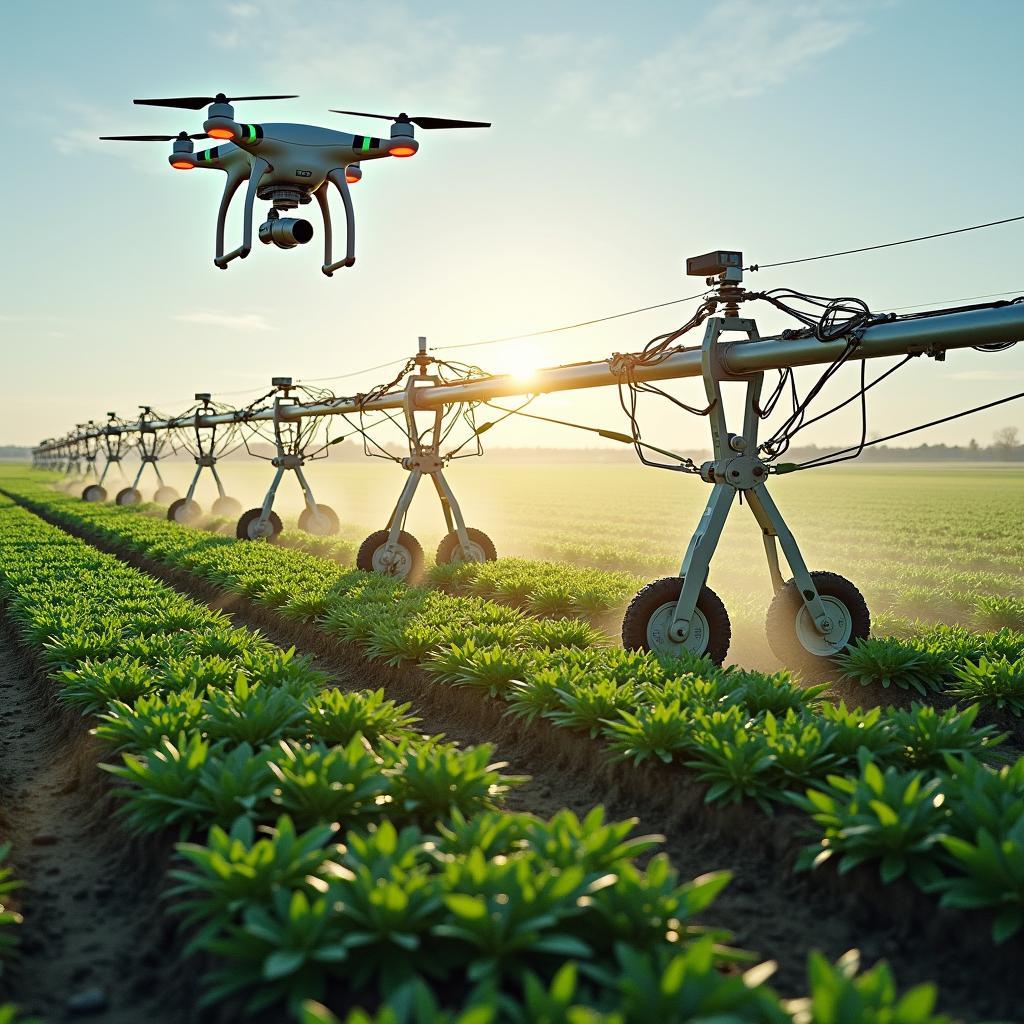 Hệ thống tưới tiêu thông minh sử dụng cảm biến độ ẩm và công nghệ vệ tinh trong nông nghiệp hiện đại
Questions 14-18
Choose the correct letter, A, B, C or D.
- According to the passage, agriculture uses what percentage of global freshwater?
- A. 50%
- B. 60%
- C. 70%
- D. 80%
- Variable rate irrigation (VRI) systems use GPS technology to:
- A. measure crop temperature
- B. deliver specific amounts of water to different field zones
- C. predict weather patterns
- D. control drone flights
- What can multispectral and thermal imaging detect?
- A. soil type variations
- B. crop water stress before it’s visible
- C. insect infestations
- D. fertilizer deficiencies
- Soil moisture sensor networks can reduce water use by:
- A. 10-15%
- B. 15-20%
- C. 20-40%
- D. 50-60%
- Deficit irrigation deliberately restricts water:
- A. throughout the entire growing season
- B. during critical growth periods
- C. during less sensitive growth stages
- D. only during drought conditions
Questions 19-23
Complete the summary below.
Choose NO MORE THAN TWO WORDS from the passage for each answer.
Modern drip irrigation systems have been significantly improved through technology. Smart systems include sensors that can detect problems like (19) __ __ immediately. Some systems use (20) __ __ __ that deliver water beneath the soil surface to reduce evaporation. The technique called (21) __ allows fertilizers to be mixed directly into irrigation water, improving (22) __ __. Artificial intelligence systems analyze large amounts of data and can create (23) __ __ that estimate crop water needs several days ahead.
Questions 24-26
Do the following statements agree with the views of the writer in Passage 2?
Write:
- YES if the statement agrees with the views of the writer
- NO if the statement contradicts the views of the writer
- NOT GIVEN if it is impossible to say what the writer thinks about this
- Technology alone is sufficient to solve all agricultural water scarcity problems.
- High costs prevent many small farmers from adopting water-efficient technologies.
- Governments should provide free internet access to all farms.
PASSAGE 3 – Urban Water Infrastructure and Digital Innovation
Độ khó: Hard (Band 7.0-9.0)
Thời gian đề xuất: 23-25 phút
The manifold challenges confronting urban water management systems in the twenty-first century—aging infrastructure, increasing demand, climate variability, and financial constraints—have necessitated a fundamental reconceptualization of how cities approach water resource administration. Traditional water management paradigms, characterized by reactive maintenance protocols and centralized control mechanisms, are proving increasingly inadequate for addressing the complex, dynamic nature of contemporary urban water systems. In response, municipalities worldwide are embracing digital transformation initiatives that leverage advanced sensing technologies, data analytics, and algorithmic decision-making to create more resilient, efficient, and adaptive water infrastructure networks. This transition towards what is increasingly termed “smart water management” represents not merely an incremental improvement in existing practices but rather a qualitative transformation in the relationship between urban areas and their water resources.
Non-revenue water (NRW)—water that is produced but lost before reaching customers through leaks, theft, or metering inaccuracies—represents one of the most significant inefficiencies in urban water systems, with some cities losing 40-50% of treated water. The economic and environmental ramifications are substantial: treating and pumping water that never generates revenue wastes energy, chemicals, and financial resources while exacerbating water scarcity. Advanced Metering Infrastructure (AMI), incorporating networked smart meters throughout distribution systems, has emerged as a pivotal technology for addressing NRW. Unlike traditional meters read manually at monthly or quarterly intervals, AMI systems transmit consumption data at intervals ranging from near-real-time to hourly, creating detailed temporal profiles of water use. This granular data enables rapid detection of abnormal consumption patterns indicative of leaks or theft, often identifying problems within hours rather than months. Moreover, analytics algorithms can distinguish between different types of water loss—such as burst pipes, which create dramatic flow spikes, versus slow leaks, which manifest as persistent baseline increases—enabling more targeted and efficient repair responses.
The integration of hydraulic modeling with real-time sensor data has revolutionized understanding of water distribution network behavior. Traditional hydraulic models, while useful for planning and design, typically represent static snapshots of network conditions based on assumptions about demand patterns and system characteristics. Contemporary digital twin systems, by contrast, create dynamic, continuously updated virtual replicas of physical water networks. These sophisticated models ingest real-time data from pressure sensors, flow meters, and water quality monitors distributed throughout the network, constantly calibrating themselves to reflect actual conditions. The digital twin can then simulate how the network will respond to various scenarios—such as pipe failures, demand surges, or water quality incidents—enabling operators to preemptively optimize pressure management, identify vulnerabilities, and plan maintenance activities. Some advanced systems employ machine learning algorithms that identify patterns preceding pipe failures, transitioning maintenance strategies from reactive to predictive, thereby preventing failures before they occur rather than simply responding to them after the fact.
Pressure management represents a crucial but often underappreciated aspect of water loss reduction. Research has established that leak flow rates are exponentially related to water pressure: reducing pressure by 30% can decrease leakage by 50% or more. However, pressure must remain sufficient to ensure adequate service to all customers, including those at high elevations or at the end of distribution branches. Advanced pressure management systems utilize networks of sensors and actuated valves to dynamically optimize pressure throughout the distribution network, maintaining the minimum pressure necessary to ensure service while minimizing stress on pipes and reducing leakage. These systems must account for complex factors including diurnal demand variations, topographical challenges, and the hydraulic interdependencies between different network zones. Sophisticated control algorithms—increasingly incorporating artificial intelligence—continuously adjust valve positions to maintain optimal pressure profiles as conditions change throughout the day and night.
Water quality monitoring has been transformed by technological innovation, with implications for both public health and operational efficiency. Traditional water quality surveillance relied on periodic manual sampling and laboratory analysis, providing only sparse temporal and spatial coverage of water quality conditions. Modern systems deploy networks of automated sensors capable of continuously monitoring parameters such as chlorine residuals, turbidity, pH, and temperature throughout distribution networks. Advanced sensors can even detect specific contaminants or biological indicators. This comprehensive monitoring enables rapid detection of water quality deterioration, triggering alerts that allow remedial action before contaminated water reaches consumers. From an efficiency perspective, real-time quality data enables optimization of treatment chemical dosing, ensuring adequate disinfection while avoiding the waste and potential negative effects of over-chlorination. Some systems employ predictive models that forecast how water quality will change as water travels through the distribution network, accounting for factors such as pipe materials, water age, and temperature, enabling proactive rather than reactive quality management.
The emergence of Internet of Things (IoT) platforms has facilitated the integration of disparate water management technologies into cohesive systems. Historically, different components of water infrastructure—treatment plants, pumping stations, distribution networks, and customer meters—operated as essentially independent systems with limited information exchange. IoT platforms provide the communication protocols and data architectures necessary to connect these elements, enabling holistic optimization. For instance, an integrated system might coordinate reservoir releases, treatment plant production rates, pumping station operations, and distribution network pressure management based on comprehensive analysis of current conditions and forecasts, minimizing energy consumption while ensuring reliable service. The same platform can integrate customer-facing applications that provide consumption information and conservation advice, creating feedback loops that influence demand patterns. This systematic integration enables efficiencies that would be impossible to achieve through optimization of individual components in isolation.
Despite the transformative potential of smart water technologies, their implementation faces significant obstacles. The capital expenditure required to deploy comprehensive sensor networks and digital systems can be prohibitive, particularly for municipalities already struggling with deferred infrastructure maintenance. Legacy infrastructure, sometimes over a century old, may be incompatible with modern sensors and control systems, necessitating expensive retrofitting or replacement. Cybersecurity concerns have emerged as critical considerations: networked water infrastructure presents potential targets for malicious actors who might disrupt service or compromise water quality. Ensuring that smart water systems incorporate robust security measures without compromising functionality or accessibility represents an ongoing challenge. Furthermore, the effective operation of data-intensive systems requires workforce capabilities often lacking in traditional water utilities, necessitating significant investments in training and potentially organizational restructuring. There are also valid concerns regarding data privacy, particularly related to detailed consumption information that might reveal occupancy patterns or other sensitive information about households and businesses.
Nevertheless, the trajectory is clear: as water scarcity intensifies, infrastructure ages, and urban populations grow, the imperative for more efficient water management becomes increasingly acute. Technology offers not a panacea, but rather a set of powerful tools that, when thoughtfully implemented within appropriate institutional and regulatory frameworks, can dramatically improve how cities manage their most essential resource. The cities that successfully navigate the transition to smart water management will be better positioned to ensure water security and sustainability for their populations in an increasingly resource-constrained future, while those that fail to adapt may find themselves facing increasingly severe water challenges.
Questions 27-31
Choose the correct letter, A, B, C or D.
- According to the passage, non-revenue water refers to:
- A. water sold at a discount
- B. water lost before reaching customers
- C. water used for public parks
- D. water stored in reservoirs
- Advanced Metering Infrastructure (AMI) differs from traditional meters primarily in:
- A. measurement accuracy
- B. installation cost
- C. frequency of data transmission
- D. physical size
- Digital twin systems are described as:
- A. backup water networks
- B. duplicate physical infrastructure
- C. dynamic virtual replicas of networks
- D. training simulators for operators
- According to the research cited, reducing water pressure by 30% can:
- A. decrease leakage by 30%
- B. decrease leakage by 40%
- C. decrease leakage by 50% or more
- D. eliminate all leakage
- The main challenge mentioned regarding legacy infrastructure is:
- A. its excessive age
- B. incompatibility with modern systems
- C. environmental concerns
- D. high maintenance costs
Questions 32-36
Complete the sentences below.
Choose NO MORE THAN THREE WORDS from the passage for each answer.
- Traditional hydraulic models represent __ __ of network conditions.
- Pressure management systems use networks of sensors and __ __ to optimize water pressure dynamically.
- Modern water quality monitoring employs __ __ that continuously track various parameters.
- IoT platforms provide the __ __ necessary to connect different infrastructure components.
- Smart water systems must incorporate robust __ __ to protect against threats.
Questions 37-40
Do the following statements agree with the information given in Passage 3?
Write:
- YES if the statement agrees with the claims of the writer
- NO if the statement contradicts the claims of the writer
- NOT GIVEN if it is impossible to say what the writer thinks about this
- Some cities currently lose between 40-50% of treated water through non-revenue water.
- All water utilities have successfully implemented IoT platforms.
- Detailed consumption data from smart meters raises privacy concerns.
- Technology alone can completely solve all urban water management problems.
Answer Keys – Đáp Án
PASSAGE 1: Questions 1-13
- FALSE
- TRUE
- TRUE
- TRUE
- NOT GIVEN
- TRUE
- fixed schedules
- soil moisture
- user profiles
- change colour
- B
- C
- B
PASSAGE 2: Questions 14-26
- C
- B
- B
- C
- C
- clogged emitters
- subsurface drip lines
- fertigation
- nutrient uptake
- predictive models
- NO
- YES
- NOT GIVEN
PASSAGE 3: Questions 27-40
- B
- C
- C
- C
- B
- static snapshots
- actuated valves
- automated sensors
- communication protocols
- security measures
- YES
- NOT GIVEN
- YES
- NO
Giải Thích Đáp Án Chi Tiết
Passage 1 – Giải Thích
Câu 1: FALSE
- Dạng câu hỏi: True/False/Not Given
- Từ khóa: smart water meters, only show total water consumption
- Vị trí trong bài: Đoạn 2, dòng 1-3
- Giải thích: Câu hỏi nói smart meters “only show total consumption like traditional meters”. Tuy nhiên, bài đọc nói “Unlike traditional meters that simply record total usage, these sophisticated devices provide real-time data about water consumption patterns.” Từ “Unlike” cho thấy smart meters khác với traditional meters, không chỉ hiển thị tổng mức tiêu thụ. Do đó đáp án là FALSE.
Câu 2: TRUE
- Dạng câu hỏi: True/False/Not Given
- Từ khóa: reduce water usage, 15-20%
- Vị trí trong bài: Đoạn 2, dòng 6-7
- Giải thích: Bài đọc nói rõ: “Many users report reducing their water consumption by 15-20% simply by becoming more aware of their usage patterns.” Thông tin khớp hoàn toàn với câu hỏi.
Câu 3: TRUE
- Dạng câu hỏi: True/False/Not Given
- Từ khóa: smart irrigation systems, connect to internet, weather forecasts
- Vị trí trong bài: Đoạn 3, dòng 4-5
- Giải thích: Bài viết đề cập: “These systems can measure soil moisture, detect rainfall, and even access local weather forecasts through internet connections.” Paraphrase: “access through internet connections” = “connect to internet to check”.
Câu 4: TRUE
- Dạng câu hỏi: True/False/Not Given
- Từ khóa: bathrooms, 70%, indoor household water
- Vị trí trong bài: Đoạn 4, dòng 1-2
- Giải thích: Thông tin chính xác: “The bathroom, which typically accounts for nearly 70% of indoor household water use…”
Câu 5: NOT GIVEN
- Dạng câu hỏi: True/False/Not Given
- Từ khóa: all modern dishwashers, communicate with water heaters
- Vị trí trong bài: Đoạn 5
- Giải thích: Bài chỉ nói “some innovative faucet designs” có thể kết nối với water heaters, không đề cập đến việc tất cả dishwashers có khả năng này. Không có thông tin về “all modern dishwashers”.
Câu 6: TRUE
- Dạng câu hỏi: True/False/Not Given
- Từ khóa: household leaks, one trillion gallons, US
- Vị trí trong bài: Đoạn 6, dòng 2-3
- Giải thích: Câu trong bài: “Studies suggest that household leaks account for approximately one trillion gallons of wasted water annually in the United States alone.” Hoàn toàn khớp với câu hỏi.
Câu 7: fixed schedules
- Dạng câu hỏi: Sentence Completion
- Vị trí trong bài: Đoạn 3, dòng 2-3
- Giải thích: “Traditional sprinkler systems operate on fixed schedules, regardless of weather conditions…”
Câu 8: soil moisture
- Dạng câu hỏi: Sentence Completion
- Vị trí trong bài: Đoạn 3, dòng 4
- Giải thích: “These systems can measure soil moisture, detect rainfall…”
Câu 9: user profiles
- Dạng câu hỏi: Sentence Completion
- Vị trí trong bài: Đoạn 4, dòng 5-6
- Giải thích: “Smart shower systems can even be programmed with individual user profiles…”
Câu 10: change colour
- Dạng câu hỏi: Sentence Completion
- Vị trí trong bài: Đoạn 5, dòng 5-6
- Giải thích: “Some innovative faucet designs now include small displays that change colour as water usage increases…”
Câu 11: B (up to 50%)
- Dạng câu hỏi: Multiple Choice
- Vị trí trong bài: Đoạn 3, dòng cuối
- Giải thích: “properly configured smart irrigation systems can reduce outdoor water use by up to 50%”. Các đáp án khác không đề cập đến smart irrigation.
Câu 12: C
- Dạng câu hỏi: Multiple Choice
- Vị trí trong bài: Đoạn 6, dòng 4-5
- Giải thích: “Modern smart leak detectors use acoustic sensors, flow monitoring, and pressure analysis to identify leaks quickly”. Đáp án C liệt kê đầy đủ ba phương pháp.
Câu 13: B
- Dạng câu hỏi: Multiple Choice
- Vị trí trong bài: Đoạn cuối
- Giải thích: Đoạn cuối nhấn mạnh: “experts emphasize that technology alone cannot solve water scarcity problems. Consumer behavior and awareness remain crucial factors.” Đây là paraphrase của đáp án B – technology combined with behavioral change.
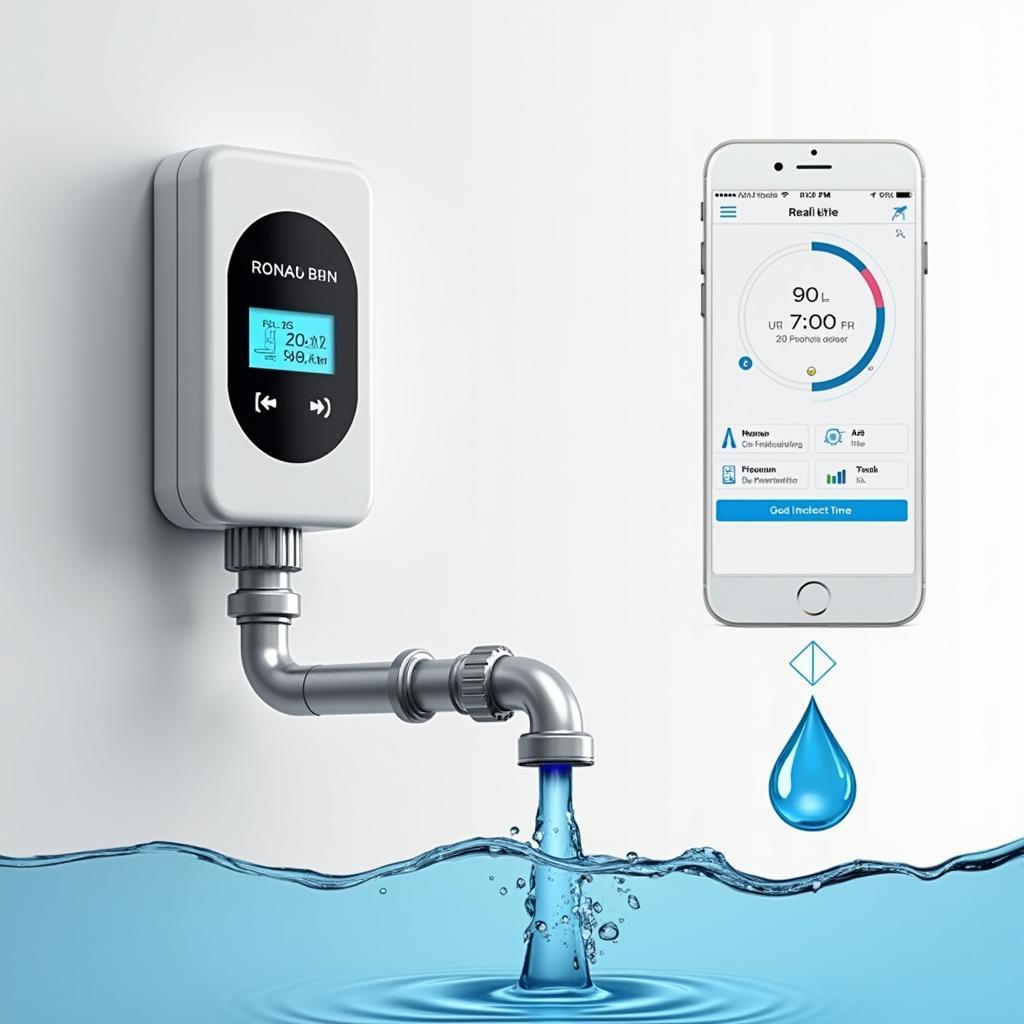 Cảm biến phát hiện rò rỉ nước thông minh giúp ngăn chặn lãng phí nước trong gia đình
Passage 2 – Giải Thích
Câu 14: C (70%)
- Dạng câu hỏi: Multiple Choice
- Vị trí trong bài: Đoạn 1, câu đầu
- Giải thích: “Agriculture accounts for approximately 70% of global freshwater withdrawals”. Đây là thông tin trực tiếp, không cần paraphrase.
Câu 15: B
- Dạng câu hỏi: Multiple Choice
- Vị trí trong bài: Đoạn 2, dòng 5-7
- Giải thích: “These systems utilize GPS technology and sophisticated control algorithms to deliver precisely the amount of water each section of the field requires”. Paraphrase: “deliver precisely the amount” = “deliver specific amounts to different zones”.
Câu 16: B
- Dạng câu hỏi: Multiple Choice
- Vị trí trong bài: Đoạn 3, dòng 3-5
- Giải thích: “these systems can detect subtle variations in crop health and water stress long before they become visible to the human eye.” Từ khóa: “water stress before it’s visible” khớp với đáp án B.
Câu 17: C (20-40%)
- Dạng câu hỏi: Multiple Choice
- Vị trí trong bài: Đoạn 4, dòng cuối
- Giải thích: “properly implemented soil moisture sensor networks can reduce agricultural water use by 20-40%”.
Câu 18: C
- Dạng câu hỏi: Multiple Choice
- Vị trí trong bài: Đoạn 7, dòng 3-5
- Giải thích: “controlled deficit irrigation deliberately restricts water during specific growth stages when plants are less sensitive to water stress”. Paraphrase: “less sensitive growth stages” = đáp án C.
Câu 19: clogged emitters
- Dạng câu hỏi: Summary Completion
- Vị trí trong bài: Đoạn 5, dòng 4-5
- Giải thích: “Contemporary smart drip systems incorporate… that can detect and respond to problems such as clogged emitters or line breaks”.
Câu 20: subsurface drip lines
- Dạng câu hỏi: Summary Completion
- Vị trí trong bài: Đoạn 5, dòng 6-7
- Giải thích: “Some systems employ subsurface drip lines that deliver water below the soil surface”.
Câu 21: fertigation
- Dạng câu hỏi: Summary Completion
- Vị trí trong bài: Đoạn 5, dòng 8-9
- Giải thích: “When combined with fertigation—the injection of fertilizers directly into the irrigation water”.
Câu 22: nutrient uptake
- Dạng câu hỏi: Summary Completion
- Vị trí trong bài: Đoạn 5, dòng cuối
- Giải thích: “reducing both water and fertilizer waste while improving nutrient uptake”.
Câu 23: predictive models
- Dạng câu hỏi: Summary Completion
- Vị trí trong bài: Đoạn 6, dòng 5-6
- Giải thích: “Predictive models can forecast crop water requirements days or even weeks in advance”.
Câu 24: NO
- Dạng câu hỏi: Yes/No/Not Given
- Vị trí trong bài: Đoạn 8
- Giải thích: Đoạn cuối liệt kê nhiều thách thức như chi phí, digital divide, và các vấn đề khác, cho thấy technology alone không đủ. Đây là quan điểm của tác giả.
Câu 25: YES
- Dạng câu hỏi: Yes/No/Not Given
- Vị trí trong bài: Đoạn 8, dòng 2-3
- Giải thích: “Initial investment costs remain prohibitive for many small-scale farmers, particularly in developing nations”. Tác giả đồng ý với quan điểm này.
Câu 26: NOT GIVEN
- Dạng câu hỏi: Yes/No/Not Given
- Vị trí trong bài: Đoạn 8
- Giải thích: Mặc dù đề cập đến digital divide và thiếu internet connectivity, bài không nói rõ liệu governments có nên cung cấp miễn phí hay không. Đây là ý kiến không được đề cập.
Passage 3 – Giải Thích
Câu 27: B
- Dạng câu hỏi: Multiple Choice
- Vị trí trong bài: Đoạn 2, dòng 1-2
- Giải thích: “Non-revenue water (NRW)—water that is produced but lost before reaching customers through leaks, theft, or metering inaccuracies”. Definition rõ ràng khớp với đáp án B.
Câu 28: C
- Dạng câu hỏi: Multiple Choice
- Vị trí trong bài: Đoạn 2, dòng 7-9
- Giải thích: “Unlike traditional meters read manually at monthly or quarterly intervals, AMI systems transmit consumption data at intervals ranging from near-real-time to hourly”. Sự khác biệt chính là tần suất truyền dữ liệu (frequency of data transmission).
Câu 29: C
- Dạng câu hỏi: Multiple Choice
- Vị trí trong bài: Đoạn 3, dòng 5-6
- Giải thích: “Contemporary digital twin systems… create dynamic, continuously updated virtual replicas of physical water networks”. Định nghĩa chính xác.
Câu 30: C
- Dạng câu hỏi: Multiple Choice
- Vị trí trong bài: Đoạn 4, dòng 2-3
- Giải thích: “reducing pressure by 30% can decrease leakage by 50% or more”. Thông tin số liệu cụ thể.
Câu 31: B
- Dạng câu hỏi: Multiple Choice
- Vị trí trong bài: Đoạn 7, dòng 4-5
- Giải thích: “Legacy infrastructure… may be incompatible with modern sensors and control systems, necessitating expensive retrofitting or replacement”. Từ “incompatible” là từ khóa chính.
Câu 32: static snapshots
- Dạng câu hỏi: Sentence Completion
- Vị trí trong bài: Đoạn 3, dòng 3-4
- Giải thích: “Traditional hydraulic models… typically represent static snapshots of network conditions”.
Câu 33: actuated valves
- Dạng câu hỏi: Sentence Completion
- Vị trí trong bài: Đoạn 4, dòng 7-8
- Giải thích: “Advanced pressure management systems utilize networks of sensors and actuated valves to dynamically optimize pressure”.
Câu 34: automated sensors
- Dạng câu hỏi: Sentence Completion
- Vị trí trong bài: Đoạn 5, dòng 4-5
- Giải thích: “Modern systems deploy networks of automated sensors capable of continuously monitoring parameters”.
Câu 35: communication protocols
- Dạng câu hỏi: Sentence Completion
- Vị trí trong bài: Đoạn 6, dòng 5-6
- Giải thích: “IoT platforms provide the communication protocols and data architectures necessary to connect these elements”.
Câu 36: security measures
- Dạng câu hỏi: Sentence Completion
- Vị trí trong bài: Đoạn 7, dòng 9-10
- Giải thích: “Ensuring that smart water systems incorporate robust security measures without compromising functionality”.
Câu 37: YES
- Dạng câu hỏi: Yes/No/Not Given
- Vị trí trong bài: Đoạn 2, dòng 2-3
- Giải thích: “with some cities losing 40-50% of treated water”. Tác giả khẳng định thông tin này.
Câu 38: NOT GIVEN
- Dạng câu hỏi: Yes/No/Not Given
- Vị trí trong bài: Đoạn 6
- Giải thích: Bài nói về IoT platforms và lợi ích của chúng, nhưng không đề cập liệu tất cả water utilities đã implement thành công hay chưa.
Câu 39: YES
- Dạng câu hỏi: Yes/No/Not Given
- Vị trí trong bài: Đoạn 7, dòng cuối
- Giải thích: “There are also valid concerns regarding data privacy, particularly related to detailed consumption information that might reveal occupancy patterns or other sensitive information”. Tác giả thừa nhận mối quan ngại về privacy.
Câu 40: NO
- Dạng câu hỏi: Yes/No/Not Given
- Vị trí trong bài: Đoạn 8, dòng 2-3
- Giải thích: “Technology offers not a panacea, but rather a set of powerful tools”. Tác giả rõ ràng phản đối quan điểm technology alone có thể giải quyết mọi vấn đề.
Từ Vựng Quan Trọng Theo Passage
Passage 1 – Essential Vocabulary
| Từ vựng | Loại từ | Phiên âm | Nghĩa tiếng Việt | Ví dụ từ bài | Collocation |
|---|---|---|---|---|---|
| conserve | v | /kənˈsɜːv/ | bảo tồn, tiết kiệm | conserve water resources | water conservation, energy conservation |
| sophisticated | adj | /səˈfɪstɪkeɪtɪd/ | tinh vi, phức tạp | sophisticated devices | sophisticated technology, sophisticated system |
| immediate feedback | n | /ɪˈmiːdiət ˈfiːdbæk/ | phản hồi ngay lập tức | This immediate feedback often reveals surprising insights | provide immediate feedback |
| irrigation | n | /ˌɪrɪˈɡeɪʃn/ | hệ thống tưới tiêu | smart irrigation systems | irrigation system, drip irrigation |
| postpone | v | /pəʊstˈpəʊn/ | hoãn lại | automatically postpones watering | postpone a meeting, postpone indefinitely |
| low-flow | adj | /ləʊ fləʊ/ | dòng chảy thấp | low-flow showerheads | low-flow toilet, low-flow faucet |
| dual-flush | adj | /ˈdjuːəl flʌʃ/ | xả kép | dual-flush toilets | dual-flush system |
| touchless | adj | /ˈtʌtʃləs/ | không cần chạm | touchless faucets | touchless technology, touchless payment |
| leak detection | n | /liːk dɪˈtekʃn/ | phát hiện rò rỉ | leak detection technology | leak detection system, early leak detection |
| acoustic sensor | n | /əˈkuːstɪk ˈsensə/ | cảm biến âm thanh | use acoustic sensors | acoustic sensor technology |
| amplify | v | /ˈæmplɪfaɪ/ | khuếch đại, tăng cường | amplifies their effectiveness | amplify the effect, amplify the signal |
| sustainable | adj | /səˈsteɪnəbl/ | bền vững | sustainable consumption patterns | sustainable development, sustainable practice |
Passage 2 – Essential Vocabulary
| Từ vựng | Loại từ | Phiên âm | Nghĩa tiếng Việt | Ví dụ từ bài | Collocation |
|---|---|---|---|---|---|
| account for | v | /əˈkaʊnt fɔː/ | chiếm (tỷ lệ) | Agriculture accounts for 70% | account for the difference |
| inexorable | adj | /ɪnˈeksərəbl/ | không thể ngăn cản | inexorable rise | inexorable decline, inexorable force |
| paradoxical | adj | /ˌpærəˈdɒksɪkl/ | nghịch lý | paradoxical situation | paradoxical effect, paradoxical statement |
| precision agriculture | n | /prɪˈsɪʒn ˈæɡrɪkʌltʃə/ | nông nghiệp chính xác | Precision agriculture represents a paradigm shift | precision farming |
| paradigm shift | n | /ˈpærədaɪm ʃɪft/ | sự thay đổi mô hình | represents a paradigm shift | undergo a paradigm shift |
| over-irrigation | n | /ˌəʊvə ɪrɪˈɡeɪʃn/ | tưới quá mức | results in over-irrigation | prevent over-irrigation |
| topography | n | /təˈpɒɡrəfi/ | địa hình | factors such as topography | complex topography, varied topography |
| multispectral | adj | /ˌmʌltiˈspektrəl/ | đa phổ | multispectral sensors | multispectral imaging, multispectral data |
| evapotranspiration | n | /ɪˌvæpəʊtrænspəˈreɪʃn/ | sự bay hơi | evapotranspiration rates | measure evapotranspiration |
| runoff | n | /ˈrʌnɒf/ | nước chảy tràn | reducing losses from runoff | surface runoff, agricultural runoff |
| fertigation | n | /fɜːtɪˈɡeɪʃn/ | bón phân qua tưới | fertigation systems | fertigation technology |
| counterintuitive | adj | /ˌkaʊntərɪnˈtjuːɪtɪv/ | trái với trực giác | counterintuitive approach | counterintuitive result |
| deficit irrigation | n | /ˈdefɪsɪt ɪrɪˈɡeɪʃn/ | tưới hạn chế | deficit irrigation strategies | controlled deficit irrigation |
| digital divide | n | /ˈdɪdʒɪtl dɪˈvaɪd/ | khoảng cách công nghệ số | The digital divide in rural areas | bridge the digital divide |
| concentration | n | /ˌkɒnsnˈtreɪʃn/ | sự tập trung | concentration of technology | high concentration, market concentration |
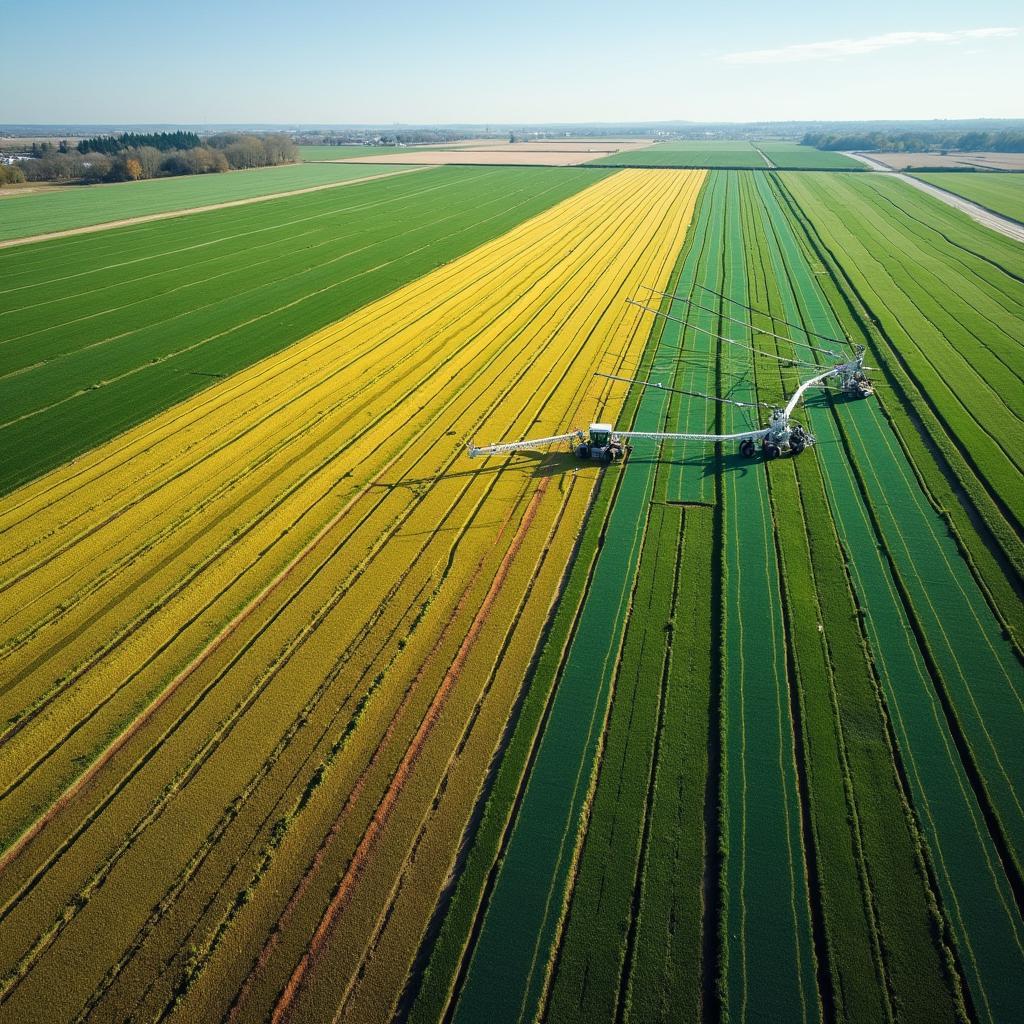 Nông nghiệp chính xác áp dụng công nghệ tiết kiệm nước với hệ thống tưới nhỏ giọt và cảm biến
Passage 3 – Essential Vocabulary
| Từ vựng | Loại từ | Phiên âm | Nghĩa tiếng Việt | Ví dụ từ bài | Collocation |
|---|---|---|---|---|---|
| manifold | adj | /ˈmænɪfəʊld/ | đa dạng, nhiều mặt | manifold challenges | manifold benefits, manifold problems |
| necessitate | v | /nəˈsesɪteɪt/ | đòi hỏi, cần thiết | have necessitated a reconceptualization | necessitate changes, necessitate action |
| paradigm | n | /ˈpærədaɪm/ | mô hình, khuôn mẫu | Traditional paradigms | paradigm shift, new paradigm |
| reactive | adj | /riˈæktɪv/ | phản ứng, bị động | reactive maintenance protocols | reactive approach, reactive strategy |
| resilient | adj | /rɪˈzɪliənt/ | kiên cường, đàn hồi | more resilient infrastructure | resilient system, resilient economy |
| non-revenue water | n | /nɒn ˈrevənjuː ˈwɔːtə/ | nước không tạo doanh thu | Non-revenue water represents inefficiency | reduce non-revenue water |
| ramification | n | /ˌræmɪfɪˈkeɪʃn/ | hậu quả, tác động | economic ramifications | serious ramifications, political ramifications |
| exacerbate | v | /ɪɡˈzæsəbeɪt/ | làm trầm trọng thêm | exacerbating water scarcity | exacerbate the problem, exacerbate tensions |
| pivotal | adj | /ˈpɪvətl/ | then chốt, quan trọng | pivotal technology | pivotal role, pivotal moment |
| granular | adj | /ˈɡrænjələ/ | chi tiết, cụ thể | granular data | granular control, granular analysis |
| indicative | adj | /ɪnˈdɪkətɪv/ | biểu thị, chỉ ra | indicative of leaks | indicative of problems |
| hydraulic modeling | n | /haɪˈdrɒlɪk ˈmɒdəlɪŋ/ | mô hình thủy lực | hydraulic modeling systems | advanced hydraulic modeling |
| digital twin | n | /ˈdɪdʒɪtl twɪn/ | bản sao kỹ thuật số | digital twin systems | create a digital twin |
| preemptively | adv | /priˈemptɪvli/ | phòng ngừa, trước | preemptively optimize | act preemptively |
| exponentially | adv | /ˌekspəˈnenʃəli/ | theo cấp số nhân | exponentially related | grow exponentially |
| topographical | adj | /ˌtɒpəˈɡræfɪkl/ | về địa hình | topographical challenges | topographical map, topographical features |
| sparse | adj | /spɑːs/ | thưa thớt, ít | sparse coverage | sparse data, sparse population |
| turbidity | n | /tɜːˈbɪdəti/ | độ đục | monitoring turbidity | water turbidity, high turbidity |
| contaminant | n | /kənˈtæmɪnənt/ | chất gây ô nhiễm | detect contaminants | remove contaminants, chemical contaminant |
| remedial action | n | /rɪˈmiːdiəl ˈækʃn/ | hành động khắc phục | triggering remedial action | take remedial action |
| over-chlorination | n | /ˌəʊvə klɔːrɪˈneɪʃn/ | clo hóa quá mức | negative effects of over-chlorination | prevent over-chlorination |
| disparate | adj | /ˈdɪspərət/ | khác biệt, riêng lẻ | integration of disparate technologies | disparate systems, disparate elements |
| holistic | adj | /həˈlɪstɪk/ | tổng thể, toàn diện | holistic optimization | holistic approach, holistic view |
| capital expenditure | n | /ˈkæpɪtl ɪkˈspendɪtʃə/ | chi phí vốn | capital expenditure required | reduce capital expenditure |
| prohibitive | adj | /prəˈhɪbɪtɪv/ | quá đắt, cấm đoán | prohibitive costs | prohibitively expensive |
| legacy infrastructure | n | /ˈleɡəsi ˈɪnfrəstrʌktʃə/ | cơ sở hạ tầng cũ | Legacy infrastructure problems | upgrade legacy infrastructure |
| retrofitting | n | /ˈretrəʊfɪtɪŋ/ | cải tạo, lắp đặt lại | necessitating retrofitting | building retrofitting |
| malicious actor | n | /məˈlɪʃəs ˈæktə/ | kẻ xấu, tin tặc | targets for malicious actors | protect from malicious actors |
| trajectory | n | /trəˈdʒektəri/ | quỹ đạo, xu hướng | the trajectory is clear | upward trajectory, development trajectory |
| imperative | n | /ɪmˈperətɪv/ | sự cấp thiết | the imperative for efficiency | moral imperative, strategic imperative |
| panacea | n | /ˌpænəˈsiːə/ | liều thuốc vạn năng | not a panacea | universal panacea |
| resource-constrained | adj | /rɪˈsɔːs kənˈstreɪnd/ | hạn chế tài nguyên | resource-constrained future | resource-constrained environment |
Kết bài
Chủ đề về vai trò công nghệ trong giảm lãng phí nước không chỉ phổ biến trong các đề thi IELTS Reading mà còn phản ánh một trong những thách thức cấp bách nhất của thế kỷ 21. Bộ đề thi mẫu này đã cung cấp cho bạn trải nghiệm hoàn chỉnh với ba passages có độ khó tăng dần, từ ứng dụng công nghệ trong gia đình, qua nông nghiệp, đến hệ thống cơ sở hạ tầng đô thị phức tạp.
Ba passages tổng cộng hơn 2500 từ đã giới thiệu đầy đủ phạm vi từ vựng học thuật, cấu trúc câu đa dạng và các dạng câu hỏi chính thống trong IELTS Reading. Đáp án chi tiết kèm giải thích không chỉ giúp bạn tự đánh giá kết quả mà còn hiểu rõ cách paraphrase, vị trí thông tin và chiến lược làm bài hiệu quả cho từng dạng câu hỏi.
Bộ từ vựng được tổng hợp theo bảng với đầy đủ phiên âm, nghĩa, ví dụ và collocations sẽ là tài liệu quý giá để bạn mở rộng vốn từ học thuật. Hãy luyện tập thường xuyên với các đề thi đa dạng chủ đề, tương tự như The role of public health initiatives in disease prevention và Discoveries in marine biology, để nâng cao kỹ năng đọc hiểu toàn diện.
Hãy nhớ rằng thành công trong IELTS Reading không chỉ đến từ việc hiểu tiếng Anh mà còn từ việc quản lý thời gian khéo léo, nhận biết dạng câu hỏi nhanh chóng và áp dụng chiến lược phù hợp. Chúc bạn ôn luyện hiệu quả và đạt được band điểm mục tiêu trong kỳ thi IELTS sắp tới!