Mở bài
Chủ đề năng lượng tái tạo và sự chuyển đổi của các hệ thống lưới điện toàn cầu là một trong những đề tài xuất hiện ngày càng thường xuyên trong kỳ thi IELTS Reading. Với sự quan tâm gia tăng về biến đổi khí hậu và phát triển bền vững, Cambridge IELTS và các tổ chức ra đề như British Council, IDP thường lựa chọn các bài đọc liên quan đến công nghệ xanh, năng lượng sạch và cơ sở hạ tầng điện hiện đại.
Bài viết này cung cấp cho bạn một bộ đề thi IELTS Reading hoàn chỉnh với 3 passages tăng dần về độ khó, từ band 5.0 đến 9.0. Bạn sẽ được luyện tập với 40 câu hỏi đa dạng theo đúng format thi thật, bao gồm Multiple Choice, True/False/Not Given, Matching Headings, Summary Completion và nhiều dạng khác. Đặc biệt, mỗi câu hỏi đều có đáp án chi tiết kèm giải thích, giúp bạn hiểu rõ cách paraphrase và xác định thông tin trong bài. Bạn cũng sẽ học được hơn 40 từ vựng quan trọng về năng lượng tái tạo, công nghệ lưới điện và phát triển bền vững – những từ vựng thường xuyên xuất hiện trong IELTS Academic.
Đề thi này phù hợp cho học viên từ band 5.0 trở lên muốn cải thiện kỹ năng đọc hiểu và làm quen với chủ đề khoa học – công nghệ trong IELTS Reading.
1. Hướng Dẫn Làm Bài IELTS Reading
Tổng Quan Về IELTS Reading Test
IELTS Academic Reading kéo dài 60 phút cho 3 passages với tổng cộng 40 câu hỏi. Mỗi câu trả lời đúng được 1 điểm, không trừ điểm cho câu sai. Độ khó của các passages tăng dần từ Passage 1 đến Passage 3.
Phân bổ thời gian khuyến nghị:
- Passage 1: 15-17 phút (độ khó dễ, band 5.0-6.5)
- Passage 2: 18-20 phút (độ khó trung bình, band 6.0-7.5)
- Passage 3: 23-25 phút (độ khó cao, band 7.0-9.0)
Lưu ý quan trọng: Bạn cần tự quản lý thời gian và chuyển đáp án lên answer sheet. Không có thời gian bổ sung cho việc này như trong IELTS Listening.
Các Dạng Câu Hỏi Trong Đề Này
Đề thi mẫu này bao gồm 7 dạng câu hỏi phổ biến nhất trong IELTS Reading:
- Multiple Choice – Chọn đáp án đúng nhất từ 3-4 phương án
- True/False/Not Given – Xác định thông tin đúng, sai hay không được đề cập
- Matching Information – Nối thông tin với đoạn văn tương ứng
- Yes/No/Not Given – Xác định ý kiến của tác giả
- Matching Headings – Chọn tiêu đề phù hợp cho từng đoạn
- Summary Completion – Điền từ vào chỗ trống trong đoạn tóm tắt
- Short-answer Questions – Trả lời câu hỏi ngắn với số từ giới hạn
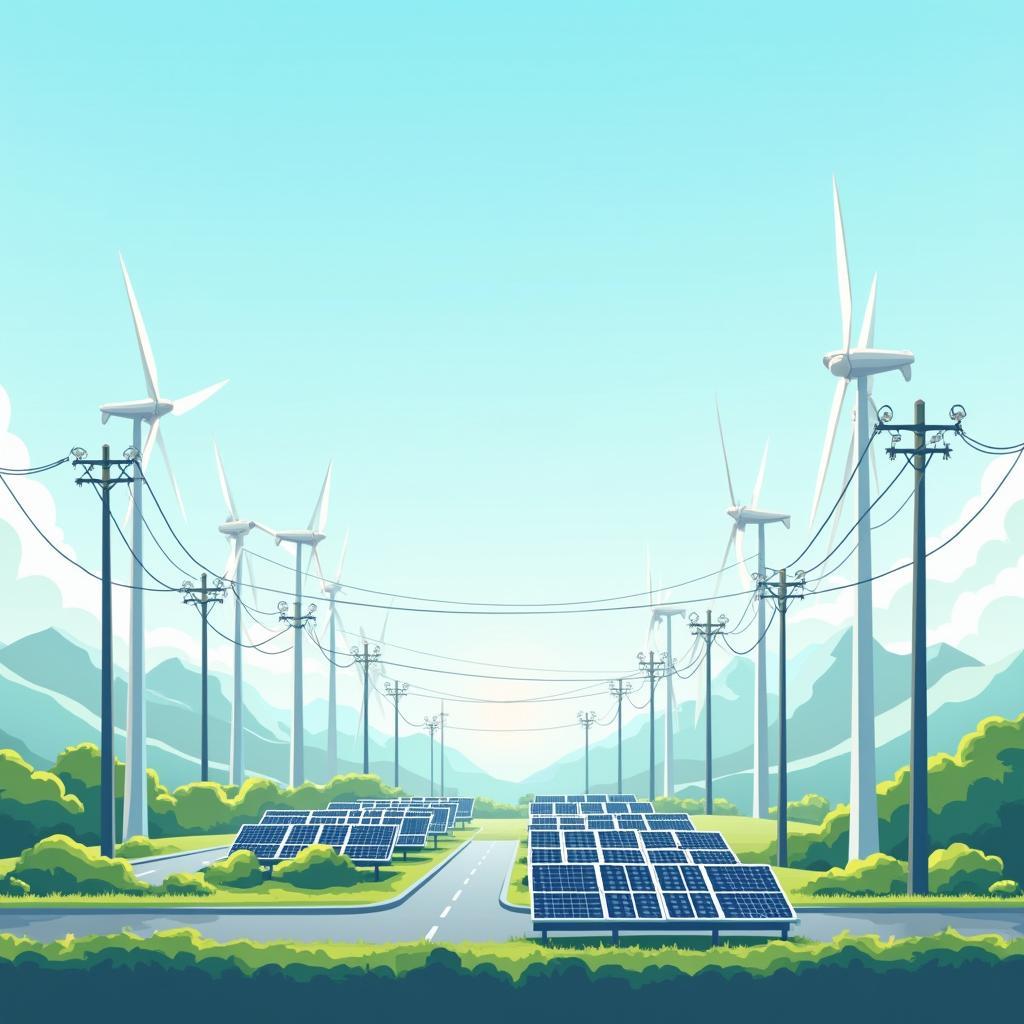 Hệ thống lưới điện năng lượng tái tạo hiện đại với tua bin gió và tấm pin mặt trời kết nối thông minh
2. IELTS Reading Practice Test
PASSAGE 1 – The Basics of Renewable Energy Integration
Độ khó: Easy (Band 5.0-6.5)
Thời gian đề xuất: 15-17 phút
The world’s electricity systems are undergoing a fundamental transformation. For over a century, power grids have relied primarily on fossil fuel-based generation from coal, natural gas, and oil-fired power plants. These centralized power stations produced electricity that flowed in one direction – from large generators through transmission lines to consumers. However, the rise of renewable energy sources such as wind and solar power is changing this traditional model in ways that were unimaginable just two decades ago.
Solar panels and wind turbines are becoming increasingly common sights across landscapes worldwide. Unlike conventional power plants, these renewable energy systems are often smaller and more distributed, meaning they can be located closer to where electricity is actually used. A homeowner might install solar panels on their roof, a farmer might erect a wind turbine on their property, and a community might develop a small solar farm on unused land. This shift toward distributed generation represents a significant departure from the old centralized model.
The integration of renewable energy into existing power grids presents both opportunities and challenges. One major advantage is the reduction in greenhouse gas emissions. When solar panels generate electricity, they produce no direct emissions, unlike coal plants that release carbon dioxide and other pollutants. Wind energy is similarly clean during operation. As more renewable capacity is added to the grid, the overall carbon footprint of electricity generation decreases, helping countries meet their climate targets.
However, renewable energy sources have a characteristic that makes grid management more complex: intermittency. Solar panels only generate electricity when the sun is shining, and their output varies with cloud cover and time of day. Wind turbines produce power only when wind speeds are within a certain range – too little wind means no generation, while too strong wind requires turbines to shut down for safety. This variability contrasts sharply with traditional power plants, which can typically generate a steady, predictable output on demand.
To address these challenges, power grid operators are implementing several innovative solutions. Energy storage systems, particularly large battery installations, can store excess renewable energy when production is high and release it when generation drops or demand increases. These batteries act as a buffer, helping to smooth out the natural fluctuations in renewable output. Some regions are also developing pumped hydro storage, where water is pumped uphill to a reservoir when excess electricity is available, then released through turbines to generate power when needed.
Another important adaptation is the development of smart grid technology. Traditional grids were designed for one-way power flow, but modern smart grids use digital communication systems and sensors to monitor and manage electricity in real-time. These systems can automatically balance supply and demand across the network, respond to changes in renewable generation, and even communicate with smart appliances in homes and businesses to optimize energy use. For example, an electric vehicle might automatically charge during periods when solar generation is high and electricity is abundant.
Grid flexibility has become a key priority for utility companies. This involves maintaining a diverse mix of generation sources, improving interconnections between different regions so power can be shared when needed, and implementing demand response programs that encourage consumers to shift their electricity use to times when renewable generation is plentiful. Some utilities offer lower electricity rates during sunny or windy periods, incentivizing consumers to run dishwashers, charge vehicles, or perform other energy-intensive tasks when clean power is most available.
The economic benefits of renewable energy integration are becoming increasingly apparent. The cost of solar panels has dropped by more than 90% over the past decade, while wind turbine costs have also fallen significantly. In many regions, new renewable energy projects are now cheaper than building new fossil fuel plants, and in some cases, even cheaper than continuing to operate existing coal plants. This cost competitiveness is accelerating the transition to clean energy even in areas where climate policy is not the primary driver.
Questions 1-13
Questions 1-5: Multiple Choice
Choose the correct letter, A, B, C or D.
-
According to the passage, traditional power grids differed from modern systems because they:
A. Used only renewable energy sources
B. Had electricity flowing in a single direction
C. Were more expensive to operate
D. Required smart technology -
Distributed generation refers to:
A. Electricity produced only by large power stations
B. Power systems located far from consumers
C. Renewable energy installations closer to where electricity is used
D. Traditional fossil fuel plants -
What is described as a major challenge of renewable energy?
A. High construction costs
B. Excessive pollution
C. Variable power output
D. Lack of available technology -
Battery storage systems help renewable energy integration by:
A. Increasing the cost of electricity
B. Replacing all traditional power plants
C. Storing excess power and releasing it when needed
D. Generating additional solar energy -
Smart grid technology differs from traditional grids because it:
A. Only uses renewable energy
B. Can monitor and manage electricity in real-time
C. Costs more to install
D. Works without any sensors
Questions 6-10: True/False/Not Given
Write TRUE if the statement agrees with the information, FALSE if the statement contradicts the information, or NOT GIVEN if there is no information on this.
- Solar panels produce greenhouse gases during their operation.
- Wind turbines must shut down when wind speeds are extremely high.
- Pumped hydro storage is more expensive than battery storage.
- Smart grids can communicate with appliances in homes.
- All countries have achieved their climate targets through renewable energy.
Questions 11-13: Sentence Completion
Complete the sentences below. Choose NO MORE THAN TWO WORDS from the passage for each answer.
- The __ of solar panels has decreased by over 90% in the last ten years.
- Utilities use __ programs to encourage customers to use electricity when renewable generation is high.
- In some locations, renewable energy is now more __ than fossil fuel power plants.
PASSAGE 2 – Advanced Grid Technologies and Integration Strategies
Độ khó: Medium (Band 6.0-7.5)
Thời gian đề xuất: 18-20 phút
The proliferation of renewable energy resources has necessitated a paradigm shift in how electricity grids are designed, operated, and managed. Modern power systems must accommodate not only the intermittent nature of wind and solar generation but also the increasingly bidirectional flow of electricity as millions of small-scale generators feed power back into the network. This transformation requires sophisticated technological solutions and new regulatory frameworks that were unnecessary in the era of centralized fossil fuel generation.
Grid stability has emerged as a critical concern in systems with high renewable penetration. Traditional power plants provide what engineers call “inertia” – the rotational energy of large turbines that helps stabilize grid frequency and provides time to respond to sudden changes in supply or demand. Solar panels and wind turbines connected through power electronics do not naturally provide this inertia, potentially making grids more vulnerable to frequency fluctuations. To compensate, grid operators are deploying synchronous condensers, large rotating machines that provide inertia without generating power, and developing advanced control algorithms that enable renewable energy systems to mimic the stabilizing characteristics of conventional generators.
The concept of virtual power plants (VPPs) represents an innovative approach to managing distributed renewable resources. A VPP aggregates hundreds or thousands of small-scale energy assets – rooftop solar panels, home batteries, electric vehicle chargers, and even controllable loads like water heaters – and coordinates them through cloud-based software platforms. This aggregation creates a resource that can respond to grid needs much like a traditional power plant, but with greater flexibility and geographic diversity. For instance, a VPP might discharge residential batteries across a region during peak evening demand, effectively creating a distributed peak-shaving resource without building new infrastructure.
Forecasting technologies have become indispensable tools for grid operators managing variable renewable generation. Advanced weather prediction models, combined with machine learning algorithms, can now forecast solar and wind output with remarkable accuracy hours or even days in advance. These forecasts enable operators to plan the dispatch of other generation resources, schedule energy storage charging and discharging, and coordinate with neighboring grids to ensure supply-demand balance. The accuracy of these predictions continues to improve as more data becomes available and artificial intelligence systems become more sophisticated.
Transmission infrastructure requires significant expansion and enhancement to fully leverage renewable energy potential. The best wind and solar resources are often located far from major population centers where electricity demand is concentrated. Regions like the Atlantic coast of the United States, for example, have excellent offshore wind potential that could power millions of homes, but require new undersea cables and coastal interconnections to bring that power to urban areas. Similarly, vast solar resources in desert regions must be connected to distant cities through high-voltage transmission lines. These infrastructure projects face challenges including high costs, lengthy permitting processes, and occasional public opposition, yet they are essential for maximizing renewable energy utilization.
The emergence of sector coupling represents another frontier in renewable energy integration. This approach involves linking the electricity sector with other energy-consuming sectors such as transportation, heating, and industrial processes. Electric vehicles (EVs) exemplify this concept – they represent both a new source of electricity demand and potentially a massive distributed storage resource through vehicle-to-grid (V2G) technology. When millions of EVs are plugged in, their batteries could collectively store enormous amounts of energy. Smart charging systems could fill these batteries during periods of high renewable generation and potentially even return power to the grid during peak demand periods, earning revenue for vehicle owners while supporting grid stability.
Demand-side flexibility has evolved from a minor ancillary service into a cornerstone of renewable integration strategies. Rather than always adjusting generation to meet demand, modern grids increasingly shift demand to match available generation. Industrial facilities with flexible operations might increase production during windy periods when electricity is abundant and cheap, then reduce operations during calm weather. Commercial refrigeration systems can pre-cool products when solar generation peaks in the afternoon, then reduce their power consumption during evening demand peaks. Residential smart thermostats can pre-heat or pre-cool homes using renewable energy, reducing the need for power from fossil fuel plants during high-demand periods.
The economic implications of grid transformation extend beyond simple generation costs. Wholesale electricity markets are being redesigned to properly value the attributes that different resources provide. Traditional markets primarily rewarded energy supply – the actual kilowatt-hours delivered. Modern markets increasingly recognize and compensate resources for flexibility, rapid response capabilities, and contributions to grid stability. This creates new revenue opportunities for energy storage, demand response, and even advanced renewable energy systems that can provide ancillary services previously supplied only by conventional power plants. However, these market reforms also create winners and losers, as the value of inflexible baseload generation diminishes while flexible resources become more valuable.
Questions 14-26
Questions 14-18: Yes/No/Not Given
Write YES if the statement agrees with the views of the writer, NO if the statement contradicts the views of the writer, or NOT GIVEN if it is impossible to say what the writer thinks about this.
- Solar and wind systems naturally provide the same grid stability as traditional power plants.
- Virtual power plants can coordinate thousands of small energy resources effectively.
- Weather forecasting for renewable energy is completely accurate.
- Transmission infrastructure expansion is necessary for optimal renewable energy use.
- Vehicle-to-grid technology will be mandatory for all electric vehicles by 2030.
Questions 19-23: Matching Headings
Choose the correct heading for paragraphs B-F from the list of headings below.
List of Headings:
i. The challenge of maintaining grid frequency stability
ii. Using electricity demand as a flexible resource
iii. Market structure changes to support renewable integration
iv. Connecting renewable resources to demand centers
v. Coordinating distributed energy resources through software
vi. Predicting renewable energy generation
vii. The role of government subsidies
viii. Linking electricity with other energy sectors
- Paragraph B
- Paragraph C
- Paragraph E
- Paragraph F
- Paragraph G
Questions 24-26: Summary Completion
Complete the summary below. Choose NO MORE THAN TWO WORDS from the passage for each answer.
Modern electricity grids must handle the 24. __ nature of renewable energy while accommodating electricity flowing in both directions. Traditional power plants provided 25. __ that helped maintain stable grid frequency, but renewable systems require new solutions. Technologies such as virtual power plants use 26. __ platforms to coordinate numerous small energy resources as if they were a single large power plant.
PASSAGE 3 – Systemic Transformation and Future Grid Architectures
Độ khó: Hard (Band 7.0-9.0)
Thời gian đề xuất: 23-25 phút
The epochal transition from fossil fuel-based centralized generation to renewable energy-dominated decentralized systems represents not merely a technological evolution but a fundamental reconceptualization of electricity infrastructure. This transformation challenges century-old paradigms regarding power system planning, operation, and regulation, while simultaneously presenting opportunities to create more resilient, efficient, and equitable energy systems. Understanding the multifaceted dimensions of this transition requires examining not only technical challenges but also the socioeconomic, regulatory, and geopolitical implications that accompany such a profound shift in critical infrastructure.
Grid architecture in the renewable energy era increasingly resembles complex adaptive systems rather than the hierarchical, unidirectional networks that characterized twentieth-century electricity infrastructure. The traditional model featured large generating units at the top of the hierarchy, stepping down voltage through multiple transformation stages until reaching end consumers at the network’s periphery. Contemporary grids exhibit fractal characteristics, with generation and consumption occurring at multiple voltage levels simultaneously. A single household might simultaneously consume power from the utility grid, generate electricity through rooftop solar panels, store energy in a residential battery, and even provide frequency regulation services to the grid operator – functions distributed across multiple network layers that would have been technically and economically infeasible mere decades ago.
The phenomenon of temporal and spatial decoupling between generation and consumption represents one of the most significant challenges in renewable-dominated systems. Traditional dispatchable generation allowed operators to increase or decrease power output to precisely match instantaneous demand fluctuations. Renewable resources, constrained by meteorological conditions, generate according to exogenous variables largely independent of electricity demand patterns. This temporal misalignment necessitates either storage solutions to shift energy across time, demand flexibility mechanisms to shift consumption patterns, or geographic aggregation strategies that leverage weather diversity across large areas to smooth overall output variability. The optimal combination of these mitigation strategies varies substantially depending on regional characteristics, resource endowments, demand profiles, and existing infrastructure constraints.
Inverter-based resources (IBRs), the power electronics systems that connect solar panels, wind turbines, and batteries to the grid, introduce both capabilities and complexities unknown in conventional power systems. Unlike synchronous generators that maintain electromagnetic coupling with the grid through physical rotation, IBRs interact with the grid through solid-state electronics that can be programmed with extraordinary flexibility but lack the inherent physical properties that traditionally provided stability. This creates what power system engineers term “weak grid” conditions in systems with high IBR penetration – scenarios where reduced physical inertia and altered electrical characteristics can lead to instability phenomena that would not occur in conventional systems. Addressing these challenges requires developing grid-forming inverters that can autonomously establish and maintain stable grid voltage and frequency even without synchronous generators, essentially teaching power electronics to replicate beneficial characteristics of rotating machines while avoiding their limitations.
The economic optimization of renewable-dominant grids differs fundamentally from conventional system planning. Traditional least-cost planning methodologies evaluated generation technologies primarily on levelized cost of energy (LCOE) – the average cost per kilowatt-hour over a facility’s lifetime. However, LCOE alone provides insufficient guidance for systems requiring firm capacity to ensure reliability during periods of low renewable generation. The value of generation increasingly depends on temporal factors – electricity generated during periods of scarcity commands premium value, while generation during periods of abundance may have near-zero or even negative value. This creates paradoxical market dynamics where adding more of a particular renewable resource eventually reduces its own marginal economic value, a phenomenon termed “cannibalization”. Optimal system portfolios must therefore consider not just average costs but system integration costs, including expenses for backup capacity, transmission expansion, storage deployment, and curtailment of excess generation.
Regulatory paradigms inherited from the era of natural monopoly utilities struggle to accommodate the distributed, competitive, and technologically dynamic nature of renewable energy systems. Traditional rate-of-return regulation incentivized utilities to maximize capital investments in large infrastructure projects – an approach ill-suited to encouraging distributed generation, energy efficiency, or non-wires alternatives that might be more cost-effective but offer lower utility returns. Performance-based regulation and output-based mechanisms attempt to realign incentives by rewarding utilities for outcomes such as reliability improvement, emission reductions, or customer satisfaction rather than simply capital expenditure. However, designing regulatory frameworks that encourage innovation while protecting consumers from market power requires sophisticated understanding of both technical possibilities and economic incentives, alongside political will to challenge incumbent interests that benefit from existing arrangements.
The geopolitical dimensions of renewable energy transition deserve particular attention, as they differ markedly from fossil fuel geopolitics. Unlike oil and gas, which are geographically concentrated and trade extensively in international markets, renewable energy resources are far more geographically dispersed and essentially non-tradable – wind and sunshine must be utilized where they occur. This potentially reduces international energy dependencies and the geopolitical leverage that energy exporters have historically wielded. However, it simultaneously creates new dependencies related to critical minerals required for solar panels, batteries, and wind turbines, as well as the manufacturing capabilities for these technologies. Nations controlling supplies of lithium, cobalt, rare earth elements, or possessing advanced manufacturing capacity for renewable energy equipment may exercise economic influence analogous to petroleum exporters in previous eras, albeit with different dynamics due to more competitive markets and greater potential for substitutability and recycling.
Equity considerations increasingly inform renewable energy integration strategies, as the distribution of costs and benefits from grid transformation has significant social justice implications. Rooftop solar adoption rates correlate strongly with income and homeownership, potentially creating scenarios where affluent consumers reduce their grid electricity purchases while lower-income consumers, unable to invest in solar systems, shoulder proportionally greater costs for maintaining shared infrastructure. Community solar programs, which allow multiple consumers to share benefits from a single installation, represent one approach to democratizing renewable energy access. Similarly, ensuring that transmission expansion and renewable energy facility siting do not disproportionately burden disadvantaged communities while providing meaningful local benefits remains an ongoing challenge requiring careful policy design and authentic stakeholder engagement.
The trajectory toward deeply decarbonized electricity systems appears increasingly inevitable from both technological and economic perspectives, yet the specific pathways, timelines, and ultimate configurations remain subjects of substantial debate and regional variation. What remains clear is that the transformation of power grids to accommodate renewable energy represents among the most complex and consequential infrastructure transitions ever undertaken, with profound implications extending far beyond the electricity sector itself into virtually all aspects of modern industrial society.
Questions 27-40
Questions 27-31: Multiple Choice
Choose the correct letter, A, B, C or D.
-
According to the passage, modern electricity grids differ from traditional systems because they:
A. Use only renewable energy sources
B. Have generation and consumption at multiple voltage levels
C. Are less expensive to operate
D. Require no regulation -
The term “temporal decoupling” refers to:
A. The cost of renewable energy
B. The mismatch between when renewable energy is generated and when it is needed
C. The physical rotation of turbines
D. Government regulations -
Inverter-based resources create challenges because they:
A. Are too expensive to manufacture
B. Cannot generate enough electricity
C. Lack physical properties that traditionally provided grid stability
D. Require too much maintenance -
The “cannibalization” phenomenon occurs when:
A. Adding more renewable capacity reduces its own economic value
B. Traditional power plants become more profitable
C. Electricity prices increase substantially
D. Governments provide subsidies -
Renewable energy geopolitics differs from fossil fuel geopolitics because renewable resources:
A. Are more expensive to develop
B. Cannot be transported internationally
C. Create no new dependencies
D. Are controlled by fewer countries
Questions 32-36: Matching Features
Match each concept with the correct description. Choose the correct letter, A-H.
Concepts:
32. Grid-forming inverters
33. Levelized cost of energy (LCOE)
34. Performance-based regulation
35. Community solar programs
36. Firm capacity
Descriptions:
A. Average electricity generation cost over a facility’s lifetime
B. Power electronics that can maintain stable grid conditions
C. Regulatory approach rewarding utilities for specific outcomes
D. Shared renewable energy installations for multiple consumers
E. Traditional rate-of-return regulatory system
F. Ability to ensure reliability during low renewable periods
G. International trading of electricity
H. Geographically concentrated resources
Questions 37-40: Short-answer Questions
Answer the questions below. Choose NO MORE THAN THREE WORDS from the passage for each answer.
- What type of system do modern renewable-dominant grids increasingly resemble?
- What must renewable energy be utilized where they occur because they are essentially non-tradable?
- What strongly correlates with income levels and affects rooftop solar adoption?
- What requires careful policy design to ensure renewable energy facility location does not burden disadvantaged areas?
3. Answer Keys – Đáp Án
PASSAGE 1: Questions 1-13
- B
- C
- C
- C
- B
- FALSE
- TRUE
- NOT GIVEN
- TRUE
- NOT GIVEN
- cost
- demand response
- cost competitive / cheaper
PASSAGE 2: Questions 14-26
- NO
- YES
- NO
- YES
- NOT GIVEN
- i
- v
- iv
- viii
- ii
- intermittent / variable
- inertia
- cloud-based software
PASSAGE 3: Questions 27-40
- B
- B
- C
- A
- B
- B
- A
- C
- D
- F
- complex adaptive systems
- wind and sunshine
- homeownership
- stakeholder engagement
4. Giải Thích Đáp Án Chi Tiết
Passage 1 – Giải Thích
Câu 1: B
- Dạng câu hỏi: Multiple Choice
- Từ khóa: traditional power grids, differed, modern systems
- Vị trí trong bài: Đoạn A, dòng 3-5
- Giải thích: Bài đọc nói rõ “These centralized power stations produced electricity that flowed in one direction – from large generators through transmission lines to consumers.” Đây là đặc điểm chính phân biệt lưới điện truyền thống với hệ thống hiện đại có dòng điện hai chiều.
Câu 2: C
- Dạng câu hỏi: Multiple Choice
- Từ khóa: distributed generation
- Vị trí trong bài: Đoạn B, dòng 2-4
- Giải thích: Passage giải thích “these renewable energy systems are often smaller and more distributed, meaning they can be located closer to where electricity is actually used” – paraphrase của đáp án C.
Câu 3: C
- Dạng câu hỏi: Multiple Choice
- Từ khóa: major challenge, renewable energy
- Vị trí trong bài: Đoạn D, toàn đoạn
- Giải thích: Đoạn D tập trung vào “intermittency” và “variability” – sự biến đổi của công suất đầu ra, được paraphrase thành “variable power output” trong đáp án C.
Câu 6: FALSE
- Dạng câu hỏi: True/False/Not Given
- Từ khóa: Solar panels, greenhouse gases, operation
- Vị trí trong bài: Đoạn C, dòng 3-4
- Giải thích: Bài viết nói rõ “When solar panels generate electricity, they produce no direct emissions” – mâu thuẫn trực tiếp với câu hỏi, nên đáp án là FALSE.
Câu 7: TRUE
- Dạng câu hỏi: True/False/Not Given
- Từ khóa: Wind turbines, shut down, wind speeds, extremely high
- Vị trí trong bài: Đoạn D, dòng 3-5
- Giải thích: Passage nói “too strong wind requires turbines to shut down for safety” – khớp hoàn toàn với thông tin trong câu hỏi.
Câu 9: TRUE
- Dạng câu hỏi: True/False/Not Given
- Từ khóa: Smart grids, communicate, appliances, homes
- Vị trí trong bài: Đoạn F, dòng 3-5
- Giải thích: Bài đọc đề cập “even communicate with smart appliances in homes and businesses to optimize energy use” – khớp với câu hỏi.
Câu 11: cost
- Dạng câu hỏi: Sentence Completion
- Từ khóa: solar panels, decreased, 90%, ten years
- Vị trí trong bài: Đoạn H, dòng 2
- Giải thích: “The cost of solar panels has dropped by more than 90% over the past decade” – từ cần điền là “cost”.
Câu 12: demand response
- Dạng câu hỏi: Sentence Completion
- Từ khóa: programs, encourage, use electricity, renewable generation high
- Vị trí trong bài: Đoạn G, dòng 2-4
- Giải thích: “implementing demand response programs that encourage consumers to shift their electricity use” – cụm từ “demand response” là đáp án.
 Công nghệ lưới điện thông minh với hệ thống giám sát kỹ thuật số và pin lưu trữ năng lượng
Passage 2 – Giải Thích
Câu 14: NO
- Dạng câu hỏi: Yes/No/Not Given
- Từ khóa: Solar, wind systems, naturally provide, grid stability, traditional power plants
- Vị trí trong bài: Đoạn B, dòng 3-6
- Giải thích: Bài viết nói rõ “Solar panels and wind turbines connected through power electronics do not naturally provide this inertia” – mâu thuẫn với quan điểm trong câu hỏi, nên đáp án là NO.
Câu 15: YES
- Dạng câu hỏi: Yes/No/Not Given
- Từ khóa: Virtual power plants, coordinate, thousands, small energy resources
- Vị trí trong bài: Đoạn C, dòng 2-4
- Giải thích: “A VPP aggregates hundreds or thousands of small-scale energy assets” và “coordinates them through cloud-based software platforms” – khớp với quan điểm trong câu.
Câu 17: YES
- Dạng câu hỏi: Yes/No/Not Given
- Từ khóa: Transmission infrastructure expansion, necessary, optimal renewable energy use
- Vị trí trong bài: Đoạn E, dòng 1 và cuối đoạn
- Giải thích: “Transmission infrastructure requires significant expansion and enhancement to fully leverage renewable energy potential” và “yet they are essential for maximizing renewable energy utilization” – thể hiện quan điểm của tác giả.
Câu 19: i (The challenge of maintaining grid frequency stability)
- Vị trí: Paragraph B
- Giải thích: Toàn bộ đoạn B thảo luận về “grid stability”, “inertia”, “frequency fluctuations” và các giải pháp như “synchronous condensers” để duy trì ổn định tần số lưới điện.
Câu 20: v (Coordinating distributed energy resources through software)
- Vị trí: Paragraph C
- Giải thích: Đoạn C giới thiệu “virtual power plants” và cách chúng “aggregates” và “coordinates” các tài nguyên năng lượng phân tán thông qua “cloud-based software platforms”.
Câu 24: intermittent / variable
- Dạng câu hỏi: Summary Completion
- Từ khóa: nature of renewable energy
- Vị trí trong bài: Đoạn A, dòng 2
- Giải thích: Câu tóm tắt paraphrase “must accommodate not only the intermittent nature” hoặc có thể dùng “variable” từ passage 1.
Câu 25: inertia
- Dạng câu hỏi: Summary Completion
- Từ khóa: Traditional power plants provided, maintain stable grid frequency
- Vị trí trong bài: Đoạn B, dòng 2-3
- Giải thích: “Traditional power plants provide what engineers call ‘inertia'” – từ cần điền là “inertia”.
Passage 3 – Giải Thích
Câu 27: B
- Dạng câu hỏi: Multiple Choice
- Từ khóa: modern electricity grids, differ, traditional systems
- Vị trí trong bài: Đoạn B, dòng 4-8
- Giải thích: “Contemporary grids exhibit fractal characteristics, with generation and consumption occurring at multiple voltage levels simultaneously” – paraphrase chính xác của đáp án B.
Câu 28: B
- Dạng câu hỏi: Multiple Choice
- Từ khóa: temporal decoupling
- Vị trí trong bài: Đoạn C, dòng 1-4
- Giải thích: Đoạn C giải thích “temporal and spatial decoupling between generation and consumption” và “temporal misalignment” giữa khi năng lượng được tạo ra và khi nó được cần đến.
Câu 29: C
- Dạng câu hỏi: Multiple Choice
- Từ khóa: Inverter-based resources, challenges
- Vị trí trong bài: Đoạn D, dòng 2-5
- Giải thích: “IBRs interact with the grid through solid-state electronics… but lack the inherent physical properties that traditionally provided stability” – đáp án C paraphrase chính xác thông tin này.
Câu 30: A
- Dạng câu hỏi: Multiple Choice
- Từ khóa: cannibalization phenomenon
- Vị trí trong bài: Đoạn E, dòng 7-9
- Giải thích: “adding more of a particular renewable resource eventually reduces its own marginal economic value, a phenomenon termed ‘cannibalization'” – khớp chính xác với đáp án A.
Câu 32: B (Grid-forming inverters = Power electronics that can maintain stable grid conditions)
- Vị trí trong bài: Đoạn D, câu cuối
- Giải thích: “developing grid-forming inverters that can autonomously establish and maintain stable grid voltage and frequency” – mô tả chức năng của grid-forming inverters.
Câu 33: A (Levelized cost of energy = Average electricity generation cost over a facility’s lifetime)
- Vị trí trong bài: Đoạn E, dòng 2-3
- Giải thích: Định nghĩa LCOE là “the average cost per kilowatt-hour over a facility’s lifetime”.
Câu 37: complex adaptive systems
- Dạng câu hỏi: Short-answer Questions
- Từ khóa: modern renewable-dominant grids, increasingly resemble
- Vị trí trong bài: Đoạn B, dòng 1
- Giải thích: “Grid architecture in the renewable energy era increasingly resembles complex adaptive systems” – đáp án chính xác với 3 từ.
Câu 38: wind and sunshine
- Dạng câu hỏi: Short-answer Questions
- Từ khóa: must be utilized where they occur, essentially non-tradable
- Vị trí trong bài: Đoạn G, dòng 3-4
- Giải thích: “wind and sunshine must be utilized where they occur” – đáp án dùng đúng 3 từ từ passage.
Câu 40: stakeholder engagement
- Dạng câu hỏi: Short-answer Questions
- Từ khóa: careful policy design, ensure, not burden disadvantaged areas
- Vị trí trong bài: Đoạn H, câu cuối
- Giải thích: “remains an ongoing challenge requiring careful policy design and authentic stakeholder engagement” – đáp án là “stakeholder engagement”.
5. Từ Vựng Quan Trọng Theo Passage
Passage 1 – Essential Vocabulary
| Từ vựng | Loại từ | Phiên âm | Nghĩa tiếng Việt | Ví dụ từ bài | Collocation |
|---|---|---|---|---|---|
| fundamental transformation | noun phrase | /ˌfʌndəˈmentl ˌtrænsfəˈmeɪʃn/ | sự chuyển đổi căn bản | The world’s electricity systems are undergoing a fundamental transformation | undergo a transformation |
| fossil fuel-based generation | noun phrase | /ˈfɒsl fjuːəl beɪst ˌdʒenəˈreɪʃn/ | phát điện dựa trên nhiên liệu hóa thạch | power grids have relied on fossil fuel-based generation | rely on generation |
| distributed generation | noun phrase | /dɪˈstrɪbjuːtɪd ˌdʒenəˈreɪʃn/ | phát điện phân tán | This shift toward distributed generation represents a departure | shift toward |
| greenhouse gas emissions | noun phrase | /ˈɡriːnhaʊs ɡæs ɪˈmɪʃnz/ | khí thải nhà kính | One major advantage is the reduction in greenhouse gas emissions | reduction in emissions |
| intermittency | noun | /ˌɪntəˈmɪtənsi/ | tính gián đoạn | renewable energy sources have a characteristic: intermittency | address intermittency |
| variability | noun | /ˌveəriəˈbɪləti/ | tính biến đổi | This variability contrasts with traditional power plants | deal with variability |
| predictable output | noun phrase | /prɪˈdɪktəbl ˈaʊtpʊt/ | công suất đầu ra có thể dự đoán | which can generate a steady, predictable output | generate output |
| energy storage systems | noun phrase | /ˈenədʒi ˈstɔːrɪdʒ ˈsɪstəmz/ | hệ thống lưu trữ năng lượng | Energy storage systems can store excess renewable energy | deploy storage systems |
| smart grid technology | noun phrase | /smɑːt ɡrɪd tekˈnɒlədʒi/ | công nghệ lưới điện thông minh | the development of smart grid technology | implement technology |
| demand response programs | noun phrase | /dɪˈmɑːnd rɪˈspɒns ˈprəʊɡræmz/ | chương trình đáp ứng nhu cầu | implementing demand response programs | participate in programs |
| cost competitiveness | noun phrase | /kɒst kəmˈpetɪtɪvnəs/ | khả năng cạnh tranh về giá | This cost competitiveness is accelerating the transition | improve competitiveness |
| climate targets | noun phrase | /ˈklaɪmət ˈtɑːɡɪts/ | mục tiêu khí hậu | helping countries meet their climate targets | achieve targets |
Passage 2 – Essential Vocabulary
| Từ vựng | Loại từ | Phiên âm | Nghĩa tiếng Việt | Ví dụ từ bài | Collocation |
|---|---|---|---|---|---|
| proliferation | noun | /prəˌlɪfəˈreɪʃn/ | sự gia tăng nhanh chóng | The proliferation of renewable energy resources | nuclear proliferation |
| paradigm shift | noun phrase | /ˈpærədaɪm ʃɪft/ | sự thay đổi mô hình | has necessitated a paradigm shift | undergo a shift |
| bidirectional flow | noun phrase | /ˌbaɪdəˈrekʃənl fləʊ/ | dòng chảy hai chiều | the bidirectional flow of electricity | enable flow |
| grid stability | noun phrase | /ɡrɪd stəˈbɪləti/ | độ ổn định lưới điện | Grid stability has emerged as a critical concern | maintain stability |
| frequency fluctuations | noun phrase | /ˈfriːkwənsi ˌflʌktʃuˈeɪʃnz/ | biến động tần số | making grids vulnerable to frequency fluctuations | reduce fluctuations |
| virtual power plants | noun phrase | /ˈvɜːtʃuəl ˈpaʊə plɑːnts/ | nhà máy điện ảo | The concept of virtual power plants (VPPs) | operate power plants |
| cloud-based software platforms | noun phrase | /klaʊd beɪst ˈsɒftweə ˈplætfɔːmz/ | nền tảng phần mềm dựa trên đám mây | coordinates them through cloud-based software platforms | develop platforms |
| machine learning algorithms | noun phrase | /məˈʃiːn ˈlɜːnɪŋ ˈælɡərɪðəmz/ | thuật toán học máy | combined with machine learning algorithms | apply algorithms |
| transmission infrastructure | noun phrase | /trænzˈmɪʃn ˈɪnfrəstrʌktʃə/ | cơ sở hạ tầng truyền tải | Transmission infrastructure requires expansion | upgrade infrastructure |
| offshore wind potential | noun phrase | /ˈɒfʃɔː wɪnd pəˈtenʃl/ | tiềm năng gió ngoài khơi | have excellent offshore wind potential | harness potential |
| sector coupling | noun phrase | /ˈsektə ˈkʌplɪŋ/ | liên kết ngành | The emergence of sector coupling | promote coupling |
| vehicle-to-grid | noun phrase | /ˈviːəkl tuː ɡrɪd/ | phương tiện đến lưới điện | through vehicle-to-grid (V2G) technology | enable V2G |
| demand-side flexibility | noun phrase | /dɪˈmɑːnd saɪd ˌfleksəˈbɪləti/ | tính linh hoạt phía cầu | Demand-side flexibility has evolved | increase flexibility |
| wholesale electricity markets | noun phrase | /ˈhəʊlseɪl ɪlekˈtrɪsəti ˈmɑːkɪts/ | thị trường điện bán buôn | Wholesale electricity markets are being redesigned | regulate markets |
| ancillary services | noun phrase | /ænˈsɪləri ˈsɜːvɪsɪz/ | dịch vụ phụ trợ | can provide ancillary services | provide services |
Passage 3 – Essential Vocabulary
| Từ vựng | Loại từ | Phiên âm | Nghĩa tiếng Việt | Ví dụ từ bài | Collocation |
|---|---|---|---|---|---|
| epochal transition | noun phrase | /ˈiːpɒkl trænˈzɪʃn/ | sự chuyển đổi mang tính thời đại | The epochal transition from fossil fuel | undergo transition |
| reconceptualization | noun | /ˌriːkənˌseptʃuəlaɪˈzeɪʃn/ | sự tái khái niệm hóa | represents a fundamental reconceptualization | require reconceptualization |
| socioeconomic | adjective | /ˌsəʊsiəʊˌiːkəˈnɒmɪk/ | thuộc kinh tế – xã hội | examining socioeconomic implications | socioeconomic factors |
| fractal characteristics | noun phrase | /ˈfræktl ˌkærəktəˈrɪstɪks/ | đặc điểm phân dạng | Contemporary grids exhibit fractal characteristics | display characteristics |
| temporal and spatial decoupling | noun phrase | /ˈtempərəl ənd ˈspeɪʃl diːˈkʌplɪŋ/ | sự tách rời về thời gian và không gian | The phenomenon of temporal and spatial decoupling | experience decoupling |
| dispatchable generation | noun phrase | /dɪˈspætʃəbl ˌdʒenəˈreɪʃn/ | phát điện có thể điều phối | Traditional dispatchable generation allowed operators | provide generation |
| exogenous variables | noun phrase | /ekˈsɒdʒɪnəs ˈveəriəblz/ | biến số bên ngoài | generate according to exogenous variables | control variables |
| inverter-based resources | noun phrase | /ɪnˈvɜːtə beɪst rɪˈsɔːsɪz/ | nguồn năng lượng dựa trên biến tần | Inverter-based resources (IBRs) introduce complexities | integrate resources |
| synchronous generators | noun phrase | /ˈsɪŋkrənəs ˈdʒenəreɪtəz/ | máy phát điện đồng bộ | Unlike synchronous generators that maintain coupling | operate generators |
| electromagnetic coupling | noun phrase | /ɪˌlektrəʊmæɡˈnetɪk ˈkʌplɪŋ/ | khớp nối điện từ | maintain electromagnetic coupling with the grid | establish coupling |
| levelized cost of energy | noun phrase | /ˈlevəlaɪzd kɒst əv ˈenədʒi/ | chi phí năng lượng cân bằng | primarily on levelized cost of energy (LCOE) | calculate LCOE |
| cannibalization | noun | /ˌkænɪbəlaɪˈzeɪʃn/ | hiện tượng tự ăn mòn | a phenomenon termed “cannibalization” | experience cannibalization |
| rate-of-return regulation | noun phrase | /reɪt əv rɪˈtɜːn ˌreɡjuˈleɪʃn/ | quy định về tỷ suất lợi nhuận | Traditional rate-of-return regulation incentivized utilities | implement regulation |
| performance-based regulation | noun phrase | /pəˈfɔːməns beɪst ˌreɡjuˈleɪʃn/ | quy định dựa trên hiệu suất | Performance-based regulation attempts to realign incentives | adopt regulation |
| critical minerals | noun phrase | /ˈkrɪtɪkl ˈmɪnərəlz/ | khoáng sản quan trọng | creates new dependencies related to critical minerals | secure minerals |
| substitutability | noun | /ˌsʌbstɪˌtjuːtəˈbɪləti/ | tính có thể thay thế | greater potential for substitutability | assess substitutability |
| social justice implications | noun phrase | /ˈsəʊʃl ˈdʒʌstɪs ˌɪmplɪˈkeɪʃnz/ | hàm ý công bằng xã hội | has significant social justice implications | consider implications |
| stakeholder engagement | noun phrase | /ˈsteɪkhəʊldə ɪnˈɡeɪdʒmənt/ | sự tham gia của các bên liên quan | requiring authentic stakeholder engagement | promote engagement |
Tương tự như the role of renewable energy in reducing global greenhouse gas emissions, sự chuyển đổi lưới điện năng lượng tái tạo đóng vai trò quan trọng trong việc giảm phát thải carbon toàn cầu và góp phần đạt được các mục tiêu khí hậu quốc tế.
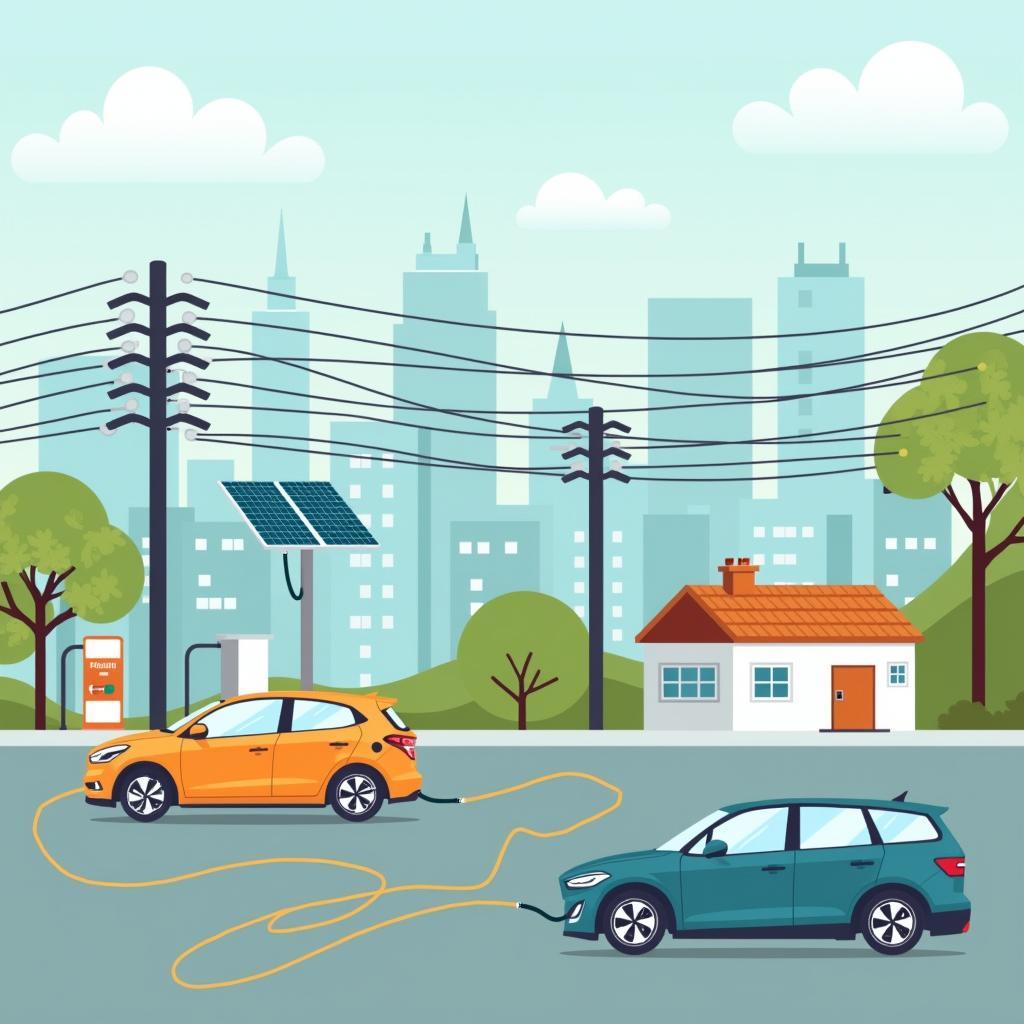 Hệ thống tích hợp phương tiện điện và lưới điện thông minh với công nghệ V2G
Kết bài
Chủ đề “How Renewable Energy Is Transforming Power Grids” không chỉ xuất hiện thường xuyên trong IELTS Reading mà còn phản ánh một trong những xu hướng công nghệ quan trọng nhất của thế kỷ 21. Qua ba passages với độ khó tăng dần, bạn đã được tiếp cận với đầy đủ các khía cạnh của sự chuyển đổi lưới điện – từ các khái niệm cơ bản về năng lượng tái tạo và lưới điện phân tán, đến các công nghệ tiên tiến như virtual power plants và inverter-based resources, cho đến những thách thức phức tạp về kinh tế, chính trị và công bằng xã hội.
Bộ đề thi này đã cung cấp 40 câu hỏi đa dạng, bao gồm tất cả các dạng câu hỏi phổ biến trong IELTS Reading: Multiple Choice, True/False/Not Given, Yes/No/Not Given, Matching Headings, Matching Features, Summary Completion và Short-answer Questions. Mỗi câu hỏi được thiết kế để kiểm tra các kỹ năng khác nhau – từ khả năng tìm thông tin cụ thể (scanning), hiểu ý chính (skimming), đến kỹ năng suy luận và phân tích thông tin phức tạp.
Đáp án chi tiết kèm giải thích đã chỉ ra chính xác vị trí thông tin trong từng passage, cách paraphrase được sử dụng và lý do tại sao các đáp án khác không chính xác. Điều này giúp bạn không chỉ biết đáp án đúng là gì mà còn hiểu được phương pháp làm bài hiệu quả. Hơn 40 từ vựng quan trọng được phân tích chi tiết sẽ giúp bạn mở rộng vốn từ học thuật, đặc biệt trong lĩnh vực năng lượng và công nghệ – một chủ đề “hot” trong các kỳ thi IELTS gần đây.
Với việc luyện tập thường xuyên các đề thi mẫu như thế này, bạn sẽ dần quen thuộc với cấu trúc đề thi, cải thiện tốc độ đọc và nâng cao khả năng xử lý các bài đọc học thuật phức tạp. Đây chính là chìa khóa để đạt band điểm cao trong IELTS Reading – không chỉ là kiến thức ngôn ngữ mà còn là kỹ năng làm bài bài bản và chiến lược quản lý thời gian hiệu quả. Để hiểu rõ hơn về the future of renewable energy in Asia, bạn có thể tham khảo thêm những xu hướng phát triển năng lượng sạch đang diễn ra mạnh mẽ tại khu vực châu Á.
Đối với những ai quan tâm đến how electric vehicles are reshaping transportation systems, nội dung về vehicle-to-grid technology và sector coupling trong Passage 2 và 3 sẽ cung cấp kiến thức nền tảng quan trọng về sự kết nối giữa giao thông điện và hệ thống năng lượng. Một ví dụ chi tiết về the benefits and challenges of electric vehicles là việc xe điện không chỉ giảm phát thải mà còn có thể trở thành nguồn lưu trữ năng lượng di động cho lưới điện. Điều này có điểm tương đồng với what are the challenges of achieving global energy access khi cả hai đều đòi hỏi sự phát triển đồng bộ của cơ sở hạ tầng, công nghệ và chính sách.
Hãy tiếp tục luyện tập đều đặn và phân tích kỹ từng loại câu hỏi. Chúc bạn đạt kết quả cao trong kỳ thi IELTS sắp tới!