Chủ đề về mức lương tối thiểu toàn cầu (universal minimum wage) là một trong những đề tài quan trọng và thường xuyên xuất hiện trong phần IELTS Writing Task 2, đặc biệt trong các câu hỏi thuộc dạng Discussion, Opinion hoặc Advantages and Disadvantages. Với sự gia tăng của toàn cầu hóa và những bất bình đẳng kinh tế giữa các quốc gia, vấn đề này đã và đang thu hút sự quan tâm của nhiều tổ chức quốc tế cũng như các nhà hoạch định chính sách.
Trong bài viết này, bạn sẽ được trang bị đầy đủ kiến thức để chinh phục dạng đề này, bao gồm:
- 3 bài mẫu hoàn chỉnh với các mức điểm Band 8-9, Band 6.5-7 và Band 5-6
- Phân tích chi tiết band điểm theo 4 tiêu chí chấm của IELTS
- Từ vựng chuyên ngành và collocations quan trọng
- Cấu trúc câu nâng cao giúp tăng điểm Writing
- Những lỗi sai thường gặp của học viên Việt Nam và cách khắc phục
Các đề thi thực tế đã xuất hiện liên quan đến chủ đề này bao gồm:
- “Some people believe that there should be a universal minimum wage for all workers globally. To what extent do you agree or disagree?” (British Council, 2022)
- “Discuss the advantages and disadvantages of implementing a global minimum wage” (IDP, 2023)
Đề Writing Part 2 Thực Hành
Some people believe that governments around the world should work together to establish a universal minimum wage that applies to all countries. Others argue that each country should set its own minimum wage based on its economic situation. Discuss both views and give your own opinion.
Dịch đề: Một số người tin rằng các chính phủ trên toàn thế giới nên hợp tác để thiết lập một mức lương tối thiểu toàn cầu áp dụng cho tất cả các quốc gia. Những người khác lại cho rằng mỗi quốc gia nên tự đặt ra mức lương tối thiểu riêng dựa trên tình hình kinh tế của mình. Thảo luận cả hai quan điểm và đưa ra ý kiến của bạn.
Phân tích đề bài:
Đây là dạng câu hỏi Discussion + Opinion, yêu cầu thí sinh:
- Thảo luận cả hai quan điểm (Universal minimum wage vs Country-specific minimum wage)
- Đưa ra ý kiến cá nhân rõ ràng
Những điểm cần lưu ý:
- Universal minimum wage có nghĩa là một mức lương tối thiểu thống nhất áp dụng cho tất cả các quốc gia
- Economic situation bao gồm GDP, chi phí sinh hoạt, tỷ lệ lạm phát, và các yếu tố kinh tế khác
- Phải cân bằng giữa hai phần thảo luận, không được thiên vị quá nhiều về một bên
- Quan điểm cá nhân nên được đưa ra rõ ràng trong phần giới thiệu và kết luận
Những lỗi thường gặp của học viên Việt Nam:
- Chỉ tập trung vào một quan điểm mà bỏ qua quan điểm còn lại
- Không đưa ra quan điểm cá nhân rõ ràng
- Thiếu ví dụ cụ thể để minh họa cho các luận điểm
- Sử dụng từ vựng quá đơn giản hoặc lặp lại nhiều lần
Cách tiếp cận chiến lược:
- Introduction: Paraphrase đề bài + Thesis statement (nêu rõ cả hai quan điểm sẽ được thảo luận và quan điểm cá nhân)
- Body 1: Lập luận ủng hộ universal minimum wage (2-3 luận điểm với ví dụ)
- Body 2: Lập luận ủng hộ country-specific minimum wage (2-3 luận điểm với ví dụ)
- Conclusion: Tóm tắt hai quan điểm + Nhấn mạnh lại quan điểm cá nhân
 Học viên đang luyện tập IELTS Writing Task 2 chủ đề lương tối thiểu toàn cầu với giảng viên
Bài Mẫu Band 8-9
Bài viết ở mức Band 8-9 thể hiện sự tinh tế trong việc phát triển ý tưởng, sử dụng từ vựng đa dạng và chính xác, cấu trúc câu phức tạp nhưng tự nhiên, đồng thời trả lời đầy đủ và sâu sắc tất cả các yêu cầu của đề bài.
The debate over whether a universal minimum wage should be implemented globally or whether nations should retain autonomy in setting their own wage floors has intensified in recent years. While proponents of a standardized global wage argue for enhanced worker protection and reduced exploitation, I believe that allowing individual countries to establish their own minimum wages based on their unique economic circumstances represents a more pragmatic and sustainable approach.
Advocates of a universal minimum wage contend that such a system would create a more equitable global economy. By establishing a wage floor applicable across all nations, multinational corporations would be prevented from engaging in “wage arbitrage” – the practice of relocating operations to countries with lower labor costs purely to maximize profits. This standardization could theoretically reduce the exploitation of workers in developing nations, where inadequate labor protections often result in poverty-level wages despite arduous working conditions. Furthermore, a global minimum wage might foster greater economic stability by narrowing the income gap between wealthy and impoverished nations, potentially stimulating consumer demand in currently underserved markets.
However, the practical implementation of such a policy would encounter formidable obstacles that underscore why country-specific approaches remain superior. Economic disparities between nations are so pronounced that a wage considered minimal in developed countries would be prohibitively expensive in developing economies. For instance, while a $15 per hour minimum wage might be reasonable in the United States or Germany, this same rate would bankrupt countless businesses in Vietnam or Bangladesh, where the cost of living is substantially lower. Additionally, each nation possesses distinct economic structures, labor market dynamics, and fiscal capacities that necessitate tailored solutions. A rigid universal standard would inevitably disadvantage certain economies, potentially triggering unemployment spikes, business closures, and economic instability. Countries must retain the flexibility to calibrate their minimum wages in accordance with factors such as inflation rates, productivity levels, and sector-specific requirements.
In conclusion, while the aspiration of protecting workers globally through a universal minimum wage is laudable, the heterogeneity of national economies renders such an approach impractical. Allowing countries to establish minimum wages that reflect their unique economic realities represents a more viable path toward improving worker welfare without jeopardizing economic stability. Rather than imposing a one-size-fits-all solution, international cooperation should focus on establishing minimum standards and guidelines that nations can adapt to their specific contexts.
(Word count: 398)
Phân Tích Band Điểm
| Tiêu chí | Band | Nhận xét |
|---|---|---|
| Task Response (Hoàn thành yêu cầu) | 9 | Bài viết trả lời đầy đủ và sâu sắc cả hai phần của đề bài. Quan điểm cá nhân rõ ràng ngay từ phần mở bài và được nhấn mạnh xuyên suốt. Các ý tưởng được phát triển logic với ví dụ cụ thể (như so sánh mức lương $15/giờ giữa Mỹ và Việt Nam). |
| Coherence & Cohesion (Mạch lạc & Liên kết) | 9 | Cấu trúc bài rất chặt chẽ với sự phân đoạn logic. Sử dụng đa dạng linking devices một cách tự nhiên (While, However, Furthermore, Additionally, In conclusion). Mỗi đoạn có topic sentence rõ ràng và phát triển ý mạch lạc. Có sự liên kết chặt chẽ giữa các câu và giữa các đoạn. |
| Lexical Resource (Từ vựng) | 9 | Từ vựng phong phú, chính xác và tinh tế (wage arbitrage, formidable obstacles, heterogeneity, calibrate). Sử dụng collocations học thuật tự nhiên (enhanced worker protection, wage floor, poverty-level wages). Paraphrasing hiệu quả (minimum wage → wage floor). Không có lỗi từ vựng. |
| Grammatical Range & Accuracy (Ngữ pháp) | 9 | Sử dụng đa dạng cấu trúc câu phức với độ chính xác cao: câu phức với nhiều mệnh đề phụ thuộc, cấu trúc bị động, mệnh đề quan hệ, danh động từ. Không có lỗi ngữ pháp đáng kể. Câu dài nhưng vẫn rõ ràng và dễ hiểu. |
Các Yếu Tố Giúp Bài Này Được Chấm Điểm Cao
-
Thesis statement mạnh mẽ và rõ ràng: Ngay từ đoạn mở bài, tác giả đã nêu rõ quan điểm cá nhân bằng cách sử dụng cấu trúc “While…I believe that…” thể hiện sự cân nhắc kỹ lưỡng.
-
Từ vựng chuyên ngành chính xác: Sử dụng thuật ngữ kinh tế học như “wage arbitrage”, “wage floor”, “labor market dynamics” cho thấy kiến thức sâu rộng về chủ đề.
-
Ví dụ cụ thể và thuyết phục: So sánh mức lương $15/giờ giữa các nước phát triển và đang phát triển như Việt Nam, Bangladesh giúp minh họa rõ ràng cho luận điểm.
-
Cấu trúc câu đa dạng: Kết hợp nhiều loại câu: câu đơn, câu ghép, câu phức, câu có cụm phân từ, tạo nhịp điệu đọc tự nhiên và học thuật.
-
Phát triển ý sâu sắc: Không chỉ nêu ý kiến mà còn giải thích lý do, hậu quả và đưa ra giải pháp thay thế (international cooperation với minimum standards).
-
Coherence xuất sắc: Mỗi đoạn có một ý chính rõ ràng, các câu liên kết mượt mà, tạo luồng lập luận logic từ đầu đến cuối.
-
Academic tone nhất quán: Giữ văn phong học thuật, khách quan suốt bài viết, tránh ngôn ngữ quá cá nhân hoặc cảm tính.
Bài Mẫu Band 6.5-7
Bài viết ở mức Band 6.5-7 trả lời đầy đủ yêu cầu đề bài với các ý tưởng rõ ràng, từ vựng phù hợp và cấu trúc câu khá đa dạng. Tuy nhiên, vẫn còn một số điểm chưa tinh tế bằng bài Band 8-9.
In today’s globalized world, the question of whether there should be a universal minimum wage for all countries or if each nation should decide its own minimum wage has become increasingly important. While both approaches have their merits, I believe that countries should be allowed to set their own minimum wages according to their economic conditions.
On the one hand, supporters of a global minimum wage argue that it would protect workers around the world from exploitation. If all countries had the same minimum wage, companies could not move their factories to countries where labor is cheaper just to save money. This practice, known as outsourcing, often leads to workers in developing countries being paid very low wages while working in poor conditions. Additionally, a universal minimum wage could help reduce income inequality between rich and poor nations, which might improve the standard of living for millions of people. For example, garment workers in Bangladesh currently earn less than $100 per month, which is far below what workers in developed countries earn for similar work.
On the other hand, I believe that allowing each country to set its own minimum wage is more practical and beneficial. The main reason is that different countries have very different economic situations and living costs. A minimum wage that works well in a wealthy country like Switzerland might be too high for a developing country like Vietnam, where the cost of living is much lower. For instance, the average rent for an apartment in Hanoi is significantly cheaper than in London, so workers in Vietnam do not need the same minimum wage as workers in the UK to maintain a decent lifestyle. Furthermore, if developing countries were forced to pay the same minimum wage as developed countries, many businesses would fail because they cannot afford such high labor costs. This would lead to unemployment and economic problems rather than helping workers.
In conclusion, although a universal minimum wage seems like a fair solution to protect workers globally, I believe it is not realistic due to the vast differences in economic development between countries. Each nation should have the freedom to establish minimum wages that suit their own economic circumstances while ensuring adequate protection for their workers.
(Word count: 388)
Phân Tích Band Điểm
| Tiêu chí | Band | Nhận xét |
|---|---|---|
| Task Response (Hoàn thành yêu cầu) | 7 | Trả lời đầy đủ cả hai phần của đề bài với quan điểm cá nhân rõ ràng. Các ý tưởng được phát triển khá tốt với ví dụ cụ thể (Bangladesh, Vietnam). Tuy nhiên, độ sâu phân tích chưa bằng bài Band 8-9, một số luận điểm còn khá chung chung. |
| Coherence & Cohesion (Mạch lạc & Liên kết) | 7 | Cấu trúc bài rõ ràng với phân đoạn logic. Sử dụng linking words phù hợp (On the one hand, On the other hand, Additionally, Furthermore). Tuy nhiên, một số chuyển tiếp giữa các ý còn hơi cứng nhắc và có thể tự nhiên hơn. |
| Lexical Resource (Từ vựng) | 6.5 | Từ vựng phù hợp với chủ đề (exploitation, outsourcing, living costs, economic development) nhưng chưa đa dạng và tinh tế như bài Band 8-9. Có một số lặp từ (minimum wage xuất hiện nhiều lần). Paraphrasing còn hạn chế. |
| Grammatical Range & Accuracy (Ngữ pháp) | 7 | Sử dụng nhiều cấu trúc câu phức hợp lý (if-clauses, relative clauses, passive voice). Có một số câu phức tạp. Lỗi ngữ pháp rất ít, không ảnh hưởng đến ý nghĩa. Tuy nhiên, độ đa dạng cấu trúc chưa bằng bài Band 8-9. |
So Sánh Với Bài Band 8-9
1. Task Response:
- Band 8-9: “By establishing a wage floor applicable across all nations, multinational corporations would be prevented from engaging in ‘wage arbitrage'”
- Band 6.5-7: “If all countries had the same minimum wage, companies could not move their factories to countries where labor is cheaper”
- Nhận xét: Cả hai đều truyền đạt ý tương tự nhưng Band 8-9 sử dụng thuật ngữ chuyên ngành chính xác hơn (“wage arbitrage” thay vì giải thích dài dòng).
2. Lexical Resource:
- Band 8-9: “formidable obstacles”, “heterogeneity of national economies”, “calibrate their minimum wages”
- Band 6.5-7: “very different economic situations”, “set their own minimum wage”, “different countries have…”
- Nhận xét: Band 8-9 sử dụng từ vựng học thuật cao cấp và chính xác hơn, trong khi Band 6.5-7 dùng từ ngữ đơn giản và lặp lại nhiều.
3. Grammatical Range:
- Band 8-9: “Economic disparities between nations are so pronounced that a wage considered minimal in developed countries would be prohibitively expensive in developing economies”
- Band 6.5-7: “A minimum wage that works well in a wealthy country like Switzerland might be too high for a developing country like Vietnam”
- Nhận xét: Cả hai câu đều đúng ngữ pháp nhưng Band 8-9 sử dụng cấu trúc “so…that”, từ vựng chính xác (“prohibitively expensive”) và diễn đạt phức tạp hơn.
4. Coherence:
- Band 8-9: Sử dụng “However, the practical implementation…” để chuyển sang đoạn phản biện một cách mượt mà và tự nhiên
- Band 6.5-7: Sử dụng “On the other hand…” – đúng nhưng đơn giản và ít học thuật hơn
5. Development of Ideas:
- Band 8-9: Đưa ra nhiều góc độ phân tích (economic disparities, labor market dynamics, fiscal capacities) và giải pháp thay thế
- Band 6.5-7: Tập trung chủ yếu vào chi phí sinh hoạt và khả năng chi trả, ít góc độ phân tích hơn
Bài Mẫu Band 5-6
Bài viết ở mức Band 5-6 trả lời được yêu cầu cơ bản của đề bài nhưng còn nhiều hạn chế về phát triển ý tưởng, từ vựng, và ngữ pháp.
Nowadays, many people think that all countries in the world should have same minimum wage. However, other people believe each country should decide their own minimum wage. In this essay, I will discuss both of these ideas and give my opinion.
First, having a universal minimum wage can be good for workers. If all countries use same minimum wage, the workers in poor countries will get more money. This is fair because everyone should earn enough money to live. For example, in some countries like India or Vietnam, workers work very hard but they get very little money. If there is global minimum wage, these workers will get better salary and their life will improve. Also, big companies cannot go to poor countries to pay less money to workers. This will stop exploitation of workers.
However, I think each country should make their own minimum wage. The reason is because every country is different. Rich countries like America or England have high cost of living, so workers need more money. But poor countries have low cost of living, so workers don’t need so much money. If we make all countries pay same minimum wage, it will be problem for poor countries. Many companies in poor countries cannot pay high salary, so they will close and many people will lose their jobs. This will make economy worse. Another reason is that each country have different economy situation. Some countries are developing and need time to grow. If they must pay high minimum wage now, it will be too difficult.
In conclusion, I think universal minimum wage is not good idea because countries are too different. Each country should decide minimum wage based on their economy and living cost. This way is better for everyone.
(Word count: 297)
Phân Tích Band Điểm
| Tiêu chí | Band | Nhận xét |
|---|---|---|
| Task Response (Hoàn thành yêu cầu) | 6 | Trả lời được cả hai phần của đề bài và có quan điểm cá nhân. Tuy nhiên, các ý tưởng được phát triển chưa đầy đủ, thiếu chi tiết và ví dụ cụ thể. Một số luận điểm còn mơ hồ và thiếu sự phân tích sâu. |
| Coherence & Cohesion (Mạch lạc & Liên kết) | 5.5 | Có cấu trúc cơ bản với phần mở bài, thân bài và kết luận. Sử dụng một số linking words đơn giản (First, However, Also, Another reason). Tuy nhiên, sự liên kết giữa các câu còn hạn chế, một số ý chuyển tiếp không mượt mà. |
| Lexical Resource (Từ vựng) | 5.5 | Từ vựng cơ bản, đủ để truyền đạt ý nhưng lặp lại nhiều (minimum wage, poor countries, workers). Có một số lỗi word choice và collocation không tự nhiên (make their own minimum wage, economy situation). Paraphrasing rất hạn chế. |
| Grammatical Range & Accuracy (Ngữ pháp) | 5.5 | Sử dụng chủ yếu câu đơn và một số câu phức đơn giản. Có nhiều lỗi ngữ pháp: thiếu mạo từ (same minimum wage → the same minimum wage), lỗi chia động từ (each country have → has), lỗi giới từ, cấu trúc câu đơn giản. Tuy nhiên, các lỗi này không ảnh hưởng nghiêm trọng đến khả năng hiểu. |
Những Lỗi Sai Của Bài – Phân Tích & Giải Thích
| Lỗi sai | Loại lỗi | Sửa lại | Giải thích |
|---|---|---|---|
| all countries should have same minimum wage | Thiếu mạo từ | all countries should have the same minimum wage | Khi nói về một thứ cụ thể mà cả người nói và người nghe đều biết, cần dùng mạo từ “the”. “Same” luôn đi với “the”. |
| each country should decide their own | Lỗi đại từ sở hữu | each country should decide its own | “Each country” là số ít nên phải dùng đại từ sở hữu “its”, không dùng “their”. Đây là lỗi rất phổ biến của học viên Việt Nam. |
| workers work very hard but they get very little money | Lặp từ “very” | workers work very hard but receive very low wages | Tránh lặp “very” trong cùng một câu. Nên dùng từ đồng nghĩa và collocation tự nhiên hơn: “receive low wages” thay vì “get little money”. |
| their life will improve | Lỗi số | their lives will improve | “Their” ám chỉ nhiều công nhân nên “life” phải ở dạng số nhiều “lives”. |
| The reason is because | Lỗi cấu trúc | The reason is that / This is because | “The reason is because” là cấu trúc sai. Đúng là “The reason is that” hoặc chỉ dùng “This is because”. |
| Rich countries like America or England | Lỗi tên riêng | Rich countries like the United States or the United Kingdom | Trong văn viết học thuật, nên dùng tên chính thức. “America” thường ám chỉ cả châu lục, còn “England” chỉ là một phần của UK. |
| many people will lose their jobs | Thiếu mạo từ ở đầu câu | Many people will lose their jobs | Câu này đúng ngữ pháp nhưng trong ngữ cảnh học thuật, có thể cải thiện bằng cách thêm quantifier: “A large number of people” hoặc “Countless individuals”. |
| each country have different economy situation | Lỗi chia động từ + word choice | each country has different economic situations / a different economic situation | “Each + noun” luôn đi với động từ số ít. “Economy situation” không phải collocation tự nhiên, đúng là “economic situation”. |
| This way is better | Tham chiếu không rõ | This approach is better | “This way” hơi thân mật, trong IELTS nên dùng “this approach”, “this method” hoặc “this solution” để học thuật hơn. |
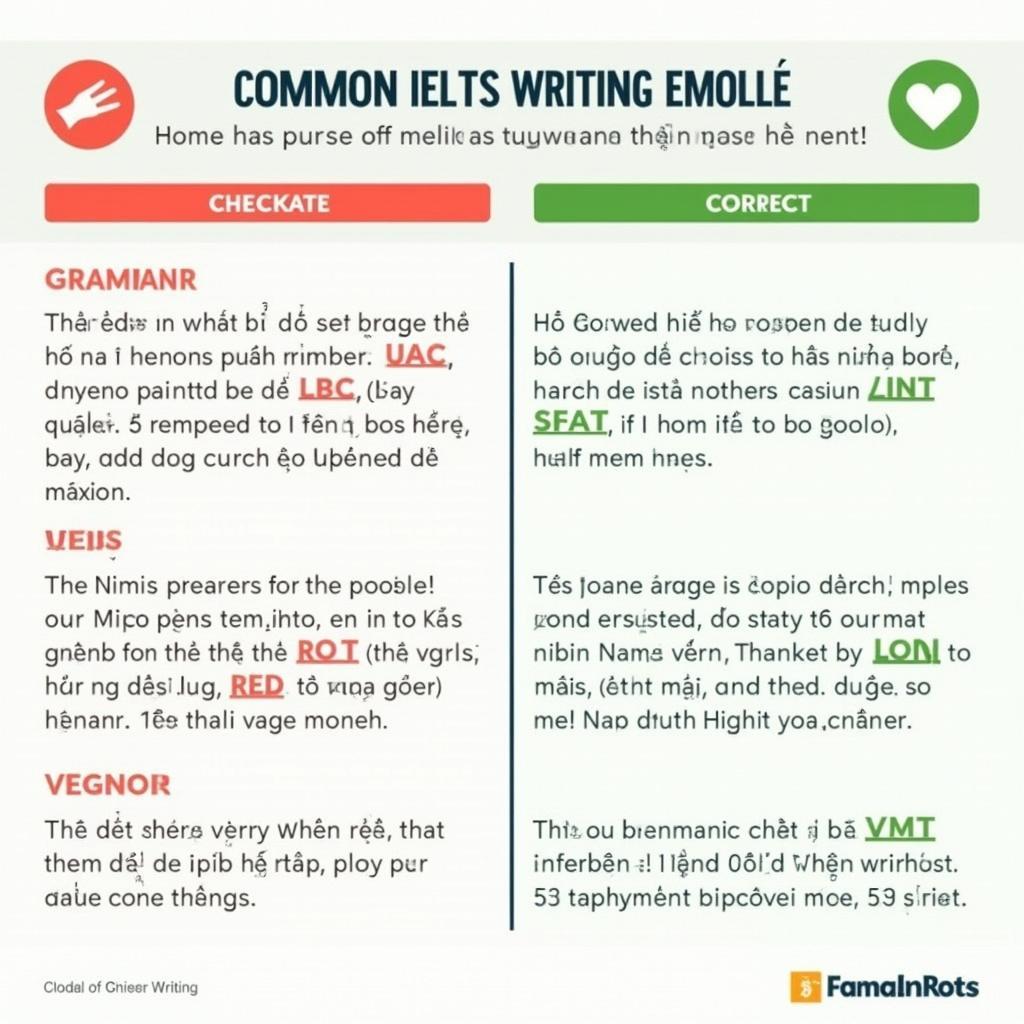 Phân tích chi tiết các lỗi sai thường gặp trong bài viết IELTS về lương tối thiểu
Cách Cải Thiện Từ Band 6 Lên Band 7
1. Mở rộng và phát triển ý tưởng chi tiết hơn:
- Thay vì chỉ nói “workers will get more money”, hãy giải thích cụ thể: “workers would receive wages sufficient to meet their basic needs, including housing, food, and healthcare”
- Thêm ví dụ cụ thể với số liệu: “For instance, garment workers in Bangladesh earn approximately $95 per month, which is below the poverty line”
2. Sử dụng từ vựng chính xác và đa dạng hơn:
- Thay vì lặp lại “minimum wage”, sử dụng từ đồng nghĩa: wage floor, salary threshold, baseline compensation
- Thay “poor countries” bằng: developing nations, emerging economies, less developed countries
- Thay “get money” bằng: receive compensation, earn wages, obtain remuneration
3. Cải thiện cấu trúc câu:
- Kết hợp câu đơn thành câu phức: Thay vì “Rich countries have high cost. Poor countries have low cost”, viết: “While developed nations face high living costs, developing countries typically have lower expenses, necessitating different wage standards”
- Sử dụng mệnh đề quan hệ: “Workers in developing countries, who often lack adequate labor protections, would benefit from…”
4. Tăng cường coherence:
- Sử dụng discourse markers đa dạng hơn: Moreover, Furthermore, Nevertheless, Consequently
- Tham chiếu rõ ràng giữa các đoạn: “While the previous argument highlights…, it is equally important to consider…”
5. Khắc phục lỗi ngữ pháp cơ bản:
- Luyện tập sử dụng mạo từ a/an/the đúng cách
- Chú ý chia động từ với chủ ngữ số ít (each, every, neither)
- Kiểm tra subject-verb agreement cẩn thận trước khi nộp bài
Tương tự như how to address the issue of income inequality, chủ đề về lương tối thiểu toàn cầu cũng đòi hỏi bạn phải có kiến thức rộng về các vấn đề kinh tế xã hội và khả năng phân tích đa chiều.
Từ Vựng Quan Trọng Cần Nhớ
| Từ/Cụm từ | Loại từ | Phiên âm | Nghĩa tiếng Việt | Ví dụ | Collocations |
|---|---|---|---|---|---|
| universal minimum wage | noun phrase | /ˌjuːnɪˈvɜːsl ˈmɪnɪməm weɪdʒ/ | mức lương tối thiểu toàn cầu | A universal minimum wage would ensure basic income standards worldwide. | establish/implement/set a universal minimum wage |
| wage floor | noun | /weɪdʒ flɔːr/ | mức lương tối thiểu (thuật ngữ kinh tế) | The government raised the wage floor to combat poverty. | raise/lower/establish a wage floor |
| wage arbitrage | noun | /weɪdʒ ˈɑːbɪtrɑːʒ/ | chênh lệch tiền lương (để kiếm lợi) | Companies engage in wage arbitrage by relocating to low-cost countries. | engage in/practice/exploit wage arbitrage |
| labor exploitation | noun | /ˈleɪbər ˌeksplɔɪˈteɪʃn/ | bóc lột sức lao động | Strict regulations are needed to prevent labor exploitation. | prevent/combat/address labor exploitation |
| cost of living | noun phrase | /kɒst əv ˈlɪvɪŋ/ | chi phí sinh hoạt | The cost of living varies dramatically between countries. | high/low cost of living, rising/increasing cost of living |
| economic disparity | noun | /ˌiːkəˈnɒmɪk dɪˈspærəti/ | chênh lệch kinh tế | Economic disparities between nations continue to widen. | reduce/address/widen economic disparity |
| purchasing power | noun | /ˈpɜːtʃəsɪŋ ˈpaʊər/ | sức mua | A universal wage ignores differences in purchasing power. | increase/maintain/erode purchasing power |
| formidable obstacle | noun phrase | /fɔːˈmɪdəbl ˈɒbstəkl/ | trở ngại lớn, khó khăn đáng kể | Implementation would face formidable obstacles. | encounter/overcome/present a formidable obstacle |
| calibrate | verb | /ˈkælɪbreɪt/ | điều chỉnh, hiệu chỉnh cho phù hợp | Countries must calibrate wages to their economic conditions. | carefully/precisely calibrate |
| heterogeneity | noun | /ˌhetərədʒəˈniːəti/ | tính không đồng nhất, đa dạng | The heterogeneity of economies makes standardization difficult. | economic/cultural heterogeneity |
| fiscal capacity | noun | /ˈfɪskl kəˈpæsəti/ | năng lực tài chính | Developing nations lack the fiscal capacity for high wages. | limited/adequate/enhance fiscal capacity |
| labor market dynamics | noun phrase | /ˈleɪbər ˈmɑːkɪt daɪˈnæmɪks/ | động lực thị trường lao động | Each country has unique labor market dynamics. | understand/analyze labor market dynamics |
| poverty-level wages | noun phrase | /ˈpɒvəti ˈlevl ˈweɪdʒɪz/ | mức lương nghèo đói | Many workers still receive poverty-level wages. | earn/receive/pay poverty-level wages |
| adequate protection | noun phrase | /ˈædɪkwət prəˈtekʃn/ | sự bảo vệ đầy đủ | Workers deserve adequate protection regardless of location. | provide/ensure/guarantee adequate protection |
| one-size-fits-all | adjective | /wʌn saɪz fɪts ɔːl/ | một cỡ vừa tất cả (không phù hợp với mọi trường hợp) | A one-size-fits-all approach would be counterproductive. | one-size-fits-all solution/approach/policy |
Cấu Trúc Câu Dễ “Ăn Điểm” Cao
1. Cấu trúc “While… I believe that…” (Mệnh đề nhượng bộ)
Công thức: While + [quan điểm đối lập], I believe/argue/contend that + [quan điểm của bạn]
Ví dụ từ bài Band 8-9: While proponents of a standardized global wage argue for enhanced worker protection and reduced exploitation, I believe that allowing individual countries to establish their own minimum wages based on their unique economic circumstances represents a more pragmatic and sustainable approach.
Tại sao cấu trúc này ghi điểm cao: Thể hiện khả năng nhìn nhận vấn đề từ nhiều góc độ trước khi đưa ra quan điểm riêng. Điều này cho thấy tư duy phản biện (critical thinking) – một kỹ năng được đánh giá cao trong IELTS. Cấu trúc này cũng giúp tạo câu phức với nhiều mệnh đề, nâng cao điểm Grammatical Range.
Ví dụ bổ sung:
- While technology brings numerous benefits to education, I believe that traditional teaching methods remain essential for comprehensive learning.
- While some argue that globalization harms local cultures, I contend that it actually promotes cultural exchange and understanding.
- While environmental regulations may increase business costs, I maintain that they are necessary for long-term sustainability.
Lỗi thường gặp: Học viên Việt Nam thường viết “Although… but…” (sai vì dùng hai từ nối cùng lúc). Nhớ rằng: chỉ dùng While/Although HOẶC but, không dùng cả hai.
 Cấu trúc ngữ pháp nâng cao giúp tăng band điểm IELTS Writing Task 2
2. Cấu trúc “So…that” (Kết quả)
Công thức: S + be + so + adjective + that + S + V
Ví dụ từ bài Band 8-9: Economic disparities between nations are so pronounced that a wage considered minimal in developed countries would be prohibitively expensive in developing economies.
Tại sao cấu trúc này ghi điểm cao: Thể hiện mối quan hệ nhân quả rõ ràng giữa hai mệnh đề, cho thấy khả năng phân tích logic. Cấu trúc này cũng giúp tạo câu dài, phức tạp nhưng vẫn rõ ràng, dễ hiểu.
Ví dụ bổ sung:
- The cost difference is so significant that implementing uniform wages would bankrupt many businesses in developing nations.
- Climate change has become so severe that immediate action is required from all governments.
- The education gap between urban and rural areas is so wide that specialized intervention programs are essential.
Lỗi thường gặp: Học viên thường quên “that” hoặc viết “so…because” (sai logic). Cũng cần lưu ý không nhầm với “such…that” (dùng với danh từ).
3. Câu bị động với “would be + past participle” (Giả định)
Công thức: S + would be + past participle + (by agent)
Ví dụ từ bài Band 8-9: By establishing a wage floor applicable across all nations, multinational corporations would be prevented from engaging in “wage arbitrage”.
Tại sao cấu trúc này ghi điểm cao: Câu bị động giúp tập trung vào hành động và kết quả thay vì chủ thể thực hiện, tạo giọng văn học thuật và khách quan hơn. Kết hợp với “would” thể hiện tình huống giả định, phù hợp với dạng đề Discussion.
Ví dụ bổ sung:
- Workers in developing countries would be guaranteed basic living standards under a universal wage system.
- Local businesses would be forced to close if wage requirements exceeded their financial capacity.
- Economic stability would be threatened by the sudden implementation of uniform wages.
Lỗi thường gặp: Học viên Việt Nam thường quên “be” trong cấu trúc bị động (would prevent → would be prevented). Cũng cần chú ý đến việc chọn động từ phù hợp để tạo nghĩa bị động tự nhiên.
4. Mệnh đề quan hệ không xác định (Non-defining relative clause)
Công thức: S, which/who + V + O, V
Ví dụ từ bài Band 8-9: This standardization could theoretically reduce the exploitation of workers in developing nations, where inadequate labor protections often result in poverty-level wages despite arduous working conditions.
Tại sao cấu trúc này ghi điểm cao: Mệnh đề quan hệ không xác định (có dấu phẩy) giúp thêm thông tin bổ sung vào câu một cách tự nhiên, tạo câu dài, phức tạp nhưng vẫn mạch lạc. Điều này thể hiện khả năng kết nối thông tin hiệu quả.
Ví dụ bổ sung:
- Developing countries, which often face budget constraints, may struggle to implement high minimum wages.
- The garment industry, where wages are typically very low, would be significantly impacted by such policies.
- Switzerland, which has one of the highest costs of living globally, requires substantially higher wages than Vietnam.
Lỗi thường gặp: Học viên thường nhầm lẫn giữa mệnh đề quan hệ xác định (không có dấu phẩy) và không xác định (có dấu phẩy). Cũng hay quên dấu phẩy thứ hai sau mệnh đề quan hệ.
5. Cụm phân từ (Participle phrase) ở đầu câu
Công thức: V-ing/V-ed + (object/complement), S + V
Ví dụ từ bài Band 8-9: Allowing countries to establish minimum wages that reflect their unique economic realities represents a more viable path toward improving worker welfare without jeopardizing economic stability.
Tại sao cấu trúc này ghi điểm cao: Cụm phân từ giúp rút gọn câu, tạo sự đa dạng trong cấu trúc và thể hiện trình độ ngữ pháp cao. Nó cũng giúp tập trung vào hành động chính của câu một cách hiệu quả.
Ví dụ bổ sung:
- Considering the vast economic differences, a uniform wage policy seems impractical.
- Taking into account local conditions, each nation should maintain wage-setting autonomy.
- Recognizing these challenges, policymakers must adopt flexible approaches to wage regulation.
Lỗi thường gặp: Chủ ngữ của cụm phân từ và chủ ngữ của mệnh đề chính phải giống nhau. Học viên Việt Nam thường mắc lỗi dangling modifier (cụm phân từ treo): “Considering the differences, a policy seems…” (sai vì “policy” không thể “consider”).
6. Câu chẻ với “It is…that” (Cleft sentence)
Công thức: It is + noun/adjective + that + S + V
Ví dụ từ bài Band 8-9: It is the heterogeneity of national economies that renders such an approach impractical.
Tại sao cấu trúc này ghi điểm cao: Câu chẻ giúp nhấn mạnh một yếu tố cụ thể trong câu, tạo sự tập trung và rõ ràng cho luận điểm. Đây là dấu hiệu của văn viết học thuật cao cấp.
Ví dụ bổ sung:
- It is economic inequality that makes a universal minimum wage so controversial.
- It is precisely these cost differences that necessitate country-specific wage policies.
- It was the failure to consider local contexts that led to unsuccessful policy implementations.
Lỗi thường gặp: Học viên thường quên động từ “is/was” hoặc nhầm lẫn giữa “It is…that” với “It is…which” (sai). Cũng cần chú ý thì của động từ “is/was” phải phù hợp với ngữ cảnh.
Kết Bài
Chủ đề về mức lương tối thiểu toàn cầu là một đề tài phức tạp và đa chiều, thường xuyên xuất hiện trong IELTS Writing Task 2. Để đạt điểm cao với dạng đề này, bạn cần:
Về nội dung: Hiểu rõ cả hai góc nhìn của vấn đề (ủng hộ và phản đối universal minimum wage), phát triển luận điểm với ví dụ cụ thể và số liệu thực tế. Đừng chỉ dừng lại ở việc liệt kê ý kiến mà hãy phân tích sâu về nguyên nhân, hậu quả và đề xuất giải pháp. Bài viết cần thể hiện sự hiểu biết về các khái niệm kinh tế như cost of living, economic disparity, labor market dynamics.
Đối với những ai quan tâm đến các vấn đề tài chính và hoạch định dài hạn, importance of budgeting for retirement cũng là một chủ đề liên quan mà bạn có thể tìm hiểu thêm để mở rộng vốn từ vựng và ý tưởng.
Về từ vựng: Sử dụng từ vựng chuyên ngành chính xác (wage floor, wage arbitrage, fiscal capacity) thay vì từ ngữ đơn giản. Tránh lặp từ bằng cách sử dụng paraphrasing và synonyms. Học cách sử dụng collocations tự nhiên như “enhance worker protection”, “combat exploitation”, “calibrate wages”.
Về ngữ pháp: Đa dạng hóa cấu trúc câu với các dạng câu phức, mệnh đề quan hệ, cụm phân từ, câu bị động, và câu chẻ. Tuy nhiên, đừng cố tình làm câu phức tạp đến mức khó hiểu. Sự rõ ràng và tự nhiên vẫn quan trọng hơn độ phức tạp.
Về coherence: Tổ chức bài viết logic với cấu trúc rõ ràng: Introduction (paraphrase đề + thesis statement), Body paragraphs (mỗi đoạn một ý chính với supporting details), Conclusion (tóm tắt + nhấn mạnh quan điểm). Sử dụng linking devices đa dạng nhưng tự nhiên.
Một khía cạnh quan trọng cần nhớ là chủ đề này có liên hệ chặt chẽ với các vấn đề bất bình đẳng toàn cầu. Để có cái nhìn toàn diện hơn, bạn có thể tham khảo thêm về how to address the issue of rising inequality, nơi phân tích sâu về các giải pháp cho bất bình đẳng kinh tế.
Lời khuyên thực hành: Đừng chỉ đọc các bài mẫu mà hãy tự viết. Hãy bắt đầu với bài Band 6, sau đó cải thiện dần lên Band 7 và 8. So sánh bài viết của bạn với bài mẫu để tìm ra điểm cần cải thiện. Thực hành viết trong 40 phút như điều kiện thi thật để rèn luyện khả năng quản lý thời gian.
Với sự luyện tập đều đặn, việc áp dụng những kiến thức về từ vựng, ngữ pháp và cấu trúc bài đã học, bạn hoàn toàn có thể đạt được band điểm mong muốn trong IELTS Writing Task 2. Hãy nhớ rằng, sự tiến bộ không đến từ việc học thuộc bài mẫu mà từ việc hiểu và vận dụng linh hoạt các kỹ năng viết học thuật. Chúc bạn thành công!