Mở bài
Chủ đề “Describe A Time When You Handled A Misunderstanding” là một trong những đề bài phổ biến trong IELTS Speaking Part 2, yêu cầu thí sinh kể về một tình huống hiểu lầm và cách giải quyết. Đây là dạng câu hỏi kinh nghiệm cá nhân, thường xuất hiện trong các kỳ thi IELTS từ năm 2020 đến nay với tần suất khá cao – khoảng 15-20% các đề thi thực tế.
Chủ đề này quan trọng vì nó đánh giá khả năng kể chuyện, sử dụng thì quá khứ, và thể hiện kỹ năng giao tiếp trong đời sống thực. Examiner đặc biệt chú ý đến cách bạn mô tả tình huống, cảm xúc, và giải pháp xử lý vấn đề.
Trong bài viết này, bạn sẽ học được:
- Câu hỏi thường gặp về misunderstandings trong cả 3 Part
- Bài mẫu chi tiết theo 3 mức band điểm (6-7, 7.5-8, 8.5-9)
- Từ vựng và cụm từ ăn điểm về communication và conflict resolution
- Chiến lược trả lời hiệu quả từ góc nhìn Examiner
- Các lỗi phổ biến của học viên Việt Nam và cách khắc phục
IELTS Speaking Part 1: Introduction and Interview
Tổng Quan Về Part 1
Thời gian: 4-5 phút
Đặc điểm: Câu hỏi ngắn về đời sống hàng ngày, tình huống giao tiếp thường xuyên
Chiến lược: Trả lời tự nhiên, mở rộng ý với 2-3 câu, kết hợp lý do và ví dụ cụ thể
Lỗi thường gặp của học viên Việt Nam:
- Trả lời quá ngắn, chỉ Yes/No hoặc một câu đơn
- Dùng từ vựng quá đơn giản như “good”, “bad”, “important”
- Thiếu ví dụ cụ thể từ kinh nghiệm cá nhân
- Không sử dụng discourse markers để tạo sự tự nhiên
Các Câu Hỏi Thường Gặp
Question 1: Do you think communication is important in daily life?
Question 2: Have you ever had a misunderstanding with someone?
Question 3: How do you usually resolve disagreements with friends?
Question 4: Do you prefer to communicate face-to-face or through messages?
Question 5: What do you do when someone misunderstands what you say?
Question 6: Is it easy for you to explain things clearly?
Question 7: Have you ever had difficulties understanding someone because of language?
Question 8: Do you think listening is as important as speaking?
Phân Tích và Gợi Ý Trả Lời Chi Tiết
Question: Do you think communication is important in daily life?
🎯 Cách tiếp cận:
- Trả lời trực tiếp: Yes, absolutely
- Đưa ra lý do cụ thể
- Thêm ví dụ từ kinh nghiệm cá nhân
📝 Sample Answer – Band 6-7:
“Yes, I think communication is very important. We need to talk to people every day at work and at home. Good communication helps us understand each other better and avoid problems.”
Phân tích:
- Điểm mạnh: Trả lời trực tiếp, có lý do cơ bản, grammar chính xác
- Hạn chế: Từ vựng đơn giản (very important, talk, good), thiếu ví dụ cụ thể, câu ngắn
- Tại sao Band 6-7: Đáp ứng yêu cầu cơ bản nhưng chưa có độ phức tạp về vocabulary và grammar, ý tưởng còn general
📝 Sample Answer – Band 8-9:
“Absolutely, I’d say communication is fundamental to our daily interactions. Whether we’re collaborating with colleagues on a project or simply catching up with family members, effective communication helps us build stronger relationships and prevent unnecessary conflicts. For instance, at my workplace, we have daily stand-up meetings where everyone shares updates and clarifies any confusion, which has really improved our team dynamics.”
Phân tích:
- Điểm mạnh:
- Vocabulary nâng cao: fundamental to, collaborating, catching up with, effective communication, prevent unnecessary conflicts
- Grammar đa dạng: relative clause (where everyone shares), present perfect (has improved)
- Ví dụ cụ thể và relevant: stand-up meetings tại workplace
- Discourse marker tự nhiên: Absolutely, I’d say, For instance
- Tại sao Band 8-9:
- Fluency: Câu trả lời trôi chảy, tự nhiên, không hesitation
- Vocabulary: Collocations chính xác (build relationships, team dynamics, stand-up meetings)
- Grammar: Complex structures được sử dụng một cách tự nhiên
- Pronunciation: Stress đúng trọng tâm ý (fundamental, effective, dynamics)
💡 Key Vocabulary & Expressions:
- fundamental to: cần thiết, quan trọng cơ bản cho
- collaborate with colleagues: hợp tác với đồng nghiệp
- catch up with: trò chuyện, cập nhật tin tức với
- effective communication: giao tiếp hiệu quả
- build stronger relationships: xây dựng mối quan hệ bền chặt hơn
- prevent unnecessary conflicts: tránh những xung đột không cần thiết
- stand-up meetings: họp ngắn hàng ngày
- team dynamics: động lực/tương tác nhóm
Question: Have you ever had a misunderstanding with someone?
🎯 Cách tiếp cận:
- Trả lời Yes/No rõ ràng
- Kể ngắn gọn một tình huống
- Nêu kết quả hoặc bài học
📝 Sample Answer – Band 6-7:
“Yes, I have. Last month, I had a misunderstanding with my roommate about cleaning the apartment. She thought I didn’t clean, but actually I cleaned when she was out. We talked about it and everything was fine after that.”
Phân tích:
- Điểm mạnh: Có tình huống cụ thể, timeline rõ ràng (last month), có resolution
- Hạn chế: Vocabulary cơ bản (had, thought, talked), grammar đơn giản, thiếu chi tiết về cảm xúc và quá trình giải quyết
- Tại sao Band 6-7: Trả lời đầy đủ nhưng mô tả còn superficial, chưa thể hiện khả năng diễn đạt phức tạp
📝 Sample Answer – Band 8-9:
“Yes, definitely. Just recently, I had a minor mix-up with my manager regarding a project deadline. She assumed I was aware that the submission date had been moved forward, but somehow that email slipped through my inbox. When I realized the confusion, I immediately reached out to her, took responsibility for the oversight, and worked extra hours to ensure everything was delivered on time. It taught me to always double-check important communications.”
Phân tích:
- Điểm mạnh:
- Vocabulary tinh tế: minor mix-up (thay vì just “misunderstanding”), slipped through my inbox, oversight, reached out to
- Phrasal verbs tự nhiên: moved forward, slipped through, reached out to, double-check
- Grammar phức tạp: past perfect (had been moved), relative clause (that email)
- Thể hiện accountability: took responsibility
- Có reflection: It taught me…
- Tại sao Band 8-9:
- Fluency: Kể chuyện mạch lạc, có sequence logic
- Vocabulary: Colloquial expressions (mix-up, slipped through) kết hợp professional terms
- Grammar: Sử dụng nhiều thì phối hợp tự nhiên
- Ideas: Thể hiện mature approach to problem-solving
💡 Key Vocabulary & Expressions:
- minor mix-up: sự nhầm lẫn nhỏ
- submission date: ngày nộp, hạn chót
- moved forward: dời lên sớm hơn
- slipped through my inbox: lọt qua hộp thư (không để ý)
- reached out to: liên hệ với
- took responsibility for: chịu trách nhiệm về
- oversight: sự sơ suất, thiếu sót
- double-check: kiểm tra kỹ lưỡng
Question: How do you usually resolve disagreements with friends?
🎯 Cách tiếp cận:
- Nêu phương pháp chung của bạn
- Giải thích tại sao cách đó hiệu quả
- Có thể thêm một ví dụ ngắn
📝 Sample Answer – Band 6-7:
“I usually try to talk calmly with my friends when we have disagreements. I listen to their opinions and explain my thoughts. If we can’t agree, we just respect each other’s views and stay friends.”
Phân tích:
- Điểm mạnh: Có method rõ ràng (talk, listen, explain), thái độ positive
- Hạn chế: Vocabulary repetitive (talk, opinions, views), thiếu depth trong explanation
- Tại sao Band 6-7: Adequate response nhưng lacks sophistication và specific strategies
📝 Sample Answer – Band 8-9:
“Well, I’m a big believer in addressing issues head-on rather than letting them fester. Typically, I’ll suggest we have a heart-to-heart conversation in a relaxed setting, maybe over coffee. I make sure to give them space to air their grievances first, because people are often more receptive to your perspective once they feel heard and validated. Then I’ll share my viewpoint, and we usually find some common ground or at least agree to disagree respectfully. This approach has really helped me maintain healthy relationships over the years.”
Phân tích:
- Điểm mạnh:
- Idiomatic expressions: address issues head-on, let them fester, have a heart-to-heart, find common ground, agree to disagree
- Advanced vocabulary: receptive to, air their grievances, heard and validated, maintain healthy relationships
- Grammar: future simple (I’ll suggest), present perfect (has helped)
- Psychological insight: understanding that people need to feel heard first
- Personal philosophy: I’m a big believer in…
- Tại sao Band 8-9:
- Fluency: Natural flow với discourse markers (Well, Typically, Then)
- Vocabulary: Sophisticated expressions used precisely
- Grammar: Variety of structures including gerunds, conditionals
- Ideas: Shows emotional intelligence và mature conflict resolution skills
💡 Key Vocabulary & Expressions:
- address issues head-on: đối mặt/giải quyết vấn đề trực tiếp
- let them fester: để chúng (vấn đề) ủ rũ, trở nên tệ hơn
- have a heart-to-heart conversation: trò chuyện thẳng thắn, tâm tình
- air their grievances: bày tỏ phàn nàn/bất bình
- receptive to: sẵn sàng tiếp nhận, cởi mở với
- heard and validated: được lắng nghe và thừa nhận (cảm xúc)
- find common ground: tìm điểm chung
- agree to disagree: đồng ý là không đồng ý (chấp nhận bất đồng)
- maintain healthy relationships: duy trì mối quan hệ lành mạnh
 Chiến lược giải quyết hiểu lầm hiệu quả trong IELTS Speaking Part 1 với các mẫu câu trả lời band cao
IELTS Speaking Part 2: Long Turn (Cue Card)
Tổng Quan Về Part 2
Thời gian chuẩn bị: 1 phút
Thời gian nói: 2-3 phút (không bị ngắt)
Đặc điểm: Độc thoại, kể chi tiết về một trải nghiệm cụ thể với misunderstanding
Chiến lược:
- Sử dụng hết 1 phút để ghi chú keywords (KHÔNG viết câu hoàn chỉnh)
- Ghi chú theo bullet points: Who, When, Where, What, Why, How, Feeling
- Nói đủ 2 phút (tối thiểu 1.5 phút) – practice để biết 2 phút là bao nhiêu
- Trả lời đầy đủ tất cả bullet points trên cue card
- Sử dụng mainly quá khứ đơn và quá khứ tiếp diễn khi kể chuyện
- Dành 30-40 giây cuối cho phần “explain” (phần này giúp bạn đạt band cao)
Lỗi thường gặp:
- Không sử dụng hết thời gian chuẩn bị hoặc viết câu dài
- Nói dưới 1.5 phút hoặc dừng đột ngột
- Bỏ sót bullet points, đặc biệt là phần “explain”
- Lạc đề, nói về tình huống không phải là misunderstanding
- Quá tập trung vào describe mà quên phần “how you handled it”
Cue Card
Describe a time when you handled a misunderstanding
You should say:
- When and where it happened
- Who was involved
- What the misunderstanding was about
- How you handled the situation
And explain how you felt about the outcome
Phân Tích Đề Bài
Dạng câu hỏi: Describe an experience/event (kể về một trải nghiệm)
Thì động từ: Chủ yếu quá khứ đơn (happened, was, handled) và quá khứ tiếp diễn (was working, were discussing)
Bullet points phải cover:
- When and where: Timeline và địa điểm cụ thể (tháng/năm, địa điểm cụ thể)
- Who was involved: Người liên quan (bạn bè/đồng nghiệp/gia đình)
- What the misunderstanding was about: Nội dung hiểu lầm (càng cụ thể càng tốt)
- How you handled it: Các bước giải quyết (đây là phần quan trọng nhất – cần chi tiết)
Câu “explain” quan trọng: “How you felt about the outcome” – Đây là phần giúp bạn ghi điểm cao nhất. Đừng chỉ nói “I felt happy”. Hãy giải thích:
- Cảm xúc cụ thể và tại sao
- Bài học rút ra
- Ảnh hưởng đến mối quan hệ
- Reflection về communication skills
📝 Sample Answer – Band 6-7
Thời lượng: Khoảng 1.5-2 phút
“I’d like to talk about a misunderstanding I had with my colleague about six months ago at my office. Her name is Linh, and we work in the same department.
The problem started when I sent her an email asking her to finish a report by Friday. But she thought I meant the Friday of next week, not that week’s Friday. So when Friday came, I was waiting for the report but she hadn’t done it yet. I was quite upset because we needed it for a meeting.
When I asked her about it, she showed me my email and said she understood it differently. I realized my email wasn’t clear enough. So I said sorry for not being clear and explained what I really meant. She said sorry too for not checking with me earlier. Then she worked late that day to finish the report.
In the end, we got the report finished just in time for the meeting. I felt relieved that we solved the problem quickly. It also made me realize that I need to be more clear when I communicate with others, especially in emails. Now I always double-check my messages before sending them. Our relationship is still good, and we sometimes joke about that situation.”
Phân Tích Band Điểm
| Tiêu chí | Band | Nhận xét |
|---|---|---|
| Fluency & Coherence | 6-7 | Có sequencing rõ ràng với timeline, sử dụng linking words cơ bản (when, so, then, in the end). Có một vài hesitation nhẹ nhưng không ảnh hưởng nhiều đến message. |
| Lexical Resource | 6-7 | Vocabulary adequate với topic: colleague, department, upset, realized, relieved. Có một số collocations như “work late”, “double-check”. Chưa có idiomatic expressions. |
| Grammatical Range & Accuracy | 6-7 | Có variety: quá khứ đơn, quá khứ tiếp diễn (was waiting), reported speech (she said). Complex sentences xuất hiện nhưng chưa nhiều. Có một số lỗi nhỏ nhưng không ảnh hưởng comprehension. |
| Pronunciation | 6-7 | Rõ ràng, dễ hiểu với appropriate stress. Có thể có một số Vietnamese accent features nhưng không gây khó hiểu. |
Điểm mạnh:
- ✅ Trả lời đủ tất cả bullet points
- ✅ Có timeline và context rõ ràng
- ✅ Kể được sequence of events
- ✅ Có reflection ở phần cuối
Hạn chế:
- ⚠️ Vocabulary còn basic (upset, good, problem)
- ⚠️ Thiếu emotional depth trong描述 feelings
- ⚠️ Phần giải quyết (handle) còn đơn giản, thiếu steps cụ thể
- ⚠️ Chưa có advanced grammar structures (conditionals, relative clauses phức tạp)
📝 Sample Answer – Band 7.5-8
Thời lượng: Khoảng 2-2.5 phút
“I’d like to share an experience from about eight months ago when I encountered a significant misunderstanding with one of my university professors, which initially caused quite a bit of stress but ultimately turned out to be a valuable learning experience.
It happened during my final semester when I was working on my thesis. Professor Nam, who was my supervisor, had asked me to submit a draft of my literature review by the end of the month. However, what I didn’t realize was that he expected a comprehensive, fully-referenced version, while I had submitted what I considered a preliminary outline with just the main points and tentative references.
When we met for our supervision session, I could immediately sense his disappointment. He expressed his concern that I wasn’t taking the project seriously enough, which honestly caught me off guard because I’d actually spent considerable time on what I’d submitted. That’s when the misunderstanding became apparent.
Rather than becoming defensive, I took a step back and asked him to clarify his expectations in detail. He explained that he’d mentioned the format requirements in an earlier email, which I had apparently misinterpreted. I acknowledged my mistake, showed him my notes and the work in progress, and explained my thought process. Once he saw that I’d actually done substantial research, his attitude shifted.
We worked out a solution together. He gave me an extra week to revise and expand the draft, and I made sure to send him progress updates every few days. I also started attending his office hours regularly to ensure we were on the same page.
Looking back, I actually feel quite grateful for that experience. Yes, it was stressful at the time, and I initially felt quite embarrassed and frustrated. But it taught me several crucial lessons about academic communication. Now I always seek clarification when instructions seem even slightly ambiguous, and I’ve learned to confirm my understanding by summarizing what I think is expected. This proactive approach has prevented similar misunderstandings in my subsequent projects. Most importantly, the experience strengthened my relationship with Professor Nam because he saw that I was willing to take responsibility and adapt.”
Phân Tích Band Điểm
| Tiêu chí | Band | Nhận xét |
|---|---|---|
| Fluency & Coherence | 7.5-8 | Speaks fluently với minimal hesitation. Sử dụng discourse markers tốt (However, Rather than, Looking back). Cohesion tốt với pronoun reference và lexical chains. |
| Lexical Resource | 7.5-8 | Wide range với collocations chính xác: encountered a misunderstanding, caught me off guard, took a step back, on the same page. Có một số less common vocabulary: tentative, preliminary, ambiguous, proactive. |
| Grammatical Range & Accuracy | 7.5-8 | Variety of complex structures: relative clauses (which initially caused), past perfect (had asked, had mentioned), conditionals implied. Majority error-free. |
| Pronunciation | 7.5-8 | Clear với good control of intonation và sentence stress. Features of native-like pronunciation trong phrases. |
So Sánh Với Band 6-7
| Khía cạnh | Band 6-7 | Band 7.5-8 |
|---|---|---|
| Vocabulary | “upset”, “problem”, “said sorry” | “caught me off guard”, “expressed his concern”, “acknowledged my mistake” |
| Grammar | “She thought I meant…” (simple reported speech) | “what I didn’t realize was that…” (complex nominal clause) |
| Ideas | Focus on what happened | Focus on process + reflection + lessons learned |
| Detail | Basic sequence | Rich details about feelings, thought process, và solution steps |
📝 Sample Answer – Band 8.5-9
Thời lượng: 2.5-3 phút đầy đủ
“I’d like to recount a particularly memorable incident that occurred roughly a year ago, involving what I initially perceived as a major professional setback but which ultimately proved to be one of the most instructive experiences of my early career.
The situation unfolded at my previous company where I was working as a junior marketing coordinator. I’d been tasked with liaising with an international client based in Singapore regarding a product launch campaign. The crux of the misunderstanding revolved around the campaign’s budget allocation. During a virtual meeting, the client had mentioned they wanted to “focus resources” on digital advertising, which I interpreted as them requesting we reallocate funds from traditional media to digital channels. Acting on this assumption, I went ahead and restructured the entire budget proposal, diverting about 60% of the traditional media budget to digital platforms.
You can imagine my dismay when, during the presentation of my revised proposal, the client seemed utterly confused and somewhat frustrated. It turned out that by “focus resources,” they’d simply meant they wanted to ensure we were being strategic with the digital spend, not that they wanted to dramatically shift the budget distribution. What made matters worse was that I’d already communicated these changes to our media partners, putting several bookings on hold.
Now, here’s where I had to think on my feet. My initial instinct was to feel mortified and perhaps shift blame to unclear communication on their end, but I caught myself and instead chose to take ownership. I apologized for the confusion, but more importantly, I took immediate action to understand their actual intent. I asked them to walk me through their vision for the campaign in detail, taking meticulous notes and clarifying every point where I felt there might be room for ambiguity.
What really salvaged the situation was my transparency. I immediately looped in my manager, explained what had happened, and presented a clear action plan to rectify the error. We arranged a follow-up meeting within 48 hours, where I presented three different budget scenarios, each with detailed rationales and projected outcomes. I also implemented a new practice of sending summary emails after every client meeting, explicitly confirming decisions and action items.
The resolution actually exceeded my expectations. Not only did the client appreciate my proactive approach to fixing the mistake, but they also commended my transparency and accountability. My manager, too, was impressed by how I’d turned a potentially damaging situation into an opportunity to improve our processes.
Reflecting on this experience, my feelings have evolved considerably. Initially, I felt acutely embarrassed and worried about damaging my professional reputation. However, as things unfolded positively, I experienced a profound sense of relief mixed with pride in how I’d handled it. More significantly, this incident fundamentally changed my approach to professional communication. I’ve become almost obsessive about seeking clarification, and I now understand that asking questions isn’t a sign of incompetence but rather of diligence and professionalism.
The episode also taught me about the importance of cultural communication nuances. Working with international clients means being acutely aware that phrases and expressions can carry different connotations across cultures. I’ve since made it a point to familiarize myself with communication styles of clients from different regions.
Perhaps most valuably, this experience taught me that mistakes, when handled with integrity and swift action, can actually strengthen professional relationships rather than damage them. The client remains one of our key accounts, and they’ve specifically requested to work with me on subsequent campaigns. It’s a powerful reminder that how we respond to challenges often matters more than the challenges themselves.”
Phân Tích Band Điểm
| Tiêu chí | Band | Nhận xét |
|---|---|---|
| Fluency & Coherence | 8.5-9 | Speaks fluently and coherently với natural pausing. Sophisticated discourse markers (Now here’s where, What really salvaged, More significantly). Perfect logical flow từ situation → action → outcome → reflection. |
| Lexical Resource | 8.5-9 | Sophisticated vocabulary used precisely: crux of the misunderstanding, acting on this assumption, think on my feet, caught myself, room for ambiguity. Idiomatic language natural: take ownership, loop in, walk me through. Collocations impeccable: professional setback, instructive experience, meticulous notes. |
| Grammatical Range & Accuracy | 8.5-9 | Full range of structures: complex nominals (what I initially perceived as), inversion implied (Not only did…), perfect aspects (had mentioned, has evolved), conditionals (when handled with). Consistently accurate. |
| Pronunciation | 8.5-9 | Pronunciation features fully operational với sustained appropriate intonation, word stress, và sentence rhythm. Native-like features trong connected speech. |
Tại Sao Bài Này Xuất Sắc
🎯 Fluency Hoàn Hảo:
- Câu chuyện được kể với pace tự nhiên, không hesitation
- Sử dụng discourse markers tinh vi để guide người nghe: “Now, here’s where…”, “What made matters worse…”, “What really salvaged the situation…”
- Có natural pausing ở những điểm hợp lý để tạo dramatic effect
📚 Vocabulary Tinh Vi:
- “the crux of the misunderstanding” – không chỉ nói “the main problem”, thể hiện preciseness
- “acting on this assumption” – academic phrase cho thấy analytical thinking
- “think on my feet” – idiom tự nhiên, không forced
- “mortified” – thay vì “very embarrassed”, thể hiện emotional range
- “room for ambiguity” – sophisticated expression về communication
📝 Grammar Đa Dạng:
- Complex nominals: “what I initially perceived as a major professional setback”
- Perfect aspects showing timeline: “I’d been tasked with”, “they’d simply meant”
- Gerunds as subjects: “Working with international clients means…”
- Relative clauses embedded naturally: “the client, who had mentioned…”
💡 Ideas Sâu Sắc:
- Không chỉ kể chuyện mà còn analyze tại sao misunderstanding xảy ra (cultural communication nuances)
- Reflection về personal growth: “my feelings have evolved considerably”
- Meta-cognitive awareness: “I caught myself” – thể hiện self-awareness
- Long-term impact: “fundamentally changed my approach”, “remains one of our key accounts”
- Philosophical insight: “how we respond to challenges often matters more than the challenges themselves”
 Xử lý hiểu lầm trong môi trường công việc chuyên nghiệp – Bài mẫu IELTS Speaking Part 2 band cao
Follow-up Questions (Rounding Off Questions)
Examiner có thể hỏi thêm 1-2 câu ngắn sau Part 2:
Question 1: Was it difficult to resolve that misunderstanding?
Band 6-7 Answer:
“Not really. Once we talked about it clearly, we both understood what happened and fixed it quickly.”
Band 8-9 Answer:
“Initially, yes, it was quite challenging because there was an element of professional pride at stake. However, once I shifted my mindset from being defensive to being solution-oriented, things fell into place relatively smoothly. The key was maintaining open dialogue throughout the process.”
Question 2: Did this experience change how you communicate?
Band 6-7 Answer:
“Yes, it did. Now I always try to be clearer when I talk to people and check if they understand me correctly.”
Band 8-9 Answer:
“Absolutely, it was quite transformative actually. I’ve become much more deliberate about seeking confirmation and paraphrasing what I understand to ensure we’re aligned. I’ve also learned to embrace a culture of clarification – viewing questions as signs of engagement rather than confusion. This has significantly reduced ambiguity in my professional interactions.”
IELTS Speaking Part 3: Two-way Discussion
Tổng Quan Về Part 3
Thời gian: 4-5 phút
Đặc điểm: Thảo luận trừu tượng và phân tích sâu về chủ đề communication và misunderstandings ở mức độ xã hội
Yêu cầu:
- Phân tích causes, effects, solutions của vấn đề
- So sánh different perspectives hoặc situations
- Đưa ra quan điểm cá nhân với supporting reasons
- Xem xét vấn đề từ nhiều góc độ (individual, social, cultural)
Chiến lược:
- Mở rộng câu trả lời (4-6 câu, khoảng 30-45 giây)
- Sử dụng discourse markers để structure ideas: Well, Actually, On the one hand…
- Đưa ra examples từ society, trends, không chỉ personal experience
- Thừa nhận complexity: “It depends…”, “There are several factors…”
- Show critical thinking bằng cách present different viewpoints
Lỗi thường gặp của học viên Việt Nam:
- Trả lời quá ngắn (1-2 câu), không elaborate
- Không đưa ra lý lẽ rõ ràng hoặc examples
- Thiếu từ vựng trừu tượng (abstract nouns: communication, misinterpretation)
- Chỉ nói về personal experience thay vì broader context
- Không acknowledge different perspectives
Các Câu Hỏi Thảo Luận Sâu
Theme 1: Communication in Modern Society
Question 1: Why do you think misunderstandings are so common in modern communication?
🎯 Phân tích câu hỏi:
- Dạng: Cause and effect (Why) – yêu cầu analyze reasons
- Key words: misunderstandings, common, modern communication
- Cách tiếp cận:
- Direct answer về main reason
- Elaborate với 2-3 specific causes
- Examples from real life hoặc trends
- Possible conclusion về implication
📝 Sample Answer – Band 6-7:
“I think misunderstandings are common today because we use technology a lot for communication. When we send messages or emails, we can’t see people’s faces or hear their voices, so we might misunderstand their meaning. Also, people are very busy nowadays, so they don’t always read messages carefully. Another reason is that we communicate with people from different cultures more often, and they might understand things differently.”
Phân tích:
- Structure: Có main reason → supporting reasons (technology, busy, cultural differences) → adequate
- Vocabulary: Basic (use technology, busy, understand differently) – thiếu precision
- Tại sao Band 6-7: Đáp ứng câu hỏi với reasons hợp lý nhưng lacks depth và sophisticated language
📝 Câu trả lời mẫu – Band 8-9:
“Well, I’d argue there are several interconnected factors at play here. First and foremost, the prevalence of digital communication has fundamentally changed how we interact. Text-based messaging, while convenient, strips away crucial non-verbal cues like tone, facial expressions, and body language, which actually convey a significant portion of our intended meaning. This absence of contextual information often leads to misinterpretation.
On top of that, we’re living in an era of information overload. People are constantly bombarded with messages across multiple platforms, which means they’re often skimming rather than carefully reading communications. This superficial engagement naturally increases the likelihood of miscommunication.
Another crucial factor is what I’d call cultural and linguistic diversity in our increasingly globalized world. We’re regularly communicating with people from different backgrounds, and what might be straightforward in one culture could be perceived as rude or confusing in another. For instance, directness is valued in Western business communication, while many Asian cultures favor more indirect approaches.
Finally, there’s the pace of modern life itself. People are trying to juggle multiple responsibilities simultaneously, which means they’re often multitasking during conversations – whether that’s checking emails during meetings or texting while talking to someone. This divided attention almost guarantees that important details will be missed or misunderstood.”
Phân tích:
- Structure: Well-organized với clear progression: digital communication → information overload → cultural diversity → modern pace. Uses discourse markers effectively (First and foremost, On top of that, Another crucial factor, Finally)
- Vocabulary: Sophisticated và precise: prevalence, strips away, convey, contextual information, bombardment, superficial engagement, juggle responsibilities
- Grammar: Complex structures: relative clauses (which means, which actually convey), passive constructions (are bombarded, could be perceived)
- Critical Thinking: Shows nuanced understanding với multiple dimensions của issue, acknowledges interconnection (several interconnected factors)
💡 Key Language Features:
- Discourse markers: Well, I’d argue; First and foremost; On top of that; Another crucial factor
- Tentative language: I’d argue, might be, could be perceived – shows academic caution
- Abstract nouns: prevalence, absence, engagement, likelihood, directness, globalized world
- Collocations: interconnected factors, non-verbal cues, information overload, superficial engagement
Question 2: Do you think face-to-face communication is better than online communication?
🎯 Phân tích câu hỏi:
- Dạng: Opinion + Comparison – yêu cầu compare và justify
- Key words: face-to-face, online communication, better
- Cách tiếp cận:
- Acknowledge both có advantages
- Present viewpoint với nuance (depends on context)
- Compare specific aspects
- Give balanced conclusion
📝 Sample Answer – Band 6-7:
“I think both have good points. Face-to-face communication is better because you can see the person and understand them more easily. You can see if they are happy or sad. But online communication is also good because it’s convenient and fast. You can talk to people far away. So I think it depends on the situation. For important things, face-to-face is better, but for simple messages, online is fine.”
Phân tích:
- Structure: Presents both sides → personal opinion → adequate balance
- Vocabulary: Simple (good points, happy or sad, convenient, simple messages)
- Tại sao Band 6-7: Shows comparison ability nhưng lacks sophistication và depth trong analysis
📝 Câu trả lời mẫu – Band 8-9:
“That’s quite a nuanced question because I don’t think it’s an either-or situation. Rather, I believe each mode has distinct advantages depending on the context and purpose of communication.
Face-to-face interaction certainly has irreplaceable qualities. The richness of human connection you get from in-person conversations – the subtle expressions, the spontaneous rapport-building, the ability to pick up on unspoken cues – these elements are crucial for building trust and navigating sensitive discussions. When you’re dealing with complex emotional topics or trying to establish genuine relationships, there’s really no substitute for physical presence.
That being said, online communication has revolutionized how we connect in ways that shouldn’t be dismissed. It’s democratized access to communication, enabling people across continents to collaborate in real-time. For routine updates, quick clarifications, or sharing information, digital channels are not just adequate but often more efficient. They also create a written record, which can be invaluable for accountability.
Where online communication falls short, though, is in its potential for misinterpretation. Sarcasm, humor, and emotional nuances often don’t translate well through text. I’ve noticed that even with video calls, which are a step up from pure text, there’s still something slightly artificial about the interaction – perhaps it’s the delayed feedback or the inability to make true eye contact.
Ultimately, I’d say we need both. The key is being discerning about which mode suits which purpose. For relationship-building, conflict resolution, or important negotiations, face-to-face wins hands down. For efficiency, convenience, and bridging geographical gaps, online communication is unbeatable. The problem arises when we try to use one exclusively or apply the wrong mode to the wrong situation.”
Phân tích:
- Structure: Sophisticated approach – challenges the binary choice → analyzes advantages of both → identifies limitations → nuanced conclusion. Perfect for Band 9 thinking
- Vocabulary: Advanced với precise meaning: nuanced, irreplaceable, rapport-building, democratized, invaluable, discerning, unbeatable
- Grammar: Full range – relative clauses (which can be), gerunds as subjects (building trust), conditionals implied (when we try to use)
- Critical Thinking: Shows balanced view, considers context-dependency, acknowledges complexity with “it depends” approach
💡 Key Language Features:
- Opening stance: “That’s quite a nuanced question” – sophisticated way to begin
- Avoiding absolutes: “Rather, I believe…”, “That being said…”, “Ultimately, I’d say…”
- Academic phrases: “distinct advantages”, “there’s no substitute”, “falls short”, “translate well”
- Idiomatic expressions: “wins hands down”, “a step up from”, “either-or situation”
Theme 2: Cultural and Social Factors
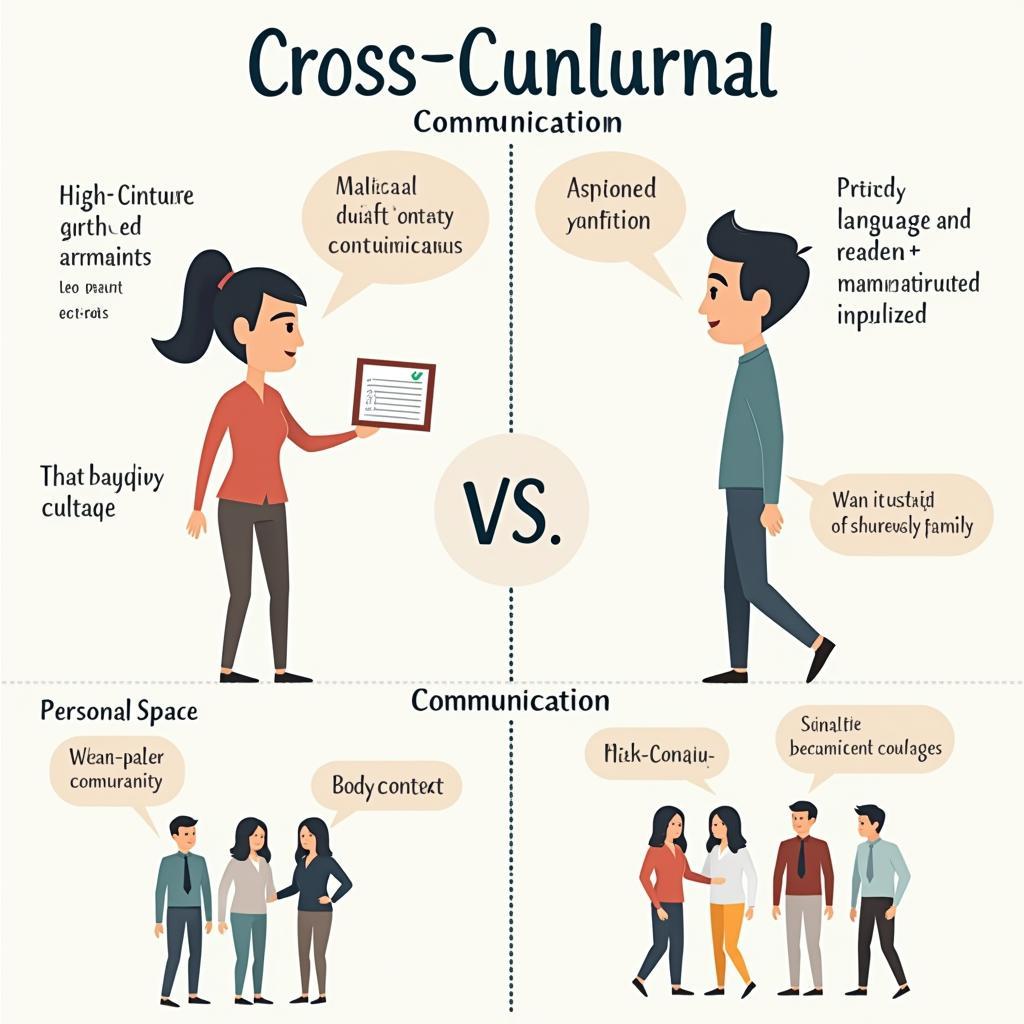
Question 3: How do cultural differences contribute to misunderstandings?
🎯 Phân tích câu hỏi:
- Dạng: How – Process explanation và cause analysis
- Key words: cultural differences, contribute, misunderstandings
- Cách tiếp cận:
- Acknowledge significance của cultural factors
- Explain specific mechanisms (how they contribute)
- Provide concrete examples từ different cultures
- Discuss implications
📝 Sample Answer – Band 6-7:
“Cultural differences can cause misunderstandings in many ways. Different cultures have different customs and ways of speaking. For example, in some cultures, people are very direct when they speak, but in other cultures, people are more indirect and polite. So when people from these cultures talk, they might misunderstand each other. Also, body language is different in different cultures. A gesture that is friendly in one culture might be rude in another culture.”
Phân tích:
- Structure: General statement → example về directness → example về body language – logical progression
- Vocabulary: Basic descriptors (direct, indirect, friendly, rude) – adequate nhưng không sophisticated
- Tại sao Band 6-7: Covers main points với relevant examples nhưng lacks analytical depth
📝 Câu trả lời mẫu – Band 8-9:
“Cultural differences play a profound role in communication breakdowns, often in ways that aren’t immediately obvious to the people involved. The mechanisms are quite fascinating when you examine them closely.
At the most fundamental level, cultures differ dramatically in their communication styles – what linguists call ‘high-context’ versus ‘low-context’ communication. In high-context cultures, like many Asian societies, much of the meaning is embedded in the context, the relationship between speakers, and what’s left unsaid. People rely heavily on implicit understanding and reading between the lines. Conversely, in low-context cultures, predominantly Western ones, communication tends to be explicit and direct, with meaning conveyed primarily through words themselves.
This fundamental disconnect can lead to significant misinterpretations. A Japanese colleague saying “that might be difficult” is actually politely declining, but a German colleague might hear this as “let’s discuss the challenges” and push forward with the proposal. Neither party realizes the cultural encoding behind the words is different.
Beyond verbal communication, there are the paralinguistic and non-verbal dimensions. Concepts like personal space, eye contact norms, and even silence carry vastly different meanings across cultures. In Nordic countries, comfortable silences are part of natural conversation rhythm, while in Mediterranean or Latin American cultures, such pauses might signal awkwardness or disengagement. Americans often interpret direct eye contact as confidence and honesty, whereas in many Asian cultures, sustained eye contact with superiors can be seen as disrespectful or confrontational.
There’s also the dimension of what’s called ‘face’ in intercultural communication – the concept of preserving dignity and avoiding embarrassment. Cultures vary enormously in how they prioritize harmony versus honesty. In collectivist societies, people might withhold criticism or sugarcoat feedback to maintain group cohesion, while in individualist cultures, frank feedback is seen as helpful and necessary. When these cultural expectations collide, misunderstandings are almost inevitable.
What makes this particularly challenging is that these cultural scripts are deeply internalized – people don’t consciously think about them, they just feel when something is “right” or “off.” This unconscious nature means people often attribute communication problems to personal characteristics rather than cultural differences. They might think someone is being rude, when actually they’re just operating from different cultural norms.”
Phân tích:
- Structure: Exceptionally well-organized – starts with theory (high/low context) → provides mechanism → gives specific examples → explores additional dimensions (non-verbal, face) → addresses complexity (unconscious nature). Shows expert-level understanding
- Vocabulary: Highly sophisticated và field-specific: profound role, mechanisms, embedded, implicit understanding, paralinguistic, sustained eye contact, internalized, cultural encoding
- Grammar: Full range expertly deployed – complex nominals, relative clauses, passive structures, gerunds – all used naturally
- Critical Thinking: Shows deep analytical ability with multiple layers of analysis, references linguistic theory, acknowledges unconscious processes
💡 Key Language Features:
- Academic terminology: high-context/low-context, paralinguistic, intercultural communication, cultural encoding
- Discourse organization: “At the most fundamental level”, “Beyond verbal communication”, “There’s also the dimension”, “What makes this particularly challenging”
- Hedging appropriately: “often in ways”, “might hear”, “can be seen as” – shows academic caution
- Sophisticated examples: Specific cultural scenarios (Japanese “that might be difficult”, Nordic silences)
 Sự khác biệt văn hóa trong giao tiếp – IELTS Speaking Part 3 với phân tích chuyên sâu
Question 4: Do you think technology has made communication easier or more difficult?
🎯 Phân tích câu hỏi:
- Dạng: Opinion về impact của technology – requires balanced analysis
- Key words: technology, easier, more difficult – note the paradox
- Cách tiếp cận:
- Acknowledge the paradox (both easier and more difficult)
- Analyze in what ways it’s easier
- Analyze in what ways it’s more difficult
- Nuanced conclusion
📝 Câu trả lời mẫu – Band 8-9:
“This is actually a fascinating paradox because technology has somehow managed to make communication both more accessible and more complicated simultaneously.
On the surface, technology has undeniably lowered barriers to communication. We can now instantly connect with anyone, anywhere, at virtually no cost. This unprecedented access has transformed everything from business operations to personal relationships. Video conferencing allows families separated by oceans to maintain close bonds, and collaborative platforms enable teams across time zones to work together seamlessly.
However, this ease of connection has introduced new layers of complexity. For one, the sheer volume of communication channels – email, text, WhatsApp, Slack, social media – creates decision fatigue about which platform to use for what message. Each channel also carries different expectations about response times and formality levels, which can breed anxiety and misunderstanding.
More subtly, technology has altered the quality of our communication in ways we’re only beginning to understand. The immediacy of messaging creates pressure for instant responses, leaving little time for thoughtful reflection. People often fire off messages in haste, leading to poorly worded or emotionally charged communications they wouldn’t have made in face-to-face settings.
There’s also what I call the ‘illusion of communication.’ We might have exchanged dozens of messages with someone, yet feel disconnected because those interactions lack depth and genuine engagement. The quantity of touchpoints has increased, but arguably the quality of connection has decreased.
Additionally, technology has created new forms of miscommunication unique to digital spaces. Emoji interpretation, read receipt anxiety, the ambiguity of silence when someone doesn’t reply – these are entirely new problems our ancestors never grappled with.
In my view, technology hasn’t inherently made communication easier or harder – it’s amplified both its potential and its pitfalls. What it has done is shift the challenge from access to discernment – the ability to choose the right medium, craft messages thoughtfully, and maintain meaningful connections despite the noise and distractions. Those who master these skills find technology liberating; those who don’t often find themselves overwhelmed and misunderstood.”
Phân tích:
- Structure: Opens with acknowledging paradox → analyzes positive aspects → explores complications → discusses subtle impacts → identifies new problems → provides balanced conclusion with conditions. Exceptional organization
- Vocabulary: Sophisticated với precise distinctions: unprecedented, seamlessly, decision fatigue, fire off, grappled with, discernment, pitfalls
- Grammar: Full mastery – complex conditionals, relative clauses, passive voice, gerunds, perfect aspects – all deployed naturally
- Critical Thinking: Shows exceptional analytical ability – identifies paradox, explores multiple dimensions, coins terms (“illusion of communication”), provides conditional conclusion
Theme 3: Conflict Resolution and Personal Development
Question 5: Why do some people find it difficult to admit when they’re wrong?
🎯 Phân tích câu hỏi:
- Dạng: Why – Psychological/social analysis
- Key words: difficult, admit, wrong – explores human psychology
- Cách tiếp cận:
- Acknowledge complexity của human behavior
- Explore psychological factors
- Consider social/cultural factors
- Discuss implications
📝 Câu trả lời mẫu – Band 8-9:
“This touches on some fundamental aspects of human psychology and social dynamics. At its core, the difficulty of admitting mistakes stems from how deeply intertwined our sense of self is with being right.
From a psychological perspective, admitting we’re wrong triggers what psychologists call ‘cognitive dissonance’ – the uncomfortable tension we feel when our beliefs or actions contradict each other. Our brains are essentially wired to protect our self-image, so acknowledging error feels like a threat to our identity. It’s not just about the specific mistake; it’s about what that mistake implies about us as people. To put it simply, we conflate ‘I made a mistake’ with ‘I am a mistake,’ which is obviously a false equivalence, but it feels real in the moment.
There’s also a social dimension here. Many cultures, particularly those that emphasize individual achievement and competitiveness, create environments where mistakes are seen as weaknesses to be exploited rather than opportunities for growth. In such contexts, admitting error can feel professionally or socially risky. People worry about losing credibility, face, or status. This is particularly pronounced in hierarchical organizations or cultures where authority is strongly correlated with infallibility.
Gender and social conditioning also play a role. Many men, for instance, are socialized from childhood to project confidence and avoid showing vulnerability, which makes admitting mistakes particularly challenging. Similarly, people in positions of authority – managers, parents, teachers – often feel pressure to maintain an image of competence and control.
Interestingly, this difficulty is often self-perpetuating. The longer someone goes without admitting mistakes, the higher the stakes become for each admission. They’ve built a persona of infallibility, and cracking that facade feels increasingly costly.
What’s somewhat ironic is that research consistently shows that people who can admit mistakes are actually perceived as more credible and trustworthy, not less. Paradoxically, the vulnerability of admission strengthens rather than weakens relationships and professional standing. But breaking through that psychological barrier requires both personal maturity and cultural environments that treat mistakes as learning opportunities rather than character flaws.”
Phân tích:
- Structure: Masterful organization – introduces core issue → psychological factors → social factors → specific examples (gender, authority) → discusses self-perpetuating nature → addresses irony/research findings. Shows expert-level synthesis
- Vocabulary: Highly sophisticated và precise: cognitive dissonance, conflate, false equivalence, infallibility, self-perpetuating, facade, paradoxically
- Grammar: Complete mastery – all complex structures used naturally and accurately
- Critical Thinking: Shows exceptional depth – integrates psychology, sociology, research findings, identifies paradoxes, shows systems thinking (self-perpetuating cycles)
Question 6: How can schools teach children better communication skills?
🎯 Phân tích câu hỏi:
- Dạng: Problem-solution – How to improve education
- Key words: schools, teach, communication skills
- Cách tiếp cận:
- Acknowledge importance
- Suggest specific, practical strategies
- Explain rationale behind suggestions
- Consider challenges/limitations
📝 Câu trả lời mẫu – Band 8-9:
“This is actually a critical question for education systems, as communication skills are arguably as fundamental as traditional academic subjects, yet they’re often taught implicitly rather than explicitly.
First and foremost, schools need to move beyond simply teaching communication as a theoretical subject and instead embed it into daily practice. This means creating regular structured opportunities for students to engage in various communication modes – presenting, debating, collaborative problem-solving, and giving and receiving feedback. Rather than just one ‘show and tell’ session a year, imagine if students regularly practiced articulating their thoughts to different audiences.
Specifically, I think schools should implement what I’d call ‘communication labs’ – dedicated sessions where students explicitly learn and practice specific skills. For example, teaching active listening techniques, like paraphrasing and asking clarifying questions. Or having students role-play difficult conversations, such as resolving conflicts or disagreeing respectfully. These shouldn’t be hypothetical scenarios but rooted in situations students actually encounter – peer disagreements, group project tensions, misunderstandings with teachers.
Another crucial element is teaching digital communication literacy. Given how much interaction happens online, students need explicit instruction on things like appropriate tone in emails, interpreting messages without non-verbal cues, and understanding digital etiquette across different platforms. Many miscommunications among young people stem from not understanding these unwritten rules.
I’d also advocate for what’s called ‘error-positive learning environments’. Too often, classrooms punish mistakes, making students afraid to speak up or take risks with communication. Instead, schools should celebrate errors as learning opportunities, creating psychologically safe spaces where students feel comfortable expressing half-formed ideas and admitting confusion. This might mean teaching phrases like ‘Could you explain that differently?‘ or ‘I’m not sure I understand; is it like…?’
Cross-cultural communication should be another focus, especially in increasingly diverse societies. Students need to understand that communication norms vary across cultures – what constitutes appropriate directness, eye contact, silence, and so on. This could be woven into existing subjects like social studies or languages.
Finally, schools need to model good communication themselves. This means teachers demonstrating active listening, admitting when they’re unclear, and showing how they resolve their own professional disagreements. Students absorb these behavioral models more than any explicit lesson.
The challenge, of course, is that this requires significant teacher training and curriculum time in already packed schedules. But I’d argue that strong communication skills actually enhance learning in other subjects – students who can articulate questions, engage in discussions, and collaborate effectively will perform better academically across the board. It’s not zero-sum but rather mutually reinforcing.”
Phán tích:
- Structure: Exceptional organization with specific, actionable suggestions sequenced logically. Each suggestion explained with rationale. Addresses potential objections at the end.
- Vocabulary: Sophisticated educational terminology: embed, articulating thoughts, role-play, error-positive, psychologically safe spaces, mutually reinforcing
- Grammar: Full range deployed naturally throughout
- Critical Thinking: Shows systems thinking, considers practical implementation, addresses challenges, demonstrates understanding of educational psychology
Từ vựng và cụm từ quan trọng
Topic-Specific Vocabulary
| Từ vựng/Cụm từ | Loại từ | Phiên âm | Nghĩa tiếng Việt | Ví dụ | Collocation |
|---|---|---|---|---|---|
| misunderstanding | n | /ˌmɪsʌndəˈstændɪŋ/ | sự hiểu lầm, nhầm lẫn | The whole conflict arose from a simple misunderstanding. | clear up a misunderstanding, avoid misunderstandings, lead to misunderstandings |
| clarify | v | /ˈklærɪfaɪ/ | làm rõ, giải thích | I called him to clarify what he meant in his email. | clarify the situation, clarify expectations, need to clarify |
| miscommunication | n | /ˌmɪskəˌmjuːnɪˈkeɪʃən/ | giao tiếp sai lệch | Most workplace conflicts stem from miscommunication. | avoid miscommunication, result in miscommunication, prevent miscommunication |
| resolve | v | /rɪˈzɒlv/ | giải quyết, hóa giải | We managed to resolve the issue through honest dialogue. | resolve a conflict, resolve differences, resolve the misunderstanding |
| address | v | /əˈdres/ | giải quyết, đề cập đến | It’s important to address problems directly rather than avoid them. | address the issue, address concerns, address the problem head-on |
| assume | v | /əˈsjuːm/ | cho rằng, giả định | I assumed she knew about the meeting, but I was wrong. | assume incorrectly, assume something, naturally assume |
| interpretation | n | /ɪnˌtɜːprɪˈteɪʃən/ | sự diễn giải, cách hiểu | His interpretation of my words was completely different from what I intended. | different interpretation, correct interpretation, open to interpretation |
| rectify | v | /ˈrektɪfaɪ/ | sửa chữa, điều chỉnh | I immediately took steps to rectify my mistake. | rectify the situation, rectify an error, attempt to rectify |
| transparent | adj | /trænsˈpærənt/ | minh bạch, rõ ràng | Being transparent about what went wrong helped rebuild trust. | be transparent, transparent communication, completely transparent |
| accountability | n | /əˌkaʊntəˈbɪləti/ | trách nhiệm giải trình | Taking accountability for mistakes shows maturity. | accept accountability, demonstrate accountability, personal accountability |
| ambiguous | adj | /æmˈbɪɡjuəs/ | mơ hồ, không rõ ràng | The instructions were ambiguous, leading to confusion. | ambiguous message, remain ambiguous, potentially ambiguous |
| diffuse | v | /dɪˈfjuːz/ | xoa dịu, giảm căng thẳng | A sincere apology can help diffuse a tense situation. | diffuse tension, diffuse the situation, help diffuse |
| rapport | n | /ræˈpɔː(r)/ | mối quan hệ tốt, sự thấu hiểu | Building rapport with colleagues prevents many misunderstandings. | build rapport, establish rapport, develop rapport |
| perception | n | /pəˈsepʃən/ | nhận thức, quan niệm | Cultural background influences our perception of communication. | different perception, perception of reality, shape perception |
| candid | adj | /ˈkændɪd/ | thẳng thắn, chân thành | Having a candid conversation cleared up all the confusion. | candid discussion, be candid, candid feedback |
| navigate | v | /ˈnævɪɡeɪt/ | điều hướng, xử lý | Learning to navigate difficult conversations is an important skill. | navigate conflicts, navigate misunderstandings, successfully navigate |
| discord | n | /ˈdɪskɔːd/ | bất hòa, mâu thuẫn | Poor communication often leads to discord within teams. | cause discord, create discord, source of discord |
| mediate | v | /ˈmiːdieɪt/ | hòa giải, làm trung gian | My manager had to mediate between us to resolve the dispute. | mediate a conflict, mediate between parties, help mediate |
Idiomatic Expressions & Advanced Phrases
| Cụm từ | Nghĩa | Ví dụ sử dụng | Band điểm |
|---|---|---|---|
| get one’s wires crossed | hiểu lầm nhau, nhầm lẫn | We got our wires crossed about the meeting time – I thought it was at 2pm, she thought 3pm. | 7.5-9 |
| clear the air | làm rõ vấn đề, xóa bỏ căng thẳng | We had a frank discussion to clear the air after the misunderstanding. | 7.5-8 |
| on the same page | có cùng quan điểm/hiểu biết | Let’s make sure we’re all on the same page before moving forward. | 7.5-8 |
| nip something in the bud | giải quyết sớm trước khi nghiêm trọng | It’s best to nip misunderstandings in the bud before they escalate. | 8-9 |
| read between the lines | hiểu ý ngầm | In high-context cultures, you need to read between the lines to understand true meaning. | 7.5-8 |
| take something the wrong way | hiểu sai ý | I’m sorry if you took my comment the wrong way – I didn’t mean to offend you. | 7-8 |
| get to the bottom of something | tìm hiểu nguyên nhân | We need to get to the bottom of this confusion to prevent it happening again. | 7.5-8 |
| smooth things over | xoa dịu tình hình | He sent flowers to smooth things over after the argument. | 7.5-8 |
| lost in translation | bị hiểu sai do dịch thuật/văn hóa | Much of the humor was lost in translation when we tried to explain it to our international colleagues. | 8-9 |
| break the ice | phá tan bầu không khí ngượng ngùng | Some small talk helped break the ice after our uncomfortable misunderstanding. | 7-7.5 |
| bridge the gap | thu hẹp khoảng cách (hiểu biết) | Active listening helps bridge the gap between different perspectives. | 7.5-8 |
| fall on deaf ears | không được lắng nghe, phớt lờ | My explanations seemed to fall on deaf ears; she wouldn’t listen. | 8-9 |
Discourse Markers (Từ Nối Ý Trong Speaking)
Để bắt đầu câu trả lời:
- 📝 Well,… – Khi cần thời gian suy nghĩ ngắn
- 📝 Actually,… – Khi đưa ra góc nhìn khác với expected
- 📝 To be honest,… – Khi muốn nói thẳng thắn
- 📝 I’d say that… – Khi đưa ra quan điểm cá nhân
- 📝 Looking back,… – Khi nhìn lại sự việc (đặc biệt trong Part 2)
- 📝 That’s quite an interesting question because… – Để có thêm time để think
Để bổ sung ý:
- 📝 On top of that,… – Thêm vào đó (formal hơn “Also”)
- 📝 What’s more,… – Hơn nữa, hơn thế nữa
- 📝 Not to mention… – Chưa kể đến (emphasize importance)
- 📝 Furthermore,… – Hơn nữa (formal, dùng trong Part 3)
- 📝 Additionally,… – Ngoài ra (academic style)
Để đưa ra quan điểm cân bằng:
- 📝 On the one hand,… On the other hand,… – Một mặt… mặt khác
- 📝 While it’s true that…, we also need to consider… – Mặc dù đúng là… nhưng cũng cần xem xét
- 📝 That being said,… – Tuy nhiên, dù vậy
- 📝 Having said that,… – Mặc dù đã nói như vậy
Để giải thích hoặc paraphrase:
- 📝 What I mean is… – Ý tôi là
- 📝 In other words,… – Nói cách khác
- 📝 To put it simply,… – Nói đơn giản
- 📝 To put it another way,… – Diễn đạt theo cách khác
Để kết luận:
- 📝 All in all,… – Tóm lại, nhìn chung
- 📝 At the end of the day,… – Cuối cùng thì, suy cho cùng
- 📝 Ultimately,… – Cuối cùng, về bản chất
- 📝 In the final analysis,… – Xét cho cùng (formal)
Để đưa ra ví dụ:
- 📝 For instance,… – Ví dụ như
- 📝 Take… for example,… – Lấy… làm ví dụ
- 📝 A case in point is… – Một ví dụ điển hình là
- 📝 To illustrate this point,… – Để minh họa điểm này
Grammatical Structures Ấn Tượng
1. Conditional Sentences (Câu điều kiện):
Mixed conditional:
- Formula: If + past perfect, would + infinitive (hoặc ngược lại)
- Ví dụ: “If I had clarified my expectations from the beginning, we wouldn’t be having this misunderstanding now.”
- Ví dụ: “If I were better at expressing myself clearly, I wouldn’t have misunderstood her intention yesterday.”
Inversion (đảo ngữ):
- Formula: Had + S + past participle, S + would have…
- Ví dụ: “Had I known about the cultural differences, I would have approached the situation differently.”
- Ví dụ: “Were I to face a similar misunderstanding again, I would handle it much more diplomatically.”
2. Relative Clauses (Mệnh đề quan hệ):
Non-defining (với dấu phẩy):
- Formula: …, which/who + verb, …
- Ví dụ: “The misunderstanding, which stemmed from a simple email, nearly damaged our business relationship.”
- Ví dụ: “My colleague, who had worked with international clients before, helped me understand the cultural nuances.”
Reduced relative clauses:
- Ví dụ: “The confusion arising from unclear instructions could have been easily avoided.”
- Ví dụ: “People involved in the discussion were from completely different cultural backgrounds.”
3. Passive Voice (Câu bị động):
Impersonal passive:
- It is thought/believed/said that…
- Ví dụ: “It is widely believed that face-to-face communication reduces misunderstandings.”
- Ví dụ: “It has been shown that cultural awareness training can significantly improve communication.”
Complex passive:
- Ví dụ: “The issue could have been resolved much earlier if both parties had been willing to communicate openly.”
4. Cleft Sentences (Câu chẻ):
What-cleft:
- What I find most… is…
- Ví dụ: “What I find most challenging about cross-cultural communication is interpreting indirect messages.”
- The thing that… is…
- Ví dụ: “The thing that really helped resolve the misunderstanding was our willingness to listen to each other.”
It-cleft:
- Ví dụ: “It was my assumption that caused the problem, not her explanation.”
- Ví dụ: “It wasn’t until we had a face-to-face meeting that we truly understood each other’s perspectives.”
5. Participle Clauses:
Present participle:
- Ví dụ: “Realizing my mistake, I immediately reached out to apologize and clarify.”
- Ví dụ: “Not wanting to escalate the situation, I chose my words carefully.”
Perfect participle:
- Ví dụ: “Having experienced similar misunderstandings before, I knew exactly how to approach the situation.”
6. Inversion for emphasis:
Negative adverbials:
- Ví dụ: “Never before had I encountered such a complicated misunderstanding.”
- Ví dụ: “Rarely do we see conflicts resolved so quickly and amicably.”
- Ví dụ: “Only when we sat down together did we realize how simple the solution was.”
7. Subjunctive mood:
- Ví dụ: “I suggest that everyone be given clear written instructions to avoid future confusion.”
- Ví dụ: “It’s essential that communication be transparent in multicultural teams.”
8. Advanced linking với gerunds:
- Ví dụ: “Rather than immediately becoming defensive, I took a moment to consider her perspective.”
- Ví dụ: “By acknowledging my role in the misunderstanding, I was able to rebuild trust.”
Trong chủ đề về conflict resolution và misunderstandings, thí sinh nhớ sử dụng những cụm từ miêu tả cảm xúc và hành động cụ thể như “caught me off guard”, “took a step back”, “diffuse the tension” để câu trả lời thêm sống động và natural hơn. Tương tự, nếu bạn muốn tìm hiểu cách diễn đạt về những kỹ năng khác, bạn có thể tham khảo thêm describe a person who is good at writing để mở rộng vốn từ vựng về kỹ năng giao tiếp.
Một khía cạnh quan trọng khác là cách bạn mô tả việc xử lý phản hồi. Bạn có thể học hỏi từ describe a time when you received constructive feedback để biết cách diễn đạt về việc tiếp nhận và phản ứng với ý kiến người khác – một skill rất hữu ích khi nói về giải quyết hiểu lầm.
Đối với những tình huống liên quan đến dịch vụ khách hàng hoặc xử lý vấn đề trong môi trường chuyên nghiệp, việc biết cách miêu tả rõ ràng quá trình giải quyết vấn đề là vô cùng quan trọng. Bạn có thể tham khảo describe a time when you received great customer service để học cách mô tả một tình huống giao tiếp tích cực, từ đó có thể contrast với các tình huống misunderstanding.
Khi thảo luận về disagreements trong Part 3, việc phân biệt giữa misunderstandings (hiểu lầm vô ý) và disagreements (bất đồng quan điểm) là rất quan trọng. Để hiểu rõ hơn về cách xử lý bất đồng, bạn nên xem describe a time when you disagreed with a friend – điều này giúp bạn có vocabulary và ideas để compare and contrast hai loại situations này.
Cuối cùng, trong môi trường làm việc, việc xử lý phàn nàn và complaints cũng liên quan chặt chẽ đến communication skills. Bạn có thể học thêm về cách diễn đạt professional approach từ describe a time when you dealt with a customer complaint, đặc biệt là các phrases về problem-solving và conflict resolution trong business context.
Chiến lược tổng thể để đạt Band 8-9
1. Preparation Strategy (Chiến lược chuẩn bị)
Tạo Personal Story Bank:
- Chuẩn bị 5-7 experiences thật từ cuộc sống của bạn về communication issues
- Mỗi story nên có: context, what happened, how you felt, what you did, outcome, lesson learned
- Practice kể từng story trong 2 phút
- Một story tốt có thể adapt cho nhiều topics khác nhau
Vocabulary Building:
- Học vocabulary theo chunks (cụm từ) chứ không phải từ đơn lẻ
- Tạo example sentences cho mỗi từ mới
- Record yourself sử dụng từ mới để check pronunciation
- Focus vào collocations: “clear up a misunderstanding” chứ không phải “solve a misunderstanding”
Practice Mindfully:
- Record answers và listen lại để identify:
- Overused words (very, good, bad, important)
- Filler words (um, uh, like)
- Grammatical errors patterns
- Pronunciation issues
- Practice với timer để develop sense of time (2 minutes feels how long?)
- Practice speaking trong different contexts: formal/informal
2. During the Test
Part 1 – Be Natural but Extended:
- Answer trong 2-3 câu: Direct answer → Reason → Example/Detail
- Không học thuộc lòng – sounds robotic
- Show personality – it’s ok to be enthusiastic or thoughtful
- Maintain eye contact với examiner
Part 2 – Structure is Key:
- Use 1 minute fully: Write keywords, not sentences
- Organize notes theo bullet points on card
- Start immediately when time is up – no hesitation
- Speak for full 2 minutes – practice beforehand để know how much content that is
- Use past tenses predominantly (was, happened, felt, realized)
- Save best reflection cho phần “explain” cuối cùng
Part 3 – Think Before You Speak:
- It’s OK to pause 2-3 seconds to think
- Use discourse markers để buy time: “Well, that’s an interesting question…”
- Structure answers: Direct response → Elaborate → Example → Conclude
- Show different perspectives: “On one hand… On the other hand…”
- Connect to broader issues: society, trends, culture
- Use academic language nhưng naturally
3. Common Pitfalls to Avoid
Vocabulary Mistakes:
- Overusing “very” – use “extremely”, “particularly”, “remarkably” instead
- Using wrong collocations: “make a misunderstanding” → “have/cause a misunderstanding”
- Confusing similar words: “affect” vs “effect”, “economic” vs “economical”
Grammar Mistakes học viên Việt hay mắc:
- Thiếu “s” cho third person singular: “she think” → “she thinks”
- Lẫn lộn past simple và present perfect: “I graduated” vs “I have graduated”
- Sai thì trong câu điều kiện: “If I would know” → “If I had known”
Fluency Issues:
- Speaking too fast – slow down, it’s not a speed test
- Long pauses giữa sentences – practice linking ideas smoothly
- Repeating the question to buy time – sounds unnatural
Content Issues:
- Câu trả lời quá chung chung, không có specific details
- Không relate back to the question
- Going off-topic với irrelevant information
4. Mental Preparation
Mindset:
- View it as a conversation, không phải interrogation
- Mistakes are normal – native speakers make mistakes too
- Examiner wants you to succeed
- Your accent doesn’t need to be perfect – clarity matters more
On Test Day:
- Arrive 30 minutes early để calm nerves
- Do vocal warm-ups: practice speaking ra ngoài
- Review key vocabulary nhưng don’t cram new words
- Stay hydrated nhưng not too much water
- Smile và be friendly – positive attitude shows
Lời khuyên cuối cùng từ góc nhìn Examiner
Sau hơn 20 năm chấm thi IELTS Speaking, tôi nhận thấy rằng những thí sinh đạt Band 8-9 không nhất thiết là những người có vocabulary “khủng” nhất hay grammar hoàn hảo tuyệt đối. Điều khiến họ nổi bật là khả năng communicate ideas một cách natural và engaging.
What really impresses examiners:
- Genuine communication – bạn đang thực sự express ideas, không recite scripts
- Natural hesitation – saying “um, let me think” sounds more authentic than perfect fluency
- Self-correction – catching và fixing your own mistakes shows language awareness
- Engagement với topic – showing real interest và opinions
- Risk-taking – trying complex structures even if không perfect
Remember:
- Chủ đề “handling misunderstandings” rất practical và relatable
- Everyone has experienced miscommunication – authenticity is your strength
- Focus on telling your story clearly hơn là trying to impress với big words
- The best answers show reflection: “Looking back, I learned that…”
- Cultural awareness in communication là một angle rất impressive cho Part 3
Cuối cùng, đừng quên rằng IELTS Speaking đánh giá ability to communicate, không phải perfection. Your unique perspective và genuine experiences are your greatest assets. Good luck!