
Mở bài
Chủ đề về tác động của công nghệ số đến ngành xuất bản là một trong những nội dung xuất hiện thường xuyên trong IELTS Reading, đặc biệt tại các phiên thi gần đây. Đây là chủ đề liên quan đến sự chuyển đổi số, media và xu hướng xã hội hiện đại – những nội dung được IELTS ưa chuộng vì tính thời sự và tầm ảnh hội rộng.
Trong bài viết này, bạn sẽ được trải nghiệm một đề thi IELTS Reading hoàn chỉnh với 3 passages có độ khó tăng dần từ Easy đến Hard. Đề thi bao gồm 40 câu hỏi đa dạng giống thi thật, với nhiều dạng câu hỏi phổ biến như Multiple Choice, True/False/Not Given, Matching Headings, Summary Completion và nhiều dạng khác.
Sau mỗi passage, bạn sẽ có đáp án chi tiết kèm giải thích rõ ràng về cách tìm thông tin, paraphrase từ khóa và kỹ thuật làm bài hiệu quả. Bài viết cũng cung cấp bộ từ vựng quan trọng được trích xuất trực tiếp từ passages, giúp bạn nâng cao vốn từ học thuật.
Đề thi này phù hợp cho học viên có trình độ từ band 5.0 trở lên, giúp bạn làm quen với format thi thật và cải thiện kỹ năng đọc hiểu một cách bài bản.
Hướng dẫn làm bài IELTS Reading
Tổng Quan Về IELTS Reading Test
IELTS Reading Test kéo dài 60 phút với 3 passages và tổng cộng 40 câu hỏi. Mỗi câu trả lời đúng được tính là 1 điểm, không có điểm âm cho câu trả lời sai.
Phân bổ thời gian khuyến nghị:
- Passage 1: 15-17 phút (độ khó Easy)
- Passage 2: 18-20 phút (độ khó Medium)
- Passage 3: 23-25 phút (độ khó Hard)
Lưu ý rằng không có thời gian chuyển đáp án riêng, nên bạn cần viết đáp án vào answer sheet trong khi làm bài.
Các Dạng Câu Hỏi Trong Đề Này
Đề thi mẫu này bao gồm 7 dạng câu hỏi phổ biến nhất trong IELTS Reading:
- Multiple Choice – Câu hỏi trắc nghiệm
- True/False/Not Given – Xác định thông tin đúng/sai/không có
- Matching Headings – Nối tiêu đề với đoạn văn
- Sentence Completion – Hoàn thành câu
- Summary Completion – Hoàn thành đoạn tóm tắt
- Matching Features – Nối thông tin với đặc điểm
- Short-answer Questions – Câu hỏi trả lời ngắn
Mỗi dạng câu hỏi yêu cầu kỹ năng đọc hiểu khác nhau, từ scanning (quét thông tin) đến skimming (đọc lướt) và detailed reading (đọc chi tiết).
IELTS Reading Practice Test
PASSAGE 1 – The Digital Revolution in Publishing
Độ khó: Easy (Band 5.0-6.5)
Thời gian đề xuất: 15-17 phút
The publishing industry has undergone a dramatic transformation over the past two decades, largely due to the advent of digital technology. Traditional publishing houses that once relied solely on printed books and magazines have had to adapt rapidly to survive in an increasingly digital marketplace. This shift has affected not only how content is produced and distributed but also how readers consume information and entertainment.
E-books represent one of the most significant changes in the publishing landscape. When Amazon launched the Kindle e-reader in 2007, many industry experts predicted the imminent death of physical books. While this prophecy has not entirely come true, e-books have carved out a substantial market share. By 2022, e-books accounted for approximately 20-25% of total book sales in the United States, with the percentage being even higher for certain genres like romance and science fiction. The convenience of carrying thousands of books on a single device, combined with generally lower prices, has made e-books particularly appealing to voracious readers and travelers.
Digital technology has also democratized the publishing process itself. In the past, aspiring authors faced numerous barriers to entry, including the need to secure a literary agent and convince a publishing house to invest in their work. Today, self-publishing platforms like Amazon’s Kindle Direct Publishing, Smashwords, and Draft2Digital allow authors to bypass traditional gatekeepers entirely. This has led to an explosion of available content, with millions of self-published titles now available online. While this abundance creates challenges in terms of quality control and discoverability, it has also enabled diverse voices and niche topics that might not have found a place in traditional publishing to reach readers.
 Cách mạng công nghệ số thay đổi ngành xuất bản hiện đại với sách điện tử và nền tảng tự xuất bản
The impact of digital technology extends beyond books to periodicals and newspapers as well. Many print publications have struggled to maintain profitability as readers increasingly access news and articles online, often for free. This has forced publishers to develop new business models, including digital subscriptions, paywalls, and advertising-based revenue streams. Some publications, like The Guardian, have adopted a voluntary contribution model, while others, such as The New York Times, have successfully built large digital subscriber bases through quality journalism and multimedia content.
Print-on-demand (POD) technology represents another important innovation. Rather than printing thousands of copies of a book and storing them in warehouses, POD allows publishers to print books only when they are ordered. This significantly reduces inventory costs and financial risk, particularly for books with uncertain demand or those appealing to specialized audiences. University presses and academic publishers have been particularly enthusiastic adopters of POD technology, as it allows them to keep scholarly works in print indefinitely without significant storage costs.
The digital age has also transformed how publishers market and promote their products. Social media platforms like Twitter, Instagram, and TikTok have become crucial tools for building author brands and engaging with readers. The phenomenon of “BookTok,” where young readers share book recommendations on TikTok, has demonstrated the power of grassroots marketing in the digital era, with some books becoming bestsellers primarily through viral social media promotion rather than traditional advertising campaigns.
However, the digital transformation has not been without challenges. The ease of digital copying has raised concerns about copyright infringement and piracy. Publishers have invested heavily in Digital Rights Management (DRM) systems to protect their content, though these measures remain controversial among consumers who feel they limit legitimate uses of purchased content. Additionally, the dominance of large platforms like Amazon has raised concerns about market concentration and the power these companies wield over pricing and distribution.
Despite these challenges, most industry analysts believe that digital technology has ultimately expanded opportunities for publishers rather than destroyed them. The key to success in the modern publishing landscape appears to be flexibility and a willingness to embrace multiple formats and distribution channels. Publishers who have thrived in recent years are typically those who view digital and print not as competitors but as complementary platforms that can serve different reader preferences and contexts.
Questions 1-13
Questions 1-5: Multiple Choice
Choose the correct letter, A, B, C, or D.
1. According to the passage, what percentage of total book sales did e-books represent in the United States by 2022?
A. 10-15%
B. 20-25%
C. 30-35%
D. 40-45%
2. When was the Kindle e-reader first launched by Amazon?
A. 2005
B. 2006
C. 2007
D. 2008
3. Which publication is mentioned as using a voluntary contribution model?
A. The New York Times
B. The Guardian
C. The Washington Post
D. The Wall Street Journal
4. What does POD stand for in the context of publishing?
A. Publishing on Demand
B. Print-on-Delivery
C. Print-on-Demand
D. Publication of Documents
5. According to the passage, what is “BookTok”?
A. A publishing company
B. An e-reader device
C. A phenomenon on TikTok where readers share book recommendations
D. A new type of digital book format
Questions 6-9: True/False/Not Given
Write TRUE if the statement agrees with the information, FALSE if it contradicts, or NOT GIVEN if there is no information.
6. Physical books have completely disappeared from the market since the introduction of e-books.
7. Self-publishing platforms have removed all barriers for authors wanting to publish their work.
8. E-books are particularly popular in the romance and science fiction genres.
9. All digital publications use paywall systems to generate revenue.
Questions 10-13: Sentence Completion
Complete the sentences below. Write NO MORE THAN THREE WORDS from the passage for each answer.
10. Print-on-demand technology helps publishers reduce __ and financial risk.
11. University presses have enthusiastically adopted POD because it allows them to keep scholarly works __ indefinitely.
12. Publishers use __ systems to protect their digital content from piracy.
13. Successful modern publishers view digital and print as __ rather than competitors.
PASSAGE 2 – Economic and Cultural Implications of Digital Publishing
Độ khó: Medium (Band 6.0-7.5)
Thời gian đề xuất: 18-20 phút
The proliferation of digital publishing technologies has triggered far-reaching economic and cultural consequences that extend well beyond the mechanics of how books and articles are produced and distributed. These changes have fundamentally altered the economic ecosystem of the publishing industry, affecting everyone from individual authors to massive multinational corporations, while simultaneously reshaping cultural practices surrounding reading and literary consumption.
From an economic perspective, the digital revolution has been characterized by both creative destruction and new opportunity creation. Traditional brick-and-mortar bookstores have faced existential challenges, with many iconic chains, such as Borders in the United States, succumbing to bankruptcy. Independent bookstores have shown greater resilience, often by cultivating community connections and offering experiences that online retailers cannot replicate, such as author readings, book clubs, and curated recommendations from knowledgeable staff. Nevertheless, the consolidation of book retail has been striking, with online platforms, particularly Amazon, capturing an increasingly dominant market share that some analysts estimate at over 50% of all book sales in certain markets.
The economics of content creation have likewise undergone significant transformation. While self-publishing has lowered barriers to entry, the financial reality for most authors has become more challenging. The median income for professional writers has declined in recent years, partly because the glut of available content makes it harder for individual works to gain visibility. The traditional publishing advance system, where authors received upfront payments, has been replaced in many cases by royalty-only arrangements, shifting financial risk from publishers to authors. However, a small number of authors have achieved remarkable success through digital platforms, earning substantial incomes from direct-to-consumer sales without sharing profits with traditional intermediaries.
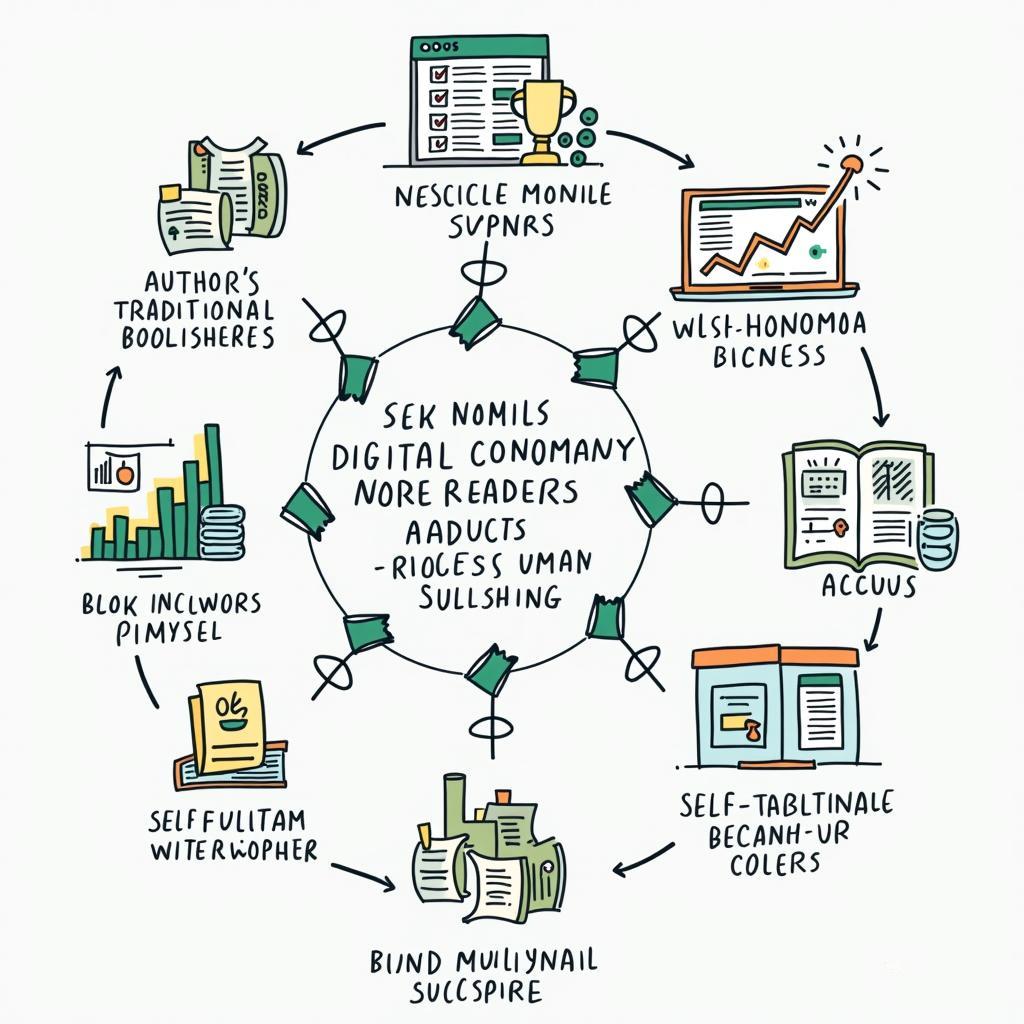 Tác động kinh tế và văn hóa của công nghệ xuất bản số đối với tác giả và nhà sách
Pricing dynamics in digital publishing present another area of significant change and controversy. E-books typically cost less to produce than physical books, as they eliminate printing, warehousing, and shipping expenses. However, publishers have resisted pricing e-books too cheaply, fearing cannibalization of print sales and the devaluation of content. This tension came to a head in a high-profile legal dispute between major publishers and Amazon over e-book pricing models. Publishers advocated for an “agency model” where they set prices and retailers receive a commission, while Amazon preferred a “wholesale model” where it could set retail prices. The resolution of these conflicts has varied by market and continues to evolve, reflecting ongoing tensions between different stakeholders in the publishing ecosystem.
The cultural implications of digital publishing are equally profound. Reading habits have adapted to digital environments in complex ways. Some studies suggest that digital reading, particularly on devices with internet connectivity, is associated with more fragmented attention and less deep reading compared to print books. The constant availability of hyperlinks, notifications, and other digital distractions can interrupt the immersive experience traditionally associated with book reading. Conversely, features like adjustable font sizes, built-in dictionaries, and annotation capabilities can enhance comprehension and accessibility, particularly for readers with visual impairments or those reading in non-native languages.
Digital technology has also influenced what gets published and read. Algorithms that recommend content based on previous reading behavior and purchases create both opportunities and risks. On one hand, these systems can help readers discover books aligned with their interests that they might never have found otherwise. On the other hand, they may create “filter bubbles” that limit exposure to diverse perspectives and challenging ideas, potentially reinforcing existing preferences rather than expanding literary horizons. The data-driven approach of digital platforms has even begun to influence editorial decisions, with some publishers analyzing market data to identify trends and commission works designed to appeal to demonstrated reader preferences.
The globalization of publishing markets has accelerated under digital technology. E-books and digital publications can be distributed worldwide instantaneously and at negligible marginal cost, making international markets more accessible to publishers and authors. This has facilitated greater cross-cultural exchange of ideas and literature. However, it has also raised complex questions about intellectual property rights across different legal jurisdictions, translation economics, and the potential homogenization of global literary culture. Some critics worry that the dominance of English-language content and American publishing platforms may marginalize literary traditions from smaller linguistic communities.
Archival and preservation concerns represent another important cultural dimension of digital publishing. While digital formats offer the potential for perpetual accessibility, they also present unique challenges. Unlike physical books that can last centuries, digital files depend on specific software and hardware that may become obsolete. The phenomenon of “format obsolescence” means that files created in one era may become unreadable as technology evolves. Libraries and academic institutions have invested significantly in digital preservation strategies, but ensuring long-term access to digital publications remains an ongoing challenge requiring continuous attention and resources.
Questions 14-26
Questions 14-18: Yes/No/Not Given
Write YES if the statement agrees with the views of the writer, NO if it contradicts, or NOT GIVEN if it is impossible to say.
14. Independent bookstores have shown more resilience than large chains in adapting to digital competition.
15. The median income for professional writers has increased due to self-publishing opportunities.
16. E-books should always be priced lower than physical books.
17. Digital reading with internet connectivity may lead to more fragmented attention compared to print reading.
18. All publishers now use data analysis to make editorial decisions.
Questions 19-23: Matching Headings
Choose the correct heading for paragraphs B-F from the list of headings below.
List of Headings:
i. The debate over digital book pricing strategies
ii. Changes in how authors earn money from their work
iii. The survival strategies of physical bookstores
iv. Global distribution and cultural concerns
v. How digital technology affects reading comprehension
vi. Algorithm-driven content discovery and its consequences
vii. The challenge of preserving digital content for future generations
viii. The rise of audiobook platforms
19. Paragraph B
20. Paragraph C
21. Paragraph D
22. Paragraph E
23. Paragraph F
Questions 24-26: Summary Completion
Complete the summary below. Choose NO MORE THAN TWO WORDS from the passage for each answer.
Digital publishing has created both opportunities and challenges for cultural practices. While features like adjustable fonts can improve 24 __, particularly for readers with visual impairments, the presence of hyperlinks and notifications may create 25 __ that interrupt focused reading. Additionally, recommendation algorithms might create 26 __ that limit readers’ exposure to diverse perspectives.
PASSAGE 3 – Technological Infrastructure and Future Trajectories in Digital Publishing
Độ khó: Hard (Band 7.0-9.0)
Thời gian đề xuất: 23-25 phút
The technological substrate underlying contemporary digital publishing encompasses a complex amalgamation of hardware, software, networking protocols, and data management systems that collectively enable the creation, distribution, and consumption of digital content. Understanding this infrastructure is essential for comprehending both current practices and likely future trajectories of the publishing industry. Moreover, emerging technologies promise to further disrupt established paradigms, potentially inaugurating new forms of literary expression and reader engagement that challenge our very conceptions of what constitutes a “book” or “publication.”
At the foundational level, digital publishing relies on sophisticated content management systems (CMS) that facilitate the workflow from manuscript to published product. Modern publishing CMSs incorporate version control, collaborative editing capabilities, automated formatting, and multi-format export functions that allow a single source document to generate print-ready PDFs, reflowable e-book formats (EPUB, MOBI), and web-optimized content simultaneously. These systems increasingly leverage artificial intelligence and machine learning algorithms to automate tasks such as copyediting, fact-checking, and even aspects of layout design. The computational linguistics techniques employed can identify stylistic inconsistencies, grammatical errors, and potential factual inaccuracies with increasing accuracy, though the nuanced judgment of human editors remains indispensable for maintaining quality and authorial voice.
The distribution infrastructure for digital publications represents another critical technological component. Content delivery networks (CDNs) ensure that digital files can be accessed quickly by readers regardless of geographic location, using geographically distributed servers that store cached copies of content. Digital rights management (DRM) systems are integrated into this infrastructure, employing cryptographic techniques to control access and prevent unauthorized copying. However, DRM remains contentious, with critics arguing that it limits legitimate consumer rights and that its security can be circumvented by determined infringers, while proponents maintain it provides necessary protection for intellectual property in an era of effortless digital reproduction.
 Cơ sở hạ tầng công nghệ hiện đại của ngành xuất bản số với hệ thống quản lý và phân phối nội dung
Metadata architecture constitutes an often-overlooked but crucial element of digital publishing infrastructure. Bibliographic metadata—information about title, author, publication date, subject classification, and other descriptive elements—must conform to various standards such as ONIX (Online Information Exchange) to ensure interoperability across different platforms and discovery systems. Enhanced metadata can include reader reviews, social media mentions, sales rankings, and algorithmic recommendations, creating a rich informational ecosystem around each publication. The semantic web vision of machine-readable data promises to enable more sophisticated discovery and contextualization of published content, though full realization of this potential remains aspirational.
Emerging technologies are poised to further transform digital publishing in consequential ways. Blockchain technology has attracted attention for its potential to create immutable records of ownership and transparent royalty distribution systems that could address longstanding concerns about payment transparency in publishing. Smart contracts could automatically execute royalty payments to authors and other rights holders whenever content is purchased or accessed, potentially disintermediating traditional publishing houses’ financial functions. However, the environmental impact of certain blockchain implementations, along with questions about scalability and regulatory frameworks, have tempered initial enthusiasm.
Artificial intelligence applications extend beyond editorial functions to content generation itself. Natural language generation (NLG) systems can now produce coherent texts on certain topics, raising profound questions about authorship, creativity, and the value proposition of human writers. While current AI-generated content typically lacks the depth, originality, and emotional resonance of accomplished human writing, rapid advances in neural network architectures and training methodologies suggest that the gap may narrow. Publishers are experimenting with AI as a tool for generating formulaic content such as sports reports or financial summaries, potentially augmenting human capabilities rather than replacing them entirely.
Immersive technologies, including virtual reality (VR) and augmented reality (AR), represent another frontier for digital publishing. Rather than simply displaying text, these technologies could create multisensory narrative experiences where readers inhabit story worlds or interact with three-dimensional informational visualizations. Educational publishers have been particularly interested in AR applications that could overlay digital annotations and multimedia content onto physical textbooks or environments. However, the nascent state of these technologies, combined with issues of hardware accessibility and motion sickness in VR applications, means that widespread adoption for publishing purposes remains speculative.
The evolution toward data-driven personalization raises important ethical considerations alongside its practical implications. Publishers and platforms collect extensive data on reading behaviors—which books are purchased, how quickly they are read, which passages are highlighted or shared, and where readers abandon texts. This granular behavioral data enables unprecedented insights into reader preferences and engagement patterns, informing everything from editorial decisions to marketing strategies. However, this data collection raises privacy concerns and questions about the commodification of reading as an intimate, intellectual activity. The asymmetry between corporate knowledge of individual readers and readers’ understanding of how their data is used creates potential for exploitation and manipulative practices.
Looking forward, the trajectory of digital publishing will likely be shaped by regulatory interventions, market dynamics, and technological developments in unpredictable ways. Antitrust concerns about platform dominance may lead to regulatory actions that reshape market structures. Environmental considerations regarding the energy consumption of digital infrastructure and the physical waste generated by rapidly obsolescent devices may influence both technological choices and consumer preferences. The generational shift in reading habits, with younger cohorts increasingly comfortable with screen-based reading and multimedia content, will continue to drive demand for innovative formats. What remains certain is that publishing—far from being made obsolete by digital technology—continues to adapt and evolve, maintaining its essential function of disseminating knowledge and storytelling while embracing new possibilities that would have been inconceivable in the era of Gutenberg’s press.
Questions 27-40
Questions 27-31: Multiple Choice
Choose the correct letter, A, B, C, or D.
27. According to the passage, what is the main function of content management systems in digital publishing?
A. To replace human editors entirely
B. To facilitate workflow from manuscript to published product
C. To prevent unauthorized copying of content
D. To distribute content across geographic locations
28. What does the passage suggest about DRM systems?
A. They are universally accepted by all stakeholders
B. They cannot be circumvented by infringers
C. They remain controversial despite providing IP protection
D. They are no longer used in modern publishing
29. What standard is mentioned for bibliographic metadata?
A. ISBN
B. ONIX
C. HTML
D. EPUB
30. According to the passage, what is one potential application of blockchain in publishing?
A. Generating AI content
B. Creating immersive reading experiences
C. Transparent royalty distribution
D. Improving copyediting accuracy
31. How does the passage characterize current AI-generated content?
A. It surpasses human writing in quality
B. It typically lacks depth and emotional resonance
C. It is only used for literary fiction
D. It has completely replaced human writers
Questions 32-36: Matching Features
Match the following technologies (A-G) with their applications (32-36).
Technologies:
A. Content Delivery Networks
B. Artificial Intelligence
C. Blockchain
D. Augmented Reality
E. Digital Rights Management
F. Content Management Systems
G. Natural Language Generation
32. Overlaying digital annotations onto physical textbooks
33. Ensuring fast access to content regardless of location
34. Automating copyediting and fact-checking tasks
35. Creating immutable records of ownership
36. Controlling access and preventing unauthorized copying
Questions 37-40: Short-answer Questions
Answer the questions below. Write NO MORE THAN THREE WORDS from the passage for each answer.
37. What type of contracts could automatically execute royalty payments in blockchain systems?
38. What two immersive technologies are mentioned as potential frontiers for digital publishing?
39. What type of data do publishers collect about where readers stop reading?
40. Whose press is mentioned as a historical reference point at the end of the passage?
Answer Keys – Đáp Án
PASSAGE 1: Questions 1-13
- B (20-25%)
- C (2007)
- B (The Guardian)
- C (Print-on-Demand)
- C (A phenomenon on TikTok where readers share book recommendations)
- FALSE
- NOT GIVEN
- TRUE
- FALSE
- inventory costs
- in print
- Digital Rights Management / DRM
- complementary platforms
PASSAGE 2: Questions 14-26
- YES
- NO
- NOT GIVEN
- YES
- NO
- iii (The survival strategies of physical bookstores)
- ii (Changes in how authors earn money from their work)
- i (The debate over digital book pricing strategies)
- vi (Algorithm-driven content discovery and its consequences)
- iv (Global distribution and cultural concerns)
- accessibility / comprehension
- digital distractions
- filter bubbles
PASSAGE 3: Questions 27-40
- B (To facilitate workflow from manuscript to published product)
- C (They remain controversial despite providing IP protection)
- B (ONIX)
- C (Transparent royalty distribution)
- B (It typically lacks depth and emotional resonance)
- D (Augmented Reality)
- A (Content Delivery Networks)
- B (Artificial Intelligence)
- C (Blockchain)
- E (Digital Rights Management)
- Smart contracts
- Virtual reality, augmented reality / VR, AR
- abandon texts / behavioral data
- Gutenberg’s press
Giải Thích Đáp Án Chi Tiết
Passage 1 – Giải Thích
Câu 1: B (20-25%)
- Dạng câu hỏi: Multiple Choice
- Từ khóa: percentage, e-books, United States, 2022
- Vị trí trong bài: Đoạn 2, dòng 4-6
- Giải thích: Bài đọc nói rõ “By 2022, e-books accounted for approximately 20-25% of total book sales in the United States”. Đây là thông tin trực tiếp không cần paraphrase.
Câu 6: FALSE
- Dạng câu hỏi: True/False/Not Given
- Từ khóa: Physical books, completely disappeared
- Vị trí trong bài: Đoạn 2, dòng 2-3
- Giải thích: Bài viết nói “While this prophecy has not entirely come true” khi đề cập đến dự đoán về cái chết của sách in. Điều này mâu thuẫn trực tiếp với câu nói sách in đã hoàn toàn biến mất.
Câu 8: TRUE
- Dạng câu hỏi: True/False/Not Given
- Từ khóa: E-books, popular, romance, science fiction
- Vị trí trong bài: Đoạn 2, dòng 6-7
- Giải thích: Bài viết đề cập “the percentage being even higher for certain genres like romance and science fiction”, xác nhận e-books đặc biệt phổ biến ở các thể loại này.
Câu 10: inventory costs
- Dạng câu hỏi: Sentence Completion
- Từ khóa: Print-on-demand, reduce, financial risk
- Vị trí trong bài: Đoạn 5, dòng 3-4
- Giải thích: Câu gốc: “This significantly reduces inventory costs and financial risk”. Cần điền “inventory costs” để hoàn thành câu đúng nghĩa.
Câu 13: complementary platforms
- Dạng câu hỏi: Sentence Completion
- Từ khóa: successful publishers, view, digital and print
- Vị trí trong bài: Đoạn cuối, dòng 3-4
- Giải thích: Bài viết nói “Publishers who have thrived…view digital and print not as competitors but as complementary platforms”. Cụm “complementary platforms” là đáp án chính xác.
 Kỹ thuật làm bài IELTS Reading hiệu quả với chiến lược scanning và skimming thông tin
Passage 2 – Giải Thích
Câu 14: YES
- Dạng câu hỏi: Yes/No/Not Given
- Từ khóa: Independent bookstores, resilience, large chains
- Vị trí trong bài: Đoạn B, dòng 2-4
- Giải thích: Bài viết nói rõ “Independent bookstores have shown greater resilience” so với các chuỗi lớn như Borders đã phá sản. Đây là ý kiến của tác giả.
Câu 15: NO
- Dạng câu hỏi: Yes/No/Not Given
- Từ khóa: median income, writers, increased
- Vị trí trong bài: Đoạn C, dòng 3-4
- Giải thích: Bài viết khẳng định “The median income for professional writers has declined in recent years”, hoàn toàn trái ngược với phát biểu thu nhập tăng.
Câu 17: YES
- Dạng câu hỏi: Yes/No/Not Given
- Từ khóa: digital reading, internet connectivity, fragmented attention
- Vị trí trong bài: Đoạn E, dòng 2-4
- Giải thích: Tác giả nói “Some studies suggest that digital reading…is associated with more fragmented attention”, thể hiện quan điểm đồng ý với phát biểu.
Câu 19: iii (The survival strategies of physical bookstores)
- Dạng câu hỏi: Matching Headings
- Vị trí: Đoạn B
- Giải thích: Đoạn này tập trung vào việc các hiệu sách truyền thống đối mặt thử thách và chiến lược sống còn của hiệu sách độc lập thông qua việc tạo kết nối cộng đồng.
Câu 20: ii (Changes in how authors earn money from their work)
- Dạng câu hỏi: Matching Headings
- Vị trí: Đoạn C
- Giải thích: Toàn bộ đoạn này bàn về sự thay đổi trong kinh tế sáng tạo nội dung, thu nhập của tác giả, hệ thống tiền ứng và royalty.
Câu 24: accessibility / comprehension
- Dạng câu hỏi: Summary Completion
- Từ khóa: adjustable fonts, improve
- Vị trí trong bài: Đoạn E, dòng 5-7
- Giải thích: Bài viết nói “features…can enhance comprehension and accessibility”. Cả hai từ đều chấp nhận được tùy ngữ cảnh.
Câu 26: filter bubbles
- Dạng câu hỏi: Summary Completion
- Từ khóa: recommendation algorithms, limit exposure, diverse perspectives
- Vị trí trong bài: Đoạn F, dòng 4-5
- Giải thích: Bài viết đề cập “they may create ‘filter bubbles’ that limit exposure to diverse perspectives”. Đây là thuật ngữ chuyên môn cần ghi nguyên văn.
Passage 3 – Giải Thích
Câu 27: B (To facilitate workflow from manuscript to published product)
- Dạng câu hỏi: Multiple Choice
- Từ khóa: content management systems, main function
- Vị trí trong bài: Đoạn 2, dòng 1-2
- Giải thích: Câu đầu tiên của đoạn nói rõ CMS “facilitate the workflow from manuscript to published product”. Đây là chức năng chính được nhấn mạnh.
Câu 28: C (They remain controversial despite providing IP protection)
- Dạng câu hỏi: Multiple Choice
- Từ khóa: DRM systems, passage suggest
- Vị trí trong bài: Đoạn 3, dòng 3-6
- Giải thích: Bài viết nói “However, DRM remains contentious” và giải thích cả hai mặt của vấn đề, cho thấy tính tranh cãi của nó.
Câu 30: C (Transparent royalty distribution)
- Dạng câu hỏi: Multiple Choice
- Từ khóa: blockchain, potential application
- Vị trí trong bài: Đoạn 5, dòng 2-3
- Giải thích: Bài viết đề cập blockchain có tiềm năng tạo “transparent royalty distribution systems”. Đây là ứng dụng được nhấn mạnh.
Câu 32: D (Augmented Reality)
- Dạng câu hỏi: Matching Features
- Từ khóa: overlaying, digital annotations, physical textbooks
- Vị trí trong bài: Đoạn 7, dòng 4-6
- Giải thích: Bài viết nói “Educational publishers have been particularly interested in AR applications that could overlay digital annotations and multimedia content onto physical textbooks”.
Câu 37: Smart contracts
- Dạng câu hỏi: Short-answer Questions
- Từ khóa: automatically execute, royalty payments, blockchain
- Vị trí trong bài: Đoạn 5, dòng 4-5
- Giải thích: Bài viết đề cập “Smart contracts could automatically execute royalty payments”. Đây là thuật ngữ kỹ thuật cần ghi chính xác.
Câu 40: Gutenberg’s press
- Dạng câu hỏi: Short-answer Questions
- Từ khóa: press, historical reference, end of passage
- Vị trí trong bài: Đoạn cuối, dòng cuối cùng
- Giải thích: Câu kết “inconceivable in the era of Gutenberg’s press” đề cập đến máy in của Gutenberg như một điểm tham chiếu lịch sử.
Từ Vựng Quan Trọng Theo Passage
Passage 1 – Essential Vocabulary
| Từ vựng | Loại từ | Phiên âm | Nghĩa tiếng Việt | Ví dụ từ bài | Collocation |
|---|---|---|---|---|---|
| dramatic transformation | noun phrase | /drəˈmætɪk ˌtrænsfəˈmeɪʃən/ | sự chuyển đổi mạnh mẽ | The publishing industry has undergone a dramatic transformation | undergo a dramatic transformation |
| advent | noun | /ˈædvent/ | sự ra đời, sự xuất hiện | largely due to the advent of digital technology | the advent of technology |
| carved out | phrasal verb | /kɑːvd aʊt/ | chiếm được (thị phần) | e-books have carved out a substantial market share | carve out a market share |
| voracious readers | noun phrase | /vəˈreɪʃəs ˈriːdərz/ | độc giả háo hức, đọc nhiều | particularly appealing to voracious readers | voracious reader/appetite |
| democratized | verb | /dɪˈmɒkrətaɪzd/ | dân chủ hóa, phổ biến | Digital technology has democratized the publishing process | democratize access/process |
| barriers to entry | noun phrase | /ˈbæriərz tuː ˈentri/ | rào cản gia nhập | aspiring authors faced numerous barriers to entry | lower/remove barriers to entry |
| bypass | verb | /ˈbaɪpɑːs/ | bỏ qua, vượt qua | allow authors to bypass traditional gatekeepers | bypass the system |
| abundance | noun | /əˈbʌndəns/ | sự dư thừa, phong phú | While this abundance creates challenges | an abundance of options |
| discoverability | noun | /dɪsˌkʌvərəˈbɪləti/ | khả năng được phát hiện | challenges in terms of discoverability | improve discoverability |
| periodicals | noun | /ˌpɪəriˈɒdɪkəlz/ | ấn phẩm định kỳ | extends beyond books to periodicals | academic periodicals |
| print-on-demand | noun phrase | /prɪnt ɒn dɪˈmɑːnd/ | in theo yêu cầu | Print-on-demand technology represents innovation | print-on-demand services |
| thrived | verb | /θraɪvd/ | phát triển mạnh | Publishers who have thrived in recent years | thrive in/on something |
Passage 2 – Essential Vocabulary
| Từ vựng | Loại từ | Phiên âm | Nghĩa tiếng Việt | Ví dụ từ bài | Collocation |
|---|---|---|---|---|---|
| proliferation | noun | /prəˌlɪfəˈreɪʃən/ | sự gia tăng nhanh chóng | The proliferation of digital publishing technologies | proliferation of weapons/technology |
| existential challenges | noun phrase | /ˌegzɪˈstenʃəl ˈtʃælɪndʒɪz/ | thách thức về sự tồn tại | bookstores have faced existential challenges | face existential challenges/threat |
| cultivating | verb | /ˈkʌltɪveɪtɪŋ/ | nuôi dưỡng, phát triển | by cultivating community connections | cultivate relationships/skills |
| consolidation | noun | /kənˌsɒlɪˈdeɪʃən/ | sự hợp nhất, tập trung | the consolidation of book retail | consolidation of power/market |
| median income | noun phrase | /ˈmiːdiən ˈɪnkʌm/ | thu nhập trung bình | The median income for professional writers has declined | median income/salary |
| glut | noun | /glʌt/ | sự dư thừa | partly because the glut of available content | a glut of products |
| intermediaries | noun | /ˌɪntəˈmiːdiəriz/ | trung gian | without sharing profits with traditional intermediaries | financial intermediaries |
| cannibalization | noun | /ˌkænɪbəlaɪˈzeɪʃən/ | sự cạnh tranh nội bộ | fearing cannibalization of print sales | product cannibalization |
| fragmented attention | noun phrase | /ˈfrægmentɪd əˈtenʃən/ | sự tập trung bị phân mảnh | associated with more fragmented attention | fragmented attention/society |
| filter bubbles | noun phrase | /ˈfɪltər ˈbʌbəlz/ | bong bóng lọc (thông tin) | they may create filter bubbles | trapped in filter bubbles |
| homogenization | noun | /həˌmɒdʒənaɪˈzeɪʃən/ | sự đồng nhất hóa | the potential homogenization of global literary culture | cultural homogenization |
| marginalize | verb | /ˈmɑːdʒɪnəlaɪz/ | gạt ra ngoài lề | may marginalize literary traditions | marginalize groups/voices |
| obsolete | adjective | /ˈɒbsəliːt/ | lỗi thời | hardware that may become obsolete | become obsolete |
Passage 3 – Essential Vocabulary
| Từ vựng | Loại từ | Phiên âm | Nghĩa tiếng Việt | Ví dụ từ bài | Collocation |
|---|---|---|---|---|---|
| substrate | noun | /ˈsʌbstreɪt/ | nền tảng, cơ sở hạ tầng | The technological substrate underlying contemporary digital publishing | cultural/technological substrate |
| amalgamation | noun | /əˌmælgəˈmeɪʃən/ | sự kết hợp, hợp nhất | a complex amalgamation of hardware and software | an amalgamation of ideas |
| trajectories | noun | /trəˈdʒektəriz/ | quỹ đạo, xu hướng phát triển | likely future trajectories of the publishing industry | future trajectories/paths |
| reflowable | adjective | /riːˈfləʊəbəl/ | có thể điều chỉnh bố cục | generate reflowable e-book formats | reflowable content/text |
| circumvented | verb | /ˌsɜːkəmˈventɪd/ | phá vỡ, vượt qua | its security can be circumvented | circumvent rules/restrictions |
| interoperability | noun | /ˌɪntərˌɒpərəˈbɪləti/ | khả năng tương tác | ensure interoperability across different platforms | improve interoperability |
| immutable | adjective | /ɪˈmjuːtəbəl/ | không thể thay đổi | create immutable records of ownership | immutable laws/records |
| disintermediating | verb | /ˌdɪsɪntəˈmiːdieɪtɪŋ/ | loại bỏ trung gian | potentially disintermediating traditional publishing houses | disintermediate the supply chain |
| nascent | adjective | /ˈnæsənt/ | mới hình thành | the nascent state of these technologies | nascent industry/technology |
| granular | adjective | /ˈgrænjələr/ | chi tiết, tỉ mỉ | This granular behavioral data enables insights | granular data/details |
| asymmetry | noun | /eɪˈsɪmətri/ | sự bất cân xứng | The asymmetry between corporate knowledge and readers | information asymmetry |
| commodification | noun | /kəˌmɒdɪfɪˈkeɪʃən/ | sự thương mại hóa | questions about the commodification of reading | commodification of culture |
| antitrust | adjective | /ˌæntiˈtrʌst/ | chống độc quyền | Antitrust concerns about platform dominance | antitrust laws/regulations |
| obsolescent | adjective | /ˌɒbsəˈlesənt/ | đang trở nên lỗi thời | physical waste from rapidly obsolescent devices | obsolescent technology |
| inconceivable | adjective | /ˌɪnkənˈsiːvəbəl/ | không thể tưởng tượng được | would have been inconceivable in the era of Gutenberg | inconceivable idea/possibility |
Kết bài
Chủ đề về tác động của công nghệ số đến ngành xuất bản là một nội dung vô cùng phong phú và có tính thời sự cao trong IELTS Reading. Qua ba passages với độ khó tăng dần từ Easy đến Hard, bạn đã được trải nghiệm một đề thi hoàn chỉnh với 40 câu hỏi đa dạng, phản ánh đúng format và độ khó của kỳ thi IELTS thật.
Passage 1 giới thiệu những thay đổi cơ bản như sách điện tử, tự xuất bản và in theo yêu cầu với ngôn ngữ dễ hiểu. Passage 2 đi sâu hơn vào tác động kinh tế và văn hóa với từ vựng học thuật và cấu trúc câu phức tạp hơn. Passage 3 khám phá cơ sở hạ tầng công nghệ và xu hướng tương lai với ngôn ngữ chuyên môn cao, thử thách khả năng đọc hiểu ở band điểm cao.
Phần đáp án chi tiết không chỉ cung cấp đáp án đúng mà còn giải thích cách xác định thông tin, paraphrase từ khóa và áp dụng kỹ thuật làm bài cho từng dạng câu hỏi. Bộ từ vựng được tổng hợp theo từng passage giúp bạn xây dựng vốn từ học thuật một cách có hệ thống.
Để đạt kết quả tốt nhất, hãy làm bài trong điều kiện thi thật (60 phút không dừng), sau đó đối chiếu đáp án và nghiên cứu kỹ phần giải thích. Chú ý đặc biệt đến các từ vựng được làm đậm trong passages và cách chúng được paraphrase trong câu hỏi. Thực hành thường xuyên với các đề thi đa dạng chủ đề sẽ giúp bạn tự tin hơn và nâng cao band điểm IELTS Reading của mình.


