Mở Bài
Chủ đề về tâm lý tiêu dùng, marketing và hành vi mua sắm trực tuyến đang ngày càng phổ biến trong các đề thi IELTS Reading, đặc biệt từ năm 2018 đến nay. Với sự phát triển mạnh mẽ của thương mại điện tử và các nghiên cứu về tâm lý học tiêu dùng, các yếu tố tâm lý ảnh hưởng đến quyết định mua sắm trực tuyến và hiệu quả của các chiến lược thương hiệu cảm xúc đã trở thành những chủ đề được khai thác rộng rãi trong IELTS Academic Reading.
Bài viết này cung cấp một đề thi IELTS Reading hoàn chỉnh gồm 3 passages với độ khó tăng dần từ Easy (Band 5.0-6.5), Medium (Band 6.0-7.5) đến Hard (Band 7.0-9.0). Bạn sẽ được trải nghiệm 40 câu hỏi đa dạng với đầy đủ các dạng bài thường gặp trong kỳ thi thật, kèm theo đáp án chi tiết và giải thích từng câu, cùng với bộ từ vựng quan trọng được phân loại theo từng passage.
Đề thi này phù hợp cho học viên từ band 5.0 trở lên, giúp bạn làm quen với format thi thật, rèn luyện kỹ năng quản lý thời gian, và nâng cao khả năng đọc hiểu học thuật. Hãy chuẩn bị đồng hồ bấm giờ và làm bài trong điều kiện như thi thật để đánh giá chính xác trình độ hiện tại của mình.
Hướng Dẫn Làm Bài IELTS Reading
Tổng Quan Về IELTS Reading Test
IELTS Reading Test kéo dài 60 phút và bao gồm 3 passages với tổng cộng 40 câu hỏi. Mỗi câu trả lời đúng được tính là 1 điểm, và tổng điểm sẽ được chuyển đổi thành band điểm từ 1-9.
Phân bổ thời gian khuyến nghị:
- Passage 1: 15-17 phút (độ khó thấp nhất)
- Passage 2: 18-20 phút (độ khó trung bình)
- Passage 3: 23-25 phút (độ khó cao nhất)
Lưu ý: Không có thời gian bổ sung để chuyển đáp án sang answer sheet trong phiên thi trên giấy, vì vậy bạn cần điền trực tiếp vào answer sheet trong 60 phút.
Các Dạng Câu Hỏi Trong Đề Này
Đề thi mẫu này bao gồm 8 dạng câu hỏi phổ biến nhất trong IELTS Reading:
- Multiple Choice – Câu hỏi trắc nghiệm
- True/False/Not Given – Xác định thông tin đúng/sai/không được đề cập
- Matching Information – Nối thông tin với đoạn văn
- Yes/No/Not Given – Xác định ý kiến của tác giả
- Matching Headings – Chọn tiêu đề cho các đoạn văn
- Summary Completion – Hoàn thành đoạn tóm tắt
- Matching Features – Nối thông tin với các đặc điểm
- Short-answer Questions – Câu hỏi trả lời ngắn
IELTS Reading Practice Test
PASSAGE 1 – The Psychology Behind Online Shopping Decisions
Độ khó: Easy (Band 5.0-6.5)
Thời gian đề xuất: 15-17 phút
The way consumers shop has fundamentally transformed over the past two decades, with the internet becoming the primary platform for purchasing goods and services. Understanding the psychological factors that influence online shopping behaviour has become crucial for both retailers and consumers alike. While traditional shopping involves physical interaction with products, online shopping relies heavily on different cognitive and emotional processes that shape our purchasing decisions.
One of the most significant psychological factors in online shopping is perceived convenience. Research shows that consumers are drawn to online platforms primarily because they can shop from anywhere at any time, without the need to travel to physical stores. This convenience factor triggers a sense of control and autonomy, which psychologists have identified as a fundamental human need. When shoppers feel they have control over their purchasing environment, they are more likely to complete transactions and report higher satisfaction levels. Additionally, the ability to compare prices instantly across multiple retailers reinforces this sense of empowerment, making consumers feel they are making informed, rational decisions.
Trust and security concerns represent another critical psychological barrier in online shopping. Unlike physical stores where customers can examine products directly and interact with sales staff, online shopping requires consumers to trust digital platforms with their personal and financial information. This psychological hurdle has led to the development of various trust signals such as secure payment badges, customer reviews, and clear return policies. Studies indicate that testimonials from previous buyers significantly influence purchasing decisions, with approximately 88% of online shoppers consulting reviews before making a purchase. These social proof mechanisms tap into the human tendency to seek validation from others, particularly when facing uncertainty.
The concept of scarcity and urgency plays a powerful role in online consumer psychology. E-commerce websites frequently employ tactics such as countdown timers, limited stock warnings, and exclusive deals to create a sense of urgency. This strategy activates the fear of missing out (FOMO), a psychological phenomenon where individuals worry about losing opportunities that others might enjoy. When shoppers encounter messages like “Only 3 items left in stock” or “Sale ends in 2 hours,” their brains release stress hormones that can override rational decision-making processes, leading to impulse purchases. Marketing researchers have found that these urgency tactics can increase conversion rates by up to 30%.
Visual presentation and website design also significantly impact shopping behaviour. The human brain processes visual information 60,000 times faster than text, making product images and website aesthetics crucial for online retail success. High-quality photographs, 360-degree product views, and video demonstrations help bridge the gap between physical and digital shopping experiences. Colour psychology further influences purchasing decisions, with studies showing that certain colours evoke specific emotional responses. For instance, blue tends to create feelings of trust and security, which is why many financial institutions and technology companies use it prominently. Red, conversely, stimulates excitement and urgency, making it effective for sale announcements and call-to-action buttons.
Personalization has emerged as a powerful psychological tool in online retail. When websites remember customer preferences, recommend products based on browsing history, or address shoppers by name, they create a sense of individual attention that was traditionally associated with boutique stores. This personalized experience activates the brain’s reward centres, releasing dopamine and creating positive emotional associations with the shopping platform. Advanced algorithms now enable retailers to predict what customers want before they even search for it, making the shopping experience feel both convenient and surprisingly intuitive.
The paradox of choice presents an interesting psychological challenge in online shopping. While having numerous options initially seems appealing, research by psychologist Barry Schwartz demonstrates that excessive choice can lead to decision paralysis and decreased satisfaction. Online stores that offer thousands of products may overwhelm shoppers, causing them to abandon their carts or feel anxious about whether they made the right choice. Successful e-commerce platforms address this by implementing filtering systems, curated collections, and recommendation engines that help narrow down options to manageable numbers, thereby reducing cognitive load and increasing purchase likelihood.
Finally, the payment process itself involves significant psychological factors. The concept of “payment pain” – the negative feeling associated with parting with money – is reduced in online transactions compared to cash payments. Digital payments create psychological distance between the consumer and their money, making it easier to spend. This is further enhanced by options like one-click purchasing and saved payment information, which remove friction from the transaction process. Buy-now-pay-later schemes exploit this psychological principle even further by delaying the pain of payment to a future date, making current purchases feel less consequential.
Questions 1-6
Do the following statements agree with the information given in Passage 1?
Write:
- TRUE if the statement agrees with the information
- FALSE if the statement contradicts the information
- NOT GIVEN if there is no information on this
- Online shopping depends more on mental and emotional processes than traditional shopping does.
- The majority of online customers read product reviews before purchasing.
- Countdown timers on e-commerce websites always lead to higher customer satisfaction.
- The human brain interprets visual content much faster than written information.
- Blue colour schemes are most effective for promoting sales and discounts.
- Digital payments make people feel less negative about spending money compared to cash.
Questions 7-10
Complete the sentences below.
Choose NO MORE THAN THREE WORDS from the passage for each answer.
- When shoppers feel they can control their shopping environment, they experience higher levels of __.
- Online retailers use various __ like security badges and reviews to build consumer confidence.
- The fear of missing out can cause people to make __ that bypass logical thinking.
- Too many product choices can result in __ and lower customer satisfaction.
Questions 11-13
Choose the correct letter, A, B, C or D.
- According to the passage, personalization in online shopping:
- A) Is disliked by most consumers
- B) Creates positive brain responses similar to rewards
- C) Only works for luxury products
- D) Is less effective than traditional shopping methods
- The passage suggests that scarcity tactics:
- A) Are illegal in most countries
- B) Only work on inexperienced shoppers
- C) Can increase sales by approximately one third
- D) Have no real impact on consumer behaviour
- Payment pain is described as:
- A) The physical discomfort of carrying cash
- B) The negative emotion linked to spending money
- C) A medical condition affecting shoppers
- D) The delay in processing online payments
PASSAGE 2 – Emotional Branding: Connecting With Consumers Through Feelings
Độ khó: Medium (Band 6.0-7.5)
Thời gian đề xuất: 18-20 phút
In an increasingly saturated marketplace, where products and services often share similar functional attributes, companies have turned to emotional branding strategies to differentiate themselves and forge deeper connections with consumers. Unlike traditional branding that focuses primarily on communicating product features and benefits, emotional branding seeks to establish profound psychological bonds by tapping into consumers’ feelings, aspirations, and values. This approach recognizes a fundamental truth about human decision-making: emotions play a decisive role in purchasing behaviour, often overriding rational considerations about price, quality, or utility.
The theoretical foundation of emotional branding draws heavily from neuroscience and behavioural psychology. Research using functional magnetic resonance imaging (fMRI) has revealed that when consumers evaluate brands, the areas of the brain associated with emotions and personal memories show significantly more activity than those responsible for factual information processing. Antonio Damasio, a prominent neuroscientist, demonstrated through his studies of patients with damage to emotion-processing brain regions that purely rational decision-making is virtually impossible without emotional input. These individuals, despite retaining full cognitive abilities, struggled with even simple choices because they lacked the emotional valence necessary to assign value to different options. For marketers, this finding underscores the necessity of creating emotional brand associations rather than merely listing product specifications.
Successful emotional branding strategies typically employ several key techniques. Storytelling remains one of the most powerful tools, as narratives activate multiple brain regions and create immersive experiences that facilitate memory formation. When brands tell stories that resonate with consumers’ own experiences or aspirations, they transform from mere commercial entities into characters in the consumer’s personal narrative. Apple’s marketing campaigns, for instance, have consistently positioned their products not as technological devices but as enablers of creativity and individual expression. Their “Think Different” campaign associated the brand with revolutionary innovators and cultural icons, allowing consumers to feel they were part of a legacy of creative rebellion simply by choosing Apple products.
Nostalgia marketing represents another potent emotional branding strategy. By evoking memories of the past – particularly childhood or adolescent experiences – brands can trigger warm, positive emotions that become associated with their products. This technique proves particularly effective because nostalgic memories are often idealized and emotionally charged, creating powerful positive associations. Coca-Cola has masterfully employed nostalgia by consistently referencing past decades in their advertising, using vintage aesthetics and messaging that harkens back to “simpler times”. Research indicates that nostalgic emotions can increase willingness to pay and strengthen brand loyalty, as consumers seek to recapture pleasant feelings from their past.
The creation of brand communities serves as a sophisticated emotional branding strategy that leverages social identity theory. Humans possess a fundamental need to belong to groups and derive part of their identity from group memberships. Brands that successfully cultivate communities around their products enable consumers to signal their identity and values to others while experiencing a sense of belonging. Harley-Davidson exemplifies this approach through its H.O.G. (Harley Owners Group), which has transformed a motorcycle manufacturer into a lifestyle brand associated with freedom, rebellion, and camaraderie. The emotional attachment members feel toward the brand often transcends the actual product, with research showing that many Harley enthusiasts identify so strongly with the brand that they incorporate it into their personal identity through tattoos and other permanent expressions.
Cause marketing has emerged as an increasingly prevalent emotional branding strategy, particularly among younger consumers who prioritize social and environmental responsibility. By aligning with social causes, brands can tap into consumers’ values and sense of purpose, creating emotional connections that extend beyond product satisfaction. However, this approach carries significant risks; consumers have become increasingly skeptical of “purpose-washing” – superficial cause associations that lack genuine commitment. Patagonia’s environmental activism demonstrates authentic cause marketing, as the company has consistently prioritized sustainability even at the expense of short-term profits. Their “Don’t Buy This Jacket” campaign, which discouraged unnecessary consumption, seemed counterintuitive for a retail company but strengthened emotional bonds with environmentally conscious consumers who appreciated the brand’s integrity.
The effectiveness of emotional branding strategies can be measured through various metrics beyond traditional sales figures. Brand equity – the intangible value a brand name adds to a product – increases substantially when emotional connections are established. Studies show that emotionally connected customers demonstrate a 306% higher lifetime value and are more likely to recommend the brand to others. Net Promoter Score (NPS), which measures customer willingness to recommend a brand, typically correlates strongly with emotional engagement. Additionally, share of wallet – the percentage of a customer’s spending in a category that goes to a particular brand – increases significantly when emotional bonds exist, as consumers become less price-sensitive and more resistant to competitive offerings.
However, emotional branding is not without challenges and potential pitfalls. Brands must maintain consistency between their emotional messaging and actual practices, as any perceived hypocrisy or inauthenticity can trigger severe backlash. The rise of social media has amplified this risk, enabling rapid dissemination of information about corporate misconduct or inconsistencies. Furthermore, emotional branding strategies must be culturally sensitive, as emotions and their expressions vary significantly across cultures. What resonates emotionally in one market may fall flat or even offend in another. Companies operating globally must therefore adapt their emotional branding approaches to local cultural contexts while maintaining a coherent brand identity.
The digital age has revolutionized emotional branding possibilities through data analytics and personalization technologies. Brands can now tailor emotional appeals to individual consumers based on their online behaviour, purchase history, and even real-time emotional states inferred from digital interactions. Spotify’s “Wrapped” campaign, which provides users with personalized annual summaries of their listening habits, creates strong emotional responses by reflecting users’ identities and experiences back to them. This personalization at scale was impossible in traditional media environments and represents a new frontier in emotional branding, though it also raises privacy concerns that brands must navigate carefully.
Questions 14-19
Choose the correct letter, A, B, C or D.
- According to the passage, emotional branding differs from traditional branding by:
- A) Being more expensive to implement
- B) Focusing on psychological connections rather than product features
- C) Only working for luxury products
- D) Requiring larger marketing budgets
- Damasio’s research with brain-damaged patients demonstrated that:
- A) Emotional input is necessary for making decisions
- B) Rational thinking is superior to emotional thinking
- C) Brain damage affects purchasing behaviour
- D) Cognitive abilities are linked to shopping habits
- The “Think Different” campaign by Apple:
- A) Focused on technical specifications
- B) Was unsuccessful in building brand loyalty
- C) Connected the brand with innovation and creativity
- D) Targeted only professional users
- According to the passage, nostalgic emotions can:
- A) Decrease product prices
- B) Make consumers willing to spend more
- C) Only work for food and beverage brands
- D) Reduce brand loyalty over time
- The passage suggests that Harley-Davidson’s brand community:
- A) Only focuses on motorcycle performance
- B) Has created emotional bonds that go beyond the product itself
- C) Is limited to professional riders
- D) Discourages personal identification with the brand
- Patagonia’s “Don’t Buy This Jacket” campaign was:
- A) A complete failure that hurt sales
- B) Designed to increase short-term profits
- C) An example of superficial cause marketing
- D) Authentic messaging that strengthened customer relationships
Questions 20-23
Complete the summary below.
Choose NO MORE THAN TWO WORDS from the passage for each answer.
Emotional branding effectiveness can be evaluated using several measurements. (20) __ refers to the additional value that a brand name contributes to a product. Customers who have emotional connections with brands show significantly higher (21) __ and are more inclined to recommend them. The (22) __ measures how willing customers are to recommend a brand, and this usually corresponds with emotional engagement levels. When emotional bonds exist, customers’ (23) __ increases, meaning they spend more of their budget in that category with the preferred brand.
Questions 24-26
Do the following statements agree with the claims of the writer in Passage 2?
Write:
- YES if the statement agrees with the claims of the writer
- NO if the statement contradicts the claims of the writer
- NOT GIVEN if it is impossible to say what the writer thinks about this
- Social media has made it harder for brands to hide inconsistencies between their messaging and actions.
- Emotional branding strategies are equally effective in all cultural contexts.
- Personalized emotional marketing raises no ethical concerns for companies.
PASSAGE 3 – The Neuroscience of Consumer Behaviour and the Future of Emotional Marketing
Độ khó: Hard (Band 7.0-9.0)
Thời gian đề xuất: 23-25 phút
The confluence of neuroscience, psychology, and marketing has given rise to the field of consumer neuroscience – sometimes controversially termed “neuromarketing” – which seeks to understand the neurological underpinnings of consumer decision-making and behaviour. This interdisciplinary domain employs sophisticated neuroimaging techniques, biometric measurements, and computational modelling to investigate how the human brain responds to marketing stimuli, brand experiences, and purchasing contexts. The insights generated by this research have profound implications for emotional branding strategies, while simultaneously raising significant ethical questions about the manipulation of consumer preferences and the boundaries of persuasive communication.
Contemporary neuroscientific research has fundamentally challenged the classical economic assumption of the rational consumer. The traditional model, rooted in neoclassical economics, posited that individuals make purchasing decisions through deliberate cost-benefit analysis, weighing various product attributes against their prices to maximize utility. However, accumulated evidence from neuroscience reveals this model to be a gross oversimplification. The human brain employs dual-processing systems: System 1, which operates automatically, rapidly, and largely unconsciously, and System 2, which functions deliberately, slowly, and with conscious awareness. Critically, research indicates that the vast majority of consumer decisions – estimates range from 90-95% – are driven primarily by System 1 processes, with System 2 merely providing post-hoc rationalization for choices already made at the subconscious level.
The neural mechanisms underlying emotional responses to brands have been extensively mapped through functional neuroimaging studies. When consumers encounter brands they have positive associations with, several brain regions show heightened activation. The ventromedial prefrontal cortex (vmPFC), which plays a crucial role in processing reward value and emotional significance, demonstrates increased activity when individuals view preferred brands. Simultaneously, the striatum, particularly the nucleus accumbens, which is central to the brain’s reward circuitry and releases dopamine in anticipation of pleasurable experiences, shows robust activation patterns. Intriguingly, strong brands can trigger these reward-related neural responses even in the absence of product consumption, suggesting that brand perception itself can activate pleasure centres. This phenomenon helps explain why consumers often report experiencing positive emotions simply from shopping or being associated with particular brands, independent of the functional benefits those products provide.
The concept of “brand love” has garnered substantial attention within consumer neuroscience, as researchers attempt to understand how some brands elicit emotional responses comparable to interpersonal relationships. Studies employing fMRI technology have revealed that the neural patterns activated when people contemplate beloved brands show remarkable similarity to those observed when individuals think about close friends or romantic partners. Both conditions activate the insula, a brain region associated with emotional processing and interoceptive awareness, and suppress activity in regions associated with critical judgement and cognitive deliberation. This neural evidence suggests that emotional branding strategies can literally hijack the brain’s social bonding mechanisms, creating brand-consumer relationships that parallel human-to-human connections in both psychological and neurological dimensions.
The strategic exploitation of these neurological insights has given rise to increasingly sophisticated emotional marketing techniques. Sensory branding, which seeks to create multisensory brand experiences that engage multiple neural pathways simultaneously, represents one such evolution. Research demonstrates that congruent sensory cues – when visual, auditory, olfactory, and tactile brand elements align cohesively – create more robust neural representations and stronger memory formation than single-modality exposures. Singapore Airlines’ signature Stefan Floridian Waters scent, which pervades their aircraft, lounges, and even hot towels, exemplifies this approach. This olfactory branding strategy leverages the direct neural connection between the olfactory bulb and the hippocampus (critical for memory formation) and the amygdala (central to emotional processing), creating powerful sense-memory associations that enhance brand recall and evoke emotional responses.
The advent of real-time emotional measurement technologies has enabled unprecedented levels of advertising optimization and message personalization. Biometric tools such as eye-tracking devices, facial expression analysis software employing artificial intelligence, galvanic skin response sensors, and even portable electroencephalography (EEG) equipment allow marketers to assess emotional responses to advertising content with temporal precision measured in milliseconds. These technologies bypass the limitations of self-report measures, which are notoriously unreliable due to cognitive biases, social desirability effects, and the fundamental inability of individuals to accurately introspect about their own emotional and cognitive processes. Companies can now conduct iterative testing of advertising materials, identifying specific moments that elicit target emotional responses and refining content accordingly before committing substantial resources to campaign deployment.
However, the application of neuroscientific insights to marketing has precipitated considerable ethical debate. Critics argue that neuromarketing techniques constitute a form of neural manipulation that subverts autonomous decision-making by targeting unconscious processes that consumers cannot consciously resist. The asymmetry of knowledge and power between corporations employing sophisticated neuroscientific techniques and individual consumers who remain largely unaware of these methods raises fundamental questions about informed consent and cognitive liberty. Some scholars contend that particularly vulnerable populations – including children, whose prefrontal cortices remain underdeveloped until their mid-twenties, and individuals with compulsive shopping disorders – require special protections against marketing strategies designed to exploit neurological vulnerabilities.
Regulatory frameworks have struggled to keep pace with these technological developments. While traditional advertising regulations focus on truthfulness and transparency of claims made, they are ill-equipped to address marketing that operates primarily through subconscious emotional manipulation rather than explicit informational content. The European Union has taken tentative steps toward addressing these concerns, with some policymakers calling for restrictions on neuromarketing research and mandatory disclosure when neuroscientific techniques have informed advertising development. However, the commercial incentives driving emotional branding innovation remain powerful, and the global nature of digital marketing complicates jurisdictional enforcement of potential regulations.
Emerging technologies promise to further intensify these dynamics. Virtual reality (VR) and augmented reality (AR) platforms offer unprecedented opportunities for immersive brand experiences that engage emotional processing systems more intensely than traditional media. Early research suggests that VR experiences generate stronger emotional responses and more vivid memory formation than equivalent 2D content, likely due to the sense of embodied presence these technologies create. Meanwhile, advances in artificial intelligence and machine learning enable increasingly sophisticated emotional profiling and predictive modelling of individual consumer behaviour. Some companies are developing systems that can infer emotional states from digital behavioural signals – such as typing patterns, voice characteristics, and facial micro-expressions captured through webcams – enabling dynamic adjustment of marketing messages to match instantaneous emotional conditions.
The future trajectory of emotional branding will likely be shaped by the tension between commercial innovation and ethical constraints. As consumer awareness of these techniques grows, there is evidence of increasing backlash against perceived manipulation, with some consumers actively seeking brands that commit to “ethical marketing” practices. Simultaneously, the proliferation of digital touchpoints and the integration of marketing into increasingly immersive technological environments suggest that emotional branding will become simultaneously more pervasive and less visible. The resolution of these competing forces will determine not only the future of marketing but also broader questions about autonomy, manipulation, and the ethics of persuasion in increasingly technologically mediated societies.
 Sơ đồ hoạt động não bộ khi khách hàng tiếp xúc với thương hiệu yêu thích trong nghiên cứu tâm lý tiêu dùng
Questions 27-30
Complete the sentences below.
Choose NO MORE THAN TWO WORDS AND/OR A NUMBER from the passage for each answer.
-
According to neuroscience research, approximately __ of consumer purchasing choices are primarily influenced by unconscious System 1 processes.
-
The __ is a brain area that becomes more active when people see brands they prefer, and it is important for understanding reward and emotional meaning.
-
Singapore Airlines uses a distinctive __ as part of their sensory branding strategy to create memorable brand associations.
-
The development of the __ continues until approximately age 25, making younger people potentially more susceptible to marketing techniques.
Questions 31-36
Do the following statements agree with the information given in Passage 3?
Write:
- TRUE if the statement agrees with the information
- FALSE if the statement contradicts the information
- NOT GIVEN if there is no information on this
-
Classical economic theory accurately predicted how consumers make purchasing decisions.
-
Neural responses to beloved brands are similar to responses when thinking about close personal relationships.
-
Sensory branding that uses multiple senses simultaneously creates stronger memories than single-sense marketing.
-
All neuroscientists agree that neuromarketing techniques are ethical and beneficial.
-
Current advertising regulations effectively address the challenges posed by emotional manipulation in marketing.
-
Virtual reality marketing generates more powerful emotional reactions than traditional two-dimensional advertising content.
Questions 37-40
Classify the following statements as referring to:
A – Benefits of consumer neuroscience
B – Ethical concerns about neuromarketing
C – Future technological developments
Write the correct letter, A, B, or C.
-
Marketing messages could be automatically adjusted based on a person’s current emotional state detected through typing patterns and facial expressions.
-
Real-time measurement tools can assess consumer reactions more accurately than traditional surveys.
-
There is an imbalance of power between companies using neuroscientific methods and consumers who are unaware of these techniques.
-
Augmented reality offers new possibilities for creating emotionally engaging brand experiences.
Answer Keys – Đáp Án
PASSAGE 1: Questions 1-13
- TRUE
- TRUE
- NOT GIVEN
- TRUE
- FALSE
- TRUE
- satisfaction levels
- trust signals
- impulse purchases
- decision paralysis
- B
- C
- B
PASSAGE 2: Questions 14-26
- B
- A
- C
- B
- B
- D
- Brand equity
- lifetime value
- Net Promoter Score
- share of wallet
- YES
- NO
- NO
PASSAGE 3: Questions 27-40
- 90-95% / ninety to ninety-five percent
- ventromedial prefrontal cortex / vmPFC
- (Stefan Floridian Waters) scent / olfactory branding
- prefrontal cortex / prefrontal cortices
- FALSE
- TRUE
- TRUE
- NOT GIVEN
- FALSE
- TRUE
- C
- A
- B
- C
Giải Thích Đáp Án Chi Tiết
Passage 1 – Giải Thích
Câu 1: TRUE
- Dạng câu hỏi: True/False/Not Given
- Từ khóa: online shopping, mental and emotional processes, traditional shopping
- Vị trí trong bài: Đoạn 1, dòng 4-6
- Giải thích: Câu trong bài viết “While traditional shopping involves physical interaction with products, online shopping relies heavily on different cognitive and emotional processes” khẳng định rằng mua sắm trực tuyến phụ thuộc nhiều vào các quá trình nhận thức và cảm xúc (mental and emotional processes), khác với mua sắm truyền thống. Đây là paraphrase trực tiếp của câu hỏi.
Câu 2: TRUE
- Dạng câu hỏi: True/False/Not Given
- Từ khóa: majority, online customers, read product reviews
- Vị trí trong bài: Đoạn 3, dòng 6-8
- Giải thích: Bài viết nêu “approximately 88% of online shoppers consulting reviews before making a purchase” – 88% là đa số (majority), do đó câu này đúng.
Câu 3: NOT GIVEN
- Dạng câu hỏi: True/False/Not Given
- Từ khóa: countdown timers, always, higher customer satisfaction
- Vị trí trong bài: Đoạn 4
- Giải thích: Bài viết đề cập đến countdown timers tạo cảm giác khẩn cấp và tăng conversion rates, nhưng không nói gì về việc chúng “always lead to higher customer satisfaction” (luôn dẫn đến sự hài lòng cao hơn). Không có thông tin về satisfaction.
Câu 4: TRUE
- Dạng câu hỏi: True/False/Not Given
- Từ khóa: human brain, visual content, faster, written information
- Vị trí trong bài: Đoạn 5, dòng 1-2
- Giải thích: “The human brain processes visual information 60,000 times faster than text” khẳng định rõ ràng rằng não bộ xử lý thông tin hình ảnh nhanh hơn nhiều so với văn bản.
Câu 5: FALSE
- Dạng câu hỏi: True/False/Not Given
- Từ khóa: blue colour schemes, most effective, sales and discounts
- Vị trí trong bài: Đoạn 5, dòng 6-10
- Giải thích: Bài viết nói màu xanh (blue) tạo cảm giác tin cậy và an toàn, trong khi màu đỏ (red) “stimulates excitement and urgency, making it effective for sale announcements”. Do đó, màu đỏ chứ không phải màu xanh là hiệu quả cho khuyến mãi.
Câu 6: TRUE
- Dạng câu hỏi: True/False/Not Given
- Từ khóa: digital payments, feel less negative, spending money, compared to cash
- Vị trí trong bài: Đoạn 8, dòng 2-4
- Giải thích: “The concept of ‘payment pain’… is reduced in online transactions compared to cash payments” và “Digital payments create psychological distance between the consumer and their money” xác nhận rằng thanh toán điện tử làm giảm cảm giác tiêu cực khi chi tiền.
Câu 7: satisfaction levels
- Dạng câu hỏi: Sentence Completion
- Từ khóa: control shopping environment, experience higher levels
- Vị trí trong bài: Đoạn 2, dòng 6-8
- Giải thích: “When shoppers feel they have control over their purchasing environment, they are more likely to complete transactions and report higher satisfaction levels.”
Câu 8: trust signals
- Dạng câu hỏi: Sentence Completion
- Từ khóa: online retailers, security badges, reviews, build consumer confidence
- Vị trí trong bài: Đoạn 3, dòng 5-6
- Giải thích: “This psychological hurdle has led to the development of various trust signals such as secure payment badges, customer reviews, and clear return policies.”
Câu 9: impulse purchases
- Dạng câu hỏi: Sentence Completion
- Từ khóa: fear of missing out, bypass logical thinking
- Vị trí trong bài: Đoạn 4, dòng 6-8
- Giải thích: “their brains release stress hormones that can override rational decision-making processes, leading to impulse purchases” – từ “override rational decision-making” được paraphrase thành “bypass logical thinking”.
Câu 10: decision paralysis
- Dạng câu hỏi: Sentence Completion
- Từ khóa: too many product choices, lower customer satisfaction
- Vị trí trong bài: Đoạn 7, dòng 3-4
- Giải thích: “research by psychologist Barry Schwartz demonstrates that excessive choice can lead to decision paralysis and decreased satisfaction.”
Câu 11: B
- Dạng câu hỏi: Multiple Choice
- Từ khóa: personalization, online shopping
- Vị trí trong bài: Đoạn 6, dòng 4-6
- Giải thích: “This personalized experience activates the brain’s reward centres, releasing dopamine and creating positive emotional associations” – khớp với đáp án B về việc tạo phản ứng não bộ tích cực tương tự phần thưởng.
Câu 12: C
- Dạng câu hỏi: Multiple Choice
- Từ khóa: scarcity tactics
- Vị trí trong bài: Đoạn 4, dòng cuối
- Giải thích: “Marketing researchers have found that these urgency tactics can increase conversion rates by up to 30%” – 30% tương đương khoảng một phần ba (approximately one third).
Câu 13: B
- Dạng câu hỏi: Multiple Choice
- Từ khóa: payment pain
- Vị trí trong bài: Đoạn 8, dòng 1-2
- Giải thích: “The concept of ‘payment pain’ – the negative feeling associated with parting with money” định nghĩa rõ ràng payment pain là cảm xúc tiêu cực liên quan đến việc chi tiền.
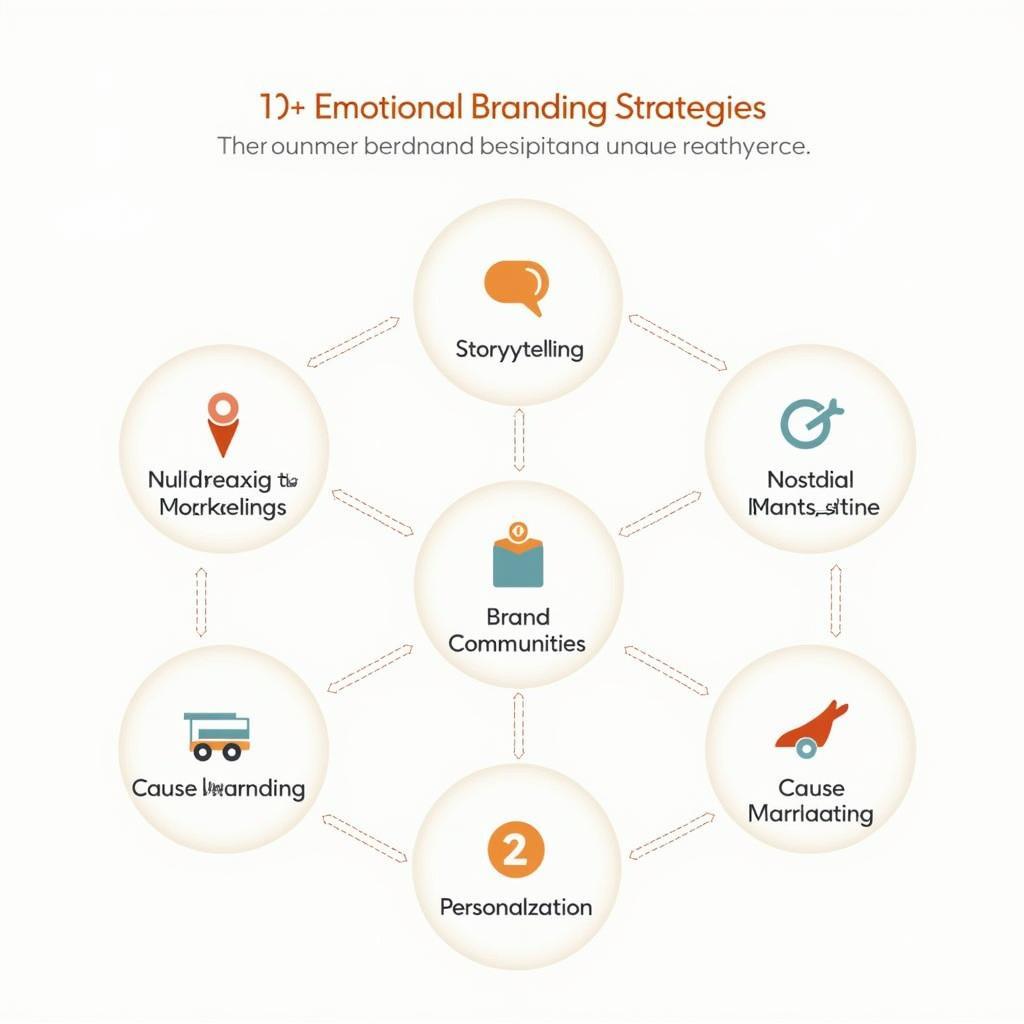 Infographic minh họa các chiến lược thương hiệu cảm xúc hiệu quả trong marketing hiện đại
Passage 2 – Giải Thích
Câu 14: B
- Dạng câu hỏi: Multiple Choice
- Từ khóa: emotional branding differs, traditional branding
- Vị trí trong bài: Đoạn 1, dòng 2-4
- Giải thích: “Unlike traditional branding that focuses primarily on communicating product features and benefits, emotional branding seeks to establish profound psychological bonds” – rõ ràng là tập trung vào kết nối tâm lý thay vì tính năng sản phẩm.
Câu 15: A
- Dạng câu hỏi: Multiple Choice
- Từ khóa: Damasio’s research, brain-damaged patients
- Vị trí trong bài: Đoạn 2, dòng 4-8
- Giải thích: “Antonio Damasio… demonstrated through his studies of patients with damage to emotion-processing brain regions that purely rational decision-making is virtually impossible without emotional input.”
Câu 16: C
- Dạng câu hỏi: Multiple Choice
- Từ khóa: “Think Different” campaign, Apple
- Vị trí trong bài: Đoạn 3, dòng 5-8
- Giải thích: “Their ‘Think Different’ campaign associated the brand with revolutionary innovators and cultural icons” – kết nối thương hiệu với đổi mới và sáng tạo.
Câu 17: B
- Dạng câu hỏi: Multiple Choice
- Từ khóa: nostalgic emotions
- Vị trí trong bài: Đoạn 4, dòng 5-6
- Giải thích: “Research indicates that nostalgic emotions can increase willingness to pay” – tăng sự sẵn lòng chi trả nghĩa là tiêu nhiều tiền hơn.
Câu 18: B
- Dạng câu hỏi: Multiple Choice
- Từ khóa: Harley-Davidson’s brand community
- Vị trí trong bài: Đoạn 5, dòng 6-8
- Giải thích: “The emotional attachment members feel toward the brand often transcends the actual product” – vượt qua chính sản phẩm, tạo kết nối cảm xúc sâu hơn.
Câu 19: D
- Dạng câu hỏi: Multiple Choice
- Từ khóa: Patagonia’s “Don’t Buy This Jacket” campaign
- Vị trí trong bài: Đoạn 6, dòng 5-8
- Giải thích: Chiến dịch “seemed counterintuitive for a retail company but strengthened emotional bonds with environmentally conscious consumers who appreciated the brand’s integrity” – thông điệp chân thật làm tăng mối quan hệ khách hàng.
Câu 20: Brand equity
- Dạng câu hỏi: Summary Completion
- Từ khóa: additional value, brand name contributes
- Vị trí trong bài: Đoạn 7, dòng 1-2
- Giải thích: “Brand equity – the intangible value a brand name adds to a product”
Câu 21: lifetime value
- Dạng câu hỏi: Summary Completion
- Từ khóa: emotionally connected customers, significantly higher
- Vị trí trong bài: Đoạn 7, dòng 3-4
- Giải thích: “emotionally connected customers demonstrate a 306% higher lifetime value”
Câu 22: Net Promoter Score
- Dạng câu hỏi: Summary Completion
- Từ khóa: measures willingness to recommend
- Vị trí trong bài: Đoạn 7, dòng 4-5
- Giải thích: “Net Promoter Score (NPS), which measures customer willingness to recommend a brand”
Câu 23: share of wallet
- Dạng câu hỏi: Summary Completion
- Từ khóa: spend more of their budget in that category
- Vị trí trong bài: Đoạn 7, dòng 6-7
- Giải thích: “share of wallet – the percentage of a customer’s spending in a category that goes to a particular brand – increases significantly”
Câu 24: YES
- Dạng câu hỏi: Yes/No/Not Given
- Từ khóa: social media, harder for brands, hide inconsistencies
- Vị trí trong bài: Đoạn 8, dòng 3-4
- Giải thích: “The rise of social media has amplified this risk, enabling rapid dissemination of information about corporate misconduct or inconsistencies” – tác giả đồng ý rằng mạng xã hội khiến việc che giấu khó hơn.
Câu 25: NO
- Dạng câu hỏi: Yes/No/Not Given
- Từ khóa: emotional branding strategies, equally effective, all cultural contexts
- Vị trí trong bài: Đoạn 8, dòng 5-8
- Giải thích: “emotional branding strategies must be culturally sensitive, as emotions and their expressions vary significantly across cultures. What resonates emotionally in one market may fall flat or even offend in another” – tác giả khẳng định không hiệu quả như nhau ở mọi nền văn hóa.
Câu 26: NO
- Dạng câu hỏi: Yes/No/Not Given
- Từ khóa: personalized emotional marketing, no ethical concerns
- Vị trí trong bài: Đoạn 9, dòng cuối
- Giải thích: “This personalization at scale… represents a new frontier in emotional branding, though it also raises privacy concerns that brands must navigate carefully” – tác giả nói rõ có các mối lo ngại về quyền riêng tư (ethical concerns).
Passage 3 – Giải Thích
Câu 27: 90-95% / ninety to ninety-five percent
- Dạng câu hỏi: Sentence Completion
- Từ khóa: consumer purchasing choices, unconscious System 1 processes
- Vị trí trong bài: Đoạn 2, dòng 7-9
- Giải thích: “research indicates that the vast majority of consumer decisions – estimates range from 90-95% – are driven primarily by System 1 processes”
Câu 28: ventromedial prefrontal cortex / vmPFC
- Dạng câu hỏi: Sentence Completion
- Từ khóa: brain area, more active, see brands they prefer, reward and emotional meaning
- Vị trí trong bài: Đoạn 3, dòng 2-4
- Giải thích: “The ventromedial prefrontal cortex (vmPFC), which plays a crucial role in processing reward value and emotional significance, demonstrates increased activity when individuals view preferred brands”
Câu 29: (Stefan Floridian Waters) scent / olfactory branding
- Dạng câu hỏi: Sentence Completion
- Từ khóa: Singapore Airlines, distinctive, sensory branding strategy
- Vị trí trong bài: Đoạn 5, dòng 5-6
- Giải thích: “Singapore Airlines’ signature Stefan Floridian Waters scent, which pervades their aircraft, lounges, and even hot towels, exemplifies this approach”
Câu 30: prefrontal cortex / prefrontal cortices
- Dạng câu hỏi: Sentence Completion
- Từ khóa: development, continues until approximately age 25, younger people, more susceptible
- Vị trí trong bài: Đoạn 7, dòng 5-6
- Giải thích: “including children, whose prefrontal cortices remain underdeveloped until their mid-twenties”
Câu 31: FALSE
- Dạng câu hỏi: True/False/Not Given
- Từ khóa: classical economic theory, accurately predicted, consumer decisions
- Vị trí trong bài: Đoạn 2, dòng 1-5
- Giải thích: “Contemporary neuroscientific research has fundamentally challenged the classical economic assumption” và “this model to be a gross oversimplification” – lý thuyết cổ điển không chính xác.
Câu 32: TRUE
- Dạng câu hỏi: True/False/Not Given
- Từ khóa: neural responses, beloved brands, similar, close personal relationships
- Vị trí trong bài: Đoạn 4, dòng 2-5
- Giải thích: “the neural patterns activated when people contemplate beloved brands show remarkable similarity to those observed when individuals think about close friends or romantic partners”
Câu 33: TRUE
- Dạng câu hỏi: True/False/Not Given
- Từ khóa: sensory branding, multiple senses, stronger memories, single-sense marketing
- Vị trí trong bài: Đoạn 5, dòng 3-5
- Giải thích: “congruent sensory cues… create more robust neural representations and stronger memory formation than single-modality exposures”
Câu 34: NOT GIVEN
- Dạng câu hỏi: True/False/Not Given
- Từ khóa: all neuroscientists agree, neuromarketing techniques, ethical, beneficial
- Vị trí trong bài: Không có thông tin
- Giải thích: Bài viết đề cập đến các cuộc tranh luận về đạo đức nhưng không nói liệu tất cả các nhà khoa học thần kinh có đồng ý hay không.
Câu 35: FALSE
- Dạng câu hỏi: True/False/Not Given
- Từ khóa: current advertising regulations, effectively address, emotional manipulation
- Vị trí trong bài: Đoạn 8, dòng 1-3
- Giải thích: “Regulatory frameworks have struggled to keep pace” và “they are ill-equipped to address marketing that operates primarily through subconscious emotional manipulation” – quy định hiện tại không hiệu quả.
Câu 36: TRUE
- Dạng câu hỏi: True/False/Not Given
- Từ khóa: virtual reality marketing, more powerful emotional reactions, traditional two-dimensional advertising
- Vị trí trong bài: Đoạn 9, dòng 3-5
- Giải thích: “Early research suggests that VR experiences generate stronger emotional responses and more vivid memory formation than equivalent 2D content”
Câu 37: C (Future technological developments)
- Dạng câu hỏi: Classification
- Vị trí trong bài: Đoạn 9, dòng 6-9
- Giải thích: “Some companies are developing systems that can infer emotional states from digital behavioural signals… enabling dynamic adjustment of marketing messages” – đây là công nghệ tương lai đang được phát triển.
Câu 38: A (Benefits of consumer neuroscience)
- Dạng câu hỏi: Classification
- Vị trí trong bài: Đoạn 6, dòng 4-6
- Giải thích: “These technologies bypass the limitations of self-report measures, which are notoriously unreliable” – đây là lợi ích của khoa học thần kinh tiêu dùng.
Câu 39: B (Ethical concerns about neuromarketing)
- Dạng câu hỏi: Classification
- Vị trí trong bài: Đoạn 7, dòng 3-5
- Giải thích: “The asymmetry of knowledge and power between corporations employing sophisticated neuroscientific techniques and individual consumers who remain largely unaware of these methods raises fundamental questions” – đây là vấn đề đạo đức.
Câu 40: C (Future technological developments)
- Dạng câu hỏi: Classification
- Vị trí trong bài: Đoạn 9, dòng 1-2
- Giải thích: “Emerging technologies promise to further intensify these dynamics. Virtual reality (VR) and augmented reality (AR) platforms offer unprecedented opportunities” – công nghệ tương lai.
Từ Vựng Quan Trọng Theo Passage
Passage 1 – Essential Vocabulary
| Từ vựng | Loại từ | Phiên âm | Nghĩa tiếng Việt | Ví dụ từ bài | Collocation |
|---|---|---|---|---|---|
| fundamentally | adv | /ˌfʌndəˈmentəli/ | Về cơ bản, căn bản | The way consumers shop has fundamentally transformed | fundamentally different, fundamentally flawed |
| perceived | adj | /pərˈsiːvd/ | Được cảm nhận, được nhận thức | One of the most significant psychological factors is perceived convenience | perceived value, perceived risk |
| triggers | v | /ˈtrɪɡərz/ | Kích hoạt, gây ra | This convenience factor triggers a sense of control | trigger a response, trigger emotions |
| testimonials | n | /ˌtestɪˈməʊniəlz/ | Lời chứng thực, đánh giá | Testimonials from previous buyers significantly influence purchasing decisions | customer testimonials, positive testimonials |
| scarcity | n | /ˈskeəsəti/ | Sự khan hiếm, sự thiếu hụt | The concept of scarcity and urgency plays a powerful role | scarcity mindset, artificial scarcity |
| impulse purchases | n phrase | /ˈɪmpʌls ˈpɜːtʃəsɪz/ | Mua sắm bốc đồng, mua hàng không suy nghĩ | Leading to impulse purchases | make impulse purchases, avoid impulse purchases |
| evoke | v | /ɪˈvəʊk/ | Gợi lên, khơi gợi | Certain colours evoke specific emotional responses | evoke memories, evoke feelings |
| personalization | n | /ˌpɜːsənəlaɪˈzeɪʃən/ | Sự cá nhân hóa | Personalization has emerged as a powerful psychological tool | product personalization, content personalization |
| paradox | n | /ˈpærədɒks/ | Nghịch lý | The paradox of choice presents an interesting psychological challenge | apparent paradox, puzzling paradox |
| cognitive load | n phrase | /ˈkɒɡnətɪv ləʊd/ | Tải nhận thức, gánh nặng nhận thức | Reducing cognitive load and increasing purchase likelihood | high cognitive load, reduce cognitive load |
| friction | n | /ˈfrɪkʃən/ | Ma sát, trở ngại | Which remove friction from the transaction process | reduce friction, create friction |
Passage 2 – Essential Vocabulary
| Từ vựng | Loại từ | Phiên âm | Nghĩa tiếng Việt | Ví dụ từ bài | Collocation |
|---|---|---|---|---|---|
| saturated | adj | /ˈsætʃəreɪtɪd/ | Bão hòa, đầy ắp | In an increasingly saturated marketplace | saturated market, saturated with information |
| forge | v | /fɔːdʒ/ | Tạo dựng, hình thành | To forge deeper connections with consumers | forge relationships, forge partnerships |
| overriding | v | /ˌəʊvəˈraɪdɪŋ/ | Vượt qua, lấn át | Emotions often overriding rational considerations | override a decision, override concerns |
| underscores | v | /ˌʌndəˈskɔːz/ | Nhấn mạnh, làm nổi bật | This finding underscores the necessity | underscore the importance, underscore the need |
| resonate | v | /ˈrezəneɪt/ | Gây được tiếng vang, hòa hợp | When brands tell stories that resonate with consumers’ own experiences | resonate with audiences, resonate deeply |
| nostalgia | n | /nɒˈstældʒə/ | Nỗi nhớ, sự hoài niệm | Nostalgia marketing represents another potent emotional branding strategy | sense of nostalgia, evoke nostalgia |
| leverages | v | /ˈliːvərɪdʒɪz/ | Tận dụng, khai thác | Which leverages social identity theory | leverage technology, leverage resources |
| transcends | v | /trænˈsendz/ | Vượt qua, vượt lên trên | The emotional attachment often transcends the actual product | transcend boundaries, transcend limitations |
| skeptical | adj | /ˈskeptɪkəl/ | Hoài nghi, nghi ngờ | Consumers have become increasingly skeptical | skeptical about claims, remain skeptical |
| counterintuitive | adj | /ˌkaʊntərɪnˈtjuːɪtɪv/ | Trái với trực giác, nghịch lý | Seemed counterintuitive for a retail company | counterintuitive approach, counterintuitive results |
| metrics | n | /ˈmetrɪks/ | Các chỉ số đo lường | Measured through various metrics beyond traditional sales figures | performance metrics, key metrics |
| intangible | adj | /ɪnˈtændʒəbl/ | Vô hình, không hữu hình | The intangible value a brand name adds to a product | intangible assets, intangible benefits |
| hypocrisy | n | /hɪˈpɒkrəsi/ | Sự đạo đức giả | Any perceived hypocrisy or inauthenticity can trigger severe backlash | accusations of hypocrisy, avoid hypocrisy |
| amplified | v | /ˈæmplɪfaɪd/ | Khuếch đại, phóng đại | Social media has amplified this risk | amplify the message, amplify concerns |
 Hình minh họa nghiên cứu khoa học thần kinh tiêu dùng với công nghệ fMRI trong neuromarketing
Passage 3 – Essential Vocabulary
| Từ vựng | Loại từ | Phiên âm | Nghĩa tiếng Việt | Ví dụ từ bài | Collocation |
|---|---|---|---|---|---|
| confluence | n | /ˈkɒnfluəns/ | Sự hợp lưu, sự kết hợp | The confluence of neuroscience, psychology, and marketing | confluence of factors, confluence of events |
| neurological underpinnings | n phrase | /ˌnjʊərəˈlɒdʒɪkəl ˌʌndəˈpɪnɪŋz/ | Nền tảng thần kinh học | To understand the neurological underpinnings of consumer decision-making | biological underpinnings, theoretical underpinnings |
| gross oversimplification | n phrase | /ɡrəʊs ˌəʊvəsɪmplɪfɪˈkeɪʃən/ | Sự đơn giản hóa quá mức | This model to be a gross oversimplification | gross exaggeration, gross misconception |
| post-hoc rationalization | n phrase | /pəʊst hɒk ˌræʃənəlaɪˈzeɪʃən/ | Sự biện minh sau sự việc | Providing post-hoc rationalization for choices | post-hoc analysis, post-hoc explanation |
| extensively mapped | v phrase | /ɪkˈstensɪvli mæpt/ | Được lập bản đồ chi tiết | Have been extensively mapped through functional neuroimaging studies | extensively researched, extensively documented |
| heightened activation | n phrase | /ˈhaɪtənd ˌæktɪˈveɪʃən/ | Sự kích hoạt tăng cao | Show heightened activation | heightened awareness, heightened sensitivity |
| robust | adj | /rəʊˈbʌst/ | Mạnh mẽ, vững chắc | Shows robust activation patterns | robust evidence, robust system |
| hijack | v | /ˈhaɪdʒæk/ | Chiếm đoạt, cướp đi | Can literally hijack the brain’s social bonding mechanisms | hijack attention, hijack the conversation |
| congruent | adj | /ˈkɒŋɡruənt/ | Phù hợp, nhất quán | Congruent sensory cues | congruent with expectations, congruent values |
| temporal precision | n phrase | /ˈtempərəl prɪˈsɪʒən/ | Độ chính xác về thời gian | With temporal precision measured in milliseconds | temporal accuracy, temporal resolution |
| precipitated | v | /prɪˈsɪpɪteɪtɪd/ | Gây ra, xúc tiến | Has precipitated considerable ethical debate | precipitate a crisis, precipitate change |
| subverts | v | /səbˈvɜːts/ | Phá hoại, lật đổ | That subverts autonomous decision-making | subvert authority, subvert expectations |
| asymmetry | n | /eɪˈsɪmətri/ | Sự bất đối xứng | The asymmetry of knowledge and power | information asymmetry, power asymmetry |
| ill-equipped | adj | /ɪl ɪˈkwɪpt/ | Không được trang bị đầy đủ | Are ill-equipped to address | ill-equipped to handle, ill-equipped to deal |
| jurisdictional enforcement | n phrase | /ˌdʒʊərɪsˈdɪkʃənəl ɪnˈfɔːsmənt/ | Thực thi theo phạm vi quyền hạn | Complicates jurisdictional enforcement | enforcement mechanisms, enforcement actions |
| immersive | adj | /ɪˈmɜːsɪv/ | Đắm chìm, nhập vai | Offer unprecedented opportunities for immersive brand experiences | immersive experience, immersive environment |
| pervasive | adj | /pəˈveɪsɪv/ | Lan tràn, phổ biến rộng rãi | Will become simultaneously more pervasive and less visible | pervasive influence, pervasive problem |
| technologically mediated | adj phrase | /ˌteknəˈlɒdʒɪkəli ˈmiːdieɪtɪd/ | Được trung gian bởi công nghệ | In increasingly technologically mediated societies | digitally mediated, technologically advanced |
Kết Bài
Đề thi IELTS Reading mẫu về chủ đề “Psychological Factors Influencing Online Shopping, Effectiveness Of Emotional Branding Strategies” này đã cung cấp cho bạn một trải nghiệm hoàn chỉnh với đầy đủ 3 passages có độ khó tăng dần từ Easy đến Hard. Qua 40 câu hỏi đa dạng, bạn đã được luyện tập với 8 dạng câu hỏi phổ biến nhất trong kỳ thi IELTS thực tế.
Passage 1 giới thiệu các yếu tố tâm lý cơ bản ảnh hưởng đến quyết định mua sắm trực tuyến như sự tiện lợi, niềm tin, tính khan hiếm và thiết kế trực quan. Passage 2 đi sâu vào các chiến lược thương hiệu cảm xúc hiệu quả, từ storytelling, nostalgia marketing đến brand communities và cause marketing. Cuối cùng, Passage 3 khám phá các nghiên cứu khoa học thần kinh tiêu dùng tiên tiến, cùng với những tranh luận về đạo đức và tương lai của emotional marketing.
Chủ đề này không chỉ xuất hiện thường xuyên trong IELTS Reading mà còn cực kỳ thực tiễn, giúp bạn hiểu rõ hơn về hành vi tiêu dùng trong thời đại số. Đáp án chi tiết và bảng từ vựng được cung cấp sẽ giúp bạn tự đánh giá chính xác trình độ hiện tại, đồng thời xây dựng vốn từ vựng học thuật quan trọng cho kỳ thi.
Hãy so sánh đáp án của mình với answer keys, đọc kỹ phần giải thích để hiểu rõ cách paraphrase và định vị thông tin trong bài. Lưu lại các từ vựng quan trọng và thực hành sử dụng chúng trong writing và speaking để tăng tính nhất quán trong band điểm tổng thể của bạn.