
Chủ đề về những tình huống căng thẳng nhưng xử lý tốt là một trong những đề tài phổ biến và đầy thử thách trong IELTS Speaking. Là một examiner với hơn 20 năm kinh nghiệm, tôi nhận thấy đây là chủ đề xuất hiện với tần suất cao trong các kỳ thi từ 2020 đến nay, đặc biệt là trong Part 2. Theo thống kê từ các đề thi thực tế được chia sẻ trên IELTS-Blog và IELTSLiz, chủ đề này xuất hiện khoảng 2-3 lần mỗi quý thi, và khả năng xuất hiện trong tương lai được đánh giá ở mức Cao.
Điều đặc biệt của chủ đề này là nó yêu cầu bạn không chỉ kể về cảm xúc tiêu cực (nervousness) mà còn phải thể hiện khả năng vượt qua khó khăn, điều này rất phù hợp để đánh giá năng lực diễn đạt cảm xúc và kể chuyện của thí sinh. Nhiều học viên Việt Nam thường gặp khó khăn với chủ đề này vì thiếu từ vựng miêu tả cảm xúc và không biết cách structure một câu chuyện có dramatic arc rõ ràng.
Trong bài viết này, bạn sẽ học được:
- 12 câu hỏi thường gặp nhất trong cả 3 Part liên quan đến chủ đề nervous situations
- Bài mẫu chi tiết theo 3 mức band điểm 6-7, 7.5-8, và 8.5-9 với phân tích sâu
- Hơn 50 từ vựng và cụm từ ăn điểm để miêu tả cảm xúc và tình huống căng thẳng
- Chiến lược xử lý câu hỏi từ góc nhìn của Examiner
- Các lỗi phổ biến cần tránh và cách cải thiện hiệu quả
IELTS Speaking Part 1: Introduction and Interview
Tổng Quan Về Part 1
Thời gian: 4-5 phút
Part 1 là phần khởi động để examiner đánh giá khả năng giao tiếp cơ bản của bạn. Các câu hỏi thường xoay quanh cuộc sống hàng ngày, sở thích, công việc, và những trải nghiệm thường ngày. Với chủ đề về nervousness, các câu hỏi sẽ không quá sâu mà chỉ đánh giá cách bạn mô tả các tình huống đơn giản.
Chiến lược hiệu quả:
- Trả lời trực tiếp câu hỏi trong câu đầu tiên
- Mở rộng với lý do hoặc ví dụ cụ thể (2-3 câu)
- Giữ tone tự nhiên, như đang trò chuyện bình thường
Lỗi thường gặp của học viên Việt Nam:
- Trả lời quá ngắn gọn (Yes/No) mà không giải thích
- Sử dụng từ vựng quá đơn giản (nervous, scared, worried lặp đi lặp lại)
- Thiếu ví dụ cụ thể từ kinh nghiệm bản thân
- Nói quá nhanh vì lo lắng, dẫn đến phát âm không rõ ràng
Các Câu Hỏi Thường Gặp
Question 1: Do you often feel nervous in your daily life?
Question 2: What kinds of situations make you feel nervous?
Question 3: How do you usually deal with nervousness?
Question 4: Did you feel nervous when you were a child?
Question 5: Do you think it’s normal to feel nervous before important events?
Question 6: What do you do to calm yourself down when you’re nervous?
Question 7: Are you more nervous now than you were in the past?
Question 8: Do you think some people are naturally more nervous than others?
Question 9: Have you ever felt nervous about speaking English?
Question 10: What was the last time you felt really nervous?
Phân Tích và Gợi Ý Trả Lời Chi Tiết
Question: Do you often feel nervous in your daily life?
🎯 Cách tiếp cận:
- Trả lời Yes/No một cách rõ ràng
- Đưa ra frequency (how often)
- Giải thích trong những tình huống nào
- Thêm một câu về cách bạn handle nó
📝 Sample Answer – Band 6-7:
Not really, to be honest. I only feel nervous when I have to do presentations at work or meet new people. Most of the time, I’m quite relaxed and comfortable with my daily routine.
Phân tích:
- Điểm mạnh: Trả lời trực tiếp, có đưa ra ví dụ cụ thể (presentations, meeting new people)
- Hạn chế: Từ vựng còn đơn giản (nervous, relaxed, comfortable), thiếu variety trong cấu trúc câu
- Tại sao Band 6-7: Câu trả lời đủ dài, clear và relevant nhưng vocabulary và grammar structure chưa sophisticated. Chưa có advanced expressions để miêu tả cảm xúc.
📝 Sample Answer – Band 8-9:
Actually, I’d say I’m quite a composed person overall. I don’t tend to get worked up about everyday situations, but I do experience butterflies in my stomach when I’m facing something high-stakes, like giving a presentation to senior management or attending important interviews. Over the years, I’ve learned to keep my nerves in check by preparing thoroughly, which definitely helps me stay level-headed in most circumstances.
Phân tích:
- Điểm mạnh:
- Vocabulary đa dạng và chính xác: “composed person”, “worked up”, “butterflies in my stomach”, “high-stakes”, “keep my nerves in check”, “level-headed”
- Cấu trúc phức tạp: “I don’t tend to…”, “Over the years, I’ve learned to…”
- Có sự phát triển ý tưởng: từ general statement → specific examples → personal growth
- Natural flow với discourse marker “Actually”
- Tại sao Band 8-9:
- Fluency: Câu trả lời trôi chảy, không hesitation, các ý liên kết tự nhiên
- Vocabulary: Sử dụng idiomatic expressions phù hợp (“butterflies in my stomach”, “keep my nerves in check”)
- Grammar: Đa dạng thì (simple present, present perfect) và cấu trúc (relative clauses)
- Pronunciation: Các collocations được sử dụng cho thấy sự tự tin về word stress
💡 Key Vocabulary & Expressions:
- composed person: người điềm tĩnh, bình tĩnh
- get worked up: trở nên lo lắng, kích động
- butterflies in my stomach: cảm giác hồi hộp, bồn chồn (idiom)
- high-stakes: có tính cược cao, quan trọng
- keep my nerves in check: giữ sự bình tĩnh, kiểm soát lo lắng
- level-headed: tỉnh táo, không bị cảm xúc chi phối
Question: What kinds of situations make you feel nervous?
🎯 Cách tiếp cận:
- Liệt kê 2-3 tình huống cụ thể
- Giải thích tại sao những tình huống đó khiến bạn nervous
- Có thể so sánh mức độ nervousness giữa các tình huống
📝 Sample Answer – Band 6-7:
I usually feel nervous in job interviews because I want to make a good impression. Also, when I have to speak in front of many people, I get quite anxious. I think it’s because I’m worried about making mistakes or forgetting what to say.
Phân tích:
- Điểm mạnh: Đưa ra 2 ví dụ cụ thể, có giải thích lý do
- Hạn chế: Vocabulary lặp lại (nervous, anxious đều có nghĩa tương tự), cấu trúc câu đơn giản
- Tại sao Band 6-7: Adequate vocabulary và grammar để truyền đạt ý tưởng nhưng chưa có sự đa dạng và sophistication
📝 Sample Answer – Band 8-9:
Well, there are a few scenarios that really get my adrenaline pumping. Public speaking is definitely at the top of my list – the thought of standing in front of a large audience fills me with dread, particularly when I haven’t had enough time to rehearse. Another situation that makes me break out in a cold sweat is job interviews, especially for positions I really care about. I think it’s the combination of being under scrutiny and the fear of disappointing myself that triggers my anxiety. Interestingly, I’m much less nervous about impromptu situations than planned ones, probably because I don’t have time to overthink things.
Phân tích:
- Điểm mạnh:
- Vocabulary phong phú với nhiều idiomatic expressions: “get my adrenaline pumping”, “fills me with dread”, “break out in a cold sweat”, “being under scrutiny”
- Grammar đa dạng: gerund phrases, relative clauses, comparative structures
- Critical thinking: phân tích sự khác biệt giữa planned vs impromptu situations
- Natural discourse markers: “Well”, “Interestingly”
- Tại sao Band 8-9:
- Fluency: Ý tưởng phát triển logic, có depth và nuance
- Vocabulary: Topic-specific vocabulary và colloquial expressions được sử dụng chính xác
- Grammar: Complex sentences với multiple clauses
- Coherence: Các ý được linking tự nhiên với transitions
💡 Key Vocabulary & Expressions:
- get my adrenaline pumping: khiến tim đập nhanh, hồi hộp
- fills me with dread: khiến sợ hãi, lo âu
- break out in a cold sweat: đổ mồ hôi lạnh (idiom về sự lo lắng)
- being under scrutiny: bị xem xét kỹ lưỡng
- impromptu situations: tình huống bất ngờ, không chuẩn bị trước
 Học viên IELTS luyện tập trả lời câu hỏi về cảm xúc lo lắng và căng thẳng trong bài thi Speaking
Question: How do you usually deal with nervousness?
🎯 Cách tiếp cận:
- Mô tả 2-3 coping strategies cụ thể
- Giải thích tại sao những phương pháp đó hiệu quả
- Có thể đề cập đến sự thay đổi trong cách xử lý qua thời gian
📝 Sample Answer – Band 6-7:
When I feel nervous, I try to take deep breaths to calm down. I also prepare carefully before important events so I feel more confident. Sometimes I talk to my friends about my worries, and that helps me feel better.
Phân tích:
- Điểm mạnh: Có 3 phương pháp cụ thể, câu trả lời có structure
- Hạn chế: Các phương pháp khá generic, thiếu detail về cách thực hiện, vocabulary đơn giản
- Tại sao Band 6-7: Communicative và clear nhưng lacks sophistication và personal touch
📝 Sample Answer – Band 8-9:
I’ve developed quite a repertoire of coping mechanisms over the years. My go-to strategy is thorough preparation – I find that being well-versed in whatever I’m about to do significantly reduces my anxiety levels. In the moments leading up to the stressful event, I practice deep breathing exercises and positive self-talk to keep myself grounded. What really makes a difference for me is reframing the situation – instead of viewing it as a threat, I try to see it as an opportunity for growth. I’ve also found that acknowledging my nervousness rather than suppressing it actually helps me channel that energy more productively. It’s taken time, but these techniques have made me much more resilient when facing challenging situations.
Phân tích:
- Điểm mạnh:
- Vocabulary tinh vi: “repertoire of coping mechanisms”, “go-to strategy”, “well-versed”, “reframing the situation”, “channel that energy”, “resilient”
- Grammar phức tạp: present perfect continuous, gerund phrases, complex sentences
- Personal insight: phân tích sâu về mindset shift (reframing)
- Coherent progression: from preparation → immediate techniques → mindset → reflection
- Tại sao Band 8-9:
- Fluency: Extended response với natural flow
- Vocabulary: Precise và sophisticated, showing range
- Grammar: Variety of complex structures used accurately
- Ideas: Thoughtful và mature approach to the topic
💡 Key Vocabulary & Expressions:
- repertoire of coping mechanisms: bộ sưu tập các cơ chế đối phó
- go-to strategy: chiến lược ưa thích, thường dùng
- well-versed: thành thạo, am hiểu
- keep myself grounded: giữ bình tĩnh, ổn định
- reframing the situation: nhìn nhận tình huống theo cách khác
- channel that energy: chuyển hóa năng lượng đó
- resilient: kiên cường, có khả năng phục hồi
IELTS Speaking Part 2: Long Turn (Cue Card)
Tổng Quan Về Part 2
Thời gian chuẩn bị: 1 phút
Thời gian nói: 2-3 phút (không bị ngắt)
Part 2 là phần quan trọng nhất để thể hiện khả năng kể chuyện và duy trì độc thoại của bạn. Với chủ đề về nervous situations, bạn cần kể một câu chuyện có đầu-thân-kết rõ ràng, thể hiện được cảm xúc và cách xử lý vấn đề.
Chiến lược hiệu quả:
- Sử dụng hết 1 phút chuẩn bị để ghi chú keywords (KHÔNG viết câu hoàn chỉnh)
- Chọn một câu chuyện mà bạn có thể nói chi tiết trong 2 phút
- Cấu trúc: Introduction → Setting the scene → The nervous moment → How you handled it → Outcome & Reflection
- Sử dụng thì quá khứ chủ yếu (đây là câu chuyện đã xảy ra)
- Nói đủ 2 phút, tốt nhất là 2-2.5 phút
Lỗi thường gặp:
- Chọn câu chuyện quá phức tạp khó kể trong thời gian ngắn
- Không cover đủ tất cả bullet points
- Nói quá ngắn (dưới 1.5 phút) hoặc hết ý sau 1 phút
- Thiếu emotional language để miêu tả nervousness
- Không explain rõ “why” bạn nervous và “how” bạn handled it well
Cue Card
Describe A Time When You Felt Very Nervous But Handled The Situation Well.
You should say:
- When and where this happened
- Why you felt nervous
- What you did to handle the situation
- And explain how you felt after successfully dealing with it
Phân Tích Đề Bài
Dạng câu hỏi: Describe an experience/event (kể về một trải nghiệm cụ thể)
Thì động từ: Past tenses (Simple Past, Past Continuous, Past Perfect) vì đây là câu chuyện đã xảy ra
Bullet points phải cover:
- When and where – Cần nêu rõ thời gian và địa điểm cụ thể, tạo context
- Why you felt nervous – Giải thích lý do khiến bạn lo lắng, càng chi tiết càng tốt
- What you did to handle – Mô tả hành động cụ thể, strategies bạn đã sử dụng
- How you felt after – Phần này rất quan trọng, thể hiện reflection và learning
Câu “explain” quan trọng: Bullet point cuối về feelings after là nơi bạn ghi điểm cao nhất. Đừng chỉ nói “I felt happy/relieved” mà hãy explain deeper: bạn học được gì, tự tin hơn như thế nào, hay câu chuyện này thay đổi perspective của bạn ra sao.
📝 Sample Answer – Band 6-7
Thời lượng: Khoảng 1.5-2 phút
I’d like to talk about a time when I felt very nervous, which happened about two years ago when I had to give a presentation at my university.
It was in my final year, and I had to present my thesis project in front of a panel of professors and about 30 other students. The presentation was worth 30% of my final grade, so it was really important. I felt extremely nervous because I had never spoken in front of so many people before, especially not professors who were experts in the field.
In the weeks before the presentation, I prepared very carefully. I practiced my presentation many times in front of a mirror and also with my friends. I made sure I knew all the content very well so I wouldn’t forget anything. On the day of the presentation, I arrived early to check the equipment and make sure everything was working properly. During the presentation, I tried to speak slowly and clearly, and I made eye contact with the audience to seem more confident even though I was very nervous inside.
The presentation went much better than I expected. I managed to answer all the questions from the professors, and I didn’t make any major mistakes. After I finished, I felt so relieved and proud of myself. My professors gave me good feedback and I got a high score. This experience taught me that with good preparation and staying calm, I can handle difficult situations successfully. Now I feel more confident about public speaking.
Phân Tích Band Điểm
| Tiêu chí | Band | Nhận xét |
|---|---|---|
| Fluency & Coherence | 6-7 | Câu chuyện có structure rõ ràng với beginning-middle-end. Sử dụng basic linking words (so, because, after). Tuy nhiên thiếu variety trong discourse markers và một số chỗ còn slightly repetitive. |
| Lexical Resource | 6-7 | Vocabulary adequate cho topic (extremely nervous, relieved, proud). Có một số collocations tốt (panel of professors, make eye contact) nhưng còn nhiều từ đơn giản lặp lại (very, many, good). Thiếu idiomatic expressions. |
| Grammatical Range & Accuracy | 6-7 | Sử dụng đúng past tenses. Có một số complex sentences nhưng chủ yếu là simple và compound sentences. Câu “so I wouldn’t forget” và “even though I was nervous” cho thấy khả năng dùng subordinate clauses. |
| Pronunciation | 6-7 | Giả định rằng phát âm rõ ràng, dễ hiểu với occasional mispronunciations không ảnh hưởng communication. |
Điểm mạnh:
- ✅ Cover đầy đủ tất cả bullet points
- ✅ Câu chuyện có structure logic và dễ follow
- ✅ Đủ chi tiết để maintain 2 phút speaking
- ✅ Có personal reflection ở cuối
Hạn chế:
- ⚠️ Vocabulary chưa sophisticated, nhiều từ basic lặp lại (very nervous, very well, very carefully)
- ⚠️ Thiếu emotional depth trong cách miêu tả nervousness
- ⚠️ Grammar structures chưa đa dạng, chủ yếu là simple past
- ⚠️ Thiếu vivid details khiến câu chuyện chưa engaging
📝 Sample Answer – Band 7.5-8
Thời lượng: Khoảng 2-2.5 phút
I’d like to tell you about a nerve-wracking experience I had about 18 months ago when I was asked to deliver a keynote presentation at a regional marketing conference in Ho Chi Minh City.
To give you some context, I was working as a junior marketing executive at the time, and my manager fell ill at the last minute. With less than 24 hours’ notice, I was suddenly thrust into the spotlight to present our company’s digital marketing strategy to an audience of around 150 industry professionals, including some very high-profile clients and competitors. You can imagine how my stomach was in knots – I was absolutely petrified because I’d never addressed such a distinguished audience before, let alone on such short notice.
However, I knew I had to pull myself together quickly. That evening, I worked late into the night familiarizing myself with every slide and every data point in the presentation. I recorded myself practicing and identified areas where I needed to sound more confident. I also reached out to a senior colleague who gave me some valuable tips about handling tough questions. On the morning of the presentation, I arrived an hour early to get a feel for the venue and ran through my opening several times to get into the right mindset.
When I finally stepped onto that stage, my heart was racing like crazy, but I remembered to start with a deep breath and smile. I focused on delivering value to the audience rather than worrying about my own performance. Surprisingly, once I got past the first two minutes, I found my rhythm and actually started enjoying it. The Q&A session went smoothly, and I managed to field some challenging questions with composure.
Walking off that stage, I felt this incredible rush of accomplishment and relief. Several attendees came up to congratulate me, and my boss was extremely impressed when he heard about it. More importantly, this experience was a real turning point for me. It proved that I could rise to the occasion under pressure and think on my feet. Since then, I’ve been much more confident taking on challenges outside my comfort zone, and I actually volunteer for public speaking opportunities now. That day taught me that nervousness is natural, but it doesn’t have to hold you back if you channel it productively.
Phân Tích Band Điểm
| Tiêu chí | Band | Nhận xét |
|---|---|---|
| Fluency & Coherence | 7.5-8 | Speaks fluently với minimal hesitation. Excellent coherence với clear progression of ideas. Sử dụng variety of cohesive devices (To give you some context, However, Surprisingly, More importantly). Story có clear narrative arc. |
| Lexical Resource | 7.5-8 | Wide range of vocabulary với colloquial expressions (my stomach was in knots, racing like crazy, think on my feet). Skillful use of less common words (petrified, distinguished, composure). Một số idiomatic phrases được sử dụng appropriately. |
| Grammatical Range & Accuracy | 7.5-8 | Wide range of structures: past perfect (had never addressed), gerunds (familiarizing, delivering), participle clauses (Walking off). Complex sentences được sử dụng naturally. Few errors không ảnh hưởng communication. |
| Pronunciation | 7.5-8 | Giả định pronunciation rõ ràng với good intonation và stress patterns, dễ hiểu hoàn toàn. |
So Sánh Với Band 6-7
| Khía cạnh | Band 6-7 | Band 7.5-8 |
|---|---|---|
| Vocabulary | “felt extremely nervous”, “prepared very carefully” | “nerve-wracking experience”, “my stomach was in knots”, “petrified”, “pull myself together” |
| Grammar | “I had to present” (simple past), “I practiced many times” | “I was thrust into the spotlight” (passive), “I’d never addressed such an audience” (past perfect) |
| Ideas | Basic preparation steps | Detailed strategies + emotional journey + reflection on personal growth |
| Details | General description | Vivid, specific details (150 people, 24 hours’ notice, recording practice) |
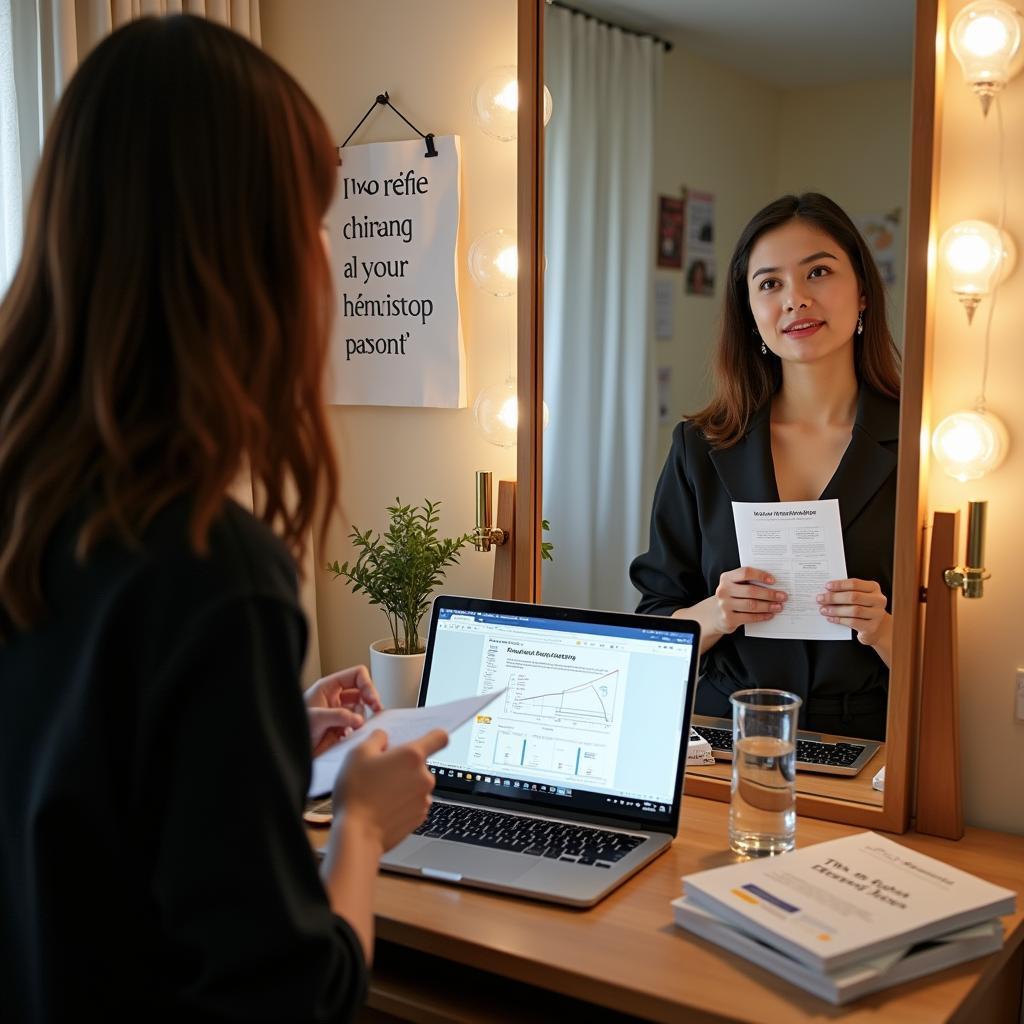 Sinh viên đang thực hành kỹ năng thuyết trình để chuẩn bị cho bài thi IELTS Speaking Part 2 về tình huống căng thẳng
📝 Sample Answer – Band 8.5-9
Thời lượng: 2.5-3 phút đầy đủ
I’d like to recount a particularly harrowing experience that occurred roughly three years ago when I was suddenly called upon to represent my company at a high-stakes arbitration hearing – something completely outside my wheelhouse as I was only in my second year as a corporate lawyer.
To set the scene, this was a multi-million dollar dispute involving one of our most lucrative clients, and our senior partner, who’d been meticulously preparing this case for months, had suffered a family emergency just 48 hours before the hearing. As the only team member who’d been peripherally involved in the preparation, I was thrust into the deep end, expected to hold my own against a team of seasoned litigators from one of the country’s most prestigious law firms. To say I was nervous would be a gross understatement – I was absolutely paralyzed with fear, racked with self-doubt, and plagued by imposter syndrome like never before.
What made it particularly nerve-jangling was the gravity of the consequences – this wasn’t just about my personal reputation, but potentially millions of dollars and the future of a decades-long client relationship. The weight of responsibility was crushing, and I distinctly remember lying awake that first night, my mind racing through worst-case scenarios.
However, I knew that wallowing in anxiety would be counterproductive. I immediately kicked into crisis management mode. First, I sequestered myself in the office and immersed myself in every piece of documentation, every precedent, every witness statement – essentially cramming three months of preparation into 48 hours. I created detailed flowcharts to understand the intricate web of arguments and anticipated counterarguments. Crucially, I reached out to my senior partner despite his family situation, and he generously spent an hour on the phone walking me through his strategic approach and potential pitfalls to avoid.
On the morning of the hearing, I arrived ridiculously early – partly due to insomnia, partly to acclimate myself to the environment. I used visualization techniques, mentally rehearsing various scenarios and my responses. The adrenaline was coursing through my veins, but I consciously tried to reframe that nervous energy as excitement rather than fear – a psychological trick I’d read about but never actually tested under such pressure.
When the hearing commenced, my hands were trembling slightly as I stood to make my opening statement, but I focused intensely on the substance of my arguments rather than my own nerves. Something remarkable happened about ten minutes in – I hit my stride. The months of watching my senior partner, combined with those 48 hours of intensive preparation, had given me a surprisingly solid foundation. I found myself articulately presenting complex legal arguments, deftly responding to challenges from the opposing counsel, and even thinking strategically on my feet when an unexpected issue arose.
The outcome exceeded all expectations. We secured a favorable settlement, and my client was effusive in their praise. But honestly, the material success was secondary to the personal transformation I experienced. Coming through that crucible fundamentally altered my self-perception. That experience was a watershed moment that taught me that our perceived limitations are often far more restrictive than our actual capabilities. It showed me that when we’re backed into a corner, we often discover reserves of resilience and competence we didn’t know we possessed.
Since then, my entire approach to challenges has shifted. Rather than shrinking from daunting situations, I’ve learned to see them as opportunities to transcend my comfort zone. That day of sheer terror that I somehow navigated successfully has become my personal benchmark – whenever I face something intimidating now, I think, “Well, it can’t possibly be worse than that arbitration,” and it genuinely helps put things in perspective. In hindsight, I’m almost grateful for that terrifying experience because it was instrumental in shaping the more confident, capable professional I’ve become.
Phân Tích Band Điểm
| Tiêu chí | Band | Nhận xét |
|---|---|---|
| Fluency & Coherence | 8.5-9 | Speaks fluently với effortless flow và full coherence. Sophisticated use of cohesive devices (To set the scene, However, Crucially, In hindsight). Story unfolds với excellent narrative structure và emotional depth. Maintains complex ideas effortlessly. |
| Lexical Resource | 8.5-9 | Demonstrates precise và sophisticated vocabulary control (harrowing, meticulously preparing, peripherally involved, sequestered, effusive). Natural use of idiomatic language (thrust into the deep end, hit my stride, backed into a corner). Collocations are sophisticated và precise (lucrative clients, seasoned litigators, watershed moment). |
| Grammatical Range & Accuracy | 8.5-9 | Full range of structures used naturally và accurately: participle clauses, inversion, cleft sentences, mixed conditionals. Complex sentences maintained throughout với virtually no errors. Perfect control of past tenses including past perfect continuous. |
| Pronunciation | 8.5-9 | Giả định pronunciation là native-like với sustained use of features như intonation, stress, và connected speech. |
Tại Sao Bài Này Xuất Sắc
🎯 Fluency Hoàn Hảo:
- Maintains speech for full 3 minutes without repetition or self-correction
- Natural pauses used for dramatic effect rather than hesitation
- Complex ideas expressed clearly and coherently without struggling
📚 Vocabulary Tinh Vi:
- Precise word choices: “harrowing” (not just “scary”), “sequestered” (not just “stayed”), “effusive” (not just “very happy”)
- Legal terminology used naturally: “arbitration hearing”, “litigation”, “precedent”, “settlement”
- Sophisticated collocations: “meticulously preparing”, “crushing weight of responsibility”, “watershed moment”, “reserves of resilience”
- Idiomatic expressions perfectly integrated: “thrust into the deep end”, “hit my stride”, “thinking on my feet”, “backed into a corner”
📝 Grammar Đa Dạng:
- Complex participle clauses: “To say I would be nervous would be a gross understatement”
- Past perfect to set timeline: “who’d been meticulously preparing”, “I’d read about”
- Cleft sentences for emphasis: “What made it particularly nerve-jangling was…”
- Advanced structures: “Rather than shrinking from daunting situations” (comparative structure with gerund)
💡 Ideas Sâu Sắc:
- Demonstrates mature reflection: không chỉ kể story mà còn analyze impact on personal development
- Psychological insight: “reframe nervous energy as excitement”
- Universal wisdom: “our perceived limitations are often far more restrictive than our actual capabilities”
- Shows growth mindset và learning từ experience
🎭 Storytelling Excellence:
- Uses vivid, sensory details: “trembling hands”, “racing through worst-case scenarios”
- Builds dramatic tension effectively
- Clear emotional arc: fear → determination → breakthrough → triumph → reflection
- Engages listener through relatability và authenticity
Follow-up Questions (Rounding Off Questions)
Examiner có thể hỏi thêm 1-2 câu ngắn sau Part 2 để transition sang Part 3:
Question 1: Do you think that experience has changed how you handle stress now?
Band 6-7 Answer:
Yes, definitely. Now I know that if I prepare well and stay calm, I can handle difficult situations. That experience gave me more confidence in myself.
Band 8-9 Answer:
Absolutely, it was transformative in that regard. That experience recalibrated my entire stress response system, if you will. Now when I encounter challenging situations, I have this mental reference point that reminds me I’ve overcome something even more daunting. I’ve also become much more strategic about preparation and learned to distinguish between productive anxiety – the kind that motivates thorough preparation – and paralytic fear that just hinders performance.
Question 2: Would you say you’re a nervous person generally?
Band 6-7 Answer:
Not really. I’m usually quite relaxed, but I do get nervous in important situations like that one. I think it’s normal to feel nervous sometimes.
Band 8-9 Answer:
I’d characterize myself as selectively anxious, if that makes sense. I don’t tend to sweat the small stuff, but when something carries significant stakes – whether professionally or personally – I do experience anticipatory anxiety. However, I’ve learned that this isn’t necessarily detrimental. That nervous energy, when properly channeled, can actually sharpen focus and enhance performance. So rather than trying to eliminate nervousness entirely, I’ve learned to harness it constructively.
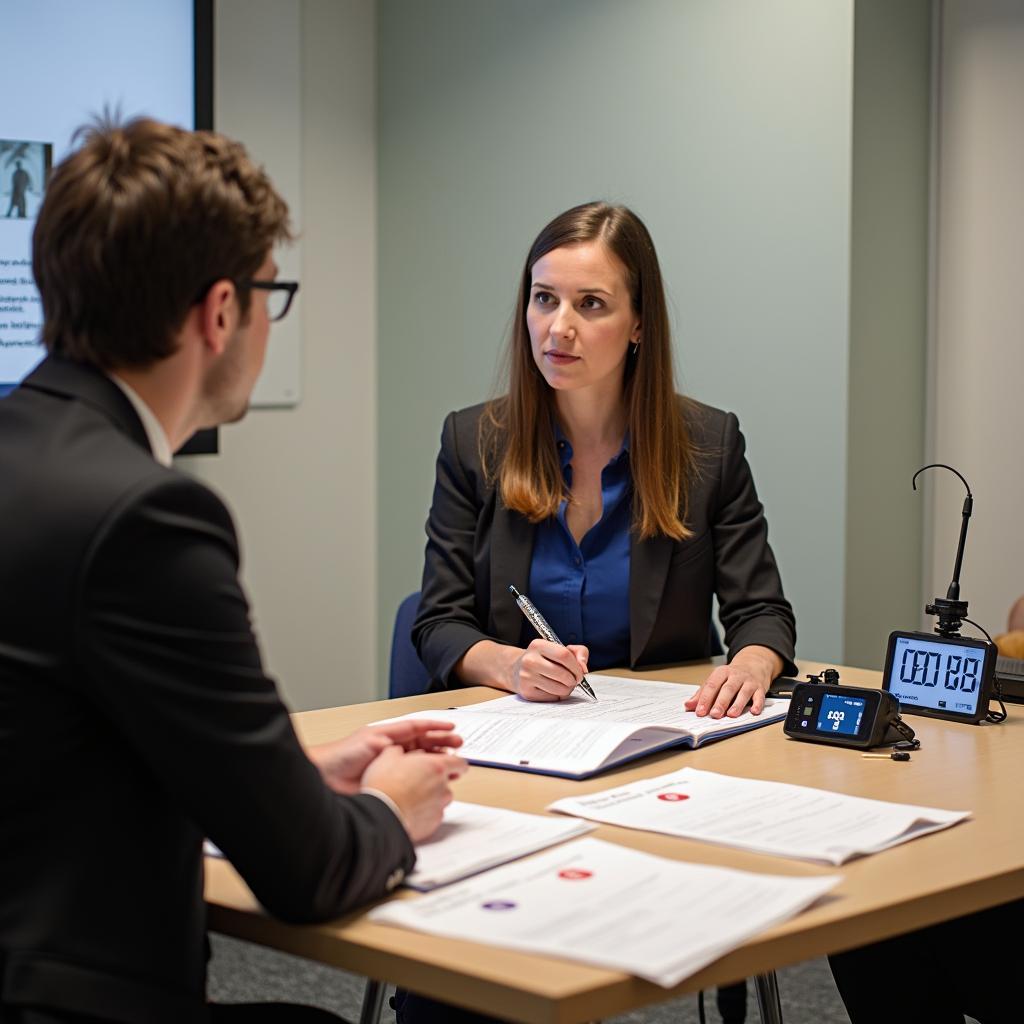 Examiner IELTS Speaking đang đánh giá và ghi chú phần trả lời của thí sinh theo tiêu chí chấm điểm
IELTS Speaking Part 3: Two-way Discussion
Tổng Quan Về Part 3
Thời gian: 4-5 phút
Part 3 là phần thử thách nhất, nơi examiner đánh giá khả năng thảo luận về các vấn đề trừu tượng, phân tích, so sánh và đưa ra quan điểm có chiều sâu. Các câu hỏi sẽ mở rộng từ câu chuyện cá nhân ở Part 2 sang những vấn đề xã hội rộng hơn liên quan đến nervousness, stress management, pressure trong cuộc sống hiện đại.
Yêu cầu:
- Phân tích causes and effects
- So sánh (past vs present, different groups of people)
- Đưa ra opinions với justification rõ ràng
- Thừa nhận complexity của issues (không chỉ có one-sided view)
Chiến lược:
- Mở rộng câu trả lời thành 4-6 câu
- Structure: Direct answer → Reason 1 + example → Reason 2 + example → Conclusion/Nuance
- Sử dụng discourse markers (Well, Actually, From my perspective, To some extent)
- Đưa ra examples từ society/research, không chỉ personal experience
- Thể hiện critical thinking bằng cách xem xét multiple perspectives
Lỗi thường gặp của học viên Việt Nam:
- Trả lời quá ngắn (1-2 câu) cho questions mang tính phân tích
- Thiếu abstract vocabulary để discuss concepts
- Chỉ nói về personal experience thay vì societal issues
- Không structure câu trả lời có logic
- Sợ disagree hoặc đưa ra opinions controversial
Các Câu Hỏi Thảo Luận Sâu
Theme 1: Stress in Modern Society
Question 1: Do you think people nowadays experience more stress and nervousness than in the past?
🎯 Phân tích câu hỏi:
- Dạng: Compare (past vs present)
- Key words: nowadays vs in the past, more stress
- Cách tiếp cận:
- State your position (yes/no/mixed view)
- Give reasons why stress has increased/decreased/changed
- Provide societal examples
- Acknowledge counterarguments if relevant
📝 Sample Answer – Band 6-7:
I think yes, people today are more stressed than before. There are many reasons for this. First, modern life is very fast-paced and we have to do many things at the same time. Also, social media makes people compare themselves with others, which creates stress. In the past, life was simpler and people didn’t have so much pressure from technology and work. However, I think people in the past also had stress, just different kinds of stress like finding food or staying safe.
Phân tích:
- Structure: Có structure cơ bản: opinion → reasons → acknowledgment
- Vocabulary: Adequate (fast-paced, compare, pressure) nhưng repetitive (stress lặp lại nhiều lần)
- Tại sao Band 6-7: Communicates main ideas clearly nhưng lacks sophistication trong expression và depth trong analysis. Examples còn general.
📝 Câu trả lời mẫu – Band 8-9:
From my perspective, this is actually quite a nuanced issue. While I believe modern society does impose unique stressors, I’m not entirely convinced we’re necessarily more stressed overall – rather, the nature and sources of our anxiety have fundamentally shifted.
On one hand, contemporary life certainly presents unprecedented pressures. The relentless pace of technological change means we’re constantly expected to adapt and upskill, which can be mentally exhausting. The digital revolution has also blurred the boundaries between work and personal life – people are essentially on call 24/7, with emails and messages creating this persistent low-level anxiety. Moreover, social media has introduced a new dimension of stress through constant social comparison and the pressure to curate a perfect online persona. There’s compelling research suggesting that rates of anxiety disorders have indeed risen sharply, particularly among younger generations who’ve grown up immersed in this digital ecosystem.
However, we should be careful about romanticizing the past. Previous generations faced their own formidable stressors – whether that was economic insecurity during recessions, the threat of wars, or rigid social hierarchies that offered little social mobility. What’s changed isn’t necessarily the overall burden but rather the type of pressure we face. Past stressors were often more existential and concrete – will I have enough to eat, will I survive this illness? Today’s anxieties tend to be more psychological and abstract – am I successful enough, am I living up to my potential?
To some extent, I’d argue we’re also more aware and articulate about mental health now, so what appears as increased stress might partially reflect improved recognition and reporting rather than an actual rise. All things considered, I believe both eras have their challenges, but modern stress requires different coping mechanisms because it’s more chronic and insidious rather than acute.
Phân tích:
- Structure: Masterful organization:
- Thesis statement acknowledging complexity
- Point 1: Modern stressors (with multiple specific examples)
- Point 2: Historical perspective (counterargument)
- Point 3: Deeper analysis (shift in nature rather than quantity)
- Conclusion: Nuanced view
- Vocabulary: Sophisticated và precise:
- “nuanced issue”, “impose unique stressors”, “unprecedented pressures”
- “relentless pace”, “blurred the boundaries”, “on call 24/7”
- “romanticizing the past”, “formidable stressors”, “rigid social hierarchies”
- “existential and concrete”, “chronic and insidious”
- Grammar: Complex structures:
- Cleft sentences: “What’s changed isn’t necessarily…”
- Participle clauses: “suggesting that”, “offering little”
- Conditional: “What appears as increased stress might partially reflect”
- Critical Thinking:
- Balanced view (không simply agree hay disagree)
- Historical comparison
- Considers alternative explanations (reporting bias)
- Distinguishes between types of stress (existential vs psychological)
💡 Key Language Features:
- Discourse markers: From my perspective, On one hand, However, To some extent, All things considered
- Tentative language: quite, I believe, might partially, tends to be
- Abstract nouns: anxiety, insecurity, mobility, recognition, mechanisms
- Academic style: compelling research, improved recognition and reporting
Question 2: What types of situations commonly cause stress for people in your country?
🎯 Phân tích câu hỏi:
- Dạng: Describe/Categorize (cultural context)
- Key words: types of situations, your country (requires cultural awareness)
- Cách tiếp cận:
- Identify 2-3 main categories
- Explain why these are particularly stressful in Vietnamese context
- Provide specific examples
- Consider different demographics if relevant
📝 Sample Answer – Band 6-7:
In Vietnam, I think there are several common stressful situations. First, education is very competitive, so students feel a lot of pressure to get high scores and pass important exams. Parents also put pressure on children to study hard. Second, work pressure is very high, especially in big cities like Hanoi and Ho Chi Minh City. People work long hours and worry about their jobs. Third, financial stress is common because the cost of living is increasing but salaries don’t increase as much. Many people also worry about buying a house, which is very expensive in cities.
Phân tích:
- Structure: Clear categories (education, work, finance)
- Cultural relevance: Mentions specific Vietnamese context (cities, housing)
- Tại sao Band 6-7: Adequate coverage với relevant examples, nhưng lacks depth in explaining WHY these are particularly Vietnamese issues và cultural factors underlying them.
📝 Câu trả lời mẫu – Band 8-9:
Well, in the Vietnamese context, stress tends to manifest quite distinctly due to our unique cultural and socioeconomic landscape.
First and foremost, academic pressure is arguably the most pervasive source of anxiety, particularly for students and their families. The Vietnamese education system is notoriously competitive, with university entrance exams often determining one’s entire future trajectory. This creates this pressure-cooker environment where young people are under immense strain from an early age. What intensifies this is our Confucian cultural heritage which places tremendous emphasis on educational attainment as a measure of family honor and social standing. Parents often project their own unfulfilled ambitions onto their children, creating multi-generational stress dynamics.
Secondly, career and financial anxieties are particularly acute in Vietnam’s rapidly transforming economy. The country’s breakneck economic development has created both opportunities and pressures. On one hand, there’s the stress of keeping pace with change – industries are evolving so quickly that job security feels increasingly precarious. On the other, there’s intense pressure to demonstrate material success as proof of personal achievement. In major urban centers, the astronomical cost of property means young professionals face the daunting prospect of decades of mortgage debt or remaining perpetually renters. This financial burden is compounded by traditional expectations that children should financially support aging parents, creating a sandwich generation effect where people are stretched thin supporting both parents and children.
Additionally, I’d say social obligations present their own distinctive stressors in Vietnamese culture. We have very tight-knit family structures and extensive social networks, which, while supportive, also come with considerable expectations. There’s pressure to participate in elaborate social rituals – weddings, festivals, ancestral ceremonies – which can be both time-consuming and financially draining. The concept of “mất mặt” or “losing face” means people often feel compelled to maintain appearances even when struggling privately, which can exacerbate stress by preventing them from seeking help.
Interestingly, I’ve noticed that awareness around mental health is gradually improving, but there’s still considerable stigma attached to openly discussing stress or anxiety. This means many Vietnamese people suffer in silence rather than seeking professional support, which obviously compounds the problem. Overall, I’d characterize the Vietnamese stress landscape as one where traditional cultural values collide with rapid modernization, creating unique pressures that require culturally appropriate solutions.
Phân tích:
- Structure: Exceptional organization với clear thematic categories và smooth transitions
- Cultural Depth:
- Deep understanding: Confucian heritage, concept of “mất mặt”, sandwich generation
- Specific Vietnamese terminology naturally integrated
- Explains cultural mechanisms behind stress (not just listing situations)
- Vocabulary:
- Sophisticated: “pervasive”, “trajectory”, “pressure-cooker environment”, “multi-generational dynamics”
- Precise: “breakneck development”, “astronomical cost”, “perpetually renters”
- Culturally specific: “elaborate social rituals”, “ancestral ceremonies”, “tight-knit family structures”
- Grammar:
- Complex structures throughout: relative clauses, participle phrases, cleft sentences
- Perfect control: “which, while supportive, also come with considerable expectations”
- Critical Thinking:
- Analyzes root causes (cultural values + modernization)
- Considers different dimensions (individual, family, societal)
- Acknowledges complexity (tradition vs modernity collision)
- Forward-looking (mentions changing awareness)
💡 Key Language Features:
- Discourse markers: Well, First and foremost, Secondly, Additionally, Interestingly, Overall
- Emphasis structures: “arguably the most”, “particularly acute”, “considerable stigma”
- Vivid expressions: “pressure-cooker environment”, “stretched thin”, “suffer in silence”
Theme 2: Managing Pressure and Building Resilience
Question 3: What can people do to better manage stress and nervous feelings?
🎯 Phân tích câu hỏi:
- Dạng: Suggest solutions/strategies
- Key words: what can people do, better manage
- Cách tiếp cận:
- Suggest multiple strategies (physical, psychological, social)
- Explain why/how each strategy works
- Acknowledge that different approaches work for different people
- Consider both immediate and long-term solutions
📝 Sample Answer – Band 6-7:
There are several ways people can manage stress better. First, physical exercise is very helpful because it reduces stress hormones and makes people feel better. Activities like running, swimming or yoga are good options. Second, people should try to have better time management to avoid feeling overwhelmed. Planning ahead and making to-do lists can help reduce anxiety. Third, talking to friends and family is important because sharing problems can make people feel less alone. Some people might also benefit from professional help like seeing a psychologist. Finally, relaxation techniques like deep breathing or meditation can be useful for immediate stress relief.
Phân tích:
- Structure: Clear categories of solutions (physical, organizational, social, professional)
- Practical advice: Specific suggestions given
- Tại sao Band 6-7: Comprehensive coverage nhưng lacks depth in explaining mechanisms và sophistication trong vocabulary. Explanations còn surface-level.
📝 Câu trả lời mẫu – Band 8-9:
From both personal experience and what I’ve observed, effective stress management really requires a multi-pronged approach targeting different dimensions of wellbeing.
Fundamentally, I believe cultivating self-awareness is the foundation of managing nervousness effectively. People need to recognize their personal stress triggers and early warning signs – whether that’s physical symptoms like tension headaches or behavioral patterns like irritability. This metacognitive awareness enables proactive intervention before stress becomes overwhelming. In practical terms, this might involve keeping a journal to identify patterns or practicing mindfulness meditation to develop greater emotional intelligence.
On the physiological front, the evidence for regular physical activity is absolutely overwhelming. Exercise isn’t just about fitness – it fundamentally alters our neurochemistry, triggering the release of endorphins and reducing cortisol levels. What’s particularly interesting is that you don’t need intense workouts to see benefits; even moderate activities like brisk walking or gentle yoga can significantly alleviate anxiety. The key is consistency rather than intensity. Similarly, sleep hygiene is criminally underrated – chronic sleep deprivation severely impairs our stress response systems and cognitive functioning.
From a psychological perspective, I think reframing our relationship with stress itself is crucial. There’s fascinating research showing that viewing stress as potentially enhancing rather than purely debilitating can actually alter our physiological response to it. When we see nervous energy as preparing us for a challenge rather than signaling danger, our body responds differently – blood vessels stay more dilated, which is actually the cardiovascular profile associated with excitement rather than fear. Cognitive-behavioral techniques like challenging catastrophic thinking or using positive self-talk can be remarkably effective when practiced consistently.
Socially, maintaining strong support networks is vital but often overlooked. Research consistently shows that social connection is one of the most powerful buffers against stress. This doesn’t mean constantly offloading problems onto others, but rather having relationships where you feel genuinely understood and supported. Interestingly, helping others can actually alleviate our own stress – it shifts perspective and triggers prosocial neurochemicals.
That said, I do think we need to be realistic that for some people, particularly those with clinical anxiety disorders, these self-help strategies may be insufficient, and professional therapeutic intervention is necessary and nothing to be ashamed of. Cognitive behavioral therapy, for instance, has robust empirical support for treating anxiety. The key is recognizing when DIY approaches aren’t adequate and seeking appropriate help.
Ultimately, effective stress management is highly individualized – what works brilliantly for one person might be ineffective for another. The trick is experimenting to find your personal toolkit of strategies and being willing to adapt as circumstances change.
Phân tích:
- Structure:
- Sophisticated organization: foundation → physiological → psychological → social → professional → conclusion
- Each point thoroughly developed với mechanism + application
- Evidence-based: References research và scientific mechanisms (neurochemistry, cortisol, cardiovascular profile)
- Vocabulary:
- Technical: “multi-pronged approach”, “metacognitive awareness”, “neurochemistry”, “cortisol levels”
- Precise: “proactive intervention”, “criminally underrated”, “robust empirical support”
- Idiomatic: “offloading problems”, “DIY approaches”, “toolkit of strategies”
- Grammar:
- Complex structures: “What’s particularly interesting is that…”, “When we see… our body responds…”
- Perfect control of tenses và conditional structures
- Critical Thinking:
- Evidence-based reasoning (cites research findings)
- Nuanced understanding (không one-size-fits-all)
- Distinguishes between self-help và clinical needs
- Explains both immediate và long-term strategies
- Considers multiple dimensions (physical, psychological, social)
💡 Key Language Features:
- Discourse markers: Fundamentally, On the physiological front, From a psychological perspective, Socially, That said, Ultimately
- Academic hedging: I believe, might involve, can be
- Emphatic language: absolutely overwhelming, criminally underrated, remarkably effective
- Scientific vocabulary: neurochemistry, physiological response, cognitive-behavioral techniques
 Các phương pháp quản lý stress hiệu quả cho thí sinh IELTS Speaking khi thảo luận về chủ đề căng thẳng
Theme 3: Pressure in Different Life Stages
Question 4: Do you think young people face more pressure now compared to older generations when they were young?
🎯 Phân tích câu hỏi:
- Dạng: Compare generations + Opinion
- Key words: young people, more pressure, older generations
- Cách tiếp cận:
- Take a position (có thể balanced view)
- Compare specific pressures faced by each generation
- Explain why pressures have changed
- Consider what’s gained and lost
📝 Sample Answer – Band 6-7:
Yes, I think young people today face more pressure in many ways. First, competition for education and jobs is much stronger now because there are more people competing for the same opportunities. Also, social media creates pressure to look successful and happy all the time, which older generations didn’t have. Young people today also worry more about the future because of issues like climate change and economic uncertainty. However, older generations also had their own pressures, like political problems or poverty. So both generations faced difficulties, just different types.
Phân tích:
- Structure: Clear comparison với examples từ both sides
- Balanced view: Acknowledges both perspectives
- Tại sao Band 6-7: Communicates main ideas clearly nhưng lacks depth trong analysis và sophistication trong expression. Examples còn general.
📝 Câu trả lời mẫu – Band 8-9:
This is a fascinating generational question that I think requires quite careful consideration. While I’m hesitant to claim one generation had it definitively “worse,” I do believe today’s young people face qualitatively different pressures that are in some ways more psychologically taxing.
The most striking difference, in my view, is the sheer intensity of visibility and comparison enabled by digital technology. Previous generations could compartmentalize their lives – school was one sphere, home another, social life yet another. Today’s youth exist in this perpetual state of performance where every aspect of their lives is potentially documented, shared, and judged through social media. This creates what psychologists call “highlight reel syndrome” – constantly comparing your behind-the-scenes with everyone else’s curated perfection. My parents’ generation could have an awkward phase or make embarrassing mistakes without permanent digital records haunting them. That’s simply not possible anymore, and the psychological toll of this relentless scrutiny shouldn’t be underestimated.
Economically, the landscape has shifted dramatically as well. Older generations, at least in many developed countries, reaped the benefits of post-war economic expansion – affordable housing, secure employment, defined-benefit pensions. Today’s young people are graduating with staggering student debt, entering precarious gig economies with few protections, and facing housing markets where property ownership seems increasingly a distant dream. There’s this pervasive sense that despite being more educated than any previous generation, they’re on a shakier economic footing. The social contract that education would lead to prosperity has been fundamentally disrupted.
However, I think we must be careful not to romanticize the past or dismiss the genuine hardships previous generations endured. My grandparents’ generation lived through wars, devastating poverty, and authoritarian regimes in ways that were immediately existential – they genuinely worried about survival, not self-actualization. There’s an argument to be made that today’s pressures, while real, are problems of relative affluence – we worry about career fulfillment because we’ve largely solved basic subsistence issues.
What may actually be different is not the quantity of pressure but its nature. Past pressures were often concrete and bounded – survive the war, feed your family, escape poverty. There was closure when those challenges were overcome. Today’s pressures are more abstract and endless – optimize your career, maximize your potential, craft your personal brand. There’s no clear endpoint, which can make them feel more relentlessly draining.
Moreover, I’d argue that while older generations faced external adversity, today’s youth face more internal psychological pressure amplified by greater awareness of mental health. We’re expected not just to survive but to thrive, to be constantly improving and achieving. The goalpost keeps moving, which can be exhausting.
All things considered, rather than engaging in suffering Olympics, I think it’s more constructive to recognize that each generation faces era-specific challenges requiring context-appropriate support. The pressure points have shifted, and so must our coping mechanisms and social support systems.
Phân tích:
- Structure:
- Masterful: Thesis → Digital/social pressures → Economic pressures → Counterargument → Deeper analysis of nature → Conclusion
- Sophisticated argumentation với multiple layers
- Balanced reasoning:
- Presents both sides fairly
- Avoids generational blame
- Distinguishes quantity vs quality of pressure
- Considers historical context
- Vocabulary:
- Sophisticated: “qualitatively different”, “psychologically taxing”, “perpetual state of performance”
- Precise: “curated perfection”, “highlight reel syndrome”, “defined-benefit pensions”, “precarious gig economies”
- Academic: “social contract”, “existential”, “self-actualization”, “era-specific challenges”
- Grammar:
- Complex structures: cleft sentences, participle clauses, inversion
- Perfect control: “While I’m hesitant to claim…”, “There’s an argument to be made that…”
- Critical Thinking:
- Historical perspective
- Psychological insight (highlight reel syndrome)
- Economic analysis
- Philosophical depth (quantity vs nature of pressure)
- Avoids simplistic conclusions
- Forward-looking (need for context-appropriate support)
💡 Key Language Features:
- Discourse markers: In my view, However, Moreover, All things considered
- Tentative language: I think, may actually be, I’d argue, rather than
- Emphatic structures: “The most striking difference”, “What may actually be different”
- Comparative language: more… than, while… rather, not just… but
Question 5: Should schools do more to teach young people how to handle stress and pressure?
🎯 Phân tích câu hỏi:
- Dạng: Opinion + Suggestion (Should… do more?)
- Key words: schools, teach, handle stress
- Cách tiếp cận:
- State clear position (yes/no với reasons)
- Explain why this is/isn’t school’s role
- Suggest what specifically could be done
- Consider potential challenges hoặc counterarguments
📝 Sample Answer – Band 6-7:
Yes, I strongly believe schools should teach stress management. Currently, schools focus mainly on academic subjects but don’t teach important life skills like dealing with pressure. Students face a lot of stress from exams and competition, so they need practical tools to cope. Schools could include classes about stress management, time management, and emotional skills. This would help students not only during school but throughout their lives. Some people might say parents should teach these things, but I think schools have an important role too because they can reach all students and use expert teachers.
Phân tích:
- Structure: Clear position → reasons → suggestions → counterargument addressed
- Practical: Specific suggestions given
- Tại sao Band 6-7: Covers main points adequately nhưng lacks depth trong argumentation và sophistication trong development.
📝 Câu trả lời mẫu – Band 8-9:
Absolutely, and I’d go further – I think this should be considered as essential as traditional academic subjects, not some peripheral add-on. The current education system is, frankly, fundamentally misaligned with the realities of modern life if it’s churning out students who are academically accomplished but psychologically fragile.
The case for explicit resilience education is, to my mind, overwhelmingly compelling. We’re asking young people to navigate unprecedented pressures – academic competition, social media, uncertain futures – yet we’re providing them with virtually no formal frameworks for managing these challenges. It’s the equivalent of teaching someone to swim by throwing them in the deep end – some will figure it out through trial and error, others will struggle or worse. Why wouldn’t we proactively equip students with evidence-based strategies before crises emerge?
Concretely, I envision this taking several forms. First, integrating social-emotional learning throughout the curriculum rather than treating it as standalone lessons. This means creating classroom environments where students can openly discuss challenges, practice emotional regulation, and develop metacognitive skills – the ability to reflect on their own thinking and feeling patterns. Second, teaching practical stress management techniques – everything from breathing exercises and progressive muscle relaxation to cognitive restructuring and time management strategies. These aren’t fluffy concepts; there’s robust neuroscientific evidence supporting their efficacy.
Critically, I think schools need to normalize struggling and destigmatize seeking help. The perfectionist culture that pervades many educational institutions actively exacerbates anxiety by making students feel that admitting difficulty is failure. Creating environments where vulnerability is strength and seeking support is wisdom would be transformative. This might include regular check-ins with trained counselors, peer support programs, and mental health literacy education.
Now, I can anticipate pushback to this idea – primarily that schools are already overburdened, curricula are overcrowded, and academic preparation should remain the primary focus. There are also concerns about whether teachers are adequately trained to deliver this kind of education effectively. These are legitimate concerns, but I’d argue they reflect misplaced priorities. What’s the point of exceptional academic achievement if students are burning out, developing anxiety disorders, or worse? Research consistently shows that students with strong emotional regulation and stress management skills actually perform better academically – there’s no trade-off here; it’s synergistic.
Regarding implementation challenges, yes, this would require systemic investment in teacher training and potentially curriculum redesign, but these are eminently solvable problems if we commit resources. Some forward-thinking educational systems are already doing this successfully – Finland, for instance, has embedded wellbeing into their curriculum with remarkable results.
Ultimately, I believe we have an ethical obligation to prepare students holistically for adult life, and that absolutely includes psychological resilience. The mental health crisis among young people is well-documented and worsening. Schools are uniquely positioned to intervene at a critical developmental stage and create lifelong positive impact. Failing to do so is, frankly, a form of educational malpractice.
Phân tích:
- Structure:
- Sophisticated: Strong thesis → Case for change → Concrete proposals → Addressing counterarguments → Implementation → Ethical conclusion
- Persuasive argumentation với evidence
- Vocabulary:
- Powerful: “fundamentally misaligned”, “churning out”, “psychologically fragile”
- Academic: “resilience education”, “metacognitive skills”, “cognitive restructuring”, “robust neuroscientific evidence”
- Emphatic: “overwhelmingly compelling”, “uniquely positioned”, “eminently solvable”
- Grammar:
- Complex: “Why wouldn’t we proactively equip…”, “What’s the point of… if students are…”
- Sophisticated structures throughout
- Critical Thinking:
- Evidence-based reasoning (cites research, mentions Finland)
- Anticipates counterarguments và addresses them
- Systemic analysis (not just surface solutions)
- Ethical dimension
- Practical implementation considerations
- Holistic view (acknowledges synergy between wellbeing và academics)
- Persuasive Techniques:
- Strong metaphor (throwing someone in deep end)
- Rhetorical questions
- Data references
- Ethical framing
💡 Key Language Features:
- Strong opinion language: Absolutely, I’d go further, frankly, Ultimately
- Academic hedging where appropriate: I think, I envision, I’d argue
- Discourse markers: Concretely, Critically, Now, Regarding, Ultimately
- Emphatic structures: “The case for… is overwhelmingly compelling”
Theme 4: Cultural Differences in Handling Pressure
Question 6: Are there differences in how people from different cultures handle stress and nervousness?
🎯 Phân tích câu hỏi:
- Dạng: Compare cultures + Explain differences
- Key words: different cultures, handle stress
- Cách tiếp cận:
- Acknowledge that cultural differences exist
- Explain some key dimensions of difference (individualism vs collectivism, expression vs suppression)
- Provide specific cultural examples
- Avoid stereotyping – acknowledge within-culture variation
📝 Sample Answer – Band 6-7:
Yes, I think different cultures handle stress in different ways. In Western cultures, people are often encouraged to talk about their feelings and seek professional help like therapists. However, in many Asian cultures, including Vietnam, people tend to keep their problems private and don’t talk openly about stress or mental health. This is because there is stigma around mental health issues. Also, in collectivist cultures, people might rely more on family support, while in individualist cultures, people might handle stress more independently. These cultural differences affect how people cope with nervousness and what solutions they look for.
Phân tích:
- Structure: Clear comparison với examples
- Cultural awareness: Mentions relevant dimensions (Western vs Asian, individualist vs collectivist)
- Tại sao Band 6-7: Adequate coverage nhưng lacks nuance và depth. Risks slight overgeneralization.
📝 Câu trả lời mẫu – Band 8-9:
Unquestionably, cultural context profoundly shapes not just how people manage stress, but even how they conceptualize and experience it in the first place. The cross-cultural psychology research on this is absolutely fascinating and reveals some quite fundamental differences.
One key dimension is what researchers call “emotional display rules” – essentially, cultural norms about expressing feelings. In many Western cultures, particularly North American contexts, there’s generally greater acceptance of emotional expression and explicit discussion of mental health challenges. The therapeutic culture is quite embedded – seeing a therapist carries relatively little stigma and is even sometimes viewed as a sign of self-awareness and personal investment. When stressed, people in these contexts are often encouraged to “talk it out”, vocalize their struggles, and seek professional intervention relatively early.
Contrast this with many East Asian cultures, including Vietnam, where emotional restraint is often valued and maintaining harmony takes precedence over individual emotional expression. The concept of “face” – protecting both personal and family dignity – means there’s often considerable reluctance to openly acknowledge struggles, particularly psychological ones. Mental health issues can be viewed as bringing shame upon the family, so people often internalize and privatize their stress rather than seeking external support. This isn’t necessarily maladaptive – it reflects different cultural values about interdependence and collective wellbeing versus individualistic self-focus.
Another fascinating difference involves locus of control beliefs. Some cultures tend toward what’s called external locus of control – the belief that outcomes are determined by fate, luck, or higher powers. This can actually provide psychological buffer against stress because individuals feel less personally responsible for negative outcomes. Other cultures emphasize internal locus of control – you are the master of your destiny. While this can be empowering, it can also make stress more psychologically burdensome because every failure feels like a personal deficiency.
Coping strategies also vary culturally. Some research suggests that problem-focused coping – actively trying to change the stressful situation – is more common in Western contexts, while emotion-focused coping – managing emotional reactions rather than changing circumstances – may be more prevalent in some Asian contexts. Similarly, collective coping strategies – seeking support from family or community – versus individual strategies – relying on personal resilience – vary by culture.
That said, I think we must be extremely careful about overgeneralizing or reifying cultural differences. There’s enormous variation within cultures, often exceeding differences between cultures. Urban Vietnamese millennials who’ve grown up with global media may have stress responses more similar to their international peers than to rural Vietnamese elders. Globalization and cultural exchange are rapidly blurring these distinctions.
Moreover, I think it’s important to recognize that no cultural approach is inherently superior – they represent different adaptive strategies that evolved in specific social contexts. The key challenge is ensuring people have access to culturally appropriate support systems rather than imposing one-size-fits-all Western therapeutic models globally.
Interestingly, I think there’s actually valuable learning that could flow in both directions. Western cultures might benefit from greater emphasis on community support and acceptance of certain stressors as normal rather than immediately pathologizing them. Conversely, Asian cultures could benefit from destigmatizing mental health discussion and recognizing when professional intervention is beneficial. The ideal approach probably synthesizes wisdom from multiple cultural traditions.
Phân tích:
- Structure:
- Sophisticated multi-layered analysis: emotional expression → face/shame → locus of control → coping strategies → caveats about overgeneralization → mutual learning
- Each point thoroughly developed với examples
- Cultural Sensitivity:
- Avoids stereotyping through careful hedging
- Acknowledges within-culture variation
- Doesn’t position one culture as superior
- Uses academic frameworks (display rules, locus of control)
- Vocabulary:
- Academic: “conceptualize”, “emotional display rules”, “locus of control”, “reifying cultural differences”
- Precise: “internalize and privatize”, “psychological buffer”, “maladaptive”, “pathologizing”
- Sophisticated: “embedded”, “considerable reluctance”, “synthesizes wisdom”
- Grammar:
- Complex throughout: participle clauses, relative clauses, conditional structures
- Perfect control: “While this can be empowering, it can also…”
- Critical Thinking:
- References research (cross-cultural psychology)
- Multiple dimensions analyzed
- Acknowledges complexity và avoids simplification
- Forward-looking (globalization effects, mutual learning)
- Ethical considerations (culturally appropriate support)
- Dialectical thinking (thesis + antithesis → synthesis)
💡 Key Language Features:
- Academic discourse: “what researchers call”, “Some research suggests”, “cross-cultural psychology research”
- Hedging: “often”, “tend toward”, “may be”, “probably”
- Contrastive markers: “Contrast this with”, “versus”, “Conversely”
- Emphatic language: “Unquestionably”, “profoundly shapes”, “absolutely fascinating”
 So sánh cách xử lý stress giữa các nền văn hóa phương Đông và phương Tây cho IELTS Speaking Part 3
Từ vựng và cụm từ quan trọng
Topic-Specific Vocabulary
| Từ vựng/Cụm từ | Loại từ | Phiên âm | Nghĩa tiếng Việt | Ví dụ | Collocation |
|---|---|---|---|---|---|
| nerve-wracking | adj | /ˈnɜːv ˌrækɪŋ/ | căng thẳng đến mức lo lắng | The job interview was absolutely nerve-wracking. | nerve-wracking experience/situation/ordeal |
| petrified | adj | /ˈpetrɪfaɪd/ | sợ hãi đến đờ người | I was petrified before giving my first presentation. | absolutely petrified, petrified of/that |
| butterflies in my stomach | idiom | /ˈbʌtəflaɪz ɪn maɪ ˈstʌmək/ | cảm giác bồn chồn, hồi hộp | I always get butterflies in my stomach before exams. | have/get butterflies, butterflies flutter |
| break out in a cold sweat | idiom | /breɪk aʊt ɪn ə kəʊld swet/ | đổ mồ hôi lạnh (vì lo sợ) | Just thinking about it makes me break out in a cold sweat. | break out in a sweat, cold sweat forms |
| composed | adj | /kəmˈpəʊzd/ | bình tĩnh, điềm đạm | She remained composed throughout the crisis. | stay/remain/appear composed, perfectly composed |
| level-headed | adj | /ˌlevl ˈhedɪd/ | tỉnh táo, không bị cảm xúc chi phối | We need a level-headed approach to this problem. | level-headed person/approach/decision |
| keep my nerves in check | phrase | /kiːp maɪ nɜːvz ɪn tʃek/ | giữ bình tĩnh, kiểm soát lo lắng | Deep breathing helps me keep my nerves in check. | keep/hold nerves in check, difficult to keep |
| under scrutiny | phrase | /ˈʌndə ˈskruːtəni/ | bị xem xét kỹ lưỡng, giám sát | Being under constant scrutiny is stressful. | under close/intense scrutiny, come under scrutiny |
| get my adrenaline pumping | idiom | /ɡet maɪ əˈdrenəlɪn ˈpʌmpɪŋ/ | khiến tim đập nhanh, hồi hộp | Public speaking gets my adrenaline pumping. | adrenaline pumps/flows/surges |
| fills me with dread | phrase | /fɪlz miː wɪð dred/ | khiến sợ hãi, lo âu | The thought of failure fills me with dread. | fill with dread/fear/anxiety |
| thrust into the spotlight | idiom | /θrʌst ˈɪntə ðə ˈspɒtlaɪt/ | bị đẩy vào tâm điểm chú ý | I was suddenly thrust into the spotlight. | thrust/thrown into, avoid the spotlight |
| pull myself together | phrasal verb | /pʊl maɪˈself təˈɡeðə/ | lấy lại bình tĩnh | I needed a moment to pull myself together. | pull yourself together, manage to pull together |
| rise to the occasion | idiom | /raɪz tə ði əˈkeɪʒən/ | đáp ứng tốt tình huống khó | Despite my nerves, I managed to rise to the occasion. | rise to/meet the occasion, fail to rise |
| think on my feet | idiom | /θɪŋk ɒn maɪ fiːt/ | suy nghĩ nhanh, ứng biến | The unexpected question forced me to think on my feet. | think/react on your feet, able to think |
| channel that energy | phrase | /ˈtʃænl ðæt ˈenədʒi/ | chuyển hóa năng lượng | I learned to channel nervous energy into focus. | channel energy/emotions, productively channel |
| resilient | adj | /rɪˈzɪliənt/ | kiên cường, có khả năng phục hồi | Stress management makes people more resilient. | highly/remarkably resilient, resilient person |
| repertoire of coping mechanisms | phrase | /ˈrepətwɑː əv ˈkəʊpɪŋ ˈmekənɪzəmz/ | bộ sưu tập các cơ chế đối phó | I’ve developed a repertoire of coping mechanisms. | develop/build a repertoire, limited repertoire |
| reframing the situation | gerund phrase | /riːˈfreɪmɪŋ ðə ˌsɪtʃuˈeɪʃən/ | nhìn nhận tình huống theo cách khác | Reframing helps reduce anxiety. | reframe the situation/problem, cognitive reframing |
| keep myself grounded | phrase | /kiːp maɪˈself ˈɡraʊndɪd/ | giữ bình tĩnh, ổn định | Meditation helps keep me grounded. | stay/remain grounded, keep someone grounded |
| navigate unprecedented pressures | phrase | /ˈnævɪɡeɪt ʌnˈpresɪdentɪd ˈpreʃəz/ | vượt qua những áp lực chưa từng có | Young people must navigate unprecedented pressures. | navigate challenges/pressures, difficult to navigate |
Idiomatic Expressions & Advanced Phrases
| Cụm từ | Nghĩa | Ví dụ sử dụng | Band điểm |
|---|---|---|---|
| my stomach was in knots | bụng thắt lại vì lo lắng | My stomach was in knots before the interview. | 7.5-9 |
| racing like crazy | (tim) đập rất nhanh | My heart was racing like crazy on that stage. | 7-8 |
| hit my stride | vào nhịp, làm tốt sau khi bắt đầu khó khăn | After the first few minutes, I hit my stride. | 7.5-8.5 |
| backed into a corner | bị dồn vào chân tường, không lối thoát | When backed into a corner, we find hidden strength. | 7.5-9 |
| in the hot seat | ở vị trí chịu áp lực, sự giám sát | I was in the hot seat during the Q&A session. | 7-8 |
| a baptism of fire | trải nghiệm khó khăn đầu tiên | My first presentation was a baptism of fire. | 8-9 |
| come through with flying colors | vượt qua xuất sắc | Despite my nerves, I came through with flying colors. | 7.5-8.5 |
| pressure-cooker environment | môi trường áp lực cao | Schools create a pressure-cooker environment. | 8-9 |
| a watershed moment | thời điểm bước ngoặt quan trọng | That experience was a watershed moment for me. | 8.5-9 |
| up against the wall | trong tình huống khó khăn | When you’re up against the wall, you find solutions. | 7.5-8 |
| make or break moment | thời điểm quyết định thành bại | The presentation was a make or break moment. | 7.5-8 |
| trial by fire | thử thách khốc liệt | It was a real trial by fire for a new employee. | 8-9 |
Discourse Markers (Từ Nối Ý Trong Speaking)
Để bắt đầu câu trả lời:
- 📝 Well,… – Khi cần một chút thời gian suy nghĩ
- 📝 Actually,… – Khi đưa ra góc nhìn có thể khác với kỳ vọng
- 📝 To be honest,… – Khi nói thật lòng
- 📝 I’d say that… – Khi đưa ra quan điểm
- 📝 From my perspective,… – Từ góc nhìn của tôi
- 📝 In my experience,… – Theo kinh nghiệm của tôi
Để bổ sung ý:
- 📝 On top of that,… – Thêm vào đó
- 📝 What’s more,… – Hơn nữa
- 📝 Not to mention… – Chưa kể đến
- 📝 Additionally,… – Thêm vào đó
- 📝 Moreover,… – Hơn thế nữa
- 📝 Furthermore,… – Xa hơn nữa
Để đưa ra quan điểm cân bằng:
- 📝 On the one hand,… On the other hand,… – Một mặt… mặt khác
- 📝 While it’s true that…, we also need to consider… – Mặc dù đúng là… nhưng ta cũng cần xem xét
- 📝 Having said that,… – Đã nói như vậy thì…
- 📝 That said,… – Điều đó đã được nói…
Để kết luận:
- 📝 All in all,… – Tóm lại
- 📝 At the end of the day,… – Cuối cùng thì
- 📝 Ultimately,… – Cuối cùng
- 📝 All things considered,… – Xét tất cả mọi thứ
Để nhấn mạnh:
- 📝 The key point is… – Điểm mấu chốt là
- 📝 What’s really important is… – Điều thực sự quan trọng là
- 📝 The bottom line is… – Điều cốt lõi là
- 📝 Essentially,… – Về cơ bản
Grammatical Structures Ấn Tượng
1. Conditional Sentences (Câu điều kiện):
Mixed conditional:
- Formula: If + past perfect, would + present
- Ví dụ: “If I hadn’t prepared so thoroughly, I wouldn’t be as confident as I am today.”
Inversion for emphasis:
- Formula: Had + subject + past participle, would have…
- Ví dụ: “Had I known how challenging it would be, I might have prepared differently.”
2. Relative Clauses (Mệnh đề quan hệ):
Non-defining relative clauses:
- Formula: …, which/who + clause, …
- Ví dụ: “The presentation, which lasted two hours, was the most nerve-wracking experience of my career.”
Reduced relative clauses:
- Formula: noun + participle phrase
- Ví dụ: “The stress experienced by students today differs from that faced by previous generations.”
3. Passive Voice (Câu bị động):
It is thought/believed/said that…
- Ví dụ: “It is widely believed that modern life creates more stress than in the past.”
Being + past participle:
- Ví dụ: “Being thrust into that situation without warning was terrifying.”
4. Cleft Sentences (Câu chẻ):
What + clause + is/was…
- Ví dụ: “What really helped me overcome my nerves was thorough preparation.”
The thing that… is…
- Ví dụ: “The thing that makes public speaking so nerve-wracking is the fear of judgment.”
It was… that…
- Ví dụ: “It was the support of my colleagues that gave me confidence.”
5. Participle Clauses:
Present participle (để show simultaneous action):
- Ví dụ: “Walking onto that stage, I felt my heart racing.”
Past participle (để show passive):
- Ví dụ: “Faced with such pressure, I had to dig deep to find courage.”
Perfect participle (để show earlier action):
- Ví dụ: “Having experienced that level of stress before, I was better prepared this time.”
6. Subjunctive and Formal Structures:
Were to + infinitive:
- Ví dụ: “Were I to face that situation again, I would approach it differently.”
Should + subject + infinitive:
- Ví dụ: “Should you find yourself in a similar situation, remember to breathe deeply.”
Việc nắm vững chủ đề “describe a time when you felt very nervous but handled the situation well” không chỉ giúp bạn tự tin trong phòng thi IELTS Speaking mà còn rèn luyện khả năng diễn đạt cảm xúc và kể chuyện một cách sống động. Hãy nhớ rằng examiner không chỉ đánh giá ngôn ngữ mà còn đánh giá khả năng thể hiện suy nghĩ sâu sắc và trải nghiệm cá nhân chân thực.
Những điểm quan trọng cần ghi nhớ:
Về nội dung:
- Chọn một câu chuyện thật mà bạn có thể kể chi tiết và đầy cảm xúc
- Thể hiện rõ emotional journey từ nervous → action → success → reflection
- Đừng ngại thừa nhận vulnerability – điều này làm câu chuyện authentic và relatable
- Part 3 yêu cầu critical thinking và societal perspective, không chỉ personal stories
Về ngôn ngữ:
- Sử dụng đa dạng từ vựng miêu tả emotions (không chỉ nervous/scared)
- Tích hợp idiomatic expressions một cách tự nhiên
- Thể hiện grammatical range qua complex structures
- Discourse markers giúp câu trả lời của bạn coherent và sophisticated
Về chiến lược:
- Part 1: 2-3 câu, natural và friendly
- Part 2: Dùng hết 1 phút chuẩn bị, nói đủ 2 phút, cover tất cả bullet points
- Part 3: 4-6 câu với analysis sâu, nhiều perspectives, examples từ society
Hãy luyện tập thường xuyên với các câu hỏi trong bài viết này, record lại để tự đánh giá, và đặc biệt chú ý đến việc phát triển ý tưởng một cách tự nhiên thay vì học thuộc lòng. Chúc các bạn đạt band điểm mục tiêu trong kỳ thi IELTS Speaking!
