
Nghệ thuật không chỉ là phương tiện giải trí mà còn đóng vai trò quan trọng trong việc thúc đẩy sáng tạo và đổi mới trong xã hội hiện đại. Chủ đề “Arts Fostering Creativity And Innovation” xuất hiện thường xuyên trong IELTS Reading với nhiều góc độ khác nhau: từ giáo dục nghệ thuật, vai trò của nghệ thuật trong phát triển tư duy, đến ảnh hưởng của nghệ thuật đối với đổi mới công nghệ và kinh doanh.
Trong bài viết này, bạn sẽ nhận được một bộ đề thi IELTS Reading hoàn chỉnh với 3 passages từ dễ đến khó, bao gồm 40 câu hỏi đa dạng giống như thi thật. Mỗi passage được thiết kế tỉ mỉ với độ khó tăng dần, kèm theo đáp án chi tiết và giải thích cụ thể giúp bạn hiểu rõ cách paraphrase và xác định thông tin. Bạn cũng sẽ học được hơn 40 từ vựng quan trọng liên quan đến nghệ thuật, sáng tạo và đổi mới, cùng với các kỹ thuật làm bài hiệu quả.
Đề thi này phù hợp cho học viên từ band 5.0 trở lên, giúp bạn làm quen với format thi thực tế và nâng cao kỹ năng đọc hiểu học thuật một cách bài bản và khoa học.
Hướng dẫn làm bài IELTS Reading
Tổng Quan Về IELTS Reading Test
IELTS Reading Test kéo dài 60 phút với 3 passages và tổng cộng 40 câu hỏi. Mỗi câu trả lời đúng được tính 1 điểm, không bị trừ điểm khi sai. Độ khó của các passages tăng dần từ Passage 1 đến Passage 3.
Phân bổ thời gian khuyến nghị:
- Passage 1: 15-17 phút (độ khó thấp, câu hỏi dễ định vị)
- Passage 2: 18-20 phút (độ khó trung bình, cần paraphrase nhiều hơn)
- Passage 3: 23-25 phút (độ khó cao, câu hỏi phức tạp, yêu cầu suy luận sâu)
Lưu ý dành 2-3 phút cuối để chuyển đáp án vào Answer Sheet và kiểm tra lỗi chính tả.
Các Dạng Câu Hỏi Trong Đề Này
Đề thi mẫu bao gồm 7 dạng câu hỏi phổ biến:
- Multiple Choice (Trắc nghiệm)
- True/False/Not Given (Đúng/Sai/Không có thông tin)
- Yes/No/Not Given (Có/Không/Không có thông tin – dùng cho ý kiến tác giả)
- Matching Headings (Nối tiêu đề với đoạn văn)
- Sentence Completion (Hoàn thành câu)
- Summary Completion (Hoàn thành đoạn tóm tắt)
- Matching Features (Nối thông tin với đặc điểm)
 Học viên luyện tập IELTS Reading với chủ đề nghệ thuật thúc đẩy sáng tạo và đổi mới
IELTS Reading Practice Test
PASSAGE 1 – The Role of Arts Education in Schools
Độ khó: Easy (Band 5.0-6.5)
Thời gian đề xuất: 15-17 phút
The importance of arts education in developing young minds has been a topic of considerable debate among educators and policymakers for decades. While some argue that schools should focus primarily on core academic subjects such as mathematics and science, a growing body of research suggests that exposure to the arts plays a crucial role in fostering creativity and innovative thinking among students.
Arts education encompasses a wide range of disciplines, including visual arts, music, drama, and dance. When students engage with these subjects, they develop skills that extend far beyond the ability to paint a picture or play an instrument. They learn to think critically, solve problems creatively, and express themselves in unique ways. According to Dr. Sarah Mitchell, an educational psychologist at Cambridge University, “Students who participate regularly in arts programs demonstrate enhanced cognitive flexibility, which is the ability to switch between different concepts and think about multiple ideas simultaneously.”
One of the most significant benefits of arts education is its impact on divergent thinking – the ability to generate multiple solutions to a single problem. Traditional academic subjects often emphasize convergent thinking, where students work towards finding one correct answer. In contrast, artistic activities encourage students to explore various possibilities and approach challenges from different angles. This type of thinking is essential in today’s rapidly changing world, where innovation and adaptability are highly valued.
Research conducted by the National Endowment for the Arts in the United States has revealed compelling evidence about the long-term benefits of arts education. Students who have consistent access to arts programs throughout their schooling are more likely to pursue higher education and demonstrate stronger problem-solving abilities in professional settings. The study followed 25,000 students over a fifteen-year period and found that those with rich arts education experiences showed greater entrepreneurial spirit and were more inclined to start their own businesses.
Furthermore, arts education has been shown to improve students’ performance in other academic areas. A study published in the Journal of Educational Psychology found that children who received intensive music training showed improved mathematical abilities, particularly in areas related to pattern recognition and spatial reasoning. Similarly, students involved in drama programs demonstrated enhanced verbal skills and better reading comprehension compared to their peers who did not participate in such activities.
The collaborative nature of many arts projects also helps students develop essential social skills. When working on a theatrical production or creating a group art installation, students must communicate effectively, negotiate different viewpoints, and work together towards a common goal. These interpersonal skills are increasingly recognized as critical for success in the modern workplace, where teamwork and collaboration are fundamental requirements.
Despite the clear benefits, arts programs are often the first to face budget cuts when schools experience financial constraints. This trend is particularly concerning given the evidence supporting the value of arts education. Many educators argue that integrating arts into the curriculum should be considered as important as teaching traditional academic subjects. Some progressive schools have adopted an interdisciplinary approach, where arts are woven into other subjects, allowing students to explore scientific concepts through visual representation or understand historical events through dramatic reenactment.
The business world has also begun to recognize the value of arts education in preparing future workers. Major technology companies, including several in Silicon Valley, actively seek employees with backgrounds in both technical fields and the arts. These companies understand that innovation requires both analytical skills and creative thinking. Steve Jobs, the late co-founder of Apple, frequently emphasized the importance of standing at the intersection of technology and the humanities, arguing that this combination was key to creating groundbreaking products.
Questions 1-5: Multiple Choice
Choose the correct letter, A, B, C or D.
-
According to the passage, arts education helps students develop
A. only artistic abilities
B. skills limited to creative fields
C. abilities useful across multiple areas
D. primarily social skills -
What does Dr. Sarah Mitchell say about students in arts programs?
A. They become better at painting
B. They show improved cognitive flexibility
C. They prefer arts to other subjects
D. They perform worse in mathematics -
The National Endowment for the Arts study found that students with arts education
A. always become professional artists
B. struggle with traditional subjects
C. are more entrepreneurial
D. avoid higher education -
According to the passage, drama programs help students improve their
A. mathematical skills
B. physical fitness
C. reading comprehension
D. scientific knowledge -
Technology companies value employees with arts backgrounds because
A. they work faster than others
B. innovation needs both analytical and creative skills
C. they are easier to train
D. arts graduates accept lower salaries
Questions 6-9: True/False/Not Given
Do the following statements agree with the information given in the passage?
Write:
- TRUE if the statement agrees with the information
- FALSE if the statement contradicts the information
- NOT GIVEN if there is no information on this
- Divergent thinking involves finding multiple solutions to one problem.
- All schools in the United States have strong arts programs.
- Music training can improve students’ pattern recognition abilities.
- Parents prefer their children to study arts rather than science.
Questions 10-13: Sentence Completion
Complete the sentences below.
Choose NO MORE THAN THREE WORDS from the passage for each answer.
- Arts education includes subjects like visual arts, music, drama, and __.
- Convergent thinking focuses on finding one __.
- Group arts projects help students develop important __.
- Some schools use an __ where arts are combined with other subjects.
PASSAGE 2 – Creative Industries and Economic Innovation
Độ khó: Medium (Band 6.0-7.5)
Thời gian đề xuất: 18-20 phút
The relationship between the arts and economic innovation has become increasingly evident in the twenty-first century, with creative industries emerging as significant drivers of economic growth and social transformation. These industries, which include advertising, architecture, design, film, video games, music, and performing arts, represent a substantial and growing portion of the global economy. According to recent estimates, the creative economy accounts for approximately 3% of global GDP and employs more than 30 million people worldwide, figures that underscore the sector’s economic significance.
What distinguishes creative industries from traditional sectors is their capacity to generate innovation through the application of creative thinking to practical problems. Unlike conventional manufacturing or service industries, creative sectors thrive on originality, aesthetic value, and intellectual property. This unique characteristic makes them particularly valuable in an era where differentiation and innovation are crucial competitive advantages. Companies across various sectors increasingly recognize that embedding creative thinking into their organizational culture can lead to breakthrough innovations and sustained competitive advantage.
The concept of the “creative class,” popularized by economist Richard Florida, has profoundly influenced urban planning and economic development strategies globally. Florida argues that cities and regions that attract creative professionals – including artists, designers, writers, and cultural entrepreneurs – tend to experience higher levels of economic growth and innovation. These creative individuals bring diverse perspectives and unconventional problem-solving approaches that can catalyze innovation across multiple industries. Cities like Amsterdam, Barcelona, and Singapore have explicitly incorporated creative economy strategies into their urban development plans, investing heavily in cultural infrastructure and creative workspace.
The symbiotic relationship between arts and technology has produced some of the most significant innovations of recent decades. The entertainment industry, for instance, has driven advances in computer graphics, artificial intelligence, and virtual reality. Film studios’ demands for increasingly realistic visual effects have pushed the boundaries of computational power and software development. Similarly, the video game industry has been a testing ground for emerging technologies, from motion capture to immersive 3D environments, many of which have found applications far beyond entertainment, including medical training, architectural visualization, and military simulation.
Moreover, design thinking – a methodology that originated in creative fields – has become a cornerstone of innovation in business and technology sectors. This approach emphasizes empathy, experimentation, and iterative prototyping, encouraging teams to understand user needs deeply before developing solutions. Major corporations, including IBM, Apple, and Samsung, have established design studios and integrated design thinking into their innovation processes. The methodology’s success stems from its fundamentally artistic approach: viewing problems as opportunities for creative exploration rather than purely technical challenges requiring analytical solutions.
The fashion industry exemplifies how creative innovation can transform traditional business models. Fast fashion brands have revolutionized the retail sector by dramatically shortening the time between design conception and product availability, applying agile manufacturing principles borrowed from technology sectors while maintaining high aesthetic standards. Conversely, luxury fashion houses have embraced digital technologies to enhance customer experiences, using augmented reality for virtual try-ons and blockchain for authenticity verification. These innovations demonstrate how creative industries can both drive and adopt technological advances.
However, the relationship between creativity and innovation is not without challenges. The commodification of creativity – treating creative work as a standardized product – can paradoxically stifle innovation by prioritizing commercial viability over artistic risk-taking. Additionally, the precarious nature of creative work, characterized by project-based employment and income volatility, can deter talented individuals from pursuing creative careers. Policymakers face the challenge of supporting creative ecosystems while maintaining the conditions that allow genuine innovation to flourish.
Education systems play a pivotal role in nurturing the creative capabilities that drive innovation. Finland’s educational approach, which integrates arts throughout the curriculum and emphasizes creative problem-solving, has gained international recognition. Students are encouraged to approach academic subjects through creative projects, fostering the interdisciplinary thinking essential for innovation. This contrasts sharply with educational systems that treat arts as peripheral to “serious” academic subjects, potentially limiting students’ innovative capacity.
Research by the European Commission has identified several factors that enable creative industries to maximize their innovative potential. These include strong intellectual property protection, access to funding for experimental projects, collaborative networks connecting creative professionals with other sectors, and urban environments that foster serendipitous encounters between diverse individuals. Cities that successfully cultivate these conditions tend to develop robust creative ecosystems that generate economic value while enriching cultural life.
Looking forward, the convergence of artificial intelligence and creative practices presents both opportunities and challenges. AI tools can augment human creativity by handling routine aspects of creative work, allowing artists and designers to focus on higher-level conceptual thinking. However, questions remain about the nature of creativity itself and whether machines can truly innovate or merely recombine existing patterns in novel ways. This debate will likely shape how we understand and support creative innovation in coming decades.
Questions 14-18: Yes/No/Not Given
Do the following statements agree with the views of the writer in the passage?
Write:
- YES if the statement agrees with the views of the writer
- NO if the statement contradicts the views of the writer
- NOT GIVEN if it is impossible to say what the writer thinks about this
- Creative industries are more economically important than traditional manufacturing.
- Richard Florida’s concept of the creative class has influenced urban development policies.
- All cities should follow Singapore’s approach to creative economy development.
- Design thinking originated in creative fields and has been adopted by business sectors.
- Artificial intelligence will completely replace human creativity in the future.
Questions 19-23: Matching Headings
The passage has nine paragraphs. Choose the correct heading for paragraphs B-F from the list of headings below.
Write the correct number, i-x.
List of Headings:
i. The challenge of maintaining authentic creativity
ii. How cities attract creative professionals
iii. The global economic impact of creative sectors
iv. Educational approaches to fostering innovation
v. Technology advances driven by entertainment needs
vi. The future of AI in creative work
vii. Design thinking as a business methodology
viii. Fashion industry innovations and transformations
ix. Problems with creative work employment
x. Government policies for creative industries
- Paragraph B (starts with “What distinguishes creative industries…”)
- Paragraph C (starts with “The concept of the creative class…”)
- Paragraph D (starts with “The symbiotic relationship…”)
- Paragraph E (starts with “Moreover, design thinking…”)
- Paragraph F (starts with “The fashion industry…”)
Questions 24-26: Summary Completion
Complete the summary below.
Choose NO MORE THAN TWO WORDS from the passage for each answer.
Creative industries differ from traditional sectors because they rely on originality and 24. __. The “creative class” brings 25. __ and unique problem-solving methods that can stimulate innovation. However, the 26. __ – treating creativity as a standard product – can actually reduce innovation by favoring commercial success over creative risk-taking.
PASSAGE 3 – Neuroscience of Creativity: How Artistic Practice Rewires the Brain
Độ khó: Hard (Band 7.0-9.0)
Thời gian đề xuất: 23-25 phút
Recent advances in neuroscience have illuminated the profound neurological transformations that occur when individuals engage deeply with artistic practices, challenging longstanding assumptions about the nature of creativity and its role in cognitive development. Through the application of sophisticated neuroimaging techniques, including functional magnetic resonance imaging (fMRI) and electroencephalography (EEG), researchers have begun to map the intricate neural networks activated during creative endeavors, revealing that sustained artistic engagement fundamentally restructures brain architecture in ways that enhance both creative and analytical capabilities.
The concept of neuroplasticity – the brain’s capacity to reorganize itself by forming new neural connections throughout life – provides the theoretical framework for understanding how artistic practice influences cognitive function. When individuals repeatedly engage in creative activities, whether composing music, painting, or performing improvisational theater, they strengthen specific neural pathways while simultaneously developing enhanced connectivity between brain regions that typically operate relatively independently. Dr. Charles Limb, a neurologist at Johns Hopkins University, conducted groundbreaking research using fMRI to observe jazz musicians during improvisation. His findings revealed that spontaneous creative expression correlates with deactivation of the dorsolateral prefrontal cortex (DLPFC) – a region associated with self-monitoring and conscious control – while simultaneously activating the medial prefrontal cortex, which is involved in self-expression and autobiographical narrative.
This neural signature of creativity – characterized by what researchers term “transient hypofrontality” – suggests that creative breakthroughs often require temporary suppression of the brain’s executive control systems. The DLPFC, which normally functions to evaluate, filter, and critique emerging thoughts, appears to impede creative flow when overly active. By contrast, the reduction of prefrontal activity during creative states allows for increased associative thinking, enabling the mind to make novel connections between seemingly disparate concepts. This neurological mechanism helps explain why many creative insights occur during relaxed states or activities that occupy the conscious mind while allowing subconscious processing to continue.
However, the relationship between neural activity and creativity is considerably more nuanced than simple activation or deactivation of specific brain regions. Advanced network analysis reveals that creative thinking involves dynamic interactions across multiple neural networks, including the default mode network (DMN), the executive control network (ECN), and the salience network. The DMN, typically active during rest and mind-wandering, appears crucial for generating novel ideas and imaginative scenarios. The ECN, conversely, is engaged when individuals focus attention and evaluate emerging ideas. The salience network acts as a neural switch, determining which stimuli merit attention and facilitating transitions between the DMN and ECN.
Research by Roger Beaty and colleagues at Harvard University has demonstrated that highly creative individuals exhibit more efficient communication between these networks than their less creative counterparts. Using graph theory analysis – a mathematical approach to studying network structures – Beaty’s team found that creative thinking correlates with both strong within-network connectivity and robust between-network integration. This suggests that creativity requires not just idea generation (DMN) or evaluation (ECN) in isolation, but rather fluid coordination between generating and assessing potential solutions. Individuals who excel at creative tasks show enhanced ability to flexibly recruit and disengage different neural networks as task demands shift.
The temporal dynamics of creative cognition present another dimension of complexity. Creative problem-solving appears to unfold in distinct phases, each characterized by different patterns of neural activity. Initial problem formulation involves heightened ECN activation as individuals analyze constraints and requirements. This is followed by an incubation period during which conscious attention may shift elsewhere while DMN activity continues subconscious processing. The moment of insight – often experienced as a sudden “aha!” – involves rapid neural synchronization across multiple brain regions, accompanied by a burst of gamma-band oscillations (high-frequency brainwaves associated with binding information across different cortical areas).
Longitudinal studies examining the effects of artistic training provide compelling evidence that creativity can be systematically cultivated through practice. A study conducted by the Max Planck Institute followed individuals with no prior artistic experience through an intensive two-year visual arts program. Neuroimaging before and after training revealed substantial increases in gray matter density in regions associated with visual processing and motor control, alongside enhanced connectivity between sensory and higher-order cognitive areas. These structural changes were accompanied by measurable improvements in both artistic skill and performance on creativity assessments unrelated to visual arts, suggesting that artistic practice enhances domain-general creative capacities rather than merely developing specialized skills.
The implications of this research extend well beyond understanding creativity itself to encompass broader questions about cognitive enhancement and educational optimization. If artistic engagement produces measurable improvements in neural architecture and cognitive flexibility, the traditional marginalization of arts within educational curricula may represent a significant missed opportunity. Several researchers have proposed that systematic integration of artistic practices into STEM (Science, Technology, Engineering, and Mathematics) education – sometimes termed STEAM – could enhance students’ innovative capacity and problem-solving abilities. Preliminary evidence supports this hypothesis: schools implementing STEAM curricula have reported improvements in students’ capacity for abstract thinking, pattern recognition, and creative problem formulation.
Nevertheless, translating neuroscientific findings into practical educational and professional interventions presents considerable challenges. The controlled conditions of laboratory studies may not adequately capture the complexity of real-world creative work, which typically involves sustained effort over extended periods, collaboration with others, and navigation of practical constraints. Moreover, creativity research has historically focused disproportionately on insight-based creativity – the sudden emergence of novel solutions – while paying less attention to deliberate, incremental innovation that characterizes much professional creative work. The neural mechanisms underlying these different forms of creativity may differ substantially, requiring varied approaches to cultivation and support.
The intersection of creativity neuroscience and artificial intelligence raises profound questions about the nature of innovation and whether machines might eventually replicate or surpass human creative capabilities. Current AI systems, including generative adversarial networks (GANs) and large language models, can produce outputs that superficially resemble human creative products – generating images, music, and text that many observers find creative or aesthetically pleasing. However, these systems operate through fundamentally different mechanisms than human brains, raising questions about whether their outputs constitute genuine creativity or merely sophisticated pattern matching. Understanding the neural basis of human creativity may provide insights into which aspects of creative cognition are most amenable to computational simulation and which remain distinctively human capacities.
Questions 27-31: Multiple Choice
Choose the correct letter, A, B, C or D.
-
According to the passage, neuroplasticity refers to
A. the brain’s inability to change after childhood
B. the brain’s capacity to form new neural connections
C. a disease affecting creative people
D. a technique for measuring brain activity -
Dr. Charles Limb’s research on jazz musicians showed that during improvisation
A. all parts of the brain become equally active
B. the DLPFC becomes more active
C. the DLPFC shows reduced activity
D. creative ability decreases -
The default mode network (DMN) is primarily associated with
A. physical movement
B. generating imaginative ideas
C. evaluating logical arguments
D. controlling emotions -
Roger Beaty’s research using graph theory found that creative individuals have
A. weaker neural connections overall
B. only strong within-network connectivity
C. efficient communication between networks
D. smaller brain size than others -
The Max Planck Institute study on visual arts training demonstrated that
A. artistic training only improves drawing skills
B. creativity cannot be taught
C. brain structure cannot change in adults
D. artistic practice enhances general creative abilities
Questions 32-36: Matching Features
Match each researcher or institution (A-F) with the correct finding or contribution (32-36).
Write the correct letter, A-F.
Researchers/Institutions:
A. Dr. Charles Limb
B. Roger Beaty
C. Max Planck Institute
D. Harvard University
E. Johns Hopkins University
F. Schools implementing STEAM curricula
- Found that creative individuals show more efficient neural network communication
- Conducted research on jazz musicians using fMRI
- Reported improvements in students’ abstract thinking abilities
- Demonstrated that intensive arts training increases gray matter density
- Used graph theory analysis to study creative thinking
Questions 37-40: Summary Completion
Complete the summary below.
Choose NO MORE THAN THREE WORDS from the passage for each answer.
Creative thinking involves a phenomenon called 37. __, where the brain’s executive control systems are temporarily reduced. This allows for increased 38. __, helping people make connections between different concepts. Creative problem-solving occurs in distinct phases, with an 39. __ during which the brain continues processing subconsciously. The moment of insight involves rapid neural synchronization and a burst of 40. __, which are high-frequency brainwaves.
Answer Keys – Đáp Án
PASSAGE 1: Questions 1-13
- C
- B
- C
- C
- B
- TRUE
- NOT GIVEN
- TRUE
- NOT GIVEN
- dance
- correct answer
- social skills / interpersonal skills
- interdisciplinary approach
PASSAGE 2: Questions 14-26
- NOT GIVEN
- YES
- NOT GIVEN
- YES
- NO
- iii
- ii
- v
- vii
- viii
- intellectual property
- diverse perspectives
- commodification of creativity
PASSAGE 3: Questions 27-40
- B
- C
- B
- C
- D
- B
- A
- F
- C
- B
- transient hypofrontality
- associative thinking
- incubation period
- gamma-band oscillations
Giải Thích Đáp Án Chi Tiết
Passage 1 – Giải Thích
Câu 1: C
- Dạng câu hỏi: Multiple Choice
- Từ khóa: arts education helps students develop
- Vị trí trong bài: Đoạn 2, dòng 3-5
- Giải thích: Bài viết nói rõ “they develop skills that extend far beyond the ability to paint a picture” và “learn to think critically, solve problems creatively, and express themselves” – chứng tỏ kỹ năng phát triển qua nhiều lĩnh vực, không chỉ riêng nghệ thuật. Đáp án C “abilities useful across multiple areas” paraphrase ý này.
Câu 2: B
- Dạng câu hỏi: Multiple Choice
- Từ khóa: Dr. Sarah Mitchell, students in arts programs
- Vị trí trong bài: Đoạn 2, dòng 6-8
- Giải thích: Trích dẫn trực tiếp: “Students who participate regularly in arts programs demonstrate enhanced cognitive flexibility.” Đáp án B lặp lại chính xác thông tin này.
Câu 6: TRUE
- Dạng câu hỏi: True/False/Not Given
- Từ khóa: Divergent thinking, multiple solutions, one problem
- Vị trí trong bài: Đoạn 3, dòng 1-2
- Giải thích: Bài viết định nghĩa rõ ràng: “divergent thinking – the ability to generate multiple solutions to a single problem.” Câu hỏi và bài viết khớp hoàn toàn về ý nghĩa.
Câu 7: NOT GIVEN
- Dạng câu hỏi: True/False/Not Given
- Từ khóa: all schools, United States, strong arts programs
- Vị trí trong bài: Không có thông tin
- Giải thích: Bài viết chỉ đề cập đến nghiên cứu của National Endowment for the Arts và một số trường tiến bộ, nhưng không nói về TẤT CẢ trường học ở Mỹ có hay không có chương trình nghệ thuật mạnh.
Câu 10: dance
- Dạng câu hỏi: Sentence Completion
- Từ khóa: Arts education includes, visual arts, music, drama
- Vị trí trong bài: Đoạn 2, dòng 1-2
- Giải thích: Danh sách đầy đủ là “visual arts, music, drama, and dance.” Câu hỏi thiếu từ cuối cùng trong chuỗi liệt kê.
 Giải thích chi tiết đáp án IELTS Reading với bản đồ tư duy và hướng dẫn từng bước
Passage 2 – Giải Thích
Câu 14: NOT GIVEN
- Dạng câu hỏi: Yes/No/Not Given
- Từ khóa: Creative industries, more economically important, traditional manufacturing
- Vị trí trong bài: Đoạn 1
- Giải thích: Bài viết nói creative industries chiếm 3% GDP toàn cầu và đang phát triển, nhưng KHÔNG so sánh trực tiếp mức độ quan trọng kinh tế với ngành sản xuất truyền thống. Chỉ nói chúng “distinguished from traditional sectors.”
Câu 15: YES
- Dạng câu hỏi: Yes/No/Not Given
- Từ khóa: Richard Florida, creative class, influenced urban development
- Vị trí trong bài: Đoạn 3, dòng 1-3
- Giải thích: Bài viết nói rõ: “The concept of the ‘creative class’… has profoundly influenced urban planning and economic development strategies globally.” Đây chính xác là quan điểm của tác giả.
Câu 17: YES
- Dạng câu hỏi: Yes/No/Not Given
- Từ khóa: Design thinking, originated creative fields, adopted business sectors
- Vị trí trong bài: Đoạn 5, dòng 1-4
- Giải thích: “Design thinking – a methodology that originated in creative fields – has become a cornerstone of innovation in business and technology sectors.” Câu này khẳng định cả hai phần của câu hỏi.
Câu 19: iii
- Dạng câu hỏi: Matching Headings
- Từ khóa: Paragraph B, creative industries, economic significance
- Vị trí trong bài: Đoạn 2 toàn bộ
- Giải thích: Đoạn B nói về “capacity to generate innovation,” “originality, aesthetic value,” và vai trò của creative thinking trong cạnh tranh – tất cả liên quan đến tác động kinh tế toàn cầu (heading iii: “The global economic impact of creative sectors”).
Câu 24: intellectual property
- Dạng câu hỏi: Summary Completion
- Từ khóa: Creative industries, differ, originality
- Vị trí trong bài: Đoạn 2, dòng 3-4
- Giải thích: “Creative sectors thrive on originality, aesthetic value, and intellectual property.” Câu tóm tắt cần điền từ cuối cùng trong chuỗi đặc điểm này.
Passage 3 – Giải Thích
Câu 27: B
- Dạng câu hỏi: Multiple Choice
- Từ khóa: neuroplasticity refers to
- Vị trí trong bài: Đoạn 2, dòng 1-3
- Giải thích: Định nghĩa rõ ràng: “neuroplasticity – the brain’s capacity to reorganize itself by forming new neural connections throughout life.” Đáp án B paraphrase chính xác định nghĩa này.
Câu 28: C
- Dạng câu hỏi: Multiple Choice
- Từ khóa: Dr. Charles Limb, jazz musicians, improvisation
- Vị trí trong bài: Đoạn 2, dòng 6-10
- Giải thích: Nghiên cứu cho thấy “spontaneous creative expression correlates with deactivation of the dorsolateral prefrontal cortex (DLPFC)” – tức là DLPFC giảm hoạt động, không tăng. Đáp án C đúng.
Câu 30: C
- Dạng câu hỏi: Multiple Choice
- Từ khóa: Roger Beaty, graph theory, creative individuals
- Vị trí trong bài: Đoạn 5, dòng 1-5
- Giải thích: “Highly creative individuals exhibit more efficient communication between these networks than their less creative counterparts.” Đáp án C diễn đạt chính xác phát hiện này.
Câu 32: B
- Dạng câu hỏi: Matching Features
- Từ khóa: efficient neural network communication
- Vị trí trong bài: Đoạn 5, dòng 1-2
- Giải thích: “Research by Roger Beaty and colleagues at Harvard University has demonstrated that highly creative individuals exhibit more efficient communication between these networks.” Roger Beaty là người có phát hiện này.
Câu 37: transient hypofrontality
- Dạng câu hỏi: Summary Completion (không quá 3 từ)
- Từ khóa: phenomenon, brain’s executive control systems temporarily reduced
- Vị trí trong bài: Đoạn 3, dòng 1-2
- Giải thích: “This neural signature of creativity – characterized by what researchers term ‘transient hypofrontality’ – suggests that creative breakthroughs often require temporary suppression of the brain’s executive control systems.” Thuật ngữ khoa học chính xác là “transient hypofrontality.”
 Phương pháp học từ vựng hiệu quả cho IELTS Reading với flashcards và mindmap
Từ Vựng Quan Trọng Theo Passage
Passage 1 – Essential Vocabulary
| Từ vựng | Loại từ | Phiên âm | Nghĩa tiếng Việt | Ví dụ từ bài | Collocation |
|---|---|---|---|---|---|
| foster | v | /ˈfɒstə(r)/ | nuôi dưỡng, thúc đẩy | fostering creativity | foster innovation, foster development |
| encompass | v | /ɪnˈkʌmpəs/ | bao gồm, bao quát | Arts education encompasses | encompass a wide range |
| cognitive flexibility | n | /ˈkɒɡnətɪv ˌfleksəˈbɪləti/ | sự linh hoạt nhận thức | enhanced cognitive flexibility | demonstrate cognitive flexibility |
| divergent thinking | n | /daɪˈvɜːdʒənt ˈθɪŋkɪŋ/ | tư duy phân kỳ | impact on divergent thinking | encourage divergent thinking |
| convergent thinking | n | /kənˈvɜːdʒənt ˈθɪŋkɪŋ/ | tư duy hội tụ | emphasize convergent thinking | require convergent thinking |
| entrepreneurial spirit | n | /ˌɒntrəprəˈnɜːriəl ˈspɪrɪt/ | tinh thần khởi nghiệp | greater entrepreneurial spirit | develop entrepreneurial spirit |
| spatial reasoning | n | /ˈspeɪʃl ˈriːzənɪŋ/ | lý luận không gian | improved spatial reasoning | enhance spatial reasoning |
| interpersonal skills | n | /ˌɪntəˈpɜːsənl skɪlz/ | kỹ năng giao tiếp | develop interpersonal skills | essential interpersonal skills |
| interdisciplinary | adj | /ˌɪntədɪsəˈplɪnəri/ | liên ngành | interdisciplinary approach | interdisciplinary curriculum |
| integrate | v | /ˈɪntɪɡreɪt/ | tích hợp, hòa nhập | integrating arts into curriculum | integrate effectively |
| budget cuts | n | /ˈbʌdʒɪt kʌts/ | cắt giảm ngân sách | face budget cuts | suffer budget cuts |
| analytical skills | n | /ˌænəˈlɪtɪkl skɪlz/ | kỹ năng phân tích | both analytical skills and creativity | develop analytical skills |
Passage 2 – Essential Vocabulary
| Từ vựng | Loại từ | Phiên âm | Nghĩa tiếng Việt | Ví dụ từ bài | Collocation |
|---|---|---|---|---|---|
| underscore | v | /ˌʌndəˈskɔː(r)/ | nhấn mạnh | underscore the sector’s significance | underscore importance |
| capacity | n | /kəˈpæsəti/ | năng lực, khả năng | capacity to generate innovation | full capacity, limited capacity |
| aesthetic value | n | /iːsˈθetɪk ˈvæljuː/ | giá trị thẩm mỹ | originality and aesthetic value | high aesthetic value |
| differentiation | n | /ˌdɪfərenʃiˈeɪʃn/ | sự khác biệt hóa | differentiation and innovation | product differentiation |
| embedding | v | /ɪmˈbedɪŋ/ | nhúng vào, tích hợp | embedding creative thinking | embedding practices |
| profoundly | adv | /prəˈfaʊndli/ | sâu sắc, cực kỳ | profoundly influenced | profoundly affect |
| catalyze | v | /ˈkætəlaɪz/ | xúc tác, thúc đẩy | catalyze innovation | catalyze change |
| symbiotic | adj | /ˌsɪmbaɪˈɒtɪk/ | cộng sinh | symbiotic relationship | symbiotic partnership |
| cornerstone | n | /ˈkɔːnəstəʊn/ | nền tảng, trụ cột | cornerstone of innovation | cornerstone of strategy |
| empathy | n | /ˈempəθi/ | sự đồng cảm | emphasizes empathy | show empathy, develop empathy |
| iterative | adj | /ˈɪtərətɪv/ | lặp đi lặp lại | iterative prototyping | iterative process |
| commodification | n | /kəˌmɒdɪfɪˈkeɪʃn/ | thương mại hóa | commodification of creativity | resist commodification |
| precarious | adj | /prɪˈkeəriəs/ | bấp bênh, không ổn định | precarious nature of creative work | precarious employment |
| serendipitous | adj | /ˌserənˈdɪpɪtəs/ | tình cờ may mắn | serendipitous encounters | serendipitous discovery |
| augment | v | /ɔːɡˈment/ | tăng cường, bổ sung | augment human creativity | augment capabilities |
Như đã đề cập trong The impact of social media on youth development, việc phát triển tư duy sáng tạo từ sớm thông qua nghệ thuật có thể giúp thanh thiếu niên sử dụng công nghệ một cách có ý thức hơn, biến những công cụ số thành phương tiện sáng tạo thay vì chỉ tiêu thụ thụ động nội dung.
Passage 3 – Essential Vocabulary
| Từ vựng | Loại từ | Phiên âm | Nghĩa tiếng Việt | Ví dụ từ bài | Collocation |
|---|---|---|---|---|---|
| profound | adj | /prəˈfaʊnd/ | sâu sắc, to lớn | profound neurological transformations | profound impact, profound effect |
| neuroimaging | n | /ˌnjʊərəʊˈɪmɪdʒɪŋ/ | chụp ảnh thần kinh | sophisticated neuroimaging techniques | neuroimaging studies |
| neuroplasticity | n | /ˌnjʊərəʊplæˈstɪsəti/ | tính dẻo thần kinh | concept of neuroplasticity | demonstrate neuroplasticity |
| improvisation | n | /ˌɪmprəvaɪˈzeɪʃn/ | sự ứng biến, ngẫu hứng | during improvisation | musical improvisation |
| self-monitoring | n | /self ˈmɒnɪtərɪŋ/ | tự giám sát | associated with self-monitoring | self-monitoring abilities |
| transient | adj | /ˈtrænziənt/ | tạm thời, nhất thời | transient hypofrontality | transient state, transient phenomenon |
| impede | v | /ɪmˈpiːd/ | cản trở, ngăn cản | appears to impede creative flow | impede progress |
| associative thinking | n | /əˈsəʊʃiətɪv ˈθɪŋkɪŋ/ | tư duy liên tưởng | increased associative thinking | promote associative thinking |
| disparate | adj | /ˈdɪspərət/ | khác biệt, không liên quan | between disparate concepts | disparate elements |
| nuanced | adj | /ˈnjuːɑːnst/ | tinh tế, nhiều sắc thái | considerably more nuanced | nuanced understanding |
| dynamic interactions | n | /daɪˈnæmɪk ˌɪntərˈækʃnz/ | tương tác động | dynamic interactions across networks | dynamic interactions between |
| salience | n | /ˈseɪliəns/ | tính nổi bật | salience network | perceptual salience |
| graph theory | n | /ɡrɑːf ˈθɪəri/ | lý thuyết đồ thị | using graph theory analysis | apply graph theory |
| within-network | adj | /wɪˈðɪn ˈnetwɜːk/ | trong mạng lưới | strong within-network connectivity | within-network communication |
| robust | adj | /rəʊˈbʌst/ | mạnh mẽ, vững chắc | robust between-network integration | robust evidence, robust system |
| incubation period | n | /ˌɪŋkjuˈbeɪʃn ˈpɪəriəd/ | giai đoạn ấp | during incubation period | extended incubation period |
| longitudinal | adj | /ˌlɒndʒɪˈtjuːdɪnl/ | theo chiều dọc (nghiên cứu dài hạn) | longitudinal studies | longitudinal research |
| gray matter | n | /ɡreɪ ˈmætə(r)/ | chất xám (não) | increases in gray matter density | gray matter volume |
| domain-general | adj | /dəʊˈmeɪn ˈdʒenrəl/ | tổng quát qua lĩnh vực | domain-general creative capacities | domain-general skills |
| marginalization | n | /ˌmɑːdʒɪnəlaɪˈzeɪʃn/ | sự gạt ra lề, xem nhẹ | marginalization of arts | cultural marginalization |
| amenable | adj | /əˈmiːnəbl/ | dễ tiếp thu, phù hợp | amenable to computational simulation | amenable to change |
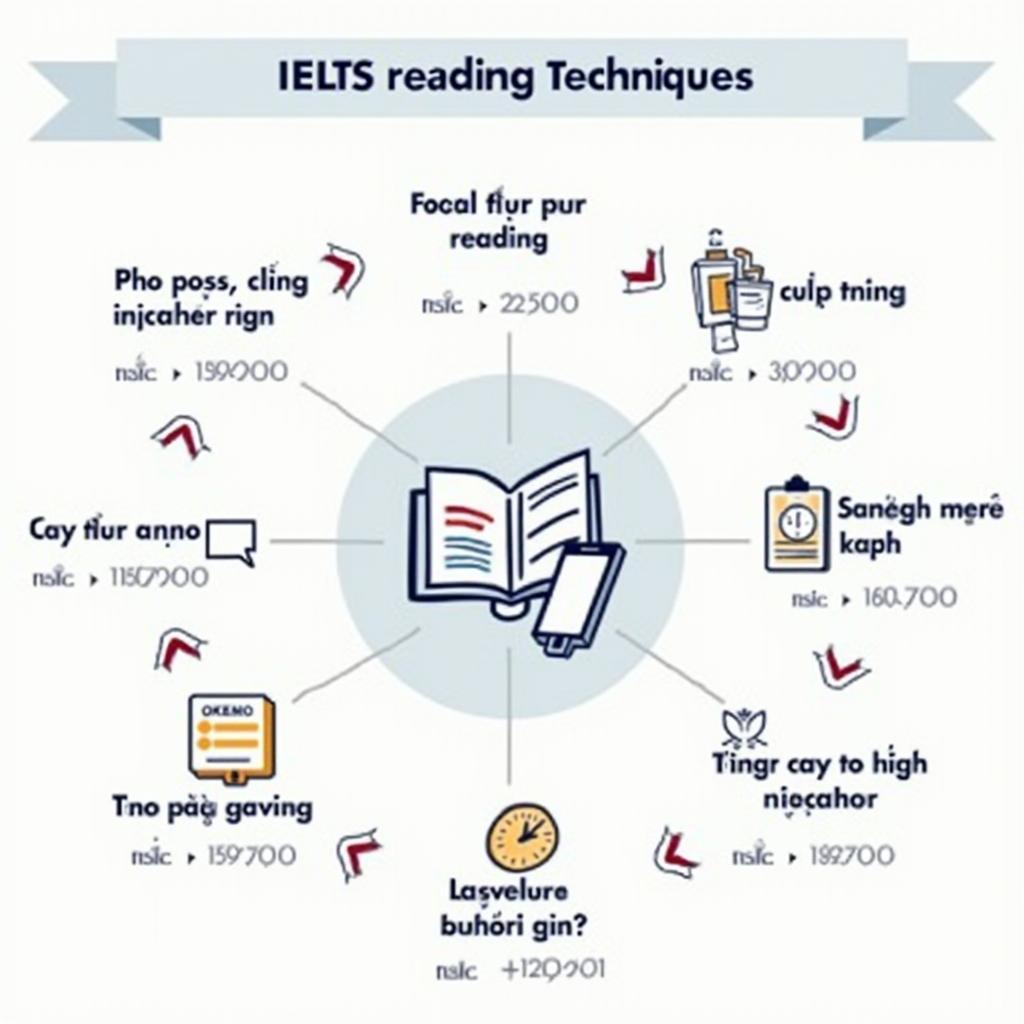 Các kỹ thuật làm bài IELTS Reading hiệu quả như skimming, scanning và time management
Chiến Lược Làm Bài Hiệu Quả
Kỹ Thuật Đọc Lướt (Skimming)
Khi bắt đầu mỗi passage, hãy dành 2-3 phút để đọc lướt toàn bộ bài:
- Đọc tiêu đề và subtitle
- Đọc câu đầu tiên của mỗi đoạn
- Chú ý các từ in đậm, in nghiêng
- Xác định cấu trúc tổng thể của bài
Điều này giúp bạn có bức tranh toàn cảnh về nội dung trước khi đi vào câu hỏi chi tiết.
Kỹ Thuật Đọc Quét (Scanning)
Với các dạng câu hỏi cần tìm thông tin cụ thể:
- Xác định từ khóa trong câu hỏi
- Tìm kiếm từ khóa hoặc từ đồng nghĩa trong bài
- Đọc kỹ câu chứa từ khóa và câu trước/sau nó
- So sánh thông tin với câu hỏi
Lưu ý rằng IELTS thường paraphrase câu hỏi, không dùng nguyên văn từ trong bài.
Quản Lý Thời Gian
Quy tắc 20-20-20:
- Passage 1: Tối đa 20 phút (bao gồm chuyển đáp án)
- Passage 2: Tối đa 20 phút
- Passage 3: Tối đa 20 phút
Nếu một câu hỏi quá khó, hãy đánh dấu và quay lại sau. Đừng mắc kẹt ở một câu quá lâu.
Xử Lý Các Dạng Câu Hỏi
True/False/Not Given:
- TRUE: Thông tin trong bài khớp hoàn toàn với câu hỏi
- FALSE: Thông tin trong bài mâu thuẫn với câu hỏi
- NOT GIVEN: Không có thông tin hoặc không đủ thông tin để xác định
Heading Matching:
- Đọc tất cả headings trước
- Xác định ý chính của mỗi đoạn (thường ở câu đầu)
- Loại trừ các headings đã dùng
- Chú ý các đoạn có ví dụ – heading không nên chỉ về ví dụ
Summary/Note Completion:
- Đọc kỹ hướng dẫn về số từ tối đa
- Xác định loại từ cần điền (danh từ, động từ, tính từ)
- Đáp án phải lấy NGUYÊN VĂN từ bài
- Chú ý ngữ pháp: số ít/số nhiều, thì của động từ
Tương tự như trong Importance of vocational training in education, việc phát triển kỹ năng sáng tạo thông qua nghệ thuật không chỉ giúp học sinh trong học thuật mà còn chuẩn bị cho họ những kỹ năng thực tiễn cần thiết trong môi trường làm việc hiện đại.
Lưu Ý Quan Trọng Khi Luyện Tập
Tránh Những Sai Lầm Phổ Biến
-
Đọc quá chậm: Nhiều học viên cố đọc hiểu 100% mọi từ, dẫn đến không đủ thời gian. Hãy chấp nhận không hiểu vài từ vựng nhưng vẫn nắm được ý chính.
-
Không đọc hướng dẫn kỹ: Mỗi dạng câu hỏi có yêu cầu riêng về số từ, cách viết đáp án. Đọc kỹ instructions tránh mất điểm oan.
-
Dựa vào kiến thức bản thân: IELTS Reading kiểm tra khả năng đọc hiểu, KHÔNG kiểm tra kiến thức. Chỉ dựa vào thông tin TRONG BÀI để trả lời.
-
Viết sai chính tả: Khi chép đáp án từ bài, phải viết CHÍNH XÁC 100%. Một lỗi chính tả = 0 điểm cho câu đó.
-
Không chuyển đáp án: Nhiều thí sinh quên chuyển đáp án từ đề thi sang Answer Sheet. Dành 2-3 phút cuối để làm việc này.
Cách Ôn Tập Hiệu Quả
Tuần 1-2: Xây dựng nền tảng
- Làm quen với 10+ dạng câu hỏi IELTS Reading
- Luyện từng dạng riêng biệt
- Không giới hạn thời gian
- Phân tích kỹ đáp án và cách paraphrase
Tuần 3-4: Phát triển kỹ năng
- Làm từng passage với giới hạn thời gian
- Passage 1: 17 phút
- Passage 2: 20 phút
- Passage 3: 23 phút
- Ghi chép các từ vựng mới
Tuần 5-6: Luyện thi thực chiến
- Làm full test 3 passages trong 60 phút
- Mô phỏng điều kiện thi thật
- Tự chấm điểm và phân tích sai sót
- Xác định điểm yếu cần cải thiện
Tuần 7-8: Hoàn thiện
- Tập trung vào dạng câu hỏi còn yếu
- Luyện tốc độ đọc với nhiều chủ đề
- Ôn lại từ vựng đã học
- Làm 2-3 full tests mỗi tuần
Liên quan đến việc áp dụng tư duy sáng tạo trong giáo dục, The role of education in fostering global cultural exchange cho thấy rằng nghệ thuật đóng vai trò cầu nối văn hóa quan trọng, giúp học sinh phát triển khả năng tư duy đa chiều và hiểu biết xuyên văn hóa.
Phân Tích Độ Khó Của Đề Thi
Passage 1: Easy Level
Passage đầu tiên về vai trò giáo dục nghệ thuật trong trường học được thiết kế với:
- Từ vựng: 70% từ vựng thông dụng, 30% từ vựng học thuật cơ bản
- Cấu trúc câu: Đơn giản đến trung bình, ít mệnh đề phụ
- Thông tin: Rõ ràng, dễ định vị trong bài
- Câu hỏi: Đáp án thường nằm gần nhau, ít paraphrase phức tạp
Target band: 5.0-6.5 – Thí sinh cần đạt 10-12/13 câu đúng.
Passage 2: Medium Level
Passage thứ hai về ngành công nghiệp sáng tạo và đổi mới kinh tế có độ khó:
- Từ vựng: 50% từ vựng học thuật, nhiều collocations
- Cấu trúc câu: Phức tạp hơn với nhiều mệnh đề quan hệ
- Thông tin: Cần suy luận và hiểu ngữ cảnh
- Câu hỏi: Paraphrase nhiều, câu hỏi Yes/No/Not Given khó phân biệt
Target band: 6.0-7.5 – Thí sinh cần đạt 9-11/13 câu đúng.
Passage 3: Hard Level
Passage cuối về khoa học thần kinh của sáng tạo là khó nhất:
- Từ vựng: 70% từ vựng chuyên ngành, thuật ngữ khoa học
- Cấu trúc câu: Rất phức tạp, câu dài nhiều mệnh đề
- Thông tin: Trừu tượng, yêu cầu hiểu sâu và tư duy phản biện
- Câu hỏi: Đòi hỏi phân tích cao, matching features phức tạp
Target band: 7.0-9.0 – Thí sinh cần đạt 11-14/14 câu đúng.
Tổng Kết Độ Khó
Bộ đề này phù hợp để:
- Học viên band 5.5-6.0: Tập trung vào Passage 1 và 2, cố gắng làm tốt Passage 3
- Học viên band 6.5-7.0: Đảm bảo full điểm Passage 1, tối đa hóa Passage 2 và 3
- Học viên band 7.5+: Cần đạt gần như toàn điểm cả 3 passages
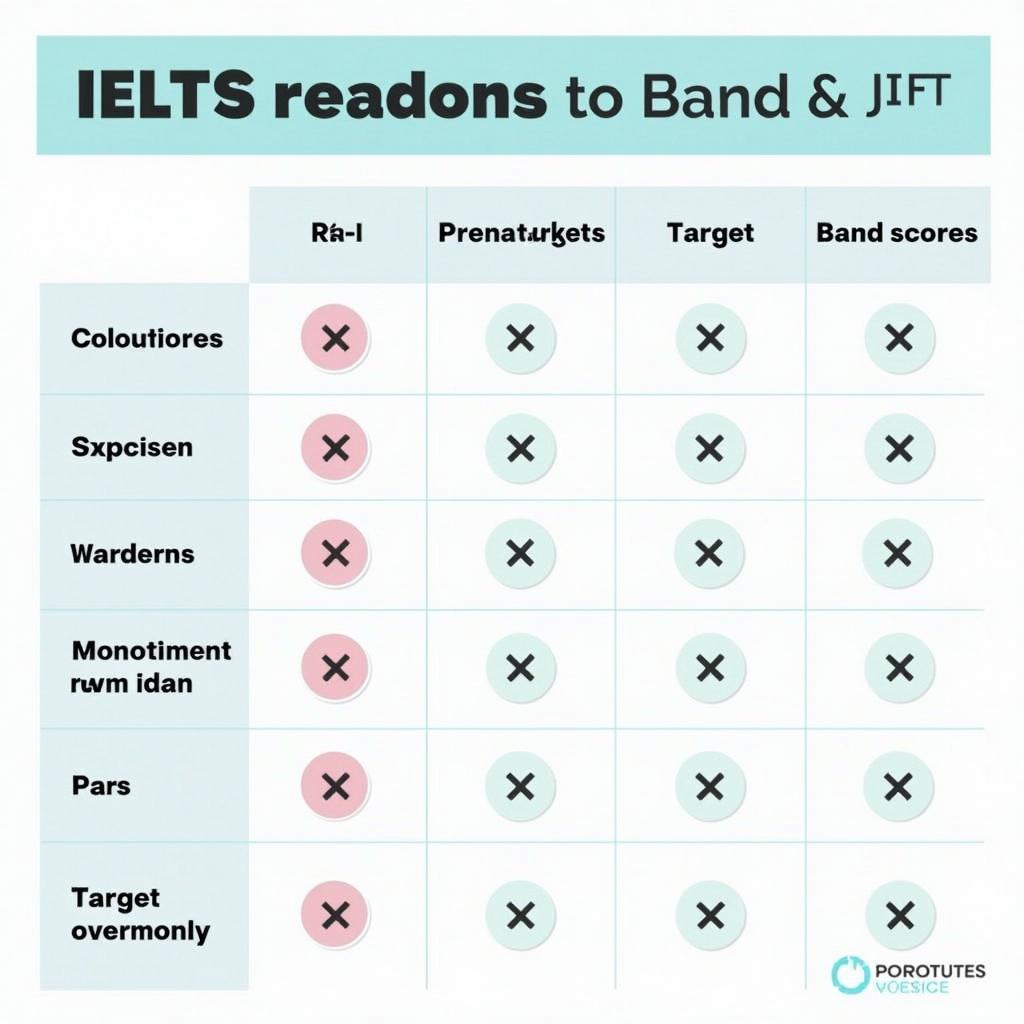 Bảng quy đổi band điểm IELTS Reading theo số câu trả lời đúng và chiến lược đạt band mục tiêu
Từ Vựng Theo Chủ Đề Arts and Creativity
Arts & Performance
- masterpiece (n) /ˈmɑːstəpiːs/: kiệt tác
- aesthetic (adj) /iːsˈθetɪk/: thẩm mỹ
- exhibition (n) /ˌeksɪˈbɪʃn/: triển lãm
- repertoire (n) /ˈrepətwɑː(r)/: kho tàng tác phẩm
- curator (n) /kjʊəˈreɪtə(r)/: người quản lý triển lãm
Creativity & Innovation
- ingenuity (n) /ˌɪndʒəˈnjuːəti/: sự khéo léo, tài tình
- pioneering (adj) /ˌpaɪəˈnɪərɪŋ/: tiên phong
- groundbreaking (adj) /ˈɡraʊndbreɪkɪŋ/: đột phá
- novel (adj) /ˈnɒvl/: mới lạ, độc đáo
- cutting-edge (adj) /ˌkʌtɪŋ ˈedʒ/: tiên tiến nhất
Brain & Cognition
- neural pathways (n): đường dẫn truyền thần kinh
- synaptic (adj) /sɪˈnæptɪk/: thuộc khớp thần kinh
- hemisphere (n) /ˈhemɪsfɪə(r)/: bán cầu não
- cortex (n) /ˈkɔːteks/: vỏ não
- neurotransmitter (n) /ˌnjʊərəʊtrænzˈmɪtə(r)/: chất dẫn truyền thần kinh
Trong bối cảnh toàn cầu hóa, How collaborative projects promote cross-cultural understanding nhấn mạnh rằng các dự án nghệ thuật hợp tác xuyên quốc gia không chỉ thúc đẩy sáng tạo mà còn xây dựng cầu nối văn hóa giữa các cộng đồng khác nhau.
Tips Từ Giảng Viên 20 Năm Kinh Nghiệm
Mindset Đúng Khi Làm IELTS Reading
1. Reading là kỹ năng, không phải tài năng
Nhiều học viên tin rằng “mình không giỏi đọc tiếng Anh” là vấn đề bẩm sinh. Sự thật là Reading hoàn toàn có thể luyện tập và cải thiện đáng kể trong 2-3 tháng với phương pháp đúng.
2. Tốc độ quan trọng hơn hiểu 100%
Bạn KHÔNG CẦN hiểu mọi từ trong bài. Mục tiêu là đọc đủ nhanh để hoàn thành 40 câu trong 60 phút. Học cách “đọc lướt” và “bỏ qua” từ không quan trọng.
3. Câu trả lời LUÔN có trong bài
Không có câu hỏi “mẹo” hay “không có đáp án”. Nếu bạn không tìm thấy, có nghĩa là đang tìm sai chỗ hoặc không nhận ra paraphrase.
Chiến Thuật Ngày Thi
Trước khi vào phòng thi (30 phút):
- Ôn lại các dạng câu hỏi và cách làm
- KHÔNG học từ vựng mới
- Thư giãn, nghe nhạc nhẹ
- Đi vệ sinh, uống nước vừa đủ
5 phút đầu trong phòng thi:
- Nghe kỹ hướng dẫn của giám thị
- Kiểm tra đề thi có đủ 3 passages, 40 câu hỏi không
- Ghi thời gian bắt đầu lên góc giấy
- Thở sâu 3 lần để tập trung
Trong lúc làm bài:
- Đánh dấu thời gian: 15p (xong P1), 35p (xong P2), 57p (xong P3)
- Nếu bí câu nào, ghi “?” và bỏ qua
- 3 phút cuối: Chuyển đáp án và kiểm tra chính tả
- KHÔNG để trống câu nào
Sau khi nộp bài:
- KHÔNG thảo luận đáp án với bạn bè
- Tập trung cho phần thi tiếp theo
- Tin vào những gì đã chuẩn bị
Lộ Trình Nâng Band Cụ Thể
Từ 5.0 lên 6.0 (cần 2-3 tháng):
- Học 30 từ vựng học thuật mỗi ngày
- Làm 1 passage mỗi ngày, phân tích kỹ đáp án
- Tập trung vào True/False/Not Given và Multiple Choice
- Mục tiêu: 23-26/40 câu đúng
Từ 6.0 lên 7.0 (cần 3-4 tháng):
- Đọc thêm tài liệu học thuật (journal articles, academic essays)
- Luyện paraphrase: viết lại câu giữ nguyên ý
- Làm full test 2 lần/tuần với giới hạn thời gian
- Mục tiêu: 30-32/40 câu đúng
Từ 7.0 lên 8.0+ (cần 4-6 tháng):
- Đọc rộng nhiều chủ đề: science, technology, society, arts
- Luyện tốc độ: đọc 300+ từ/phút với hiểu biết tốt
- Phân tích cấu trúc bài văn học thuật
- Mục tiêu: 35+/40 câu đúng
Để hiểu sâu hơn về vai trò của bối cảnh văn hóa trong phát triển tư duy sáng tạo, Cultural differences in parenting styles and education cung cấp góc nhìn về cách các nền văn hóa khác nhau tiếp cận việc nuôi dưỡng khả năng sáng tạo ở trẻ em.
Kết Luận
Chủ đề “Arts fostering creativity and innovation” không chỉ phổ biến trong IELTS Reading mà còn phản ánh xu hướng giáo dục và phát triển xã hội hiện đại. Qua bộ đề thi mẫu này, bạn đã được luyện tập với:
Ba passages độ khó tăng dần từ giáo dục nghệ thuật cơ bản, đến vai trò kinh tế của ngành sáng tạo, và cuối cùng là nghiên cứu khoa học thần kinh về sáng tạo – bao quát đầy đủ các góc độ của chủ đề.
40 câu hỏi đa dạng với 7 dạng câu hỏi khác nhau, giúp bạn làm quen với mọi format có thể xuất hiện trong thi thật. Mỗi dạng câu hỏi đều được thiết kế cẩn thận để phản ánh đúng độ khó của IELTS chính thức.
Đáp án chi tiết kèm giải thích không chỉ cho bạn biết đáp án đúng mà còn giải thích TẠI SAO đúng, thông tin nằm Ở ĐÂU trong bài, và cách PARAPHRASE được sử dụng. Đây là chìa khóa để bạn tự học hiệu quả.
Hơn 40 từ vựng chuyên ngành về nghệ thuật, sáng tạo, đổi mới và khoa học thần kinh, được tổ chức thành bảng với phiên âm, nghĩa, ví dụ và collocations – nguồn tài liệu quý giá cho việc mở rộng vốn từ học thuật.
Hãy nhớ rằng, IELTS Reading không phải về việc “giỏi tiếng Anh” mà về việc nắm vững kỹ thuật làm bài, quản lý thời gian hiệu quả, và luyện tập đều đặn. Với sự chuẩn bị bài bản và tư duy đúng đắn, bạn hoàn toàn có thể đạt được band điểm mục tiêu.
Chúc bạn ôn tập hiệu quả và đạt kết quả cao trong kỳ thi IELTS sắp tới! Hãy sử dụng đề thi mẫu này như một công cụ thực hành, phân tích kỹ từng câu trả lời, và rút ra bài học cho bản thân. Thành công không đến từ may mắn mà từ sự chuẩn bị kỹ lưỡng.


