
Mở Bài
Chủ đề năng lượng tái tạo và những thách thức trong việc áp dụng công nghệ xanh đang trở thành một trong những đề tài phổ biến nhất trong IELTS Reading. Theo thống kê từ Cambridge IELTS và British Council, các bài đọc liên quan đến sustainable energy, renewable technology adoption và environmental transformation xuất hiện với tần suất cao trong những năm gần đây, đặc biệt tại các kỳ thi từ 2020 đến nay.
Bài viết này được thiết kế đặc biệt cho học viên Việt Nam đang chuẩn bị cho kỳ thi IELTS, cung cấp một bộ đề thi hoàn chỉnh với 3 passages (từ dễ đến khó), 40 câu hỏi đa dạng giống thi thật 100%, kèm theo đáp án chi tiết và giải thích từng bước. Bạn sẽ được luyện tập với các dạng câu hỏi phổ biến như True/False/Not Given, Multiple Choice, Matching Headings, Summary Completion và nhiều dạng khác.
Đề thi này phù hợp cho học viên từ band 5.0 trở lên, giúp bạn làm quen với độ khó tăng dần, nắm vững kỹ thuật paraphrase, và xây dựng chiến lược làm bài hiệu quả. Hãy dành đủ 60 phút để hoàn thành bài test trong điều kiện như thi thật để đạt hiệu quả tốt nhất.
1. Hướng Dẫn Làm Bài IELTS Reading
Tổng Quan Về IELTS Reading Test
IELTS Reading Test kéo dài 60 phút với 3 passages và tổng cộng 40 câu hỏi. Mỗi câu trả lời đúng được tính 1 điểm, không bị trừ điểm với câu sai. Điểm số cuối cùng được quy đổi thành band từ 0-9.
Phân bổ thời gian khuyến nghị:
- Passage 1 (Easy): 15-17 phút
- Passage 2 (Medium): 18-20 phút
- Passage 3 (Hard): 23-25 phút
- Thời gian chuyển đáp án: 2-3 phút
Lưu ý quan trọng: Bạn phải viết đáp án vào Answer Sheet trong thời gian 60 phút, không có thêm thời gian chuyển đáp án riêng như phần Listening.
Các Dạng Câu Hỏi Trong Đề Này
Đề thi mẫu này bao gồm 7 dạng câu hỏi phổ biến nhất:
- Multiple Choice – Câu hỏi trắc nghiệm nhiều lựa chọn
- True/False/Not Given – Xác định tính đúng/sai/không có thông tin
- Matching Sentence Endings – Nối câu cho phù hợp
- Yes/No/Not Given – Xác định quan điểm tác giả
- Matching Headings – Chọn tiêu đề cho đoạn văn
- Summary Completion – Hoàn thành đoạn tóm tắt
- Short-answer Questions – Câu hỏi trả lời ngắn
Mỗi dạng câu hỏi yêu cầu kỹ năng đọc khác nhau: skimming (đọc lướt), scanning (đọc tìm kiếm), detailed reading (đọc kỹ), và inference (suy luận).
2. IELTS Reading Practice Test
PASSAGE 1 – The Basic Barriers to Clean Energy
Độ khó: Easy (Band 5.0-6.5)
Thời gian đề xuất: 15-17 phút
The transition from fossil fuels to renewable energy sources represents one of the most significant challenges facing modern society. While the benefits of clean energy are well-documented, including reduced greenhouse gas emissions and improved air quality, the path to widespread adoption is fraught with obstacles that span technological, economic, and social dimensions.
One of the most fundamental challenges is the intermittent nature of renewable energy generation. Solar panels only produce electricity when the sun shines, and wind turbines require adequate wind speeds to operate efficiently. This variability creates significant problems for power grid stability, as electricity supply must constantly match demand. Traditional fossil fuel power plants can be ramped up or down relatively quickly to meet changing needs, but renewable sources cannot offer the same level of flexibility without substantial energy storage solutions.
The economic barriers to renewable energy adoption remain substantial despite falling costs. The initial capital investment required to install solar panels, wind turbines, or other renewable energy systems often exceeds what many households and small businesses can afford. Although the long-term savings on energy bills can be considerable, the payback period may stretch over 10-20 years, deterring potential adopters who cannot wait that long to see returns on their investment. Furthermore, in many regions, government subsidies and incentive programs that once made renewable energy more accessible have been reduced or eliminated, making the financial case for switching less compelling.
Infrastructure limitations pose another major challenge. The existing electrical grid in most countries was designed for centralized power generation from large fossil fuel plants, not for the distributed generation model that characterizes renewable energy. Upgrading this infrastructure to accommodate bidirectional power flows, where households with solar panels can feed excess electricity back into the grid, requires massive investment. In developing nations, where basic electrical infrastructure may be inadequate or non-existent in rural areas, building a modern grid capable of integrating renewable sources presents an even greater challenge.
The issue of energy density also cannot be ignored. Fossil fuels contain enormous amounts of energy in relatively small volumes, making them easy to store and transport. Renewable energy sources typically have much lower energy density, meaning larger installations are needed to generate equivalent power. A coal plant occupying a few acres can produce as much electricity as a solar farm covering hundreds of acres. This land use requirement becomes problematic in densely populated areas where space is at a premium, and can also create environmental conflicts when large-scale renewable projects threaten natural habitats.
Social and political resistance represents yet another barrier. Communities often oppose wind farm installations due to concerns about noise, visual impact, and effects on property values. Similarly, large-scale solar projects can face opposition from residents who object to the transformation of landscapes. The not in my backyard (NIMBY) phenomenon is particularly strong regarding renewable energy infrastructure. Additionally, powerful vested interests in the fossil fuel industry actively work to slow the transition through lobbying efforts and the spread of misinformation about renewable energy technologies.
The challenge of workforce transition adds another layer of complexity. The fossil fuel industry employs millions of people worldwide in extraction, processing, and power generation. As societies shift toward renewable energy, these workers face uncertain futures. While the renewable energy sector is creating new jobs, they often require different skill sets and may be located in different regions than traditional energy jobs. Managing this transition fairly, ensuring that displaced workers receive adequate retraining and support, is both an economic and ethical imperative that many governments have yet to adequately address.
Finally, the technological maturity of certain renewable energy solutions remains incomplete. While solar and wind technologies are well-established, other promising options like tidal energy, advanced geothermal systems, and next-generation biofuels are still in relatively early stages of development. Large-scale hydrogen production from renewable sources, which could solve many storage and transportation challenges, remains expensive and inefficient. The pace of innovation needs to accelerate to make the full transition to renewable energy practically feasible within the timeframes necessary to address climate change.
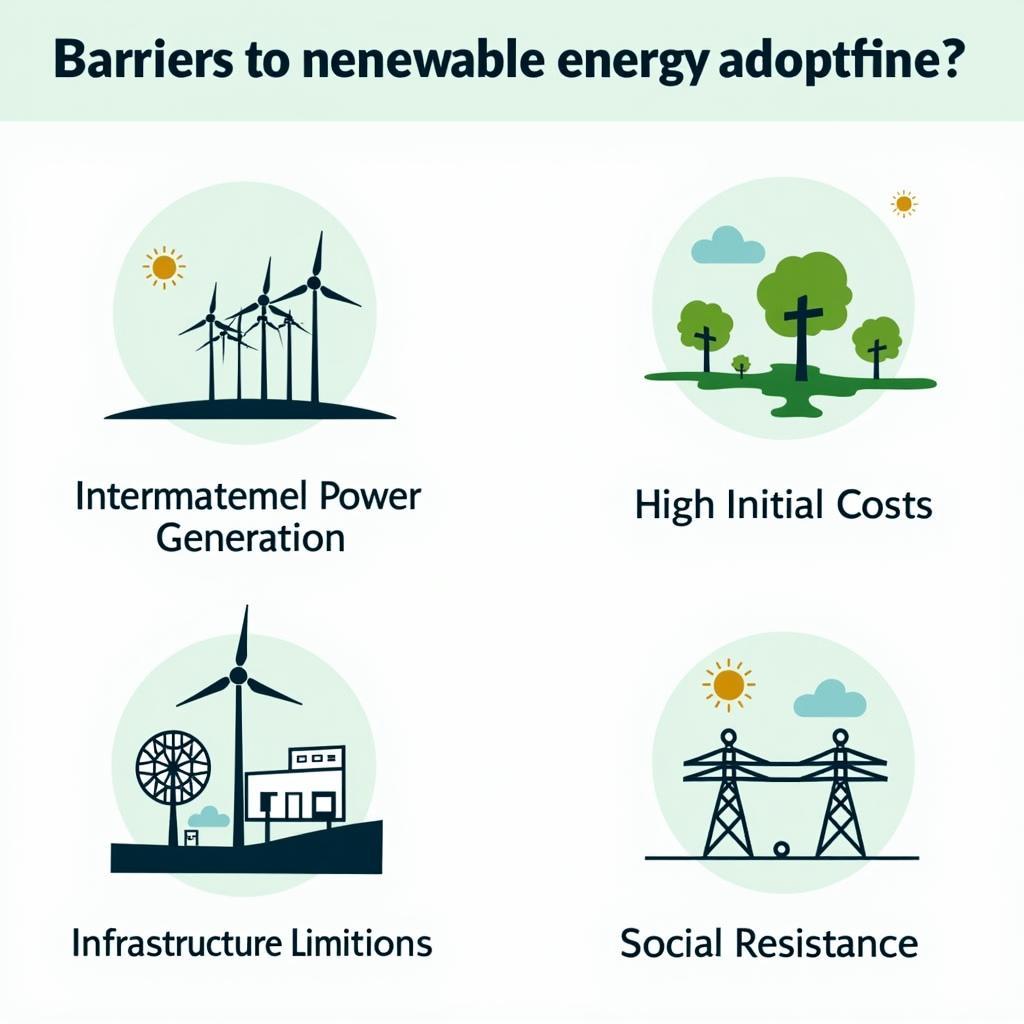 Rào cản cơ bản trong quá trình chuyển đổi sang năng lượng tái tạo và các thách thức công nghệ
Questions 1-6
Do the following statements agree with the information given in Reading Passage 1?
Write:
- TRUE if the statement agrees with the information
- FALSE if the statement contradicts the information
- NOT GIVEN if there is no information on this
- Renewable energy sources provide more consistent power generation than fossil fuel plants.
- The cost of installing renewable energy systems has decreased in recent years.
- Most existing electrical grids were originally built to support distributed power generation.
- Fossil fuels require less space than renewable energy sources to produce the same amount of electricity.
- All communities welcome wind farm installations in their local areas.
- The renewable energy sector creates jobs that require identical skills to fossil fuel industry jobs.
Questions 7-10
Complete the sentences below.
Choose NO MORE THAN TWO WORDS from the passage for each answer.
- The unpredictable nature of renewable energy generation creates problems for maintaining __.
- Many potential adopters are discouraged by the lengthy __ required to recover their initial investment in renewable energy.
- The “not in my backyard” phenomenon is particularly relevant to renewable energy __.
- Technologies such as advanced geothermal systems are still at early stages of __.
Questions 11-13
Choose the correct letter, A, B, C or D.
-
According to the passage, what is the main problem with energy storage for renewable sources?
- A. It is completely impossible with current technology
- B. Renewable sources lack the flexibility of fossil fuels without adequate storage
- C. Storage systems are too heavy to transport
- D. Energy storage is only needed during winter months
-
Why do developing nations face greater challenges with renewable energy infrastructure?
- A. They have no interest in renewable energy
- B. Their climates are unsuitable for solar or wind power
- C. Their existing electrical infrastructure may be inadequate
- D. They lack the land needed for renewable installations
-
What does the passage suggest about hydrogen production from renewable sources?
- A. It is the most efficient energy storage method available
- B. It remains costly and inefficient at present
- C. It has been completely abandoned by researchers
- D. It only works in specific geographic locations
PASSAGE 2 – Economic and Policy Dimensions of Renewable Transition
Độ khó: Medium (Band 6.0-7.5)
Thời gian đề xuất: 18-20 phút
The economic viability of renewable energy has improved dramatically over the past two decades, yet the transition away from conventional energy sources continues to face formidable market barriers that extend beyond simple cost comparisons. Understanding these challenges requires examining the complex interplay between market structures, regulatory frameworks, and the embedded advantages that fossil fuels have accumulated through more than a century of development and infrastructural investment.
A fundamental issue concerns price distortions in energy markets. The externalized costs of fossil fuel consumption—including air pollution, healthcare expenses from respiratory diseases, and climate change impacts—are rarely reflected in market prices. This creates an unlevel playing field where renewable energy must compete against artificially cheap fossil fuels whose true societal costs remain hidden. Economists estimate these externalities amount to hundreds of billions of dollars annually, yet attempts to implement carbon pricing mechanisms such as carbon taxes or cap-and-trade systems have met fierce political resistance in many jurisdictions. Without proper pricing of carbon emissions, the economic case for renewable energy remains weakened, despite its superior environmental performance.
The concept of stranded assets presents another critical economic challenge. Fossil fuel companies, utilities, and governments have invested trillions of dollars in extraction equipment, processing facilities, pipelines, and power plants designed for decades of operation. A rapid transition to renewable energy would render much of this infrastructure obsolete before its expected lifespan, creating massive write-offs that threaten corporate balance sheets and government revenues. This sunk cost problem creates powerful institutional inertia—organizations that have invested heavily in fossil fuel infrastructure naturally resist changes that would devalue their assets. The challenge of managing this transition without causing economic disruption or financial crises requires careful policy design that has proven politically difficult to achieve.
Financial market structures also favor established energy sources. Banks and investors understand fossil fuel projects well, having financed them for generations. The risk profiles, revenue streams, and asset valuations are well-established, making fossil fuel ventures appear safer investments. Renewable energy projects, despite their improving economics, are sometimes perceived as riskier due to their relative novelty, dependence on weather patterns, and regulatory uncertainties. This perception gap translates into higher borrowing costs for renewable projects in many markets, effectively handicapping them against fossil fuel competitors even when their fundamental economics are competitive.
Policy instability has proven particularly damaging to renewable energy deployment. The sector requires long-term planning horizons due to the substantial upfront investments involved. However, government support for renewable energy has fluctuated dramatically based on political cycles and ideological shifts. Feed-in tariffs, tax credits, and renewable portfolio standards have been introduced, modified, and sometimes abruptly canceled as governments change. This regulatory volatility creates investment uncertainty, as companies cannot reliably predict the policy environment that will exist when their projects become operational. Investors naturally demand higher returns to compensate for this policy risk, increasing the cost of capital for renewable projects and slowing deployment rates.
The challenge of intermittency translates into specific economic problems beyond the technical issues discussed earlier. Renewable energy generators cannot guarantee power delivery at specific times, making them less valuable to grid operators than dispatchable power sources that can be activated on demand. This limitation is reflected in capacity payments and market designs that often disadvantage renewable generators. Furthermore, periods of high renewable generation can paradoxically create negative electricity prices when supply exceeds demand, undermining the revenue potential of renewable assets. Without market reforms that properly value the environmental attributes and long-term benefits of renewable energy, these economic signals discourage investment in clean power.
The geographical mismatch between optimal renewable energy resources and electricity demand centers creates additional economic burdens. The best solar resources exist in deserts, while prime wind locations are often in remote coastal or elevated areas far from major cities. Connecting these resource-rich areas to demand centers requires extensive transmission infrastructure investments that can rival or exceed the cost of the renewable generators themselves. Determining who should bear these costs—renewable developers, utilities, consumers, or taxpayers—remains contentious. Many renewable projects have been abandoned due to the prohibitive expense of transmission connections, even when the generation economics were favorable.
Cross-border coordination challenges add yet another layer of economic complexity. Renewable energy resources are distributed unevenly across national boundaries, and achieving optimal efficiency would require extensive international power trading and grid interconnections. However, energy security concerns make countries reluctant to become dependent on imported electricity, even when doing so would be economically rational. The European Union has made significant progress toward an integrated energy market, but even there, progress has been slow and uneven. In other regions, lack of political cooperation prevents economically efficient renewable energy deployment.
For individuals and businesses considering renewable energy adoption, information asymmetries present barriers. Understanding the true costs and benefits of renewable installations requires technical expertise that most people lack. Unscrupulous vendors may overstate benefits or understate costs, while genuinely beneficial opportunities may be overlooked due to poor marketing or consumer unfamiliarity. This knowledge gap particularly affects lower-income households who might benefit most from energy bill reductions but have the least capacity to evaluate complex technical and financial proposals. Public education initiatives and standardized assessment tools could help address this challenge, but implementation has been inconsistent.
The comparison between Impact of electric vehicles on global oil consumption và renewable energy adoption reveals similar patterns of market resistance and policy challenges.
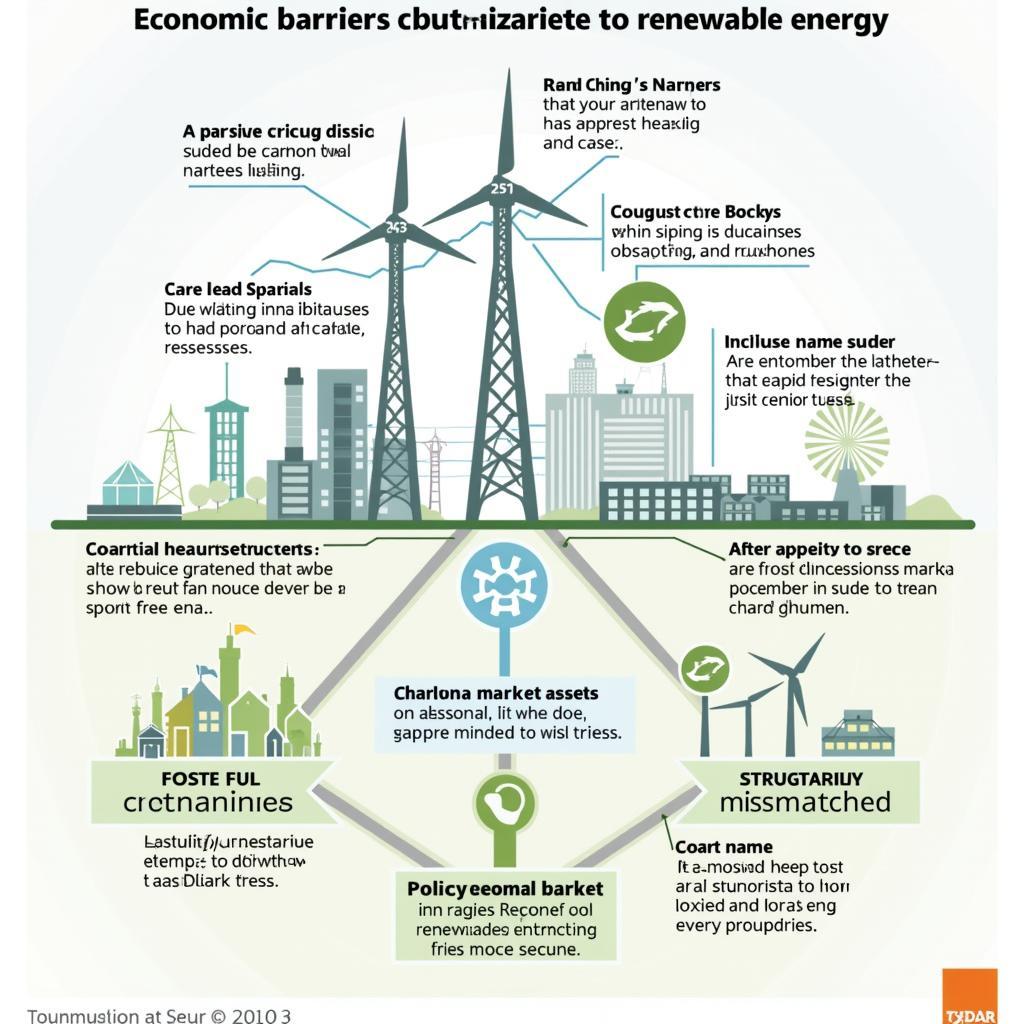 Các vấn đề kinh tế và chính sách ảnh hưởng đến việc chuyển đổi năng lượng tái tạo
Questions 14-19
Reading Passage 2 has nine paragraphs, A-I.
Which paragraph contains the following information?
Write the correct letter, A-I.
- Discussion of how renewable energy projects struggle to secure favorable financing
- Explanation of why countries hesitate to rely on electricity from other nations
- Description of how fossil fuel prices do not reflect their complete societal costs
- Analysis of how uncertainty in government policies affects investment decisions
- Information about the difficulty consumers face in evaluating renewable energy options
- Explanation of problems arising when renewable energy supply exceeds electricity demand
Questions 20-23
Do the following statements agree with the claims of the writer in Reading Passage 2?
Write:
- YES if the statement agrees with the claims of the writer
- NO if the statement contradicts the claims of the writer
- NOT GIVEN if it is impossible to say what the writer thinks about this
- Carbon pricing systems have been successfully implemented in most countries.
- The fossil fuel industry’s existing infrastructure creates resistance to renewable energy adoption.
- Banks consider renewable energy projects equally safe as fossil fuel investments.
- The European Union has achieved complete integration of its energy market.
Questions 24-26
Complete the summary below.
Choose NO MORE THAN TWO WORDS from the passage for each answer.
Renewable energy faces multiple economic challenges beyond basic cost comparisons. The 24. __ of fossil fuel consumption, such as pollution and health impacts, are typically not included in market prices. Additionally, the concept of 25. __ refers to fossil fuel infrastructure that would become worthless with a rapid energy transition. The distance between locations with the best renewable resources and major cities creates a 26. __ that requires expensive transmission infrastructure investments.
PASSAGE 3 – Socio-Technical Systems and the Innovation Challenge
Độ khó: Hard (Band 7.0-9.0)
Thời gian đề xuất: 23-25 phút
The persistent challenges confronting renewable energy adoption cannot be adequately understood through purely technical or economic lenses; rather, they reflect the profound inertia inherent in socio-technical systems—complex, interconnected networks encompassing technologies, institutions, user practices, infrastructures, and cultural meanings that have co-evolved over extended periods. The contemporary energy system, predominantly reliant on fossil fuels, represents such a deeply entrenched socio-technical regime, and displacing it requires navigating lock-in mechanisms that operate across multiple dimensions simultaneously.
Path dependency constitutes a fundamental theoretical framework for comprehending renewable energy adoption challenges. This concept, originating in institutional economics, explains how historical choices constrain future options, even when superior alternatives emerge. The fossil fuel-based energy system was not inevitable but rather resulted from specific historical circumstances, technological trajectories, and policy choices made decades or centuries ago. Once established, this system generated positive feedback loops that reinforced its dominance: infrastructure investments encouraged further compatible investments; economies of scale reduced costs; technical expertise accumulated around conventional technologies; regulations evolved to accommodate existing systems; and cultural practices adapted to available energy forms. Each reinforcing cycle made the existing system more difficult to displace, creating technological lock-in that persists even as renewable alternatives become technically and economically competitive.
The challenge is compounded by what scholars term increasing returns to adoption—a phenomenon where the value of a technology rises as more users adopt it. The fossil fuel system exhibits powerful network effects: an automobile becomes more useful as gasoline stations proliferate; natural gas heating becomes more attractive as pipeline networks expand; coal-fired electricity benefits from established supply chains, trained maintenance personnel, and compatible appliances. Renewable energy systems must overcome the disadvantage of lacking such complementary assets and established networks. A residential solar installation, for instance, provides greater value when net metering policies exist, when electrical contractors possess installation expertise, when financing mechanisms are readily available, and when neighbors’ visible installations demonstrate feasibility and normalize the technology. Building these complementary institutional structures requires coordinated development across multiple domains—a collective action problem that proves difficult to solve without directed policy intervention.
Incumbent resistance represents another significant dimension of the transition challenge. Existing energy companies possess not merely economic interests in preserving fossil fuel dominance but also political influence, epistemic authority, and cultural legitimacy accumulated over generations. These firms have shaped regulatory institutions, developed close relationships with policymakers, and established themselves as indispensable infrastructure providers. Their resistance to renewable energy takes multiple forms: direct lobbying against supportive policies; funding of contrarian research questioning climate science or renewable feasibility; strategic deployment of public relations campaigns emphasizing fossil fuel benefits; and co-optation strategies where they make token renewable investments while continuing to prioritize conventional resources. Some analysts characterize this as regime resistance—the predictable defensive response of established actors threatened by disruptive change.
The intermittency challenge of renewable energy extends beyond technical considerations to encompass fundamental questions about system architecture and control paradigms. The conventional electricity system operates as a hierarchical, centrally-controlled network where large generators provide power to passive consumers through unidirectional flows. This architecture reflects and reinforces particular institutional arrangements: utility monopolies, regulatory structures based on cost-of-service principles, and consumer expectations of on-demand availability without active participation. Renewable energy, particularly distributed generation, implies a radically different system architecture—more decentralized, bidirectional, and requiring active demand-side management. This transformation challenges not merely technical infrastructure but deeply embedded institutional logics and cultural expectations about energy provision.
Innovation studies scholarship highlights that successful technological transitions require more than technical improvements; they demand niche protection where emerging technologies can develop shielded from full market competition against mature alternatives. This concept helps explain why renewable energy struggled historically despite early technical promise. Without protected spaces—created through subsidies, guaranteed markets, or regulatory preferences—nascent renewable technologies could not achieve the performance improvements and cost reductions necessary for broader competition. The challenge lies in designing such protection appropriately: insufficient support fails to enable technology maturation, while excessive or prolonged protection may create dependency and impede necessary innovation. The political feasibility of maintaining such support through the extended periods required for technological learning has proven tenuous in many contexts.
The knowledge infrastructure supporting energy systems also exhibits strong incumbency advantages. Engineering curricula traditionally emphasize fossil fuel technologies; research institutions have developed expertise around conventional systems; technical standards reflect established practice; professional networks center on incumbent industries. Developing equivalent knowledge infrastructure for renewable energy requires substantial time and investment. Universities must redesign programs, researchers must build new expertise, standards bodies must develop appropriate protocols, and professional communities must evolve. This knowledge transition proceeds slowly, creating a skills gap that simultaneously impedes renewable deployment and reduces career attraction for talented individuals who might otherwise enter the field.
Cultural cognition research reveals how renewable energy adoption intersects with identity, worldview, and social meaning in ways that transcend rational cost-benefit calculation. Energy choices become symbolic practices expressing values and group affiliations. For some communities, fossil fuel industries represent not merely employers but sources of collective identity and regional pride; in such contexts, renewable energy may be resisted not on technical or economic grounds but as a threat to cultural continuity. Conversely, renewable energy adoption can signify environmental commitment, technological progressiveness, or self-sufficiency values. These cultural dimensions mean that identical technical and economic information may be processed entirely differently by individuals with varying worldviews, complicating policy communication and public engagement strategies.
The temporal mismatch between climate urgency and socio-technical transition timescales presents perhaps the most vexing challenge. Historical energy transitions—from wood to coal, coal to oil—unfolded over many decades, driven by the superior characteristics of successor fuels rather than by deliberate policy to displace incumbents. The renewable energy transition must occur far more rapidly to address climate change, yet accelerating socio-technical transitions proves extraordinarily difficult given the multiple co-evolutionary processes involved. Infrastructure must be transformed, institutions reformed, knowledge bases developed, user practices modified, and cultural meanings shifted—all simultaneously and within compressed timeframes. This deliberate acceleration of what typically constitutes organic historical processes represents an unprecedented governance challenge requiring policy innovations whose effectiveness remains uncertain.
Understanding renewable energy adoption through this socio-technical lens reveals that isolated interventions addressing single barriers—whether technical improvements, economic subsidies, or information campaigns—will likely prove insufficient. Instead, successful transition requires coordinated policy packages that simultaneously address multiple dimensions: overcoming technical limitations, correcting market failures, building complementary institutions, developing knowledge infrastructure, managing incumbent resistance, and facilitating cultural adaptation. Few governments have demonstrated capacity to design and implement such comprehensive approaches, particularly given the political constraints and competing priorities they face. The gap between the incremental changes politically feasible and the systemic transformation climatically necessary constitutes the core governance dilemma of the contemporary energy transition.
Tương tự như How is the rise of electric vehicles impacting global oil markets?, renewable energy systems must overcome deep-rooted structural barriers.
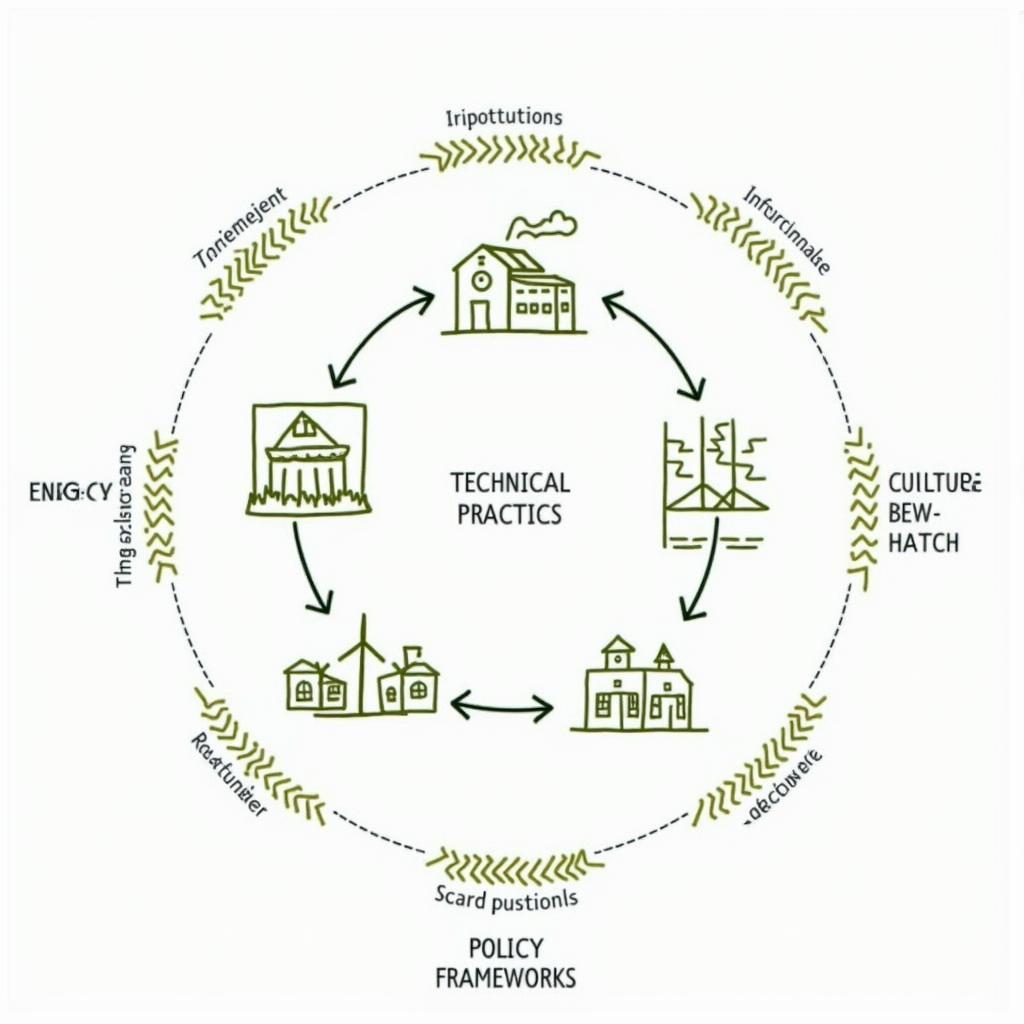 Hệ thống xã hội – kỹ thuật phức tạp và các thách thức đổi mới trong chuyển đổi năng lượng
Questions 27-31
Choose the correct letter, A, B, C or D.
-
According to the passage, path dependency in energy systems means that:
- A. Future energy choices are completely determined by past decisions
- B. Historical choices continue to influence present options and constraints
- C. Renewable energy was always destined to replace fossil fuels
- D. Energy systems follow a predetermined evolutionary path
-
The concept of “increasing returns to adoption” suggests that:
- A. Technologies become more expensive as more people use them
- B. Early adopters of technology receive the greatest benefits
- C. A technology’s value increases with wider adoption
- D. Returns on investment decrease over time
-
The passage describes incumbent energy companies’ resistance as including all EXCEPT:
- A. Lobbying against renewable energy policies
- B. Funding research that questions renewable feasibility
- C. Providing comprehensive support for rapid renewable transition
- D. Making token renewable investments while prioritizing fossil fuels
-
What does the passage suggest about protected spaces for renewable energy?
- A. They are unnecessary for technological development
- B. They should be maintained indefinitely to ensure success
- C. They require careful design to balance support and dependency
- D. They have proven politically easy to maintain
-
The “temporal mismatch” mentioned in the passage refers to:
- A. The difference between renewable and fossil fuel generation times
- B. The gap between climate urgency and the slow pace of socio-technical change
- C. The time required to train workers in renewable energy
- D. The delay between policy implementation and observable results
Questions 32-36
Complete the summary using the list of words/phrases, A-L, below.
The challenges facing renewable energy adoption are deeply rooted in 32. __ that have evolved over long periods. The fossil fuel system benefits from 33. __ that reinforce its dominance through infrastructure investments and cultural practices. Unlike conventional energy, renewable systems lack sufficient 34. __ such as established supply chains and trained personnel. The transition is complicated by 35. __ from existing energy companies who possess political influence accumulated over generations. Additionally, renewable energy requires a shift from a 36. __ electricity system to a more decentralized architecture.
A. complementary assets
B. socio-technical systems
C. positive feedback loops
D. hierarchical, centrally-controlled
E. technological improvements
F. incumbent resistance
G. economic incentives
H. consumer demand
I. government subsidies
J. environmental benefits
K. market competition
L. research funding
Questions 37-40
Do the following statements agree with the information given in Reading Passage 3?
Write:
- TRUE if the statement agrees with the information
- FALSE if the statement contradicts the information
- NOT GIVEN if there is no information on this
- Historical energy transitions typically occurred more slowly than the renewable transition must occur to address climate change.
- Engineering education programs have fully adapted to emphasize renewable energy technologies.
- Cultural factors can influence energy choices beyond rational economic considerations.
- Most governments have successfully implemented comprehensive policy packages to address renewable energy barriers.
3. Answer Keys – Đáp Án
PASSAGE 1: Questions 1-13
- FALSE
- NOT GIVEN
- FALSE
- TRUE
- FALSE
- FALSE
- power grid stability
- payback period
- infrastructure
- technological maturity / development
- B
- C
- B
PASSAGE 2: Questions 14-26
- D
- H
- B
- E
- I
- F
- NO
- YES
- NO
- NO
- externalized costs
- stranded assets
- geographical mismatch
PASSAGE 3: Questions 27-40
- B
- C
- C
- C
- B
- B
- C
- A
- F
- D
- TRUE
- FALSE
- TRUE
- FALSE
4. Giải Thích Đáp Án Chi Tiết
Passage 1 – Giải Thích
Câu 1: FALSE
- Dạng câu hỏi: True/False/Not Given
- Từ khóa: renewable energy sources, consistent power generation, fossil fuel plants
- Vị trí trong bài: Đoạn 2, dòng 1-4
- Giải thích: Câu hỏi nói năng lượng tái tạo cung cấp nguồn điện ổn định hơn nhiên liệu hóa thạch. Tuy nhiên, bài đọc rõ ràng nói ngược lại: “One of the most fundamental challenges is the intermittent nature of renewable energy generation” và “Traditional fossil fuel power plants can be ramped up or down relatively quickly to meet changing needs, but renewable sources cannot offer the same level of flexibility”. Đây là mâu thuẫn trực tiếp nên đáp án là FALSE.
Câu 4: TRUE
- Dạng câu hỏi: True/False/Not Given
- Từ khóa: fossil fuels, less space, renewable energy, same electricity
- Vị trí trong bài: Đoạn 5, dòng 4-7
- Giải thích: Bài viết nói “A coal plant occupying a few acres can produce as much electricity as a solar farm covering hundreds of acres”. Điều này khớp hoàn toàn với ý câu hỏi rằng nhiên liệu hóa thạch cần ít diện tích hơn để tạo ra cùng lượng điện.
Câu 7: power grid stability
- Dạng câu hỏi: Sentence Completion
- Từ khóa: unpredictable nature, renewable energy, problems
- Vị trí trong bài: Đoạn 2, câu cuối
- Giải thích: Bài viết nói “This variability creates significant problems for power grid stability”. Đáp án chính xác là “power grid stability”, không được vượt quá hai từ theo yêu cầu.
Câu 11: B
- Dạng câu hỏi: Multiple Choice
- Từ khóa: main problem, energy storage, renewable sources
- Vị trí trong bài: Đoạn 2
- Giải thích: Bài viết nói rõ “renewable sources cannot offer the same level of flexibility without substantial energy storage solutions”. Đáp án B đúng vì nó paraphrase ý này: thiếu tính linh hoạt của nhiên liệu hóa thạch khi không có lưu trữ năng lượng đầy đủ. Các đáp án khác không được đề cập hoặc sai thông tin.
Passage 2 – Giải Thích
Câu 14: D
- Dạng câu hỏi: Matching Information to Paragraphs
- Từ khóa: renewable energy projects, struggle, favorable financing
- Vị trí trong bài: Đoạn D (đoạn 4)
- Giải thích: Đoạn D thảo luận cụ thể về cấu trúc thị trường tài chính và cách các dự án năng lượng tái tạo bị coi là rủi ro hơn, dẫn đến “higher borrowing costs”, khớp với ý “struggle to secure favorable financing”.
Câu 20: NO
- Dạng câu hỏi: Yes/No/Not Given
- Từ khóa: carbon pricing systems, successfully implemented, most countries
- Vị trí trong bài: Đoạn B (đoạn 2)
- Giải thích: Bài viết nói “attempts to implement carbon pricing mechanisms such as carbon taxes or cap-and-trade systems have met fierce political resistance in many jurisdictions”. Điều này mâu thuẫn trực tiếp với việc triển khai thành công ở hầu hết các quốc gia, nên đáp án là NO.
Câu 24: externalized costs
- Dạng câu hỏi: Summary Completion
- Từ khóa: fossil fuel consumption, pollution, health impacts, not included in market prices
- Vị trí trong bài: Đoạn B
- Giải thích: Bài viết sử dụng cụm “externalized costs” để mô tả các chi phí như ô nhiễm và tác động sức khỏe không được phản ánh trong giá thị trường.
Passage 3 – Giải Thích
Câu 27: B
- Dạng câu hỏi: Multiple Choice
- Từ khóa: path dependency, energy systems
- Vị trí trong bài: Đoạn 2
- Giải thích: Bài viết định nghĩa path dependency là “how historical choices constrain future options”. Đáp án B chính xác paraphrase ý này. Đáp án A sai vì quá tuyệt đối (“completely determined”), C và D không được đề cập.
Câu 32-36: B, C, A, F, D
- Dạng câu hỏi: Summary Completion với word list
- Vị trí trong bài: Các đoạn đầu của passage
- Giải thích:
- 32 (B – socio-technical systems): Câu đầu passage nói về “socio-technical systems”
- 33 (C – positive feedback loops): Đoạn 2 đề cập “positive feedback loops that reinforced its dominance”
- 34 (A – complementary assets): Đoạn 3 nói “lacking such complementary assets”
- 35 (F – incumbent resistance): Đoạn 4 có tiêu đề và nội dung về “incumbent resistance”
- 36 (D – hierarchical, centrally-controlled): Đoạn 5 mô tả “hierarchical, centrally-controlled network”
Câu 37: TRUE
- Dạng câu hỏi: True/False/Not Given
- Từ khóa: historical energy transitions, slower, renewable transition
- Vị trí trong bài: Đoạn cuối
- Giải thích: Bài viết nói “Historical energy transitions—from wood to coal, coal to oil—unfolded over many decades” và “The renewable energy transition must occur far more rapidly to address climate change”. Điều này xác nhận câu hỏi là đúng.
Câu 38: FALSE
- Dạng câu hỏi: True/False/Not Given
- Từ khóa: engineering education programs, fully adapted, renewable energy
- Vị trí trong bài: Đoạn 7
- Giải thích: Bài viết nói “Engineering curricula traditionally emphasize fossil fuel technologies” và “Universities must redesign programs”, cho thấy việc điều chỉnh chưa hoàn thành, mâu thuẫn với “fully adapted”.
5. Từ Vựng Quan Trọng Theo Passage
Passage 1 – Essential Vocabulary
| Từ vựng | Loại từ | Phiên âm | Nghĩa tiếng Việt | Ví dụ từ bài | Collocation |
|---|---|---|---|---|---|
| intermittent | adj | /ˌɪntəˈmɪtənt/ | gián đoạn, không liên tục | intermittent nature of renewable energy generation | intermittent power supply |
| greenhouse gas emissions | noun phrase | /ˈɡriːnhaʊs ɡæs ɪˈmɪʃənz/ | khí thải nhà kính | reduced greenhouse gas emissions | reduce/cut emissions |
| payback period | noun phrase | /ˈpeɪbæk ˈpɪəriəd/ | thời gian hoàn vốn | payback period may stretch over 10-20 years | long/short payback period |
| distributed generation | noun phrase | /dɪˈstrɪbjuːtɪd ˌdʒenəˈreɪʃən/ | phát điện phân tán | distributed generation model | distributed generation system |
| energy density | noun phrase | /ˈenədʒi ˈdensəti/ | mật độ năng lượng | issue of energy density | high/low energy density |
| vested interests | noun phrase | /ˈvestɪd ˈɪntrəsts/ | lợi ích đã có, quyền lợi đã thâu tóm | powerful vested interests | protect vested interests |
| workforce transition | noun phrase | /ˈwɜːkfɔːs trænˈzɪʃən/ | chuyển đổi lực lượng lao động | challenge of workforce transition | manage workforce transition |
| retraining | noun | /ˌriːˈtreɪnɪŋ/ | đào tạo lại | displaced workers receive adequate retraining | provide/offer retraining |
| technological maturity | noun phrase | /ˌteknəˈlɒdʒɪkəl məˈtʃʊərəti/ | sự trưởng thành về công nghệ | technological maturity remains incomplete | achieve technological maturity |
| fossil fuels | noun phrase | /ˈfɒsəl ˈfjuːəlz/ | nhiên liệu hóa thạch | transition from fossil fuels | burn/consume fossil fuels |
| initial capital investment | noun phrase | /ɪˈnɪʃəl ˈkæpɪtəl ɪnˈvestmənt/ | vốn đầu tư ban đầu | initial capital investment required | require initial investment |
| bidirectional power flows | noun phrase | /ˌbaɪdəˈrekʃənəl ˈpaʊə fləʊz/ | dòng điện hai chiều | accommodate bidirectional power flows | enable bidirectional flows |
Passage 2 – Essential Vocabulary
| Từ vựng | Loại từ | Phiên âm | Nghĩa tiếng Việt | Ví dụ từ bài | Collocation |
|---|---|---|---|---|---|
| economic viability | noun phrase | /ˌiːkəˈnɒmɪk ˌvaɪəˈbɪləti/ | khả năng khả thi về kinh tế | economic viability has improved | assess economic viability |
| externalized costs | noun phrase | /ɪkˈstɜːnəlaɪzd kɒsts/ | chi phí ngoại sinh | externalized costs of fossil fuel consumption | internalize externalized costs |
| carbon pricing mechanisms | noun phrase | /ˈkɑːbən ˈpraɪsɪŋ ˈmekənɪzəmz/ | cơ chế định giá carbon | implement carbon pricing mechanisms | introduce pricing mechanisms |
| stranded assets | noun phrase | /ˈstrændɪd ˈæsets/ | tài sản mắc cạn | concept of stranded assets | create stranded assets |
| institutional inertia | noun phrase | /ˌɪnstɪˈtjuːʃənəl ɪˈnɜːʃə/ | quán tính thể chế | creates powerful institutional inertia | overcome institutional inertia |
| policy instability | noun phrase | /ˈpɒləsi ˌɪnstəˈbɪləti/ | sự bất ổn chính sách | policy instability has proven damaging | reduce policy instability |
| regulatory volatility | noun phrase | /ˈreɡjələtəri ˌvɒləˈtɪləti/ | sự biến động quy định | regulatory volatility creates uncertainty | minimize regulatory volatility |
| dispatchable power sources | noun phrase | /dɪˈspætʃəbəl ˈpaʊə ˈsɔːsɪz/ | nguồn điện có thể điều phối | less valuable than dispatchable power sources | provide dispatchable power |
| transmission infrastructure | noun phrase | /trænzˈmɪʃən ˈɪnfrəstrʌktʃə/ | cơ sở hạ tầng truyền tải | extensive transmission infrastructure | build transmission infrastructure |
| information asymmetries | noun phrase | /ˌɪnfəˈmeɪʃən əˈsɪmətriz/ | thông tin bất cân xứng | information asymmetries present barriers | reduce information asymmetries |
| capacity payments | noun phrase | /kəˈpæsəti ˈpeɪmənts/ | khoản thanh toán công suất | reflected in capacity payments | receive capacity payments |
| feed-in tariffs | noun phrase | /fiːd ɪn ˈtærɪfs/ | biểu giá mua điện ưu đãi | feed-in tariffs have been introduced | introduce feed-in tariffs |
| renewable portfolio standards | noun phrase | /rɪˈnjuːəbəl pɔːtˈfəʊliəʊ ˈstændədz/ | tiêu chuẩn danh mục đầu tư tái tạo | renewable portfolio standards | establish portfolio standards |
| cross-border coordination | noun phrase | /krɒs ˈbɔːdə kəʊˌɔːdɪˈneɪʃən/ | phối hợp xuyên biên giới | cross-border coordination challenges | improve cross-border coordination |
Passage 3 – Essential Vocabulary
| Từ vựng | Loại từ | Phiên âm | Nghĩa tiếng Việt | Ví dụ từ bài | Collocation |
|---|---|---|---|---|---|
| socio-technical systems | noun phrase | /ˌsəʊsiəʊ ˈteknɪkəl ˈsɪstəmz/ | hệ thống xã hội-kỹ thuật | deeply entrenched socio-technical regime | complex socio-technical systems |
| path dependency | noun phrase | /pɑːθ dɪˈpendənsi/ | sự phụ thuộc vào đường đi | path dependency constitutes fundamental framework | overcome path dependency |
| lock-in mechanisms | noun phrase | /lɒk ɪn ˈmekənɪzəmz/ | cơ chế khóa chặt | navigating lock-in mechanisms | create lock-in mechanisms |
| positive feedback loops | noun phrase | /ˈpɒzətɪv ˈfiːdbæk luːps/ | vòng phản hồi tích cực | generated positive feedback loops | establish feedback loops |
| economies of scale | noun phrase | /ɪˈkɒnəmiz əv skeɪl/ | quy mô kinh tế | economies of scale reduced costs | achieve economies of scale |
| incumbent resistance | noun phrase | /ɪnˈkʌmbənt rɪˈzɪstəns/ | sự kháng cự của các bên đương nhiệm | incumbent resistance represents challenge | overcome incumbent resistance |
| epistemic authority | noun phrase | /ˌepɪˈstiːmɪk ɔːˈθɒrəti/ | thẩm quyền tri thức | epistemic authority accumulated | establish epistemic authority |
| niche protection | noun phrase | /niːʃ prəˈtekʃən/ | bảo vệ thị trường ngách | require niche protection | provide niche protection |
| technological learning | noun phrase | /ˌteknəˈlɒdʒɪkəl ˈlɜːnɪŋ/ | học hỏi công nghệ | extended periods required for technological learning | facilitate technological learning |
| cultural cognition | noun phrase | /ˈkʌltʃərəl kɒɡˈnɪʃən/ | nhận thức văn hóa | cultural cognition research | study cultural cognition |
| co-evolutionary processes | noun phrase | /kəʊ ˌiːvəˈluːʃənəri ˈprəʊsesɪz/ | các quá trình đồng tiến hóa | multiple co-evolutionary processes | understand co-evolutionary processes |
| network effects | noun phrase | /ˈnetwɜːk ɪˈfekts/ | hiệu ứng mạng lưới | exhibits powerful network effects | leverage network effects |
| complementary assets | noun phrase | /ˌkɒmplɪˈmentəri ˈæsets/ | tài sản bổ sung | lacking complementary assets | develop complementary assets |
| regime resistance | noun phrase | /reɪˈʒiːm rɪˈzɪstəns/ | kháng cự của chế độ | characterize as regime resistance | overcome regime resistance |
| demand-side management | noun phrase | /dɪˈmɑːnd saɪd ˈmænɪdʒmənt/ | quản lý phía cầu | requiring active demand-side management | implement demand-side management |
| temporal mismatch | noun phrase | /ˈtempərəl ˈmɪsmætʃ/ | sự không khớp về thời gian | temporal mismatch between urgency and timescales | address temporal mismatch |
| collective action problem | noun phrase | /kəˈlektɪv ˈækʃən ˈprɒbləm/ | vấn đề hành động tập thể | collective action problem difficult to solve | overcome collective action problem |
| governance dilemma | noun phrase | /ˈɡʌvənəns dɪˈlemə/ | thế khó về quản trị | core governance dilemma | address governance dilemma |
Kết Bài
Chủ đề “Challenges In Renewable Energy Adoption” không chỉ là một đề tài thường xuyên xuất hiện trong IELTS Reading mà còn phản ánh những vấn đề cấp thiết của thế giới đương đại. Qua bộ đề thi mẫu này, bạn đã được trải nghiệm một bài test hoàn chỉnh với 3 passages tăng dần về độ khó, từ những thách thức cơ bản trong Passage 1, đến các vấn đề kinh tế-chính sách phức tạp trong Passage 2, và cuối cùng là phân tích sâu về hệ thống xã hội-kỹ thuật trong Passage 3.
Bộ 40 câu hỏi đa dạng đã giúp bạn luyện tập với 7 dạng câu hỏi phổ biến nhất trong IELTS Reading, từ True/False/Not Given, Multiple Choice, đến Matching Headings và Summary Completion. Đáp án chi tiết kèm giải thích đã chỉ ra cách xác định thông tin trong bài, kỹ thuật paraphrase, và phương pháp loại trừ đáp án sai.
Để tận dụng tốt nhất tài liệu này, bạn nên:
- Làm bài trong điều kiện thi thật (60 phút, không tra từ điển)
- Tự chấm điểm và phân tích những câu sai
- Đọc kỹ phần giải thích để hiểu logic của từng câu hỏi
- Học thuộc các từ vựng quan trọng đã được liệt kê
- Làm lại bài test sau 1-2 tuần để củng cố kiến thức
Đối với những ai quan tâm đến Impact of renewable energy on policy-making và The role of renewable energy in reducing global greenhouse gas emissions, việc hiểu sâu về chủ đề này sẽ giúp bạn tự tin hơn khi gặp các bài đọc tương tự.
Chúc bạn ôn tập hiệu quả và đạt band điểm cao trong kỳ thi IELTS sắp tới! Hãy nhớ rằng, sự tiến bộ trong IELTS Reading đến từ việc luyện tập đều đặn, phân tích sai lầm cẩn thận, và không ngừng mở rộng vốn từ vựng học thuật của mình.


[…] tự như challenges in renewable energy adoption, the transition has created a bifurcated employment landscape within the energy sector. While […]