
Mở bài
Chủ đề đa dạng sinh học trong khu vực đô thị (biodiversity in urban areas) đang trở thành một trong những chủ đề nóng trong các đề thi IELTS Reading gần đây. Với sự phát triển nhanh chóng của đô thị hóa toàn cầu, các thử thách trong việc duy trì và bảo vệ hệ sinh thái tự nhiên giữa lòng thành phố đã thu hút sự quan tâm lớn từ giới học thuật và các nhà hoạch định chính sách.
Trong bài viết này, bạn sẽ được trải nghiệm một bộ đề thi IELTS Reading hoàn chỉnh với 3 passages có độ khó tăng dần từ Easy đến Hard, bao gồm 40 câu hỏi đa dạng giống như trong kỳ thi thật. Bạn sẽ học được:
- Cách làm bài với các dạng câu hỏi phổ biến: True/False/Not Given, Multiple Choice, Matching Headings, Summary Completion và nhiều dạng khác
- Kỹ thuật xác định thông tin và paraphrase trong passages học thuật
- Từ vựng chuyên ngành về môi trường, sinh thái và đô thị hóa
- Chiến lược phân bổ thời gian hiệu quả cho từng passage
Bộ đề này phù hợp với học viên từ band 5.0 trở lên, giúp bạn làm quen với cấu trúc đề thi chuẩn Cambridge và nâng cao khả năng đọc hiểu học thuật.
1. Hướng dẫn làm bài IELTS Reading
Tổng Quan Về IELTS Reading Test
IELTS Reading Test kéo dài 60 phút với 3 passages và tổng cộng 40 câu hỏi. Mỗi câu trả lời đúng được tính 1 điểm, không có điểm âm cho câu trả lời sai.
Phân bổ thời gian khuyến nghị:
- Passage 1: 15-17 phút (độ khó Easy)
- Passage 2: 18-20 phút (độ khó Medium)
- Passage 3: 23-25 phút (độ khó Hard)
Lưu ý dành 2-3 phút cuối để chuyển đáp án vào Answer Sheet, đảm bảo viết đúng chính tả và format.
Các Dạng Câu Hỏi Trong Đề Này
Đề thi mẫu này bao gồm 7 dạng câu hỏi phổ biến nhất trong IELTS Reading:
- Multiple Choice – Câu hỏi trắc nghiệm nhiều lựa chọn
- True/False/Not Given – Xác định tính đúng/sai của thông tin
- Matching Information – Nối thông tin với đoạn văn
- Sentence Completion – Hoàn thành câu
- Summary Completion – Hoàn thành đoạn tóm tắt
- Matching Features – Nối đặc điểm với nhân vật/tổ chức
- Short-answer Questions – Câu hỏi trả lời ngắn
2. IELTS Reading Practice Test
PASSAGE 1 – Urban Green Spaces and Wildlife
Độ khó: Easy (Band 5.0-6.5)
Thời gian đề xuất: 15-17 phút
Cities around the world are experiencing unprecedented growth, with more than half of the global population now living in urban areas. This rapid urbanization has led to significant challenges in maintaining biodiversity – the variety of plant and animal life – within city boundaries. However, urban planners and conservationists are increasingly recognizing that cities can play a crucial role in protecting wildlife and creating sustainable ecosystems.
Green spaces, such as parks, gardens, and nature reserves, serve as vital habitats for numerous species in urban environments. These areas provide food sources, shelter, and breeding grounds for birds, insects, and small mammals. In London, for example, the city’s parks are home to more than 13,000 species of wildlife, including foxes, hedgehogs, and over 60 species of birds. Similarly, New York’s Central Park supports approximately 270 bird species, making it a significant ecological corridor in the heart of one of the world’s busiest cities.
The benefits of urban biodiversity extend beyond wildlife conservation. Studies have shown that green infrastructure improves air quality by absorbing pollutants and producing oxygen. Trees and plants also help regulate temperature, reducing the urban heat island effect – a phenomenon where cities experience significantly higher temperatures than surrounding rural areas. Moreover, access to nature in urban settings has been linked to improved mental health and wellbeing among city residents.
However, maintaining biodiversity in cities faces several obstacles. Habitat fragmentation occurs when natural areas are divided by roads, buildings, and other development, making it difficult for animals to move between green spaces. This isolation can lead to reduced genetic diversity within populations, making species more vulnerable to diseases and environmental changes. Additionally, the introduction of invasive species – non-native plants and animals that outcompete local species – poses a significant threat to urban ecosystems.
Urban pollution represents another major challenge. Light pollution from street lamps and buildings disrupts the natural behavior of nocturnal animals and affects bird migration patterns. Noise pollution from traffic and construction can interfere with animal communication and breeding. Chemical pollutants from vehicles and industrial activities contaminate soil and water, affecting the entire food chain.
Despite these challenges, many cities are implementing innovative solutions to support urban biodiversity. Wildlife corridors – connected networks of green spaces – allow animals to move safely between different habitats. In Singapore, the government has created a “City in a Garden” vision, incorporating green roofs, vertical gardens, and sky bridges to connect parks and nature reserves. Melbourne, Australia, has developed an urban forest strategy that aims to increase tree canopy cover and create more habitat for native species.
Community involvement is essential for successful urban biodiversity conservation. Citizen science projects encourage residents to monitor and report wildlife sightings, providing valuable data for researchers and conservationists. Urban gardening initiatives, including the creation of pollinator gardens with native plants, help support bees, butterflies, and other beneficial insects. Schools and community groups often participate in tree-planting events and habitat restoration projects, fostering environmental awareness among urban populations.
The integration of nature into urban design is becoming increasingly sophisticated. Biophilic design – an architectural approach that connects building occupants with nature – incorporates natural materials, living walls, and water features into buildings. Some cities are experimenting with rewilding – allowing certain urban areas to return to a more natural state with minimal human intervention. These approaches not only support biodiversity but also create more livable and attractive cities for human residents.
Looking forward, the success of urban biodiversity conservation will depend on collaboration between governments, developers, conservation organizations, and local communities. Urban planning policies must prioritize the protection of existing green spaces and the creation of new habitats. As cities continue to grow, finding ways to coexist with nature will be crucial for both wildlife survival and human quality of life.
Questions 1-5
Do the following statements agree with the information given in the passage?
Write:
- TRUE if the statement agrees with the information
- FALSE if the statement contradicts the information
- NOT GIVEN if there is no information on this
- More than 50% of the world’s population currently lives in cities.
- London’s parks contain exactly 13,000 different wildlife species.
- Central Park in New York attracts more bird species than any other urban park globally.
- Green infrastructure helps reduce air pollution in urban areas.
- Urban heat island effect causes cities to be cooler than rural areas.
Questions 6-9
Complete the sentences below.
Choose NO MORE THAN TWO WORDS from the passage for each answer.
- The division of natural areas by human development is known as ____.
- ____ are plants and animals from other regions that compete with local species.
- Artificial lighting in cities creates ____, which affects nocturnal wildlife behavior.
- ____ are systems of linked green areas that help animals travel between habitats safely.
Questions 10-13
Choose the correct letter, A, B, C or D.
- According to the passage, urban green spaces provide wildlife with:
- A. only food sources
- B. food, shelter, and breeding areas
- C. protection from predators
- D. medical treatment
- The main problem with habitat fragmentation is that it:
- A. increases the size of animal populations
- B. improves genetic diversity
- C. isolates wildlife populations
- D. creates more green spaces
- Singapore’s approach to urban biodiversity includes:
- A. removing all buildings
- B. banning vehicles from the city
- C. creating vertical gardens and sky bridges
- D. relocating all wildlife to rural areas
- Citizen science projects are described as:
- A. professional research conducted by scientists
- B. programs where residents help monitor wildlife
- C. government-only initiatives
- D. projects that exclude community participation
PASSAGE 2 – The Economics and Politics of Urban Conservation
Độ khó: Medium (Band 6.0-7.5)
Thời gian đề xuất: 18-20 phút
The challenge of preserving biodiversity within urban environments extends far beyond ecological considerations, encompassing complex economic and political dimensions that often determine the success or failure of conservation initiatives. As cities worldwide grapple with competing demands for limited space, the tension between development pressures and environmental protection has become increasingly acute, requiring sophisticated policy frameworks and innovative financing mechanisms.
Urban land economics presents a fundamental obstacle to biodiversity conservation. In most cities, property values are determined by potential development returns, creating powerful financial incentives to convert green spaces into residential, commercial, or industrial uses. A vacant lot in a prime urban location might be worth millions of dollars if developed, but its value as wildlife habitat is rarely reflected in market prices. This market failure – where environmental benefits are not adequately captured in economic calculations – means that developers and landowners face strong pressures to eliminate natural features rather than preserve them.
Municipal governments must balance these economic realities against public interest in environmental protection. The concept of ecosystem services – the benefits that natural systems provide to human populations – has emerged as a tool for quantifying the economic value of urban biodiversity. These services include pollination of urban agriculture and gardens, natural pest control, water filtration through wetlands, and carbon sequestration by trees and plants. Research conducted in major cities has demonstrated that the monetary value of these services often exceeds the short-term profits from development, yet this long-term perspective frequently fails to influence decision-making processes dominated by immediate financial considerations.
The political economy of urban conservation involves multiple stakeholders with divergent interests and unequal power. Property developers and construction companies typically possess substantial financial resources and political influence, enabling them to shape zoning regulations and land-use policies in their favor. In contrast, environmental advocacy groups, while often enjoying public support, may lack the economic leverage to compete in political negotiations. This power asymmetry can result in policy outcomes that systematically favor development over conservation, particularly in cities where economic growth is prioritized above environmental concerns.
Regulatory frameworks for urban biodiversity protection vary considerably across jurisdictions, reflecting different political cultures and administrative capacities. Some cities have implemented environmental impact assessment requirements that compel developers to evaluate and mitigate potential harm to wildlife habitats. However, the effectiveness of these mechanisms depends critically on rigorous enforcement, which may be compromised by insufficient staffing, inadequate funding, or regulatory capture – situations where regulatory agencies become dominated by the industries they are supposed to oversee.
Incentive-based approaches have gained prominence as alternatives or supplements to traditional regulation. Tax incentives can encourage private landowners to maintain green spaces by reducing property taxes for parcels that support biodiversity. Transferable development rights programs allow landowners to sell development permissions from environmentally sensitive sites to other locations, compensating them for forgone development opportunities while protecting crucial habitats. Payment for ecosystem services schemes provide direct financial compensation to landowners who maintain or restore natural features that benefit the broader community.
However, these market-based instruments face significant implementation challenges. Determining appropriate compensation levels requires complex ecological and economic assessments that may exceed municipal administrative capacities. Furthermore, such programs can raise environmental justice concerns if they concentrate conservation efforts in affluent neighborhoods while neglecting lower-income areas, potentially exacerbating existing inequalities in access to nature and its associated health benefits.
Community participation in urban biodiversity governance has emerged as both a democratic imperative and a practical necessity. Participatory planning processes that engage diverse community voices can generate more equitable and sustainable outcomes than top-down approaches. Resident involvement in stewardship activities – such as habitat restoration, invasive species removal, and wildlife monitoring – can reduce management costs while building social capital and environmental literacy. Yet genuine participation requires meaningful power-sharing, not merely symbolic consultation, and must address barriers that prevent marginalized communities from engaging effectively in decision-making processes.
The role of green gentrification has become an increasingly contentious issue in urban conservation debates. While green infrastructure improvements can enhance neighborhood quality and support biodiversity, they may also trigger property value increases that displace long-term residents, particularly in lower-income communities. This phenomenon reveals a troubling paradox: conservation efforts intended to benefit all residents may inadvertently contribute to social inequality and community disruption. Addressing this challenge requires integrating affordable housing protection with environmental planning, ensuring that biodiversity conservation serves social justice rather than undermining it.
International experiences offer valuable lessons for cities seeking to navigate these complex challenges. Curitiba, Brazil, pioneered innovative approaches to integrating biodiversity conservation with urban development, creating an extensive network of parks that serve both ecological and social functions while contributing to the city’s distinctive identity. Singapore’s comprehensive planning framework mandates biodiversity consideration in all development projects, backed by substantial public investment in green infrastructure. These examples demonstrate that sustained political commitment, adequate financial resources, and integrated policy frameworks can overcome obstacles that might otherwise seem insurmountable.
Looking ahead, climate change adds further urgency and complexity to urban biodiversity conservation. As cities face increasing climate risks, nature-based solutions – such as wetlands for flood management and urban forests for heat mitigation – are gaining recognition for their capacity to address both environmental and development challenges simultaneously. This convergence of biodiversity conservation with climate adaptation may create new political opportunities for advancing urban environmental agendas, though success will require overcoming entrenched patterns of decision-making that have historically marginalized ecological considerations in urban development.
Questions 14-18
Choose the correct letter, A, B, C or D.
- According to the passage, urban land economics creates obstacles for conservation because:
- A. green spaces are too expensive to maintain
- B. market prices don’t reflect environmental value
- C. developers are unaware of biodiversity importance
- D. wildlife habitats generate high profits
- The concept of ecosystem services is used to:
- A. restrict urban development completely
- B. calculate the economic value of natural systems
- C. eliminate market-based approaches
- D. increase property developer profits
- Power asymmetry in urban conservation refers to:
- A. unequal influence between developers and environmental groups
- B. differences in political party systems
- C. variations in city sizes
- D. gaps in scientific knowledge
- Regulatory capture occurs when:
- A. regulations become too strict
- B. industries dominate regulatory agencies
- C. environmental laws are effectively enforced
- D. governments increase funding for oversight
- Green gentrification is problematic because it:
- A. reduces biodiversity in urban areas
- B. costs too much money to implement
- C. may displace lower-income residents
- D. decreases property values significantly
Questions 19-23
Complete the summary below.
Choose NO MORE THAN TWO WORDS from the passage for each answer.
Urban biodiversity conservation faces economic challenges due to 19. ____, where environmental benefits are not reflected in market prices. To address this, some cities use 20. ____ to reduce property taxes for landowners who maintain green spaces. Another approach involves 21. ____, which allow development rights to be sold and transferred to other locations. However, these programs may create 22. ____ concerns if they benefit wealthy areas more than poor neighborhoods. Additionally, 23. ____ can occur when conservation improvements increase property values and force residents to leave.
Questions 24-26
Do the following statements agree with the claims of the writer in the passage?
Write:
- YES if the statement agrees with the claims of the writer
- NO if the statement contradicts the claims of the writer
- NOT GIVEN if it is impossible to say what the writer thinks about this
- Property developers always have more political power than environmental groups in all cities.
- Participatory planning processes produce better outcomes than top-down approaches.
- Climate change will make urban biodiversity conservation impossible to achieve.
PASSAGE 3 – Scientific Perspectives on Urban Ecological Dynamics
Độ khó: Hard (Band 7.0-9.0)
Thời gian đề xuất: 23-25 phút
The maintenance of biodiversity in urban environments represents a nexus of ecological, evolutionary, and socio-ecological complexities that challenge traditional conservation paradigms developed primarily for wilderness contexts. Contemporary urban ecology has emerged as a sophisticated interdisciplinary field that recognizes cities not merely as biological deserts demanding remediation, but as novel ecosystems exhibiting unique assemblages of native and non-native species, distinctive disturbance regimes, and unprecedented rates of environmental change that generate novel selective pressures and evolutionary trajectories.
Urban ecological theory has evolved considerably from earlier conceptualizations that viewed cities through a binary lens of natural versus artificial environments. The intermediate disturbance hypothesis, originally developed for non-urban ecosystems, has been adapted to explain patterns of species richness in cities, where moderate levels of human disturbance may actually enhance biodiversity by creating heterogeneous mosaics of habitats supporting diverse ecological niches. However, this relationship exhibits non-linear dynamics, with biodiversity initially increasing with moderate urbanization but declining precipitously beyond critical thresholds of habitat loss and fragmentation. Understanding these tipping points is crucial for urban planning, yet remains complicated by context dependency – the fact that threshold values vary substantially across different taxonomic groups, geographical regions, and urban morphologies.
The phenomenon of urban adaptation has attracted significant scientific attention, with mounting evidence that many species undergo rapid evolutionary changes in response to urban selective pressures. Studies documenting microevolutionary shifts in urban populations have revealed adaptations ranging from behavioral modifications – such as altered vocalization patterns in birds to overcome anthropogenic noise – to physiological changes including enhanced stress tolerance and modified metabolic rates. These adaptations occur across remarkably brief timescales, often within decades rather than millennia, challenging conventional assumptions about evolutionary tempo. The White-crowned Sparrow (Zonotrichia leucophrys) population in San Francisco, for instance, has evolved higher-frequency songs that better penetrate urban acoustic environments, representing a clear example of acoustic adaptation to anthropogenic soundscapes.
However, urban-induced evolution raises profound questions about conservation priorities and strategies. If urban populations diverge genetically and phenotypically from their rural counterparts, should they be valued as unique adaptations worthy of protection, or do they represent genetic pollution that threatens the integrity of original genotypes? This dilemma is particularly acute when considering hybrid zones where urban-adapted and non-urban populations interbreed, potentially compromising locally adapted gene complexes. The normative dimensions of these questions – fundamentally about what nature we wish to preserve – intersect uncomfortably with empirical ecology, forcing conservation practitioners to confront value judgments that science alone cannot resolve.
Metacommunity theory provides a valuable framework for understanding biodiversity patterns across urban landscapes by examining how local community dynamics interact with regional processes of dispersal and colonization. Urban environments can be conceptualized as habitat islands embedded within an inhospitable matrix of built infrastructure, with species persistence depending on the balance between local extinction and recolonization from source populations. The application of landscape connectivity metrics – quantitative measures of how landscape structure facilitates or impedes organism movement – has revealed that functional connectivity (experienced connectivity from an organism’s perspective) often differs dramatically from structural connectivity (physical continuity of habitat), with species-specific perceptual ranges and dispersal abilities mediating these relationships in complex ways.
The extinction debt phenomenon poses particularly insidious challenges for urban biodiversity conservation. Time lags between habitat loss and subsequent species extinctions mean that current biodiversity may reflect historical rather than contemporary landscape conditions, with communities harboring “living dead” populations doomed to eventual extirpation. For instance, quando há uma referência a estudos similares como How biodiversity loss affects ecosystem services, observamos que esses efeitos são especialmente pronunciados em contextos urbanos. These temporal disjunctions severely complicate conservation assessments, as apparently healthy communities may be experiencing unseen relaxation processes that will manifest in future biodiversity losses unless pre-emptive interventions are implemented.
Trophic dynamics in urban ecosystems exhibit distinctive patterns that cascade through ecological communities with significant implications for biodiversity maintenance. Urban environments typically exhibit trophic skew, characterized by disproportionate abundances of certain consumer guilds – particularly mesopredators such as raccoons, foxes, and corvids – that proliferate in the absence of apex predators and benefit from resource subsidies provided by human activities. This mesopredator release can suppress populations of smaller prey species, fundamentally restructuring community composition. Simultaneously, trophic simplification – the reduction of food web complexity – decreases ecosystem resilience and stability, rendering urban ecological communities more vulnerable to perturbations and less capable of providing ecosystem services.
The integration of ecological networks approaches has illuminated the intricate web of interactions – including mutualistic, competitive, and antagonistic relationships – that structure urban biodiversity. Plant-pollinator networks in cities often exhibit altered architecture compared to rural counterparts, with reduced functional diversity among pollinators and increased dependence on generalist species capable of exploiting diverse floral resources. While this generalization may confer short-term resilience, it simultaneously increases vulnerability to cascading extinctions should keystone generalists decline. Similar patterns emerge in seed dispersal networks, where the loss of specialized frugivores shifts dispersal services toward opportunistic species that may provide lower-quality dispersal, affecting plant recruitment patterns and forest regeneration dynamics.
Phylogenetic approaches to urban biodiversity conservation represent an emerging frontier that considers evolutionary relationships among species rather than merely tallying species numbers. Phylogenetic diversity measures the evolutionary heritage represented by a biological community, with the recognition that preserving phylogenetically distinct lineages maintains greater evolutionary potential and option value for future adaptation. Urban filtering processes – whereby only species possessing particular trait syndromes successfully colonize and persist in cities – may systematically erode phylogenetic diversity even when species richness appears superficially adequate. The preservation of phylogenetically distinctive taxa should arguably be prioritized, yet operational implementation faces challenges including limited phylogenetic data for many taxonomic groups and uncertainty about how to weight phylogenetic considerations against other conservation criteria.
The concept of functional diversity – the range of functional traits represented within a community – provides complementary insights by focusing on the ecological roles species perform rather than their taxonomic identities. Urban environments often exhibit functional homogenization, where species assemblages become increasingly similar across cities despite geographical separation, a pattern driven by the global dispersal of cosmopolitan urban-adapted species and the parallel filtering of functionally similar organisms. This homogenization has been documented across diverse taxa including plants, birds, and arthropods, raising concerns about the emergence of a globally uniform “urban biota” that erodes regional biological distinctiveness. However, debate continues regarding whether functional redundancy in urban systems should be viewed primarily as resilience-enhancing insurance against species loss or as symptomatic of biological impoverishment.
Reconciliation ecology proposes a paradigm shift from fortress conservation – which seeks to separate human activities from protected nature reserves – toward integrating biodiversity conservation into human-dominated landscapes. This approach recognizes the permanence of urban ecosystems and seeks to maximize their conservation value through habitat design that accommodates both human uses and wildlife needs. The practical implementation of reconciliation ecology requires identifying win-win solutions that align conservation goals with human interests, as exemplified by How to build a sustainable community initiatives where green infrastructure simultaneously supports biodiversity, manages stormwater, moderates urban heat, and provides recreational amenities. However, critics argue that reconciliation approaches risk legitimizing habitat destruction by suggesting that cities can adequately substitute for natural ecosystems, potentially undermining political support for wilderness preservation.
Emerging research on urban evolutionary ecology investigates whether cities might function as evolutionary laboratories where rapid adaptation generates biological innovations transferable to conservation in other contexts. If urban-adapted genotypes possess pre-adaptations for coping with global environmental changes such as habitat fragmentation, climate warming, and novel species assemblages, they might serve as evolutionary rescue sources for struggling rural populations. This provocative hypothesis remains largely speculative, requiring longitudinal studies tracking evolutionary trajectories and reciprocal transplant experiments testing fitness consequences of urban adaptations in different environments. Nevertheless, it underscores the importance of maintaining evolutionary potential within urban populations, arguing against dismissing city-dwelling organisms as conservation irrelevancies.
The challenges inherent in urban biodiversity conservation ultimately reflect the Anthropocene condition – an epoch defined by pervasive human influence on Earth systems – which forces reconsideration of foundational conservation concepts including naturalness, wilderness, and ecological integrity. As pristine ecosystems become increasingly rare, conservation science must grapple with questions about managing heavily modified systems, valuing novel species assemblages, and defining success criteria for interventions in ecosystems exhibiting perpetual flux. Urban ecosystems, representing extreme points along the human modification gradient, serve as crucial testing grounds for developing conservation approaches adequate to a human-dominated planet.
Questions 27-31
Complete the sentences below.
Choose NO MORE THAN THREE WORDS from the passage for each answer.
- Contemporary urban ecology recognizes cities as ____ with unique combinations of different species.
- The ____ suggests that moderate human disturbance can increase biodiversity in urban areas.
- Urban-adapted bird populations have developed ____ to communicate effectively in noisy city environments.
- ____ refers to the concept of urban landscapes as isolated habitat patches surrounded by built infrastructure.
- The ____ describes the delay between habitat destruction and the resulting species extinctions.
Questions 32-36
Do the following statements agree with the information given in the passage?
Write:
- TRUE if the statement agrees with the information
- FALSE if the statement contradicts the information
- NOT GIVEN if there is no information on this
- Traditional conservation paradigms were primarily designed for wilderness rather than urban environments.
- All species undergo evolutionary changes at the same rate in urban environments.
- Functional connectivity between habitats is always identical to structural connectivity.
- Urban ecosystems typically have fewer apex predators than rural environments.
- Phylogenetic diversity has been completely mapped for all taxonomic groups in cities.
Questions 37-40
Classify the following concepts according to whether the passage presents them as:
A – A theoretical framework for understanding urban ecology
B – A conservation challenge in urban environments
C – An adaptive response by wildlife to urban conditions
Write the correct letter, A, B, or C.
- Metacommunity theory __
- Extinction debt __
- Acoustic adaptation __
- Trophic simplification __
3. Answer Keys – Đáp Án
PASSAGE 1: Questions 1-13
- TRUE
- FALSE
- NOT GIVEN
- TRUE
- FALSE
- habitat fragmentation
- invasive species
- light pollution
- Wildlife corridors
- B
- C
- C
- B
PASSAGE 2: Questions 14-26
- B
- B
- A
- B
- C
- market failure
- tax incentives
- transferable development rights
- environmental justice
- green gentrification
- NO
- YES
- NOT GIVEN
PASSAGE 3: Questions 27-40
- novel ecosystems
- intermediate disturbance hypothesis
- higher-frequency songs
- habitat islands
- extinction debt
- TRUE
- FALSE
- FALSE
- TRUE
- NOT GIVEN
- A
- B
- C
- B
4. Giải Thích Đáp Án Chi Tiết
Passage 1 – Giải Thích
Câu 1: TRUE
- Dạng câu hỏi: True/False/Not Given
- Từ khóa: more than 50%, global population, urban areas
- Vị trí trong bài: Đoạn 1, dòng 1-2
- Giải thích: Bài đọc nêu rõ “more than half of the global population now living in urban areas” – hơn một nửa (tức >50%) dân số toàn cầu đang sống ở khu vực đô thị, khớp hoàn toàn với câu hỏi.
Câu 2: FALSE
- Dạng câu hỏi: True/False/Not Given
- Từ khóa: London’s parks, exactly 13,000
- Vị trí trong bài: Đoạn 2, dòng 4-5
- Giải thích: Bài viết nói “more than 13,000 species” (hơn 13,000 loài), không phải “exactly 13,000” (chính xác 13,000), do đó câu này sai.
Câu 3: NOT GIVEN
- Dạng câu hỏi: True/False/Not Given
- Từ khóa: Central Park, more bird species than any other urban park globally
- Vị trí trong bài: Đoạn 2
- Giải thích: Bài đọc chỉ đề cập Central Park có khoảng 270 loài chim, nhưng không so sánh với các công viên đô thị khác trên toàn cầu. Không có thông tin để xác nhận hay phủ nhận.
Câu 4: TRUE
- Dạng câu hỏi: True/False/Not Given
- Từ khóa: green infrastructure, reduce air pollution
- Vị trí trong bài: Đoạn 3, dòng 2-3
- Giải thích: “green infrastructure improves air quality by absorbing pollutants” – cơ sở hạ tầng xanh cải thiện chất lượng không khí bằng cách hấp thụ chất ô nhiễm, nghĩa là giảm ô nhiễm không khí.
Câu 5: FALSE
- Dạng câu hỏi: True/False/Not Given
- Từ khóa: urban heat island effect, cities cooler than rural areas
- Vị trí trong bài: Đoạn 3, dòng 4-5
- Giải thích: Bài viết giải thích urban heat island effect là “cities experience significantly higher temperatures than surrounding rural areas” – thành phố có nhiệt độ cao hơn chứ không phải mát hơn vùng nông thôn.
Câu 6: habitat fragmentation
- Dạng câu hỏi: Sentence Completion
- Từ khóa: division of natural areas, human development
- Vị trí trong bài: Đoạn 4, dòng 2-3
- Giải thích: “Habitat fragmentation occurs when natural areas are divided by roads, buildings, and other development” – phân mảnh môi trường sống xảy ra khi các khu vực tự nhiên bị chia cắt bởi con đường, tòa nhà và các công trình phát triển khác.
Câu 7: invasive species
- Dạng câu hỏi: Sentence Completion
- Từ khóa: plants and animals from other regions, compete with local species
- Vị trí trong bài: Đoạn 4, dòng 6-7
- Giải thích: “invasive species – non-native plants and animals that outcompete local species” – loài xâm lấn là động thực vật ngoại lai cạnh tranh với các loài bản địa.
Câu 8: light pollution
- Dạng câu hỏi: Sentence Completion
- Từ khóa: artificial lighting, affects nocturnal wildlife
- Vị trí trong bài: Đoạn 5, dòng 2-3
- Giải thích: “Light pollution from street lamps and buildings disrupts the natural behavior of nocturnal animals” – ô nhiễm ánh sáng từ đèn đường và tòa nhà làm gián đoạn hành vi tự nhiên của động vật hoạt động về đêm.
Câu 9: Wildlife corridors
- Dạng câu hỏi: Sentence Completion
- Từ khóa: linked green areas, animals travel between habitats
- Vị trí trong bài: Đoạn 6, dòng 2-3
- Giải thích: “Wildlife corridors – connected networks of green spaces – allow animals to move safely between different habitats” – hành lang động vật hoang dã là mạng lưới các không gian xanh được kết nối, cho phép động vật di chuyển an toàn giữa các môi trường sống khác nhau.
Câu 10: B
- Dạng câu hỏi: Multiple Choice
- Từ khóa: urban green spaces provide wildlife
- Vị trí trong bài: Đoạn 2, dòng 1-2
- Giải thích: “These areas provide food sources, shelter, and breeding grounds” – các khu vực này cung cấp nguồn thức ăn, nơi trú ẩn và nơi sinh sản, khớp với đáp án B (food, shelter, and breeding areas).
Câu 11: C
- Dạng câu hỏi: Multiple Choice
- Từ khóa: main problem with habitat fragmentation
- Vị trí trong bài: Đoạn 4, dòng 3-4
- Giải thích: “This isolation can lead to reduced genetic diversity within populations” – sự cô lập này có thể dẫn đến giảm đa dạng di truyền trong quần thể, chứng tỏ vấn đề chính là cô lập quần thể động vật (đáp án C: isolates wildlife populations).
Câu 12: C
- Dạng câu hỏi: Multiple Choice
- Từ khóa: Singapore’s approach
- Vị trí trong bài: Đoạn 6, dòng 4-6
- Giải thích: Bài viết nêu rõ Singapore “incorporating green roofs, vertical gardens, and sky bridges to connect parks” – kết hợp mái nhà xanh, vườn dọc và cầu trên cao để kết nối công viên, khớp với đáp án C.
Câu 13: B
- Dạng câu hỏi: Multiple Choice
- Từ khóa: citizen science projects
- Vị trí trong bài: Đoạn 7, dòng 1-3
- Giải thích: “Citizen science projects encourage residents to monitor and report wildlife sightings” – các dự án khoa học công dân khuyến khích cư dân giám sát và báo cáo việc phát hiện động vật hoang dã, tức là chương trình mà cư dân giúp theo dõi động vật hoang dã (đáp án B).
 Thành phố hiện đại với công viên xanh và đa dạng sinh học đô thị
Passage 2 – Giải Thích
Câu 14: B
- Dạng câu hỏi: Multiple Choice
- Từ khóa: urban land economics, obstacles
- Vị trí trong bài: Đoạn 2, dòng 3-6
- Giải thích: “This market failure – where environmental benefits are not adequately captured in economic calculations” – thất bại thị trường xảy ra khi lợi ích môi trường không được phản ánh đầy đủ trong tính toán kinh tế, nghĩa là giá thị trường không phản ánh giá trị môi trường (đáp án B).
Câu 15: B
- Dạng câu hỏi: Multiple Choice
- Từ khóa: concept of ecosystem services
- Vị trí trong bài: Đoạn 3, dòng 2-4
- Giải thích: Bài viết mô tả “ecosystem services… has emerged as a tool for quantifying the economic value of urban biodiversity” – dịch vụ hệ sinh thái đã nổi lên như một công cụ để định lượng giá trị kinh tế của đa dạng sinh học đô thị (đáp án B).
Câu 16: A
- Dạng câu hỏi: Multiple Choice
- Từ khóa: power asymmetry
- Vị trí trong bài: Đoạn 4, dòng 2-7
- Giải thích: “Property developers… typically possess substantial financial resources and political influence… In contrast, environmental advocacy groups… may lack the economic leverage” – các nhà phát triển bất động sản có nguồn lực tài chính và ảnh hưởng chính trị đáng kể, trong khi các nhóm vận động môi trường thiếu đòn bẩy kinh tế, cho thấy sự bất đối xứng quyền lực giữa hai nhóm (đáp án A).
Câu 17: B
- Dạng câu hỏi: Multiple Choice
- Từ khóa: regulatory capture
- Vị trí trong bài: Đoạn 5, dòng 4-6
- Giải thích: “regulatory capture – situations where regulatory agencies become dominated by the industries they are supposed to oversee” – chiếm đoạt quy định là tình huống các cơ quan quản lý bị chi phối bởi các ngành công nghiệp mà họ phải giám sát (đáp án B).
Câu 18: C
- Dạng câu hỏi: Multiple Choice
- Từ khóa: green gentrification problematic
- Vị trí trong bài: Đoạn 9, dòng 2-4
- Giải thích: “they may also trigger property value increases that displace long-term residents, particularly in lower-income communities” – chúng có thể làm tăng giá trị bất động sản và di dời cư dân lâu năm, đặc biệt ở các cộng đồng thu nhập thấp (đáp án C).
Câu 19: market failure
- Dạng câu hỏi: Summary Completion
- Từ khóa: environmental benefits not reflected in market prices
- Vị trí trong bài: Đoạn 2, dòng 5-6
- Giải thích: “This market failure – where environmental benefits are not adequately captured in economic calculations” – thất bại thị trường là khi lợi ích môi trường không được phản ánh trong tính toán kinh tế.
Câu 20: tax incentives
- Dạng câu hỏi: Summary Completion
- Từ khóa: reduce property taxes
- Vị trí trong bài: Đoạn 6, dòng 2-3
- Giải thích: “Tax incentives can encourage private landowners to maintain green spaces by reducing property taxes” – ưu đãi thuế có thể khuyến khích chủ đất tư nhân duy trì không gian xanh bằng cách giảm thuế tài sản.
Câu 21: transferable development rights
- Dạng câu hỏi: Summary Completion
- Từ khóa: development rights sold and transferred
- Vị trí trong bài: Đoạn 6, dòng 3-5
- Giải thích: “Transferable development rights programs allow landowners to sell development permissions from environmentally sensitive sites to other locations” – chương trình quyền phát triển có thể chuyển nhượng cho phép chủ đất bán quyền phát triển từ các địa điểm nhạy cảm về môi trường sang các vị trí khác.
Câu 22: environmental justice
- Dạng câu hỏi: Summary Completion
- Từ khóa: concerns, benefit wealthy areas more than poor neighborhoods
- Vị trí trong bài: Đoạn 7, dòng 3-5
- Giải thích: “such programs can raise environmental justice concerns if they concentrate conservation efforts in affluent neighborhoods while neglecting lower-income areas” – các chương trình này có thể gây ra lo ngại về công bằng môi trường nếu tập trung nỗ lực bảo tồn vào các khu phố giàu có trong khi bỏ qua các khu vực thu nhập thấp.
Câu 23: green gentrification
- Dạng câu hỏi: Summary Completion
- Từ khóa: conservation improvements increase property values, force residents to leave
- Vị trí trong bài: Đoạn 9, dòng 1-4
- Giải thích: “green gentrification… green infrastructure improvements… may also trigger property value increases that displace long-term residents” – nâng cấp xanh có thể làm tăng giá trị bất động sản và di dời cư dân lâu năm.
Câu 24: NO
- Dạng câu hỏi: Yes/No/Not Given
- Từ khóa: property developers always have more political power
- Vị trí trong bài: Đoạn 4
- Giải thích: Bài viết nói rằng các nhà phát triển “typically possess” (thường có) ảnh hưởng lớn hơn, không phải “always” (luôn luôn) trong tất cả các thành phố. Từ “always” làm cho câu này mâu thuẫn với quan điểm của tác giả.
Câu 25: YES
- Dạng câu hỏi: Yes/No/Not Given
- Từ khóa: participatory planning processes, better outcomes, top-down approaches
- Vị trí trong bài: Đoạn 8, dòng 2-3
- Giải thích: “Participatory planning processes that engage diverse community voices can generate more equitable and sustainable outcomes than top-down approaches” – quá trình lập kế hoạch có sự tham gia có thể tạo ra kết quả công bằng và bền vững hơn so với cách tiếp cận từ trên xuống, khớp với quan điểm của tác giả.
Câu 26: NOT GIVEN
- Dạng câu hỏi: Yes/No/Not Given
- Từ khóa: climate change, make urban biodiversity conservation impossible
- Vị trí trong bài: Đoạn 11
- Giải thích: Bài viết đề cập biến đổi khí hậu tạo thêm “urgency and complexity” (tính cấp bách và phức tạp) nhưng không nói rằng nó làm cho việc bảo tồn trở nên “impossible” (không thể thực hiện được). Không có thông tin về quan điểm của tác giả về vấn đề này.
Passage 3 – Giải Thích
Câu 27: novel ecosystems
- Dạng câu hỏi: Sentence Completion
- Từ khóa: cities, unique combinations of different species
- Vị trí trong bài: Đoạn 1, dòng 3-5
- Giải thích: Bài viết mô tả thành phố là “novel ecosystems exhibiting unique assemblages of native and non-native species” – hệ sinh thái mới thể hiện sự kết hợp độc đáo của các loài bản địa và ngoại lai.
Câu 28: intermediate disturbance hypothesis
- Dạng câu hỏi: Sentence Completion
- Từ khóa: moderate human disturbance, increase biodiversity
- Vị trí trong bài: Đoạn 2, dòng 2-4
- Giải thích: “The intermediate disturbance hypothesis… has been adapted to explain patterns of species richness in cities, where moderate levels of human disturbance may actually enhance biodiversity” – giả thuyết nhiễu loạn trung gian giải thích rằng mức độ nhiễu loạn vừa phải có thể thực sự tăng cường đa dạng sinh học.
Câu 29: higher-frequency songs
- Dạng câu hỏi: Sentence Completion
- Từ khóa: urban-adapted bird populations, communicate in noisy environments
- Vị trí trong bài: Đoạn 3, dòng 9-11
- Giải thích: “The White-crowned Sparrow population in San Francisco… has evolved higher-frequency songs that better penetrate urban acoustic environments” – quần thể chim sẻ đã phát triển các bài hát tần số cao hơn để truyền tải tốt hơn trong môi trường âm thanh đô thị ồn ào.
Câu 30: habitat islands
- Dạng câu hỏi: Sentence Completion
- Từ khóa: urban landscapes, isolated patches, built infrastructure
- Vị trí trong bài: Đoạn 5, dòng 2-4
- Giải thích: “Urban environments can be conceptualized as habitat islands embedded within an inhospitable matrix of built infrastructure” – môi trường đô thị có thể được hình dung như các hòn đảo môi trường sống được nhúng trong ma trận cơ sở hạ tầng xây dựng.
Câu 31: extinction debt
- Dạng câu hỏi: Sentence Completion
- Từ khóa: delay between habitat destruction, species extinctions
- Vị trí trong bài: Đoạn 6, dòng 1-3
- Giải thích: “The extinction debt phenomenon poses particularly insidious challenges… Time lags between habitat loss and subsequent species extinctions” – hiện tượng nợ tuyệt chủng mô tả độ trễ thời gian giữa mất môi trường sống và tuyệt chủng loài sau đó.
Câu 32: TRUE
- Dạng câu hỏi: True/False/Not Given
- Từ khóa: traditional conservation paradigms, wilderness
- Vị trí trong bài: Đoạn 1, dòng 1-2
- Giải thích: “challenge traditional conservation paradigms developed primarily for wilderness contexts” – thách thức các mô hình bảo tồn truyền thống được phát triển chủ yếu cho bối cảnh hoang dã, khẳng định rằng chúng được thiết kế cho vùng hoang dã chứ không phải đô thị.
Câu 33: FALSE
- Dạng câu hỏi: True/False/Not Given
- Từ khóa: all species, same rate, evolutionary changes
- Vị trí trong bài: Đoạn 2, dòng 6-8
- Giải thích: Bài viết đề cập “context dependency – the fact that threshold values vary substantially across different taxonomic groups” – sự phụ thuộc vào ngữ cảnh chứng tỏ các giá trị ngưỡng khác nhau đáng kể giữa các nhóm phân loại khác nhau, nghĩa là không phải tất cả loài đều thay đổi với cùng tốc độ.
Câu 34: FALSE
- Dạng câu hỏi: True/False/Not Given
- Từ khóa: functional connectivity, identical, structural connectivity
- Vị trí trong bài: Đoạn 5, dòng 6-8
- Giải thích: “functional connectivity (experienced connectivity from an organism’s perspective) often differs dramatically from structural connectivity” – khả năng kết nối chức năng thường khác biệt đáng kể so với khả năng kết nối cấu trúc, do đó chúng không giống hệt nhau.
Câu 35: TRUE
- Dạng câu hỏi: True/False/Not Given
- Từ khóa: urban ecosystems, fewer apex predators
- Vị trí trong bài: Đoạn 7, dòng 2-4
- Giải thích: “characterized by disproportionate abundances of certain consumer guilds – particularly mesopredators… that proliferate in the absence of apex predators” – đặc trưng bởi sự dồi dào không cân xứng của các động vật săn mồi trung bình phát triển mạnh khi không có động vật săn mồi đỉnh cao, ngụ ý rằng các hệ sinh thái đô thị có ít động vật săn mồi đỉnh cao hơn.
Câu 36: NOT GIVEN
- Dạng câu hỏi: True/False/Not Given
- Từ khóa: phylogenetic diversity, completely mapped, all taxonomic groups
- Vị trí trong bài: Đoạn 9, dòng 8-10
- Giải thích: Bài viết đề cập “operational implementation faces challenges including limited phylogenetic data for many taxonomic groups” – việc triển khai hoạt động gặp thách thức bao gồm dữ liệu phả hệ hạn chế cho nhiều nhóm phân loại, nhưng không nói rõ liệu nó đã được lập bản đồ hoàn toàn hay chưa.
Câu 37: A (Metacommunity theory)
- Dạng câu hỏi: Classification
- Vị trí trong bài: Đoạn 5, dòng 1-2
- Giải thích: “Metacommunity theory provides a valuable framework for understanding biodiversity patterns” – lý thuyết siêu quần xã cung cấp khung lý thuyết để hiểu các mẫu đa dạng sinh học, đây là một khung lý thuyết (A).
Câu 38: B (Extinction debt)
- Dạng câu hỏi: Classification
- Vị trí trong bài: Đoạn 6, dòng 1
- Giải thích: “The extinction debt phenomenon poses particularly insidious challenges for urban biodiversity conservation” – hiện tượng nợ tuyệt chủng đặt ra những thách thức đặc biệt nguy hiểm cho bảo tồn đa dạng sinh học đô thị, đây là một thách thức bảo tồn (B).
Câu 39: C (Acoustic adaptation)
- Dạng câu hỏi: Classification
- Vị trí trong bài: Đoạn 3, dòng 10-11
- Giải thích: “has evolved higher-frequency songs… representing a clear example of acoustic adaptation to anthropogenic soundscapes” – đã phát triển các bài hát tần số cao hơn, đại diện cho một ví dụ rõ ràng về thích ứng âm thanh với cảnh quan âm thanh do con người tạo ra, đây là phản ứng thích ứng của động vật hoang dã (C).
Câu 40: B (Trophic simplification)
- Dạng câu hỏi: Classification
- Vị trí trong bài: Đoạn 7, dòng 6-8
- Giải thích: “trophic simplification – the reduction of food web complexity – decreases ecosystem resilience and stability, rendering urban ecological communities more vulnerable” – đơn giản hóa dinh dưỡng làm giảm khả năng phục hồi và ổn định của hệ sinh thái, khiến các cộng đồng sinh thái đô thị dễ bị tổn thương hơn, đây là một thách thức bảo tồn (B).
5. Từ Vựng Quan Trọng Theo Passage
Passage 1 – Essential Vocabulary
| Từ vựng | Loại từ | Phiên âm | Nghĩa tiếng Việt | Ví dụ từ bài | Collocation |
|---|---|---|---|---|---|
| urbanization | n | /ˌɜːbənaɪˈzeɪʃn/ | đô thị hóa | rapid urbanization has led to challenges | rapid/accelerated urbanization |
| biodiversity | n | /ˌbaɪəʊdaɪˈvɜːsəti/ | đa dạng sinh học | maintaining biodiversity within cities | preserve/protect biodiversity |
| habitat | n | /ˈhæbɪtæt/ | môi trường sống | serve as vital habitats for species | natural/wildlife habitat |
| ecological corridor | n phrase | /ˌiːkəˈlɒdʒɪkl ˈkɒrɪdɔː/ | hành lang sinh thái | making it a significant ecological corridor | create/establish corridor |
| green infrastructure | n phrase | /griːn ˈɪnfrəstrʌktʃə/ | cơ sở hạ tầng xanh | green infrastructure improves air quality | develop/invest in infrastructure |
| urban heat island | n phrase | /ˈɜːbən hiːt ˈaɪlənd/ | hiệu ứng đảo nhiệt đô thị | reducing the urban heat island effect | mitigate/combat heat island |
| habitat fragmentation | n phrase | /ˈhæbɪtæt ˌfræɡmenˈteɪʃn/ | phân mảnh môi trường sống | habitat fragmentation occurs when areas are divided | cause/prevent fragmentation |
| genetic diversity | n phrase | /dʒəˈnetɪk daɪˈvɜːsəti/ | đa dạng di truyền | reduced genetic diversity within populations | maintain/preserve genetic diversity |
| invasive species | n phrase | /ɪnˈveɪsɪv ˈspiːʃiːz/ | loài xâm lấn | introduction of invasive species poses threat | control/eradicate invasive species |
| light pollution | n phrase | /laɪt pəˈluːʃn/ | ô nhiễm ánh sáng | light pollution disrupts natural behavior | reduce/minimize light pollution |
| wildlife corridor | n phrase | /ˈwaɪldlaɪf ˈkɒrɪdɔː/ | hành lang động vật hoang dã | wildlife corridors allow animals to move | establish/create wildlife corridor |
| citizen science | n phrase | /ˈsɪtɪzn ˈsaɪəns/ | khoa học công dân | citizen science projects encourage residents | participate in/support citizen science |
| pollinator garden | n phrase | /ˈpɒlɪneɪtə ˈɡɑːdn/ | vườn cho côn trùng thụ phấn | creation of pollinator gardens | plant/establish pollinator garden |
| biophilic design | n phrase | /ˌbaɪəʊˈfɪlɪk dɪˈzaɪn/ | thiết kế ưa sinh học | biophilic design connects occupants with nature | incorporate/implement biophilic design |
| rewilding | n | /riːˈwaɪldɪŋ/ | tái hoang hóa | experimenting with rewilding certain areas | promote/support rewilding |
Passage 2 – Essential Vocabulary
| Từ vựng | Loại từ | Phiên âm | Nghĩa tiếng Việt | Ví dụ từ bài | Collocation |
|---|---|---|---|---|---|
| urban land economics | n phrase | /ˈɜːbən lænd ˌiːkəˈnɒmɪks/ | kinh tế đất đô thị | urban land economics presents obstacle | study/understand land economics |
| market failure | n phrase | /ˈmɑːkɪt ˈfeɪljə/ | thất bại thị trường | this market failure means pressures exist | address/correct market failure |
| ecosystem services | n phrase | /ˈiːkəʊsɪstəm ˈsɜːvɪsɪz/ | dịch vụ hệ sinh thái | concept of ecosystem services quantifies value | provide/deliver ecosystem services |
| pollination | n | /ˌpɒlɪˈneɪʃn/ | thụ phấn | pollination of urban agriculture | facilitate/ensure pollination |
| carbon sequestration | n phrase | /ˈkɑːbən ˌsiːkwesˈtreɪʃn/ | cô lập carbon | carbon sequestration by trees | enhance/maximize carbon sequestration |
| property developer | n phrase | /ˈprɒpəti dɪˈveləpə/ | nhà phát triển bất động sản | property developers possess financial resources | commercial/residential property developer |
| power asymmetry | n phrase | /ˈpaʊər əˈsɪmətri/ | bất đối xứng quyền lực | this power asymmetry can result in outcomes | address/reduce power asymmetry |
| environmental impact assessment | n phrase | /ɪnˌvaɪrənˈmentl ˈɪmpækt əˈsesmənt/ | đánh giá tác động môi trường | environmental impact assessment requirements | conduct/complete assessment |
| regulatory capture | n phrase | /ˈreɡjələtəri ˈkæptʃə/ | chiếm đoạt quy định | regulatory capture where agencies become dominated | prevent/avoid regulatory capture |
| tax incentive | n phrase | /tæks ɪnˈsentɪv/ | ưu đãi thuế | tax incentives can encourage landowners | offer/provide tax incentive |
| transferable development rights | n phrase | /trænsˈfɜːrəbl dɪˈveləpmənt raɪts/ | quyền phát triển có thể chuyển nhượng | transferable development rights programs allow | implement/establish development rights |
| environmental justice | n phrase | /ɪnˌvaɪrənˈmentl ˈdʒʌstɪs/ | công bằng môi trường | raise environmental justice concerns | promote/advance environmental justice |
| participatory planning | n phrase | /pɑːˈtɪsɪpətəri ˈplænɪŋ/ | lập kế hoạch có sự tham gia | participatory planning processes engage voices | implement/facilitate participatory planning |
| stewardship activity | n phrase | /ˈstjuːədʃɪp ækˈtɪvəti/ | hoạt động quản lý | resident involvement in stewardship activities | engage in/support stewardship activity |
| green gentrification | n phrase | /griːn ˌdʒentrɪfɪˈkeɪʃn/ | nâng cấp xanh gây đắt đỏ | green gentrification has become contentious | address/prevent green gentrification |
| nature-based solution | n phrase | /ˈneɪtʃə beɪst səˈluːʃn/ | giải pháp dựa trên thiên nhiên | nature-based solutions for flood management | implement/develop nature-based solution |
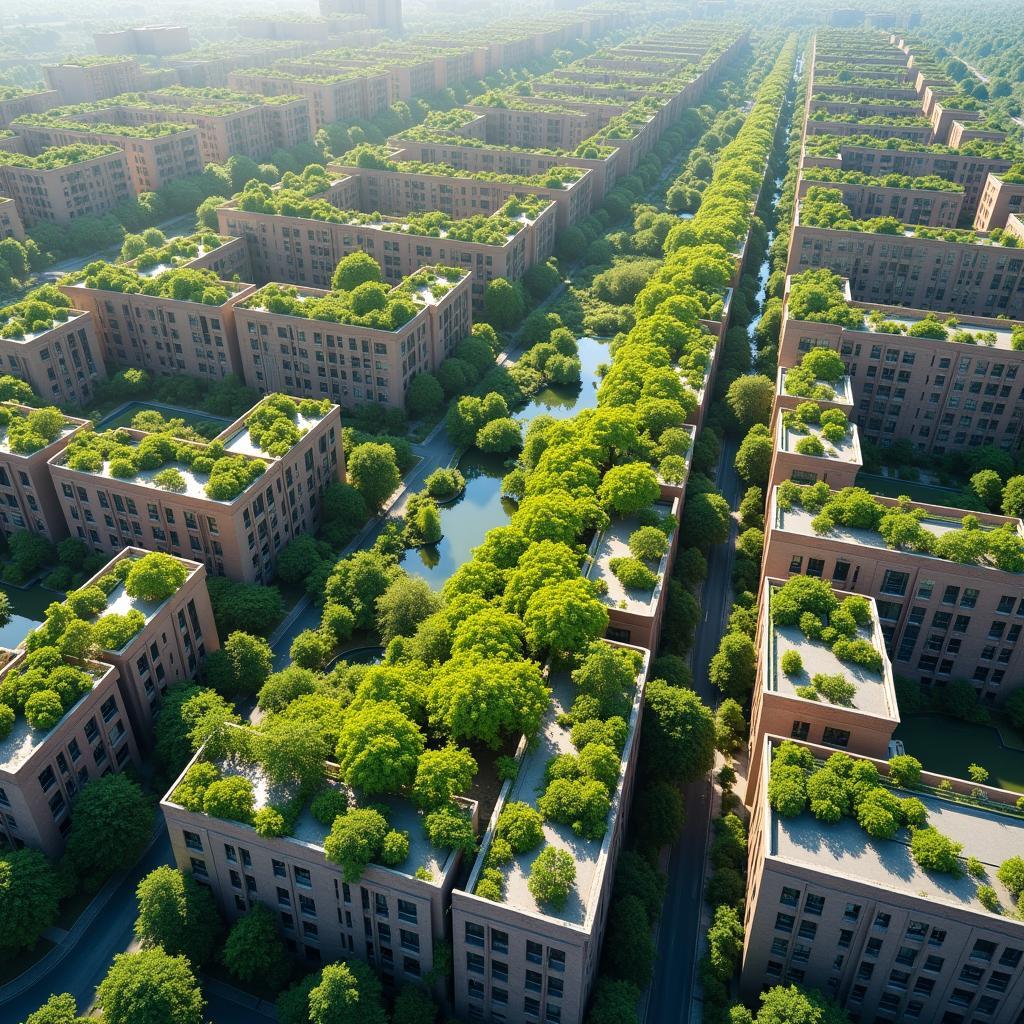 Quy hoạch đô thị bền vững kết hợp thiên nhiên và phát triển
Passage 3 – Essential Vocabulary
| Từ vựng | Loại từ | Phiên âm | Nghĩa tiếng Việt | Ví dụ từ bài | Collocation |
|---|---|---|---|---|---|
| novel ecosystem | n phrase | /ˈnɒvl ˈiːkəʊsɪstəm/ | hệ sinh thái mới | cities as novel ecosystems | create/study novel ecosystem |
| urban ecological theory | n phrase | /ˈɜːbən ˌiːkəˈlɒdʒɪkl ˈθɪəri/ | lý thuyết sinh thái đô thị | urban ecological theory has evolved | develop/advance ecological theory |
| intermediate disturbance hypothesis | n phrase | /ˌɪntəˈmiːdiət dɪˈstɜːbəns haɪˈpɒθəsɪs/ | giả thuyết nhiễu loạn trung gian | intermediate disturbance hypothesis explains patterns | test/apply hypothesis |
| tipping point | n phrase | /ˈtɪpɪŋ pɔɪnt/ | điểm giới hạn | understanding these tipping points is crucial | reach/identify tipping point |
| context dependency | n phrase | /ˈkɒntekst dɪˈpendənsi/ | sự phụ thuộc ngữ cảnh | complicated by context dependency | recognize/account for context dependency |
| urban adaptation | n phrase | /ˈɜːbən ˌædæpˈteɪʃn/ | thích ứng đô thị | phenomenon of urban adaptation | study/observe urban adaptation |
| microevolutionary shift | n phrase | /ˌmaɪkrəʊˌiːvəˈluːʃənəri ʃɪft/ | sự thay đổi tiến hóa vi mô | documenting microevolutionary shifts | detect/measure microevolutionary shift |
| acoustic adaptation | n phrase | /əˈkuːstɪk ˌædæpˈteɪʃn/ | thích ứng âm thanh | representing acoustic adaptation | demonstrate/show acoustic adaptation |
| genetic pollution | n phrase | /dʒəˈnetɪk pəˈluːʃn/ | ô nhiễm di truyền | represent genetic pollution | cause/prevent genetic pollution |
| hybrid zone | n phrase | /ˈhaɪbrɪd zəʊn/ | vùng lai tạo | considering hybrid zones where populations interbreed | form/create hybrid zone |
| metacommunity theory | n phrase | /ˌmetəkəˈmjuːnəti ˈθɪəri/ | lý thuyết siêu quần xã | metacommunity theory provides framework | apply/use metacommunity theory |
| habitat island | n phrase | /ˈhæbɪtæt ˈaɪlənd/ | đảo môi trường sống | conceptualized as habitat islands | function as/serve as habitat island |
| landscape connectivity | n phrase | /ˈlændskeɪp ˌkɒnekˈtɪvəti/ | khả năng kết nối cảnh quan | application of landscape connectivity metrics | measure/assess landscape connectivity |
| extinction debt | n phrase | /ɪkˈstɪŋkʃn det/ | nợ tuyệt chủng | extinction debt phenomenon poses challenges | accumulate/pay extinction debt |
| trophic dynamics | n phrase | /ˈtrɒfɪk daɪˈnæmɪks/ | động lực dinh dưỡng | trophic dynamics exhibit distinctive patterns | study/analyze trophic dynamics |
| mesopredator | n | /ˌmezəʊˈpredətə/ | động vật săn mồi trung bình | abundances of mesopredators proliferate | support/control mesopredator |
| trophic simplification | n phrase | /ˈtrɒfɪk ˌsɪmplɪfɪˈkeɪʃn/ | đơn giản hóa dinh dưỡng | trophic simplification decreases resilience | cause/result in trophic simplification |
| ecological network | n phrase | /ˌiːkəˈlɒdʒɪkl ˈnetwɜːk/ | mạng lưới sinh thái | integration of ecological networks approaches | analyze/study ecological network |
| functional diversity | n phrase | /ˈfʌŋkʃənl daɪˈvɜːsəti/ | đa dạng chức năng | reduced functional diversity among pollinators | maintain/preserve functional diversity |
| phylogenetic diversity | n phrase | /ˌfaɪləʊdʒəˈnetɪk daɪˈvɜːsəti/ | đa dạng phả hệ | phylogenetic diversity measures evolutionary heritage | maximize/conserve phylogenetic diversity |
| functional homogenization | n phrase | /ˈfʌŋkʃənl həʊˌmɒdʒənaɪˈzeɪʃn/ | đồng nhất hóa chức năng | exhibit functional homogenization | lead to/cause functional homogenization |
| reconciliation ecology | n phrase | /ˌrekənsɪliˈeɪʃn iˈkɒlədʒi/ | sinh thái hòa giải | reconciliation ecology proposes paradigm shift | practice/implement reconciliation ecology |
Kết bài
Chủ đề “Challenges Of Maintaining Biodiversity In Urban Areas” không chỉ phổ biến trong các đề thi IELTS Reading mà còn phản ánh một trong những vấn đề cấp thiết nhất của thế kỷ 21. Qua bộ đề thi mẫu này, bạn đã được trải nghiệm đầy đủ ba mức độ khó từ Easy đến Hard, với tổng cộng 40 câu hỏi đa dạng hoàn toàn giống như trong kỳ thi thật.
Passage 1 đã giúp bạn làm quen với các khái niệm cơ bản về đa dạng sinh học đô thị và những thách thức ban đầu. Passage 2 đưa bạn đi sâu vào các khía cạnh kinh tế, chính trị phức tạp hơn của vấn đề bảo tồn. Passage 3 thách thức khả năng đọc hiểu học thuật của bạn với các lý thuyết khoa học tiên tiến và thuật ngữ chuyên ngành.
Đáp án chi tiết kèm giải thích cụ thể đã chỉ ra cách xác định thông tin trong bài, nhận biết paraphrase, và áp dụng kỹ thuật làm bài cho từng dạng câu hỏi. Bộ từ vựng phân theo ba passage cung cấp hơn 40 từ và cụm từ quan trọng với phiên âm, nghĩa, ví dụ và collocation, giúp bạn không chỉ mở rộng vốn từ mà còn biết cách sử dụng chúng trong ngữ cảnh học thuật. Việc nghiên cứu các chủ đề liên quan như How climate change is affecting the world’s oceans và What are the effects of climate change on food security? cũng sẽ giúp bạn hiểu rõ hơn về mối liên hệ giữa các vấn đề môi trường toàn cầu.
Để đạt kết quả tốt nhất, hãy:
- Luyện tập với giới hạn thời gian để quen với áp lực thi thật
- Phân tích kỹ các câu trả lời sai để hiểu rõ lý do và tránh lặp lại
- Học thuộc từ vựng theo chủ đề và thực hành sử dụng trong câu
- Đọc thêm các bài viết học thuật về môi trường, sinh thái và đô thị hóa
- Làm nhiều đề thi mẫu khác để làm quen với đa dạng chủ đề và dạng câu hỏi
Để hiểu sâu hơn về mối quan hệ giữa đa dạng sinh học và các thách thức toàn cầu khác, bạn có thể tìm hiểu thêm về What are the challenges of sustainable agriculture in the 21st century?, vốn có nhiều điểm tương đồng với vấn đề bảo tồn đô thị.
Chúc bạn ôn tập hiệu quả và đạt band điểm như mong muốn trong kỳ thi IELTS Reading sắp tới. Hãy nhớ rằng, sự kiên trì và phương pháp học đúng đắn là chìa khóa dẫn đến thành công.

