
Mở bài
Chủ đề về đa dạng văn hóa trong giảng dạy lịch sử và địa lý là một trong những chủ đề phổ biến xuất hiện trong kỳ thi IELTS Reading, đặc biệt từ năm 2018 đến nay. Với xu hướng toàn cầu hóa và sự chú trọng ngày càng tăng về giáo dục đa văn hóa, việc nắm vững chủ đề này không chỉ giúp bạn tự tin hơn trong phòng thi mà còn mở rộng hiểu biết về các phương pháp giáo dục hiện đại.
Bài viết này cung cấp cho bạn một bộ đề thi IELTS Reading hoàn chỉnh gồm 3 passages với độ khó tăng dần từ Easy đến Hard, hoàn toàn giống với format thi thật. Bạn sẽ được trải nghiệm đầy đủ 40 câu hỏi thuộc nhiều dạng khác nhau như Multiple Choice, True/False/Not Given, Matching Headings, Summary Completion và nhiều dạng khác. Mỗi câu hỏi đều được thiết kế tỉ mỉ để phản ánh chính xác mức độ khó và kỹ thuật paraphrase trong đề thi thực tế.
Đặc biệt, phần đáp án chi tiết kèm giải thích cụ thể sẽ giúp bạn hiểu rõ tại sao một đáp án đúng, cách xác định thông tin trong bài đọc, và kỹ thuật làm bài hiệu quả. Phần từ vựng được tổng hợp theo từng passage sẽ giúp bạn xây dựng vốn từ học thuật cần thiết.
Bộ đề này phù hợp cho học viên có trình độ từ band 5.0 trở lên, đặc biệt hữu ích cho những ai đang hướng tới band 7.0-8.0.
1. Hướng Dẫn Làm Bài IELTS Reading
Tổng Quan Về IELTS Reading Test
IELTS Reading Test kéo dài 60 phút với 3 passages và tổng cộng 40 câu hỏi. Mỗi câu trả lời đúng được tính 1 điểm, sau đó quy đổi thành band điểm từ 1-9. Độ khó của các passages tăng dần, với Passage 1 thường dễ nhất và Passage 3 khó nhất.
Phân bổ thời gian khuyến nghị:
- Passage 1: 15-17 phút (13 câu hỏi)
- Passage 2: 18-20 phút (13 câu hỏi)
- Passage 3: 23-25 phút (14 câu hỏi)
Lưu ý quan trọng: Bạn cần tự quản lý thời gian vì không có thông báo giữa các passages. Nên dành 2-3 phút cuối để kiểm tra và chép đáp án vào answer sheet.
Các Dạng Câu Hỏi Trong Đề Này
Đề thi mẫu này bao gồm 7 dạng câu hỏi phổ biến nhất trong IELTS Reading:
- Multiple Choice – Chọn đáp án đúng từ 3-4 lựa chọn
- True/False/Not Given – Xác định thông tin đúng, sai hay không được đề cập
- Matching Headings – Ghép tiêu đề phù hợp với đoạn văn
- Summary Completion – Điền từ vào chỗ trống trong đoạn tóm tắt
- Matching Features – Ghép thông tin với các đối tượng được liệt kê
- Sentence Completion – Hoàn thành câu với thông tin từ bài đọc
- Short-answer Questions – Trả lời câu hỏi ngắn với số từ giới hạn
Mỗi dạng câu hỏi yêu cầu kỹ năng đọc hiểu khác nhau, từ scanning (tìm thông tin cụ thể) đến skimming (nắm ý chính) và inference (suy luận).
2. IELTS Reading Practice Test
PASSAGE 1 – The Evolution of History Teaching in Multicultural Classrooms
Độ khó: Easy (Band 5.0-6.5)
Thời gian đề xuất: 15-17 phút
The teaching of history has undergone significant transformations over the past few decades, particularly in countries with increasingly diverse populations. Traditional approaches to history education often focused on national narratives that emphasized the achievements and perspectives of dominant cultural groups. However, educators have gradually recognized the importance of presenting multiple perspectives when teaching historical events, especially in classrooms where students come from various ethnic and cultural backgrounds.
In the United Kingdom, for example, the history curriculum has evolved to include more comprehensive coverage of colonial history and its impact on different populations. Teachers now encourage students to examine historical events from various viewpoints, including those of colonized peoples, immigrants, and minority groups. This approach helps students develop critical thinking skills and understand that history is not simply a collection of facts but a subject of ongoing interpretation and debate.
Inclusive history teaching methods have proven particularly effective in helping students from minority backgrounds feel more connected to the subject matter. When young people see their own cultural heritage reflected in the curriculum, they are more likely to engage actively in lessons and develop a deeper appreciation for the subject. Research conducted by the University of London in 2019 found that students who learned about diverse historical perspectives showed higher levels of empathy and cultural understanding compared to those who studied traditional, single-narrative history courses.
Geography education has similarly embraced cultural diversity as a core principle. Modern geography lessons go beyond simply teaching about physical landscapes and political boundaries. They explore how different cultures interact with their environments, how geographical factors influence cultural development, and how human migration patterns have shaped the world we live in today. This approach recognizes that geography is fundamentally about understanding the relationship between people and places.
Teachers incorporating culturally diverse perspectives into geography lessons often use case studies from multiple regions to illustrate concepts. For instance, when teaching about urban development, a teacher might compare how cities have evolved in Europe, Asia, Africa, and South America, highlighting the unique cultural influences on city planning and architecture. This method allows students to understand that there are many valid ways to organize communities and use space, rather than presenting Western models as the only or best approach.
Professional development programs for teachers have become crucial in supporting this shift toward multicultural education. Many school districts now offer training that helps educators recognize their own cultural biases and learn strategies for presenting content in ways that respect and include all students’ backgrounds. These programs often include practical workshops where teachers practice developing lesson plans that incorporate diverse sources and perspectives.
The benefits of culturally diverse history and geography education extend beyond the classroom. Students who learn to appreciate multiple perspectives are better prepared for life in globalized societies. They develop skills that are increasingly valued in the workplace, such as the ability to work effectively with people from different backgrounds and to understand complex issues from multiple angles. Furthermore, this approach to education can help reduce prejudice and discrimination by fostering mutual understanding and respect among students from different communities.
Despite these positive developments, challenges remain in implementing truly inclusive curricula. Some parents and community members resist changes to traditional teaching methods, arguing that they dilute national identity or historical accuracy. Teachers may also struggle with limited resources, as textbooks and teaching materials do not always reflect diverse perspectives. Additionally, educators need adequate training and support to handle sensitive historical topics that may generate strong emotional responses from students.
Moving forward, experts suggest that successful multicultural history and geography education requires ongoing curriculum review and revision. Educational materials must be regularly updated to include new research and perspectives. Teachers need continuous professional development opportunities to refine their skills in this area. Most importantly, schools must create inclusive environments where all students feel their backgrounds are valued and where open, respectful dialogue about cultural differences is encouraged.
Questions 1-5: Multiple Choice
Choose the correct letter, A, B, C, or D.
-
According to the passage, traditional history teaching primarily focused on:
A. Multiple cultural perspectives
B. The viewpoints of dominant groups
C. Colonial history exclusively
D. International cooperation -
The research conducted by the University of London in 2019 found that students who learned diverse historical perspectives:
A. Scored lower on standardized tests
B. Showed more empathy and cultural understanding
C. Preferred traditional teaching methods
D. Had difficulty understanding basic concepts -
Modern geography education differs from traditional approaches by:
A. Focusing only on physical landscapes
B. Ignoring political boundaries
C. Exploring cultural interactions with environments
D. Teaching exclusively about Western cities -
Professional development programs for teachers aim to:
A. Reduce teaching hours
B. Eliminate all cultural content
C. Help educators recognize their own biases
D. Focus only on traditional methods -
One challenge in implementing inclusive curricula mentioned in the passage is:
A. Too many available resources
B. Excessive parent support
C. Resistance from some community members
D. Lack of sensitive historical topics
Questions 6-9: True/False/Not Given
Do the following statements agree with the information given in the passage? Write:
- TRUE if the statement agrees with the information
- FALSE if the statement contradicts the information
- NOT GIVEN if there is no information on this
-
History teaching methods in the UK have remained unchanged over the past decades.
-
Students from minority backgrounds engage more actively when their cultural heritage is included in lessons.
-
All textbooks currently available reflect diverse cultural perspectives adequately.
-
Multicultural education helps prepare students for working in globalized societies.
Questions 10-13: Sentence Completion
Complete the sentences below. Choose NO MORE THAN TWO WORDS from the passage for each answer.
-
Teachers now encourage students to examine historical events from __ rather than just one viewpoint.
-
Geography lessons explore how different cultures interact with their __ and how this influences cultural development.
-
When teaching urban development, teachers might compare cities from different continents to highlight __ on city planning.
-
Schools must create __ where all students feel their backgrounds are valued and respected.
PASSAGE 2 – Pedagogical Approaches to Teaching Cultural Diversity in Geography
Độ khó: Medium (Band 6.0-7.5)
Thời gian đề xuất: 18-20 phút
The integration of cultural diversity into geography education represents a paradigmatic shift in how educators conceptualize the relationship between people, places, and environments. This transformation reflects broader changes in pedagogical philosophy, moving away from Eurocentric frameworks that historically dominated academic discourse toward more inclusive and representative models of geographical understanding. The implications of this shift extend far beyond the classroom, influencing how future generations perceive global interconnectedness and their role within increasingly multicultural societies.
Contemporary geography educators face the challenge of deconstructing traditional narratives that have long portrayed certain regions and cultures as more advanced or civilized than others. This deconstruction process requires careful attention to the ways in which geographical knowledge has been historically constructed and disseminated. For instance, the widespread use of Mercator projection maps in classrooms has inadvertently reinforced colonial power structures by distorting the relative sizes of continents, making European and North American countries appear disproportionately large compared to equatorial regions. Progressive educators now introduce students to alternative map projections, such as the Peters projection or Gall-Peters projection, which provide more accurate representations of landmass sizes and challenge ingrained perceptions of geographical importance.
The pedagogical methodologies employed in culturally diverse geography classrooms increasingly emphasize experiential learning and student-centered approaches. Rather than relying solely on textbooks and lectures, teachers incorporate primary sources, multimedia resources, and interactive technologies that allow students to explore geographical concepts through multiple lenses. Virtual reality applications, for example, enable students to experience different environments and cultural contexts without leaving the classroom, fostering empathetic understanding that transcends abstract theoretical knowledge. Similarly, The role of education in fostering global cultural exchange has become increasingly important as educators seek to develop globally competent citizens.
Case study analysis has emerged as a particularly effective method for teaching geographical diversity. By examining specific examples of how different cultures adapt to and modify their environments, students gain nuanced understanding of the relationship between human agency and environmental constraints. A geography teacher might present parallel case studies of water management in the Netherlands, Bangladesh, and the United Arab Emirates, illustrating how diverse cultures have developed distinct solutions to similar environmental challenges. This approach avoids the pitfall of presenting any single culture’s methods as universally superior, instead highlighting the contextual factors that make different approaches appropriate for different circumstances.
The incorporation of indigenous knowledge systems into geography curricula represents another significant development in culturally responsive teaching. For centuries, indigenous peoples around the world have accumulated sophisticated understanding of their local environments, developing sustainable practices that often predate and sometimes surpass modern scientific approaches. In Australia, for example, geography teachers now include lessons on Aboriginal land management techniques, such as controlled burning practices that prevent catastrophic wildfires while promoting biodiversity. By recognizing indigenous knowledge as equally valid to Western scientific paradigms, educators help students appreciate that geographical expertise exists in many forms across different cultures.
Assessment methodologies in culturally diverse geography education have also evolved to accommodate different learning styles and cultural backgrounds. Traditional testing formats may disadvantage students whose cultural experiences differ from those assumed by test designers. Progressive educators employ varied assessment strategies, including project-based evaluations, oral presentations, collaborative group work, and portfolio assessments that allow students to demonstrate understanding in ways that align with their cultural communication styles. Research by the International Geographical Union’s Commission on Geographical Education suggests that such diverse assessment practices yield more accurate measurements of student comprehension while reducing cultural bias in evaluation.
The role of teacher training in promoting culturally inclusive geography education cannot be overstated. Many educators themselves received training rooted in traditional geographical paradigms and may lack exposure to diverse cultural perspectives on geographical concepts. Professional development initiatives increasingly focus on helping teachers examine their own positionality – their social, cultural, and political contexts – and understand how this influences their teaching. Workshops and seminars encourage educators to engage with geographical scholarship produced by academics from diverse backgrounds and to seek out teaching resources that represent multiple perspectives.
However, implementing culturally diverse geography education faces several systemic obstacles. Standardized curricula mandated by educational authorities may leave limited flexibility for teachers to incorporate diverse content. Budget constraints restrict access to high-quality resources that represent multiple cultural perspectives. Furthermore, some stakeholders question whether emphasizing cultural diversity might fragment geographical education into disconnected case studies rather than providing students with coherent frameworks for understanding global geographical patterns.
Addressing these challenges requires collaborative efforts among curriculum developers, textbook publishers, teacher training institutions, and educational policymakers. Some jurisdictions have established multicultural curriculum review committees that evaluate teaching materials for cultural representation and accuracy. Others have developed resource-sharing platforms where teachers can access and contribute lesson plans that incorporate diverse geographical perspectives. Such initiatives demonstrate that while obstacles exist, concerted institutional support can facilitate the transition toward more inclusive geography education.
 Lớp học địa lý đa văn hóa với học sinh sử dụng công nghệ tương tác và bản đồ đa dạng
Questions 14-18: Matching Headings
Choose the correct heading for paragraphs B-F from the list of headings below.
List of Headings:
i. The limitations of standardized testing in geography
ii. Overcoming institutional barriers to curriculum change
iii. Challenging traditional map representations and biases
iv. The importance of teacher professional development programs
v. Indigenous knowledge as valid geographical expertise
vi. Using case studies to demonstrate multiple solutions
vii. Technology and experiential learning in modern classrooms
viii. Assessment methods for culturally diverse learners
- Paragraph B
- Paragraph C
- Paragraph D
- Paragraph E
- Paragraph F
Questions 19-23: Yes/No/Not Given
Do the following statements agree with the views of the writer in the passage? Write:
- YES if the statement agrees with the views of the writer
- NO if the statement contradicts the views of the writer
- NOT GIVEN if it is impossible to say what the writer thinks about this
-
The Mercator projection map has historically reinforced colonial power structures through its distortions.
-
Virtual reality technology is too expensive for most schools to implement effectively.
-
Indigenous knowledge systems should be considered as valid as Western scientific approaches in geography education.
-
All educational authorities have successfully updated their standardized curricula to include diverse content.
-
Project-based evaluations provide more accurate measurements of student comprehension than traditional tests.
Questions 24-26: Summary Completion
Complete the summary below. Choose NO MORE THAN TWO WORDS from the passage for each answer.
Contemporary geography education has shifted away from 24. __ that historically dominated academic discourse. Teachers now use 25. __ to help students explore different environments and cultural contexts. Additionally, incorporating 26. __ into curricula helps students appreciate that geographical expertise exists in various forms across different cultures.
PASSAGE 3 – Epistemological Frameworks and the Historiography of Cultural Pluralism in Educational Contexts
Độ khó: Hard (Band 7.0-9.0)
Thời gian đề xuất: 23-25 phút
The epistemological underpinnings of culturally pluralistic education in history and geography represent a contested terrain where competing theories of knowledge, truth, and representation converge. The transition from monocultural curricula to frameworks that acknowledge and incorporate multiple cultural narratives has precipitated vigorous academic debates about the nature of historical truth, the possibility of objective geographical knowledge, and the political dimensions inherent in all educational practices. These debates extend beyond mere pedagogical techniques, touching upon fundamental questions about how societies construct and transmit collective memory, spatial understanding, and cultural identity across generations.
Postcolonial theorists have been particularly instrumental in challenging the epistemological hegemony that characterized traditional history and geography education. Scholars such as Edward Said, Gayatri Spivak, and Homi Bhabha have interrogated the ways in which Western educational systems have historically constructed knowledge about non-Western societies, arguing that these representations often reflect and perpetuate colonial power relations rather than empirical realities. Said’s concept of “Orientalism” – the systematic distortion and exoticization of Eastern cultures in Western discourse – provides a theoretical framework for understanding how geographical and historical knowledge about certain regions has been shaped by imperial interests rather than dispassionate inquiry. The implications for contemporary education are profound: if the knowledge we teach has been fundamentally shaped by historical power imbalances, then achieving epistemic justice requires not merely adding diverse perspectives to existing frameworks but fundamentally reconceptualizing the frameworks themselves.
This reconceptualization involves grappling with questions of historiographical methodology that have occupied scholars for decades. The positivist tradition in history, which dominated much of the twentieth century, held that historians could achieve objective accounts of the past by rigorously examining primary sources and maintaining emotional detachment from their subjects. However, postmodernist critiques beginning in the 1970s challenged this notion, arguing that all historical narratives are inevitably shaped by the subjective positions and contemporary concerns of their authors. Some critics contend that acknowledging multiple cultural perspectives in history education risks descending into relativism, where all interpretations are considered equally valid regardless of evidential support. Defenders counter that recognizing the perspectival nature of historical knowledge does not necessitate abandoning standards of evidence and argumentation, but rather requires transparent acknowledgment of the standpoints from which narratives are constructed.
In geography, similar epistemological tensions arise around the concept of spatial knowledge. Traditional regional geography, which sought to describe and categorize different areas of the world, often relied on essentialist assumptions about cultural characteristics – the notion that certain cultures possess immutable traits that define their relationship with their environment. Critical geographers have challenged these assumptions, demonstrating how geographical categories and descriptions often reflect culturally specific ways of organizing and understanding space. For instance, concepts such as “wilderness” – which plays a significant role in North American environmental thought – embodies particularly Western notions of pristine nature separate from human influence, notions that would be foreign to many indigenous cosmologies where humans and nature are seen as fundamentally interconnected. Teaching geography in culturally diverse contexts therefore requires not simply adding content about different cultures, but examining how fundamental geographical concepts themselves may be culturally contingent.
The practical implementation of epistemologically pluralistic approaches in classrooms presents formidable challenges. Teachers must navigate between potentially incommensurable worldviews while maintaining pedagogical coherence and meeting curricular standards. When teaching about historical events such as European colonization of the Americas, for example, educators must help students understand radically different interpretations: triumphalist narratives of exploration and progress versus accounts centered on genocide and dispossession. Some educational theorists advocate for what they term “epistemological pluralism” – explicitly teaching students that different cultures may have fundamentally different ways of knowing and validating knowledge, and that understanding these differences is crucial for intercultural dialogue. Others worry that such approaches may overwhelm adolescent learners who have not yet developed the cognitive sophistication necessary to adjudicate between competing truth claims.
Recent empirical research has begun to shed light on the pedagogical efficacy of various approaches to teaching cultural diversity in history and geography. A longitudinal study conducted across twelve countries by the International Association for the Evaluation of Educational Achievement examined how different curricular models affect students’ historical thinking skills and intercultural competence. The research distinguished between “additive approaches” – which incorporate content about diverse cultures without fundamentally altering existing frameworks – and “transformative approaches” – which reconceptualize the entire curriculum around themes of cultural interaction and power relations. Findings suggested that transformative approaches yielded stronger outcomes in terms of students’ ability to analyze historical events from multiple perspectives and their willingness to engage with people from different cultural backgrounds. However, the study also noted that transformative approaches required significantly more teacher training and institutional support to implement effectively, Cultural differences in approaches to science education similarly demonstrates these pedagogical complexities across disciplines.
The neurocognitive dimensions of learning about cultural diversity have also attracted research attention. Studies utilizing functional magnetic resonance imaging (fMRI) have investigated how exposure to multiple cultural narratives affects neural processing of subsequent information. Research by cognitive scientists at Stanford University suggests that students trained to consider historical events from multiple cultural perspectives show increased activation in brain regions associated with perspective-taking and cognitive flexibility when encountering new information. These findings provide neurobiological support for educational approaches that emphasize cultural pluralism, suggesting that such training may enhance broader cognitive capacities beyond specific content knowledge. However, critics caution against neuroscientific reductionism, arguing that complex socio-educational phenomena cannot be adequately understood through brain imaging alone.
The geopolitical context within which culturally diverse history and geography education occurs significantly influences its implementation and reception. In nations with contentious colonial histories, such as South Africa, Australia, or Canada, curriculum debates about cultural representation often become sites of intense political contestation, reflecting unresolved tensions about national identity and historical responsibility. Conversely, in countries with more ethnically homogeneous populations, resistance to multicultural education may stem from concerns about maintaining cultural cohesion or from simple unfamiliarity with the pedagogical approaches involved. International organizations such as UNESCO and the Council of Europe have attempted to promote best practices in intercultural education, but the applicability of such recommendations across diverse national contexts remains a subject of ongoing debate.
Looking toward future developments, several emerging trends warrant attention. The increasing availability of digitized primary sources from diverse cultural archives enables educators to provide students with direct access to historical materials from multiple perspectives, rather than relying solely on secondary syntheses. Artificial intelligence applications are being developed to help students explore counterfactual historical scenarios or visualize geographical data in ways that highlight cultural variation in spatial organization. However, these technological developments raise new questions about digital literacy, algorithmic bias, and the extent to which technology can genuinely facilitate intercultural understanding versus simply reinforcing existing cognitive patterns. How traditional music and dance are incorporated into modern education illustrates parallel considerations in arts education.
Ultimately, the project of integrating cultural diversity into history and geography education reflects broader questions about the purposes of education in pluralistic democratic societies. Should education primarily transmit established knowledge and cultivate national identity, or should it equip students with critical capacities to question received wisdom and imagine alternative futures? The answer likely involves balancing these goals, recognizing that education serves multiple functions simultaneously. What remains clear is that as human societies become increasingly interconnected and multicultural, the ability to understand and appreciate diverse cultural perspectives on history and geography will become not merely an academic nicety but an essential civic competence.
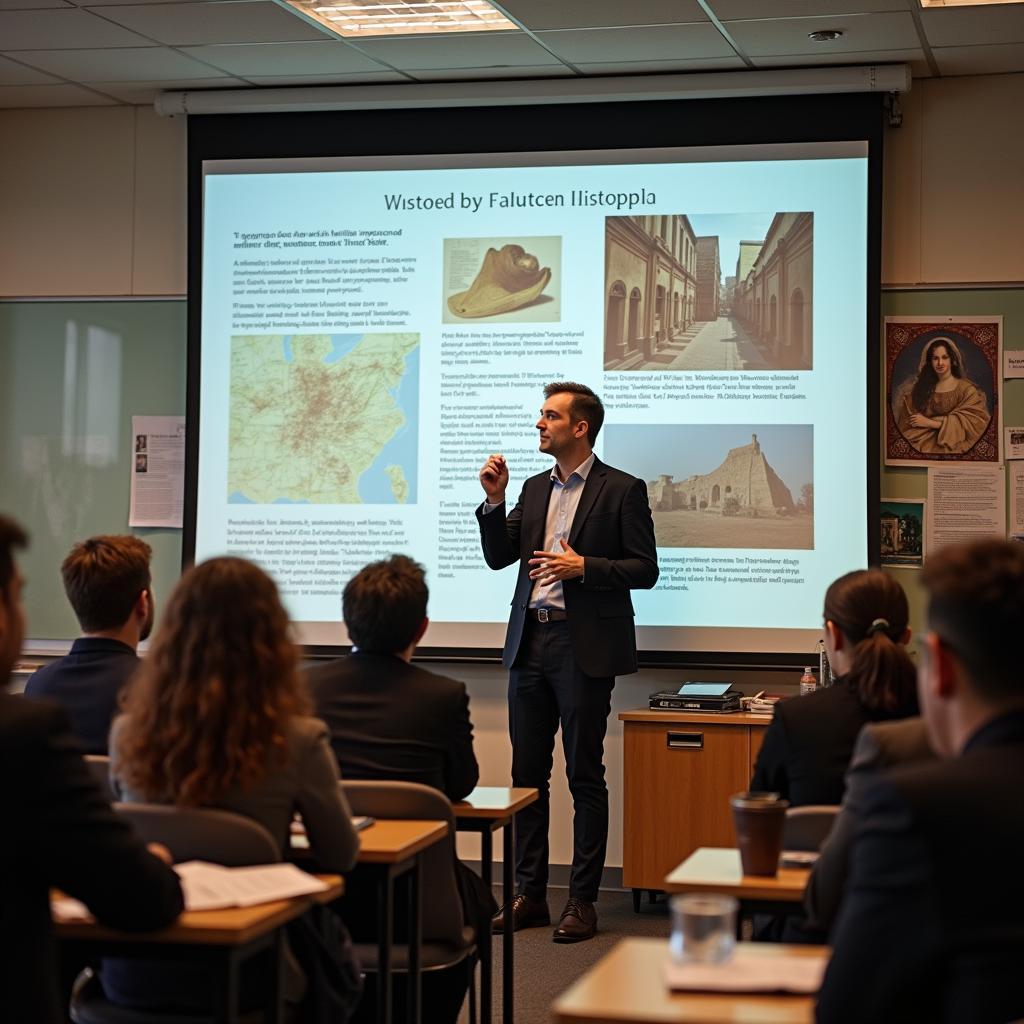 Giảng viên sử dụng nguồn tài liệu đa dạng và công nghệ số để dạy lịch sử với nhiều góc nhìn văn hóa
Questions 27-31: Multiple Choice
Choose the correct letter, A, B, C, or D.
-
According to the passage, postcolonial theorists argue that Western educational systems have:
A. Successfully represented all cultures objectively
B. Reflected colonial power relations in their knowledge construction
C. Avoided any bias in teaching about non-Western societies
D. Focused exclusively on Western history -
The positivist tradition in history held that historians could achieve objective accounts by:
A. Ignoring primary sources completely
B. Focusing only on contemporary concerns
C. Rigorously examining sources while maintaining emotional detachment
D. Abandoning all standards of evidence -
The concept of “wilderness” in North American thought exemplifies:
A. A universal understanding of nature shared by all cultures
B. Indigenous cosmologies about human-nature interconnection
C. Culturally specific Western notions of pristine nature
D. Scientific definitions accepted globally -
The longitudinal study by the International Association for the Evaluation of Educational Achievement found that transformative approaches:
A. Were easier to implement than additive approaches
B. Required less teacher training than traditional methods
C. Yielded weaker outcomes in intercultural competence
D. Required significantly more institutional support to implement -
Research using fMRI technology suggests that training in multiple cultural perspectives:
A. Has no effect on brain activity patterns
B. Increases activation in regions associated with perspective-taking
C. Reduces cognitive flexibility in students
D. Should replace all traditional teaching methods
Questions 32-36: Matching Features
Match each research finding or theoretical concept (A-H) with the correct scholar, institution, or study (Questions 32-36).
Research findings/concepts:
A. The concept of “Orientalism” and systematic distortion of Eastern cultures
B. Increased brain activation in perspective-taking regions
C. Distinction between additive and transformative curricular approaches
D. Challenge to essentialist assumptions in regional geography
E. Neurocognitive dimensions require caution against reductionism
F. Positivist tradition in achieving objective historical accounts
G. Postmodernist critiques of historical objectivity
H. Development of AI applications for counterfactual scenarios
- Edward Said
- Stanford University cognitive scientists
- International Association for the Evaluation of Educational Achievement
- Critical geographers
- Critics of neuroscientific approaches
Questions 37-40: Short-answer Questions
Answer the questions below. Choose NO MORE THAN THREE WORDS from the passage for each answer.
-
What type of justice does achieving diverse knowledge representation in education require, according to postcolonial theorists?
-
What term describes the concern that acknowledging multiple perspectives might make all interpretations equally valid?
-
What kind of primary sources are becoming increasingly available to help educators provide diverse cultural perspectives?
-
What type of competence will understanding diverse cultural perspectives become in increasingly interconnected societies?
3. Answer Keys – Đáp Án
PASSAGE 1: Questions 1-13
- B
- B
- C
- C
- C
- FALSE
- TRUE
- FALSE
- TRUE
- various viewpoints
- environments
- unique cultural influences / cultural influences
- inclusive environments
PASSAGE 2: Questions 14-26
- iii
- vii
- vi
- v
- viii
- YES
- NOT GIVEN
- YES
- NO
- NOT GIVEN
- Eurocentric frameworks
- virtual reality / virtual reality applications
- indigenous knowledge / indigenous knowledge systems
PASSAGE 3: Questions 27-40
- B
- C
- C
- D
- B
- A
- B
- C
- D
- E
- epistemic justice
- relativism
- digitized primary sources
- civic competence
4. Giải Thích Đáp Án Chi Tiết
Passage 1 – Giải Thích
Câu 1: B
- Dạng câu hỏi: Multiple Choice
- Từ khóa: traditional history teaching, primarily focused
- Vị trí trong bài: Đoạn A, dòng 2-4
- Giải thích: Bài đọc nói rõ “Traditional approaches to history education often focused on national narratives that emphasized the achievements and perspectives of dominant cultural groups” – nghĩa là giảng dạy lịch sử truyền thống tập trung vào quan điểm của các nhóm văn hóa thống trị. Đây là paraphrase của đáp án B “The viewpoints of dominant groups”.
Câu 2: B
- Dạng câu hỏi: Multiple Choice
- Từ khóa: University of London 2019, found
- Vị trí trong bài: Đoạn C, dòng 5-7
- Giải thích: Thông tin xuất hiện rõ ràng: “Research conducted by the University of London in 2019 found that students who learned about diverse historical perspectives showed higher levels of empathy and cultural understanding” – nghĩa là sinh viên có mức độ đồng cảm và hiểu biết văn hóa cao hơn, đúng với đáp án B.
Câu 6: FALSE
- Dạng câu hỏi: True/False/Not Given
- Từ khóa: History teaching methods, UK, unchanged
- Vị trí trong bài: Đoạn B, dòng 1-3
- Giải thích: Câu hỏi nói phương pháp giảng dạy không thay đổi, nhưng bài đọc khẳng định ngược lại: “the history curriculum has evolved to include more comprehensive coverage of colonial history” – đã phát triển và thay đổi. Vì vậy đáp án là FALSE.
Câu 7: TRUE
- Dạng câu hỏi: True/False/Not Given
- Từ khóa: minority backgrounds, engage more actively, cultural heritage included
- Vị trí trong bài: Đoạn C, dòng 1-4
- Giải thích: Bài đọc nói: “When young people see their own cultural heritage reflected in the curriculum, they are more likely to engage actively in lessons” – khi di sản văn hóa được đưa vào chương trình, họ tham gia tích cực hơn. Điều này khớp hoàn toàn với câu hỏi.
Câu 10: various viewpoints
- Dạng câu hỏi: Sentence Completion
- Từ khóa: examine historical events
- Vị trí trong bài: Đoạn B, dòng 3-4
- Giải thích: Câu gốc trong bài: “Teachers now encourage students to examine historical events from various viewpoints” – từ khóa cần điền chính xác là “various viewpoints”, không thể thay thế bằng từ nào khác.
Câu 13: inclusive environments
- Dạng câu hỏi: Sentence Completion
- Từ khóa: schools must create, students feel valued
- Vị trí trong bài: Đoạn I, dòng 3-4
- Giải thích: Bài đọc nói rõ: “schools must create inclusive environments where all students feel their backgrounds are valued” – trường học phải tạo ra môi trường hòa nhập, đúng với yêu cầu của câu hỏi.
Passage 2 – Giải Thích
Câu 14: iii
- Dạng câu hỏi: Matching Headings
- Từ khóa: Paragraph B
- Vị trí trong bài: Đoạn B toàn bộ
- Giải thích: Đoạn B thảo luận về việc “deconstructing traditional narratives” và nhắc đến bản đồ Mercator projection đã “reinforced colonial power structures” và “distorting the relative sizes”. Đoạn này tập trung vào việc thách thức các biểu diễn bản đồ truyền thống và thiên kiến, khớp với heading iii “Challenging traditional map representations and biases”.
Câu 15: vii
- Dạng câu hỏi: Matching Headings
- Từ khóa: Paragraph C
- Vị trí trong bài: Đoạn C toàn bộ
- Giải thích: Đoạn C nói về “experiential learning”, “interactive technologies”, “Virtual reality applications” giúp sinh viên “experience different environments and cultural contexts”. Nội dung này phù hợp hoàn toàn với heading vii “Technology and experiential learning in modern classrooms”.
Câu 16: vi
- Dạng câu hỏi: Matching Headings
- Từ khóa: Paragraph D
- Vị trí trong bài: Đoạn D toàn bộ
- Giải thích: Đoạn D tập trung vào “case study analysis” và đưa ra ví dụ về quản lý nước ở nhiều quốc gia khác nhau, chỉ ra rằng “different cultures have developed distinct solutions to similar environmental challenges”. Đây chính là việc sử dụng case studies để minh họa nhiều giải pháp khác nhau, khớp với heading vi.
Câu 19: YES
- Dạng câu hỏi: Yes/No/Not Given
- Từ khóa: Mercator projection, reinforced colonial power structures
- Vị trí trong bài: Đoạn B, dòng 4-7
- Giải thích: Tác giả khẳng định: “the widespread use of Mercator projection maps in classrooms has inadvertently reinforced colonial power structures by distorting the relative sizes of continents”. Đây là quan điểm rõ ràng của tác giả, nên đáp án là YES.
Câu 21: YES
- Dạng câu hỏi: Yes/No/Not Given
- Từ khóa: Indigenous knowledge systems, equally valid, Western scientific
- Vị trí trong bài: Đoạn E, dòng 6-8
- Giải thích: Bài viết nói: “By recognizing indigenous knowledge as equally valid to Western scientific paradigms, educators help students appreciate…” – rõ ràng tác giả ủng hộ việc coi kiến thức bản địa ngang giá trị với khoa học phương Tây. Đáp án là YES.
Câu 22: NO
- Dạng câu hỏi: Yes/No/Not Given
- Từ khóa: all educational authorities, successfully updated curricula
- Vị trí trong bài: Đoạn H, dòng 1-2
- Giải thích: Bài đọc nói: “Standardized curricula mandated by educational authorities may leave limited flexibility for teachers to incorporate diverse content” – cho thấy vẫn còn hạn chế, chưa phải tất cả đều cập nhật thành công. Đáp án là NO.
Câu 24: Eurocentric frameworks
- Dạng câu hỏi: Summary Completion
- Từ khóa: shifted away from
- Vị trí trong bài: Đoạn A, dòng 2-3
- Giải thích: Bài đọc nói: “moving away from Eurocentric frameworks that historically dominated academic discourse” – giáo dục địa lý đã chuyển khỏi các khung châu Âu trung tâm. Đây là paraphrase trực tiếp trong summary.
Passage 3 – Giải Thích
Câu 27: B
- Dạng câu hỏi: Multiple Choice
- Từ khóa: postcolonial theorists, Western educational systems
- Vị trí trong bài: Đoạn B, dòng 2-6
- Giải thích: Bài viết nói rõ: “Scholars such as Edward Said… have interrogated the ways in which Western educational systems have historically constructed knowledge about non-Western societies, arguing that these representations often reflect and perpetuate colonial power relations” – các nhà lý thuyết hậu thuộc địa lập luận rằng hệ thống giáo dục phương Tây phản ánh quan hệ quyền lực thuộc địa. Đáp án B chính xác.
Câu 28: C
- Dạng câu hỏi: Multiple Choice
- Từ khóa: positivist tradition, objective accounts
- Vị trí trong bài: Đoạn C, dòng 2-4
- Giải thích: Bài đọc khẳng định: “The positivist tradition in history… held that historians could achieve objective accounts of the past by rigorously examining primary sources and maintaining emotional detachment” – truyền thống thực chứng cho rằng có thể đạt được tính khách quan bằng cách nghiên cứu nguồn cẩn thận và duy trì sự tách biệt cảm xúc. Đây chính là đáp án C.
Câu 30: D
- Dạng câu hỏi: Multiple Choice
- Từ khóa: International Association, transformative approaches
- Vị trí trong bài: Đoạn F, dòng 7-10
- Giải thích: Nghiên cứu chỉ ra: “transformative approaches yielded stronger outcomes… However, the study also noted that transformative approaches required significantly more teacher training and institutional support to implement effectively” – cách tiếp cận chuyển đổi cần nhiều hỗ trợ thể chế hơn đáng kể. Đáp án D chính xác.
Câu 32: A
- Dạng câu hỏi: Matching Features
- Từ khóa: Edward Said, Orientalism
- Vị trí trong bài: Đoạn B, dòng 4-6
- Giải thích: Bài viết nói rõ: “Said’s concept of ‘Orientalism’ – the systematic distortion and exoticization of Eastern cultures in Western discourse” – khái niệm về chủ nghĩa phương Đông của Said. Khớp với tính năng A.
Câu 37: epistemic justice
- Dạng câu hỏi: Short-answer Questions
- Từ khóa: justice, diverse knowledge representation
- Vị trí trong bài: Đoạn B, dòng 8-10
- Giải thích: Bài đọc nói: “achieving epistemic justice requires not merely adding diverse perspectives to existing frameworks but fundamentally reconceptualizing the frameworks themselves” – đạt được công lý tri thức. Đây là thuật ngữ chính xác trong bài.
Câu 38: relativism
- Dạng câu hỏi: Short-answer Questions
- Từ khóa: concern, all interpretations equally valid
- Vị trí trong bài: Đoạn C, dòng 6-7
- Giải thích: Bài viết đề cập: “Some critics contend that acknowledging multiple cultural perspectives in history education risks descending into relativism, where all interpretations are considered equally valid” – mối lo ngại về chủ nghĩa tương đối. Từ khóa là “relativism”.
Câu 40: civic competence
- Dạng câu hỏi: Short-answer Questions
- Từ khóa: understanding diverse cultural perspectives, interconnected societies
- Vị trí trong bài: Đoạn J, dòng 5-7
- Giải thích: Câu cuối của bài: “the ability to understand and appreciate diverse cultural perspectives on history and geography will become not merely an academic nicety but an essential civic competence” – năng lực công dân thiết yếu. Đáp án chính xác là “civic competence”.
5. Từ Vựng Quan Trọng Theo Passage
Passage 1 – Essential Vocabulary
| Từ vựng | Loại từ | Phiên âm | Nghĩa tiếng Việt | Ví dụ từ bài | Collocation |
|---|---|---|---|---|---|
| significant transformations | noun phrase | /sɪɡˈnɪfɪkənt trænsˌfɔːˈmeɪʃənz/ | sự chuyển đổi đáng kể | Teaching of history has undergone significant transformations | undergo transformation |
| diverse populations | noun phrase | /daɪˈvɜːs ˌpɒpjʊˈleɪʃənz/ | dân số đa dạng | Countries with increasingly diverse populations | ethnically diverse |
| national narratives | noun phrase | /ˈnæʃənəl ˈnærətɪvz/ | tường thuật quốc gia | Focused on national narratives | dominant narratives |
| dominant cultural groups | noun phrase | /ˈdɒmɪnənt ˈkʌltʃərəl ɡruːps/ | nhóm văn hóa thống trị | Perspectives of dominant cultural groups | culturally dominant |
| multiple perspectives | noun phrase | /ˈmʌltɪpəl pəˈspektɪvz/ | nhiều quan điểm | Presenting multiple perspectives | diverse perspectives |
| critical thinking skills | noun phrase | /ˈkrɪtɪkəl ˈθɪŋkɪŋ skɪlz/ | kỹ năng tư duy phản biện | Develop critical thinking skills | enhance critical thinking |
| inclusive history teaching | noun phrase | /ɪnˈkluːsɪv ˈhɪstəri ˈtiːtʃɪŋ/ | giảng dạy lịch sử hòa nhập | Inclusive history teaching methods | inclusive education |
| cultural heritage | noun phrase | /ˈkʌltʃərəl ˈherɪtɪdʒ/ | di sản văn hóa | Their own cultural heritage reflected | preserve heritage |
| empathy and cultural understanding | noun phrase | /ˈempəθi ənd ˈkʌltʃərəl ˌʌndəˈstændɪŋ/ | sự đồng cảm và hiểu biết văn hóa | Higher levels of empathy and cultural understanding | develop empathy |
| geographical factors | noun phrase | /ˌdʒiːəˈɡræfɪkəl ˈfæktəz/ | các yếu tố địa lý | How geographical factors influence | environmental factors |
| urban development | noun phrase | /ˈɜːbən dɪˈveləpmənt/ | phát triển đô thị | Teaching about urban development | sustainable development |
| professional development programs | noun phrase | /prəˌfeʃənəl dɪˈveləpmənt ˈprəʊɡræmz/ | chương trình phát triển chuyên môn | Professional development programs for teachers | ongoing professional development |
Passage 2 – Essential Vocabulary
| Từ vựng | Loại từ | Phiên âm | Nghĩa tiếng Việt | Ví dụ từ bài | Collocation |
|---|---|---|---|---|---|
| paradigmatic shift | noun phrase | /ˌpærəˌdɪɡˈmætɪk ʃɪft/ | sự chuyển đổi mô hình | Represents a paradigmatic shift | fundamental shift |
| pedagogical philosophy | noun phrase | /ˌpedəˈɡɒdʒɪkəl fɪˈlɒsəfi/ | triết lý sư phạm | Changes in pedagogical philosophy | educational philosophy |
| Eurocentric frameworks | noun phrase | /ˌjʊərəʊˈsentrɪk ˈfreɪmwɜːks/ | khung châu Âu trung tâm | Moving away from Eurocentric frameworks | Western-centric approach |
| global interconnectedness | noun phrase | /ˈɡləʊbəl ˌɪntəkəˈnektɪdnəs/ | sự kết nối toàn cầu | Perceive global interconnectedness | increasing interconnectedness |
| deconstruction process | noun phrase | /ˌdiːkənˈstrʌkʃən ˈprəʊses/ | quá trình giải cấu trúc | This deconstruction process requires | critical deconstruction |
| colonial power structures | noun phrase | /kəˈləʊniəl ˈpaʊə ˈstrʌktʃəz/ | cấu trúc quyền lực thuộc địa | Reinforced colonial power structures | hierarchical structures |
| experiential learning | noun phrase | /ɪkˌspɪəriˈenʃəl ˈlɜːnɪŋ/ | học tập trải nghiệm | Emphasize experiential learning | hands-on learning |
| student-centered approaches | noun phrase | /ˈstjuːdənt ˈsentəd əˈprəʊtʃɪz/ | cách tiếp cận lấy học sinh làm trung tâm | Student-centered approaches | learner-centered methods |
| indigenous knowledge systems | noun phrase | /ɪnˈdɪdʒənəs ˈnɒlɪdʒ ˈsɪstəmz/ | hệ thống kiến thức bản địa | Incorporation of indigenous knowledge systems | traditional knowledge |
| sustainable practices | noun phrase | /səˈsteɪnəbəl ˈpræktɪsɪz/ | các thực hành bền vững | Developing sustainable practices | environmentally sustainable |
| assessment methodologies | noun phrase | /əˈsesmənt ˌmeθəˈdɒlədʒiz/ | phương pháp đánh giá | Assessment methodologies have evolved | evaluation methods |
| cultural bias | noun phrase | /ˈkʌltʃərəl ˈbaɪəs/ | thiên kiến văn hóa | Reducing cultural bias in evaluation | unconscious bias |
| systemic obstacles | noun phrase | /sɪˈstemɪk ˈɒbstəkəlz/ | những trở ngại hệ thống | Faces several systemic obstacles | institutional barriers |
| resource-sharing platforms | noun phrase | /rɪˈsɔːs ˈʃeərɪŋ ˈplætfɔːmz/ | nền tảng chia sẻ tài nguyên | Developed resource-sharing platforms | collaborative platforms |
| institutional support | noun phrase | /ˌɪnstɪˈtjuːʃənəl səˈpɔːt/ | hỗ trợ thể chế | Concerted institutional support | organizational support |
Passage 3 – Essential Vocabulary
| Từ vựng | Loại từ | Phiên âm | Nghĩa tiếng Việt | Ví dụ từ bài | Collocation |
|---|---|---|---|---|---|
| epistemological underpinnings | noun phrase | /ɪˌpɪstɪməˈlɒdʒɪkəl ˌʌndəˈpɪnɪŋz/ | nền tảng tri thức luận | The epistemological underpinnings of education | theoretical underpinnings |
| culturally pluralistic education | noun phrase | /ˈkʌltʃərəli ˌplʊərəˈlɪstɪk ˌedʒʊˈkeɪʃən/ | giáo dục đa nguyên văn hóa | Frameworks of culturally pluralistic education | pluralistic society |
| contested terrain | noun phrase | /kənˈtestɪd təˈreɪn/ | lãnh địa tranh chấp | Represents a contested terrain | hotly contested |
| monocultural curricula | noun phrase | /ˌmɒnəʊˈkʌltʃərəl kəˈrɪkjʊlə/ | chương trình đơn văn hóa | Transition from monocultural curricula | homogeneous curriculum |
| postcolonial theorists | noun phrase | /ˌpəʊstkəˈləʊniəl ˈθɪərɪsts/ | các nhà lý thuyết hậu thuộc địa | Postcolonial theorists have been instrumental | critical theorists |
| epistemological hegemony | noun phrase | /ɪˌpɪstɪməˈlɒdʒɪkəl hɪˈdʒeməni/ | bá quyền tri thức luận | Challenging the epistemological hegemony | cultural hegemony |
| colonial power relations | noun phrase | /kəˈləʊniəl ˈpaʊə rɪˈleɪʃənz/ | quan hệ quyền lực thuộc địa | Reflect and perpetuate colonial power relations | unequal power relations |
| historiographical methodology | noun phrase | /hɪˌstɒriəˈɡræfɪkəl ˌmeθəˈdɒlədʒi/ | phương pháp luận biên sử | Questions of historiographical methodology | research methodology |
| positivist tradition | noun phrase | /ˈpɒzɪtɪvɪst trəˈdɪʃən/ | truyền thống thực chứng | The positivist tradition in history | empiricist tradition |
| postmodernist critiques | noun phrase | /ˌpəʊstˈmɒdənɪst krɪˈtiːks/ | các phê phán hậu hiện đại | Postmodernist critiques challenged this | deconstructionist critiques |
| perspectival nature | noun phrase | /pəˈspektɪvəl ˈneɪtʃə/ | bản chất quan điểm | The perspectival nature of knowledge | subjective nature |
| essentialist assumptions | noun phrase | /ɪˈsenʃəlɪst əˈsʌmpʃənz/ | các giả định bản chất | Relied on essentialist assumptions | reductionist assumptions |
| epistemological pluralism | noun phrase | /ɪˌpɪstɪməˈlɒdʒɪkəl ˈplʊərəlɪzəm/ | đa nguyên tri thức luận | Advocate for epistemological pluralism | methodological pluralism |
| cognitive sophistication | noun phrase | /ˈkɒɡnɪtɪv səˌfɪstɪˈkeɪʃən/ | sự tinh vi nhận thức | Cognitive sophistication necessary | intellectual sophistication |
| longitudinal study | noun phrase | /ˌlɒndʒɪˈtjuːdɪnəl ˈstʌdi/ | nghiên cứu dọc | A longitudinal study conducted | cross-sectional study |
| pedagogical efficacy | noun phrase | /ˌpedəˈɡɒdʒɪkəl ˈefɪkəsi/ | hiệu quả sư phạm | The pedagogical efficacy of approaches | teaching effectiveness |
| intercultural competence | noun phrase | /ˌɪntəˈkʌltʃərəl ˈkɒmpɪtəns/ | năng lực liên văn hóa | Students’ intercultural competence | cross-cultural competence |
| neurocognitive dimensions | noun phrase | /ˌnjʊərəʊˈkɒɡnɪtɪv daɪˈmenʃənz/ | các chiều hướng thần kinh nhận thức | The neurocognitive dimensions of learning | cognitive processes |
| perspective-taking | noun phrase | /pəˈspektɪv ˈteɪkɪŋ/ | nhận lấy quan điểm | Brain regions associated with perspective-taking | empathetic perspective |
| cognitive flexibility | noun phrase | /ˈkɒɡnɪtɪv ˌfleksɪˈbɪləti/ | sự linh hoạt nhận thức | Increased cognitive flexibility | mental flexibility |
| geopolitical context | noun phrase | /ˌdʒiːəʊpəˈlɪtɪkəl ˈkɒntekst/ | bối cảnh địa chính trị | The geopolitical context influences | political context |
| algorithmic bias | noun phrase | /ˌælɡəˈrɪðmɪk ˈbaɪəs/ | thiên kiến thuật toán | Questions about algorithmic bias | computational bias |
| civic competence | noun phrase | /ˈsɪvɪk ˈkɒmpɪtəns/ | năng lực công dân | Essential civic competence | democratic competence |
Kết bài
Qua bộ đề thi IELTS Reading hoàn chỉnh về chủ đề “Cultural Diversity In The Teaching Of History And Geography”, bạn đã được trải nghiệm một bài thi đầy đủ với độ khó tăng dần từ band 5.0 đến 9.0. Ba passages với tổng cộng 2,750 từ đã cung cấp cho bạn nội dung học thuật phong phú, từ những khái niệm cơ bản về giảng dạy đa văn hóa đến những cuộc tranh luận tri thức luận phức tạp về bản chất của kiến thức lịch sử và địa lý.
40 câu hỏi thuộc 7 dạng khác nhau đã giúp bạn luyện tập toàn diện các kỹ năng cần thiết cho IELTS Reading: từ scanning để tìm thông tin cụ thể, skimming để nắm ý chính, đến suy luận và phân tích sâu. Phần đáp án chi tiết kèm giải thích cụ thể không chỉ giúp bạn kiểm tra kết quả mà còn hiểu rõ kỹ thuật paraphrase và cách xác định thông tin trong bài đọc – hai kỹ năng then chốt để đạt band điểm cao.
Đặc biệt, phần từ vựng được phân loại theo từng passage với hơn 50 từ và cụm từ học thuật quan trọng sẽ giúp bạn xây dựng vốn từ vựng cần thiết không chỉ cho IELTS Reading mà còn cho cả Writing và Speaking. Hãy chú ý đến các collocations và cách sử dụng từ vựng trong ngữ cảnh học thuật.
Để tối ưu hiệu quả luyện tập, bạn nên làm bài trong điều kiện giống thi thật: 60 phút không gián đoạn, không tra từ điển. Sau đó, dành thời gian phân tích kỹ những câu làm sai để hiểu rõ nguyên nhân và cải thiện kỹ năng. Lặp lại quá trình này với nhiều đề thi khác nhau sẽ giúp bạn xây dựng sự tự tin và đạt được band điểm mục tiêu trong kỳ thi IELTS thực tế.


[…] liên quan mà bạn có thể tìm hiểu thêm để mở rộng vốn kiến thức bao gồm Cultural diversity in the teaching of history and geography, giúp bạn hiểu rõ hơn về cách văn hóa ảnh hưởng đến giáo dục trong các môn […]