Chủ đề kiến trúc đô thị là một trong những đề tài phổ biến và thú vị nhất trong IELTS Speaking. Với sự phát triển không ngừng của các thành phố hiện đại và việc bảo tồn di sản kiến trúc cổ, đây là chủ đề xuất hiện với tần suất cao trong các kỳ thi IELTS từ 2020 đến nay. Dự đoán khả năng xuất hiện trong tương lai: Cao, đặc biệt trong bối cảnh du lịch và phát triển đô thị đang là xu hướng toàn cầu.
Bài viết này sẽ trang bị cho bạn kiến thức toàn diện để tự tin trả lời chủ đề “Describe A City That Is Famous For Its Architecture” ở cả ba phần thi. Bạn sẽ học được cách phân tích câu hỏi, xây dựng câu trả lời từ Band 6 đến Band 9, cùng với kho từ vựng chuyên sâu về kiến trúc. Đặc biệt, tôi sẽ chia sẻ những lỗi thường gặp của học viên Việt Nam và cách khắc phục từ góc nhìn của một examiner có kinh nghiệm.
Trong bài viết, bạn sẽ tìm thấy câu hỏi thực tế từ các kỳ thi gần đây, bài mẫu chi tiết cho từng band điểm kèm phân tích sâu, chiến lược trả lời hiệu quả và những insider tips giúp bạn ghi điểm tối đa.
IELTS Speaking Part 1: Introduction and Interview
Tổng Quan Về Part 1
Part 1 kéo dài 4-5 phút với các câu hỏi ngắn về cuộc sống hàng ngày và sở thích cá nhân. Đây là phần “khởi động” giúp bạn thoải mái trước khi đi vào các phần khó hơn. Chiến lược quan trọng nhất là trả lời tự nhiên, mở rộng mỗi câu trả lời thành 2-3 câu bằng cách thêm lý do hoặc ví dụ cụ thể.
Từ kinh nghiệm chấm thi, tôi nhận thấy học viên Việt Nam thường mắc những lỗi sau:
- Trả lời quá ngắn gọn kiểu “Yes, I do” hoặc “No, I don’t” mà không giải thích
- Sử dụng từ vựng quá đơn giản như “good”, “bad”, “nice” lặp đi lặp lại
- Thiếu ví dụ cụ thể từ kinh nghiệm bản thân để minh họa
Các Câu Hỏi Thường Gặp
Question 1: Do you like visiting old buildings?
Question 2: What kind of buildings do you prefer, modern or traditional?
Question 3: Are there any famous buildings in your city?
Question 4: Do you think it’s important to preserve historical buildings?
Question 5: Have you ever visited a city because of its architecture?
Question 6: What’s your favorite building in your hometown?
Question 7: Do you pay attention to the design of buildings?
Question 8: Would you like to live in an old building or a modern one?
Phân Tích và Gợi Ý Trả Lời Chi Tiết
Question: Do you like visiting old buildings?
🎯 Cách tiếp cận:
- Đưa ra câu trả lời trực tiếp (Yes/No)
- Giải thích lý do (why)
- Thêm ví dụ cụ thể hoặc trải nghiệm cá nhân
📝 Sample Answer – Band 6-7:
Yes, I do enjoy visiting old buildings. I find them interesting because they show the history of a place. Last year, I visited some old temples in Hanoi and learned a lot about Vietnamese culture.
Phân tích:
- Điểm mạnh: Câu trả lời trực tiếp, có lý do và ví dụ cụ thể. Cấu trúc câu đúng ngữ pháp.
- Hạn chế: Từ vựng còn đơn giản (interesting, old, learned), thiếu những collocations mạnh. Ý tưởng chưa được phát triển sâu.
- Tại sao Band 6-7: Đủ độ dài và coherence cơ bản, nhưng vocabulary range và grammatical structures chưa impressive.
📝 Sample Answer – Band 8-9:
Absolutely! I’m actually fascinated by historical architecture. There’s something captivating about exploring centuries-old structures and imagining the stories they hold. Just last month, I spent an afternoon wandering through the Imperial Citadel in Hanoi, and I was mesmerized by the intricate details of the ancient fortifications. It really gives you a profound sense of connection to the past.
Phân tích:
- Điểm mạnh: Sử dụng vocabulary tinh vi (fascinated by, captivating, mesmerized by, intricate details), collocations tự nhiên (centuries-old structures, profound sense of connection). Cấu trúc ngữ pháp đa dạng với present continuous, past simple, và relative clauses. Ý tưởng được phát triển với emotion và personal touch.
- Tại sao Band 8-9: Fluency tự nhiên với fillers phù hợp (Absolutely, Actually), vocabulary range rộng và precise, grammar structures phức tạp nhưng accurate, ideas được phát triển với depth.
💡 Key Vocabulary & Expressions:
- be fascinated by: bị mê hoặc bởi, say mê
- captivating: hấp dẫn, quyến rũ
- intricate details: chi tiết tinh xảo, phức tạp
- mesmerized by: bị thôi miên bởi, mê mẩn
- profound sense of connection: cảm giác kết nối sâu sắc
Question: What kind of buildings do you prefer, modern or traditional?
🎯 Cách tiếp cận:
- Chọn một trong hai hoặc cả hai (balanced view thường tốt hơn)
- Giải thích characteristics của mỗi loại
- Đưa ra preference với lý do cụ thể
📝 Sample Answer – Band 6-7:
I think both types have their advantages. Modern buildings are more comfortable with air conditioning and elevators. But traditional buildings are more beautiful and have cultural value. I prefer modern buildings for living but I like to visit traditional ones.
Phân tích:
- Điểm mạnh: Balanced view cho thấy critical thinking, có so sánh giữa hai loại, đưa ra preference rõ ràng.
- Hạn chế: Câu văn ngắn và đơn giản, từ vựng cơ bản (comfortable, beautiful), thiếu linking words sophisticated.
- Tại sao Band 6-7: Ideas adequate nhưng development còn surface-level, chưa có depth trong analysis.
📝 Sample Answer – Band 8-9:
That’s an interesting question. I’d say I appreciate both for different reasons. Modern buildings tend to be more functionally designed with state-of-the-art facilities that make daily life convenient. However, traditional architecture has this timeless charm and cultural authenticity that you simply can’t replicate. If I had to choose, I’d probably lean towards contemporary designs for practical living, but I find traditional structures far more aesthetically pleasing and emotionally resonant when it comes to public spaces.
Phân tích:
- Điểm mạnh: Demonstrates sophisticated thinking với balanced perspective, sử dụng tentative language (tend to, probably) cho thấy nuanced view. Vocabulary precise và topic-specific (functionally designed, state-of-the-art facilities, timeless charm, cultural authenticity). Grammar structures đa dạng với conditionals và comparative forms.
- Tại sao Band 8-9: Shows ability to discuss abstract concepts, compare and contrast effectively, vocabulary range impressive với collocations tự nhiên, fluency cao với discourse markers phù hợp.
💡 Key Vocabulary & Expressions:
- appreciate both for different reasons: đánh giá cao cả hai vì những lý do khác nhau
- functionally designed: được thiết kế chức năng
- state-of-the-art facilities: cơ sở vật chất hiện đại nhất
- timeless charm: vẻ đẹp vượt thời gian
- aesthetically pleasing: đẹp về mặt thẩm mỹ
- emotionally resonant: gây xúc động, có cộng hưởng về mặt cảm xúc
Question: Are there any famous buildings in your city?
🎯 Cách tiếp cận:
- Nêu tên building cụ thể
- Mô tả đặc điểm nổi bật
- Giải thích tại sao nó nổi tiếng
📝 Sample Answer – Band 6-7:
Yes, there are some famous buildings in my city. The most famous one is the Opera House. It’s a very old building with French architecture. Many tourists come to see it and take photos. It’s located in the city center and is an important landmark.
Phân tích:
- Điểm mạnh: Answer the question directly, có specific example, logical flow.
- Hạn chế: Mô tả còn general (very old, famous), thiếu descriptive vocabulary về architectural features.
- Tại sao Band 6-7: Clear communication nhưng lacks sophistication trong vocabulary và detail.
📝 Sample Answer – Band 8-9:
Absolutely. My city boasts several architectural gems, but the most iconic would be the Opera House, which is a stunning example of French colonial architecture. It was constructed in the early 1900s and features elaborate façades, ornate balconies, and beautifully preserved interiors. What makes it particularly remarkable is how it seamlessly blends European neoclassical elements with tropical adaptations. It’s not just a tourist attraction but also a functioning cultural venue that hosts world-class performances.
Để hiểu rõ hơn về describe a place in your country that is known for its cultural heritage, bạn có thể tham khảo thêm về cách mô tả những địa điểm văn hóa đặc sắc với từ vựng phong phú và chi tiết.
Phân tích:
- Điểm mạnh: Vocabulary extremely rich và specific (boasts, iconic, stunning example, elaborate façades, ornate balconies), shows deep knowledge về architectural terminology. Grammar sophisticated với relative clauses và present perfect. Ideas well-developed với multiple aspects (history, design, function).
- Tại sao Band 8-9: Demonstrates expert-level description ability, vocabulary precise và uncommon, smooth flow với excellent coherence, shows depth of knowledge about the topic.
💡 Key Vocabulary & Expressions:
- boasts several architectural gems: tự hào có nhiều viên ngọc kiến trúc
- stunning example of: ví dụ tuyệt đẹp về
- elaborate façades: mặt tiền công phu, tinh xảo
- ornate balconies: ban công được trang trí cầu kỳ
- seamlessly blends: hòa trộn một cách hài hòa
- neoclassical elements: yếu tố tân cổ điển
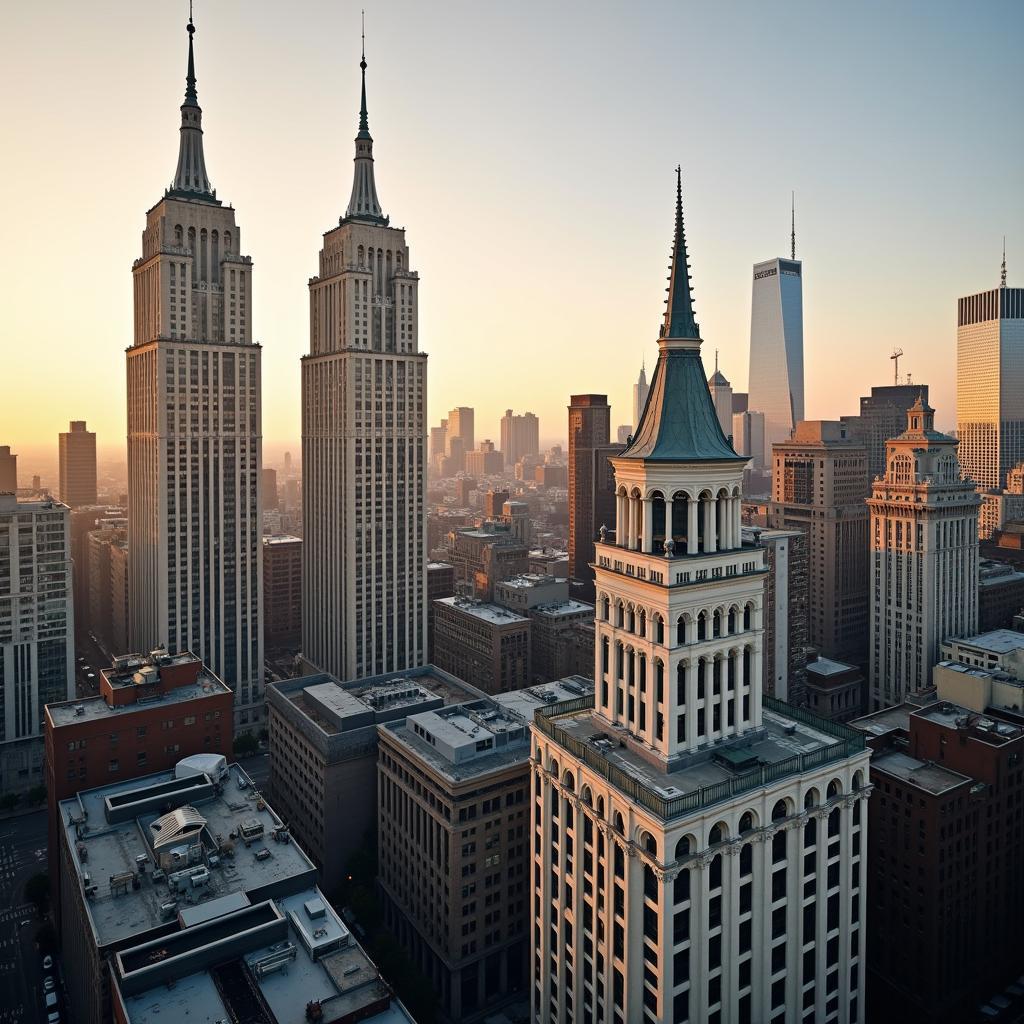 Kiến trúc nổi tiếng của thành phố hiện đại với các công trình biểu tượng trong kỳ thi IELTS Speaking
IELTS Speaking Part 2: Long Turn (Cue Card)
Tổng Quan Về Part 2
Part 2 là phần thử thách nhất vì bạn phải nói liên tục trong 2-3 phút mà không bị ngắt lời. Bạn có đúng 1 phút để chuẩn bị và ghi chú. Chiến lược quan trọng nhất là sử dụng hết thời gian chuẩn bị để note down keywords, không phải viết câu hoàn chỉnh.
Từ kinh nghiệm của tôi, nhiều thí sinh Việt Nam thường:
- Không tận dụng hết 1 phút chuẩn bị, vội vàng bắt đầu nói
- Nói quá ngắn, chỉ được 1-1.5 phút thay vì 2 phút đầy đủ
- Bỏ sót một hoặc nhiều bullet points trong đề bài
- Sử dụng thì hiện tại khi đề bài yêu cầu kể về quá khứ
Hãy nhớ rằng Part 2 là cơ hội để bạn showcase vocabulary range và grammatical structures của mình mà không bị examiner interrupt.
Cue Card
Describe a city that is famous for its architecture
You should say:
- Where this city is located
- What architectural styles or famous buildings it has
- When you learned about this city or visited it
- And explain why you think its architecture is impressive
Phân Tích Đề Bài
- Dạng câu hỏi: Describe a place – yêu cầu mô tả một thành phố cụ thể với trọng tâm là kiến trúc
- Thì động từ: Kết hợp – Present simple để mô tả general facts về thành phố, Past simple khi kể về experience của bạn (when you learned/visited)
- Bullet points phải cover: Cả 4 bullet points đều quan trọng như nhau. Location là phần ngắn nhất, architectural features là phần chi tiết nhất, personal experience về thời điểm biết/đến thành phố, và phần explain là quan trọng nhất để ghi điểm cao
- Câu “explain” quan trọng: Đây là phần critically important nhất. Đừng chỉ list ra features mà hãy analyze tại sao kiến trúc impressive – có thể nói về historical significance, aesthetic value, innovation, cultural representation, hoặc emotional impact
📝 Sample Answer – Band 6-7
Thời lượng: Khoảng 1.5-2 phút
I’d like to talk about Barcelona, which is a city in Spain. It’s located in the northeastern part of the country, near the Mediterranean Sea.
Barcelona is very famous for its unique architecture, especially the buildings designed by Antoni Gaudí. The most famous building is the Sagrada Familia, which is a huge church that is still being built today. It has very tall towers and special designs that look different from normal churches. Another famous building is Park Güell, which is a public park with colorful buildings and interesting shapes.
I first learned about Barcelona when I was in high school, around five years ago. My art teacher showed us pictures of Gaudí’s buildings in class. Later, I watched some travel videos online and became more interested in visiting this city. I haven’t been there yet, but I really want to go someday.
I think Barcelona’s architecture is impressive because it’s very creative and different. The buildings have unusual shapes and bright colors that you don’t see in other cities. Gaudí used natural forms like waves and trees in his designs, which makes the buildings look alive. Also, these buildings are not just beautiful but they also show Spanish culture and history. The architecture makes Barcelona special and different from other European cities.
Phân Tích Band Điểm
| Tiêu chí | Band | Nhận xét |
|---|---|---|
| Fluency & Coherence | 6-7 | Có flow cơ bản, sử dụng một số linking words (especially, also, because), nhưng còn nhiều pauses và repetition (very famous, very creative). Ideas được organize logically theo đúng bullet points |
| Lexical Resource | 6-7 | Vocabulary adequate với một số collocations tốt (famous for, unique architecture, natural forms) nhưng còn nhiều basic words (very, huge, special, interesting) và repetitive (famous xuất hiện 4 lần) |
| Grammatical Range & Accuracy | 6-7 | Mix của simple và complex sentences, sử dụng relative clauses (which is a city, that look different). Có một số structures tốt nhưng không đa dạng lắm |
| Pronunciation | 6-7 | Giả định clear và understandable với một số intonation patterns, có thể có occasional mispronunciation nhưng không ảnh hưởng comprehension |
Điểm mạnh:
- ✅ Trả lời đầy đủ cả 4 bullet points theo đúng thứ tự
- ✅ Có specific examples (Sagrada Familia, Park Güell, Antoni Gaudí)
- ✅ Structure logic và dễ follow
- ✅ Đủ độ dài minimum requirement
Hạn chế:
- ⚠️ Vocabulary còn repetitive và basic, thiếu sophisticated expressions
- ⚠️ Thiếu detail về architectural features (chỉ nói “special designs”, “interesting shapes”)
- ⚠️ Phần explain chưa sâu, còn general (just beautiful, different)
📝 Sample Answer – Band 7.5-8
Thời lượng: Khoảng 2-2.5 phút
I’d like to describe Barcelona, a vibrant coastal city in northeastern Spain that’s renowned worldwide for its extraordinary architecture.
Barcelona’s architectural landscape is dominated by the works of Antoni Gaudí, a visionary architect whose distinctive style has become synonymous with the city itself. The crown jewel is undoubtedly the Sagrada Familia, a breathtaking basilica that has been under construction for over a century. What makes it remarkable is its organic forms and intricate façades that depict biblical scenes in stunning detail. Another iconic landmark is Park Güell, where Gaudí incorporated natural elements like undulating benches covered in colorful mosaic tiles and structures that seem to blend seamlessly with the surrounding landscape.
I first became acquainted with Barcelona’s architecture about six years ago during my university studies. I was taking an architecture history course, and we spent several weeks examining Gaudí’s innovative approach to design. I was absolutely captivated by how he challenged conventional architectural norms by using curves instead of straight lines and drawing inspiration from nature. This sparked my interest, and I’ve been following developments in Barcelona’s architectural scene ever since, though I haven’t had the opportunity to visit in person yet.
What I find most impressive about Barcelona’s architecture is how it represents a perfect marriage between art and functionality. Gaudí’s buildings aren’t just visually stunning; they’re also structurally innovative. He pioneered techniques like the catenary arch, which distributes weight more efficiently than traditional methods. Moreover, the architecture reflects Catalan identity and embodies the city’s creative spirit. It has transformed Barcelona into a living museum where artistic vision and urban life coexist harmoniously. The way these structures have stood the test of time while remaining relevant is truly remarkable.
Phân Tích Band Điểm
| Tiêu chí | Band | Nhận xét |
|---|---|---|
| Fluency & Coherence | 7.5-8 | Flow tự nhiên với minimal hesitation, sử dụng sophisticated linking devices (undoubtedly, moreover, though), ideas được develop logically và systematically |
| Lexical Resource | 7.5-8 | Wide vocabulary range với nhiều less common words và collocations (renowned worldwide, crown jewel, under construction, blend seamlessly, sparked my interest). Paraphrasing tốt (famous → iconic landmark → crown jewel) |
| Grammatical Range & Accuracy | 7.5-8 | Consistent use của complex structures (relative clauses, passive voice, present perfect continuous), variety trong sentence types, very few errors |
| Pronunciation | 7.5-8 | Assumed clear pronunciation với good intonation patterns, stress và rhythm naturally |
So Sánh Với Band 6-7
| Khía cạnh | Band 6-7 | Band 7.5-8 |
|---|---|---|
| Vocabulary | “very famous” / “special designs” | “renowned worldwide” / “organic forms” / “intricate façades” |
| Grammar | “It has very tall towers” | “a breathtaking basilica that has been under construction for over a century” |
| Ideas | “creative and different” | “perfect marriage between art and functionality” / “structurally innovative” |
📝 Sample Answer – Band 8.5-9
Thời lượng: 2.5-3 phút đầy đủ
I’d like to talk about Barcelona, an architecturally magnificent city on Spain’s Mediterranean coast that has essentially become a showcase of modernist architecture.
What distinguishes Barcelona’s architectural heritage is the unparalleled work of Antoni Gaudí, whose groundbreaking designs have elevated the city to iconic status in the architectural world. The centerpiece is the awe-inspiring Sagrada Familia, a monumental basilica that defies conventional architectural principles. What’s particularly striking is how Gaudí reimagined religious architecture by incorporating natural forms – the columns mimic tree trunks branching toward the ceiling, creating a forest-like canopy that floods the interior with kaleidoscopic light filtered through stained glass windows. Beyond this masterpiece, structures like Casa Batlló and Casa Milà demonstrate his revolutionary approach, featuring undulating stone façades that appear almost fluid, challenging the very notion of what buildings should look like.
My fascination with Barcelona’s architecture began roughly seven years ago when I stumbled upon a documentary about Gaudí’s work. I was immediately struck by how his designs seemed to transcend the boundary between architecture and organic art. This initial encounter led me to delve deeper into architectural history, and I subsequently took an online course specifically focused on modernist movements in European architecture. While I haven’t yet had the privilege of experiencing these structures firsthand, I’ve extensively studied them through virtual tours and architectural analyses, which has only intensified my appreciation for their complexity.
Tương tự như describe a recent cultural experience, việc khám phá kiến trúc Barcelona cũng mang lại những trải nghiệm văn hóa sâu sắc về nghệ thuật và lịch sử.
What I find profoundly impressive about Barcelona’s architecture is its multifaceted significance. On a technical level, Gaudí was an engineering genius who pioneered structural innovations like the catenary arch and hyperboloid structures, which were decades ahead of their time and are still studied in architecture schools today. Aesthetically, his work embodies a harmonious synthesis of natural forms, vibrant colors, and symbolic religious imagery, creating spaces that are both spiritually uplifting and visually mesmerizing. But perhaps most importantly, these buildings encapsulate a specific historical moment when Catalan culture was experiencing a renaissance, making them invaluable cultural artifacts. The architecture hasn’t merely shaped the city’s identity; it has transformed Barcelona into a pilgrimage site for anyone interested in the intersection of art, engineering, and cultural expression. The fact that the Sagrada Familia is still evolving, with completion expected in the coming years, adds another layer of significance – it’s a living testament to sustained artistic vision spanning multiple generations.
Phân Tích Band Điểm
| Tiêu chí | Band | Nhận xét |
|---|---|---|
| Fluency & Coherence | 8.5-9 | Speaks fluently với rare repetition, sophisticated cohesive devices throughout (What distinguishes, Beyond this, On a technical level, Aesthetically, But perhaps most importantly), ideas flow seamlessly và logically developed |
| Lexical Resource | 8.5-9 | Wide range of vocabulary used naturally và precisely, skillful use của uncommon expressions (defies conventional principles, transcend the boundary, profoundly impressive, multifaceted significance, living testament), collocation và idiomatic language (stumbled upon, delve deeper into, ahead of their time) |
| Grammatical Range & Accuracy | 8.5-9 | Full range of structures used accurately và appropriately, sophisticated sentence structures (reduced relative clauses, complex nominalizations, embedded clauses), virtually error-free |
| Pronunciation | 8.5-9 | Assumed native-like pronunciation features với effective use of intonation patterns, sentence stress, và rhythm |
Tại Sao Bài Này Xuất Sắc
🎯 Fluency Hoàn Hảo:
Bài nói flow cực kỳ tự nhiên như một cuộc conversation thực sự, không có hesitation hay repetition không cần thiết. Sử dụng discourse markers một cách tinh tế để guide listener qua các ideas (What distinguishes, What’s particularly striking, While I haven’t yet, What I find profoundly impressive).
📚 Vocabulary Tinh Vi:
- “architecturally magnificent” thay vì “very beautiful” – cho thấy precision trong expression
- “unparalleled” thay vì “unique” – uncommon và sophisticated hơn
- “defies conventional architectural principles” – academic và precise
- “kaleidoscopic light” – descriptive và evocative, showing ability to paint pictures với words
- “transcend the boundary” – abstract concept expressed elegantly
📝 Grammar Đa Dạng:
- Complex relative clauses: “a monumental basilica that defies conventional architectural principles”
- Present perfect: “has essentially become”, “has transformed” – showing long-term impact
- Reduced relative clauses: “filtered through stained glass windows”
- Complex nominalizations: “sustained artistic vision spanning multiple generations”
💡 Ideas Sâu Sắc:
Không chỉ describe surface-level features mà analyze ở multiple levels: technical innovations, aesthetic qualities, cultural significance, historical context. Shows critical thinking và ability to discuss abstract concepts. Phần kết đặc biệt impressive khi nói về ongoing construction as “living testament” – demonstrates sophisticated understanding.
Follow-up Questions (Rounding Off Questions)
Sau khi bạn hoàn thành Part 2, examiner thường hỏi 1-2 câu ngắn để transition sang Part 3. Đây là những câu hỏi đơn giản, trả lời ngắn gọn 1-2 câu là đủ.
Question 1: Would you recommend this city to other people?
Band 6-7 Answer:
Yes, definitely. I think anyone who is interested in architecture or art should visit Barcelona. It’s a beautiful city with many things to see.
Band 8-9 Answer:
Absolutely, without hesitation. Barcelona is a must-visit destination for anyone with even a passing interest in architecture or design. The city offers an unparalleled opportunity to witness architectural innovation in a real urban context, which is far more impactful than studying it in textbooks.
Question 2: Is it an expensive city to visit?
Band 6-7 Answer:
I think it can be quite expensive, especially for accommodation and eating at restaurants. But there are also budget options if you plan carefully.
Band 8-9 Answer:
From what I understand, Barcelona sits in the mid-to-high range in terms of European destinations. While entrance fees to major attractions like the Sagrada Familia can be somewhat steep, the city offers excellent value considering the caliber of experiences available. Savvy travelers can certainly manage costs by opting for budget-friendly accommodation and taking advantage of the many free architectural sights scattered throughout the city.
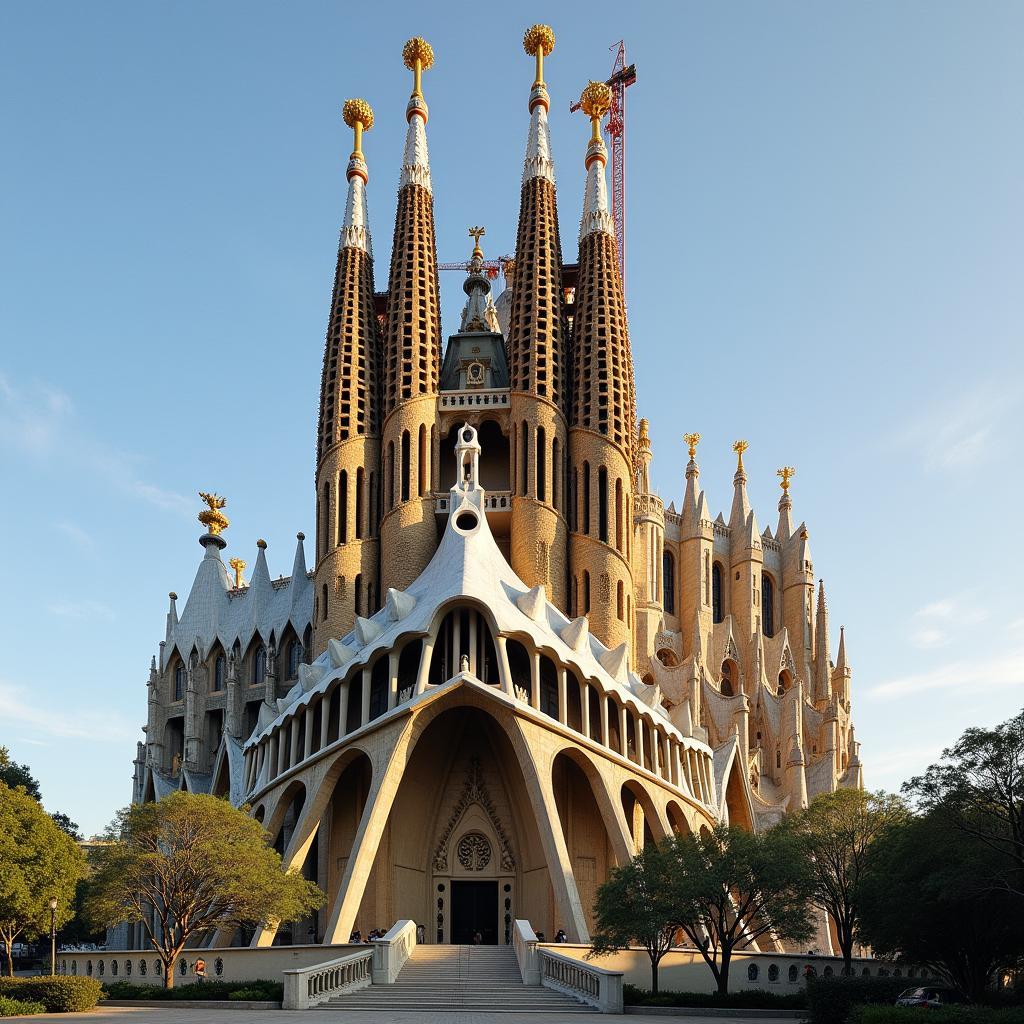 Kiến trúc độc đáo của nhà thờ Sagrada Familia Barcelona với thiết kế Gaudi nổi tiếng
IELTS Speaking Part 3: Two-way Discussion
Tổng Quan Về Part 3
Part 3 kéo dài 4-5 phút và là phần challenging nhất của Speaking test. Khác với Part 1 và 2, đây là cuộc thảo luận sâu về các vấn đề trừu tượng liên quan đến chủ đề Part 2. Examiner không mong đợi bạn là expert, nhưng họ muốn thấy bạn có khả năng:
- Phân tích các vấn đề phức tạp từ nhiều góc độ
- So sánh và đối chiếu các ideas
- Đưa ra quan điểm có lý lẽ chặt chẽ
- Discuss về society, trends, future changes
Chiến lược quan trọng:
- Mở rộng câu trả lời thành 3-5 câu (longer than Part 1)
- Sử dụng discourse markers để structure ideas (Well, Actually, On the one hand)
- Đưa ra examples từ society nói chung, không chỉ personal experiences
- Acknowledge complexity của issues (It depends, There are multiple factors)
Học viên Việt Nam thường gặp khó khăn ở Part 3 vì:
- Trả lời quá ngắn, thiếu elaboration
- Không đưa ra clear reasoning
- Thiếu vocabulary để discuss abstract concepts
- Không balance được different perspectives
Các Câu Hỏi Thảo Luận Sâu
Theme 1: Urban Development and Architecture
Question 1: How has modern architecture changed the appearance of cities?
🎯 Phân tích câu hỏi:
- Dạng: Cause-Effect / Change over time
- Key words: modern architecture, changed, appearance of cities
- Cách tiếp cận: So sánh past vs present, analyze specific changes, give examples
📝 Sample Answer – Band 6-7:
Modern architecture has changed cities a lot. In the past, most buildings were low and made of traditional materials like brick or wood. Now, cities have many tall buildings made of glass and steel. These skyscrapers make cities look more modern and impressive. Also, modern architects use new technology and designs, so buildings look very different from old ones. This change makes cities more interesting but sometimes the old character is lost.
Phân tích:
- Structure: Basic comparison between past and present, có main idea và supporting points
- Vocabulary: Adequate nhưng repetitive (cities xuất hiện 4 lần, modern 3 lần), thiếu variety
- Tại sao Band 6-7: Ideas relevant và clear nhưng development còn surface-level, vocabulary range limited
📝 Câu trả lời mẫu – Band 8-9:
Well, the transformation has been quite dramatic, I’d say. Contemporary architecture has fundamentally altered urban skylines in several significant ways. Firstly, we’ve seen a vertical expansion with the proliferation of high-rise buildings and skyscrapers, which has allowed cities to accommodate growing populations within limited space. These towering structures, typically featuring glass curtain walls and steel frameworks, create a distinctly modern aesthetic that’s quite different from the low-rise, masonry buildings that dominated cities historically.
Beyond just height, modern architecture has introduced minimalist design principles and innovative materials that emphasize functionality and efficiency. We’re seeing more sustainable features like green roofs, solar panels, and energy-efficient facades being integrated into urban landscapes. However, this architectural evolution has been somewhat contentious. While it’s made cities more economically vibrant and technologically advanced, there’s an ongoing debate about whether we’re sacrificing the unique character and cultural identity that traditional architecture provided. Many cities are now grappling with how to strike a balance between modernization and heritage preservation.
Phân tích:
- Structure: Extremely well-organized: Opening statement → Main point 1 với details → Main point 2 với expansion → Balanced view với acknowledgment of controversy → Nuanced conclusion. Shows sophisticated organizational skills.
- Vocabulary: Rich và precise – transformation, proliferation, accommodate, contentious, grappling with, strike a balance. Uses topic-specific terminology naturally (glass curtain walls, masonry buildings, green roofs).
- Grammar: Complex và varied – present perfect (has been, has introduced), present continuous (we’re seeing), passive constructions (being integrated into), conditional ideas (whether we’re sacrificing). All used accurately.
- Critical Thinking: Demonstrates depth by acknowledging both positive changes và controversies. Shows ability to discuss abstract concepts (cultural identity, heritage preservation) và presents balanced perspective without being simplistic.
💡 Key Language Features:
- Discourse markers: Well, Firstly, Beyond just, However – guide listener through argument structure
- Tentative language: I’d say, quite, somewhat – shows nuanced thinking rather than absolute statements
- Abstract nouns: transformation, proliferation, aesthetic, evolution, modernization – elevate discussion to academic level
- Hedging devices: typically, tends to – demonstrate sophisticated academic English
Question 2: Do you think governments should invest more in preserving old buildings or constructing new ones?
🎯 Phân tích câu hỏi:
- Dạng: Opinion với comparison (either/or choice)
- Key words: governments, invest, preserving old buildings vs constructing new ones
- Cách tiếp cận: Có thể choose one side hoặc argue for balance, phải có clear reasoning và examples
📝 Sample Answer – Band 6-7:
I think both are important. Old buildings show our history and culture, so we should protect them. But we also need new buildings because cities are growing and we need more space for people to live and work. If I have to choose, I would say governments should focus more on preserving old buildings because once they are destroyed, we can never get them back. New buildings can be built anytime.
Phân tích:
- Structure: Presents both sides và then gives preference – shows some balance
- Vocabulary: Basic và repetitive (buildings, important, old), lacks sophisticated expressions
- Tại sao Band 6-7: Relevant ideas nhưng reasoning chưa developed fully, thiếu specific examples
📝 Câu trả lời mẫu – Band 8-9:
That’s quite a thought-provoking question because it really hinges on understanding the different needs and priorities of a society. I’d argue that the ideal approach is actually finding the right balance rather than prioritizing one over the other, though how that balance is struck should depend on specific circumstances.
On the one hand, heritage preservation is paramount because historic buildings are irreplaceable assets that embody a nation’s cultural memory and identity. Once destroyed, these architectural treasures are lost forever, taking with them tangible links to the past. Cities like Rome or Kyoto have shown how well-preserved historical architecture can actually drive economic benefits through tourism while maintaining cultural continuity. There’s also growing evidence that people feel more connected to and proud of places that retain their historical character.
On the other hand, we can’t ignore that urban populations are expanding rapidly, and there’s a pressing need for modern infrastructure that meets contemporary demands – affordable housing, energy-efficient offices, and sustainable public facilities. Neglecting these needs in favor of exclusive focus on preservation could hinder economic development and compromise quality of life for residents.
In my view, governments should allocate resources based on careful assessment. In cities with significant historical assets, preservation should receive substantial funding, perhaps supplemented by public-private partnerships. Meanwhile, new construction can incorporate modern sustainability standards while respecting the architectural context of their surroundings. Singapore offers an interesting model – they’ve managed to harmonize ultra-modern development with selective preservation of colonial and traditional buildings, creating a city that’s both forward-looking and culturally grounded.
Phân tích:
- Structure: Sophisticated organization – acknowledges complexity → explores perspective 1 với reasoning → explores perspective 2 với counter-reasoning → synthesizes với personal view và practical solution. Demonstrates ability to consider issues from multiple angles.
- Vocabulary: Wide-ranging và precise (thought-provoking, hinges on, paramount, irreplaceable assets, tangible links, pressing need, substantial funding). Uses abstract nouns fluently (heritage preservation, cultural memory, architectural context).
- Grammar: Full range of structures – conditional (how that balance is struck should depend), passive voice (should be allocated), complex sentences với multiple clauses. Virtually error-free.
- Critical Thinking: Exceptional depth – doesn’t give simplistic either/or answer, considers economic, cultural, và practical factors, provides specific example (Singapore), proposes nuanced solution (public-private partnerships, context-sensitive development). Shows genuine analytical thinking.
💡 Key Language Features:
- Discourse markers for balanced argument: On the one hand, On the other hand, In my view – structure complex argument clearly
- Tentative language: quite, rather than, perhaps, could – appropriate hedging for discussing opinions
- Abstract nouns: heritage preservation, cultural memory, economic benefits, quality of life – enable discussion of complex concepts
- Evaluative language: paramount, pressing need, significant, substantial – show ability to assess importance và prioritize
Nếu bạn quan tâm đến describe a place where you go to be creative, điều này cũng giống như kiến trúc có thể trở thành nguồn cảm hứng sáng tạo cho nhiều người.
Theme 2: Impact of Architecture on Society
Question 3: In what ways can architecture affect people’s mood and behavior?
🎯 Phân tích câu hỏi:
- Dạng: Cause-Effect / Analysis
- Key words: architecture, affect, people’s mood and behavior
- Cách tiếp cận: Explain mechanisms of influence, give specific examples of different architectural features và their psychological effects
📝 Sample Answer – Band 6-7:
Architecture can affect people’s feelings in many ways. For example, if a building has a lot of natural light and open space, people will feel more comfortable and happy. Dark and crowded spaces make people feel stressed. Also, the colors and designs of buildings can change our mood. Bright colors make people feel energetic while dark colors can make them feel sad. In offices, good architecture with comfortable spaces can help people work better.
Phân tích:
- Structure: Clear cause-effect relationships presented
- Vocabulary: Adequate với some relevant terms (natural light, open space) nhưng lacks depth
- Tại sao Band 6-7: Ideas straightforward và relevant, nhưng analysis remains fairly basic
📝 Câu trả lời mẫu – Band 8-9:
This is a fascinating area that’s actually been extensively researched in environmental psychology. Architecture exerts a profound influence on human wellbeing through multiple mechanisms.
From a psychological perspective, spatial design directly impacts our mental state. Abundant natural light and high ceilings, for instance, have been shown to enhance mood and boost productivity by creating a sense of openness and freedom. Conversely, cramped spaces with poor ventilation and artificial lighting can trigger feelings of anxiety and claustrophobia. There’s compelling evidence from neuroscience that certain architectural proportions and symmetries actually activate reward centers in our brains, explaining why we find some buildings aesthetically pleasing while others feel uncomfortable.
Beyond individual psychology, architecture shapes social behavior in subtle but important ways. Well-designed public spaces with adequate seating and pedestrian-friendly features tend to foster social interaction and community cohesion. Think about traditional European plazas versus car-centric suburban layouts – the former encourages spontaneous encounters and lingering, while the latter often isolates individuals. Urban planners are increasingly recognizing this, which is why we’re seeing more emphasis on walkable neighborhoods and mixed-use developments that facilitate both functional and social needs.
Moreover, architecture carries symbolic and cultural significance that affects our sense of identity and belonging. Landmark buildings can instill civic pride, while thoughtfully designed cultural spaces like museums or libraries can elevate a community’s self-perception and aspirations. On the flip side, neglected or deteriorating built environments have been linked to increased anti-social behavior and reduced community engagement – the “broken windows theory” in action.
Phân tích:
- Structure: Multi-layered analysis – psychological level → social/behavioral level → cultural/symbolic level. Each point is well-developed với evidence và examples. Shows sophisticated ability to organize complex information.
- Vocabulary: Exceptional range và precision (exerts profound influence, spatial design, trigger, cramped spaces, foster, cohesion, spontaneous encounters, instill civic pride, broken windows theory). Mix of academic và accessible language appropriate for speaking.
- Grammar: Complex structures used naturally – passive constructions (has been extensively researched, have been shown), present perfect (we’re seeing), conditional reasoning (explaining why). No errors despite complexity.
- Critical Thinking: Outstanding depth – references research fields (environmental psychology, neuroscience), provides concrete examples (European plazas vs suburban layouts), discusses both positive và negative effects, mentions theoretical frameworks (broken windows theory). Goes far beyond surface-level observation.
💡 Key Language Features:
- Academic discourse markers: From a psychological perspective, Beyond individual psychology, Moreover – signal sophisticated analytical structure
- Tentative and precise language: tends to, have been shown to, increasingly – demonstrates nuanced academic expression
- Abstract concepts: mental state, community cohesion, sense of identity, civic pride – shows ability to discuss psychological và sociological ideas
- Evidence and research references: extensively researched, compelling evidence, neuroscience – grounds opinions in broader knowledge base
Theme 3: Future Trends in Architecture
Question 4: What do you think cities will look like in the future?
🎯 Phân tích câu hỏi:
- Dạng: Prediction / Speculation about future
- Key words: cities, future, will look like
- Cách tiếp cận: Make informed predictions based on current trends, use appropriate future forms và tentative language, consider multiple aspects (technology, environment, society)
📝 Sample Answer – Band 6-7:
I think cities in the future will be very different from now. They will probably have more tall buildings because there will be more people. I also think there will be more green spaces and parks because people are becoming more aware of environmental problems. Technology will be important too, so we might see buildings with solar panels and smart systems. Transportation will also change, maybe we will have more electric cars and better public transport. Overall, I believe future cities will be more modern and environmentally friendly.
Phân tích:
- Structure: Covers multiple aspects (buildings, environment, technology, transportation) – shows breadth
- Vocabulary: Uses some appropriate future vocabulary (probably, might, will be) nhưng expressions remain basic
- Tại sao Band 6-7: Makes relevant predictions nhưng lacks depth trong analysis và specificity trong details
📝 Câu trả lời mẫu – Band 8-9:
That’s an intriguing question to speculate about. Based on current trends and emerging technologies, I’d envision several transformative shifts in urban landscapes.
First and foremost, I think we’ll see cities become increasingly vertical and compact. With population density continuing to rise, high-rise residential complexes and mixed-use towers that integrate living, working, and recreational spaces will likely become the norm. But these won’t be the monolithic glass boxes of today – advances in materials science and 3D printing could enable more organic, sculptural forms that are both structurally efficient and aesthetically diverse.
Sustainability will undoubtedly be paramount. I’d anticipate widespread adoption of “living buildings” that generate their own energy through integrated solar technology and harness rainwater for internal use. We’re already seeing experimental projects with vertical forests – buildings covered in vegetation that improve air quality and provide insulation. This concept will likely scale up, transforming urban centers into what some architects are calling “eco-cities” where nature and architecture coexist symbiotically.
From a technological standpoint, cities will probably be far more “smart” and responsive. Imagine buildings that adjust lighting, temperature, and even spatial configurations based on real-time occupancy data. Autonomous vehicles could reshape urban planning entirely, eliminating the need for vast parking areas and allowing for more pedestrian zones. We might see modular architecture become mainstream – buildings that can be reconfigured or expanded as needs change, reducing demolition waste.
However, I think the most profound change might be philosophical rather than purely technological. There’s growing recognition that cities need to prioritize human wellbeing and community connection over mere economic efficiency. Future urban design will likely emphasize accessible public spaces, biophilic design that reconnects people with nature, and inclusive architecture that accommodates diverse populations. We might see a departure from the car-dominated, segregated zoning of the 20th century toward more walkable, mixed-use neighborhoods that foster social interaction and cultural vitality.
Of course, these are optimistic projections – whether they materialize depends on political will, investment, and our collective commitment to sustainable development. But the trajectory seems clear: future cities will need to be more adaptive, sustainable, and human-centered if they’re to meet the challenges ahead.
Phân tích:
- Structure: Exemplary organization – intro với speculation framing → vertical/compact development → sustainability focus → technology integration → philosophical shift về human-centered design → realistic conclusion acknowledging uncertainties. Shows exceptional ability to organize complex predictions logically.
- Vocabulary: Sophisticated và varied (envision, transformative shifts, monolithic glass boxes, coexist symbiotically, modular architecture, biophilic design, segregated zoning, optimistic projections, trajectory). Perfect balance between technical accuracy và accessibility.
- Grammar: Full range of future forms (will become, will be, could enable, might see, will need to) used appropriately, complex conditional structures (whether they materialize depends on), present continuous for trends (are calling, is growing). Completely accurate despite complexity.
- Critical Thinking: Exceptional depth và breadth – considers multiple dimensions (structural, environmental, technological, social, philosophical), provides specific examples (vertical forests, autonomous vehicles, modular architecture), acknowledges uncertainties và conditions (However, Of course, whether they materialize), shows awareness of broader contexts (political will, collective commitment). Demonstrates genuine analytical và evaluative thinking rather than just listing ideas.
💡 Key Language Features:
- Speculation language: I’d envision, I’d anticipate, will likely, could, might, probably – appropriate hedging for discussing future
- Discourse markers for structured prediction: First and foremost, From a technological standpoint, However, Of course – organize complex speculations clearly
- Abstract nouns and concepts: transformative shifts, population density, sustainability, philosophical change, collective commitment – enable sophisticated discussion
- Technical terminology used naturally: mixed-use towers, materials science, biophilic design, autonomous vehicles – shows depth of knowledge without being overly academic
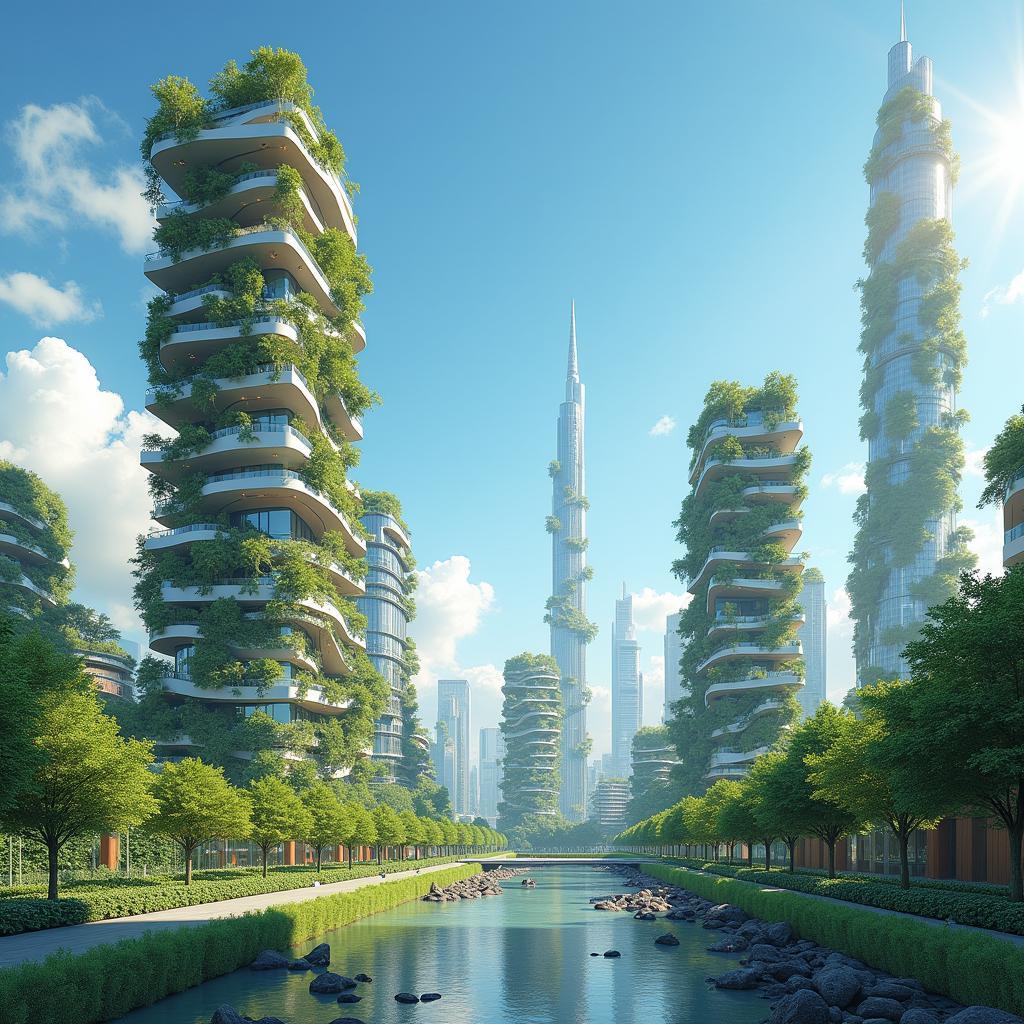 Thành phố tương lai với kiến trúc bền vững và công nghệ xanh trong IELTS Speaking
Từ vựng và cụm từ quan trọng
Topic-Specific Vocabulary
| Từ vựng/Cụm từ | Loại từ | Phiên âm | Nghĩa tiếng Việt | Ví dụ | Collocation |
|---|---|---|---|---|---|
| architectural heritage | n | /ˌɑːkɪˈtektʃərəl ˈherɪtɪdʒ/ | di sản kiến trúc | The city’s architectural heritage attracts millions of tourists annually. | preserve architectural heritage, rich architectural heritage, protect architectural heritage |
| iconic landmark | n | /aɪˈkɒnɪk ˈlændmɑːk/ | địa danh biểu tượng | The Eiffel Tower is an iconic landmark that defines Paris. | become an iconic landmark, famous iconic landmark, recognize an iconic landmark |
| intricate façade | n | /ˈɪntrɪkət fəˈsɑːd/ | mặt tiền tinh xảo | The building features an intricate façade with detailed carvings. | ornate intricate façade, design an intricate façade, admire the intricate façade |
| urban landscape | n | /ˈɜːbən ˈlændskeɪp/ | cảnh quan đô thị | Modern skyscrapers have transformed the urban landscape. | shape the urban landscape, change the urban landscape, diverse urban landscape |
| sustainable design | n | /səˈsteɪnəbl dɪˈzaɪn/ | thiết kế bền vững | Sustainable design principles are becoming standard in new constructions. | incorporate sustainable design, promote sustainable design, focus on sustainable design |
| breathtaking | adj | /ˈbreθteɪkɪŋ/ | ngoạn mục, choáng ngợp | The view from the tower is absolutely breathtaking. | breathtaking view, breathtaking architecture, breathtaking beauty |
| awe-inspiring | adj | /ˈɔː ɪnˌspaɪərɪŋ/ | gây kinh ngạc, hùng vĩ | The cathedral’s awe-inspiring interior leaves visitors speechless. | awe-inspiring structure, awe-inspiring design, truly awe-inspiring |
| meticulously crafted | adj phrase | /məˈtɪkjələsli ˈkrɑːftɪd/ | được chế tác tỉ mỉ | Each detail was meticulously crafted by skilled artisans. | meticulously crafted details, meticulously crafted design |
| seamlessly blend | v | /ˈsiːmləsli blend/ | hòa trộn hài hòa | The building seamlessly blends modern and traditional elements. | seamlessly blend with, seamlessly blend into, seamlessly blend together |
| embody | v | /ɪmˈbɒdi/ | thể hiện, hiện thân | These structures embody the spirit of innovation. | embody values, embody principles, embody a vision |
| incorporate | v | /ɪnˈkɔːpəreɪt/ | kết hợp, tích hợp | The design incorporates natural lighting and ventilation. | incorporate elements, incorporate features, incorporate ideas |
| harmonious | adj | /hɑːˈməʊniəs/ | hài hòa, cân đối | The harmonious proportions create visual balance. | harmonious blend, harmonious relationship, harmonious design |
| monumental | adj | /ˌmɒnjuˈmentl/ | đồ sộ, hoành tráng | The monumental scale of the building impresses everyone. | monumental achievement, monumental structure, monumental scale |
| striking feature | n | /ˈstraɪkɪŋ ˈfiːtʃə/ | đặc điểm nổi bật | The most striking feature is the glass dome. | distinctive striking feature, have a striking feature, notable striking feature |
| architectural marvel | n | /ˌɑːkɪˈtektʃərəl ˈmɑːvl/ | kỳ quan kiến trúc | The opera house is considered an architectural marvel. | modern architectural marvel, true architectural marvel, ancient architectural marvel |
| preserve | v | /prɪˈzɜːv/ | bảo tồn, giữ gìn | The government works to preserve historic buildings. | preserve heritage, preserve buildings, well-preserved |
| restoration | n | /ˌrestəˈreɪʃn/ | sự phục hồi, trùng tu | The restoration project took five years to complete. | undergo restoration, major restoration, complete restoration |
| contemporary | adj | /kənˈtemprəri/ | đương đại, hiện đại | Contemporary architecture emphasizes functionality. | contemporary design, contemporary style, contemporary approach |
| sprawling | adj | /ˈsprɔːlɪŋ/ | trải rộng, lan tỏa | The sprawling complex covers several city blocks. | sprawling city, sprawling development, sprawling structure |
| skyline | n | /ˈskaɪlaɪn/ | đường chân trời (của thành phố) | The new tower dominates the city’s skyline. | city skyline, iconic skyline, transform the skyline |
Idiomatic Expressions & Advanced Phrases
| Cụm từ | Nghĩa | Ví dụ sử dụng | Band điểm |
|---|---|---|---|
| a feast for the eyes | một bữa tiệc thị giác, rất đẹp mắt | The ornate palace interior is truly a feast for the eyes. | 7.5-9 |
| stand the test of time | vượt qua thử thách của thời gian, tồn tại lâu dài | These ancient structures have stood the test of time for over a millennium. | 7.5-9 |
| push the boundaries | vượt qua ranh giới, đổi mới táo bạo | Gaudí’s designs pushed the boundaries of what was architecturally possible. | 8-9 |
| a testament to | minh chứng cho, bằng chứng về | The building is a testament to human ingenuity and craftsmanship. | 7.5-9 |
| leave a lasting impression | để lại ấn tượng sâu sắc | The cathedral’s grandeur leaves a lasting impression on all visitors. | 7-8 |
| strike a balance between | cân bằng giữa, dung hòa | The city has managed to strike a balance between modernization and preservation. | 8-9 |
| ahead of its time | vượt trước thời đại | The design was considered ahead of its time when it was built. | 7.5-8.5 |
| the crown jewel of | viên ngọc quý, công trình nổi bật nhất | The opera house is the crown jewel of the city’s architecture. | 7.5-8.5 |
| breathe new life into | thổi hồn mới vào, làm sống lại | The renovation breathed new life into the historic district. | 7.5-8.5 |
| architectural gem | viên ngọc kiến trúc, công trình kiến trúc quý giá | The library is a hidden architectural gem in the old quarter. | 7-8 |
| marry form and function | kết hợp hình thức và chức năng | The design successfully marries form and function. | 8-9 |
| at the cutting edge of | ở tuyến đầu, tiên phong | The firm is at the cutting edge of sustainable architecture. | 7.5-8.5 |
Discourse Markers (Từ Nối Ý Trong Speaking)
Để bắt đầu câu trả lời:
- 📝 Well,… – Dùng khi bạn cần một chút thời gian để suy nghĩ hoặc formulate answer
- 📝 Actually,… – Khi bạn muốn correct một assumption hoặc đưa ra góc nhìn khác
- 📝 To be honest,… – Khi bạn muốn nói thật, thường dùng trước personal opinion mạnh
- 📝 I’d say that… – Cách diplomatic để đưa ra quan điểm cá nhân
- 📝 That’s an interesting question… – Cho thấy bạn engaged và đang consider câu hỏi seriously
Để bổ sung ý:
- 📝 On top of that,… – Thêm vào đó, ngoài ra
- 📝 What’s more,… – Hơn nữa, còn nữa
- 📝 Not to mention… – Chưa kể đến, để không nói đến
- 📝 Another thing worth mentioning is… – Một điều khác đáng đề cập là
- 📝 Beyond that,… – Ngoài ra còn, vượt ra ngoài điều đó
Để đưa ra quan điểm cân bằng:
- 📝 On the one hand,… On the other hand,… – Một mặt… mặt khác (cho balanced argument)
- 📝 While it’s true that…, we also need to consider… – Mặc dù đúng là… nhưng ta cũng cần xem xét
- 📝 There are pros and cons to… – Có cả ưu và nhược điểm
- 📝 It depends on… – Tùy thuộc vào (shows nuanced thinking)
Để kết luận:
- 📝 All in all,… – Tóm lại, xét cho cùng
- 📝 At the end of the day,… – Cuối cùng thì, suy cho cùng
- 📝 In a nutshell,… – Nói tóm lại, nói ngắn gọn
- 📝 The bottom line is… – Điểm mấu chốt là
Để thể hiện uncertainty hoặc hedging (quan trọng cho Band 8+):
- 📝 I would say… – Tôi có thể nói rằng
- 📝 To some extent… – Ở một mức độ nào đó
- 📝 It seems to me that… – Có vẻ như với tôi
- 📝 From my perspective… – Từ góc nhìn của tôi
- 📝 As far as I’m aware… – Theo như tôi biết
Grammatical Structures Ấn Tượng
1. Conditional Sentences (Câu điều kiện):
Mixed conditional:
- Formula: If + past perfect, would + base verb (hoặc ngược lại)
- Ví dụ: “If Gaudí hadn’t pushed architectural boundaries, Barcelona wouldn’t be the iconic city it is today.”
- Ví dụ: “If we didn’t preserve historic buildings, we would have lost our cultural identity long ago.”
Inversion for emphasis:
- Formula: Had + subject + past participle, would/could…
- Ví dụ: “Had the government invested more in preservation, many historic buildings would still be standing today.”
- Ví dụ: “Should cities prioritize sustainability, future generations will benefit enormously.”
2. Relative Clauses (Mệnh đề quan hệ):
Non-defining relative clauses (thêm thông tin, dùng dấu phẩy):
- Formula: …, which/who/where + clause,…
- Ví dụ: “The Sagrada Familia, which has been under construction for over a century, remains Barcelona’s most famous landmark.”
- Ví dụ: “Gaudí, whose innovative designs revolutionized architecture, drew inspiration from nature.”
Reduced relative clauses:
- Formula: Bỏ relative pronoun và be verb
- Ví dụ: “Buildings designed with sustainability in mind tend to be more energy-efficient.”
- Ví dụ: “The structure, constructed entirely from recycled materials, won several awards.”
3. Passive Voice (Câu bị động):
Impersonal passive với “It”:
- Formula: It is + past participle + that…
- Ví dụ: “It is widely believed that architecture profoundly affects human psychology.”
- Ví dụ: “It has been shown that natural light in buildings improves productivity.”
- Ví dụ: “It is generally accepted that heritage preservation benefits tourism.”
4. Cleft Sentences (Câu chẻ – để nhấn mạnh):
What-cleft:
- Formula: What + clause + be + focus
- Ví dụ: “What I find most impressive about the building is its sustainable design.”
- Ví dụ: “What makes Barcelona unique is its architectural diversity.”
The thing/reason-cleft:
- Formula: The thing/reason that… is…
- Ví dụ: “The thing that distinguishes modern architecture is its emphasis on functionality.”
- Ví dụ: “The reason why people love old buildings is their historical significance.”
5. Advanced Nominal Structures:
Nominalization (chuyển động từ/tính từ thành danh từ):
- Ví dụ: Instead of “The city is developing rapidly” → “The rapid development of the city…”
- Ví dụ: Instead of “Architecture is preserved” → “Architectural preservation requires significant investment.”
6. Participle Clauses:
Present participle:
- Ví dụ: “Incorporating natural elements, the design creates a harmonious atmosphere.”
- Ví dụ: “Standing at 300 meters, the tower dominates the skyline.”
Perfect participle:
- Ví dụ: “Having studied architecture for years, I appreciate the complexity of Gaudí’s work.”
Những grammatical structures này không chỉ giúp bạn đạt điểm cao ở tiêu chí “Grammatical Range and Accuracy” mà còn làm cho câu nói của bạn sound more sophisticated và natural như native speakers.
Bài viết này đã trang bị cho bạn một kho tài nguyên toàn diện để tự tin xử lý chủ đề “describe a city that is famous for its architecture” trong IELTS Speaking. Hãy nhớ rằng việc đạt band điểm cao không chỉ là học thuộc từ vựng hay câu mẫu, mà là khả năng sử dụng ngôn ngữ một cách linh hoạt, tự nhiên và thể hiện tư duy phản biện.
Từ góc nhìn của một examiner, tôi muốn nhấn mạnh rằng authenticity là quan trọng nhất. Đừng cố gắng sound quá bookish hay sử dụng những từ phức tạp mà bạn không thực sự hiểu. Thay vào đó, hãy tập trung vào việc communicate ideas clearly, develop your points với examples cụ thể, và show your personality through your answers.
Thực hành thường xuyên với các sample questions, record yourself để identify areas for improvement, và đặc biệt chú ý đến pronunciation và fluency. Chúc bạn thành công trong kỳ thi IELTS Speaking sắp tới!