
Mở bài
Chủ đề “Describe A Competition You Want To Participate In” là một đề bài Speaking Part 2 xuất hiện với tần suất khá cao trong các kỳ thi IELTS từ năm 2022 đến nay. Theo thống kê từ các trung tâm luyện thi và báo cáo từ thí sinh, chủ đề này xuất hiện trung bình 2-3 lần mỗi quý, đặc biệt phổ biến trong các kỳ thi tháng 5-8 và tháng 9-12 hàng năm. Dự đoán khả năng xuất hiện trong các kỳ thi tương lai vẫn ở mức cao do tính practical và relatable của chủ đề.
Chủ đề về competition rất đa dạng và có thể được hỏi dưới nhiều góc độ khác nhau: từ các cuộc thi học thuật, thể thao, nghệ thuật, đến các competition trong công việc hay cuộc thi talent show. Điều này đòi hỏi thí sinh phải linh hoạt trong cách tiếp cận và có vocabulary phong phú để miêu tả các loại hình thi đấu khác nhau.
Trong bài viết này, bạn sẽ học được cách trả lời chủ đề này một cách tự nhiên và ấn tượng qua các nội dung sau: Tương tự như describe a person you know who enjoys adventure sports, chủ đề này đòi hỏi bạn thể hiện sự đam mê và nhiệt huyết. Các câu hỏi thường gặp trong cả 3 Part của bài thi Speaking, bài mẫu chi tiết theo nhiều band điểm từ 6-7, 7.5-8 đến 8.5-9 để bạn có thể so sánh và học hỏi, từ vựng và cụm từ ăn điểm với phiên âm chi tiết, chiến lược trả lời hiệu quả từ góc nhìn của một examiner chính thức, cùng những lời khuyên thiết thực giúp bạn tránh được các lỗi thường gặp của học viên Việt Nam khi nói về chủ đề này.
IELTS Speaking Part 1: Introduction and Interview
Tổng Quan Về Part 1
Part 1 của bài thi IELTS Speaking kéo dài khoảng 4-5 phút với các câu hỏi ngắn về cuộc sống hàng ngày, sở thích cá nhân và các chủ đề quen thuộc. Đối với chủ đề competition, examiner thường hỏi về trải nghiệm và thái độ của bạn đối với các cuộc thi một cách tổng quát.
Chiến lược trả lời tốt nhất cho Part 1 là: trả lời trực tiếp câu hỏi trong câu đầu tiên, sau đó mở rộng với lý do hoặc ví dụ cụ thể trong 1-2 câu tiếp theo. Tổng thời lượng mỗi câu trả lời nên khoảng 15-20 giây, tức là 2-3 câu hoàn chỉnh.
Lỗi thường gặp của học viên Việt Nam trong Part 1 bao gồm: trả lời quá ngắn gọn chỉ với Yes hoặc No mà không giải thích, sử dụng từ vựng quá đơn giản như good, bad, nice liên tục, thiếu ví dụ cụ thể từ trải nghiệm bản thân khiến câu trả lời trở nên chung chung, và có xu hướng dịch trực tiếp từ tiếng Việt sang tiếng Anh dẫn đến câu văn không tự nhiên.
Các Câu Hỏi Thường Gặp
Question 1: Do you like competitions?
Question 2: Have you ever participated in any competitions?
Question 3: What kind of competitions are popular in your country?
Question 4: Do you think competitions are important for students?
Question 5: Would you like to take part in a competition in the future?
Question 6: Are you a competitive person?
Question 7: What makes a competition exciting to watch?
Question 8: Do you prefer individual or team competitions?
Question 9: Have you ever won any prizes in competitions?
Question 10: What do you think are the benefits of competitions?
Phân Tích và Gợi Ý Trả Lời Chi Tiết
Question: Do you like competitions?
🎯 Cách tiếp cận:
- Trả lời Yes/No rõ ràng ngay câu đầu
- Đưa ra 1-2 lý do cụ thể
- Thêm ví dụ ngắn gọn từ kinh nghiệm bản thân nếu có thể
📝 Sample Answer – Band 6-7:
Yes, I like competitions quite a lot. I think they’re exciting and help me challenge myself. When I join competitions, I can see how good I am compared to others and learn new things.
Phân tích:
- Điểm mạnh: Trả lời trực tiếp, có đưa ra lý do cơ bản, câu văn rõ ràng và dễ hiểu
- Hạn chế: Từ vựng còn đơn giản (exciting, good, learn new things), thiếu ví dụ cụ thể, chưa thể hiện sự sâu sắc trong suy nghĩ
- Tại sao Band 6-7: Đáp ứng được yêu cầu cơ bản về Fluency với câu trả lời mạch lạc, Vocabulary ở mức adequate nhưng chưa có từ vựng nâng cao hoặc collocations ấn tượng, Grammar đơn giản với cấu trúc câu cơ bản, chưa có câu phức
📝 Sample Answer – Band 8-9:
Absolutely! I’m quite drawn to competitions because they bring out the best in me. There’s something about the competitive atmosphere that really pushes me to exceed my limits. For instance, I recently participated in a public speaking contest at my university, and despite the nerve-wracking experience, I found it incredibly rewarding as it helped me develop my confidence and presentation skills.
Phân tích:
- Điểm mạnh: Sử dụng expression tự nhiên “drawn to” thay vì like đơn giản, collocations mạnh như “bring out the best in me”, “competitive atmosphere”, “exceed my limits”, có ví dụ cụ thể từ trải nghiệm cá nhân với chi tiết rõ ràng (public speaking contest, university), thể hiện impact của competition một cách sâu sắc (develop confidence, presentation skills), từ vựng đa dạng và tinh tế như “nerve-wracking”, “rewarding”
- Tại sao Band 8-9: Fluency & Coherence xuất sắc với câu trả lời trôi chảy, có linking natural, Lexical Resource impressive với nhiều collocations và less common vocabulary, Grammatical Range đa dạng với cấu trúc phức (despite + noun phrase, as it helped me…), Pronunciation chú ý đến word stress và intonation tự nhiên
💡 Key Vocabulary & Expressions:
- be drawn to something: bị thu hút bởi điều gì đó
- bring out the best in someone: làm bộc lộ tiềm năng tốt nhất của ai đó
- competitive atmosphere: bầu không khí cạnh tranh
- push someone to exceed their limits: thúc đẩy ai đó vượt qua giới hạn của họ
- nerve-wracking experience: trải nghiệm căng thẳng, hồi hộp
- rewarding: bổ ích, đáng giá
Question: Have you ever participated in any competitions?
🎯 Cách tiếp cận:
- Trả lời Yes/No
- Nêu cụ thể loại competition nào
- Kể ngắn gọn về kết quả hoặc cảm nhận
📝 Sample Answer – Band 6-7:
Yes, I have. I joined a singing competition when I was in high school. I didn’t win but it was a good experience. I learned a lot about performing in front of people and it helped me become more confident.
Phân tích:
- Điểm mạnh: Có ví dụ cụ thể, cấu trúc câu đúng ngữ pháp, trả lời đầy đủ những gì được hỏi
- Hạn chế: Từ vựng rất cơ bản (good experience, learned a lot, become more confident), thiếu chi tiết thú vị về cuộc thi, câu văn còn đơn điệu về cấu trúc
- Tại sao Band 6-7: Vocabulary adequate nhưng repetitive, grammar đúng nhưng simple, ý tưởng được trình bày nhưng chưa develop đầy đủ
📝 Sample Answer – Band 8-9:
Yes, definitely. The most memorable one was a regional debate tournament I took part in during my senior year. Although I didn’t make it to the finals, the experience was invaluable. It really honed my critical thinking skills and taught me how to articulate my arguments more effectively under pressure. Plus, the camaraderie I developed with my teammates made the whole journey worthwhile, regardless of the outcome.
Phân tích:
- Điểm mạnh: Vocabulary sophisticated và precise (“memorable”, “regional debate tournament”, “invaluable”, “honed”, “articulate”, “camaraderie”, “worthwhile”), cấu trúc câu phức tạp và đa dạng (Although clause, it really honed…, Plus clause), ý tưởng được develop tốt với nhiều aspects (skills, relationships, mindset), tone tự nhiên và mature với cụm “regardless of the outcome”
- Tại sao Band 8-9: Lexical resource xuất sắc với less common vocabulary và collocations chính xác, grammatical structures sophisticated, ideas well-developed với depth, pronunciation features như sentence stress và rhythm tự nhiên
💡 Key Vocabulary & Expressions:
- memorable: đáng nhớ
- regional debate tournament: giải đấu tranh luận khu vực
- make it to the finals: lọt vào vòng chung kết
- invaluable: vô cùng quý giá
- hone one’s skills: mài giũa, trau dồi kỹ năng
- articulate one’s arguments: diễn đạt lập luận một cách rõ ràng
- camaraderie: tình bạn thân thiết, tình đồng đội
- worthwhile: đáng giá, xứng đáng
Question: What kind of competitions are popular in your country?
🎯 Cách tiếp cận:
- Nêu 1-2 loại competition phổ biến
- Giải thích ngắn gọn tại sao chúng phổ biến
- Có thể so sánh giữa các nhóm tuổi hoặc môi trường khác nhau
📝 Sample Answer – Band 6-7:
In my country, sports competitions are very popular, especially football. Many people like to watch football matches on TV. Academic competitions are also common, like math contests for students. These competitions are popular because people want to show their abilities.
Phân tích:
- Điểm mạnh: Nêu được 2 loại competition, có attempt để giải thích
- Hạn chế: Từ vựng basic (very popular, like to watch, are common), explanation quá shallow, thiếu specificity và examples, grammar simple và repetitive
- Tại sao Band 6-7: Đủ thông tin cơ bản nhưng lack depth và sophisticated language
📝 Sample Answer – Band 8-9:
Well, there’s quite a diverse range of competitions that capture people’s attention in Vietnam. Academically speaking, Olympiad competitions in subjects like Math and Physics are hugely popular among students, as they’re seen as prestigious achievements that can boost university applications. On the entertainment front, talent shows and singing contests like “The Voice Vietnam” have gained tremendous traction, partly because they offer ordinary people a platform to showcase their abilities and potentially launch a career in the entertainment industry. What’s interesting is that these shows also tap into the Vietnamese culture’s deep appreciation for music and performance.
Phân tích:
- Điểm mạnh: Vocabulary range impressive (“diverse range”, “capture people’s attention”, “prestigious achievements”, “gained tremendous traction”, “tap into”, “deep appreciation”), structure rõ ràng với signposting (Academically speaking, On the entertainment front, What’s interesting), content depth với explanation về why popular, examples cụ thể và relevant, cultural insight cho thấy understanding sâu sắc
- Tại sao Band 8-9: Lexical resource exceptional với topic-specific vocabulary và collocations, grammatical structures varied và accurate, ideas well-organized và insightful, discourse management smooth với cohesive devices
💡 Key Vocabulary & Expressions:
- diverse range: phạm vi đa dạng
- capture people’s attention: thu hút sự chú ý của mọi người
- Olympiad competitions: các kỳ thi Olympic (các môn học)
- prestigious achievements: thành tích danh giá
- boost university applications: tăng cơ hội trong hồ sơ xin vào đại học
- gain tremendous traction: nhận được sự quan tâm lớn
- showcase one’s abilities: thể hiện khả năng của mình
- launch a career: khởi đầu sự nghiệp
- tap into: khai thác, tận dụng
- deep appreciation: sự trân trọng sâu sắc
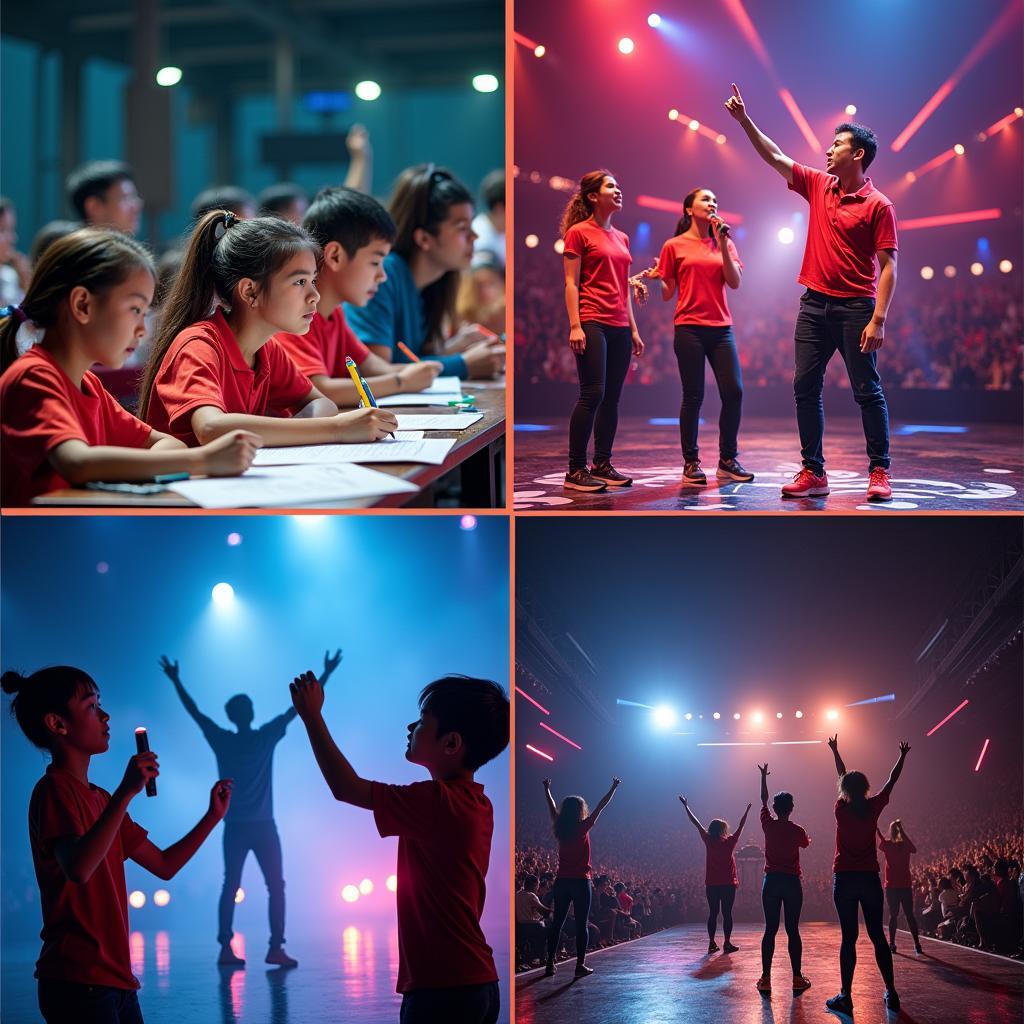 Các cuộc thi phổ biến ở Việt Nam được thí sinh IELTS Speaking thường nhắc đến
IELTS Speaking Part 2: Long Turn (Cue Card)
Tổng Quan Về Part 2
Part 2 là phần độc thoại kéo dài 2-3 phút, trong đó bạn có 1 phút để chuẩn bị và ghi chú. Đây là phần quan trọng nhất để thể hiện khả năng nói liên tục và sử dụng ngôn ngữ phong phú.
Thời gian chuẩn bị 1 phút là vô cùng quý giá – đừng lãng phí nó. Bạn nên ghi chú dưới dạng keywords hoặc mind map, không viết câu hoàn chỉnh. Tập trung vào các bullet points trong đề bài và brainstorm ý tưởng cho từng điểm.
Khi nói, bạn cần đảm bảo nói đủ 2 phút (tối thiểu 1.5 phút). Examiner sẽ không ngắt lời bạn trừ khi bạn nói quá 3 phút hoặc đi quá xa khỏi topic. Hãy trả lời đầy đủ tất cả các bullet points và đặc biệt chú ý đến câu “And explain…” vì đây là phần ghi điểm cao nhất, nơi bạn thể hiện sự sâu sắc trong suy nghĩ.
Đối với những bạn đang tìm hiểu về describe a time when you achieved something significant, việc áp dụng các kỹ thuật storytelling tương tự sẽ rất hữu ích cho chủ đề competition này.
Lỗi thường gặp của thí sinh Việt Nam trong Part 2 bao gồm: không tận dụng hết 1 phút chuẩn bị, chỉ brainstorm qua loa, nói dưới 1.5 phút do thiếu ý tưởng hoặc vocabulary, bỏ qua một hoặc nhiều bullet points, đặc biệt là phần “explain”, sử dụng quá nhiều filler words như “uhm”, “well”, “you know” do chưa chuẩn bị kỹ, và kể chuyện theo kiểu liệt kê sự kiện mà không có details sinh động.
Cue Card
Describe a competition you want to participate in
You should say:
- What the competition is
- When and where it would take place
- What you would need to do to prepare for it
- And explain why you want to participate in this competition
Phân Tích Đề Bài
Dạng câu hỏi: Describe an event/activity (miêu tả một sự kiện/hoạt động trong tương lai)
Thì động từ: Chủ yếu dùng thì tương lai (would, will) và điều kiện (If I participated…) vì đây là competition bạn muốn tham gia, chưa thực sự join. Tuy nhiên, khi nói về preparation, có thể dùng hiện tại hoặc hiện tại hoàn thành để nói về những gì bạn đã/đang làm.
Bullet points phải cover:
- What the competition is: Tên cuộc thi, loại hình (academic, sports, talent, etc.), format như thế nào
- When and where: Thời gian (cụ thể hoặc ước tính), địa điểm diễn ra, có thể thêm frequency (hàng năm, định kỳ…)
- Preparation needed: Skills cần có, training process, resources cần thiết, thời gian chuẩn bị
- Why you want to participate: Personal reasons, benefits, goals, dreams – đây là phần quan trọng nhất
Câu “explain” quan trọng: Phần “explain why” chiếm khoảng 30-40% thời lượng bài nói của bạn và là nơi bạn thể hiện depth of thinking. Đừng chỉ nói “because it’s interesting” mà hãy elaborate về personal growth, challenges you want to overcome, impact on your future, hoặc deeper meanings.
📝 Sample Answer – Band 6-7
Thời lượng: Khoảng 1.5-2 phút
Well, I’d like to talk about a singing competition that I really want to join. It’s called “The Voice“, which is a very famous talent show in my country. This competition takes place every year on national television, usually starting around September and ending in December. The auditions are held in major cities like Hanoi and Ho Chi Minh City.
To participate in this competition, I would need to prepare quite carefully. First, I’d have to choose suitable songs that can show my vocal ability. I think I would need to practice singing every day for at least three months before the audition. I’d also need to take some vocal training classes to improve my technique and learn how to perform on stage confidently. Besides that, I should work on my stage presence and learn how to connect with the audience.
The reason why I want to participate in this competition is quite simple. I’ve loved singing since I was a child, and this would be a great opportunity to challenge myself and see how good I really am. If I could join The Voice, I would have a chance to perform in front of professional judges and get their feedback, which would help me improve a lot. Also, this competition is watched by millions of people, so it could be a good way to share my passion for music with others. Even if I don’t win, the experience itself would be very valuable for my personal growth.
Phân Tích Band Điểm
| Tiêu chí | Band | Nhận xét |
|---|---|---|
| Fluency & Coherence | 6-7 | Bài nói mạch lạc, có structure rõ ràng với intro-body-conclusion. Sử dụng một số linking words cơ bản (First, Besides that, Also). Tuy nhiên còn một số hesitation và repetition (I would need… I’d need…) |
| Lexical Resource | 6-7 | Từ vựng adequate và relevant cho topic. Có một số collocations tốt như “vocal ability”, “stage presence”, “connect with the audience”. Nhưng còn nhiều từ vựng basic (very famous, quite carefully, very valuable) và thiếu variety trong expression |
| Grammatical Range & Accuracy | 6-7 | Sử dụng đúng thì tương lai và conditional. Có mix của simple và complex sentences. Một số cấu trúc tốt như “which would help me improve” nhưng chưa đủ diverse và sophisticated |
| Pronunciation | 6-7 | Phát âm rõ ràng, dễ hiểu. Có attempt để sử dụng intonation nhưng chưa natural. Word stress generally accurate |
Điểm mạnh:
- ✅ Trả lời đầy đủ tất cả bullet points trong đề bài
- ✅ Có structure rõ ràng, dễ follow
- ✅ Đủ thời lượng (khoảng 1.5-2 phút)
- ✅ Ví dụ cụ thể về preparation steps
Hạn chế:
- ⚠️ Vocabulary còn basic và repetitive, thiếu less common words
- ⚠️ Grammar structures chưa đủ sophisticated
- ⚠️ Phần explain why chưa deep enough, còn surface-level reasons
- ⚠️ Thiếu personal anecdotes hoặc emotional connection để làm bài nói thêm engaging
📝 Sample Answer – Band 7.5-8
Thời lượng: Khoảng 2-2.5 phút
I’d love to talk about a competition that’s been on my bucket list for quite some time now – the TEDx speaking competition. This is an internationally recognized event where individuals get the opportunity to share innovative ideas worth spreading. While TEDx events happen throughout the year in various cities globally, the one I’m particularly interested in is TEDx Hanoi, which typically takes place in the spring, around March or April, at some of the city’s most prestigious venues.
Preparing for this competition would be quite intensive. First and foremost, I’d need to develop a compelling idea that’s both thought-provoking and relevant to contemporary issues. This alone could take months of research and refinement. Then comes the actual speech preparation – I’d have to craft a narrative that’s engaging enough to captivate the audience for about 15-18 minutes. This would involve working on my public speaking skills, particularly my delivery, voice modulation, and body language. I’d probably need to rehearse countless times, possibly with a speaking coach, and get feedback from friends to polish my presentation. Additionally, I’d have to prepare visual aids if needed and ensure my content aligns with TED’s format and values.
What really draws me to this competition is multifaceted. On a personal level, I’ve always been passionate about education reform in Vietnam, and TEDx would provide an unparalleled platform to voice my ideas and potentially spark meaningful conversations about this issue. Beyond that, the challenge itself is immensely appealing – the prospect of standing on that iconic red carpet and delivering a speech that could resonate with thousands of people is both nerve-wracking and exhilarating. Moreover, participating in TEDx would push me out of my comfort zone and help me develop skills that are crucial for my future career in education. It’s not just about winning; it’s about the transformative experience of articulating my vision and connecting with like-minded individuals who are also passionate about making a difference.
Phân Tích Band Điểm
| Tiêu chí | Band | Nhận xét |
|---|---|---|
| Fluency & Coherence | 7.5-8 | Rất trôi chảy với minimal hesitation. Sử dụng sophisticated discourse markers (First and foremost, Then comes, Additionally, On a personal level, Beyond that, Moreover). Ý tưởng được develop logically và coherently |
| Lexical Resource | 7.5-8 | Wide range of vocabulary với nhiều less common words và phrases (bucket list, thought-provoking, captivate the audience, voice modulation, unparalleled platform, spark meaningful conversations). Collocations chính xác và natural. Some idiomatic language được sử dụng appropriately |
| Grammatical Range & Accuracy | 7.5-8 | Variety of complex structures được sử dụng accurately (relative clauses, conditional sentences, passive voice). Mix tốt giữa các thì động từ. Minimal errors không ảnh hưởng đến communication |
| Pronunciation | 7.5-8 | Clear pronunciation với good control of features như sentence stress, rhythm và intonation. L1 accent không ảnh hưởng đến intelligibility |
So Sánh Với Band 6-7
| Khía cạnh | Band 6-7 | Band 7.5-8 |
|---|---|---|
| Vocabulary | “very famous talent show”, “quite carefully” | “internationally recognized event”, “on my bucket list”, “unparalleled platform” |
| Grammar | “I would need to practice singing every day” | “This alone could take months of research and refinement” (sophisticated structure với inversion emphasis) |
| Ideas | “challenge myself and see how good I really am” (basic motivation) | “spark meaningful conversations”, “transformative experience of articulating my vision” (deeper, more nuanced motivation) |
| Coherence | Basic linkers (First, Besides that, Also) | Sophisticated discourse markers (First and foremost, On a personal level, Beyond that) |
📝 Sample Answer – Band 8.5-9
Thời lượng: 2.5-3 phút đầy đủ
I’d be delighted to discuss a competition that has captured my imagination for several years now – the World Universities Debating Championship, commonly known as Worlds. This is arguably the most prestigious English-language debating tournament in the academic sphere, bringing together the cream of the crop from universities across the globe. The competition is held annually, typically between Christmas and New Year, and the host city rotates each year, having been held in venues as diverse as Cape Town, Madrid, and Bangkok. The next one I’m eyeing is scheduled for late December in Rotterdam, which would be an absolutely phenomenal setting.
The preparation required for Worlds is nothing short of rigorous and all-consuming. Unlike typical competitions, debating at this level demands multifaceted expertise. You need to cultivate not just exceptional speaking skills, but also razor-sharp critical thinking and the ability to construct and deconstruct arguments on virtually any topic under the sun – from international relations to bioethics to economic policy. I’d need to immerse myself in current affairs, reading extensively from sources like The Economist, Foreign Affairs, and academic journals. Beyond knowledge acquisition, I’d have to hone my rhetorical techniques, learning to employ persuasive devices effectively while maintaining logical coherence. This would involve joining a debating society, participating in practice tournaments, and seeking mentorship from seasoned debaters. The whole process would likely require at least a year of dedicated commitment, attending workshops, analyzing past Worlds debates, and constantly refining my argumentation style.
What makes me so drawn to this particular competition is layered and profound. On the surface, there’s the undeniable allure of competing against the intellectual elite of my generation – it’s a chance to measure myself against some of the brightest minds from Oxford, Harvard, Yale, and other top-tier institutions. But it goes much deeper than that. Participating in Worlds would represent the culmination of my intellectual journey in university. I’ve always believed that articulate discourse is fundamental to addressing the complex challenges our world faces, and this competition epitomizes that ideal. Moreover, the cross-cultural exchange that happens at Worlds is unparalleled – you’re not just debating; you’re engaging with diverse perspectives from every corner of the globe, which inevitably broadens your worldview and challenges your preconceptions. On a personal note, I’ve struggled with public speaking anxiety throughout my life, and conquering the Worlds stage would be a defining moment in overcoming that limitation. It’s about proving to myself that I can not only hold my own but thrive in one of the most intellectually demanding environments imaginable. The experience, regardless of the outcome, would be transformative – shaping not just my professional capabilities but also my character and confidence in ways that few other experiences could.
Phân Tích Band Điểm
| Tiêu chí | Band | Nhận xét |
|---|---|---|
| Fluency & Coherence | 8.5-9 | Speaks fluently với minimal repetition hoặc hesitation. Develops topics fully và appropriately. Uses cohesion sophisticated manner với varied discourse markers. Progression của ideas logical và compelling |
| Lexical Resource | 8.5-9 | Uses vocabulary với full flexibility và precision across a wide range of topics. Uses idiomatic language naturally và accurately (captured my imagination, cream of the crop, nothing short of, hold my own). Demonstrates sophisticated control of lexical features; rare minor errors |
| Grammatical Range & Accuracy | 8.5-9 | Uses wide range of structures với full flexibility và accuracy. Maintains grammatical control consistently. Rare errors chỉ là slips. Complex structures được produced effortlessly |
| Pronunciation | 8.5-9 | Uses varied intonation và stress to enhance meaning. Pronunciation features used effectively. L1 accent has minimal effect on intelligibility. Sustained use of prosodic features |
Tại Sao Bài Này Xuất Sắc
🎯 Fluency Hoàn Hảo:
Bài nói flow tự nhiên như native speaker, không có awkward pauses. Thí sinh sử dụng fillers một cách strategic (Well, arguably, On a personal note) để organize thoughts naturally rather than showing hesitation. Transition giữa các ý mượt mà và logical.
📚 Vocabulary Tinh Vi:
- “captured my imagination” thay vì simple “interested in” – shows sophistication
- “the cream of the crop” – idiomatic expression used naturally
- “nothing short of rigorous” – emphatic expression demonstrating advanced command
- “razor-sharp critical thinking” – vivid collocation
- “multifaceted expertise”, “all-consuming” – precise adjectives showing lexical control
- “cultivate”, “immerse”, “hone” – thay vì simple “develop”, “study”, “improve”
- “layered and profound” – sophisticated description of motivation
📝 Grammar Đa Dạng:
- “having been held in venues as diverse as…” – perfect participle clause showing advanced grammar
- “Unlike typical competitions, debating at this level demands…” – complex sentence with participle phrase
- “learning to employ persuasive devices effectively while maintaining logical coherence” – multiple clauses với gerunds và present participles
- “It’s about proving to myself that I can not only hold my own but thrive…” – not only…but also structure với complex embedding
- “regardless of the outcome” – concessive structure showing nuanced thinking
💡 Ideas Sâu Sắc:
Thí sinh không dừng lại ở surface-level reasons (“it’s interesting”, “good for my future”) mà dig deeper vào personal psychology (overcoming public speaking anxiety), intellectual development (engaging with diverse perspectives, challenging preconceptions), và long-term impact (transformative experience, defining moment). Có sự self-awareness và maturity trong cách articulate motivations.
Follow-up Questions (Rounding Off Questions)
Sau khi bạn hoàn thành Part 2, examiner thường hỏi thêm 1-2 câu ngắn để transition sang Part 3. Đây là câu hỏi đơn giản, trả lời trong 2-3 câu là đủ.
Question 1: Have you already started preparing for this competition?
Band 6-7 Answer:
Not really, I haven’t started yet. I’m still quite busy with my studies right now. But I plan to start preparing seriously next semester when I have more free time.
Band 8-9 Answer:
Well, I’d say I’m in the preliminary stages of preparation. I’ve been following debates online and familiarizing myself with the format, but I haven’t embarked on any intensive training yet. I’m planning to ramp up my preparation once this academic year wraps up, probably joining a debating club to get some hands-on experience.
Question 2: Do you think you would be nervous during the competition?
Band 6-7 Answer:
Yes, definitely. I think anyone would feel nervous in such a big competition. But I hope that if I prepare well enough, I can control my nerves and perform better.
Band 8-9 Answer:
Absolutely, nerves are inevitable, I think. But I’ve come to see anxiety as a natural response that can actually be channeled productively. With proper preparation and perhaps some performance psychology techniques, I believe I could harness that nervous energy and convert it into focused intensity rather than letting it undermine my performance.
 Chuẩn bị cho cuộc thi tranh luận như World Universities Debating Championship được miêu tả trong IELTS Speaking Part 2
IELTS Speaking Part 3: Two-way Discussion
Tổng Quan Về Part 3
Part 3 kéo dài 4-5 phút và là phần thể hiện rõ nhất khả năng phân tích, critical thinking và sử dụng ngôn ngữ trừu tượng của bạn. Examiner sẽ mở rộng chủ đề từ Part 2 sang các vấn đề xã hội, xu hướng, so sánh và dự đoán tương lai.
Câu hỏi Part 3 thường require higher-order thinking: phân tích nguyên nhân-kết quả, so sánh-đối chiếu, đánh giá ưu-nhược điểm, dự đoán xu hướng, đề xuất giải pháp. Đây không còn là personal experience như Part 1 và 2, mà là discuss issues affecting society as a whole.
Để nói về describe a time when you attended a workshop, bạn có thể áp dụng kỹ năng phân tích tương tự khi discuss về benefits của educational competitions trong Part 3.
Chiến lược hiệu quả cho Part 3: mở rộng câu trả lời đến 3-5 câu hoặc hơn, sử dụng discourse markers để organize ideas (Well, Actually, I think, On the one hand, From my perspective), đưa ra examples từ society, trends, hoặc different countries chứ không chỉ personal experience, thừa nhận complexity của issues (It depends, There are multiple factors, It’s not black and white), và present balanced view khi có thể (advantages and disadvantages, different perspectives).
Lỗi thường gặp của học viên Việt Nam trong Part 3: trả lời quá ngắn gọn như Part 1 (1-2 câu), không develop ideas đầy đủ, thiếu lý lẽ clear và logical structure trong argumentation, không có examples hoặc evidence để support ideas, sử dụng vocabulary quá simple cho abstract topics (good, bad, important…), và thinking in Vietnamese rồi translate dẫn đến câu văn không natural.
Các Câu Hỏi Thảo Luận Sâu
Theme 1: Benefits and Drawbacks of Competitions
Question 1: What are the advantages of taking part in competitions?
🎯 Phân tích câu hỏi:
- Dạng: Advantages question (yêu cầu nêu và giải thích các lợi ích)
- Key words: advantages, taking part (không chỉ về winning)
- Cách tiếp cận: Nêu 2-3 advantages chính, mỗi advantage có explanation và example. Có thể categorize theo personal benefits, social benefits, hoặc skill development.
📝 Sample Answer – Band 6-7:
I think there are several advantages of joining competitions. First, it helps people improve their skills. When you compete, you need to practice a lot, so you become better. Second, competitions give people motivation to work harder because they want to win. Also, taking part in competitions can help you meet new people who have the same interests as you. These are useful connections for the future.
Phân tích:
- Structure: Có structure basic với First, Second, Also – shows organization
- Vocabulary: Simple và repetitive (help, improve, work harder, useful) – adequate nhưng không impressive
- Development: Ideas được mention nhưng lack depth và specific examples
- Tại sao Band 6-7: Đáp ứng được basic requirements nhưng thiếu sophistication trong language và depth trong ideas. Không có concrete examples hoặc elaboration chi tiết.
📝 Sample Answer – Band 8-9:
Well, I’d say competitions offer multifaceted benefits that extend well beyond just winning prizes. First and foremost, they serve as powerful catalysts for personal growth and skill development. When individuals immerse themselves in competitive preparation, they’re essentially pushing their boundaries and honing their abilities in ways that casual practice simply can’t replicate. For instance, a student preparing for a science Olympiad doesn’t just memorize facts – they develop critical thinking, problem-solving strategies, and time management skills that prove invaluable throughout their academic and professional careers.
Beyond personal development, competitions also foster a sense of healthy rivalry and camaraderie simultaneously. Paradoxically, while you’re competing against others, you’re often forming bonds with people who share your passions and ambitions. These connections can evolve into lifelong professional networks and friendships. Moreover, competitions provide tangible benchmarks for self-assessment. Unlike subjective self-evaluation, competitive environments offer objective feedback about where you stand relative to others, which can be both humbling and motivating. This reality check often spurs individuals to identify their weaknesses and work on them systematically, driving continuous improvement.
Phân tích:
- Structure: Excellently organized với clear signposting (First and foremost, Beyond personal development, Moreover). Ideas flow logically từ personal benefits đến social aspects rồi đến assessment value.
- Vocabulary: Sophisticated và precise (multifaceted benefits, powerful catalysts, immerse themselves, pushing boundaries, foster, paradoxically, tangible benchmarks, objective feedback, humbling, spurs continuous improvement). Natural use của less common words và collocations.
- Grammar: Complex structures được used flexibly (When individuals immerse…, they’re essentially pushing…; Unlike subjective self-evaluation, competitive environments offer…). Variety of tenses và structures.
- Critical Thinking: Shows nuanced understanding với paradox observation (competing while forming bonds). Ideas are well-developed với specific examples và logical progression.
💡 Key Language Features:
- Discourse markers: Well, First and foremost, Beyond…, Paradoxically, Moreover – cho thấy sophisticated organization
- Hedging language: I’d say, often, can be – shows academic tone và avoids overgeneralization
- Abstract nouns: growth, development, rivalry, camaraderie, benchmarks – appropriate for Part 3 discussion
- Strong collocations: multifaceted benefits, powerful catalysts, healthy rivalry, tangible benchmarks, continuous improvement
Question 2: Do you think competition is always beneficial, or can it be harmful?
🎯 Phân tích câu hỏi:
- Dạng: Balanced opinion question (yêu cầu consider both sides)
- Key words: always beneficial, can be harmful – câu hỏi hint là có both positive and negative aspects
- Cách tiếp cận: Không nên absolute (say only beneficial hoặc only harmful). Best approach là acknowledge both sides, có thể emphasize one side hơn nhưng phải mention the other. Structure: While generally beneficial, there are circumstances where… hoặc It depends on…
📝 Sample Answer – Band 6-7:
I think competition can be both good and bad, depending on the situation. On one hand, it can motivate people to work harder and achieve more. But on the other hand, too much competition can create stress and pressure, especially for young people. Some people might become too focused on winning and forget about learning or enjoying the process. So I believe competition is good when it’s balanced and not too intense.
Phân tích:
- Structure: Có attempt để present balanced view với “on one hand, on the other hand” – good organization
- Ideas: Basic mention của both sides nhưng lack elaboration
- Vocabulary: Simple (good and bad, work harder, too much, too focused) – adequate nhưng not sophisticated
- Development: Conclusion có (“competition is good when balanced”) nhưng không develop deeply about what “balanced” means
- Tại sao Band 6-7: Adequate response với basic structure và ideas, nhưng lacks depth, specific examples, và sophisticated vocabulary needed for higher bands.
📝 Sample Answer – Band 8-9:
This is quite a nuanced question, and I’d argue that competition, like most things in life, is neither inherently good nor bad – it really hinges on how it’s structured and the context in which it occurs. When implemented thoughtfully, competition can be an incredible driver of innovation and excellence. We see this in fields like technology, where fierce rivalry between companies like Apple and Samsung has propelled tremendous advancements in smartphone capabilities that benefit all consumers.
However, the flip side is that excessive or poorly designed competition can indeed be detrimental. In hyper-competitive educational systems – and I’m thinking particularly of countries like South Korea or China – the relentless pressure to outperform peers can lead to severe mental health issues among students, including anxiety, depression, and in extreme cases, even suicide. When competition becomes purely zero-sum and winning at all costs becomes the only focus, it can erode ethical standards and undermine collaboration, which ironically can stifle innovation rather than promote it.
I’d contend that the key is fostering what psychologists call “cooperative competition” – where individuals push themselves and each other to improve, but within a framework that emphasizes growth over defeating others. This approach harnesses the motivational power of competition while mitigating its potential harms. For instance, competitions that recognize improvement and effort, not just winning, or that include team elements alongside individual achievement, tend to yield more positive outcomes. Ultimately, it’s about striking the right balance and ensuring that competitive structures serve human flourishing rather than detracting from it.
Phân tích:
- Structure: Sophisticated organization với clear thesis (neither inherently good nor bad), development của both sides với specific examples, và conclusion với nuanced solution. Uses signposting expertly (However, The flip side, Ultimately).
- Vocabulary: Exceptional range với precise word choices (nuanced, hinges on, implemented thoughtfully, fierce rivalry, propelled, hyper-competitive, relentless pressure, zero-sum, erode ethical standards, stifle innovation, cooperative competition, mitigating, yield, striking the right balance). Academic vocabulary used naturally.
- Grammar: Complex structures throughout (When implemented thoughtfully, competition can be…; where fierce rivalry…has propelled…; I’m thinking particularly of…; This approach harnesses…while mitigating…). Perfect control of relative clauses, conditionals, và participle phrases.
- Critical Thinking: Demonstrates sophisticated analysis với recognition của nuance, specific real-world examples (Apple vs Samsung, educational systems in Korea/China), reference to psychological concepts (cooperative competition), và practical solution-oriented conclusion. Shows ability to see issue from multiple angles.
💡 Key Language Features:
- Tentative language: quite a nuanced question, I’d argue that, I’d contend that, tend to – shows academic caution và sophisticated thinking
- Contrast markers: However, The flip side, while – effective comparison
- Emphatic structures: it really hinges on, in extreme cases, purely zero-sum, neither…nor
- Abstract concepts: hyper-competitive systems, zero-sum game, cooperative competition, human flourishing
Question 3: How have competitions changed in recent years?
🎯 Phân tích câu hỏi:
- Dạng: Changes/Trends over time question
- Key words: changed, recent years – yêu cầu compare past và present
- Cách tiếp cận: Identify 2-3 major changes, explain reasons behind changes, có thể mention impact of technology, globalization, changing values. Structure: In the past…whereas now…, One significant change is…
📝 Sample Answer – Band 6-7:
Competitions have changed a lot in recent years, mainly because of technology. In the past, most competitions were local and face-to-face. Now, many competitions are online, so people from different countries can participate. Also, I think there are more types of competitions now than before. For example, we have e-sports competitions and social media contests, which didn’t exist in the past. These changes make competitions more accessible to everyone.
Phân tích:
- Structure: Clear comparison between past and present
- Ideas: Mentions technology impact và increased variety – relevant points
- Vocabulary: Basic (a lot, mainly because of, more accessible) – adequate nhưng lacks sophistication
- Development: Points mentioned but not deeply explored with specific examples or analysis of implications
📝 Sample Answer – Band 8.5-9:
The landscape of competitions has undergone dramatic transformation in recent years, driven primarily by technological advancement and shifting societal values. Perhaps the most striking change is the democratization of competitive opportunities through digital platforms. Gone are the days when participating in prestigious competitions required geographical proximity or institutional affiliation. Now, platforms like Kaggle for data science or TopCoder for programming enable individuals from remote corners of the world to compete at the highest echelons without ever leaving their homes. This has fundamentally altered the competitive landscape, making it far more meritocratic and diverse.
Another profound shift is the evolution of what we actually compete in. Traditional academic and athletic competitions still exist, but we’ve seen an explosion of new competitive domains that reflect contemporary culture – from e-sports, which now fill stadiums and offer prize pools rivaling traditional sports, to sustainability challenges where innovators compete to develop solutions for climate change. This proliferation reflects our changing definition of achievement and the skills we deem valuable in the modern world.
Furthermore, there’s been a notable recalibration in how success is measured and celebrated. Whereas competitions once focused almost exclusively on identifying the single winner, there’s now growing recognition of incremental achievement and the journey itself. Many competitions now feature multiple award categories, recognize improvement, or emphasize collaborative aspects alongside individual performance. This shift mirrors broader societal conversations about well-being and sustainable success, moving away from cutthroat competitiveness toward more holistic approaches that prioritize both excellence and mental health.
Phân tích:
- Structure: Exemplary organization với three distinct changes, each fully developed. Sophisticated transitions (Perhaps the most striking change, Another profound shift, Furthermore) create seamless flow.
- Vocabulary: Exceptional range demonstrating native-like command (undergone dramatic transformation, democratization, prestigious competitions, highest echelons, fundamentally altered, meritocratic, explosion of new domains, prize pools, proliferation, recalibration, incremental achievement, cutthroat competitiveness, holistic approaches). Multiple less common words and collocations used precisely and naturally.
- Grammar: Highly sophisticated structures throughout (Gone are the days when…; platforms like Kaggle…enable individuals…; Whereas competitions once focused…there’s now…; This shift mirrors…). Perfect control of complex grammatical features including inversion, relative clauses, participle phrases, và parallel structures.
- Critical Thinking: Shows deep analytical ability với identification của multiple trends, understanding của underlying causes (technology, changing values), specific examples across domains (Kaggle, TopCoder, e-sports, climate challenges), và connection to broader societal shifts (conversations about wellbeing, mental health). Demonstrates ability to see patterns và implications beyond surface-level observations.
- Coherence: Ideas build logically – từ access (democratization) đến content (new domains) đến values (how success is measured). Each paragraph connects to the broader theme of transformation.
Theme 2: Competition in Education
Question 1: Should schools encourage more competitive activities?
🎯 Phân tích câu hỏi:
- Dạng: Should question (opinion với justification)
- Key words: schools, encourage, competitive activities
- Cách tiếp cận: Take a position (yes/no/conditional yes) và support với reasons, examples, và potential counterarguments. Best answers acknowledge complexity rather than being absolutist.
📝 Sample Answer – Band 6-7:
I think schools should encourage competitive activities, but not too much. Competition can be good because it motivates students to study harder and develop important skills. For example, when students join quiz competitions or sports tournaments, they learn teamwork and time management. However, schools should be careful because too much competition can cause stress for students. Some students might feel bad if they always lose. So schools should balance competitive activities with cooperative learning to make sure all students can benefit.
Phân tích:
- Position: Clear với “should encourage but not too much” – shows some nuance
- Supporting reasons: Mentions benefits (motivation, skills) và concerns (stress) – balanced approach
- Examples: Basic example về quiz competitions và sports – relevant but not detailed
- Language: Simple vocabulary và structures (too much, be good, feel bad, make sure) adequate but not sophisticated
📝 Sample Answer – Band 8.5-9:
This is a contentious issue that requires careful consideration of competing educational priorities. In principle, I believe schools should selectively incorporate competitive elements, but with crucial caveats about how they’re designed and implemented. When done right, academic competitions can be tremendously valuable pedagogical tools. They tap into intrinsic human motivation and can ignite passion for subjects that might otherwise seem dry or abstract. I’ve witnessed firsthand how mathematics olympiads, for instance, transform students’ relationships with the subject – suddenly it becomes a thrilling challenge rather than a tedious requirement.
That said, the caveat is that competition must be structured inclusively rather than creating rigid hierarchies that reinforce existing advantages. This means moving beyond the traditional model where the same high-achieving students win repeatedly, which can be demoralizing for others and breed resentment rather than inspiration. More enlightened approaches might involve tiered competitions where students compete within their skill levels, or competitions that recognize diverse types of achievement – perhaps rewarding most improved, most creative solution, or best collaboration alongside traditional winner categories.
Moreover, competitive activities should complement rather than dominate the educational landscape. Research in educational psychology suggests that excessive competition can undermine intrinsic motivation and foster fixed mindsets where students believe ability is static rather than something that grows through effort. Schools should therefore ensure a healthy mix where collaborative projects, individual self-paced learning, and competitive elements all have their place. The goal should be cultivating what Carol Dweck calls “growth mindsets” – where competition becomes about personal improvement and pushing one’s potential, not just defeating others. When framed this way, competition can coexist harmoniously with the broader educational mission of fostering lifelong learners who are intrinsically motivated and emotionally resilient.
Phân tích:
- Structure: Sophisticated argumentation với clear thesis, well-developed supporting points, acknowledgment của counterpoints, và nuanced conclusion. Uses advanced discourse markers throughout.
- Vocabulary: Exceptional academic vocabulary (contentious issue, crucial caveats, pedagogical tools, tap into, demoralizing, breed resentment, enlightened approaches, tiered competitions, undermine intrinsic motivation, foster fixed mindsets, cultivating growth mindsets, coexist harmoniously). Shows deep command of educational terminology.
- Grammar: Complex sentences with perfect control (When done right…can be; This means moving beyond…which can be; Research suggests that…where students believe). Uses variety of structures including conditionals, relative clauses, và noun clauses.
- Critical Thinking: Demonstrates sophisticated educational understanding với reference to research (Carol Dweck’s growth mindset theory), practical solutions (tiered competitions), recognition of unintended consequences (demoralizing, reinforcing advantages), và holistic view of educational goals. Shows ability to balance theoretical understanding with practical application.
- Examples: Specific và relevant (mathematics olympiads transforming student attitudes) adding credibility.
Theme 3: Cultural Perspectives
Question: Do you think attitudes toward competition vary across different cultures?
🎯 Phân tích câu hỏi:
- Dạng: Cultural comparison question
- Key words: attitudes, vary, different cultures – requires cross-cultural analysis
- Cách tiếp cận: Compare different cultural approaches (có thể use examples từ Western vs. Asian cultures, individualist vs. collectivist societies). Discuss underlying values shaping these differences. Avoid stereotyping – use phrases like “tend to” rather than absolute statements.
📝 Sample Answer – Band 7-8:
Yes, definitely. I think cultural background plays a big role in how people view competition. In Western countries, especially America, there’s a strong emphasis on individual achievement and competition is seen very positively. People are encouraged to be ambitious and stand out from others. In contrast, many Asian cultures, including my own, have more complex attitudes toward competition. While academic competition is intense, there’s also a strong value placed on harmony and not standing out too much from the group. For example, in Vietnam, we have a saying “the nail that sticks out gets hammered down,” which suggests that excessive competitiveness might not always be socially accepted. However, these cultural lines are blurring with globalization, and younger generations are developing more diverse attitudes toward competition.
Phân tích:
- Cultural insight: Good comparison between Western and Asian perspectives with relevant examples
- Vocabulary: Good use of phrases like “emphasis on,” “in contrast,” “complex attitudes,” “cultural lines are blurring”
- Structure: Clear comparison with specific example (Vietnamese saying) adding authenticity
- Critical thinking: Acknowledges changing dynamics with globalization
📝 Sample Answer – Band 8.5-9:
Absolutely, and I’d argue that these cultural variations are profoundly shaped by underlying philosophical traditions and socioeconomic histories. If we look at broadly individualistic societies – particularly Anglo-American cultures – competition tends to be deeply embedded in the cultural DNA, viewed almost as a virtue in itself. This stems from philosophical traditions emphasizing individual liberty and market-based thinking where competition is seen as the engine of progress. The American Dream epitomizes this worldview – the idea that through competitive drive and merit, anyone can rise to the top.
Contrast this with many East Asian societies where Confucian traditions have historically emphasized social harmony and collective well-being over individual distinction. In these contexts, competition exists paradoxically – fiercely intense in domains like education, yet often tempered by expectations of modesty and group cohesion. Japanese culture, for instance, has the concept of “出る杭は打たれる” (deru kugi wa utareru – the stake that sticks out gets hammered down), which encapsulates this tension between striving for excellence and avoiding excessive self-promotion. This creates what some scholars call “self-effacing competition” where achievement is pursued vigorously but displayed humbly.
What’s particularly fascinating is how globalization and economic integration are creating hybrid competitive cultures, especially among younger generations. In many Asian countries, we’re seeing the emergence of what I’d call “selective Western adoption” – embracing competitive individualism in professional domains while retaining more collectivist values in social contexts. This cultural code-switching reflects the complex negotiation between traditional values and global economic realities. Conversely, even in traditionally individualistic societies, there’s growing critique of hyper-competition and increased interest in collaborative models, suggesting that attitudes toward competition are continually evolving rather than culturally fixed. This dynamic interplay makes sweeping generalizations increasingly difficult, which is perhaps a healthy development.
Phân tích:
- Structure: Exceptionally well-organized với comparison of different cultural models, specific examples, และ discussion of contemporary changes. Sophisticated transitions create seamless flow.
- Vocabulary: Outstanding academic vocabulary demonstrating near-native command (profoundly shaped, underlying philosophical traditions, socioeconomic histories, deeply embedded, cultural DNA, engine of progress, epitomizes, fiercely intense, tempered by, encapsulates, self-effacing competition, hybrid competitive cultures, selective Western adoption, cultural code-switching, complex negotiation, continually evolving, dynamic interplay). Precise word choice throughout.
- Grammar: Highly complex structures used effortlessly (If we look at…competition tends to be…; This stems from…where competition is seen…; In these contexts, competition exists paradoxically…yet often tempered by…). Perfect control of advanced grammatical features.
- Critical Thinking: Exceptional analytical depth với discussion of philosophical underpinnings (individualism, Confucianism), reference to specific cultural concepts in original language (Japanese proverb), recognition of paradoxes (fierce competition combined with modesty), understanding of cultural evolution (globalization effects, hybrid cultures), và avoidance of stereotyping through nuanced language (tends to, broadly, many societies rather than all). Shows scholarly approach to cultural analysis.
- Cultural Knowledge: Demonstrates deep cross-cultural understanding với accurate references và authentic insights. Uses academic terminology (scholars call, cultural code-switching) appropriately.
Điều tương tự có thể được tìm thấy trong describe a recent cultural festival you enjoyed khi ta phân tích sự khác biệt văn hóa qua các hoạt động và celebration styles.
 Sự khác biệt văn hóa về thái độ cạnh tranh được phân tích trong IELTS Speaking Part 3
Từ vựng và cụm từ quan trọng
Topic-Specific Vocabulary
| Từ vựng/Cụm từ | Loại từ | Phiên âm | Nghĩa tiếng Việt | Ví dụ | Collocation |
|---|---|---|---|---|---|
| competitive | adj | /kəmˈpet.ə.tɪv/ | cạnh tranh, mang tính thi đấu | The competitive atmosphere motivates me to perform better. | competitive edge, competitive advantage, highly competitive, fiercely competitive |
| fierce rivalry | noun phrase | /fɪəs ˈraɪ.vəl.ri/ | sự cạnh tranh gay gắt | The fierce rivalry between the two teams makes the match exciting. | intense rivalry, fierce competition, sporting rivalry, healthy rivalry |
| participate in | phrasal verb | /pɑːˈtɪs.ɪ.peɪt ɪn/ | tham gia vào | I want to participate in a public speaking competition. | actively participate, fully participate, participate willingly, participate enthusiastically |
| prestigious | adj | /preˈstɪdʒ.əs/ | danh giá, uy tín | Winning a prestigious competition can boost your career. | prestigious award, prestigious institution, highly prestigious, internationally prestigious |
| nerve-wracking | adj | /ˈnɜːv ˌræk.ɪŋ/ | căng thẳng, hồi hộp | The final round was a nerve-wracking experience. | nerve-wracking experience, nerve-wracking situation, nerve-wracking moment |
| captivate | verb | /ˈkæp.tɪ.veɪt/ | mê hoặc, thu hút | Her performance captivated the entire audience. | captivate the audience, captivate attention, completely captivate, captivate imagination |
| hone one’s skills | verb phrase | /həʊn wʌnz skɪlz/ | mài giũa, trau dồi kỹ năng | The competition will help me hone my public speaking skills. | hone technique, hone abilities, continually hone, hone craft |
| unparalleled | adj | /ʌnˈpær.ə.leld/ | không gì sánh bằng, vô song | This provides an unparalleled opportunity for growth. | unparalleled opportunity, unparalleled success, unparalleled experience, unparalleled achievement |
| spark conversations | verb phrase | /spɑːk ˌkɒn.vəˈseɪ.ʃənz/ | khơi mào cuộc trò chuyện/thảo luận | The event sparked meaningful conversations about climate change. | spark debate, spark interest, spark discussion, spark controversy |
| cultivate | verb | /ˈkʌl.tɪ.veɪt/ | nuôi dưỡng, phát triển | Competitions help cultivate critical thinking abilities. | cultivate skills, cultivate relationships, cultivate talent, cultivate interest |
| benchmark | noun | /ˈbentʃ.mɑːk/ | điểm chuẩn, tiêu chuẩn đánh giá | The competition provides a benchmark for measuring progress. | set a benchmark, performance benchmark, industry benchmark, establish benchmark |
| foster | verb | /ˈfɒs.tər/ | thúc đẩy, nuôi dưỡng | Competitions foster healthy rivalry among participants. | foster growth, foster development, foster innovation, foster collaboration |
| articulate | verb | /ɑːˈtɪk.jə.leɪt/ | diễn đạt rõ ràng | She can articulate her ideas very effectively. | clearly articulate, articulate thoughts, articulate opinions, well articulated |
| rigorous | adj | /ˈrɪɡ.ər.əs/ | nghiêm ngặt, khắt khe | The competition requires rigorous preparation. | rigorous training, rigorous standards, rigorous testing, rigorous process |
| multifaceted | adj | /ˌmʌl.tiˈfæs.ɪ.tɪd/ | nhiều mặt, đa dạng | The benefits of competition are multifaceted. | multifaceted approach, multifaceted problem, multifaceted perspective, multifaceted nature |
| epitomize | verb | /ɪˈpɪt.ə.maɪz/ | là hiện thân, là điển hình | This competition epitomizes excellence in academic achievement. | epitomize success, epitomize values, perfectly epitomize, epitomize spirit |
| transformative | adj | /trænsˈfɔː.mə.tɪv/ | có tính chất thay đổi, biến đổi | Participating would be a transformative experience. | transformative power, transformative change, transformative impact, transformative experience |
| propel | verb | /prəˈpel/ | thúc đẩy mạnh mẽ | Competition propels innovation in technology. | propel forward, propel growth, propel success, propel advancement |
| mitigate | verb | /ˈmɪt.ɪ.ɡeɪt/ | giảm nhẹ, làm dịu | We need to mitigate the negative effects of excessive competition. | mitigate risks, mitigate impact, mitigate effects, mitigate consequences |
| proliferation | noun | /prəˌlɪf.əˈreɪ.ʃən/ | sự gia tăng nhanh chóng | There’s been a proliferation of online competitions recently. | rapid proliferation, proliferation of ideas, nuclear proliferation, proliferation of technology |
Idiomatic Expressions & Advanced Phrases
| Cụm từ | Nghĩa | Ví dụ sử dụng | Band điểm |
|---|---|---|---|
| bring out the best in someone | làm bộc lộ tiềm năng tốt nhất của ai đó | Healthy competition brings out the best in athletes. | 7.5-9 |
| level playing field | điều kiện công bằng cho tất cả | We need to create a level playing field for all participants. | 7.5-9 |
| neck and neck | ngang sức, sít sao | The two finalists were neck and neck throughout the competition. | 7-8 |
| raise the bar | nâng cao tiêu chuẩn | Each year, competitors raise the bar even higher. | 7.5-8.5 |
| on my bucket list | trong danh sách những điều muốn làm | Participating in this competition has been on my bucket list for years. | 7-8 |
| push one’s boundaries/limits | vượt qua giới hạn của bản thân | Competition pushes us to exceed our boundaries. | 7.5-8.5 |
| the cream of the crop | những người giỏi nhất | This competition attracts the cream of the crop from universities worldwide. | 8-9 |
| hold one’s own | giữ vững phong độ, không thua kém | I believe I can hold my own against these talented competitors. | 7.5-8.5 |
| in the same league | ở cùng đẳng cấp | After months of training, I finally feel like I’m in the same league as the other participants. | 7-8 |
| cut above the rest | vượt trội hơn những người khác | Her performance was clearly a cut above the rest. | 7.5-8.5 |
| under pressure | dưới áp lực | Performing well under pressure is a crucial skill in competitions. | 6.5-7.5 |
| trial by fire | thử thách khắc nghiệt | The final round was a real trial by fire. | 8-9 |
Discourse Markers (Từ Nối Ý Trong Speaking)
Để bắt đầu câu trả lời:
- 📝 Well,… – Dùng khi bạn cần một chút thời gian để suy nghĩ hoặc để làm câu trả lời tự nhiên hơn
- 📝 Actually,… – Khi bạn muốn đưa ra một góc nhìn khác hoặc thông tin có thể surprising
- 📝 To be honest,… / Honestly speaking,… – Khi bạn muốn thể hiện sự chân thật trong quan điểm
- 📝 I’d say that… / I would argue that… – Khi đưa ra quan điểm cá nhân một cách diplomatic
- 📝 From my perspective,… / In my view,… – Thể hiện đây là ý kiến chủ quan
Để bổ sung ý:
- 📝 On top of that,… / What’s more,… – Thêm vào đó, bổ sung thông tin quan trọng
- 📝 Not to mention… / Let alone… – Chưa kể đến (thường cho điều quan trọng hơn)
- 📝 Furthermore,… / Moreover,… – Hơn nữa (formal, phù hợp Part 3)
- 📝 In addition to that,… / Beyond that,… – Ngoài ra còn
Để đưa ra quan điểm cân bằng:
- 📝 On the one hand,… On the other hand,… – Một mặt… mặt khác
- 📝 While it’s true that…, we also need to consider… – Mặc dù đúng là… nhưng ta cũng cần xem xét
- 📝 That said,… / Having said that,… – Tuy nhiên, dù vậy (để introduce contrasting point)
- 📝 Admittedly,… – Phải thừa nhận rằng (acknowledge opposite view)
Để đưa ra ví dụ:
- 📝 For instance,… / For example,… – Ví dụ
- 📝 Take… for example – Lấy… làm ví dụ
- 📝 A case in point is… – Một ví dụ điển hình là
- 📝 To illustrate this point,… – Để minh họa điểm này
Để kết luận:
- 📝 All in all,… / All things considered,… – Xét trên tất cả các phương diện
- 📝 At the end of the day,… – Cuối cùng thì, về cơ bản
- 📝 In the final analysis,… – Khi phân tích cuối cùng (formal)
- 📝 Ultimately,… – Cuối cùng, về lâu dài
Để thể hiện uncertainty hoặc tentative opinion:
- 📝 I suppose… / I guess… – Tôi cho là (less certain)
- 📝 It seems to me that… – Có vẻ như
- 📝 As far as I know,… – Theo như tôi biết
- 📝 To some extent,… – Ở một mức độ nào đó
Grammatical Structures Ấn Tượng
1. Conditional Sentences (Câu điều kiện):
Mixed conditional (kết hợp type 2 và 3):
- Formula: If + past perfect, would/could + infinitive
- Ví dụ: “If I had started preparing earlier, I would be more confident now about participating in the competition.”
Inversion (đảo ngữ):
- Formula: Had/Were/Should + subject + verb…
- Ví dụ: “Were I to participate in this competition, I would gain invaluable experience regardless of the outcome.”
- Ví dụ: “Had I known about this opportunity earlier, I would have started preparing months ago.”
2. Relative Clauses (Mệnh đề quan hệ):
Non-defining relative clauses:
- Formula: …, which/who/where + clause,…
- Ví dụ: “The World Debating Championship, which attracts participants from over 90 countries, would be an incredible platform for intellectual growth.”
Reduced relative clauses:
- Ví dụ: “Competitions offering substantial prizes tend to attract higher-quality participants.”
- Ví dụ: “The skills honed through competitive experiences are invaluable in professional settings.”
3. Passive Voice (Câu bị động):
Impersonal passive (it is thought/believed/said):
- Ví dụ: “It is widely believed that competitions foster innovation and excellence.”
- Ví dụ: “It has been argued that excessive competition can be detrimental to mental health.”
Passive with modal verbs:
- Ví dụ: “The negative effects of hyper-competition should be carefully monitored.”
- Ví dụ: “Competition can be seen as a double-edged sword in educational contexts.”
4. Cleft Sentences (Câu chẻ):
What-cleft (nhấn mạnh object/action):
- Formula: What + clause + is/was + noun/clause
- Ví dụ: “What I find most appealing about this competition is the opportunity to challenge myself against the best.”
- Ví dụ: “What really draws me to this event is not the prizes but the personal growth it promises.”
It-cleft (nhấn mạnh specific element):
- Formula: It + be + emphasized element + that/who + clause
- Ví dụ: “It is the intellectual challenge that makes this competition so appealing.”
- Ví dụ: “It was through participating in competitions that I developed my confidence.”
5. Advanced Conjunctions and Connectors:
Concessive clauses (although/while/whereas):
- Ví dụ: “While competition can be motivating, excessive pressure may undermine intrinsic interest in the subject.”
- Ví dụ: “Although I haven’t participated in many competitions, I’m eager to test my abilities.”
Participle clauses:
- Ví dụ: “Having prepared extensively for months, I feel confident about my chances.”
- Ví dụ: “Participating in such prestigious events, one gains exposure to diverse perspectives.”
Chiến Lược Đặc Biệt Từ Góc Nhìn Examiner
Những Điều Examiner Thực Sự Quan Tâm
Với tư cách là một examiner, tôi muốn chia sẻ một số insights quan trọng mà nhiều thí sinh không biết:
1. Natural Delivery Quan Trọng Hơn Perfect Grammar
Examiner không expect bạn nói 100% accurate về grammar. Họ muốn nghe natural conversation. Một vài minor errors không ảnh hưởng nhiều đến band điểm nếu fluency và ideas của bạn tốt. Điều thí sinh Việt Nam thường mắc là pause quá lâu để construct perfect sentences, khiến bài nói mất tự nhiên và fluency giảm.
Ví dụ, câu “I’ve been wanted to participate in this competition for years” có minor grammar error (been wanted → wanting) nhưng nếu bạn nói fluently với good intonation, impact đến band điểm rất nhỏ. Ngược lại, nếu bạn nói “I have… pause… wanted… long pause… to participate… in this… competition” ngay cả khi grammar perfect, fluency score của bạn sẽ bị ảnh hưởng nghiêm trọng.
2. Personality và Engagement
Examiner là con người và họ appreciate khi thí sinh show personality, enthusiasm về topic. Khi nói về competition bạn muốn tham gia, hãy let your passion show through voice và facial expressions. Điều này tạo positive impression và makes the conversation more engaging. Khi bạn nói với Describe a situation when you were disappointed, việc thể hiện cảm xúc chân thật cũng quan trọng tương tự.
Một thí sinh nói “I’m really excited about this competition” với flat tone và no energy sẽ kém convincing hơn người nói “I’m excited” với genuine enthusiasm trong voice, ngay cả khi vocabulary đơn giản hơn.
3. Tránh Học Thuộc Template
Examiner được training để nhận biết memorized answers. Nếu bạn deliver một đoạn nghe như được học thuộc (perfect structure, unusual vocabulary không match với level của bạn trong phần khác), examiner sẽ nghi ngờ và có thể challenge bạn bằng unexpected questions.
Thay vì học thuộc template, hãy học cách develop ideas naturally. Practice speaking spontaneously về different topics related to competitions.
4. Không Sợ Pause Để Suy Nghĩ (Nhưng Làm Đúng Cách)
Natural pauses để suy nghĩ là acceptable, nhưng cách bạn pause matters. Thay vì silent pause awkward, hãy dùng fillers appropriately:
- ❌ Bad pause: “I want to participate because… silence… it’s… silence… interesting”
- ✅ Good pause: “I want to participate because… well, let me think… there are actually several reasons”
Natural thinking language như “That’s an interesting question”, “Let me think about that for a moment”, “Well, to be honest…” cho thấy bạn đang process information, không phải freezing.
5. Part 3 Là Nơi Phân Biệt Band Cao
Nhiều thí sinh có Part 1 và 2 tốt nhưng struggle với Part 3 vì câu hỏi abstract và require deeper analysis. Để đạt Band 8+, bạn cần demonstrate:
- Ability to discuss abstract concepts
- Critical thinking và multiple perspectives
- Sophisticated vocabulary for expressing complex ideas
- Making connections between ideas và providing evidence
Practice discussing social issues, trends, comparisons regularly để improve Part 3 performance.
Common Mistakes của Thí Sinh Việt Nam và Cách Khắc Phục
Mistake 1: Over-Translating từ Tiếng Việt
❌ “Competition makes pressure for students” (dịch từ “tạo áp lực”)
✅ “Competition puts pressure on students” / “creates pressure for students”
Cách khắc phục: Think in English chunks/phrases rather than word-by-word translation. Learn collocations as fixed expressions.
Mistake 2: Thiếu Specific Examples
❌ “Competition is good because it helps people improve.”
✅ “Competition is beneficial because it pushes people to exceed their limits. For instance, when I was preparing for a math olympiad, I studied concepts far beyond my regular curriculum, which significantly enhanced my problem-solving abilities.”
Cách khắc phục: Always ask yourself “What’s a specific example of this?” Practice với formula: Statement → Explanation → Example → Impact
Mistake 3: Overusing “I Think” và “Maybe”
❌ “I think competition is maybe good because I think it maybe helps people.”
✅ “I’d argue that competition is generally beneficial as it tends to motivate individuals to develop their skills.”
Cách khắc phục: Learn alternatives: I’d say, From my perspective, It seems to me, I’d argue that, Generally speaking
Mistake 4: Pronunciation Issues với Word Stress
Thí sinh Việt Nam thường stress sai ở multi-syllable words:
- ❌ comPEtition → ✅ compeTItion
- ❌ PARticipate → ✅ parTIcipate
- ❌ moTIvation → ✅ motiVAtion
Cách khắc phục: Khi học từ mới, luôn note word stress. Practice with online dictionaries có pronunciation.
Mistake 5: Không Expand Ideas Đủ
Thí sinh often give one-sentence answers trong Part 3:
❌ “Yes, I think schools should have more competitions because it’s good for students.”
Cách khắc phục: Use PEEL structure:
- Point: State your main idea
- Explanation: Explain why/how
- Example: Give specific example
- Link: Connect back to question hoặc broader context
✅ “Yes, I believe schools should incorporate more competitive activities (P), primarily because they provide students with valuable real-world experience in handling pressure and setbacks (E). For example, when students participate in science fairs or debate tournaments, they learn not just subject matter but also resilience and time management (E). These are skills that textbooks alone cannot teach, making competitions a crucial complement to traditional education (L).”
Lộ Trình Chuẩn Bị Chi Tiết
Cho Thí Sinh Mục Tiêu Band 6-7 (Thời gian: 4-6 tuần)
Tuần 1-2: Foundation Building
- Học thuộc 30-40 từ vựng cơ bản về competition từ list trên
- Practice trả lời 10 Part 1 questions hàng ngày (record yourself)
- Viết outline cho 5 Part 2 cue cards khác nhau về competitions
- Focus on: fluency, basic grammar accuracy, pronunciation clarity
Tuần 3-4: Practice và Improvement
- Practice Part 2 với timer: 1 phút prep, 2 phút nói
- Record và listen lại để identify hesitations và errors
- Learn 20 collocations quan trọng
- Practice Part 3 questions với friend/tutor
Tuần 5-6: Refinement
- Mock tests with feedback
- Focus on weak areas identified
- Practice transition between parts smoothly
- Work on confident delivery
Cho Thí Sinh Mục Tiêu Band 7.5-8.5 (Thời gian: 6-8 tuần)
Phase 1 (Tuần 1-3): Advanced Vocabulary và Structures
- Master 50-60 advanced vocabulary items và idiomatic expressions
- Study grammatical structures (cleft sentences, inversion, advanced conditionals)
- Analyze Band 8-9 sample answers để understand what makes them excellent
- Practice incorporating sophisticated language naturally
Phase 2 (Tuần 4-5): Critical Thinking Development
- Practice Part 3 questions discussing từ multiple angles
- Read articles about education, psychology of competition để expand ideas
- Practice presenting balanced arguments
- Work on developing deeper analysis rather than surface-level responses
Phase 3 (Tuần 6-8): Integration và Polish
- Full mock tests weekly
- Record và analyze every practice session
- Focus on natural delivery với sophisticated language
- Work on timing để maximize content within time limits
- Get feedback from experienced teachers/native speakers
Daily Practice Routine (Cho Mọi Level)
15-20 phút mỗi ngày:
Day 1-2: Part 1 focus
- Answer 10-15 Part 1 questions
- Record yourself
- Listen và note areas for improvement
Day 3-4: Part 2 focus
- Practice 2-3 cue cards
- Focus on speaking full 2 minutes
- Work on covering all bullet points
Day 5-6: Part 3 focus
- Discuss 5-7 abstract questions
- Practice extending answers
- Work on sophisticated vocabulary
Day 7: Review và Mock Test
- Full practice test
- Review week’s vocabulary
- Identify patterns in mistakes
Kết Luận
Chủ đề “Describe a competition you want to participate in” là một trong những topics phổ biến và practical nhất trong IELTS Speaking. Success với chủ đề này không chỉ dựa vào việc học thuộc vocabulary hay memorize templates, mà ở khả năng tự nhiên express your genuine interest, demonstrate clear thinking, và sử dụng ngôn ngữ appropriately cho từng part của bài thi.
Remember những key takeaways:
- Authenticity matters: Nói về competitions bạn thực sự quan tâm sẽ natural và convincing hơn
- Balance is key: Combine fluency với accuracy, simple với sophisticated language
- Examples make the difference: Specific examples làm bài nói engaging và credible
- Think beyond winning: Focus on personal growth, learning experiences, challenges
- Practice strategically: Record yourself, analyze mistakes, improve systematically
Hành trình đến band điểm mục tiêu không phải overnight process. Nó đòi hỏi consistent practice, willingness to make mistakes và learn from them, và most importantly, patience với bản thân. Mỗi practice session là opportunity để improve, mỗi mistake là lesson valuable.
Chúc các bạn preparation journey productive và achieve desired band score trong IELTS Speaking test!


[…] xã hội, việc rèn luyện qua chủ đề này cũng giúp bạn chuẩn bị tốt hơn cho describe a competition you want to participate in khi cần giải thích động lực và giá trị văn […]
[…] tự như describe a competition you want to participate in, cuộc tranh luận này cũng đòi hỏi sự chuẩn bị kỹ lưỡng và chiến thuật rõ […]