
Mở bài
Chủ đề về lễ hội truyền thống là một trong những topic phổ biến và được yêu thích nhất trong IELTS Speaking. Đề bài “Describe A Festival In Your Country That You Enjoy” xuất hiện với tần suất cao trong các kỳ thi IELTS từ 2020 đến nay, đặc biệt tập trung vào Part 2 và mở rộng sang Part 3 với các câu hỏi về văn hóa, truyền thống và sự thay đổi của xã hội hiện đại.
Tần suất xuất hiện: Chủ đề này xuất hiện ở mức độ Cao trong các đề thi thực tế, đặc biệt vào các tháng gần Tết Nguyên Đán (tháng 1-2) và các dịp lễ lớn trong năm. Theo thống kê từ IELTS-Simon.com và ieltsliz.com, đây là một trong 15 chủ đề xuất hiện thường xuyên nhất. Dự đoán khả năng xuất hiện trong tương lai: Rất cao, vì đây là chủ đề universal, phù hợp với thí sinh từ mọi quốc gia.
Là một IELTS Examiner với hơn 20 năm kinh nghiệm, tôi nhận thấy nhiều thí sinh Việt Nam gặp khó khăn khi nói về chủ đề này do:
- Thiếu từ vựng cụ thể về văn hóa và truyền thống
- Khó diễn đạt cảm xúc và ý nghĩa sâu xa của lễ hội
- Không biết cách mở rộng ý từ miêu tả sang phân tích
Trong bài viết này, bạn sẽ học được:
- 12+ câu hỏi thực tế từ các kỳ thi IELTS gần đây
- 3 bài mẫu hoàn chỉnh cho Part 2 với band điểm 6-7, 7.5-8, và 8.5-9
- Phân tích chi tiết sự khác biệt giữa các band điểm
- 25+ từ vựng và cụm từ ăn điểm về festivals và traditions
- Chiến lược trả lời hiệu quả cho cả 3 Parts
- Lời khuyên từ góc nhìn Examiner để tránh những lỗi phổ biến
IELTS Speaking Part 1: Introduction and Interview
Tổng Quan Về Part 1
Part 1 kéo dài 4-5 phút với các câu hỏi ngắn về cuộc sống hàng ngày và sở thích cá nhân. Với chủ đề festivals, examiner sẽ hỏi về trải nghiệm và quan điểm của bạn một cách tự nhiên, không quá sâu.
Chiến lược hiệu quả:
- Trả lời trực tiếp câu hỏi trong câu đầu tiên
- Mở rộng với lý do hoặc ví dụ cụ thể (2-3 câu tổng cộng)
- Tránh trả lời Yes/No đơn thuần
- Sử dụng thì hiện tại đơn cho thói quen, quá khứ đơn cho trải nghiệm cụ thể
Lỗi thường gặp của học viên Việt Nam:
- Trả lời quá ngắn: “Yes, I do” rồi im lặng
- Dùng từ vựng quá basic: “good”, “nice”, “interesting” lặp đi lặp lại
- Không đưa ra ví dụ cụ thể từ kinh nghiệm bản thân
- Nói quá dài (hơn 30 giây) cho một câu Part 1
Các Câu Hỏi Thường Gặp
Question 1: Do you like festivals in your country?
Question 2: What is your favorite festival?
Question 3: How do people in your country celebrate festivals?
Question 4: Do you prefer traditional festivals or modern celebrations?
Question 5: Did you enjoy festivals more when you were a child?
Question 6: Are there any festivals you don’t particularly enjoy?
Question 7: How have festivals changed in your country over the years?
Question 8: Do you think festivals are important for society?
Question 9: What food do people typically eat during festivals?
Question 10: Do you usually spend festivals with family or friends?
Phân Tích và Gợi Ý Trả Lời Chi Tiết
Question: Do you like festivals in your country?
🎯 Cách tiếp cận:
- Đưa ra câu trả lời trực tiếp (Yes/No với modifier)
- Giải thích lý do chính
- Đưa thêm một detail cụ thể hoặc ví dụ
📝 Sample Answer – Band 6-7:
Yes, I like festivals very much. They give me a chance to relax and spend time with my family. I especially enjoy Tet holiday because we have many delicious foods and I can receive lucky money from relatives.
Phân tích:
- Điểm mạnh: Trả lời rõ ràng, có lý do và ví dụ cụ thể (Tet, lucky money)
- Hạn chế: Từ vựng đơn giản (like very much, delicious foods), cấu trúc câu cơ bản, thiếu complexity
- Tại sao Band 6-7: Fluency tốt nhưng vocabulary và grammar chưa đa dạng, ideas còn surface-level
📝 Sample Answer – Band 8-9:
Absolutely! I’m particularly fond of traditional festivals in Vietnam because they offer a wonderful opportunity to reconnect with my cultural roots. Take Tet, for instance – it’s not just about the festive atmosphere and mouth-watering traditional dishes, but also about the sense of togetherness and the time-honored rituals that have been passed down through generations.
Phân tích:
- Điểm mạnh:
- Vocabulary phong phú: “fond of”, “reconnect with cultural roots”, “time-honored rituals”, “passed down through generations”
- Cấu trúc đa dạng: “it’s not just about… but also about…”
- Ideas sâu sắc hơn: không chỉ nói về ăn uống mà còn về ý nghĩa văn hóa
- Tại sao Band 8-9:
- Fluency: Tự nhiên với “Absolutely!”, sử dụng discourse markers
- Vocabulary: Topic-specific và sophisticated (cultural roots, time-honored)
- Grammar: Complex sentence với relative clause và parallel structure
- Pronunciation: Stress pattern rõ ràng trong các cụm từ dài
💡 Key Vocabulary & Expressions:
- be fond of: yêu thích (formal hơn “like”)
- reconnect with cultural roots: kết nối lại với nguồn cốc văn hóa
- time-honored rituals: nghi lễ lâu đời được tôn trọng
- passed down through generations: được truyền từ thế hệ này sang thế hệ khác
Question: How do people in your country celebrate festivals?
🎯 Cách tiếp cận:
- Mô tả general practices (dùng “people” hoặc “we”)
- Đưa ra 2-3 activities cụ thể
- Có thể so sánh giữa các lễ hội khác nhau
📝 Sample Answer – Band 6-7:
In my country, people celebrate festivals in different ways. During Tet, families usually clean their houses and buy new clothes. They also prepare special foods like banh chung and visit their relatives. Everyone is very happy and excited.
Phân tích:
- Điểm mạnh: Liệt kê được các hoạt động cụ thể, cấu trúc câu đúng
- Hạn chế: Liệt kê đơn thuần thiếu liên kết, từ vựng cơ bản (very happy, excited), thiếu depth
- Tại sao Band 6-7: Truyền tải được ý nhưng chưa có sự phân tích hoặc reflection
📝 Sample Answer – Band 8-9:
Well, it really depends on the festival, but I’d say most festivities revolve around family gatherings and culinary traditions. For Tet, for example, there’s a whole ritual involved – people thoroughly spring-clean their homes to sweep away bad luck, stock up on traditional delicacies, and pay courtesy visits to elderly relatives. What I find particularly meaningful is how these celebrations bring multiple generations together under one roof.
Phân tích:
- Điểm mạnh:
- Vocabulary tinh vi: “festivities revolve around”, “culinary traditions”, “courtesy visits”, “bring multiple generations together”
- Grammar phức tạp: “What I find particularly meaningful is how…” (cleft sentence)
- Ideas có depth: không chỉ mô tả mà còn reflection về ý nghĩa
- Natural discourse marker: “Well”, “for example”
- Tại sao Band 8-9:
- Fluency: Flow tự nhiên với linking devices
- Vocabulary: Precise và less common (stock up on, courtesy visits)
- Grammar: Variety với infinitives, cleft sentences
- Ideas: Thoughtful observation về multi-generational aspect
💡 Key Vocabulary & Expressions:
- festivities revolve around: các hoạt động lễ hội xoay quanh
- culinary traditions: truyền thống ẩm thực
- spring-clean: dọn dẹp đón xuân
- stock up on: tích trữ, mua sắm nhiều
- courtesy visits: những chuyến thăm lịch sự (thăm hỏi người lớn tuổi)
Question: Did you enjoy festivals more when you were a child?
🎯 Cách tiếp cận:
- So sánh quá khứ và hiện tại
- Giải thích sự khác biệt trong perspective
- Dùng thì quá khứ đơn cho childhood memories
📝 Sample Answer – Band 6-7:
Yes, I think I enjoyed festivals more when I was young. At that time, I was very excited about getting lucky money and playing with my cousins. Now I’m older, so festivals are not as exciting as before, but I still like spending time with family.
Phân tích:
- Điểm mạnh: So sánh rõ ràng giữa past và present, có example cụ thể
- Hạn chế: Comparison structure đơn giản (not as…as), lý do còn surface-level
- Tại sao Band 6-7: Adequate response nhưng thiếu sophistication trong analysis
📝 Sample Answer – Band 8-9:
I’d say yes, but for entirely different reasons than you might expect. As a child, festivals were all about the sheer excitement of receiving lucky money and staying up late, whereas now I appreciate them on a deeper level. These days, I’m more drawn to the cultural significance and the rare opportunity to slow down and cherish moments with family members I don’t see very often. So while the childlike enthusiasm has faded, it’s been replaced by a more mature appreciation.
Phân tích:
- Điểm mạnh:
- Sophisticated comparison: “entirely different reasons”, “whereas now”
- Reflective language: “appreciate on a deeper level”, “mature appreciation”
- Nuanced view: acknowledging both perspectives
- Natural hedging: “I’d say”, “you might expect”
- Tại sao Band 8-9:
- Fluency: Conversational với hedging devices
- Vocabulary: Precise expressions (sheer excitement, cultural significance, cherish moments)
- Grammar: Complex comparative structures, perfect tenses
- Ideas: Sophisticated understanding of how perspective changes with age
💡 Key Vocabulary & Expressions:
- sheer excitement: sự phấn khích thuần túy
- appreciate on a deeper level: trân trọng ở mức độ sâu sắc hơn
- be drawn to: bị thu hút bởi
- cherish moments: trân trọng những khoảnh khắc
- replaced by: được thay thế bởi
 Học viên đang luyện tập IELTS Speaking chủ đề lễ hội truyền thống với giáo viên
IELTS Speaking Part 2: Long Turn (Cue Card)
Tổng Quan Về Part 2
Part 2 là phần quan trọng nhất, chiếm 3-4 phút trong tổng thời gian thi Speaking. Bạn có đúng 1 phút chuẩn bị và phải nói liên tục 2-3 phút về một chủ đề cụ thể.
Đặc điểm:
- Độc thoại không bị gián đoạn
- Examiner sẽ không hỏi trong khi bạn nói
- Phải cover tất cả bullet points trong cue card
- Thời lượng tối thiểu: 1.5 phút, lý tưởng: 2-2.5 phút
Chiến lược hiệu quả:
- Sử dụng đúng 1 phút chuẩn bị: Ghi keywords, không viết câu hoàn chỉnh
- Structure bài nói: Intro (10s) → Cover bullet points (1.5-2 phút) → Conclusion (10-20s)
- Note-taking tips: Chỉ ghi 3-5 keywords cho mỗi bullet point
- Timing: Dành 30-40 giây cho mỗi bullet point chính, 40-50 giây cho “explain” part
- Past tenses: Nếu miêu tả lễ hội đã trải nghiệm, dùng quá khứ; nếu mô tả generally, dùng hiện tại
Lỗi thường gặp:
- Panic và không dùng hết thời gian chuẩn bị
- Nói dưới 1.5 phút rồi dừng lại
- Bỏ sót một hoặc nhiều bullet points
- Không elaborate phần “explain” – đây là phần scoring cao nhất
- Đọc notes thay vì speaking naturally
Cue Card
Describe a festival in your country that you enjoy
You should say:
- What the festival is
- When and where it takes place
- What people do during this festival
- And explain why you enjoy this festival
Phân Tích Đề Bài
- Dạng câu hỏi: Describe an event/celebration – một trong những dạng phổ biến nhất
- Thì động từ: Có thể dùng hiện tại đơn (nếu nói về festival nói chung, hàng năm) hoặc quá khứ đơn (nếu kể về một lần cụ thể bạn đã tham gia)
- Bullet points phải cover:
- What: Tên lễ hội, đặc điểm chính
- When/Where: Thời gian trong năm, địa điểm tổ chức
- What people do: Activities, rituals, customs
- Explain why: Đây là phần quan trọng nhất – phải nói về personal feelings, cultural significance, memories
Câu “explain” quan trọng: Phần này chiếm 30-40% thời gian nói và là nơi bạn thể hiện depth of thinking. Đừng chỉ nói “because it’s fun” – hãy analyze tại sao nó meaningful, nó ảnh hưởng như thế nào đến bạn và cộng đồng.
📝 Sample Answer – Band 6-7
Thời lượng: Khoảng 1.5-2 phút
I’d like to talk about Tet holiday, which is the most important festival in Vietnam. Tet is the Lunar New Year celebration and it usually happens in late January or early February, depending on the lunar calendar.
The festival takes place all over the country, but I usually celebrate it in my hometown with my family. The celebration lasts for about three days, but people start preparing weeks in advance. Before Tet, everyone cleans their houses thoroughly and decorates them with flowers, especially peach blossoms in the north and apricot blossoms in the south.
During Tet, people do many traditional activities. We cook special foods like banh chung, which is a square sticky rice cake, and we also make pickled vegetables. On New Year’s Eve, families gather together for a big dinner. During the three days of Tet, people visit their relatives and friends to wish them a happy new year. Children receive lucky money in red envelopes from adults, which is very exciting for them.
I enjoy this festival for several reasons. First, it’s a great time to reunite with my family because everyone comes back home, even if they work far away. Second, I love the festive atmosphere everywhere – the streets are decorated beautifully and everyone seems happy. Third, I really like the traditional food that we only eat during Tet. Finally, it’s a good opportunity to relax and forget about work or study for a few days. Overall, Tet is my favorite festival because it brings family together and helps us remember our cultural traditions.
Phân Tích Band Điểm
| Tiêu chí | Band | Nhận xét |
|---|---|---|
| Fluency & Coherence | 6-7 | Nói được liên tục, có sequencing (First, Second, Third), nhưng linking còn mechanical. Một vài hesitations nhỏ. Covers tất cả bullet points. |
| Lexical Resource | 6-7 | Vocabulary adequate và relevant (Lunar New Year, sticky rice cake, reunite with). Có một số collocations (festive atmosphere, pickled vegetables) nhưng chủ yếu là common words. Paraphrase limited. |
| Grammatical Range & Accuracy | 6-7 | Mix của simple và complex sentences. Sử dụng đúng present simple và relative clauses. Có một số complex structures nhưng không nhiều. Ít lỗi ngữ pháp. |
| Pronunciation | 6-7 | Clear và dễ hiểu. Word stress chính xác. Intonation tự nhiên nhưng chưa có nhiều variation. |
Điểm mạnh:
- ✅ Cover đầy đủ tất cả bullet points một cách rõ ràng
- ✅ Có structure logic: intro → when/where → activities → explain
- ✅ Đủ thời lượng (gần 2 phút)
- ✅ Từ vựng relevant cho topic
- ✅ Ít lỗi grammar
Hạn chế:
- ⚠️ Vocabulary chưa sophisticated (very exciting, really like)
- ⚠️ Ideas còn surface-level, thiếu depth trong phần explain
- ⚠️ Linking words còn mechanical (First, Second, Third)
- ⚠️ Chưa có enough detail/elaboration cho mỗi ý
📝 Sample Answer – Band 7.5-8
Thời lượng: Khoảng 2-2.5 phút
I’d like to describe Tet Nguyen Dan, which is Vietnam’s most cherished traditional festival. Tet marks the arrival of the Lunar New Year and typically falls in late January or early February, based on the lunar calendar.
This festival is celebrated nationwide, but what makes it special is how each region has its own unique customs. I usually celebrate Tet in my hometown in northern Vietnam, where the celebration kicks off with meticulous preparations starting weeks beforehand. Families engage in thorough house cleaning – there’s a belief that this sweeps away the bad luck from the old year. We also adorn our homes with traditional decorations, particularly vibrant peach blossoms, which symbolize prosperity and good fortune.
The festival spans three official days, though the festive spirit lingers much longer. The culinary preparations are particularly elaborate – we make banh chung, a traditional square-shaped sticky rice cake wrapped in banana leaves, which requires hours of painstaking preparation. On New Year’s Eve, extended families congregate for a reunion dinner, and at midnight, we might visit temples to pray for a fortunate year ahead. During the three days, there’s a constant flow of visitors as people make rounds visiting relatives and friends, exchanging New Year wishes.
What I find most meaningful about Tet is the sense of cultural continuity it provides. In our increasingly fast-paced modern life, Tet offers a precious pause – a time when even the most career-focused individuals return home. There’s something deeply heartwarming about seeing three or four generations sitting together, sharing stories and preserving traditions. Beyond the family aspect, I’m also drawn to the collective optimism that pervades the atmosphere – everyone seems genuinely hopeful about the coming year. Additionally, as someone living abroad for work, Tet represents my strongest connection to my roots and serves as a poignant reminder of my cultural identity.
Phân Tích Band Điểm
| Tiêu chí | Band | Nhận xét |
|---|---|---|
| Fluency & Coherence | 7.5-8 | Speaks fluently với minimal hesitation. Sequencing tự nhiên hơn (though, beyond, additionally). Ideas well-developed và connected smoothly. Full coverage với good elaboration. |
| Lexical Resource | 7.5-8 | Wide range of vocabulary (cherished, meticulous, adorn, painstaking, pervades). Strong collocations (festive spirit, cultural continuity, collective optimism). Good paraphrasing ability. Some less common items. |
| Grammatical Range & Accuracy | 7.5-8 | Wide range of complex structures (relative clauses, participle phrases). Good use of passive voice và cleft sentences. Mostly error-free. Flexible use of tenses. |
| Pronunciation | 7.5-8 | Clear với consistent pronunciation. Good intonation patterns. Effective word/sentence stress. Accent không ảnh hưởng comprehension. |
So Sánh Với Band 6-7
| Khía cạnh | Band 6-7 | Band 7.5-8 |
|---|---|---|
| Vocabulary | “very exciting”, “really like”, “festive atmosphere” | “heartwarming”, “cultural continuity”, “collective optimism”, “pervades the atmosphere” |
| Grammar | “I enjoy this festival for several reasons. First…” | “What I find most meaningful about Tet is the sense of cultural continuity it provides” |
| Ideas | “It’s a good opportunity to relax” | “Tet offers a precious pause – a time when even the most career-focused individuals return home” |
| Elaboration | “Children receive lucky money” | “There’s a constant flow of visitors as people make rounds visiting relatives, exchanging New Year wishes” |
📝 Sample Answer – Band 8.5-9
Thời lượng: 2.5-3 phút đầy đủ
I’d like to talk about Tet Nguyen Dan, Vietnam’s quintessential cultural celebration that heralds the Lunar New Year. This festival typically occurs in the transitional period between late January and early February, governed by the lunar calendar rather than the Gregorian one.
While Tet is celebrated across the length and breadth of Vietnam, I’ll focus on how it unfolds in my native Hanoi, where the festival has retained much of its traditional essence. The preparations are nothing short of all-consuming – starting weeks in advance, there’s an almost ritualistic thoroughness to how families go about readying their homes. Beyond the obligatory deep cleaning, which is believed to dispel lingering misfortune, there’s an artful attention to decoration. Delicate peach blossoms, which epitomize renewal and prosperity, grace almost every household, their ephemeral beauty serving as a poignant reminder of time’s passage.
The festival officially spans three days, but its reverberations are felt for weeks. What strikes me most is the culinary marathon that precedes it – particularly the preparation of banh chung, those iconic square sticky rice cakes. The process is labor-intensive and often becomes a multi-generational affair, with grandmothers overseeing the intricate wrapping technique while younger family members assist. This hands-on transmission of culinary knowledge embodies what Tet is fundamentally about. The centerpiece of the celebration is undoubtedly the reunion dinner on New Year’s Eve, where extended families converge, sometimes traveling considerable distances. The subsequent days involve a continuous cycle of reciprocal visits, where people pay their respects to elders and strengthen social bonds.
What makes Tet profoundly significant for me operates on multiple levels. On a personal level, it provides an invaluable counterbalance to modern life’s relentless pace – a sanctioned period for introspection and reconnection. There’s something remarkably grounding about participating in rituals that have been practiced for millennia, feeling yourself part of an unbroken chain stretching back countless generations. On a societal level, I’m fascinated by how Tet functions as a great equalizer – regardless of one’s socioeconomic status, everyone partakes in similar traditions, creating a collective sense of identity that’s increasingly rare in our fragmented modern world.
Moreover, as someone who’s spent considerable time abroad, Tet has become my most visceral connection to Vietnamese identity. When I’m overseas during Tet, the pang of nostalgia is almost overwhelming – it’s not just about missing the food or festivities, but about feeling temporarily disconnected from something fundamentally defining. There’s also an anthropological dimension that intrigues me – watching how Tet adapts and evolves while maintaining its core essence, how younger generations negotiate between ancestral traditions and contemporary lifestyles. This delicate balance between preservation and innovation makes Tet not just a static cultural artifact but a living, breathing tradition that continues to resonate across generations.
Phân Tích Band Điểm
| Tiêu chí | Band | Nhận xét |
|---|---|---|
| Fluency & Coherence | 8.5-9 | Speaks fluently với effortless delivery. Sophisticated cohesive devices (Moreover, On a personal level, There’s also). Ideas fully developed với excellent progression. No noticeable hesitation. |
| Lexical Resource | 8.5-9 | Sophisticated, precise vocabulary (quintessential, heralds, ephemeral, reverberations, visceral). Natural idiomatic usage (across the length and breadth, great equalizer). Skillful paraphrasing và collocations (unbroken chain, sanctioned period). |
| Grammatical Range & Accuracy | 8.5-9 | Full range of complex structures used naturally. Perfect use of participle constructions, inversion, cleft sentences. Virtually error-free. Sophisticated use of tenses và aspects. |
| Pronunciation | 8.5-9 | Fully intelligible với consistent native-like features. Excellent intonation và stress patterns. Effective use of pronunciation features to enhance meaning. |
Tại Sao Bài Này Xuất Sắc
🎯 Fluency Hoàn Hảo:
- Không có hesitation, delivery tự nhiên như native speaker
- Transitions mượt mà giữa các ideas (While, Beyond, Moreover)
- Pacing perfect – không quá nhanh hay chậm
📚 Vocabulary Tinh Vi:
- “Quintessential cultural celebration” – sophisticated hơn nhiều so với “important festival”
- “Ephemeral beauty” – precise adjective thể hiện vẻ đẹp ngắn ngủi của hoa đào
- “Visceral connection” – powerful expression về emotional connection sâu sắc
- “Great equalizer” – idiomatic way để nói về sự bình đẳng mà Tết mang lại
- “Living, breathing tradition” – vivid metaphor thể hiện tính dynamic của truyền thống
📝 Grammar Đa Dạng:
- “What makes Tet profoundly significant for me operates on multiple levels” – complex cleft sentence structure
- “…their ephemeral beauty serving as a poignant reminder…” – participle phrase as supplement
- “There’s something remarkably grounding about participating…” – existential there + gerund
- “…feeling yourself part of an unbroken chain…” – present participle expressing simultaneous action
💡 Ideas Sâu Sắc:
- Không chỉ describe surface activities mà analyze deeper meaning
- Multi-dimensional thinking: personal, societal, anthropological perspectives
- Shows critical thinking về evolution of traditions
- Demonstrates sophisticated understanding của cultural identity
🎨 Metaphors & Imagery:
- “Culinary marathon” – vivid metaphor cho preparation process
- “Unbroken chain stretching back countless generations” – powerful image of continuity
- “Pang of nostalgia” – evocative language
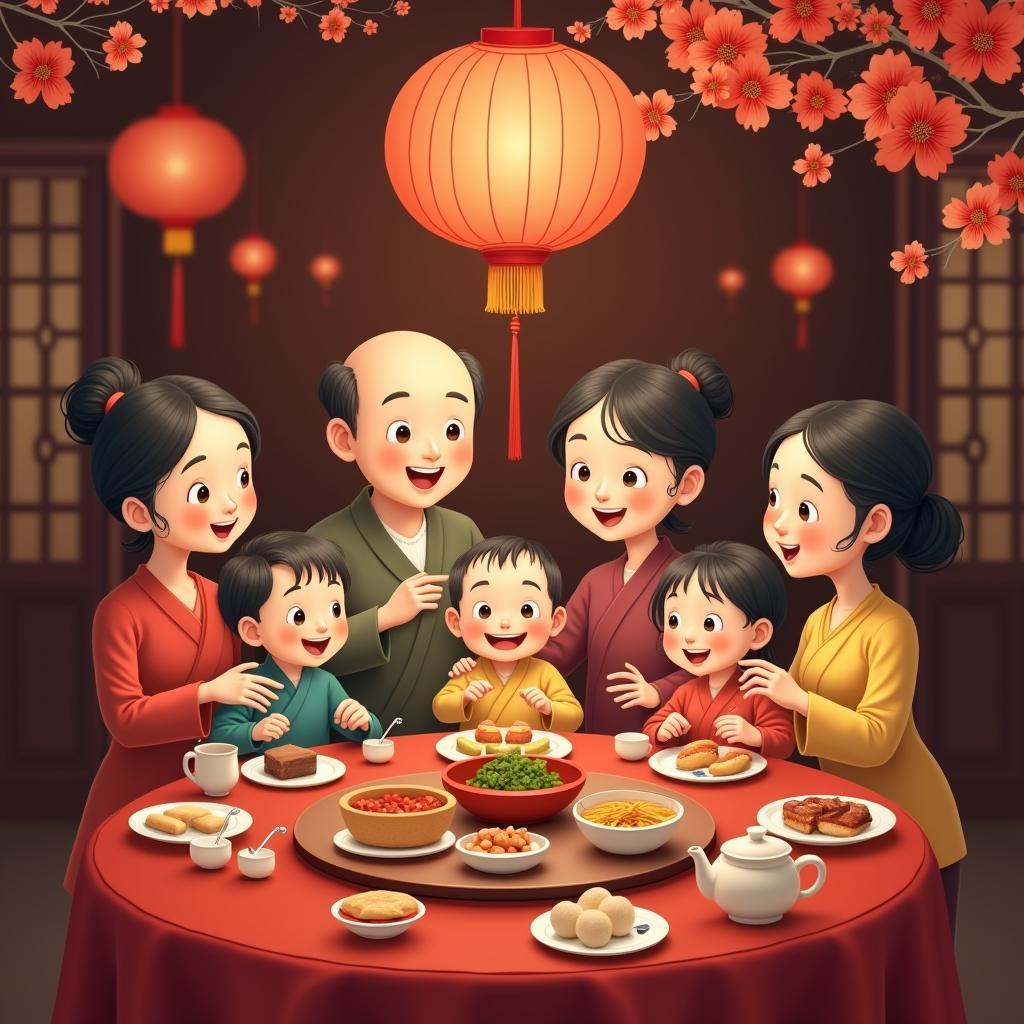 Gia đình Việt Nam vui vẻ sum họp trong ngày Tết Nguyên Đán với bánh chưng và hoa đào
Follow-up Questions (Rounding Off Questions)
Sau khi bạn nói xong Part 2, examiner thường hỏi 1-2 câu ngắn để transition sang Part 3. Đây là câu hỏi đơn giản, trả lời trong 2-3 câu.
Question 1: Do you think festivals are becoming less popular with young people?
Band 6-7 Answer:
I think it depends. Some young people still enjoy festivals, especially traditional ones like Tet. But others are more interested in modern celebrations like Christmas or Halloween because they see them on social media.
Band 8-9 Answer:
I’d say it’s a mixed picture, actually. While there’s certainly been a shift towards more Westernized celebrations among urban youth, I’ve also noticed a resurgence of interest in traditional festivals, particularly among educated young people who appreciate the cultural heritage. It’s less about the festivals becoming unpopular and more about how they’re being reinterpreted for contemporary contexts.
Question 2: How do you think people will celebrate festivals in the future?
Band 6-7 Answer:
I think people will probably celebrate festivals in more modern ways. They might use more technology, like video calls to connect with family members who live far away. But I hope they will still keep some traditional customs.
Band 8-9 Answer:
That’s fascinating to consider. I imagine we’ll see an increasing hybridization – traditional elements being preserved alongside technological integration. For instance, virtual reality might enable overseas Vietnamese to virtually participate in ancestral worship ceremonies. However, I suspect the core human need for physical togetherness will ensure that the essence of festivals – the face-to-face interactions – remains largely intact.
IELTS Speaking Part 3: Two-way Discussion
Tổng Quan Về Part 3
Part 3 là phần challenging nhất, kéo dài 4-5 phút với các câu hỏi abstract và analytical. Examiner sẽ đào sâu vào chủ đề, yêu cầu bạn discuss, compare, analyze và speculate.
Yêu cầu:
- Phân tích vấn đề ở mức độ xã hội/văn hóa, không chỉ cá nhân
- Compare và contrast (quá khứ vs hiện tại, truyền thống vs hiện đại)
- Đưa ra reasons, consequences, solutions
- Show balanced view (acknowledge different perspectives)
Chiến lược:
- Mở rộng câu trả lời: 4-6 câu (30-50 giây)
- Structure: Direct answer → Reason 1 + elaboration → Reason 2 + elaboration → Example/Conclusion
- Sử dụng discourse markers: Well, Actually, To be honest, On the one hand…
- Acknowledge complexity: “It’s a complex issue”, “It depends on…”, “To some extent”
- Examples từ society, statistics, trends – không chỉ personal anecdotes
Lỗi thường gặp của học viên Việt Nam:
- Trả lời quá ngắn (1-2 câu) rồi im lặng
- Chỉ nói về bản thân thay vì society as a whole
- Thiếu từ vựng abstract (modernization, globalization, preservation)
- Không structure ideas clearly
- Tránh né câu hỏi khó thay vì acknowledge và try to answer
Các Câu Hỏi Thảo Luận Sâu
Theme 1: Cultural Impact & Changes
Question 1: How have festivals changed in your country over the past few decades?
🎯 Phân tích câu hỏi:
- Dạng: Compare & Contrast (past vs present)
- Key words: “changed”, “past few decades”
- Cách tiếp cận:
- Identify 2-3 major changes
- Explain causes (modernization, urbanization, globalization)
- Provide specific examples
- Optional: mention what has remained the same
📝 Sample Answer – Band 6-7:
Festivals have changed a lot in Vietnam. In the past, people celebrated festivals in more traditional ways, but now things are different. For example, many young people don’t follow all the old customs anymore. Also, people are busier with work, so they have less time for long celebrations. However, some traditional activities are still popular, like making special foods and visiting family.
Phân tích:
- Structure: Basic comparison present
- Vocabulary: Simple (a lot, different, busy)
- Tại sao Band 6-7: Answers the question nhưng lacks depth, limited vocabulary, không có specific examples
📝 Câu trả lời mẫu – Band 8-9:
Well, there’s been quite a dramatic transformation, I’d say. Perhaps the most conspicuous change is the commercialization of festivals – what were once purely spiritual and communal occasions have increasingly become consumer-driven events. Take Tet, for instance – you now see elaborate marketing campaigns and shopping frenzies that would have been unthinkable a generation ago.
Beyond that, there’s been a noticeable compression of celebration timelines. Whereas traditional festivals like Tet once effectively shut down the entire country for a week or more, nowadays many people can only afford three or four days off due to work pressures. This time constraint has led to a streamlining of rituals – some of the more elaborate customs have been simplified or even abandoned altogether.
However, it’s not all deterioration. I’ve actually noticed a countervailing trend among younger, educated urbanites – there’s been a revival of interest in authentic traditional practices. Many people are making conscious efforts to resist the homogenizing effects of globalization and preserve cultural distinctiveness. So it’s really a dual movement – commercialization and simplification on one hand, but also active preservation on the other.
Phân tích:
- Structure: Well-organized: Most conspicuous change → Additional change → Counterpoint (balanced view)
- Vocabulary: Sophisticated (conspicuous, commercialization, countervailing trend, homogenizing effects, dual movement)
- Grammar: Complex structures with passives, conditionals, relative clauses
- Critical Thinking: Balanced view acknowledging both negative changes and positive revivals
💡 Key Language Features:
- Discourse markers: Well, Perhaps, Beyond that, However, So
- Tentative language: I’d say, I’ve noticed, it seems
- Abstract nouns: transformation, commercialization, compression, deterioration, homogenization
- Academic collocations: conspicuous change, consumer-driven events, countervailing trend, homogenizing effects
Question 2: Why do you think it’s important to preserve traditional festivals?
🎯 Phân tích câu hỏi:
- Dạng: Opinion with reasons (Why important?)
- Key words: “preserve”, “traditional festivals”
- Cách tiếp cận:
- State your position clearly
- Provide 2-3 strong reasons
- Each reason should be elaborated with explanation/example
- Consider counter-argument briefly (shows balanced thinking)
📝 Sample Answer – Band 6-7:
I think it’s very important to preserve traditional festivals because they are part of our culture. If we don’t keep them, young people will forget about their traditions. Also, festivals bring families together and teach us about our history. Without traditional festivals, we might lose our cultural identity.
Phân tích:
- Structure: Clear opinion với basic reasons
- Vocabulary: Common words (very important, part of culture)
- Tại sao Band 6-7: Logical reasoning nhưng lacks sophistication và depth
📝 Câu trả lời mẫu – Band 8-9:
I’d argue that preserving traditional festivals is absolutely crucial for several interconnected reasons. First and foremost, these festivals serve as vessels of collective memory – they embody centuries of accumulated wisdom, values, and historical experiences that simply can’t be adequately captured in textbooks or museums. When we participate in Tet rituals, for example, we’re not just going through empty motions; we’re actively engaging with a living link to our ancestors.
Secondly, from a social cohesion perspective, traditional festivals provide what sociologists call “social glue” – they create shared experiences and common reference points that bind diverse communities together. In an era of increasing social fragmentation and individualism, these collective celebrations offer rare opportunities for intergenerational interaction and community building that are otherwise in short supply.
Moreover, there’s a psychological dimension that shouldn’t be overlooked. Research suggests that maintaining cultural continuity contributes significantly to individual and collective well-being – it provides people with a sense of rootedness and belonging that serves as an anchor in our increasingly fluid modern world. Without this cultural grounding, many people experience a kind of existential disorientation.
That said, preservation doesn’t mean rigid fossilization – festivals need to evolve organically while retaining their essence. The challenge is finding that delicate balance between honoring traditions and allowing for contemporary relevance.
Phân tích:
- Structure: Clear position → Three well-developed reasons (cultural, social, psychological) → Nuanced conclusion acknowledging complexity
- Vocabulary: Highly sophisticated (vessels of collective memory, social cohesion, existential disorientation, rigid fossilization)
- Grammar: Full range – relative clauses, participle constructions, complex nominalizations
- Critical Thinking: Multi-dimensional analysis (cultural, social, psychological), acknowledges counter-perspective at end
💡 Key Language Features:
- Academic phrases: First and foremost, From a…perspective, Moreover, That said
- Abstract concepts: collective memory, social cohesion, cultural continuity, existential disorientation
- Metaphors: vessels of memory, social glue, anchor, cultural grounding
- Precise verbs: embody, bind, overlooked, fossilization, evolve organically
Theme 2: Globalization & Modern Influences
Question 3: Do you think Western festivals like Christmas are replacing traditional festivals in your country?
🎯 Phân tích câu hỏi:
- Dạng: Opinion + Evaluate trend
- Key words: “replacing”, “Western festivals”, “traditional festivals”
- Cách tiếp cận:
- Take a position (agree/disagree/partially)
- Acknowledge the phenomenon
- Analyze causes and extent
- Provide balanced perspective
📝 Sample Answer – Band 6-7:
I don’t think Western festivals are completely replacing our traditional festivals, but they are becoming more popular, especially among young people. Many people now celebrate Christmas and Valentine’s Day because they see them on social media. However, traditional festivals like Tet are still very important and everyone still celebrates them.
Phân tích:
- Structure: Clear position với basic explanation
- Vocabulary: Adequate (completely replacing, becoming more popular)
- Tại sao Band 6-7: Answers directly but analysis is surface-level
📝 Câu trả lời mẫu – Band 8-9:
I’d say it’s more nuanced than simple replacement – what we’re witnessing is really a process of cultural hybridization rather than wholesale substitution. Western festivals have certainly gained traction, particularly in urban areas, but they occupy a different niche and serve different purposes than traditional festivals.
Take Christmas, for example – in Vietnam, it’s been largely co-opted as a commercial and social occasion rather than a religious one. Young people use it as an excuse for socializing and retailers capitalize on the gift-giving aspect, but it lacks the deep cultural resonance and familial obligations that characterize Tet. It’s more of an add-on than a replacement.
What’s actually happening, I think, is a stratification of cultural practices. Traditional festivals like Tet continue to command near-universal participation and maintain their cultural centrality, while Western celebrations exist as supplementary occasions that cater to more cosmopolitan, consumer-oriented aspects of modern life. The younger generation isn’t necessarily abandoning traditional festivals – they’re navigating multiple cultural frameworks simultaneously.
That said, there is a legitimate concern about gradual erosion. While Tet itself remains sacrosanct, some lesser-known traditional festivals are indeed fading into obscurity, partly because they can’t compete with the slick marketing and Instagram-friendly aesthetics of Western celebrations. So it’s less about dramatic replacement and more about a slow rebalancing of the cultural landscape.
Phân tích:
- Structure: Sophisticated: Nuanced position → Specific example analysis → Broader pattern explanation → Acknowledge counter-concern
- Vocabulary: Advanced (cultural hybridization, wholesale substitution, cultural resonance, stratification, supplementary occasions, gradual erosion)
- Grammar: Complex: nominalization, participle phrases, conditional constructions
- Critical Thinking: Rejects simple binary, proposes alternative framework (hybridization not replacement), acknowledges nuances and exceptions
💡 Key Language Features:
- Hedging: I’d say, I think, rather than
- Academic expressions: witnessing a process of, occupy a niche, characterized by, cater to
- Contrast devices: rather than, while, that said
- Vivid phrases: slick marketing, Instagram-friendly aesthetics, fading into obscurity
Theme 3: Economic & Social Functions
Question 4: What role do festivals play in the economy of your country?
🎯 Phân tích câu hỏi:
- Dạng: Analyze impact/function
- Key words: “role”, “economy”
- Cách tiếp cận:
- Identify multiple economic dimensions
- Provide specific sectors/examples
- Quantify if possible (approximate numbers, trends)
- Consider both positive and negative impacts
📝 Sample Answer – Band 6-7:
Festivals are good for the economy in my country. During Tet, people buy a lot of things like new clothes, decorations, and special foods. This helps businesses make money. Also, many tourists come to Vietnam to see festivals, which is good for tourism. So festivals create many business opportunities.
Phân tích:
- Structure: Basic explanation of economic benefits
- Vocabulary: Simple (good for economy, make money, business opportunities)
- Tại sao Band 6-7: Correct understanding nhưng lacks detailed analysis
📝 Câu trả lời mẫu – Band 8-9:
Festivals play an absolutely pivotal economic role that extends far beyond what many people realize. The most obvious dimension is the massive consumer spending surge – during Tet, for instance, there’s an estimated 30-40% spike in retail activity as people stock up on everything from food and clothing to household items and gifts. This concentrated burst of spending provides a crucial boost to businesses, particularly small and medium enterprises.
Beyond direct consumer spending, there’s a significant tourism component. Major festivals like the Hue Festival or the Perfume Pagoda Festival draw substantial numbers of both domestic and international tourists, generating revenue across multiple sectors – hospitality, transportation, food services, and handicrafts. Some rural areas derive a substantial portion of their annual income from festival-related tourism.
Moreover, festivals stimulate certain specialized industries that might otherwise struggle. The production of traditional festival items – incense, votive papers, traditional confectionery, ceremonial clothing – these niche markets experience peak demand around festivals, sustaining artisans and preserving traditional crafts that double as economic activities.
However, there’s a flip side to consider. The economic shutdown during major festivals like Tet – when businesses cease operations for days – results in substantial productivity losses. Some economists estimate these opportunity costs in the hundreds of millions of dollars. Additionally, the intense concentration of economic activity creates logistical challenges and price inflation that can be economically inefficient.
Ultimately, though, I’d argue the net economic impact is decidedly positive, especially when you factor in the intangible benefits like enhanced social capital and cultural vitality that indirectly support economic dynamism.
Phân tích:
- Structure: Multi-layered analysis: Direct spending → Tourism → Specialized industries → Counterpoint (costs) → Balanced conclusion
- Vocabulary: Economically sophisticated (consumer spending surge, substantial portion, opportunity costs, price inflation, social capital, economic dynamism)
- Grammar: Full complexity with nominalizations, passive structures, conditional phrases
- Critical Thinking: Comprehensive analysis covering multiple sectors, provides quantitative estimates, acknowledges both benefits and costs, considers indirect effects
💡 Key Language Features:
- Economic terminology: consumer spending surge, revenue generation, opportunity costs, price inflation, net economic impact
- Quantifiers: estimated 30-40% spike, substantial numbers, hundreds of millions
- Cause-effect language: stimulate, generate, sustain, results in, factor in
- Balanced discourse: Beyond…, Moreover…, However…, Ultimately…
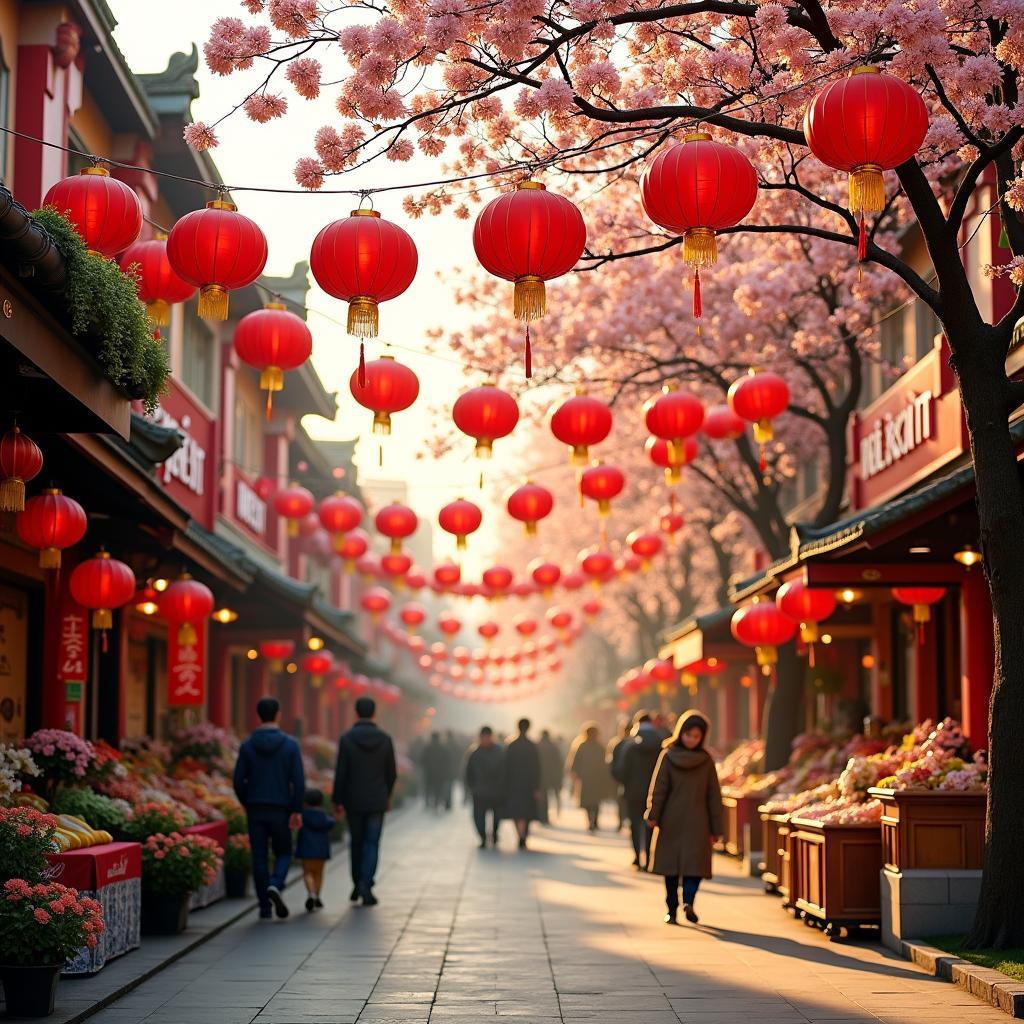 Khu phố Việt Nam được trang trí rực rỡ đón Tết Nguyên Đán với đèn lồng đỏ và hoa mai
Question 5: Do you think governments should invest money in promoting traditional festivals?
🎯 Phân tích câu hỏi:
- Dạng: Opinion with justification
- Key words: “governments should”, “invest money”, “promoting”
- Cách tiếp cận:
- Clear position (Yes/No/Conditional)
- Provide strong arguments
- Consider counter-arguments
- Discuss priorities and limitations
📝 Sample Answer – Band 6-7:
Yes, I think the government should support traditional festivals because they are part of our culture and history. If the government doesn’t help, some festivals might disappear. They can organize events and give money to communities to celebrate festivals. This will help preserve our traditions for future generations.
Phân tích:
- Structure: Clear yes with basic reasoning
- Vocabulary: Functional (support, disappear, preserve)
- Tại sao Band 6-7: Logical but lacks sophisticated argumentation
📝 Câu trả lời mẫu – Band 8-9:
I’d strongly advocate for government investment in traditional festivals, though with some important caveats. From a cultural preservation standpoint, government support is often indispensable – many traditional festivals, particularly those in rural or minority communities, face existential threats from economic pressures and demographic shifts. Without institutional backing and financial subsidy, these cultural practices could easily vanish within a generation.
Beyond mere preservation, there’s a compelling public interest argument. Traditional festivals provide non-monetary social benefits – community cohesion, intergenerational knowledge transfer, cultural identity formation – that market forces alone won’t adequately support. These are classic public goods that warrant government intervention, much like funding for education or public health.
From a practical perspective, government investment can be remarkably cost-effective. Strategic funding – say, for festival infrastructure, documentation projects, or training programs for traditional artisans – can generate multiplier effects by stimulating private participation and tourism revenue that far exceed the initial outlay. Vietnam’s investment in the Hue Festival, for instance, has yielded substantial returns in tourism and cultural capital.
That said, such investment needs to be judicious and well-targeted. There’s a legitimate concern about artificial preservation creating museum-like festivals that lose their authentic, organic character. The government’s role should be facilitating and enabling rather than dictating and commercializing. Excessive bureaucratization can actually undermine the very spontaneity and communal ownership that make festivals meaningful.
Furthermore, in countries with limited public resources, there’s always a question of priorities – whether festival funding might compete with more pressing needs like healthcare or poverty alleviation. My view is that modest, strategic investment in cultural preservation is entirely compatible with other development goals, especially given the social cohesion benefits that indirectly support overall development.
Phân tích:
- Structure: Complex argumentation: Strong yes with qualifications → Multiple supporting arguments (preservation, public goods, cost-effectiveness) → Important caveats and limitations → Conclusion balancing priorities
- Vocabulary: Policy-oriented language (institutional backing, public goods, warrant intervention, strategic funding, multiplier effects, judicious)
- Grammar: Sophisticated structures including conditionals, nominalization, complex embeddings
- Critical Thinking: Multi-dimensional analysis covering cultural, economic, and social dimensions; acknowledges trade-offs and potential problems; proposes nuanced approach rather than absolutist position
💡 Key Language Features:
- Policy language: advocate for, indispensable, institutional backing, warrant intervention, strategic funding
- Economic concepts: multiplier effects, cost-effective, yielded substantial returns, public goods
- Hedging & qualification: with some caveats, that said, though, my view is
- Contrast structures: Beyond mere…, From a practical perspective…, Furthermore…
Từ vựng và cụm từ quan trọng
Topic-Specific Vocabulary
| Từ vựng/Cụm từ | Loại từ | Phiên âm | Nghĩa tiếng Việt | Ví dụ | Collocation |
|---|---|---|---|---|---|
| quintessential | adj | /ˌkwɪntɪˈsenʃəl/ | tinh túy, điển hình nhất | Tet is the quintessential Vietnamese festival. | quintessential example, quintessential celebration |
| herald | v | /ˈherəld/ | báo hiệu, báo trước | The festival heralds the arrival of spring. | herald the beginning, herald a new era |
| cherished | adj | /ˈtʃerɪʃt/ | được trân trọng | This is a cherished tradition in our family. | cherished tradition, cherished memory, cherished belief |
| commemorate | v | /kəˈmeməreɪt/ | kỷ niệm, tưởng nhớ | The festival commemorates our ancestors. | commemorate an event, commemorate the anniversary |
| festivities | n | /feˈstɪvətiz/ | các hoạt động lễ hội | The festivities last for three days. | join the festivities, festivities begin |
| ritual | n | /ˈrɪtʃuəl/ | nghi lễ, nghi thức | The festival involves many ancient rituals. | religious ritual, perform rituals, ritual practice |
| vibrant | adj | /ˈvaɪbrənt/ | sống động, rực rỡ | The streets are decorated with vibrant colors. | vibrant atmosphere, vibrant culture, vibrant community |
| revelry | n | /ˈrevlri/ | sự ăn mừng náo nhiệt | The night was filled with music and revelry. | drunken revelry, festive revelry |
| pageantry | n | /ˈpædʒəntri/ | cảnh tượng lộng lẫy | The festival features colorful pageantry. | spectacular pageantry, traditional pageantry |
| meticulous | adj | /məˈtɪkjələs/ | tỉ mỉ, cẩn thận | Preparation requires meticulous attention to detail. | meticulous preparation, meticulous planning |
| culinary tradition | n phrase | /ˈkʌlɪneri trəˈdɪʃən/ | truyền thống ẩm thực | Each festival has its own culinary traditions. | preserve culinary traditions, regional culinary tradition |
| reunite | v | /ˌriːjuˈnaɪt/ | đoàn tụ, sum họp lại | Families reunite during the festival. | reunite with family, reunite after years |
| congregate | v | /ˈkɒŋɡrɪɡeɪt/ | tụ tập, sum họp | People congregate at the main square. | congregate around, congregate in large numbers |
| intergenerational | adj | /ˌɪntədʒenəˈreɪʃənəl/ | liên thế hệ | The festival promotes intergenerational bonding. | intergenerational connection, intergenerational transmission |
| ancestral | adj | /ænˈsestrəl/ | thuộc về tổ tiên | We visit our ancestral home during Tet. | ancestral tradition, ancestral worship, ancestral home |
| reverence | n | /ˈrevərəns/ | sự tôn kính | The ceremony is performed with great reverence. | show reverence, deep reverence, reverence for ancestors |
| proliferation | n | /prəˌlɪfəˈreɪʃən/ | sự gia tăng nhanh | There’s been a proliferation of modern festivals. | rapid proliferation, proliferation of events |
| commercialization | n | /kəˌmɜːʃəlaɪˈzeɪʃən/ | sự thương mại hóa | Many worry about the commercialization of Tet. | increasing commercialization, excessive commercialization |
| erosion | n | /ɪˈrəʊʒən/ | sự xói mòn, suy giảm | Cultural erosion threatens traditional practices. | cultural erosion, gradual erosion, erosion of values |
| authenticity | n | /ˌɔːθenˈtɪsəti/ | tính chân thực, đích thực | Young people seek authenticity in traditions. | cultural authenticity, maintain authenticity, loss of authenticity |
Idiomatic Expressions & Advanced Phrases
| Cụm từ | Nghĩa | Ví dụ sử dụng | Band điểm |
|---|---|---|---|
| the heart and soul of | trung tâm, cốt lõi của | Family gatherings are the heart and soul of Tet celebrations. | 7.5-9 |
| be steeped in tradition | thấm nhuần truyền thống | The Mid-Autumn Festival is steeped in centuries-old tradition. | 7.5-9 |
| pass down through generations | truyền từ thế hệ này sang thế hệ khác | These customs have been passed down through generations. | 7-8 |
| a far cry from | khác xa với | Modern celebrations are a far cry from what they used to be. | 7.5-8.5 |
| take center stage | trở thành trung tâm chú ý | During Tet, family values take center stage. | 7-8 |
| strike a balance | đạt được sự cân bằng | We need to strike a balance between tradition and modernity. | 7.5-8.5 |
| cultural fabric | kết cấu văn hóa | Festivals are woven into the cultural fabric of society. | 8-9 |
| a sense of belonging | cảm giác thuộc về | Traditional festivals give people a sense of belonging. | 7-8 |
| be on the wane | đang suy giảm | Interest in some traditional festivals is on the wane. | 7.5-9 |
| keep traditions alive | giữ gìn truyền thống | Younger generations play a key role in keeping traditions alive. | 7-8 |
| fall into oblivion | rơi vào quên lãng | Without preservation efforts, minor festivals may fall into oblivion. | 8-9 |
| weather the storm of | vượt qua khó khăn của | Traditional festivals must weather the storm of globalization. | 8-9 |
Discourse Markers (Từ Nối Ý Trong Speaking)
Để bắt đầu câu trả lời:
- 📝 Well,… – Khi cần vài giây suy nghĩ trước khi trả lời
- 📝 Actually,… – Khi muốn đưa ra góc nhìn khác hoặc điều chỉnh assumption
- 📝 To be honest,… – Khi đưa ra quan điểm thật lòng, genuine
- 📝 I’d say that… – Cách tentative để đưa ra opinion
- 📝 In my view/opinion,… – Formal hơn “I think”
Để bổ sung ý:
- 📝 On top of that,… – Thêm vào đó (informal)
- 📝 What’s more,… – Hơn nữa, quan trọng hơn
- 📝 Not to mention… – Chưa kể đến
- 📝 Beyond that,… – Ngoài ra còn
- 📝 Moreover/Furthermore,… – Hơn nữa (formal)
Để đưa ra quan điểm cân bằng:
- 📝 On the one hand,… On the other hand,… – Một mặt… mặt khác
- 📝 While it’s true that…, we also need to consider… – Trong khi đúng là… ta cũng cần xem xét
- 📝 That said/Having said that,… – Dù vậy, tuy nhiên
- 📝 Admittedly,…but… – Phải thừa nhận rằng… nhưng
Để kết luận:
- 📝 All in all,… – Tóm lại, xét cho cùng
- 📝 At the end of the day,… – Cuối cùng thì (informal)
- 📝 Ultimately,… – Rốt cuộc, sau cùng
- 📝 All things considered,… – Xét mọi khía cạnh
Để đưa ra ví dụ:
- 📝 Take…for instance/example – Lấy… làm ví dụ
- 📝 A case in point is… – Một ví dụ điển hình là
- 📝 To illustrate this point,… – Để minh họa điểm này
Grammatical Structures Ấn Tượng
1. Conditional Sentences (Câu điều kiện):
Mixed conditional:
- Formula: If + past perfect, would + base verb (present result of past condition)
- Ví dụ: “If our ancestors hadn’t preserved these traditions, we wouldn’t have such a rich cultural heritage today.”
Inversion for emphasis:
- Formula: Had + subject + past participle
- Ví dụ: “Had the government not intervened, many traditional festivals would have disappeared entirely.”
2. Relative Clauses (Mệnh đề quan hệ):
Non-defining relative clauses:
- Formula: …, which/who/whose + clause,…
- Ví dụ: “Tet, which marks the lunar new year, is Vietnam’s most important festival.”
- Ví dụ 2: “My grandmother, whose knowledge of traditional rituals is extensive, teaches us about customs.”
Reduced relative clauses:
- Formula: Noun + V-ing/V-ed
- Ví dụ: “The traditions passed down through generations continue to shape our identity.”
3. Passive Voice (Câu bị động):
Impersonal passives:
- It is thought/believed/said that…
- Ví dụ: “It is widely believed that traditional festivals strengthen social bonds.”
- It is estimated/reported that…
- Ví dụ: “It is estimated that Tet generates billions in economic activity.”
4. Cleft Sentences (Câu chẻ):
What-cleft:
- Formula: What + subject + verb + is/was + focus
- Ví dụ: “What I find most meaningful about Tet is the sense of cultural continuity it provides.”
- Ví dụ 2: “What makes traditional festivals special is their ability to bring communities together.”
It-cleft:
- Formula: It + is/was + focus + that/who + clause
- Ví dụ: “It is the intergenerational aspect that makes these celebrations so valuable.”
5. Inversion Structures:
Not only…but also:
- Formula: Not only + auxiliary + subject + verb, but also…
- Ví dụ: “Not only does Tet preserve cultural heritage, but it also strengthens family bonds.”
Seldom/Rarely/Never:
- Formula: Seldom/Rarely + auxiliary + subject + verb
- Ví dụ: “Rarely do we see such genuine expressions of community solidarity outside of festivals.”
6. Nominalization (Danh từ hóa):
Chuyển động từ/tính từ thành danh từ để nâng cao academic tone:
- celebrate → celebration: “The celebration brings people together.”
- preserve → preservation: “Cultural preservation requires government support.”
- erode → erosion: “We’re witnessing the gradual erosion of some traditions.”
- participate → participation: “Active participation in festivals has declined among youth.”
7. Participle Clauses:
Present participle (-ing):
- Ví dụ: “Living abroad, I’ve come to appreciate Vietnamese festivals even more.” (expressing reason)
- Ví dụ: “Having celebrated Tet for 30 years, my parents know all the traditional customs.” (expressing completed action)
Past participle (-ed):
- Ví dụ: “Steeped in tradition, these festivals reflect centuries of cultural evolution.”
Chiến lược trả lời hiệu quả và lời khuyên từ Examiner
Những Điều NÊN Làm
1. Extend Your Answers Naturally
- Part 1: 2-3 câu (15-20 giây)
- Part 2: Đúng 2 phút hoặc hơn
- Part 3: 4-6 câu (30-50 giây)
Technique: Sử dụng công thức PREP
- Point: Câu trả lời trực tiếp
- Reason: Lý do
- Example: Ví dụ cụ thể
- Personal connection: Liên hệ cá nhân hoặc conclusion
2. Show Range of Vocabulary
- Không lặp lại từ trong câu hỏi
- Paraphrase: festival → celebration, festivity, occasion
- Use synonyms: important → significant, crucial, vital
- Include topic-specific terms: rituals, traditions, customs, heritage
3. Demonstrate Grammatical Variety
- Mix simple, compound, và complex sentences
- Use different tenses appropriately
- Include conditional, passive, relative clauses
- Show ability to use different sentence starters
4. Think Critically
- Acknowledge complexity: “It’s not a simple issue…”
- Show balanced view: “On the one hand… on the other hand…”
- Consider multiple perspectives
- Connect ideas logically
5. Use Natural Discourse Markers
- Không overuse: “Firstly, secondly, thirdly” (too mechanical)
- Better: “Well, Actually, To be honest, What’s more, Beyond that”
- Show conversational competence
Những Điều KHÔNG NÊN Làm
1. Don’t Memorize and Recite Templates
Examiner có thể phát hiện memorized answers qua:
- Over-rehearsed delivery (quá smooth, thiếu natural pauses)
- Irrelevant content (forced ideas không match câu hỏi)
- Generic examples (fake statistics, vague “my friend”)
- Sudden tone shifts (từ hesitant sang fluent đột ngột)
Consequence: Có thể bị hạ xuống Band 5 hoặc thấp hơn
2. Don’t Use Overly Complex Words Incorrectly
- Sử dụng từ vựng bạn thực sự hiểu
- Better: accurate simple word than impressive wrong word
- Wrong: “The festival has a plethora of…” (không tự nhiên)
- Better: “The festival features many…”
3. Don’t Give One-Word or Too-Short Answers
- Examiner không thể assess abilities với câu trả lời ngắn
- Always elaborate với lý do hoặc example
- Bad: “Do you like festivals?” → “Yes.”
- Good: “Yes, I do, particularly traditional ones because…”
4. Don’t Speak Too Fast
- Speaking quá nhanh → nhiều pronunciation errors
- Không demonstrate intonation patterns
- Hard to show sentence stress
- Better: Moderate pace với clear articulation
5. Don’t Panic When You Don’t Know an Answer
- Use filler phrases naturally: “That’s an interesting question…”
- Be honest: “I haven’t thought much about this, but…”
- Speculate: “I would imagine that…”, “I suppose…”
- Never stay silent
Chiến thuật xử lý tình huống khó
Tình huống 1: Không hiểu câu hỏi
- Polite clarification: “Sorry, could you rephrase that question?”
- Never: Pretend to understand và answer incorrectly
- Tip: Examiner sẵn sàng repeat hoặc rephrase
Tình huống 2: Không biết từ vựng cần dùng
- Paraphrase: “I don’t know the exact word, but it’s like…”
- Describe: “It’s a kind of traditional cake made from rice…”
- Never: Stop speaking hoặc switch to Vietnamese
Tình huống 3: Lạc đề trong Part 2
- Realign quickly: “Going back to the main question…”
- Link ideas: Even if slightly off-topic, connect back
- Prevention: Glance at cue card every 30-40 giây
Tình huống 4: Hết ý trong Part 2 trước 2 phút
- Elaborate further: Go deeper into the “explain why” part
- Add another perspective: “Another reason I enjoy it is…”
- Personal anecdotes: Share specific memories
- Never: Say “That’s all” và stop at 1 minute
Tình huống 5: Part 3 question quá khó/abstract
- Buy time: “Well, that’s quite a complex question…”
- Acknowledge limits: “I’m not an expert, but from what I understand…”
- Offer what you can: Share general thoughts even if not comprehensive
- Structure: “There are probably several factors… One might be… Another could be…”
Timeline chuẩn bị
1-2 tháng trước thi:
- Learn topic-specific vocabulary (15-20 topics)
- Practice answering common questions
- Record yourself và analyze
- Work on pronunciation và intonation
2-3 tuần trước thi:
- Do mock tests với timer
- Focus on weak areas identified
- Practice Part 2 extensively (building fluency)
- Review common Part 3 question types
1 tuần trước thi:
- Light review, không học quá nhiều
- Practice speaking 15-20 phút mỗi ngày
- Focus on confidence building
- Review discourse markers và transitional phrases
Ngày thi:
- Warm up voice trước: đọc to trong 5-10 phút
- Stay relaxed: examiner muốn bạn succeed
- Be yourself: show your personality
- Smile và maintain eye contact
Lời khuyên cuối từ góc nhìn Examiner
What Examiners Really Look For:
Fluency: Chúng tôi không expect perfect English. Chúng tôi muốn thấy bạn có thể communicate ideas một cách clear và connected, với minimal hesitation. Một vài “um”, “uh” là natural – đừng quá lo lắng.
Vocabulary: Chúng tôi ấn tượng với precision và appropriacy hơn là big words. Sử dụng từ vựng phù hợp với context, có collocations tự nhiên, và paraphrase skillfully.
Grammar: Chúng tôi muốn thấy variety và flexibility. Không phải mỗi câu đều phải complex – mix của sentence types là tốt nhất. Accuracy quan trọng nhưng intelligibility quan trọng hơn.
Pronunciation: Clarity là key. Accent không quan trọng – Vietnamese accent hoàn toàn acceptable. Điều quan trọng là word stress, sentence stress, và intonation patterns rõ ràng.
Ideas: Ở Band 8-9, chúng tôi muốn thấy depth of thinking. Không chỉ describe mà analyze, không chỉ list ideas mà explain connections, không chỉ agree mà acknowledge complexity.
Most Important: Be authentic. Chúng tôi có thể tell when students are being genuine versus reciting memorized answers. Real experiences, honest opinions, và natural delivery sẽ luôn score higher than perfect but robotic responses.
Chúc các bạn đạt kết quả cao trong kỳ thi IELTS Speaking. Hãy nhớ, festivals không chỉ là một topic để thi – đó là cơ hội để chia sẻ về văn hóa tuyệt vời của Việt Nam với examiner. Enjoy the conversation!


