
Mở bài
Chủ đề Describe A Historical Site You Wish To Visit là một trong những đề tài kinh điển và xuất hiện với tần suất cao trong kỳ thi IELTS Speaking, đặc biệt ở Part 2. Theo thống kê từ các nguồn đề thi thực tế như IELTS-Blog và IELTSLiz, chủ đề này xuất hiện đều đặn trong các kỳ thi từ năm 2020 đến 2024, với mức độ phổ biến cao ở cả ba Part của bài thi Speaking. Dự đoán khả năng xuất hiện trong tương lai vẫn ở mức cao do tính phổ quát và khả năng đánh giá toàn diện kỹ năng của thí sinh.
Chủ đề di tích lịch sử không chỉ yêu cầu bạn miêu tả một địa điểm cụ thể mà còn kiểm tra khả năng diễn đạt về văn hóa, lịch sử, và cảm xúc cá nhân. Examiner có thể khai thác chủ đề này theo nhiều góc độ: từ sở thích du lịch cá nhân (Part 1), trải nghiệm chi tiết về một địa điểm lịch sử (Part 2), đến các vấn đề rộng hơn như bảo tồn di sản, giáo dục lịch sử, hay tác động của du lịch lịch sử (Part 3).
Trong bài viết này, bạn sẽ học được:
- 10+ câu hỏi thường gặp trong cả ba Part, được chọn lọc từ đề thi thực tế
- Bài mẫu chi tiết theo ba mức band điểm (6-7, 7.5-8, 8.5-9) với phân tích sâu sắc về tiêu chí chấm điểm
- 20+ từ vựng và cụm từ ăn điểm chuyên biệt cho chủ đề lịch sử
- Chiến lược trả lời hiệu quả từ góc nhìn của một Examiner với hơn 20 năm kinh nghiệm
- Những lỗi thường gặp của học viên Việt Nam và cách khắc phục
IELTS Speaking Part 1: Introduction and Interview
Tổng Quan Về Part 1
Part 1 của IELTS Speaking diễn ra trong 4-5 phút với các câu hỏi ngắn về đời sống hàng ngày và sở thích cá nhân. Đây là phần “warm-up” giúp bạn làm quen với examiner và tạo ấn tượng ban đầu. Đặc điểm của Part 1 là các câu hỏi đơn giản, liên quan đến kinh nghiệm và quan điểm cá nhân của bạn.
Chiến lược quan trọng cho Part 1 là trả lời tự nhiên và mở rộng ý trong 2-3 câu. Đừng chỉ dừng lại ở “Yes” hoặc “No” mà hãy giải thích lý do hoặc đưa thêm ví dụ cụ thể.
Lỗi thường gặp của học viên Việt Nam trong Part 1:
- Trả lời quá ngắn gọn, chỉ một câu đơn
- Sử dụng từ vựng quá đơn giản như “good”, “nice”, “interesting”
- Thiếu ví dụ cụ thể từ kinh nghiệm bản thân
- Nói quá nhanh hoặc quá chậm do căng thẳng
Các Câu Hỏi Thường Gặp
Question 1: Do you like visiting historical places?
Question 2: Have you ever visited any historical sites in your country?
Question 3: What kind of historical places interest you the most?
Question 4: Did you learn about history at school?
Question 5: Do you think it’s important to preserve historical buildings?
Question 6: Would you like to live in an old historical building?
Question 7: Have you visited any museums recently?
Question 8: What historical period interests you most?
Phân Tích và Gợi Ý Trả Lời Chi Tiết
Question: Do you like visiting historical places?
🎯 Cách tiếp cận:
- Trả lời trực tiếp (Yes/No)
- Đưa ra lý do cụ thể
- Thêm ví dụ về một lần đi thăm hoặc loại di tích yêu thích
📝 Sample Answer – Band 6-7:
Yes, I do. I find historical places interesting because they teach us about the past. Last year, I visited the Imperial Citadel in Hue and learned a lot about Vietnamese history.
Phân tích:
- Điểm mạnh: Trả lời trực tiếp, có lý do và ví dụ cụ thể
- Hạn chế: Từ vựng còn đơn giản (interesting, teach, learn), cấu trúc câu chưa đa dạng
- Tại sao Band 6-7: Đáp ứng yêu cầu cơ bản với fluency ổn định nhưng thiếu độ tinh vi trong ngôn ngữ và ý tưởng chưa được phát triển sâu.
📝 Sample Answer – Band 8-9:
Absolutely, I’m quite fascinated by historical sites actually. There’s something profoundly moving about standing in a place where significant events unfolded centuries ago. For instance, when I visited the ancient town of Hoi An, I was captivated by how well the architecture has been preserved and how it offers a window into Vietnam’s trading past.
Phân tích:
- Điểm mạnh: Sử dụng từ vựng tinh vi (fascinated by, profoundly moving, significant events unfolded), cấu trúc phức tạp (reduced relative clause), ý tưởng sâu sắc hơn về giá trị văn hóa
- Tại sao Band 8-9:
- Fluency: Trôi chảy với discourse marker “actually”
- Vocabulary: Collocations mạnh (profoundly moving, significant events, offers a window into)
- Grammar: Sử dụng present perfect và complex sentences tự nhiên
- Ideas: Kết nối cảm xúc cá nhân với giá trị lịch sử
💡 Key Vocabulary & Expressions:
- be fascinated by: bị thu hút mạnh mẽ bởi
- profoundly moving: cảm động sâu sắc
- significant events unfolded: những sự kiện quan trọng diễn ra
- be captivated by: bị quyến rũ bởi
- preserved: được bảo tồn
- offers a window into: mở ra cái nhìn về
Question: What kind of historical places interest you the most?
🎯 Cách tiếp cận:
- Nêu loại di tích cụ thể (castles, temples, museums, archaeological sites)
- Giải thích lý do tại sao loại này hấp dẫn
- Có thể so sánh với loại khác
📝 Sample Answer – Band 6-7:
I’m most interested in ancient temples and pagodas. They have beautiful architecture and show the religious beliefs of people in the past. I also like that they are usually peaceful places to visit.
Phân tích:
- Điểm mạnh: Chỉ rõ loại di tích và đưa ra hai lý do
- Hạn chế: Từ vựng cơ bản (beautiful, show, peaceful), thiếu depth trong việc giải thích
- Tại sao Band 6-7: Adequate response với ý tưởng rõ ràng nhưng chưa có sự phân tích sâu hoặc ngôn ngữ sophisticated.
📝 Sample Answer – Band 8-9:
I’m particularly drawn to ancient religious structures like temples and pagodas. What appeals to me most is the intricate craftsmanship and symbolic architecture that reflects the spiritual beliefs of past civilizations. Unlike modern buildings, these sites have a certain tranquility and spiritual atmosphere that you can’t find elsewhere. The ornate carvings and meticulous attention to detail really showcase the dedication of ancient artisans.
Phân tích:
- Điểm mạnh:
- Vocabulary tinh vi: intricate craftsmanship, symbolic architecture, ornate carvings
- Grammar đa dạng: relative clauses, noun phrases
- Ideas có depth: So sánh với modern buildings, nhắc đến spiritual atmosphere
- Tại sao Band 8-9:
- Lexical Resource: Topic-specific vocabulary rất mạnh
- Coherence: Logical flow từ general statement đến specific details
- Grammatical Range: Complex structures được sử dụng chính xác
💡 Key Vocabulary & Expressions:
- be drawn to: bị thu hút đến
- appeals to me: hấp dẫn tôi
- intricate craftsmanship: nghề thủ công tinh xảo
- symbolic architecture: kiến trúc mang tính biểu tượng
- reflects the spiritual beliefs: phản ánh niềm tin tâm linh
- certain tranquility: sự tĩnh lặng nhất định
- ornate carvings: chạm khắc công phu
Question: Did you learn about history at school?
🎯 Cách tiếp cận:
- Xác nhận có hay không
- Mô tả cách học (textbooks, field trips, projects)
- Đánh giá trải nghiệm học (interesting/boring, useful/not useful)
📝 Sample Answer – Band 6-7:
Yes, history was a compulsory subject at my school. We learned about Vietnamese history and world history from textbooks. Sometimes it was boring because we had to memorize many dates and events, but some topics were quite interesting.
Phân tích:
- Điểm mạnh: Trả lời đầy đủ với cả positive và negative aspects
- Hạn chế: Từ vựng predictable (boring, interesting, memorize), thiếu personal reflection sâu hơn
- Tại sao Band 6-7: Communicates effectively nhưng lacks sophistication trong vocabulary và ideas.
📝 Sample Answer – Band 8-9:
Yes, history was a core subject throughout my secondary education. To be honest, the teaching approach was quite textbook-heavy, which meant we spent a lot of time memorizing dates and historical figures rather than understanding the broader context. However, I do remember being genuinely intrigued by certain periods, particularly the resistance movements in Vietnamese history. I wish there had been more interactive elements like museum visits or historical reenactments to bring the subject to life.
Phân tích:
- Điểm mạnh:
- Honest assessment với “To be honest”
- Specific terminology: core subject, textbook-heavy, resistance movements
- Critical thinking: so sánh giữa memorization và understanding
- Constructive suggestion ở cuối
- Tại sao Band 8-9:
- Fluency: Natural flow với discourse markers
- Vocabulary: Academic và precise (broader context, interactive elements)
- Ideas: Shows reflection và personal opinion
- Grammar: Past simple và present perfect được dùng chính xác
💡 Key Vocabulary & Expressions:
- core subject: môn học chính
- textbook-heavy: dựa nhiều vào sách giáo khoa
- memorizing dates and historical figures: ghi nhớ ngày tháng và nhân vật lịch sử
- broader context: bối cảnh rộng hơn
- genuinely intrigued by: thực sự bị hấp dẫn bởi
- resistance movements: các phong trào kháng chiến
- interactive elements: yếu tố tương tác
- historical reenactments: tái hiện lịch sử
 Học sinh Việt Nam đang học môn lịch sử trong lớp học với sách giáo khoa và bản đồ lịch sử trên tường
Tương tự như describe a time when you were caught in bad weather, khi trả lời các câu hỏi về trải nghiệm học tập, việc thể hiện cảm xúc và suy nghĩ cá nhân sẽ giúp câu trả lời của bạn trở nên chân thực và ấn tượng hơn với examiner.
IELTS Speaking Part 2: Long Turn (Cue Card)
Tổng Quan Về Part 2
Part 2 là phần độc thoại kéo dài 2-3 phút, trong đó bạn có 1 phút chuẩn bị và ghi chú. Đây là phần quan trọng nhất để thể hiện khả năng nói liên tục và tổ chức ý tưởng logic.
Đặc điểm:
- Thời gian chuẩn bị: Đúng 1 phút (examiner sẽ báo khi hết thời gian)
- Thời gian nói: 2-3 phút không bị ngắt (examiner chỉ ngắt khi đủ 2 phút)
- Format: Một cue card với chủ đề và 3-4 bullet points
Chiến lược hiệu quả:
- Sử dụng đầy đủ 1 phút để ghi chú keywords, không viết câu hoàn chỉnh
- Nói tối thiểu 1.5 phút, lý tưởng là 2-2.5 phút
- Trả lời đầy đủ tất cả các bullet points theo thứ tự
- Sử dụng thì quá khứ nếu đề bài yêu cầu “you visited” hoặc thì tương lai/giả định nếu là “you wish to visit”
- Duy trì eye contact với examiner, không chỉ nhìn vào notes
Lỗi thường gặp của học viên Việt Nam:
- Không sử dụng hết 1 phút chuẩn bị, bắt đầu nói quá sớm
- Nói dưới 1.5 phút do thiếu ý tưởng hoặc vocabulary
- Bỏ sót bullet points, đặc biệt là câu “explain why”
- Đọc thuộc từ notes thay vì nói tự nhiên
- Dừng đột ngột khi hết ý, không có kết luận
Cue Card
Describe a historical site you wish to visit
You should say:
- Where it is located
- What you know about this place
- How you learned about it
- And explain why you want to visit this historical site
Phân Tích Đề Bài
Dạng câu hỏi: Describe a place (historical site) – đây là dạng miêu tả địa điểm kết hợp với future intention/wish
Thì động từ: Chủ yếu là Present Simple (để miêu tả facts về địa điểm), Past Simple (để nói về việc học được thông tin), và Would/Future forms (để nói về mong muốn)
Bullet points phải cover:
- Where it is located: Cần nêu rõ quốc gia, thành phố, có thể thêm vị trí cụ thể
- What you know about this place: Thông tin lịch sử, kiến trúc, significance – đây là phần chiếm nhiều thời gian nhất
- How you learned about it: Có thể là từ sách, phim, documentaries, friends, social media
- And explain why: Đây là phần quan trọng nhất để ghi điểm – cần có reasons cụ thể và personal connection
Câu “explain” quan trọng: Phần “explain why” thường chiếm 30-40% thời gian nói và là nơi bạn có thể showcase vocabulary về feelings, values, và personal aspirations. Đây là điểm phân biệt giữa Band 6 và Band 8.
📝 Sample Answer – Band 6-7
Thời lượng: Khoảng 1.5-2 phút
I’d like to talk about Angkor Wat in Cambodia, which is a historical site I really want to visit.
Angkor Wat is located in Siem Reap, Cambodia. It’s in the northern part of the country, not too far from the border with Thailand. I think it’s about 300 kilometers from Phnom Penh, the capital city.
From what I know, Angkor Wat is a very old temple complex. It was built in the 12th century during the Khmer Empire. It’s the largest religious monument in the world and originally it was a Hindu temple, but later it became a Buddhist temple. The architecture is very impressive with tall towers and detailed carvings on the walls. The temple is also featured on the Cambodian flag, which shows how important it is to the country.
I first learned about Angkor Wat from a documentary I watched on TV about ancient civilizations in Southeast Asia. After that, I saw many beautiful photos on social media from friends who visited there. They all said it was an amazing place.
I want to visit this historical site for several reasons. First, I’m interested in ancient architecture and I think Angkor Wat would be fascinating to see in person. The photos are beautiful but I believe seeing it with my own eyes would be much more impressive. Second, I want to learn more about the Khmer civilization and their culture. Visiting the actual place would help me understand the history better than just reading about it. Finally, it’s relatively close to Vietnam, so it would be a convenient trip to make during a long weekend or short holiday.
Phân Tích Band Điểm
| Tiêu chí | Band | Nhận xét |
|---|---|---|
| Fluency & Coherence | 6-7 | Có discourse markers cơ bản (First, Second, Finally) và ý tưởng được tổ chức khá logic, nhưng còn một số pauses để tìm từ |
| Lexical Resource | 6-7 | Từ vựng adequate với một số topic vocabulary tốt (temple complex, religious monument, Khmer Empire) nhưng còn nhiều từ general (very old, very impressive, beautiful) |
| Grammatical Range & Accuracy | 6-7 | Sử dụng được một số complex sentences và thì động từ chính xác, nhưng chủ yếu vẫn là simple structures |
| Pronunciation | 6-7 | Rõ ràng và dễ hiểu, có thể có một số lỗi nhỏ về stress hoặc intonation không ảnh hưởng nhiều đến communication |
Điểm mạnh:
- ✅ Trả lời đầy đủ cả 4 bullet points theo đúng thứ tự
- ✅ Có cấu trúc rõ ràng với introduction và reasons được list ra
- ✅ Length đạt chuẩn khoảng 1.5-2 phút
- ✅ Thông tin factual chính xác về Angkor Wat
Hạn chế:
- ⚠️ Vocabulary còn basic ở nhiều chỗ (very, beautiful, amazing)
- ⚠️ Thiếu personal feelings sâu sắc, chủ yếu là facts
- ⚠️ Câu “explain why” chưa thực sự compelling, còn generic
📝 Sample Answer – Band 7.5-8
Thời lượng: Khoảng 2-2.5 phút
I’d love to tell you about the Colosseum in Rome, which is definitely at the top of my bucket list when it comes to historical sites I’m dying to visit.
The Colosseum is located right in the heart of Rome, Italy’s capital city. It sits in the city center, easily accessible from most parts of the city, and is actually surrounded by other ancient Roman ruins like the Roman Forum, which makes the area steeped in history.
What I know about this place is quite fascinating. The Colosseum, or the Flavian Amphitheatre as it’s officially called, was constructed nearly 2,000 years ago during the Roman Empire. It was primarily used for gladiatorial contests and public spectacles like animal hunts and mock sea battles. What’s absolutely remarkable is its architectural ingenuity – it could hold up to 80,000 spectators and had a complex system of underground tunnels called the hypogeum where gladiators and animals were kept before shows. Despite suffering damage from earthquakes and stone-robbers over the centuries, it’s remarkably well-preserved and remains one of the most iconic symbols of ancient Rome.
I first became aware of the Colosseum through history lessons at school, but what really sparked my interest was watching the film “Gladiator” several years ago. The movie’s vivid depiction of gladiatorial combat made me want to learn more, so I started reading books and watching documentaries about Roman history and architecture. More recently, I’ve seen countless stunning photographs shared by travelers on Instagram, which have only intensified my desire to visit.
There are several compelling reasons why I’m so eager to visit this site. Firstly, I’m genuinely passionate about ancient history, and the Colosseum represents such a significant chapter in human civilization. Standing in a place where thousands of historical events unfolded would give me a much deeper appreciation of Roman culture and society. Secondly, as someone interested in architecture, I’m in awe of the engineering achievements of ancient Romans. Seeing how they constructed such a massive structure without modern technology would be truly inspiring. Lastly, there’s something profoundly moving about visiting places that have stood the test of time and witnessed so much history. I believe it would be an unforgettable experience that would really bring history to life for me.
Phân Tích Band Điểm
| Tiêu chí | Band | Nhận xét |
|---|---|---|
| Fluency & Coherence | 7.5-8 | Rất trôi chảy với minimal hesitation, sử dụng discourse markers sophisticated (Firstly, Secondly, Lastly, What’s absolutely remarkable), ý tưởng được phát triển đầy đủ |
| Lexical Resource | 7.5-8 | Wide range of vocabulary với nhiều collocations mạnh (at the top of my bucket list, steeped in history, architectural ingenuity, sparked my interest), paraphrasing tốt |
| Grammatical Range & Accuracy | 7.5-8 | Complex structures đa dạng (relative clauses, passive voice, conditional-like structures với would), ít lỗi |
| Pronunciation | 7.5-8 | Rõ ràng với appropriate stress và intonation, dễ hiểu hoàn toàn |
So Sánh Với Band 6-7
| Khía cạnh | Band 6-7 | Band 7.5-8 |
|---|---|---|
| Vocabulary | “very impressive”, “amazing place” | “architectural ingenuity”, “profoundly moving”, “stood the test of time” |
| Grammar | “It was built in the 12th century” | “despite suffering damage from earthquakes…it’s remarkably well-preserved” |
| Ideas | “I want to learn more about the culture” | “Standing in a place where thousands of historical events unfolded would give me a much deeper appreciation” |
 Đấu trường Colosseum nổi tiếng ở Rome với kiến trúc cổ đại hùng vĩ dưới ánh hoàng hôn
📝 Sample Answer – Band 8.5-9
Thời lượng: 2.5-3 phút đầy đủ
The historical site that has captured my imagination for years and absolutely tops my travel wish list is Machu Picchu, the ancient Incan citadel perched high in the Andes Mountains of Peru.
Machu Picchu is situated approximately 80 kilometers northwest of Cusco, nestled at an altitude of nearly 2,430 meters above sea level. What makes its location particularly extraordinary is that it sits on a mountain ridge above the Sacred Valley, quite literally suspended between the Andean peaks and the Amazon Basin. The site is remarkably remote, accessible only by train and then bus, or via the famous Inca Trail trek, which actually adds to its allure and sense of adventure.
What I find absolutely captivating about Machu Picchu is its enigmatic history and breathtaking setting. This 15th-century Incan estate was constructed during the reign of Emperor Pachacuti, yet mysteriously abandoned barely a century later during the Spanish Conquest. What’s particularly intriguing is that the Spanish conquistadors never discovered it, which is why it remained remarkably intact. The site showcases extraordinary architectural sophistication – the famous dry-stone walls were built with such precision that you can’t fit a knife blade between the stones, and this was achieved without mortar or modern tools. The citadel comprises around 200 structures including temples, residences, and agricultural terraces, all meticulously designed to harmonize with the natural mountain landscape. The astronomical significance of certain buildings, like the Intihuatana stone which served as a ritualistic clock for the Incas, demonstrates their advanced understanding of astronomy.
My fascination with Machu Picchu began quite unexpectedly. I stumbled upon a National Geographic documentary about lost civilizations while browsing online, and was instantly mesmerized by the aerial footage of this ancient city emerging from the morning mist. This prompted me to delve deeper, and I’ve since read several books by historians like Hiram Bingham, the American explorer who brought the site to international attention in 1911. I’ve also followed numerous travel bloggers who’ve documented their pilgrimage to this sacred site, and their accounts have only heightened my anticipation.
As to why this place holds such appeal for me, there are several profound reasons. Primarily, I’m deeply drawn to places that embody human achievement and resilience. The fact that the Incas engineered such a sophisticated civilization in such an inhospitable environment is nothing short of remarkable. Visiting Machu Picchu would allow me to witness firsthand this testament to human ingenuity and connect with a culture that flourished centuries ago. Moreover, I’m particularly intrigued by the spiritual dimension of the site. The Incas considered it sacred ground, and many visitors describe a palpable energy and sense of reverence when walking through the ruins. I’m quite curious to experience that atmosphere myself and contemplate what life must have been like for the people who called this place home. Finally, there’s the undeniable allure of the physical challenge involved. The Inca Trail trek, which takes several days through diverse ecosystems from cloud forests to alpine tundra, represents not just a journey to a destination but a transformative experience in itself. I believe that earning your arrival at Machu Picchu through this arduous trek would make the encounter all the more meaningful and unforgettable. In essence, visiting this site represents everything I value in travel: cultural enrichment, physical adventure, and the opportunity to step back in time and gain perspective on our place in history.
Phân Tích Band Điểm
| Tiêu chí | Band | Nhận xét |
|---|---|---|
| Fluency & Coherence | 8.5-9 | Hoàn toàn trôi chảy, không hesitation, sử dụng sophisticated discourse markers (What’s particularly intriguing, As to why, In essence), ý tưởng phát triển logic và seamless |
| Lexical Resource | 8.5-9 | Exceptional range với precise vocabulary (enigmatic, dry-stone walls, harmonize with, palpable energy), idiomatic expressions natural (tops my wish list, adds to its allure, step back in time), collocations mạnh mẽ |
| Grammatical Range & Accuracy | 8.5-9 | Wide range of complex structures (reduced relative clauses, inversion, passive constructions, mixed conditionals) được sử dụng chính xác và natural, minimal errors |
| Pronunciation | 8.5-9 | Sustained intelligibility với appropriate stress, rhythm, và intonation patterns của native-like speech |
Tại Sao Bài Này Xuất Sắc
🎯 Fluency Hoàn Hảo:
- Không có pauses hay hesitation, flow tự nhiên như người bản ngữ
- Transitions mượt mà giữa các ý tưởng với sophisticated markers
- Length đạt đúng 2.5-3 phút với đủ depth cho mỗi bullet point
📚 Vocabulary Tinh Vi:
- “has captured my imagination” – cụm từ idiomatic thay vì “I’m interested in”
- “enigmatic history” – tính từ academic và precise hơn “mysterious”
- “palpable energy” – sensory vocabulary cho personal feelings
- “arduous trek” – sophisticated adjective thay vì “difficult”
- “transformative experience” – abstract noun phrase thể hiện depth of thinking
📝 Grammar Đa Dạng:
- Reduced relative clause: “nestled at an altitude of” thay vì “which is nestled”
- Passive voice: “was constructed”, “were built” cho objective tone
- Inversion for emphasis: “What’s particularly intriguing is…”
- Complex noun phrases: “the 15th-century Incan estate constructed during the reign of Emperor Pachacuti”
- Gerunds as subjects: “Visiting Machu Picchu would allow me…”
💡 Ideas Sâu Sắc:
- Không chỉ miêu tả facts mà còn analyze significance (astronomical importance, spiritual dimension)
- Personal reflection sâu sắc về human achievement, resilience
- Kết nối physical challenge với meaningful experience
- Show appreciation cho cultural và historical context
- Thể hiện personal values (cultural enrichment, physical adventure, historical perspective)
Key differences so với Band 7.5-8:
- Vocabulary less common và more sophisticated (enigmatic vs mysterious, palpable vs strong)
- Grammar structures more varied và advanced
- Ideas more developed với personal philosophy
- Length đủ 3 phút với natural elaboration
Follow-up Questions (Rounding Off Questions)
Examiner có thể hỏi thêm 1-2 câu ngắn sau Part 2 để transition sang Part 3:
Question 1: Have you told your friends about wanting to visit this place?
Band 6-7 Answer:
Yes, I have. I often talk about it with my friends who also like traveling. Some of them are interested in going there together someday.
Band 8-9 Answer:
Oh absolutely! I probably talk my friends’ ears off about it actually. Whenever we discuss travel plans, I’m always trying to convince someone to join me on this trip. A few of them are equally enthusiastic and we’ve actually started putting aside money for the journey, though coordinating schedules is proving to be the real challenge.
Question 2: Do you think you’ll actually visit it in the near future?
Band 6-7 Answer:
I hope so. I’m planning to save money for the trip. Maybe in two or three years I’ll have enough money to go.
Band 8-9 Answer:
I’m cautiously optimistic. I’ve been diligently saving for this trip and I’m aiming for sometime within the next 18 months. The main hurdles are timing it with work commitments and finding the right travel companions. But I’m determined to make it happen – it’s been a dream for too long to keep postponing it indefinitely.
Đối với những ai quan tâm đến việc Describe a person who is good at making quick decisions, kỹ năng planning và goal-setting trong việc chuẩn bị chuyến đi cũng thể hiện khả năng ra quyết định và tổ chức tốt.
IELTS Speaking Part 3: Two-way Discussion
Tổng Quan Về Part 3
Part 3 kéo dài 4-5 phút và là phần khó nhất trong IELTS Speaking vì yêu cầu thảo luận sâu về các vấn đề trừu tượng liên quan đến chủ đề Part 2. Đây là phần examiner đánh giá khả năng critical thinking và analytical skills của bạn.
Đặc điểm của Part 3:
- Câu hỏi abstract, academic hơn Part 1 và Part 2
- Yêu cầu phân tích, so sánh, đánh giá, dự đoán
- Không còn là personal experiences mà là broader social issues
- Câu trả lời cần dài hơn (4-6 câu, khoảng 30-45 giây)
Yêu cầu cụ thể:
- Đưa ra quan điểm cá nhân có lý lẽ rõ ràng
- Support bằng examples từ society, không chỉ personal
- Xem xét nhiều perspectives (positive/negative, different groups)
- Thừa nhận complexity của issues
Chiến lược hiệu quả:
- Bắt đầu với discourse markers (Well, Actually, I think…)
- Structure: Opinion → Reason 1 + example → Reason 2 + example → Conclusion/Nuance
- Sử dụng tentative language (It seems that, I would say, To some extent)
- Don’t be afraid to say “That’s an interesting question, let me think…”
Lỗi thường gặp của học viên Việt Nam:
- Trả lời quá ngắn (1-2 câu), không elaborate
- Chỉ đưa personal examples thay vì societal analysis
- Thiếu từ vựng abstract và academic
- Không structure câu trả lời rõ ràng
- Đưa ra black-and-white answers thay vì nuanced views
- Sợ silence, không dám pause để suy nghĩ
Các Câu Hỏi Thảo Luận Sâu
Theme 1: Preservation and Tourism
Question 1: Why do you think it’s important for countries to preserve their historical sites?
🎯 Phân tích câu hỏi:
- Dạng: Opinion/Explanation question – cần đưa ra reasons
- Key words: important, preserve, historical sites
- Cách tiếp cận: Direct answer (Yes, very important) → Multiple reasons with examples → Perhaps acknowledge challenges
📝 Sample Answer – Band 6-7:
I think it’s very important for countries to preserve historical sites. First, these places represent a country’s culture and history. They show us how people lived in the past and what they believed in. For example, ancient temples tell us about religion and traditions. Second, historical sites are good for tourism. Many tourists want to visit these places, which brings money to the country. Without preservation, these sites will be destroyed and we’ll lose both our heritage and economic benefits.
Phân tích:
- Structure: Clear với First, Second
- Vocabulary: Adequate nhưng basic (very important, tell us about, brings money)
- Tại sao Band 6-7: Communicates main ideas effectively nhưng lacks sophistication và depth trong analysis
📝 Câu trả lời mẫu – Band 8-9:
Well, I’d say the preservation of historical sites is absolutely crucial for several interconnected reasons.
Primarily, these sites serve as tangible links to our past and help foster a sense of collective identity and cultural continuity. When you walk through somewhere like the Imperial Citadel of Thang Long in Hanoi, you’re not just seeing old buildings – you’re connecting with centuries of Vietnamese history and gaining insight into the values, beliefs, and achievements of previous generations. This kind of historical consciousness is invaluable for society.
Beyond the cultural dimension, there’s also an educational imperative. Historical sites function as open-air museums that make history come alive in ways that textbooks simply cannot. Students who visit these places develop a much more vivid and lasting understanding of historical events and societal evolution.
From an economic standpoint, heritage tourism has become a significant revenue stream for many countries. Sites like Angkor Wat in Cambodia or Machu Picchu in Peru attract millions of visitors annually, creating jobs and supporting local economies. However, this needs to be balanced carefully with conservation efforts – unchecked tourism can actually contribute to the deterioration of the very sites we’re trying to protect.
On a more profound level, I think there’s something intrinsically valuable about safeguarding these places for future generations. We’re essentially custodians of history, and we have a moral responsibility to ensure that our children and grandchildren can experience these sites as we do. It would be a tremendous loss if future generations could only see historical sites in photographs or virtual reality.
Phân tích:
- Structure: Exceptionally well-organized với clear signposting (Primarily, Beyond, From an economic standpoint, On a more profound level)
- Vocabulary: Sophisticated và precise (tangible links, foster collective identity, heritage tourism, intrinsically valuable, custodians of history)
- Grammar: Complex structures (reduced relative clauses, passive constructions, conditional ideas)
- Critical Thinking: Multiple perspectives (cultural, educational, economic, ethical), acknowledges complexity (tourism vs preservation), shows nuanced understanding
💡 Key Language Features:
- Discourse markers: Well, Primarily, Beyond, From…standpoint, On a more profound level
- Tentative language: I’d say, I think, needs to be balanced
- Abstract nouns: collective identity, cultural continuity, historical consciousness, heritage tourism, moral responsibility
- Academic collocations: tangible links, interconnected reasons, educational imperative, significant revenue stream
Question 2: How can historical sites benefit from modern technology?
🎯 Phân tích câu hỏi:
- Dạng: How question – cần list ways/methods
- Key words: historical sites, benefit, modern technology
- Cách tiếp cận: Brief intro → List several technologies with specific examples → Perhaps mention challenges/limitations
📝 Sample Answer – Band 6-7:
Modern technology can help historical sites in many ways. First, we can use virtual reality to show tourists what the place looked like in the past. For example, if a temple is damaged, VR can show the original building. Second, technology helps with preservation. Scientists can use special equipment to protect old buildings from damage. Also, social media and websites help promote historical sites to more people around the world. These technologies make historical sites more popular and easier to preserve.
Phân tích:
- Structure: Lists points với First, Second, Also
- Vocabulary: Basic technology terms (virtual reality, social media, websites)
- Tại sao Band 6-7: Adequate response với relevant ideas nhưng lacks depth và sophisticated language
📝 Câu trả lời mẫu – Band 8-9:
Actually, I think modern technology has revolutionized how we experience, preserve, and promote historical sites, though it needs to be implemented thoughtfully.
One of the most exciting developments is augmented reality and 3D reconstruction. Visitors to places like Pompeii or the Roman Forum can now use AR apps to visualize how these sites looked in their heyday. You might be standing among ruins, but through your device, you can see the fully reconstructed buildings, complete with people in period dress going about their daily lives. This dramatically enhances the visitor experience and helps people develop a more visceral connection to history.
From a preservation perspective, laser scanning and photogrammetry have been game-changers. These technologies allow us to create incredibly detailed digital records of historical sites, essentially capturing them in their current state. This serves as a crucial backup if the site is damaged by natural disasters, conflict, or simple deterioration over time. The Notre-Dame Cathedral fire in Paris is a prime example – the detailed 3D scans that had been made proved invaluable for the reconstruction planning.
Digital platforms have also democratized access to historical sites. Museums and heritage organizations now offer virtual tours that allow people who might never be able to physically visit – due to distance, cost, or mobility issues – to explore these places. During the COVID-19 pandemic, this became particularly crucial for keeping cultural institutions financially viable and maintaining public engagement.
That said, we need to be mindful that technology should complement rather than replace the authentic experience. There’s an irreplaceable value in physically being present at a historical site, feeling the stone, breathing the air, sensing the scale and atmosphere. Technology should enhance this experience, not become a substitute for it.
Phân tích:
- Structure: Well-organized theo functions of technology (experience, preservation, access), balanced conclusion
- Vocabulary: Advanced technology terminology (augmented reality, photogrammetry, laser scanning) + evaluation language (game-changers, dramatically enhances, invaluable)
- Grammar: Sophisticated structures (complex noun phrases, passive voice, conditional ideas)
- Critical Thinking: Specific examples (Pompeii, Notre-Dame), acknowledges both benefits and limitations, nuanced perspective
💡 Key Language Features:
- Topic-specific vocabulary: augmented reality, 3D reconstruction, laser scanning, photogrammetry, digital platforms
- Academic expressions: revolutionized, implemented thoughtfully, democratized access, financially viable
- Balancing language: That said, need to be mindful, should complement rather than replace
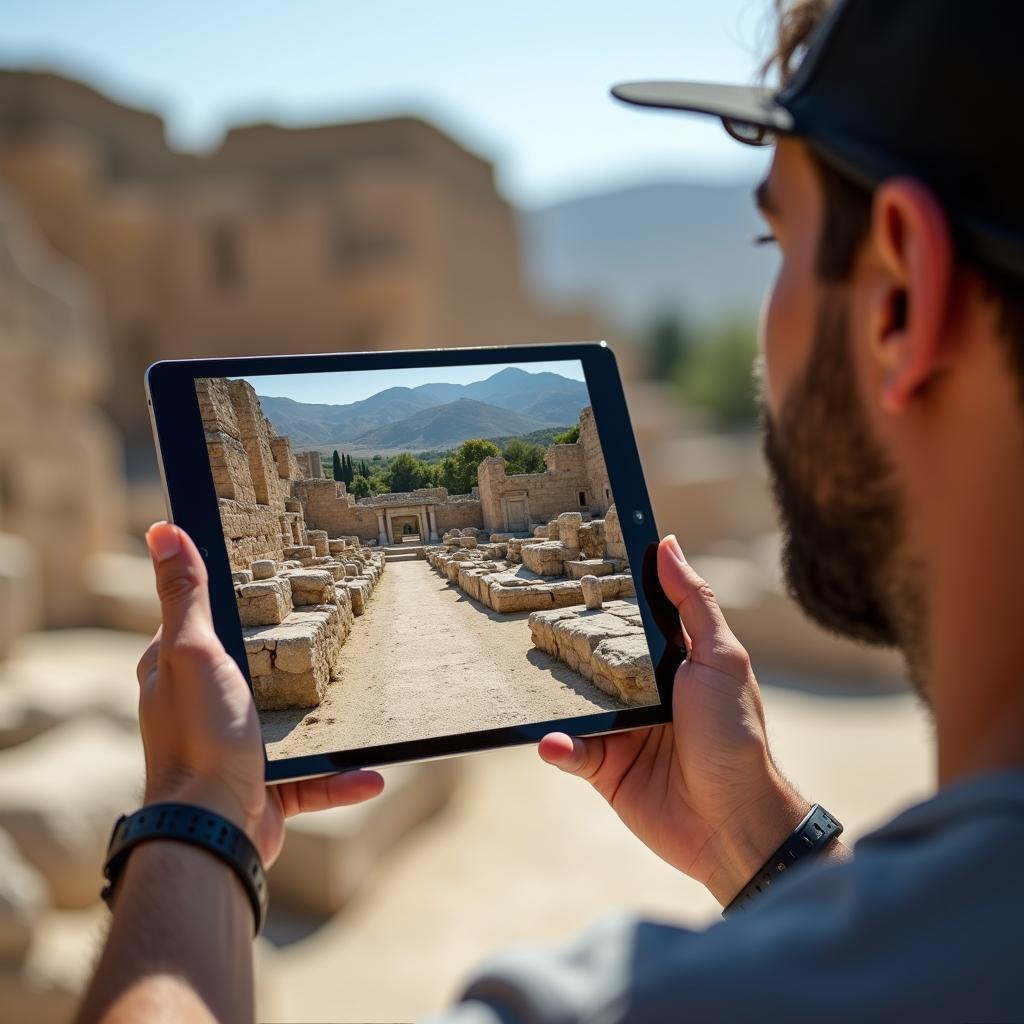 Du khách sử dụng công nghệ thực tế ảo tăng cường AR để khám phá di tích lịch sử với hình ảnh tái tạo 3D
Theme 2: Education and Historical Awareness
Question 1: Do you think young people today are interested in history?
🎯 Phân tích câu hỏi:
- Dạng: Yes/No opinion with generalization về young people
- Key words: young people today, interested, history
- Cách tiếp cận: Nuanced answer (not all, depends, mixed feelings) → Reasons for both sides → Personal observation/conclusion
📝 Sample Answer – Band 6-7:
I think it depends on the person. Some young people are interested in history, but many are not. Traditional history teaching in schools is often boring because students have to memorize dates and names. However, when history is taught in interesting ways, like through movies or games, young people become more interested. Also, social media sometimes makes historical topics popular. So young people can be interested in history if it’s presented well.
Phân tích:
- Structure: Acknowledges both sides
- Vocabulary: Basic description (boring, interesting, popular)
- Tại sao Band 6-7: Balanced view nhưng analysis không deep, language straightforward
📝 Câu trả lời mẫu – Band 8-9:
Well, I think this is quite a nuanced issue and we can’t really paint all young people with the same brush.
On one hand, there’s legitimate concern that traditional academic history doesn’t resonate with many young people today. The conventional approach – memorizing dates, battles, and dynasties – can feel disconnected from their lives and interests. When history is presented as a series of abstract facts rather than compelling human stories, it’s not surprising that many students find it tedious and irrelevant. Moreover, in our fast-paced digital age, the slow, contemplative study that historical understanding requires can clash with the instant gratification that young people are accustomed to.
However, I’d argue that when history is made accessible and engaging, young people’s interest is often remarkable. Look at the popularity of historical video games like “Assassin’s Creed” or strategy games like “Civilization” – these attract millions of young players who are enthusiastically learning about different historical periods through interactive media. Similarly, historical podcasts, YouTube channels like OverSimplified or Crash Course, and even TikTok content creators who make history digestible and entertaining have huge followings among younger demographics.
What’s more, social movements in recent years have sparked greater interest in understanding historical context. Young people want to comprehend how we arrived at current social, political, and economic situations. Issues like climate change, social justice, and inequality have prompted many young people to delve into historical patterns and precedents.
So to answer directly, I’d say young people are interested in history, but often in different formats and with different emphases than previous generations. They’re less interested in rote learning and more interested in understanding relevance, making connections to the present, and engaging with history through modern media. The challenge for educators and cultural institutions is to meet young people where they are rather than expecting them to conform to traditional methods.
Phân tích:
- Structure: Complex argumentation (On one hand…However…What’s more…So to answer directly)
- Vocabulary: Sophisticated (nuanced issue, paint with the same brush, legitimate concern, clash with, instant gratification, rote learning)
- Grammar: Advanced structures throughout
- Critical Thinking: Multiple perspectives, specific examples (video games, podcasts, TikTok), connection to social movements, balanced conclusion with solution-oriented thinking
💡 Key Language Features:
- Discourse markers: Well, On one hand, However, What’s more, So to answer directly
- Tentative/hedging language: I think this is quite, we can’t really, I’d argue that
- Evaluation language: legitimate concern, remarkable, huge followings
- Cause-effect language: sparked, prompted, clash with
Khi thảo luận về Describe a festival or celebration in your country, việc hiểu historical context của các lễ hội giúp chúng ta appreciate giá trị văn hóa sâu sắc hơn, điều này cũng thể hiện sự quan tâm đến lịch sử của thế hệ trẻ.
Question 2: What’s the best way to teach history to children?
🎯 Phân tích câu hỏi:
- Dạng: Opinion về methods/approaches
- Key words: best way, teach history, children
- Cách tiếp cận: Acknowledge no single “best” way → Suggest multiple effective approaches → Consider different learning styles
📝 Sample Answer – Band 6-7:
I think the best way to teach children history is to make it fun and interesting. Teachers should use stories and pictures instead of just textbooks. Field trips to museums and historical sites are also very effective because children can see real things. Using videos and interactive games can help children remember information better. The most important thing is to make history relevant to children’s lives so they understand why it matters.
Phân tích:
- Structure: Lists methods with general explanation
- Vocabulary: Basic educational terms (fun, interesting, field trips, games)
- Tại sao Band 6-7: Clear communication nhưng lacks pedagogical depth và sophisticated language
📝 Câu trả lời mẫu – Band 8-9:
Actually, I don’t think there’s a single “best” way – effective history education for children requires a multi-faceted approach that caters to different learning styles and developmental stages.
First and foremost, history needs to be taught through storytelling rather than dry facts. Children are naturally drawn to narratives, and historical events are essentially human stories full of drama, conflict, and triumph. When you frame the Vietnam War not as dates and battle statistics, but as the story of families torn apart, communities struggling to survive, and a nation fighting for independence, it becomes emotionally resonant and memorable. Teachers who can weave these compelling narratives are far more likely to capture children’s imagination.
Hands-on experiences are also crucial. This could mean field trips to historical sites and museums, but also interactive activities like historical reenactments, role-playing, or artifact handling where available. When a child can touch a centuries-old object or dress up as a historical figure, they form a tangible connection that textbook learning simply cannot provide. I remember my own school organized a “Living History Day” where we had to research and portray historical figures – I learned more in that one day than in months of regular classes.
Connecting history to children’s lives is another vital element. Teachers should draw parallels between historical events and contemporary issues that children can relate to. For instance, when teaching about migration patterns in history, you might discuss how families today still move for economic opportunities, or when covering historical epidemics, draw connections to their experience of COVID-19. This bridges the gap between “then” and “now.”
In terms of methodology, diverse materials are essential – not just textbooks, but historical fiction, documentaries, podcasts designed for children, and yes, even age-appropriate video games or apps with historical content. Different children respond to different media, and variety keeps the subject fresh and engaging.
Importantly, we should teach historical thinking skills rather than just content memorization. Children should learn to question sources, consider multiple perspectives, understand cause and effect, and recognize that historical interpretation can evolve as new evidence emerges. These critical thinking skills are arguably more valuable than memorizing specific dates or events.
Phân tích:
- Structure: Exceptionally organized với clear thesis (no single best way) → multiple approaches → conclusion về skills
- Vocabulary: Advanced pedagogical terms (multi-faceted approach, learning styles, developmental stages, historical thinking skills)
- Grammar: Sophisticated structures throughout (conditional ideas, complex noun phrases, reduced relative clauses)
- Critical Thinking: Evidence-based (personal example), considers child psychology, focuses on skills over content, addresses different learning modalities
💡 Key Language Features:
- Academic discourse: First and foremost, In terms of methodology, Importantly
- Educational terminology: multi-faceted approach, learning styles, hands-on experiences, critical thinking skills
- Causal/conditional language: are far more likely to, simply cannot provide
- Evaluation language: crucial, vital element, arguably more valuable
Theme 3: Cultural Heritage and Globalization
Question 1: Do you think globalization is making historical sites more similar around the world?
🎯 Phân tích câu hỏi:
- Dạng: Opinion về trend/phenomenon
- Key words: globalization, making similar, historical sites
- Cách tiếp cận: Define what “making similar” might mean → Discuss both homogenizing and preserving effects → Balanced conclusion
📝 Sample Answer – Band 6-7:
I think globalization has both positive and negative effects on historical sites. On the negative side, many historical sites now have similar facilities like gift shops and cafes, which makes them feel more commercial and less authentic. Also, international tourism can damage these sites. On the positive side, globalization helps spread awareness about historical sites and brings money for their preservation. So it’s not making the sites themselves similar, but the experience of visiting them might be more similar everywhere.
Phân tích:
- Structure: Balanced với positive and negative
- Vocabulary: General terms (positive, negative, commercial, authentic)
- Tại sao Band 6-7: Addresses both sides nhưng analysis lacks depth và sophistication
📝 Câu trả lời mẫu – Band 8-9:
That’s a thought-provoking question. I’d say globalization’s impact on historical sites is quite paradoxical – in some ways it’s homogenizing the experience, but in other ways it’s actually heightening awareness of cultural distinctiveness.
On the homogenizing side, there’s definitely a troubling trend toward what you might call the “Disneyfication” of historical sites. As sites become more commercialized to cater to international tourism, they often adopt similar infrastructure and visitor management approaches. You’ll find the same standardized audio guides, gift shops selling mass-produced souvenirs, and visitor centers with virtually identical layouts whether you’re at Angkor Wat or the Colosseum. This cookie-cutter approach can dilute the unique atmosphere and authenticity of each site. Moreover, there’s pressure to conform to international tourism expectations – multi-language signage, Western-style amenities, and sometimes even alterations to the site itself to accommodate tourist needs.
However, I’d argue that globalization has also had countervailing effects that actually emphasize historical and cultural differences. Increased connectivity means that even relatively obscure historical sites can gain international recognition and attract visitors who are specifically seeking authentic cultural experiences. UNESCO’s World Heritage program, which is itself a product of globalization, has incentivized countries to preserve and highlight their unique historical assets rather than let them deteriorate or be demolished for modern development.
Furthermore, there’s been a growing backlash against cookie-cutter tourism and an increasing appreciation for site-specific experiences. Many travelers now actively seek out places that have retained their authentic character, and heritage managers are becoming more aware that their site’s distinctiveness is actually its greatest asset. This has led to more culturally sensitive approaches to site management that balance accessibility with preservation of unique characteristics.
What we’re really seeing is a tension between standardization for practical and commercial purposes, and differentiation as a competitive advantage in attracting culturally-minded tourists. The sites that successfully navigate this tension – making themselves accessible without sacrificing their authenticity – are the ones that will thrive in our globalized world.
Phân tích:
- Structure: Sophisticated argumentation (paradoxical impact → homogenizing effects → countervailing effects → resolution of tension)
- Vocabulary: Advanced abstract terms (paradoxical, Disneyfication, homogenizing, countervailing effects, site-specific experiences)
- Grammar: Complex sentences throughout with sophisticated structures
- Critical Thinking: Nuanced analysis acknowledging complexity, specific examples, considers multiple stakeholders (tourists, heritage managers), dialectical thinking (thesis-antithesis-synthesis)
💡 Key Language Features:
- Signposting: On the homogenizing side, However, Furthermore, What we’re really seeing
- Academic vocabulary: paradoxical, homogenizing, cookie-cutter approach, countervailing effects, dialectical
- Hedging: I’d say, I’d argue that, there’s definitely a trend
- Evaluation: troubling trend, greatest asset, successfully navigate
Việc xem xét các describe a building you admire for its architecture trong bối cảnh toàn cầu hóa cũng cho thấy sự tension giữa việc giữ gìn đặc trưng văn hóa và đáp ứng nhu cầu hiện đại.
Question 2: How might the way we preserve historical sites change in the future?
🎯 Phân tích câu hỏi:
- Dạng: Prediction/Future trends question
- Key words: might change, preserve, future
- Cách tiếp cận: Identify current trends → Extrapolate future developments → Consider technological, environmental, and social factors
📝 Sample Answer – Band 6-7:
I think preservation methods will use more technology in the future. We’ll probably use advanced computers to scan and record historical sites. Climate change might force us to protect sites better from weather damage. Also, I think there will be more digital museums where people can visit historical sites online. This could reduce physical damage from too many tourists. Overall, technology will play a bigger role in how we preserve and share historical sites.
Phân tích:
- Structure: Lists future trends
- Vocabulary: Basic future expressions (will probably, might, I think)
- Tại sao Band 6-7: Addresses the question với relevant predictions nhưng lacks sophistication và depth
📝 Câu trả lời mẫu – Band 8-9:
Well, I think we’re on the cusp of some quite revolutionary changes in heritage preservation, driven by both technological advances and evolving environmental and social priorities.
From a technological standpoint, I anticipate we’ll see much more sophisticated use of digital twins – essentially perfect digital replicas of historical sites created through advanced 3D scanning, photogrammetry, and even artificial intelligence. These won’t just be static models but dynamic simulations that can track how sites change over time, predict potential deterioration, and even allow virtual restoration experiments before any physical work is done. Imagine being able to test different conservation approaches in a digital environment to see which would be most effective. This kind of predictive preservation could be a game-changer.
Climate change is likely to necessitate much more proactive and innovative preservation strategies. We’re already seeing historical sites threatened by rising sea levels, increased flooding, extreme weather events, and changing temperature patterns. Future preservation might involve more interventionist approaches – things like relocating entire structures, creating protective barriers, or even controlled deterioration where we accept that some sites can’t be saved in their current location and focus on comprehensive documentation instead. This will spark difficult ethical debates about what constitutes authentic preservation versus altering sites to save them.
In terms of funding and priorities, I suspect we’ll see a shift toward more community-based preservation models. Rather than top-down, government-funded approaches, there might be more emphasis on empowering local communities to take ownership of their historical heritage. Blockchain technology and digital currencies could even enable new funding mechanisms – imagine buying a “preservation token” where a portion of tourism revenue or cultural commerce directly supports site maintenance, with transparent tracking of how funds are used.
There’s also likely to be a rethinking of what deserves preservation. Currently, we tend to prioritize ancient monuments and grand architecture, but future generations might place more value on preserving sites of recent history – things like industrial heritage, places significant to social movements, or locations related to marginalized communities whose stories have been underrepresented. The definition of “historical importance” itself may broaden.
Lastly, I think the boundary between physical and digital preservation will continue to blur. We might reach a point where the digital archive is considered just as important as, or even more important than, the physical site itself. Virtual reality experiences could become so sophisticated that future generations might choose to experience historical sites virtually rather than risking damage through physical tourism. This raises profound questions about the nature of heritage and whether a place’s essence can truly be captured digitally.
Phân tích:
- Structure: Exceptionally organized theo different dimensions (technological, environmental, social/economic, philosophical)
- Vocabulary: Advanced future/prediction language (on the cusp of, anticipate, necessitate, suspect) + sophisticated technical and abstract terms
- Grammar: Complex structures including passive voice, conditional ideas, noun clauses
- Critical Thinking: Multiple dimensions considered, ethical questions raised, acknowledges uncertainty and complexity, considers second-order effects
💡 Key Language Features:
- Future prediction language: I anticipate, is likely to, I suspect, there’s likely to be
- Cause-effect structures: driven by, necessitate, spark debates
- Technical vocabulary: digital twins, photogrammetry, blockchain technology, predictive preservation
- Abstract concepts: authentic preservation, rethinking, profound questions, essence
Từ vựng và cụm từ quan trọng
Topic-Specific Vocabulary
| Từ vựng/Cụm từ | Loại từ | Phiên âm | Nghĩa tiếng Việt | Ví dụ | Collocation |
|---|---|---|---|---|---|
| heritage site | n | /ˈherɪtɪdʒ saɪt/ | di sản, di tích | Many heritage sites are under threat from climate change. | cultural heritage, world heritage, heritage tourism, preserve heritage |
| archaeological site | n | /ˌɑːkiəˈlɒdʒɪkl saɪt/ | di chỉ khảo cổ | The archaeological site revealed artifacts from the Bronze Age. | excavate a site, significant site, ancient site |
| architectural marvel | n | /ˌɑːkɪˈtektʃərəl ˈmɑːvl/ | kỳ quan kiến trúc | The Taj Mahal is considered an architectural marvel. | stunning marvel, engineering marvel |
| preservation | n | /ˌprezəˈveɪʃn/ | sự bảo tồn | The preservation of historical sites requires significant funding. | heritage preservation, long-term preservation, careful preservation |
| restoration | n | /ˌrestəˈreɪʃn/ | sự phục hồi, tu bổ | The cathedral underwent extensive restoration after the fire. | complete restoration, meticulous restoration, restoration work |
| deterioration | n | /dɪˌtɪəriəˈreɪʃn/ | sự xuống cấp | Climate change has accelerated the deterioration of ancient structures. | prevent deterioration, rapid deterioration, structural deterioration |
| antiquity | n | /ænˈtɪkwəti/ | thời cổ đại, đồ cổ | The museum houses artifacts of great antiquity. | classical antiquity, remote antiquity |
| relic | n | /ˈrelɪk/ | di vật, di tích | The temple contains sacred relics from the 15th century. | ancient relic, religious relic, historical relic |
| monument | n | /ˈmɒnjumənt/ | đài tưởng niệm, di tích | The monument commemorates those who died in the war. | historical monument, national monument, ancient monument |
| excavation | n | /ˌekskəˈveɪʃn/ | cuộc khai quật | Archaeological excavations revealed a Roman settlement. | archaeological excavation, conduct excavation |
| significance | n | /sɪɡˈnɪfɪkəns/ | tầm quan trọng, ý nghĩa | The site has great historical significance. | cultural significance, immense significance, symbolic significance |
| authenticity | n | /ˌɔːθenˈtɪsəti/ | tính xác thực | Tourists value the authenticity of historical experiences. | preserve authenticity, lack authenticity, cultural authenticity |
| intricate | adj | /ˈɪntrɪkət/ | phức tạp, tinh xảo | The temple features intricate carvings. | intricate details, intricate patterns, intricate design |
| ornate | adj | /ɔːˈneɪt/ | trang trí công phu | The palace has ornate decorations throughout. | ornate carvings, ornate architecture, highly ornate |
| sacred | adj | /ˈseɪkrɪd/ | thiêng liêng | The mountain is considered sacred by local people. | sacred site, sacred ground, hold sacred |
| intact | adj | /ɪnˈtækt/ | nguyên vẹn | Remarkably, the tomb remained intact for centuries. | remain intact, largely intact, perfectly intact |
| resilient | adj | /rɪˈzɪliənt/ | bền bỉ, kiên cường | The structure proved resilient against earthquakes. | remarkably resilient, highly resilient |
| captivating | adj | /ˈkæptɪveɪtɪŋ/ | quyến rũ, hấp dẫn | The ruins have a captivating atmosphere. | utterly captivating, captivating beauty |
| evocative | adj | /ɪˈvɒkətɪv/ | gợi nhớ, gợi cảm | The ancient streets are evocative of medieval times. | highly evocative, evocative of |
| majestic | adj | /məˈdʒestɪk/ | hùng vĩ, uy nghi | The majestic ruins overlook the valley. | truly majestic, majestic beauty |
Idiomatic Expressions & Advanced Phrases
| Cụm từ | Nghĩa | Ví dụ sử dụng | Band điểm |
|---|---|---|---|
| stand the test of time | tồn tại qua thời gian | These monuments have stood the test of time for over a millennium. | 7.5-9 |
| bring history to life | làm sống lại lịch sử | Virtual reality can bring history to life in exciting new ways. | 7.5-9 |
| step back in time | quay ngược thời gian | Visiting the ancient town feels like stepping back in time. | 7.0-8 |
| window into the past | cái nhìn về quá khứ | Archaeological sites offer a window into the past. | 7.5-9 |
| testament to | minh chứng cho | The pyramids are a testament to ancient engineering skills. | 8.0-9 |
| steeped in history | ngập tràn lịch sử | The city is steeped in history dating back thousands of years. | 7.5-9 |
| bear witness to | chứng kiến | These walls have borne witness to centuries of conflict. | 8.0-9 |
| at the top of one’s bucket list | ở đầu danh sách mong muốn | Machu Picchu is at the top of my bucket list. | 7.0-8 |
| on the cusp of | ở ngưỡng của, sắp có | We’re on the cusp of revolutionary changes in preservation. | 8.5-9 |
| fade into obscurity | bị lãng quên | Without proper care, these sites will fade into obscurity. | 8.0-9 |
| cultural tapestry | văn hóa phong phú đa dạng | Historical sites form part of our rich cultural tapestry. | 8.0-9 |
| treasure trove of | kho báu của | The museum is a treasure trove of ancient artifacts. | 7.5-8.5 |
Discourse Markers (Từ Nối Ý Trong Speaking)
Để bắt đầu câu trả lời:
- 📝 Well,… – Thường dùng khi cần một chút thời gian suy nghĩ hoặc khi câu trả lời phức tạp
- 📝 Actually,… – Khi đưa ra góc nhìn khác hoặc correct một assumption
- 📝 To be honest,… – Khi nói thật và thẳng thắn về quan điểm
- 📝 I’d say that… – Cách mềm mại hơn để đưa ra quan điểm
- 📝 That’s an interesting question… – Mua thời gian và thể hiện engagement
Để bổ sung ý:
- 📝 On top of that,… – Thêm vào đó (formal hơn “also”)
- 📝 What’s more,… – Hơn nữa, thêm nữa
- 📝 Not to mention… – Chưa kể đến
- 📝 Furthermore,… – Hơn nữa (academic)
- 📝 Beyond that,… – Ngoài ra còn
Để đưa ra quan điểm cân bằng:
- 📝 On the one hand,… On the other hand,… – Một mặt… mặt khác
- 📝 While it’s true that…, we also need to consider… – Mặc dù đúng là… chúng ta cũng cần xem xét
- 📝 However,… – Tuy nhiên
- 📝 That said,… – Điều đó đã nói
- 📝 Having said that,… – Đã nói như vậy
Để đưa ra ví dụ:
- 📝 For instance,… – Ví dụ
- 📝 Take… for example,… – Lấy… làm ví dụ
- 📝 A case in point is… – Một ví dụ điển hình là
- 📝 To illustrate this,… – Để minh họa điều này
Để kết luận:
- 📝 All in all,… – Tóm lại, nhìn chung
- 📝 At the end of the day,… – Cuối cùng thì
- 📝 In essence,… – Về bản chất
- 📝 To sum up,… – Tóm lại
- 📝 Ultimately,… – Sau cùng thì
Grammatical Structures Ấn Tượng
1. Conditional Sentences (Câu điều kiện):
Mixed conditional:
- Formula: If + Past Perfect, Subject + would/could + infinitive
- Ví dụ: “If the site had been better preserved, it would attract more visitors today.”
Inversion (Đảo ngữ):
- Formula: Had + Subject + Past Participle, Subject + would have…
- Ví dụ: “Had I known about the site’s significance earlier, I would have visited years ago.”
2. Relative Clauses (Mệnh đề quan hệ):
Non-defining relative clauses:
- Formula: …, which/who + verb…
- Ví dụ: “Angkor Wat, which was built in the 12th century, remains remarkably well-preserved.”
Reduced relative clauses:
- Formula: …noun + past participle…
- Ví dụ: “The temple constructed during the Ming Dynasty attracts thousands of visitors.”
3. Passive Voice (Câu bị động):
Impersonal passive:
- Formula: It is thought/believed/said that…
- Ví dụ: “It is believed that the site was abandoned due to war.”
Perfect passive:
- Formula: have/has been + past participle
- Ví dụ: “The monument has been designated a UNESCO World Heritage Site.”
4. Cleft Sentences (Câu chẻ):
What-cleft:
- Formula: What + subject + verb + is/was…
- Ví dụ: “What fascinates me most is the architectural sophistication.”
It-cleft:
- Formula: It is/was… that/who…
- Ví dụ: “It was the intricate carvings that captured my attention.”
5. Inversion for Emphasis:
Not only…but also:
- Formula: Not only + auxiliary + subject + verb, but also…
- Ví dụ: “Not only does the site have historical value, but it also generates significant tourism revenue.”
6. Participle Clauses:
Present participle:
- Formula: …verb-ing…
- Ví dụ: “Standing before the ancient ruins, I felt a profound connection to history.”
Perfect participle:
- Formula: Having + past participle…
- Ví dụ: “Having studied Roman history extensively, I was thrilled to visit the Colosseum.”
 Sinh viên đang luyện tập IELTS Speaking với giáo viên trong phòng học hiện đại với tài liệu và biểu đồ band điểm
Khi luyện tập với describe a trip you planned but didn’t go as expected, việc sử dụng các cấu trúc ngữ pháp đa dạng như câu điều kiện và mệnh đề quan hệ sẽ giúp câu trả lời của bạn trở nên impressive hơn nhiều.
Lời khuyên cuối cùng từ góc nhìn Examiner
Với tư cách là một examiner với hơn 20 năm kinh nghiệm, tôi muốn chia sẻ những insights quan trọng nhất để giúp bạn đạt điểm cao trong chủ đề describe a historical site you wish to visit:
Về nội dung:
-
Chọn địa điểm bạn thực sự biết và quan tâm. Đừng chọn một địa điểm nổi tiếng nếu bạn không có đủ thông tin về nó. Sự chân thành và passion sẽ tự nhiên làm cho câu trả lời của bạn compelling hơn.
-
Kết hợp facts với feelings. Band 6-7 chỉ đưa ra thông tin, nhưng Band 8-9 kết nối những thông tin đó với cảm xúc và giá trị cá nhân. Đừng chỉ nói “It’s old and beautiful” mà hãy nói “Standing there would give me a profound sense of connection to those who lived centuries ago.”
-
Ở Part 3, think beyond the obvious. Khi được hỏi về preservation hay tourism, đừng chỉ nói “good for economy” hay “important for culture”. Hãy explore các dimensions như ethical dilemmas, technological solutions, environmental challenges, hoặc social equity issues.
Về ngôn ngữ:
-
Vocabulary precision matters more than complexity. Từ “enigmatic history” tốt hơn “very mysterious history” không phải vì nó dài hay phức tạp hơn, mà vì nó precise và sophisticated hơn. Tập trung vào collocations và topic-specific vocabulary.
-
Grammar diversity should be natural. Đừng cố nhồi nhét tất cả complex structures vào một câu trả lời. Sử dụng chúng khi appropriate và natural. Một simple sentence đúng thời điểm còn tốt hơn một complex sentence không tự nhiên.
-
Fluency không có nghĩa là nói nhanh. Nhiều học viên Việt Nam nghĩ nói nhanh là fluent, nhưng thực ra fluency là về smooth delivery với pauses tự nhiên ở đúng chỗ. Đừng sợ pause để suy nghĩ – dùng discourse markers như “Well, let me think…” hay “That’s an interesting point…”
Về chiến lược:
-
Part 2 preparation time is gold. Đừng waste 1 phút đó. Ghi keywords cho mỗi bullet point, nhưng đừng viết câu hoàn chỉnh. Cấu trúc tôi khuyên: Where (2-3 keywords) → What (4-5 keywords) → How (2-3 keywords) → Why (4-5 keywords với ít nhất 2 reasons).
-
Extend intelligently, not randomly. Khi mở rộng ý, hãy explain hoặc exemplify, đừng chỉ add more information không liên quan. “Because” và “For example” là những từ tốt nhất của bạn.
-
Show your thinking process. Especially trong Part 3, đừng sợ nói “That’s a complex issue” hay “I think there are several factors to consider”. Điều này shows critical thinking.
Về luyện tập:
-
Record yourself. Đây là cách hiệu quả nhất để identify problems. Listen for: hesitation, repetition, basic vocabulary, grammar errors, và pronunciation issues.
-
Practice với real questions từ real tests. Đừng waste time với questions không authentic. Nguồn tốt: IELTS-Blog.com, IELTSLiz.com, recent actual test questions shared by test-takers.
-
Build your “idea bank”. Cho mỗi topic, chuẩn bị sẵn 3-4 sophisticated reasons/examples mà bạn có thể adapt. Ví dụ về historical sites, có thể prepare ideas về: cultural identity, educational value, economic impact, technological preservation, environmental threats.
Những sai lầm phổ biến cần tránh:
❌ Học thuộc template – Examiners nhận ra ngay và sẽ penalize
❌ Dùng từ vựng quá academic không phù hợp với speaking (e.g., “henceforth”, “aforementioned”)
❌ Nói về political issues nhạy cảm – keep it cultural và historical
❌ Apologize về English – Never say “Sorry, my English is not good”
❌ Answer quá ngắn ở Part 3 – Aim for 4-6 sentences minimum
❌ Ignore the question – Trả lời đúng câu được hỏi, đừng shift sang topic bạn muốn nói
Mindset quan trọng:
Remember, IELTS Speaking không phải kỳ thi về historical knowledge hay general knowledge. Đó là kỳ thi về language ability. Bạn có thể nói về một historical site không nổi tiếng lắm nhưng vẫn đạt Band 9 nếu ngôn ngữ của bạn excellent. Ngược lại, nói về Taj Mahal với full facts nhưng vocabulary basic sẽ chỉ được Band 6.
Final tip: Practice speaking about historical sites regularly – kể cho bạn bè nghe bằng tiếng Anh, tự nói trước gương, hoặc join speaking clubs. The more you speak, the more natural it becomes. Historical sites là một trong những topics dễ practice nhất vì bạn có thể research online, xem documentaries, đọc travel blogs, và tìm được vô số materials.
Chúc các bạn học tốt và đạt band điểm như mong muốn! Remember: Confidence và authenticity thường impressive hơn perfect grammar. Hãy enjoy việc chia sẻ về những điều bạn thực sự quan tâm.


