
Thiên tai là một chủ đề thường xuyên xuất hiện trong kỳ thi IELTS Speaking, đặc biệt phổ biến từ năm 2020 đến nay với tần suất xuất hiện ở mức cao. Chủ đề này đòi hỏi thí sinh không chỉ mô tả sự kiện mà còn phải thể hiện khả năng diễn đạt cảm xúc, phân tích tác động và đưa ra quan điểm về các vấn đề môi trường toàn cầu.
Theo thống kê từ các nguồn đề thi thực tế trên IELTS-Blog và IELTSLiz, chủ đề thiên tai xuất hiện trong khoảng 15-20% các đề thi Speaking Part 2, thường kết hợp với các góc độ về môi trường, tin tức, hoặc trải nghiệm đáng nhớ. Khả năng xuất hiện trong tương lai được đánh giá ở mức Cao do sự gia tăng của các hiện tượng thời tiết cực đoan và nhận thức về biến đổi khí hậu.
Trong bài viết này, bạn sẽ học được:
- 10+ câu hỏi thực tế từ các kỳ thi IELTS gần đây về thiên tai
- Bài mẫu chi tiết theo 3 band điểm (6-7, 7.5-8, 8.5-9) với phân tích chuyên sâu
- 25+ từ vựng và cụm từ ăn điểm theo chủ đề
- Chiến lược trả lời hiệu quả cho cả 3 Part
- Những lỗi thường gặp của học viên Việt Nam và cách khắc phục
- Lời khuyên từ góc nhìn của một IELTS Examiner với hơn 20 năm kinh nghiệm
IELTS Speaking Part 1: Introduction and Interview
Tổng Quan Về Part 1
Part 1 kéo dài 4-5 phút với các câu hỏi ngắn về cuộc sống hàng ngày và kinh nghiệm cá nhân. Đây là phần “warm-up” giúp bạn làm quen với giám khảo và tạo ấn tượng ban đầu.
Đặc điểm của Part 1:
- Câu hỏi đơn giản, gần gũi với đời sống
- Thời gian trả lời mỗi câu: 20-30 giây (2-3 câu)
- Không cần trả lời quá dài hoặc quá phức tạp
Chiến lược hiệu quả:
- Trả lời trực tiếp câu hỏi ngay từ câu đầu tiên
- Mở rộng với lý do hoặc ví dụ cụ thể
- Sử dụng từ vựng tự nhiên, không cố gắng “khoe” từ khó
Lỗi thường gặp của học viên Việt Nam:
- Trả lời quá ngắn chỉ với “Yes” hoặc “No”
- Sử dụng từ vựng quá đơn giản như “good”, “bad”, “very”
- Thiếu ví dụ cụ thể từ kinh nghiệm bản thân
- Nói quá nhanh hoặc quá chậm do lo lắng
Các Câu Hỏi Thường Gặp
Question 1: Have you ever experienced a natural disaster?
Question 2: What natural disasters are common in your country?
Question 3: Do you often watch news about natural disasters?
Question 4: Are you afraid of any particular natural disaster?
Question 5: How do people in your country prepare for natural disasters?
Question 6: Have you learned about natural disasters at school?
Question 7: Do you think natural disasters are becoming more frequent?
Question 8: What would you do if a natural disaster happened in your area?
Phân Tích và Gợi Ý Trả Lời Chi Tiết
Question: Have you ever experienced a natural disaster?
🎯 Cách tiếp cận:
- Trả lời có/không trực tiếp
- Nêu rõ loại thiên tai (nếu có)
- Mô tả ngắn gọn trải nghiệm hoặc giải thích tại sao chưa trải qua
📝 Sample Answer – Band 6-7:
“Yes, I have. A few years ago, there was a big flood in my city. The water was very high and many streets were under water. My family had to stay at home for two days until the water went down.”
Phân tích:
- Điểm mạnh: Trả lời rõ ràng, có ví dụ cụ thể về lũ lụt, cung cấp chi tiết về thời gian và tác động
- Hạn chế: Từ vựng còn đơn giản (big, very high, went down), thiếu collocations tự nhiên, cấu trúc câu đơn giản
- Tại sao Band 6-7: Đáp ứng được yêu cầu cơ bản, có đủ thông tin nhưng thiếu sự phong phú về ngôn ngữ
📝 Sample Answer – Band 8-9:
“Yes, actually. I vividly remember a severe flooding incident that hit my hometown about five years ago. The water level rose dramatically overnight, and several neighbourhoods were completely submerged. My family and I were stranded at home for nearly three days before the floodwaters receded.”
Phân tích:
-
Điểm mạnh:
- Từ vựng chính xác và tự nhiên: “vividly remember”, “severe flooding incident”, “rose dramatically”
- Collocations mạnh: “completely submerged”, “floodwaters receded”
- Cấu trúc câu đa dạng với mệnh đề thời gian
- Thể hiện khả năng miêu tả sinh động
-
Tại sao Band 8-9: Sử dụng vocabulary precise và sophisticated, grammar structures đa dạng, thông tin được trình bày mạch lạc với details cụ thể. Cách diễn đạt tự nhiên như người bản ngữ.
💡 Key Vocabulary & Expressions:
- vividly remember: nhớ rõ như in, nhớ sống động
- severe flooding incident: sự cố lũ lụt nghiêm trọng
- rose dramatically: dâng cao đột ngột
- completely submerged: bị ngập hoàn toàn
- stranded: bị mắc kẹt, không thể di chuyển
- floodwaters receded: nước lũ rút đi
Question: What natural disasters are common in your country?
🎯 Cách tiếp cận:
- Nêu 2-3 loại thiên tai phổ biến
- Giải thích ngắn về tần suất hoặc khu vực bị ảnh hưởng
- Có thể đề cập đến mùa hoặc thời điểm xảy ra
📝 Sample Answer – Band 6-7:
“In Vietnam, we often have typhoons and floods. Typhoons usually happen in the rainy season from August to November. The central part of Vietnam gets hit the most. We also sometimes have droughts in the south.”
Phân tích:
- Điểm mạnh: Nêu được nhiều loại thiên tai, có thông tin về thời gian và địa điểm cụ thể
- Hạn chế: Các linking words đơn giản (and, also), thiếu vocabulary chuyên ngành về thiên tai
- Tại sao Band 6-7: Thông tin đầy đủ nhưng cách diễn đạt còn basic, thiếu sự sophisticated trong vocabulary
📝 Sample Answer – Band 8-9:
“Vietnam is particularly vulnerable to several types of natural disasters. Tropical storms and typhoons are prevalent during the monsoon season, especially from August through November, with the central coastal regions bearing the brunt of these weather systems. Additionally, flash floods and landslides are recurring issues in mountainous areas, while the southern provinces occasionally face prolonged droughts that affect agriculture.”
Phân tích:
-
Điểm mạnh:
- Topic-specific vocabulary: “vulnerable to”, “tropical storms”, “prevalent”, “flash floods”, “landslides”
- Sophisticated expressions: “bearing the brunt of”, “recurring issues”, “prolonged droughts”
- Complex sentence structures với relative clauses
- Thông tin chi tiết và được tổ chức logic
-
Tại sao Band 8-9: Demonstrates excellent lexical resource với precise terminology, grammatical range với complex structures, và coherence với logical flow. Câu trả lời comprehensive và natural.
💡 Key Vocabulary & Expressions:
- particularly vulnerable to: đặc biệt dễ bị tổn thương bởi
- tropical storms and typhoons: bão nhiệt đới và bão lớn
- prevalent: phổ biến, thịnh hành
- bearing the brunt of: chịu tác động nặng nề nhất
- flash floods: lũ quét
- recurring issues: vấn đề tái diễn
- prolonged droughts: hạn hán kéo dài
Question: Do you often watch news about natural disasters?
🎯 Cách tiếp cận:
- Trả lời về tần suất xem tin
- Giải thích lý do (quan tâm, lo lắng, hoặc không có thời gian)
- Có thể đề cập nguồn tin (TV, online, social media)
📝 Sample Answer – Band 6-7:
“Yes, I do quite often. I usually watch the news on TV or read online articles about natural disasters. I think it’s important to know what’s happening around the world. When there’s a big disaster like an earthquake or tsunami, I always pay attention to the news.”
Phân tích:
- Điểm mạnh: Trả lời rõ ràng về tần suất, có đưa ra lý do và ví dụ cụ thể
- Hạn chế: Câu văn khá cơ bản, thiếu sophisticated expressions về media consumption
- Tại sao Band 6-7: Adequate response với reasonable vocabulary nhưng chưa impressive
📝 Sample Answer – Band 8-9:
“I’d say I keep myself fairly well-informed about natural disasters through various media channels. I tend to follow reputable news outlets online and often come across updates on social media platforms. What particularly catches my attention are disasters with significant humanitarian impacts, such as earthquakes or tsunamis. I believe staying abreast of these events helps me understand the broader context of climate change and environmental challenges we’re facing globally.”
Phân tích:
-
Điểm mạnh:
- Natural expressions: “keep myself well-informed”, “tend to follow”, “come across”
- Sophisticated vocabulary: “reputable news outlets”, “humanitarian impacts”, “staying abreast of”
- Personal perspective với critical thinking
- Smooth flow với discourse markers
-
Tại sao Band 8-9: Excellent fluency với natural idiomatic language, wide vocabulary range, complex ideas about climate change context. Response shows depth of thought.
💡 Key Vocabulary & Expressions:
- keep myself well-informed: giữ cho bản thân được cập nhật thông tin
- tend to follow: có xu hướng theo dõi
- come across: tình cờ gặp, bắt gặp
- catches my attention: thu hút sự chú ý của tôi
- humanitarian impacts: tác động nhân đạo
- staying abreast of: cập nhật liên tục về
- broader context: bối cảnh rộng hơn
Tương tự như describe a time when you had to manage a stressful situation, việc trải qua thiên tai cũng đòi hỏi khả năng xử lý căng thẳng và đưa ra quyết định nhanh chóng trong hoàn cảnh khẩn cấp.
 Thí sinh IELTS Speaking tự tin thảo luận về chủ đề thiên tai với giám khảo
IELTS Speaking Part 2: Long Turn (Cue Card)
Tổng Quan Về Part 2
Part 2 là phần độc thoại quan trọng nhất trong bài thi Speaking, kéo dài 3-4 phút bao gồm 1 phút chuẩn bị và 2-3 phút nói.
Đặc điểm của Part 2:
- Bạn sẽ nhận được một thẻ câu hỏi (cue card) với chủ đề cụ thể
- 1 phút chuẩn bị với giấy và bút để ghi chú
- Phải nói liên tục trong 2-3 phút mà không bị ngắt lời
- Giám khảo sẽ cho biết khi nào dừng lại
Chiến lược hiệu quả:
- Sử dụng hết 1 phút chuẩn bị: Ghi keywords, không viết câu hoàn chỉnh. Tổ chức ý theo bullet points của đề bài
- Nói đủ 2 phút: Đây là yêu cầu tối thiểu. Nếu nói dưới 1.5 phút, bạn sẽ bị trừ điểm
- Trả lời đầy đủ tất cả bullet points: Mỗi bullet point nên dành 20-30 giây
- Sử dụng thì quá khứ: Khi mô tả sự kiện đã xảy ra, đảm bảo dùng đúng thì
- Kết thúc mạnh mẽ: Dành 20-30 giây cuối cho phần “explain” – đây là phần quan trọng nhất
Lỗi thường gặp:
- Không sử dụng hết thời gian chuẩn bị, vội vàng bắt đầu nói
- Nói quá ngắn (dưới 1.5 phút) hoặc dừng đột ngột
- Bỏ sót một hoặc nhiều bullet points
- Không phát triển phần “explain” – phần ghi điểm cao nhất
- Lặp lại ý tưởng do không chuẩn bị kỹ
Cue Card
Describe A Natural Disaster You Have Experienced Or Heard About
You should say:
- What type of natural disaster it was
- When and where it happened
- What damage it caused
- And explain how you felt about this natural disaster
Phân Tích Đề Bài
Dạng câu hỏi: Describe an event – Mô tả một sự kiện (thiên tai)
Thì động từ: Quá khứ (vì là sự kiện đã xảy ra)
Bullet points phải cover:
- What type: Loại thiên tai (lũ lụt, động đất, bão, sóng thần…) – cần nêu rõ và có thể mô tả đặc điểm
- When and where: Thời gian và địa điểm cụ thể – nên chi tiết để tăng tính chân thực
- What damage: Thiệt hại gây ra – đây là phần quan trọng, cần mô tả đa chiều (con người, tài sản, môi trường)
- Explain feelings: Cảm xúc của bạn – phần này chiếm nhiều điểm nhất, cần thể hiện sự suy tư sâu sắc
Câu “explain” quan trọng: Đây là phần giám khảo chú ý nhất để đánh giá khả năng diễn đạt cảm xúc, suy nghĩ phức tạp và vocabulary range của bạn. Nên dành ít nhất 30-40 giây cho phần này.
📝 Sample Answer – Band 6-7
Thời lượng: Khoảng 1.5-2 phút
“I’d like to talk about a big typhoon that hit central Vietnam about three years ago. I didn’t experience it myself, but I heard a lot about it on the news.
The typhoon happened in October 2020, and it affected many provinces in central Vietnam, especially Quang Nam and Quang Ngai. It was one of the strongest storms that year. The typhoon brought very heavy rain and strong winds that lasted for several days.
The damage was really serious. Many houses were destroyed or damaged by the storm. The streets were flooded with water, and some people lost their homes. I saw on the news that many trees fell down, and the electricity was cut off in many areas. Some people even died or went missing because of the flood. The local government had to evacuate people to safer places.
I felt very sad when I heard about this disaster. I was worried about the people living there because they lost their homes and belongings. My family and I donated some money and clothes to help the victims. I also felt grateful that my city wasn’t affected by the typhoon. This event made me realize how powerful nature can be and how we should be more prepared for natural disasters.”
Phân Tích Band Điểm
| Tiêu chí | Band | Nhận xét |
|---|---|---|
| Fluency & Coherence | 6-7 | Có sử dụng linking words cơ bản (but, and, because), ý tưởng được sắp xếp logic theo bullet points. Tuy nhiên thiếu discourse markers phức tạp hơn và một số chỗ hơi repetitive. |
| Lexical Resource | 6-7 | Từ vựng adequate với “destroyed”, “damaged”, “flooded”, “evacuate”. Có một số collocations đúng như “heavy rain”, “strong winds”. Nhưng còn nhiều từ đơn giản (big, really serious, very sad) và thiếu topic-specific vocabulary. |
| Grammatical Range & Accuracy | 6-7 | Sử dụng được quá khứ đơn chính xác. Có một số complex sentences với mệnh đề quan hệ và “because”. Tuy nhiên chủ yếu là simple và compound sentences. Ít structures phức tạp hơn. |
| Pronunciation | 6-7 | Giả định rằng phát âm rõ ràng, có thể hiểu được. Có thể có một số lỗi nhỏ về trọng âm hoặc intonation nhưng không ảnh hưởng nhiều đến communication. |
Điểm mạnh:
- ✅ Trả lời đầy đủ tất cả bullet points
- ✅ Có thông tin cụ thể về thời gian, địa điểm
- ✅ Mô tả được thiệt hại và cảm xúc cá nhân
- ✅ Có personal reflection ở phần cuối
Hạn chế:
- ⚠️ Từ vựng còn basic, nhiều từ lặp lại (many, very)
- ⚠️ Thiếu sophisticated expressions và idioms
- ⚠️ Cấu trúc câu chưa đủ đa dạng
- ⚠️ Phần “explain feelings” chưa đủ sâu sắc
📝 Sample Answer – Band 7.5-8
Thời lượng: Khoảng 2-2.5 phút
“I’d like to describe a devastating typhoon that struck central Vietnam in October 2020. Although I didn’t witness it firsthand, I closely followed the news coverage, and it left a profound impact on me.
This particular typhoon, known as Storm Molave, made landfall in several central provinces, particularly Quang Nam and Quang Ngai, during the peak of the rainy season. What made it especially catastrophic was that it came just weeks after another major storm, meaning the region was already waterlogged and vulnerable. The typhoon brought torrential rainfall and gale-force winds that wreaked havoc across the region for nearly four days.
The scale of destruction was truly staggering. Entire communities were submerged under floodwaters, with water levels reaching up to two meters in some areas. Countless homes were either completely destroyed or severely damaged, leaving thousands of families displaced. The infrastructure took a massive hit – roads were washed away, power lines collapsed, and communication networks went down. Tragically, the disaster claimed over 100 lives, and many more people went missing. The agricultural sector was also decimated, with vast expanses of rice fields completely ruined.
This natural disaster evoked mixed emotions in me. I felt an overwhelming sense of sadness and helplessness seeing the images of people who had lost everything overnight. What struck me most was the resilience of the victims – despite losing their homes, they were helping each other survive. It also made me acutely aware of how unpredictable and merciless nature can be. My family and I contributed to relief efforts by donating money and essential supplies. This experience really brought home the importance of disaster preparedness and the need for sustainable development to minimize future risks.”
Phân Tích Band Điểm
| Tiêu chí | Band | Nhận xét |
|---|---|---|
| Fluency & Coherence | 7.5-8 | Smooth flow với appropriate discourse markers (Although, What made it especially, Tragically). Ý tưởng được phát triển logic và coherent. Có occasional hesitation nhưng không ảnh hưởng nhiều. |
| Lexical Resource | 7.5-8 | Wide range of vocabulary: “devastating”, “struck”, “made landfall”, “catastrophic”, “torrential rainfall”, “wreaked havoc”. Good collocations: “profound impact”, “gale-force winds”, “relief efforts”. Một số less common phrases: “brought home”, “acutely aware”. |
| Grammatical Range & Accuracy | 7.5-8 | Complex structures được sử dụng tự nhiên: relative clauses, participial phrases, passive voice. Mix tốt giữa simple và complex sentences. Một số lỗi nhỏ có thể có nhưng không systematic. |
| Pronunciation | 7.5-8 | Clear pronunciation với appropriate stress và intonation patterns. Có khả năng convey meaning effectively. |
So Sánh Với Band 6-7
| Khía cạnh | Band 6-7 | Band 7.5-8 |
|---|---|---|
| Vocabulary | “big typhoon”, “heavy rain”, “strong winds” | “devastating typhoon”, “torrential rainfall”, “gale-force winds” |
| Grammar | “The damage was really serious. Many houses were destroyed.” | “The scale of destruction was truly staggering. Entire communities were submerged under floodwaters.” |
| Ideas | “I felt very sad” | “evoked mixed emotions”, “overwhelming sense of sadness”, “struck me most was the resilience” |
📝 Sample Answer – Band 8.5-9
Thời lượng: 2.5-3 phút đầy đủ
“I’d like to talk about a catastrophic natural disaster that remains etched in my memory – the 2020 central Vietnam flooding crisis, which was triggered by a series of unprecedented typhoons. While I was fortunate enough not to be directly affected, I kept abreast of the situation through various news sources, and it profoundly shaped my perspective on climate vulnerability.
This environmental calamity unfolded during October and November 2020, when central Vietnam was battered by no fewer than seven consecutive storms within just one month – a meteorological anomaly that caught even experts off guard. The most devastating of these, Typhoon Molave, made landfall in Quang Nam and Quang Ngai provinces, bringing with it unprecedented levels of rainfall and winds exceeding 150 kilometers per hour. What made this particularly harrowing was the compounding effect – each subsequent storm hit regions that were already reeling from previous disasters, creating what meteorologists described as a perfect storm of destruction.
The aftermath was nothing short of apocalyptic. Entire villages were swept away by raging floodwaters, with water levels in some areas reaching an astounding three meters. The human toll was devastating – over 130 lives were tragically lost, and countless others were left grappling with the trauma of losing loved ones and livelihoods. Infrastructure was obliterated – bridges collapsed like dominoes, highways were reduced to rubble, and entire swaths of agricultural land were rendered unusable. The economic impact was staggering, with estimates suggesting billions of dollars in damages. What particularly haunted me were the images of rescue workers desperately searching through debris, and families clinging to rooftops as they awaited evacuation.
My emotional response to this disaster was multifaceted and profound. Initially, I felt an acute sense of despair and powerlessness watching the unfolding tragedy from afar. However, what truly resonated with me was witnessing the indomitable human spirit – communities coming together in solidarity, volunteers working around the clock, and the remarkable resilience of survivors who, despite losing everything, maintained their dignity and hope. This disaster served as a stark reminder of our collective vulnerability in the face of increasingly erratic weather patterns, which many scientists attribute to climate change. It galvanized me into action – I not only contributed to humanitarian relief efforts but also became more environmentally conscious in my daily choices.
Looking back, this experience fundamentally altered my understanding of natural disasters. They’re not just abstract news headlines but life-altering events that expose the fragility of our modern civilization. It’s made me acutely cognizant of the urgent need for comprehensive disaster preparedness, sustainable urban planning, and most importantly, global cooperation in addressing climate change. The survivors’ resilience continues to inspire me and underscores the extraordinary capacity humans have to overcome adversity when we stand together.”
Phân Tích Band Điểm
| Tiêu chí | Band | Nhận xét |
|---|---|---|
| Fluency & Coherence | 8.5-9 | Speaks fluently với minimal hesitation. Sophisticated discourse markers: “While”, “What made this particularly”, “Looking back”. Ý tưởng được phát triển fully và coherently với smooth transitions giữa các phần. |
| Lexical Resource | 8.5-9 | Exceptional range với precise và sophisticated vocabulary: “remains etched in my memory”, “environmental calamity”, “compounding effect”, “apocalyptic”, “indomitable human spirit”. Natural idiomatic language: “perfect storm”, “caught off guard”, “came together in solidarity”. Collocations mạnh: “acute sense of despair”, “stark reminder”. |
| Grammatical Range & Accuracy | 8.5-9 | Wide range of complex structures sử dụng flexibly và accurately: relative clauses, participle clauses, cleft sentences, passive constructions, conditional forms. Error-free hoặc chỉ có extremely minor slips. |
| Pronunciation | 8.5-9 | Excellent pronunciation với natural intonation, appropriate stress patterns, và clear articulation. Uses pronunciation features to enhance meaning effectively. |
Tại Sao Bài Này Xuất Sắc
🎯 Fluency Hoàn Hảo:
Bài nói flows tự nhiên như một câu chuyện được kể bởi người bản ngữ. Không có hesitation hay repetition không cần thiết. Các transitions giữa các bullet points rất smooth với phrases như “What made this particularly harrowing” và “Looking back”.
📚 Vocabulary Tinh Vi:
- “remains etched in my memory” – sophisticated way to say “I remember clearly”
- “meteorological anomaly” – technical term thể hiện knowledge depth
- “compounding effect” – precise economic/scientific term
- “indomitable human spirit” – literary expression cho resilience
- “galvanized me into action” – strong collocation thay vì “made me do”
📝 Grammar Đa Dạng:
- Participle clauses: “bringing with it unprecedented levels of rainfall” – tránh lặp subject
- Cleft sentences: “What particularly haunted me were the images…” – nhấn mạnh
- Relative clauses: “communities that were already reeling from” – add information smoothly
- Passive voice: “were swept away”, “was obliterated” – academic style
💡 Ideas Sâu Sắc:
Không chỉ mô tả sự kiện mà còn phân tích deeper implications về climate change, human resilience, và personal transformation. Shows critical thinking và ability to reflect on broader social issues.
Follow-up Questions (Rounding Off Questions)
Sau khi bạn hoàn thành phần độc thoại 2 phút, giám khảo có thể hỏi thêm 1-2 câu ngắn để chuyển sang Part 3:
Question 1: Have you done anything to help the victims of natural disasters?
Band 6-7 Answer:
“Yes, I have. When I heard about the typhoon, my family and I donated some money and clothes to the Red Cross. We also shared information on social media to encourage others to help.”
Band 8-9 Answer:
“Absolutely. In the immediate aftermath, my family and I contributed to various relief initiatives through the Red Cross, donating both financial assistance and essential supplies. Beyond that, I’ve tried to raise awareness on social media platforms about the plight of victims, and more recently, I’ve been exploring opportunities to volunteer with local environmental organizations focused on disaster preparedness and climate action.”
Question 2: Do you think your city is well-prepared for natural disasters?
Band 6-7 Answer:
“I think my city has some preparation, but it could be better. We have warning systems for storms, and the government sometimes does evacuation drills. However, I feel that not everyone knows what to do in an emergency.”
Band 8-9 Answer:
“I’d say we’re moderately prepared, though there’s certainly room for improvement. We have functional early warning systems and evacuation protocols in place, but I think the public awareness component is still somewhat lacking. Many residents, myself included until recently, weren’t fully cognizant of emergency procedures. What concerns me most is our infrastructure resilience – I’m not entirely convinced that our drainage systems and buildings could withstand a major disaster. Moving forward, I believe we need more comprehensive disaster drills and community-based preparedness programs.”
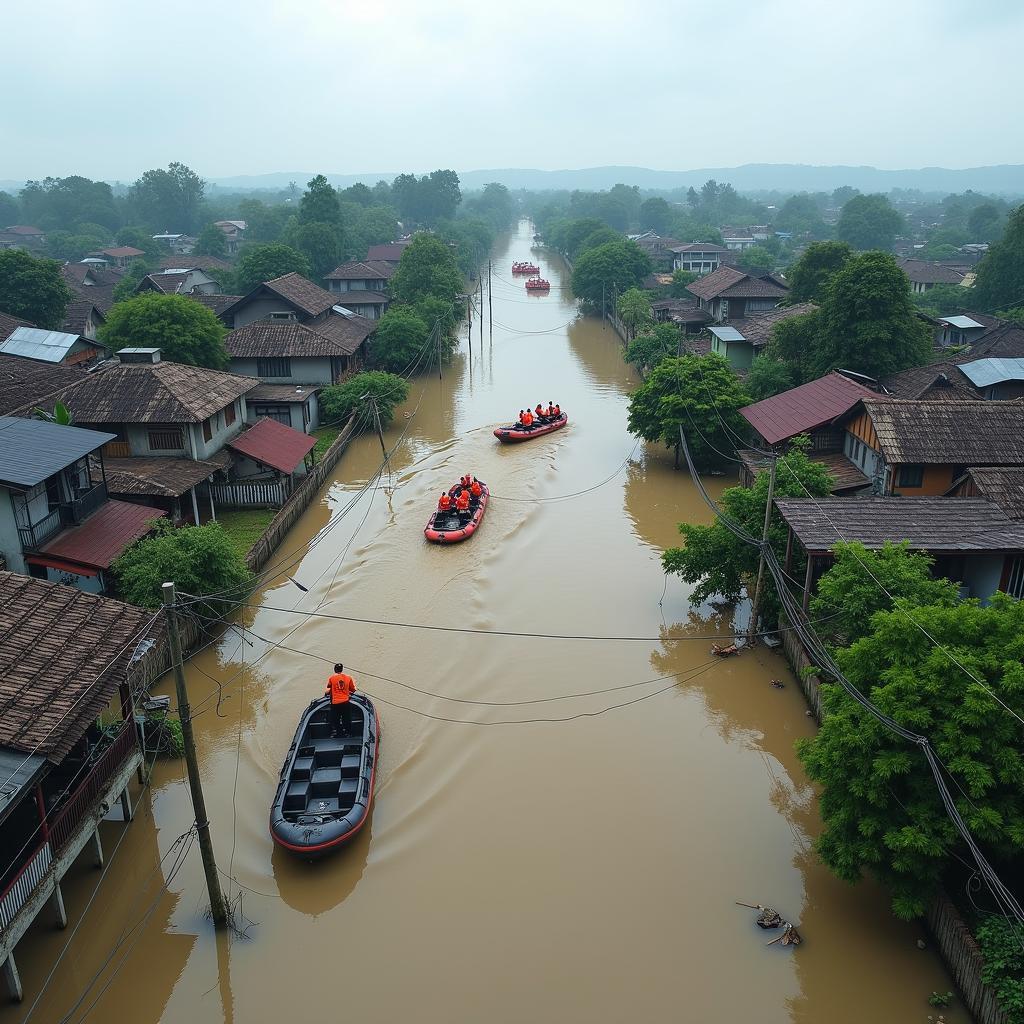 Thiệt hại nghiêm trọng do lũ lụt gây ra tại miền Trung Việt Nam
IELTS Speaking Part 3: Two-way Discussion
Tổng Quan Về Part 3
Part 3 là phần thảo luận hai chiều sâu nhất, kéo dài 4-5 phút, nơi giám khảo sẽ hỏi các câu hỏi trừu tượng và phức tạp hơn liên quan đến chủ đề Part 2.
Đặc điểm của Part 3:
- Câu hỏi mang tính phân tích, đánh giá, so sánh
- Yêu cầu thể hiện critical thinking và broader perspective
- Không còn là kinh nghiệm cá nhân mà là quan điểm về xã hội
- Giám khảo có thể challenge ý kiến của bạn hoặc hỏi sâu hơn
Yêu cầu:
- Phân tích nhiều góc độ của vấn đề (advantages/disadvantages, past/present/future)
- Đưa ra quan điểm rõ ràng với supporting reasons
- Sử dụng examples từ xã hội, không chỉ personal experience
- Thừa nhận complexity và nuances của issue
Chiến lược:
- Mở rộng câu trả lời: Mỗi câu nên 3-5 câu (30-45 giây)
- Sử dụng discourse markers: Well, Actually, I suppose, To be honest
- Structure rõ ràng: Direct answer → Reason 1 → Example → Reason 2 → Conclusion/Caveat
- Show both sides: Even for opinion questions, acknowledge other perspectives
- Use tentative language: I would say, It seems to me, To some extent
Lỗi thường gặp của học viên Việt Nam:
- Trả lời quá ngắn, không phát triển ý
- Không đưa ra lý lẽ rõ ràng, chỉ nói chung chung
- Thiếu từ vựng trừu tượng để discuss complex topics
- Không thừa nhận different perspectives
- Nói quá về personal experience thay vì social issues
Các Câu Hỏi Thảo Luận Sâu
Dưới đây là các câu hỏi Part 3 được phân loại theo theme, với phân tích chi tiết và sample answers ở nhiều band điểm:
Theme 1: Impact and Consequences
Question 1: What are the most serious effects of natural disasters on a community?
🎯 Phân tích câu hỏi:
- Dạng: Causes & Effects / Analysis
- Key words: “most serious effects”, “community”
- Cách tiếp cận: Nêu 2-3 impacts quan trọng nhất, giải thích tại sao serious, đưa examples từ real situations
📝 Sample Answer – Band 6-7:
“I think natural disasters have many bad effects on communities. First, they cause a lot of deaths and injuries to people. Many people lose their family members. Second, they destroy houses and buildings, so people have no place to live. This makes them very sad and stressed. Also, natural disasters damage the economy because businesses have to close and people lose their jobs. These effects can last for a long time, sometimes for years.”
Phân tích:
- Structure: Có clear structure với First, Second, Also
- Vocabulary: Basic vocabulary như “bad effects”, “a lot of deaths”, “very sad”
- Tại sao Band 6-7: Answers the question adequately với logical points, nhưng lacks sophisticated language và depth of analysis. Ideas are somewhat general.
📝 Câu trả lời mẫu – Band 8-9:
“Well, I’d say the impacts of natural disasters on communities are multifaceted and often far-reaching. Most immediately, there’s the devastating human toll – lives lost, families torn apart, and survivors grappling with both physical injuries and psychological trauma that can persist for years. Beyond the human cost, the economic ramifications can be crippling. When infrastructure is obliterated – roads, bridges, power grids – it doesn’t just disrupt daily life; it paralyzes businesses, leading to widespread unemployment and economic stagnation.
Take the 2011 Japan earthquake, for instance – the immediate devastation was compounded by long-term economic impacts that affected entire supply chains globally. What’s often overlooked is the erosion of social cohesion – communities that once thrived can become fragmented as people relocate or struggle with resource scarcity. However, on a more optimistic note, I’ve also observed that disasters can galvanize communities, fostering unprecedented levels of solidarity and cooperation. The key challenge lies in ensuring that recovery efforts address not just the visible damage but also the underlying vulnerabilities that make communities susceptible in the first place.”
Phân tích:
- Structure: Sophisticated organization: Direct answer → Human impact + example → Economic impact + example → Social impact → Balanced conclusion with caveat
- Vocabulary: Precise and topic-specific: “multifaceted”, “devastating human toll”, “psychological trauma”, “economic ramifications”, “erosion of social cohesion”
- Grammar: Complex structures: participle phrases (“grappling with”), cleft sentences (“What’s often overlooked”), relative clauses
- Critical Thinking: Shows depth with multiple dimensions (human, economic, social), real example (Japan), balanced view (acknowledges both negative and positive), addresses root causes
💡 Key Language Features:
- Discourse markers: “Well”, “Most immediately”, “Beyond”, “What’s often overlooked”, “However”, “The key challenge”
- Tentative language: “I’d say”, “can be”, “often”
- Abstract nouns: “ramifications”, “stagnation”, “cohesion”, “vulnerabilities”
- Academic collocations: “human toll”, “economic ramifications”, “social cohesion”, “supply chains”
Question 2: How do natural disasters affect the economy of a country?
🎯 Phân tích câu hỏi:
- Dạng: Effects / Analysis of economic impact
- Key words: “affect”, “economy”, “country” (macro level, not personal)
- Cách tiếp cận: Discuss immediate and long-term economic impacts, different sectors affected, examples from specific countries
📝 Sample Answer – Band 6-7:
“Natural disasters can damage the economy very badly. First, they destroy factories and companies, so production stops. This means the country produces less goods and loses money. Also, the government has to spend a lot of money on rescue work and rebuilding. This money could be used for other important things like education or healthcare. Tourism also goes down because people are afraid to visit. Overall, it takes many years for the economy to recover after a big natural disaster.”
Phân tích:
- Structure: Logical with clear points
- Vocabulary: Simple vocabulary, some relevant terms like “production”, “rescue work”, “rebuilding”
- Tại sao Band 6-7: Adequate response với reasonable points but lacks sophisticated economic terminology và nuanced analysis
📝 Câu trả lời mẫu – Band 8-9:
“The economic repercussions of natural disasters are staggering and operate on multiple levels. In the immediate aftermath, you see acute disruptions to productive capacity – factories shut down, supply chains are severed, and agricultural output plummets, particularly in agrarian economies. This translates into direct GDP losses that can be astronomical – for instance, the 2011 Thailand floods resulted in estimated losses exceeding $45 billion, which represented about 13% of the country’s GDP.
Beyond the immediate shock, there are cascading effects throughout the economy. The fiscal burden on governments is immense – they must divert resources from developmental expenditure to emergency relief and reconstruction efforts. This often means scaling back on crucial investments in education, healthcare, or infrastructure development. Moreover, there’s the tourism sector, which can be decimated for years – as we saw after the 2004 tsunami in Southeast Asia, where some regions took over a decade to regain tourist confidence.
What’s particularly insidious is how disasters exacerbate existing inequalities. Small businesses, which often operate on razor-thin margins, may never recover, while larger corporations with substantial reserves can weather the storm. This can lead to market concentration and reduced competition.
That said, it’s worth noting that disasters can sometimes spur economic activity in the medium term through reconstruction efforts – what economists call the “creative destruction” effect. However, this shouldn’t minimize the net negative impact, which typically far outweighs any temporary boosts. The sobering reality is that for developing nations, a single major disaster can set back development gains by years, if not decades.”
Để hiểu rõ hơn về khả năng ứng phó trong các tình huống khẩn cấp, bạn có thể tham khảo thêm describe a situation where you had to think quickly, vì thiên tai luôn đòi hỏi những quyết định nhanh chóng và chính xác.
Phân tích:
- Structure: Complex multi-layered analysis: Immediate effects → Long-term effects → Social inequality dimension → Nuanced conclusion acknowledging complexity
- Vocabulary: Sophisticated economic terminology: “economic repercussions”, “productive capacity”, “supply chains severed”, “fiscal burden”, “cascading effects”, “razor-thin margins”
- Grammar: Advanced structures including: inversion (“What’s particularly insidious”), relative clauses, conditional forms, passive constructions
- Critical Thinking: Shows expert-level understanding with specific statistics, acknowledges multiple perspectives, discusses both negative and potential positive effects, addresses inequality dimension
💡 Key Language Features:
- Hedging/Tentative language: “can be”, “often means”, “it’s worth noting”
- Academic discourse markers: “In the immediate aftermath”, “Beyond”, “Moreover”, “That said”, “The sobering reality”
- Economic terminology: “GDP losses”, “fiscal burden”, “developmental expenditure”, “market concentration”, “creative destruction”
- Quantitative evidence: “$45 billion”, “13% of GDP”, “over a decade” – adds credibility
Theme 2: Prevention and Preparedness
Question 3: What can governments do to help people prepare for natural disasters?
🎯 Phân tích câu hỏi:
- Dạng: Solutions / Suggestions
- Key words: “governments”, “help”, “prepare” (focus on prevention, not response)
- Cách tiếp cận: Suggest 2-3 concrete measures governments can take, explain how they work, provide examples
📝 Sample Answer – Band 6-7:
“Governments can do many things to help people prepare for natural disasters. First, they should create good warning systems. For example, sending messages to people’s phones when a storm is coming. Second, they should build strong buildings that can survive earthquakes or typhoons. Also, governments should educate people about what to do in emergencies through TV programs or school lessons. Finally, they need to have rescue teams and supplies ready so they can help people quickly when a disaster happens.”
Phân tích:
- Structure: Clear listing of solutions with “First”, “Second”, “Also”, “Finally”
- Vocabulary: Basic but relevant: “warning systems”, “strong buildings”, “rescue teams”
- Tại sao Band 6-7: Provides adequate solutions but lacks depth and sophisticated language. Ideas are somewhat general without specific examples.
📝 Câu trả lời mẫu – Band 8-9:
“There are several strategic interventions governments can implement to bolster disaster preparedness. First and foremost, investing in robust early warning systems is paramount. Countries like Japan have pioneered sophisticated seismic alert networks that can provide crucial seconds of warning before an earthquake strikes – seemingly negligible, but actually sufficient for automated systems to shut down gas lines and trains, potentially saving countless lives.
Equally critical is infrastructure resilience. Governments should enforce stringent building codes that require structures to be earthquake-resistant or capable of withstanding floods. Bangladesh, for instance, has made remarkable strides in constructing cyclone shelters and elevated buildings in flood-prone areas, which has dramatically reduced mortality rates from cyclones over the past few decades.
Beyond physical infrastructure, there’s an imperative need for comprehensive public education campaigns. This goes beyond merely disseminating information – it involves conducting regular drills, establishing community-based disaster response teams, and ensuring every citizen is versed in evacuation routes and emergency protocols. Singapore’s approach is exemplary in this regard, with mandatory disaster preparedness modules in schools and workplaces.
Furthermore, governments should prioritize creating financial safety nets – such as disaster relief funds and subsidized insurance schemes – that can help communities bounce back more quickly. The harsh reality is that without adequate financial cushioning, even well-prepared communities can face prolonged recovery periods.
What ties all these measures together is the need for inter-agency coordination and international cooperation. Natural disasters don’t respect borders, so sharing best practices, technology, and resources across nations is essential. Ultimately, preparedness is not a one-time investment but an ongoing commitment that requires sustained political will and adequate resource allocation.”
Phân tích:
- Structure: Sophisticated organization with clear hierarchy: Technology solution → Infrastructure → Education → Financial measures → International cooperation + synthesis
- Vocabulary: Advanced policy-related vocabulary: “strategic interventions”, “bolster”, “paramount”, “pioneered”, “stringent building codes”, “comprehensive public education campaigns”
- Grammar: Complex structures with varied patterns: conditional forms, relative clauses, participial phrases, cleft sentences
- Critical Thinking: Shows comprehensive understanding with specific country examples (Japan, Bangladesh, Singapore), acknowledges interconnections between measures, emphasizes long-term commitment
💡 Key Language Features:
- Discourse markers: “First and foremost”, “Equally critical”, “Beyond”, “Furthermore”, “What ties all these together”, “Ultimately”
- Evaluative language: “paramount”, “crucial”, “remarkable strides”, “exemplary”, “harsh reality”
- Hedging: “can provide”, “potentially”, “should prioritize”
- Abstract nouns: “interventions”, “resilience”, “imperative”, “coordination”, “commitment”
Theme 3: Climate Change and Future Trends
Question 4: Do you think natural disasters are becoming more frequent? Why or why not?
🎯 Phân tích câu hỏi:
- Dạng: Opinion with reasoning / Trend analysis
- Key words: “becoming more frequent”, “Why”
- Cách tiếp cận: Give clear opinion, provide reasons related to climate change, support with evidence or examples, acknowledge other perspectives if relevant
📝 Sample Answer – Band 6-7:
“Yes, I believe natural disasters are happening more often now. I think this is because of climate change. The weather is getting warmer, and this causes more storms and floods. I often see news about disasters happening in different parts of the world. Also, scientists say that global warming is making natural disasters worse. For example, there are more hurricanes now than before. Some people might say we just hear about disasters more because of social media and better news coverage, but I still think they are actually increasing.”
Phân tích:
- Structure: Clear opinion with reasons
- Vocabulary: Basic climate-related terms: “climate change”, “global warming”, “hurricanes”
- Tại sao Band 6-7: Provides opinion with supporting reasons but lacks sophisticated scientific terminology and nuanced analysis. Acknowledges other perspective briefly.
📝 Câu trả lời mẫu – Band 8-9:
“Unequivocally, yes – and the scientific evidence supporting this is overwhelming. We’re witnessing an alarming uptick in both the frequency and intensity of extreme weather events, and this is inextricably linked to anthropogenic climate change.
Let me elaborate. As greenhouse gas emissions continue to accumulate in the atmosphere, we’re seeing global mean temperatures rise, which fundamentally alters weather patterns. Warmer oceans, for instance, act as fuel for more intense tropical cyclones. The data is stark – the past decade has seen record-breaking heat waves, floods, and wildforms with distressing regularity. Studies published in journals like Nature and Science have conclusively demonstrated that the probability of extreme events that once occurred once in a century is now increasing to once in a decade or even more frequently.
What’s particularly concerning is the non-linear nature of these changes. We’re not just seeing gradual increases; we’re experiencing threshold effects where certain tipping points, once crossed, trigger cascading changes. The melting of Arctic ice, for example, disrupts jet streams, leading to more erratic weather patterns globally – from the polar vortex events we’ve seen in North America to unprecedented flooding in Europe.
That said, it’s important to distinguish between actual increases in disasters and improved reporting. Admittedly, our monitoring capabilities and media coverage have vastly improved, meaning we’re more aware of events that might have gone unnoticed decades ago. However, when you control for these factors and look at peer-reviewed research, the trend is unambiguous – disasters are indeed becoming more common and severe.
The sobering implication is that without drastic emissions reductions and aggressive adaptation measures, we can expect this trend to accelerate further. We’re essentially locked into a certain degree of additional warming due to past emissions, meaning more frequent disasters are, tragically, already baked into our future. The question now isn’t whether they’ll increase, but by how much, and whether we can mitigate the worst impacts through collective action.”
Phân tích:
- Structure: Comprehensive multi-dimensional analysis: Clear opinion → Scientific explanation with mechanisms → Specific evidence and examples → Acknowledge counterargument → Future implications
- Vocabulary: Sophisticated scientific and environmental vocabulary: “anthropogenic climate change”, “greenhouse gas emissions”, “global mean temperatures”, “threshold effects”, “cascading changes”, “peer-reviewed research”
- Grammar: Advanced structures: passive constructions, conditional forms, relative clauses, cleft sentences, participle phrases
- Critical Thinking: Shows expert-level understanding of climate science, cites scientific sources, acknowledges complexity (reporting vs actual increase), discusses non-linear effects and future implications
💡 Key Language Features:
- Strong discourse markers: “Unequivocally”, “Let me elaborate”, “What’s particularly concerning”, “That said”, “The sobering implication”, “The question now”
- Academic language: “inextricably linked”, “fundamentally alters”, “conclusively demonstrated”, “control for these factors”, “peer-reviewed research”
- Hedging when appropriate: “it’s important to distinguish”, “Admittedly”, “we can expect”
- Metaphorical language: “act as fuel”, “baked into our future”, “locked into”
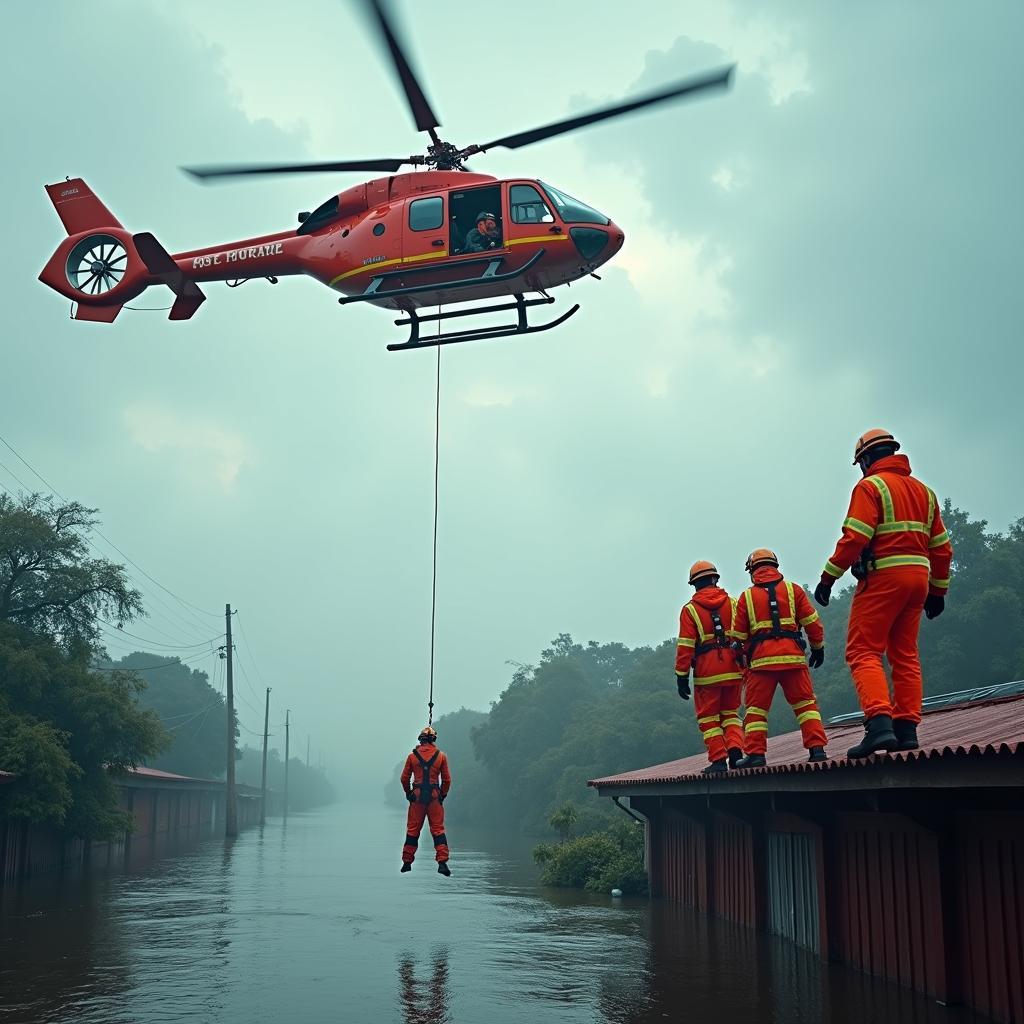 Đội cứu hộ chuyên nghiệp giải cứu người dân trong thiên tai nghiêm trọng
Question 5: What role does technology play in predicting and managing natural disasters?
🎯 Phân tích câu hỏi:
- Dạng: Role/Function analysis
- Key words: “technology”, “predicting and managing” (two aspects)
- Cách tiếp cận: Discuss technology in both prediction and management, provide specific examples, acknowledge limitations
📝 Sample Answer – Band 6-7:
“Technology is very important for dealing with natural disasters. First, it helps us predict when disasters will happen. For example, satellites can track storms and tell us where they will go. This gives people time to prepare or evacuate. Also, computers can predict earthquakes by monitoring ground movements.
For managing disasters, technology also helps a lot. Drones can fly over damaged areas to see where help is needed. Social media helps people communicate during emergencies. Mobile phones are useful for sending warnings to many people quickly. However, technology is not perfect. Sometimes predictions are wrong, and not everyone has access to technology, especially in poor countries.”
Phân tích:
- Structure: Organized into prediction and management aspects
- Vocabulary: Basic technology terms: “satellites”, “computers”, “drones”, “social media”
- Tại sao Band 6-7: Addresses both aspects of the question with relevant examples but lacks technical depth and sophisticated analysis
📝 Câu trả lời mẫu – Band 8-9:
“Technology has revolutionized both the predictive capabilities and disaster management protocols in ways that were unimaginable just a few decades ago, though significant limitations remain.
On the prediction front, we’ve seen quantum leaps in early warning systems. Satellite technology and advanced meteorological modeling now allow us to track hurricanes with remarkable precision, providing days of advance notice rather than mere hours. Seismology has also made strides, though predicting earthquakes remains notoriously challenging. What’s particularly impressive is the integration of AI and machine learning algorithms that can process vast datasets – from seismic patterns to atmospheric conditions – to identify precursor signals that human analysts might miss. Japan’s earthquake early warning system, which utilizes a dense network of seismometers, can detect initial seismic waves and issue alerts within seconds, potentially providing critical moments for people to take cover.
In terms of management, technology’s impact is equally transformative. Geographic Information Systems (GIS) enable real-time mapping of affected areas, helping coordinate rescue efforts more efficiently. Drone technology has become invaluable for damage assessment in areas that are inaccessible to ground teams. During the 2015 Nepal earthquake, drones provided high-resolution imagery that was crucial for targeting relief efforts. Social media platforms, while sometimes spreading misinformation, also serve as vital communication channels during crises, enabling both bottom-up information sharing and top-down emergency broadcasts.
Moreover, we’re seeing emerging technologies like IoT sensors embedded in infrastructure that can detect structural stress in real-time, and blockchain technology being explored for transparent disaster relief fund distribution. Mobile technology has been particularly impactful in developing nations, where SMS-based warning systems can reach populations that lack internet access.
However, we must acknowledge several caveats. First, there’s a stark digital divide – the communities most vulnerable to disasters are often those with the least access to these technologies. Second, technology is only as good as the infrastructure supporting it – power outages and damaged communication networks can render even the most sophisticated systems useless. Third, there’s the human element – technology can provide data, but effective response still requires coordinated human decision-making and community preparedness.
Looking ahead, technologies like quantum computing could potentially enhance predictive models exponentially, while augmented reality might revolutionize training for emergency responders. The key challenge is ensuring these technological advances are democratized and integrated into comprehensive disaster management frameworks that combine high-tech solutions with traditional knowledge and community resilience.”
Phân tích:
- Structure: Masterful organization: Prediction technologies with examples → Management technologies with examples → Emerging technologies → Critical limitations → Future outlook
- Vocabulary: Highly sophisticated technical vocabulary: “predictive capabilities”, “quantum leaps”, “seismology”, “machine learning algorithms”, “Geographic Information Systems”, “IoT sensors”, “blockchain technology”
- Grammar: Complex and varied structures throughout with seamless integration
- Critical Thinking: Demonstrates comprehensive understanding of technology landscape, provides specific examples (Japan, Nepal), critically evaluates limitations (digital divide, infrastructure dependence), discusses future trends
💡 Key Language Features:
- Strong topic sentences: “Technology has revolutionized…”, “On the prediction front”, “In terms of management”, “However, we must acknowledge”
- Technical terminology: “meteorological modeling”, “seismology”, “AI and machine learning algorithms”, “GIS”, “IoT sensors”
- Balanced evaluation: Discusses both benefits and limitations
- Future-oriented thinking: “Looking ahead”, “could potentially”, “might revolutionize”
Khi thảo luận về thiên tai, cảm xúc bất ngờ và sợ hãi là điều không thể tránh khỏi, điều này có thể liên hệ với Describe a time when you were very surprised khi bạn đối mặt với sức mạnh bất ngờ của thiên nhiên.
Theme 4: Social and Psychological Impact
Question 6: How do natural disasters affect people’s mental health?
🎯 Phân tích câu hỏi:
- Dạng: Effects / Analysis (psychological dimension)
- Key words: “mental health” – requires understanding of psychological impacts, not just physical
- Cách tiếp cận: Discuss various psychological impacts (PTSD, anxiety, depression), explain mechanisms, provide examples, discuss recovery
📝 Sample Answer – Band 6-7:
“Natural disasters can have serious effects on people’s mental health. Many people feel very stressed and scared after experiencing a disaster. Some people develop PTSD, which means they have nightmares and bad memories about the disaster. They might also feel anxious about future disasters.
People who lost family members or their homes often become depressed. Children are especially affected because they don’t understand what happened. Some people also feel guilty if they survived but others didn’t. These mental health problems can last for months or even years. I think it’s important for communities to provide counseling and support to help people recover mentally, not just physically.”
Phân tích:
- Structure: Clear progression from immediate effects to long-term impacts
- Vocabulary: Basic psychological terms: “stressed”, “scared”, “PTSD”, “anxious”, “depressed”
- Tại sao Band 6-7: Addresses the question with relevant points but lacks depth in psychological analysis and sophisticated terminology
📝 Câu trả lời mẫu – Band 8-9:
“The psychological toll of natural disasters is profound and often underestimated, with impacts that can reverberate through communities for generations. Let me break this down into several dimensions.
Most immediately, survivors often experience acute stress reactions – a sense of overwhelming fear, helplessness, and disorientation. This is the body’s natural response to trauma, but for a significant proportion of individuals, this evolves into more chronic conditions. Post-Traumatic Stress Disorder (PTSD) is particularly prevalent, characterized by intrusive memories, hypervigilance, and avoidance behaviors. Research following events like Hurricane Katrina found that PTSD rates among survivors spiked to nearly 30%, compared to about 3-4% in the general population.
Beyond PTSD, we see elevated rates of depression, anxiety disorders, and substance abuse as people grapple with loss – loss of loved ones, homes, livelihoods, and sense of security. What’s particularly insidious is the compounding effect of ongoing stressors during recovery. When people are displaced, struggling financially, and facing bureaucratic obstacles to obtaining aid, the prolonged stress can take a severe toll on mental wellbeing. This is what psychologists call “secondary traumatic stress” or “chronic stress”.
Vulnerable populations are disproportionately affected. Children may develop developmental delays or behavioral problems. The elderly, who may have limited mobility and social networks, often experience profound isolation and deteriorating mental health. First responders and rescue workers, who witness tremendous suffering, are at high risk for compassion fatigue and vicarious trauma.
There’s also a collective dimension – what some researchers call “solastalgia”, the distress caused by environmental change in one’s home environment. When entire communities are transformed or destroyed, people mourn not just personal losses but the loss of place and collective identity.
On a more hopeful note, there’s growing recognition of post-traumatic growth – the psychological transformation some individuals experience as they process and integrate their traumatic experiences. Some survivors report enhanced appreciation for life, strengthened relationships, or a renewed sense of purpose. However, this shouldn’t romanticize suffering or minimize the very real psychological harm.
From a response perspective, there’s an urgent need for trauma-informed care that’s integrated into disaster response from the outset. This includes immediate psychological first aid, long-term mental health services, and community-based support programs that rebuild social connections. Crucially, mental health support must be culturally appropriate and destigmatized, as in many cultures, seeking mental health help carries significant stigma.
The reality is that while physical infrastructure can be rebuilt in years, psychological recovery often takes far longer and requires sustained commitment to mental health resources. Unfortunately, mental health services are often the first to be cut when disaster recovery funds run short, which is profoundly shortsighted given the long-term societal costs of untreated trauma.”
Phân tích:
- Structure: Comprehensive multi-layered analysis: Immediate reactions → Chronic conditions with statistics → Secondary stressors → Vulnerable populations → Collective dimension → Post-traumatic growth (balanced view) → Solutions and challenges
- Vocabulary: Sophisticated psychological and medical terminology: “acute stress reactions”, “PTSD”, “intrusive memories”, “hypervigilance”, “secondary traumatic stress”, “solastalgia”, “post-traumatic growth”, “trauma-informed care”
- Grammar: Complex structures with seamless integration, varied sentence patterns
- Critical Thinking: Shows expert-level understanding of psychological research, cites specific statistics (Hurricane Katrina), discusses multiple dimensions (individual, population groups, collective), acknowledges both negative and positive psychological outcomes, addresses systemic issues in response
💡 Key Language Features:
- Academic discourse markers: “Let me break this down”, “Beyond”, “What’s particularly insidious”, “On a more hopeful note”, “From a response perspective”, “The reality is”
- Psychological terminology: “acute stress reactions”, “chronic conditions”, “compounding effect”, “vicarious trauma”, “solastalgia”, “post-traumatic growth”
- Hedging and nuance: “often underestimated”, “can reverberate”, “significant proportion”, “shouldn’t romanticize”
- Evaluative language: “profound”, “insidious”, “profound isolation”, “profoundly shortsighted”
- Evidence-based: References research and statistics to support claims
Từ vựng và cụm từ quan trọng
Topic-Specific Vocabulary
| Từ vựng/Cụm từ | Loại từ | Phiên âm | Nghĩa tiếng Việt | Ví dụ | Collocation |
|---|---|---|---|---|---|
| catastrophic | adj | /ˌkætəˈstrɒfɪk/ | thảm khốc, tai hại | The earthquake had catastrophic consequences for the region. | catastrophic damage, catastrophic failure, catastrophic event |
| devastation | n | /ˌdevəˈsteɪʃən/ | sự tàn phá, sự phá hủy | The typhoon left widespread devastation in its wake. | widespread devastation, cause devastation, total devastation |
| torrential rainfall | n phrase | /təˈrenʃəl ˈreɪnfɔːl/ | mưa xối xả, mưa như trút nước | Torrential rainfall caused severe flooding in the valley. | torrential downpour, torrential storm |
| evacuate | v | /ɪˈvækjueɪt/ | sơ tán, di tản | Authorities evacuated residents from the danger zone. | evacuate people, evacuate the area, mass evacuation |
| submerge | v | /səbˈmɜːdʒ/ | ngập nước, chìm trong nước | Entire villages were submerged under floodwaters. | completely submerged, partially submerged, submerged in water |
| magnitude | n | /ˈmæɡnɪtjuːd/ | độ lớn, cường độ (động đất) | The earthquake measured 7.5 on the Richter magnitude scale. | earthquake magnitude, magnitude of destruction |
| landslide | n | /ˈlændslaɪd/ | lở đất, sạt lở đất | Heavy rains triggered multiple landslides in the mountains. | cause a landslide, massive landslide, landslide risk |
| infrastructure | n | /ˈɪnfrəstrʌktʃə(r)/ | cơ sở hạ tầng | The hurricane severely damaged the city’s infrastructure. | critical infrastructure, damaged infrastructure, rebuild infrastructure |
| humanitarian crisis | n phrase | /hjuːˌmænɪˈteəriən ˈkraɪsɪs/ | khủng hoảng nhân đạo | The disaster created a major humanitarian crisis. | face a humanitarian crisis, respond to humanitarian crisis |
| resilience | n | /rɪˈzɪliəns/ | khả năng phục hồi, sức bền | Communities showed remarkable resilience after the disaster. | build resilience, demonstrate resilience, community resilience |
| vulnerable | adj | /ˈvʌlnərəbl/ | dễ bị tổn thương, yếu thế | Coastal areas are particularly vulnerable to typhoons. | vulnerable to disasters, vulnerable populations, highly vulnerable |
| meteorological | adj | /ˌmiːtiərəˈlɒdʒɪkəl/ | thuộc về khí tượng | Meteorological agencies issued storm warnings. | meteorological data, meteorological conditions, meteorological forecast |
| seismic activity | n phrase | /ˈsaɪzmɪk ækˈtɪvəti/ | hoạt động địa chấn | Scientists monitor seismic activity in earthquake-prone regions. | increased seismic activity, detect seismic activity |
| relief efforts | n phrase | /rɪˈliːf ˈefəts/ | nỗ lực cứu trợ | International relief efforts began immediately after the disaster. | coordinate relief efforts, humanitarian relief efforts, emergency relief |
| displaced | adj | /dɪsˈpleɪst/ | bị di dời, mất chỗ ở | Thousands of people were displaced by the flooding. | displaced persons, displaced families, internally displaced |
| unprecedented | adj | /ʌnˈpresɪdentɪd/ | chưa từng có, chưa có tiền lệ | The region experienced unprecedented rainfall levels. | unprecedented scale, unprecedented disaster, unprecedented event |
| early warning system | n phrase | /ˈɜːli ˈwɔːnɪŋ ˈsɪstəm/ | hệ thống cảnh báo sớm | An effective early warning system can save many lives. | implement an early warning system, sophisticated early warning system |
| aftermath | n | /ˈɑːftəmæθ/ | hậu quả, giai đoạn sau | In the aftermath of the earthquake, rescue teams searched for survivors. | immediate aftermath, in the aftermath, deal with the aftermath |
Idiomatic Expressions & Advanced Phrases
| Cụm từ | Nghĩa | Ví dụ sử dụng | Band điểm |
|---|---|---|---|
| bear the brunt of | chịu tác động nặng nề nhất | Coastal communities bore the brunt of the hurricane’s impact. | 7.5-9 |
| wreak havoc | gây ra sự tàn phá lớn | The tornado wreaked havoc across the entire region. | 7.5-9 |
| a perfect storm | sự kết hợp của nhiều yếu tố xấu | The disaster was a perfect storm of heavy rain, high tides, and poor drainage. | 8-9 |
| caught off guard | bị bất ngờ, không chuẩn bị | The sudden earthquake caught residents completely off guard. | 7-9 |
| weather the storm | vượt qua khó khăn, chịu đựng | Local businesses struggled to weather the storm of economic disruption. | 7.5-9 |
| in the wake of | sau khi (sự kiện xảy ra) | In the wake of the tsunami, international aid poured in. | 7.5-9 |
| take a toll on | gây tổn hại cho, ảnh hưởng xấu | The prolonged drought took a severe toll on agriculture. | 7.5-9 |
| bring home (the reality) | làm ai đó hiểu rõ sự thật | The disaster brought home the reality of climate change. | 7.5-8.5 |
| galvanize into action | thúc đẩy hành động mạnh mẽ | The tragedy galvanized the community into action. | 8-9 |
| on the front lines | ở tuyến đầu (đối phó vấn đề) | Emergency responders were on the front lines of the disaster response. | 7.5-8.5 |
| grapple with | vật lộn với, đối phó với | Survivors continue to grapple with trauma years later. | 7.5-9 |
| come to grips with | chấp nhận và đối mặt với | It took months for the community to come to grips with the loss. | 7.5-8.5 |
Discourse Markers (Từ Nối Ý Trong Speaking)
Để bắt đầu câu trả lời:
- 📝 Well,… – Dùng khi cần thời gian suy nghĩ hoặc đưa ra câu trả lời measured
- 📝 Actually,… – Khi đưa ra thông tin có thể bất ngờ hoặc góc nhìn khác
- 📝 To be honest,… – Khi nói thẳng thắn về quan điểm
- 📝 I’d say that… – Cách diplomatic để đưa ra ý kiến
- 📝 From my perspective,… – Nhấn mạnh đây là quan điểm cá nhân
Để bổ sung ý:
- 📝 On top of that,… – Thêm điểm mới vào argument
- 📝 What’s more,… – Bổ sung thông tin supporting
- 📝 Not to mention… – Thêm điểm quan trọng thường bị quên
- 📝 Additionally/Furthermore,… – Formal way để add information
- 📝 Beyond that,… – Mở rộng discussion sang khía cạnh khác
Để đưa ra quan điểm cân bằng:
- 📝 On the one hand,… On the other hand,… – Present hai sides của issue
- 📝 While it’s true that…, we also need to consider… – Acknowledge một point trước khi present another
- 📝 That said,… – Transition đến contrasting point
- 📝 Having said that,… – Tương tự “That said”
- 📝 Nevertheless/Nonetheless,… – Formal way để show contrast
Để kết luận:
- 📝 All in all,… – Tóm tắt overall conclusion
- 📝 At the end of the day,… – Informal way nói “ultimately”
- 📝 Ultimately,… – Đưa ra final conclusion
- 📝 In the final analysis,… – Formal conclusion phrase
- 📝 The bottom line is… – Direct conclusion về main point
Để làm rõ hoặc elaborate:
- 📝 What I mean is,… – Clarify ý trước đó
- 📝 Let me elaborate,… – Signal bạn sẽ explain chi tiết hơn
- 📝 To put it another way,… – Rephrase để clear hơn
- 📝 In other words,… – Simplify hoặc rephrase idea
- 📝 Let me break this down,… – Signal detailed explanation
Grammatical Structures Ấn Tượng
1. Conditional Sentences (Câu điều kiện):
- Mixed conditional: “If governments had invested more in early warning systems, many lives could be being saved today.” (Kết hợp past và present)
- Inversion (đảo ngữ): “Had proper evacuation procedures been in place, the death toll would have been much lower.” (Formal, ấn tượng)
- Third conditional: “If the community had been better prepared, they wouldn’t have suffered such devastating losses.”
2. Relative Clauses (Mệnh đề quan hệ):
- Non-defining: “The 2011 tsunami, which devastated coastal areas, highlighted the need for better warning systems.” (Thêm thông tin không thiết yếu)
- Reduced relative clauses: “People living in flood-prone areas face constant anxiety.” (Rút gọn từ “who are living”)
3. Passive Voice (Câu bị động):
- It is thought/believed/said that…: “It is widely believed that climate change is increasing disaster frequency.” (Academic, formal)
- Continuous passive: “Relief efforts are being coordinated by international agencies.” (Emphasize action đang diễn ra)
4. Cleft Sentences (Câu chẻ):
- What I find most concerning is…: “What I find most concerning is the lack of mental health support for survivors.” (Nhấn mạnh concern)
- The thing that worries me most is…: “The thing that worries me most is the unequal impact on vulnerable communities.” (Focus attention)
5. Inversion for Emphasis:
- Not only…but also: “Not only did the disaster destroy infrastructure, but it also shattered community bonds.” (Dramatic emphasis)
- Rarely have we seen…: “Rarely have we seen such widespread devastation.” (Formal, emphatic)
6. Participle Clauses:
- Present participle: “Having experienced a major flood, residents are now more vigilant about weather warnings.” (Shows cause-effect)
- Past participle: “Faced with mounting losses, the government had to seek international aid.” (Concise way to show circumstances)
Trong trường hợp gặp phải thiên tai, nhiều người phải tỏ ra tốt bụng và hỗ trợ lẫn nhau, điều này tương tự như describe a time when you showed kindness to a stranger, khi con người thể hiện lòng nhân ái trong hoàn cảnh khó khăn.
 Học viên Việt Nam tự tin luyện tập IELTS Speaking về chủ đề thiên tai
Chiến Lược Tổng Thể Để Đạt Điểm Cao
1. Chuẩn Bị Trước Khi Thi
Nghiên cứu chủ đề:
- Đọc tin tức về thiên tai gần đây (tiếng Anh)
- Học vocabulary theo themes (types of disasters, impacts, responses)
- Chuẩn bị 2-3 câu chuyện có thật có thể adapt cho các cue cards khác nhau
Luyện tập kỹ năng:
- Record và nghe lại câu trả lời của bạn
- Xác định và sửa các lỗi pronunciation, grammar
- Practice với timer để làm quen với time pressure
- Tham gia speaking clubs hoặc tìm study partners
Mental preparation:
- Xem IELTS Speaking là conversation, không phải interrogation
- Chấp nhận rằng không cần perfect – fluency quan trọng hơn accuracy
- Chuẩn bị mental strategies để xử lý khi nervous (deep breathing, positive self-talk)
2. Trong Phòng Thi
Part 1 (4-5 phút):
- Smile và eye contact để tạo rapport với examiner
- Trả lời natural, không cần formulate quá cẩn thận
- Expand mỗi câu với 2-3 sentences (direct answer + reason/example)
- Không overthink – đây chỉ là warm-up
Part 2 (3-4 phút):
-
1 phút chuẩn bị:
- Đọc kỹ tất cả bullet points
- Ghi keywords theo structure, không viết sentences
- Plan transition phrases giữa các parts
- Note down 1-2 impressive vocabulary/phrases để nhớ dùng
-
2-3 phút nói:
- Start confidently với clear topic statement
- Cover tất cả bullet points theo order
- Dành thời gian nhiều nhất cho “explain” part (30-40 seconds)
- Don’t rush – speak at natural pace
- Nếu mất idea, paraphrase hoặc add related details
- End strong với final reflection hoặc lasting impression
Part 3 (4-5 phút):
- Listen carefully đến full question trước khi trả lời
- Buy time nếu cần với discourse markers: “Well, that’s an interesting question…”
- Structure answers clearly: Direct answer → Reason 1 + example → Reason 2 → Conclusion
- Show critical thinking bằng cách acknowledge complexity
- Use tentative language để sound more native-like
- Don’t be afraid to ask for clarification nếu không hiểu question
3. Xử Lý Tình Huống Khó
Khi không hiểu câu hỏi:
- “I’m sorry, could you rephrase that question?”
- “I’m not quite sure I understood. Do you mean…?”
- KHÔNG giả vờ hiểu và trả lời sai topic
Khi mất idea giữa chừng:
- Sử dụng fillers tự nhiên: “Let me think…”, “How can I put this…”
- Paraphrase lại ý vừa nói với different words
- Add example từ experience để fill time
- KHÔNG stop và im lặng
Khi không biết từ vựng:
- Explain concept bằng từ đơn giản hơn
- Use approximations: “something like…”, “a kind of…”
- Keep talking – fluency matters hơn perfect vocabulary
- KHÔNG switch sang tiếng Việt hoặc ask “How do you say…”
Khi nervous:
- Take a deep breath trước khi answer
- Focus trên communication, không phải perfection
- Maintain eye contact với examiner
- Remember: Examiner muốn bạn succeed, không phải fail bạn
4. Tips Từ Góc Nhìn Examiner
Điều examiners chú ý:
- Fluency: Bạn có speak smoothly không? Có quá nhiều hesitations không?
- Coherence: Ideas có connect logical không? Có dùng linking words appropriately không?
- Vocabulary range: Có demonstrate variety không? Có dùng topic-specific terms không?
- Grammar: Có mix simple và complex structures không? Errors có systematic không?
- Pronunciation: Có dễ hiểu không? Có attempt connected speech không?
Điều examiners KHÔNG quan tâm:
- Accent của bạn (British, American, hay Vietnamese-accented English đều OK)
- Opinions của bạn (không có right/wrong answer)
- Factual accuracy hoàn toàn (miễn là logical và relevant)
- Nervousness (normal và được expect)
Lỗi khiến mất điểm nhiều nhất:
- Trả lời quá ngắn (especially Part 1 và 3)
- Học thuộc và recite templates (examiners nhận ra ngay)
- Không trả lời đúng question (nói off-topic)
- Thiếu examples và details cụ thể
- Grammar errors systematic (lặp đi lặp lại cùng một lỗi)
Chiến thuật ghi điểm:
- Demonstrate range bằng cách vary vocabulary và grammar
- Show personality – be enthusiastic, thoughtful, genuine
- Extend answers naturally với relevant details
- Use discourse markers để sound more fluent
- Connect ideas smoothly giữa sentences
5. Lộ Trình Học Tập
4-6 tuần trước thi:
- Study vocabulary theo themes (20-30 words/phrases mỗi tuần)
- Practice 2-3 complete tests mỗi tuần
- Record và analyze responses
- Focus vào pronunciation và intonation
2-3 tuần trước thi:
- Intensify practice với actual test questions
- Work với speaking partner hoặc tutor
- Refine answers cho common topics
- Build confidence với mock tests
1 tuần trước thi:
- Light review của vocabulary
- Practice một số Part 2 cue cards
- Focus vào mental preparation
- Ensure đủ ngủ và không stress
Ngày thi:
- Arrive sớm để settle nerves
- Warm up voice bằng cách nói tiếng Anh (không nhất thiết về IELTS)
- Stay positive và confident
- Remember: It’s just a conversation
Việc xử lý các vấn đề kỹ thuật trong công việc cũng tương tự như ứng phó với thiên tai đòi hỏi kỹ năng giải quyết vấn đề nhanh chóng, bạn có thể tham khảo thêm Describe a time when you had to troubleshoot a technical issue để nâng cao khả năng diễn đạt về xử lý tình huống.
Lời Kết
Chủ đề thiên tai trong IELTS Speaking không chỉ kiểm tra khả năng ngôn ngữ mà còn đánh giá khả năng tư duy phản biện, sự nhạy bén về các vấn đề toàn cầu, và kỹ năng diễn đạt cảm xúc phức tạp. Với sự chuẩn bị kỹ lưỡng về vocabulary, structures, và strategies được chia sẻ trong bài viết này, bạn hoàn toàn có thể tự tin chinh phục chủ đề này ở mức band điểm cao.
Hãy nhớ rằng, IELTS Speaking không phải là bài kiểm tra về kiến thức thiên tai hay khoa học môi trường – đó là đánh giá khả năng giao tiếp của bạn trong tiếng Anh. Điều quan trọng nhất là thể hiện được sự tự tin, tự nhiên, và khả năng express ideas một cách rõ ràng và coherent.
Chúc bạn đạt band điểm như mong muốn trong kỳ thi IELTS Speaking sắp tới. Remember: preparation breeds confidence, và confidence là chìa khóa để success trong Speaking test. Good luck!


[…] thảo luận về tác động của thiên tai, có thể hữu ích khi tham khảo describe a natural disaster you have experienced or heard about để có thêm vocabulary và cách diễn đạt về chủ đề […]