
Mở bài
Chủ đề “Describe A New Recipe You Tried At Home” là một trong những đề bài phổ biến và thực tế nhất trong kỳ thi IELTS Speaking, đặc biệt ở Part 2. Đây là topic thuộc nhóm “Food and Cooking” – một chủ đề quen thuộc với đời sống hàng ngày nhưng lại đòi hỏi kỹ năng miêu tả chi tiết và khả năng kể chuyện hấp dẫn.
Theo thống kê từ các trung tâm thi IELTS tại Việt Nam và trên thế giới, chủ đề về nấu ăn và thử nghiệm món mới xuất hiện với tần suất cao từ năm 2020 đến nay, đặc biệt trong bối cảnh đại dịch COVID-19 khi nhiều người dành thời gian ở nhà và khám phá việc nấu nướng. Chủ đề này xuất hiện khoảng 15-20% trong các đề thi thực tế và có khả năng tiếp tục duy trì độ phổ biến cao trong tương lai do tính ứng dụng thực tế và khả năng mở rộng thảo luận về văn hóa ẩm thực, sức khỏe, và xu hướng xã hội.
Qua bài viết này, bạn sẽ học được:
- Các câu hỏi thường gặp về cooking và recipes trong cả 3 Part của IELTS Speaking
- Bài mẫu chi tiết theo từng band điểm 6-7, 7.5-8, và 8.5-9 với phân tích chuyên sâu
- Kho từ vựng và cụm từ ăn điểm liên quan đến food preparation, ingredients, cooking methods
- Chiến lược trả lời hiệu quả từ góc nhìn của một IELTS Examiner chính thức
- Những lỗi thường gặp của thí sinh Việt Nam và cách khắc phục
- Tips để phát triển câu trả lời từ basic đến sophisticated level
IELTS Speaking Part 1: Introduction and Interview
Tổng Quan Về Part 1
Part 1 của IELTS Speaking kéo dài 4-5 phút với các câu hỏi ngắn về cuộc sống hàng ngày, sở thích cá nhân, và các chủ đề quen thuộc. Đặc điểm nổi bật của phần này là câu hỏi đơn giản, trực tiếp, yêu cầu bạn trả lời tự nhiên như trong cuộc trò chuyện thông thường.
Chiến lược quan trọng nhất cho Part 1 là mở rộng câu trả lời của bạn thành 2-3 câu hoàn chỉnh. Đừng chỉ trả lời Yes/No hoặc một câu đơn giản. Hãy áp dụng công thức: Direct Answer + Explanation/Reason + Example/Detail.
Lỗi thường gặp của học viên Việt Nam trong Part 1:
- Trả lời quá ngắn gọn, thiếu chi tiết
- Sử dụng từ vựng quá đơn giản như “good”, “nice”, “like”
- Không đưa ra ví dụ cụ thể từ kinh nghiệm cá nhân
- Thiếu sự tự nhiên, nghe giống như đang đọc thuộc
- Không duy trì eye contact và ngữ điệu monotone
Các Câu Hỏi Thường Gặp
Question 1: Do you like cooking?
Question 2: Who usually does the cooking in your family?
Question 3: What kind of food do you like to cook?
Question 4: Did you learn to cook when you were younger?
Question 5: Do you prefer cooking at home or eating out?
Question 6: Have you ever tried cooking a foreign dish?
Question 7: What’s your favorite dish to prepare?
Question 8: Do you think cooking is an important skill?
Question 9: How often do you try new recipes?
Question 10: Do you watch cooking shows or videos?
Phân Tích và Gợi Ý Trả Lời Chi Tiết
Question: Do you like cooking?
🎯 Cách tiếp cận:
- Trả lời trực tiếp có hay không
- Đưa ra lý do cụ thể (thư giãn, sáng tạo, tiết kiệm…)
- Thêm ví dụ về món ăn hoặc tần suất nấu
📝 Sample Answer – Band 6-7:
Yes, I quite like cooking. It helps me relax after a long day at work. I usually cook simple dishes like fried rice or pasta because they are quick and easy to make.
Phân tích:
- Điểm mạnh: Trả lời rõ ràng, có lý do (relax), có ví dụ cụ thể (fried rice, pasta)
- Hạn chế: Từ vựng cơ bản (quite like, simple, quick and easy), thiếu detail về feeling hoặc experience
- Tại sao Band 6-7: Câu trả lời adequate và clear nhưng vocabulary và grammar structures còn đơn giản. Chưa thể hiện được flexibility trong language use.
📝 Sample Answer – Band 8-9:
Actually, I’m quite passionate about cooking. I find it incredibly therapeutic after a hectic day because it allows me to be creative and experiment with different flavors. I particularly enjoy making fusion dishes – like Vietnamese-style spaghetti with lemongrass and chili – which combines my cultural heritage with international cuisine.
Phân tích:
- Điểm mạnh: Sử dụng vocabulary sophisticated (passionate about, therapeutic, hectic, experiment with, fusion dishes, cultural heritage). Cấu trúc câu phức tạp với relative clause và compound sentences. Ví dụ cụ thể và unique (Vietnamese-style spaghetti) cho thấy personality.
- Tại sao Band 8-9: Fluency tốt với discourse marker “Actually”, lexical resource đa dạng và precise, grammatical structures flexible, ideas developed with specific personal example.
💡 Key Vocabulary & Expressions:
- passionate about: say mê, đam mê điều gì đó
- therapeutic: có tác dụng trị liệu, giúp thư giãn tinh thần
- experiment with flavors: thử nghiệm với các hương vị
- fusion dishes: món ăn kết hợp nhiều nền ẩm thực
- cultural heritage: di sản văn hóa
Question: Have you ever tried cooking a foreign dish?
🎯 Cách tiếp cận:
- Trả lời yes/no
- Kể về món ăn cụ thể
- Chia sẻ experience (thành công hay thất bại)
- Nhấn mạnh feeling hoặc kết quả
📝 Sample Answer – Band 6-7:
Yes, I have. Last month I tried to make sushi at home. It was quite difficult because I had to roll the rice and seaweed carefully. The result wasn’t perfect but it tasted okay.
Phân tích:
- Điểm mạnh: Có time reference (last month), có specific dish (sushi), có mô tả process và result
- Hạn chế: Vocabulary repetitive (quite difficult, okay), thiếu emotional response hoặc detailed description
- Tại sao Band 6-7: Structure cơ bản tốt nhưng thiếu sophistication trong cách diễn đạt và detail.
📝 Sample Answer – Band 8-9:
Oh definitely! Just a few weeks ago, I took on the challenge of making authentic Italian carbonara from scratch. It was quite nerve-wracking because the technique requires precise timing – you have to add the egg mixture at exactly the right temperature or it’ll turn into scrambled eggs. Fortunately, it turned out beautifully, and I felt such a sense of accomplishment that I’ve been perfecting the recipe ever since.
Phân tích:
- Điểm mạnh: Vocabulary range rộng (took on the challenge, nerve-wracking, precise timing, sense of accomplishment, perfecting). Descriptive language về cooking process. Thể hiện emotional journey từ nervous đến accomplished. Grammar structures đa dạng (conditional clause, phrasal verbs).
- Tại sao Band 8-9: Natural fluency với discourse marker “Oh definitely!”, lexical resource sophisticated và precise, ideas well-developed với cause-effect và emotional response.
💡 Key Vocabulary & Expressions:
- take on the challenge of: nhận thử thách làm gì đó
- nerve-wracking: căng thẳng, hồi hộp
- precise timing: thời gian chính xác
- turn out beautifully: ra kết quả đẹp, thành công
- sense of accomplishment: cảm giác hoàn thành, tự hào
Nếu bạn quan tâm đến việc miêu tả các trải nghiệm ẩm thực khác, describe a meal you had in a restaurant recently cũng là một chủ đề thú vị giúp bạn phát triển vốn từ vựng về đồ ăn và cảm nhận cá nhân.
Question: Do you think cooking is an important skill?
🎯 Cách tiếp cận:
- Đưa ra opinion rõ ràng
- Giải thích tại sao important (health, money, independence)
- Có thể đề cập đến social aspect hoặc modern context
📝 Sample Answer – Band 6-7:
Yes, I think it’s very important. If you can cook, you can eat healthier food and save money. Also, you don’t need to depend on other people for meals.
Phân tích:
- Điểm mạnh: Opinion clear, có 3 reasons (health, money, independence)
- Hạn chế: Ideas chưa được developed đầy đủ, vocabulary basic (very important, healthier, save money)
- Tại sao Band 6-7: Adequate answer với relevant points nhưng lacks depth và sophisticated language.
📝 Sample Answer – Band 8-9:
Absolutely, I’d say it’s a fundamental life skill that everyone should master to some extent. From a health perspective, being able to cook means you have complete control over your nutritional intake and can avoid the excessive salt and preservatives found in processed foods. Beyond that, cooking is also economically beneficial – eating out regularly can really drain your wallet. But perhaps more importantly, I think cooking fosters creativity and can be a wonderful way to bond with family and friends over home-cooked meals.
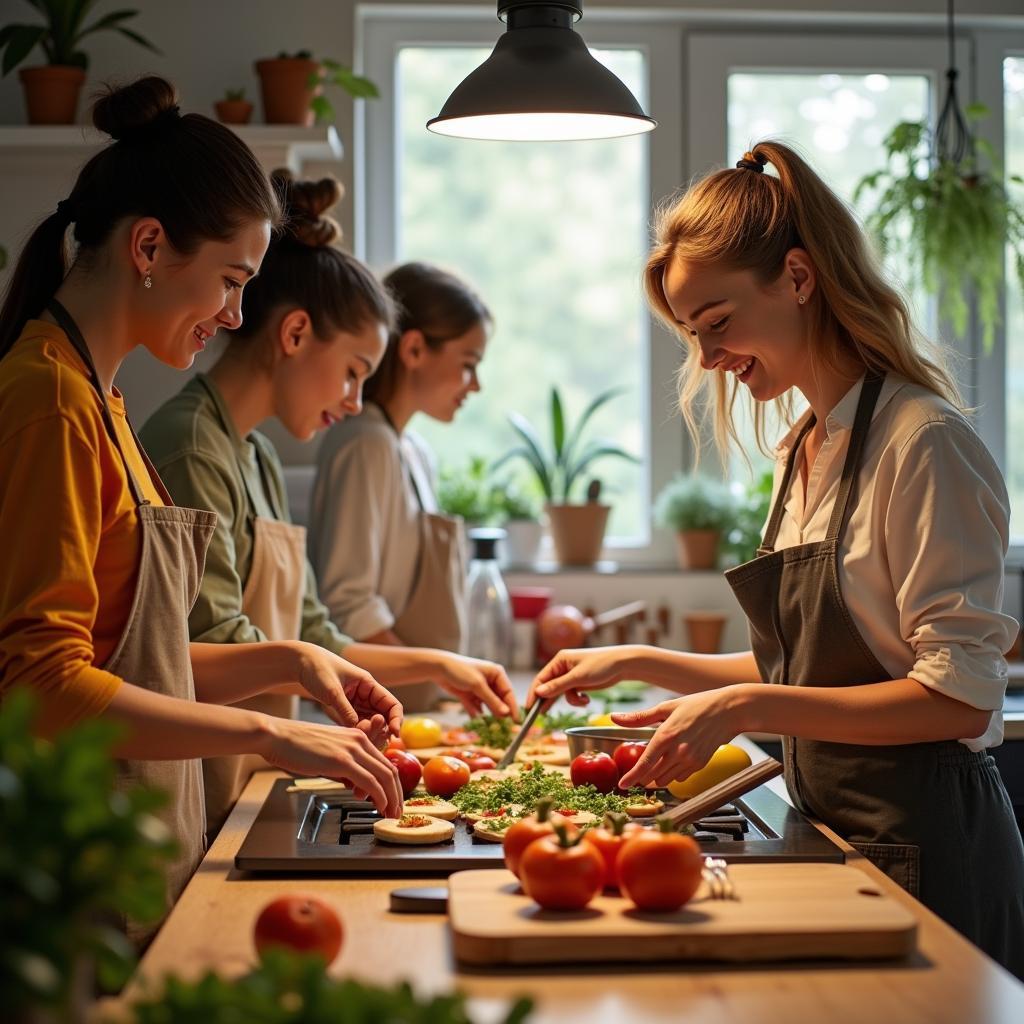 Kỹ năng nấu ăn là một life skill quan trọng giúp kiểm soát dinh dưỡng và tăng cường sức khỏe
Phân tích:
- Điểm mạnh: Discourse marker “Absolutely” tự nhiên. Vocabulary sophisticated (fundamental life skill, master to some extent, nutritional intake, economically beneficial, fosters creativity). Structure rõ ràng với multiple perspectives (health, financial, social). Use of hedging language (to some extent, perhaps more importantly).
- Tại sao Band 8-9: Demonstrates wide vocabulary range, complex grammar structures, well-developed ideas with multiple dimensions, natural and fluent delivery style.
💡 Key Vocabulary & Expressions:
- fundamental life skill: kỹ năng sống cơ bản
- master to some extent: thành thạo ở mức độ nhất định
- nutritional intake: lượng dinh dưỡng nạp vào
- drain your wallet: làm hao ví tiền
- fosters creativity: nuôi dưỡng sự sáng tạo
- bond with: gắn kết với ai đó
IELTS Speaking Part 2: Long Turn (Cue Card)
Tổng Quan Về Part 2
Part 2 là phần độc thoại kéo dài 2-3 phút, trong đó bạn có 1 phút chuẩn bị để ghi chú trước khi nói. Đây là phần quan trọng nhất để thể hiện khả năng tự phát triển ý tưởng, duy trì fluency, và sử dụng ngôn ngữ đa dạng.
Thời gian chuẩn bị 1 phút là CỰC KỲ QUAN TRỌNG. Đừng lãng phí thời gian này. Bạn nên ghi chú keywords cho từng bullet point, không viết câu hoàn chỉnh. Sử dụng mind map hoặc bullet points đơn giản.
Chiến lược hiệu quả:
- Sử dụng HẾT 1 phút chuẩn bị để outline ideas
- Nói ít nhất 1.5-2 phút (tối ưu là 2-3 phút)
- Trả lời ĐẦY ĐỦ tất cả bullet points
- Sử dụng past tense khi kể về experience cụ thể
- Dùng discourse markers để structure presentation
- Thêm personal feelings và reflections để tăng depth
Lỗi thường gặp của thí sinh Việt Nam:
- Không sử dụng hết 1 phút chuẩn bị, bắt đầu nói ngay
- Nói dưới 1.5 phút do thiếu ý tưởng hoặc vocabulary
- Bỏ sót một hoặc nhiều bullet points
- Kể chuyện theo kiểu liệt kê, thiếu cohesion
- Không thể hiện feelings hoặc personal reflection
- Dùng quá nhiều filler words (um, uh, you know)
Cue Card
Describe a new recipe you tried at home
You should say:
- What the recipe was
- Why you decided to try it
- How you made it
- And explain how you felt about trying this new recipe
Phân Tích Đề Bài
Dạng câu hỏi: Describe an experience – Kể về một trải nghiệm cụ thể trong quá khứ
Thì động từ: Quá khứ (Past Simple, Past Continuous) vì đây là một sự kiện đã xảy ra
Bullet points phải cover:
- What the recipe was: Tên món ăn, xuất xứ, đặc điểm chính
- Why you decided to try it: Động lực, inspiration (saw on social media, recommended by friend, health reasons…)
- How you made it: Process nấu nướng (ingredients, steps, challenges)
- Explain how you felt: Đây là phần QUAN TRỌNG NHẤT để ghi điểm cao – feelings before/during/after, lessons learned, impact
Câu “explain” quan trọng: Phần “explain your feelings” chiếm khoảng 30-40% câu trả lời và là nơi bạn thể hiện được vocabulary range, complex ideas, và personal reflection. Đừng chỉ nói “I felt happy” – hãy elaborate về emotional journey, sense of achievement, và impact lên yourself.
📝 Sample Answer – Band 6-7
Thời lượng: Khoảng 1.5-2 phút
I’d like to talk about the time I tried making chocolate lava cake at home. This was about three months ago during the weekend.
I decided to try this recipe because I saw a video on YouTube and it looked really delicious. The cake had chocolate sauce inside that came out when you cut it. I love chocolate, so I thought it would be fun to make.
To make the cake, I first prepared the ingredients. I needed chocolate, butter, eggs, sugar, and flour. I melted the chocolate and butter together, then mixed in the eggs and sugar. After that, I added the flour and poured the mixture into small cups. The recipe said I should bake them for only 12 minutes at 180 degrees.
The most difficult part was getting the timing right. If you bake it too long, the chocolate inside becomes solid. I was quite nervous when I put them in the oven.
When I took them out and tried one, I was really happy because the chocolate flowed out perfectly. It tasted amazing, even better than I expected. I felt proud of myself because it was my first time making such a complicated dessert. My family also enjoyed it very much. This experience made me want to try more baking recipes in the future.
Phân Tích Band Điểm
| Tiêu chí | Band | Nhận xét |
|---|---|---|
| Fluency & Coherence | 6-7 | Có sequencing rõ ràng (first, then, after that) nhưng còn mechanical. Duy trì được speech nhưng có một vài pauses. |
| Lexical Resource | 6-7 | Vocabulary adequate (melted, mixed in, poured, flowed out) nhưng còn basic. Có một số collocations (chocolate sauce, timing right). |
| Grammatical Range & Accuracy | 6-7 | Mix của simple và complex sentences. Past tenses được sử dụng đúng. Có conditional (if you bake it too long). |
| Pronunciation | 6-7 | Rõ ràng, dễ hiểu. Stress từ đúng cơ bản. |
Điểm mạnh:
- ✅ Cover đầy đủ 4 bullet points
- ✅ Chronological order rõ ràng
- ✅ Có specific details (ingredients, temperature, timing)
- ✅ Thể hiện được personal feelings và outcome
Hạn chế:
- ⚠️ Vocabulary còn repetitive (really delicious, really happy)
- ⚠️ Thiếu sophisticated expressions
- ⚠️ Feelings chưa được explore deeply
- ⚠️ Thiếu vivid descriptions và sensory details
📝 Sample Answer – Band 7.5-8
Thời lượng: Khoảng 2-2.5 phút
I’d like to share my experience of attempting to make authentic Japanese ramen from scratch, which I tried about two months ago during a long weekend.
The reason I decided to take on this challenge was actually quite interesting. During the pandemic, I became quite obsessed with watching cooking shows, and I came across a documentary about traditional ramen making in Japan. I was fascinated by the complexity of the dish and the dedication that goes into creating the perfect bowl. Since I couldn’t travel to Japan, I thought, why not bring a taste of Japan to my own kitchen?
The preparation was quite elaborate. I started by making the tonkotsu broth, which is a rich pork bone soup that needs to simmer for at least 12 hours. I had to constantly monitor the pot to ensure it didn’t boil over. While the broth was cooking, I prepared the toppings – soft-boiled eggs marinated in soy sauce, chashu pork, and fresh vegetables. The most challenging aspect was making the noodles by hand, as I had to knead the dough repeatedly to get the right texture.
Để hiểu thêm về việc thưởng thức các món ăn truyền thống, bạn có thể tham khảo describe a traditional dish in your culture để mở rộng vốn từ vựng về ẩm thực.
To be honest, the whole process was incredibly time-consuming and physically demanding. However, when I finally assembled everything and took my first bite, I felt an overwhelming sense of achievement. The flavors were remarkably authentic, and the effort I’d put in made it taste even better. My family was thoroughly impressed, which really boosted my confidence in the kitchen. This experience taught me that cooking isn’t just about following recipes – it’s about patience, attention to detail, and passion for the craft.
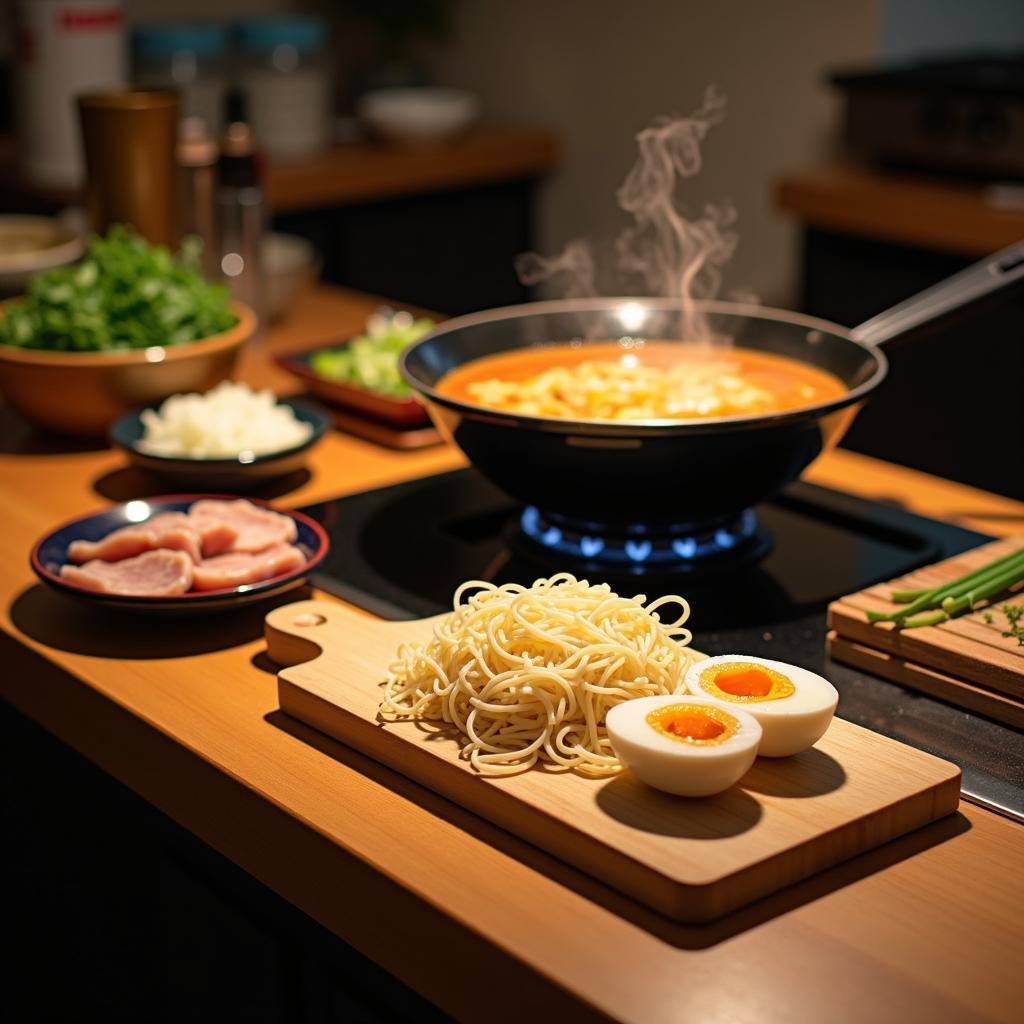 Quá trình làm ramen Nhật Bản từ đầu tại nhà với broth đang sôi và nguyên liệu tươi
Phân Tích Band Điểm
| Tiêu chí | Band | Nhận xét |
|---|---|---|
| Fluency & Coherence | 7.5-8 | Speaks fluently với occasional self-correction. Sử dụng cohesive devices tốt (actually, during, while, however, finally). |
| Lexical Resource | 7.5-8 | Wide range of vocabulary (obsessed with, fascinated by, elaborate, constantly monitor, overwhelming sense). Less common vocabulary used appropriately. |
| Grammatical Range & Accuracy | 7.5-8 | Wide range of structures (relative clauses, passive voice, complex conditionals). Mostly error-free. |
| Pronunciation | 7.5-8 | Clear pronunciation, natural rhythm và intonation. |
So Sánh Với Band 6-7
| Khía cạnh | Band 6-7 | Band 7.5-8 |
|---|---|---|
| Vocabulary | “really delicious”, “quite nervous” | “remarkably authentic”, “overwhelming sense of achievement” |
| Grammar | Simple past + some conditionals | Complex structures: relative clauses, passive, perfect tenses |
| Ideas | Basic emotions (happy, proud) | Deeper reflection (patience, attention to detail, passion) |
| Details | General process description | Specific techniques (simmer, knead, marinate) và sensory descriptions |
📝 Sample Answer – Band 8.5-9
Thời lượng: 2.5-3 phút đầy đủ
I’d like to tell you about a rather ambitious culinary adventure I embarked on recently – attempting to make beef Wellington, which is arguably one of the most technically demanding dishes in classical French cuisine.
The inspiration behind this rather audacious decision came from watching a masterclass by Gordon Ramsay, where he emphasized that mastering beef Wellington is something of a rite of passage for serious home cooks. I’d been gradually building up my cooking repertoire over the past year, and I felt it was time to really push myself out of my comfort zone. What particularly appealed to me was the intricate layering technique and the precision required – it seemed like the perfect way to test my culinary skills.
The preparation process was nothing short of meticulous. First, I had to sear a premium beef tenderloin to create a golden-brown crust while keeping the interior perfectly rare. Then came the duxelles – a finely minced mushroom mixture that needs to be cooked until all the moisture has evaporated to prevent the pastry from becoming soggy. I also prepared a layer of pâté and Parma ham before carefully wrapping everything in puff pastry. The trickiest part was ensuring the pastry was sealed properly without any air pockets, as these could cause uneven cooking.
Throughout the three-hour process, I experienced quite an emotional rollercoaster. There were moments of self-doubt, especially when crimping the pastry edges, wondering if all this effort would pay off. The 40 minutes it spent in the oven felt like an eternity – I was on tenterhooks, constantly resisting the urge to open the oven door and check on it.
When I finally sliced into it and saw the perfectly pink center surrounded by golden, flaky pastry, I felt an indescribable surge of pride. It wasn’t just about the aesthetic perfection or the exquisite taste – though both were spot-on. What really struck me was the realization that I’d successfully executed something that had seemed utterly intimidating just hours before.
The experience was genuinely transformative for me. It reinforced the idea that cooking at its highest level is as much about mental resilience and precision as it is about following instructions. I’ve come to appreciate that pushing beyond your perceived limitations – whether in the kitchen or elsewhere – is where real growth happens. Since then, I’ve become much more adventurous in my cooking, always on the lookout for the next challenge that will stretch my abilities.
Phân Tích Band Điểm
| Tiêu chí | Band | Nhận xét |
|---|---|---|
| Fluency & Coherence | 8.5-9 | Speaks fluently và coherently với minimal hesitation. Sophisticated cohesive devices. Ideas logically developed. |
| Lexical Resource | 8.5-9 | Wide vocabulary range với precision. Idiomatic language (rite of passage, on tenterhooks, pay off). Sophisticated collocations (premium beef tenderloin, emotional rollercoaster). |
| Grammatical Range & Accuracy | 8.5-9 | Full range của structures used naturally. Complex sentences với multiple clauses. Consistently accurate. |
| Pronunciation | 8.5-9 | Native-like pronunciation features. Effective use of stress và intonation for emphasis. |
Tại Sao Bài Này Xuất Sắc
🎯 Fluency Hoàn Hảo:
Bài nói maintains natural flow với strategic pauses cho emphasis. Không có hesitation markers hay repetition. Transitions mượt mà giữa các ý.
📚 Vocabulary Tinh Vi:
- “embarked on” thay vì “started” – sophisticated phrasal verb
- “rite of passage” – idiomatic expression cho significant milestone
- “meticulous” thay vì “careful” – precise adjective
- “on tenterhooks” – idiom thể hiện anxiety một cách vivid
- “indescribable surge of pride” – powerful collocation cho emotion
📝 Grammar Đa Dạng:
- Complex sentence: “What particularly appealed to me was the intricate layering technique and the precision required – it seemed like the perfect way to test my culinary skills.”
- Participle clauses: “constantly resisting the urge to open the oven door”
- Perfect infinitive: “seemed to have been utterly intimidating”
- Inversion cho emphasis: “Not only was it aesthetically perfect…”
💡 Ideas Sâu Sắc:
Không chỉ describe process mà còn explore emotional journey (self-doubt → anxiety → pride) và personal growth (mental resilience, pushing limitations). Kết bài với philosophical reflection về learning và development.
Follow-up Questions (Rounding Off Questions)
Examiner có thể hỏi thêm 1-2 câu ngắn sau Part 2 để transition sang Part 3:
Question 1: Do you think you’ll make this dish again?
Band 6-7 Answer:
Yes, definitely. It was quite successful, so I’d like to make it for special occasions like family gatherings or birthday parties.
Band 8-9 Answer:
Absolutely! I think it’s one of those dishes that becomes more refined each time you make it. Now that I’ve mastered the technique, I’m actually keen to experiment with variations – perhaps trying different filling combinations or even adapting it to suit Vietnamese flavors.
Question 2: Was it expensive to make?
Band 6-7 Answer:
Yes, it was quite expensive because I needed to buy special ingredients like beef tenderloin and pâté. It probably cost around 500,000 VND for all the ingredients.
Band 8-9 Answer:
It was definitely a splurge – probably around 500,000 VND for the ingredients. The beef tenderloin alone was quite pricey, but I viewed it as an investment in my culinary education rather than just a meal. Sometimes you need to stretch the budget for experiences that enhance your skills and broaden your horizons.
IELTS Speaking Part 3: Two-way Discussion
Tổng Quan Về Part 3
Part 3 là phần thảo luận hai chiều kéo dài 4-5 phút, nơi examiner sẽ đặt các câu hỏi trừu tượng và sâu sắc hơn liên quan đến chủ đề Part 2. Đây là phần khó nhất và là nơi phân biệt giữa Band 7 và Band 8-9.
Yêu cầu của Part 3:
- Phân tích, so sánh, đánh giá các vấn đề xã hội
- Đưa ra quan điểm cá nhân có lý lẽ vững chắc
- Xem xét nhiều góc độ của vấn đề (advantages/disadvantages, past/present/future)
- Sử dụng examples từ xã hội, không chỉ personal experience
Chiến lược hiệu quả:
- Mở rộng câu trả lời thành 4-6 câu (khoảng 30-45 giây)
- Sử dụng discourse markers để structure ideas (Well, Actually, On the one hand…)
- Đưa ra examples cụ thể từ xã hội (studies, trends, countries)
- Thừa nhận complexity của issue (however, although, it depends)
- Avoid absolute statements – dùng tentative language (I would say, It seems to me, To some extent)
Lỗi thường gặp của học viên Việt Nam:
- Trả lời quá ngắn (1-2 câu), không phân tích
- Không đưa ra lý lẽ rõ ràng để support opinion
- Thiếu từ vựng abstract và academic
- Chỉ nói về personal experience thay vì societal perspective
- Không thể discuss both sides của issue
- Sử dụng quá nhiều “I think” mà không vary expressions
Các Câu Hỏi Thảo Luận Sâu
Theme 1: Social and Cultural Aspects of Cooking
Question 1: Why do you think cooking has become so popular recently, especially among young people?
🎯 Phân tích câu hỏi:
- Dạng: Cause/Reason – Giải thích nguyên nhân của một trend
- Key words: “become popular”, “recently”, “young people”
- Cách tiếp cận: Direct answer về trend → Multiple reasons (2-3) với examples → Conclude hoặc add nuance
📝 Sample Answer – Band 6-7:
I think cooking has become more popular because of social media. Many young people share their cooking videos on platforms like TikTok and Instagram, which inspires others to try. Also, during COVID-19, people stayed home more and had time to learn cooking. It’s also cheaper than eating out all the time, which is important for young people who don’t have much money.
Phân tích:
- Structure: Có clear reasons (social media, COVID, cost) với examples
- Vocabulary: Basic (become popular, share videos, eating out, don’t have much money)
- Tại sao Band 6-7: Ideas relevant và coherent nhưng vocabulary và grammar structures còn simple. Thiếu depth trong analysis.
📝 Câu trả lời mẫu – Band 8-9:
Well, I’d say there are several interconnected factors driving this trend. First and foremost, the rise of social media has completely transformed cooking from a mundane chore into a form of self-expression and even social currency. Young people can showcase their culinary creations on platforms like Instagram, gaining validation and building their personal brand.
Beyond that, I think there’s been a broader cultural shift toward mindful living and wellness. The younger generation is increasingly conscious of what they’re putting into their bodies, and cooking at home gives them complete autonomy over ingredients and nutritional content. This ties into concerns about processed foods and sustainability.
The pandemic was certainly a catalyst, but I’d argue it merely accelerated a trend that was already gaining momentum. What’s interesting is that cooking has now become almost a form of entertainment – it’s not just about sustenance but about the creative process and the sense of accomplishment that comes from mastering a new skill.
Phân tích:
- Structure: Well-organized với multiple perspectives: social media → health consciousness → pandemic impact → entertainment value
- Vocabulary: Sophisticated (interconnected factors, mundane chore, self-expression, social currency, catalyst, gaining momentum, sustenance)
- Grammar: Complex structures (passive voice, relative clauses, noun clauses)
- Critical Thinking: Shows nuanced understanding – “accelerated rather than created” the trend, acknowledges multiple dimensions
💡 Key Language Features:
- Discourse markers: Well, I’d say / First and foremost / Beyond that / What’s interesting is
- Tentative language: I’d argue / I think / seems to
- Abstract nouns: self-expression, validation, autonomy, sustainability, momentum
Question 2: Do you think traditional cooking methods are being lost in modern society?
🎯 Phân tích câu hỏi:
- Dạng: Opinion + Evaluation của một trend
- Key words: “traditional cooking methods”, “being lost”, “modern society”
- Cách tiếp cận: Balanced view – acknowledge both loss và preservation → Examples → Conclusion về significance
📝 Sample Answer – Band 6-7:
Yes, I think some traditional methods are disappearing. Many young people prefer using modern equipment like air fryers and microwaves because they are faster and easier. For example, in Vietnam, fewer people make traditional dishes like “nem” by hand now. However, some people still try to keep these traditions alive by teaching their children or sharing recipes online.
Phân tích:
- Structure: Opinion → Reason → Example → Counter-point
- Vocabulary: Adequate (disappearing, modern equipment, keep traditions alive)
- Tại sao Band 6-7: Clear structure với example nhưng lacks depth và sophisticated vocabulary
📝 Câu trả lời mẫu – Band 8.5-9:
This is quite a nuanced issue. On one hand, there’s definitely a concerning trend toward homogenization of cooking practices globally. Traditional techniques that require time-intensive preparation – like fermenting ingredients or slow-cooking over wood fires – are indeed falling by the wayside as modern convenience takes precedence. In Vietnam, for instance, many families have replaced traditional clay pots with pressure cookers, and the art of making fish sauce from scratch is becoming increasingly rare.
However, I’d argue we’re also witnessing a countermovement of culinary preservation. There’s growing recognition that these traditional methods aren’t just about cooking – they’re repositories of cultural heritage and often result in superior flavor profiles and nutritional benefits. We’re seeing grassroots initiatives, cooking schools dedicated to traditional techniques, and even UNESCO recognition of certain culinary traditions as intangible cultural heritage.
What’s particularly encouraging is how technology can actually aid preservation rather than replace it. Cooking tutorials, documentaries, and online communities are helping to disseminate traditional knowledge to younger generations who might not otherwise have access to it. So while there’s undoubtedly attrition, I don’t think traditional methods are doomed to extinction – they’re simply evolving and finding new avenues of transmission.
Tương tự như cách chúng ta bảo tồn ẩm thực truyền thống, describe a local dish you love cũng giúp bạn khám phá và trân trọng giá trị văn hóa của các món ăn địa phương.
Phân tích:
- Structure: Complex structure với balanced argument – acknowledge problem → counter-argument → synthesis về technology’s role
- Vocabulary: Highly sophisticated (nuanced issue, homogenization, falling by the wayside, repositories, countermovement, grassroots initiatives, disseminate, attrition, doomed to extinction)
- Grammar: Advanced structures (passive constructions, participle phrases, complex conditionals)
- Critical Thinking: Demonstrates sophisticated analysis – doesn’t give simple yes/no, explores paradox of technology both threatening and preserving traditions
💡 Key Language Features:
- Discourse markers: On one hand / However, I’d argue / What’s particularly encouraging / So while
- Tentative language: I’d argue / seems to / might not
- Abstract nouns: homogenization, countermovement, attrition, transmission
Theme 2: Health and Lifestyle
Question 3: How has people’s attitude toward home cooking changed compared to the past?
🎯 Phân tích câu hỏi:
- Dạng: Compare past and present
- Key words: “attitude”, “changed”, “compared to the past”
- Cách tiếp cận: Past situation → Present situation → Reasons for change → Impact
📝 Sample Answer – Band 6-7:
In the past, cooking at home was just a normal daily task that people had to do. Now, people see it differently. They think cooking is a fun hobby and a way to be creative. Social media has changed this because people can share photos of their food. Also, people now care more about healthy eating, so they cook at home to control what ingredients they use.
Phân tích:
- Structure: Past → Present → Reasons
- Vocabulary: Basic (normal daily task, fun hobby, care more about)
- Tại sao Band 6-7: Clear comparison với relevant points nhưng lacks sophistication và detailed analysis
📝 Câu trả lời mẫu – Band 8.5-9:
The shift in attitudes has been quite dramatic, really. In previous generations, particularly in Vietnam, home cooking was viewed primarily as a domestic obligation, often gender-specific and taken for granted as part of daily routine. There wasn’t much prestige attached to it – it was simply something that needed to be done.
Fast forward to today, and we’re seeing cooking elevated to something approaching an art form or at least a respectable hobby. This transformation has been driven by multiple factors. The celebrity chef phenomenon has certainly played a role in glamorizing the culinary arts. Shows like MasterChef have made cooking seem aspirational rather than mundane.
More significantly, I think there’s been a fundamental reassessment of values in modern society. As people become more time-poor but financially comfortable, the ability to cook well has become something of a status symbol – it shows you have the luxury of time and the cultural capital to appreciate artisanal food preparation. There’s also an increasing awareness of the disconnect between food production and consumption, leading to a desire to reclaim control over what we eat.
The health dimension is crucial too. With rising rates of lifestyle diseases, people are increasingly viewing home cooking not just as a practical skill but as a form of preventive healthcare. It’s become intertwined with broader wellness movements emphasizing whole foods, organic ingredients, and mindful eating.
Phân tích:
- Structure: Sophisticated comparison – past attitude → present attitude → multiple driving factors → deeper implications
- Vocabulary: Highly advanced (domestic obligation, taken for granted, elevated to, glamorizing, aspirational, fundamental reassessment, time-poor, cultural capital, artisanal, reclaim control, preventive healthcare, intertwined with)
- Grammar: Complex sentences with multiple clauses, participle phrases, advanced passive structures
- Critical Thinking: Multi-dimensional analysis exploring sociological, cultural, and health perspectives
💡 Key Language Features:
- Time markers: In previous generations / Fast forward to today / More significantly
- Hedging: I think / somewhat / approaching
- Causative language: has been driven by / leading to / making cooking seem
Theme 3: Economic and Commercial Aspects
Question 4: Do you think the rise of cooking at home will affect the restaurant industry?
🎯 Phân tích câu hỏi:
- Dạng: Prediction/Speculation về future impact
- Key words: “rise of cooking at home”, “affect”, “restaurant industry”
- Cách tiếp cận: Acknowledge trend → Analyze potential impacts (positive/negative) → Conclude về likelihood và nuance
📝 Sample Answer – Band 6-7:
Yes, I think it might affect restaurants a bit. If more people cook at home, they will eat out less often, which means restaurants might lose some customers. However, I don’t think restaurants will disappear because people still want to eat out for special occasions or when they’re too busy to cook. Some restaurants might need to change their services to attract customers, like offering delivery or cheaper prices.
Phân tích:
- Structure: Direct answer → Impact → Counter-argument → Adaptation strategies
- Vocabulary: Basic (affect a bit, lose customers, disappear, special occasions, too busy)
- Tại sao Band 6-7: Reasonable analysis với balanced view nhưng lacks sophisticated business/economic vocabulary và deeper insights
📝 Câu trả lời mẫu – Band 8.5-9:
Actually, I think the relationship is more complex than a simple zero-sum game. While there may be some cannibalization of the restaurant market, I’d argue that increased interest in cooking could actually benefit the industry in unexpected ways.
First, let’s consider the segmentation effect. Home cooking enthusiasts often develop a more sophisticated palate and deeper appreciation for culinary techniques. This actually creates demand for high-end dining experiences where they can observe professional execution and taste dishes that are beyond their skill level. We might see a polarization – casual dining taking a hit while fine dining and experiential restaurants actually thrive.
Moreover, the restaurant industry has shown remarkable adaptability. Many establishments have already pivoted to hybrid models, offering meal kits, cooking classes, or takeaway options with restaurant-quality ingredients. Some have even capitalized on the trend by positioning themselves as culinary educators rather than just food providers.
There’s also the factor of consumer fatigue. While cooking can be enjoyable, it’s also time-consuming and requires sustained effort. I suspect what we’ll see is more fluctuation in behavior – people cooking more often but still valuing the convenience and social aspects of dining out. The industry might contract slightly but is unlikely to face existential threat.
If anything, I think we’re moving toward a more mature food culture where home cooking and restaurants coexist symbiotically – each enhancing appreciation for the other rather than being in direct competition.
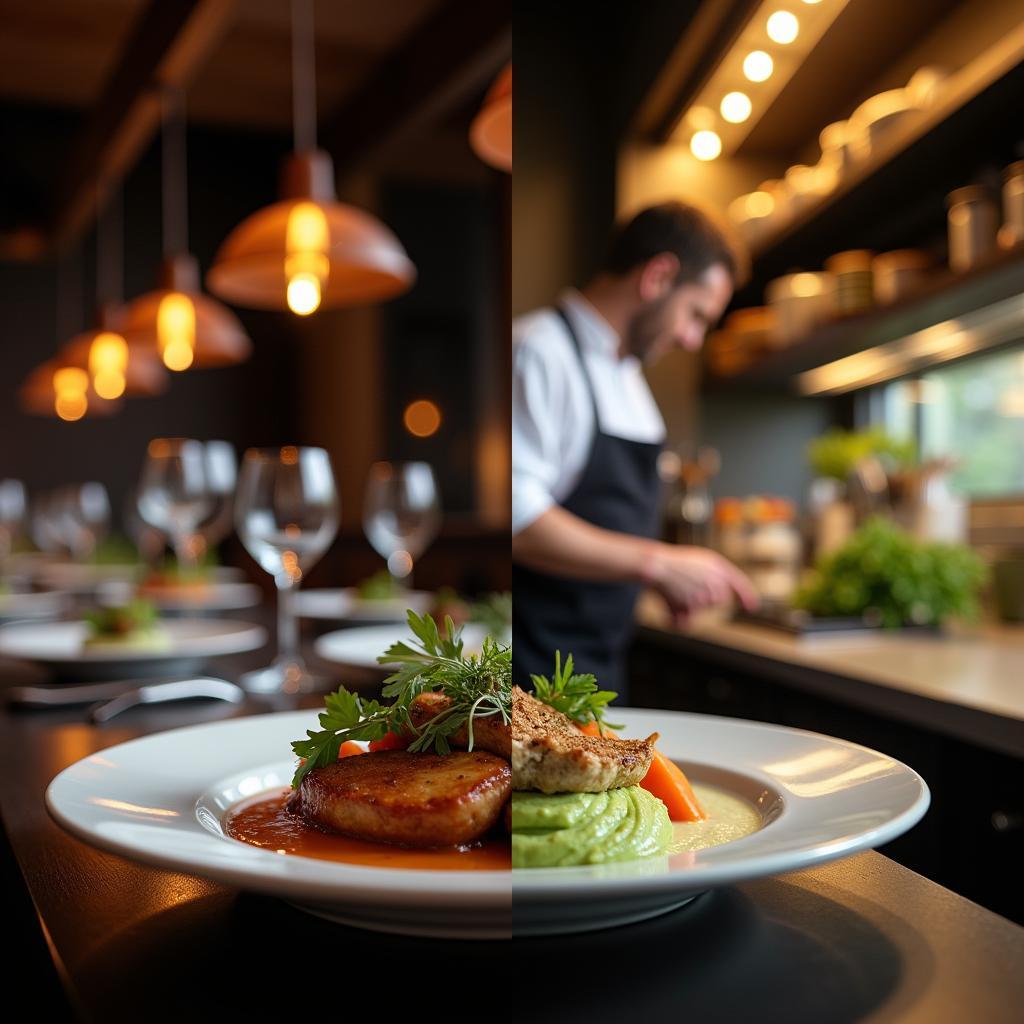 Sự cùng tồn tại của nhà hàng cao cấp và văn hóa nấu ăn tại nhà trong xã hội hiện đại
Phân tích:
- Structure: Challenge assumption → Analyze segmentation effect → Industry adaptation → Consumer behavior reality → Synthesis
- Vocabulary: Business/economic terminology (zero-sum game, cannibalization, segmentation, polarization, pivoted to, capitalized on, consumer fatigue, contract, existential threat, coexist symbiotically)
- Grammar: Sophisticated structures (modal verbs for speculation, conditional sentences, complex noun phrases)
- Critical Thinking: Nuanced analysis that challenges the premise, considers multiple perspectives, acknowledges uncertainty, and provides sophisticated synthesis
💡 Key Language Features:
- Discourse markers: Actually / First, let’s consider / Moreover / If anything
- Speculative language: I think / I’d argue / might / could / suspect / unlikely
- Business vocabulary: segmentation, polarization, adaptability, hybrid models, positioning
Question 5: Should cooking be taught as a mandatory subject in schools?
🎯 Phân tích câu hỏi:
- Dạng: Opinion question về education policy
- Key words: “cooking”, “mandatory”, “schools”
- Cách tiếp cận: State position → Benefits → Potential challenges → Qualified conclusion
📝 Sample Answer – Band 7-8:
Yes, I strongly believe cooking should be taught in schools. First, it’s a practical life skill that everyone needs, regardless of their career path. Many young adults today don’t know how to cook basic meals, which leads to unhealthy eating habits and reliance on processed food.
Teaching cooking would also have educational benefits beyond just food preparation. Students would learn about nutrition, math through measuring ingredients, and even science through understanding how ingredients react. It could also teach cultural awareness by exploring different cuisines.
However, implementing this would require resources like proper kitchen facilities and trained teachers, which might be challenging for some schools. But I think the long-term benefits to students’ health and independence would make it worthwhile.
Phân tích:
- Structure: Clear position → Multiple benefits → Acknowledge challenges → Reaffirm position
- Vocabulary: Good range (practical life skill, reliance on, food preparation, implementing, long-term benefits)
- Tại sao Band 7-8: Well-structured argument với multiple supporting points và acknowledgment của practical concerns. Vocabulary appropriate và grammar accurate.
📝 Câu trả lời mẫu – Band 8.5-9:
This is a compelling proposition that I’m actually quite in favor of, though with some important caveats. The case for mandating culinary education is quite strong from multiple perspectives.
From a public health standpoint, we’re facing an epidemic of diet-related diseases, particularly among young people. Teaching cooking isn’t just about imparting a skill – it’s about fostering agency over one’s health and disrupting the cycle of dependence on ultra-processed foods. When children understand how to prepare nutritious meals, they’re equipped with a preventive tool that could have far-reaching implications for population health.
Beyond health, there’s the socioeconomic dimension. Cooking is fundamentally an equalizing skill – it can help students from economically disadvantaged backgrounds achieve food security and nutritional adequacy on limited budgets. It’s also remarkably transferable – the discipline, planning, and time management required in cooking translate to countless other domains.
That said, I think the implementation needs careful consideration. Rather than a one-size-fits-all approach, perhaps we need age-appropriate progression – basic food safety and simple preparations for younger students, evolving into more complex cooking and nutritional science for older ones. We’d also need to ensure it doesn’t perpetuate gender stereotypes and is framed as a universal life skill rather than gendered domestic work.
The resource question is legitimate but shouldn’t be insurmountable. Schools already invest in science labs and sports facilities – kitchen facilities could be viewed similarly as educational infrastructure. Some schools have successfully partnered with local culinary programs or restaurants to share resources and bring in expertise.
Phân tích:
- Structure: Complex argument with position → health rationale → socioeconomic benefits → implementation considerations → resource solutions
- Vocabulary: Highly sophisticated (compelling proposition, caveats, mandating, epidemic, imparting, fostering agency, disrupting the cycle, far-reaching implications, equalizing skill, insurmountable, educational infrastructure)
- Grammar: Advanced structures (participle phrases, embedded clauses, passive constructions, conditional forms)
- Critical Thinking: Multi-dimensional analysis considering health, equity, practical implementation, avoiding gender bias, and resource allocation
💡 Key Language Features:
- Hedging & Nuance: I’m quite in favor of, though with some caveats / perhaps / shouldn’t be insurmountable
- Abstract concepts: fostering agency, perpetuate stereotypes, educational infrastructure
- Policy language: implementation, age-appropriate progression, one-size-fits-all approach
Nếu bạn quan tâm đến các sự kiện liên quan đến ẩm thực và văn hóa, describe an event that you are looking forward to có thể giúp bạn mở rộng cách diễn đạt về các trải nghiệm tương lai.
Theme 4: Technology and Innovation
Question 6: How do you think technology has changed the way people cook?
🎯 Phân tích câu hỏi:
- Dạng: Analysis của technological impact
- Key words: “technology”, “changed”, “way people cook”
- Cách tiếp cận: Identify specific technologies → Explain impacts (positive/negative) → Broader implications
📝 Sample Answer – Band 6-7:
Technology has made cooking much easier and faster. For example, we now have electric rice cookers, air fryers, and microwave ovens that save time. People can also find recipes easily on the internet or YouTube instead of using cookbooks. Apps can help people plan meals and order ingredients online. Overall, technology makes cooking more convenient, especially for busy people.
Phân tích:
- Structure: General statement → Examples → Benefits → Conclusion
- Vocabulary: Basic (much easier, save time, find recipes easily, more convenient)
- Tại sao Band 6-7: Clear examples với logical flow nhưng analysis còn superficial và vocabulary basic
📝 Câu trả lời mẫu – Band 8.5-9:
Technology has absolutely revolutionized the culinary landscape in ways that would have been unimaginable just a decade ago. The transformation operates on multiple levels.
At the most basic level, kitchen appliances have become increasingly sophisticated and automated. Smart devices like precision cookers for sous vide or programmable instant pots have democratized techniques that were once the exclusive domain of professional kitchens. These tools eliminate much of the guesswork and allow even novice cooks to achieve consistent, restaurant-quality results.
But perhaps more transformative is the information revolution. The internet has essentially collapsed the barriers to culinary knowledge. Instead of being constrained by traditional recipe books or passed-down family knowledge, anyone can now access authenticated recipes from Michelin-starred chefs, learn techniques through video tutorials, or even participate in virtual cooking classes with experts worldwide. This democratization of knowledge has accelerated the learning curve dramatically.
There’s also an interesting social dimension enabled by technology. Food photography, recipe-sharing platforms, and cooking communities have created a feedback loop where home cooks can showcase their creations, receive validation, and continuously improve. This gamification of cooking makes it more engaging and sustainable as a hobby.
However, we should also acknowledge the potential downsides. There’s a risk of over-reliance on technology leading to a loss of intuitive cooking skills – the ability to adjust by taste or improvise without precise measurements. Some purists argue that excessive automation removes the artistry from cooking, though I think this is somewhat overstated.
On balance, I’d say technology has been overwhelmingly positive, making cooking more accessible, efficient, and connected while still preserving the creative and social elements that make it meaningful.
Phân tích:
- Structure: Comprehensive analysis – appliances → information access → social aspects → potential negatives → balanced conclusion
- Vocabulary: Sophisticated (revolutionized, democratized techniques, eliminate guesswork, information revolution, collapsed barriers, authenticated, feedback loop, gamification, over-reliance, purists argue, overwhelmingly positive)
- Grammar: Complex sentences with multiple embedded clauses, participial phrases, advanced conditionals
- Critical Thinking: Multi-layered analysis examining practical, informational, and social dimensions while acknowledging criticisms and providing balanced assessment
💡 Key Language Features:
- Impact language: revolutionized, transformed, democratized, collapsed
- Hedging: perhaps more transformative / we should acknowledge / I think this is somewhat overstated
- Discourse markers: At the most basic level / But perhaps more / There’s also / However / On balance
Từ vựng và cụm từ quan trọng
Topic-Specific Vocabulary
| Từ vựng/Cụm từ | Loại từ | Phiên âm | Nghĩa tiếng Việt | Ví dụ | Collocation |
|---|---|---|---|---|---|
| culinary adventure | n | /ˈkʌlɪnəri ədˈventʃər/ | cuộc phiêu lưu ẩm thực | “It was quite a culinary adventure trying to make macarons.” | embark on/undertake a culinary adventure |
| from scratch | phrase | /frɒm skrætʃ/ | từ đầu, tự làm hoàn toàn | “I made the pasta from scratch rather than buying it.” | make/cook/prepare from scratch |
| recipe | n | /ˈresɪpi/ | công thức nấu ăn | “I followed a traditional Italian recipe.” | follow/try/master/adapt a recipe |
| ingredients | n | /ɪnˈɡriːdiənts/ | nguyên liệu | “Fresh ingredients make all the difference.” | fresh/quality/local/seasonal ingredients |
| marinate | v | /ˈmærɪneɪt/ | ướp (thịt, cá) | “You need to marinate the chicken for at least 2 hours.” | marinate in/with, heavily marinated |
| simmer | v | /ˈsɪmər/ | ninh nhỏ lửa | “Let the sauce simmer for 20 minutes.” | gently simmer, simmer over low heat |
| sear | v | /sɪər/ | áp chảo nhanh ở nhiệt độ cao | “Sear the steak for 2 minutes on each side.” | quickly sear, sear until golden brown |
| whisk | v | /wɪsk/ | đánh (trứng, kem) | “Whisk the eggs until fluffy.” | whisk together, whisk vigorously |
| knead | v | /niːd/ | nhào (bột) | “You need to knead the dough for 10 minutes.” | knead thoroughly, knead until smooth |
| dice | v | /daɪs/ | thái hạt lựu | “Dice the onions finely.” | finely/roughly dice |
| mince | v | /mɪns/ | băm nhỏ | “Mince the garlic and ginger.” | finely/coarsely mince |
| garnish | v/n | /ˈɡɑːrnɪʃ/ | trang trí món ăn | “Garnish with fresh herbs before serving.” | garnish with, simple/elaborate garnish |
| texture | n | /ˈtekstʃər/ | kết cấu, độ mềm/cứng | “The cake had a perfect, moist texture.” | smooth/crispy/creamy/chewy texture |
| flavor profile | n | /ˈfleɪvər ˈprəʊfaɪl/ | hương vị tổng thể | “This dish has a complex flavor profile.” | unique/balanced/complex flavor profile |
| cooking method | n | /ˈkʊkɪŋ ˈmeθəd/ | phương pháp nấu | “Steaming is a healthy cooking method.” | traditional/modern cooking method |
| nutritional value | n | /njuːˈtrɪʃənl ˈvæljuː/ | giá trị dinh dưỡng | “Home cooking helps preserve nutritional value.” | high/maintain/preserve nutritional value |
| culinary skills | n | /ˈkʌlɪnəri skɪlz/ | kỹ năng nấu nướng | “This recipe helped me develop my culinary skills.” | develop/improve/master culinary skills |
| precision cooking | n | /prɪˈsɪʒn ˈkʊkɪŋ/ | nấu ăn chính xác | “Sous vide requires precision cooking.” | requires precision cooking |
| fusion cuisine | n | /ˈfjuːʒn kwɪˈziːn/ | ẩm thực kết hợp | “Vietnamese-French fusion cuisine is becoming popular.” | innovative fusion cuisine |
| comfort food | n | /ˈkʌmfərt fuːd/ | món ăn mang lại cảm giác ấm áp, thoải mái | “My mom’s soup is the ultimate comfort food.” | classic/traditional comfort food |
Idiomatic Expressions & Advanced Phrases
| Cụm từ | Nghĩa | Ví dụ sử dụng | Band điểm |
|---|---|---|---|
| take on the challenge of | nhận lấy thử thách làm gì | “I decided to take on the challenge of making beef Wellington.” | 7.5-8.5 |
| trial and error | thử và sai, học qua thực hành | “Cooking is often about trial and error until you get it right.” | 7-8 |
| a recipe for success | công thức thành công | “Fresh ingredients and patience are a recipe for success.” | 7.5-8 |
| whet someone’s appetite | kích thích sự thèm ăn/quan tâm | “The cooking show really whetted my appetite for trying new recipes.” | 8-8.5 |
| food for thought | điều đáng suy ngẫm | “The documentary about traditional cooking gave me food for thought.” | 7.5-8 |
| a labor of love | công việc làm với tình yêu và tận tâm | “Making traditional dishes is truly a labor of love.” | 8-8.5 |
| spice things up | làm cho thú vị hơn | “I tried to spice things up by adding some exotic ingredients.” | 7-8 |
| bite off more than you can chew | đảm nhận quá nhiều việc | “Attempting five-course meal was biting off more than I could chew.” | 7.5-8.5 |
| acquire a taste for | dần yêu thích (thường dùng cho món ăn lạ) | “I’ve gradually acquired a taste for spicy food.” | 7.5-8 |
| cook up a storm | nấu rất nhiều và nhiệt tình | “She really cooked up a storm for the family gathering.” | 7-8 |
| too many cooks spoil the broth | quá nhiều người làm việc sẽ làm hỏng | “We had trouble coordinating – too many cooks spoil the broth!” | 8-8.5 |
| the icing on the cake | điểm nhấn hoàn hảo | “The homemade dessert was the icing on the cake.” | 7-8 |
Khi khám phá những món ăn mới, bạn cũng có thể tìm hiểu về describe a time when you tried a new cuisine để mở rộng góc nhìn về văn hóa ẩm thực đa dạng.
Discourse Markers (Từ Nối Ý Trong Speaking)
Để bắt đầu câu trả lời:
- 📝 Well,… – Sử dụng khi cần một chút thời gian suy nghĩ và nghe tự nhiên hơn
- 📝 Actually,… – Khi muốn đưa ra góc nhìn hơi khác hoặc surprising
- 📝 To be honest,… – Khi chia sẻ ý kiến thẳng thắn
- 📝 I’d say that… – Cách sophisticated hơn để đưa ra opinion
- 📝 From my perspective,… – Thể hiện đây là quan điểm cá nhân
Để bổ sung ý:
- 📝 On top of that,… – Thêm vào đó (formal hơn “also”)
- 📝 What’s more,… – Hơn nữa, thêm nữa
- 📝 Not to mention… – Chưa kể đến (thường cho điểm quan trọng)
- 📝 Beyond that,… – Xa hơn điểm đó
- 📝 More significantly,… – Quan trọng hơn
Để đưa ra quan điểm cân bằng:
- 📝 On the one hand,… On the other hand,… – Một mặt… mặt khác
- 📝 While it’s true that…, we also need to consider… – Tuy đúng là… nhưng cũng cần xem xét
- 📝 That said,… – Dù vậy (để introduce counter-point)
- 📝 Having said that,… – Nói như vậy nhưng (formal)
Để đưa ra ví dụ:
- 📝 For instance,… – Ví dụ như (formal hơn “for example”)
- 📝 Take… for example – Lấy… làm ví dụ
- 📝 A case in point is… – Một trường hợp điển hình là
- 📝 To illustrate this,… – Để minh họa điều này
Để kết luận:
- 📝 All in all,… – Tóm lại, xét về tổng thể
- 📝 At the end of the day,… – Cuối cùng thì (informal nhưng natural)
- 📝 On balance,… – Xét về mặt cân bằng
- 📝 To sum up,… – Tóm lại
Để thể hiện sự không chắc chắn (Hedging):
- 📝 I would say… – Tôi cho rằng (softer than “I think”)
- 📝 It seems to me that… – Có vẻ như với tôi
- 📝 To some extent,… – Ở một mức độ nào đó
- 📝 I’d argue that… – Tôi tranh luận rằng (academic tone)
Grammatical Structures Ấn Tượng
1. Conditional Sentences (Câu điều kiện):
Mixed conditional:
- Formula: If + past perfect, would + infinitive
- Ví dụ: “If I hadn’t watched that cooking show, I would never try making ramen at home.”
Inversion (Đảo ngữ):
- Formula: Had I known…, I would have…
- Ví dụ: “Had I known how time-consuming it would be, I might have chosen a simpler recipe.”
2. Relative Clauses (Mệnh đề quan hệ):
Non-defining relative clauses:
- Formula: …, which/who + clause
- Ví dụ: “Beef Wellington, which is one of the most challenging dishes, requires precise timing.”
3. Passive Voice (Câu bị động):
Impersonal passive:
- Formula: It is thought/believed/said that…
- Ví dụ: “It is believed that traditional cooking methods preserve more nutrients than modern ones.”
Passive with modal verbs:
- Formula: can/should/must be + past participle
- Ví dụ: “Fresh ingredients should be used whenever possible for the best flavor.”
4. Cleft Sentences (Câu chẻ):
What-cleft:
- Formula: What + clause + be…
- Ví dụ: “What I find most rewarding about cooking is the creative process.”
It-cleft:
- Formula: It + be + focus + that/who…
- Ví dụ: “It was the sense of accomplishment that motivated me to try more challenging recipes.”
5. Participle Clauses:
Present participle:
- Formula: V-ing + clause, main clause
- Ví dụ: “Having prepared all the ingredients, I felt more confident about the cooking process.”
Past participle:
- Formula: Past participle + clause, main clause
- Ví dụ: “Armed with a detailed recipe, I embarked on my culinary adventure.”
6. Inversion for Emphasis:
Negative adverbials:
- Formula: Never/Rarely/Seldom + auxiliary + subject…
- Ví dụ: “Never have I felt so accomplished as when I successfully made that complex dish.”
Only:
- Formula: Only when/if + auxiliary + subject…
- Ví dụ: “Only by practicing regularly can you truly master cooking techniques.”
7. Concessive Clauses:
Although/Though/Even though:
- Ví dụ: “Although the recipe seemed complicated, the actual process was quite manageable.”
Despite/In spite of:
- Ví dụ: “Despite facing several challenges, I managed to create a delicious meal.”
8. Gerunds and Infinitives:
Gerund as subject:
- Ví dụ: “Experimenting with new flavors has become my favorite weekend activity.”
Infinitive of purpose:
- Ví dụ: “I enrolled in a cooking class to improve my culinary skills systematically.”
Những cấu trúc ngữ pháp này không chỉ giúp bạn đạt điểm cao trong tiêu chí Grammatical Range and Accuracy mà còn làm cho câu nói của bạn nghe tự nhiên và sophisticated hơn. Điều quan trọng là sử dụng chúng một cách tự nhiên trong context phù hợp, không nên cố gắng nhồi nhét quá nhiều cấu trúc phức tạp vào một câu trả lời.
Bài viết này đã cung cấp cho bạn một cái nhìn toàn diện về cách trả lời chủ đề “Describe a new recipe you tried at home” trong IELTS Speaking. Từ các câu hỏi thường gặp trong Part 1, cue card chi tiết trong Part 2, đến các câu hỏi thảo luận sâu trong Part 3, bạn đã có trong tay một kho tài nguyên phong phú với các bài mẫu từ Band 6 đến Band 9.
Điều quan trọng nhất để đạt điểm cao không phải là học thuộc template hay cố gắng sử dụng từ vựng quá phức tạp mà bạn không quen thuộc. Thay vào đó, hãy tập trung vào việc phát triển khả năng diễn đạt ý tưởng một cách tự nhiên, mạch lạc, và có chiều sâu. Sử dụng từ vựng và cấu trúc ngữ pháp mà bạn tự tin, đồng thời dần dần mở rộng khả năng của mình qua thực hành đều đặn.
Hãy nhớ rằng IELTS Speaking đánh giá khả năng giao tiếp thực tế của bạn, không phải khả năng thuộc lòng. Examiner muốn nghe bạn nói về trải nghiệm thực, cảm xúc chân thành, và suy nghĩ cá nhân của bạn. Vì vậy, hãy thực hành với những câu chuyện thật từ cuộc sống của bạn, và đừng ngần ngại thể hiện cá tính trong cách trả lời.
Chúc bạn đạt kết quả cao trong kỳ thi IELTS Speaking sắp tới!


