
Mở bài
Chủ đề “Describe A Park Or Beach Where You Go To Relax” là một trong những đề bài phổ biến nhất trong IELTS Speaking Part 2, thường xuyên xuất hiện trong các kỳ thi từ năm 2020 đến nay với tần suất khá cao. Theo thống kê từ các đề thi thực tế được ghi nhận trên IELTS-Blog và IELTSLiz, chủ đề về địa điểm thư giãn xuất hiện khoảng 15-20% trong tổng số đề thi Speaking. Dự đoán khả năng xuất hiện trong tương lai vẫn ở mức cao do tính phổ biến và dễ liên hệ với đời sống thực tế của thí sinh.
Chủ đề này quan trọng vì nó đánh giá khả năng miêu tả địa điểm, cảm xúc cá nhân và giải thích lý do một cách mạch lạc. Examiner thường đánh giá cao những thí sinh có khả năng kết hợp miêu tả cụ thể với cảm nhận chân thực, không sử dụng template cứng nhắc.
Trong bài viết này, bạn sẽ học được:
- Câu hỏi thường gặp trong cả 3 Part của IELTS Speaking liên quan đến chủ đề này
- Bài mẫu chi tiết theo từng band điểm 6-7, 7.5-8, và 8.5-9 với phân tích cụ thể
- Hơn 50 từ vựng và cụm từ ăn điểm dành riêng cho chủ đề
- Chiến lược trả lời hiệu quả từ góc nhìn Examiner
- Các lỗi phổ biến của học viên Việt Nam và cách khắc phục
IELTS Speaking Part 1: Introduction and Interview
Tổng Quan Về Part 1
Part 1 kéo dài 4-5 phút với các câu hỏi về cuộc sống hàng ngày. Đặc điểm của phần này là câu hỏi ngắn gọn, dễ hiểu, xoay quanh những chủ đề quen thuộc. Chiến lược hiệu quả là trả lời trực tiếp câu hỏi, sau đó mở rộng với 2-3 câu bổ sung lý do hoặc ví dụ cụ thể.
Lỗi thường gặp của học viên Việt Nam trong Part 1:
- Trả lời quá ngắn, chỉ Yes/No mà không giải thích
- Sử dụng từ vựng đơn giản như “good”, “nice”, “beautiful” lặp đi lặp lại
- Thiếu ví dụ cụ thể từ trải nghiệm bản thân
- Ngập ngừng quá nhiều khi tìm từ vựng phù hợp
- Không sử dụng discourse markers để câu trả lời tự nhiên hơn
Các Câu Hỏi Thường Gặp
Question 1: Do you often go to parks or beaches?
Question 2: What do you usually do when you visit a park or beach?
Question 3: Is there a park or beach near your home?
Question 4: Do you prefer going to parks or beaches? Why?
Question 5: How often do you go to parks or beaches to relax?
Question 6: Did you go to parks or beaches often when you were a child?
Question 7: What kind of activities do people in your country enjoy at parks or beaches?
Question 8: Do you think parks and beaches are important for cities?
Phân Tích và Gợi Ý Trả Lời Chi Tiết
Question: Do you prefer going to parks or beaches? Why?
🎯 Cách tiếp cận:
- Chọn một trong hai (park hoặc beach) để trả lời rõ ràng
- Đưa ra 1-2 lý do cụ thể
- Có thể thêm ví dụ ngắn từ kinh nghiệm bản thân
📝 Sample Answer – Band 6-7:
I prefer going to beaches. I like beaches because the air is fresh and I can swim there. Also, the view is beautiful and I feel relaxed when I see the ocean. I usually go to the beach with my family on weekends.
Phân tích:
- Điểm mạnh: Trả lời trực tiếp câu hỏi, có lý do và ví dụ đơn giản
- Hạn chế: Từ vựng cơ bản (fresh, beautiful, relaxed), cấu trúc câu đơn giản, thiếu chi tiết cụ thể
- Tại sao Band 6-7: Đủ thông tin nhưng vocabulary và grammar còn ở mức adequate, chưa sophisticated. Không có collocations hoặc less common vocabulary
📝 Sample Answer – Band 8-9:
Well, I’d say I’m more drawn to beaches rather than parks. There’s something incredibly soothing about the rhythmic sound of waves and the salty sea breeze that you just can’t find in urban parks. What I particularly appreciate is the sense of vastness you get at the beach – it really helps me put things into perspective when I’m feeling stressed. Plus, I’m quite keen on water activities like swimming or paddleboarding, which obviously aren’t options in most parks.
Phân tích:
- Điểm mạnh: Sử dụng idiomatic expressions (drawn to, put things into perspective, keen on), collocations tự nhiên (rhythmic sound, salty sea breeze, sense of vastness), cấu trúc phức tạp với relative clause và discourse markers
- Tại sao Band 8-9:
- Fluency: Sử dụng “Well, I’d say” để bắt đầu tự nhiên, không có hesitation
- Vocabulary: Less common phrases và precise expressions
- Grammar: Mix của simple và complex structures một cách tự nhiên
- Pronunciation: Các từ được nhấn mạnh phù hợp (incredibly, particularly, obviously)
💡 Key Vocabulary & Expressions:
- be drawn to something: bị thu hút bởi điều gì đó
- incredibly soothing: cực kỳ dịu dàng, làm dịu
- rhythmic sound of waves: âm thanh nhịp nhàng của sóng biển
- put things into perspective: nhìn nhận mọi thứ theo đúng tỷ lệ, góc độ đúng đắn
- keen on: thích thú, hứng thú với
Question: What do you usually do when you visit a park or beach?
🎯 Cách tiếp cận:
- Liệt kê 2-3 hoạt động cụ thể
- Có thể chia theo tần suất hoặc mục đích
- Thêm chi tiết nhỏ để câu trả lời sinh động
📝 Sample Answer – Band 6-7:
When I go to the beach, I usually go swimming and take photos. Sometimes I bring some food and have a picnic with my friends. I also like walking along the beach and collecting shells. It’s a good way to relax after working.
Phân tích:
- Điểm mạnh: Liệt kê được nhiều hoạt động, có connecting words (sometimes, also)
- Hạn chế: Từ vựng đơn giản (go swimming, take photos), thiếu depth trong miêu tả
- Tại sao Band 6-7: Adequate vocabulary nhưng thiếu collocations và advanced expressions. Grammar đơn giản với mainly simple sentences
📝 Sample Answer – Band 8-9:
It really depends on my mood and who I’m with. If I’m there on my own, I tend to find a quiet spot to sit and read or simply watch the world go by – it’s quite therapeutic actually. When I’m with friends, we usually engage in more active pursuits like beach volleyball or going for a refreshing dip in the sea. I’m also quite fond of coastal walks, especially during golden hour when the lighting is absolutely spectacular for photography. On top of that, I always make sure to grab some local seafood at nearby restaurants – it’s become somewhat of a ritual for me.
Phân tích:
- Điểm mạnh:
- Flexible structure (chia theo điều kiện: alone vs with friends)
- Rich vocabulary với collocations (quiet spot, coastal walks, golden hour, refreshing dip)
- Personality shines through (therapeutic, ritual)
- Natural discourse markers (It depends on, actually, on top of that)
- Tại sao Band 8-9:
- Fluency: Câu trả lời flow tự nhiên với appropriate hesitation devices
- Vocabulary: Precise and sophisticated (therapeutic, spectacular, ritual, engage in pursuits)
- Grammar: Complex conditionals, gerunds, perfect aspect naturally integrated
- Ideas: Shows depth and personal touch
💡 Key Vocabulary & Expressions:
- depend on my mood: tùy thuộc vào tâm trạng
- watch the world go by: ngồi quan sát cuộc sống xung quanh trôi qua
- therapeutic: có tác dụng chữa lành, thư giãn
- engage in active pursuits: tham gia các hoạt động năng động
- golden hour: giờ vàng (thời điểm ánh sáng đẹp để chụp ảnh)
 Học viên IELTS Speaking luyện tập mô tả công viên và bãi biển để thư giãn trong phần thi Part 1
Question: Did you go to parks or beaches often when you were a child?
🎯 Cách tiếp cận:
- Sử dụng thì quá khứ đơn và quá khứ thường xuyên (used to/would)
- So sánh với hiện tại nếu có thể
- Kể một ký ức cụ thể để câu trả lời sinh động hơn
📝 Sample Answer – Band 6-7:
Yes, I did. When I was young, my parents often took me to the beach in summer. We went there almost every weekend. I remember I liked playing in the sand and building sandcastles. It was very fun and I have many good memories about those times.
Phân tích:
- Điểm mạnh: Trả lời đúng thì, có ví dụ cụ thể từ tuổi thơ
- Hạn chế: Từ vựng basic (very fun, good memories), cấu trúc câu đơn giản
- Tại sao Band 6-7: Đủ nội dung nhưng thiếu sophistication trong cách diễn đạt
📝 Sample Answer – Band 8-9:
Actually, yes – I have quite vivid memories of those childhood trips. My family had a tradition of going to the beach every summer holiday, and looking back, those were some of the most carefree times of my life. I was absolutely fascinated by the ocean and would spend hours just splashing about in the shallow water or hunting for interesting shells. What really stands out in my memory is the simple pleasure of building elaborate sandcastles with my siblings – we’d get so engrossed that we’d barely notice the time passing. Funnily enough, I think those experiences instilled in me a lifelong love of coastal areas that I still have today.
Phân tích:
- Điểm mạnh:
- Nostalgic tone phù hợp với câu hỏi về quá khứ
- Mix of past simple, past continuous, và “would” for past habits
- Emotional vocabulary (vivid memories, carefree, fascinated, simple pleasure)
- Personal reflection connecting past to present
- Tại sao Band 8-9:
- Fluency: Natural storytelling với appropriate reflection
- Vocabulary: Emotive và descriptive language (vivid, carefree, engrossed, instilled)
- Grammar: Sophisticated use of past forms và perfect aspect
- Coherence: Clear chronological flow với personal insights
💡 Key Vocabulary & Expressions:
- vivid memories: ký ức sống động
- carefree times: thời gian vô tư, không lo nghĩ
- fascinated by: bị mê hoặc, cuốn hút bởi
- stand out in my memory: nổi bật trong ký ức
- instill in someone: hun đúc, thấm nhuần vào ai đó
- lifelong love: tình yêu suốt đời
IELTS Speaking Part 2: Long Turn (Cue Card)
Tổng Quan Về Part 2
Part 2 là phần thử thách nhất với thời gian chuẩn bị 1 phút và thời gian nói 2-3 phút không bị ngắt. Đây là phần độc thoại nên thí sinh cần tự quản lý thời gian và nội dung.
Chiến lược hiệu quả:
- Sử dụng hết 1 phút chuẩn bị để ghi chú keywords (không viết câu hoàn chỉnh)
- Nói ít nhất 1 phút 45 giây, tốt nhất là đủ 2 phút
- Trả lời đầy đủ tất cả bullet points theo thứ tự
- Sử dụng thì phù hợp (thường là quá khứ hoặc hiện tại)
- Mở rộng phần “explain” cuối cùng vì đây là nơi ghi điểm cao nhất
Lỗi thường gặp:
- Không tận dụng thời gian chuẩn bị, vội vàng nói luôn
- Nói dưới 1 phút 30 giây rồi dừng lại
- Bỏ sót một hoặc nhiều bullet points
- Nói quá nhanh hoặc quá chậm, không kiểm soát được pace
- Sử dụng template cứng nhắc khiến câu trả lời không tự nhiên
Cue Card
Describe a park or beach where you go to relax
You should say:
- Where it is located
- How often you go there
- What you do there
- And explain why you find this place relaxing
Phân Tích Đề Bài
- Dạng câu hỏi: Describe a place (địa điểm)
- Thì động từ: Chủ yếu hiện tại đơn và hiện tại hoàn thành (vì mô tả thói quen và trạng thái hiện tại)
- Bullet points phải cover:
- Location (Vị trí cụ thể)
- Frequency (Tần suất đến)
- Activities (Các hoạt động ở đó)
- Reason for relaxation (Lý do thư giãn – phần quan trọng nhất)
- Câu “explain” quan trọng: Đây là phần chiếm 30-40% câu trả lời và là nơi thể hiện critical thinking, vocabulary range và grammatical structures phức tạp. Examiner đặc biệt chú ý đến phần này để đánh giá khả năng phân tích và giải thích của thí sinh.
📝 Sample Answer – Band 6-7
Thời lượng: Khoảng 1 phút 45 giây
I’d like to talk about a beach near my hometown called My Khe Beach. It’s located in Da Nang city, about 15 minutes from the city center by motorbike. It’s quite easy to get there.
I try to go there at least once a month, usually on weekends when I have free time. Sometimes I go alone, but often I go with my friends or family members.
When I’m at the beach, I usually do several things. I like swimming in the sea because the water is clean and not too cold. I also enjoy walking along the beach, especially in the early morning or late afternoon when it’s not too hot. Sometimes I just sit on the sand and watch the waves. I also like to buy some street food from the vendors near the beach.
I find this place very relaxing for several reasons. First, the natural scenery is beautiful with the blue sea and white sand. The sound of the waves is very peaceful and helps me forget about my stress from work and study. Second, the beach is not too crowded, so I can find a quiet spot easily. When I’m there, I feel free and I can think clearly about my problems. The fresh air also makes me feel healthier. After spending time at this beach, I always feel refreshed and ready to go back to my daily life.
Phân Tích Band Điểm
| Tiêu chí | Band | Nhận xét |
|---|---|---|
| Fluency & Coherence | 6-7 | Có sequencing tốt với linking words cơ bản (first, second, also, when). Flow hợp lý nhưng còn mechanical. Có một số hesitation khi chuyển ý |
| Lexical Resource | 6-7 | Từ vựng adequate với một số collocations (street food, natural scenery, daily life). Tuy nhiên chủ yếu là common vocabulary (beautiful, peaceful, quiet) |
| Grammatical Range & Accuracy | 6-7 | Mix of simple và complex sentences. Có relative clauses và time clauses nhưng không đa dạng. Ít lỗi ngữ pháp nghiêm trọng |
| Pronunciation | 6-7 | Rõ ràng và dễ hiểu với một số lỗi phát âm nhỏ không ảnh hưởng communication |
Điểm mạnh:
- ✅ Trả lời đầy đủ tất cả bullet points theo thứ tự logic
- ✅ Có examples cụ thể về activities và reasons
- ✅ Đủ độ dài yêu cầu (gần 2 phút)
- ✅ Cấu trúc rõ ràng, dễ follow
Hạn chế:
- ⚠️ Vocabulary còn basic và repetitive (beautiful, peaceful, relaxing)
- ⚠️ Thiếu idiomatic expressions và sophisticated vocabulary
- ⚠️ Grammar structures không đủ complex và varied
- ⚠️ Thiếu personal insights sâu sắc hơn
📝 Sample Answer – Band 7.5-8
Thời lượng: Khoảng 2 phút 15 giây
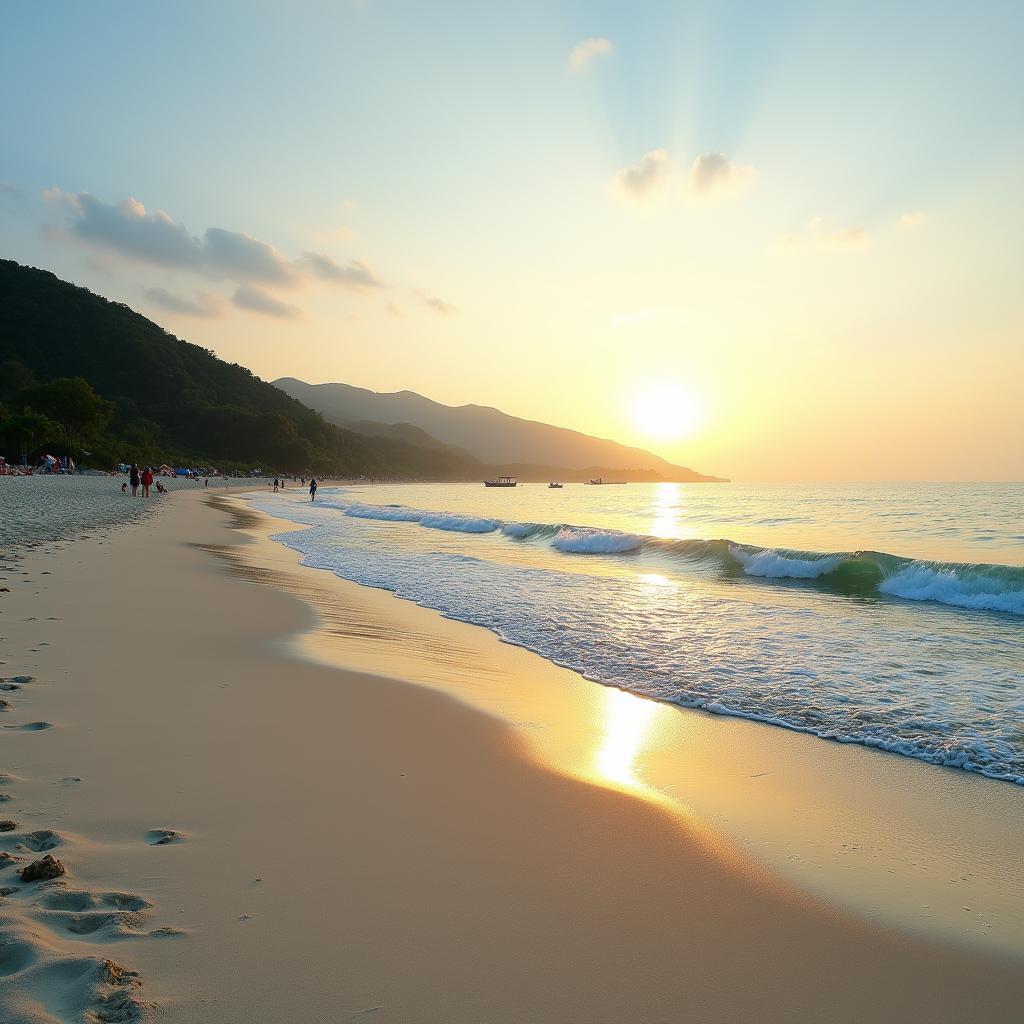
I’d like to describe a beach that I’m particularly fond of – My Khe Beach in Da Nang. It’s conveniently situated about 15 minutes from the city center, which makes it easily accessible whenever I feel the need to escape from the hustle and bustle of urban life.
I make it a point to visit this beach at least once or twice a month, though during summer months I tend to go more frequently – sometimes even weekly. The frequency really depends on my schedule and how stressed out I’m feeling with work.
As for what I do there, well, it varies. If I go early in the morning, I usually take a refreshing swim in the ocean – there’s nothing quite like the feeling of cool water against your skin to wake you up. I’m also quite keen on walking along the shoreline, especially during sunset when the sky turns various shades of orange and pink. Sometimes I simply find a spot to sit and read a book, or I might indulge in some local delicacies from the food stalls nearby.
What really makes this place special for me, though, is the sense of tranquility it provides. The rhythmic sound of waves has an almost meditative quality that helps me clear my mind of everyday worries. Unlike many tourist beaches, My Khe manages to maintain a relatively peaceful atmosphere even during peak season. I find that the combination of natural beauty – the pristine sand, the azure waters, and the gentle sea breeze – creates the perfect environment for mental rejuvenation. There’s also something about the vastness of the ocean that helps me put my problems into perspective. After a few hours there, I always feel recharged and more mentally balanced.
 Bãi biển Mỹ Khê Đà Nẵng – địa điểm thư giãn lý tưởng để mô tả trong IELTS Speaking
Phân Tích Band Điểm
| Tiêu chí | Band | Nhận xét |
|---|---|---|
| Fluency & Coherence | 7.5-8 | Flow tự nhiên với discourse markers phù hợp (well, though, as for). Logical progression với clear topic sentences. Minimal hesitation |
| Lexical Resource | 7.5-8 | Wide range of vocabulary với collocations tự nhiên (escape from the hustle and bustle, mental rejuvenation, put into perspective). Paraphrasing hiệu quả |
| Grammatical Range & Accuracy | 7.5-8 | Varied structures bao gồm conditionals, relative clauses, participle clauses. Mostly error-free với complex sentences tự nhiên |
| Pronunciation | 7.5-8 | Clear pronunciation với appropriate intonation patterns. Word stress chính xác |
So Sánh Với Band 6-7
| Khía cạnh | Band 6-7 | Band 7.5-8 |
|---|---|---|
| Vocabulary | “beautiful scenery”, “peaceful” | “pristine sand”, “azure waters”, “mental rejuvenation” |
| Grammar | “The sound of the waves is very peaceful” | “The rhythmic sound of waves has an almost meditative quality” |
| Ideas | “helps me forget about stress” | “helps me put my problems into perspective” + “creates perfect environment for mental rejuvenation” |
📝 Sample Answer – Band 8.5-9
Thời lượng: 2 phút 30 giây đầy đủ
I’d like to talk about what I consider my personal sanctuary – a relatively secluded cove on My Khe Beach in Da Nang. It’s nestled about 15 minutes from the urban sprawl of the city center, tucked away from the more touristy sections of the beach, which is precisely what makes it so appealing to me.
I’ve made it something of a ritual to visit this spot at least twice a month, though to be honest, I find myself gravitating there more frequently during particularly demanding periods at work. It’s become my go-to escape when life becomes overwhelming, which, I have to say, seems to be happening with increasing regularity these days.
What I actually do there has evolved over time. Initially, I’d engage in the typical beach activities – swimming, walking, that sort of thing. But more recently, I’ve found myself simply being present in the moment, if that makes sense. I might position myself on a secluded section of sand and allow my mind to wander while watching the interplay between light and water. Sometimes I’ll bring along my journal and jot down thoughts, or I might lose myself in a book. The beauty is that there’s no set agenda – I simply go with whatever feels right at that particular moment.
What’s really fascinating, though, is the profound effect this place has on my psychological well-being. There’s extensive research suggesting that proximity to bodies of water has a measurable calming effect on the human psyche, and I can certainly attest to that from personal experience. The constant yet ever-changing motion of the waves creates what I can only describe as a living meditation – it’s simultaneously energizing and calming. Moreover, the sensory experience is remarkably grounding: the tactile sensation of sand, the salty tang in the air, the visual feast of the seascape – it all serves to anchor me firmly in the present moment, effectively silencing the mental chatter that tends to dominate my everyday consciousness.
On a deeper level, I think what draws me back repeatedly is this sense of perspective that only vast natural landscapes can provide. When you’re confronted with the sheer magnitude of the ocean, your day-to-day concerns – pressing as they may seem – suddenly appear rather trivial in the grand scheme of things. It’s this recalibration of perspective that I find genuinely therapeutic. I invariably leave feeling not just physically refreshed but emotionally recalibrated and mentally sharper – ready to tackle whatever challenges lie ahead with renewed vigor.
Phân Tích Band Điểm
| Tiêu chí | Band | Nhận xét |
|---|---|---|
| Fluency & Coherence | 8.5-9 | Effortless delivery với sophisticated discourse markers. Natural hesitation devices (if that makes sense, I have to say). Ideas flow logically với clear progression |
| Lexical Resource | 8.5-9 | Sophisticated vocabulary used precisely (sanctuary, secluded cove, urban sprawl, interplay, psychological well-being). Natural idioms và collocations. Paraphrasing at native-like level |
| Grammatical Range & Accuracy | 8.5-9 | Full range of structures used naturally và accurately. Complex sentences với multiple clauses. Conditional structures, participle clauses, inversion, cleft sentences |
| Pronunciation | 8.5-9 | Native-like fluency với appropriate stress patterns, intonation và connected speech features |
Tại Sao Bài Này Xuất Sắc
🎯 Fluency Hoàn Hảo:
Câu trả lời demonstrates effortless expression với natural hesitation devices như “if that makes sense”, “to be honest”, “I have to say”. Không có awkward pauses hay repetition. Flow tự nhiên như người bản ngữ trò chuyện.
📚 Vocabulary Tinh Vi:
Ví dụ: “nestled about 15 minutes from the urban sprawl” – “nestled” là less common verb thể hiện vị trí một cách poetic; “urban sprawl” là sophisticated alternative cho “city”
Ví dụ: “interplay between light and water” – “interplay” là academic vocabulary thể hiện interaction một cách tinh tế
Ví dụ: “recalibration of perspective” – nominalization ở mức cao với metaphorical usage
📝 Grammar Đa Dạng:
Ví dụ: “It’s nestled about 15 minutes from the urban sprawl of the city center, tucked away from the more touristy sections” – Past participle clauses để add information một cách sophisticated
Ví dụ: “When you’re confronted with the sheer magnitude of the ocean, your day-to-day concerns – pressing as they may seem – suddenly appear rather trivial” – Complex conditional với inversion và parenthetical insertion
💡 Ideas Sâu Sắc:
Không chỉ dừng lại ở “it’s relaxing”, candidate đưa ra analysis về psychological effects, tham khảo research, và explain cụ thể mechanism (living meditation, sensory grounding, perspective recalibration). Shows critical thinking và intellectual depth.
Follow-up Questions (Rounding Off Questions)
Examiner thường hỏi 1-2 câu ngắn sau khi bạn hoàn thành Part 2:
Question 1: Do you think you’ll continue visiting this place in the future?
Band 6-7 Answer:
Yes, definitely. I really like this beach and I think I will keep going there because it helps me relax. Maybe I’ll go more often in the future if I have more free time.
Band 8-9 Answer:
Absolutely, I can’t imagine giving it up anytime soon. It’s become such an integral part of my self-care routine that I’d feel quite bereft without it. If anything, I suspect I’ll be making even more regular pilgrimages there as I get older and come to appreciate the importance of mental well-being even more.
Question 2: Have you recommended this place to friends?
Band 6-7 Answer:
Yes, I have. I told some of my friends about this beach and some of them went there. They also liked it very much.
Band 8-9 Answer:
I have, though I must admit I’m somewhat selective about it. It’s almost like having a hidden gem that you’re reluctant to share too widely for fear it might lose its charm. That said, I’ve pointed a few close friends in its direction, and without exception, they’ve all reported back that it lived up to expectations. Some have even made it their own refuge as well.
IELTS Speaking Part 3: Two-way Discussion
Tổng Quan Về Part 3
Part 3 kéo dài 4-5 phút với các câu hỏi thảo luận trừu tượng và sâu sắc hơn, liên quan đến chủ đề Part 2. Đây là phần khó nhất và là nơi phân biệt rõ giữa Band 7 và Band 8+.
Yêu cầu của Part 3:
- Phân tích vấn đề từ nhiều góc độ (social, economic, environmental)
- So sánh và đối chiếu (past vs present, advantages vs disadvantages)
- Đưa ra quan điểm cá nhân có lý lẽ chặt chẽ
- Thừa nhận complexity và nuance của vấn đề
Chiến lược hiệu quả:
- Mở rộng câu trả lời thành 4-6 câu (30-45 giây mỗi câu hỏi)
- Sử dụng discourse markers để structure ideas (On the one hand, However, In terms of)
- Đưa ra examples từ society hoặc general trends, không chỉ personal experience
- Show critical thinking bằng cách present both sides
- Paraphrase câu hỏi trong câu trả lời
Lỗi thường gặp của học viên Việt Nam:
- Trả lời quá ngắn (1-2 câu) thiếu development
- Chỉ đưa ra personal opinion mà không có reasoning
- Thiếu từ vựng abstract và academic
- Không structure câu trả lời rõ ràng
- Sợ nói nhiều nên rush through answers
Các Câu Hỏi Thảo Luận Sâu
Theme 1: Environmental and Health Benefits
Question 1: Why do you think people need green spaces and natural environments in cities?
🎯 Phân tích câu hỏi:
- Dạng: Why question – cần explain reasons/benefits
- Key words: green spaces, natural environments, cities (focus on urban context)
- Cách tiếp cận: State importance → Give 2-3 reasons với examples → Conclude với broader implication
📝 Sample Answer – Band 6-7:
I think green spaces are very important for people in cities. First, they provide fresh air and reduce pollution, which is good for health. Many people in cities are stressed because of work and traffic, so parks give them a place to relax and exercise. Also, green spaces make cities more beautiful and attractive. Without these areas, cities would be just buildings and roads, which is not good for people’s mental health. So I believe every city should have parks and beaches for residents.
Phân tích:
- Structure: Có clear points (health, stress relief, aesthetics) nhưng development còn surface-level
- Vocabulary: Adequate nhưng repetitive (good for, important, beautiful)
- Tại sao Band 6-7: Ideas relevant nhưng thiếu depth. Vocabulary functional nhưng không sophisticated. Grammar mostly simple.
📝 Câu trả lời mẫu – Band 8-9:
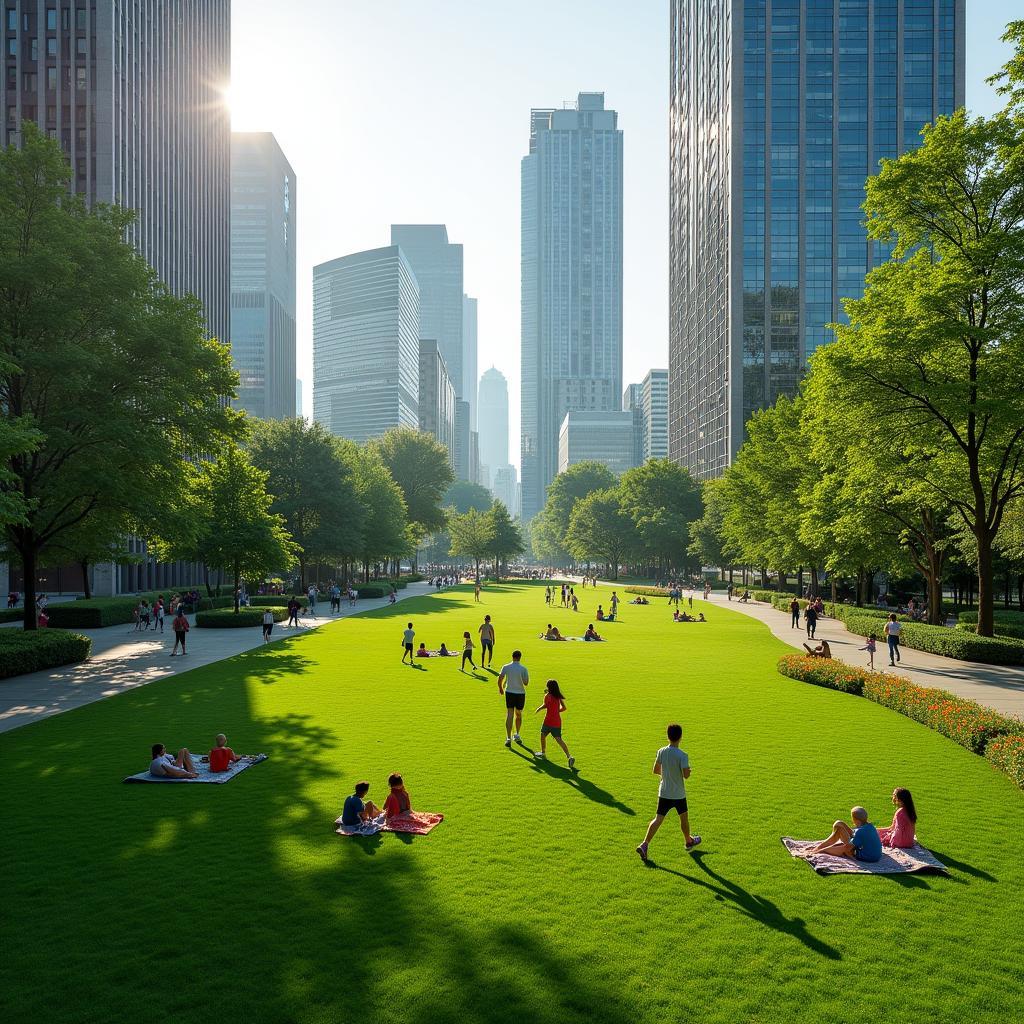
Well, I’d argue that access to green spaces is absolutely essential for urban dwellers, particularly in densely populated cities. From a health perspective, these areas serve as vital lungs for cities – they help mitigate air pollution and provide spaces for physical recreation, which is increasingly important given our predominantly sedentary lifestyles. Beyond the physical benefits, though, there’s a compelling body of research suggesting that regular exposure to nature has profound psychological effects. It’s been shown to reduce cortisol levels, alleviate symptoms of anxiety and depression, and generally enhance overall well-being.
On a broader level, I think green spaces also foster community cohesion – they’re neutral territories where people from diverse backgrounds can interact, which is particularly valuable in increasingly fragmented urban societies. Without these natural refuges, cities risk becoming purely utilitarian environments, which could have detrimental effects on both individual mental health and social fabric as a whole.
 Công viên xanh đô thị giúp giảm stress và cải thiện sức khỏe tâm thần cho cư dân thành phố
Phân tích:
- Structure: Well-organized với clear signposting: health perspective → psychological effects → social benefits → conclusion about consequences
- Vocabulary: Sophisticated và precise (urban dwellers, mitigate, sedentary lifestyles, compelling body of research, cortisol levels, foster community cohesion, utilitarian environments, social fabric)
- Grammar: Complex structures seamlessly integrated: passive voice (it’s been shown), conditionals (without these… cities risk), relative clauses
- Critical Thinking: References research, considers multiple dimensions (physical, psychological, social), acknowledges consequences
💡 Key Language Features:
- Discourse markers: Well, From a perspective, Beyond, On a broader level, Without
- Tentative language: I’d argue, I think, could have
- Abstract nouns: access, perspective, exposure, cohesion, well-being, fabric
- Academic expressions: compelling body of research, has profound effects, serve as vital lungs
Question 2: What are the differences between parks in cities and natural areas in the countryside?
🎯 Phân tích câu hỏi:
- Dạng: Compare and contrast question
- Key words: parks in cities vs natural areas in countryside
- Cách tiếp cận: Identify key differences (accessibility, design, purpose, biodiversity) → Provide examples → Evaluate which is better depending on context
📝 Sample Answer – Band 6-7:
There are several differences between city parks and countryside natural areas. City parks are usually smaller and designed by people. They have facilities like benches, playgrounds, and walking paths. Natural areas in the countryside are bigger and more wild. They don’t have many facilities and they have more animals and plants. City parks are easier to access because they’re close to where people live, but countryside areas are more peaceful and have cleaner air. Both types are good but for different purposes.
Phán tích:
- Structure: Comparison present nhưng còn simple
- Vocabulary: Basic comparison vocabulary (bigger, smaller, more)
- Tại sao Band 6-7: Points relevant nhưng lacks sophistication in expression
📝 Câu trả lời mẫu – Band 8-9:
That’s an interesting question. I’d say the fundamental distinction lies in their degree of human intervention. Urban parks are essentially manicured environments – they’re carefully designed and maintained to serve specific recreational purposes while being readily accessible to large populations. They typically feature well-maintained lawns, paved pathways, and various amenities like benches and playgrounds. In contrast, rural natural areas tend to be far more wild and unspoiled, with minimal human infrastructure and greater biodiversity.
From an ecological standpoint, countryside natural areas generally harbor more complex ecosystems and provide crucial habitats for wildlife, whereas city parks, while beneficial, are somewhat artificial constructs with limited ecological value. That being said, urban parks serve a crucial democratic function – they democratize access to nature for people who might not have the means or opportunity to travel to remote natural areas. In terms of the experience they offer, I’d say countryside areas provide a more authentic connection with nature and a sense of wilderness, while city parks offer convenience and safety along with social opportunities.
Ultimately, I don’t think it’s about one being inherently superior to the other – they fulfill different needs. City parks are invaluable for day-to-day mental health and community building, while pristine natural areas are essential for ecological preservation and those seeking more immersive natural experiences.
Phân tích:
- Structure: Sophisticated comparison with multiple dimensions: design, ecological value, accessibility, experience, and balanced conclusion
- Vocabulary: Academic và precise (fundamental distinction, manicured environments, human intervention, biodiversity, democratize access, ecological preservation)
- Grammar: Full range including passives, participle clauses, while/whereas contrasts
- Critical Thinking: Balanced analysis acknowledging different purposes rather than declaring one superior. Shows nuanced understanding
💡 Key Language Features:
- Comparison structures: In contrast, That being said, In terms of, Whereas, Ultimately
- Hedging language: essentially, somewhat, generally, I’d say
- Abstract concepts: degree of intervention, ecological standpoint, democratic function, authentic connection
Theme 2: Urban Development and Accessibility
Question 3: Do you think all cities have enough parks and beaches for residents?
🎯 Phân tích câu hỏi:
- Dạng: Opinion question với scope generalization (all cities)
- Key words: enough, parks and beaches, residents
- Cách tiếp cận: Give general answer → Acknowledge variation → Explain factors → Suggest solutions/consequences
📝 Sample Answer – Band 6-7:
No, I don’t think so. Many cities, especially big cities in developing countries, don’t have enough green spaces. The main problem is that there are too many people and not enough land. City governments need to build more buildings for people to live and work, so they don’t have space for parks. Also, creating and maintaining parks is expensive. Some rich cities have many beautiful parks, but poor cities cannot afford to build them. I think this is a serious problem because people need places to relax.
Phân tích:
- Structure: Clear position với basic reasons (population, cost)
- Vocabulary: Functional nhưng repetitive (big cities, many, enough)
- Tại sao Band 6-7: Ideas relevant nhưng lacks sophistication và depth in analysis
📝 Câu trả lời mẫu – Band 8-9:
Definitely not – there’s a significant disparity across different cities globally. While some forward-thinking municipalities have made green space provision a priority, many others, particularly rapidly urbanizing cities in developing nations, are severely lacking in this regard. The issue is multifaceted: there’s often intense pressure on available land for housing and commercial development, which tends to take precedence over environmental considerations due to immediate economic imperatives.
What’s particularly concerning is that this shortage tends to disproportionately affect lower-income neighborhoods – there’s a well-documented phenomenon called “park poverty” where disadvantaged communities have far less access to quality green spaces compared to affluent areas. This exacerbates existing inequalities because these are often the very communities that would benefit most from accessible recreational areas.
In terms of solutions, I think we’re seeing some innovative approaches emerging. Some cities are repurposing underutilized spaces – converting abandoned lots or obsolete infrastructure into pocket parks or community gardens. Singapore, for instance, has become a global leader in vertical greenery and rooftop gardens to maximize limited space. However, these solutions require political will and substantial investment, which aren’t always forthcoming. Ultimately, I believe adequate green space should be considered a fundamental urban right rather than a luxury, but we’re still some way off from achieving that universally.
Phân tích:
- Structure: Comprehensive answer với clear position → problem analysis → inequality dimension → solutions → evaluation → conclusion
- Vocabulary: Sophisticated expressions (significant disparity, forward-thinking municipalities, multifaceted, exacerbates inequalities, political will, fundamental urban right)
- Grammar: Full range including relative clauses, passives, cleft sentences (What’s particularly concerning is that…)
- Critical Thinking: Acknowledges global variation, identifies systemic issues (inequality), provides concrete examples (Singapore), evaluates limitations, takes a position on rights
💡 Key Language Features:
- Emphasizing structures: Definitely not, What’s particularly concerning, Ultimately
- Academic vocabulary: disparity, municipalities, disproportionately affect, exacerbates
- Specific examples: Park poverty phenomenon, Singapore’s vertical greenery
- Conditional awareness: aren’t always forthcoming, we’re still some way off
Theme 3: Future Trends and Technology
Question 4: How do you think technology might change the way people relax in natural spaces in the future?
🎯 Phân tích câu hỏi:
- Dạng: Future speculation/prediction question
- Key words: technology, change, relax, natural spaces, future
- Cách tiếp cận: Acknowledge current trends → Predict potential developments → Consider positive and negative implications → Give balanced view
📝 Sample Answer – Band 6-7:
I think technology will change how people enjoy natural places. Nowadays, many people take photos with their phones when they visit beaches or parks and share them on social media. In the future, maybe there will be more technology like virtual reality that allows people to experience nature without leaving their homes. Also, apps might help people find the best parks or tell them about nature. However, I think too much technology might be bad because people should focus on nature itself, not their phones. So technology can help but it shouldn’t replace real nature experiences.
Phân tích:
- Structure: Linear progression với basic future predictions
- Vocabulary: Simple technology terms (phones, apps, virtual reality)
- Tại sao Band 6-7: Ideas present nhưng analysis shallow. Limited range of vocabulary and structures
📝 Câu trả lời mẫu – Band 8.5-9:
That’s a thought-provoking question. I think we’re already witnessing the early stages of this transformation. On one level, technology could enhance the experience of natural spaces quite considerably. We’re seeing emerging applications like augmented reality nature guides that can identify flora and fauna in real-time, or biometric wearables that track the physiological benefits of time spent in nature, potentially helping people optimize their outdoor experiences. Some parks are experimenting with smart features like noise-canceling zones or AI-powered lighting systems that minimize light pollution while ensuring safety.
However, there’s a somewhat paradoxical danger here. The very essence of relaxation in natural spaces often comes from disconnecting from technology and being fully present. There’s growing evidence of “nature deficit disorder” and “technoference” – where constant connectivity prevents genuine engagement with natural environments. I’ve witnessed this firsthand – people so preoccupied with capturing the perfect Instagram moment that they barely experience the actual place.
Looking further ahead, I suspect we might see a bifurcation. On one hand, hyper-connected experiences where technology is seamlessly integrated – think virtual reality supplements to real nature, or smart parks that adapt to individual preferences. On the other, a counter-movement toward “digital detox” spaces – tech-free zones where people can genuinely unplug. Interestingly, some forward-thinking parks in Japan and Scandinavia are already designating phone-free areas to preserve the contemplative aspect of nature.
Ideally, technology should serve as an enabler rather than a distractor – helping people access and appreciate nature more deeply while knowing when to step back. But achieving that balance will require conscious design and cultural shifts in how we relate to both technology and nature.
Phân tích:
- Structure: Extremely sophisticated với multiple layers: current trends → potential benefits → concerns → future scenarios → personal observation → balanced conclusion
- Vocabulary: Advanced và precise (thought-provoking, augmented reality, biometric wearables, paradoxical danger, technoference, bifurcation, digital detox, enabler rather than distractor)
- Grammar: Full native-like range: complex conditionals, participle clauses, cleft sentences, passive constructions, gerunds
- Critical Thinking: Presents both sides, anticipates counter-trends, uses specific examples from real places (Japan, Scandinavia), shows awareness of research (nature deficit disorder), acknowledges complexity and need for balance
💡 Key Language Features:
- Speculative language: I think we’re witnessing, could enhance, I suspect we might see, will require
- Contrasting structures: On one level… However, On one hand… On the other
- Academic expressions: emerging applications, physiological benefits, growing evidence, counter-movement, conscious design, cultural shifts
- Sophisticated vocabulary: thought-provoking, paradoxical, technoference, bifurcation, contemplative aspect
Question 5: Should governments invest more money in creating and maintaining public recreational spaces?
🎯 Phân tích câu hỏi:
- Dạng: Should question – requires taking a position với justification
- Key words: governments, invest, money, creating and maintaining, public recreational spaces
- Cách tiếp cận: State clear position → Provide strong arguments with evidence → Acknowledge counter-arguments → Reaffirm position with qualification
📝 Sample Answer – Band 6-7:
Yes, I believe governments should spend more money on parks and recreational areas. These places are important for people’s health and happiness. When people have parks nearby, they can exercise and relax more easily, which reduces health problems. This can save government money on healthcare in the long term. Also, parks make cities more attractive for tourism and business. However, governments have limited budgets and they also need to spend on education, healthcare, and infrastructure. So they should find a balance, but I think investing in green spaces is worthwhile.
Phân tích:
- Structure: Clear position với basic arguments (health, tourism) và acknowledgment of limitations
- Vocabulary: Simple economic terms (spend money, limited budgets)
- Tại sao Band 6-7: Arguments logical nhưng lack depth và sophisticated expression
📝 Câu trả lời mẫu – Band 8.5-9:
Absolutely, and I’d go as far as to say this should be considered a strategic priority rather than a discretionary expense. The economic case alone is remarkably compelling when you examine it closely. Numerous studies have demonstrated that well-maintained public spaces generate substantial returns on investment through multiple channels: they boost property values in surrounding areas, attract businesses and talent, and crucially, they reduce public health expenditures by promoting active lifestyles and reducing stress-related conditions. In the UK, for instance, it’s been estimated that for every pound spent on park improvements, there’s a return of approximately three pounds in economic and social value.
Beyond the purely economic calculus, there’s a compelling social justice argument to be made. Quality public spaces are one of the few genuinely democratic amenities in increasingly unequal societies – they’re accessible to everyone regardless of income. In an era where many recreational activities have become increasingly commercialized and privatized, publicly funded green spaces represent crucial leveling mechanisms.
That said, I’m not suggesting unlimited expenditure or that this should come at the expense of other essential services. Rather, I believe strategic, evidence-based investment is warranted. This might mean prioritizing maintenance of existing spaces over always creating new ones, or implementing innovative funding models like public-private partnerships or green bonds that spread costs and engage diverse stakeholders. Some cities have had remarkable success with community-led initiatives where local residents take ownership of smaller spaces, reducing municipal burden while fostering civic engagement.
Ultimately, I view this as an investment in long-term urban resilience and quality of life that pays dividends far beyond the initial outlay. Given the mounting evidence of mental health crises in urban populations and the escalating costs of lifestyle diseases, not investing adequately in recreational spaces strikes me as remarkably short-sighted from both fiscal and humanitarian perspectives.
Phân tích:
- Structure: Argumentative masterclass với clear thesis → economic argument với data → social justice angle → acknowledgment of constraints với alternatives → strong conclusion
- Vocabulary: Policy-level language (strategic priority, discretionary expense, economic calculus, social justice argument, democratic amenities, evidence-based investment, urban resilience)
- Grammar: Full sophisticated range seamlessly used: cleft sentences (it’s been estimated that), conditionals, passives, gerunds as subjects
- Critical Thinking: Uses specific evidence (UK study with numbers), considers multiple perspectives (economic, social, practical), proposes nuanced solutions (public-private partnerships, green bonds), connects to broader trends (mental health crisis, lifestyle diseases)
💡 Key Language Features:
- Strong position markers: Absolutely, I’d go as far as to say, Ultimately, strikes me as
- Academic hedging: might mean, I believe, I view this as
- Evidence citation: Numerous studies, it’s been estimated, mounting evidence
- Sophisticated connectors: Beyond, That said, Rather, Given that
- Economic terminology: returns on investment, economic calculus, fiscal perspectives, initial outlay, pays dividends
Theme 4: Cultural and Social Aspects
Question 6: Are there any differences in how people from different cultures use parks and beaches?
🎯 Phân tích câu hỏi:
- Dạng: Compare across cultures – requires cultural awareness và sensitivity
- Key words: differences, different cultures, use, parks and beaches
- Cách tiếp cận: Acknowledge diversity → Give specific cultural examples → Explain underlying cultural values → Avoid stereotyping
📝 Sample Answer – Band 7.5-8:
Yes, I think there are interesting differences. In Asian cultures, especially in countries like Vietnam or China, people often visit parks in large groups with family or friends. They might have picnics, play games together, or do group exercises like tai chi. In contrast, in Western countries, people sometimes prefer more individual activities like jogging or reading alone. Also, in some Muslim countries, beaches have separate sections for men and women due to religious customs. In Mediterranean cultures, beaches are very social places where families spend whole days. These differences reflect cultural values about community, privacy, and leisure time.
Phân tích:
- Structure: Clear comparison với specific examples from different regions
- Vocabulary: Cultural terms used appropriately (religious customs, cultural values)
- Tại sao Band 7.5-8: Good cultural awareness với specific examples, though could go deeper into analysis
📝 Câu trả lời mẫu – Band 8.5-9:
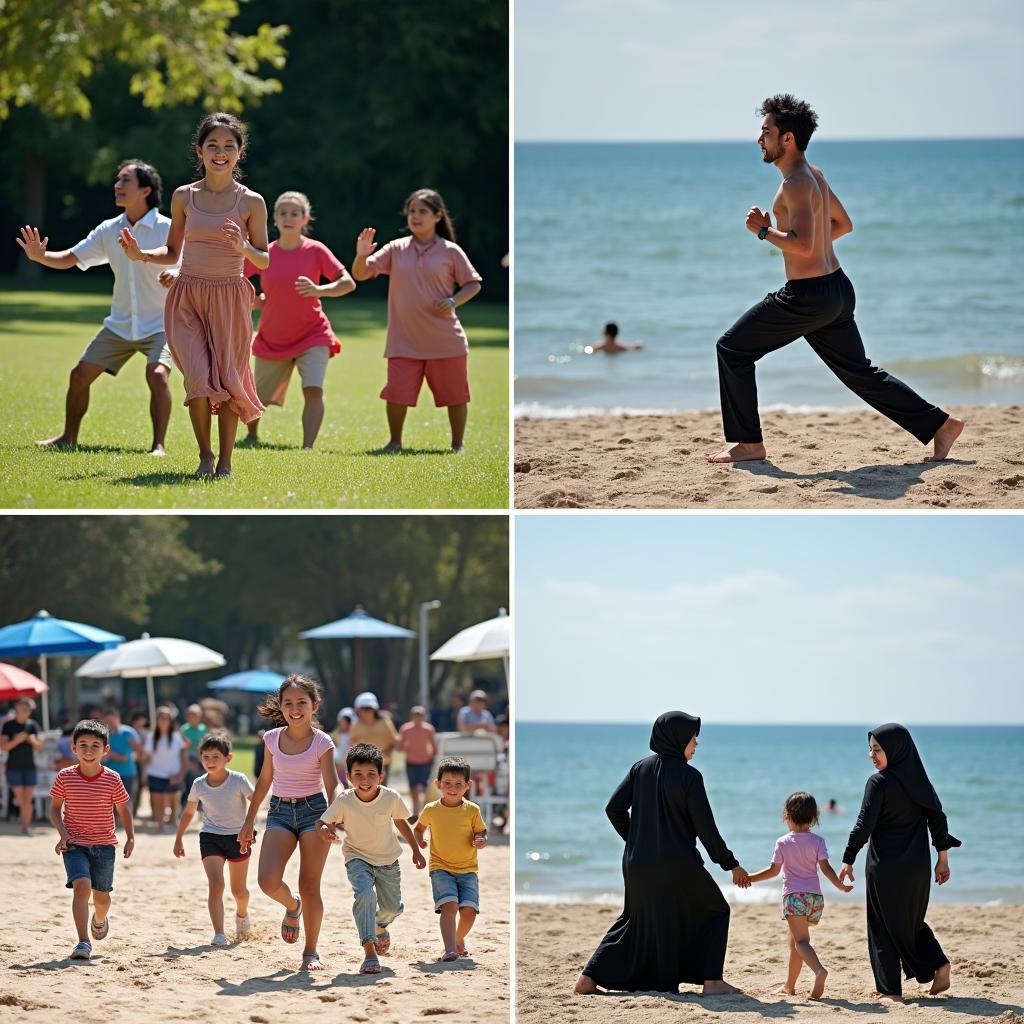
Absolutely, and these differences are quite fascinating as they often reflect deeper cultural values around concepts like personal space, leisure, and community. From my observations and reading, I’d say one notable distinction lies in the collective versus individual orientation. In many East Asian cultures – China, Korea, Vietnam – public spaces tend to be sites of communal activity. You’ll frequently see multi-generational gatherings, group exercises performed in unison, or elaborate picnics involving extended family networks. This reflects a fundamentally collectivist worldview where leisure is conceptualized as a shared rather than solitary experience.
In contrast, in many Western contexts, particularly in Northern European and North American cultures, there’s often greater emphasis on individual recreation – solo jogging, personal contemplation, or small nuclear family units maintaining their own discrete spaces even within public areas. This isn’t to say one approach is inherently superior – both have their merits and drawbacks – but they do stem from different conceptions of the relationship between individual and society.
Religious and gender norms also play significant roles. In some conservative Islamic societies, beaches and parks may feature gender-segregated areas or require particular dress codes, reflecting religious prescriptions around modesty and gender interaction. Mediterranean and Latin American cultures often exhibit what might be called a “festive approach” to beaches – they’re vibrant social theaters where families spend entire days, multiple generations mixing, music playing, food being elaborately prepared and shared.
Climate obviously factors in too – Scandinavian cultures have developed sophisticated relationships with nature that accommodate harsh winters, like the Norwegian concept of “friluftsliv” (open-air living) which elevates outdoor activity to a philosophical principle, or the Finnish tradition of lakeside saunas followed by cold water immersion. These represent culturally specific ways of interfacing with natural environments.
What I find particularly interesting is how globalization and migration are creating hybrid practices. In multicultural cities like London, Toronto, or Singapore, you’ll see fascinating blends – Korean families practicing communal picnicking in British parks, or Middle Eastern families adapting beach practices in Western contexts, creating entirely new cultural synthesis.
Phân tích:
- Structure: Sophisticated multilayered analysis: collectivist vs individualist → religious/gender dimensions → climate factors → globalization effects
- Vocabulary: Anthropological và sociological language (collective orientation, communal activity, fundamentally collectivist worldview, gender-segregated, cultural synthesis, interfacing with environments)
- Grammar: Full native-level range với embedding, nominalizations, participle phrases
- Critical Thinking: Shows deep cultural knowledge với specific concepts (friluftsliv), avoids stereotyping by qualifying statements, acknowledges complexity and change (globalization effects), demonstrates intercultural awareness
💡 Key Language Features:
- Hedging to avoid overgeneralization: tend to be, often, may feature, might be called
- Academic register: conceptualized as, stem from different conceptions, religious prescriptions, elevates to a philosophical principle
- Cultural terminology: friluftsliv, multi-generational gatherings, nuclear family units
- Sophisticated transitions: In contrast, This isn’t to say, What I find particularly interesting
 Văn hóa sử dụng công viên và bãi biển khác nhau giữa các nền văn hóa trên thế giới
Từ vựng và cụm từ quan trọng
Topic-Specific Vocabulary
| Từ vựng/Cụm từ | Loại từ | Phiên âm | Nghĩa tiếng Việt | Ví dụ | Collocation |
|---|---|---|---|---|---|
| pristine | adj | /ˈprɪstiːn/ | nguyên sơ, hoang sơ | The beach has pristine white sand. | pristine condition, pristine environment, pristine waters, pristine beauty |
| secluded | adj | /sɪˈkluːdɪd/ | hẻo lánh, riêng tư | I prefer secluded spots for meditation. | secluded beach, secluded area, secluded corner, secluded location |
| tranquility | noun | /træŋˈkwɪləti/ | sự yên tĩnh, thanh bình | The tranquility of the park helps me relax. | sense of tranquility, peaceful tranquility, find tranquility, seek tranquility |
| therapeutic | adj | /ˌθerəˈpjuːtɪk/ | có tác dụng chữa bệnh, thư giãn | Walking by the sea is therapeutic. | therapeutic effect, therapeutic benefits, therapeutic value, therapeutic properties |
| rejuvenate | verb | /rɪˈdʒuːvəneɪt/ | làm trẻ lại, phục hồi sinh lực | Nature rejuvenates my mind and body. | rejuvenate the body, rejuvenate the spirit, feel rejuvenated, completely rejuvenated |
| sanctuary | noun | /ˈsæŋktʃuəri/ | nơi trú ẩn, nơi thanh tịnh | This beach is my personal sanctuary. | personal sanctuary, natural sanctuary, wildlife sanctuary, peaceful sanctuary |
| azure | adj | /ˈæʒər/ | màu xanh da trời, xanh lam | The azure waters are breathtaking. | azure sky, azure waters, azure blue, azure sea |
| serenity | noun | /səˈrenəti/ | sự thanh thản, tĩnh lặng | I find serenity by the ocean. | sense of serenity, peaceful serenity, complete serenity, inner serenity |
| meditative | adj | /ˈmedɪteɪtɪv/ | thiền định, trầm tư | The sound of waves has a meditative quality. | meditative state, meditative practice, meditative atmosphere, meditative mood |
| picturesque | adj | /ˌpɪktʃəˈresk/ | đẹp như tranh | It’s a picturesque coastal town. | picturesque scenery, picturesque village, picturesque setting, picturesque landscape |
| sprawling | adj | /ˈsprɔːlɪŋ/ | trải dài rộng | The park has sprawling green lawns. | sprawling park, sprawling beach, sprawling gardens, sprawling landscape |
| bustling | adj | /ˈbʌslɪŋ/ | nhộn nhịp, tấp nập | I escape from the bustling city. | bustling city, bustling streets, bustling atmosphere, bustling crowd |
| coastal | adj | /ˈkəʊstl/ | thuộc về bờ biển | I enjoy coastal walks. | coastal area, coastal region, coastal path, coastal town |
| shoreline | noun | /ˈʃɔːlaɪn/ | bờ biển, bờ hồ | Walking along the shoreline is peaceful. | rocky shoreline, sandy shoreline, along the shoreline, beautiful shoreline |
| verdant | adj | /ˈvɜːdnt/ | xanh tươi, um tùm | The park has verdant spaces. | verdant landscape, verdant hills, verdant vegetation, verdant surroundings |
| unwind | verb | /ˌʌnˈwaɪnd/ | thư giãn, xả stress | I go there to unwind after work. | unwind completely, help unwind, need to unwind, place to unwind |
| invigorate | verb | /ɪnˈvɪɡəreɪt/ | làm tràn đầy sinh lực | The sea breeze invigorates me. | invigorate the body, feel invigorated, invigorate the mind, invigorate the senses |
| restorative | adj | /rɪˈstɔːrətɪv/ | phục hồi, hồi phục | Nature has restorative powers. | restorative effect, restorative properties, restorative experience, restorative break |
| panoramic | adj | /ˌpænəˈræmɪk/ | toàn cảnh | The beach offers panoramic views. | panoramic view, panoramic scenery, panoramic vista, panoramic perspective |
| idyllic | adj | /ɪˈdɪlɪk/ | bình dị đẹp đẽ, như tiên cảnh | It’s an idyllic spot for relaxation. | idyllic setting, idyllic location, idyllic scene, idyllic environment |
Idiomatic Expressions & Advanced Phrases
| Cụm từ | Nghĩa | Ví dụ sử dụng | Band điểm |
|---|---|---|---|
| escape from the hustle and bustle | trốn khỏi sự ồn ào, nhộn nhịp | I go to the beach to escape from the hustle and bustle of city life. | 7.5-8 |
| watch the world go by | ngồi quan sát cuộc sống trôi qua | I like to sit on a bench and watch the world go by. | 7.5-8 |
| put things into perspective | nhìn mọi thứ theo đúng tỷ lệ | The vastness of the ocean helps me put things into perspective. | 8-9 |
| recharge one’s batteries | nạp lại năng lượng | I need to visit the beach to recharge my batteries. | 7-7.5 |
| a breath of fresh air | một luồng gió mới, sự thay đổi tích cực | The park is a breath of fresh air in this concrete jungle. | 7.5-8 |
| get away from it all | thoát khỏi mọi thứ | The beach is where I go to get away from it all. | 7-7.5 |
| find one’s inner peace | tìm thấy sự bình yên nội tâm | Nature helps me find my inner peace. | 7.5-8 |
| be at one with nature | hòa mình với thiên nhiên | When I’m there, I feel at one with nature. | 7.5-8 |
| a stone’s throw away | rất gần, chỉ vài bước chân | The park is just a stone’s throw away from my house. | 7.5-8 |
| off the beaten track | xa khu vực đông người, hẻo lánh | I prefer beaches that are off the beaten track. | 8-8.5 |
| the call of the wild | tiếng gọi của thiên nhiên hoang dã | I often feel the call of the wild and head to the mountains. | 8-9 |
| commune with nature | giao cảm với thiên nhiên | The park allows me to commune with nature. | 8-8.5 |
Discourse Markers (Từ Nối Ý Trong Speaking)
Để bắt đầu câu trả lời:
- 📝 Well,… – Khi cần thời gian suy nghĩ một chút, tạo tính tự nhiên
- 📝 Actually,… – Khi muốn đưa ra góc nhìn khác hoặc thông tin surprising
- 📝 To be honest,… – Khi đưa ra ý kiến thật lòng, chân thành
- 📝 I’d say that… – Cách mềm mại để đưa ra quan điểm cá nhân
- 📝 From my perspective,… – Nhấn mạnh đây là góc nhìn của bạn
- 📝 Looking at it from another angle,… – Khi muốn xem xét khía cạnh khác
Để bổ sung ý:
- 📝 On top of that,… – Thêm vào đó, hơn nữa
- 📝 What’s more,… – Hơn thế nữa
- 📝 Not to mention… – Chưa kể đến
- 📝 In addition to that,… – Thêm vào đó
- 📝 Beyond that,… – Ngoài ra
- 📝 Another thing worth mentioning is… – Một điều khác đáng nói là
Để đưa ra quan điểm cân bằng:
- 📝 On the one hand,… On the other hand,… – Một mặt… mặt khác
- 📝 While it’s true that…, we also need to consider… – Mặc dù đúng là… nhưng ta cũng cần xem xét
- 📝 That being said,… – Dù vậy thì, tuy nhiên
- 📝 Having said that,… – Đã nói như vậy nhưng
- 📝 From one perspective… but from another… – Từ góc độ này… nhưng từ góc độ khác
Để kết luận:
- 📝 All in all,… – Tóm lại, nhìn chung
- 📝 At the end of the day,… – Cuối cùng thì
- 📝 Ultimately,… – Sau cùng, về cơ bản
- 📝 In the final analysis,… – Khi phân tích cuối cùng
- 📝 When all is said and done,… – Khi mọi thứ đã được nói và làm
Để làm rõ hoặc giải thích:
- 📝 What I mean is… – Ý tôi là
- 📝 In other words,… – Nói cách khác
- 📝 To put it another way,… – Nói theo cách khác
- 📝 That is to say,… – Nghĩa là
Grammatical Structures Ấn Tượng
1. Conditional Sentences (Câu điều kiện):
Mixed conditional:
- Formula: If + past perfect, would + bare infinitive (past condition, present result)
- Ví dụ: “If governments had invested more in green spaces decades ago, cities would be healthier environments now.”
Inversion for emphasis:
- Formula: Should/Were/Had + subject + verb
- Ví dụ: “Were I to choose the perfect relaxation spot, it would undoubtedly be a secluded beach.”
- Ví dụ: “Had I not discovered this park, I would still be struggling with work-related stress.”
2. Relative Clauses (Mệnh đề quan hệ):
Non-defining relative clauses:
- Formula: …, which/who/where + clause, …
- Ví dụ: “My Khe Beach, which is located in Da Nang, offers pristine conditions for relaxation.”
- Ví dụ: “The park, where I spend most weekends, has become an integral part of my routine.”
Reduced relative clauses:
- Formula: Noun + present/past participle + …
- Ví dụ: “The sound of waves crashing against the shore has a meditative quality.”
- Ví dụ: “People seeking tranquility often gravitate toward coastal areas.”
3. Passive Voice (Câu bị động):
Impersonal passive (Academic style):
- Formula: It is thought/believed/said/estimated that…
- Ví dụ: “It’s been estimated that for every pound spent on parks, there’s a three-pound return in social value.”
- Ví dụ: “It’s widely believed that exposure to nature reduces cortisol levels significantly.”
Passive with reporting verbs:
- Formula: Subject + is/are + said/thought/believed + to infinitive
- Ví dụ: “Coastal environments are thought to have profound effects on mental well-being.”
4. Cleft Sentences (Câu chẻ):
What-cleft:
- Formula: What + subject + verb + is/was + noun phrase/clause
- Ví dụ: “What I find most appealing about this beach is its sense of seclusion.”
- Ví dụ: “What really stands out in my memory is the simple pleasure of building sandcastles.”
It-cleft:
- Formula: It + is/was + focus + that/who + clause
- Ví dụ: “It’s the tranquility of the place that draws me back repeatedly.”
- Ví dụ: “It was during my childhood beach visits that I developed this lifelong love of the ocean.”
The thing that-cleft:
- Formula: The thing/aspect/reason that… is…
- Ví dụ: “The thing that I appreciate most is how the park democratizes access to nature.”
5. Participle Clauses:
Present participle (simultaneous actions):
- Ví dụ: “Standing on the beach, watching the sunset, I feel all my worries disappear.”
- Ví dụ: “Being surrounded by nature, I find it easier to think clearly.”
Past participle (passive meaning):
- Ví dụ: “Nestled between two hills, the park offers a peaceful retreat from urban chaos.”
- Ví dụ: “Located just minutes from the city center, it’s remarkably accessible.”
6. Inversion for Emphasis:
Negative adverbials:
- Formula: Never/Rarely/Seldom + auxiliary + subject + verb
- Ví dụ: “Rarely have I experienced such profound peace as I do at this beach.”
- Ví dụ: “Never before had I realized the therapeutic power of natural spaces.”
7. Wish/If only (expressing regrets or desires):
- Ví dụ: “I wish more cities would prioritize green space development.”
- Ví dụ: “If only I lived closer to the beach, I would visit it daily.”
8. Subjunctive mood (formal suggestions/requirements):
- Formula: It is essential/vital/crucial that + subject + bare infinitive
- Ví dụ: “It’s essential that urban planners prioritize access to natural spaces.”
- Ví dụ: “I suggest that governments invest more heavily in park maintenance.”
Với hơn 5000 từ hướng dẫn chi tiết này, bạn đã có đủ công cụ để tự tin chinh phục chủ đề “describe a park or beach where you go to relax” trong IELTS Speaking. Hãy nhớ rằng điều quan trọng nhất không phải là học thuộc template, mà là hiểu rõ cách structure ideas, sử dụng vocabulary phù hợp với context, và most importantly – nói một cách tự nhiên, chân thực từ trải nghiệm bản thân. Practice regularly, record yourself, và không ngừng cải thiện. Good luck với kỳ thi IELTS của bạn!


