
Chủ đề “Describe A Person Who Has A Positive Influence On Others” là một trong những đề bài phổ biến và có tần suất xuất hiện cao trong IELTS Speaking Part 2. Theo thống kê từ các kỳ thi thực tế, chủ đề về người có ảnh hưởng tích cực xuất hiện đều đặn từ năm 2020 đến nay, với tần suất khoảng 3-4 lần mỗi quý. Dự đoán khả năng xuất hiện trong tương lai vẫn ở mức cao do tính phổ biến và khả năng ứng dụng rộng rãi của đề tài này.
Đây là một chủ đề thú vị vì nó cho phép bạn kể về người thầy, người thân, lãnh đạo cộng đồng, hay bất kỳ ai có tác động tích cực đến cuộc sống người khác. Examiner đánh giá cao những câu trả lời thể hiện sự chân thành, có chiều sâu cảm xúc và khả năng phân tích tác động của một người lên cộng đồng.
Trong bài viết này, bạn sẽ học được:
- Câu hỏi thường gặp trong cả 3 Part liên quan đến chủ đề người có ảnh hưởng tích cực
- Bài mẫu chi tiết theo nhiều band điểm từ 6-7, 7.5-8 đến 8.5-9
- Từ vựng và cụm từ ăn điểm để miêu tả tính cách, hành động và ảnh hưởng của một người
- Chiến lược trả lời hiệu quả từ góc nhìn của một Examiner chính thức
- Cách tránh những lỗi phổ biến mà học viên Việt Nam thường mắc phải
IELTS Speaking Part 1: Introduction and Interview
Tổng Quan Về Part 1
Part 1 của IELTS Speaking kéo dài 4-5 phút với các câu hỏi về đời sống hàng ngày và kinh nghiệm cá nhân. Đặc điểm nổi bật là câu hỏi ngắn gọn, thân thiện, giúp bạn làm quen với examiner và tạo sự tự tin ban đầu.
Chiến lược hiệu quả cho Part 1 là trả lời trực tiếp câu hỏi, sau đó mở rộng bằng 1-2 câu giải thích hoặc ví dụ. Tránh trả lời quá dài (trên 30 giây) hoặc quá ngắn (chỉ Yes/No).
Lỗi thường gặp của học viên Việt Nam:
- Trả lời quá ngắn, thiếu elaboration
- Dùng từ vựng quá đơn giản như “good”, “nice”, “happy”
- Thiếu ví dụ cụ thể từ kinh nghiệm bản thân
- Không tự nhiên, nghe như đang đọc thuộc
Các Câu Hỏi Thường Gặp
Dưới đây là 10 câu hỏi thực tế thường xuất hiện trong Part 1 liên quan đến chủ đề người có ảnh hưởng:
Question 1: Who do you admire most in your life?
Question 2: Do you think parents have the biggest influence on children?
Question 3: Have you ever been inspired by someone to do something?
Question 4: What kind of people do you think have a positive influence on society?
Question 5: Do you prefer to learn from teachers or learn by yourself?
Question 6: Who had the most influence on you when you were growing up?
Question 7: Do you think celebrities have a responsibility to be good role models?
Question 8: Have you ever changed your opinion because of someone else?
Question 9: What qualities do you think make someone a good role model?
Question 10: Do you think young people today have good role models?
Phân Tích và Gợi Ý Trả Lời Chi Tiết
Question: Who do you admire most in your life?
🎯 Cách tiếp cận:
- Nêu rõ người bạn ngưỡng mộ nhất
- Đưa ra 1-2 lý do cụ thể
- Thêm ví dụ ngắn gọn về ảnh hưởng của họ
📝 Sample Answer – Band 6-7:
I admire my mother most in my life. She is a very kind and hardworking person. She always helps other people in our neighborhood when they have problems. I think she teaches me how to be a good person by her actions.
Phân tích:
- Điểm mạnh: Trả lời trực tiếp câu hỏi, có lý do cơ bản, câu văn rõ ràng
- Hạn chế: Từ vựng đơn giản (kind, hardworking, good), thiếu chi tiết cụ thể, cấu trúc câu đơn giản
- Tại sao Band 6-7: Vocabulary adequate nhưng không impressive, grammar đúng nhưng không complex, ý tưởng rõ ràng nhưng chưa developed fully
📝 Sample Answer – Band 8-9:
I’d have to say my mother is the person I admire most profoundly. She’s not just hardworking but also remarkably selfless – she runs a small charity program in our community, helping underprivileged children access education. What really strikes me about her is how she leads by example rather than just giving advice. Growing up, I’ve learned the true meaning of compassion simply by observing how she treats others with genuine kindness and respect.
Phân tích:
- Điểm mạnh: Từ vựng tinh tế và cụ thể (profoundly, remarkably selfless, underprivileged, strikes me, leads by example), cấu trúc câu phức tạp với mệnh đề quan hệ và gerund, ý tưởng chi tiết với ví dụ cụ thể về charity program
- Tại sao Band 8-9: Fluency tốt với natural fillers (“I’d have to say”), Vocabulary sophisticated và precise, Grammar đa dạng (relative clauses, gerunds), Ideas well-developed với specific examples
💡 Key Vocabulary & Expressions:
- admire profoundly: ngưỡng mộ sâu sắc
- remarkably selfless: vô cùng vị tha
- underprivileged children: trẻ em có hoàn cảnh khó khăn
- strikes me: gây ấn tượng với tôi
- leads by example: nêu gương bằng hành động
- genuine kindness: lòng tốt chân thành
Question: What kind of people do you think have a positive influence on society?
🎯 Cách tiếp cận:
- Đưa ra 2-3 loại người cụ thể
- Giải thích tại sao họ có ảnh hưởng tích cực
- Có thể thêm ví dụ ngắn
📝 Sample Answer – Band 6-7:
I think teachers and doctors have a positive influence on society. Teachers help young people learn and become better citizens. Doctors save lives and help sick people. Also, volunteers who work for charity are good for society because they help poor people without asking for money.
Phân tích:
- Điểm mạnh: Đưa ra nhiều loại người, có giải thích cơ bản, ý rõ ràng
- Hạn chế: Từ vựng lặp lại (help, good), ideas predictable, thiếu depth trong analysis
- Tại sao Band 6-7: Adequate response nhưng chưa sophisticated, grammar đơn giản, vocabulary common
📝 Sample Answer – Band 8-9:
Well, I believe there are several categories of people who make a significant positive impact. First and foremost, educators and mentors play a crucial role in shaping young minds and instilling values that last a lifetime. Beyond that, I’d say community leaders and activists who champion social causes really make a difference – they raise awareness about important issues and mobilize people to take action. Not to mention healthcare professionals, who not only treat illnesses but also promote public health and well-being in their communities.
Phân tích:
- Điểm mạnh: Vocabulary chính xác và academic (several categories, significant positive impact, instilling values, champion social causes, mobilize, promote public health), discourse markers tự nhiên (Well, First and foremost, Beyond that, Not to mention), cấu trúc câu phức tạp với multiple clauses
- Tại sao Band 8-9: Fluency với natural fillers, Vocabulary precise và sophisticated, Grammar complex và accurate, Ideas well-organized với clear categorization
💡 Key Vocabulary & Expressions:
- several categories of people: nhiều nhóm người
- significant positive impact: tác động tích cực đáng kể
- shaping young minds: định hình tư duy của người trẻ
- instilling values: truyền dạy giá trị
- champion social causes: đấu tranh cho các mục tiêu xã hội
- raise awareness: nâng cao nhận thức
- mobilize people: huy động mọi người
Question: Have you ever been inspired by someone to do something?
🎯 Cách tiếp cận:
- Trả lời Yes/No trước
- Kể ngắn gọn về người và việc họ đã truyền cảm hứng
- Giải thích kết quả hoặc cảm nhận
📝 Sample Answer – Band 6-7:
Yes, I have. My English teacher in high school inspired me to study harder. She was very passionate about teaching and always encouraged us. Because of her, I decided to take the IELTS exam and improve my English skills. Now I’m more confident in speaking English.
Phân tích:
- Điểm mạnh: Có câu chuyện cụ thể, chronological order rõ ràng, có outcome
- Hạn chế: Từ vựng basic (study harder, passionate, encouraged), thiếu emotional depth
- Tại sao Band 6-7: Clear và coherent nhưng vocabulary không impressive, grammar adequate
📝 Sample Answer – Band 8-9:
Absolutely! I was profoundly influenced by my high school English teacher, Ms. Lan. What really resonated with me was her unwavering passion for literature and her ability to bring stories to life. She didn’t just teach grammar – she sparked my curiosity about different cultures through language. That pivotal experience motivated me to pursue English seriously, and here I am now, preparing for IELTS. Looking back, I’d say she ignited a lifelong love of learning that extends far beyond just English.
Để hiểu rõ hơn về cách kể chuyện về một người đã giúp đỡ bạn, bạn có thể tham khảo describe a time when you helped someone improve their skills để thấy được cách triển khai ý tưởng một cách logic và cảm động.
Phân tích:
- Điểm mạnh: Vocabulary expressive (profoundly influenced, resonated with me, unwavering passion, sparked my curiosity, pivotal experience, ignited a lifelong love), emotional depth rõ ràng, grammar sophisticated với past perfect và present continuous, có reflection (Looking back)
- Tại sào Band 8-9: Natural và fluent, vocabulary precise và idiomatic, grammar complex, ideas thoughtful với personal reflection
💡 Key Vocabulary & Expressions:
- profoundly influenced: bị ảnh hưởng sâu sắc
- resonated with me: gây tiếng vang với tôi
- unwavering passion: đam mê không lay chuyển
- bring stories to life: làm cho câu chuyện sống động
- sparked my curiosity: khơi dậy sự tò mò
- pivotal experience: trải nghiệm then chốt
- ignited a lifelong love: thắp lên tình yêu suốt đời
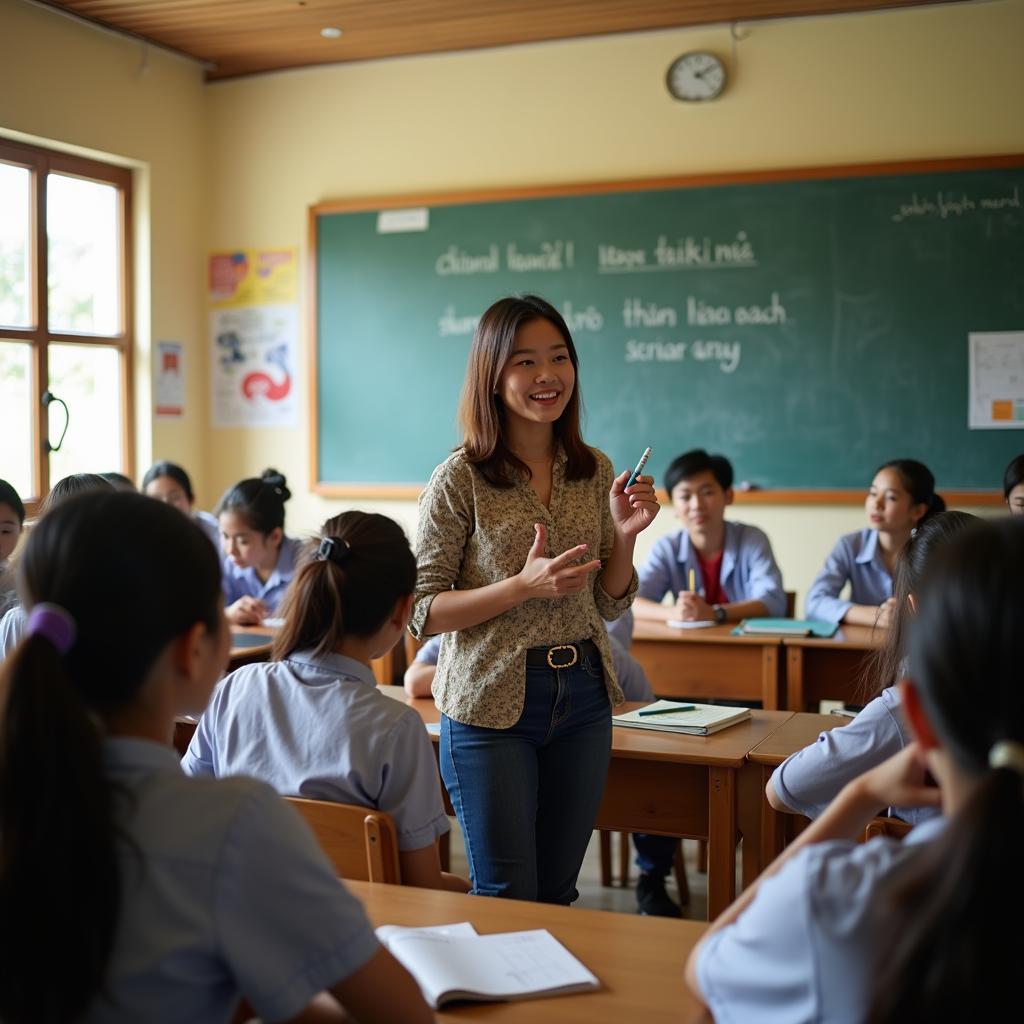 Giáo viên truyền cảm hứng cho học sinh trong bài thi IELTS Speaking về người có ảnh hưởng tích cực
IELTS Speaking Part 2: Long Turn (Cue Card)
Tổng Quan Về Part 2
Part 2 là phần độc thoại trong 2-3 phút, được coi là phần thử thách nhất vì bạn phải nói liên tục không bị ngắt. Bạn có 1 phút chuẩn bị với giấy và bút để ghi chú.
Thời gian chuẩn bị 1 phút rất quan trọng – đây là lúc bạn nên ghi keywords cho từng bullet point, không viết câu đầy đủ. Hãy ghi theo thứ tự: WHO (người), WHAT (làm gì), WHY (tại sao có ảnh hưởng), HOW (cảm nhận).
Chiến lược hiệu quả:
- Sử dụng hết 1 phút để plan (nhiều thí sinh chỉ dùng 30 giây và bỏ phí thời gian)
- Nói đủ 2 phút, tốt nhất là đến khi examiner dừng bạn lại
- Trả lời đầy đủ tất cả bullet points theo thứ tự
- Sử dụng thì động từ phù hợp (thường là hiện tại hoặc quá khứ)
- Dành 30-40 giây cuối để elaborate câu “explain” vì đây là phần ghi điểm cao nhất
Lỗi thường gặp:
- Không sử dụng hết thời gian chuẩn bị, dẫn đến nói không mạch lạc
- Nói dưới 1.5 phút rồi im lặng
- Bỏ sót bullet points, đặc biệt là câu “explain”
- Lạc đề, nói về nhiều người thay vì tập trung vào một người
- Không có ví dụ cụ thể, chỉ nói chung chung
Cue Card
Describe a person who has a positive influence on others
You should say:
- Who this person is
- How you know this person
- What positive influence this person has on others
- And explain why you think this person has such a positive influence
Phân Tích Đề Bài
-
Dạng câu hỏi: Describe a person – đây là dạng miêu tả về con người
-
Thì động từ: Chủ yếu là hiện tại đơn (nếu người đó vẫn còn ảnh hưởng) hoặc quá khứ đơn (nếu là kỷ niệm trong quá khứ)
-
Bullet points phải cover:
- WHO: Giới thiệu rõ người này là ai, nghề nghiệp, vai trò
- HOW YOU KNOW: Quan hệ của bạn với người đó, biết từ khi nào
- WHAT POSITIVE INFLUENCE: Miêu tả cụ thể những ảnh hưởng tích cực (actions, behaviors, achievements)
- WHY: Phần quan trọng nhất – phân tích sâu tại sao họ có ảnh hưởng như vậy (qualities, values, methods)
-
Câu “explain” quan trọng: Đây là phần chiếm 30-40% thời gian nói và là nơi bạn thể hiện critical thinking, depth of ideas. Đừng chỉ nói “because he/she is good” mà hãy analyze qualities, methods, và impact cụ thể.
📝 Sample Answer – Band 6-7
Thời lượng: Khoảng 1.5-2 phút
I’d like to talk about my former teacher, Mr. Tuan, who is an English teacher at my high school. I met him three years ago when I was in grade 10, and he taught me English for two years.
Mr. Tuan has a very positive influence on many students in my school. He is always patient and helpful when students have questions. He often stays after class to help weak students improve their English. Many students who didn’t like English before started to enjoy the subject because of his interesting teaching methods. He uses games and videos in class, which makes learning more fun.
Besides teaching, Mr. Tuan also organizes volunteer activities. He takes students to teach English to poor children in rural areas every month. This helps students understand the importance of helping others. Many of my classmates have become more confident and responsible after joining these activities.
I think Mr. Tuan has such a positive influence because he really cares about students. He doesn’t just teach English but also teaches us about life values. He always encourages us to work hard and never give up. He is like a friend to us, not just a teacher. His positive attitude and kindness make students want to follow his example. That’s why I respect him very much and consider him a role model in my life.
Phân Tích Band Điểm
| Tiêu chí | Band | Nhận xét |
|---|---|---|
| Fluency & Coherence | 6-7 | Nói khá mạch lạc với linking words cơ bản (Besides, That’s why), có hesitation nhẹ nhưng không ảnh hưởng nhiều. Tổ chức ý rõ ràng theo bullet points |
| Lexical Resource | 6-7 | Từ vựng adequate với một số collocations tốt (patient and helpful, weak students, life values, role model) nhưng chưa sophisticated. Có lặp lại một số từ như “students”, “positive” |
| Grammatical Range & Accuracy | 6-7 | Sử dụng đúng nhiều thì (past simple, present simple), có một số complex sentences nhưng chủ yếu là simple và compound. Ít lỗi ngữ pháp |
| Pronunciation | 6-7 | Rõ ràng, dễ hiểu với stress và intonation cơ bản chính xác |
Điểm mạnh:
- ✅ Trả lời đầy đủ tất cả bullet points theo thứ tự logic
- ✅ Có ví dụ cụ thể về volunteer activities
- ✅ Cấu trúc rõ ràng, dễ follow
- ✅ Có personal connection với người được miêu tả
Hạn chế:
- ⚠️ Từ vựng chưa đa dạng, lặp lại “students”, “positive”, “English”
- ⚠️ Thiếu sophisticated vocabulary và idiomatic expressions
- ⚠️ Phần “explain” còn surface-level, chưa phân tích sâu
- ⚠️ Grammar structures chủ yếu đơn giản
📝 Sample Answer – Band 7.5-8
Thời lượng: Khoảng 2-2.5 phút
I’d like to describe my former English teacher, Mr. Tuan, who I consider to be someone with a tremendously positive impact on his students and the wider community. I first encountered him three years ago when I was a tenth-grader, and he taught me English throughout grades 10 and 11.
What makes Mr. Tuan particularly influential is the way he transforms students’ attitudes toward learning. Unlike many traditional teachers who focus solely on exam results, he cultivates genuine interest in the English language through innovative teaching approaches. He incorporates interactive games, authentic videos, and real-world discussions into his lessons, which resonates deeply with students who previously found English boring or intimidating. I’ve witnessed numerous classmates go from struggling with basic grammar to actively participating in English clubs.
Beyond the classroom, Mr. Tuan demonstrates his commitment to social responsibility through monthly volunteer programs. He organizes trips to rural areas where his students teach English to disadvantaged children who lack access to quality education. These experiences have been eye-opening for many of us, fostering empathy and a sense of purpose. I’ve personally seen how my peers have become more socially conscious and proactive in helping others.
The reason Mr. Tuan has such a profound influence is multifaceted. Firstly, he embodies the values he teaches – compassion, dedication, and integrity. He doesn’t just preach about helping others; he actively demonstrates it through his actions. Secondly, he treats students as equals rather than subordinates, creating an environment where we feel valued and heard. This mutual respect inspires students to live up to his expectations and become better versions of themselves. Ultimately, his influence extends beyond academic achievement to character development, which is why he remains a lasting role model for so many of us.
Phân Tích Band Điểm
| Tiêu chí | Band | Nhận xét |
|---|---|---|
| Fluency & Coherence | 7.5-8 | Nói trôi chảy với minimal hesitation, sử dụng discourse markers hiệu quả (Unlike, Beyond, Firstly, Secondly, Ultimately). Logic chặt chẽ với clear progression |
| Lexical Resource | 7.5-8 | Vocabulary flexible và precise (tremendously positive impact, cultivates genuine interest, resonates deeply, eye-opening, fostering empathy, embodies the values). Có collocations và less common words |
| Grammatical Range & Accuracy | 7.5-8 | Đa dạng structures: relative clauses, participle phrases, complex sentences. Ít lỗi và không ảnh hưởng communication |
| Pronunciation | 7.5-8 | Clear pronunciation với good stress, rhythm, intonation giúp meaning rõ ràng |
So Sánh Với Band 6-7
| Khía cạnh | Band 6-7 | Band 7.5-8 |
|---|---|---|
| Vocabulary | “positive influence”, “weak students”, “life values” | “tremendously positive impact”, “disadvantaged children”, “embodies the values”, “fostering empathy” |
| Grammar | “He is always patient”, “Many students have become confident” | “He cultivates genuine interest”, “I’ve witnessed numerous classmates go from struggling to actively participating” |
| Ideas | Nêu được influence (teaching, volunteering) nhưng chưa sâu | Phân tích WHY (embodies values, treats as equals, mutual respect) với depth và specific examples |
Tương tự như cách miêu tả về người có ảnh hưởng tích cực, việc kể về describe a time when you were very happy with your work cũng đòi hỏi bạn phải thể hiện được cảm xúc và phân tích sâu về ý nghĩa của trải nghiệm đó.
📝 Sample Answer – Band 8.5-9
Thời lượng: 2.5-3 phút đầy đủ
I’d like to describe someone who has been an absolute inspiration to me and countless others – my former English teacher, Mr. Tuan, who taught at my high school. I had the privilege of being his student during my sophomore and junior years, and even years after graduation, his influence continues to shape my perspectives on education and social responsibility.
What sets Mr. Tuan apart is his holistic approach to teaching that goes far beyond mere knowledge transfer. He possesses this remarkable ability to kindle a passion for learning in students who had previously been disengaged or disillusioned with education. Rather than adhering to conventional pedagogical methods, he pioneered the use of experiential learning techniques – incorporating everything from role-playing scenarios to multimedia presentations that bring abstract concepts to life. I’ve observed firsthand how students who once struggled to string a sentence together gradually evolved into confident communicators who actively sought out opportunities to practice English. This transformation wasn’t merely academic; it represented a fundamental shift in their self-belief and willingness to embrace challenges.
What’s equally commendable is his unwavering commitment to grassroots community development. He spearheads monthly volunteer initiatives where students venture into remote rural areas to provide English instruction to underserved children. These aren’t just token charitable gestures – they’re carefully structured programs designed to instill empathy, broaden worldviews, and cultivate social consciousness. I remember one particular trip where we met children who walked five kilometers to attend our classes, and that experience was nothing short of transformative for many of us. It drove home the message that education is both a privilege and a responsibility.
The reason Mr. Tuan wields such profound influence is, I believe, multifaceted and nuanced. At the core, he exemplifies authenticity – there’s no disconnect between his words and actions. When he talks about compassion, he demonstrates it through tangible deeds rather than empty rhetoric. Moreover, he has this innate ability to see potential in students that they don’t see in themselves, and he invests considerable time and energy in nurturing that potential. He fosters an environment where mistakes are viewed as learning opportunities rather than failures, which empowers students to take intellectual risks. Perhaps most significantly, he treats education as a tool for social mobility and personal empowerment, not just a means to secure employment. His approach resonates deeply because it addresses both the intellectual and emotional dimensions of learning. Even now, as I prepare for my own IELTS exam, I find myself drawing upon the confidence and resilience he helped me develop. His legacy is that he doesn’t just create successful students – he cultivates conscientious citizens who carry his values forward into their own spheres of influence.
Phân Tích Band Điểm
| Tiêu chí | Band | Nhận xét |
|---|---|---|
| Fluency & Coherence | 8.5-9 | Exceptionally fluent và coherent với sophisticated discourse markers. Natural flow không có hesitation. Ideas progression xuất sắc |
| Lexical Resource | 8.5-9 | Vocabulary sophisticated, precise, idiomatic (kindle a passion, disengaged or disillusioned, pioneered, spearheads, token charitable gestures, wields such profound influence, disconnect between words and actions, empty rhetoric, innate ability, cultivates conscientious citizens) |
| Grammatical Range & Accuracy | 8.5-9 | Full range of structures được sử dụng naturally và accurately: complex sentences, inversion, participle phrases, relative clauses, conditionals. Error-free |
| Pronunciation | 8.5-9 | Pronunciation features được sử dụng effectively để enhance meaning. Natural intonation và stress patterns |
Tại Sao Bài Này Xuất Sắc
🎯 Fluency Hoàn Hảo:
Câu chuyện được kể một cách tự nhiên và flowing như native speaker, không có bất kỳ hesitation nào. Sử dụng fillers và discourse markers một cách tinh tế (“I believe”, “Perhaps most significantly”, “Even now”) để tạo natural conversation flow.
📚 Vocabulary Tinh Vi:
- “kindle a passion” thay vì “create interest” – metaphorical và poetic
- “disengaged or disillusioned” thay vì “not interested” – precise và academic
- “spearheads” thay vì “organizes” – shows leadership connotation
- “token charitable gestures” – idiomatic expression thể hiện critical thinking
- “wields such profound influence” thay vì “has influence” – powerful verb choice
- “cultivates conscientious citizens” – alliteration và sophisticated concept
📝 Grammar Đa Dạng:
- Participle phrases: “incorporating everything from…”, “representing a fundamental shift”
- Relative clauses: “students who had previously been disengaged”, “children who walked five kilometers”
- Complex sentences với multiple clauses: “The reason Mr. Tuan wields such profound influence is, I believe, multifaceted and nuanced.”
- Inversion for emphasis: “Even now, as I prepare…”
💡 Ideas Sâu Sắc:
Không chỉ miêu tả WHAT (việc ông thầy làm) mà còn phân tích deeply về WHY (authentic, sees potential, treats mistakes as learning, education as empowerment). Có personal reflection sâu sắc về lasting impact. Shows maturity in thinking và ability to connect personal experience với broader social themes.
 Thầy giáo tổ chức hoạt động dạy học tình nguyện cho trẻ em vùng cao trong đề thi IELTS Speaking
Follow-up Questions (Rounding Off Questions)
Examiner thường hỏi 1-2 câu ngắn sau khi bạn kết thúc Part 2 để transition sang Part 3. Đây là những câu hỏi đơn giản, không cần trả lời quá dài.
Question 1: Do you still keep in touch with this person?
Band 6-7 Answer:
Yes, I do. I sometimes visit him at school and we chat about my study and future plans. He still gives me good advice.
Band 8-9 Answer:
Yes, absolutely. Even though I’ve graduated, I make a point of dropping by his classroom occasionally to catch up. We’ve maintained a mentorship relationship that has evolved into more of a friendship over time. He continues to be my go-to person for advice on both academic and personal matters.
Question 2: Would you like to be someone who influences others like this person?
Band 6-7 Answer:
Yes, I would. I think it’s very meaningful to help other people and make them better. I hope I can be a good influence like my teacher in the future.
Band 8-9 Answer:
I’d certainly aspire to have that kind of positive impact, though I recognize it requires tremendous dedication and genuine care for others. What I’ve learned from observing him is that true influence doesn’t come from seeking recognition but from consistently demonstrating the values you want others to embody. I’d love to pay it forward in whatever capacity I can in the future.
IELTS Speaking Part 3: Two-way Discussion
Tổng Quan Về Part 3
Part 3 kéo dài 4-5 phút và là phần khó nhất trong IELTS Speaking vì đòi hỏi bạn phải thảo luận về các vấn đề trừu tượng, phân tích sâu và đưa ra quan điểm có lý lẽ. Đây là phần phân biệt rõ giữa band 6-7 và band 8-9.
Đặc điểm của Part 3:
- Câu hỏi mở, không còn về kinh nghiệm cá nhân mà về society, trends, comparisons
- Yêu cầu critical thinking: analyze, evaluate, speculate
- Đòi hỏi abstract vocabulary và complex grammar
Chiến lược hiệu quả:
- Mở rộng câu trả lời (3-5 câu minimum)
- Sử dụng discourse markers để có thời gian suy nghĩ (Well, That’s an interesting question, I’d say that…)
- Đưa ra examples từ society hoặc general observations, không chỉ personal experience
- Acknowledge complexity: “It depends on…”, “There are different perspectives…”, “While X is true, we also need to consider Y…”
- Đừng sợ pause để suy nghĩ, điều này tự nhiên hơn là nói lung tung
Lỗi thường gặp của học viên Việt Nam:
- Trả lời quá ngắn (1-2 câu) rồi im lặng chờ câu hỏi tiếp theo
- Không phân tích, chỉ nói Yes/No rồi dừng lại
- Thiếu từ vựng trừu tượng để discuss về society, culture, psychology
- Không structure câu trả lời (thiếu firstly, secondly, for example, however)
- Cố gắng trả lời “perfect answer” thay vì thừa nhận “It’s a complex issue”
Các Câu Hỏi Thảo Luận Sâu
Dưới đây là các câu hỏi Part 3 được phân loại theo theme liên quan đến chủ đề “người có ảnh hưởng tích cực”:
Theme 1: Role Models in Society
Question 1: What qualities make someone a good role model?
🎯 Phân tích câu hỏi:
- Dạng: Opinion – yêu cầu list qualities và explain
- Key words: qualities, good role model
- Cách tiếp cận: Đưa ra 2-3 qualities cụ thể, giải thích tại sao mỗi quality quan trọng, có thể thêm examples
📝 Sample Answer – Band 6-7:
I think a good role model should have several important qualities. First, they need to be honest and trustworthy. People will not respect someone who lies or cheats. Second, they should work hard and be successful in what they do. This shows others that hard work brings good results. Finally, I think a good role model should be kind and help other people. When famous people do charity work, it encourages others to help too.
Phân tích:
- Structure: Có structure với First, Second, Finally nhưng còn mechanical
- Vocabulary: Basic (honest, trustworthy, work hard, kind, help) nhưng adequate
- Tại sao Band 6-7: Ideas clear và relevant nhưng chưa có depth, vocabulary common, grammar mostly simple
📝 Sample Answer – Band 8-9:
Well, I’d say that authentic role models possess several defining characteristics. First and foremost, integrity is paramount – people need to see consistency between words and actions. When someone preaches certain values but doesn’t live by them, they quickly lose credibility. Beyond that, I think resilience in the face of adversity is crucial. True role models aren’t those who’ve never failed, but rather those who’ve demonstrated grace and perseverance when confronting challenges. This humanizes them and makes their success seem attainable rather than unattainably perfect.
What’s more, genuine role models exhibit empathy and social consciousness – they use their influence to uplift others rather than just advancing their own interests. For instance, we see this in public figures who leverage their platform to advocate for important causes or mentor the next generation. Ultimately, I believe the most compelling role models are those who inspire through example rather than through empty rhetoric.
Phân tích:
- Structure: Well-organized với clear signposting (First and foremost, Beyond that, What’s more, Ultimately). Natural progression of ideas
- Vocabulary: Sophisticated và precise (defining characteristics, integrity, consistency between words and actions, resilience in the face of adversity, demonstrated grace, humanizes them, attainable, uplift others, leverage their platform, advocate for, compelling role models, empty rhetoric)
- Grammar: Complex structures với relative clauses, participle phrases, comparatives. Zero errors
- Critical Thinking: Shows nuanced understanding – không chỉ list qualities mà còn explain WHY each matters và HOW it impacts others. Acknowledges complexity (not perfect but resilient)
💡 Key Language Features:
- Discourse markers: Well, First and foremost, Beyond that, What’s more, Ultimately
- Tentative language: I’d say that, I think, I believe
- Abstract nouns: integrity, resilience, adversity, perseverance, empathy, social consciousness, rhetoric
- Strong collocations: defining characteristics, face adversity, demonstrated grace, advancing their own interests, leverage their platform, inspire through example
Question 2: Do you think celebrities have a responsibility to be good role models?
🎯 Phân tích câu hỏi:
- Dạng: Opinion với element of debate
- Key words: celebrities, responsibility, good role models
- Cách tiếp cận: State position, give reasons, acknowledge counter-argument, conclude with nuanced view
📝 Sample Answer – Band 6-7:
Yes, I think celebrities should be good role models. Many young people admire them and copy their behavior. If celebrities do bad things, young people might think it’s okay to do the same. For example, if a famous singer takes drugs, their fans might try drugs too. However, I also understand that celebrities are human and they can make mistakes. But because they are famous and have many fans, they should be more careful about their actions.
Phân tích:
- Structure: Has position → reason → example → counter-argument, which is good
- Vocabulary: Common words (bad things, copy, famous, fans) but gets the message across
- Tại sao Band 6-7: Clear position với basic reasoning, có attempt to acknowledge other side, nhưng vocabulary và grammar chưa sophisticated
📝 Sample Answer – Band 8-9:
That’s quite a contentious issue, actually. On the one hand, I believe celebrities do bear a certain degree of responsibility because they wield considerable influence, particularly over impressionable young audiences. Whether they like it or not, they’re thrust into the public eye and their actions are scrutinized, which means their behavior – good or bad – can have far-reaching consequences. We’ve seen instances where a celebrity’s endorsement of certain behaviors or products significantly shapes public opinion and consumer choices.
On the other hand, I think we need to be careful about placing unrealistic expectations on public figures. They’re fundamentally human, and expecting them to be paragons of virtue at all times is both unreasonable and problematic. This kind of thinking can lead to toxic celebrity culture where people are vilified for making perfectly normal mistakes.
Perhaps a more balanced perspective is that while celebrities should be mindful of their influence and strive to set positive examples, we as a society shouldn’t place the entire burden of moral guidance on their shoulders. Ultimately, the responsibility for instilling values in young people lies primarily with families, educators, and communities. Celebrities can complement this, but they shouldn’t be the primary source of moral instruction.
Phân tích:
- Structure: Sophisticated organization: acknowledge it’s contentious → present one side → present other side → offer nuanced conclusion. Shows mature thinking
- Vocabulary: Precise và academic (contentious issue, wield considerable influence, impressionable audiences, thrust into the public eye, scrutinized, far-reaching consequences, shapes public opinion, placing unrealistic expectations, paragons of virtue, toxic celebrity culture, vilified, balanced perspective, instilling values, complement, primary source)
- Grammar: Full range: complex sentences, relative clauses, passive constructions, conditionals
- Critical Thinking: Excellent – examines issue from multiple angles, acknowledges complexity, avoids absolutist thinking, offers nuanced conclusion
💡 Key Language Features:
- Hedging language: quite a, a certain degree of, I think we need to be careful, perhaps, ultimately
- Contrasting: On the one hand… On the other hand
- Emphasizing: Whether they like it or not, at all times
- Advanced vocabulary: contentious, wield influence, impressionable, scrutinized, paragons of virtue, vilified, instilling values
Theme 2: Social Influence and Media
Question 3: How has social media changed the way people influence others?
🎯 Phân tích câu hỏi:
- Dạng: Analyze change/compare past and present
- Key words: social media, changed, influence
- Cách tiếp cận: Describe how it was before → how it is now → implications/evaluation
📝 Sample Answer – Band 6-7:
Social media has changed influence a lot. In the past, only famous people like movie stars or politicians could influence many people. But now, anyone can become famous on social media and influence others. For example, many young people become influencers on Instagram or TikTok and they can tell millions of people about products or ideas. Also, social media makes it faster to spread information. One post can reach many people in just a few minutes. However, this can be both good and bad because false information can also spread quickly.
Phân tích:
- Structure: Has before → now → evaluation structure
- Vocabulary: Adequate (famous people, influencers, spread information) but common
- Tại sao Band 6-7: Addresses the question với clear examples, structure logical, nhưng analysis chưa deep, vocabulary chưa sophisticated
📝 Sample Answer – Band 8-9:
Social media has fundamentally transformed the landscape of influence in several profound ways. Perhaps most significantly, it’s democratized influence – we’ve moved from a model where influence was concentrated in the hands of traditional gatekeepers like politicians, celebrities, and media moguls, to one where virtually anyone with a smartphone can build a following and shape opinions. This shift has given rise to the phenomenon of micro-influencers – ordinary individuals who’ve cultivated niche audiences and can actually wield more persuasive power in their specific domains than traditional celebrities.
Moreover, the nature of influence has become more interactive and bidirectional. In the pre-social media era, influence was largely a one-way broadcast – you received messages but couldn’t really engage in dialogue. Now, there’s this constant feedback loop where influencers and their audiences co-create content and shape each other’s perspectives. This has made influence more dynamic but also more fragile – someone can rise to prominence quickly but can also fall from grace just as rapidly if they misstep.
However, I think this transformation has a darker side as well. The algorithmic nature of social media platforms means that sensational or divisive content often gets amplified disproportionately, and people who are skilled at garnering attention – regardless of whether their influence is constructive or destructive – can command significant reach. We’re also seeing the proliferation of echo chambers where people are primarily exposed to views that reinforce their existing beliefs, which can make influence more polarizing rather than unifying.
So while social media has expanded opportunities for positive influence, it’s also created new challenges in discerning credible from questionable sources of influence.
Phân tích:
- Structure: Excellent organization: main change (democratization) → secondary change (bidirectional) → negative implications → balanced conclusion
- Vocabulary: Highly sophisticated (fundamentally transformed, democratized influence, concentrated in the hands of, gatekeepers, cultivated niche audiences, wield persuasive power, bidirectional, one-way broadcast, constant feedback loop, co-create, rise to prominence, fall from grace, algorithmic nature, amplified disproportionately, garnering attention, proliferation of echo chambers, reinforce existing beliefs, polarizing)
- Grammar: Full range expertly used: passive voice, relative clauses, conditionals, participle phrases
- Critical Thinking: Outstanding – examines positive and negative aspects, uses specific terminology, discusses implications, shows deep understanding of social dynamics
Cũng như cách người có ảnh hưởng tích cực truyền cảm hứng qua hành động, việc tìm hiểu về describe a person who is very knowledgeable in their area of expertise sẽ giúp bạn hiểu rõ hơn về việc sử dụng chuyên môn để tạo ảnh hưởng tích cực trong xã hội.
💡 Key Language Features:
- Academic vocabulary: fundamentally transformed, democratized, gatekeepers, phenomenon, cultivated, wield, bidirectional, algorithmic, proliferation, discerning
- Metaphors: landscape of influence, rise to prominence, fall from grace, echo chambers
- Contrast structures: from… to…, pre-social media era vs now
- Evaluative language: darker side, constructive or destructive, polarizing rather than unifying
 Ảnh hưởng của mạng xã hội lên người trẻ trong phần thảo luận IELTS Speaking
Question 4: Do you think it’s easier or harder to have a positive influence on people today compared to the past?
🎯 Phân tích câu hỏi:
- Dạng: Compare (past vs present) + evaluate (easier/harder)
- Key words: easier/harder, positive influence, today, past
- Cách tiếp cận: State position, compare factors from both eras, explain why one is easier/harder
📝 Sample Answer – Band 6-7:
I think it’s both easier and harder now. It’s easier because of technology and social media. People can share their ideas with many people very quickly through the internet. For example, a teacher can make YouTube videos and teach millions of students, not just students in their classroom. But it’s also harder because there is too much information now. Everyone is trying to get attention, so it’s difficult to make people listen to you. Also, people don’t trust others easily because there is a lot of fake news. So I think it depends on the situation.
Phân tích:
- Structure: Shows both sides which is good, has examples
- Vocabulary: Common words (technology, share ideas, fake news) but understandable
- Tại sao Band 6-7: Balanced view với examples, nhưng analysis superficial, vocabulary basic, “it depends” conclusion chưa được develop fully
📝 Sample Answer – Band 8-9:
This is a fascinating paradox, actually. I’d argue that it’s simultaneously easier and more challenging, depending on how you frame the question.
On the surface, having influence appears easier today due to unprecedented connectivity. The barriers to entry have essentially evaporated – you don’t need a publishing deal, a television show, or institutional backing to reach a vast audience. A single viral post can catapult someone into the spotlight and give them a platform to advocate for causes or disseminate ideas. We’ve seen grassroots movements gain momentum through social media that would have been impossible to orchestrate in previous decades.
However, I’d contend that achieving meaningful, lasting positive influence is actually considerably harder now. We’re living in an era of information overload where people are bombarded with thousands of messages daily, making it exponentially more difficult to cut through the noise. Moreover, there’s widespread skepticism and distrust – people have become increasingly cynical about manufactured personas and ulterior motives. The same technology that enables influence also enables misinformation, which has eroded trust in authority figures and experts.
Additionally, attention spans have fragmented, and the culture of instant gratification means that influence has become more fleeting and superficial. Someone might have millions of followers but limited genuine impact on behavior or beliefs. In the past, influences like teachers, religious leaders, or community elders had sustained, deep relationships with their communities, which enabled profound transformation. That depth is often missing in today’s scroll-and-click culture.
So while the potential reach is greater, the depth and durability of positive influence might actually be more challenging to achieve in our current landscape.
Phân tích:
- Structure: Sophisticated: acknowledge paradox → surface-level easier (with reasons) → deeper analysis of why harder (multiple angles) → thoughtful conclusion about reach vs depth
- Vocabulary: Exceptional (fascinating paradox, frame the question, unprecedented connectivity, barriers to entry, evaporated, catapult someone, disseminate ideas, grassroots movements, impossible to orchestrate, information overload, bombarded with, exponentially more difficult, cut through the noise, skepticism and distrust, increasingly cynical, manufactured personas, ulterior motives, eroded trust, attention spans have fragmented, culture of instant gratification, fleeting and superficial, sustained deep relationships, profound transformation, scroll-and-click culture)
- Grammar: Full range used naturally: conditionals, passive constructions, relative clauses, comparative structures, participle phrases
- Critical Thinking: Excellent – examines surface vs depth, considers multiple dimensions (reach, trust, duration, depth), uses specific sociological concepts, offers nuanced conclusion
💡 Key Language Features:
- Hedging and speculation: I’d argue, I’d contend, might actually be
- Contrast markers: On the surface… However, while…
- Emphasizing: essentially, considerably, exponentially, increasingly
- Academic concepts: unprecedented connectivity, barriers to entry, information overload, attention spans, culture of instant gratification
Theme 3: Education and Mentorship
Question 5: What role should schools play in teaching students about positive role models?
🎯 Phân tích câu hỏi:
- Dạng: Opinion about role/responsibility
- Key words: schools, role, teaching, positive role models
- Cách tiếp cận: State what role schools should play, explain why, give examples of how, possibly mention challenges
📝 Sample Answer – Band 6-7:
I think schools should play an important role in teaching about positive role models. Teachers can introduce students to famous people who did good things in history, like scientists or leaders who helped their country. Schools can also invite successful people to talk to students about their experiences. This can inspire students to work hard and be good people. Additionally, schools should teach students to choose good role models by themselves, not just follow celebrities on social media. This is important because not all famous people are good examples.
Phân tích:
- Structure: Clear với multiple suggestions (introduce, invite, teach)
- Vocabulary: Basic but appropriate (famous people, good things, successful people, inspire, choose)
- Tại sao Band 6-7: Relevant ideas với examples, structure adequate, nhưng vocabulary common và ideas chưa deeply developed
📝 Sample Answer – Band 8-9:
I believe schools have a crucial and multifaceted role to play in this regard, though it needs to be approached thoughtfully rather than through didactic lectures about who students should admire.
Firstly, education should foster critical thinking about influence and role models. Rather than simply presenting sanitized biographies of historical figures, schools should help students analyze what makes someone admirable – examining both accomplishments and character, and understanding that even revered figures have complexities and flaws. This develops discernment – the ability to distinguish between genuine positive influence and superficial popularity.
Secondly, I think schools should broaden students’ exposure beyond the typical pantheon of famous figures. Students benefit from learning about unsung heroes – local community leaders, social entrepreneurs, scientists working on pressing problems – people whose influence might be less glamorous but profoundly meaningful. This helps students understand that positive influence doesn’t require fame or wealth; it requires commitment and integrity.
Moreover, schools should create opportunities for mentorship and modeling positive influence directly. When teachers embody the values they teach and when schools facilitate service-learning projects, students experience firsthand what it means to make a positive impact. This experiential learning is far more powerful than abstract discussion.
However, schools need to tread carefully to avoid imposing ideological views about who the “right” role models are. The goal should be empowering students to make informed choices rather than prescribing specific figures to admire. It’s about teaching the principles of positive influence – empathy, resilience, integrity, social responsibility – and letting students apply those criteria to their own assessment of potential role models.
Phân tích:
- Structure: Exceptional organization: state importance → critical thinking approach → broadening exposure → experiential learning → caveat about avoiding prescription. Very sophisticated argumentation
- Vocabulary: Highly academic (crucial and multifaceted role, approached thoughtfully, didactic lectures, foster critical thinking, sanitized biographies, revered figures, discernment, distinguish between, unsung heroes, social entrepreneurs, less glamorous but profoundly meaningful, embody the values, facilitate service-learning, experiential learning, tread carefully, imposing ideological views, empowering students, prescribing, apply those criteria)
- Grammar: Full range mastered: complex conditionals, relative clauses, gerunds, passive voice, parallel structures
- Critical Thinking: Outstanding – not just suggesting what schools should do but HOW and WHY, acknowledging potential pitfalls, showing deep understanding of educational philosophy
💡 Key Language Features:
- Academic register: crucial and multifaceted role, foster critical thinking, discernment, facilitate, experiential learning, imposing ideological views
- Hedging: I believe, I think, should, need to
- Organizing discourse: Firstly, Secondly, Moreover, However
- Sophisticated expressions: tread carefully, unsung heroes, embody the values, rather than simply
Question 6: Do you think parents or teachers have more influence on children’s development?
🎯 Phân tích câu hỏi:
- Dạng: Compare and evaluate (parents vs teachers)
- Key words: parents, teachers, more influence, children’s development
- Cách tiếp cận: Consider both sides, analyze different aspects of development, offer nuanced view (possibly “it depends”)
📝 Sample Answer – Band 6-7:
I think both parents and teachers are important for children’s development, but parents probably have more influence. Children spend more time with their parents, especially when they are young. Parents teach children basic things like how to behave and what is right or wrong. They also give love and support that affects children’s emotions. Teachers are also important because they teach knowledge and social skills. Children learn how to work with other people and solve problems at school. So I think parents have more influence on personality and values, while teachers have more influence on education and thinking skills.
Phân tích:
- Structure: Balanced view với comparison of different aspects (time, values vs knowledge)
- Vocabulary: Adequate (basic things, right or wrong, emotions, social skills, personality, values, thinking skills)
- Tại sao Band 6-7: Addresses both sides, has logical comparison, nhưng analysis chưa deep, vocabulary common
📝 Sample Answer – Band 8-9:
This is really a question of apples and oranges because parents and teachers influence different dimensions of development, and their impact varies depending on the developmental stage and individual circumstances.
Empirically speaking, parents typically have the foundational influence, particularly in early childhood. They’re the primary architects of a child’s emotional security, value system, and sense of identity. The attachment relationships formed in infancy and early childhood have been shown to have profound, lasting effects on everything from emotional regulation to relationship patterns in adulthood. Moreover, parents’ influence is pervasive and continuous – it encompasses countless daily interactions that shape habits, beliefs, and worldviews in subtle but powerful ways.
Teachers, on the other hand, often provide something equally crucial but different: exposure to broader perspectives, academic skill development, and socialization beyond the family unit. A gifted teacher can ignite passions, challenge assumptions, and open doors to possibilities that children might never encounter at home. Teachers also serve as alternative role models and can be particularly influential for children whose home environments are challenging or lacking in certain respects.
However, I’d argue that framing this as a competition misses the point. The research on child development consistently shows that optimal outcomes occur when there’s synergy between home and school – when parents and teachers reinforce each other’s efforts and maintain consistent expectations and values. A child whose parents undermine the teacher’s authority, or conversely, whose teachers fail to acknowledge parental perspectives, is likely to receive conflicting messages that impede development.
If I had to venture a generalization, I’d say parents typically have deeper emotional influence while teachers have broader intellectual influence, but the most fortunate children are those who have strong positive influences from both domains working in complementary ways.
Phân tích:
- Structure: Highly sophisticated: acknowledge the question’s complexity → analyze parents’ influence → analyze teachers’ influence → challenge the premise of competition → offer nuanced conclusion. Shows mature critical thinking
- Vocabulary: Exceptional academic level (apples and oranges, different dimensions, empirically speaking, architects of emotional security, value system, attachment relationships, profound lasting effects, emotional regulation, pervasive and continuous, countless daily interactions, shape habits beliefs and worldviews, ignite passions, challenge assumptions, socialization beyond the family unit, synergy between home and school, reinforce each other’s efforts, undermine authority, conflicting messages, impede development, venture a generalization, complementary ways)
- Grammar: Full range expertly deployed: conditionals, passive constructions, relative clauses, comparative structures, participle phrases, gerunds
- Critical Thinking: Excellent – refuses to give simplistic answer, examines multiple dimensions, cites research implicitly, acknowledges individual variation, ultimately questions the premise of the either/or framing
💡 Key Language Features:
- Academic expressions: apples and oranges, empirically speaking, optimal outcomes, venture a generalization, most fortunate children
- Hedging and nuance: typically, often, might, I’d argue, if I had to
- Complex comparisons: different but equally crucial, deeper vs broader, complementary ways
- Research-based language: has been shown to, research consistently shows, attachment relationships
Tương tự như việc giáo viên và phụ huynh có ảnh hưởng tích cực đến sự phát triển của trẻ, bạn cũng có thể tìm hiểu về describe a famous writer you admire để thấy được cách một người nổi tiếng có thể truyền cảm hứng và ảnh hưởng tích cực đến độc giả thông qua tác phẩm của họ.
Từ vựng và cụm từ quan trọng
Topic-Specific Vocabulary
| Từ vựng/Cụm từ | Loại từ | Phiên âm | Nghĩa tiếng Việt | Ví dụ | Collocation |
|---|---|---|---|---|---|
| profound influence | adj + n | /prəˈfaʊnd ˈɪnfluəns/ | ảnh hưởng sâu sắc | She has a profound influence on young artists. | exert/have/wield a profound influence |
| role model | n | /ˈrəʊl ˌmɒdl/ | hình mẫu, tấm gương | My father is my role model in life. | positive/good/strong role model, serve as a role model |
| inspire | v | /ɪnˈspaɪər/ | truyền cảm hứng, truyền cảm | His story inspired me to pursue my dreams. | inspire someone to do something, inspire confidence/hope |
| mentor | n/v | /ˈmentɔːr/ | người cố vấn, hướng dẫn | She mentored me throughout my career. | experienced mentor, mentor young people |
| embody | v | /ɪmˈbɒdi/ | thể hiện, là hiện thân của | He embodies the values of hard work and integrity. | embody values/principles/qualities |
| foster | v | /ˈfɒstər/ | nuôi dưỡng, thúc đẩy | Good teachers foster creativity in students. | foster growth/development/understanding |
| instill | v | /ɪnˈstɪl/ | truyền đạt, thấm nhuần | Parents instill values in their children. | instill confidence/discipline/values |
| cultivate | v | /ˈkʌltɪveɪt/ | vun đắp, trau dồi | She cultivates positive relationships with everyone. | cultivate skills/relationships/interest |
| exemplify | v | /ɪɡˈzemplɪfaɪ/ | nêu gương, minh họa | He exemplifies dedication and perseverance. | exemplify qualities/principles/values |
| admire | v | /ədˈmaɪər/ | ngưỡng mộ, khâm phục | I deeply admire her commitment to education. | greatly/deeply/truly admire |
| aspire to | v + prep | /əˈspaɪər tuː/ | khao khát, mong muốn đạt được | Young people aspire to be like their heroes. | aspire to greatness/success |
| look up to | phrasal v | /lʊk ʌp tuː/ | tôn trọng, kính trọng | Children look up to their teachers. | really/truly look up to someone |
| compassionate | adj | /kəmˈpæʃənət/ | có lòng trắc ẩn | She’s a compassionate leader who cares about others. | compassionate person/leader/approach |
| integrity | n | /ɪnˈteɡrəti/ | tính chính trực | A person of integrity always does the right thing. | personal/moral integrity, person of integrity |
| perseverance | n | /ˌpɜːsɪˈvɪərəns/ | sự kiên trì, bền bỉ | His perseverance led to eventual success. | demonstrate/show perseverance |
| dedication | n | /ˌdedɪˈkeɪʃn/ | sự tận tụy, cống hiến | Her dedication to teaching is remarkable. | total/complete dedication, dedication to something |
| selfless | adj | /ˈselfləs/ | vô tư, vị tha | He’s known for his selfless acts of kindness. | selfless person/act/devotion |
| empathy | n | /ˈempəθi/ | sự đồng cảm | Great leaders show empathy toward others. | show/demonstrate empathy, empathy for/with someone |
| resilience | n | /rɪˈzɪliəns/ | sự kiên cường, phục hồi | She showed remarkable resilience after the setback. | demonstrate/show resilience, build resilience |
| charismatic | adj | /ˌkærɪzˈmætɪk/ | có sức lôi cuốn, quyến rũ | He’s a charismatic speaker who captivates audiences. | charismatic leader/personality |
Idiomatic Expressions & Advanced Phrases
| Cụm từ | Nghĩa | Ví dụ sử dụng | Band điểm |
|---|---|---|---|
| lead by example | nêu gương bằng hành động | Good managers lead by example rather than just giving orders. | 7.5-9 |
| make a difference | tạo ra sự khác biệt, có tác động | She really makes a difference in her students’ lives. | 7-8 |
| go the extra mile | nỗ lực thêm, làm hơn mức yêu cầu | He always goes the extra mile to help his colleagues. | 7.5-9 |
| walk the talk | làm đúng với những gì nói | Respected leaders walk the talk – their actions match their words. | 8-9 |
| inspire through example | truyền cảm hứng bằng tấm gương | The best teachers inspire through example, not lectures. | 8-9 |
| leave a lasting impression | để lại ấn tượng sâu sắc | Her kindness left a lasting impression on everyone she met. | 7.5-8 |
| have a ripple effect | có hiệu ứng lan tỏa | One person’s positive actions can have a ripple effect throughout the community. | 8-9 |
| rise to prominence | trở nên nổi bật | She rose to prominence through her innovative work. | 7.5-8 |
| make waves | gây chú ý, tạo ảnh hưởng lớn | His revolutionary ideas are making waves in the industry. | 7.5-8 |
| be a force for good | là một động lực tích cực | Many celebrities use their platform to be a force for good. | 8-9 |
| touch people’s lives | chạm đến cuộc sống của mọi người | Teachers touch people’s lives in ways they may never know. | 7-8 |
| leave a legacy | để lại di sản | Great leaders leave a legacy that outlasts their lifetime. | 7.5-8 |
Discourse Markers (Từ Nối Ý Trong Speaking)
Để bắt đầu câu trả lời:
- 📝 Well,… – Được dùng khi cần một chút thời gian suy nghĩ
- 📝 Actually,… – Dùng khi đưa ra góc nhìn khác hoặc thông tin bất ngờ
- 📝 To be honest,… – Khi muốn nói thật về quan điểm cá nhân
- 📝 I’d say that… – Cách lịch sự để đưa ra ý kiến
- 📝 From my perspective,… – Nhấn mạnh đây là quan điểm cá nhân
Để bổ sung ý:
- 📝 On top of that,… – Thêm vào đó, hơn nữa
- 📝 What’s more,… – Điều quan trọng hơn nữa
- 📝 Not to mention… – Chưa kể đến
- 📝 Moreover,… / Furthermore,… – Hơn nữa (formal hơn)
- 📝 Besides that,… – Ngoài ra
Để đưa ra quan điểm cân bằng:
- 📝 On the one hand,… On the other hand,… – Một mặt… mặt khác
- 📝 While it’s true that…, we also need to consider… – Trong khi đúng là… chúng ta cũng cần xem xét
- 📝 That said,… – Dù vậy thì…
- 📝 Having said that,… – Đã nói như vậy thì…
Để đưa ra ví dụ:
- 📝 For instance,… / For example,… – Ví dụ như
- 📝 Take… for example – Lấy… làm ví dụ
- 📝 A case in point is… – Một ví dụ điển hình là
- 📝 To illustrate this,… – Để minh họa điều này
Để kết luận:
- 📝 All in all,… – Nói chung, tóm lại
- 📝 At the end of the day,… – Cuối cùng thì, xét cho cùng
- 📝 Ultimately,… – Cuối cùng, sau cùng thì
- 📝 In a nutshell,… – Tóm gọn lại
Grammatical Structures Ấn Tượng
1. Conditional Sentences (Câu điều kiện):
-
Mixed conditional: “If I hadn’t met Mr. Tuan (past), I wouldn’t be preparing for IELTS now (present).” – Diễn tả điều kiện trong quá khứ ảnh hưởng đến hiện tại
-
Third conditional with inversion: “Had she not inspired me, I would never have pursued this career.” – Đảo ngữ trong câu điều kiện loại 3 để nhấn mạnh
-
Second conditional for hypothetical: “If more people followed his example, society would be much better.” – Giả định không có thật ở hiện tại
2. Relative Clauses (Mệnh đề quan hệ):
-
Non-defining: “My teacher, who has been teaching for 20 years, still maintains incredible passion for education.” – Cung cấp thông tin bổ sung, không thiết yếu
-
Reduced relative clause: “People inspired by her work often become volunteers themselves.” – Rút gọn mệnh đề quan hệ để câu ngắn gọn hơn
3. Passive Voice (Câu bị động):
-
It is thought/believed/said that… “It is widely believed that positive role models are essential for youth development.” – Cách nói impersonal, academic
-
Be + past participle: “She is admired by everyone in the community for her selfless work.” – Nhấn mạnh vào đối tượng bị tác động
4. Cleft Sentences (Câu chẻ):
-
What I find most… is… “What I find most inspiring about him is his unwavering commitment to helping others.” – Nhấn mạnh điều bạn cho là quan trọng nhất
-
The thing that… is… “The thing that makes her such a positive influence is her authenticity.” – Tương tự, focus vào một khía cạnh cụ thể
-
It is… that… “It is her compassion that truly sets her apart from others.” – Nhấn mạnh một yếu tố cụ thể
5. Emphatic Structures:
-
Not only… but also… “She not only teaches English but also instills important life values.” – Nhấn mạnh có nhiều hơn một điều
-
So… that… “He was so dedicated that he would stay after hours to help struggling students.” – Nhấn mạnh mức độ và kết quả
6. Perfect Tenses:
-
Present perfect for experience: “I have been fortunate enough to witness his positive impact firsthand.” – Kinh nghiệm đến hiện tại
-
Past perfect for earlier past: “By the time I graduated, she had already helped hundreds of students achieve their goals.” – Hành động xảy ra trước một mốc trong quá khứ
Khi thảo luận về tầm ảnh hưởng của một người trong xã hội, cách bạn cảm thấy về thành công của chính mình cũng rất quan trọng. Hãy khám phá describe a time when you were very happy with your work để thấy được mối liên hệ giữa ảnh hưởng tích cực và sự hài lòng với bản thân.
Chiến Lược và Lời Khuyên Từ Examiner
Chuẩn Bị Hiệu Quả
1. Xây Dựng Ngân Hàng Ý Tưởng:
Thay vì học thuộc template, hãy prepare một “database” của những người bạn có thể nói về. Chọn 2-3 người thực sự có ý nghĩa với bạn (giáo viên, thành viên gia đình, lãnh đạo cộng đồng) và suy nghĩ sâu về:
- Những qualities cụ thể họ có
- Những hành động cụ thể họ đã làm
- Ảnh hưởng measurable của họ
- Personal stories liên quan đến họ
Cách này giúp bạn nói authentic và cảm xúc thật, không như đọc thuộc.
2. Vocabulary Development:
Đừng chỉ học từ mới, hãy học collocations và cách dùng từ trong context. Ví dụ:
- Không chỉ học “influence” mà học “wield considerable influence”, “exert a profound influence”
- Không chỉ học “inspire” mà học “inspire through example”, “inspire confidence in others”
Practice bằng cách tự tạo câu với những collocations này về người bạn định nói.
3. Fluency Training:
Một lỗi phổ biến là pause quá nhiều để tìm từ “perfect”. Thực tế, examiner không mong đợi bạn nói 100% perfect mà mong đợi bạn có thể communicate fluently và naturally.
Tips để cải thiện fluency:
- Học các discourse markers và fillers (Well, Actually, You know, I mean)
- Practice nói liên tục 2 phút về một topic mỗi ngày
- Record và nghe lại để identify hesitation patterns
- Chấp nhận rằng bạn có thể self-correct và điều đó hoàn toàn OK
4. Critical Thinking:
Đặc biệt cho Part 3, develop habit of thinking deeply về issues. Khi đọc tin tức về role models, celebrities, education, hãy tự hỏi:
- Why is this happening?
- What are different perspectives on this?
- What are the implications?
- How has this changed over time?
Không nhất thiết phải có câu trả lời “đúng”, mà quan trọng là có depth of thinking.
Xử Lý Tình Huống Khó
1. Khi không hiểu câu hỏi:
Đừng đoán mò và trả lời sai topic. Hãy lịch sự yêu cầu clarification:
- “I’m sorry, could you rephrase that question?”
- “Do you mean…?” (sau đó paraphrase lại câu hỏi)
- “Just to clarify, are you asking about…?”
Điều này shows communication skills tốt hơn là trả lời sai đề.
2. Khi blank mind:
Nếu bạn bị blank, đừng im lặng hoàn toàn. Sử dụng fillers để buy time:
- “Well, that’s an interesting question. Let me think…”
- “Actually, I haven’t thought much about this before, but I’d say…”
- “Hmm, that’s a complex issue…”
Trong khi nói những điều này, brain bạn có thời gian formulate answer.
3. Khi thiếu vocabulary:
Nếu không biết từ chính xác, hãy paraphrase:
- Không biết “philanthropist” → “a person who gives money and time to help others”
- Không biết “mentor” → “someone who guides and advises younger people”
Examiner đánh giá communication skills, không phải là từ điển.
4. Khi bị hỏi câu khó về Part 3:
Với những câu hỏi abstract hoặc khó, đừng sợ acknowledge complexity:
- “That’s quite a complex issue. I think it depends on…”
- “There are different perspectives on this. Some people believe… while others think…”
- “I’d say there are both advantages and disadvantages…”
Điều này shows mature thinking hơn là giving oversimplified answers.
Common Mistakes Của Học Viên Việt Nam
1. Over-memorization:
Nhiều học viên học thuộc sample answers và recite. Điều này rất dễ nhận ra và sẽ bị deduct điểm vì không natural. Examiners được trained để spot memorized responses.
Solution: Học ideas và vocabulary, nhưng practice adapting chúng spontaneously.
2. Using Overly Complex Vocabulary Incorrectly:
Cố dùng từ vựng “cao cấp” nhưng sai context hoặc collocation. Ví dụ: “He has many knowledgeable in life” thay vì “He has extensive knowledge about life.”
Solution: Ưu tiên accuracy over complexity. Một câu đơn giản nhưng đúng tốt hơn một câu phức tạp nhưng sai.
3. Translating Directly From Vietnamese:
“He is a person has good heart” (translation của “người có lòng tốt”) thay vì “He is a kind-hearted person.”
Solution: Think in English. Đọc và nghe nhiều native content để internalize English expressions.
4. Thiếu Examples:
Nhiều học viên nói general statements mà không có specific examples. Ví dụ: “He is very kind” nhưng không explain how he shows kindness.
Solution: Luôn follow up general statements với specific instances hoặc examples.
5. Ignoring Pronunciation:
Focus quá nhiều vào vocabulary và grammar mà quên pronunciation, stress, và intonation. Điều này ảnh hưởng đến comprehensibility.
Solution: Practice với audio recordings, shadow native speakers, và record bản thân nói.
 Học viên luyện thi IELTS Speaking với giáo viên hướng dẫn chi tiết
Lộ Trình Học Tập 4 Tuần
Week 1: Foundation Building
- Học 50-70 từ vựng core về topic người có ảnh hưởng tích cực
- Practice Part 1 questions (5-10 questions mỗi ngày)
- Record và self-evaluate fluency
- Mục tiêu: Có thể trả lời Part 1 một cách tự nhiên trong 20-30 giây
Week 2: Part 2 Mastery
- Chọn 2-3 người để prepare thoroughly
- Practice nói 2 phút đủ cho mỗi người
- Work on connecting ideas smoothly với discourse markers
- Mục tiêu: Có thể nói fluently 2 phút không dừng
Week 3: Part 3 Critical Thinking
- Practice analyzing abstract questions
- Work on giving extended answers (3-5 câu minimum)
- Develop ability to see multiple perspectives
- Mục tiêu: Có thể discuss issues deeply và thoughtfully
Week 4: Integration và Mock Tests
- Làm full mock tests (cả 3 Parts)
- Focus on transitions giữa các Parts
- Work on pronunciation và intonation
- Review và improve based on recordings
Final Tips Từ Examiner
Mindset:
- Đừng aim for “perfection” mà aim for “effective communication”
- Mistakes are normal và acceptable, đừng panic khi sai
- Confidence (natural, không fake) makes a huge difference
During the Test:
- Make eye contact với examiner
- Smile và relax – điều này giúp bạn sound natural hơn
- Đừng rush – nói với pace vừa phải
- If you make a mistake, quickly self-correct và move on
What Examiners Actually Look For:
- Can you communicate your ideas clearly?
- Do you use vocabulary appropriately (không nhất thiết phải “advanced”)?
- Do your sentences make sense grammatically?
- Can you be understood easily?
- Do you engage with the questions thoughtfully?
Remember: IELTS Speaking không phải là test của “English như native speakers” mà là test của “English as an effective communication tool”. Nhiều native speakers cũng không đạt band 9 vì họ có thể nói không clear, không organized, hoặc không thoughtful.
Chủ đề “Describe a person who has a positive influence on others” là một cơ hội tuyệt vời để bạn showcase không chỉ English skills mà còn emotional intelligence và depth of character. Khi bạn nói về ai đó đã touched your life, sự chân thành và passion sẽ naturally come through trong voice và expression của bạn – và đó chính là điều examiner muốn thấy.
Good luck với IELTS preparation của bạn! Remember, mỗi người có positive influence trong life của bạn là một reminder rằng bạn cũng có potential to be a positive influence on others – including trong IELTS Speaking test room!



[…] về cách miêu tả những người có ảnh hưởng tích cực, hãy tham khảo bài viết Describe a person who has a positive influence on others để có thêm nhiều ý tưởng và cách diễn đạt đa dạng […]
[…] Xem thêm: IELTS Speaking: Cách Trả Lời Chủ Đề “Describe A Person Who Has A Positive Influence On O… […]
[…] Xem thêm: IELTS Speaking: Cách Trả Lời Chủ Đề “Describe A Person Who Has A Positive Influence On O… […]