
Chủ đề “Describe A Person Who Has A Unique Style” là một trong những đề bài phổ biến trong IELTS Speaking Part 2, xuất hiện thường xuyên trong các kỳ thi từ năm 2020 đến nay với tần suất trung bình cao. Đề tài này không chỉ kiểm tra khả năng miêu tả một người mà còn đánh giá vốn từ vựng của bạn về thời trang, phong cách sống và cá tính. Khả năng xuất hiện trong tương lai của chủ đề này được đánh giá ở mức cao do tính ứng dụng thực tế và sự phong phú trong góc độ khai thác.
Trong bài viết này, bạn sẽ học được cách xử lý chủ đề này một cách toàn diện qua cả ba phần thi. Cụ thể, bạn sẽ nắm vững các câu hỏi thường gặp ở Part 1 về thời trang và phong cách cá nhân, câu trả lời mẫu cho cue card ở Part 2 với nhiều band điểm khác nhau từ 6-7 đến 8.5-9, cùng với phân tích chi tiết về điểm mạnh và hạn chế của từng bài. Phần Part 3 sẽ trang bị cho bạn kỹ năng thảo luận sâu về các vấn đề xã hội liên quan đến xu hướng thời trang, ảnh hưởng của media và sự thay đổi phong cách qua các thế hệ. Ngoài ra, bạn còn được cung cấp một kho từ vựng phong phú, các cụm từ idiom ăn điểm và những chiến lược trả lời hiệu quả từ góc nhìn của một examiner giàu kinh nghiệm.
IELTS Speaking Part 1: Introduction and Interview
Tổng Quan Về Part 1
Part 1 của IELTS Speaking kéo dài 4-5 phút với các câu hỏi ngắn về cuộc sống hàng ngày và sở thích cá nhân. Phần này được thiết kế để giúp bạn cảm thấy thoải mái và làm quen với examiner. Chiến lược quan trọng nhất là trả lời tự nhiên, mở rộng mỗi câu trả lời thành 2-3 câu bằng cách thêm lý do, ví dụ hoặc chi tiết cụ thể.
Nhiều học viên Việt Nam thường mắc phải các lỗi sau: trả lời quá ngắn gọn chỉ với Yes/No hoặc một câu đơn giản, sử dụng từ vựng quá cơ bản như “good”, “nice”, “beautiful”, và thiếu ví dụ cụ thể từ kinh nghiệm bản thân khiến câu trả lời nghe chung chung. Để đạt điểm cao, bạn cần tránh những điểm yếu này bằng cách chuẩn bị sẵn các cấu trúc mở rộng và từ vựng phong phú.
Các Câu Hỏi Thường Gặp
Question 1: Do you pay attention to fashion and style?
Question 2: What kind of clothes do you usually wear?
Question 3: Have you ever changed your style of dressing?
Question 4: Do you think it’s important to dress well?
Question 5: Where do you usually buy your clothes?
Question 6: Do you prefer comfortable clothes or fashionable clothes?
Question 7: What colors do you like to wear?
Question 8: Do you follow fashion trends?
Question 9: Is there anyone whose style you admire?
Question 10: Do you think people’s style reflects their personality?
Phân Tích và Gợi Ý Trả Lời Chi Tiết
Question: Do you pay attention to fashion and style?
🎯 Cách tiếp cận:
- Trả lời trực tiếp có hay không
- Giải thích mức độ quan tâm
- Đưa ra lý do cụ thể hoặc ví dụ
📝 Sample Answer – Band 6-7:
Yes, I pay some attention to fashion. I like to look presentable when I go out, so I usually choose clothes that are neat and clean. I don’t follow every trend, but I try to keep up with basic styles that suit me.
Phân tích:
- Điểm mạnh: Câu trả lời rõ ràng, có giải thích cơ bản về thói quen ăn mặc
- Hạn chế: Từ vựng còn đơn giản (nice, clean, basic), thiếu ví dụ cụ thể, chưa thể hiện được sự đa dạng trong cấu trúc câu
- Tại sao Band 6-7: Đáp ứng yêu cầu cơ bản với fluency tốt nhưng lexical resource và grammatical range còn hạn chế
📝 Sample Answer – Band 8-9:
Well, I’d say I’m moderately interested in fashion and personal style. While I don’t obsess over the latest runway trends, I do make a conscious effort to dress in a way that reflects my personality and makes me feel confident. I’m particularly drawn to minimalist aesthetics with clean lines and neutral tones, as I find they’re both versatile and timeless. For instance, I recently invested in a quality blazer that I can dress up or down depending on the occasion.
Phân tích:
- Điểm mạnh: Sử dụng từ vựng tinh tế và chính xác (moderately interested, conscious effort, minimalist aesthetics), cấu trúc câu phức tạp với mệnh đề quan hệ, có ví dụ cụ thể về chiếc blazer thể hiện sự chân thực
- Tại sao Band 8-9: Thể hiện Fluency tự nhiên với discourse marker “Well”, Vocabulary sophisticated và precise, Grammar đa dạng với nhiều cấu trúc phức, Ideas có chiều sâu khi giải thích về personal aesthetic
💡 Key Vocabulary & Expressions:
- moderately interested: quan tâm ở mức độ vừa phải
- conscious effort: nỗ lực có ý thức
- minimalist aesthetics: thẩm mỹ tối giản
- versatile and timeless: linh hoạt và vượt thời gian
- dress up or down: mặc trang trọng hoặc casual tùy trường hợp
Question: Have you ever changed your style of dressing?
🎯 Cách tiếp cận:
- Trả lời có hay không với thời điểm cụ thể
- Miêu tả sự thay đổi
- Giải thích lý do thay đổi
📝 Sample Answer – Band 6-7:
Yes, I have changed my style. When I was younger, I wore very casual clothes like t-shirts and jeans all the time. Now I wear more formal clothes because I work in an office. I think my style has become more mature.
Phân tích:
- Điểm mạnh: Có sự so sánh giữa trước và sau, cấu trúc thì quá khứ và hiện tại chính xác
- Hạn chế: Từ vựng cơ bản (casual, formal, mature), thiếu chi tiết cụ thể về loại trang phục, chưa giải thích sâu về động lực thay đổi
- Tại sao Band 6-7: Đáp ứng yêu cầu nhưng thiếu depth trong content và sophistication trong language
📝 Sample Answer – Band 8-9:
Absolutely, my style has evolved quite dramatically over the years. During my university days, I was all about comfort over aesthetics, basically living in hoodies and sneakers. However, as I transitioned into professional life, I realized the importance of dressing the part. I’ve since cultivated a more polished wardrobe that strikes a balance between professionalism and personal expression. What really sparked this transformation was attending a career development workshop where they emphasized how first impressions matter in building professional relationships.
Phân tích:
- Điểm mạnh: Vocabulary phong phú và natural (evolved dramatically, comfort over aesthetics, dressing the part, cultivated a polished wardrobe), cấu trúc câu phức với multiple clauses, có turning point rõ ràng với ví dụ cụ thể về workshop, thể hiện reflective thinking
- Tại sao Band 8-9: Fluency xuất sắc với transitions mượt mà, Lexical Resource đa dạng với collocations chính xác, Grammar phức tạp với perfect tenses và relative clauses, Ideas sâu sắc về professional development
💡 Key Vocabulary & Expressions:
- evolved dramatically: thay đổi đáng kể
- comfort over aesthetics: ưu tiên sự thoải mái hơn thẩm mỹ
- dressing the part: ăn mặc phù hợp với vai trò
- cultivated a polished wardrobe: xây dựng tủ đồ chỉn chu
- sparked this transformation: khơi mào cho sự thay đổi
Question: Is there anyone whose style you admire?
🎯 Cách tiếp cận:
- Nêu rõ người cụ thể (có thể là người nổi tiếng, bạn bè, người thân)
- Miêu tả phong cách của người đó
- Giải thích tại sao bạn ngưỡng mộ
📝 Sample Answer – Band 6-7:
Yes, I really admire my older sister’s style. She always dresses very elegantly and knows how to match colors well. She wears both casual and formal clothes confidently. I think she has good fashion sense.
Phân tích:
- Điểm mạnh: Có người cụ thể, có một số miêu tả về phong cách
- Hạn chế: Từ vựng chung chung (elegantly, good fashion sense), thiếu ví dụ cụ thể về outfit, chưa phân tích sâu về distinctive elements
- Tại sao Band 6-7: Clear communication nhưng lacks sophistication và detailed examples
📝 Sample Answer – Band 8-9:
I’m particularly drawn to the style of a lifestyle influencer I follow named Emma Hill. What I find most impressive is her ability to create elevated yet effortless looks through thoughtful layering and a carefully curated color palette. She has this signature aesthetic that’s both understated and sophisticated, often mixing high-street pieces with investment items in a way that looks incredibly cohesive. What really resonates with me is how she proves that style isn’t about following every trend but about developing a strong personal identity through clothing. Her approach has actually inspired me to be more intentional about my wardrobe choices.
Phân tích:
- Điểm mạnh: Vocabulary tinh vi và specific (elevated yet effortless, thoughtful layering, curated color palette, signature aesthetic, understated and sophisticated), grammar đa dạng với relative clauses và gerunds, ideas có chiều sâu về philosophy of style, có reflection về personal impact
- Tại sao Band 8-9: Demonstrates native-like fluency, precise and nuanced vocabulary, complex grammatical structures used naturally, shows critical thinking về fashion principles
💡 Key Vocabulary & Expressions:
- drawn to: bị thu hút bởi
- elevated yet effortless looks: phong cách tinh tế nhưng tự nhiên
- thoughtful layering: cách phối layer có chủ đích
- carefully curated color palette: bảng màu được chọn lọc cẩn thận
- cohesive: hài hòa, thống nhất
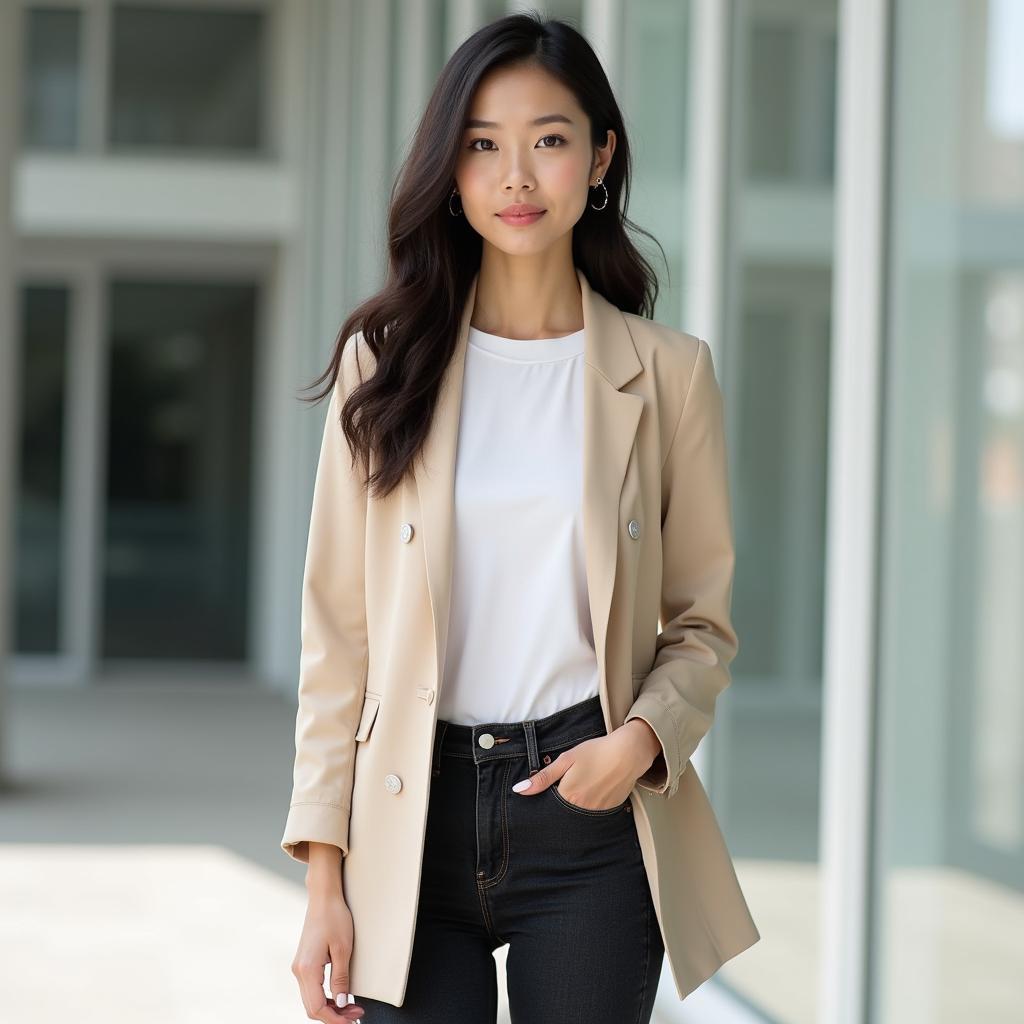 Người phụ nữ có phong cách thời trang độc đáo với trang phục tối giản và tinh tế
IELTS Speaking Part 2: Long Turn (Cue Card)
Tổng Quan Về Part 2
Part 2 là phần độc thoại kéo dài 3-4 phút, trong đó bạn có 1 phút chuẩn bị và 2 phút nói không bị ngắt quãng. Đây là phần quan trọng nhất để thể hiện khả năng diễn đạt liên tục và tổ chức ý tưởng của bạn. Chiến lược hiệu quả nhất là sử dụng hết 1 phút chuẩn bị để ghi chú keywords theo các bullet points, không viết câu hoàn chỉnh vì không có đủ thời gian. Bạn cần nói đủ 2 phút, tối thiểu 1.5 phút thì mới không bị trừ điểm.
Về mặt ngữ pháp, hãy chú ý đến thì của động từ – nếu đề bài yêu cầu miêu tả người bạn biết hoặc vẫn còn gặp thì dùng thì hiện tại, nếu là trải nghiệm trong quá khứ thì dùng thì quá khứ. Lỗi thường gặp của học viên Việt Nam là không sử dụng hết thời gian chuẩn bị do lo lắng, nói dưới 1.5 phút vì thiếu ideas, hoặc bỏ sót một số bullet points quan trọng. Một điểm cực kỳ quan trọng mà nhiều người bỏ qua là phần “explain” cuối cùng – đây chính là phần ghi điểm cao nhất vì nó thể hiện khả năng phân tích và đánh giá của bạn.
Cue Card
Describe a person who has a unique style
You should say:
- Who this person is
- How you know this person
- What kind of style this person has
- And explain why you think this person’s style is unique
Phân Tích Đề Bài
- Dạng câu hỏi: Describe a person – yêu cầu miêu tả một người cụ thể
- Thì động từ: Hiện tại (vì người này bạn vẫn biết và có thể quan sát phong cách của họ)
- Bullet points phải cover: Bạn cần trả lời đầy đủ 4 yếu tố: danh tính người đó, mối quan hệ, miêu tả cụ thể phong cách, và quan trọng nhất là giải thích tại sao unique
- Câu “explain” quan trọng: Đây là phần ghi điểm cao nhất vì thể hiện critical thinking. Đừng chỉ nói “because it’s different” mà phải phân tích sâu hơn về những yếu tố làm nên sự độc đáo như confidence, creativity, consistency, hoặc cách phong cách đó phản ánh personality
📝 Sample Answer – Band 6-7
Thời lượng: Khoảng 1.5-2 phút
I’d like to talk about my colleague, Mai, who works in the same office as me. I’ve known her for about two years since she joined our company.
Mai has a very distinctive style that really stands out in our workplace. She always wears colorful outfits that are quite different from the usual black and white suits that most people wear in our office. For example, she often combines a bright yellow blazer with patterned pants or wears dresses with bold prints. She also loves accessories like statement earrings and unique handbags.
What makes her style unique is that she’s not afraid to mix and match different colors and patterns. While most of us dress quite conservatively for work, Mai manages to look both professional and creative at the same time. Her clothes always look well-coordinated even though they’re quite bold.
I think her style is unique because it shows her confident personality. She doesn’t follow trends blindly but creates her own fashion combinations. Whenever I see her, she always brightens up the office with her cheerful outfits. Her style has actually inspired me to be a bit more adventurous with my own clothing choices. I really admire how she expresses herself through fashion while still maintaining professionalism.
Phân Tích Band Điểm
| Tiêu chí | Band | Nhận xét |
|---|---|---|
| Fluency & Coherence | 6-7 | Có linking words cơ bản (for example, while, because), ý tưởng được sắp xếp logic nhưng còn đơn giản, một số hesitation có thể xảy ra |
| Lexical Resource | 6-7 | Từ vựng adequate với một số collocations như “distinctive style”, “bold prints”, “statement earrings” nhưng còn lặp lại một số từ như “unique”, chưa có idiomatic expressions |
| Grammatical Range & Accuracy | 6-7 | Sử dụng được một số cấu trúc phức như relative clauses và present perfect, nhưng chủ yếu là simple và compound sentences, ít complex structures |
| Pronunciation | 6-7 | Rõ ràng và dễ hiểu với một số features của natural speech |
Điểm mạnh:
- ✅ Trả lời đầy đủ tất cả bullet points
- ✅ Có ví dụ cụ thể về trang phục (yellow blazer, patterned pants)
- ✅ Có giải thích về tính unique liên quan đến personality
- ✅ Cấu trúc rõ ràng, dễ theo dõi
Hạn chế:
- ⚠️ Từ vựng chưa sophisticated, thiếu idioms và advanced expressions
- ⚠️ Grammar structures còn đơn giản, ít varied sentence types
- ⚠️ Thiếu depth trong phân tích về fashion philosophy
📝 Sample Answer – Band 7.5-8
Thời lượng: Khoảng 2-2.5 phút
I’d like to describe my university professor, Dr. Linh, who’s become something of a style icon in our faculty. I’ve been attending her lectures for the past year, and I have to say, she’s completely redefined my perception of what professional dressing can be.
Dr. Linh has what I would call an eclectic yet sophisticated style that seamlessly blends traditional Vietnamese elements with contemporary fashion. She’s particularly known for incorporating áo dài-inspired pieces into her everyday wardrobe in surprisingly modern ways. For instance, I’ve seen her pair a modified áo dài top with tailored trousers and minimalist heels, creating a look that’s both culturally rooted and refreshingly current. She also has this impressive collection of handcrafted accessories from local artisans, which she uses to add character to even the simplest outfits.
What truly sets her apart is her thoughtful approach to fashion. Unlike many people who simply follow trends, Dr. Linh seems to have cultivated a deeply personal aesthetic that tells a story. Every element of her outfit appears carefully considered, from the subtle color coordination to the quality of fabrics she chooses. She gravitates toward natural materials like silk and linen, and her color palette typically features earthy tones punctuated with occasional bold accents.
I find her style unique for several reasons. Firstly, she’s managed to create a signature look that’s instantly recognizable yet never repetitive. Secondly, her fashion choices champion local craftsmanship while maintaining a contemporary edge, which I think is quite commendable in today’s fast-fashion dominated world. Most importantly, her style authentically reflects her values of cultural preservation and sustainability. She’s living proof that fashion can be both a form of personal expression and a statement of principles. Her approach has genuinely inspired me to think more critically about my own wardrobe choices and their broader implications.
Phân Tích Band Điểm
| Tiêu chí | Band | Nhận xét |
|---|---|---|
| Fluency & Coherence | 7.5-8 | Speaks fluently với minimal hesitation, sử dụng discourse markers hiệu quả (for instance, unlike, firstly, most importantly), ý tưởng được phát triển logic và coherent |
| Lexical Resource | 7.5-8 | Vocabulary range rộng với nhiều sophisticated expressions (eclectic yet sophisticated, culturally rooted, refreshingly current, champion local craftsmanship), less common collocations được sử dụng chính xác |
| Grammatical Range & Accuracy | 7.5-8 | Wide range of structures bao gồm complex sentences, relative clauses, passive voice, present perfect continuous, với high level of accuracy |
| Pronunciation | 7.5-8 | Clear pronunciation với good control of features, natural intonation |
So Sánh Với Band 6-7
| Khía cạnh | Band 6-7 | Band 7.5-8 |
|---|---|---|
| Vocabulary | distinctive style, colorful outfits, bold prints | eclectic yet sophisticated style, culturally rooted, refreshingly current, signature look |
| Grammar | “She always wears colorful outfits” (simple present) | “She’s managed to create a signature look that’s instantly recognizable yet never repetitive” (present perfect + relative clause + coordinating conjunction) |
| Ideas | Focuses on visual description | Analyzes deeper meaning, cultural significance, và personal values reflected in style |
📝 Sample Answer – Band 8.5-9
Thời lượng: 2.5-3 phút đầy đủ
I’d like to tell you about my former flatmate, An, who I genuinely believe has one of the most intriguingly unconventional yet meticulously curated senses of style I’ve ever encountered. We shared an apartment for nearly three years during my postgraduate studies, which gave me ample opportunity to observe and appreciate her remarkably distinctive aesthetic.
What immediately strikes you about An’s style is her masterful fusion of what might seem like disparate elements that somehow coalesce into something utterly cohesive. She has this uncanny ability to juxtapose vintage pieces from different eras with cutting-edge contemporary items in a way that creates visual tension yet maintains perfect harmony. For instance, you might see her wearing a 1920s art deco brooch on a minimalist Scandinavian-style blazer, paired with Japanese denim and vintage Italian leather boots. It’s this cross-cultural, cross-temporal approach that makes her style so compelling and thought-provoking.
Beyond the surface-level aesthetics, what truly distinguishes An’s style is the intellectual rigor she brings to her sartorial choices. She’s not haphazardly throwing things together; rather, every outfit seems to embody a narrative or explore a theme. I remember her explaining how she deliberately chooses garments based on their provenance, the ethics of their production, and their potential longevity in her wardrobe. She’s an ardent advocate of circular fashion, frequently sourcing pieces from vintage markets, supporting independent designers, and even learning to alter and repair clothing herself. This conscious curation means her wardrobe, though relatively modest in size, is extraordinarily versatile and meaningful.
What I find most fascinating is how her style transcends mere appearance and becomes a form of personal philosophy. An views fashion as a medium for storytelling and cultural dialogue rather than simply a means of covering oneself or conforming to social expectations. Her eclectic mix challenges conventional notions of what coordinates or clashes, pushing boundaries while remaining remarkably wearable. She’s taught me that true style isn’t about adhering to rules or chasing trends, but about developing a discerning eye, understanding the historical and cultural context of what we wear, and having the confidence to trust one’s instincts.
The uniqueness of her style lies in this intersection of creativity, consciousness, and courage. In an age where fashion is increasingly homogenized by fast fashion giants and social media influencers peddling identical aesthetics, An’s approach feels genuinely subversive yet never contrived or attention-seeking. She’s inadvertently become a walking testament to the idea that style, at its highest form, is about authenticity, intentionality, and the courage to carve out your own visual identity regardless of prevailing trends. Her influence has profoundly shifted my own perspective on fashion from viewing it as superficial to recognizing it as a legitimate form of self-expression and even activism.
Phân Tích Band Điểm
| Tiêu chí | Band | Nhận xét |
|---|---|---|
| Fluency & Coherence | 9 | Speaks fluently và coherently với fully appropriate cohesive features, develops topics fully và appropriately, không có noticeable effort hay loss of coherence |
| Lexical Resource | 9 | Uses vocabulary với full flexibility và precision, demonstrates sophisticated control of lexical features, uses idiomatic language naturally và accurately (intriguingly unconventional, meticulously curated, coalesce, uncanny ability, sartorial choices) |
| Grammatical Range & Accuracy | 9 | Uses full range of structures naturally và appropriately, produces consistently accurate structures apart from ‘slips’ characteristic of native speaker speech (complex sentences, varied clause types, perfect aspects, passive constructions) |
| Pronunciation | 9 | Uses varied intonation, appropriate word stress, demonstrates sustained control throughout |
Tại Sao Bài Này Xuất Sắc
🎯 Fluency Hoàn Hảo:
Không có hesitation, các ý được phát triển tự nhiên và mạch lạc. Sử dụng discourse markers một cách tinh tế (What immediately strikes you, Beyond the surface-level, What I find most fascinating) để structure monologue như một native speaker.
📚 Vocabulary Tinh Vi:
- “intriguingly unconventional yet meticulously curated” – Kết hợp hai tính từ phức tạp với “yet” thể hiện nuance thinking
- “disparate elements that coalesce into something cohesive” – Academic vocabulary được sử dụng tự nhiên trong context fashion
- “cross-cultural, cross-temporal approach” – Compound adjectives thể hiện sophisticated expression
- “sartorial choices”, “provenance”, “circular fashion” – Technical fashion terminology
- “walking testament”, “genuinely subversive” – Idiomatic và figurative language
📝 Grammar Đa Dạng:
- Complex relative clauses: “which gave me ample opportunity to observe”
- Present perfect: “I’ve ever encountered”, “She’s taught me”
- Conditional structures implied: “that somehow coalesce”
- Passive voice: “what coordinates or clashes”
- Gerund phrases: “covering oneself”, “conforming to social expectations”
- Participle clauses: “pushing boundaries while remaining remarkably wearable”
💡 Ideas Sâu Sắc:
Không chỉ miêu tả visual appearance mà còn phân tích philosophy behind the style, cultural significance, ethical dimensions, và personal transformation. Thể hiện critical thinking về fashion as cultural dialogue, activism, và form of resistance against homogenization.
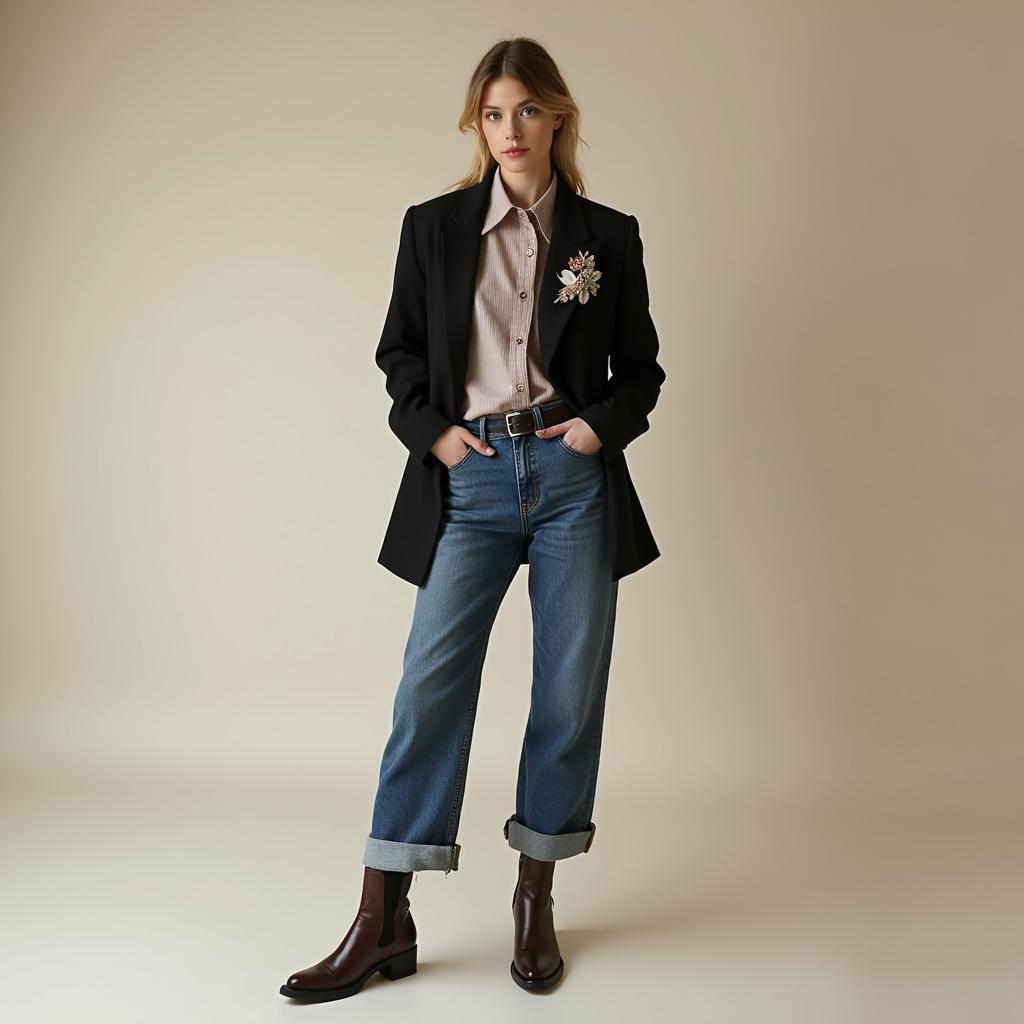 Phong cách thời trang kết hợp yếu tố cổ điển và hiện đại độc đáo
Follow-up Questions (Rounding Off Questions)
Question 1: Do you think you might adopt a similar style?
Band 6-7 Answer:
Maybe partially. I like some aspects of her style, especially the use of accessories. However, I think I would prefer something more simple for my daily life.
Band 8-9 Answer:
While I’m deeply inspired by her approach, I think I’d adapt rather than adopt it wholesale. What resonates most with me is her intentionality and commitment to sustainable choices rather than the specific aesthetic. I’m gradually incorporating these principles into my own style evolution, though my personal taste leans more towards minimalism.
Question 2: How long have you known this person?
Band 6-7 Answer:
I’ve known her for about three years. We were roommates during my master’s degree program, so we spent a lot of time together.
Band 8-9 Answer:
We were flatmates for approximately three years during my postgraduate studies, which provided me with an intimate perspective on her style evolution. Even though we now live separately, we’ve maintained close contact, and I continue to draw inspiration from her ever-evolving aesthetic sensibility.
IELTS Speaking Part 3: Two-way Discussion
Tổng Quan Về Part 3
Part 3 kéo dài 4-5 phút và là phần thử thách nhất trong IELTS Speaking. Khác với Part 1 và Part 2, phần này yêu cầu bạn thảo luận về các vấn đề trừu tượng và xã hội liên quan đến chủ đề Part 2. Examiner sẽ đánh giá cao khả năng phân tích, so sánh, đánh giá và đưa ra quan điểm cá nhân có lý lẽ của bạn.
Chiến lược quan trọng là mở rộng câu trả lời thành 3-5 câu với cấu trúc: trả lời trực tiếp → lý do 1 + ví dụ → lý do 2 + ví dụ → kết luận hoặc nuance. Sử dụng discourse markers như “Well”, “Actually”, “I think” để có thời gian suy nghĩ. Quan trọng là đưa ra examples từ xã hội, xu hướng chung, không chỉ từ kinh nghiệm cá nhân. Thừa nhận complexity của vấn đề bằng cách xem xét nhiều góc độ sẽ giúp bạn đạt điểm cao hơn.
Lỗi thường gặp của học viên Việt Nam trong Part 3 là trả lời quá ngắn gọn thiếu phân tích sâu, không đưa ra lý lẽ rõ ràng để support quan điểm, và thiếu từ vựng trừu tượng để thảo luận các vấn đề xã hội. Để khắc phục, bạn cần luyện tập thinking critically và tích lũy academic vocabulary.
Một trong những tài liệu hữu ích cho việc chuẩn bị các chủ đề đòi hỏi phân tích sâu là describe a person who taught you an important lesson, vì nó cũng yêu cầu khả năng suy ngẫm và đánh giá giá trị.
Các Câu Hỏi Thảo Luận Sâu
Theme 1: Fashion and Society
Question 1: Why do you think some people are more interested in fashion than others?
🎯 Phân tích câu hỏi:
- Dạng: Cause-Effect (tại sao có sự khác biệt)
- Key words: interested, fashion, differences between people
- Cách tiếp cận: Đưa ra 2-3 reasons với examples, có thể đề cập factors như personality, environment, values
📝 Sample Answer – Band 6-7:
I think there are several reasons for this. First, some people are more creative and they enjoy expressing themselves through clothes. Second, it might depend on their job or social circle. For example, people working in fashion or media industries need to pay more attention to their appearance. Finally, I think it’s also about personality – some people are just naturally more interested in visual things.
Phân tích:
- Structure: Có listing reasons (First, Second, Finally) nhưng chưa develop deeply
- Vocabulary: Adequate với basic expressions như “expressing themselves”, “pay attention”
- Tại sao Band 6-7: Clear communication với basic structure nhưng lacks sophistication và depth of analysis
📝 Câu trả lời mẫu – Band 8-9:
Well, I’d say this disparity in interest levels stems from multiple interconnected factors. Firstly, there’s the inherent personality dimension – some individuals are simply more visually oriented and find genuine pleasure in aesthetic exploration, viewing fashion as a form of creative self-expression rather than mere necessity. Conversely, others are more pragmatically minded and see clothing purely in functional terms.
Beyond personality, I think socioeconomic background plays a significant role. Those with greater disposable income and exposure to diverse cultural influences tend to develop more nuanced appreciation for fashion. Additionally, professional requirements can’t be overlooked – someone working in creative industries inevitably becomes more attuned to visual presentation compared to, say, someone in a more technically-focused field.
There’s also an interesting generational component. With the proliferation of social media and visual-centric platforms like Instagram, younger generations are arguably more immersed in fashion culture than previous ones. However, I’d argue that genuine interest transcends mere trend-following – it’s about whether someone views fashion as a meaningful form of personal narrative or simply as social conformity.
Phân tích:
- Structure: Well-organized với clear progression: Direct answer → Personality factor → Socioeconomic factor → Generational aspect → Nuanced conclusion
- Vocabulary: Sophisticated và precise (disparity, inherent, aesthetically oriented, pragmatically minded, disposable income, nuanced appreciation, proliferation, visual-centric, transcends)
- Grammar: Complex structures including passive voice, conditionals, comparatives, relative clauses
- Critical Thinking: Shows balanced view acknowledging multiple perspectives and complexity of the issue
💡 Key Language Features:
- Discourse markers: Well, Firstly, Beyond, Additionally, However
- Tentative language: I’d say, I think, arguably, I’d argue
- Abstract nouns: disparity, dimension, exploration, conformity, narrative
Question 2: Do you think fashion is important in society?
🎯 Phân tích câu hỏi:
- Dạng: Opinion with justification
- Key words: fashion, important, society
- Cách tiếp cận: State position → explain multiple dimensions (economic, cultural, social) → acknowledge counterargument → conclusion
📝 Sample Answer – Band 6-7:
Yes, I think fashion is quite important in society. It’s a big industry that creates many jobs for people, from designers to shop assistants. Fashion also helps people show their personality and feel confident. However, I think some people focus too much on fashion and spend too much money on clothes. So it’s important but people shouldn’t be obsessed with it.
Phân tích:
- Structure: Có opinion và reasons nhưng development còn superficial
- Vocabulary: Basic với common words (big industry, show personality, feel confident)
- Tại sao Band 6-7: Communicates main ideas nhưng lacks depth và sophisticated language
📝 Câu trả lời mẫu – Band 8-9:
I’d argue that fashion holds considerable significance in contemporary society, though perhaps not always in the ways we might initially assume. On the economic front, it’s undeniably a major global industry generating millions of jobs and contributing substantially to GDP in many countries, particularly in manufacturing hubs like Bangladesh and Vietnam.
More interestingly, fashion serves as a powerful social signifier and form of non-verbal communication. Throughout history, clothing has been used to denote status, affiliation, and identity – from medieval sumptuary laws to modern corporate dress codes. In this sense, fashion operates as a complex language through which individuals and groups negotiate their place in social hierarchies.
From a cultural perspective, fashion is also a repository of heritage and innovation. Traditional garments like the Vietnamese áo dài or Japanese kimono embody centuries of cultural values, while contemporary fashion often challenges societal norms and pushes boundaries regarding gender, identity, and self-expression.
That said, I think it’s crucial to acknowledge the problematic aspects – the fashion industry’s environmental footprint is staggering, and the perpetuation of unrealistic beauty standards can be genuinely harmful. The key is striking a balance between appreciating fashion as cultural expression while being critical consumers aware of its broader implications. So yes, it’s important, but our relationship with it needs to be more thoughtful and sustainable.
Phân tích:
- Structure: Comprehensive với multiple angles: economic → social → cultural → critical perspective → balanced conclusion
- Vocabulary: Sophisticated và academic (considerable significance, social signifier, non-verbal communication, denote, negotiate hierarchies, repository, embody, perpetuation, striking a balance)
- Grammar: Wide range including passive constructions, relative clauses, participle phrases, conditionals
- Critical Thinking: Demonstrates nuanced understanding by acknowledging both positive aspects and problems, showing intellectual maturity
💡 Key Language Features:
- Hedging language: I’d argue, perhaps, arguably
- Contrastive markers: More interestingly, That said, while
- Academic vocabulary: contemporary, denote, repository, perpetuation, implications
Theme 2: Fashion Trends and Change
Question 3: Why do fashion trends change so quickly nowadays?
🎯 Phân tích câu hỏi:
- Dạng: Cause-Effect focusing on modern phenomenon
- Key words: trends, change, quickly, nowadays
- Cách tiếp cận: Compare past and present → identify driving forces (technology, consumerism, media) → discuss implications
📝 Sample Answer – Band 6-7:
I think fashion trends change faster now because of social media and the internet. People can see new styles from all over the world immediately. Also, brands produce new collections more frequently than before. Young people especially like to follow the latest trends they see on Instagram or TikTok. This makes fashion change much faster than in the past.
Phân tích:
- Structure: Basic cause-effect với 2-3 reasons
- Vocabulary: Simple và straightforward
- Tại sao Band 6-7: Clear ideas nhưng lacks analytical depth và sophisticated expression
📝 Câu trả lời mẫu – Band 8-9:
The accelerated pace of fashion cycles today is largely attributable to the convergence of several contemporary phenomena. Most prominently, digital technology and social media have fundamentally transformed how trends emerge and spread. What once took months to trickle down from haute couture runways to mainstream fashion now happens virtually instantaneously through platforms like Instagram and TikTok, where influencers can spark global trends overnight.
This is further amplified by the fast fashion business model, pioneered by brands like Zara and H&M, which has revolutionized production cycles. These companies can identify emerging trends and have replicated garments in stores within weeks, creating a constant churn of new styles. This breakneck speed is driven by aggressive marketing strategies that cultivate a sense of urgency and fear of missing out among consumers.
There’s also a psychological dimension worth considering. In our increasingly fragmented and identity-conscious society, fashion has become a readily accessible tool for constant self-reinvention. The ability to quickly adopt and discard aesthetic identities appeals to contemporary notions of flexibility and personal branding, particularly among younger demographics who’ve grown up in digital environments.
However, I’d note that this rapid turnover comes at considerable cost – both environmentally, with the fashion industry being one of the world’s largest polluters, and culturally, as the emphasis on novelty may be eroding appreciation for craftsmanship and timeless design. It’s a double-edged sword that reflects broader tensions in our consumption-driven culture.
Phân tích:
- Structure: Sophisticated multi-layered analysis: technological factors → business model → psychological factors → critical evaluation
- Vocabulary: Advanced và precise (accelerated pace, attributable to, convergence, trickle down, instantaneously, amplified by, revolutionized, breakneck speed, fragmented, self-reinvention, double-edged sword)
- Grammar: Complex sentences với multiple clauses, passive voice, relative clauses, participle phrases
- Critical Thinking: Examines multiple causes and considers both immediate factors and deeper implications
💡 Key Language Features:
- Causative language: attributable to, driven by, amplified by
- Academic expressions: convergence of phenomena, contemporary notions, considerable cost
- Metaphorical language: trickle down, constant churn, double-edged sword
Bạn có thể tham khảo thêm cách phân tích xu hướng thay đổi trong describe a journey that didn’t go as planned, vì cả hai đều yêu cầu khả năng miêu tả sự thay đổi và phân tích nguyên nhân.
Theme 3: Individual Expression vs Social Pressure
Question 4: Do you think people feel pressure to dress in a certain way?
🎯 Phân tích câu hỏi:
- Dạng: Opinion về social phenomenon
- Key words: pressure, dress, certain way
- Cách tiếp cận: Acknowledge existence of pressure → identify sources → discuss variations → personal stance
📝 Sample Answer – Band 6-7:
Yes, I definitely think people feel pressure about how they dress. At work, there are usually dress codes that people must follow. Teenagers also feel pressure to wear popular brands to fit in with their friends. Social media makes this worse because people see perfect photos and want to look the same. I think this pressure is stronger for women than men.
Phân tích:
- Structure: Clear answer với several examples
- Vocabulary: Basic expressions (dress codes, fit in, popular brands)
- Tại sao Band 6-7: Addresses the question adequately nhưng analysis remains surface-level
📝 Câu trả lời mẫu – Band 8-9:
Absolutely, and I’d say this pressure operates on multiple interconnected levels with varying intensity depending on contextual factors. The most overt form comes from institutional dress codes – whether explicit policies in corporate environments or implicit social norms in educational settings. These codified expectations essentially mandate conformity as a condition of professional acceptance or academic participation.
More insidiously, there’s the subtler pressure exerted through peer dynamics and social belonging. Particularly during adolescence, when identity formation is most acute, individuals often feel compelled to align their appearance with prevailing group aesthetics to avoid social ostracism. This phenomenon has been exponentially intensified by social media, where curated visual representations create unrealistic benchmarks and perpetuate comparative anxiety.
However, I think it’s important to recognize that susceptibility to such pressure varies considerably. Factors like cultural background, socioeconomic status, personality traits, and life stage all mediate how individuals internalize and respond to these external expectations. Some people possess remarkable resilience in maintaining authentic self-expression despite social pressures, while others find conformity psychologically safer or strategically advantageous.
From a gender perspective, research consistently shows that pressure falls disproportionately on women, who face far more stringent and contradictory expectations regarding appearance – expected to be both professionally polished and conventionally attractive, fashionable yet modest, youthful yet authoritative. It’s a particularly pernicious double standard that reflects and reinforces broader gender inequalities.
Ultimately, while I advocate for individual autonomy in sartorial choices, I recognize that we can’t simply dismiss these pressures as superficial concerns – they have genuine psychological and social consequences that merit thoughtful examination rather than glib dismissal.
Phân tích:
- Structure: Exceptionally well-organized với progression từ overt to subtle pressures, then variations, gender analysis, và thoughtful conclusion
- Vocabulary: Highly sophisticated (overt, insidiously, codified expectations, mandate conformity, social ostracism, exponentially intensified, curated representations, susceptibility, mediate, pernicious double standard, sartorial choices, glib dismissal)
- Grammar: Complex structures throughout including passive voice, relative clauses, nominalization, conditional implications
- Critical Thinking: Demonstrates exceptional analytical depth, considers multiple perspectives, acknowledges complexity and contradictions, shows awareness of research and broader social context
💡 Key Language Features:
- Intensifiers and qualifiers: absolutely, exponentially, remarkably, consistently, ultimately
- Academic register: operates on multiple levels, contextual factors, codified expectations, susceptibility varies
- Critical language: insidiously, pernicious, merit examination, glib dismissal
Question 5: How has technology influenced the way people think about fashion?
🎯 Phân tích câu hỏi:
- Dạng: Cause-Effect về technological impact
- Key words: technology, influenced, think about fashion
- Cách tiếp cận: Identify specific technologies → explain changes in behavior/thinking → evaluate positive and negative impacts
📝 Sample Answer – Band 6-7:
Technology has changed fashion in many ways. First, online shopping makes it easier to buy clothes from anywhere. Second, social media platforms like Instagram allow people to share their outfits and get ideas from others. Apps can also help people choose clothes and see how they look. However, this might make people spend more money on fashion than before because they always see new things online.
Phân tích:
- Structure: Lists changes but without deep analysis
- Vocabulary: Functional but basic
- Tại sao Band 6-7: Covers main points nhưng lacks sophisticated analysis of psychological and cultural impacts
📝 Câu trả lời mẫu – Band 8-9:
Technology has fundamentally reconfigured our relationship with fashion in ways that are both democratizing and problematic. Perhaps most significantly, it’s dismantled traditional gatekeeping structures. Where fashion was once dictated by a relatively small cadre of designers, editors, and celebrities, digital platforms have decentralized influence, enabling virtually anyone with visual sensibility and social media acumen to become a taste-maker. This democratization has certainly broadened representation and allowed for more diverse aesthetic voices to gain traction.
Additionally, technology has transformed the consumption experience itself. AI-powered recommendation algorithms, virtual try-on features, and augmented reality applications have made fashion more accessible and personalized while simultaneously collecting vast amounts of data about our preferences, which brands leverage to refine targeting strategies. There’s something rather Orwellian about how intimately the fashion industry now understands and anticipates consumer desires.
More philosophically, I think technology has accelerated the commodification of personal style. The Instagram aesthetic – that carefully curated, hyper-visual representation of identity – has arguably reduced fashion to a series of shareable moments rather than sustained personal expression. We’re increasingly dressing for the camera rather than for ourselves, which fundamentally alters the intrinsic purpose of clothing.
On the environmental front, technology presents a paradox. While it enables fast fashion’s devastating environmental impact through efficient global supply chains, it also facilitates consciousness-raising about these issues and supports circular economy initiatives like resale platforms and digital fashion – virtual clothing that exists only in digital spaces.
Looking forward, I suspect technology will continue to blur boundaries between physical and digital fashion experiences, potentially challenging our very conception of what clothing means. Whether this evolution is ultimately liberating or constraining likely depends on how critically we engage with these technological affordances rather than passively accepting them.
Phân tích:
- Structure: Exceptionally comprehensive covering democratization → consumption experience → philosophical implications → environmental paradox → future outlook
- Vocabulary: Highly sophisticated và precise (reconfigured, dismantled gatekeeping, decentralized influence, taste-maker, Orwellian, commodification, hyper-visual representation, consciousness-raising, circular economy, technological affordances)
- Grammar: Full range of complex structures including passive voice, conditionals, nominalization, participle phrases, relative clauses
- Critical Thinking: Shows exceptional depth in analyzing both practical and philosophical dimensions, acknowledges paradoxes and contradictions, projects future implications
💡 Key Language Features:
- Sophisticated transitional phrases: Perhaps most significantly, Additionally, More philosophically, Looking forward
- Analytical language: fundamentally reconfigured, paradox, arguably, ultimately depends on
- Critical vocabulary: gatekeeping, commodification, Orwellian, affordances
 Công nghệ ảnh hưởng đến xu hướng thời trang hiện đại qua mạng xã hội
Nếu bạn muốn tìm hiểu thêm về cách phát triển ý tưởng sâu sắc trong các chủ đề văn hóa, hãy xem describe a memorable concert or performance you attended, vì nó cũng đòi hỏi khả năng phân tích ảnh hưởng văn hóa tương tự.
Theme 4: Fashion and Identity
Question 6: To what extent does clothing reflect someone’s personality?
🎯 Phân tích câu hỏi:
- Dạng: Evaluative question về mối quan hệ giữa clothing và personality
- Key words: extent, clothing, reflect, personality
- Cách tiếp cận: Present different viewpoints → provide evidence → acknowledge limitations → balanced conclusion
📝 Sample Answer – Band 6-7:
I think clothing can reflect personality to some degree. For example, someone who wears bright colors might be more outgoing, while someone in dark colors might be more serious. Creative people often wear unique clothes to show their artistic side. However, sometimes people have to wear certain clothes for work, so their clothes don’t really show their true personality. Also, some people just wear what’s comfortable rather than thinking about personality.
Phân tích:
- Structure: Presents main idea với examples và qualification
- Vocabulary: Basic descriptive terms
- Tại sao Band 6-7: Addresses the question với reasonable examples nhưng analysis remains simplistic
📝 Câu trả lời mẫu – Band 8-9:
This is a fascinating question that touches on the complex interplay between external presentation and internal identity. I’d argue that clothing can be profoundly revealing of personality, but the relationship is far more nuanced than simple one-to-one correspondence.
At its most authentic, clothing choices do often reflect core personality traits. Research in social psychology suggests that individuals who score high in openness to experience tend to favor more eclectic, unconventional styles, while those high in conscientiousness often gravitate toward classic, well-maintained wardrobes. There’s also compelling evidence that extroverts are more likely to wear attention-grabbing, colorful clothing, whereas introverts typically prefer subdued, understated styles. In this sense, fashion operates as a form of non-verbal self-expression that communicates aspects of identity to others.
However, several complicating factors must be considered. Firstly, there’s the issue of social conformity versus authentic expression – many people’s clothing choices are heavily constrained by professional expectations, financial limitations, or cultural norms rather than genuine personal preference. What someone wears to a corporate office may reveal nothing about their personality and everything about institutional requirements.
Moreover, the relationship works both ways – clothing doesn’t merely reflect personality but can actually shape it through what psychologists call enclothed cognition. Studies have shown that what we wear influences our psychological states and behavior – wearing formal attire can make people think more abstractly, while casual clothing promotes more relaxed cognitive processing. This suggests that clothing is both a mirror and a tool for identity construction.
There’s also the performative dimension to consider. In our image-conscious society, particularly with social media’s influence, people increasingly curate their appearance strategically rather than spontaneously. The persona someone projects through clothing might be carefully constructed for specific audiences or contexts, making it less a reflection of inherent personality and more a tactical presentation of desired identity.
Ultimately, I’d say clothing has considerable potential to reflect personality, but we must interpret sartorial choices with appropriate caution. The relationship is mediated by numerous contextual factors, and authentic self-expression through fashion requires not only self-awareness but also the social and economic freedom to deviate from prescribed norms – privileges not universally available.
Phân tích:
- Structure: Exceptionally sophisticated với clear thesis → supporting evidence from research → complicating factors → bidirectional relationship → performative aspects → nuanced conclusion
- Vocabulary: Highly academic và precise (interplay, one-to-one correspondence, gravitate toward, non-verbal self-expression, enclothed cognition, performative dimension, curate, tactical presentation, mediated by)
- Grammar: Full range including passive voice, conditionals, nominalization, complex relative clauses, participle constructions
- Critical Thinking: Demonstrates exceptional analytical depth by citing research, acknowledging complexity, considering bidirectional causality, and recognizing socioeconomic constraints
💡 Key Language Features:
- Academic discourse: Research suggests, Studies have shown, psychologists call, evidence indicates
- Nuancing language: can be, often, typically, may reveal, has potential, with appropriate caution
- Sophisticated connectors: At its most authentic, However, Moreover, Ultimately
Question 7: Should schools have strict dress codes?
🎯 Phân tích câu hỏi:
- Dạng: Opinion question về policy
- Key words: should, schools, strict dress codes
- Cách tiếp cận: Present arguments for và against → consider different contexts → offer balanced opinion
📝 Sample Answer – Band 6-7:
This is a difficult question with arguments on both sides. Some people think strict dress codes are good because they help students focus on studying rather than fashion. It also prevents discrimination based on expensive clothes. However, others believe students should have freedom to express themselves through clothing. I think a moderate dress code is best – not too strict but with some basic rules about appropriate clothing.
Phân tích:
- Structure: Presents both sides và offers compromise position
- Vocabulary: Functional language covering key points
- Tại sao Band 6-7: Balanced view nhưng lacks depth trong analysis of implications
📝 Câu trả lời mẫu – Band 8-9:
This question touches on fundamental tensions between institutional authority, individual expression, and educational philosophy, so I think the answer depends considerably on context and how we define “strict”.
Proponents of strict dress codes advance several compelling arguments. They contend that uniforms or standardized dress requirements promote equality by mitigating visible markers of socioeconomic disparity, thereby reducing social stratification and potential bullying based on fashion. There’s also the distraction argument – that removing fashion competition allows students to focus cognitive resources on academic rather than social concerns. Some research suggests that schools with uniforms report improved discipline and stronger sense of institutional identity.
However, I find the counterarguments equally persuasive, particularly from a developmental perspective. Adolescence is a critical period for identity formation, and self-expression through appearance plays an important role in this process. Overly restrictive dress codes may stifle creativity, limit personal exploration, and send the message that conformity is more valued than individuality. Furthermore, dress codes have historically been applied discriminatorily, particularly affecting female students and those from marginalized cultural backgrounds whose traditional attire may not conform to Eurocentric standards.
There’s also a philosophical question about what we’re preparing students for. If education aims to develop autonomous, critical thinkers capable of navigating complex social environments, perhaps allowing sartorial autonomy within reasonable boundaries better serves this goal than imposing rigid uniformity.
My personal stance would favor guidelines rather than strict codes – establishing basic parameters around appropriateness and safety while preserving substantial freedom for individual expression. This approach acknowledges institutional concerns about maintaining conducive learning environments without unnecessarily constraining students’ developing identities. The key is striking a balance that respects both communal standards and individual dignity – something that requires ongoing dialogue rather than top-down imposition.
Importantly, any dress policy should be applied equitably, revisited regularly, and developed with student input to ensure it serves educational objectives rather than simply enforcing adult preferences or outdated social norms.
Phân tích:
- Structure: Highly sophisticated với context-setting → arguments for → counterarguments → philosophical considerations → personal stance with conditions → implementation considerations
- Vocabulary: Advanced và precise (fundamental tensions, mitigating visible markers, socioeconomic disparity, critical period, identity formation, applied discriminatorily, Eurocentric standards, sartorial autonomy, conducive learning environments, top-down imposition)
- Grammar: Full range of complex structures including passive voice, conditionals, nominalization, relative clauses, participle phrases
- Critical Thinking: Exceptional depth considering multiple perspectives, developmental psychology, historical discrimination, educational philosophy, implementation practicalities, and need for ongoing evaluation
💡 Key Language Features:
- Sophisticated hedging: I think the answer depends, I find equally persuasive, My personal stance would favor
- Academic vocabulary: proponents advance, compelling arguments, developmental perspective, philosophical question
- Balanced discourse markers: However, Furthermore, Importantly
Đối với những ai quan tâm đến việc phát triển kỹ năng phân tích các tình huống đòi hỏi quyết định phức tạp, describe a time when you had to work under pressure sẽ cung cấp thêm góc nhìn về cách xử lý các câu hỏi yêu cầu cân nhắc nhiều yếu tố.
Từ vựng và cụm từ quan trọng
Topic-Specific Vocabulary
| Từ vựng/Cụm từ | Loại từ | Phiên âm | Nghĩa tiếng Việt | Ví dụ | Collocation |
|---|---|---|---|---|---|
| distinctive style | noun phrase | /dɪˈstɪŋktɪv staɪl/ | phong cách đặc biệt, nổi bật | She has a very distinctive style that makes her stand out in any crowd. | develop a distinctive style, maintain a distinctive style, recognize someone’s distinctive style |
| sartorial choice | noun phrase | /sɑːˈtɔːriəl tʃɔɪs/ | lựa chọn về trang phục | His sartorial choices reflect his creative personality. | make sartorial choices, questionable sartorial choices, bold sartorial choices, impeccable sartorial choices |
| fashion-forward | adjective | /ˈfæʃən ˈfɔːwərd/ | theo đuổi xu hướng thời trang tiên phong | She’s known for her fashion-forward approach to dressing. | fashion-forward thinking, fashion-forward designs, fashion-forward individual |
| timeless elegance | noun phrase | /ˈtaɪmləs ˈelɪɡəns/ | vẻ thanh lịch vượt thời gian | Her wardrobe exemplifies timeless elegance. | embody timeless elegance, exude timeless elegance, appreciate timeless elegance |
| cultivate an aesthetic | verb phrase | /ˈkʌltɪveɪt ən esˈθetɪk/ | xây dựng một thẩm mỹ riêng | He’s carefully cultivated an aesthetic that blends vintage and modern elements. | cultivate a personal aesthetic, cultivate a unique aesthetic, carefully cultivate |
| eclectic mix | noun phrase | /ɪˈklektɪk mɪks/ | sự pha trộn đa dạng | Her style is an eclectic mix of different cultural influences. | create an eclectic mix, feature an eclectic mix, embrace an eclectic mix |
| signature look | noun phrase | /ˈsɪɡnətʃər lʊk/ | vẻ ngoài đặc trưng | The black turtleneck became his signature look. | develop a signature look, establish a signature look, recognize someone’s signature look |
| dress to impress | verb phrase | /dres tə ɪmˈpres/ | ăn mặc để gây ấn tượng | She always dresses to impress at professional events. | determined to dress to impress, need to dress to impress |
| fashion staple | noun phrase | /ˈfæʃən ˈsteɪpəl/ | món đồ thời trang cơ bản, không thể thiếu | A white shirt is a fashion staple in every wardrobe. | wardrobe staple, timeless fashion staple, essential fashion staple |
| statement piece | noun phrase | /ˈsteɪtmənt piːs/ | món đồ nổi bật, thu hút sự chú ý | She wore a statement necklace that elevated her entire outfit. | bold statement piece, wear a statement piece, invest in statement pieces |
| versatile wardrobe | noun phrase | /ˈvɜːsətaɪl ˈwɔːdrəʊb/ | tủ đồ đa năng | Building a versatile wardrobe requires thoughtful curation. | create a versatile wardrobe, maintain a versatile wardrobe, build a versatile wardrobe |
| personal aesthetic | noun phrase | /ˈpɜːsənəl esˈθetɪk/ | thẩm mỹ cá nhân | Her personal aesthetic leans toward minimalism. | develop a personal aesthetic, define one’s personal aesthetic, evolve one’s personal aesthetic |
| dress down | phrasal verb | /dres daʊn/ | ăn mặc giản dị, không trang trọng | On Fridays, we’re allowed to dress down at the office. | dress down for comfort, prefer to dress down |
| dress up | phrasal verb | /dres ʌp/ | ăn mặc trang trọng | They like to dress up for dinner at fancy restaurants. | dress up for occasions, opportunity to dress up |
| fashion-conscious | adjective | /ˈfæʃən ˈkɒnʃəs/ | có ý thức về thời trang | She’s very fashion-conscious and follows the latest trends. | increasingly fashion-conscious, highly fashion-conscious, fashion-conscious consumer |
| curated collection | noun phrase | /kjʊˈreɪtɪd kəˈlekʃən/ | bộ sưu tập được chọn lọc cẩn thận | His closet contains a curated collection of vintage pieces. | carefully curated collection, well-curated collection, build a curated collection |
| understated sophistication | noun phrase | /ˌʌndəˈsteɪtɪd səˌfɪstɪˈkeɪʃən/ | sự tinh tế kín đáo | Her style epitomizes understated sophistication. | exude understated sophistication, appreciate understated sophistication |
| sartorial elegance | noun phrase | /sɑːˈtɔːriəl ˈelɪɡəns/ | vẻ thanh lịch trong cách ăn mặc | He’s known for his sartorial elegance at formal events. | display sartorial elegance, epitomize sartorial elegance |
| fashion faux pas | noun phrase | /ˈfæʃən fəʊ pɑː/ | lỗi thời trang | Wearing socks with sandals is considered a fashion faux pas. | commit a fashion faux pas, avoid fashion faux pas, notorious fashion faux pas |
| trendsetter | noun | /ˈtrendˌsetər/ | người dẫn đầu xu hướng | She’s a trendsetter who influences what others wear. | become a trendsetter, recognized trendsetter, influential trendsetter |
Idiomatic Expressions & Advanced Phrases
| Cụm từ | Nghĩa | Ví dụ sử dụng | Band điểm |
|---|---|---|---|
| dress the part | ăn mặc phù hợp với vai trò/vị trí | If you want to be taken seriously in business, you need to dress the part. | 7.5-8 |
| fashion victim | người theo mù xu hướng thời trang | She’s such a fashion victim, buying everything the magazines recommend. | 7-8 |
| dressed to the nines | ăn mặc rất sang trọng, chỉnh chu | Everyone was dressed to the nines at the gala dinner. | 7.5-8.5 |
| cut from the same cloth | có cùng phong cách/đặc điểm | Those two designers are cut from the same cloth in terms of minimalist aesthetics. | 8-9 |
| fashion forward | tiên phong trong thời trang | Her fashion-forward approach sets her apart from conventional dressers. | 7.5-8 |
| strike a balance | tìm được sự cân bằng | She strikes a perfect balance between comfort and style. | 7-8 |
| push the envelope | vượt qua giới hạn thông thường | His designs push the envelope of conventional menswear. | 8-9 |
| make a statement | tạo ấn tượng mạnh, thể hiện quan điểm | Her bold outfit choices always make a statement. | 7-8 |
| ahead of the curve | đi trước xu hướng | She’s always ahead of the curve when it comes to fashion trends. | 8-9 |
| dressed to kill | ăn mặc rất hấp dẫn, thu hút | She arrived at the party dressed to kill in a stunning red gown. | 7.5-8 |
| set the bar high | đặt tiêu chuẩn cao | Her impeccable style sets the bar high for others in the office. | 7.5-8.5 |
| second skin | như lớp da thứ hai (rất thoải mái, vừa vặn) | That leather jacket fits him like a second skin. | 8-9 |
Discourse Markers (Từ Nối Ý Trong Speaking)
Để bắt đầu câu trả lời:
- 📝 Well,… – Dùng khi cần một chút thời gian suy nghĩ trước khi trả lời
- 📝 Actually,… – Khi muốn đưa ra góc nhìn khác hoặc thông tin bất ngờ
- 📝 To be honest,… – Khi muốn thể hiện sự thành thật trong quan điểm
- 📝 I’d say that… – Cách lịch sự để đưa ra ý kiến cá nhân
- 📝 From my perspective,… – Nhấn mạnh đây là quan điểm riêng
Để bổ sung ý:
- 📝 On top of that,… – Thêm vào đó, hơn nữa
- 📝 What’s more,… – Hơn thế nữa
- 📝 Not to mention… – Chưa kể đến
- 📝 Additionally,… – Thêm vào đó (formal hơn)
- 📝 Beyond that,… – Ngoài ra
Để đưa ra quan điểm cân bằng:
- 📝 On the one hand,… On the other hand,… – Một mặt… mặt khác…
- 📝 While it’s true that…, we also need to consider… – Mặc dù đúng là… chúng ta cũng cần xem xét…
- 📝 Having said that,… – Nói như vậy thì… (để đưa ra điểm đối lập)
- 📝 That said,… – Tuy nhiên (formal, sophisticated)
Để kết luận:
- 📝 All in all,… – Tóm lại
- 📝 At the end of the day,… – Cuối cùng thì
- 📝 Ultimately,… – Sau cùng
- 📝 In the final analysis,… – Khi phân tích kỹ lưỡng (rất formal)
Để diễn đạt quan điểm với độ chắc chắn khác nhau:
- 📝 I’m convinced that… – Tôi tin chắc rằng…
- 📝 I’d argue that… – Tôi có thể lập luận rằng…
- 📝 It seems to me that… – Có vẻ như với tôi…
- 📝 I tend to think that… – Tôi có xu hướng nghĩ rằng…
Grammatical Structures Ấn Tượng
1. Conditional Sentences (Câu điều kiện):
- Mixed conditional: “If she hadn’t developed such a distinctive style, she wouldn’t be as confident as she is now.” (Nếu cô ấy không phát triển phong cách đặc biệt như vậy, cô ấy sẽ không tự tin như bây giờ)
- Inversion: “Were it not for her unique fashion sense, she wouldn’t stand out in the corporate world.” (Nếu không có gu thời trang độc đáo, cô ấy sẽ không nổi bật trong môi trường công ty)
2. Relative Clauses (Mệnh đề quan hệ):
- Non-defining: “My colleague, whose style I greatly admire, has taught me that fashion is about confidence.” (Đồng nghiệp của tôi, người mà tôi rất ngưỡng mộ phong cách, đã dạy tôi rằng thời trang là về sự tự tin)
- “What strikes me most about her style is the way she effortlessly blends different elements.” (Điều ấn tượng nhất về phong cách của cô ấy là cách cô ấy kết hợp các yếu tố khác nhau một cách nhẹ nhàng)
3. Passive Voice (Câu bị động):
- It is thought/believed/said that… “It is widely believed that personal style reflects one’s personality.” (Người ta tin rộng rãi rằng phong cách cá nhân phản ánh tính cách)
- “Fashion is often seen as a form of self-expression.” (Thời trang thường được xem là một hình thức thể hiện bản thân)
4. Cleft Sentences (Câu chẻ):
- What I find most…is… “What I find most impressive about her style is her confidence in wearing unconventional combinations.” (Điều tôi thấy ấn tượng nhất về phong cách của cô ấy là sự tự tin khi mặc những tổ hợp không thông thường)
- The thing that…, is… “The thing that makes his style unique is his ability to mix vintage and modern pieces seamlessly.” (Điều làm cho phong cách của anh ấy độc đáo là khả năng kết hợp đồ vintage và hiện đại một cách mượt mà)
5. Inversion for Emphasis:
- “Rarely do I see someone who dresses with such authenticity.” (Hiếm khi tôi thấy ai đó ăn mặc với sự chân thực như vậy)
- “Not only does she dress stylishly, but she also inspires others to develop their own aesthetic.” (Không chỉ cô ấy ăn mặc phong cách mà còn truyền cảm hứng cho người khác phát triển thẩm mỹ riêng)
6. Nominalization:
- “Her commitment to sustainable fashion is admirable.” (instead of “She is committed to sustainable fashion and this is admirable”)
- “The evolution of her style over the years has been remarkable.” (instead of “Her style has evolved over the years and this has been remarkable”)
Bạn có thể tìm hiểu thêm về cách sử dụng ngôn ngữ phong phú và đa dạng trong describe a book you have read many times, vì việc phân tích văn học cũng đòi hỏi vocabulary và cấu trúc tương tự tinh vi.
Hy vọng bài viết này đã cung cấp cho bạn một cái nhìn toàn diện và chi tiết về cách xử lý chủ đề “Describe a person who has a unique style” trong IELTS Speaking. Hãy nhớ rằng, chìa khóa để đạt điểm cao không chỉ nằm ở việc học thuộc các câu trả lời mẫu, mà là hiểu được nguyên tắc xây dựng câu trả lời tốt, từ đó phát triển khả năng tư duy và diễn đạt tự nhiên của riêng bạn. Thực hành thường xuyên với các câu hỏi thực tế, ghi âm để tự đánh giá, và không ngừng mở rộng vốn từ vựng là những bước quan trọng trên con đường chinh phục IELTS Speaking của bạn.


