
Trong kỳ thi IELTS Speaking, chủ đề miêu tả một người có khả năng đưa ra quyết định nhanh chóng là một đề bài phổ biến và thú vị. Chủ đề này không chỉ xuất hiện ở Part 2 mà còn có thể được khai thác sâu ở Part 3 với các câu hỏi về kỹ năng ra quyết định, tầm quan trọng của việc phân tích và so sánh giữa các phong cách quyết định khác nhau.
Theo thống kê từ các kỳ thi IELTS thực tế, chủ đề này xuất hiện với tần suất trung bình cao trong các đề thi từ năm 2022 đến 2024, đặc biệt phổ biến tại các trung tâm thi ở Châu Á. Dự đoán khả năng xuất hiện trong tương lai vẫn ở mức cao do tính ứng dụng thực tế của chủ đề.
Trong bài viết này, bạn sẽ học được các câu hỏi thường gặp trong cả 3 Part của bài thi Speaking, bài mẫu chi tiết theo nhiều band điểm từ 6-7, 7.5-8 đến 8.5-9, kho từ vựng và cụm từ ăn điểm, chiến lược trả lời hiệu quả từ góc nhìn của một examiner có kinh nghiệm, cùng những lời khuyên cụ thể giúp bạn tránh những lỗi thường gặp của học viên Việt Nam.
IELTS Speaking Part 1: Introduction and Interview
Tổng Quan Về Part 1
Part 1 của IELTS Speaking kéo dài khoảng 4-5 phút với các câu hỏi ngắn về cuộc sống hàng ngày. Đây là phần khởi động nhẹ nhàng nhưng không vì thế mà bạn nên xem nhẹ. Chiến lược tốt nhất là trả lời tự nhiên, mở rộng mỗi câu trả lời thành 2-3 câu với cấu trúc: trả lời trực tiếp → giải thích/lý do → ví dụ cụ thể.
Những lỗi thường gặp của học viên Việt Nam trong Part 1 bao gồm việc trả lời quá ngắn gọn chỉ với “Yes” hoặc “No”, sử dụng từ vựng quá đơn giản lặp đi lặp lại, và thiếu ví dụ cụ thể từ kinh nghiệm bản thân khiến câu trả lời trở nên chung chung.
Các Câu Hỏi Thường Gặp
Question 1: Do you consider yourself good at making decisions?
Question 2: How long does it usually take you to make a decision?
Question 3: Do you prefer to make decisions quickly or take your time?
Question 4: Have you ever regretted a quick decision you made?
Question 5: Who do you usually ask for advice when making important decisions?
Question 6: Do you think young people today make decisions differently from older generations?
Question 7: What kind of decisions do you find most difficult to make?
Question 8: Have you ever had to help someone else make a decision?
Phân Tích và Gợi Ý Trả Lời Chi Tiết
Question: Do you consider yourself good at making decisions?
🎯 Cách tiếp cận:
- Trả lời trực tiếp có hay không
- Giải thích tại sao bạn đánh giá như vậy
- Đưa ra ví dụ cụ thể về tình huống ra quyết định
📝 Sample Answer – Band 6-7:
I think I’m okay at making decisions. I usually think carefully before choosing something important. Sometimes I ask my friends or family for their opinions, especially when it’s about big things like choosing a university or buying expensive items.
Phân tích:
- Điểm mạnh: Câu trả lời trực tiếp, có đưa ra ví dụ cụ thể về việc hỏi ý kiến người khác và những quyết định quan trọng.
- Hạn chế: Từ vựng còn đơn giản (okay, big things, expensive items), thiếu cụm từ nâng cao, câu trúc ngữ pháp chưa phức tạp.
- Tại sao Band 6-7: Đủ thông tin cơ bản, mạch lạc nhưng chưa thể hiện được sự tinh tế trong cách diễn đạt và từ vựng chưa đa dạng.
📝 Sample Answer – Band 8-9:
Well, I’d say I’m reasonably confident when it comes to decision-making, though it really depends on the context. For day-to-day choices like what to eat or which route to take, I can make up my mind quite quickly. However, when it comes to life-changing decisions such as career moves or major investments, I tend to be more deliberate and weigh up the pros and cons carefully before committing to anything.
Phân tích:
- Điểm mạnh: Sử dụng cụm từ nâng cao như “reasonably confident”, “make up my mind”, “weigh up the pros and cons”, “deliberate”. Có sự phân biệt rõ ràng giữa các loại quyết định khác nhau, thể hiện tư duy phản biện và khả năng phân tích sâu sắc.
- Tại sao Band 8-9: Fluency tốt với discourse marker “Well”, từ vựng precise và sophisticated, cấu trúc ngữ pháp đa dạng (though it depends…, when it comes to…, I tend to be…), và có sự nuanced trong việc trả lời thể hiện tư duy mature.
💡 Key Vocabulary & Expressions:
- reasonably confident: tự tin ở mức độ hợp lý
- make up my mind: đưa ra quyết định
- weigh up the pros and cons: cân nhắc ưu và nhược điểm
- deliberate: thận trọng, cân nhắc kỹ lưỡng
- life-changing decisions: những quyết định thay đổi cuộc đời
Question: How long does it usually take you to make a decision?
🎯 Cách tiếp cận:
- Nêu rõ khoảng thời gian thông thường
- Phân biệt giữa các loại quyết định khác nhau
- Giải thích yếu tố ảnh hưởng đến thời gian quyết định
📝 Sample Answer – Band 6-7:
It depends on what kind of decision it is. For small things, I can decide very quickly, maybe in a few minutes. But for important decisions, I need more time, sometimes a few days or even weeks. I like to think about all the options before I choose.
Phân tích:
- Điểm mạnh: Có phân biệt giữa các loại quyết định, đưa ra khung thời gian cụ thể.
- Hạn chế: Từ vựng lặp lại (decide, decision), cấu trúc câu đơn giản, thiếu chi tiết về quá trình suy nghĩ.
- Tại sao Band 6-7: Đáp ứng yêu cầu cơ bản, có cấu trúc rõ ràng nhưng thiếu sophistication.
📝 Sample Answer – Band 8-9:
That’s quite variable, actually. For mundane choices like picking a restaurant or deciding what to wear, I can be quite spontaneous and decisive – usually within minutes. However, when it comes to consequential decisions that could have a significant impact on my life or career, I’m much more methodical. I might spend anywhere from several days to a few weeks gathering information, consulting with trusted advisors, and mulling over different scenarios before I reach a conclusion.
Phân tích:
- Điểm mạnh: Từ vựng đa dạng và sophisticated (variable, mundane, spontaneous, decisive, consequential, methodical), cấu trúc phức tạp với nhiều mệnh đề phụ, có chi tiết cụ thể về quy trình ra quyết định. Sử dụng “actually” để tạo sự tự nhiên trong giao tiếp.
- Tại sao Band 8-9: Thể hiện khả năng sử dụng ngôn ngữ linh hoạt với range rộng của vocabulary và grammar, có độ chính xác cao, và ý tưởng được phát triển đầy đủ với examples cụ thể.
💡 Key Vocabulary & Expressions:
- variable: thay đổi, không cố định
- mundane choices: những lựa chọn thường ngày, tầm thường
- spontaneous: tự phát, nhanh chóng
- consequential decisions: những quyết định quan trọng có hậu quả
- methodical: có phương pháp, có hệ thống
- mulling over: suy ngẫm kỹ lưỡng
 Hình ảnh minh họa quy trình ra quyết định từ thu thập thông tin đến kết luận trong IELTS Speaking Part 1
Question: Do you prefer to make decisions quickly or take your time?
🎯 Cách tiếp cận:
- Nêu rõ preference cá nhân
- Giải thích lý do cho sở thích này
- Đưa ra ví dụ hoặc exception nếu có
📝 Sample Answer – Band 6-7:
I prefer to take my time when making decisions. I don’t like to rush because I might make mistakes. I want to be sure about my choice, so I usually think about it carefully and sometimes ask other people what they think before I decide.
Phân tích:
- Điểm mạnh: Có lập trường rõ ràng, giải thích lý do đơn giản.
- Hạn chế: Từ vựng cơ bản (take my time, rush, make mistakes), thiếu nuance và examples cụ thể.
- Tại sao Band 6-7: Trả lời adequate nhưng lacks depth và sophistication.
📝 Sample Answer – Band 8-9:
I’d say it’s really context-dependent. Generally, I lean towards being more deliberative rather than impulsive. I find that rushing into decisions without proper consideration often backfires, and I value the sense of confidence that comes from thoroughly evaluating my options. That said, I’m also aware that analysis paralysis can be a problem, so for low-stakes situations, I’ve learned to trust my gut and make quicker calls. It’s all about striking a balance between careful consideration and timely action.
Phân tích:
- Điểm mạnh: Thể hiện tư duy nuanced với cả hai mặt của vấn đề, sử dụng vocabulary sophisticated (deliberative, impulsive, backfires, analysis paralysis, trust my gut), có awareness về balance. Cấu trúc câu varied với conditional và relative clauses.
- Tại sao Band 8-9: Demonstrates flexibility trong cách tiếp cận, shows critical thinking, uses idiomatic language naturally, và có coherence cao với discourse markers như “That said”, “It’s all about”.
💡 Key Vocabulary & Expressions:
- context-dependent: phụ thuộc vào tình huống
- deliberative: thận trọng, cân nhắc kỹ
- impulsive: hấp tấp, bốc đồng
- backfires: phản tác dụng
- analysis paralysis: tình trạng phân tích quá nhiều dẫn đến không thể quyết định
- trust my gut: tin vào trực giác
- striking a balance: tìm sự cân bằng
IELTS Speaking Part 2: Long Turn (Cue Card)
Tổng Quan Về Part 2
Part 2 là phần độc thoại quan trọng nhất, kéo dài 3-4 phút (bao gồm 1 phút chuẩn bị và 2-3 phút nói). Đây là lúc examiner đánh giá sâu nhất về khả năng duy trì một đoạn nói dài, mạch lạc và chi tiết của bạn.
Chiến lược hiệu quả nhất là sử dụng đầy đủ 1 phút chuẩn bị để ghi chú keywords chứ không phải viết câu hoàn chỉnh. Bạn cần nói đủ 2 phút, tối thiểu là 1.5 phút, và đảm bảo trả lời đầy đủ tất cả các bullet points trong cue card. Khi kể về người hoặc sự kiện trong quá khứ, hãy sử dụng thì quá khứ một cách nhất quán.
Lỗi phổ biến nhất của học viên Việt Nam là không tận dụng hết thời gian chuẩn bị, nói quá ngắn dưới 1.5 phút, hoặc bỏ sót một số bullet points quan trọng. Tương tự như describe a person who is very curious, việc miêu tả chi tiết về tính cách và hành động của nhân vật là then chốt để đạt điểm cao.
Cue Card
Describe A Person Who Is Good At Making Quick Decisions
You should say:
- Who this person is
- How you know this person
- What kinds of decisions this person makes quickly
- And explain why you think this person is good at making quick decisions
Phân Tích Đề Bài
- Dạng câu hỏi: Describe a person – miêu tả một người cụ thể
- Thì động từ: Chủ yếu hiện tại khi nói về tính cách hiện tại của người đó, có thể dùng quá khứ khi kể về cách bạn gặp họ hoặc những tình huống cụ thể
- Bullet points phải cover: Bạn cần trả lời đầy đủ 4 yêu cầu – danh tính người đó, mối quan hệ, loại quyết định họ đưa ra nhanh, và giải thích năng lực của họ
- Câu “explain” quan trọng: Đây là phần chiếm nhiều thời gian nhất và ghi điểm cao nhất. Bạn cần phân tích sâu về qualities, skills và experiences khiến người này giỏi ra quyết định nhanh.
📝 Sample Answer – Band 6-7
Thời lượng: Khoảng 1.5-2 phút
I’d like to talk about my older brother, Nam, who is really good at making quick decisions. He’s 28 years old and works as a manager in a software company.
I’ve known him all my life, of course, since he’s my brother. We grew up together and I’ve always looked up to him. He moved out three years ago to live closer to his workplace, but we still meet regularly.
The kinds of decisions he makes quickly are mainly related to his work. For example, when his team has problems with projects, he can quickly decide what to do. He also makes fast decisions about everyday things like where to go for dinner or what to buy when shopping. I remember one time when our family was planning a vacation, everyone was discussing different options for hours, but he just looked at all the choices and made a decision in about ten minutes.
I think he’s good at making quick decisions because he has a lot of experience. He’s been working in his field for about six years now, so he understands many situations well. He’s also very confident and doesn’t worry too much about making mistakes. Another reason is that he’s quite practical and focuses on what’s most important. He once told me that he doesn’t waste time thinking about small details that don’t really matter. He’s also quite calm under pressure, which helps him think clearly even in difficult situations.
Phân Tích Band Điểm
| Tiêu chí | Band | Nhận xét |
|---|---|---|
| Fluency & Coherence | 6-7 | Có linking words cơ bản (for example, also, another reason), mạch lạc nhưng chưa sophisticated. Một số hesitation nhẹ |
| Lexical Resource | 6-7 | Từ vựng adequate (looked up to, practical, under pressure) nhưng chưa varied và precise. Có paraphrasing nhẹ |
| Grammatical Range & Accuracy | 6-7 | Sử dụng mix của simple và complex sentences, một số cấu trúc tốt (who is…, when…, which helps…) nhưng chưa đa dạng |
| Pronunciation | 6-7 | Rõ ràng, dễ hiểu với occasional mispronunciation không ảnh hưởng communication |
Điểm mạnh:
- ✅ Trả lời đầy đủ tất cả bullet points
- ✅ Có examples cụ thể (vacation planning)
- ✅ Cấu trúc rõ ràng theo thứ tự câu hỏi
- ✅ Đủ độ dài (khoảng 1.5-2 phút)
Hạn chế:
- ⚠️ Từ vựng chưa sophisticated (really good, a lot of experience)
- ⚠️ Thiếu idiomatic expressions
- ⚠️ Phần explain chưa đủ sâu và detailed
📝 Sample Answer – Band 7.5-8
Thời lượng: Khoảng 2-2.5 phút
I’d like to describe my former manager, Sarah, who has an exceptional ability to make quick decisions even in high-pressure situations. She’s in her early forties and currently holds a senior position at a multinational tech company.
I got to know Sarah about four years ago when I joined her team as a junior analyst. During the two years I worked under her supervision, I witnessed firsthand her remarkable decision-making skills, which really left a lasting impression on me.
The decisions she makes quickly are quite diverse. On a daily basis, she has to make snap judgments about resource allocation, project priorities, and team dynamics. What really stands out is her ability to make strategic decisions during crisis situations. I remember one particular incident when our company faced a major system breakdown right before a crucial product launch. While everyone else was panicking, Sarah quickly assessed the situation, identified the root cause, and implemented a solution within an hour. She also excels at making personnel decisions – whether it’s hiring the right candidates or resolving conflicts within the team.
What makes her particularly good at quick decision-making, in my opinion, is a combination of several factors. First and foremost, she has extensive industry experience spanning over fifteen years, which gives her a deep understanding of various scenarios and their potential outcomes. This accumulated knowledge allows her to quickly recognize patterns and draw parallels with past situations.
Additionally, she’s incredibly analytical yet practical. She has this remarkable ability to cut through the noise, focus on the essentials, and discard irrelevant information. I’ve noticed that she always asks the right questions to get to the heart of the matter quickly. She’s also very data-driven – she keeps herself well-informed about industry trends and company metrics, which helps her make evidence-based decisions rather than relying solely on intuition.
Another key factor is her emotional intelligence. She remains composed and level-headed even when things go wrong, which allows her to think clearly and objectively. This calmness under pressure is quite inspiring and it rubs off on the entire team.
Phân Tích Band Điểm
| Tiêu chí | Band | Nhận xét |
|---|---|---|
| Fluency & Coherence | 7.5-8 | Smooth flow với sophisticated linking (First and foremost, Additionally, Another key factor). Minimal hesitation, coherent throughout |
| Lexical Resource | 7.5-8 | Wide range of vocabulary (snap judgments, excels at, accumulated knowledge, cut through the noise, rubs off on), precise và natural collocations |
| Grammatical Range & Accuracy | 7.5-8 | Flexible use của complex structures (relative clauses, participle clauses, conditionals). Mostly error-free |
| Pronunciation | 7.5-8 | Clear với appropriate stress và intonation patterns, sounds natural |
So Sánh Với Band 6-7
| Khía cạnh | Band 6-7 | Band 7.5-8 |
|---|---|---|
| Vocabulary | “really good at”, “a lot of experience” | “exceptional ability”, “extensive industry experience”, “accumulated knowledge” |
| Grammar | Simple: “He’s also very confident” | Complex: “which allows her to think clearly and objectively” |
| Ideas | Basic explanation about experience and confidence | Detailed analysis with multiple factors: industry knowledge, analytical skills, emotional intelligence |
📝 Sample Answer – Band 8.5-9
Thời lượng: 2.5-3 phút đầy đủ
I’d like to talk about my business mentor, David Chen, who possesses an extraordinary talent for making quick yet sound decisions in complex business scenarios. He’s a seasoned entrepreneur in his mid-fifties who has successfully founded and exited three tech startups over the past two decades.
Our paths crossed about three years ago at a startup accelerator program where he was serving as a guest advisor. I was immediately struck by his decisiveness and clarity of thinking, and I was fortunate enough to establish a mentorship relationship with him that continues to this day. We typically meet monthly, and I’ve had the privilege of observing his decision-making prowess in various contexts.
The spectrum of decisions he makes quickly is quite remarkable. In business contexts, he can instantly assess the viability of a business model, evaluate potential investments, or diagnose organizational issues with uncanny accuracy. What particularly fascinates me is his ability to make high-stakes decisions – we’re talking about multi-million dollar investments or pivotal strategic moves – with what appears to be minimal deliberation. For instance, I once witnessed him commit to a $2 million investment in a startup after just a 45-minute pitch session, a decision that later proved remarkably prescient when the company was acquired for ten times that amount.
Beyond business, he also demonstrates this agility in interpersonal situations. He can quickly read people, identify their strengths and limitations, and make informed judgments about whom to hire, partner with, or distance himself from. This interpersonal acuity has been instrumental in his success.
What sets him apart, I believe, is a unique confluence of factors. Firstly, he has cultivated what I’d call “pattern recognition mastery” through decades of immersive experience in high-velocity business environments. He’s encountered countless variations of business challenges, which has enabled him to develop mental models that allow him to rapidly categorize and respond to new situations. It’s almost as if he has an internal database of scenarios and solutions that he can access instantaneously.
Secondly, his approach is highly systematic. He’s shared with me that he uses a mental framework he calls the “Three P’s” – People, Product, and Potential – which he applies to virtually every decision. This framework streamlines his analytical process and prevents him from getting bogged down in peripheral details. By consistently applying this lens, he can zero in on what really matters with remarkable speed.
Moreover, he has what psychologists might call “high tolerance for ambiguity.” Unlike many people who feel paralyzed by incomplete information, he’s comfortable making decisions with what he calls “sufficient rather than perfect information.” He once told me, “In business, waiting for perfect clarity is often tantamount to missing the opportunity entirely.” This mindset liberates him from analysis paralysis and allows him to act decisively when others hesitate.
What I find equally impressive is his meta-cognitive awareness – his understanding of his own decision-making process and its limitations. He’s remarkably candid about the types of decisions where his quick judgments might be less reliable, and in those cases, he deliberately slows down or seeks additional input. This self-awareness actually enhances rather than undermines his overall decision-making effectiveness.
Finally, there’s an emotional dimension to his decisiveness that’s often overlooked. He maintains what he calls “emotional neutrality” when making decisions – he doesn’t let ego, fear of judgment, or attachment to being right cloud his judgment. This emotional discipline allows him to change course rapidly when new information emerges, without the psychological burden that derails many decision-makers.
Phân Tích Band Điểm
| Tiêu chí | Band | Nhận xét |
|---|---|---|
| Fluency & Coherence | 8.5-9 | Effortlessly fluent với sophisticated progression of ideas. Complex discourse markers (Moreover, What I find equally impressive, Finally). Seamless transitions |
| Lexical Resource | 8.5-9 | Sophisticated vocabulary (uncanny accuracy, prescient, confluence, immersive, peripheral, tantamount to, meta-cognitive, derails) used precisely và naturally. Idiomatic language natural |
| Grammatical Range & Accuracy | 8.5-9 | Full range of structures used accurately và flexibly. Complex embedded clauses, inversions, perfect aspects, subjunctive mood. Consistently error-free |
| Pronunciation | 8.5-9 | Native-like với full range of pronunciation features, appropriate rhythm và intonation, effortless to understand |
Tại Sao Bài Này Xuất Sắc
🎯 Fluency Hoàn Hảo:
- Nói trôi chảy liên tục trong 2.5-3 phút không hesitation, tự nhiên như người bản ngữ. Có sự modulation trong giọng nói để nhấn mạnh điểm quan trọng.
📚 Vocabulary Tinh Vi:
- Ví dụ: “possesses an extraordinary talent” thay vì “is very good at” – thể hiện precision và sophistication
- “uncanny accuracy” – idiomatic và vivid
- “pattern recognition mastery” – technical terminology used appropriately
- “meta-cognitive awareness” – academic vocabulary in context
- “tantamount to” – formal expression used naturally
📝 Grammar Đa Dạng:
- Ví dụ: “Unlike many people who feel paralyzed by incomplete information, he’s comfortable making decisions with what he calls ‘sufficient rather than perfect information.'” – Complex sentence với relative clause, reported speech, và contrast
- “This self-awareness actually enhances rather than undermines his overall decision-making effectiveness.” – Parallel structure với sophisticated verb choice
- Consistent use of present perfect để show experience over time
💡 Ideas Sâu Sắc:
- Không chỉ mô tả surface-level behaviors mà phân tích deep psychological và cognitive factors
- Đưa ra specific frameworks (“Three P’s”) showing detailed knowledge
- Demonstrates critical thinking về limitations và self-awareness
- Multiple layers of explanation với concrete examples
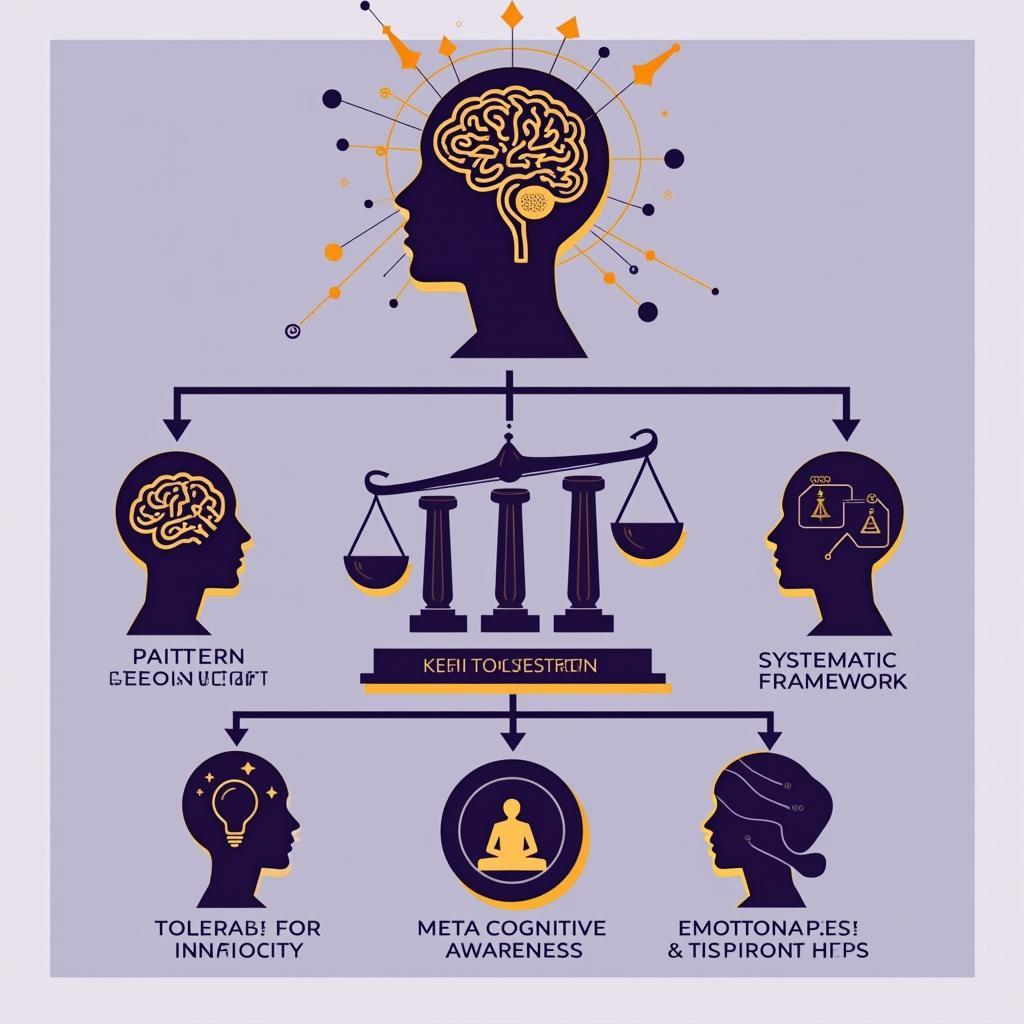 Minh họa về các yếu tố quan trọng trong kỹ năng ra quyết định nhanh của doanh nhân thành công
Follow-up Questions (Rounding Off Questions)
Question 1: Do you think you could make decisions as quickly as this person?
Band 6-7 Answer:
I don’t think so. I’m still young and don’t have as much experience as him. Maybe in the future, after I work for many years, I can be better at making quick decisions.
Band 8-9 Answer:
Honestly, I think it would take years of deliberate practice and exposure to diverse situations to develop that level of decisiveness. While I’m working on building my own decision-making frameworks, I recognize that there’s a qualitative difference between intellectual understanding and the kind of intuitive mastery that comes from decades of experience. That said, having him as a mentor certainly accelerates my learning curve.
Question 2: Would you like to be able to make decisions that quickly?
Band 6-7 Answer:
Yes, I would like to be faster at making decisions. It would be useful in my work and daily life. I think it would save time and make me more confident.
Band 8-9 Answer:
To some extent, yes – I certainly aspire to become more decisive in areas where I have sufficient expertise. However, I think it’s important to recognize that speed shouldn’t come at the expense of quality. What I truly admire is not just the speed, but the accuracy of his decisions. So rather than focusing purely on velocity, I’d prefer to develop the underlying competencies – the pattern recognition, the frameworks, the emotional discipline – that would allow me to make both fast and sound decisions when the situation calls for it.
IELTS Speaking Part 3: Two-way Discussion
Tổng Quan Về Part 3
Part 3 kéo dài 4-5 phút và là phần thách thức nhất của bài thi Speaking. Đây không còn là các câu hỏi cá nhân đơn giản nữa mà là cuộc thảo luận sâu về các vấn đề xã hội, văn hóa, hoặc triết học liên quan đến chủ đề Part 2.
Examiner mong đợi bạn có khả năng phân tích, so sánh, đánh giá, đưa ra quan điểm cá nhân có lý lẽ vững chắc, và xem xét vấn đề từ nhiều góc độ khác nhau. Đây là lúc bạn cần thể hiện critical thinking và khả năng discuss abstract ideas.
Chiến lược hiệu quả là mở rộng câu trả lời thành 3-5 câu với cấu trúc: direct answer → reason/explanation → example từ xã hội → acknowledge complexity. Sử dụng discourse markers như “Well”, “Actually”, “I think” để tạo sự tự nhiên, đưa ra examples không chỉ từ kinh nghiệm cá nhân mà từ quan sát xã hội rộng hơn, và luôn thừa nhận rằng vấn đề có nhiều mặt phức tạp.
Lỗi thường gặp nhất của học viên Việt Nam trong Part 3 là trả lời quá ngắn gọn thiếu phân tích, không đưa ra lý lẽ rõ ràng để support quan điểm, và thiếu vocabulary trừu tượng cần thiết cho discussion ở level cao.
Các Câu Hỏi Thảo Luận Sâu
Theme 1: Decision-Making in Modern Society
Question 1: Why do some people find it difficult to make decisions?
🎯 Phân tích câu hỏi:
- Dạng: Cause-Effect – giải thích nguyên nhân
- Key words: difficult, make decisions
- Cách tiếp cận: Đưa ra multiple reasons với examples, show understanding về psychological factors
📝 Sample Answer – Band 6-7:
I think there are several reasons why some people have trouble making decisions. First, they might be afraid of making mistakes and the bad results that could happen. Also, some people don’t have enough confidence in themselves. Another reason is that sometimes there are too many choices, which makes it confusing. For example, when buying a phone, there are so many brands and models that people don’t know which one to choose.
Phân tích:
- Structure: Có multiple reasons và một example nhưng chưa develop đầy đủ
- Vocabulary: Basic (have trouble, don’t have enough confidence, confusing)
- Tại sao Band 6-7: Adequate content nhưng lacks depth và sophistication, thiếu linking sophisticated
📝 Câu trả lời mẫu – Band 8-9:
Well, I think decision-making difficulties stem from a confluence of psychological and practical factors. First and foremost, many people suffer from what psychologists call “decision fatigue” – in our modern world, we’re bombarded with an overwhelming number of choices daily, from trivial ones like what to have for breakfast to consequential decisions about careers or relationships. This constant need to make choices depletes our mental energy, making even simple decisions feel daunting.
Moreover, there’s often a fear of regret or making the wrong choice, particularly in cultures that stigmatize failure. When people perceive the stakes as high and outcomes as irreversible, they tend to overthink and second-guess themselves. This is compounded by what we call “analysis paralysis” – the more information we have access to, thanks to the internet, the harder it becomes to process and weigh all the options effectively.
On top of that, lack of experience or expertise in a particular domain can make decision-making particularly challenging. When you don’t have a frame of reference or past experiences to draw upon, it’s naturally harder to assess which option might yield the best outcome. This is why people often defer to experts or seek extensive advice before making unfamiliar decisions.
Phân tích:
- Structure: Well-organized với clear progression: Reason 1 (decision fatigue + example) → Reason 2 (fear of regret + cultural context) → Reason 3 (lack of experience) → Sophisticated linking throughout
- Vocabulary: Precise và sophisticated (confluence, bombarded with, depletes, daunting, stigmatize, compound, defer to, frame of reference, yield outcome)
- Grammar: Complex structures: relative clauses, participle clauses (making even simple decisions feel daunting), passive voice (is compounded by), cleft sentences (This is why…)
- Critical Thinking: Shows psychological depth, acknowledges cultural factors, connects to modern society context
💡 Key Language Features:
- Discourse markers: Well, First and foremost, Moreover, On top of that – create natural flow
- Tentative language: I think, tends to, often – shows nuanced thinking
- Abstract nouns: confluence, fatigue, perception, expertise, outcome – academic register appropriate for Part 3
- Collocations: stem from, bombarded with, depletes mental energy, fear of regret, analysis paralysis
Question 2: Do you think people make better decisions when they are under pressure or when they have more time?
🎯 Phân tích câu hỏi:
- Dạng: Compare and Opinion – so sánh hai tình huống và đưa ra quan điểm
- Key words: under pressure vs. have more time, better decisions
- Cách tiếp cận: Present both perspectives, acknowledge it depends on context, give personal stance
📝 Sample Answer – Band 6-7:
I think it depends on the situation and the person. Some people work better under pressure because they focus more and don’t waste time thinking too much. But other people need time to think carefully about all the options. For important decisions, I believe having more time is better because you can research and ask for advice. However, in emergency situations, you have to decide quickly.
Phân tích:
- Structure: Có acknowledge both sides và some context awareness
- Vocabulary: Simple (work better, waste time, think carefully)
- Tại sao Band 6-7: Basic comparison nhưng lacks sophisticated analysis và concrete examples
📝 Câu trả lời mẫu – Band 8-9:
That’s quite a nuanced question, and I’d say the answer is highly contextual. On the one hand, pressure can actually enhance decision-making in certain scenarios. When we’re under time constraints, we’re forced to rely on our intuition and accumulated experience rather than getting caught up in excessive analysis. This is particularly true for routine decisions or situations where you have domain expertise. For instance, emergency room doctors often make life-or-death decisions in seconds, and their rapid judgments, honed by years of training, are frequently spot-on.
On the other hand, for complex, multifaceted decisions with long-term ramifications, having adequate time generally yields better outcomes. When we have time, we can gather comprehensive information, consult with stakeholders, model different scenarios, and anticipate potential consequences more thoroughly. Think about strategic business decisions or policy-making – these typically benefit from deliberation rather than snap judgments.
However, I think the optimal scenario is actually a balanced approach. Some pressure can be beneficial as it prevents procrastination and forces us to prioritize, but excessive pressure often impairs our cognitive function and leads to tunnel vision. Ideally, we’d have sufficient time to think things through, but with enough urgency to maintain focus and avoid analysis paralysis. The key is matching the decision-making approach to the nature and stakes of the decision at hand.
Phân tích:
- Structure: Sophisticated organization: Acknowledge question complexity → Argument for pressure (with example) → Counter-argument for time (with example) → Synthesize with balanced view
- Vocabulary: Advanced (nuanced, contextual, honed by, ramifications, stakeholders, tunnel vision, impairs cognitive function)
- Grammar: Full range: conditional (When we’re under…), passive (are frequently spot-on), relative clauses, gerunds (prevents procrastination), parallel structures
- Critical Thinking: Shows ability to see multiple perspectives, provides specific examples (ER doctors, business decisions), arrives at nuanced conclusion rather than absolute answer
💡 Key Language Features:
- Discourse markers: On the one hand, On the other hand, However, Ideally – for balanced argument
- Tentative language: I’d say, generally, typically, often – showing thoughtful consideration
- Abstract nouns: intuition, ramifications, deliberation, procrastination, urgency – sophisticated vocabulary
- Hedging: quite, highly, frequently, usually – demonstrates academic caution
Để hiểu sâu hơn về cách phân tích tình huống áp lực trong IELTS Speaking, bạn có thể tham khảo describe a time when you had to adapt to new technology để thấy cách xử lý các tình huống đòi hỏi quyết định nhanh trong bối cảnh khác.
Question 3: Has technology made it easier or harder for people to make decisions?
🎯 Phân tích câu hỏi:
- Dạng: Opinion and Impact Analysis – đánh giá tác động của technology
- Key words: technology, easier or harder, make decisions
- Cách tiếp cận: Present paradox – both easier and harder, give specific examples of technology
📝 Sample Answer – Band 6-7:
I think technology has made both easier and harder to make decisions. It’s easier because we can search for information online quickly. For example, if we want to buy something, we can read reviews and compare prices on websites. But it’s also harder because there is too much information now, and sometimes we don’t know which information is correct. Also, we have more choices than before, which can be confusing.
Phân tích:
- Structure: Có present both sides với example cơ bản
- Vocabulary: Basic (search for information, read reviews, too much information)
- Tại sao Band 6-7: Covers main points nhưng lacks sophistication và specific technological examples
📝 Câu trả lời mẫu – Band 8-9:
I’d argue that technology has created a paradoxical situation – it’s simultaneously empowered and complicated our decision-making processes. In terms of empowerment, we now have unprecedented access to information. Decision-support tools like comparison websites, recommendation algorithms, and data analytics platforms can help us process vast amounts of information far more efficiently than ever before. For instance, when considering a major purchase, we can instantly access thousands of reviews, detailed specifications, and price comparisons across multiple vendors – something that would have been virtually impossible a few decades ago.
That being said, this information abundance has also introduced new challenges. We’re now facing what experts call “choice overload” or “the paradox of choice” – when we have too many options, decision-making becomes more difficult rather than easier. Filtering through the sheer volume of information, distinguishing reliable sources from misinformation, and avoiding decision fatigue have become significant hurdles.
Furthermore, technology has altered our decision-making in more subtle ways. Social media, for instance, exposes us to constant social comparison, which can undermine our confidence in our own choices. We’re perpetually aware of what others are choosing, which can lead to second-guessing our decisions or chasing trends rather than making authentic choices that align with our actual needs.
Moreover, there’s the issue of algorithmic influence. While recommendation systems can be helpful, they also create filter bubbles that limit our exposure to diverse options and perspectives. We might think we’re making informed decisions, but we’re actually only seeing a curated subset of possibilities that algorithms deem relevant based on our past behavior.
On balance, I’d say technology is a double-edged sword. It has tremendous potential to enhance our decision-making if we use it judiciously – leveraging its information-gathering capabilities while being mindful of its pitfalls. The key is developing digital literacy and metacognitive skills to navigate this complex technological landscape effectively.
Phân tích:
- Structure: Highly sophisticated: Introduction with paradox → Positive impacts (with examples) → Negative impacts (with technical terms) → Subtle effects (social media) → Systemic issues (algorithms) → Balanced conclusion
- Vocabulary: Sophisticated and precise (paradoxical, unprecedented, judiciously, undermine, perpetually, authentic, algorithmic influence, filter bubbles, double-edged sword)
- Grammar: Complex throughout: relative clauses, conditionals, passive constructions, gerunds, participle phrases
- Critical Thinking: Multi-layered analysis considering information access, psychological factors, social influences, and systemic issues. Shows awareness of academic concepts (paradox of choice, filter bubbles)
💡 Key Language Features:
- Discourse markers: In terms of, That being said, Furthermore, Moreover, On balance – sophisticated progression
- Tentative language: I’d argue, I’d say – academic hedging
- Technical terms: decision-support tools, recommendation algorithms, choice overload, filter bubbles, metacognitive skills – shows depth
- Collocations: unprecedented access, sheer volume, social comparison, curated subset, digital literacy
Khi thảo luận về tác động của công nghệ, bạn có thể liên hệ với describe a recent technological innovation để có thêm vocabulary và ý tưởng về các phát minh công nghệ gần đây ảnh hưởng đến cuộc sống.
Theme 2: Decision-Making Across Different Life Stages
Question 1: Do you think young people and older people make decisions differently?
🎯 Phân tích câu hỏi:
- Dạng: Compare – so sánh hai nhóm tuổi
- Key words: young people, older people, make decisions differently
- Cách tiếp cận: Contrast characteristics of each group, explain underlying reasons, acknowledge exceptions
📝 Sample Answer – Band 6-7:
Yes, I think they make decisions very differently. Young people usually make decisions more quickly and take more risks because they have less experience. They often follow their feelings or what their friends do. Older people are usually more careful and think more about the consequences. They use their experience to make decisions. For example, young people might change jobs easily, but older people think more about stability.
Phân tích:
- Structure: Basic comparison với một example
- Vocabulary: Simple (take more risks, follow their feelings, think about)
- Tại sao Band 6-7: Adequate comparison nhưng lacks nuance và depth
📝 Câu trả lời mẫu – Band 8-9:
Absolutely, there are notable differences in how different age groups approach decision-making, though I should caveat that these are general tendencies rather than universal rules.
Young people tend to be more impulsive and risk-tolerant in their decision-making, which isn’t necessarily a negative thing. Their willingness to take chances often stems from having fewer obligations and less to lose. Neurologically, the prefrontal cortex – the part of the brain responsible for weighing consequences and exercising judgment – isn’t fully developed until the mid-twenties, which partly explains why younger individuals might be more prone to spontaneous decisions. They’re also more influenced by peer pressure and social validation, particularly in the age of social media.
Conversely, older individuals typically exhibit more cautious and deliberative decision-making patterns. They’ve accumulated a wealth of experience – both successes and failures – that informs their choices. This experience creates what psychologists call “crystallized intelligence” – practical wisdom gained over time. They’re generally better at anticipating consequences, recognizing patterns, and avoiding pitfalls they’ve encountered before.
However, these age-related differences cut both ways. While older people’s cautiousness can prevent costly mistakes, it might also make them overly risk-averse and resistant to change, potentially causing them to miss opportunities. Conversely, young people’s spontaneity can lead to innovative thinking and breakthrough achievements, even if it sometimes results in missteps.
Interestingly, there’s also a generational context to consider. Today’s young people have grown up in a fast-paced digital environment where rapid decision-making is often rewarded and where failure is increasingly destigmatized – the “fail fast” ethos of startup culture, for example. This cultural backdrop shapes their decision-making orientation quite differently from previous generations.
Phân tích:
- Structure: Sophisticated progression: Acknowledge question with caveat → Young people’s characteristics (with scientific explanation) → Older people’s characteristics (with psychological concepts) → Balanced view showing trade-offs → Generational/cultural context
- Vocabulary: Advanced and precise (impulsive, risk-tolerant, neurologically, prefrontal cortex, crystallized intelligence, destigmatized, ethos, orientation)
- Grammar: Complex throughout: relative clauses, passive constructions, participle phrases (causing them to miss), cleft sentences
- Critical Thinking: Multi-dimensional analysis including neuroscience, psychology, cultural context; shows awareness of exceptions and trade-offs
💡 Key Language Features:
- Discourse markers: Absolutely, Conversely, However, Interestingly – varied and natural
- Hedging: tend to be, generally, typically, might – shows academic nuance
- Scientific terminology: prefrontal cortex, crystallized intelligence, neurologically – demonstrates knowledge depth
- Balanced view: “cut both ways”, showing trade-offs for both groups
Question 2: Should children be taught how to make decisions at school?
🎯 Phân tích câu hỏi:
- Dạng: Opinion and Proposal – có nên dạy skill này không
- Key words: children, taught, make decisions, school
- Cách tiếp cận: Give clear opinion, explain why, discuss how it could be implemented, acknowledge challenges
📝 Sample Answer – Band 6-7:
Yes, I think schools should teach children about making decisions. It’s an important life skill that they will need when they grow up. Schools could have special classes where students learn to think about different choices and their results. They could practice making decisions in safe situations, like group projects. This would help them become more independent and confident. However, it might be difficult because teachers would need special training to teach this skill well.
Phân tích:
- Structure: Clear opinion với some supporting points
- Vocabulary: Basic (important life skill, special classes, safe situations)
- Tại sao Band 6-7: Reasonable development nhưng lacks sophistication và specific methodologies
📝 Câu trả lời mẫu – Band 8-9:
I strongly believe that decision-making skills should be explicitly integrated into the curriculum, and there are compelling reasons for this. First and foremost, while children naturally develop some decision-making abilities through experience, systematic instruction can significantly accelerate this development and help them avoid common cognitive biases that often plague even adult decision-makers.
From a pedagogical perspective, decision-making education could be seamlessly woven into existing subjects rather than taught in isolation. For example, in mathematics, students could learn about probability and risk assessment; in science, they’d practice hypothesis testing and evaluating evidence; in social studies, they could analyze historical decisions and their consequences; and in literature, they might examine character decisions and alternative outcomes. This cross-curricular approach would help students understand that decision-making isn’t just an abstract skill but something applicable across all domains of life.
More specifically, schools could incorporate several evidence-based strategies. One would be teaching decision-making frameworks like cost-benefit analysis, decision matrices, or the “WRAP” method (Widen your options, Reality-test your assumptions, Attain distance before deciding, Prepare to be wrong). Students could also engage in structured debates, simulations, and role-playing exercises where they grapple with complex decisions in low-stakes environments. Project-based learning naturally lends itself to this, as students must constantly make choices about resource allocation, time management, and collaborative strategies.
Moreover, teaching decision-making could foster crucial metacognitive skills – the ability to think about one’s own thinking. Students would learn to recognize their own biases, understand when they’re experiencing decision fatigue, and develop strategies to counteract these limitations. In our increasingly complex world, this kind of self-awareness is invaluable.
That being said, there are legitimate challenges to implementation. Teachers would need professional development to effectively facilitate these lessons. There’s also the question of assessment – how do we measure decision-making competency without stifling creativity or imposing a single “correct” way to decide? Additionally, we’d need to be culturally sensitive, recognizing that decision-making norms vary across cultures, and avoid inadvertently privileging Western, individualistic approaches.
Despite these challenges, I think the potential benefits far outweigh the difficulties. In an era of information overload and rapid change, empowering young people with robust decision-making skills is not just beneficial – it’s essential for their future success and well-being.
Phân tích:
- Structure: Highly developed: Strong opinion → Rationale → Integration into existing subjects → Specific methodologies → Metacognitive benefits → Challenges → Conclusion reaffirming position
- Vocabulary: Sophisticated and precise (pedagogical perspective, seamlessly woven into, cross-curricular approach, lends itself to, metacognitive skills, inadvertently privileging)
- Grammar: Full range: conditional (could be incorporated), passive (should be integrated), relative clauses, gerunds, complex nominalizations
- Critical Thinking: Comprehensive analysis considering pedagogical theory, practical implementation, assessment challenges, and cultural sensitivity. Shows awareness of educational methodology
💡 Key Language Features:
- Strong stance: I strongly believe, I think the potential benefits far outweigh – clear position
- Academic vocabulary: pedagogical, cross-curricular, metacognitive, facilitate, inadvertently
- Acknowledging complexity: That being said, Despite these challenges – shows balanced thinking
- Specific examples: WRAP method, decision matrices, project-based learning – demonstrates concrete knowledge
 Hình ảnh minh họa việc dạy kỹ năng ra quyết định cho học sinh tại trường học qua các hoạt động tương tác
Theme 3: Decision-Making in Professional Contexts
Question 1: What qualities make someone a good decision-maker in the workplace?
🎯 Phân tích câu hỏi:
- Dạng: Describe qualities – liệt kê và giải thích các phẩm chất
- Key words: qualities, good decision-maker, workplace
- Cách tiếp cận: List multiple qualities with explanations, provide workplace examples
📝 Sample Answer – Band 6-7:
I think good decision-makers in the workplace need several qualities. First, they should be confident and not afraid to take responsibility for their choices. They also need to be good at analyzing information and thinking logically. Another important quality is being able to listen to other people’s opinions. They should also be calm under pressure and not panic when there are problems. Finally, they need experience in their field so they understand the situation well.
Phân tích:
- Structure: List format với brief explanations
- Vocabulary: Basic (confident, not afraid, thinking logically, calm under pressure)
- Tại sao Band 6-7: Covers main points nhưng lacks depth và workplace-specific vocabulary
📝 Câu trả lời mẫu – Band 8-9:
In my view, effective decision-making in professional environments requires a sophisticated blend of cognitive, emotional, and interpersonal competencies.
Foremost among these is analytical capability – the ability to break down complex problems, identify relevant variables, and synthesize information from diverse sources. This involves not just raw intelligence but also what we might call “business acumen” – understanding the broader context, market dynamics, and organizational implications of decisions. Strong decision-makers can see beyond the immediate problem to consider downstream effects and unintended consequences.
Equally crucial is emotional intelligence, particularly self-regulation and composure under pressure. In high-stakes business situations, the ability to remain level-headed, resist impulsive reactions, and think clearly when others are panicking is invaluable. This emotional stability inspires confidence in teams and facilitates rational decision-making even in crisis scenarios.
Moreover, effective workplace decision-makers demonstrate what I’d call “collaborative decisiveness.” This seems paradoxical, but it means knowing when to gather input and build consensus versus when to make unilateral calls. They’re secure enough to seek diverse perspectives, recognizing that collective intelligence often yields better outcomes than solitary judgment. However, they also recognize that excessive consultation can lead to decision paralysis, so they know when to synthesize the input and make the call.
Another critical quality is risk calibration – the ability to assess and take appropriate levels of risk. Overly cautious decision-makers might avoid mistakes but also miss opportunities for innovation and growth. Conversely, reckless risk-taking can be catastrophic. The best decision-makers have a nuanced understanding of risk-reward trade-offs and can make calculated bets when the potential upside justifies the downside.
Adaptability is also paramount. In today’s volatile business environment, decisions must often be revisited and adjusted as new information emerges. Strong decision-makers avoid ego-driven commitment to past choices and are willing to pivot when evidence suggests they should. This requires intellectual humility – recognizing the limits of one’s knowledge and remaining open to being wrong.
Finally, there’s decisiveness itself – the willingness to commit when sufficient information is available, even if perfect clarity is elusive. Many professionals can analyze admirably but struggle to pull the trigger on decisions. The ability to act with conviction while acknowledging uncertainty is what distinguishes effective decision-makers from perpetual deliberators.
Phân tích:
- Structure: Highly sophisticated: Introduction establishing multi-faceted nature → Analytical skills → Emotional intelligence → Collaborative decisiveness (with paradox) → Risk calibration → Adaptability → Decisiveness itself
- Vocabulary: Professional and precise (business acumen, downstream effects, self-regulation, unilateral calls, risk calibration, intellectual humility, perpetual deliberators)
- Grammar: Complex throughout: relative clauses, participle phrases, conditional structures, cleft sentences, parallel structures
- Critical Thinking: Demonstrates deep understanding of workplace dynamics, acknowledges paradoxes and trade-offs, shows awareness of psychological and organizational factors
💡 Key Language Features:
- Academic phrasing: In my view, Foremost among these, Equally crucial, Moreover, paramount
- Business terminology: business acumen, market dynamics, organizational implications, calculated bets
- Nuanced language: sophisticated blend, seems paradoxical, nuanced understanding – shows complexity
- Strong collocations: raw intelligence, crisis scenarios, collective intelligence, ego-driven commitment
Để hiểu rõ hơn về các phẩm chất quyết định trong bối cảnh công việc, bạn có thể tìm hiểu thêm tại how to describe a person who is good at making decisions in IELTS Speaking với nhiều góc nhìn và ví dụ cụ thể hơn.
Question 2: Do you think artificial intelligence will replace human decision-making in the future?
🎯 Phân tích câu hỏi:
- Dạng: Future prediction and Opinion – dự đoán tương lai với technology
- Key words: artificial intelligence, replace, human decision-making, future
- Cách tiếp cận: Present nuanced view, discuss where AI excels vs. human strengths, consider ethical dimensions
📝 Sample Answer – Band 6-7:
I don’t think AI will completely replace human decision-making, but it will help a lot. AI is very good at processing large amounts of data quickly, which humans cannot do. It can find patterns and make predictions. However, humans are still better at understanding emotions and making decisions that involve moral questions. I think in the future, AI and humans will work together, with AI providing information and humans making the final decisions, especially for important matters.
Phân tích:
- Structure: Clear position với basic reasoning
- Vocabulary: Simple (processing data, find patterns, understanding emotions)
- Tại sao Band 6-7: Reasonable points nhưng lacks sophistication và specific technological/ethical considerations
📝 Câu trả lời mẫu – Band 8-9:
This is a fascinating and contentious question that touches on technological capability, ethical considerations, and fundamental questions about human agency. I’d argue that AI will increasingly augment rather than wholesale replace human decision-making, though the boundary between augmentation and replacement is blurrier than it might appear.
In certain domains, AI is already demonstrably superior to humans at specific types of decisions. Algorithmic trading in financial markets, for instance, operates at speeds and with a level of data processing that far exceeds human capability. Diagnostic AI in healthcare can analyze medical imaging with accuracy rates that rival or exceed expert radiologists. In these narrow, data-rich contexts where decisions can be reduced to pattern recognition and optimization, AI’s dominance seems inevitable.
However, many consequential decisions – particularly those involving strategic planning, moral judgment, or novel situations – require uniquely human capacities that AI, at least in its current form, cannot replicate. Human decision-making incorporates contextual understanding, emotional intelligence, ethical reasoning, and what we might call “common sense” – the ability to navigate ambiguity and apply judgment in situations that don’t fit neat categories.
Consider, for example, a hospital administrator deciding whether to shut down an unprofitable department that nevertheless serves a vulnerable population. This decision involves weighing financial sustainability against ethical obligations, anticipating community reaction, considering employee welfare, and navigating political dynamics – a constellation of factors that resists purely algorithmic resolution. Or think about a manager deciding whether to terminate an underperforming employee who’s going through personal difficulties – this requires empathy, contextual judgment, and moral reasoning that AI currently lacks.
Moreover, there’s a critical distinction between what’s technologically possible and what’s socially desirable. Even in domains where AI could theoretically replace human decision-makers, we might deliberately choose to retain human involvement for accountability, ethical, or democratic reasons. Delegating life-altering decisions – about criminal sentencing, loan approvals, or hiring – entirely to algorithms raises profound ethical concerns about bias, transparency, and human dignity. Society may insist on human oversight not because humans are necessarily more accurate, but because we value human judgment and accountability as intrinsic goods.
Looking ahead, I envision a hybrid model where AI handles data-intensive, routine, and optimization-focused decisions, while humans retain authority over strategic, ethical, and unprecedented situations. The most effective decision-making will likely involve human-AI collaboration – AI providing analytical insights, scenario modeling, and pattern recognition, while humans contribute contextual wisdom, ethical judgment, and creative thinking. The challenge will be ensuring that humans remain skilled at decision-making and don’t become over-reliant on or unquestioningly deferential to algorithmic recommendations.
Ultimately, the question isn’t just whether AI can replace human decision-making in various domains – in many cases, it already can – but rather whether we want it to, and how we can design AI systems that enhance rather than diminish human agency and wisdom.
Phân tích:
- Structure: Exceptionally sophisticated: Establish nuance in question → Where AI excels (with examples) → Where humans remain essential (with examples) → Complex decision examples (hospital, employee) → Ethical and social considerations → Future hybrid model → Philosophical conclusion
- Vocabulary: Highly advanced (contentious, augment, wholesale replace, constellation of factors, algorithmic resolution, intrinsic goods, unquestioningly deferential)
- Grammar: Full range of advanced structures perfectly executed, including conditionals, relative clauses, nominalizations, participle phrases, cleft sentences
- Critical Thinking: Demonstrates philosophical depth, considers technological, ethical, and social dimensions, provides concrete examples, acknowledges complexity, arrives at nuanced position
💡 Key Language Features:
- Academic sophistication: fascinating and contentious question, touches on, boundary between, distinction between
- Technical precision: algorithmic trading, diagnostic AI, pattern recognition, scenario modeling
- Ethical discourse: moral judgment, ethical reasoning, human dignity, accountability, intrinsic goods
- Balanced argumentation: In certain domains… However… Moreover… Looking ahead… Ultimately
Khi thảo luận về công nghệ và quyết định, việc tham khảo describe a technology that you recently learned to use có thể giúp bạn có thêm vocabulary về các công nghệ mới và cách chúng ảnh hưởng đến cuộc sống.
Từ vựng và cụm từ quan trọng
Topic-Specific Vocabulary
| Từ vựng/Cụm từ | Loại từ | Phiên âm | Nghĩa tiếng Việt | Ví dụ | Collocation |
|---|---|---|---|---|---|
| decisive | adj | /dɪˈsaɪsɪv/ | quyết đoán, dứt khoát | She’s very decisive and never hesitates when making important choices. | decisive action, decisive moment, decisive factor, decisive leadership |
| snap judgment | n phrase | /snæp ˈdʒʌdʒmənt/ | quyết định nhanh, đánh giá tức thì | Making snap judgments without proper information can lead to mistakes. | make a snap judgment, avoid snap judgments, rely on snap judgments |
| weigh up | phrasal verb | /weɪ ʌp/ | cân nhắc, đắn đo | Before accepting the job offer, I need to weigh up the pros and cons. | weigh up options, weigh up alternatives, weigh up the risks |
| deliberate | adj/verb | /dɪˈlɪbərət/ | thận trọng, cân nhắc kỹ | He’s very deliberate in his approach to problem-solving. | deliberate consideration, deliberate choice, deliberate action, deliberate pace |
| impulsive | adj | /ɪmˈpʌlsɪv/ | bốc đồng, hấp tấp | Her impulsive decisions sometimes get her into trouble. | impulsive behavior, impulsive purchase, impulsive decision, impulsive nature |
| calculated risk | n phrase | /ˈkælkjuleɪtɪd rɪsk/ | rủi ro được tính toán | Starting his own business was a calculated risk that paid off. | take a calculated risk, accept calculated risks, involve calculated risks |
| analysis paralysis | n phrase | /əˈnæləsɪs pəˈræləsɪs/ | tình trạng phân tích quá nhiều dẫn đến không thể quyết định | She suffers from analysis paralysis and takes forever to make even simple decisions. | suffer from analysis paralysis, avoid analysis paralysis, lead to analysis paralysis |
| gut feeling/instinct | n phrase | /ɡʌt ˈfiːlɪŋ/ | trực giác, cảm giác trong bụng | Sometimes you just have to trust your gut feeling. | trust your gut feeling, follow gut instinct, rely on gut feeling, ignore gut feeling |
| second-guess | verb | /ˈsekənd ɡes/ | nghi ngờ, đặt câu hỏi về quyết định đã đưa ra | Stop second-guessing yourself and commit to your decision. | second-guess yourself, second-guess decisions, constantly second-guess |
| make up one’s mind | idiom | /meɪk ʌp wʌnz maɪnd/ | quyết định, đưa ra quyết định | I can’t make up my mind about which university to attend. | make up your mind, help someone make up their mind, finally make up one’s mind |
| jump to conclusions | idiom | /dʒʌmp tu kənˈkluːʒənz/ | vội vàng kết luận | Don’t jump to conclusions without hearing all the facts. | jump to hasty conclusions, avoid jumping to conclusions, tend to jump to conclusions |
| on the fence | idiom | /ɒn ðə fens/ | do dự, chưa quyết định | I’m still on the fence about whether to accept the job offer. | sit on the fence, remain on the fence, get off the fence |
| consequential | adj | /ˌkɒnsɪˈkwenʃəl/ | quan trọng, có hậu quả lớn | This is a consequential decision that will affect your entire career. | consequential decision, consequential choice, consequential matter, consequential impact |
| methodical | adj | /məˈθɒdɪkəl/ | có phương pháp, có hệ thống | His methodical approach to decision-making ensures nothing is overlooked. | methodical approach, methodical way, methodical process, methodical manner |
| hasty | adj | /ˈheɪsti/ | vội vàng, hấp tấp | I regret my hasty decision to quit my job without another offer. | hasty decision, hasty conclusion, hasty judgment, hasty retreat |
| mull over | phrasal verb | /mʌl ˈəʊvə/ | suy ngẫm kỹ lưỡng | I need some time to mull over your proposal before giving an answer. | mull over options, mull over ideas, mull over possibilities |
| commit to | phrasal verb | /kəˈmɪt tuː/ | cam kết, quyết định làm gì đó | Once you commit to a decision, you should follow through with it. | commit to a course of action, commit to a decision, fully commit to |
| informed decision | n phrase | /ɪnˈfɔːmd dɪˈsɪʒən/ | quyết định có căn cứ, dựa trên thông tin | We need all the facts to make an informed decision. | make informed decisions, reach informed decisions, ensure informed decisions |
| split-second decision | n phrase | /splɪt ˈsekənd dɪˈsɪʒən/ | quyết định trong tích tắc | Emergency workers must make split-second decisions in life-or-death situations. | make split-second decisions, require split-second decisions, face split-second decisions |
| ramifications | n | /ˌræmɪfɪˈkeɪʃənz/ | hậu quả, tác động | We need to consider the ramifications of this decision carefully. | serious ramifications, consider ramifications, long-term ramifications, negative ramifications |
Idiomatic Expressions & Advanced Phrases
| Cụm từ | Nghĩa | Ví dụ sử dụng | Band điểm |
|---|---|---|---|
| at the drop of a hat | ngay lập tức, không do dự | He can make decisions at the drop of a hat, which is impressive in crisis situations. | 7.5-9 |
| throw caution to the wind | liều lĩnh, bỏ qua sự thận trọng | Sometimes you need to throw caution to the wind and take a chance. | 7.5-9 |
| strike while the iron is hot | tận dụng cơ hội khi có thể | She decided to strike while the iron is hot and negotiate a raise. | 7.5-9 |
| sleep on it | suy nghĩ kỹ qua đêm trước khi quyết định | It’s a big decision – why don’t you sleep on it and let me know tomorrow? | 7-8 |
| cross that bridge when we come to it | lo về vấn đề đó khi nó xảy ra | We don’t need to decide now; we’ll cross that bridge when we come to it. | 7-8 |
| bite the bullet | chấp nhận làm điều khó khăn nhưng cần thiết | He finally bit the bullet and resigned from his unfulfilling job. | 7.5-8.5 |
| on the spur of the moment | hấp tấp, không kế hoạch trước | The decision to move abroad was made on the spur of the moment. | 7.5-8.5 |
| weigh one’s options | cân nhắc các lựa chọn | Take your time to weigh your options before committing. | 7-8 |
| a no-brainer | quyết định dễ dàng, rõ ràng | Accepting the promotion was a no-brainer given the salary increase. | 7-8 |
| sit on the fence | do dự, không chọn bên nào | You can’t sit on the fence forever; you need to make a choice. | 7-8 |
| go with the flow | thuận theo tình huống, không cưỡng lại | Sometimes it’s best to just go with the flow rather than overthink everything. | 7-7.5 |
| cut through the noise | tập trung vào điều quan trọng, loại bỏ thông tin nhiễu | Good decision-makers can cut through the noise and focus on what matters. | 8-9 |
| pull the trigger | đưa ra quyết định cuối cùng (đặc biệt là khó khăn) | After months of deliberation, he finally pulled the trigger on the investment. | 8-9 |
| have second thoughts | bắt đầu nghi ngờ quyết định của mình | I’m having second thoughts about accepting the job offer. | 7-8 |
| take the plunge | quyết định làm điều gì đó dù rủi ro | After years of planning, they took the plunge and opened their own restaurant. | 7.5-8.5 |
Discourse Markers (Từ Nối Ý Trong Speaking)
Để bắt đầu câu trả lời:
- 📝 Well,… – Sử dụng khi cần một chút thời gian để suy nghĩ hoặc khi câu trả lời phức tạp
- 📝 Actually,… – Khi đưa ra góc nhìn có thể hơi khác với kỳ vọng
- 📝 To be honest,… / Honestly,… – Khi nói thật về quan điểm cá nhân
- 📝 I’d say that… – Cách lịch sự đưa ra quan điểm
- 📝 From my perspective,… – Nhấn mạnh đây là góc nhìn cá nhân
- 📝 In my view,… / In my opinion,… – Thể hiện quan điểm chủ quan
Để bổ sung ý:
- 📝 On top of that,… – Thêm vào đó (mạnh hơn “also”)
- 📝 What’s more,… – Hơn nữa (formal hơn)
- 📝 Not to mention… – Chưa kể đến (thường cho điều quan trọng)
- 📝 Furthermore,… / Moreover,… – Hơn thế nữa (rất formal)
- 📝 Additionally,… – Thêm vào đó (formal)
- 📝 Plus,… – Thêm nữa (informal, natural)
Để đưa ra quan điểm cân bằng:
- 📝 On the one hand,… On the other hand,… – Một mặt… mặt khác…
- 📝 While it’s true that…, we also need to consider… – Mặc dù đúng là…, chúng ta cũng cần xem xét…
- 📝 That being said,… – Tuy nhiên, nói như vậy thì… (để present counter-point)
- 📝 Having said that,… – Đã nói như vậy thì… (tương tự trên)
- 📝 Conversely,… – Ngược lại (formal)
- 📝 In contrast,… – Trái lại (formal)
Để kết luận:
- 📝 All in all,… – Tóm lại, xét tất cả mọi mặt
- 📝 At the end of the day,… – Cuối cùng thì, xét cho cùng
- 📝 On balance,… – Cân bằng tất cả, xét trên tổng thể
- 📝 Ultimately,… – Cuối cùng, về cơ bản
- 📝 In conclusion,… – Tóm lại (formal, ít dùng trong speaking)
- 📝 To sum up,… – Tóm lại (khá formal)
Để giải thích hoặc làm rõ:
- 📝 What I mean is… – Ý tôi là…
- 📝 In other words,… – Nói cách khác
- 📝 To put it another way,… – Diễn đạt theo cách khác
- 📝 That is to say,… – Nghĩa là (formal)
- 📝 Essentially,… – Về cơ bản
- 📝 Basically,… – Về cơ bản (informal hơn)
Grammatical Structures Ấn Tượng
1. Conditional Sentences (Câu điều kiện):
-
Mixed conditional: “If he had more experience, he would be making better decisions now.” – Nếu anh ấy có nhiều kinh nghiệm hơn (trong quá khứ), giờ anh ấy sẽ ra quyết định tốt hơn.
-
Inversion: “Should you need more time to decide, please let me know.” – Nếu bạn cần thêm thời gian để quyết định, hãy cho tôi biết. (Formal hơn “If you should need…”)
-
Third conditional with wish: “Had I known the consequences, I would have made a different choice.” – Nếu tôi biết hậu quả, tôi đã lựa chọn khác. (Rất formal)
2. Relative Clauses (Mệnh đề quan hệ):
-
Non-defining: “My manager, who has 20 years of experience, makes decisions very quickly.” – Người quản lý của tôi, người có 20 năm kinh nghiệm, ra quyết định rất nhanh.
-
Reduced relative clause: “Decisions made under pressure often lack careful consideration.” – Những quyết định được đưa ra dưới áp lực thường thiếu sự cân nhắc kỹ lưỡng.
3. Passive Voice (Câu bị động):
-
It is thought/believed/said that… “It is widely believed that experience plays a crucial role in effective decision-making.” – Người ta tin rộng rãi rằng kinh nghiệm đóng vai trò quan trọng trong việc ra quyết định hiệu quả.
-
Advanced passive: “The decision-making process should be informed by data rather than intuition alone.” – Quy trình ra quyết định nên được cung cấp thông tin bởi dữ liệu thay vì chỉ trực giác.
4. Cleft Sentences (Câu chẻ):
-
What I find most impressive is… “What I find most impressive about her decision-making is her ability to remain calm under pressure.” – Điều tôi thấy ấn tượng nhất về cách ra quyết định của cô ấy là khả năng giữ bình tĩnh dưới áp lực.
-
The thing that…, is… “The thing that distinguishes good decision-makers is their willingness to learn from mistakes.” – Điều phân biệt những người ra quyết định tốt là sự sẵn sàng học hỏi từ sai lầm.
-
It was… that… “It was his extensive experience that enabled him to make such quick yet accurate decisions.” – Chính kinh nghiệm phong phú của anh ấy đã cho phép anh ấy đưa ra những quyết định nhanh chóng nhưng chính xác.
5. Participle Clauses:
-
Present participle: “Having analyzed all the data, she made an informed decision.” – Sau khi phân tích tất cả dữ liệu, cô ấy đưa ra quyết định có căn cứ.
-
Perfect participle: “Having worked in the industry for decades, he can assess situations very quickly.” – Đã làm việc trong ngành hàng thập kỷ, anh ấy có thể đánh giá tình huống rất nhanh.
6. Inversion for Emphasis:
-
Not only… but also: “Not only does he make quick decisions, but he also ensures they’re well-considered.” – Không chỉ anh ấy đưa ra quyết định nhanh, mà còn đảm bảo chúng được cân nhắc kỹ.
-
Rarely/Seldom: “Rarely have I seen someone make such complex decisions with such ease.” – Hiếm khi tôi thấy ai đó đưa ra những quyết định phức tạp như vậy một cách dễ dàng.
7. Subjunctive Mood:
-
I suggest that… “I suggest that people take time to consider all options before committing to important decisions.” – Tôi đề nghị mọi người dành thời gian xem xét tất cả các lựa chọn trước khi cam kết với các quyết định quan trọng.
-
It’s essential that… “It’s essential that decision-makers remain objective and avoid emotional bias.” – Điều cần thiết là những người ra quyết định phải khách quan và tránh thiên kiến cảm xúc.
Bài viết này đã cung cấp cho bạn một cái nhìn toàn diện về cách trả lời chủ đề “Describe a person who is good at making quick decisions” trong IELTS Speaking test. Từ các câu hỏi Part 1 đơn giản đến phần độc thoại Part 2 chi tiết, và những thảo luận sâu sắc trong Part 3, bạn đã thấy cách xây dựng câu trả lời từ Band 6-7 đến Band 8-9.
Hãy nhớ rằng, để đạt điểm cao trong IELTS Speaking, bạn không chỉ cần vocabulary phong phú mà còn cần thể hiện khả năng suy nghĩ phản biện, phân tích đa chiều, và diễn đạt ý tưởng một cách tự nhiên, trôi chảy. Đừng cố gắng học thuộc các câu trả lời mẫu, thay vào đó hãy hiểu cấu trúc, học từ vựng trong ngữ cảnh, và luyện tập thường xuyên để phát triển kỹ năng nói của riêng bạn.
Chúc bạn thành công trong kỳ thi IELTS Speaking sắp tới!

[…] tự như Describe a person who is good at making quick decisions, khả năng thích nghi nhanh chóng với công nghệ mới cũng phản ánh kỹ năng ra […]