
Chủ đề về quần áo và thời trang là một trong những đề tài phổ biến và thường xuyên xuất hiện trong bài thi IELTS Speaking. Đặc biệt, câu hỏi yêu cầu bạn miêu tả một món đồ đặc biệt đã trở thành chủ đề quen thuộc trong các kỳ thi từ năm 2020 đến nay, với tần suất xuất hiện ở mức cao trong cả ba phần thi. Theo thống kê từ các nguồn uy tín như IELTS-Blog.com và các báo cáo từ thí sinh thực tế, chủ đề này xuất hiện khoảng 15-20% các buổi thi Speaking, đặc biệt tập trung vào Part 2 và Part 3.
Dự đoán khả năng xuất hiện trong tương lai được đánh giá ở mức Cao do tính phổ biến và khả năng mở rộng thảo luận về văn hóa, cá nhân và xã hội. Chủ đề này không chỉ kiểm tra khả năng miêu tả vật phẩm mà còn đánh giá khả năng kể chuyện, diễn đạt cảm xúc và phân tích ý nghĩa sâu xa của đồ vật trong cuộc sống.
Trong bài viết này, bạn sẽ học được cách tiếp cận toàn diện cho chủ đề “Describe A Piece Of Clothing That Is Special To You” bao gồm: các câu hỏi thường gặp trong cả ba phần thi với phân tích chi tiết, bài mẫu theo nhiều band điểm từ 6-7, 7.5-8 đến 8.5-9, kho từ vựng phong phú với hơn 50 từ và cụm từ ăn điểm, chiến lược trả lời hiệu quả từ góc nhìn của examiner, và những lỗi phổ biến mà học viên Việt Nam thường mắc phải kèm cách khắc phục. Đây là tài liệu tham khảo toàn diện giúp bạn tự tin đạt band điểm mục tiêu trong phần thi Speaking.
IELTS Speaking Part 1: Introduction and Interview
Tổng Quan Về Part 1
Part 1 của IELTS Speaking kéo dài khoảng 4-5 phút, trong đó examiner sẽ hỏi các câu hỏi ngắn về cuộc sống hàng ngày, sở thích và thói quen của bạn. Đặc điểm nổi bật của phần này là tính chất đời thường, gần gũi và không quá phức tạp. Chiến lược hiệu quả nhất là trả lời tự nhiên như đang trò chuyện, mở rộng câu trả lời từ 2-3 câu với cấu trúc: trả lời trực tiếp → giải thích/lý do → ví dụ cụ thể.
Từ kinh nghiệm chấm thi, tôi nhận thấy học viên Việt Nam thường mắc các lỗi sau: trả lời quá ngắn chỉ Yes/No hoặc một câu đơn, sử dụng từ vựng quá đơn giản lặp đi lặp lại, thiếu ví dụ cụ thể từ cuộc sống bản thân, và có xu hướng lo lắng quá mức về ngữ pháp dẫn đến thiếu tự nhiên. Hãy nhớ rằng, Part 1 là phần warm-up để bạn thoải mái và thể hiện khả năng giao tiếp tự nhiên.
Các Câu Hỏi Thường Gặp
Question 1: Do you like shopping for clothes?
Question 2: What kind of clothes do you usually wear?
Question 3: Do you prefer comfortable clothes or fashionable clothes?
Question 4: Have your clothing preferences changed over the years?
Question 5: Do you think it’s important to wear fashionable clothes?
Question 6: What colors do you like to wear?
Question 7: Do you wear different styles of clothes for different occasions?
Question 8: Where do you usually buy your clothes?
Question 9: Do you like to try new styles of clothing?
Question 10: Is there any traditional clothing in your country?
Phân Tích và Gợi Ý Trả Lời Chi Tiết
Question: Do you like shopping for clothes?
🎯 Cách tiếp cận:
- Trả lời trực tiếp có thích hay không
- Đưa ra lý do cụ thể
- Thêm ví dụ về thói quen mua sắm của bạn
📝 Sample Answer – Band 6-7:
“Yes, I like shopping for clothes but not too much. I usually go shopping when I need new clothes for special occasions. I prefer buying clothes online because it’s more convenient and saves time.”
Phân tích:
- Điểm mạnh: Trả lời trực tiếp câu hỏi, có đưa ra lý do và thói quen cá nhân.
- Hạn chế: Từ vựng còn đơn giản (like, need, convenient), cấu trúc câu chưa đa dạng, thiếu chi tiết cụ thể về trải nghiệm mua sắm.
- Tại sao Band 6-7: Câu trả lời adequate và relevant nhưng thiếu sophistication trong vocabulary và grammatical structures. Mở rộng ý chưa đủ chi tiết.
📝 Sample Answer – Band 8-9:
“Well, I’d say I have a love-hate relationship with clothes shopping. On the one hand, I find it quite therapeutic to browse through different stores and try on various outfits, especially when I’m looking for something for a special event. On the other hand, it can be quite time-consuming and overwhelming when there are too many choices. These days, I tend to gravitate towards online shopping as it’s more convenient, though I do miss the experience of feeling the fabric and seeing how clothes fit in person.”
Phân tích:
- Điểm mạnh: Sử dụng idiomatic expression “love-hate relationship” rất tự nhiên, từ vựng đa dạng và chính xác (therapeutic, time-consuming, overwhelming, gravitate towards), cấu trúc câu phức tạp với “On the one hand… On the other hand”, và đưa ra góc nhìn cân bằng về shopping online và offline.
- Tại sao Band 8-9: Thể hiện fluency cao với discourse markers tự nhiên (Well, I’d say), lexical resource phong phú với collocations chuẩn (feeling the fabric, fit in person), grammatical range đa dạng, và ideas có chiều sâu showing personal reflection.
💡 Key Vocabulary & Expressions:
- love-hate relationship: mối quan hệ vừa thích vừa không thích
- therapeutic: có tác dụng thư giãn, chữa lành
- gravitate towards: có xu hướng nghiêng về, bị thu hút bởi
- overwhelming: choáng ngợp, quá tải
- fit in person: vừa vặn khi thử trực tiếp
Question: What kind of clothes do you usually wear?
🎯 Cách tiếp cận:
- Miêu tả phong cách thường ngày
- Giải thích lý do lựa chọn phong cách đó
- Nêu sự khác biệt theo hoàn cảnh nếu có
📝 Sample Answer – Band 6-7:
“I usually wear casual clothes like jeans and T-shirts because they are comfortable. For work, I wear more formal clothes like shirts and trousers. I think it’s important to dress appropriately for different situations.”
Phân tích:
- Điểm mạnh: Có phân biệt giữa trang phục thường ngày và công việc, đưa ra lý do về sự thoải mái.
- Hạn chế: Vocabulary basic (casual, comfortable, formal), thiếu descriptive adjectives, chưa có ví dụ cụ thể về items hoặc brands.
- Tại sao Band 6-7: Communicates meaning clearly nhưng lacks precision và variety trong vocabulary, câu trả lời predictable và chưa engaging.
📝 Sample Answer – Band 8-9:
“My style is pretty much smart casual for most occasions. I’m quite drawn to minimalist designs with neutral colors like black, white, and beige, as they’re versatile and easy to mix and match. During the week, you’ll typically find me in well-fitted chinos paired with a simple shirt or a quality cotton tee. I’m a firm believer that investing in timeless pieces is better than following fleeting fashion trends, so I tend to choose classic cuts that won’t go out of style. That said, I do jazz things up with accessories like a nice watch or a leather belt when the occasion calls for it.”
Phân tích:
- Điểm mạnh: Vocabulary sophistication cao (smart casual, minimalist designs, timeless pieces, fleeting fashion trends), sử dụng phrasal verbs và idioms tự nhiên (drawn to, mix and match, jazz things up), miêu tả chi tiết và cụ thể về items (well-fitted chinos, quality cotton tee), thể hiện philosophy về thời trang.
- Tại sao Band 8-9: Demonstrates extensive vocabulary range, natural use of colloquial expressions, complex sentence structures, và personal insights về fashion choices. Câu trả lời engaging và showcases ability to discuss topic in depth.
💡 Key Vocabulary & Expressions:
- smart casual: phong cách lịch sự nhưng thoải mái
- drawn to: bị thu hút bởi
- minimalist designs: thiết kế tối giản
- versatile: đa năng, dễ phối đồ
- timeless pieces: món đồ vượt thời gian
- fleeting fashion trends: xu hướng thời trang nhất thời
- jazz things up: làm cho thú vị hơn, nổi bật hơn
Question: Have your clothing preferences changed over the years?
🎯 Cách tiếp cận:
- So sánh phong cách trước và nay
- Giải thích nguyên nhân thay đổi
- Đưa ra ví dụ cụ thể về sự chuyển biến
📝 Sample Answer – Band 6-7:
“Yes, my clothing preferences have changed a lot. When I was younger, I liked bright colors and trendy clothes. Now I prefer simple and comfortable clothes because I’m older and have different priorities.”
Phân tích:
- Điểm mạnh: So sánh rõ ràng giữa quá khứ và hiện tại, đưa ra lý do về tuổi tác và ưu tiên.
- Hạn chế: Comparison còn superficial, thiếu specific examples, vocabulary repetitive (clothes xuất hiện 3 lần), không elaborate về “different priorities”.
- Tại sao Band 6-7: Communicates basic idea nhưng lacks depth và sophisticated language để elaborate fully.
📝 Sample Answer – Band 8-9:
“Absolutely, my taste in fashion has evolved considerably over the years. In my teenage years, I was very much influenced by whatever was trending at the time – I remember going through a phase of wearing baggy jeans and oversized hoodies, which was all the rage back then. However, as I’ve matured, I’ve gravitated towards a more refined and understated style. I think this shift reflects not just changes in personal taste but also life circumstances – when you’re working professionally, you become more conscious of projecting a certain image. Plus, I’ve come to realize that quality trumps quantity, so now I’d rather invest in fewer, well-made items than accumulate a wardrobe full of fast fashion. It’s interesting how our clothing choices can mirror our personal growth and values.”
Phân tích:
- Điểm mạnh: Sử dụng discourse marker “Absolutely” để show strong agreement, vocabulary range rộng (evolved considerably, refined and understated, quality trumps quantity), specific examples từ quá khứ (baggy jeans, oversized hoodies), sophisticated reasoning về life circumstances và professional image, reflective insight về personal growth, grammatical complexity với relative clauses và comparative structures.
- Tại sao Band 8-9: Shows ability to discuss topic with depth và nuance, uses idiomatic language naturally, demonstrates critical thinking về relationship giữa fashion và personal development, maintains fluency trong extended response.
💡 Key Vocabulary & Expressions:
- evolved considerably: thay đổi đáng kể theo thời gian
- influenced by: bị ảnh hưởng bởi
- all the rage: rất thịnh hành, đang hot
- refined and understated: tinh tế và thanh lịch
- quality trumps quantity: chất lượng quan trọng hơn số lượng
- fast fashion: thời trang nhanh (giá rẻ, chất lượng thấp)
- mirror our personal growth: phản ánh sự trưởng thành cá nhân
Tương tự như describe an occasion when you wore a costume, việc hiểu rõ ngữ cảnh và cách miêu tả trang phục đặc biệt sẽ giúp bạn tự tin hơn trong Part 2 và Part 3, nơi bạn cần phân tích sâu hơn về ý nghĩa văn hóa và cá nhân của quần áo.
 Học viên đang luyện tập IELTS Speaking với chủ đề quần áo và thời trang trong lớp học chuyên nghiệp
IELTS Speaking Part 2: Long Turn (Cue Card)
Tổng Quan Về Part 2
Part 2 là phần độc thoại quan trọng nhất trong bài thi Speaking, kéo dài 3-4 phút bao gồm 1 phút chuẩn bị và 2-3 phút trình bày. Đây là phần kiểm tra khả năng duy trì câu chuyện mạch lạc, sử dụng ngôn ngữ phong phú và tổ chức ý tưởng logic của bạn. Examiner sẽ không ngắt lời trong suốt thời gian bạn nói, vì vậy đây là cơ hội để bạn showcase English skills của mình.
Chiến lược hiệu quả cho Part 2 bao gồm: tận dụng hết 1 phút chuẩn bị để ghi chú keywords chứ không viết câu hoàn chỉnh, nói đủ 2 phút là minimum nhưng tốt nhất là 2-3 phút, trả lời đầy đủ tất cả các bullet points được đưa ra, sử dụng đúng thì động từ đặc biệt khi kể về sự kiện quá khứ, và organize câu chuyện theo trình tự logic.
Các lỗi thường gặp từ học viên Việt Nam mà tôi quan sát được là: không tận dụng hết thời gian chuẩn bị do quá lo lắng, nói dưới 1.5 phút rồi im lặng tạo impression không tốt, bỏ sót một hoặc nhiều bullet points quan trọng, lạm dụng fillers như “uhm, ah” quá nhiều, và không elaborate phần “explain” which is crucial cho band cao.
Cue Card
Describe a piece of clothing that is special to you
You should say:
- What it is and what it looks like
- When and where you got it
- How often you wear it
- And explain why it is special to you
Phân Tích Đề Bài
Dạng câu hỏi: Describe an object (miêu tả vật phẩm) – một trong những dạng phổ biến nhất trong IELTS Speaking Part 2.
Thì động từ: Kết hợp giữa Past Simple khi kể về thời điểm nhận được, Past Perfect nếu có backstory, và Present Simple khi nói về hiện tại và cảm xúc. Cần linh hoạt chuyển đổi giữa các thì để tạo grammatical range.
Bullet points phải cover:
- Bullet 1 yêu cầu miêu tả appearance và type của clothing item
- Bullet 2 về context acquisition (when, where, how you got it)
- Bullet 3 về frequency of use hiện tại
- Bullet 4 là phần quan trọng nhất about significance và emotional connection
Câu “explain” quan trọng: Đây là phần ghi điểm cao nhất vì thể hiện ability to express feelings, memories, và personal values. Cần elaborate với specific reasons, emotional descriptions, và perhaps broader reflections về meaning of the item. Tránh trả lời chung chung như “because it’s beautiful” mà cần deep dive into personal significance, memories attached, hoặc symbolic meaning.
📝 Sample Answer – Band 6-7
Thời lượng: Khoảng 1.5-2 phút
I’d like to talk about a special jacket that I have. It’s a denim jacket with a dark blue color. The jacket has some buttons in the front and two pockets on the sides. It looks quite simple but I really like it.
I got this jacket about three years ago when I was shopping with my friends in a mall in the city center. I remember it was on sale, so I decided to buy it because the price was good. The shop assistant was very helpful and recommended this jacket to me.
I wear this jacket quite often, especially in autumn and spring when the weather is cool. It goes well with many different outfits like jeans and T-shirts or even with dresses. It’s very comfortable to wear and keeps me warm.
This jacket is special to me for several reasons. First, it reminds me of the fun day I spent with my friends when we went shopping together. We had a great time that day. Second, I’ve worn it to many important events in my life, like job interviews and dates, so it has a lot of memories. Finally, I think it makes me look good and feel confident when I wear it. The jacket has become part of my style and I can’t imagine my wardrobe without it.
Phân Tích Band Điểm
| Tiêu chí | Band | Nhận xét |
|---|---|---|
| Fluency & Coherence | 6-7 | Maintains flow với basic linking devices (First, Second, Finally), có clear organization nhưng transitions còn mechanical, một số hesitations nhỏ |
| Lexical Resource | 6-7 | Adequate vocabulary (denim jacket, comfortable to wear, goes well with), nhưng còn repetitive (special, good xuất hiện nhiều lần), thiếu sophisticated expressions |
| Grammatical Range & Accuracy | 6-7 | Mix của simple và complex sentences, sử dụng relative clauses (that I have, when we went), nhưng predominantly simple structures, tense usage đúng |
| Pronunciation | 6-7 | Rõ ràng và understandable, có intonation cơ bản |
Điểm mạnh:
- ✅ Trả lời đầy đủ tất cả bullet points theo thứ tự logic
- ✅ Có structure rõ ràng với introduction, main points, và conclusion
- ✅ Đưa ra multiple reasons trong phần explain
- ✅ Sử dụng examples cụ thể về occasions wearing the jacket
Hạn chế:
- ⚠️ Vocabulary còn basic và repetitive, thiếu descriptive adjectives
- ⚠️ Phần miêu tả appearance còn superficial (just color and pockets)
- ⚠️ Thiếu emotional depth trong explanation
- ⚠️ Grammar structures không đa dạng, mostly simple sentences
- ⚠️ Thiếu idiomatic expressions và collocations
📝 Sample Answer – Band 7.5-8
Thời lượng: Khoảng 2-2.5 phút
I’d like to describe a vintage leather jacket that holds a really special place in my wardrobe and in my heart. It’s a classic biker-style jacket in rich brown leather that has developed a beautiful patina over the years. The jacket features asymmetric zippers, quilted shoulder panels, and a belted waist that gives it quite a distinctive look. What I love most is how the leather has aged gracefully, with natural creases that tell its story.
I acquired this jacket in quite a memorable way about five years ago. I was actually rummaging through a second-hand shop in the old quarter of Hanoi with my sister when I stumbled upon it hanging in a corner. The moment I saw it, I knew it was meant to be mine. The shopkeeper told me it was from the 1990s and had been carefully preserved by its previous owner. Even though it cost a pretty penny for a vintage item, I didn’t hesitate because I could see its quality and character immediately.
As for how often I wear it, I’d say it’s definitely one of my go-to pieces during the cooler months. I probably wear it at least twice a week from October through March. It’s become my signature piece – friends often say they can recognize me from a distance because of this jacket. It pairs beautifully with everything from casual jeans to more dressed-up outfits, which makes it incredibly versatile.
What makes this jacket truly special goes beyond its aesthetic appeal. For me, it represents a kind of timeless style that doesn’t follow fleeting trends. Every time I put it on, I feel like I’m carrying a piece of history with me. There’s something quite empowering about wearing something that has stood the test of time. Moreover, it reminds me of that spontaneous shopping trip with my sister – we rarely spend time together now due to our busy schedules, so the jacket serves as a tangible reminder of that precious afternoon. I genuinely believe that certain items of clothing become more than just fabric and leather – they become repositories of memories and part of our identity, and this jacket is exactly that for me.
Phân Tích Band Điểm
| Tiêu chí | Band | Nhận xét |
|---|---|---|
| Fluency & Coherence | 7.5-8 | Smooth flow với sophisticated linking (For me, Moreover, What makes), well-organized với clear progression, minimal hesitation, natural self-correction |
| Lexical Resource | 7.5-8 | Wide range of precise vocabulary (vintage, patina, asymmetric, distinctive, rummaging through, stumbled upon), good use of collocations (cost a pretty penny, go-to pieces, stood the test of time), some idiomatic language |
| Grammatical Range & Accuracy | 7.5-8 | Variety of complex structures (relative clauses, participle clauses, conditional), good control of tenses including Present Perfect (has developed, has aged), appropriate use of passive voice |
| Pronunciation | 7.5-8 | Clear pronunciation với good use of stress và intonation patterns, demonstrates L1 accent nhưng không affect intelligibility |
So Sánh Với Band 6-7
| Khía cạnh | Band 6-7 | Band 7.5-8 |
|---|---|---|
| Vocabulary | “dark blue color”, “looks quite simple” | “rich brown leather”, “developed a beautiful patina”, “distinctive look” |
| Grammar | “I got this jacket about three years ago when I was shopping” | “I acquired this jacket in quite a memorable way”, “The moment I saw it, I knew it was meant to be mine” |
| Ideas | “It reminds me of the fun day”, “makes me look good and feel confident” | “represents a kind of timeless style”, “carrying a piece of history”, “repositories of memories and part of our identity” |
📝 Sample Answer – Band 8.5-9
Thời lượng: 2.5-3 phút đầy đủ
The piece of clothing I’d like to talk about is a hand-embroidered áo dài that has become something of a treasured heirloom in my life. For those unfamiliar with Vietnamese traditional dress, an áo dài is a long, flowing tunic worn over trousers, but mine is far from ordinary. It’s crafted from exquisite silk in a deep crimson shade that seems to shift and shimmer as it catches the light. What truly sets it apart is the intricate embroidery work running along the side panels and hem – delicate golden threads forming patterns of phoenix birds and lotus flowers, which are laden with symbolism in Vietnamese culture, representing rebirth and purity respectively.
The story of how this áo dài came into my possession is quite poignant and adds immeasurably to its significance. It was a gift from my grandmother on my eighteenth birthday, which, as fate would have it, was also the last birthday I celebrated with her before she passed away. She had commissioned it from a renowned tailor in Hue, the old imperial capital, several months in advance, keeping it a closely guarded secret. What makes it even more extraordinary is that my grandmother, who was herself a skilled seamstress in her youth, had collaborated with the tailor on the design, incorporating elements that reflected her hopes and wishes for my future. I only learned these details later when the tailor reached out to express condolences and share the behind-the-scenes story of its creation.
Regarding how frequently I wear it, I must admit it’s reserved for only the most momentous occasions. I’ve worn it perhaps ten times in the seven years since I received it – at my university graduation, at Tết celebrations, and at my cousin’s wedding, among a few other significant family events. Each time I put it on, it requires considerable care and preparation, as traditional áo dài demands a certain grace and poise in movement. It’s not something you casually throw on, but rather an act of honoring both the garment and the occasion.
What renders this áo dài profoundly special transcends its undeniable beauty or even its monetary value, though both are considerable. It represents the culmination of several things that I hold dear. Firstly, it’s a tangible connection to my grandmother’s love and her aspirations for me – every time I wear it, I feel as though I’m wrapped in her embrace. The symbolism wasn’t lost on me when I realized she had chosen the phoenix and lotus motifs, subtly conveying her wishes that I would rise above challenges and maintain my integrity.
Secondly, it serves as a powerful reminder of my cultural heritage. In an increasingly globalized world where traditional practices are often relegated to museums, wearing this áo dài makes me feel anchored to my roots while simultaneously feeling elegant and confident. It’s become my way of honoring my heritage without being confined by it – I can embody tradition while still being thoroughly modern in my outlook.
Lastly, there’s something almost metaphysical about how clothing can become imbued with meaning over time. This áo dài has witnessed some of the most significant moments of my adult life, and in a way, it’s become a kind of silent companion through my journey. I sometimes think about how one day, if I’m blessed with children or grandchildren, I might pass it on, and it will carry forward not just my grandmother’s story, but mine as well. In this sense, it’s more than clothing – it’s a narrative thread connecting past, present, and future generations.
Phân Tích Band Điểm
| Tiêu chí | Band | Nhận xét |
|---|---|---|
| Fluency & Coherence | 8.5-9 | Speaks fluently với only rare repetition or self-correction, sophisticated use of discourse markers (Firstly, Secondly, Lastly, In this sense), develops topics fully với excellent coherence và cohesion, natural flow that engages listener |
| Lexical Resource | 8.5-9 | Uses extensive vocabulary with precision và sophistication (treasured heirloom, poignant, laden with symbolism, closely guarded secret, imbued with meaning), idiomatic usage seamlessly integrated (as fate would have it, wasn’t lost on me, anchored to my roots), skillful use of less common lexical items (momentous, culmination, metaphysical, narrative thread), demonstrates awareness of style và collocation |
| Grammatical Range & Accuracy | 8.5-9 | Uses full range of structures naturally và appropriately, complex sentences showing control (relative clauses, participial phrases, conditional forms), sophisticated use of tenses including Present Perfect Continuous concepts, rare errors that don’t impede communication, demonstrates grammatical control even in complex ideas |
| Pronunciation | 8.5-9 | Sustained use of pronunciation features với minimal L1 influence, varies intonation effectively to convey nuanced meaning, features are all highly intelligible |
Tại Sao Bài Này Xuất Sắc
🎯 Fluency Hoàn Hảo:
Câu chuyện được kể một cách trôi chảy, tự nhiên với virtually no hesitation. Speaker demonstrates ability to speak at length without repetition hay awkward pauses. Các ý tưởng được develop fully và connect seamlessly với sophisticated discourse markers và cohesive devices.
📚 Vocabulary Tinh Vi:
- Ví dụ: “The story of how this áo dài came into my possession is quite poignant” – Từ “poignant” thay vì simple “sad” hay “touching” shows lexical sophistication và emotional nuance.
- “It’s become a kind of silent companion through my journey” – Metaphorical language used naturally, không forced.
- “Narrative thread connecting past, present, and future generations” – Abstract concept expressed với precise, evocative language.
📝 Grammar Đa Dạng:
- Ví dụ: “What makes it even more extraordinary is that my grandmother, who was herself a skilled seamstress in her youth, had collaborated with the tailor on the design, incorporating elements that reflected her hopes and wishes for my future” – Câu này demonstrates multiple complex structures: cleft sentence (What makes…), relative clause (who was…), past perfect (had collaborated), participle clause (incorporating…), và another relative clause (that reflected…).
- Sử dụng sophisticated conditional: “if I’m blessed with children or grandchildren, I might pass it on, and it will carry forward…”
- Passive voice cho variety: “It was a gift from my grandmother…”, “It was reserved for…”
💡 Ideas Sâu Sắc:
Content không chỉ describe vật phẩm mà elevate discussion lên philosophical level về meaning của clothing, cultural heritage, intergenerational connections, và how objects become vessels of memory. Speaker demonstrates critical thinking về tension giữa tradition và modernity, và sophisticated reflection về how physical objects can transcend their material nature. The metaphor của áo dài as a “narrative thread” connecting generations shows intellectual depth và poetic sensibility.
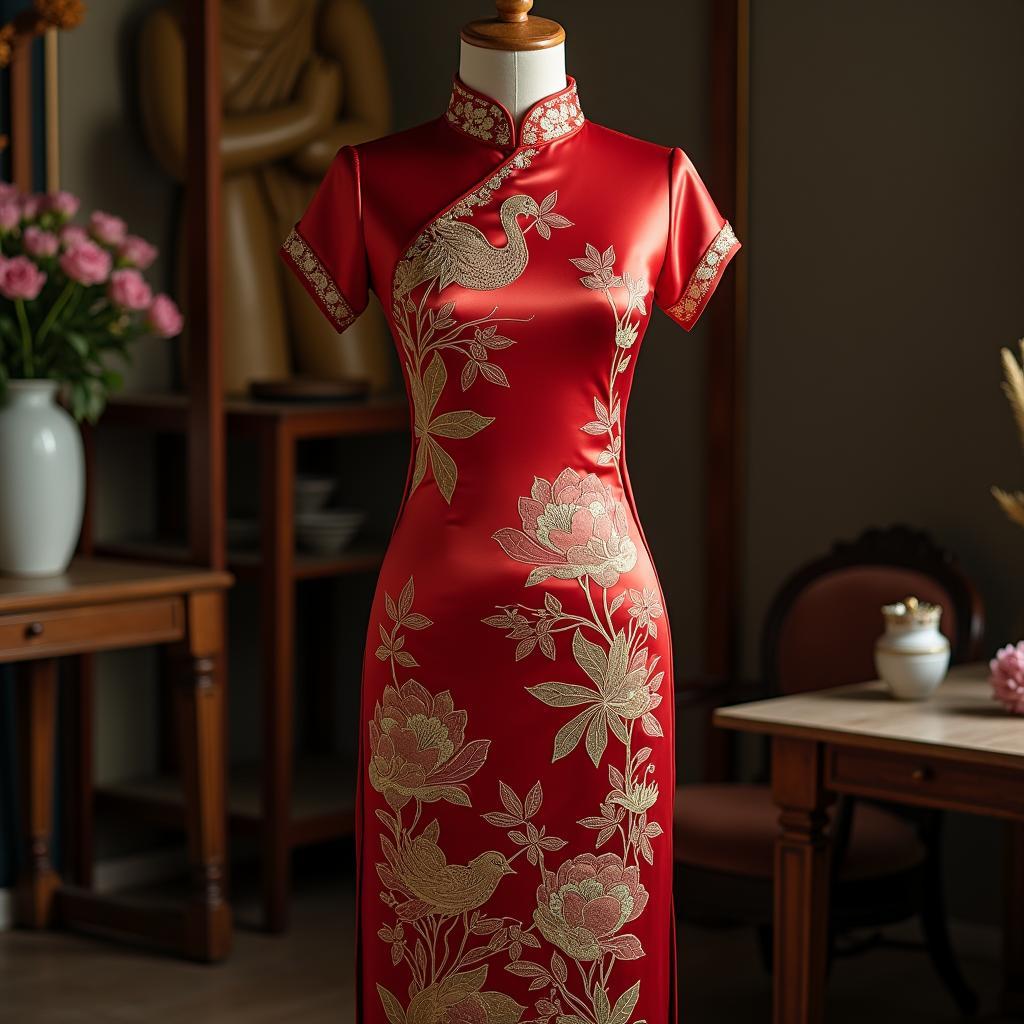 Chiếc áo dài truyền thống Việt Nam được thêu tay tinh xảo với họa tiết chim phượng hoàng và hoa sen
Follow-up Questions (Rounding Off Questions)
Sau khi bạn hoàn thành phần độc thoại 2-3 phút, examiner thường hỏi thêm 1-2 câu ngắn để transition sang Part 3. Đây không phải Part 3 chính thức mà chỉ là rounding-off questions, nên câu trả lời ngắn gọn 2-3 câu là đủ.
Question 1: Do you still wear this piece of clothing now?
Band 6-7 Answer:
Yes, I still wear it but not very often. I only wear it on special occasions because I want to keep it in good condition for a long time.
Band 8-9 Answer:
Yes, though I’m quite selective about when I wear it. As I mentioned, it’s reserved for particularly meaningful occasions – I suppose you could say I’m quite protective of it and want to ensure it remains in pristine condition for years to come. It’s one of those pieces that becomes more precious with time.
Question 2: Would you consider buying a similar item in the future?
Band 6-7 Answer:
I don’t think I will buy the same thing again because this one is very special. But I might buy other traditional clothes if I find nice ones.
Band 8-9 Answer:
That’s an interesting question. I don’t think anything could truly replicate the sentimental value of this particular piece, but I’m definitely drawn to the idea of investing in more traditional garments. In fact, I’ve been contemplating commissioning another áo dài for more regular wear, so I can preserve this one while still maintaining that connection to my heritage. I think there’s real value in building a collection of meaningful clothing rather than just accumulating disposable fashion.
IELTS Speaking Part 3: Two-way Discussion
Tổng Quan Về Part 3
Part 3 là phần thử thách nhất của IELTS Speaking, kéo dài 4-5 phút với các câu hỏi thảo luận trừu tượng và phức tạp hơn nhiều so với Part 1 và Part 2. Đây là phần truly separates band 7 candidates từ band 8-9 candidates. Examiner sẽ hỏi về broader issues liên quan đến topic của Part 2, yêu cầu bạn analyze, evaluate, speculate, và discuss different perspectives.
Yêu cầu cụ thể của Part 3 bao gồm: ability to discuss abstract ideas không chỉ personal experiences, skill trong comparing và contrasting different viewpoints, capacity to give well-reasoned opinions supported by examples và explanations, và demonstrating critical thinking về social issues, trends, và changes in society.
Chiến lược hiệu quả là: mở rộng câu trả lời thành 3-5 câu với clear structure (direct answer → explanation/reasoning → example/elaboration → perhaps a concluding thought), sử dụng discourse markers để organize ý tưởng (Well, I think…, From my perspective…, One could argue that…), đưa ra examples từ society hay other cultures chứ không chỉ personal anecdotes, acknowledge complexity của issues (It depends on…, There are pros and cons…, It’s a double-edged sword…), và show balanced thinking bằng cách xem xét multiple perspectives.
Lỗi thường gặp của học viên Việt Nam mà tôi observation từ nhiều năm chấm thi: trả lời quá ngắn dưới 3 câu cho mỗi question, giving yes/no answers without elaboration, không đưa ra lý lẽ clear hay logical reasoning, thiếu từ vựng abstract và academic để discuss complex ideas, tendency to memorize answers khiến câu trả lời không natural, và avoiding the question bằng cách nói về personal experience thay vì addressing the broader issue.
Các Câu Hỏi Thảo Luận Sâu
Trong Part 3, các câu hỏi thường được nhóm theo themes logic, exploring different dimensions của topic. Dưới đây là phân tích chi tiết các câu hỏi thường gặp liên quan đến chủ đề clothing và fashion.
Theme 1: Fashion Industry and Consumer Behavior
Question 1: Why do you think people spend so much money on designer clothes and brands?
🎯 Phân tích câu hỏi:
- Dạng: Cause-Effect question requiring analysis of motivations
- Key words: spend so much money, designer clothes, brands (focus on expensive fashion)
- Cách tiếp cận: Discuss multiple reasons (social status, quality, psychology, marketing) → give examples → perhaps mention counterarguments
📝 Sample Answer – Band 6-7:
I think people buy expensive designer clothes for several reasons. First, they want to show their social status and success. When people wear famous brands, others can see they have money. Second, designer clothes usually have better quality and last longer, so it can be a good investment. Also, marketing and advertising make people want to buy these products. Famous people and celebrities wear designer brands, so normal people want to be like them.
Phân tích:
- Structure: Clear organization với multiple reasons (First, Second, Also)
- Vocabulary: Adequate nhưng basic (show social status, famous brands, good investment)
- Tại sao Band 6-7: Communicates main ideas clearly với reasonable development, nhưng lacks sophistication trong vocabulary và grammatical structures. Ideas đúng nhưng not particularly insightful hay nuanced.
📝 Câu trả lời mẫu – Band 8-9:
Well, I think there are multiple layers to this phenomenon. At its core, purchasing designer brands often serves as a form of social signaling – people use these items to project a certain image or demonstrate their economic standing. In many cultures, there’s a deeply ingrained association between luxury brands and success, so wearing them becomes a way of broadcasting one’s achievements.
Beyond the status aspect, there’s actually a psychological dimension that’s quite fascinating. Designer brands have mastered the art of creating aspirational identities – they’re not just selling clothes, they’re selling a lifestyle and a sense of belonging to an exclusive club. The marketing strategies employed by luxury houses are incredibly sophisticated, often using scarcity tactics and celebrity endorsements to create desire.
That said, it’s not entirely superficial. Many designer items do offer superior craftsmanship and quality materials that justify their price points to some extent. Someone who invests in a well-constructed designer coat might wear it for decades, whereas fast fashion alternatives might need replacing every season. So there’s an argument for cost-per-wear value, though I suspect this rational justification often comes after the emotional purchase decision has already been made.
Interestingly, I think we’re seeing a shift in attitudes, particularly among younger generations who are more conscious about sustainability and skeptical of conspicuous consumption. The rise of second-hand luxury markets and rental services suggests that people still value designer items but are finding alternative ways to access them without the eye-watering price tags.
Phân tích:
- Structure: Excellently organized: Core reason → Psychological factors → Counterpoint about quality → Current trends and evolution. Uses sophisticated transitions (Beyond…, That said, Interestingly).
- Vocabulary: Highly sophisticated với precise terminology (social signaling, aspirational identities, scarcity tactics, conspicuous consumption, cost-per-wear value), idiomatic expressions seamlessly integrated (at its core, mastered the art, eye-watering price tags).
- Grammar: Complex structures including passive voice (are not just selling), relative clauses (who invests in…), và conditional thinking (might wear it for decades). Demonstrates grammatical range effortlessly.
- Critical Thinking: Shows nuanced understanding acknowledging multiple perspectives (status + psychology + quality + changing trends), provides balanced view không just one-sided criticism, và demonstrates awareness của social trends và generational shifts.
💡 Key Language Features:
- Discourse markers: Well (thoughtful beginning), At its core (fundamental point), Beyond that (adding dimension), That said (contrasting point), Interestingly (introducing new angle)
- Tentative language: I think, often, might, I suspect – showing sophistication by not making absolute statements
- Abstract nouns: phenomenon, dimension, craftsmanship, justification, attitudes, sustainability – essential cho Part 3 discussions
Question 2: Do you think fast fashion is harmful to society?
🎯 Phân tích câu hỏi:
- Dạng: Opinion + Evaluation question requiring balanced assessment
- Key words: fast fashion, harmful, society (need to address multiple impacts)
- Cách tiếp cận: Acknowledge complexity → Discuss negative impacts → Perhaps mention positive aspects → Give personal stance
📝 Sample Answer – Band 6-7:
Yes, I think fast fashion has some negative effects on society. First, it’s bad for the environment because companies make a lot of clothes quickly and this creates waste and pollution. Workers in factories often work in bad conditions with low pay. Also, fast fashion makes people buy things they don’t really need because the clothes are cheap and trendy. However, fast fashion also helps poor people afford nice clothes, so it has some advantages too.
Phân tích:
- Structure: Opinion stated clearly → Multiple reasons → Brief counterargument
- Vocabulary: Basic (bad for environment, low pay, cheap and trendy) sufficient để communicate meaning nhưng lacks precision
- Tại sao Band 6-7: Covers main points adequately, shows some attempt at balance, nhưng development shallow và vocabulary not sophisticated enough for deeper analysis.
📝 Câu trả lời mẫu – Band 8.5-9:
This is quite a loaded question because “harmful” is a strong word, but I’d say fast fashion is indeed problematic on multiple fronts. From an environmental standpoint, the industry’s impact is nothing short of catastrophic. The breakneck speed at which collections are produced and churned out means enormous resource consumption – we’re talking astronomical amounts of water, energy, and chemicals, not to mention the mountains of textile waste that end up in landfills when garments are discarded after just a handful of wears. The carbon footprint is staggering, and microplastics from synthetic fabrics are wreaking havoc on marine ecosystems.
Beyond the environmental toll, there’s a significant human cost that often goes unexamined. The fast fashion model relies heavily on exploitative labor practices in developing countries, where workers – predominantly women – toil in sweatshop conditions for pittance wages. The Rana Plaza collapse in Bangladesh back in 2013, which killed over a thousand garment workers, was a stark reminder of the human price of cheap clothes, yet the industry has been slow to implement meaningful reforms.
On a cultural level, I’d argue that fast fashion has fundamentally altered our relationship with clothing. It’s created this disposable mentality where garments are seen as throwaway items rather than investments. This constant churn of trends feeds into overconsumption and a sense that we always need something new to be fashionable. It’s quite insidious how it erodes the appreciation for craftsmanship and quality.
Having said all that, I think it’s important to avoid being overly simplistic in our condemnation. Fast fashion has democratized access to trendy clothing for people who might otherwise be priced out of fashion entirely. For many young people or those on tight budgets, it provides a way to experiment with style and express themselves without breaking the bank. The issue isn’t that affordable clothing exists, but rather the unsustainable rate of production and consumption, and the systemic exploitation that underpins it.
Ultimately, I believe we need to move towards more sustainable models – whether that’s circular fashion, slow fashion movements, or better regulation of the industry. Consumers are becoming more conscious and vocal about these issues, which is encouraging, but real change will require systemic shifts at the industry level, not just individual choices.
Phân tích:
- Structure: Highly sophisticated organization: Environmental impacts → Human rights issues → Cultural effects → Counterpoint acknowledging complexity → Forward-looking conclusion. Each dimension fully developed với clear reasoning.
- Vocabulary: Exceptional range và precision (loaded question, breakneck speed, wreaking havoc, pittance wages, insidious, democratized access, priced out, breaking the bank, circular fashion), uses field-specific terminology naturally (carbon footprint, microplastics, sweatshop conditions, systemic exploitation).
- Grammar: Complex sentences với multiple clauses (The fast fashion model relies heavily on exploitative labor practices in developing countries, where workers – predominantly women – toil…), sophisticated use of passive và active voice mixing, perfect control of tenses.
- Critical Thinking: Demonstrates exceptional analytical depth examining environmental, social, và cultural dimensions. Shows intellectual maturity by acknowledging complexity và avoiding simplistic conclusions. Provides specific example (Rana Plaza) cho credibility. Discusses solutions showing forward-thinking perspective.
💡 Key Language Features:
- Discourse markers: From an environmental standpoint, Beyond that, On a cultural level, Having said all that, Ultimately – organizing complex multi-dimensional argument
- Tentative/Hedging language: I’d say, I’d argue, I think, might – showing intellectual sophistication by not being dogmatic
- Emphatic language: nothing short of catastrophic, staggering, wreaking havoc – strong vocabulary showing conviction while maintaining academic register
Theme 2: Cultural Aspects of Clothing
Question 3: How important is it for people to wear traditional clothing in modern society?
🎯 Phân tích câu hỏi:
- Dạng: Evaluation question về importance/significance
- Key words: traditional clothing, modern society (tension giữa tradition và modernity)
- Cách tiếp cận: Acknowledge different perspectives → Discuss value of tradition → Mention practical considerations → Personal balanced view
📝 Sample Answer – Band 6-7:
I think wearing traditional clothing is important because it helps preserve culture and history. When people wear traditional clothes at festivals or special events, they show respect for their ancestors and keep traditions alive. However, in daily life, modern clothes are more practical and convenient. So I believe traditional clothing should be worn on special occasions, but people don’t need to wear it every day.
Phân tích:
- Structure: Basic argument structure với clear stance
- Vocabulary: Simple and adequate (preserve culture, keep traditions alive, practical and convenient)
- Tại sao Band 6-7: Makes relevant points nhưng lacks depth in analysis. Doesn’t explore complexities or nuances of the issue. Safe, predictable answer.
📝 Câu trả lời mẫu – Band 8.5-9:
This is quite a nuanced question because the importance really hinges on what we value as a society and what purpose we want traditional clothing to serve. From one perspective, traditional garments are vital repositories of cultural heritage and identity. They’re not merely decorative items but tangible expressions of history, craftsmanship, and collective memory. When Vietnamese people wear áo dài during Tết, or when Scottish people don their kilts, they’re not just wearing fabric – they’re embodying centuries of tradition and affirming their cultural roots in a rapidly homogenizing world.
In our increasingly globalized era, where cultural distinctiveness is often eroded by dominant Western aesthetics, I’d argue there’s actually heightened importance in maintaining and celebrating traditional dress. It serves as a form of cultural resistance and identity assertion, particularly for diaspora communities trying to maintain connections to their heritage. Moreover, traditional clothing often carries embedded knowledge about climate adaptation, local resources, and sustainable practices that modern fashion has largely abandoned in favor of mass-produced uniformity.
That being said, I think it’s unrealistic and perhaps unnecessary to expect people to wear traditional clothing in everyday modern life. Practicality matters – many traditional garments aren’t suited to contemporary lifestyles involving commuting, office work, or the fast-paced nature of urban living. The áo dài, beautiful as it is, isn’t exactly conducive to riding a motorbike or rushing up subway stairs. So there’s a pragmatic dimension we can’t ignore.
What I find more meaningful is the conscious choice to wear traditional clothing for significant occasions – weddings, festivals, cultural celebrations – where it takes on special resonance. This selective wearing can actually amplify its significance rather than diminish it. When something becomes everyday, it can become mundane and taken for granted. By reserving traditional attire for meaningful moments, we imbue it with greater ceremonial importance.
Interestingly, we’re seeing a fascinating evolution where designers are creating fusion pieces that incorporate traditional elements into contemporary designs. This might be the sweet spot – honoring heritage while acknowledging the realities of modern life. It keeps traditional clothing living and breathing rather than relegated to museum displays or worn only by older generations, which would essentially make it a dying tradition.
Phân tích:
- Structure: Exceptionally well-organized: Introduces complexity → Cultural importance argument → Globalization context → Practical counterpoint → Middle ground (selective wearing) → Future evolution. Shows sophisticated thinking progression.
- Vocabulary: Highly advanced và precise (nuanced, hinges on, tangible expressions, embodying, homogenizing world, heightened importance, diaspora communities, embedded knowledge, conducive to, imbue with, sweet spot, relegated to)
- Grammar: Masterful use of complex structures: conditional logic (When something becomes everyday, it can become mundane), parallel structures (They’re not merely… but…), sophisticated relative clauses, passive constructions for variety.
- Critical Thinking: Demonstrates exceptional intellectual depth exploring cultural, practical, psychological, và evolutionary dimensions. Acknowledges multiple valid perspectives without being wishy-washy. Shows awareness of global trends (fusion fashion, diaspora experiences). Provides specific examples making abstract concepts concrete.
💡 Key Language Features:
- Discourse markers: From one perspective, In our increasingly globalized era, That being said, What I find more meaningful, Interestingly – guiding listener through complex argument
- Hedging/Nuance: quite nuanced, I’d argue, perhaps, might be – showing intellectual sophistication
- Abstract concepts: cultural resistance, identity assertion, embedded knowledge, ceremonial importance – essential for high-band Part 3 responses
Để hiểu sâu hơn về mối liên hệ giữa trang phục và các dịp đặc biệt, bạn có thể tham khảo thêm bài viết về describe a traditional celebration in your culture, nơi trang phục truyền thống đóng vai trò quan trọng trong việc thể hiện bản sắc văn hóa và tạo nên không khí lễ hội.
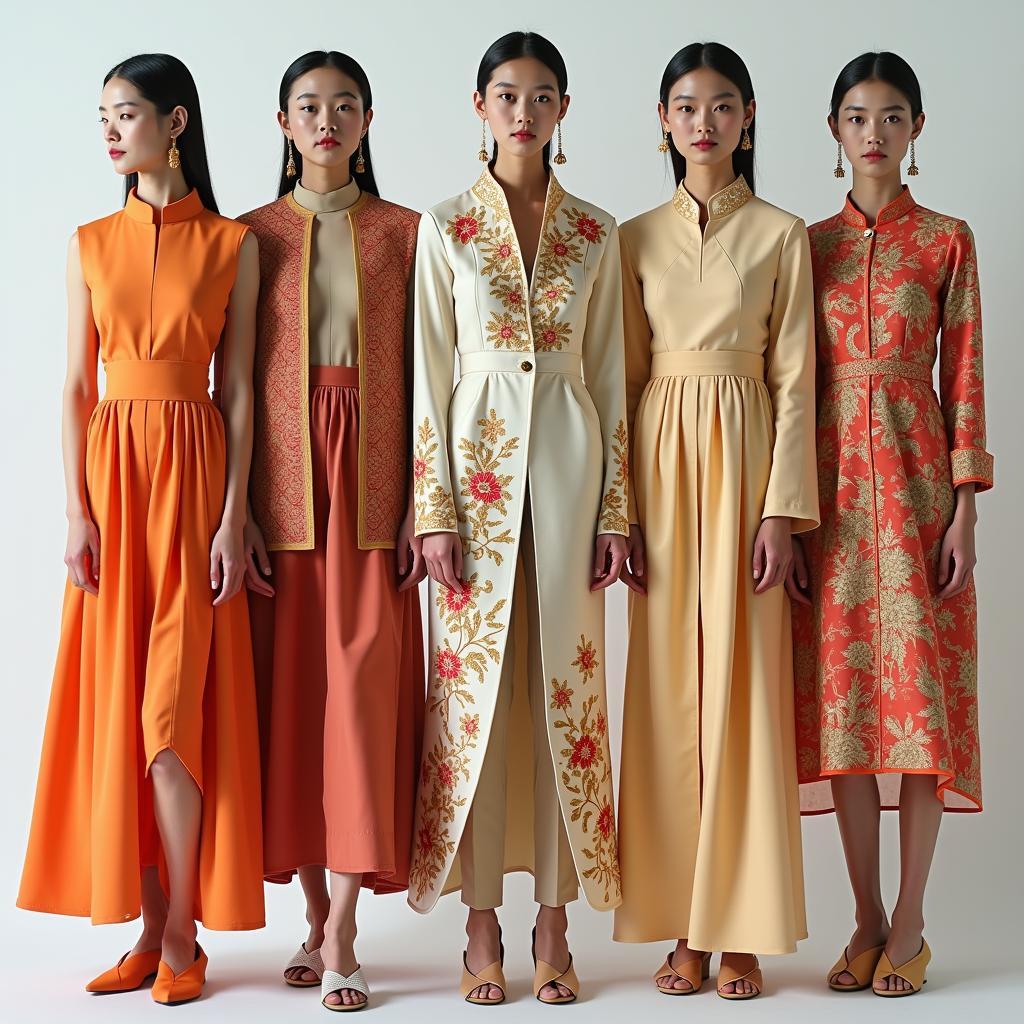 Sự kết hợp giữa thời trang truyền thống và hiện đại trong thiết kế đương đại
Theme 3: Fashion and Individual Identity
Question 4: To what extent do you think clothing reflects a person’s personality?
🎯 Phân tích câu hỏi:
- Dạng: Extent question requiring evaluation of correlation
- Key words: clothing reflects, personality (relationship giữa external appearance và internal character)
- Cách tiếp cận: Acknowledge there is some connection → Discuss limitations → Consider context → Give balanced conclusion
📝 Sample Answer – Band 6-7:
I think clothing can show a person’s personality to some degree. For example, people who wear bright colors might be outgoing and cheerful, while people who prefer dark colors might be more serious. Also, someone who dresses very carefully probably pays attention to details in other parts of their life. However, we shouldn’t judge people only by their clothes because appearances can be misleading. Some people wear certain clothes because of their job or family expectations, not because it reflects their real personality.
Phân tích:
- Structure: Statement → Examples → Caveat about judging, adequate organization
- Vocabulary: Basic (bright colors, outgoing, cheerful, serious, misleading) gets meaning across nhưng lacks sophistication
- Tại sao Band 6-7: Makes valid points với reasonable development, acknowledges complexity briefly, nhưng analysis remains superficial. Lacks nuanced exploration of the complex relationship between clothing và identity.
📝 Câu trả lời mẫu – Band 8.5-9:
This is a fascinating area because the relationship between clothing and personality is far more intricate and multifaceted than simple cause-and-effect. I’d say clothing can be a form of personality expression, but with significant caveats and qualifications.
On one hand, there’s definitely some correlation between clothing choices and personality traits, at least in terms of self-presentation. People who gravitate towards bold colors and unconventional styles often tend to be more extroverted and comfortable with attention, while those who prefer understated, minimalist wardrobes might value simplicity and functionality over standing out. Research in psychology has even identified clothing as a form of nonverbal communication – what academics call “enclothed cognition,” where the clothes we wear can actually influence our psychological states and behavior. Someone wearing a power suit might feel more confident and assertive, for instance.
However, I think we need to be very careful about drawing simplistic conclusions or making superficial judgments. Clothing choices are mediated by numerous factors that have nothing to do with personality. Socioeconomic circumstances play a huge role – someone might dress conservatively not because they’re conservative by nature, but because they can’t afford to risk professional repercussions in a dress-code-conscious workplace. Cultural expectations, family pressure, and social conformity all exert influence over what people wear. A teenager who dresses like their peer group isn’t necessarily lacking individuality – they might be navigating complex social dynamics where fitting in is important for their psychological well-being.
There’s also the dimension of fashion as performance versus authentic expression. In our social-media-saturated world, clothing choices are increasingly curated for external consumption rather than genuine self-expression. Someone’s carefully orchestrated Instagram aesthetic might bear little resemblance to their actual personality or how they dress when cameras aren’t around. We’re seeing this performative aspect become more pronounced, which complicates the relationship between appearance and authentic identity.
What I find particularly interesting is the concept of fashion as experimentation – people might use clothing to try on different identities or express different facets of their personality depending on context. The same person might dress conservatively for work, casually on weekends, and adventurously for social events, and all of these could be genuine expressions of different aspects of their multifaceted personality rather than one being “more real” than the others.
Ultimately, I’d say clothing offers potential insights into personality but should be viewed as one data point among many, never the whole picture. It’s more accurate to say that clothing reflects how someone wants to be perceived or how they’re navigating their social context rather than offering a direct window into their soul. The most psychologically mature approach is to hold judgment lightly and recognize that there’s usually far more complexity beneath the surface than what meets the eye.
Phân tích:
- Structure: Exceptionally sophisticated: Introduces complexity → Supports correlation with nuance → Major counterarguments with multiple angles → Modern complications → Contextual variations → Balanced conclusion. Each paragraph develops distinct dimension fully.
- Vocabulary: Outstanding range và precision (intricate and multifaceted, enclothed cognition, mediated by, socioeconomic circumstances, curated for external consumption, orchestrated Instagram aesthetic, performative aspect, hold judgment lightly, direct window into their soul), demonstrates awareness of academic terminology (enclothed cognition) và contemporary phenomena (social media influence).
- Grammar: Masterful control: complex conditional structures (might feel, could be), sophisticated passive constructions (are mediated by, is increasingly curated), effective use of rhetorical questions structure, variety in sentence length and type for engagement.
- Critical Thinking: Demonstrates exceptional analytical sophistication by examining issue from psychological, sociological, economic, cultural, và technological perspectives. Shows awareness of academic research (enclothed cognition), acknowledges modern phenomena (Instagram culture), explores paradoxes (performative vs authentic), và recognizes complexity without being indecisive. Concludes with mature, balanced perspective that acknowledges insights while avoiding oversimplification.
💡 Key Language Features:
- Discourse markers: On one hand, However, There’s also the dimension of, What I find particularly interesting, Ultimately – structuring sophisticated multi-paragraph argument
- Hedging language: can be, might, tend to, I’d say, could be – demonstrating intellectual sophistication by avoiding absolute claims
- Academic/abstract nouns: correlation, self-presentation, nonverbal communication, socioeconomic circumstances, social conformity, psychological well-being, performative aspect, authentic expression – essential for high-level discussion
Question 5: Do you think the fashion industry puts too much pressure on people to look a certain way?
🎯 Phân tích câu hỏi:
- Dạng: Opinion question về negative impacts, requiring balanced discussion
- Key words: fashion industry, pressure, look a certain way (focus on social/psychological impacts)
- Cách tiếp cận: Acknowledge the pressure exists → Discuss specific manifestations → Consider different demographics affected → Perhaps discuss countertrends → Personal assessment
📝 Sample Answer – Band 7-8:
Yes, I think the fashion industry creates significant pressure on people, especially through advertising and social media. Companies use very thin models and perfect images that make normal people feel bad about themselves. This can lead to problems like low self-esteem and eating disorders, particularly among young women. The constant promotion of new trends also makes people feel they need to buy new clothes all the time to be fashionable. However, recently there are some positive changes like body positivity movements and more diverse models in advertising, which is encouraging.
Phân tích:
- Structure: Clear position → Specific examples of pressure → Negative effects → Positive countertrend
- Vocabulary: Adequate với some good phrases (significant pressure, low self-esteem, body positivity movements)
- Tại sao Band 7-8: Well-developed response với relevant examples, acknowledgment of current trends, nhưng could explore more dimensions và use more sophisticated language. Analysis fairly straightforward.
📝 Câu trả lời mẫu – Band 8.5-9:
Absolutely, and I’d go so far as to say the fashion industry has been instrumental in creating and perpetuating unrealistic beauty standards that have had measurable detrimental effects on people’s mental health and self-perception. The mechanisms through which this pressure operates are quite insidious and multifaceted.
First and foremost, there’s the relentless promotion of homogenized beauty ideals – for decades, the industry championed impossibly thin body types that the vast majority of the population could never achieve without extreme measures. The use of heavily retouched images and now AI-generated “perfect” bodies creates completely unrealistic benchmarks that people, particularly young women and increasingly young men, measure themselves against and inevitably fall short of. This has been directly correlated with rising rates of body dysmorphia, eating disorders, and anxiety, particularly among impressionable adolescents whose sense of identity is still forming.
The psychological impact is compounded by the cyclical nature of trends. The fashion industry thrives on creating a sense of obsolescence – what was “in” last season is suddenly “out,” which fuels a perpetual cycle of consumption but also generates anxiety about being left behind or judged as unfashionable. This manufactured dissatisfaction is particularly pernicious because it’s intentional – the industry’s business model depends on people feeling their current wardrobe is inadequate.
Social media has exponentially amplified these pressures. Platforms like Instagram and TikTok have essentially democratized the fashion industry in some ways, but they’ve also created comparison culture on steroids. People are bombarded with carefully curated images of influencers with seemingly perfect wardrobes and bodies, often not realizing the extent of photo editing, professional styling, and strategic angles involved. The constant visibility of others’ appearances ratchets up the pressure to present a polished image, turning getting dressed into a source of stress rather than self-expression.
That said, I think it’s important to acknowledge that we’re seeing significant pushback and genuine progress in recent years. The body positivity and body neutrality movements have gained considerable traction, challenging the industry’s narrow definitions of beauty. Brands like Dove, Aerie, and others have committed to featuring unretouched images and diverse body types, and we’re seeing more plus-size models, older models, and models with disabilities gracing major runways and campaigns. There’s also growing consumer demand for inclusive sizing and more realistic representation.
Moreover, younger generations seem to be developing more critical literacy around these issues. Many Gen Z consumers are quite savvy about media manipulation and are actively rejecting unrealistic standards, instead gravitating towards authenticity and self-acceptance. The rise of body-positive content creators who deliberately showcase unedited bodies is creating alternative narratives that counterbalance traditional fashion industry messaging.
Nevertheless, I believe these positive changes, while encouraging, are still relatively surface-level compared to the deeply entrenched systemic issues. The fundamental business model hasn’t changed – it still relies on making people feel inadequate to drive consumption. Real transformation would require structural changes to how fashion is marketed and consumed, perhaps moving away from the rapid trend cycle toward more sustainable, timeless approaches that emphasize quality and personal style over keeping up with ever-changing dictates.
In conclusion, yes, the fashion industry does put excessive pressure on people, and while we’re seeing some corrective movements, there’s still substantial work to be done to create a healthier, more inclusive fashion culture that celebrates diversity rather than enforcing conformity to narrow ideals.
Phân tích:
- Structure: Masterfully organized extended response: Strong position → Specific mechanisms of pressure (beauty standards) → Psychological mechanisms (trend cycles) → Modern amplification (social media) → Countertrends and progress → Critical assessment of progress → Structural analysis → Comprehensive conclusion. Each dimension fully developed với clear reasoning và evidence.
- Vocabulary: Exceptional sophistication và precision (instrumental in, perpetuating unrealistic standards, insidious and multifaceted, homogenized beauty ideals, directly correlated with, impressionable adolescents, manufactured dissatisfaction, pernicious, comparison culture on steroids, ratchets up, gained considerable traction, critical literacy, deeply entrenched systemic issues), demonstrates awareness of contemporary discourse (body positivity, body neutrality, inclusive sizing, Gen Z characteristics).
- Grammar: Outstanding control of complex structures: extensive use of compound-complex sentences, sophisticated passive constructions (has been directly correlated with, are bombarded with), participle phrases (turning getting dressed into…), perfect control of tenses including present perfect for ongoing situations, effective use of conditionals (would require…).
- Critical Thinking: Demonstrates exceptional analytical depth examining psychological, sociological, technological, economic, và generational dimensions. Shows nuanced understanding by acknowledging progress while critically assessing its limitations (surface-level vs structural change). Provides specific examples (Instagram, TikTok, specific brands like Dove and Aerie) lending credibility. Discusses solutions showing sophisticated understanding of systems thinking (business model changes, structural transformation). Balanced perspective that is critical without being simplistic or one-sided.
💡 Key Language Features:
- Strong discourse markers: First and foremost, That said, Moreover, Nevertheless, In conclusion – guiding listener through extended, complex argument with multiple sections
- Emphatic language: Absolutely, I’d go so far as to say, exponentially amplified, considerable traction – conveying conviction while maintaining academic register
- Hedging where appropriate: seem to be, relatively, perhaps – showing intellectual maturity by not overgeneralizing
- Abstract/academic vocabulary: mechanisms, psychological impact, manufactured dissatisfaction, systemic issues, structural changes – demonstrating sophistication needed for Band 9
Theme 4: Future of Fashion
Question 6: How do you think fashion will change in the next 20 years?
🎯 Phân tích câu hỏi:
- Dạng: Speculation/Prediction question về future trends
- Key words: fashion will change, next 20 years (requires forward-thinking về technology, society, environment)
- Cách tiếp cận: Identify current trends that will likely continue → Speculate on technological changes → Consider environmental factors → Discuss societal shifts → Acknowledge uncertainty
📝 Sample Answer – Band 7-8:
I think fashion will become more sustainable in the future because people are more aware of environmental problems now. We’ll probably see more eco-friendly materials and recycling of old clothes. Technology will also play a bigger role, like virtual fitting rooms and maybe even clothes made by 3D printers. I also think fashion might become more personalized, with people creating their own unique styles instead of following trends. Online shopping will continue to grow, possibly using virtual reality technology.
Phân tích:
- Structure: Multiple predictions covering different dimensions (sustainability, technology, personalization, online shopping)
- Vocabulary: Good range (sustainable, eco-friendly materials, virtual fitting rooms, 3D printers) showing awareness of trends
- Tại sao Band 7-8: Well-developed response với relevant predictions based on current trends. Uses future forms appropriately (will become, will play). Could be more sophisticated trong exploring implications và connections between trends.
📝 Câu trả lời mẫu – Band 8.5-9:
This is a thought-provoking question, and while predicting the future is inherently uncertain, I think we can extrapolate from current trends to paint a reasonably plausible picture of where fashion is headed. I’d say we’re likely to see transformative changes along several converging trajectories.
First and foremost, I think sustainability will transition from being a niche concern to an absolute imperative. The environmental crisis is becoming impossible to ignore, and consumers – particularly younger generations – are increasingly holding brands accountable. Within 20 years, I’d expect circular fashion models to become the norm rather than the exception. This means extensive use of recycled materials, biodegradable fabrics, clothing rental and subscription services, and take-back programs where brands reclaim old garments for recycling. We might even see biological textiles grown from mycelium or lab-cultivated materials that are completely regenerative. The current linear “take-make-dispose” model will likely be viewed as archaic and environmentally criminal.
On the technological front, the changes could be quite revolutionary. We’re already seeing the early stages of digital fashion – virtual clothes for avatars and NFT garments – and this could evolve into a significant parallel fashion industry, particularly as the metaverse develops (if indeed it does gain widespread adoption). AI-powered personalization will probably become standard, with algorithms analyzing your body type, lifestyle, and preferences to recommend or even design customized pieces. 3D body scanning and on-demand manufacturing could eliminate the need for traditional sizing systems, with clothes made to measure for each individual. Smart textiles with embedded sensors might monitor health metrics or adapt to temperature changes.
Culturally and socially, I anticipate we’ll see fashion becoming simultaneously more globalized and more localized – a seeming paradox. Digital connectivity will continue to blur geographical boundaries, allowing trends to spread instantaneously across continents, but there might also be a counter-movement towards regional authenticity and cultural preservation as people seek to maintain distinct identities in an increasingly homogenized world. We might see more cross-cultural collaborations that respectfully blend different traditions rather than appropriating them.
The concept of “trends” itself might fundamentally change. Rather than industry-dictated seasonal trends that everyone follows, we could move toward much more individualized, algorithm-driven micro-trends where fashion becomes hyper-personalized. Social media has already fragmented fashion into countless niche aesthetic communities, and this fragmentation will likely accelerate, empowering people to curate highly specific personal styles rather than adhering to monolithic trends.
From a business perspective, I’d expect the dominance of major fast fashion retailers to wane as their model becomes increasingly untenable both environmentally and ethically. We might see a bifurcation toward either ultra-cheap, highly automated fast fashion for those who can’t afford alternatives, and premium, sustainable, ethically-produced pieces for those who can. The middle market could shrink considerably.
Of course, all these predictions come with caveats. Unforeseen technological breakthroughs could dramatically alter the trajectory – imagine if someone cracked truly affordable, eco-friendly synthetic materials that could replicate any texture at minimal cost, or if economic collapse made sustainability concerns secondary to basic survival. The fashion industry has historically been quite cyclical, so we might also see retro revivals of current styles.
What I’m fairly confident about, though, is that the fashion industry of 2045 will look radically different from today’s, likely more tech-integrated, hopefully more sustainable, and probably more democratized in terms of who gets to participate in fashion creation and consumption. Whether these changes ultimately prove beneficial or create new problems remains to be seen – technology and progress don’t always move in straightforwardly positive directions.
Phân tích:
- Structure: Exceptionally sophisticated organization: Opening caveat about uncertainty → Sustainability dimension → Technology dimension → Cultural/social dimension → Concept of trends evolving → Business model changes → Acknowledgment of uncertainty and caveats → Concluding confidence statement with nuance. This extended response demonstrates ability to sustain coherent argument across multiple complex dimensions while maintaining listener engagement.
- Vocabulary: Outstanding range và sophistication (thought-provoking, extrapolate from current trends, converging trajectories, circular fashion models, biodegradable fabrics, mycelium, archaic, revolutionary, metaverse, hyper-personalized, fragmentation, bifurcation, untenable, unforeseen technological breakthroughs, dramatically alter the trajectory, democratized), demonstrates awareness of cutting-edge concepts (NFTs, metaverse, mycelium textiles) và business terminology.
- Grammar: Masterful control: extensive use of future forms with appropriate modality (will transition, might even see, could be, will probably become), sophisticated conditional structures (imagine if someone cracked…), complex noun phrases (The current linear “take-make-dispose” model), effective use of passive voice for variety (will be viewed as, will likely be accelerated), perfect control of relative clauses adding information.
- Critical Thinking: Demonstrates exceptional forward-thinking sophistication by identifying multiple dimensions of change (environmental, technological, cultural, business), recognizing paradoxes and tensions (more globalized and more localized simultaneously), acknowledging uncertainty and alternative scenarios, showing awareness of potential negative outcomes alongside positive ones, and demonstrating systems thinking by connecting different trends (sustainability + technology + cultural shifts). Provides specific, concrete examples of future technologies and business models lending credibility to speculations.
💡 Key Language Features:
- Speculation language: likely to see, I’d expect, could be, might, probably, I anticipate – appropriate language for discussing uncertain future rather than stating facts
- Discourse markers for extended response: First and foremost, On the technological front, Culturally and socially, From a business perspective, Of course, What I’m fairly confident about – essential for maintaining coherence in long response
- Abstract/technical vocabulary: trajectories, imperative, circular models, biodegradable, mycelium, fragmentation, bifurcation, democratized – demonstrating sophistication appropriate for Band 9
Khi thảo luận về không gian và môi trường ảnh hưởng đến phong cách thời trang, việc hiểu rõ mối liên hệ giữa địa điểm và sự lựa chọn trang phục là rất quan trọng. Bạn có thể khám phá thêm về chủ đề này qua bài viết describe a place where you enjoy spending time outdoors, nơi môi trường ngoài trời có thể tác động đến cách chúng ta lựa chọn và trải nghiệm quần áo.
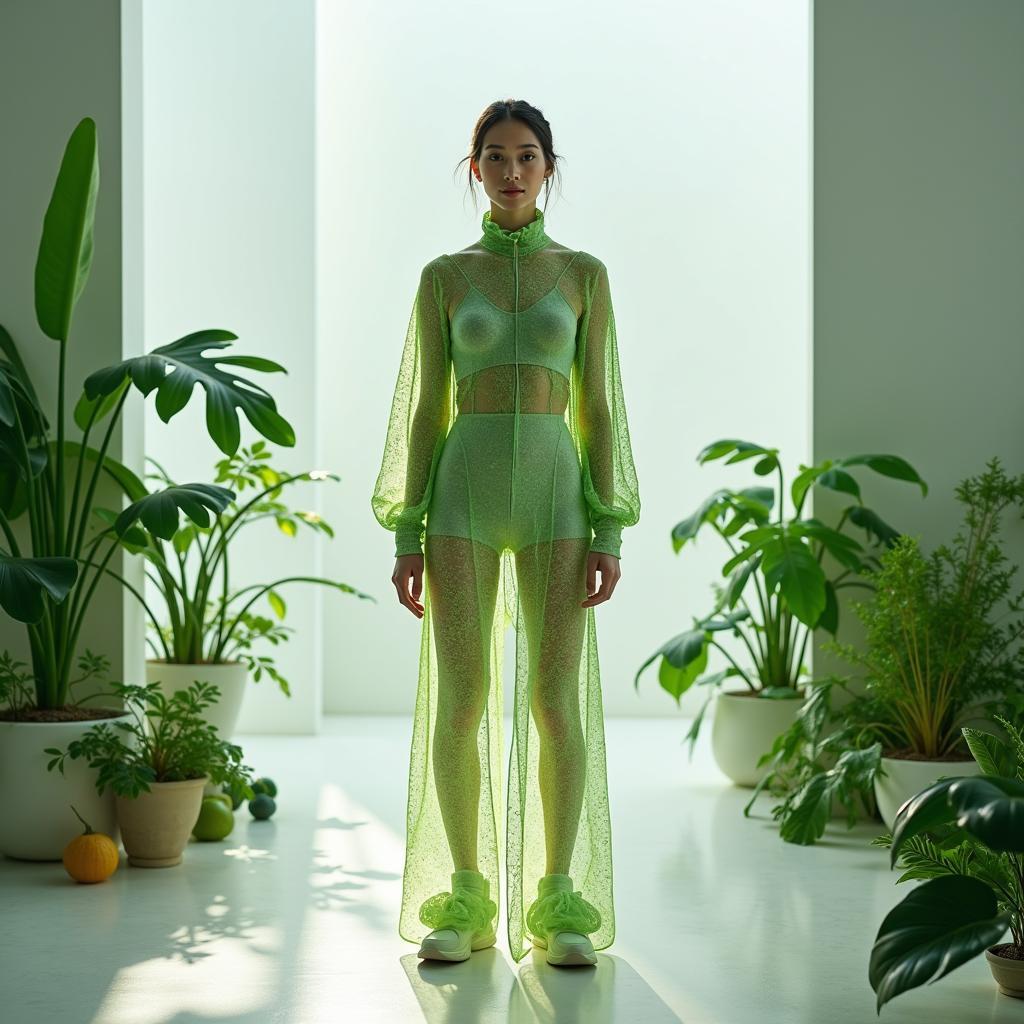 Tương lai của thời trang bền vững với công nghệ xanh và vật liệu sinh học
Từ vựng và cụm từ quan trọng
Topic-Specific Vocabulary
| Từ vựng/Cụm từ | Loại từ | Phiên âm | Nghĩa tiếng Việt | Ví dụ | Collocation |
|---|---|---|---|---|---|
| vintage | adj | /ˈvɪntɪdʒ/ | cổ điển, xưa cũ (nhưng có giá trị) | I love shopping for vintage clothing in second-hand stores. | vintage leather jacket, vintage style, vintage collection, vintage clothing store |
| garment | n | /ˈɡɑːrmənt/ | trang phục, quần áo (formal) | This garment requires special care when washing. | delicate garment, silk garment, traditional garment, outer garment |
| denim | n | /ˈdenɪm/ | vải jean | Denim jackets never go out of style. | denim jacket, denim jeans, dark denim, vintage denim |
| patina | n | /ˈpætɪnə/ | lớp màu do thời gian tạo ra (thường trên da, kim loại) | The leather has developed a beautiful patina over the years. | beautiful patina, aged patina, natural patina, develop a patina |
| embroidery | n | /ɪmˈbrɔɪdəri/ | nghệ thuật thêu, đồ thêu | The embroidery on this áo dài is incredibly intricate. | intricate embroidery, hand embroidery, traditional embroidery, delicate embroidery |
| versatile | adj | /ˈvɜːrsətl/ | đa năng, linh hoạt | Black clothes are versatile and easy to match. | versatile piece, versatile wardrobe, versatile style, highly versatile |
| timeless | adj | /ˈtaɪmləs/ | vượt thời gian, không bao giờ lỗi mốt | A well-tailored blazer is a timeless piece. | timeless style, timeless classic, timeless design, timeless piece |
| distinctive | adj | /dɪˈstɪŋktɪv/ | đặc trưng, khác biệt | Her distinctive style makes her stand out. | distinctive look, distinctive style, distinctive feature, highly distinctive |
| well-fitted | adj | /wel ˈfɪtɪd/ | vừa vặn, ôm sát | A well-fitted suit makes you look professional. | well-fitted clothes, well-fitted jeans, well-fitted shirt, perfectly fitted |
| smart casual | adj phrase | /smɑːrt ˈkæʒuəl/ | phong cách lịch sự thoải mái | The dress code for the event is smart casual. | smart casual attire, smart casual outfit, smart casual style, dress smart casual |
| fast fashion | n phrase | /fæst ˈfæʃn/ | thời trang nhanh (sản xuất nhanh, giá rẻ) | Fast fashion contributes significantly to environmental pollution. | fast fashion brand, fast fashion industry, fast fashion retailer, avoid fast fashion |
| sustainable | adj | /səˈsteɪnəbl/ | bền vững, không gây hại môi trường | More people are choosing sustainable fashion brands. | sustainable fashion, sustainable clothing, sustainable materials, environmentally sustainable |
| wardrobe | n | /ˈwɔːrdroʊb/ | tủ quần áo; tổng thể quần áo của một người | I need to update my wardrobe for spring. | update wardrobe, basic wardrobe, capsule wardrobe, entire wardrobe |
| outfit | n | /ˈaʊtfɪt/ | bộ trang phục hoàn chỉnh | She always puts together stylish outfits. | stylish outfit, casual outfit, formal outfit, complete outfit |
| trendy | adj | /ˈtrendi/ | hợp thời trang, đang mốt | She always wears trendy clothes. | trendy style, trendy outfit, trendy clothes, look trendy |
| accessory | n | /əkˈsesəri/ | phụ kiện thời trang | Accessories can transform a simple outfit. | fashion accessory, stylish accessory, matching accessories, complete with accessories |
| tailor-made | adj | /ˈteɪlər meɪd/ | được may đo theo yêu cầu | He prefers tailor-made suits to off-the-rack ones. | tailor-made suit, tailor-made clothing, tailor-made dress, custom tailor-made |
| off-the-rack | adj phrase | /ɒf ðə ræk/ | may sẵn (không may đo) | Off-the-rack clothes are more affordable but less personal. | off-the-rack clothing, off-the-rack suit, buy off-the-rack |
| fabric | n | /ˈfæbrɪk/ | vải, chất liệu | This fabric feels very soft and comfortable. | soft fabric, quality fabric, natural fabric, synthetic fabric |
| material | n | /məˈtɪriəl/ | chất liệu, vật liệu | Eco-friendly materials are becoming more popular. | eco-friendly material, quality material, durable material, sustainable material |
Idiomatic Expressions & Advanced Phrases
| Cụm từ | Nghĩa | Ví dụ sử dụng | Band điểm |
|---|---|---|---|
| cost a pretty penny | tốn rất nhiều tiền | That designer handbag must have cost a pretty penny. | 7.5-9 |
| dressed to the nines | ăn mặc rất lịch sự, chỉnh tề | Everyone at the wedding was dressed to the nines. | 7.5-9 |
| fit like a glove | vừa vặn hoàn hảo | These jeans fit like a glove – they’re perfect! | 7.5-9 |
| go-to piece | món đồ yêu thích, hay dùng nhất | My black blazer is my go-to piece for professional meetings. | 7.5-9 |
| stand the test of time | tồn tại qua thời gian, không lỗi thời | Classic designs stand the test of time. | 7.5-9 |
| mix and match | phối đồ, kết hợp linh hoạt | I love neutral colors because they’re easy to mix and match. | 7-8 |
| jazz things up | làm cho thú vị hơn, nổi bật hơn | I like to jazz things up with colorful accessories. | 7.5-9 |
| all the rage | rất thịnh hành, đang hot | Wide-leg pants were all the rage in the 1970s. | 7.5-9 |
| break the bank | tốn quá nhiều tiền | I want to look good without breaking the bank. | 7-8 |
| fashion-forward | tiến bộ trong thời trang, dẫn đầu xu hướng | She’s known for her fashion-forward choices. | 7.5-9 |
| sartorial choice | sự lựa chọn về trang phục (formal) | His sartorial choices always reflect his personality. | 8-9 |
| wardrobe staple | món đồ cơ bản, thiết yếu trong tủ đồ | A white shirt is a wardrobe staple everyone should have. | 7.5-8 |
Discourse Markers (Từ Nối Ý Trong Speaking)
Để bắt đầu câu trả lời:
- Well, – Sử dụng khi cần một chút thời gian suy nghĩ hoặc khi câu trả lời phức tạp
- Actually, – Khi đưa ra góc nhìn khác hoặc thông tin bất ngờ
- To be honest, / Honestly, – Khi nói thật hoặc đưa ra quan điểm cá nhân mạnh mẽ
- I’d say that – Khi đưa ra đánh giá hoặc opinion cá nhân
- From my perspective, / In my view, – Khi thể hiện rõ đây là quan điểm cá nhân
Để bổ sung ý:
- On top of that, / What’s more, – Thêm vào đó, hơn nữa
- Not to mention – Chưa kể đến (thường cho điểm bổ sung)
- Additionally, / Furthermore, – Thêm vào đó (formal hơn)
- Beyond that, – Ngoài điều đó ra
- Another thing is – Một điều khác là
Để đưa ra quan điểm cân bằng:
- On the one hand, On the other hand, – Một mặt thì Mặt khác thì
- While it’s true that…, we also need to consider – Mặc dù đúng là Chúng ta cũng cần xem xét
- That being said, / That said, – Tuy nhiên, mặc dù vậy
- Having said that, – Sau khi nói điều đó
Để giải thích hoặc làm rõ:
- What I mean is – Ý tôi là
- In other words, – Nói cách khác
- To put it simply, – Nói một cách đơn giản
- Essentially, – Về cơ bản
Để đưa ra ví dụ:
- For instance, / For example, – Ví dụ như
- Take… for example – Lấy làm ví dụ
- Such as – Như là
- A case in point is – Một ví dụ điển hình là
Để kết luận:
- All in all, / All things considered, – Nhìn chung, xét cho cùng
- At the end of the day, – Cuối cùng thì
- Ultimately, – Cuối cùng, về căn bản
- In conclusion, – Kết luận lại (formal, ít dùng trong Speaking trừ Part 3 extended responses)
Để thể hiện sự không chắc chắn (hedging):
- I suppose / I guess – Tôi cho là
- It seems to me that – Dường như với tôi
- I’d imagine that – Tôi tưởng tượng rằng
- Probably / Possibly / Perhaps – Có lẽ, có thể
- To some extent – Ở một mức độ nào đó
Grammatical Structures Ấn Tượng
1. Conditional Sentences (Câu điều kiện):
Mixed conditional:
Formula: If + Past Perfect, would + bare infinitive (hiện tại) hoặc If + Past Simple, would have + past participle (quá khứ)
- Ví dụ: “If my grandmother hadn’t given me this áo dài, I wouldn’t value traditional clothing as much as I do now.”
- Ví dụ: “If I were more interested in fashion, I would have bought designer clothes when they were on sale.”
Third conditional với inversion (đảo ngữ):
- Ví dụ: “Had I known about the sale earlier, I would have bought more items.”
- Ví dụ: “Were it not for my sister’s advice, I wouldn’t have developed my current style.”
2. Relative Clauses (Mệnh đề quan hệ):
Non-defining relative clauses:
Formula: …, which/who/whose…, (thêm thông tin, không thiết yếu)
- Ví dụ: “This jacket, which I bought five years ago, has become my signature piece.”
- Ví dụ: “My grandmother, who was a skilled seamstress, taught me to appreciate quality clothing.”
Reduced relative clauses:
- Ví dụ: “The dress hanging in my closet reminds me of that special occasion.” (that is hanging)
- Ví dụ: “People wearing traditional clothing often feel more connected to their heritage.” (who wear)
3. Passive Voice (Câu bị động):
Impersonal passive với reporting verbs:
- It is thought/believed/said that – Người ta nghĩ rằng / tin rằng / nói rằng
- Ví dụ: “It is widely believed that clothing reflects personality.”
- Ví dụ: “It is often said that you should dress for the job you want, not the one you have.”
Passive with get (informal nhưng natural trong speaking):
- Ví dụ: “This fabric can get damaged easily if you’re not careful.”
- Ví dụ: “I got so many compliments when I wore that dress.”
4. Cleft Sentences (Câu chẻ):
What-cleft emphasizing actions hoặc ideas:
Formula: What + subject + verb + is/was + focal element
- Ví dụ: “What I find most appealing about vintage clothing is its unique character and history.”
- Ví dụ: “What makes this jacket special is the memories attached to it.”
It-cleft emphasizing specific information:
- Ví dụ: “It was my grandmother who taught me the value of quality over quantity.”
- Ví dụ: “It’s the emotional connection that makes this piece of clothing irreplaceable.”
The thing that structure:
- Ví dụ: “The thing that I love most about this áo dài is how it connects me to my heritage.”
5. Participle Clauses (Present và Past Participles):
Present participle showing simultaneous actions:
- Ví dụ: “Wearing this jacket, I feel more confident and comfortable.”
- Ví dụ: “Looking at old photos, I realize how much my style has evolved.”
Past participle showing passive meaning:
- Ví dụ: “Made from high-quality silk, this áo dài has lasted for years.”
- Ví dụ: “Given to me by my grandmother, this piece holds immense sentimental value.”
6. Inversion for Emphasis:
Not only but also với inversion:
- Ví dụ: “Not only does this jacket keep me warm, but it also makes me look stylish.”
Negative inversion:
- Ví dụ: “Never have I owned a piece of clothing that means so much to me.”
- Ví dụ: “Rarely do I find items that are both fashionable and comfortable.”
Bài viết này đã cung cấp cho bạn một cái nhìn toàn diện về cách trả lời chủ đề “Describe a piece of clothing that is special to you” trong IELTS Speaking. Từ các câu hỏi Part 1 về thói quen mua sắm hàng ngày, đến Part 2 với bài nói chi tiết về một món đồ đặc biệt, và cuối cùng là Part 3 với những thảo luận sâu sắc về ngành công nghiệp thời trang, bạn đã thấy cách phát triển câu trả lời từ Band 6-7 lên Band 8-9.
Điểm quan trọng nhất cần nhớ là ở Part 2, hãy tận dụng đầy đủ thời gian chuẩn bị để ghi chú keywords, đảm bảo trả lời đầy đủ tất cả bullet points, và đặc biệt chú trọng phần “explain why it is special” vì đây là nơi bạn thể hiện emotional depth và personal insight. Ở Part 3, hãy demonstrate critical thinking bằng cách xem xét multiple perspectives, sử dụng abstract vocabulary, và provide well-reasoned arguments supported by examples.
Vocabulary và grammatical structures trong bài viết này không phải để học thuộc lòng, mà là để bạn hiểu cách sử dụng ngôn ngữ tinh vi và tự nhiên trong context. Hãy practice với real-life examples của bạn, record yourself để identify areas for improvement, và gradually incorporate các expressions mới vào active vocabulary của mình.
Cuối cùng, hãy nhớ rằng examiner đánh giá khả năng communication tự nhiên của bạn, không phải việc bạn có nhớ được bao nhiêu từ vựng phức tạp. Focus vào expressing your ideas clearly, fluently, và with genuine personal connection đến topic. Với preparation đúng cách và practice đầy đủ, bạn hoàn toàn có thể achieve band điểm mục tiêu trong IELTS Speaking.


[…] Xem thêm: IELTS Speaking: Cách Trả Lời “Describe A Piece Of Clothing That Is Special To You” – Bài… […]