Chủ đề về những địa điểm thư giãn trong thành phố là một trong những đề tài vô cùng phổ biến và thực tế trong kỳ thi IELTS Speaking. Đây không chỉ là câu hỏi xuất hiện thường xuyên ở Part 2 mà còn được mở rộng thành nhiều góc độ thảo luận sâu hơn ở Part 3 về không gian công cộng, lối sống đô thị, và sức khỏe tinh thần.
Theo thống kê từ các trung tâm thi IELTS và diễn đàn học viên, chủ đề này xuất hiện với tần suất cao trong các kỳ thi từ 2020 đến 2024, đặc biệt sau đại dịch khi vấn đề sức khỏe tinh thần và không gian xanh được quan tâm nhiều hơn. Khả năng xuất hiện trong tương lai vẫn ở mức cao do tính thực tế và khả năng áp dụng của chủ đề.
Trong bài viết này, bạn sẽ học được cách xử lý trọn vẹn chủ đề “Describe A Place In Your City Where People Go To Relax” qua cả ba phần thi Speaking. Bạn sẽ được trang bị các câu hỏi thường gặp, bài mẫu chi tiết theo từng band điểm từ 6 đến 9, kho từ vựng phong phú với cách phát âm chuẩn, và quan trọng nhất là những lời khuyên từ góc nhìn của một giám khảo IELTS chính thức. Bài viết cung cấp chiến lược trả lời cụ thể, phân tích sâu sắc về tiêu chí chấm điểm, và cách tránh những lỗi phổ biến mà học viên Việt Nam thường mắc phải khi gặp chủ đề này.
IELTS Speaking Part 1: Introduction and Interview
Tổng Quan Về Part 1
Part 1 của IELTS Speaking kéo dài từ 4-5 phút, là phần khởi động để giám khảo đánh giá khả năng giao tiếp cơ bản của bạn. Các câu hỏi thường xoay quanh cuộc sống hàng ngày, sở thích cá nhân, và những trải nghiệm quen thuộc. Đây là phần dễ thở nhất nhưng cũng rất quan trọng để tạo ấn tượng ban đầu tốt.
Chiến lược quan trọng nhất cho Part 1 là trả lời tự nhiên, mở rộng ý trong 2-3 câu, tránh câu trả lời một từ. Mỗi câu trả lời nên bao gồm: câu trả lời trực tiếp, lý do hoặc giải thích, và ví dụ cụ thể nếu có thể.
Lỗi thường gặp của học viên Việt Nam trong Part 1 bao gồm: trả lời quá ngắn chỉ với Yes hoặc No mà không mở rộng, sử dụng từ vựng quá đơn giản ở mức THPT, thiếu ví dụ cụ thể từ kinh nghiệm bản thân khiến câu trả lời trở nên chung chung, và có xu hướng nói quá nhanh do lo lắng.
Các Câu Hỏi Thường Gặp
Question 1: Do you like going to parks or green spaces?
Question 2: How often do you visit places to relax in your city?
Question 3: What do you usually do when you want to relax?
Question 4: Are there many places to relax in your hometown?
Question 5: Do you prefer relaxing indoors or outdoors?
Question 6: Did you visit relaxation spots more when you were younger?
Question 7: What kind of places do young people in your country go to relax?
Question 8: Is it important to have relaxation spaces in a city?
Phân Tích và Gợi Ý Trả Lời Chi Tiết
Question: Do you like going to parks or green spaces?
Cách tiếp cận:
- Đưa ra câu trả lời Yes/No rõ ràng
- Giải thích lý do tại sao thích hoặc không thích
- Đưa thêm ví dụ cụ thể về trải nghiệm của bản thân
Sample Answer – Band 6-7:
Yes, I do enjoy visiting parks. They are peaceful and I can breathe fresh air there. I usually go to the park near my house on weekends to take a walk or read books.
Phân tích:
- Điểm mạnh: Câu trả lời trực tiếp, có lý do cơ bản, và đưa ra ví dụ về thói quen cá nhân. Sử dụng từ vựng đơn giản nhưng chính xác như peaceful, fresh air.
- Hạn chế: Từ vựng còn ở mức cơ bản, thiếu từ nối tự nhiên, ý tưởng chưa được phát triển sâu, cấu trúc câu đơn giản.
- Tại sao Band 6-7: Đáp ứng đủ yêu cầu với fluency ổn định, nhưng lexical resource và grammatical range chưa thể hiện được sự đa dạng cần thiết cho band cao hơn.
Sample Answer – Band 8-9:
Absolutely! I’m quite fond of spending time in green spaces, especially parks with lots of trees and well-maintained gardens. There’s something incredibly rejuvenating about being surrounded by nature, even in the middle of a bustling city. I find that it really helps me unwind after a stressful week at work and clear my head.
Phân tích:
- Điểm mạnh: Sử dụng từ vựng phong phú và chính xác với các collocations tự nhiên như “fond of”, “green spaces”, “well-maintained gardens”, “rejuvenating”. Cấu trúc câu phức tạp với “There’s something… about”, mệnh đề quan hệ, và parallel structures. Ý tưởng được phát triển logic từ sở thích đến lợi ích cụ thể.
- Tại sao Band 8-9: Thể hiện fluency xuất sắc với discourse marker tự nhiên “Absolutely”, vocabulary sophisticated và precise, grammar range đa dạng với cấu trúc phức, pronunciation rõ ràng với trọng âm đúng trên các từ nhiều âm tiết.
Key Vocabulary & Expressions:
- be fond of: yêu thích cái gì đó
- green spaces: không gian xanh, khu vực có cây xanh
- well-maintained: được bảo dưỡng tốt
- rejuvenating: làm tươi trẻ, phục hồi năng lượng
- unwind: thư giãn, xả stress
- clear my head: làm đầu óc tỉnh táo, giải tỏa suy nghĩ
Question: How often do you visit places to relax in your city?
Cách tiếp cận:
- Đưa ra tần suất cụ thể (every day/week/month)
- Giải thích lý do cho tần suất đó
- Có thể so sánh với quá khứ hoặc tình huống khác
Sample Answer – Band 6-7:
I try to visit relaxing places about once or twice a week. I usually go on weekends because I have more free time then. During weekdays, I’m too busy with work.
Phân tích:
- Điểm mạnh: Trả lời rõ ràng về tần suất, có lý do hợp lý liên quan đến lịch trình cá nhân.
- Hạn chế: Câu trả lời khá ngắn, từ vựng đơn giản, thiếu chi tiết cụ thể về những nơi đi hoặc hoạt động làm gì.
- Tại sao Band 6-7: Đủ coherence cơ bản nhưng chưa có sự mở rộng ý đáng kể, grammatical structures đơn giản.
Sample Answer – Band 8-9:
Well, I’d say it varies depending on my workload, but I make it a point to visit tranquil spots at least once a week, typically on Sunday mornings when it’s less crowded. I find that regular visits to these places are essential for maintaining my work-life balance and mental well-being. During particularly hectic periods, I might squeeze in a quick visit to a nearby café or park just to recharge my batteries.
Phân tích:
- Điểm mạnh: Câu trả lời toàn diện với nhiều layer: tần suất chính, biến động theo hoàn cảnh, lý do sâu sắc về sức khỏe tinh thần, và flexible approach trong thời gian bận rộn. Vocabulary đa dạng với “workload”, “tranquil spots”, “work-life balance”, “mental well-being”. Grammar phong phú với present simple, conditional structure, và phrasal verbs tự nhiên.
- Tại sao Band 8-9: Fluency tự nhiên với discourse markers “Well, I’d say”, lexical resource xuất sắc với topic-specific vocabulary và idiomatic expressions, grammatical range rộng, ideas well-developed và nuanced.
Key Vocabulary & Expressions:
- workload: khối lượng công việc
- tranquil spots: những địa điểm yên tĩnh
- make it a point to: cố gắng làm gì đó một cách có ý thức
- essential for maintaining: cần thiết để duy trì
- work-life balance: sự cân bằng giữa công việc và cuộc sống
- mental well-being: sức khỏe tinh thần
- hectic periods: thời kỳ bận rộn
- squeeze in: chèn ép thời gian để làm gì
- recharge my batteries: nạp lại năng lượng
Question: What do you usually do when you want to relax?
Cách tiếp cận:
- Liệt kê 2-3 hoạt động cụ thể
- Giải thích tại sao những hoạt động đó giúp bạn thư giãn
- Có thể đề cập đến cảm giác hoặc kết quả sau khi làm
Sample Answer – Band 6-7:
When I want to relax, I usually listen to music or watch movies at home. Sometimes I also go for a walk in the park. These activities help me feel less stressed and more comfortable.
Phân tích:
- Điểm mạnh: Đưa ra nhiều hoạt động khác nhau, có giải thích về tác dụng.
- Hạn chế: Các hoạt động khá chung chung, không có chi tiết cụ thể về thể loại nhạc, loại phim, hoặc công viên nào. Từ “comfortable” và “stressed” là từ vựng cơ bản.
- Tại sao Band 6-7: Adequate nhưng lacks specificity và sophisticated vocabulary.
Sample Answer – Band 8-9:
My go-to relaxation methods really depend on my mood and energy levels. If I’m feeling mentally drained, I tend to immerse myself in a good book at a quiet café, preferably somewhere with a cozy ambiance. On the other hand, when I need more physical release, I’ll head to the gym or go for a jog along the riverside promenade. What I find most effective, though, is spending time in nature – there’s something incredibly therapeutic about being surrounded by greenery and natural sounds that just melts away all the tension.
Phân tích:
- Điểm mạnh: Câu trả lời rất sophisticated với nhiều layers: phân loại theo tâm trạng, đưa ra nhiều options cụ thể với descriptive details (quiet café, cozy ambiance, riverside promenade), vocabulary xuất sắc (mentally drained, immerse myself, therapeutic, melts away), complex grammar với conditionals và relative clauses, và kết thúc với personal insight về hiệu quả nhất.
- Tại sao Band 8-9: Demonstrates excellent fluency với natural transitions, lexical resource exceptional với precise và idiomatic language, grammatical structures complex và accurate, ideas well-developed với personal examples và reflection.
Key Vocabulary & Expressions:
- go-to methods: phương pháp ưa thích, hay dùng nhất
- energy levels: mức năng lượng
- mentally drained: kiệt sức về tinh thần
- immerse myself in: đắm chìm vào
- cozy ambiance: bầu không khí ấm cúng
- physical release: giải phóng năng lượng thể chất
- riverside promenade: đường dạo ven sông
- therapeutic: có tác dụng chữa lành, điều trị
- greenery: cây xanh, thiên nhiên xanh mát
- melts away: tan biến đi
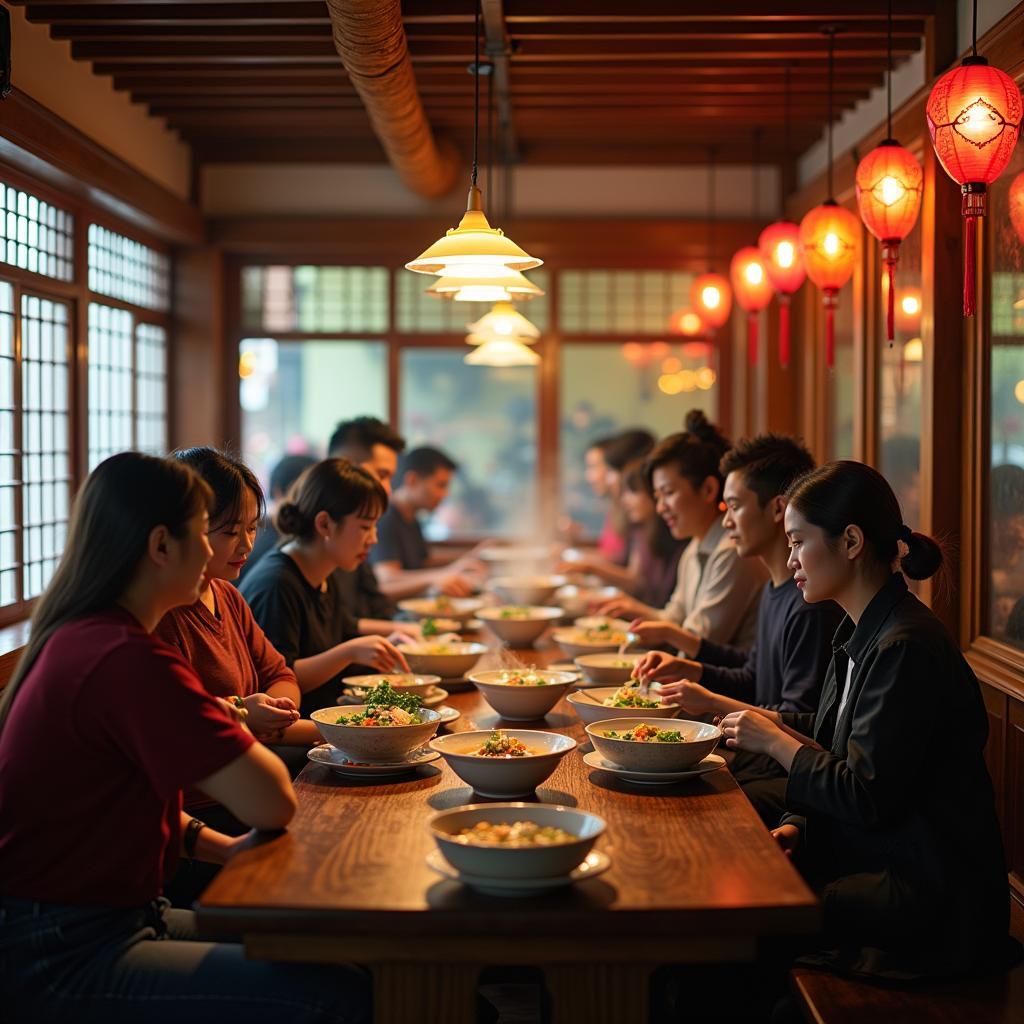
 Không gian thư giãn tại công viên thành phố với người dân đang nghỉ ngơi và các hoạt động giải trí
IELTS Speaking Part 2: Long Turn (Cue Card)
Tổng Quan Về Part 2
Part 2 là phần độc thoại kéo dài từ 2-3 phút, được xem là phần thử thách nhất của bài thi Speaking. Bạn có đúng 1 phút để chuẩn bị và ghi chú, sau đó phải nói liên tục không bị ngắt quãng. Điều quan trọng là phải sử dụng hiệu quả thời gian chuẩn bị này.
Chiến lược thành công cho Part 2 bao gồm: Sử dụng hết 1 phút để ghi chú nhưng chỉ ghi keywords và phrases ngắn gọn, không viết câu đầy đủ vì sẽ không đủ thời gian. Phải nói đủ tối thiểu 1 phút 30 giây, lý tưởng là đầy đủ 2 phút để tránh mất điểm. Trả lời đầy đủ tất cả các bullet points trong đề bài, không được bỏ sót. Đặc biệt chú ý đến câu hỏi “And explain” ở cuối vì đây là phần cho phép bạn thể hiện critical thinking và ghi điểm cao.
Lỗi thường gặp của học viên Việt Nam trong Part 2: Không tận dụng hết 1 phút chuẩn bị và bắt đầu nói quá sớm, nói dưới 1 phút 30 giây do thiếu ý tưởng hoặc quá ngắn gọn, bỏ sót một hoặc nhiều bullet points khiến bài nói không hoàn chỉnh, sử dụng sai thì động từ (đặc biệt là nói về quá khứ nhưng dùng hiện tại), và nói quá nhanh do lo lắng dẫn đến pronunciation không rõ ràng.
Cue Card
Describe a place in your city where people go to relax
You should say:
- Where this place is
- What it looks like
- What people do there
- And explain why people choose to go to this place to relax
Phân Tích Đề Bài
Dạng câu hỏi: Describe a place – đây là dạng mô tả địa điểm, một trong những dạng phổ biến nhất trong Part 2.
Thì động từ: Chủ yếu sử dụng thì hiện tại vì bạn đang mô tả một địa điểm vẫn tồn tại và người ta thường xuyên đến đó. Có thể sử dụng quá khứ khi kể về lần đầu bạn đến đó hoặc một trải nghiệm cụ thể.
Bullet points phải cover:
- Where this place is: Cần nói rõ vị trí cụ thể, có thể so sánh với landmarks nổi tiếng để giám khảo dễ hình dung
- What it looks like: Mô tả chi tiết về không gian, kiến trúc, màu sắc, atmosphere – đây là nơi bạn thể hiện descriptive vocabulary
- What people do there: Liệt kê các hoạt động phổ biến, có thể phân loại theo nhóm người hoặc thời gian
- And explain why: Đây là phần quan trọng nhất, cần phân tích sâu về psychological, social, hay physical reasons
Câu “explain” quan trọng: Phần “explain why people choose to go to this place to relax” là nơi bạn có thể ghi điểm cao nhất. Đừng chỉ nói “because it’s beautiful” mà hãy phân tích deeper reasons như psychological benefits, escape from urban stress, social connections, health benefits, accessibility. Đây là lúc thể hiện critical thinking và sophisticated vocabulary của bạn.
Sample Answer – Band 6-7
Thời lượng: Khoảng 1 phút 45 giây
I’d like to talk about Tao Dan Park, which is a popular place in Ho Chi Minh City where people go to relax. It’s located in District 1, near the city center, so it’s very easy to get there by bus or motorbike.
The park is quite large and has many big trees that provide shade. There are walking paths throughout the park, and you can see lots of benches where people can sit and rest. In the morning, the park looks really fresh with green grass and colorful flowers. There’s also a small lake in the middle with some fish in it.
Many different people visit this park. Early in the morning, you can see elderly people doing exercise, practicing tai chi, or playing badminton. Some people come to jog or walk around the park. During the day, there are often young people sitting under the trees, reading books or using their phones. On weekends, families bring their children to play in the playground area.
People choose to go to Tao Dan Park to relax because it’s a peaceful place in the middle of the busy city. The fresh air and green environment help them feel less stressed. It’s also free to enter, so anyone can come. The park provides a good place to escape from the noise and pollution of the streets. Many people say they feel more relaxed and healthier after spending time there.
Phân Tích Band Điểm
| Tiêu chí | Band | Nhận xét |
|---|---|---|
| Fluency & Coherence | 6-7 | Bài nói có sự mạch lạc cơ bản với các linking words đơn giản như “so”, “also”, “because”. Có một số hesitation nhỏ nhưng không ảnh hưởng nhiều đến communication. Các ý được sắp xếp logic theo bullet points. |
| Lexical Resource | 6-7 | Từ vựng đủ để diễn đạt ý nhưng còn ở mức basic: “big trees”, “fresh air”, “green environment”. Có một số collocations như “provide shade”, “escape from the noise” nhưng chưa sophisticated. |
| Grammatical Range & Accuracy | 6-7 | Sử dụng chủ yếu simple và compound sentences. Có một số complex sentences với relative clauses “where people can sit” nhưng không nhiều. Grammar chính xác, ít lỗi. |
| Pronunciation | 6-7 | Phát âm rõ ràng, dễ hiểu, word stress cơ bản đúng. Sentence stress và intonation tự nhiên ở mức acceptable. |
Điểm mạnh:
- Trả lời đầy đủ tất cả các bullet points trong đề bài
- Bài nói có cấu trúc rõ ràng, dễ theo dõi
- Cung cấp đủ chi tiết cụ thể về địa điểm
- Grammar chính xác với ít lỗi sai
Hạn chế:
- Vocabulary chưa đa dạng, còn basic và repetitive
- Thiếu idioms hoặc less common expressions
- Complex sentences chưa nhiều, chủ yếu là simple structures
- Phần explain chưa đủ sâu, còn surface-level reasons
Sample Answer – Band 7.5-8
Thời lượng: Khoảng 2 phút 15 giây
I’d like to describe Tao Dan Park, which is undoubtedly one of the most beloved green spaces in Ho Chi Minh City. It’s strategically located in the heart of District 1, just a stone’s throw from iconic landmarks like Ben Thanh Market and the Reunification Palace, making it incredibly accessible for both locals and tourists.
What strikes me most about this park is its lush greenery and tranquil atmosphere. The park boasts hundreds of mature trees, some of which are over a century old, creating a magnificent canopy that provides welcome shade from the tropical sun. The well-maintained pathways wind through the park, and there are numerous benches strategically placed under trees where people can sit and soak up the peaceful ambiance. The park also features a charming little lake where you can see lotus flowers blooming in season, adding to its serene beauty.
The park attracts a diverse crowd throughout the day. In the early morning hours, it’s a hive of activity with elderly people practicing tai chi and various forms of exercise. You’ll see joggers doing their morning runs and groups of people playing badminton or doing aerobics. As the day progresses, students often come to study under the trees, taking advantage of the cool breeze and natural lighting. On weekends, it becomes a family-friendly destination where parents bring their children to the playground or for leisurely strolls.
People flock to Tao Dan Park for several compelling reasons. First and foremost, it offers a much-needed sanctuary from the hustle and bustle of urban life. In a city notorious for its traffic congestion and air pollution, this green oasis provides a breath of fresh air – quite literally. The abundance of oxygen-producing trees creates a noticeably fresher atmosphere compared to the surrounding streets. Additionally, it’s completely free to enter, making it an inclusive space where people from all walks of life can come together. I think what makes it truly special is how it fosters a sense of community – you see the same faces regularly, and there’s this unspoken bond among regular visitors who all share an appreciation for this peaceful haven.
Phân Tích Band Điểm
| Tiêu chí | Band | Nhận xét |
|---|---|---|
| Fluency & Coherence | 7.5-8 | Speaks fluently với minimal hesitation. Sử dụng discourse markers tự nhiên “First and foremost”, “Additionally”, “I think what makes it…”. Ideas được develop một cách logic và coherent với good progression. |
| Lexical Resource | 7.5-8 | Vocabulary range rộng với nhiều less common words: “strategically located”, “lush greenery”, “tranquil atmosphere”, “sanctuary”, “hustle and bustle”. Collocations tự nhiên: “soak up”, “hive of activity”, “walks of life”. |
| Grammatical Range & Accuracy | 7.5-8 | Variety of complex structures: relative clauses, participle phrases “making it incredibly accessible”, “adding to its serene beauty”. Mix of tenses appropriate. Few errors không ảnh hưởng communication. |
| Pronunciation | 7.5-8 | Clear pronunciation với good control of word và sentence stress. Intonation tự nhiên, maintains fluency throughout với appropriate pausing. |
So Sánh Với Band 6-7
| Khía cạnh | Band 6-7 | Band 7.5-8 |
|---|---|---|
| Vocabulary | “big trees”, “fresh air”, “popular place” | “lush greenery”, “tranquil atmosphere”, “beloved green spaces”, “sanctuary” |
| Grammar | “The park is quite large and has many big trees” | “The park boasts hundreds of mature trees, some of which are over a century old” |
| Ideas | “It’s peaceful and has fresh air” | “It offers a sanctuary from urban life, provides physical health benefits through cleaner air, and fosters community bonds” |
Sample Answer – Band 8.5-9
Thời lượng: 2 phút 30 giây
I’d like to talk about Tao Dan Park, which has become something of an urban sanctuary for residents of Ho Chi Minh City, myself included. It’s nestled in the heart of District 1, within walking distance of several prominent landmarks, which makes it remarkably convenient for people working in the central business district to pop in during their lunch breaks or after work.
What really sets this park apart is its remarkable juxtaposition of nature and urbanity. Despite being surrounded by high-rise buildings and bustling streets, once you step through its gates, you’re transported into this incredibly verdant oasis. The park is dominated by towering trees with sprawling canopies that filter the sunlight, creating this dappled effect on the ground below. The meticulously maintained lawns and winding pathways are punctuated by weathered stone benches that exude a certain timeless charm. There’s also a picturesque pond that serves as a focal point, where lotus flowers emerge during summer, their pink blossoms contrasting beautifully with the jade-green water.
The park caters to a remarkably eclectic mix of visitors. At the crack of dawn, it’s abuzz with elderly enthusiasts who’ve made it their ritual to practice tai chi or engage in communal exercises. These morning gatherings have evolved into tight-knit communities where friendships span decades. As morning gives way to afternoon, you’ll notice students sprawled under trees, engrossed in their textbooks, while young professionals seek refuge from their air-conditioned offices to reconnect with nature. Come weekends, it transforms into a vibrant family hub, with children’s laughter echoing through the trees and parents relishing these precious moments of quality time away from screens.
The park’s enduring appeal stems from multiple factors that resonate with modern urban dwellers. Primarily, it addresses a fundamental human need for connection with nature that’s increasingly difficult to fulfill in densely populated metropolitan areas. The psychological benefits are undeniable – numerous studies have shown that exposure to green spaces significantly reduces cortisol levels and alleviates symptoms of anxiety and depression. What’s more, unlike many recreational facilities that come with hefty price tags, Tao Dan Park democratizes access to wellness, ensuring that relaxation isn’t a luxury but a right available to all, regardless of socioeconomic status. I’d also argue that it fulfills a crucial social function – in an era where technology has paradoxically made us more isolated despite being more connected, this physical space facilitates genuine human interactions and cultivates a sense of belonging that’s increasingly rare in our fragmented society.
Phân Tích Band Điểm
| Tiêu chí | Band | Nhận xét |
|---|---|---|
| Fluency & Coherence | 8.5-9 | Speaks smoothly và effortlessly với no noticeable hesitation. Coherence devices sophisticated: “Primarily”, “What’s more”, “I’d also argue”. Ideas flow naturally với excellent progression và development. Maintains coherence throughout extended speech. |
| Lexical Resource | 8.5-9 | Exceptional vocabulary range với precise usage: “juxtaposition”, “verdant oasis”, “dappled effect”, “exude”, “eclectic mix”, “enduring appeal”. Natural idiomatic language: “at the crack of dawn”, “span decades”, “come with hefty price tags”. Collocations sophisticated và accurate: “alleviates symptoms”, “democratizes access”, “cultivates a sense of belonging”. |
| Grammatical Range & Accuracy | 8.5-9 | Wide range of complex structures used flexibly: participle clauses, inversion, cleft sentences. Advanced passive structures: “is dominated by”, “is punctuated by”. Subordination sophisticated: “Despite being surrounded by”, “ensuring that…”. Error-free throughout. |
| Pronunciation | 8.5-9 | Pronunciation clear và natural với excellent control of features. Stress và intonation patterns native-like. Maintains clarity even trong complex sentences. Uses rhythm và stress effectively để convey meaning. |
Tại Sao Bài Này Xuất Sắc
Fluency Hoàn Hảo:
Bài nói demonstrate effortless fluency với natural speech patterns. Không có hesitation hay repetition. Discourse markers được sử dụng một cách tự nhiên và sophisticated như “What really sets this park apart”, “What’s more”, “I’d also argue” tạo nên cohesion xuất sắc giữa các ideas.
Vocabulary Tinh Vi:
Bài mẫu showcase exceptional lexical resource với những expressions như:
- “remarkable juxtaposition of nature and urbanity” – thay vì chỉ nói “mix of nature and city”, việc sử dụng “juxtaposition” thể hiện precise vocabulary control
- “dappled effect” – descriptive term rất cụ thể cho hiện tượng ánh sáng lọt qua tán lá
- “eclectic mix” – sophisticated way to say “diverse group”
- “democratizes access to wellness” – abstract concept expressed eloquently
- “paradoxically made us more isolated despite being more connected” – complex idea về technology với sophisticated vocabulary
Grammar Đa Dạng:
Bài nói sử dụng flexible mix of structures:
- Participle phrases: “Despite being surrounded by high-rise buildings”, “making it remarkably convenient”
- Relative clauses: “where lotus flowers emerge”, “that resonate with modern urban dwellers”
- Cleft sentences: “What really sets this park apart is…”
- Passive structures: “is dominated by”, “is punctuated by”
- Complex subordination: “ensuring that relaxation isn’t a luxury but a right”
Ideas Sâu Sắc:
Phần explain không chỉ dừng lại ở surface reasons mà đi sâu vào psychological benefits với scientific backing “studies have shown that exposure to green spaces significantly reduces cortisol levels”, social commentary về inequality với “democratizes access”, và cultural observation về modern society “in an era where technology has paradoxically made us more isolated”. Đây là critical thinking ở level cao nhất.
Follow-up Questions (Rounding Off Questions)
Examiner có thể hỏi thêm 1-2 câu ngắn sau Part 2 để transition sang Part 3:
Question 1: Do you go to this park often?
Band 6-7 Answer:
Yes, I try to go there about once or twice a month, usually on weekends when I have free time. It helps me relax after a busy week.
Band 8-9 Answer:
I’d say I’m a fairly regular visitor – I make it a point to go at least twice a month, though during particularly stressful periods at work, I find myself gravitating towards the park more frequently, sometimes even popping in for a quick 30-minute breather during lunch breaks. It’s become my go-to sanctuary when I need to decompress.
Question 2: Is this park popular among young people?
Band 6-7 Answer:
Yes, quite popular. Many young people go there to study or meet friends. On weekends, you can see lots of students there.
Band 8-9 Answer:
Absolutely, it’s incredibly popular with the younger crowd, though perhaps for slightly different reasons than older generations. While millennials and Gen Z visitors do come for the traditional relaxation aspects, I’ve noticed they’re also drawn to the park’s Instagram-worthy spots – the lotus pond and century-old trees make for stunning backdrops. Many also treat it as an alternative workspace, taking advantage of the free Wi-Fi and natural setting for remote work sessions.
 Người dân thành phố thư giãn tại công viên Tao Dan với hoạt động đa dạng từ tập thể dục đến đọc sách
IELTS Speaking Part 3: Two-way Discussion
Tổng Quan Về Part 3
Part 3 kéo dài 4-5 phút và là phần thử thách nhất của bài thi Speaking vì yêu cầu bạn thảo luận ở level trừu tượng và phân tích sâu hơn nhiều so với Part 1 và 2. Đây không còn là nói về kinh nghiệm cá nhân mà là discuss về social issues, trends, cultural values liên quan đến chủ đề Part 2.
Yêu cầu cụ thể của Part 3 bao gồm: Phân tích causes and effects của phenomena, so sánh và đối chiếu giữa different groups, time periods, situations, đánh giá advantages và disadvantages của issues, đưa ra quan điểm cá nhân có supporting arguments rõ ràng, và dự đoán future trends với justifications hợp lý.
Chiến lược hiệu quả cho Part 3: Mở rộng mỗi câu trả lời trong 3-5 câu với structure rõ ràng gồm direct answer, explanation với reasons, examples từ society hoặc research không chỉ personal, và conclusion hoặc acknowledging complexity. Sử dụng discourse markers để organize ideas như “Well, I think there are several factors”, “On the one hand… On the other hand”, “From my perspective”. Đưa ra examples cụ thể từ xã hội, không chỉ “I think” mà “Research shows”, “Statistics indicate”, “In many countries”. Thừa nhận complexity của issues với tentative language như “It seems to me”, “To some extent”, “It depends on”.
Lỗi thường gặp của học viên Việt Nam trong Part 3: Trả lời quá ngắn gọn như Part 1 thay vì elaborate, thiếu structure rõ ràng dẫn đến câu trả lời khó theo dõi, không đưa ra examples cụ thể từ xã hội hoặc evidence, thiếu từ vựng trừu tượng và academic để discuss complex topics, và không thể hiện critical thinking hay analyze multiple perspectives.
Các Câu Hỏi Thảo Luận Sâu
Theme 1: Urban Planning and Public Spaces
Question 1: Why is it important for cities to have public spaces where people can relax?
Phân tích câu hỏi:
- Dạng: Cause-Effect / Importance – yêu cầu giải thích significance của public spaces
- Key words: “important”, “cities”, “public spaces”, “relax” – cần focus vào urban context và relaxation function
- Cách tiếp cận: Structure nên bao gồm direct answer về importance, 2-3 main reasons với explanations chi tiết, examples từ research hoặc real cities, và potential consequences nếu thiếu những spaces này
Sample Answer – Band 6-7:
I think public spaces are very important for cities. First, they give people a place to relax and reduce stress from work. City life is usually busy and stressful, so people need somewhere to go and feel peaceful. Second, these places are good for health because people can exercise there. Also, public spaces help people meet and talk to each other, which is good for the community. Without these places, city life would be more difficult and people would feel more isolated.
Phân tích:
- Structure: Có structure cơ bản với introduction, multiple reasons, và conclusion
- Vocabulary: Adequate với từ như “reduce stress”, “isolated” nhưng chưa sophisticated
- Tại sao Band 6-7: Ideas relevant và coherent nhưng lacks depth trong analysis. Vocabulary functional nhưng không varied enough. Grammar mostly simple sentences.
Câu trả lời mẫu – Band 8-9:
Well, I’d argue that accessible public spaces are absolutely fundamental to sustainable urban development for several compelling reasons. First and foremost, from a public health perspective, these spaces serve as critical pressure valves for the psychological toll that urban living invariably takes on residents. Research has consistently shown that regular exposure to green environments can significantly mitigate the effects of chronic stress and urban anxiety – conditions that have become increasingly prevalent in our fast-paced metropolitan areas. For instance, studies in cities like Singapore and Copenhagen have demonstrated measurable reductions in stress-related illnesses in neighborhoods with well-maintained public parks.
Beyond the individual health benefits, these spaces play an indispensable role in fostering social cohesion – something that’s particularly crucial in our increasingly atomized society. They provide neutral grounds where people from diverse socioeconomic backgrounds can interact organically, which helps break down social barriers and cultivate a sense of shared community identity. This is especially significant in rapidly developing cities where traditional community structures have been disrupted by modernization and demographic shifts.
From an economic standpoint, I’d also point out that quality public spaces actually generate considerable value by enhancing property values in surrounding areas and attracting investment. Cities like Melbourne and Vancouver have leveraged their public spaces as strategic assets in their urban branding, which has proven instrumental in attracting talent and businesses.
Phân tích:
- Structure: Exceptionally well-organized với clear signposting: “First and foremost”, “Beyond…”, “From an economic standpoint”. Each paragraph covers một distinct aspect với full development.
- Vocabulary: Highly sophisticated với precise academic language: “fundamental to sustainable urban development”, “critical pressure valves”, “psychological toll”, “invariably takes”, “mitigate”, “chronic stress”, “atomized society”, “socioeconomic backgrounds”, “strategic assets”
- Grammar: Complex structures throughout: participle phrases “something that’s particularly crucial”, relative clauses “where people… can interact”, passive structures “have been disrupted by”
- Critical Thinking: Demonstrates multi-dimensional analysis covering health, social, và economic perspectives. Uses evidence-based approach với references to research và real cities.
Key Language Features:
- Discourse markers: “Well, I’d argue that”, “First and foremost”, “Beyond the individual health benefits”, “From an economic standpoint”, “I’d also point out that”
- Tentative language: “I’d argue”, “can significantly mitigate”, “have proven instrumental”
- Abstract nouns: “sustainable urban development”, “public health perspective”, “social cohesion”, “atomized society”, “socioeconomic backgrounds”, “demographic shifts”, “urban branding”
Question 2: Do you think the design of public spaces affects how people use them?
Phân tích câu hỏi:
- Dạng: Opinion + Cause-Effect – cần express opinion và explain relationship giữa design và user behavior
- Key words: “design”, “affects”, “how people use” – focus vào connection giữa physical features và human behavior
- Cách tiếp cận: Direct answer (Yes, significantly), explain specific design elements và their impacts, examples từ well-designed vs poorly-designed spaces, acknowledge exceptions hoặc limitations
Sample Answer – Band 6-7:
Yes, I definitely think design is very important. If a park has good facilities like clean benches, nice walking paths, and shaded areas, more people will want to use it. For example, parks with playgrounds attract families with children, while parks with exercise equipment attract people who want to work out. Bad design, like having no shade or broken facilities, will make people not want to visit. So design really matters for how popular a place becomes.
Phân tích:
- Structure: Clear position với supporting reasons và example
- Vocabulary: Basic descriptive words như “good facilities”, “clean benches”, “nice walking paths”
- Tại sao Band 6-7: Communicates main idea effectively nhưng lacks sophistication trong vocabulary và depth trong analysis.
Câu trả lời mẫu – Band 8-9:
Absolutely, the design of public spaces has a profound impact on user behavior and utilization patterns – it’s actually a fascinating area within urban planning called environmental psychology. The spatial configuration, aesthetic elements, and functional features of a space essentially dictate not just whether people visit, but how they interact with both the environment and each other.
Take seating arrangements as a prime example. Spaces with movable seating or varied seating options – from communal benches to isolated nooks – tend to accommodate diverse social needs much better than those with fixed, uniform seating. Bryant Park in New York exemplifies this principle brilliantly – by introducing movable chairs, they saw a dramatic increase in foot traffic because visitors could customize their experience, whether they wanted social interaction or solitary contemplation.
Lighting is another critical design element that’s often underestimated. Well-lit pathways and strategic illumination not only enhance safety perceptions, encouraging evening use, but also create distinct atmospheres that can influence the type of activities people engage in. Similarly, the integration of natural elements versus hard landscaping significantly affects dwell time – research indicates that spaces with abundant vegetation and water features retain visitors considerably longer than those dominated by concrete and steel.
What’s particularly interesting is how inclusive design principles can dramatically broaden the demographic reach of public spaces. Features like wheelchair-accessible paths, sensory gardens, and multi-generational facilities ensure that these spaces serve the entire community spectrum rather than catering exclusively to the able-bodied majority.
Phân tích:
- Structure: Sophisticated organization bắt đầu với clear position, followed by specific design elements với detailed explanations và real-world examples. Each paragraph focuses on một aspect: seating, lighting, natural elements, inclusive design.
- Vocabulary: Exceptional range với topic-specific terms: “environmental psychology”, “spatial configuration”, “utilization patterns”, “communal benches”, “isolated nooks”, “foot traffic”, “solitary contemplation”, “strategic illumination”, “dwell time”, “hard landscaping”
- Grammar: Complex structures: relative clauses “that’s often underestimated”, participle phrases “encouraging evening use”, passive “is another critical element that’s often underestimated”
- Critical Thinking: Demonstrates deep understanding với specific examples (Bryant Park) và references to research. Analyzes multiple dimensions của design impact.
Key Language Features:
- Discourse markers: “Absolutely”, “Take… as a prime example”, “Similarly”, “What’s particularly interesting is”
- Tentative language: “tend to accommodate”, “can influence”, “indicates that”
- Abstract nouns: “environmental psychology”, “utilization patterns”, “social interaction”, “solitary contemplation”, “inclusive design principles”, “demographic reach”
Theme 2: Lifestyle Changes and Relaxation Needs
Question 3: How have people’s relaxation habits changed compared to the past?
Phân tích câu hỏi:
- Dạng: Compare and Contrast (past vs present) – yêu cầu identify changes over time
- Key words: “changed”, “compared to the past”, “relaxation habits” – cần focus vào evolution của how people relax
- Cách tiếp cận: Acknowledge the change has occurred, identify specific differences (activities, locations, duration, social aspects), explain causes của changes (technology, lifestyle, economic factors), provide examples từ different generations
Sample Answer – Band 6-7:
People’s relaxation habits have changed a lot. In the past, people used to spend more time outdoors and do activities like visiting friends or going to parks. But nowadays, many people prefer to stay at home and relax by watching TV or using their phones. Young people especially spend a lot of time on social media. Technology has made people less active. Also, people are busier now with work, so they have less time for outdoor activities. I think this change is not very healthy because people need to go outside and exercise more.
Phân tích:
- Structure: Identifies past habits, present habits, causes, và personal opinion
- Vocabulary: Basic comparative language “in the past”, “nowadays”, “less/more”
- Tại sao Band 6-7: Covers main points adequately nhưng analysis lacks depth. Vocabulary functional but repetitive. Ideas somewhat developed but could be more sophisticated.
Câu trả lời mẫu – Band 8-9:
This is a fascinating question because the transformation in relaxation patterns over the past few decades has been quite dramatic and multifaceted. If we look back just two or three generations, relaxation was predominantly a communal, outdoor-oriented activity. People would gravitate towards public spaces like parks, community centers, or simply congregate in neighbors’ homes for social gatherings. There was this inherent social component to relaxation that seems to have diminished considerably.
Fast-forward to the present, and we see a marked shift towards more individualistic, technology-mediated forms of leisure. The proliferation of digital entertainment – streaming services, social media, gaming – has essentially relocated relaxation from public to private spaces. People are now more likely to unwind by binge-watching series or scrolling through social media feeds in the comfort of their homes rather than venturing out to engage with their physical environment.
Several factors have driven this transition. Primarily, our work culture has become increasingly demanding and time-pressured, leaving people with what’s often called “time poverty.” When you’re exhausted from a 10-hour workday plus commute, the path of least resistance is collapsing on the couch rather than making the effort to go out. Additionally, urban environments have become less conducive to relaxation – traffic congestion, air pollution, and overcrowding make outdoor activities less appealing than they once were.
However, I’d argue we’re now seeing a counter-movement – a growing awareness of the detrimental effects of this sedentary, screen-based lifestyle. This has sparked interest in activities like mindfulness, yoga, and outdoor recreation, suggesting that perhaps we’re entering a phase where people are trying to strike a balance between convenience and well-being.
Phân tích:
- Structure: Exceptionally coherent với clear temporal progression: past habits → present changes → driving factors → emerging counter-trends. Each paragraph builds logically on previous one.
- Vocabulary: Sophisticated và precise: “multifaceted”, “predominantly”, “communal outdoor-oriented activity”, “gravitate towards”, “congregate”, “technology-mediated forms”, “proliferation”, “time poverty”, “path of least resistance”, “conducive to”, “detrimental effects”, “sedentary lifestyle”, “counter-movement”
- Grammar: Complex structures throughout: conditional “If we look back”, passive “has been driven”, participle clauses “leaving people with”, relative clauses “that seems to have diminished”
- Critical Thinking: Nuanced analysis covering social, technological, economic, và cultural dimensions. Acknowledges complexity với counter-trend discussion. Shows historical perspective và future projection.
Key Language Features:
- Discourse markers: “This is a fascinating question because”, “If we look back”, “Fast-forward to the present”, “Additionally”, “However, I’d argue”
- Tentative language: “seems to have diminished”, “I’d argue”, “suggesting that perhaps”
- Abstract nouns: “transformation”, “proliferation”, “time poverty”, “counter-movement”, “detrimental effects”, “well-being”
- Time markers: “over the past few decades”, “two or three generations”, “Fast-forward to the present”
Question 4: Why do you think stress levels have increased in modern society?
Phân tích câu hỏi:
- Dạng: Cause-Effect / Problem Analysis – explain reasons cho phenomenon
- Key words: “why”, “stress levels”, “increased”, “modern society” – focus vào causes của stress trong contemporary context
- Cách tiếp cận: Acknowledge the increase, identify multiple contributing factors (work, technology, social, economic), explain mechanisms của how each factor creates stress, provide examples hoặc evidence, consider interconnections giữa factors
Sample Answer – Band 6-7:
I think stress has increased because modern life is very busy and competitive. People have to work long hours and there is a lot of pressure to be successful. Technology also makes stress worse because people are always connected to work through email and phones, so they can never really relax. Also, the cost of living is high in cities, so people worry about money. Social media makes people compare themselves to others, which creates more stress. All these things together make modern life more stressful than before.
Phân tích:
- Structure: Lists multiple factors với brief explanations
- Vocabulary: Common phrases như “long hours”, “cost of living”, “compare themselves”
- Tại sao Band 6-7: Identifies relevant factors nhưng explanations lack depth. Vocabulary adequate but not sophisticated. Analysis surface-level.
Câu trả lời mẫu – Band 8-9:
Well, I’d say the escalation of stress levels in modern society is the result of a complex interplay of factors, many of which are intrinsically linked to the very technological and economic systems we’ve created.
At the core, I think we’re dealing with what psychologists call “cognitive overload.” The sheer volume of information we’re bombarded with daily – through news feeds, social media, work emails – far exceeds our cognitive processing capacity. Our brains simply haven’t evolved to handle this constant barrage of stimuli, which creates a baseline level of anxiety that previous generations didn’t experience. What’s more, the 24/7 connectivity that smartphones afford us has effectively eroded the boundaries between work and personal life. The expectation of immediate responsiveness means many people never truly disconnect, leading to what researchers call “technostress.”
From an economic perspective, the shift towards neoliberal capitalism and the gig economy has fostered an environment of chronic insecurity. Unlike previous generations who could reasonably expect stable, long-term employment, today’s workers face precarious job markets, stagnating wages despite rising living costs, and the erosion of traditional social safety nets. This economic precarity translates directly into psychological stress, particularly regarding housing affordability, healthcare access, and retirement security.
I’d also point to the pervasive culture of comparison that social media has amplified. While social comparison has always existed, platforms like Instagram and Facebook have transformed it into a constant, quantifiable competition. People are perpetually exposed to curated highlights of others’ lives, which distorts reality and creates unrealistic benchmarks for success and happiness. This phenomenon, which psychologists call “compare and despair,” has been strongly correlated with rising rates of anxiety and depression, particularly among young adults.
Crucially, these factors don’t exist in isolation – they reinforce each other in a kind of feedback loop. Economic pressure drives longer working hours, which increases dependence on technology for efficiency, which further blurs work-life boundaries, which reduces time for stress-alleviating activities, which exacerbates health problems, which creates more financial worry. It’s this cyclical nature that makes modern stress particularly insidious and difficult to escape from.
Phân tích:
- Structure: Highly sophisticated organization với introduction establishing complexity, then systematic analysis of cognitive, economic, social factors, concluded với explanation của interconnections. Each paragraph fully develops one major cause với mechanisms explained.
- Vocabulary: Exceptional precision và range: “escalation”, “complex interplay”, “intrinsically linked to”, “cognitive overload”, “sheer volume”, “bombarded with”, “exceeds”, “barrage of stimuli”, “baseline level”, “24/7 connectivity”, “afford us”, “eroded”, “technostress”, “neoliberal capitalism”, “gig economy”, “chronic insecurity”, “precarious job markets”, “stagnating wages”, “economic precarity”, “pervasive culture”, “curated highlights”, “unrealistic benchmarks”, “feedback loop”, “insidious”
- Grammar: Complex structures expertly used: relative clauses “that previous generations didn’t experience”, participle phrases “leading to what researchers call”, passive structures “has been strongly correlated with”, cleft sentences “It’s this cyclical nature that makes”
- Critical Thinking: Demonstrates exceptional analytical depth covering psychological, economic, technological, và social dimensions. Uses academic terminology appropriately. Explains mechanisms not just factors. Recognizes interconnections và systemic nature của problem.
Key Language Features:
- Discourse markers: “Well, I’d say”, “At the core”, “What’s more”, “From an economic perspective”, “I’d also point to”, “Crucially”
- Tentative language: “I’d say”, “I think we’re dealing with”, “I’d also point to”
- Abstract nouns: “escalation”, “complex interplay”, “cognitive overload”, “technostress”, “economic precarity”, “pervasive culture”, “feedback loop”
- Academic references: “psychologists call”, “researchers call”, “which psychologists call”, “has been strongly correlated with”
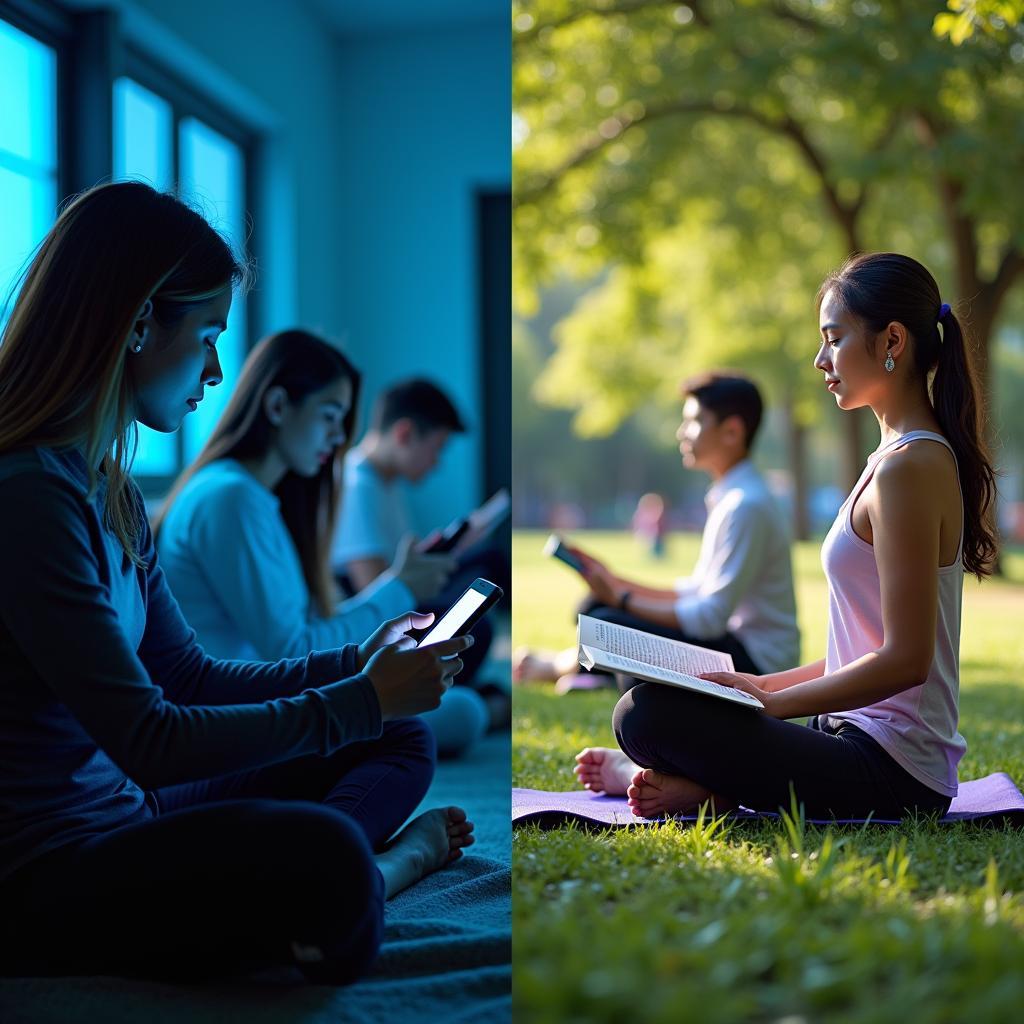 Sự thay đổi trong cách thư giãn của giới trẻ hiện đại với công nghệ và mạng xã hội
Theme 3: Social and Community Benefits
Question 5: In what ways do public relaxation spaces contribute to community building?
Phân tích câu hỏi:
- Dạng: Ways/Methods – explain multiple mechanisms của how spaces build community
- Key words: “in what ways”, “contribute to”, “community building” – focus vào processes và functions
- Cách tiếp cận: Identify 3-4 specific mechanisms, explain how each works với concrete examples, discuss different types của community building (intergenerational, intercultural, social capital), acknowledge challenges hoặc limitations
Sample Answer – Band 6-7:
Public spaces help build community in several ways. First, they give people a place to meet and talk to their neighbors, which helps them make friends. When people use the same park regularly, they start to recognize each other and become familiar. These spaces also host events like concerts or festivals where many people come together, which creates a sense of community. Children can play together in playgrounds, and parents can talk while watching them. All of these interactions help people feel more connected to their community.
Phân tích:
- Structure: Lists several mechanisms với brief explanations
- Vocabulary: Simple phrases như “meet and talk”, “make friends”, “come together”
- Tại sao Band 6-7: Identifies relevant mechanisms nhưng explanations lack sophistication. Examples generic. Vocabulary functional but basic.
Câu trả lời mẫu – Band 8-9:
Public relaxation spaces function as crucial social infrastructure that facilitates community building through several nuanced mechanisms. Perhaps most fundamentally, these spaces create what sociologists call “third places” – neutral grounds that exist outside of home and work where spontaneous social interactions can organically emerge. Unlike structured social settings, these casual encounters – a nod to a regular jogger, a conversation struck up on a bench, children playing together while parents chat – gradually weave the social fabric of a community. This repeated, informal contact is actually essential for developing what social capital theorists call “weak ties” – the network of acquaintances that, research shows, is vital for community resilience and individual well-being.
What’s particularly powerful about these spaces is their capacity to transcend the social stratifications that often characterize urban life. In a park or public square, a corporate executive might sit on a bench next to a street vendor, children from different socioeconomic backgrounds play together, elderly residents interact with young families – interactions that rarely occur in our otherwise highly segregated social spheres. This cross-pollination of diverse groups fosters empathy and mutual understanding while breaking down the invisible barriers that technology and modern urban design have inadvertently created.
These spaces also serve as collective stages for shared cultural experiences. When a community gathers for outdoor concerts, festivals, or even spontaneous street performances, they’re engaging in what anthropologists call “collective effervescence” – shared moments of joy or meaning that strengthen group identity. Think about how neighborhoods come together for events in their local parks – these aren’t just entertainment; they’re rituals that reinforce “we-ness,” the sense that we belong to something larger than ourselves.
Moreover, I’d argue that these spaces contribute to what we might call “democratic socialization.” They’re often the venues where people first engage with civic life – neighborhood meetings, community organizing, grassroots movements often originate in or utilize public spaces. This practice of coming together around shared concerns is fundamental to participatory democracy and helps cultivate the civic engagement that healthy communities require.
Phân tích:
- Structure: Exceptionally sophisticated với introduction establishing function, then systematic analysis of mechanisms: third places và weak ties, social integration across divides, collective cultural experiences, democratic civic engagement. Each paragraph fully develops one mechanism với theoretical frameworks và examples.
- Vocabulary: Highly academic và precise: “social infrastructure”, “nuanced mechanisms”, “third places”, “neutral grounds”, “spontaneous social interactions”, “organically emerge”, “social fabric”, “social capital theorists”, “weak ties”, “community resilience”, “transcend”, “social stratifications”, “cross-pollination”, “collective effervescence”, “group identity”, “democratic socialization”, “civic engagement”, “grassroots movements”, “participatory democracy”
- Grammar: Complex structures expertly deployed: participle phrases “facilitating community building”, relative clauses “that exist outside”, passive structures “is vital for”, cleft sentences “This repeated, informal contact is actually essential”
- Critical Thinking: Exceptional depth với integration of sociological theories (third places, weak ties, collective effervescence). Multiple analytical frameworks. Considers different dimensions – social, cultural, political. References academic concepts appropriately.
Key Language Features:
- Discourse markers: “Perhaps most fundamentally”, “What’s particularly powerful”, “Moreover, I’d argue”
- Tentative language: “I’d argue”, “we might call”
- Abstract nouns: “social infrastructure”, “nuanced mechanisms”, “social fabric”, “community resilience”, “social stratifications”, “cross-pollination”, “collective effervescence”, “democratic socialization”, “civic engagement”, “participatory democracy”
- Academic references: “sociologists call”, “social capital theorists”, “research shows”, “anthropologists call”
Question 6: Do you think the government should invest more in creating public relaxation spaces?
Phân tích câu hỏi:
- Dạng: Opinion + Justification – express position và provide compelling arguments
- Key words: “should”, “government”, “invest more”, “creating” – focus vào policy advocacy và resource allocation
- Cách tiếp cận: Clear position statement, multiple supporting arguments (health, economic, social), address counterarguments hoặc challenges, provide examples từ successful implementations, conclude với qualified stance
Sample Answer – Band 6-7:
Yes, I think the government should definitely invest more in public spaces. These places are important for people’s health and happiness. When cities have good parks and relaxation areas, people are healthier because they exercise more. This can reduce healthcare costs for the government. Also, nice public spaces make cities more attractive for tourists and businesses. Some people might say it’s too expensive, but I think the benefits are worth it. Good public spaces improve the quality of life for everyone.
Phân tích:
- Structure: Clear position với supporting reasons và brief counterargument consideration
- Vocabulary: Basic terms như “important”, “healthier”, “quality of life”
- Tại sao Band 6-7: Position clear với adequate support nhưng analysis lacks depth và sophistication. Vocabulary functional but limited.
Câu trả lời mẫu – Band 8-9:
I would strongly advocate for increased governmental investment in public relaxation spaces, and I’d argue this isn’t merely about quality of life but represents a strategic imperative for sustainable urban development. Let me explain why this constitutes such prudent public spending.
From a purely economic standpoint, the return on investment for quality public spaces is actually quite compelling. Research from cities like New York has demonstrated that every dollar invested in parks generates approximately four dollars in economic value through increased property values, enhanced tourism revenue, and reduced healthcare expenditures. When you consider the downstream costs of physical inactivity and mental health issues – which burden public health systems enormously – preventative infrastructure like parks and green spaces becomes not just justifiable but economically imperative. The Copenhagen Effect, where substantial investment in cycling infrastructure and public spaces led to measurable reductions in healthcare costs and productivity losses, exemplifies this principle beautifully.
Beyond economics, I’d argue there’s a social equity dimension that makes this a moral obligation. Access to quality recreational spaces is increasingly becoming a privilege stratified along socioeconomic lines – affluent neighborhoods typically boast excellent facilities while disadvantaged communities are often starved of such amenities. Government investment can rectify this disparity and ensure that restorative environments are a public good accessible to all, regardless of income level. This is particularly crucial as we recognize that environmental quality is a social determinant of health – those living in green-poor neighborhoods suffer disproportionately from stress-related illnesses and shorter life expectancies.
Now, I acknowledge the counterargument regarding fiscal constraints and competing priorities for public funds. However, I’d contend that this is actually about reorienting our priorities rather than simply spending more. If we frame public spaces as essential infrastructure – analogous to roads or utilities rather than luxury amenities – they become non-negotiable components of urban planning. Furthermore, there are innovative financing models – public-private partnerships, community investment schemes, green bonds – that can augment traditional government funding.
Ultimately, I believe forward-thinking governance requires us to move beyond the narrow cost-benefit analyses and recognize that public spaces are fundamental to the kind of cities we want to bequeath to future generations – livable, equitable, sustainable, and conducive to human flourishing.
Phân tích:
- Structure: Highly sophisticated với clear advocacy position, systematic presentation of economic argument với evidence, social equity argument, acknowledgment và rebuttal of counterarguments, innovative solutions, và philosophical conclusion about values và future. Structure resembles policy argumentation.
- Vocabulary: Exceptional range và precision: “strongly advocate for”, “strategic imperative”, “sustainable urban development”, “constitutes”, “prudent”, “return on investment”, “compelling”, “downstream costs”, “burden”, “preventative infrastructure”, “economically imperative”, “exemplifies”, “social equity dimension”, “moral obligation”, “stratified along”, “boast”, “starved of”, “rectify”, “disparity”, “restorative environments”, “disproportionately”, “fiscal constraints”, “reorienting”, “analogous to”, “non-negotiable components”, “augment”, “forward-thinking governance”, “bequeath”, “conducive to”, “human flourishing”
- Grammar: Complex structures expertly used throughout: conditionals “When you consider”, participle phrases “where substantial investment… led to”, passive “is increasingly becoming”, relative clauses “that makes this a moral obligation”, cleft sentences “It’s about reorienting”
- Critical Thinking: Exceptional analytical depth covering economic, social equity, policy, và philosophical dimensions. Uses evidence-based approach với specific examples (New York, Copenhagen). Acknowledges complexity với counterarguments. Proposes solutions. Shows systems thinking về interconnections. Demonstrates values-based reasoning.
Key Language Features:
- Discourse markers: “Let me explain why”, “From a purely economic standpoint”, “Beyond economics, I’d argue”, “Now, I acknowledge”, “Furthermore”, “Ultimately, I believe”
- Tentative language: “I would strongly advocate”, “I’d argue”, “I’d contend”, “I believe”
- Abstract nouns: “strategic imperative”, “sustainable urban development”, “return on investment”, “downstream costs”, “preventative infrastructure”, “social equity dimension”, “moral obligation”, “social determinant of health”, “fiscal constraints”, “forward-thinking governance”, “human flourishing”
- Policy language: “constitutes prudent public spending”, “economically imperative”, “moral obligation”, “rectify this disparity”, “innovative financing models”, “forward-thinking governance”
Theme 4: Future Trends
Question 7: How do you think relaxation spaces in cities will change in the future?
Phân tích câu hỏi:
- Dạng: Prediction / Future Trends – speculate về developments với justifications
- Key words: “future”, “change”, “relaxation spaces” – focus vào evolution và innovation
- Cách tiếp cận: Identify 2-3 major trends, explain drivers của changes (technology, climate, demographics, urbanization), provide specific examples của innovations, acknowledge uncertainties, balance optimism với potential challenges
Sample Answer – Band 6-7:
I think relaxation spaces will become more modern in the future. They will probably have more technology, like free Wi-Fi everywhere so people can work or use their phones. Because of climate change, there might be more shade and water features to keep places cool. Cities are getting more crowded, so maybe relaxation spaces will be built on rooftops or in smaller areas. I also think there will be more facilities for different activities, like outdoor gyms or yoga areas. Overall, I believe future spaces will try to meet the needs of more people.
Phân tích:
- Structure: Identifies several trends với brief explanations
- Vocabulary: Simple future forms “will become”, “will probably have”, basic descriptive terms
- Tại sao Band 6-7: Predictions relevant nhưng lack detail và sophistication. Vocabulary adequate but limited. Analysis surface-level.
Câu trả lời mẫu – Band 8-9:
Well, I think we’re on the cusp of some fascinating transformations in how urban relaxation spaces are conceived and designed, driven by converging forces of technology, climate imperatives, and evolving social needs.
First and foremost, I’d predict we’ll see the proliferation of what urban planners call “smart parks” – spaces that leverage IoT technology and data analytics to optimize user experience. Imagine parks with adaptive lighting that responds to foot traffic patterns, environmental sensors that monitor air quality and trigger misting systems during heat waves, or app-integrated features that allow people to reserve quiet zones or find less crowded areas in real-time. Singapore’s Bishan-Ang Mo Kio Park already incorporates some of these elements, and I expect this trend to accelerate as sensor technology becomes more affordable and ubiquitous.
Climate adaptation will undoubtedly reshape these spaces dramatically. With intensifying urban heat islands and more frequent extreme weather events, future parks will likely prioritize climate resilience through features like extensive tree canopies for cooling, bioswales and permeable surfaces for stormwater management, and drought-resistant landscaping. We’re already seeing pioneering examples like the “sponge cities” concept being implemented in China, where parks double as flood mitigation infrastructure. I think this multi-functional approach – spaces that serve both recreational and environmental engineering purposes – will become the norm rather than the exception.
Another significant shift I foresee is the vertical expansion of relaxation spaces. As land becomes increasingly scarce and prohibitively expensive in dense urban cores, we’ll likely see more rooftop parks, elevated walkways, and even vertical forests integrated into buildings themselves. The High Line in New York pioneered this concept of repurposing industrial infrastructure, and cities from Seoul to Sydney are now following suit. This three-dimensional thinking about urban space maximizes limited land resources while creating novel experiences.
I’d also anticipate greater personalization and flexibility in these spaces. Rather than the one-size-fits-all parks of the past, future designs might incorporate modular elements – movable seating, reconfigurable spaces that can transform from performance venues to quiet gardens, sensory-diverse zones catering to different neurological needs. This reflects a broader societal recognition of neurodiversity and the understanding that different individuals require different environments to truly relax.
That said, I think there’s also a potential tension between high-tech integration and the desire for authentic natural experiences. Some people might seek out spaces that are deliberately low-tech, offering digital detox zones where technology is actively discouraged. So we might see a bifurcation – some spaces becoming increasingly technology-enhanced while others market themselves as technology-free sanctuaries.
Phân tích:
- Structure: Exceptionally well-organized với introduction establishing context, systematic exploration of trends: smart technology integration, climate adaptation, vertical expansion, personalization, và acknowledgment of tension between tech và nature. Each trend fully developed với mechanisms, examples, và implications.
- Vocabulary: Highly sophisticated và precise: “on the cusp of”, “conceived”, “converging forces”, “proliferation”, “leverage”, “IoT technology”, “adaptive lighting”, “responds to”, “trigger”, “misting systems”, “app-integrated features”, “incorporates”, “accelerate”, “ubiquitous”, “intensifying urban heat islands”, “prioritize”, “climate resilience”, “bioswales”, “permeable surfaces”, “stormwater management”, “pioneering examples”, “sponge cities”, “flood mitigation infrastructure”, “multi-functional approach”, “vertical expansion”, “prohibitively expensive”, “dense urban cores”, “repurposing”, “three-dimensional thinking”, “modular elements”, “reconfigurable spaces”, “neurodiversity”, “bifurcation”, “technology-free sanctuaries”
- Grammar: Complex structures expertly deployed: future forms varied “I’d predict”, “will undoubtedly reshape”, “I foresee”, relative clauses “that respond to foot traffic”, participle phrases “driven by converging forces”, conditional structures “where technology is actively discouraged”, passive “are already being implemented”
- Critical Thinking: Exceptional depth với analysis of multiple interconnected trends. Balances technological optimism với acknowledgment of desire for authentic nature. Provides specific real-world examples (Singapore, High Line, China’s sponge cities). Considers trade-offs và tensions. Shows systems thinking về how trends interconnect.
Key Language Features:
- Discourse markers: “First and foremost”, “Another significant shift I foresee”, “I’d also anticipate”, “That said”
- Tentative language: “I think we’re on the cusp of”, “I’d predict”, “will likely prioritize”, “I foresee”, “I’d anticipate”, “might incorporate”, “might seek out”
- Abstract nouns: “converging forces”, “climate imperatives”, “proliferation”, “climate resilience”, “multi-functional approach”, “vertical expansion”, “three-dimensional thinking”, “personalization”, “neurodiversity”, “bifurcation”
- Technical terms: “IoT technology”, “data analytics”, “adaptive lighting”, “environmental sensors”, “bioswales”, “permeable surfaces”, “stormwater management”, “urban heat islands”, “sponge cities”
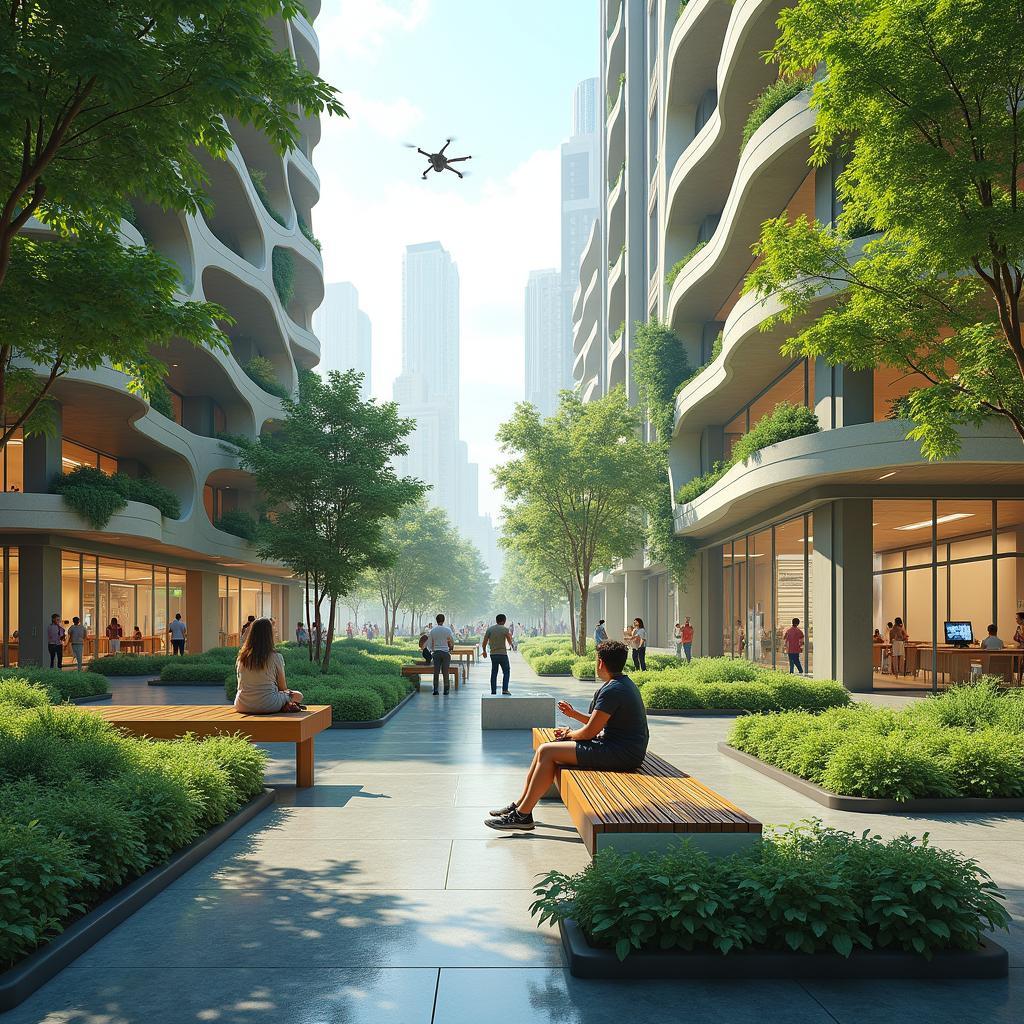 Tầm nhìn về không gian thư giãn công cộng tương lai với tích hợp công nghệ và thiết kế bền vững
Từ vựng và cụm từ quan trọng
Topic-Specific Vocabulary
| Từ vựng/Cụm từ | Loại từ | Phiên âm | Nghĩa tiếng Việt | Ví dụ | Collocation |
|---|---|---|---|---|---|
| tranquil | adj | /ˈtræŋkwɪl/ | yên tĩnh, thanh bình | The park offers a tranquil escape from the city noise. | tranquil atmosphere, tranquil environment, tranquil spot |
| rejuvenating | adj | /rɪˈdʒuːvəneɪtɪŋ/ | làm trẻ hóa, phục hồi | Spending time in nature is incredibly rejuvenating. | rejuvenating experience, rejuvenating effect, rejuvenating environment |
| unwind | verb | /ʌnˈwaɪnd/ | thư giãn, xả stress | I like to unwind in the park after work. | unwind after work, need to unwind, help someone unwind |
| sanctuary | noun | /ˈsæŋktʃueri/ | nơi trú ẩn, nơi thánh thiện | The park serves as a sanctuary from urban stress. | urban sanctuary, peaceful sanctuary, provide sanctuary |
| hustle and bustle | noun phrase | /ˈhʌsl ənd ˈbʌsl/ | sự hối hả, náo nhiệt | I need to escape the hustle and bustle of the city. | escape the hustle and bustle, away from the hustle and bustle |
| lush greenery | noun phrase | /lʌʃ ˈɡriːnəri/ | cây xanh tươi tốt | The park boasts lush greenery throughout. | surrounded by lush greenery, abundance of lush greenery |
| serene | adj | /səˈriːn/ | thanh thản, yên bình | The lake creates a serene atmosphere. | serene environment, serene beauty, serene setting |
| oasis | noun | /əʊˈeɪsɪs/ | ốc đảo xanh | This park is an oasis in the concrete jungle. | urban oasis, green oasis, peaceful oasis |
| alleviate | verb | /əˈliːvieɪt/ | giảm bớt, làm dịu | Green spaces help alleviate stress. | alleviate stress, alleviate symptoms, alleviate pressure |
| therapeutic | adj | /ˌθerəˈpjuːtɪk/ | có tác dụng chữa lành | Being in nature has therapeutic benefits. | therapeutic effect, therapeutic value, therapeutic environment |
| recharge | verb | /ˌriːˈtʃɑːdʒ/ | nạp lại năng lượng | I go to the park to recharge my batteries. | recharge batteries, recharge energy, need to recharge |
| mental well-being | noun phrase | /ˈmentl wel ˈbiːɪŋ/ | sức khỏe tinh thần | Public spaces contribute to mental well-being. | improve mental well-being, support mental well-being, mental well-being benefits |
| canopy | noun | /ˈkænəpi/ | tán cây | The tree canopy provides welcome shade. | tree canopy, dense canopy, green canopy |
| ambiance | noun | /ˈæmbiəns/ | bầu không khí, không gian | The park has a relaxing ambiance. | peaceful ambiance, pleasant ambiance, create ambiance |
| promenade | noun | /ˌprɒməˈnɑːd/ | đường dạo | People stroll along the riverside promenade. | riverside promenade, scenic promenade, walk along the promenade |
| verdant | adj | /ˈvɜːdnt/ | xanh tươi, tươi tốt | The park is a verdant space in the city center. | verdant landscape, verdant environment, verdant oasis |
| solace | noun | /ˈsɒləs/ | sự an ủi, nguồn an ủi | Nature provides solace from daily worries. | find solace, seek solace, provide solace |
| respite | noun | /ˈrespaɪt/ | khoảng nghỉ, sự tạm dừng | The park offers respite from urban chaos. | provide respite, offer respite, welcome respite |
Idiomatic Expressions & Advanced Phrases
| Cụm từ | Nghĩa | Ví dụ sử dụng | Band điểm |
|---|---|---|---|
| a breath of fresh air | điều gì đó làm mới mẻ, thoải mái | Visiting the park is literally a breath of fresh air. | 7.5-9 |
| get away from it all | thoát khỏi mọi thứ, nghỉ ngơi hoàn toàn | People come here to get away from it all. | 7-8 |
| recharge one’s batteries | nạp lại năng lượng | I need to recharge my batteries at the weekend. | 7-8 |
| clear one’s head | làm đầu óc tỉnh táo | A walk in the park helps me clear my head. | 7-8 |
| at the crack of dawn | rất sớm, lúc rạng đông | Joggers arrive at the crack of dawn. | 7.5-8.5 |
| hive of activity | nơi hoạt động nhộn nhịp | The park becomes a hive of activity on weekends. | 7.5-8.5 |
| a stone’s throw from | rất gần | The park is just a stone’s throw from my house. | 7-8 |
| soak up the atmosphere | thưởng thức, tận hưởng không khí | People come to soak up the peaceful atmosphere. | 7.5-8.5 |
| be at one with nature | hòa mình với thiên nhiên | I feel at one with nature when I’m in the park. | 7.5-8.5 |
| melts away all the tension | làm tan biến căng thẳng | The tranquil environment melts away all the tension. | 8-9 |
| escape the rat race | thoát khỏi cuộc đua xô bồ | This place helps me escape the rat race temporarily. | 7.5-8.5 |
| a world away from | hoàn toàn khác biệt, xa rời | It feels like a world away from the busy streets. | 7.5-8.5 |
Discourse Markers (Từ Nối Ý Trong Speaking)
Để bắt đầu câu trả lời:
- Well,… – Dùng khi bạn cần một chút thời gian suy nghĩ hoặc muốn câu trả lời nghe tự nhiên hơn
- Actually,… – Khi bạn muốn đưa ra góc nhìn khác hoặc thông tin bất ngờ
- To be honest,… – Khi nói thật, diễn đạt quan điểm cá nhân thật lòng
- I’d say that… – Cách mềm mại để đưa ra quan điểm
- From my perspective,… – Nhấn mạnh đây là góc nhìn cá nhân
Để bổ sung ý:
- On top of that,… – Thêm vào đó, ngoài ra (informal hơn Moreover)
- What’s more,… – Hơn nữa, quan trọng hơn
- Not to mention… – Chưa kể đến, không cần nói đến
- Additionally,… – Thêm vào đó (formal)
- Furthermore,… – Hơn nữa (formal, academic)
- Beyond that,… – Ngoài điều đó ra
Để đưa ra quan điểm cân bằng:
- On the one hand,… On the other hand,… – Một mặt… mặt khác
- While it’s true that…, we also need to consider… – Mặc dù đúng là… nhưng ta cũng cần xem xét
- Having said that,… – Tuy nhiên, dù đã nói như vậy
- That being said,… – Điều đó đã được nói, tuy nhiên
Để đưa ra ví dụ:
- For instance,… – Ví dụ như
- Take… for example,… – Lấy… làm ví dụ
- A case in point is… – Một trường hợp điển hình là
- To illustrate this,… – Để minh họa điều này
Để nhấn mạnh:
- What I find most…, is… – Điều tôi thấy… nhất là
- The thing that…, is… – Điều mà… là
- What’s particularly important is… – Điều đặc biệt quan trọng là
- I’d particularly like to emphasize… – Tôi đặc biệt muốn nhấn mạnh
Để kết luận:
- All in all,… – Tóm lại, xét cho cùng
- At the end of the day,… – Cuối cùng thì, xét về lâu dài
- In the final analysis,… – Khi phân tích cuối cùng
- Ultimately,… – Cuối cùng, về căn bản
Grammatical Structures Ấn Tượng
1. Conditional Sentences (Câu điều kiện):
Mixed conditional:
- Formula: If + past perfect, would + base verb (hoặc If + past simple, would + have + past participle)
- Ví dụ: “If more cities had invested in green spaces decades ago, we would see lower stress levels today.” (Nếu nhiều thành phố đã đầu tư vào không gian xanh từ nhiều thập kỷ trước, hôm nay chúng ta sẽ thấy mức độ căng thẳng thấp hơn)
Inversion for emphasis:
- Formula: Were + subject + to…, subject + would…
- Ví dụ: “Were the government to prioritize public spaces, we would see dramatic improvements in community health.” (Nếu chính phủ ưu tiên không gian công cộng, chúng ta sẽ thấy cải thiện đáng kể về sức khỏe cộng đồng)
2. Relative Clauses (Mệnh đề quan hệ):
Non-defining relative clauses:
- Formula: …, which/who + verb + …, …
- Ví dụ: “Tao Dan Park, which has been a landmark for over a century, attracts thousands of visitors daily.” (Công viên Tao Đàn, nơi đã là địa danh hơn một thế kỷ, thu hút hàng nghìn du khách mỗi ngày)
3. Passive Voice (Câu bị động):
Impersonal passive:
- It is thought/believed/said that…: “It is widely believed that access to green spaces improves mental health.” (Người ta tin rộng rãi rằng tiếp cận không gian xanh cải thiện sức khỏe tinh thần)
- People/Studies are thought to…: “Green spaces are thought to reduce stress hormones significantly.” (Không gian xanh được cho là giảm hormone căng thẳng đáng kể)
4. Cleft Sentences (Câu chẻ) – để nhấn mạnh:
What-cleft:
- Formula: What + subject + verb + is/was…
- Ví dụ: “What I find most appealing about this park is its accessibility to all residents.” (Điều tôi thấy hấp dẫn nhất về công viên này là tính dễ tiếp cận với mọi cư dân)
It-cleft:
- Formula: It + is/was + noun/phrase + that/who…
- Ví dụ: “It’s the sense of community that makes this space truly special.” (Chính là cảm giác cộng đồng khiến không gian này thực sự đặc biệt)
5. Participle Clauses (Mệnh đề phân từ):
Present participle:
- Ví dụ: “Offering a peaceful retreat from urban noise, the park has become increasingly popular.” (Mang đến một nơi yên tĩnh khỏi tiếng ồn đô thị, công viên ngày càng trở nên phổ biến)
Past participle:
- Ví dụ: “Surrounded by ancient trees, the park creates a sense of timeless tranquility.” (Được bao quanh bởi những cây cổ thụ, công viên tạo nên cảm giác thanh bình vượt thời gian)
6. Inversion for emphasis:
- Not only… but also (inverted): “Not only does the park provide relaxation, but it also fosters community bonds.”
- Rarely/Seldom (inverted): “Rarely have I encountered a space that feels so removed from urban chaos.”
Những cấu trúc ngữ pháp này, khi được sử dụng tự nhiên và chính xác, sẽ thể hiện grammatical range xuất sắc và góp phần nâng band điểm lên 7.5-9. Tuy nhiên, quan trọng là phải sử dụng đúng context và không lạm dụng đến mức câu nói nghe không tự nhiên.
Bài viết này đã cung cấp cho bạn một hướng dẫn toàn diện về cách xử lý chủ đề “describe a place in your city where people go to relax” trong kỳ thi IELTS Speaking. Từ những câu hỏi đơn giản ở Part 1 đến bài nói độc thoại ở Part 2 và thảo luận sâu ở Part 3, bạn đã được trang bị đầy đủ vocabulary, structures, và strategies để tự tin đạt band điểm cao.
Điều quan trọng nhất là phải practice regularly với những sample answers này, không học thuộc lòng mà thay vào đó hiểu logic và áp dụng flexible cho tình huống riêng của bạn. Hãy nhớ rằng examiner đánh giá khả năng communication tự nhiên của bạn, không phải khả năng recite một đoạn văn đã học thuộc. Chúc bạn thành công với kỳ thi IELTS Speaking!