
Trong hành trình chinh phục IELTS Speaking, chủ đề về địa điểm thư giãn là một trong những đề tài xuất hiện thường xuyên và được nhiều thí sinh yêu thích. Chủ đề “Describe A Place Where You Feel Most Relaxed” không chỉ cho phép bạn chia sẻ về không gian cá nhân mà còn thể hiện khả năng miêu tả, cảm xúc và sử dụng từ vựng đa dạng.
Theo thống kê từ các trung tâm thi IELTS tại Việt Nam và trên toàn cầu, chủ đề liên quan đến nơi thư giãn xuất hiện với tần suất cao từ năm 2020 đến nay, đặc biệt trong bối cảnh sau đại dịch khi mọi người càng quan tâm đến sức khỏe tinh thần. Dự đoán khả năng xuất hiện trong tương lai vẫn ở mức cao do tính phổ biến và dễ liên hệ với cuộc sống thực tế của thí sinh.
Qua bài viết này, bạn sẽ học được:
- Hơn 20 câu hỏi thường gặp trong cả 3 Part với chủ đề thư giãn
- Bài mẫu chi tiết theo 3 mức band điểm khác nhau (6-7, 7.5-8, 8.5-9) với phân tích sâu sắc
- Hơn 50 từ vựng và cụm từ ăn điểm cùng cách sử dụng tự nhiên
- Chiến lược trả lời hiệu quả từ góc nhìn Examiner với 20 năm kinh nghiệm
- Lời khuyên cụ thể về những lỗi thường gặp của học viên Việt Nam và cách khắc phục
IELTS Speaking Part 1: Introduction and Interview
Tổng Quan Về Part 1
Part 1 của IELTS Speaking thường kéo dài từ 4-5 phút với các câu hỏi ngắn về đời sống hàng ngày. Đây là phần “làm quen” giữa bạn và giám khảo, nhưng đừng xem nhẹ vì điểm số vẫn được tính từ những giây phút đầu tiên này.
Đặc điểm chính:
- Câu hỏi ngắn gọn, thân thiện về bản thân, gia đình, sở thích
- Không yêu cầu trả lời quá dài, nhưng cần mở rộng ý
- Thể hiện sự tự nhiên, thư giãn trong giao tiếp
Chiến lược hiệu quả:
- Trả lời trực tiếp câu hỏi trong 2-3 câu
- Sử dụng công thức: Direct answer + Reason/Example + Extra detail
- Tránh chỉ nói Yes/No hoặc câu trả lời một từ
Lỗi thường gặp của học viên Việt Nam:
- Trả lời quá ngắn, thiếu elaboration
- Dùng từ vựng đơn giản lặp đi lặp lại (good, bad, like, don’t like)
- Không đưa ra ví dụ cụ thể từ kinh nghiệm bản thân
- Nói quá nhanh hoặc quá chậm do lo lắng
Các Câu Hỏi Thường Gặp
Question 1: Do you have a favorite place where you like to relax?
Question 2: Where do you usually go when you feel stressed?
Question 3: How often do you visit places to unwind?
Question 4: What kind of environment makes you feel calm?
Question 5: Do you prefer relaxing indoors or outdoors?
Question 6: Is there a specific room in your house where you feel most comfortable?
Question 7: Do you think it’s important to have a personal space for relaxation?
Question 8: How do you usually relax after a long day?
Question 9: Have your relaxation habits changed over the years?
Question 10: Do you prefer to relax alone or with others?
Phân Tích và Gợi Ý Trả Lời Chi Tiết
Question: Do you have a favorite place where you like to relax?
🎯 Cách tiếp cận:
- Trả lời Yes/No rõ ràng ngay từ đầu
- Nêu địa điểm cụ thể
- Giải thích ngắn gọn tại sao chọn nơi đó
- Có thể thêm thói quen/hoạt động thường làm ở đó
📝 Sample Answer – Band 6-7:
“Yes, I do. My favorite place to relax is my bedroom. It’s quiet and comfortable, so I can rest well there. I usually listen to music or read books in my room when I’m tired.”
Phân tích:
- Điểm mạnh: Trả lời trực tiếp, có địa điểm cụ thể, đưa ra hoạt động thường làm
- Hạn chế: Từ vựng còn đơn giản (quiet, comfortable, tired), cấu trúc câu cơ bản, thiếu chi tiết về cảm giác hoặc lý do sâu hơn
- Tại sao Band 6-7: Đáp ứng yêu cầu cơ bản, grammar chính xác nhưng chưa có sự phong phú về từ vựng và ideas. Thiếu những từ vựng topic-specific về relaxation.
📝 Sample Answer – Band 8-9:
“Absolutely! My go-to spot for unwinding is definitely my balcony garden. There’s something incredibly soothing about being surrounded by greenery and fresh air, especially after a hectic day at work. I’ve set up a cozy corner with some cushioned seating, and I usually spend my evenings there with a cup of tea, just taking in the tranquil atmosphere.”
Phân tích:
- Điểm mạnh: Sử dụng từ vựng phong phú và tự nhiên (go-to spot, unwinding, soothing, hectic, tranquil atmosphere), cấu trúc câu đa dạng với There’s something…about, mô tả chi tiết không gian (cushioned seating, greenery), thể hiện cảm xúc cá nhân rõ ràng
- Tại sao Band 8-9: Lexical Resource xuất sắc với collocations tự nhiên, Fluency tốt với discourse markers (Absolutely, especially, just), Grammar đa dạng với present perfect (I’ve set up), ideas cụ thể và sống động
💡 Key Vocabulary & Expressions:
- go-to spot: nơi yêu thích thường xuyên lui tới
- unwinding: thư giãn, giải tỏa căng thẳng
- soothing: dịu dàng, êm dịu, làm dịu lòng
- hectic day: ngày bận rộn, căng thẳng
- taking in the tranquil atmosphere: tận hưởng không khí yên bình
Question: What kind of environment makes you feel calm?
🎯 Cách tiếp cận:
- Mô tả loại môi trường (yên tĩnh/ồn ào, trong nhà/ngoài trời, thiên nhiên/đô thị)
- Giải thích tại sao môi trường đó có tác dụng
- Có thể so sánh với môi trường khác hoặc đưa ví dụ cụ thể
📝 Sample Answer – Band 6-7:
“I feel calm in quiet places with nature. I don’t like noisy environments because they make me tired. When I’m near trees or water, I feel more relaxed and peaceful.”
Phân tích:
- Điểm mạnh: Nêu được preference rõ ràng, có so sánh đối lập, đề cập đến yếu tố thiên nhiên
- Hạn chế: Vocabulary hạn chế (quiet, noisy, tired, relaxed), thiếu elaboration về lý do sâu hơn, grammar đơn giản chỉ với simple present
- Tại sao Band 6-7: Trả lời đầy đủ nhưng thiếu depth, chưa thể hiện được khả năng sử dụng ngôn ngữ phức tạp hơn
📝 Sample Answer – Band 8-9:
“I’m definitely drawn to natural settings where there’s minimal urban noise. I find that environments with soft natural sounds like rustling leaves or flowing water have an almost therapeutic effect on me. There’s actually some scientific evidence suggesting that natural environments lower cortisol levels, which explains why I always feel my stress melting away when I’m surrounded by greenery rather than concrete.”
Phân tích:
- Điểm mạnh: Vocabulary sophisticated và precise (drawn to, minimal urban noise, therapeutic effect, cortisol levels, stress melting away), có reference đến scientific knowledge cho thấy depth of thinking, sử dụng relative clause (which explains why…) một cách tự nhiên, contrast rõ ràng (greenery vs concrete)
- Tại sao Band 8-9: Thể hiện khả năng paraphrase tốt (calm = therapeutic effect = stress melting away), grammar phức tạp với passive voice và present participle, ideas có chiều sâu với backing từ scientific evidence
💡 Key Vocabulary & Expressions:
- drawn to something: bị thu hút bởi cái gì
- minimal urban noise: ít tiếng ồn đô thị
- therapeutic effect: hiệu quả chữa lành, trị liệu
- cortisol levels: mức độ cortisol (hormone căng thẳng)
- stress melting away: căng thẳng tan biến
Question: Do you prefer relaxing indoors or outdoors?
🎯 Cách tiếp cận:
- Đưa ra lựa chọn rõ ràng hoặc có thể nói “it depends”
- Giải thích lý do cho preference
- Nếu chọn “it depends”, nêu các tình huống khác nhau
- Có thể đề cập đến lợi ích của từng loại
📝 Sample Answer – Band 6-7:
“It depends on the weather. When it’s sunny, I prefer outdoors because I can get fresh air. But when it’s too hot or rainy, I stay indoors and watch movies or take a nap. Both ways help me relax.”
Phân tích:
- Điểm mạnh: Có flexibility trong câu trả lời (it depends), đưa ra điều kiện cụ thể (weather), cover cả hai options
- Hạn chế: Từ vựng đơn giản, thiếu variety trong expression, chưa elaboration sâu về benefits của mỗi option
- Tại sao Band 6-7: Structure OK nhưng vocabulary và ideas chưa đủ impressive cho band cao hơn
📝 Sample Answer – Band 8-9:
“That’s an interesting question because my preference actually fluctuates depending on my state of mind. When I need to recharge mentally, I gravitate towards outdoor spaces where I can connect with nature – perhaps a park or a hiking trail. The change of scenery and physical activity really help clear my head. However, on days when I’m emotionally drained, I find more solace in the comfort of my home, where I can cocoon myself with a good book or some mindfulness meditation.”
Phân tích:
- Điểm mạnh: Discourse marker tự nhiên (That’s an interesting question), vocabulary xuất sắc và đa dạng (fluctuates, state of mind, gravitate towards, emotionally drained, solace, cocoon myself), structure phức tạp với multiple clauses, phân biệt rõ hai situations với reasons cụ thể (mentally recharge vs emotionally drained), collocation tự nhiên (clear my head, connect with nature, change of scenery)
- Tại sao Band 8-9: Thể hiện flexibility trong thinking, precision trong vocabulary choice, fluency cao với natural discourse, grammar range rộng
💡 Key Vocabulary & Expressions:
- fluctuates: thay đổi, dao động
- state of mind: trạng thái tinh thần
- gravitate towards: có xu hướng, bị lôi cuốn về
- emotionally drained: kiệt sức về mặt cảm xúc
- cocoon myself: cuộn mình lại, thu mình vào không gian riêng
- solace in the comfort: sự an ủi trong sự thoải mái
Tương tự như describe a place where you go to de-stress, việc hiểu rõ không gian thư giãn của bạn sẽ giúp câu trả lời trở nên tự nhiên và chân thực hơn.
 Học viên đang chuẩn bị trả lời câu hỏi về địa điểm thư giãn trong IELTS Speaking Part 1
IELTS Speaking Part 2: Long Turn (Cue Card)
Tổng Quan Về Part 2
Part 2 là phần quan trọng nhất trong IELTS Speaking, chiếm tới 60% thời gian thi và cho phép bạn thể hiện khả năng độc thoại mạch lạc. Bạn có 1 phút chuẩn bị và 2-3 phút để nói không bị ngắt.
Thời gian:
- Chuẩn bị: 1 phút (được cung cấp giấy và bút)
- Nói: 2-3 phút liên tục
Chiến lược:
- 1 phút chuẩn bị: Không viết câu hoàn chỉnh, chỉ ghi keywords cho mỗi bullet point. Tối đa 5-7 từ khóa quan trọng
- Nói đủ thời gian: Tối thiểu 1.5 phút, lý tưởng là 2-2.5 phút. Examiner sẽ ngắt lời khi hết 2 phút nhưng không bị trừ điểm
- Cover đủ bullet points: Phải trả lời đầy đủ tất cả yêu cầu, đặc biệt là câu “explain” cuối cùng
- Thì động từ: Chú ý thì trong đề (quá khứ/hiện tại), nhất quán trong suốt bài
Lỗi thường gặp:
- Viết quá nhiều trong 1 phút preparation, không còn thời gian suy nghĩ
- Nói dưới 1.5 phút, đặc biệt là học viên Việt Nam thường nói quá ngắn
- Bỏ sót một hoặc nhiều bullet points
- Không elaborate ở phần “explain” – đây là phần ghi điểm cao nhất
Cue Card
Describe a place where you feel most relaxed
You should say:
- Where this place is
- How often you go there
- What you do there
- And explain why this place makes you feel relaxed
Phân Tích Đề Bài
Dạng câu hỏi: Describe a place – đây là dạng miêu tả địa điểm, một trong những dạng phổ biến nhất
Thì động từ: Hiện tại (vì hỏi về nơi bạn CẢM THẤY thư giãn, không phải đã từng cảm thấy). Sử dụng Present Simple chủ yếu, có thể dùng Present Perfect khi nói về kinh nghiệm
Bullet points phải cover:
- Where this place is: Mô tả location cụ thể (trong nhà/ngoài trời, khu vực nào, đặc điểm địa lý)
- How often you go there: Tần suất (daily, weekly, whenever stressed…)
- What you do there: Activities cụ thể (không chỉ liệt kê mà giải thích)
- Explain why relaxing: Đây là phần quan trọng nhất – phải elaborate về feelings, reasons, effects
Câu “explain” quan trọng: Phần này thường chiếm 40-50% thời gian nói. Đây là nơi bạn thể hiện depth of thinking, vocabulary range và ability to articulate feelings. Đừng chỉ nói “because it’s quiet” mà cần phân tích sâu hơn về psychological, physical, emotional reasons.
📝 Sample Answer – Band 6-7
Thời lượng: Khoảng 1.5-2 phút
“I’d like to talk about my favorite coffee shop near my house. It’s called The Morning Brew and it’s located on Nguyen Hue Street, just a 10-minute walk from where I live.
I go there quite often, maybe two or three times a week, especially on weekends when I don’t have to work. Sometimes I also drop by after work if I want to relax before going home.
When I’m there, I usually order a cappuccino and sit by the window. I like to read books or just watch people walking by. Sometimes I bring my laptop to do some work, but mostly I just enjoy the peaceful atmosphere. The music they play is very soft and relaxing.
This place makes me feel relaxed for several reasons. First, the environment is really comfortable. The chairs are soft and the lighting is warm. It’s not too noisy like other coffee shops. Second, the staff are very friendly and they remember my usual order. I also like the smell of fresh coffee. When I’m there, I can forget about my problems and just enjoy the moment. It’s like my personal escape from the busy city life.”
Phân Tích Band Điểm
| Tiêu chí | Band | Nhận xét |
|---|---|---|
| Fluency & Coherence | 6-7 | Có sequencing rõ ràng (First, Second), sử dụng một số linking words cơ bản (especially, sometimes, when), nhưng còn simple. Độ trôi chảy OK, không có hesitation nhiều |
| Lexical Resource | 6-7 | Từ vựng adequate (peaceful atmosphere, drop by, personal escape) nhưng chưa sophisticated. Có một số collocations tốt (soft lighting, busy city life) nhưng còn limited range |
| Grammatical Range & Accuracy | 6-7 | Mix được simple và complex sentences (when I’m there, if I want to…). Sử dụng đúng Present Simple. Có relative clause đơn giản (the music they play). Accuracy tốt nhưng complexity chưa cao |
| Pronunciation | 6-7 | Assumed rõ ràng, dễ hiểu, có stress patterns cơ bản |
Điểm mạnh:
- ✅ Trả lời đủ tất cả bullet points
- ✅ Structure rõ ràng, dễ follow
- ✅ Length hợp lý (gần 2 phút)
- ✅ Grammar chính xác, ít lỗi
Hạn chế:
- ⚠️ Vocabulary còn basic, thiếu less common words
- ⚠️ Ideas chưa elaborate sâu, đặc biệt phần explain
- ⚠️ Thiếu idiomatic expressions
- ⚠️ Grammar structures chưa đủ đa dạng
📝 Sample Answer – Band 7.5-8
Thời lượng: Khoảng 2-2.5 phút
“I’d like to describe my balcony garden, which has become my sanctuary for relaxation over the past few years. It’s a small but thoughtfully arranged space on the fifth floor of my apartment building, overlooking a quiet residential area in District 3.
I make it a point to spend time there almost daily, particularly in the early mornings or late evenings when the temperature is more bearable. On weekends, I can easily spend a couple of hours there, but on busy weekdays, even 20-30 minutes helps me recharge.
My activities there vary depending on my mood and the time of day. I’ve set up a cozy reading nook with some cushioned seating and a small table, so I often enjoy a book with a cup of green tea. I also tend to my plants – I’ve been growing herbs like basil and mint, along with some flowering plants. Sometimes I simply sit there practicing mindfulness meditation or just soaking in the peaceful ambiance. The fresh air and natural light make it an ideal spot for these activities.
What makes this place so relaxing for me is multifaceted. Firstly, there’s the therapeutic effect of being around greenery. Studies have shown that plants can reduce stress levels, and I genuinely feel this when I’m surrounded by them. The sensory experience is also important – the subtle fragrance of herbs, the gentle rustling of leaves, and even the occasional bird song create a calming soundscape. Moreover, it’s my personal space where I have complete control over the environment. Unlike public spaces, I don’t have to contend with crowds or noise. It’s become my go-to retreat whenever I feel overwhelmed by work pressures or city life. The physical elevation also helps – being above street level gives me a sense of detachment from the hustle and bustle below.”
Phân Tích Band Điểm
| Tiêu chí | Band | Nhận xét |
|---|---|---|
| Fluency & Coherence | 7.5-8 | Speaks fluently với minimal hesitation, sử dụng sophisticated cohesive devices (Firstly, Moreover, Unlike…), ideas well-organized và logical progression |
| Lexical Resource | 7.5-8 | Wide range of vocabulary (sanctuary, thoughtfully arranged, multifaceted, therapeutic effect, contend with), good collocations (soaking in ambiance, calming soundscape), uses less common lexical items naturally |
| Grammatical Range & Accuracy | 7.5-8 | Đa dạng structures: passive (have been growing), perfect tenses (has become), participles (overlooking), relative clauses, conditional implied. Accuracy cao với occasional minor errors |
| Pronunciation | 7.5-8 | Clear pronunciation với good use của features like stress, rhythm, intonation |
So Sánh Với Band 6-7
| Khía cạnh | Band 6-7 | Band 7.5-8 |
|---|---|---|
| Vocabulary | “peaceful atmosphere”, “personal escape” | “sanctuary”, “therapeutic effect”, “calming soundscape”, “detachment from the hustle and bustle” |
| Grammar | “When I’m there, I can forget about my problems” | “What makes this place so relaxing is multifaceted” (cleft sentence), “being above street level gives me a sense of…” (gerund as subject) |
| Ideas | “The chairs are soft and the lighting is warm” (descriptive) | “Studies have shown that plants can reduce stress levels” (evidence-based), “multifaceted” reasons với detailed analysis |
| Cohesion | “First, Second” | “Firstly… Moreover… Unlike…” với more sophisticated markers |
📝 Sample Answer – Band 8.5-9
Thời lượng: 2.5-3 phút đầy đủ
“I’d like to talk about what I consider my personal oasis – a small lakeside spot in Tao Dan Park that I’ve grown profoundly attached to over the years. It’s tucked away in a relatively secluded corner of the park, about a 15-minute walk from my apartment, and what makes it special is that it’s somewhat off the beaten path, so it rarely gets crowded even during peak hours.
I’m quite ritualistic about visiting this place. I make it a point to go there at least four or five times a week, typically during the golden hours – either early morning around 6 AM or late afternoon when the sunlight takes on that warm, amber quality. Weather permitting, I’ll be there rain or shine, though I must admit that drizzly mornings have their own unique charm.
My time there is quite varied but always intentional. I usually start with some light stretching or yoga on the grass – there’s something incredibly grounding about exercising with the lake as my backdrop. Afterwards, I’ll settle onto a bench I’ve claimed as my own and either journal my thoughts or simply engage in what I call ‘conscious observation‘ – mindfully taking in the subtle shifts in the environment, from the ripples on the water’s surface to the way the light filters through the canopy of trees. Occasionally, I’ll bring my sketchbook and attempt some rudimentary drawings, though I’m by no means an artist. It’s more about the meditative process than the end result.
What strikes me most about why this place holds such restorative power for me is the confluence of several factors. On a purely physiological level, being near water has been shown to induce a state of calm – there’s actually a concept called ‘blue mind theory’ that explores how aquatic environments positively affect our mental wellbeing. I certainly experience this firsthand; the rhythmic lapping of water against the shore seems to synchronize with my breathing, naturally slowing down my thought patterns.
Beyond the scientific rationale, there’s also a deeply personal dimension. This place has witnessed various chapters of my life – I’ve been coming here since my university days when I needed to decompress from exam stress, and it’s evolved with me. There’s a sense of continuity and constancy that I find incredibly reassuring in an otherwise rapidly changing world. It’s become my anchor point, a physical space where I can reconnect with myself away from the relentless demands of modern life.
The aesthetic quality of the environment also plays a non-trivial role. The interplay of natural elements – the dappled sunlight, the verdant surroundings, the occasional melodic bird calls – creates what I can only describe as a sensory symphony that engages without overwhelming. Unlike the cacophony of urban stimuli that we’re typically bombarded with, this environment offers a carefully calibrated balance of sensory input that I find profoundly nourishing.
Perhaps most importantly, it’s a space that’s entirely mine in terms of how I choose to inhabit it. There are no expectations, no schedules to keep, no roles to perform. It’s pure, unstructured time for self-reflection and renewal, which has become increasingly precious in our productivity-obsessed culture.”
Phân Tích Band Điểm
| Tiêu chí | Band | Nhận xét |
|---|---|---|
| Fluency & Coherence | 8.5-9 | Speaks fluently và coherently với very natural delivery, sophisticated cohesive devices used skillfully, ideas với excellent logical flow và development |
| Lexical Resource | 8.5-9 | Extensive vocabulary với precise usage (oasis, secluded, off the beaten path, confluence, restorative power, dappled sunlight), natural idiomatic language (rain or shine, by no means), sophisticated collocations, paraphrasing skillfully |
| Grammatical Range & Accuracy | 8.5-9 | Full range of structures: complex sentences, cleft structures (What strikes me most), participle clauses, relative clauses, conditionals, inversion (Weather permitting), passive voice, gerunds. High level accuracy |
| Pronunciation | 8.5-9 | Excellent pronunciation với sophisticated use of features, easy to understand, natural stress và intonation patterns |
Tại Sao Bài Này Xuất Sắc
🎯 Fluency Hoàn Hảo:
Không có hesitation, speaks at natural pace với confident delivery. Sử dụng fillers một cách tự nhiên và sophisticated (I must admit, What strikes me most, Perhaps most importantly).
📚 Vocabulary Tinh Vi:
- Ví dụ: “confluence of several factors” thay vì “many reasons” – shows precision và academic flavor appropriate cho high band
- Ví dụ: “sensory symphony that engages without overwhelming” – metaphorical language used naturally
- Ví dụ: “productivity-obsessed culture” – shows awareness of broader social context
- Collocation xuất sắc: “dappled sunlight”, “verdant surroundings”, “melodic bird calls”, “rhythmic lapping of water”
📝 Grammar Đa Dạng:
- Cleft sentence: “What strikes me most about why this place holds such restorative power” – emphasizes key point
- Participle clause: “Weather permitting, I’ll be there rain or shine” – shows grammatical sophistication
- Relative clause với sophisticated embedding: “there’s a concept called ‘blue mind theory’ that explores how aquatic environments positively affect our mental wellbeing”
- Gerund structures: “being near water has been shown to induce a state of calm”
💡 Ideas Sâu Sắc:
- References scientific concepts (blue mind theory, physiological level) cho credibility
- Personal narrative intertwined với analytical thinking
- Multiple layers of explanation: physiological, psychological, aesthetic, existential
- Shows reflection về broader themes (modern life demands, productivity culture)
- Uses contrast effectively (unlike urban cacophony vs natural balance)
 Học viên đang thực hành IELTS Speaking Part 2 về chủ đề địa điểm thư giãn với giáo viên
Follow-up Questions (Rounding Off Questions)
Sau khi bạn hoàn thành phần độc thoại 2 phút, examiner có thể hỏi thêm 1-2 câu ngắn để chuyển sang Part 3. Đây là câu hỏi transition, không cần trả lời dài.
Question 1: Do you think you’ll continue visiting this place in the future?
Band 6-7 Answer:
“Yes, definitely. I really enjoy going there and it helps me relax, so I will keep visiting whenever I have free time.”
Band 8-9 Answer:
“Absolutely, I can’t imagine breaking this ritual. It’s become such an integral part of my self-care routine that I’d feel genuinely out of sorts without it. If anything, I’d like to deepen my connection with this space even further.”
Question 2: Is it difficult to find time to go there?
Band 6-7 Answer:
“Sometimes it’s difficult when I’m busy with work, but I try to make time because it’s important for my health.”
Band 8-9 Answer:
“It can be challenging to carve out time, especially during particularly hectic work periods, but I’ve learned to prioritize it as non-negotiable ‘me time’. I’ve come to realize that this investment in my mental wellbeing actually enhances my productivity in other areas, so it’s really a win-win situation.”
Đối với những ai quan tâm đến describe a time when you made a significant life change, việc tìm ra không gian thư giãn riêng cũng có thể là một thay đổi quan trọng trong cuộc sống.
IELTS Speaking Part 3: Two-way Discussion
Tổng Quan Về Part 3
Part 3 là phần thử thách nhất trong IELTS Speaking vì yêu cầu bạn thảo luận các vấn đề trừu tượng và phức tạp hơn. Đây là nơi phân biệt rõ giữa band 6-7 và band 8-9.
Thời gian: 4-5 phút
Đặc điểm:
- Câu hỏi liên quan đến chủ đề Part 2 nhưng ở mức độ general hơn, abstract hơn
- Yêu cầu phân tích, so sánh, đưa ra quan điểm có lý lẽ
- Không chỉ nói về bản thân mà về society, trends, changes
- Examiner có thể challenge opinions của bạn
Yêu cầu:
- Phân tích từ nhiều góc độ
- So sánh (past vs present, different groups, advantages vs disadvantages)
- Đưa ra reasons, examples từ broader context
- Thừa nhận complexity của issues (not everything is black and white)
Chiến lược:
- Mở rộng câu trả lời (3-5 câu minimum)
- Structure: Direct answer → Reason 1 + example → Reason 2 + example → Conclusion/Nuance
- Sử dụng discourse markers (Well, Actually, I think, To be honest…)
- Show critical thinking bằng cách consider different perspectives
- Nếu không chắc, có thể say “That’s an interesting question, I haven’t thought about it much but I’d say…”
Lỗi thường gặp của học viên Việt Nam:
- Trả lời quá ngắn (1-2 câu), giống Part 1
- Chỉ nói về personal experience thay vì general ideas
- Thiếu từ vựng abstract và academic
- Không đưa ra supporting reasons hoặc examples
- Tránh né câu hỏi khó thay vì thử analyze
Các Câu Hỏi Thảo Luận Sâu
Theme 1: Modern Lifestyle and Relaxation
Question 1: Why do you think more people are finding it difficult to relax nowadays?
🎯 Phân tích câu hỏi:
- Dạng: Cause analysis (Why) – yêu cầu explain reasons
- Key words: more people, difficult to relax, nowadays
- Cách tiếp cận: Identify multiple causes (technological, social, economic), provide examples, có thể compare với past
📝 Sample Answer – Band 6-7:
“I think there are several reasons. First, people are very busy with work and they have to work long hours. Second, technology like smartphones makes it hard to relax because we always check messages and emails. Also, life in cities is very stressful with traffic and noise. Many people worry about money and their future, so they can’t relax easily.”
Phân tích:
- Structure: Có sequencing (First, Second, Also) nhưng basic
- Vocabulary: Adequate nhưng repetitive (busy, work, relax, stressful)
- Tại sao Band 6-7: Covers multiple reasons nhưng lacks depth, vocabulary range limited, chưa elaborate về consequences hoặc broader implications
📝 Câu trả lời mẫu – Band 8-9:
“Well, I think this phenomenon can be attributed to several interconnected factors. Primarily, we’re living in what some sociologists call the ‘always-on culture,’ where the boundaries between work and personal life have become increasingly blurred. The proliferation of smartphones and communication technology means we’re perpetually accessible, making it virtually impossible to truly disconnect.
Beyond that, there’s also an underlying economic pressure that many people face. With rising living costs and job insecurity, individuals often feel compelled to work longer hours or take on multiple income streams just to maintain their standard of living. This creates a vicious cycle where relaxation is seen as a luxury rather than a necessity.
I’d also argue that there’s a cultural dimension to this. Modern society tends to glorify busyness and productivity, almost equating constant activity with self-worth. People who take time to relax are sometimes stigmatized as lazy or unambitious, which creates additional psychological pressure to remain in perpetual motion.”
Phân tích:
- Structure: Well-organized với multiple layers: technology → economics → cultural factors. Uses effective signposting (Primarily, Beyond that, I’d also argue)
- Vocabulary: Sophisticated và precise (attributed to, perpetually accessible, proliferation, vicious cycle, glorify busyness, stigmatized, perpetual motion), strong collocations
- Grammar: Complex structures với relative clauses (where the boundaries…), passive voice (is seen as), participles (making it virtually impossible)
- Critical Thinking: Shows depth bằng cách analyze từ multiple perspectives (technological, economic, social-cultural), uses academic terminology (sociologists call, interconnected factors), acknowledges complexity
💡 Key Language Features:
- Discourse markers: Well, Primarily, Beyond that, I’d also argue
- Tentative language: I think, can be attributed to, tends to, sometimes
- Abstract nouns: phenomenon, proliferation, insecurity, dimension
- Academic phrases: interconnected factors, underlying pressure, cultural dimension, psychological pressure
Question 2: Do you think people’s ability to relax has changed over generations?
🎯 Phân tích câu hỏi:
- Dạng: Compare and contrast (past vs present generations)
- Key words: ability to relax, changed, over generations
- Cách tiếp cận: Compare past and present, identify what changed and why, có thể mention specific generations
📝 Sample Answer – Band 6-7:
“Yes, I think so. In the past, people had simpler lives and fewer distractions, so they could relax more easily. They didn’t have smartphones or internet. Now, young people always use technology and social media, so they have more stress. Older generations were healthier because they had more free time and less pressure from work.”
Phân tích:
- Structure: Has comparison nhưng shallow
- Vocabulary: Basic (simpler, fewer, more easily)
- Ideas: Surface-level observations, generalizations without nuance
- Tại sao Band 6-7: Attempts comparison nhưng lacks sophistication, oversimplifies, không đưa ra detailed analysis
📝 Câu trả lời mẫu – Band 8-9:
“Absolutely, I think there’s been a marked shift in how different generations approach and experience relaxation. If we look at previous generations, particularly those who grew up before the digital revolution, relaxation was often more compartmentalized and deliberate. People had clearly defined boundaries between work time and leisure time – when you left the office, you were genuinely off duty. Leisure activities were also more tangible and present-focused – reading a physical book, having face-to-face conversations, or engaging in hobbies that required undivided attention.
In contrast, millennials and Gen Z have grown up in an environment of constant connectivity and information overload. For these generations, relaxation has become paradoxically more challenging despite having access to countless entertainment options. There’s this sense of FOMO – fear of missing out – that makes it psychologically difficult to fully unwind. Even when they’re supposedly relaxing, many young people are simultaneously scrolling through social media, comparing their lives to others, which can be inherently stress-inducing.
That said, I wouldn’t want to romanticize the past. Previous generations certainly had their own stressors – perhaps less variety but more intensity in terms of physical labor or economic hardship. What’s changed is more the nature of stress rather than necessarily the quantity. Modern stress tends to be more chronic and psychological rather than acute and physical, which might actually make it harder to alleviate through traditional relaxation methods.”
Phân tích:
- Structure: Excellent organization với clear comparison (previous generations → current generations → balanced conclusion), sophisticated signposting (If we look at, In contrast, That said)
- Vocabulary: Wide range với precise usage (marked shift, compartmentalized, tangible, paradoxically, simultaneously, romanticize, alleviate), uses contemporary terminology (FOMO, Gen Z, digital revolution)
- Grammar: Complex structures với passive voice, participle clauses (growing up, comparing), relative clauses, gerunds as subjects
- Critical Thinking: Nuanced analysis, acknowledges complexity (doesn’t romanticize past), distinguishes between nature vs quantity of stress, uses specific examples (physical book vs social media scrolling), balanced view
💡 Key Language Features:
- Comparative language: marked shift, In contrast, more…than, rather than
- Hedging: I think, often, might actually, tends to be
- Referencing: If we look at, particularly those who, For these generations
- Sophisticated vocabulary: compartmentalized, paradoxically, inherently, chronic vs acute
Theme 2: Public Spaces and Urban Planning
Question 3: How important is it for cities to provide relaxation spaces for residents?
🎯 Phân tích câu hỏi:
- Dạng: Opinion + Evaluation (How important)
- Key words: cities, provide, relaxation spaces, residents
- Cách tiếp cận: State importance level, explain reasons (health, social, economic), give examples of such spaces, có thể mention consequences if absent
📝 Sample Answer – Band 6-7:
“I think it’s very important. People need places to relax in the city because apartments are small and crowded. Parks and gardens are good for health and help people reduce stress. If there are no relaxation spaces, people will be unhappy and have mental health problems. The government should build more parks and public areas.”
Phân tích:
- Structure: Basic structure với opinion + some reasons
- Vocabulary: Limited range (very important, good for, unhappy)
- Ideas: Valid points nhưng not elaborated, lacks examples
- Tại sao Band 6-7: Communicates main ideas nhưng lacks sophistication và depth
📝 Câu trả lời mẫu – Band 8-9:
“I’d say it’s absolutely crucial and should be a fundamental consideration in urban planning. From a public health perspective, accessible green spaces and relaxation areas serve as vital counterbalances to the inherent stressors of urban living. Research has consistently shown that proximity to parks and natural environments correlates with lower rates of anxiety, depression, and even cardiovascular disease. In cities like Singapore or Copenhagen, where green infrastructure is thoughtfully integrated into urban design, you can see tangible benefits in terms of residents’ overall wellbeing and life satisfaction.
Beyond individual health, these spaces also serve crucial social functions. They act as communal gathering points that foster social cohesion – something that’s increasingly important in our fragmented modern society. When people from diverse backgrounds share public spaces, it promotes community bonds and breaks down social barriers. I’ve observed this in Ho Chi Minh City’s parks where you’ll see people of all ages and socioeconomic backgrounds engaging in various activities side by side.
From an economic standpoint, investment in quality public spaces actually yields substantial returns. Properties near well-maintained parks typically command premium prices, and these areas often become economic hubs with cafes and businesses thriving off the foot traffic. Cities that neglect this aspect often see urban decay, increased social problems, and ultimately higher public health costs, which are far more expensive to address retroactively.”
Phân tích:
- Structure: Excellent organization với three clear perspectives (public health → social → economic), each with elaboration và examples
- Vocabulary: Sophisticated và topic-specific (vital counterbalances, green infrastructure, social cohesion, socioeconomic backgrounds, retroactively), strong collocations (tangible benefits, communal gathering points, urban decay)
- Grammar: Full range of complex structures, passive voice (is integrated, are far more expensive), relative clauses (where green infrastructure…), conditional implied (Cities that neglect…)
- Critical Thinking: Multi-dimensional analysis, uses evidence (research shows, I’ve observed), specific examples (Singapore, Copenhagen, HCMC), considers consequences (what happens if absent), shows understanding of interconnections (health-social-economic)
💡 Key Language Features:
- Academic style: From a public health perspective, Research has shown, correlates with
- Hedging appropriately: I’d say, typically, often
- Cause-effect language: serves as, correlates with, yields returns, promotes
- Emphasis: absolutely crucial, vital, substantial returns
Tương tự như khi bạn describe a hill or mountain that you would like to climb, việc có không gian thiên nhiên trong thành phố cũng đóng vai trò quan trọng trong sức khỏe tinh thần của cư dân.
Question 4: Do you think the way people relax differs between urban and rural areas?
🎯 Phân tích câu hỏi:
- Dạng: Compare and contrast (urban vs rural)
- Key words: way people relax, differs, urban and rural
- Cách tiếp cận: Identify differences trong relaxation methods, explain reasons (environment, lifestyle, resources available), có thể mention which is better
📝 Sample Answer – Band 6-7:
“Yes, there are big differences. In cities, people usually relax by going to cafes, shopping malls, or cinemas because there are more entertainment options. In rural areas, people relax in nature, like going to rivers or mountains. Urban people pay money for relaxation, but rural people have free natural spaces. I think rural relaxation is healthier but urban people have more choices.”
Phân tích:
- Structure: Simple comparison present
- Vocabulary: Basic (big differences, more options, healthier)
- Ideas: Surface-level observations
- Tại sao Band 6-7: Makes comparison nhưng lacks sophistication và nuanced understanding
📝 Câu trả lời mẫu – Band 8-9:
“Undoubtedly, there are quite pronounced differences shaped largely by the environmental context and available resources in each setting. In urban environments, relaxation activities tend to be more structured and commercialized. City dwellers often gravitate towards entertainment venues, gyms, spas, or cafes – activities that typically involve some financial outlay and scheduled time slots. There’s also a tendency toward passive consumption of entertainment, whether that’s watching movies, dining out, or scrolling through digital content. This commodification of leisure is really a defining feature of urban relaxation.
Rural relaxation, by contrast, tends to be more spontaneous and nature-centric. People in agricultural communities might find relaxation in activities that blur the lines between work and leisure – tending a garden, fishing, or simply sitting outdoors observing the natural environment. There’s less of a stark division between ‘work time’ and ‘relaxation time’ because the pace of life itself is generally slower and less compartmentalized. Crucially, these activities often have a communal dimension – relaxation happens organically through social interaction within tight-knit communities.
What’s particularly interesting is how these patterns are beginning to shift. With increasing rural-to-urban migration and the penetration of digital technology even into remote areas, we’re seeing some convergence in relaxation habits. Rural youth now have access to the same social media and entertainment platforms, while urban dwellers are increasingly seeking out nature-based experiences as a counterbalance to city stress – hence the popularity of weekend countryside retreats and eco-tourism.
I’d argue that neither approach is inherently superior; each has its merits and limitations. Urban relaxation offers variety and convenience but can feel somewhat artificial and costly. Rural relaxation provides authentic connection with nature but might lack the stimulation and diversity that some people need. Ideally, we’d have access to both, which is why creating green spaces within cities and improving rural infrastructure are both important.”
Phân tích:
- Structure: Highly sophisticated với clear comparison, trend analysis (how things are changing), và balanced conclusion
- Vocabulary: Extensive range (pronounced differences, commodification of leisure, nature-centric, spontaneous, penetration of technology, convergence, authentic connection, inherently superior)
- Grammar: Full complexity với passive voice, participle clauses, cleft sentence (What’s particularly interesting), conditional (Ideally we’d have)
- Critical Thinking: Nuanced analysis acknowledging complexity, discusses current trends (convergence), balances perspectives (neither superior), shows synthesis of ideas (creating green spaces + improving rural infrastructure)
💡 Key Language Features:
- Comparing: by contrast, tend to be, whereas, neither…nor
- Showing change: are beginning to shift, increasingly, now have access
- Nuancing: quite pronounced, tends to be, generally, might lack
- Presenting balanced view: I’d argue that, neither approach, each has, Ideally
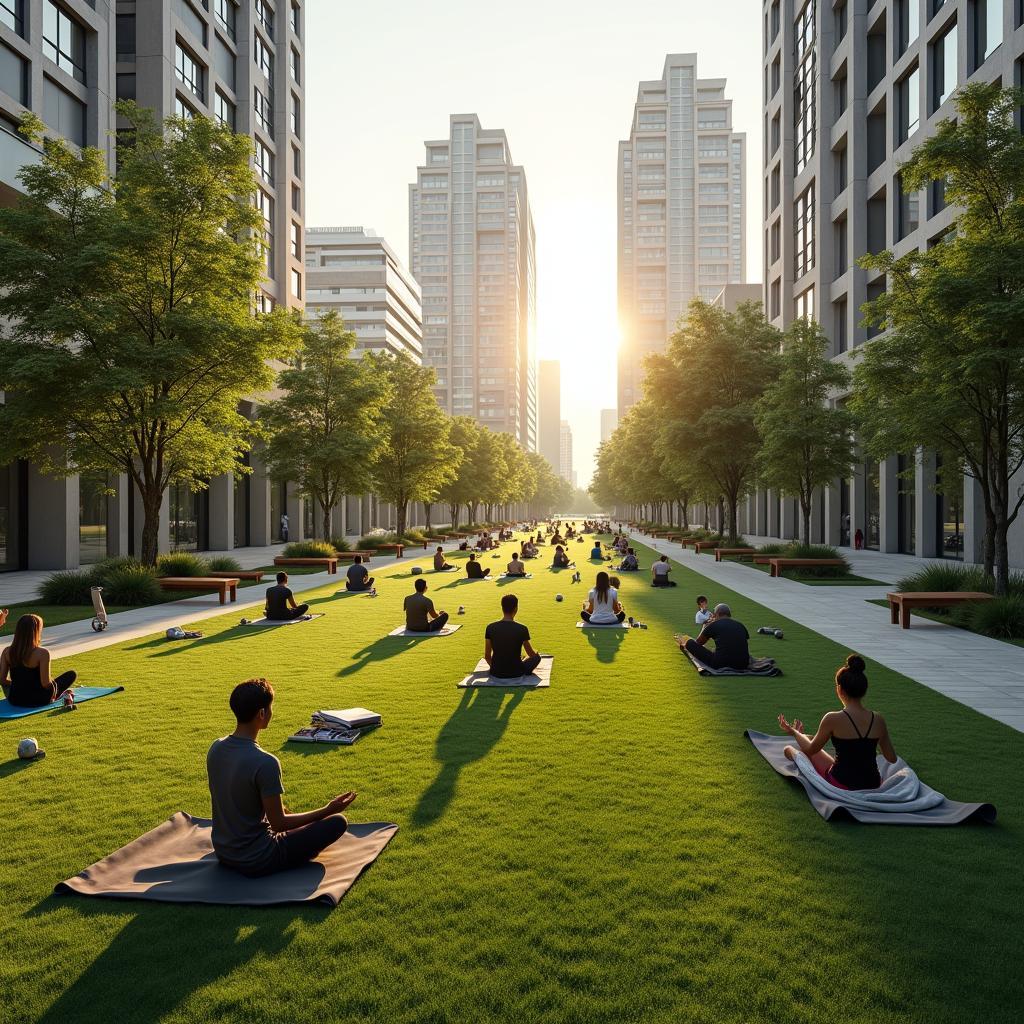 Không gian công viên xanh mát trong thành phố hiện đại với người dân thư giãn
Theme 3: Technology and Relaxation
Question 5: Has technology made it easier or harder for people to relax?
🎯 Phân tích câu hỏi:
- Dạng: Evaluate advantages vs disadvantages
- Key words: technology, easier or harder, relax
- Cách tiếp cận: Present both sides (easier aspects, harder aspects), give examples, conclude with personal view
📝 Sample Answer – Band 6-7:
“I think technology has both good and bad effects. On one hand, we can watch movies, listen to music easily, which helps us relax. On the other hand, smartphones and social media make us stressed because we always check notifications. Many people can’t sleep well because of their phones. So technology makes relaxation both easier and harder depending on how we use it.”
Phân tích:
- Structure: Presents both sides (on one hand, on the other hand)
- Vocabulary: Basic (good and bad, helps us, makes us stressed)
- Ideas: Valid points nhưng predictable, lacks depth
- Tại sao Band 6-7: Shows balanced view nhưng analysis is superficial
📝 Câu trả lời mẫu – Band 8-9:
“This is actually a fascinating paradox because technology simultaneously facilitates and impedes relaxation in different ways. On the facilitation side, technology has democratized access to relaxation resources. Take meditation apps like Headspace or Calm, for instance – they’ve made mindfulness practices accessible to millions who might never have attended a meditation class. Similarly, streaming services provide on-demand entertainment, and we can access relaxing music, nature sounds, or guided relaxation sessions at the touch of a button. For people with mobility limitations or those in remote areas, technology has been genuinely transformative in enabling relaxation opportunities.
However, the flip side is equally compelling. The very devices meant to help us relax often become sources of anxiety themselves. The constant barrage of notifications, the compulsive need to check social media, and what researchers call ‘anticipatory stress‘ – always waiting for the next ping – create a state of perpetual low-level anxiety that’s antithetical to true relaxation. There’s also the issue of ‘junk time‘ – we think we’re relaxing by scrolling through social media, but research suggests this kind of passive digital consumption doesn’t provide the psychological restoration that genuine relaxation should offer. In fact, it can leave us feeling more depleted rather than refreshed.
What’s particularly insidious is how technology has eroded boundaries. Work emails follow us home, news alerts deliver stress-inducing content 24/7, and the fear of missing out keeps us perpetually engaged. Previous generations could physically leave work behind; now it’s psychologically omnipresent.
My personal take is that technology is fundamentally a neutral tool – it’s our relationship with it that determines the outcome. Those who can exercise digital discipline – setting boundaries, using technology intentionally rather than habitually – can harness its benefits while minimizing its drawbacks. But for the majority, who haven’t developed these habits, I’d argue technology has net negative impact on their ability to truly relax.”
Phân tích:
- Structure: Exceptional organization với clear framework (facilitation → impediment → erosion of boundaries → personal conclusion), sophisticated signposting
- Vocabulary: Highly sophisticated (fascinating paradox, democratized access, antithetical to, insidious, omnipresent, harness benefits, net negative impact), precise academic language
- Grammar: Full range including passive voice, cleft sentences (What’s particularly insidious), relative clauses, gerunds as subjects, conditional implied
- Critical Thinking: Demonstrates exceptional depth với paradox recognition, uses research references (researchers call, research suggests), specific examples (meditation apps, streaming services), acknowledges complexity (it’s our relationship), provides nuanced conclusion (neutral tool but context-dependent)
💡 Key Language Features:
- Introducing paradox: fascinating paradox, simultaneously facilitates and impedes, the flip side
- Academic references: researchers call, research suggests, what’s particularly insidious
- Balanced language: On the facilitation side, However, My personal take
- Sophisticated expressions: at the touch of a button, antithetical to, perpetually engaged, harness benefits
Question 6: Do you think future generations will find new ways to relax?
🎯 Phân tích câu hỏi:
- Dạng: Speculation about future
- Key words: future generations, new ways to relax
- Cách tiếp cận: Predict possible developments, base on current trends, mention technology or social changes, acknowledge uncertainty
📝 Sample Answer – Band 6-7:
“Yes, I think so. Technology will continue to develop, so there will be new ways to relax. Maybe virtual reality will become popular for relaxation. People might also care more about mental health, so meditation and yoga will be more common. However, some traditional ways like spending time in nature will still be important because humans need nature.”
Phân tích:
- Structure: Has prediction with some reasoning
- Vocabulary: Basic (will be, become popular, care more)
- Ideas: Some future predictions nhưng lacks detail
- Tại sao Band 6-7: Makes predictions nhưng analysis is shallow, limited vocabulary range
📝 Câu trả lời mẫu – Band 8-9:
“I’d venture to say that future generations will likely develop fundamentally different approaches to relaxation, driven by both technological innovation and evolving understanding of mental health. If current trends continue, we’re probably heading toward increasingly personalized and data-driven relaxation methods. Imagine biometric wearables that monitor your stress levels in real-time and automatically adjust your environment – lighting, temperature, soundscapes – to optimize relaxation. We might see AI-powered systems that learn your stress triggers and proactively suggest personalized relaxation protocols.
Virtual and augmented reality could revolutionize how we access relaxation experiences. Rather than physically traveling to a beach or forest, people might immerse themselves in photorealistic natural environments from their homes. While this might sound somewhat dystopian to us, for future generations who grow up with this technology, it could be a legitimate and effective form of relaxation, especially if climate change continues to limit access to actual natural spaces.
On the flip side, I anticipate a counter-movement toward analog and unplugged experiences. As digital saturation increases, there might be a cultural valorization of ‘tech-free zones’ and ‘digital detoxes.’ Activities that require physical presence and human connection – things like group meditation sessions, forest bathing, or community crafting circles – might become increasingly valued as antidotes to digital overload. It’s similar to how vinyl records experienced a resurgence in the age of streaming.
What’s crucial to recognize is that the fundamental human need for rest and restoration won’t change, but the methods to achieve it will continuously evolve in response to the stressors of each era. Future generations might look back at our relaxation methods with the same bemusement that we view previous generations’ approaches. The real question isn’t so much whether they’ll find new ways – they inevitably will – but whether these new methods will be as psychologically effective as traditional approaches rooted in our evolutionary biology.”
Phân tích:
- Structure: Exceptional organization với multiple future scenarios (tech-driven → VR/AR → counter-movement → philosophical reflection)
- Vocabulary: Sophisticated future-oriented language (I’d venture to say, inevitably will, revolutionary, dystopian, valorization, bemusement, rooted in evolutionary biology)
- Grammar: Complex structures với conditionals (If current trends continue), modal verbs của speculation (might, could, would), future forms, passive constructions
- Critical Thinking: Shows exceptional depth với multiple scenarios considered, balances optimistic và pessimistic views, acknowledges uncertainty while providing reasoned speculation, references broader contexts (climate change, human evolution), uses analogy effectively (vinyl records resurgence)
💡 Key Language Features:
- Speculative language: I’d venture to say, probably heading toward, might see, could revolutionize, I anticipate
- Future forms varied: will develop, we’re heading toward, might become, won’t change, will continuously evolve
- Introducing scenarios: If current trends continue, Imagine, On the flip side
- Philosophical depth: What’s crucial to recognize, The real question, fundamental human need
Nếu bạn quan tâm đến sự phát triển của không gian văn hóa, có thể tham khảo thêm về describe an art exhibit that impressed you để hiểu thêm về các hình thức thư giãn thông qua nghệ thuật.
Từ vựng và cụm từ quan trọng
Topic-Specific Vocabulary
| Từ vựng/Cụm từ | Loại từ | Phiên âm | Nghĩa tiếng Việt | Ví dụ | Collocation |
|---|---|---|---|---|---|
| sanctuary | n | /ˈsæŋktʃueri/ | nơi trú ẩn, thánh địa | This café has become my sanctuary from the busy city life. | personal sanctuary, peaceful sanctuary, find sanctuary in |
| unwind | v | /ʌnˈwaɪnd/ | thư giãn, xả stress | I usually unwind by reading a book after work. | unwind after work, need to unwind, help someone unwind, ways to unwind |
| therapeutic | adj | /ˌθerəˈpjuːtɪk/ | có tác dụng chữa lành, trị liệu | Gardening has a therapeutic effect on my mental health. | therapeutic effect, therapeutic value, therapeutic benefits, therapeutic activity |
| tranquil | adj | /ˈtræŋkwɪl/ | yên tĩnh, thanh bình | I love the tranquil atmosphere of early morning parks. | tranquil atmosphere, tranquil environment, tranquil surroundings, tranquil setting |
| hectic | adj | /ˈhektɪk/ | hối hả, bận rộn | After a hectic week, I need complete silence. | hectic schedule, hectic lifestyle, hectic day, hectic pace |
| recharge | v | /ˌriːˈtʃɑːrdʒ/ | nạp lại năng lượng | I go to the beach to recharge my batteries. | recharge batteries, mentally recharge, need to recharge, recharge energy |
| serene | adj | /səˈriːn/ | thanh thản, tĩnh lặng | The lake looks especially serene at sunset. | serene beauty, serene environment, serene atmosphere, feel serene |
| solace | n | /ˈsɒləs/ | sự an ủi, nguồn an ủi | I find solace in music when I’m stressed. | find solace in, seek solace, source of solace, bring solace |
| decompress | v | /ˌdiːkəmˈpres/ | giải tỏa căng thẳng | I need an hour alone to decompress after meetings. | need to decompress, time to decompress, decompress from stress, help decompress |
| hustle and bustle | n phrase | /ˈhʌsəl ənd ˈbʌsəl/ | sự hối hả nhộn nhịp | I want to escape the hustle and bustle of city life. | escape the hustle and bustle, away from hustle and bustle, hustle and bustle of daily life |
| rejuvenate | v | /rɪˈdʒuːvəneɪt/ | làm trẻ lại, phục hồi sinh lực | A weekend in the mountains really rejuvenates me. | feel rejuvenated, rejuvenate mind and body, rejuvenating experience |
| ambient | adj | /ˈæmbiənt/ | xung quanh, môi trường (âm thanh, ánh sáng) | I enjoy the ambient sounds of nature. | ambient noise, ambient music, ambient lighting, ambient temperature |
| soothing | adj | /ˈsuːðɪŋ/ | dịu dàng, xoa dịu | The soothing sound of rain helps me sleep. | soothing effect, soothing music, soothing atmosphere, soothing voice |
| secluded | adj | /sɪˈkluːdɪd/ | hẻo lánh, biệt lập | I prefer secluded spots away from crowds. | secluded spot, secluded area, secluded corner, secluded beach |
| mindfulness | n | /ˈmaɪndfəlnəs/ | chánh niệm, sự tỉnh thức | I practice mindfulness meditation daily. | mindfulness meditation, practice mindfulness, mindfulness techniques, mindfulness exercises |
| restorative | adj | /rɪˈstɔːrətɪv/ | có tác dụng phục hồi | Sleep is the most restorative activity. | restorative power, restorative effect, restorative sleep, restorative experience |
| haven | n | /ˈheɪvən/ | nơi trú ẩn an toàn | My bedroom is my personal haven. | peaceful haven, safe haven, personal haven, haven of tranquility |
| immerse | v | /ɪˈmɜːrs/ | đắm mình, chìm đắm | I like to immerse myself in nature on weekends. | immerse oneself in, fully immersed, immerse in nature, immersive experience |
| cocoon | v | /kəˈkuːn/ | cuộn mình, bao bọc | Sometimes I just want to cocoon myself at home. | cocoon oneself, cocoon in comfort, cocoon away from world |
| disconnect | v | /ˌdɪskəˈnekt/ | ngắt kết nối, tách rời | I try to disconnect from technology on Sundays. | disconnect from work, need to disconnect, disconnect from stress, digitally disconnect |
Idiomatic Expressions & Advanced Phrases
| Cụm từ | Nghĩa | Ví dụ sử dụng | Band điểm |
|---|---|---|---|
| take the edge off | làm giảm bớt căng thẳng/khó chịu | A cup of tea really takes the edge off after a stressful day. | 7.5-9 |
| blow off steam | xả stress, giải tỏa | I go running to blow off steam when I’m frustrated. | 7-8 |
| switch off | tắt đầu, ngừng suy nghĩ | I find it hard to switch off from work even on weekends. | 7-8 |
| zone out | không tập trung, mơ màng (để thư giãn) | Sometimes I just zone out and watch the clouds. | 7-8 |
| at peace with | bình yên với, hòa hợp với | I feel at peace with myself when I’m near water. | 7.5-8.5 |
| clear one’s head | làm đầu óc tỉnh táo lại | A walk in the park helps me clear my head. | 7-8 |
| get away from it all | thoát khỏi mọi thứ, nghỉ ngơi hoàn toàn | I need to get away from it all and have a proper vacation. | 7-8 |
| tune out | lờ đi, không chú ý đến | I use music to tune out distractions. | 7-7.5 |
| wind down | làm dịu lại, thả lỏng (sau hoạt động căng thẳng) | I need at least an hour to wind down before bed. | 7-8 |
| mental break | nghỉ ngơi tinh thần | Taking regular mental breaks improves productivity. | 7-8 |
| be at one with nature | hòa mình với thiên nhiên | Hiking makes me feel at one with nature. | 7.5-8.5 |
| inner peace | sự bình yên nội tâm | Meditation helps me find inner peace. | 7.5-8.5 |
| sensory overload | quá tải cảm giác | City life can lead to sensory overload. | 8-9 |
| digital detox | cai nghiện công nghệ | I do a digital detox every Sunday. | 7.5-8.5 |
| restorative power | sức mạnh phục hồi | Nature has incredible restorative power. | 8-9 |
Discourse Markers (Từ Nối Ý Trong Speaking)
Để bắt đầu câu trả lời:
- 📝 Well,… – Khi cần một chút thời gian suy nghĩ, tạo sự tự nhiên
- 📝 Actually,… – Khi muốn đưa ra góc nhìn hơi khác hoặc surprising information
- 📝 To be honest,… – Khi muốn thể hiện sự thành thật, chân thực
- 📝 I’d say that… – Khi đưa ra quan điểm một cách thoughtful
- 📝 From my perspective,… – Để nhấn mạnh đây là personal view
Để bổ sung ý:
- 📝 On top of that,… – Thêm vào đó, ngoài ra
- 📝 What’s more,… – Hơn nữa, còn nữa
- 📝 Not to mention… – Chưa kể đến, không nói đến
- 📝 Beyond that,… – Ngoài điều đó ra
- 📝 Additionally,… – Thêm vào đó (formal hơn)
Để đưa ra quan điểm cân bằng:
- 📝 On the one hand,… On the other hand,… – Một mặt… mặt khác…
- 📝 While it’s true that…, we also need to consider… – Mặc dù đúng là… nhưng cũng cần xem xét…
- 📝 Having said that,… – Tuy nhiên, dù đã nói như vậy…
- 📝 That said,… – Dù vậy, tuy nhiên…
Để kết luận:
- 📝 All in all,… – Tóm lại, nói chung
- 📝 At the end of the day,… – Cuối cùng thì, xét cho cùng
- 📝 Ultimately,… – Sau cùng, về cơ bản
- 📝 In the final analysis,… – Xét về tổng thể, phân tích cuối cùng
Để đưa ra ví dụ:
- 📝 Take…for instance – Lấy… làm ví dụ
- 📝 A case in point is… – Một trường hợp điển hình là…
- 📝 To illustrate this,… – Để minh họa điều này…
Grammatical Structures Ấn Tượng
1. Conditional Sentences (Câu điều kiện):
Mixed conditional:
- Formula: If + past perfect, would + infinitive (mixing time references)
- Ví dụ: “If I hadn’t discovered this park years ago, I wouldn’t have anywhere to relax now.”
Inversion for emphasis:
- Formula: Had/Were/Should + subject + verb
- Ví dụ: “Were I to find a more peaceful place, I would certainly spend more time there.”
2. Relative Clauses (Mệnh đề quan hệ):
Non-defining relative clauses:
- Formula: , which/who/where + clause,
- Ví dụ: “My balcony garden, which I’ve cultivated over five years, has become my sanctuary.”
Reduced relative clauses:
- Ví dụ: “The park overlooking the lake is my favorite spot.” (which overlooks)
3. Passive Voice (Câu bị động):
Impersonal passive:
- It is thought/believed/said that…
- Ví dụ: “It is widely acknowledged that natural environments reduce stress levels.”
Passive with agent for emphasis:
- Ví dụ: “This space was designed by a famous landscape architect.”
4. Cleft Sentences (Câu chẻ):
What-cleft:
- What I find most… is…
- Ví dụ: “What I find most relaxing about this place is the complete absence of urban noise.”
It-cleft:
- The thing that…, is…
- Ví dụ: “The thing that makes this spot special is its seclusion from crowds.”
It is…that for emphasis:
- Ví dụ: “It is the tranquility that draws me there, not the facilities.”
5. Participle Clauses:
Present participle:
- Ví dụ: “Sitting by the lake, I can forget all my worries.” (When/While I sit…)
Past participle:
- Ví dụ: “Surrounded by greenery, I feel completely at peace.” (When/Because I am surrounded…)
6. Inversion for dramatic effect:
-
Not only… but also…
-
Ví dụ: “Not only does this place provide physical rest, but it also offers mental rejuvenation.”
-
Rarely/Seldom at beginning:
-
Ví dụ: “Rarely have I felt so relaxed as when I’m in this space.”
Những ai quan tâm đến mối liên hệ giữa ẩm thực và thư giãn có thể tham khảo thêm describe a meal you had in a restaurant recently để thấy cách một bữa ăn ngon cũng có thể là một hình thức thư giãn.
 Infographic từ vựng IELTS Speaking về chủ đề thư giãn và sức khỏe tinh thần
Chiến Lược Tổng Thể Để Đạt Band 8+
1. Chuẩn Bị Trước Khi Thi
Xây dựng Personal Story Bank:
- Chuẩn bị 5-7 địa điểm/trải nghiệm thực tế mà bạn có thể kể chi tiết
- Với mỗi địa điểm, note down: sensory details (what you see, hear, smell), emotions, specific incidents
- Practice kể cùng story theo different angles để flexible
Vocabulary Building Strategy:
- Học từ vựng theo collocations, không học từ đơn lẻ
- Tạo personal sentences với mỗi từ mới
- Record yourself using new vocabulary để check pronunciation
- Group từ vựng theo themes: environment, emotions, activities, effects
Grammar Awareness:
- Identify 5-6 complex structures bạn comfortable với
- Practice incorporating chúng naturally vào answers
- Don’t force grammar – use only what feels natural
2. Trong Phòng Thi
Part 1 Strategy:
- Extend mỗi answer thành 2-3 câu minimum
- Formula: Direct answer + Reason/Example + Extra detail/Contrast
- Show variety: không lặp lại cùng structure cho mọi câu
- Be natural: tưởng tượng bạn đang chat với friend, không phải reciting
Part 2 Strategy:
1-minute preparation:
- Jot down chỉ keywords (5-7 words total)
- Structure notes theo bullet points trên card
- Save 10 seconds để think về opening và closing sentences
2-minute monologue:
- Start strong với engaging opening
- Cover all bullet points, nhưng spend 40% time on “explain” part
- Use time markers: “A few years ago…”, “Nowadays…”, “Whenever I visit…”
- Elaborate với examples và personal feelings
- If running out: elaborate more on “explain” hoặc add future plans
Part 3 Strategy:
- Take 2-3 seconds để think trước khi answer
- Structure: Direct answer → Reason 1 + example → Reason 2 + example → Conclusion/Nuance
- Show critical thinking: “While this is generally true, we should also consider…”, “It depends on…”
- Reference broader contexts: society, research, trends, different groups
- If difficult question: “That’s an interesting question. I haven’t thought about it deeply, but I’d say…”
3. Tránh Những Lỗi Phổ Biến Của Học Viên Việt Nam
Pronunciation Issues:
- ❌ Swallowing word endings (relax → “relak”, stressed → “stres”)
- ✅ Practice pronouncing final consonants clearly
- ❌ Flat intonation, monotone
- ✅ Vary pitch, emphasize key words, use natural rhythm
Grammar Mistakes:
- ❌ Missing articles: “I go to park” → ✅ “I go to the park”
- ❌ Wrong tenses: “I go there yesterday” → ✅ “I went there yesterday”
- ❌ Subject-verb agreement: “It make me relax” → ✅ “It makes me relax”
Vocabulary Problems:
- ❌ Overusing “very”: “very good”, “very nice”, “very relaxing”
- ✅ Use stronger adjectives: “excellent”, “wonderful”, “therapeutic”
- ❌ Repetition: saying “relax” 20 times
- ✅ Paraphrase: unwind, recharge, decompress, find peace
Content Issues:
- ❌ Memorized answers that sound robotic
- ✅ Adapt templates to your real experience
- ❌ Too short answers in Part 3 (1-2 sentences)
- ✅ Elaborate với multiple points (4-6 sentences)
- ❌ Irrelevant information
- ✅ Stay on topic, address the question directly
4. Practice Recommendations
Daily Practice (15-20 minutes):
- Record yourself answering 2-3 questions
- Listen back critically
- Note: hesitations, grammar errors, vocabulary repetition
- Re-record improved version
Weekly Practice:
- Full mock test với timing
- Get feedback từ teacher hoặc study partner
- Work on specific weaknesses identified
Mindset:
- Speaking test is a conversation, not an exam
- Examiner wants you to succeed
- Small mistakes won’t ruin your score
- Confidence và fluency matter more than perfection
5. Last-Minute Tips
Day Before Test:
- Do light practice, don’t cram
- Review your personal stories
- Get good sleep
- Prepare comfortable clothes
Test Day:
- Arrive 15 minutes early
- Do warm-up: speak English to yourself
- Stay hydrated
- Smile and make eye contact với examiner
- If you don’t understand question: “Could you please rephrase that?” hoặc “I’m not quite sure I understand. Do you mean…?”
Tổng Kết
Chủ đề “Describe a place where you feel most relaxed” là một trong những đề tài vừa gần gũi vừa cho phép bạn thể hiện khả năng ngôn ngữ toàn diện. Với việc chuẩn bị kỹ lượng từ vựng phong phú, structures đa dạng, và quan trọng nhất là những câu chuyện chân thực từ kinh nghiệm bản thân, bạn hoàn toàn có thể tự tin chinh phục band điểm mục tiêu.
Key Takeaways:
✅ Authenticity wins: Nói về trải nghiệm thật của bạn, đừng fabricate stories
✅ Vocabulary range matters: Paraphrase thay vì repeat, sử dụng topic-specific words
✅ Structure clearly: Organize ideas logically, use discourse markers
✅ Elaborate adequately: Đặc biệt trong Part 2 và 3, don’t be brief
✅ Show critical thinking: Trong Part 3, analyze từ multiple perspectives
✅ Grammar naturally: Use complex structures bạn comfortable với, đừng force
✅ Practice consistently: Regular practice quan trọng hơn marathon sessions
Hãy nhớ rằng, IELTS Speaking không chỉ test English ability mà còn test communication skills. Examiner muốn thấy bạn có thể express ideas clearly, engage in meaningful discussion, và respond flexibly to different question types. Với preparation đúng cách và mindset tích cực, bạn hoàn toàn có thể đạt được band điểm mong muốn.
Chúc bạn thành công trong kỳ thi IELTS Speaking!



[…] purchasing decisions, similar to how we need to maintain balance when considering experiences like Describe a place where you feel most relaxed – it’s about authentic needs versus manufactured […]