
Mở bài
Chủ đề “Describe A Place Where You Go To Feel Inspired” là một trong những đề tài phổ biến và thú vị trong IELTS Speaking, đặc biệt ở Part 2. Đây là câu hỏi yêu cầu thí sinh mô tả một địa điểm cụ thể giúp họ cảm thấy tràn đầy cảm hứng và sáng tạo. Chủ đề này không chỉ kiểm tra khả năng miêu tả địa điểm mà còn đánh giá khả năng diễn đạt cảm xúc, suy nghĩ cá nhân và lý do đằng sau những lựa chọn đó.
Tần suất xuất hiện: Chủ đề liên quan đến “inspiration” và “places” xuất hiện với tần suất cao trong các kỳ thi IELTS từ năm 2022 đến 2024, đặc biệt trong quý 1-3/2024. Theo thống kê từ các trung tâm luyện thi và báo cáo từ thí sinh, đề tài này xuất hiện khoảng 15-20% các buổi thi Speaking. Dự đoán khả năng xuất hiện trong tương lai: Cao, vì IELTS thường ưu tiên các chủ đề liên quan đến phát triển cá nhân và wellbeing.
Những gì bạn sẽ học được:
- 10+ câu hỏi thực tế trong cả 3 Part của IELTS Speaking
- Bài mẫu chi tiết theo 3 band điểm (6-7, 7.5-8, 8.5-9) với phân tích chuyên sâu
- 25+ từ vựng và cụm từ ăn điểm kèm phiên âm và ví dụ cụ thể
- Chiến lược trả lời hiệu quả từ góc nhìn của Examiner
- Các lỗi phổ biến của học viên Việt Nam và cách khắc phục
IELTS Speaking Part 1: Introduction and Interview
Tổng Quan Về Part 1
Part 1 của IELTS Speaking kéo dài 4-5 phút với các câu hỏi ngắn về cuộc sống hàng ngày. Đây là phần “warm-up” giúp bạn làm quen với examiner và tạo ấn tượng ban đầu. Chiến lược quan trọng nhất là trả lời tự nhiên, mở rộng ý (2-3 câu) và thể hiện sự tự tin.
Lỗi thường gặp của học viên Việt Nam:
- Trả lời quá ngắn chỉ một câu (Yes/No)
- Dùng từ vựng quá đơn giản, lặp đi lặp lại
- Thiếu ví dụ cụ thể từ trải nghiệm bản thân
- Nói với giọng điệu đơn điệu, thiếu tự nhiên
Các Câu Hỏi Thường Gặp
Question 1: Do you often feel inspired in your daily life?
Question 2: What kinds of places make you feel creative?
Question 3: Where do you usually go when you need to think clearly?
Question 4: Do you prefer indoor or outdoor places for inspiration?
Question 5: How important is it to have a special place for thinking?
Question 6: What do you usually do when you feel uninspired?
Question 7: Do you think cities or countryside are more inspiring?
Question 8: Have you ever visited a place specifically to get inspiration?
Phân Tích và Gợi Ý Trả Lời Chi Tiết
Question: Do you often feel inspired in your daily life?
🎯 Cách tiếp cận:
- Trả lời trực tiếp có hay không
- Đưa ra lý do tại sao
- Thêm ví dụ cụ thể về thời điểm hoặc tình huống
📝 Sample Answer – Band 6-7:
“Yes, I do feel inspired quite often. I usually feel inspired when I see beautiful things around me, like nature or art. For example, when I go to the park near my house, I feel very relaxed and get new ideas for my work.”
Phân tích:
- Điểm mạnh: Trả lời rõ ràng, có ví dụ cụ thể về công viên
- Hạn chế: Từ vựng cơ bản (beautiful things, very relaxed), cấu trúc câu đơn giản
- Tại sao Band 6-7: Truyền đạt được ý tưởng nhưng thiếu vocabulary range và grammatical complexity
📝 Sample Answer – Band 8-9:
“Actually, I’d say I experience moments of inspiration fairly regularly. I tend to feel most creatively stimulated when I’m exposed to new environments or perspectives. Just last week, for instance, I was struck by a brilliant sunset at the beach, which sparked several ideas for a project I’ve been working on. I find that stepping out of my routine really helps fuel my imagination.”
Phân tích:
- Điểm mạnh:
- Vocabulary phong phú: “moments of inspiration”, “creatively stimulated”, “struck by”, “sparked”, “fuel my imagination”
- Cấu trúc câu phức tạp với relative clauses và present perfect
- Ví dụ cụ thể và gần đây (last week) tạo tính xác thực
- Sử dụng discourse marker “Actually” và tentative language “I’d say”, “I tend to”
- Tại sao Band 8-9:
- Fluency: Natural và flowing với discourse markers
- Vocabulary: Precise collocations (moments of inspiration, fuel imagination)
- Grammar: Mix của tenses, passive và active voice
- Content: Thoughtful với specific example
💡 Key Vocabulary & Expressions:
- moments of inspiration: khoảnh khắc cảm hứng
- creatively stimulated: được kích thích sáng tạo
- be struck by: bị ấn tượng mạnh bởi
- spark ideas: khơi gợi ý tưởng
- fuel my imagination: nuôi dưỡng trí tưởng tượng
Question: Where do you usually go when you need to think clearly?
🎯 Cách tiếp cận:
- Nêu địa điểm cụ thể
- Giải thích tại sao địa điểm đó hiệu quả
- Mô tả ngắn gọn về những gì bạn làm ở đó
📝 Sample Answer – Band 6-7:
“I usually go to a coffee shop near my home. It’s quiet and comfortable, so I can concentrate better. I like to sit by the window and drink coffee while thinking about my problems. The atmosphere helps me relax and find solutions.”
Phân tích:
- Điểm mạnh: Địa điểm cụ thể, có giải thích lý do
- Hạn chế: Từ vựng cơ bản (quiet, comfortable, relax), thiếu details
- Tại sao Band 6-7: Communicative nhưng thiếu sophistication
📝 Sample Answer – Band 8-9:
“When I need some mental clarity, I usually retreat to my local library. There’s something about the hushed atmosphere and the presence of knowledge all around me that helps me get into the right headspace. I find that being surrounded by books and other people engaged in quiet study creates a conducive environment for deep thinking. Plus, the absence of digital distractions really allows me to focus intently on whatever issue I’m grappling with.”
Phân tích:
- Điểm mạnh:
- Vocabulary tinh vi: “mental clarity”, “retreat to”, “hushed atmosphere”, “conducive environment”
- Abstract nouns: “presence of knowledge”, “absence of digital distractions”
- Phrasal verbs natural: “get into the right headspace”, “grappling with”
- Sentence variety với complex structures
- Tại sao Band 8-9:
- Fluency: Smooth với linking (“Plus”, “There’s something about”)
- Vocabulary: Precise và idiomatic expressions
- Grammar: Perfect control với relative clauses và gerunds
- Ideas: Thoughtful analysis về tại sao môi trường đó hiệu quả
💡 Key Vocabulary & Expressions:
- mental clarity: sự minh mẫn trong suy nghĩ
- retreat to: rút lui đến, tìm đến
- hushed atmosphere: bầu không khí yên tĩnh
- conducive environment: môi trường thuận lợi
- focus intently: tập trung cao độ
Question: Do you prefer indoor or outdoor places for inspiration?
🎯 Cách tiếp cận:
- Chọn một trong hai hoặc nói “it depends”
- Giải thích lý do cho sở thích
- So sánh ngắn gọn giữa hai loại nếu có thể
📝 Sample Answer – Band 6-7:
“I prefer outdoor places for inspiration. I think nature is very beautiful and it makes me feel peaceful. When I’m outside, I can breathe fresh air and see many things like trees and birds. This helps me think better than staying inside.”
Phân tích:
- Điểm mạnh: Preference rõ ràng với reasons
- Hạn chế: Vocabulary repetitive (very beautiful), ideas basic
- Tại sao Band 6-7: Adequate communication nhưng limited language range
📝 Sample Answer – Band 8-9:
“I’d say it really depends on what I’m seeking inspiration for. For creative projects that require imaginative thinking, I gravitate toward outdoor spaces – particularly natural settings like parks or coastal areas. The ever-changing scenery and sensory richness of nature tend to unlock fresh perspectives. However, when I need inspiration for more analytical tasks, I actually prefer indoor environments where I can minimize external stimuli and dive deep into focused contemplation. So I suppose I’m quite adaptable depending on the context.”
Phân tích:
- Điểm mạnh:
- Sophisticated approach: không chọn một câu trả lời đơn giản
- Vocabulary range: “gravitates toward”, “sensory richness”, “unlock fresh perspectives”, “minimize external stimuli”
- Cohesive devices: “However”, “So I suppose”
- Shows nuanced thinking với conditional logic
- Tại sao Band 8-9:
- Fluency: Natural hesitation với “I’d say”, “I suppose”
- Vocabulary: Precise collocations và topic-specific terms
- Grammar: Complex conditionals và parallel structures
- Critical thinking: Balanced view, acknowledges context dependency
💡 Key Vocabulary & Expressions:
- gravitate toward: có xu hướng, bị thu hút về phía
- ever-changing scenery: cảnh quan luôn thay đổi
- sensory richness: sự phong phú về giác quan
- unlock fresh perspectives: mở ra góc nhìn mới
- minimize external stimuli: giảm thiểu kích thích bên ngoài
- dive deep into focused contemplation: chìm sâu vào suy ngẫm tập trung
 Học viên IELTS Speaking luyện tập tại thư viện yên tĩnh với sách vở và ghi chú chuẩn bị cho bài thi nói
IELTS Speaking Part 2: Long Turn (Cue Card)
Tổng Quan Về Part 2
Part 2 là phần độc thoại kéo dài 2-3 phút, trong đó bạn có 1 phút chuẩn bị. Đây là phần quan trọng nhất để thể hiện khả năng nói liên tục và sử dụng ngôn ngữ phong phú.
Chiến lược quan trọng:
- Sử dụng hết 1 phút để ghi chú keywords, không viết câu hoàn chỉnh
- Nói đủ 2 phút (tối thiểu 1.5 phút) để tránh bị penalize
- Trả lời đầy đủ tất cả bullet points theo thứ tự
- Sử dụng thì quá khứ khi kể về trải nghiệm cụ thể
- Mở rộng phần “explain” vì đây là phần ghi điểm cao nhất
Lỗi thường gặp:
- Không sử dụng hết thời gian chuẩn bị, ghi quá nhiều hoặc quá ít
- Nói dưới 1.5 phút hoặc dừng đột ngột
- Bỏ sót bullet points hoặc không giải thích đầy đủ
- Lạc đề sang chủ đề khác
- Sử dụng sai thì (nói về quá khứ nhưng dùng hiện tại)
Cue Card
Describe a place where you go to feel inspired
You should say:
- Where this place is
- How often you go there
- What you do when you are there
- And explain why this place inspires you
Phân Tích Đề Bài
- Dạng câu hỏi: Describe a place (địa điểm cụ thể)
- Thì động từ: Hiện tại (vì đây là thói quen) nhưng có thể dùng quá khứ khi kể lần đầu tiên đến
- Bullet points phải cover:
- Location và characteristics của địa điểm
- Frequency – bạn đến đó thường xuyên như thế nào
- Activities – những gì bạn làm ở đó
- Explanation – lý do tại sao nó inspiring (phần quan trọng nhất)
- Câu “explain” quan trọng: Đây là phần ghi điểm cao nhất. Bạn cần giải thích cảm xúc, tác động của địa điểm lên bạn, không chỉ mô tả vật lý. Nên dành 40-50% thời gian cho phần này.
📝 Sample Answer – Band 6-7
Thời lượng: Khoảng 1.5-2 phút
“I’d like to talk about a coffee shop near my university where I often go to feel inspired. It’s called The Book Cafe and it’s located on Nguyen Hue Street in the city center.
I go there quite often, maybe two or three times a week, especially when I have free time between classes or on weekends. It’s a convenient place for me because it’s not far from my school, just about a ten-minute walk.
When I’m there, I usually order a cappuccino and sit at my favorite spot by the window. I like to bring my laptop or notebook and work on my assignments. Sometimes I just read books or listen to music. The cafe has a big bookshelf with many interesting books, so I can also browse through them. I also enjoy people-watching from the window, which helps me relax.
This place inspires me for several reasons. First, the atmosphere is very calm and peaceful. The interior design is simple but cozy, with warm lighting and comfortable chairs. There’s also soft background music that helps me concentrate. Second, I feel motivated when I see other customers working hard on their laptops or reading books. It creates a productive environment. Finally, the smell of fresh coffee and the friendly staff always put me in a good mood. When I feel stressed or lack of ideas, I know I can go there and somehow I always feel better and more creative. It’s like my personal sanctuary where I can escape from the busy life and find new inspiration for my studies and future plans.”
Phân Tích Band Điểm
| Tiêu chí | Band | Nhận xét |
|---|---|---|
| Fluency & Coherence | 6-7 | Nói liên tục được, có sequencing (First, Second, Finally) nhưng còn một vài hesitations. Linking words cơ bản. |
| Lexical Resource | 6-7 | Vocabulary adequate với “people-watching”, “productive environment”, “personal sanctuary” nhưng còn lặp lại từ (very calm, very peaceful). |
| Grammatical Range & Accuracy | 6-7 | Mix được simple và complex sentences. Có relative clauses cơ bản. Một số lỗi nhỏ (“lack of ideas” nên là “lacking ideas”). |
| Pronunciation | 6-7 | Clear và understandable, nhưng có thể chưa hoàn toàn natural về intonation. |
Điểm mạnh:
- ✅ Trả lời đầy đủ tất cả bullet points theo thứ tự
- ✅ Có examples cụ thể (location, activities)
- ✅ Thời lượng đủ khoảng 1.5-2 phút
- ✅ Structure rõ ràng với signposting language
Hạn chế:
- ⚠️ Vocabulary chưa sophisticated, còn dùng từ basic (very, good, interesting)
- ⚠️ Thiếu idiomatic expressions và advanced phrases
- ⚠️ Explanation chưa đủ sâu về emotional impact
📝 Sample Answer – Band 7.5-8
Thời lượng: Khoảng 2-2.5 phút
“I’d like to tell you about a place that never fails to spark my creativity – it’s a botanical garden called Thao Cam Vien, located in the heart of Ho Chi Minh City.
In terms of frequency, I try to visit at least once or twice a month, typically on Saturday mornings when it’s less crowded and the air is refreshingly crisp. I’ve been a regular visitor for about three years now, ever since I discovered it while looking for a peaceful retreat from the urban chaos.
What I usually do there varies depending on my mood. Sometimes I simply wander through the winding pathways, observing the diverse flora and fauna. I’m particularly drawn to the lotus pond area, where I often sit on a bench and jot down ideas in my journal. Other times, I bring my camera and engage in photography, capturing the intricate details of flowers or the play of sunlight through the leaves. I’ve also developed a habit of sketching the landscape, which I find incredibly meditative.
As for why this place inspires me, there are multiple layers to it. On a sensory level, the garden stimulates all my senses – the vibrant colors of tropical flowers, the gentle rustling of leaves, the earthy scent after rain, and the melodious birdsong. This sensory immersion somehow quiets my mental chatter and allows fresh ideas to bubble up to the surface.
Moreover, there’s something profoundly humbling about being surrounded by nature’s beauty. It puts my problems into perspective and reminds me that creativity isn’t about forcing ideas but rather creating space for them to emerge naturally. The garden also changes with the seasons, so each visit offers something new – a different flowering tree, a migrating bird species, or shifting light patterns. This constant transformation mirrors the creative process itself, which is never static but always evolving.
I think what makes this place truly special is that it serves as a bridge between my inner and outer worlds. It’s where I can disconnect from digital distractions and reconnect with my authentic self. Whenever I leave, I feel mentally refreshed and creatively recharged, ready to tackle whatever project I’m working on with renewed vigor.”
Phân Tích Band Điểm
| Tiêu chí | Band | Nhận xét |
|---|---|---|
| Fluency & Coherence | 7.5-8 | Very fluent với minimal hesitation, excellent cohesive devices (Moreover, In terms of, As for), logical development. |
| Lexical Resource | 7.5-8 | Wide range với less common vocabulary (“spark creativity”, “sensory immersion”, “bubble up”), good collocations (“winding pathways”, “intricate details”). |
| Grammatical Range & Accuracy | 7.5-8 | Mix phức tạp của structures: relative clauses, participle clauses, conditionals. Minimal errors. |
| Pronunciation | 7.5-8 | Clear và natural với good stress và intonation patterns. |
So Sánh Với Band 6-7
| Khía cạnh | Band 6-7 | Band 7.5-8 |
|---|---|---|
| Vocabulary | “calm and peaceful”, “feel better” | “refreshingly crisp”, “mentally refreshed”, “creatively recharged” |
| Grammar | Simple + some complex sentences | Sophisticated structures với participle và relative clauses |
| Ideas | Surface level (atmosphere, other people working) | Deeper analysis (sensory immersion, transformation mirrors creative process) |
| Coherence | Basic linking (First, Second, Finally) | Advanced discourse markers (Moreover, In terms of, As for) |
 Vườn Thảo Cầm Viên Sài Gòn yên bình với ao sen và lối đi uốn lúng giữa cây xanh tạo cảm hứng cho thí sinh IELTS
📝 Sample Answer – Band 8.5-9
Thời lượng: 2.5-3 phút đầy đủ
“I’d like to describe a rather unconventional source of inspiration for me – the rooftop terrace of an old apartment building in District 1, which has essentially become my creative sanctuary over the past few years.
To give you some context, this isn’t a commercially developed space or anything particularly polished – it’s actually quite raw and unadorned, which is precisely what draws me to it. It’s perched atop a 1960s building that retains much of its original character, complete with weathered concrete and vintage ceramic tiles. I stumbled upon it almost serendipitously when visiting a friend who lives on the top floor, and I’ve been a devoted regular ever since, making the trip there at least weekly, sometimes more frequently when I’m grappling with a creative block.
When I’m up there, my routine has evolved into something of a personal ritual. I typically arrive during the golden hour – that magical time when the sun is on the cusp of setting and the city is bathed in warm, amber light. I’ll sit on the worn ledge and simply observe the urban tapestry unfold below: the chaotic symphony of motorbikes, the interplay of old and new architecture, street vendors setting up their evening stalls. Sometimes I bring a sketchbook and capture fleeting moments, other times I just sit in contemplative silence, letting my mind wander freely without any particular agenda.
Now, explaining why this place is so profoundly inspiring requires delving into what I believe inspiration actually is. For me, it’s not about being in conventionally beautiful surroundings – though beauty certainly helps – but rather about finding spaces that facilitate a particular state of consciousness where ideas can percolate and crystallize. This rooftop does exactly that through several mechanisms.
Firstly, there’s the juxtaposition of chaos and calm. Below me is the relentless pulse of Saigon street life, yet up there, I’m suspended above it all, simultaneously part of and apart from the urban energy. This dual perspective is incredibly valuable – it allows me to feel connected to the vibrant life force of the city while maintaining the psychological distance necessary for reflection. It’s like having a bird’s-eye view not just physically but mentally.
Secondly, the unrefined aesthetics of the space resonate with me on a deeper level. In a world increasingly dominated by curated, Instagram-perfect environments, there’s something refreshingly authentic about this neglected rooftop. The peeling paint and weathered surfaces tell stories of decades of monsoons and scorching heat. They remind me that beauty can be found in imperfection and patina, which liberates me from the tyranny of perfectionism that often stifles creative expression.
Moreover, the temporal dimension is fascinating. At dusk, I’m witnessing a daily transformation – the city shifts from its work mode to its evening persona, lights begin to twinkle like earthbound stars, and the temperature mellows into something more forgiving. This witnessing of transition somehow mirrors the creative process itself, which is fundamentally about transformation – taking raw material and transmuting it into something new.
Perhaps most importantly, this place serves as a counterbalance to our hyper-connected digital existence. Up there, I deliberately disconnect – no Wi-Fi, minimal distractions, just me and the unfiltered reality of urban life. This digital detox, even if brief, allows my mind to shift into a different gear, one where deeper, more original thoughts can emerge rather than just recycling information I’ve recently consumed online.
I suppose what makes it truly special is that it’s become synonymous with possibility in my mind. Whenever I climb those stairs, there’s a Pavlovian response – my mind begins to open up and loosen, knowing that this is my time for unfettered thinking. It’s where some of my best ideas for projects have germinated, where problems that seemed intractable suddenly reveal potential solutions, and where I’ve gained clarity on decisions I’d been agonizing over. In essence, it’s not just a place of inspiration but a catalyst for personal transformation.”
Phân Tích Band Điểm
| Tiêu chí | Band | Nhận xét |
|---|---|---|
| Fluency & Coherence | 8.5-9 | Exceptionally fluent, effortless delivery, sophisticated discourse markers, perfectly developed ideas với logical progression. |
| Lexical Resource | 8.5-9 | Extensive và precise vocabulary, natural collocations (“on the cusp of”, “urban tapestry”, “tyranny of perfectionism”), idiomatic usage, paraphrasing skills excellent. |
| Grammatical Range & Accuracy | 8.5-9 | Full range của structures sử dụng naturally và accurately: conditionals, participles, complex relative clauses, inversion, cleft sentences. |
| Pronunciation | 8.5-9 | Native-like delivery với excellent stress, intonation, và rhythm. |
Tại Sao Bài Này Xuất Sắc
🎯 Fluency Hoàn Hảo:
- Không có hesitation, ideas flow naturally và logically
- Sophisticated discourse markers: “To give you some context”, “Now, explaining why…”, “Perhaps most importantly”
- Self-correction và elaboration mang tính tự nhiên
📚 Vocabulary Tinh Vi:
- Idiomatic expressions: “grappling with a creative block”, “on the cusp of setting”, “tyranny of perfectionism”
- Precise collocations: “weathered concrete”, “chaotic symphony”, “unfiltered reality”, “Pavlovian response”
- Abstract nouns: “juxtaposition”, “patina”, “temporal dimension”, “catalyst”
- Sophisticated verbs: “percolate”, “crystallize”, “resonate”, “transmute”, “germinate”
📝 Grammar Đa Dạng:
- Participle clauses: “being in conventionally beautiful surroundings”, “witnessing a transformation”
- Complex relative clauses: “which is precisely what draws me to it”
- Cleft sentences: “It’s not about being… but rather about finding…”
- Inversion: “Below me is the relentless pulse of Saigon”
- Conditional structures: “even if brief, allows my mind to…”
💡 Ideas Sâu Sắc:
- Không chỉ mô tả surface level mà phân tích deeply về mechanisms of inspiration
- Demonstrates philosophical understanding: “inspiration isn’t about beauty but about facilitating consciousness”
- Makes sophisticated connections: rooftop transformation mirrors creative process
- Shows self-awareness và metacognition về creative process
- Acknowledges complexity và multiple dimensions
Tương tự như describe a building you admire for its architecture, bài trả lời này thể hiện khả năng mô tả không gian vật lý kết hợp với phân tích cảm xúc và ý nghĩa sâu xa, điều mà examiner đánh giá cao ở band điểm 8.5-9.
Follow-up Questions (Rounding Off Questions)
Examiner có thể hỏi thêm 1-2 câu ngắn sau Part 2:
Question 1: How long have you been going to this place?
Band 6-7 Answer:
“I’ve been going there for about three years now. I started visiting when I was looking for a quiet place to study.”
Band 8-9 Answer:
“I’d say it’s been roughly three years since I first stumbled upon this place, and it’s progressively become more integral to my creative routine. What started as occasional visits has evolved into a weekly pilgrimage of sorts.”
Question 2: Do you think you’ll continue going there in the future?
Band 6-7 Answer:
“Yes, I think so. I really like this place and it helps me a lot with my work, so I plan to keep visiting it.”
Band 8-9 Answer:
“Absolutely. I can’t imagine relinquishing this ritual anytime soon. In fact, I suspect that as my life becomes increasingly hectic, this place will become even more indispensable as a refuge for reflection and creative regeneration.”
IELTS Speaking Part 3: Two-way Discussion
Tổng Quan Về Part 3
Part 3 kéo dài 4-5 phút với các câu hỏi trừu tượng và sâu sắc hơn, yêu cầu thí sinh phân tích, so sánh và đưa ra quan điểm về các vấn đề xã hội rộng hơn liên quan đến chủ đề Part 2.
Yêu cầu:
- Phân tích cause-effect, compare-contrast, problem-solution
- Đưa ra quan điểm cá nhân có lý lẽ chặt chẽ
- Xem xét nhiều góc độ của vấn đề (not black and white)
- Sử dụng examples từ society, không chỉ personal experience
Chiến lược:
- Mở rộng câu trả lời (4-6 câu tối thiểu)
- Sử dụng discourse markers (Well, Actually, From my perspective…)
- Structure: Direct answer → Reason 1 + example → Reason 2 + example → Conclusion/Nuance
- Thừa nhận complexity: “It’s not straightforward”, “There are multiple factors”
Lỗi thường gặp của học viên Việt Nam:
- Trả lời quá ngắn (1-2 câu), thiếu elaboration
- Không đưa ra lý lẽ rõ ràng hoặc examples
- Thiếu từ vựng trừu tượng để discuss social issues
- Không acknowledge different perspectives
- Sử dụng quá nhiều personal examples thay vì societal analysis
Các Câu Hỏi Thảo Luận Sâu
Theme 1: Environment and Inspiration
Question 1: Why do you think different people feel inspired in different places?
🎯 Phân tích câu hỏi:
- Dạng: Cause-Effect (Why) + Opinion
- Key words: “different people”, “different places” – cần acknowledge diversity
- Cách tiếp cận: Explain factors that influence preferences (personality, background, needs)
📝 Sample Answer – Band 6-7:
“I think people feel inspired in different places because everyone is different. Some people like quiet places like libraries, while others prefer busy places like cafes. It also depends on their personality – introverted people might like nature more, and extroverted people might like cities. Their past experiences also play a role in what they find inspiring.”
Phân tích:
- Structure: Direct answer với basic reasons (personality, experiences)
- Vocabulary: Simple vocabulary (quiet, busy, like)
- Tại sao Band 6-7: Communicates ideas nhưng lacks depth và sophisticated language
📝 Câu trả lời mẫu – Band 8-9:
“Well, I think this really boils down to the fundamental differences in how individuals process information and derive meaning from their surroundings. On a psychological level, we know that people have varying sensory preferences – some are more visually oriented, finding inspiration in aesthetically pleasing environments, while others are more auditorily or kinesthetically inclined, responding better to sounds or physical spaces that allow movement.
Beyond sensory preferences, there’s also the factor of personal history and associations. Someone who grew up near the ocean might feel a deep-seated connection to coastal environments, whereas someone raised in a bustling city might thrive on urban energy. These formative experiences essentially hard-wire certain associations in our brains between particular settings and emotional states.
Additionally, I’d argue that different creative tasks demand different types of environments. Analytical work requiring intense concentration might necessitate quiet, distraction-free zones, whereas brainstorming or divergent thinking might actually benefit from the stimulating chaos of busy public spaces. So it’s not just about the person but about the interplay between individual needs and the specific cognitive demands of what they’re trying to accomplish.
To some extent, I also think our cultural conditioning plays a role. In some cultures, solitude and contemplation are highly valued for creative pursuits, while others emphasize collaborative, social environments as catalysts for innovation. This sociocultural dimension shouldn’t be overlooked when we consider why inspiration is such a subjectively experienced phenomenon.”
Phân tích:
- Structure: Well-organized với multiple layers: psychological → personal history → task demands → cultural factors. Clear progression với discourse markers.
- Vocabulary: Sophisticated và precise: “boils down to”, “derive meaning”, “hard-wire associations”, “interplay between”, “cognitive demands”, “sociocultural dimension”
- Grammar: Complex structures: relative clauses (“someone who grew up”), conditionals (implied), parallelism (“visually oriented…auditorily inclined”)
- Critical Thinking: Shows nuanced understanding với multiple perspectives, acknowledges complexity (“To some extent”, “not just about…but about”)
💡 Key Language Features:
- Discourse markers: “Well”, “Beyond”, “Additionally”, “To some extent”
- Tentative language: “I think”, “I’d argue”, “might”, “To some extent”
- Abstract nouns: “sensory preferences”, “personal history”, “cognitive demands”, “cultural conditioning”, “sociocultural dimension”
- Academic phrases: “boils down to”, “on a psychological level”, “formative experiences”, “the interplay between”
Question 2: Do you think modern technology helps or hinders people’s ability to find inspiration?
🎯 Phân tích câu hỏi:
- Dạng: Opinion (helps vs. hinders) + Evaluation
- Key words: “modern technology”, “helps or hinders” – cần balanced view
- Cách tiếp cận: Acknowledge both sides, then give nuanced conclusion
📝 Sample Answer – Band 6-7:
“I think technology has both good and bad effects on inspiration. On the good side, we can use the internet to find information and see creative works from around the world. This gives us many ideas. However, technology can also distract us with social media and notifications. People spend too much time on their phones and don’t have time to think deeply. So I believe it depends on how we use technology.”
Phân tích:
- Structure: Both sides presented nhưng quite basic
- Vocabulary: Simple (good side, bad effects, too much time)
- Tại sao Band 6-7: Clear position nhưng lacks sophisticated analysis
📝 Câu trả lời mẫu – Band 8-9:
“This is quite a nuanced question because technology’s impact on inspiration is decidedly double-edged. On the one hand, we’re living in an unprecedented era of accessible creativity and cross-pollination of ideas. Platforms like Pinterest, Instagram, and YouTube have essentially democratized access to diverse sources of inspiration – a graphic designer in Hanoi can instantly draw upon visual influences from Tokyo, São Paulo, or Copenhagen. This global exchange was simply unthinkable a few decades ago, and it’s undeniably enriched our creative palette.
That said, there’s a darker side that we can’t ignore. The same technologies that grant us access also fragment our attention and diminish our capacity for the kind of sustained, deep focus that true creativity often demands. We’ve essentially trained ourselves to expect constant stimulation and immediate gratification, which is antithetical to the sometimes slow, meandering process of creative inspiration. There’s also the issue of homogenization – when everyone’s consuming the same viral content and trending aesthetics, there’s a risk of creative convergence rather than divergence.
Moreover, I think we’re grappling with what I’d call ‘inspiration fatigue’. We’re so bombarded with images, ideas, and information that it becomes overwhelming rather than enabling. It’s like trying to drink from a fire hose – the sheer volume can actually paralyze rather than inspire.
In my view, technology itself is neutral – it’s a tool. The question is whether we can develop the digital literacy and self-discipline to harness its benefits while mitigating its drawbacks. Those who can curate their digital consumption purposefully, who can toggle between connected and disconnected states, are likely to find technology a powerful ally in their creative endeavors. But for those who succumb to its addictive qualities, it probably does more harm than good to their inspirational wellspring.”
Phân tích:
- Structure: Sophisticated balanced argument: Benefits → Drawbacks → Deeper issues → Nuanced conclusion. Shows critical thinking.
- Vocabulary: Extensive range: “double-edged”, “democratized access”, “cross-pollination”, “antithetical to”, “homogenization”, “grappling with”, “inspiration fatigue”
- Grammar: Complex structures: conditionals (“Those who can…are likely to”), relative clauses, parallelism (“who can toggle…who can curate”)
- Critical Thinking: Multiple layers of analysis (access vs. attention, homogenization, inspiration fatigue), balanced perspective, acknowledges complexity
💡 Key Language Features:
- Discourse markers: “On the one hand”, “That said”, “Moreover”, “In my view”
- Tentative language: “quite a nuanced question”, “I think”, “probably”
- Abstract nouns: “cross-pollination”, “democratization”, “homogenization”, “digital literacy”, “inspirational wellspring”
- Metaphors: “drink from a fire hose”, “darker side”, “creative palette”
Đối với những ai quan tâm đến describe a famous social media influencer in your country, việc hiểu về tác động của công nghệ lên sáng tạo cũng giúp bạn phân tích sâu sắc hơn về vai trò của các influencer trong việc truyền cảm hứng cho cộng đồng.
Theme 2: Creativity and Society
Question 3: Why do you think some people are naturally more creative than others?
🎯 Phân tích câu hỏi:
- Dạng: Cause-Effect (Why) về individual differences
- Key words: “naturally”, “more creative” – nature vs. nurture debate
- Cách tiếp cận: Discuss multiple factors (genetics, environment, education, mindset)
📝 Sample Answer – Band 6-7:
“I believe creativity comes from both nature and environment. Some people are born with creative talents – they have natural abilities in art or music. But environment is also important. If parents encourage children to be creative and schools teach creative subjects, children can develop their creativity. Also, creative people usually have open minds and are willing to try new things.”
Phân tích:
- Structure: Nature + nurture mentioned but not deeply explored
- Vocabulary: Basic (natural abilities, open minds, try new things)
- Tại sao Band 6-7: Adequate coverage but lacks sophisticated analysis
📝 Câu trả lời mẫu – Band 8-9:
“Well, this taps into the age-old nature versus nurture debate, and honestly, I think the answer lies in a complex interplay of both factors rather than one being deterministic.
From a neurological standpoint, there’s evidence that certain individuals may have brain structures or neural pathways that predispose them to divergent thinking – the kind of thinking that generates multiple solutions to a problem. Some research suggests that connectivity between different brain regions, particularly those involved in memory, imagination, and cognitive control, varies among individuals and may correlate with creative capacity. So there’s likely a genetic component that gives some people a natural inclination toward creativity.
However, I’d argue that innate potential is only part of the equation. Environmental factors are equally, if not more, crucial. Children raised in intellectually stimulating environments where curiosity is encouraged, where they’re exposed to diverse experiences, and where failure is framed as a learning opportunity rather than something to avoid – these children are far more likely to develop robust creative capacities regardless of their initial genetic endowment.
There’s also the psychological dimension of mindset and motivation. Carol Dweck’s research on growth mindset versus fixed mindset is particularly relevant here. People who believe creativity can be developed through effort and practice tend to persist in creative endeavors and ultimately become more creative than those who see it as a fixed trait you either have or don’t have. So self-belief and resilience in the face of creative challenges are critical factors.
Additionally, I think we shouldn’t underestimate the role of deliberate practice and domain-specific knowledge. While there’s this romantic notion of creativity as spontaneous genius, most truly creative work actually emerges from deep expertise in a field. The more you know about something, the more novel connections you can make. So what might appear to be natural creativity is often the result of years of dedicated learning and practice.
At the end of the day, I suspect truly creative individuals are those fortunate enough to have some neurological advantages, who were nurtured in supportive environments, who cultivated a growth mindset, and who put in the necessary work to master their craft. It’s this confluence of factors rather than any single element that distinguishes the highly creative from the less so.”
Phân tích:
- Structure: Multi-layered analysis: Neurological → Environmental → Psychological → Skill development → Synthesis. Exceptionally well-developed.
- Vocabulary: Sophisticated và precise: “taps into”, “neurological standpoint”, “predispose”, “divergent thinking”, “innate potential”, “robust creative capacities”, “confluence of factors”
- Grammar: Full range: relative clauses, participle clauses, conditionals, passive voice, complex noun phrases
- Critical Thinking: Shows deep understanding, references research (Carol Dweck), acknowledges complexity, synthesizes multiple perspectives into coherent conclusion
💡 Key Language Features:
- Discourse markers: “From a neurological standpoint”, “However”, “Additionally”, “At the end of the day”
- Tentative language: “honestly, I think”, “likely”, “may”, “I’d argue”, “I suspect”
- Abstract nouns: “interplay”, “neurological standpoint”, “genetic component”, “psychological dimension”, “deliberate practice”, “confluence”
- Academic vocabulary: “predispose”, “correlate with”, “endowment”, “domain-specific knowledge”
 Học viên IELTS tự tin thảo luận Part 3 với examiner trong phòng thi với biểu đạt chuyên nghiệp và thoải mái
Question 4: How can educational institutions better foster creativity in students?
🎯 Phân tích câu hỏi:
- Dạng: Problem-Solution / Suggestion
- Key words: “educational institutions”, “foster creativity” – systemic approach
- Cách tiếp cận: Identify current problems → Suggest multiple solutions → Consider challenges
📝 Sample Answer – Band 6-7:
“Schools should change their teaching methods to help students be more creative. First, they should not focus only on tests and grades. Teachers should give students more projects where they can use their imagination. Also, schools should have more art and music classes. They should create spaces where students can work together and share ideas. Finally, teachers should not punish students for making mistakes but encourage them to learn from mistakes.”
Phân tích:
- Structure: Lists several suggestions but quite straightforward
- Vocabulary: Adequate (teaching methods, use imagination, work together)
- Tại sao Band 6-7: Clear ideas but lacks sophisticated discussion of implementation
📝 Câu trả lời mẫu – Band 8-9:
“This is a critical question, especially given how many educational systems, including Vietnam’s, are still heavily weighted toward rote memorization and standardized testing – approaches that tend to stifle rather than stimulate creativity.
Fundamentally, I think institutions need to shift from a content-delivery model to a facilitation model of education. Rather than teachers being founts of knowledge that students passively absorb, educators should position themselves as guides who scaffold creative exploration. This means restructuring curricula to include more open-ended projects, problem-based learning, and interdisciplinary approaches that mirror real-world complexity rather than the artificial compartmentalization of traditional subjects.
More specifically, schools should carve out protected time for what I’d call ‘creative inquiry’ – periods where students can pursue self-directed projects that intrinsically interest them, without the pressure of grades or rigid learning outcomes. Google’s famous 20% time policy, where employees can spend a fifth of their time on personal projects, could be adapted to educational contexts. This autonomy is crucial because creativity often flourishes when people have agency over their own learning.
The physical and cultural environment also matters enormously. We need to move away from the traditional classroom setup of rows of desks facing forward toward more flexible, collaborative spaces – maker spaces, design studios, breakout areas where students can tinker, prototype, and iterate. But beyond physical space, there needs to be a cultural shift toward normalizing failure as part of the creative process. Students should feel psychologically safe to take intellectual risks without fear of punitive assessment.
Teacher training is another crucial lever. Many educators themselves were products of traditional systems and may lack the tools or confidence to facilitate creative learning. Professional development should focus on pedagogical approaches like design thinking, inquiry-based learning, and assessment methods that value process over product, depth over breadth.
That said, I’m realistic about the challenges of implementing these changes. There’s often resistance from stakeholders who worry that de-emphasizing standardized metrics will compromise academic rigor or college readiness. There are also resource constraints – creative education often requires smaller class sizes and more materials. Navigating these challenges requires sustained commitment from policymakers, administrators, and the broader community to prioritize long-term creative capacity over short-term test scores.”
Phân tích:
- Structure: Exceptionally sophisticated: Identify problem → Fundamental shift needed → Specific strategies (curriculum, time, environment, teacher training) → Acknowledge challenges. Shows comprehensive thinking.
- Vocabulary: Extensive range: “heavily weighted toward”, “stifle”, “facilitation model”, “scaffold creative exploration”, “carve out protected time”, “flourishes”, “normalizing failure”, “punitive assessment”, “pedagogical approaches”
- Grammar: Full control: complex conditionals, relative clauses, participle phrases, passive constructions, parallelism
- Critical Thinking: Multi-dimensional analysis, references real-world examples (Google’s 20% time), acknowledges practical challenges, balances idealism with realism
💡 Key Language Features:
- Discourse markers: “Fundamentally”, “More specifically”, “That said”
- Tentative language: “I think”, “I’d call”, “often”, “may lack”
- Abstract nouns: “autonomy”, “agency”, “cultural shift”, “psychological safety”, “pedagogical approaches”, “sustained commitment”
- Sophisticated verbs: “stifle”, “scaffold”, “carve out”, “flourishes”, “navigating”
Theme 3: Cultural Perspectives on Inspiration
Question 5: Do you think the concept of inspiration differs across cultures?
🎯 Phân tích câu hỏi:
- Dạng: Opinion + Cultural Comparison
- Key words: “concept of inspiration”, “differs across cultures” – need cultural sensitivity
- Cách tiếp cận: Acknowledge universal aspects → Highlight cultural differences → Give examples
📝 Sample Answer – Band 6-7:
“Yes, I think different cultures have different ideas about inspiration. In Western countries, people often think inspiration comes from individual talent and personal experiences. But in Asian cultures, inspiration might come more from tradition and learning from masters. For example, Vietnamese artists often get inspiration from our history and culture. Also, the way people express creativity is different – some cultures value innovation while others value preserving tradition.”
Phân tích:
- Structure: Comparison between Western and Asian cultures with examples
- Vocabulary: Adequate (individual talent, tradition, innovation)
- Tại sao Band 6-7: Makes valid cultural comparisons but lacks depth
📝 Câu trả lời mẫu – Band 8-9:
“Absolutely, and I think this is a fascinating area where we can see how deeply culture shapes not just what inspires us, but our entire conceptual framework around creativity and inspiration itself.
In broadly individualistic cultures, particularly in North America and parts of Europe, there’s a strong tendency to romanticize the idea of the solitary genius – the individual who draws inspiration from within and creates ex nihilo, from nothing. Think of the archetypal image of the tortured artist working alone in their studio, or the Silicon Valley entrepreneur having an epiphany in their garage. This cultural narrative emphasizes personal originality, breaking from tradition, and individual intellectual property.
Contrast this with many East Asian cultures, where inspiration is often conceived of more communally and as emerging from deep engagement with tradition. In classical Japanese aesthetics, for instance, there’s the concept of ‘shuhari’ – a learning progression where you first faithfully imitate masters (shu), then innovate within the form (ha), and finally transcend it (ri). Inspiration here isn’t about rejecting the past but about building upon and reinterpreting it. The emphasis is on refinement and mastery rather than radical originality.
Indigenous cultures often have entirely different paradigms. Many see inspiration not as a personal attribute but as something that flows from connection to land, ancestors, and community. Creation stories and collaborative artistic practices reflect a view that creativity is collective rather than individual, and that inspiration is mediated through spiritual and communal relationships rather than purely internal cognitive processes.
Even the physical manifestation of seeking inspiration differs culturally. Western practices might emphasize personal space and solitude – the writer’s cabin in the woods. Meanwhile, in many Mediterranean and Latin American cultures, social interaction and communal spaces like plazas or cafes are seen as fertile ground for creative inspiration. The very idea that one needs to be alone to be creative might seem perplexing in cultures where collective energy is valued.
I think these differences stem from deeper cultural values around individualism versus collectivism, attitudes toward tradition and authority, and philosophical beliefs about the nature of self and creativity. What’s important is recognizing that no single model is superior – they’re simply different cultural adaptations that have proven effective in their respective contexts. In our increasingly globalized world, there’s actually tremendous value in drawing from multiple cultural conceptions of inspiration to enrich our own creative practices.”
Phân tích:
- Structure: Masterful organization: Universal observation → Individualistic cultures → Collectivist cultures → Indigenous perspectives → Physical manifestations → Philosophical roots → Synthesis. Shows exceptional depth.
- Vocabulary: Sophisticated và nuanced: “romanticize”, “ex nihilo”, “archetypal image”, “cultural narrative”, “communally conceived”, “paradigms”, “mediated through”, “fertile ground”, “cultural adaptations”
- Grammar: Full range expertly deployed: complex noun phrases, relative clauses, participle constructions, conditionals, passive voice
- Critical Thinking: Multi-cultural perspective, specific cultural references (shuhari), acknowledges complexity, avoids cultural superiority, synthesizes into cohesive conclusion
💡 Key Language Features:
- Discourse markers: “Absolutely”, “Contrast this with”, “Even”, “I think”
- Tentative language: “broadly”, “often”, “might seem”, “I think”
- Abstract nouns: “conceptual framework”, “cultural narrative”, “paradigms”, “philosophical beliefs”, “cultural adaptations”
- Cultural references: “solitary genius”, “shuhari”, “archetypal image”
Một ví dụ chi tiết về Describe a person who is very knowledgeable in their field có thể giúp bạn thấy cách những người am hiểu sâu về văn hóa truyền thống có thể là nguồn cảm hứng lớn trong bối cảnh xã hội hiện đại.
Question 6: In what ways do you think urban and rural environments differ in the inspiration they provide?
🎯 Phân tích câu hỏi:
- Dạng: Compare and Contrast
- Key words: “urban”, “rural”, “differ” – need balanced comparison
- Cách tiếp cận: Identify unique qualities of each → Different types of inspiration → Personal preference or “it depends”
📝 Sample Answer – Band 6-7:
“Urban and rural places give different types of inspiration. Cities are busy and modern with many people and buildings. This energy can inspire people who like excitement and want to create modern things. Rural areas are quiet and natural with mountains and rivers. This peace can inspire people who need calm to think. Artists might prefer countryside for peaceful work, while businesspeople might prefer cities for new ideas. Both have advantages depending on what type of work you do.”
Phân tích:
- Structure: Clear comparison with examples
- Vocabulary: Basic descriptors (busy, quiet, modern, natural)
- Tại sao Band 6-7: Makes valid comparisons but lacks sophisticated analysis
📝 Câu trả lời mẫu – Band 8-9:
“I think they offer fundamentally different, almost complementary modes of inspiration that cater to different creative needs and temperaments.
Urban environments, particularly vibrant metropolitan areas, provide what I’d call ‘stimulation-based inspiration’. The sheer density of people, ideas, and activities creates a kind of creative ferment. There’s constant novelty – new restaurants, exhibitions, performances, architectural developments – which keeps the mind engaged and prevents stagnation. The diversity of the urban population also means you’re constantly exposed to different perspectives, lifestyles, and ways of thinking, which can challenge your assumptions and spark new ideas. Additionally, cities offer serendipitous encounters – those chance meetings in coffee shops or at events that sometimes lead to unexpected collaborations or insights. This dynamic, high-energy atmosphere tends to inspire work that’s contemporary, experimental, and culturally engaged.
Rural environments, on the other hand, provide what might be called ‘contemplative inspiration’. The slower pace and reduced sensory bombardment allow for deeper immersion in thought. When you’re surrounded by nature – whether it’s vast agricultural landscapes, mountainous terrain, or coastal ecosystems – there’s a timeless quality that puts daily concerns into perspective. This can be incredibly liberating for creativity because it allows you to think on larger timescales and connect with more fundamental questions about existence, beauty, and meaning. The cyclical rhythms of nature – seasons, day and night, natural growth and decay – can also inform creative work with patterns and metaphors. Rural settings often inspire work that’s more introspective, philosophical, or concerned with universal human themes rather than fleeting cultural trends.
Interestingly, there’s also a psychological dimension related to attention restoration theory. Urban environments demand what’s called ‘directed attention’ – you need to constantly filter out irrelevant stimuli and focus on specific tasks – which is mentally depleting. Natural, rural settings, in contrast, engage ‘soft fascination’ – they’re interesting enough to hold your attention but don’t require effortful focus, which allows your mind to recover and wander in productive ways. This unfocused mental state is often when creative insights emerge.
That said, I don’t think it’s a binary choice. Many creative people find they need both – periods of urban stimulation followed by rural retreat, or vice versa. The optimal balance likely depends on the nature of the creative work, stage of the project, and individual personality. Someone working on socially engaged art might need more urban time, while a novelist working on a contemplative literary work might gravitate toward rural solitude.
Moreover, we shouldn’t romanticize rural settings or demonize urban ones. Rural areas can be culturally stagnant or economically depressed, which isn’t particularly inspiring, and cities, despite their challenges, remain incredible engines of innovation and cultural production. It’s more about finding the environment that aligns with your current creative needs and being intentional about how you engage with different spaces.”
Phân tích:
- Structure: Exceptional depth: Urban qualities → Rural qualities → Psychological theory → Synthesis acknowledging complexity → Nuanced conclusion. Shows sophisticated thinking.
- Vocabulary: Extensive và precise: “complementary modes”, “creative ferment”, “serendipitous encounters”, “contemplative inspiration”, “sensory bombardment”, “attention restoration theory”, “soft fascination”, “culturally stagnant”
- Grammar: Full range: complex noun phrases (“sheer density of people”), participle clauses (“being surrounded by nature”), relative clauses, conditionals, parallelism
- Critical Thinking: Multi-dimensional analysis, references psychological theory, avoids binary thinking, acknowledges nuance, considers multiple variables
💡 Key Language Features:
- Discourse markers: “On the other hand”, “Interestingly”, “That said”, “Moreover”
- Tentative language: “I think”, “might be called”, “often”, “likely depends”
- Abstract nouns: “temperaments”, “creative ferment”, “serendipitous encounters”, “contemplative inspiration”, “attention restoration theory”
- Academic language: “cater to”, “fundamentally different”, “complementary modes”, “optimal balance”
Từ vựng và cụm từ quan trọng
Topic-Specific Vocabulary
| Từ vựng/Cụm từ | Loại từ | Phiên âm | Nghĩa tiếng Việt | Ví dụ | Collocation |
|---|---|---|---|---|---|
| spark creativity | verb phrase | /spɑːk kriːeɪˈtɪvəti/ | khơi dậy sự sáng tạo | “This art gallery never fails to spark my creativity.” | spark imagination, spark innovation, spark ideas |
| mental clarity | noun phrase | /ˈmentl ˈklærəti/ | sự minh mẫn trong suy nghĩ | “I go hiking to achieve mental clarity.” | achieve clarity, gain clarity, lack clarity |
| conducive environment | adj + noun | /kənˈdjuːsɪv ɪnˈvaɪrənmənt/ | môi trường thuận lợi | “A quiet library provides a conducive environment for studying.” | create a conducive atmosphere, conducive to learning, conducive setting |
| sensory stimulation | noun phrase | /ˈsensəri ˌstɪmjuˈleɪʃn/ | sự kích thích giác quan | “The busy market provides intense sensory stimulation.” | visual stimulation, provide stimulation, seek stimulation |
| fuel imagination | verb phrase | /fjuːəl ɪˌmædʒɪˈneɪʃn/ | nuôi dưỡng trí tưởng tượng | “Reading science fiction fuels my imagination.” | fuel creativity, fuel inspiration, stimulate imagination |
| retreat to | phrasal verb | /rɪˈtriːt tuː/ | rút lui đến, tìm đến | “I retreat to the mountains when stressed.” | retreat into silence, retreat from, find retreat |
| hushed atmosphere | adj + noun | /hʌʃt ˈætməsfɪə(r)/ | bầu không khí yên tĩnh | “The museum has a hushed atmosphere perfect for contemplation.” | hushed silence, hushed tones, peaceful atmosphere |
| intricate details | adj + noun | /ˈɪntrɪkət ˈdiːteɪlz/ | chi tiết phức tạp | “I love observing the intricate details of architecture.” | intricate patterns, intricate design, fine details |
| contemplative silence | adj + noun | /kənˈtemplətɪv ˈsaɪləns/ | sự im lặng trầm ngẫm | “The temple offers contemplative silence.” | contemplative mood, deep contemplation, peaceful silence |
| creative sanctuary | adj + noun | /kriˈeɪtɪv ˈsæŋktʃuəri/ | nơi ẩn náu sáng tạo | “My studio is my creative sanctuary.” | personal sanctuary, find sanctuary, safe sanctuary |
| urban tapestry | adj + noun | /ˈɜːbən ˈtæpəstri/ | bức tranh đô thị | “The city’s urban tapestry is endlessly fascinating.” | cultural tapestry, rich tapestry, complex tapestry |
| divergent thinking | adj + noun | /daɪˈvɜːdʒənt ˈθɪŋkɪŋ/ | tư duy phân kỳ | “Creative problem-solving requires divergent thinking.” | encourage divergent thinking, divergent approaches, convergent thinking |
| aesthetic appeal | adj + noun | /iːsˈθetɪk əˈpiːl/ | sức hấp dẫn thẩm mỹ | “The building’s aesthetic appeal inspires me.” | visual appeal, aesthetic value, aesthetic pleasure |
| transformative experience | adj + noun | /trænsˈfɔːmətɪv ɪkˈspɪəriəns/ | trải nghiệm chuyển hóa | “Traveling to that place was a transformative experience.” | transformative power, deeply transformative, personal transformation |
| grappling with | verb phrase | /ˈɡræplɪŋ wɪð/ | vật lộn với, đối mặt với | “I’m grappling with a creative block.” | grapple with issues, grappling with problems, grapple with ideas |
| unlock perspectives | verb phrase | /ʌnˈlɒk pəˈspektɪvz/ | mở ra góc nhìn | “Travel unlocks new perspectives on life.” | unlock potential, unlock creativity, fresh perspectives |
| immersive environment | adj + noun | /ɪˈmɜːsɪv ɪnˈvaɪrənmənt/ | môi trường đắm chìm | “Virtual reality creates an immersive environment.” | fully immersive, immersive experience, immersive setting |
| cognitive stimulation | adj + noun | /ˈkɒɡnətɪv ˌstɪmjuˈleɪʃn/ | sự kích thích nhận thức | “Museums provide excellent cognitive stimulation.” | mental stimulation, intellectual stimulation, cognitive development |
| stifle creativity | verb phrase | /ˈstaɪfl kriːeɪˈtɪvəti/ | kìm hãm sự sáng tạo | “Rigid rules can stifle creativity.” | stifle innovation, stifle imagination, suppress creativity |
| catalyze inspiration | verb phrase | /ˈkætəlaɪz ˌɪnspəˈreɪʃn/ | xúc tác cảm hứng | “Collaboration can catalyze inspiration.” | catalyze change, catalyst for creativity, inspire action |
Idiomatic Expressions & Advanced Phrases
| Cụm từ | Nghĩa | Ví dụ sử dụng | Band điểm |
|---|---|---|---|
| struck by inspiration | bị cảm hứng ập đến | “I was struck by inspiration while watching the sunset.” | 7.5-9 |
| a feast for the senses | một bữa tiệc cho giác quan | “The flower market is a feast for the senses.” | 7.5-9 |
| get into the right headspace | đưa tâm trí vào trạng thái đúng | “I need to get into the right headspace before writing.” | 7.5-8.5 |
| food for thought | điều đáng suy ngẫm | “His lecture provided plenty of food for thought.” | 7-8 |
| think outside the box | suy nghĩ sáng tạo, phá cách | “We need to think outside the box to solve this problem.” | 7-8 |
| a breath of fresh air | một luồng gió mới | “Visiting the countryside was a breath of fresh air.” | 7-8 |
| boils down to | quy về, tóm lại là | “Inspiration really boils down to being open to new experiences.” | 7.5-9 |
| put things into perspective | nhìn nhận mọi thứ đúng đắn hơn | “Nature helps put my problems into perspective.” | 7.5-8.5 |
| firing on all cylinders | hoạt động hết công suất | “When I’m at my favorite cafe, my creativity is firing on all cylinders.” | 8-9 |
| hit a creative wall | gặp bế tắc sáng tạo | “I hit a creative wall and needed to change my environment.” | 7.5-8.5 |
| the muse strikes | nàng thơ ghé thăm (cảm hứng đến) | “I never know when the muse will strike.” | 8-9 |
| tap into one’s creativity | khai thác khả năng sáng tạo | “This place helps me tap into my creativity.” | 7.5-8.5 |
Discourse Markers (Từ Nối Ý Trong Speaking)
Để bắt đầu câu trả lời:
- 📝 Well,… – Khi cần thời gian suy nghĩ ngắn (Well, I’d say that inspiration is quite personal)
- 📝 Actually,… – Khi đưa ra góc nhìn đáng ngạc nhiên (Actually, I find noisy places inspiring)
- 📝 To be honest,… – Khi muốn thể hiện sự chân thật (To be honest, I don’t always feel inspired)
- 📝 I’d say that… – Khi đưa ra quan điểm cá nhân (I’d say that inspiration requires the right mindset)
- 📝 From my perspective,… – Khi nhấn mạnh quan điểm chủ quan (From my perspective, nature is the best source of inspiration)
Để bổ sung ý:
- 📝 On top of that,… – Thêm vào đó (On top of that, the atmosphere is very peaceful)
- 📝 What’s more,… – Hơn nữa (What’s more, it helps me concentrate better)
- 📝 Not to mention… – Chưa kể đến (Not to mention the beautiful scenery)
- 📝 Beyond that,… – Ngoài ra (Beyond that, it provides a sense of tranquility)
- 📝 Additionally,… – Thêm vào đó (Additionally, the location is very convenient)
Để đưa ra quan điểm cân bằng:
- 📝 On the one hand,… On the other hand,… – Một mặt… mặt khác
- 📝 While it’s true that…, we also need to consider… – Mặc dù đúng là…, nhưng cũng cần xem xét
- 📝 That said,… – Dù vậy thì… (Cities are exciting. That said, they can be overwhelming)
- 📝 Having said that,… – Đã nói như vậy nhưng…
Để kết luận:
- 📝 All in all,… – Tóm lại (All in all, this place has been invaluable to my creativity)
- 📝 At the end of the day,… – Cuối cùng thì (At the end of the day, inspiration is very personal)
- 📝 In essence,… – Về bản chất (In essence, it’s about finding what works for you)
Grammatical Structures Ấn Tượng
1. Conditional Sentences (Câu điều kiện):
-
Mixed conditional: “If I hadn’t discovered this place, I would still be struggling with my creative projects.” (Điều kiện quá khứ + kết quả hiện tại)
-
Inversion for emphasis: “Rarely do I find a place that inspires me so profoundly.” / “Never have I felt so creatively energized.” (Đảo ngữ để nhấn mạnh)
2. Relative Clauses (Mệnh đề quan hệ):
-
Non-defining: “This library, which was built in the 1920s, has an atmosphere that encourages deep thinking.” (Cung cấp thông tin bổ sung)
-
Reduced relative clause: “The place providing the most inspiration for me is a small bookshop downtown.” (Rút gọn mệnh đề quan hệ)
3. Passive Voice (Câu bị động):
-
It is thought/believed/said that… “It is widely believed that natural environments enhance creativity.” (Câu bị động để tránh chỉ rõ chủ ngữ)
-
Complex passive: “Inspiration is often triggered by unexpected encounters with beauty.” (Bị động với cấu trúc phức tạp)
4. Cleft Sentences (Câu chẻ):
-
What I find most inspiring is… “What I find most inspiring about this place is its ability to make time seem to slow down.” (Nhấn mạnh phần quan trọng)
-
The thing that… is… “The thing that makes this location special is the sense of history it conveys.” (Tạo focus cho câu)
5. Participle Clauses (Mệnh đề phân từ):
-
Present participle: “Being surrounded by nature, I find it easier to access my creative thoughts.” (Diễn tả hành động đồng thời)
-
Perfect participle: “Having visited many inspiring places, I can confidently say this one stands out.” (Diễn tả hành động trước)
6. Inversion After Negative Adverbials:
-
“Not only does this place inspire me, but it also provides a sense of peace.” (Đảo ngữ sau “not only”)
-
“Seldom have I encountered a space that so perfectly balances stimulation and serenity.” (Đảo ngữ sau “seldom”)
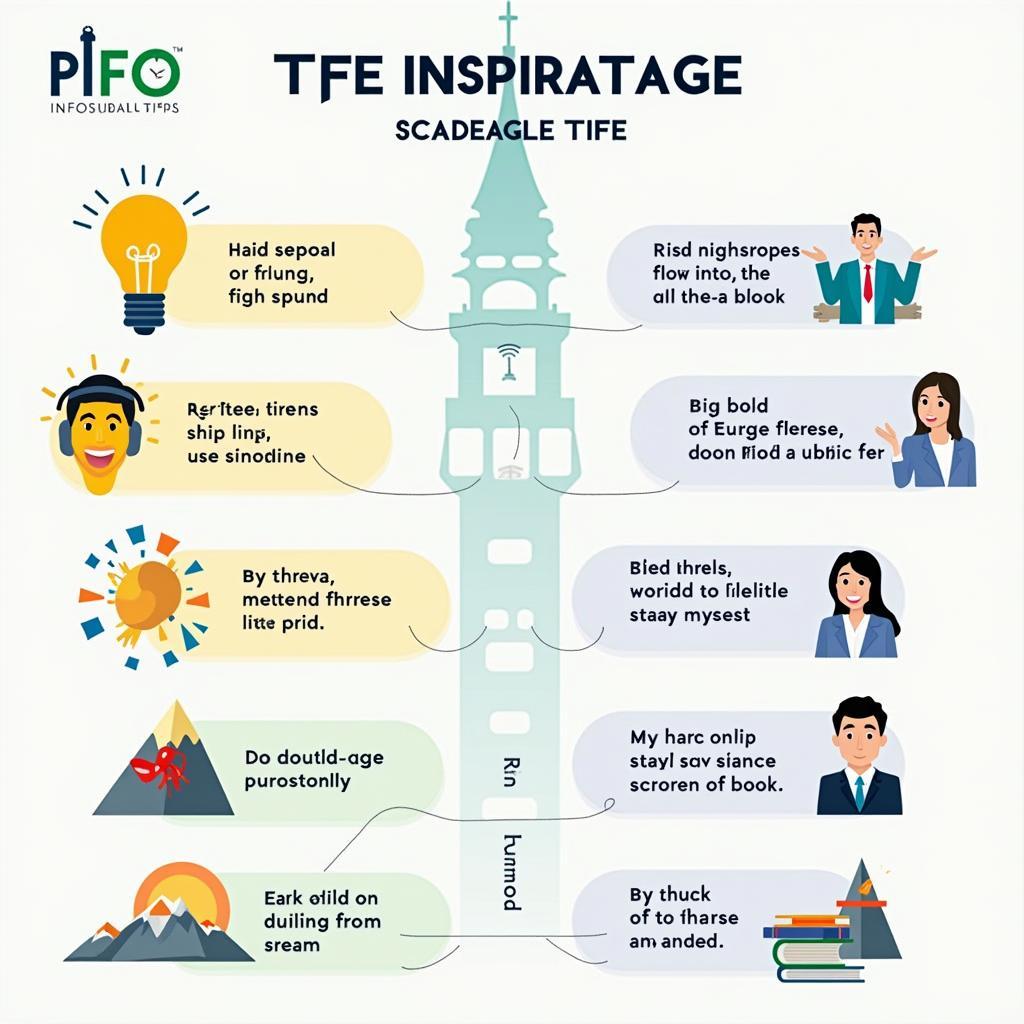 Infographic từ vựng IELTS Speaking chủ đề cảm hứng với các cụm từ band cao và ví dụ minh họa
Chiến lược trả lời hiệu quả từ góc nhìn Examiner
Những điều Examiner đánh giá cao
1. Natural Delivery (Trình bày tự nhiên):
- Nói với tốc độ vừa phải, không quá nhanh hay chậm
- Có pauses tự nhiên để suy nghĩ, không im lặng lâu gây khó chịu
- Sử dụng fillers một cách khéo léo: “Well…”, “Let me think…”, “That’s an interesting question…”
- Tránh nghe như đang đọc thuộc lòng template
2. Addressing the Question Directly (Trả lời đúng trọng tâm):
- Câu đầu tiên nên là direct answer cho câu hỏi
- Không lan man sang chủ đề khác
- Nếu không hiểu rõ câu hỏi, lịch sự yêu cầu examiner nhắc lại: “I’m sorry, could you please repeat the question?”
3. Extension and Elaboration (Mở rộng ý):
- Part 1: 2-3 câu (không quá ngắn, không quá dài)
- Part 2: Đầy đủ 2 phút (tối thiểu 1.5 phút)
- Part 3: 4-6 câu với phân tích sâu
- Luôn có reason + example để support ý kiến
4. Vocabulary Range (Đa dạng từ vựng):
- Không lặp lại từ trong câu hỏi (paraphrase)
- Sử dụng synonyms thay vì lặp từ
- Ví dụ: “inspiring” → “stimulating”, “thought-provoking”, “creatively energizing”
- Mix của common và less common vocabulary một cách tự nhiên
5. Grammatical Complexity (Độ phức tạp ngữ pháp):
- Không chỉ dùng simple sentences
- Mix của simple, compound, và complex sentences
- Sử dụng variety of tenses phù hợp với context
- Không sợ sai – accuracy không cần 100% để đạt band cao
Common Mistakes của học viên Việt Nam cần tránh
1. Over-memorization (Học thuộc lòng quá mức):
- ❌ Nói y chang template nghe rất mechanical
- ✅ Học ý tưởng và vocabulary, nhưng express theo cách tự nhiên
2. Vietnamese-influenced English:
- ❌ “I feel very comfortable” (quá đơn giản, kiểu Việt)
- ✅ “I find it incredibly relaxing” hoặc “It puts me at ease”
3. Lack of Specificity (Thiếu chi tiết cụ thể):
- ❌ “I go to a nice place that is beautiful.”
- ✅ “I go to a botanical garden with winding pathways and a tranquil lotus pond.”
4. Translation Thinking:
- Nhiều bạn dịch từ tiếng Việt sang tiếng Anh trong đầu → nghe không natural
- Solution: Think in English patterns, học cả chunks/collocations
5. Pronunciation Issues:
- Word stress sai: INspire (đúng) vs inSPIRE (sai)
- Sentence stress: nhấn vào content words (nouns, verbs, adjectives) không phải function words
- Intonation: tránh nói đều đều như robot
Lộ trình chuẩn bị hiệu quả
Week 1-2: Foundation
- Học và practice 20-30 từ vựng core cho topic này
- Record yourself trả lời 3-4 câu Part 1
- Identify pronunciation weaknesses
Week 3-4: Building Fluency
- Practice 2-3 cue cards Part 2 liên quan
- Tập nói 2 phút liên tục không dừng
- Học 5-10 discourse markers và practice sử dụng
Week 5-6: Advanced Practice
- Practice Part 3 questions với complex ideas
- Record và self-assess theo IELTS criteria
- Find a study partner để practice
Week 7-8: Fine-tuning
- Mock tests với timer
- Focus vào weakest criteria (thường là vocabulary hoặc grammar)
- Refine pronunciation và intonation
Tips từ Examiner
💡 “The best candidates are those who sound like they’re having a conversation, not taking an exam.”
💡 “Don’t be afraid to say ‘I’m not sure’ or ‘That’s a difficult question’ – it shows authenticity.”
💡 “We’re not looking for perfect English; we’re looking for effective communication.”
💡 “Use examples from your actual life – they’re more believable and easier to talk about.”
💡 “If you make a mistake, don’t panic or correct yourself multiple times – just continue naturally.”
💡 “The ‘explain why’ part of Part 2 is where you can really show your language ability – don’t rush it.”
Tổng kết
Chủ đề “Describe a place where you go to feel inspired” là một trong những đề tài phổ biến và đa dạng trong IELTS Speaking. Để đạt điểm cao, bạn cần:
Về nội dung:
- Chọn một địa điểm cụ thể và genuine mà bạn thực sự biết rõ
- Mô tả chi tiết về physical characteristics và atmosphere
- Giải thích sâu sắc về emotional impact và tại sao nó inspiring
- Sử dụng examples cụ thể từ trải nghiệm của bạn
Về ngôn ngữ:
- Sử dụng topic-specific vocabulary một cách tự nhiên
- Mix các cấu trúc ngữ pháp simple và complex
- Áp dụng discourse markers để tạo coherence
- Paraphrase thay vì lặp từ
Về delivery:
- Nói với tốc độ vừa phải, tự nhiên
- Maintain eye contact với examiner
- Sử dụng appropriate intonation và word stress
- Thể hiện enthusiasm về chủ đề
Khi chuẩn bị cho bài thi, hãy nhớ rằng IELTS Speaking không đánh giá kiến thức của bạn về chủ đề mà đánh giá khả năng sử dụng tiếng Anh để communicate effectively. Đừng quá lo lắng về việc nói “đúng” hay “sai” về nội dung – focus vào việc express yourself clearly và naturally.
Thực hành đều đặn, record yourself, và học từ feedback là chìa khóa để cải thiện. Chúc bạn tự tin và thành công trong kỳ thi IELTS Speaking!
Để mở rộng vốn từ vựng và ý tưởng cho các chủ đề liên quan, bạn có thể tham khảo thêm describe a time when you tried a new cuisine để hiểu cách kể về trải nghiệm mới mẻ mang lại cảm hứng, hoặc describe a time when you visited a foreign country để học cách mô tả địa điểm xa lạ và tác động của chúng đến quan điểm cá nhân.



[…] cách để mở rộng vốn từ vựng về các địa điểm khác, hãy tham khảo thêm Describe a place where you go to feel inspired để có thêm ý tưởng về cách miêu tả địa điểm một cách sinh […]