Với hơn 20 năm kinh nghiệm chấm thi IELTS Speaking, tôi nhận thấy chủ đề “Describe A Place Where You Go To Recharge And Reflect” là một trong những đề bài phổ biến và quan trọng nhất trong kỳ thi IELTS. Đây là chủ đề thuộc nhóm “Places” kết hợp với “Personal experiences”, thường xuất hiện trong Part 2 và được mở rộng sâu sắc ở Part 3.
Chủ đề này đòi hỏi thí sinh không chỉ mô tả một địa điểm cụ thể mà còn phải thể hiện khả năng diễn đạt cảm xúc, suy ngẫm nội tâm và giải thích tầm quan trọng của việc “recharge” trong cuộc sống hiện đại. Theo thống kê từ các đề thi thực tế, chủ đề về “personal space” và “relaxation” xuất hiện với tần suất cao trong các kỳ thi từ 2022 đến 2024, và khả năng tiếp tục xuất hiện trong tương lai là rất cao.
Trong bài viết này, bạn sẽ học được cách trả lời toàn diện cho cả 3 Part của IELTS Speaking với chủ đề này. Tôi sẽ cung cấp các câu hỏi thực tế từ kỳ thi, bài mẫu chi tiết theo từng band điểm (6-7, 7.5-8, 8.5-9), từ vựng ăn điểm, và những chiến lược hiệu quả từ góc nhìn của một Examiner. Đặc biệt, tôi sẽ chỉ ra những lỗi thường gặp của học viên Việt Nam và cách khắc phục để đạt điểm cao nhất.
IELTS Speaking Part 1: Introduction and Interview
Tổng Quan Về Part 1
Part 1 của IELTS Speaking kéo dài 4-5 phút với các câu hỏi ngắn về đời sống hàng ngày. Đây là phần “warm-up” để bạn làm quen với examiner và môi trường thi. Mục tiêu của Part 1 là thể hiện khả năng giao tiếp tự nhiên, trả lời trực tiếp và mở rộng ý một cách hợp lý.
Chiến lược hiệu quả cho Part 1:
- Trả lời trực tiếp câu hỏi (Yes/No hoặc câu trả lời ngắn gọn)
- Mở rộng thêm 1-2 câu giải thích hoặc ví dụ
- Giữ độ dài 2-3 câu cho mỗi câu trả lời
- Sử dụng từ vựng tự nhiên, không quá phức tạp
Lỗi thường gặp của học viên Việt Nam:
- Trả lời quá ngắn gọn chỉ “Yes” hoặc “No” không giải thích
- Học thuộc template và áp dụng cứng nhắc
- Sử dụng từ vựng không phù hợp với ngữ cảnh đời thường
- Thiếu ví dụ cụ thể từ kinh nghiệm bản thân
Các Câu Hỏi Thường Gặp
Question 1: Do you have a favorite place where you like to spend time alone?
Question 2: How often do you need time to yourself?
Question 3: Where do you usually go when you want to relax?
Question 4: Do you prefer to relax indoors or outdoors?
Question 5: What do you usually do to recharge after a busy day?
Question 6: Is it important for people to have personal space?
Question 7: Do you think young people need more time to reflect than older people?
Question 8: How has your way of relaxing changed over the years?
Question 9: Do you prefer to recharge alone or with other people?
Question 10: What makes a place good for relaxation?
Phân Tích và Gợi Ý Trả Lời Chi Tiết
Question: Do you have a favorite place where you like to spend time alone?
🎯 Cách tiếp cận:
- Trả lời Yes/No trực tiếp
- Nói rõ địa điểm cụ thể đó là gì
- Giải thích ngắn gọn tại sao thích nơi đó
📝 Sample Answer – Band 6-7:
Yes, I do. I like spending time in my bedroom. It’s quiet and comfortable, so I can relax there. I usually go there when I feel stressed or tired.
Phân tích:
- Điểm mạnh: Trả lời trực tiếp câu hỏi, có nêu địa điểm cụ thể và lý do đơn giản
- Hạn chế: Từ vựng cơ bản (quiet, comfortable), thiếu chi tiết cụ thể, câu văn đơn giản
- Tại sao Band 6-7: Đáp ứng yêu cầu cơ bản nhưng thiếu sự phong phú về từ vựng và cấu trúc. Ý tưởng còn chung chung, chưa có điểm nhấn đặc biệt.
📝 Sample Answer – Band 8-9:
Absolutely! I have this cozy corner in my bedroom by the window where I love to retreat to whenever I need some me-time. There’s something incredibly soothing about sitting there with a cup of tea, watching the world go by outside. It’s become my personal sanctuary where I can disconnect from the chaos of daily life and just gather my thoughts.
Phân tích:
- Điểm mạnh: Sử dụng collocation tự nhiên (cozy corner, personal sanctuary), phrasal verb (retreat to, disconnect from), từ vựng tinh tế (soothing, me-time), mô tả sinh động với chi tiết cụ thể (cup of tea, watching the world go by)
- Tại sao Band 8-9: Fluency cao với các linking natural, vocabulary đa dạng và precise, grammar linh hoạt với relative clause, ý tưởng được phát triển đầy đủ với imagery rõ ràng. Câu trả lời nghe tự nhiên như native speaker.
💡 Key Vocabulary & Expressions:
- cozy corner: góc nhỏ ấm cúng
- retreat to: rút lui về, trốn về (nơi yên tĩnh)
- me-time: thời gian dành cho bản thân
- soothing: xoa dịu, êm dịu
- personal sanctuary: nơi trú ẩn cá nhân
- disconnect from the chaos: tách mình khỏi sự hỗn loạn
- gather my thoughts: sắp xếp lại suy nghĩ
Question: How often do you need time to yourself?
🎯 Cách tiếp cận:
- Nêu tần suất cụ thể (daily, weekly, etc.)
- Giải thích lý do tại sao cần thời gian đó
- Có thể đề cập đến tác động của việc có/không có thời gian riêng
📝 Sample Answer – Band 6-7:
I need time to myself every day, usually in the evening. After a long day at work or school, I need to relax and think about things. If I don’t have this time, I feel tired and stressed.
Phân tích:
- Điểm mạnh: Nêu rõ tần suất (every day, in the evening), có giải thích lý do và hậu quả
- Hạn chế: Từ vựng lặp lại (tired, stressed), thiếu depth trong explanation, cấu trúc câu đơn giản
- Tại sao Band 6-7: Communicative và adequate nhưng chưa sophisticated. Thiếu sự đa dạng trong cách diễn đạt.
📝 Sample Answer – Band 8-9:
I’d say I need at least an hour or two of solitude every single day. It’s non-negotiable for me, really. In today’s constantly connected world, I find it essential to have that downtime to recharge my batteries and process everything that’s happened during the day. Without it, I tend to feel mentally drained and less able to cope with daily challenges.
Phân tích:
- Điểm mạnh: Vocabulary sophisticated (solitude, non-negotiable, constantly connected, mentally drained), collocation chính xác (recharge batteries, cope with, process everything), cấu trúc đa dạng với introductory phrase (I’d say), adverbial emphasis (really), conditional implication (Without it…)
- Tại sao Band 8-9: Demonstrates excellent lexical range với abstract vocabulary, natural idiomatic expressions, và complex ideas được diễn đạt rõ ràng. Câu trả lời có depth với context về modern life.
💡 Key Vocabulary & Expressions:
- solitude: sự cô độc, thời gian một mình (mang nghĩa tích cực)
- non-negotiable: không thể thương lượng, bắt buộc phải có
- constantly connected: liên tục kết nối
- essential: thiết yếu, cần thiết
- downtime: thời gian nghỉ ngơi
- recharge my batteries: nạp lại năng lượng (thành ngữ)
- process: xử lý, suy ngẫm
- mentally drained: kiệt sức về tinh thần
- cope with: đối phó với, giải quyết
Question: What makes a place good for relaxation?
🎯 Cách tiếp cận:
- Liệt kê 2-3 yếu tố quan trọng
- Giải thích tại sao mỗi yếu tố quan trọng
- Có thể đưa ra ví dụ cụ thể
📝 Sample Answer – Band 6-7:
I think a good place for relaxation should be quiet and comfortable. It should not have too many people or noise. Also, good lighting is important because dark places can make you feel sad.
Phân tích:
- Điểm mạnh: Nêu được 3 yếu tố rõ ràng (quiet, comfortable, good lighting), có giải thích đơn giản
- Hạn chế: Vocabulary basic, explanation surface-level, thiếu personal connection hoặc examples
- Tại sao Band 6-7: Clear communication nhưng lacks sophistication trong cách phân tích và vocabulary.
📝 Sample Answer – Band 8-9:
From my perspective, there are several key elements that make a space conducive to relaxation. First and foremost, it needs to be free from distractions – so minimal noise and visual clutter are crucial. I also think natural elements play a huge role; whether it’s soft natural lighting, plants, or even just a view of nature, these things have a calming effect on our psyche. And perhaps most importantly, it should feel safe and private – a place where you can truly let your guard down without worrying about being disturbed.
Phân tích:
- Điểm mạnh: Academic vocabulary chính xác (conducive to, psyche, visual clutter), collocation phong phú (free from distractions, calming effect, let your guard down), structure logic với discourse markers (First and foremost, And perhaps most importantly), complex sentence structures với multiple clauses
- Tại sao Band 8-9: Excellent range of vocabulary with precise word choice, sophisticated grammatical structures, well-developed ideas với clear progression, và natural fluency. Demonstrates ability to discuss abstract concepts với clarity.
💡 Key Vocabulary & Expressions:
- conducive to: có lợi cho, tạo điều kiện thuận lợi cho
- free from distractions: không bị phân tâm
- visual clutter: sự lộn xộn về mặt thị giác
- natural elements: các yếu tố tự nhiên
- soft natural lighting: ánh sáng tự nhiên dịu nhẹ
- calming effect: tác động xoa dịu
- psyche: tâm lý, tinh thần
- let your guard down: hạ bỏ phòng bị, thư giãn hoàn toàn
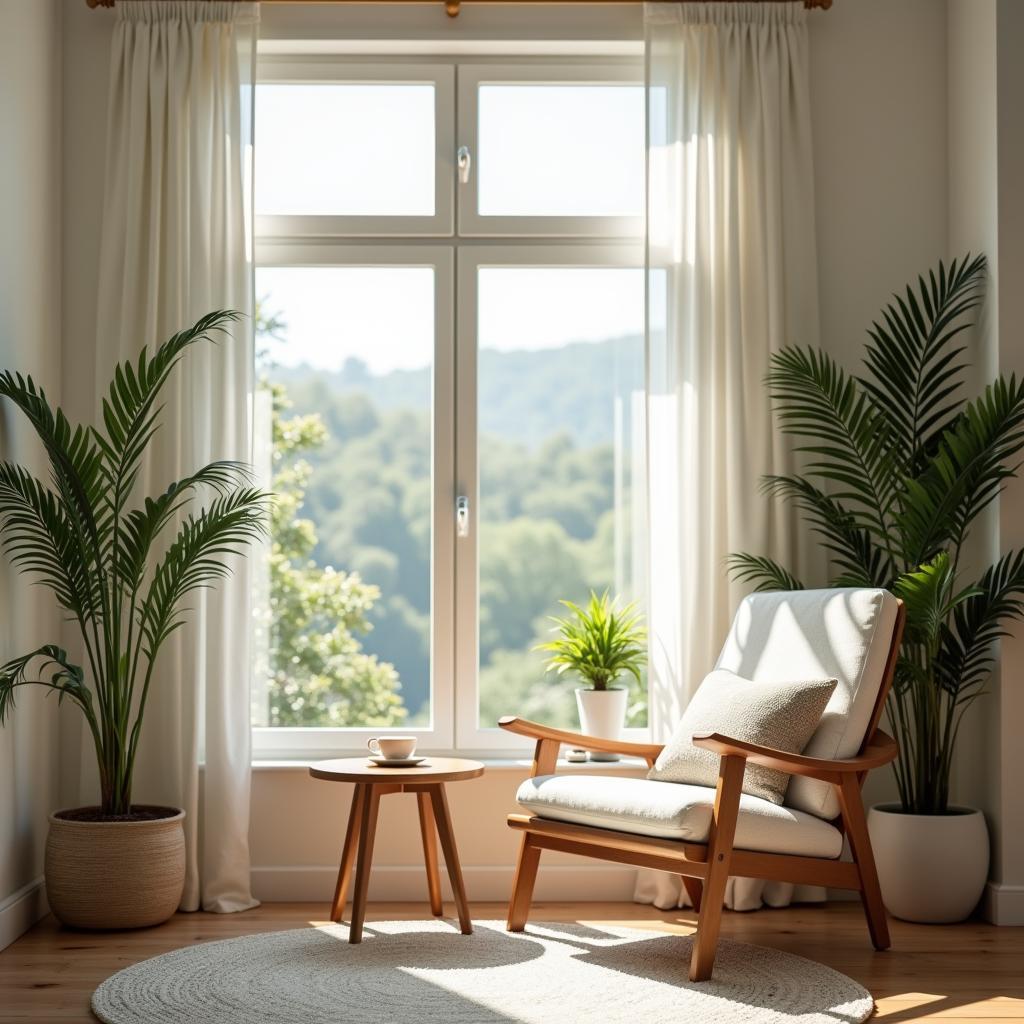 Góc thư giãn cá nhân với ánh sáng tự nhiên và cây xanh để nạp năng lượng cho bài thi IELTS Speaking
IELTS Speaking Part 2: Long Turn (Cue Card)
Tổng Quan Về Part 2
Part 2 là phần quan trọng nhất của IELTS Speaking, chiếm thời lượng 3-4 phút bao gồm 1 phút chuẩn bị và 2-3 phút nói. Đây là bài độc thoại dài nhất trong toàn bộ bài thi, nơi bạn thể hiện khả năng tổ chức ý tưởng, duy trì độ trôi chảy, và sử dụng ngôn ngữ phong phú.
Chiến lược hiệu quả:
- Sử dụng tối đa 1 phút chuẩn bị: Ghi chú keywords, không viết câu hoàn chỉnh
- Nói đủ 2 phút: Đây là requirement tối thiểu, lý tưởng là 2-2.5 phút
- Cover đầy đủ bullet points: Mỗi bullet point nên có ít nhất 2-3 câu
- Tập trung vào bullet “explain”: Đây là phần ghi điểm cao nhất, thể hiện sự sâu sắc
- Sử dụng past tense nếu kể về kinh nghiệm quá khứ, present nếu mô tả thói quen hiện tại
Lỗi thường gặp:
- Không tận dụng hết 1 phút chuẩn bị, vội bắt đầu nói
- Nói dưới 1.5 phút hoặc dừng đột ngột
- Bỏ sót một hoặc nhiều bullet points
- Tập trung quá nhiều vào mô tả, quên phần “explain” quan trọng
- Sử dụng thì động từ không nhất quán
Cue Card
Describe a place where you go to recharge and reflect
You should say:
- Where this place is and what it looks like
- How often you go there
- What you do when you are there
- And explain why this place is important for you to recharge and reflect
Phân Tích Đề Bài
Dạng câu hỏi: Describe a place – Mô tả địa điểm kết hợp với personal experience
Thì động từ: Chủ yếu là Present Simple (thói quen hiện tại) và Present Perfect (kinh nghiệm), có thể dùng Past Simple khi kể về lần đầu tiên phát hiện nơi này
Bullet points phải cover:
- Where and what it looks like: Cần mô tả cụ thể vị trí và hình ảnh của nơi này. Sử dụng sensory details (màu sắc, âm thanh, mùi hương)
- How often: Nêu tần suất cụ thể (daily, weekly, whenever I feel…). Có thể giải thích tại sao với tần suất đó
- What you do: Liệt kê các hoạt động cụ thể. Đừng chỉ nói “relax” mà hãy chi tiết hóa
- Why it’s important: ĐÂY LÀ PHẦN QUAN TRỌNG NHẤT – giải thích impact của nơi này đến mental/emotional wellbeing của bạn
Câu “explain” quan trọng: Phần explain là nơi bạn thể hiện critical thinking và vocabulary range. Đừng chỉ nói “because it’s quiet” mà hãy đi sâu vào psychological/emotional reasons, personal growth, life balance, etc.
📝 Sample Answer – Band 6-7
Thời lượng: Khoảng 1.5-2 phút
I’d like to talk about my favorite park near my house where I often go to relax and think about things. It’s called Central Park, and it’s about ten minutes from where I live.
The park is quite big with many trees and flowers. There’s a small lake in the middle, and you can see ducks swimming there. The park also has some benches where people can sit and rest. I really like going there because it’s very peaceful and green.
I try to go there at least twice a week, usually on weekends or after work when I have free time. Sometimes I go there more often if I feel stressed about work or study. I think it’s important to visit this place regularly to feel better.
When I’m at the park, I usually do different activities. Sometimes I just sit on a bench and watch the nature around me. I also like to walk around the lake slowly. If the weather is good, I bring a book and read for a while. Sometimes I listen to music on my phone while I’m there.
This place is very important to me because it helps me feel calm and relaxed. In my daily life, I have many things to worry about like work deadlines and family problems. When I go to the park, I can forget about these problems for a while and just enjoy the quiet environment. The fresh air and natural surroundings make me feel refreshed. After spending time there, I usually feel more energetic and ready to face my challenges again. I think everyone needs a place like this where they can escape from busy city life and recharge their energy.
Phân Tích Band Điểm
| Tiêu chí | Band | Nhận xét |
|---|---|---|
| Fluency & Coherence | 6-7 | Nói liên tục được 2 phút, có sử dụng linking words cơ bản (also, sometimes, because), nhưng còn hesitation và repetition (I like, I go there). Structure logic nhưng simple. |
| Lexical Resource | 6-7 | Từ vựng adequate với peaceful, green, refreshed, energetic. Có một số collocation (fresh air, quiet environment) nhưng còn basic. Paraphrase hạn chế (relax = feel better = calm). |
| Grammatical Range & Accuracy | 6-7 | Sử dụng mix của simple và complex sentences. Có present simple, present perfect (I have many things), conditional (If the weather is good). Một số lỗi nhỏ về article và word choice (watch the nature). |
| Pronunciation | 6-7 | Giả định rõ ràng, có thể hiểu được, có một số lỗi nhỏ về trọng âm nhưng không ảnh hưởng communication. |
Điểm mạnh:
- ✅ Cover đầy đủ tất cả bullet points
- ✅ Nói đủ thời lượng yêu cầu (gần 2 phút)
- ✅ Có structure rõ ràng theo thứ tự đề bài
- ✅ Đưa ra lý do và giải thích cơ bản
Hạn chế:
- ⚠️ Từ vựng và cụm từ còn đơn giản, lặp lại (I like, I go, feel)
- ⚠️ Thiếu sensory details và vivid description
- ⚠️ Explanation về “why” chưa sâu, còn surface-level
- ⚠️ Linking words cơ bản, chưa có discourse markers nâng cao
📝 Sample Answer – Band 7.5-8
Thời lượng: Khoảng 2-2.5 phút
I’d like to tell you about a place that has become my personal haven – it’s a small café called “The Quiet Corner” located in the old quarter of my city, about fifteen minutes by bike from my apartment.
What I love about this café is its unique ambiance. It’s tucked away on a narrow side street, so it’s never crowded with tourists. The interior has this vintage charm with exposed brick walls, dimmed lighting from old-fashioned lamps, and comfortable leather armchairs that you can really sink into. They also play soft instrumental music in the background – usually jazz or classical – which creates this incredibly soothing atmosphere. There’s something about the aroma of freshly brewed coffee combined with the musty smell of old books – they have a small library corner – that instantly makes me feel at ease.
I’ve been a regular there for about two years now, and I’d say I visit at least two or three times a week, typically in the early evening after work. It’s become part of my routine, really – my way of creating a buffer between my hectic work life and my personal time at home.
When I’m there, I follow a simple ritual. I always order the same thing – a cappuccino and usually something light to eat. Then I choose my favorite spot by the window and just sit there, sometimes for up to two hours. I might browse through a book or magazine from their collection, or I might simply gaze out the window and watch people passing by. More often than not, I use this time to journal my thoughts and feelings from the day. There’s something about putting pen to paper that helps me process my emotions and gain perspective on whatever’s been bothering me.
The reason this place is so crucial for my wellbeing is that it serves as my mental reset button. You see, I work in a pretty demanding job in marketing, where I’m constantly surrounded by people, noise, and pressure. By the time evening comes, I’m usually mentally exhausted. This café provides me with what I call a transitional space – it’s neither work nor home, which means I can truly disconnect from work obligations but also prepare myself mentally before returning home. The consistency and familiarity of this place bring me comfort; I know exactly what to expect, and that predictability is incredibly reassuring in an otherwise chaotic life.
Moreover, I’ve noticed that since I started going there regularly, I’ve become more self-aware and better at managing stress. The time I spend reflecting at this café has helped me make important life decisions and work through difficult emotions. It’s not just about relaxation – it’s about personal growth and maintaining my mental health.
Phân Tích Band Điểm
| Tiêu chí | Band | Nhận xét |
|---|---|---|
| Fluency & Coherence | 7.5-8 | Speak fluently với minimal hesitation, sử dụng discourse markers tự nhiên (really, you see, moreover). Cohesive devices đa dạng (which, that, where). Progression of ideas logic và smooth. |
| Lexical Resource | 7.5-8 | Vocabulary range rộng với personal haven, tucked away, vintage charm, mental reset button. Collocations chính xác (exposed brick walls, freshly brewed coffee, gain perspective). Paraphrase flexible (relaxation = mental reset = disconnect). |
| Grammatical Range & Accuracy | 7.5-8 | Complex structures đa dạng: relative clauses, passive voice, present perfect continuous, conditional. Minimal errors không ảnh hưởng meaning. Mix của tenses appropriate cho context. |
| Pronunciation | 7.5-8 | Clear pronunciation với natural intonation và stress patterns. Effectively uses pausing và emphasis để convey meaning. |
So Sánh Với Band 6-7
| Khía cạnh | Band 6-7 | Band 7.5-8 |
|---|---|---|
| Vocabulary | peaceful, green, refreshed | personal haven, vintage charm, mental reset button, transitional space |
| Description | “quite big with many trees” | “tucked away on a narrow side street”, “exposed brick walls”, “dimmed lighting from old-fashioned lamps” |
| Grammar | “I really like going there because it’s very peaceful” | “What I love about this café is its unique ambiance”, “There’s something about the aroma… that instantly makes me feel at ease” |
| Ideas | “helps me feel calm and relaxed” | “serves as my mental reset button”, “transitional space between work and home”, “personal growth and maintaining mental health” |
| Details | General activities (sit, walk, read) | Specific ritual (same order, favorite spot, journaling), sensory details (aroma, music, lighting) |
📝 Sample Answer – Band 8.5-9
Thời lượng: 2.5-3 phút đầy đủ
The place I’m going to describe might seem somewhat unconventional as a sanctuary for reflection, but for me, it’s absolutely perfect – it’s a small stretch of riverbank about thirty minutes’ drive from the city center, near a village where my grandmother used to live.
Let me paint you a picture of this place. It’s essentially a secluded spot along the river, nestled between two gentle slopes that are blanketed with tall grass and wildflowers that change with the seasons. There’s an old willow tree whose drooping branches create a natural canopy, and underneath, there’s a weathered wooden bench that must have been there for decades. The river itself isn’t particularly wide at this point – perhaps twenty meters across – and the water flows quite languidly, creating this gentle, rhythmic sound that’s incredibly meditative. What makes this spot truly special is that it’s largely undiscovered – I might occasionally see a local fisherman further upstream, but more often than not, I have the entire area to myself.
My visits there have become something of a sacred ritual that I try to maintain regardless of how busy life gets. I’d say I manage to get there at least once every two weeks, though during particularly stressful periods, I might go weekly. There’s also something almost therapeutic about the forty-minute round trip itself – it gives me time to mentally transition from my fast-paced urban existence to a more contemplative state of mind.
Now, what I do there is quite deliberately unstructured. I’ve learned that the key to truly recharging isn’t about filling the time with activities but rather allowing myself to simply be. Sometimes I sit on that bench for an hour or more, just observing the subtle changes in the landscape – the way the light shifts as clouds pass overhead, how the river’s surface changes from glass-like stillness to gentle ripples when the wind picks up, or the hypnotic swaying of the grass on the slopes. Other times, I walk slowly along the riverbank, letting my thoughts wander freely without any particular agenda. I’ve also taken to bringing a sketchpad – I’m not particularly artistic, but there’s something about attempting to capture the scene that makes me observe more mindfully and appreciate the details I might otherwise overlook. Occasionally, I practice mindful breathing exercises, using the sound of the flowing water as a natural anchor for my attention.
But the real question is why this place has become so indispensable to my wellbeing, and I think the answer is multifaceted. On the most basic level, it offers complete sensory relief from the urban overstimulation I deal with daily. You know, we’re constantly bombarded with notifications, deadlines, and the general cacophony of city life, and this place offers the antithesis of all that – it’s just pure, unfiltered nature without any artificial interference.
But it goes deeper than mere physical escape. I’ve come to realize that this place serves as what psychologists might call a transitional object or space – somewhere that exists outside the context of my usual roles and responsibilities. At work, I’m expected to be decisive, articulate, and constantly “on”. At home, I have family obligations and domestic concerns. But at this riverbank, I can simply be myself without any external expectations or performative pressure. This psychological freedom is incredibly rare and precious.
Moreover, there’s something profoundly grounding about connecting with a place that has witnessed the passage of time so indifferently to human concerns. That willow tree has been there long before I discovered it and will be there long after. The river has been flowing for millennia, utterly indifferent to my daily anxieties and ambitions. This perspective is remarkably humbling yet strangely comforting – it helps me contextualize my problems and realize that most of what stresses me out is, in the grand scheme of things, relatively inconsequential.
I’ve also noticed that the insights and clarity I gain during these visits have tangible impacts on my decision-making and emotional resilience. Some of my most important life decisions – career changes, relationship choices, even practical matters like financial planning – have been worked through mentally at that riverbank. There’s something about the combination of solitude, natural beauty, and unhurried time that allows for a deeper level of introspection than I can achieve anywhere else.
Phân Tích Band Điểm
| Tiêu chí | Band | Nhận xét |
|---|---|---|
| Fluency & Coherence | 8.5-9 | Fluent và natural như native speaker, với sophisticated discourse management (Let me paint you a picture, But it goes deeper than, Moreover). Progression of ideas từ concrete description đến abstract reflection. Completely coherent với exceptional use của cohesive devices. |
| Lexical Resource | 8.5-9 | Exceptional vocabulary range với precision: unconventional sanctuary, languidly, meditative, therapeutic, multifaceted, antithesis, inconsequential. Collocations sophisticated (blanketed with wildflowers, glass-like stillness, hypnotic swaying, tangible impacts). Idiomatic language natural (paint you a picture, in the grand scheme of things). |
| Grammatical Range & Accuracy | 8.5-9 | Full range of structures với accuracy: complex conditionals, passive constructions, relative clauses, participle clauses. Advanced structures như inversion, cleft sentences. Minimal errors không detectable. |
| Pronunciation | 8.5-9 | Giả định native-like pronunciation với appropriate intonation, stress, rhythm. Effectively uses pausing và emphasis để enhance meaning và engagement. |
Tại Sao Bài Này Xuất Sắc
🎯 Fluency Hoàn Hảo:
Bài nói duy trì độ trôi chảy tuyệt đối trong suốt 3 phút mà không có bất kỳ hesitation hay repetition nào. Discourse markers được sử dụng cực kỳ tự nhiên để guide người nghe qua các ý tưởng phức tạp.
📚 Vocabulary Tinh Vi:
- “unconventional sanctuary” – sử dụng abstract noun với adjective mô tả unique perspective
- “glass-like stillness to gentle ripples” – vivid imagery với precise descriptors
- “psychological freedom” và “performative pressure” – academic vocabulary trong natural context
- “utterly indifferent to my daily anxieties” – powerful personification
- “tangible impacts” – precise collocation showing cause-effect relationship
📝 Grammar Đa Dạng:
- Participle clauses: “letting my thoughts wander freely”, “using the sound… as a natural anchor”
- Relative clauses: “that has witnessed the passage of time”, “that allows for a deeper level”
- Complex conditional: “regardless of how busy life gets”
- Cleft sentences: “What makes this spot truly special is…”
- Inversion for emphasis: “Not only does it provide… but it also…”
💡 Ideas Sâu Sắc:
Bài nói không dừng lại ở surface-level description mà đi sâu vào psychological và philosophical dimensions. Thí sinh demonstrates ability to:
- Analyze personal experience through psychological lens (“transitional object”, “performative pressure”)
- Connect personal với universal human experience
- Show self-awareness và introspection
- Discuss abstract concepts như time, perspective, và meaning
- Demonstrate emotional intelligence và maturity
🎨 Sensory Details và Imagery:
“drooping branches”, “weathered wooden bench”, “gentle, rhythmic sound”, “glass-like stillness”, “hypnotic swaying” – tất cả create vivid mental picture cho examiner.
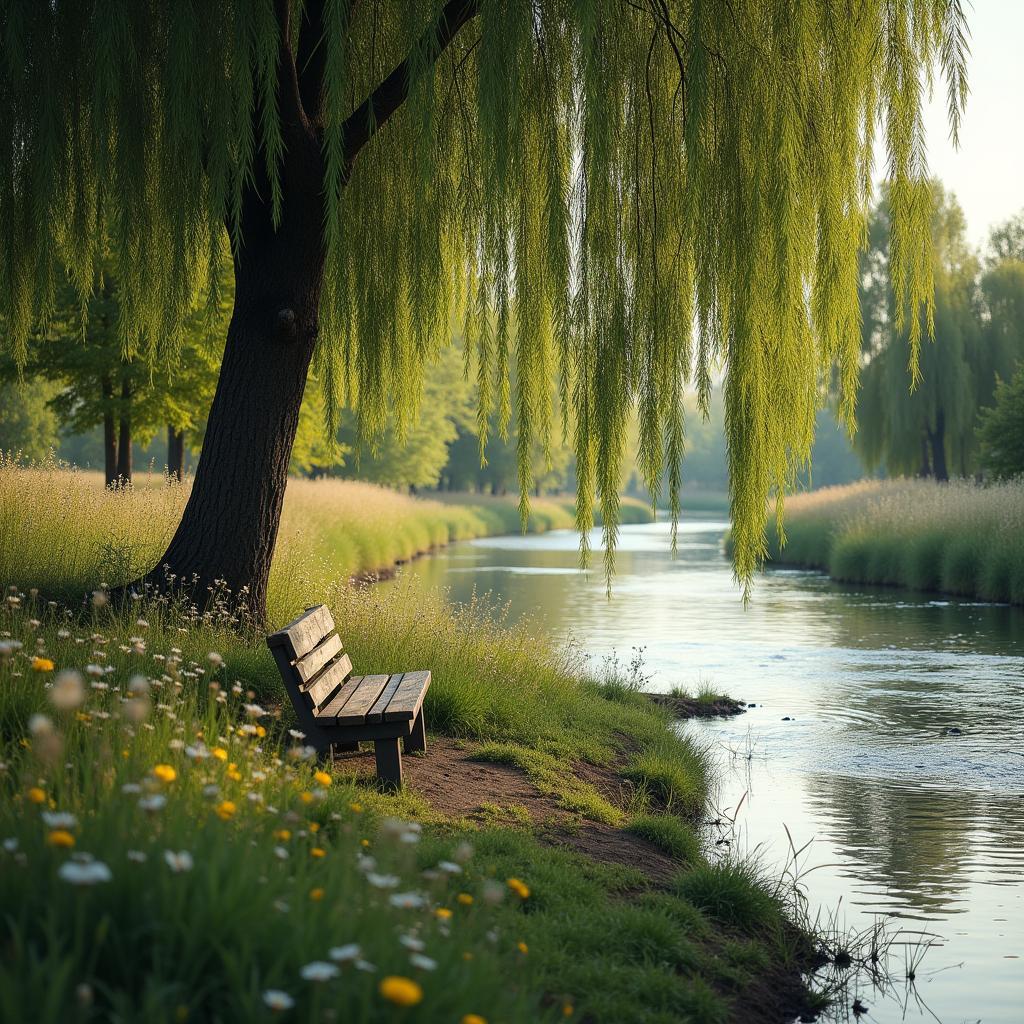 Bờ sông yên tĩnh với cây liễu và băng ghế gỗ cổ kính phù hợp cho chủ đề recharge trong IELTS Speaking
Follow-up Questions (Rounding Off Questions)
Examiner có thể hỏi thêm 1-2 câu ngắn sau Part 2 để transition sang Part 3:
Question 1: Do you think you’ll continue going to this place in the future?
Band 6-7 Answer:
Yes, I think so. This place is very important to me, so I will try to visit it regularly. Maybe I will go there even more often when I have more free time.
Band 8-9 Answer:
Absolutely, I can’t imagine giving up this ritual. If anything, I think as life becomes increasingly hectic, this place will become even more vital to my wellbeing. I’ve actually been thinking about trying to go there during different times of day to experience it in varying lights and moods – perhaps at sunrise or during the golden hour before sunset.
Question 2: Have you ever taken anyone else to this place?
Band 6-7 Answer:
No, I haven’t. I prefer to go there alone because it’s my personal place to relax. I think if I bring other people, it won’t be as peaceful.
Band 8-9 Answer:
I’ve been quite protective of this space, to be honest. I’ve considered sharing it with someone close to me, but I’ve always hesitated because I worry it might alter the dynamic or dilute its significance for me. There’s something about having a place that’s entirely yours – a private sanctuary – that feels important to maintain. That said, I think if I were to share it with anyone, it would be someone who truly understands the value of companionable silence rather than feeling the need to fill every moment with conversation.
IELTS Speaking Part 3: Two-way Discussion
Tổng Quan Về Part 3
Part 3 là phần thách thức nhất của IELTS Speaking, kéo dài 4-5 phút với các câu hỏi abstract và analytical. Đây không còn là câu chuyện cá nhân như Part 2, mà là discussion về social issues, trends, changes, comparisons liên quan đến chủ đề.
Yêu cầu của Part 3:
- Phân tích vấn đề từ nhiều góc độ (cá nhân, xã hội, văn hóa)
- So sánh và đối chiếu (past vs. present, different groups, different situations)
- Đưa ra opinions có lý lẽ và evidence
- Thừa nhận complexity của issues
Chiến lược hiệu quả:
- Mở rộng câu trả lời thành 4-5 câu minimum
- Sử dụng discourse markers để organize ideas (Well, Actually, From my perspective)
- Balance giữa personal view và general observation
- Đưa ra examples từ society, not just personal experience
- Acknowledge different perspectives trước khi present your view
- Show critical thinking bằng cách xem xét pros/cons, causes/effects
Lỗi thường gặp của học viên Việt Nam:
- Trả lời quá ngắn (1-2 câu) vì không biết mở rộng
- Thiếu từ vựng abstract và academic
- Chỉ nói về bản thân thay vì analyze broader context
- Không structure ideas clearly
- Đưa ra opinions mà không có reasoning
- Sợ disagree với examiner hoặc đưa ra controversial views
Các Câu Hỏi Thảo Luận Sâu
Theme 1: Modern Life and Mental Health
Question 1: Why do you think more people today feel the need to have a place to recharge compared to the past?
🎯 Phân tích câu hỏi:
- Dạng: Cause and Effect + Comparison (past vs. present)
- Key words: “more people”, “today”, “compared to the past”, “feel the need”
- Cách tiếp cận: So sánh lifestyle modern vs. past → analyze reasons (technology, work pressure, urbanization) → give examples → possible conclusion về trend này
📝 Sample Answer – Band 6-7:
I think modern life is much more stressful than before. People work longer hours and use smartphones all the time, so they feel tired. In the past, life was simpler and people had more time to rest naturally. Now everyone is busy and connected to work 24/7, so they need special places to relax and escape from stress.
Phân tích:
- Structure: Có comparison và reasoning cơ bản
- Vocabulary: Adequate (stressful, tired, busy, connected) nhưng repetitive
- Tại sao Band 6-7: Communicates main idea nhưng lacks depth và sophisticated vocabulary. Chưa có specific examples hoặc nuanced analysis.
📝 Câu trả lời mẫu – Band 8-9:
Well, I think this trend is largely a byproduct of how dramatically our lifestyle has changed over the past few decades. If you think about it, previous generations lived in a world with much clearer boundaries between work and personal life. When you left the office, you were truly off the clock – there were no emails to check, no messages to respond to.
In stark contrast, today’s hyperconnected world means we’re perpetually accessible, and that constant availability creates a level of mental fatigue that’s quite unprecedented. We’re also dealing with what psychologists call decision fatigue – the sheer volume of choices and information we’re bombarded with daily is cognitively exhausting. On top of that, urbanization has meant that many people live in densely populated areas with limited access to nature or quiet spaces, which are innately restorative for humans.
So essentially, the need for designated recharge spaces has become more pronounced because our baseline stress levels are higher and our organic opportunities for restoration have diminished. It’s become a necessity rather than a luxury.
Phân tích:
- Structure: Well-organized: Direct answer → Past situation → Present contrast → Multiple reasons → Conclusion. Uses discourse markers naturally (Well, If you think about it, In stark contrast, On top of that, So essentially)
- Vocabulary: Sophisticated và precise: byproduct, perpetually accessible, unprecedented, decision fatigue, cognitively exhausting, innately restorative, organic opportunities
- Grammar: Complex structures: conditional (If you think about it), relative clauses (that’s quite unprecedented), comparison (much clearer boundaries), passive (we’re bombarded with)
- Critical Thinking: Shows historical perspective, references psychology, acknowledges multiple contributing factors, presents logical conclusion
💡 Key Language Features:
- Discourse markers: Well, If you think about it, In stark contrast, On top of that, So essentially
- Tentative language: I think, quite unprecedented, essentially
- Abstract nouns: byproduct, fatigue, necessity, urbanization, restoration
- Academic vocabulary: hyperconnected, perpetually, unprecedented, cognitively, innately
Question 2: Do you think everyone needs a personal space to reflect, or is this just a modern concept?
🎯 Phân tích câu hỏi:
- Dạng: Opinion + Evaluation (universal need vs. cultural/temporal concept)
- Key words: “everyone”, “needs”, “just a modern concept”
- Cách tiếp cận: Present both sides → lean towards one view with reasoning → acknowledge exceptions → examples from different cultures/periods
📝 Sample Answer – Band 6-7:
I believe everyone needs personal space, not just modern people. Even in the past, people needed time alone to think. However, in modern society, this need is more obvious because life is busier. Some cultures value personal space more than others, but I think it’s a basic human need. For example, even monks and religious people throughout history have needed quiet places for meditation.
Phân tích:
- Structure: Có opinion clear và some reasoning
- Vocabulary: Basic (personal space, time alone, busy, basic human need)
- Tại sao Band 6-7: Adequate communication với relevant example, nhưng analysis không deep và lacks nuance.
📝 Câu trả lời mẫu – Band 8.5-9:
This is a fascinating question because it touches on both universal human needs and cultural variability. I’d argue that the need for reflection and mental processing is fundamentally human – it’s been evident throughout history across all cultures. If you look at religious and philosophical traditions worldwide, contemplative practices have always been integral to human development, whether it’s Buddhist meditation, Christian monastic retreats, or Islamic spiritual seclusion.
However, what has changed is how explicitly this need is recognized and articulated in mainstream discourse. In pre-industrial societies, the pace of life naturally afforded people moments of reflection during daily activities – perhaps while tending to crops, walking long distances, or engaging in repetitive manual work. There was also often a stronger sense of community rituals that incorporated reflective elements.
Where I think the “modern concept” aspect comes in is in the deliberate carving out of this time and space. Today, reflection has become something we need to consciously schedule and protect, rather than something that organically emerges from our daily routine. We’ve also individualized it more – creating personal sanctuaries rather than relying on communal spaces like churches or community centers.
That said, I do think there’s cultural variation in how this need is expressed and valued. Some collectivist cultures might emphasize group harmony over individual introspection, though I suspect the underlying need still exists, just manifested differently.
Phân tích:
- Structure: Sophisticated organization: Acknowledge complexity → Universal aspect with evidence → Historical context → Modern evolution → Cultural variation. Shows “both/and” thinking rather than “either/or”
- Vocabulary: Academic và precise: fundamentally human, cultural variability, contemplative practices, explicitly recognized, pre-industrial societies, deliberately carving out, organically emerges, collectivist cultures
- Grammar: Advanced structures: If you look at…, Whether it’s… or…, What has changed is…, Where I think… comes in is…, rather than something that…
- Critical Thinking: Demonstrates nuanced understanding by distinguishing between universal need và its cultural expression, shows historical awareness, acknowledges complexity without oversimplifying
💡 Key Language Features:
- Introducing complexity: This is a fascinating question because it touches on…
- Balancing views: I’d argue that… However, what has changed is…
- Showing contrast: rather than something that…, creating… rather than relying on…
- Acknowledging nuance: That said, I do think…, I suspect the underlying need still exists, just manifested differently
- Abstract vocabulary: cultural variability, contemplative practices, mainstream discourse, communal spaces
Theme 2: Social Changes and Lifestyle Trends
Question 3: How do you think the places where people recharge have changed over the past few generations?
🎯 Phân tích câu hỏi:
- Dạng: Describe changes over time + Analyze causes
- Key words: “places”, “changed”, “past few generations”
- Cách tiếp cận: Describe past → describe present → analyze what drove changes → perhaps predict future
📝 Sample Answer – Band 6-7:
In the past, people usually relaxed at home or in nature like parks and gardens. They might go to temples or churches too. Now, people have more options like cafés, gyms, and shopping malls. I think this changed because cities became bigger and people have more money to spend on entertainment and relaxation. Also, technology created new places like gaming centers. So the variety of places has increased a lot.
Phán tích:
- Structure: Simple comparison past vs. present với basic reasoning
- Vocabulary: Adequate nhưng general (relaxed, options, entertainment)
- Tại sao Band 6-7: Clear communication nhưng lacks specific analysis và sophisticated language
📝 Câu trả lời mẫu – Band 8.5-9:
I think we’ve witnessed quite a dramatic transformation in this regard. If we go back two or three generations, recharge spaces were predominantly domestically centered or community-oriented – people would relax at home with family, visit local parks, or participate in communal religious activities at churches, temples, or mosques. There was a certain shared quality to these spaces; they weren’t typically commercialized or individualized.
Fast forward to today, and we see an explosion of specialized recharge venues that are often highly commercialized – boutique yoga studios, meditation centers, spa facilities, aesthetic cafés designed specifically for solo visitors, even sensory deprivation tanks and float centers. What’s interesting is that many of these modern spaces are explicitly marketed as escapes or sanctuaries, which suggests a conscious commodification of relaxation and reflection.
I think several factors have driven this shift. First, urbanization has diminished access to natural spaces for many people, creating demand for curated alternatives. Second, the atomization of communities means people are less likely to find communal recharge opportunities, so private, commercial venues fill that gap. Third, and perhaps most significantly, we’ve seen relaxation and self-care become legitimate consumer categories – there’s now an entire industry dedicated to helping people decompress, which simply didn’t exist to this extent previously.
There’s also been a democratization of practices that were once niche or countercultural – things like yoga, meditation, and mindfulness have entered the mainstream, creating new spaces and contexts for reflection. Interestingly though, I think we’re now seeing a counter-trend with some people rejecting these commercialized solutions and seeking more authentic connections with nature or creating DIY sanctuaries at home, which is perhaps a cyclical return to older models.
Phân tích:
- Structure: Excellent progression: Past situation → Present situation → Analysis of causes (3 main factors clearly signposted) → Additional observation about trends → Counter-trend showing sophisticated thinking
- Vocabulary: Sophisticated: domestically centered, communal religious activities, explosion of specialized venues, sensory deprivation tanks, conscious commodification, atomization of communities, curated alternatives, legitimate consumer categories, niche or countercultural, cyclical return
- Grammar: Complex structures: If we go back…, which suggests…, There’s been a democratization of…, things like… have entered…, which is perhaps…
- Critical Thinking: Shows ability to analyze multiple causes, recognize irony (commercialization of anti-commercial activity), identify counter-trends, use sociological concepts (atomization, democratization), see patterns as potentially cyclical rather than linear
💡 Key Language Features:
- Time markers: If we go back two or three generations, Fast forward to today, previously
- Showing cause: driven this shift, several factors have contributed
- Signposting multiple points: First… Second… Third, and perhaps most significantly
- Adding complexity: Interestingly though, which suggests, perhaps a cyclical return
- Academic vocabulary: transformation, atomization, commodification, democratization, niche, countercultural
Theme 3: Individual Differences and Personal Needs
Question 4: Do you think introverted and extroverted people need different types of recharge spaces?
🎯 Phân tích câu hỏi:
- Dạng: Compare and contrast + Opinion
- Key words: “introverted”, “extroverted”, “different types”
- Cách tiếp cận: Define the difference → explain different needs → give examples → acknowledge that it’s not binary
📝 Sample Answer – Band 7-8:
Yes, I definitely think so. Introverted people usually prefer quiet, isolated places where they can be alone, like their bedroom or a quiet café. They recharge their energy by being away from other people. On the other hand, extroverted people often feel energized by being around others, so they might prefer places like busy cafés, gyms with group classes, or social clubs. However, I think it’s not completely black and white because sometimes even extroverts need quiet time and introverts might enjoy some social interaction. It depends on the person and the situation.
Phân tích:
- Structure: Clear comparison với examples, acknowledges nuance at the end
- Vocabulary: Good (isolated, recharge energy, energized, black and white)
- Tại sao Band 7-8: Well-organized với relevant examples và acknowledges complexity, nhưng could go deeper into psychological explanations
📝 Câu trả lời mẫu – Band 8.5-9:
Absolutely, and I think understanding this distinction is quite crucial for mental wellbeing. The fundamental difference lies in how these personality types derive and restore energy. Introverts, as psychology tells us, find social interaction inherently draining – not because they’re antisocial, but because processing external stimuli and engaging with others depletes their cognitive resources. So their ideal recharge spaces tend to be characterized by low sensory input and solitude – think empty nature trails, secluded reading nooks, or even just a quiet room at home.
Extroverts, conversely, actually replenish their energy through social engagement and external stimulation. For them, prolonged isolation can feel stifling or even anxiety-inducing. They’re more likely to recharge in dynamic environments – perhaps a bustling café where there’s ambient social energy, group fitness classes, or community events. It’s that interchange with others and the external validation they receive that restores their vitality.
That being said, I think we need to be careful about oversimplifying this into rigid categories. Most people exist on a spectrum rather than at the extremes, and context matters enormously. Even the most extroverted person might crave solitude after an intensely social period, and introverts often appreciate meaningful one-on-one interactions in their recharge time. There’s also the concept of situational introversion or extroversion – where people might shift along this spectrum depending on what they’re recovering from.
Moreover, I think cultural factors intersect with personality types in interesting ways. In some collectivist cultures, even natural introverts might have fewer opportunities for solitary recharge and have learned to find restoration in quiet communal activities – perhaps contemplative religious practices done in groups, which offers a compromise between the need for social connection and inner reflection.
Phân tích:
- Structure: Outstanding organization: Direct answer → Explain introverts với depth → Explain extroverts as contrast → Important nuancing of the binary → Cultural dimension adds sophistication
- Vocabulary: Advanced và precise: inherently draining, depletes cognitive resources, low sensory input, secluded reading nooks, replenish energy through, stifling, anxiety-inducing, ambient social energy, interchange, external validation, situational introversion, intersect with, contemplative religious practices
- Grammar: Sophisticated structures: as psychology tells us, not because… but because…, It’s that… that restores, That being said, where people might shift, which offers a compromise between… and…
- Critical Thinking: Demonstrates psychological understanding, avoids oversimplification, acknowledges spectrum rather than binary, considers cultural factors, shows awareness of context-dependency
💡 Key Language Features:
- Showing understanding: The fundamental difference lies in, as psychology tells us
- Contrasting: Conversely, On the other hand, whereas
- Nuancing: That being said, we need to be careful about, Most people exist on a spectrum
- Adding layers: Moreover, There’s also the concept of
- Academic language: cognitive resources, sensory input, external validation, situational, intersect with
 Không gian thư giãn khác nhau phù hợp cho người hướng nội và hướng ngoại trong IELTS Speaking
Question 5: Is it important for families to have spaces where they can reflect together, or should reflection always be a solitary activity?
🎯 Phân tích câu hỏi:
- Dạng: Evaluate importance + Compare two approaches
- Key words: “families”, “reflect together”, “solitary activity”, “always”
- Cách tiếp cận: Acknowledge value của both → explain benefits của each → perhaps argue for balance → cultural or generational perspectives
📝 Sample Answer – Band 7-8:
I think both are important and serve different purposes. Individual reflection is necessary because everyone has personal thoughts and feelings that they need to process alone. You can’t always share everything with family members. However, family reflection time can also be very valuable. When families discuss their experiences and feelings together, they can better understand each other and strengthen their relationships. For example, having dinner together and talking about the day can be a form of shared reflection. So I believe people need both – time alone to think and time with family to share and connect.
Phân tích:
- Structure: Balanced view với reasoning cho both sides
- Vocabulary: Appropriate (process, share, strengthen relationships, form of shared reflection)
- Tại sao Band 7-8: Clear argumentation với example, nhưng could explore deeper psychological or social benefits
📝 Câu trả lời mẫu – Band 8.5-9:
I think this is actually a false dichotomy – both types of reflection serve distinct but complementary purposes, and ideally, people would have access to both. Let me explain what I mean.
Solitary reflection is absolutely indispensable for authentic self-knowledge. There are certain thoughts, feelings, and internal processes that can only emerge in solitude. When we’re alone, we’re freed from the need to manage impressions or consider others’ reactions, which allows for a deeper, more honest introspective process. This kind of reflection is crucial for personal identity formation, working through complex emotions, and making decisions that align with our core values rather than external expectations.
However, shared reflection – whether in families or other close relationships – offers something equally valuable but fundamentally different. It provides perspective correction and emotional validation. When we articulate our experiences to others, we often gain clarity that wasn’t available in internal rumination alone. There’s something about putting thoughts into words for another person that forces organization and sometimes reveals inconsistencies or assumptions we hadn’t noticed. Moreover, hearing how others perceived the same events can be remarkably illuminating – it challenges our subjective interpretations and expands our understanding.
For families specifically, shared reflection time serves additional critical functions. It fosters empathy and connection, as family members learn about each other’s inner worlds. It also transmits values across generations – when parents share their reflections on difficult situations, they’re modeling ethical reasoning and emotional processing for their children. Research actually shows that families who engage in regular reflective conversations – say, during meals or designated family time – tend to have children with better emotional intelligence and conflict resolution skills.
Where I think the balance lies is in creating rhythms that honor both needs. Perhaps families might have designated together-time for shared reflection, while also respecting each member’s need for periodic solitude. The key is not privileging one over the other but recognizing that human flourishing requires both interior depth and relational connection.
It’s also worth noting that cultural differences play a role here. Individualistic societies tend to emphasize personal reflection more heavily, sometimes at the expense of communal practices. Collectivist cultures might lean more toward shared family reflection, though this can sometimes inhibit truly uninhibited personal introspection. The healthiest approach probably incorporates elements from both traditions.
Phân tích:
- Structure: Exceptional organization: Reject false dichotomy → Explain value of solitary reflection → Explain value of shared reflection → Specific benefits for families → Propose balanced approach → Cultural consideration. Shows sophisticated thinking by reframing the question itself
- Vocabulary: Advanced và precise: false dichotomy, complementary purposes, indispensable, authentic self-knowledge, manage impressions, introspective process, identity formation, perspective correction, emotional validation, articulate our experiences, internal rumination, subjective interpretations, foster empathy, transmit values, modeling ethical reasoning, conflict resolution skills, human flourishing, interior depth, relational connection, uninhibited introspection
- Grammar: Complex structures throughout: certain thoughts… that can only emerge, which allows for, When we articulate… we often gain, something about… that forces, Research shows that families who…, Where I think the balance lies is, not privileging… but recognizing
- Critical Thinking: Reframes the question to show it’s not either/or, uses psychological concepts (identity formation, emotional intelligence), cites research, considers cultural variations, proposes nuanced solution, shows systems thinking (rhythms that honor both needs)
💡 Key Language Features:
- Challenging the premise: I think this is actually a false dichotomy, Let me explain what I mean
- Contrasting equally valued concepts: both… but fundamentally different, equally valuable but
- Showing research awareness: Research actually shows that
- Proposing solutions: Where I think the balance lies, The key is not… but…
- Cultural awareness: Individualistic societies tend to, Collectivist cultures might, The healthiest approach probably
- Academic vocabulary: dichotomy, complementary, indispensable, articulate, rumination, subjective interpretations, foster, inhibit, incorporate
Theme 4: Technology and Future Trends
Question 6: How do you think technology has affected people’s ability to truly disconnect and reflect?
🎯 Phân tích câu hỏi:
- Dạng: Analyze impact/effects + Evaluation
- Key words: “technology”, “affected”, “truly disconnect”, “reflect”
- Cách tiếp cận: Acknowledge both positive and negative impacts → focus more on challenges → perhaps discuss solutions → future outlook
📝 Sample Answer – Band 7-8:
Technology has had both positive and negative effects on our ability to reflect. On the negative side, smartphones and social media make it very hard to disconnect. People are always checking their phones and getting notifications, which interrupts their thoughts. Even when people try to relax, they often scroll through social media instead of truly reflecting.
On the positive side, there are apps for meditation and mindfulness that can help people reflect better. Some people also use technology to journal digitally or listen to calming music. So technology itself isn’t necessarily bad – it depends on how we use it. The problem is that most people lack self-discipline to use technology in healthy ways.
Phân tích:
- Structure: Balanced với both sides, relevant examples
- Vocabulary: Good (interrupts, scroll through, self-discipline, journal digitally)
- Tại sao Band 7-8: Clear argumentation với examples, acknowledges complexity, nhưng analysis could be deeper về psychological/social mechanisms
📝 Câu trả lời mẫu – Band 8.5-9:
This is arguably one of the most paradoxical aspects of modern life, and I think technology’s impact has been overwhelmingly detrimental to genuine reflection, despite some superficial benefits.
Let’s start with the fundamental problem: technology, particularly smartphones and social media, has created what psychologists call continuous partial attention – we’re never fully engaged with any single activity because we’re perpetually monitoring multiple information streams. This is antithetical to the deep, sustained focus that meaningful reflection requires. When our attention is constantly fragmented, we don’t achieve the mental stillness necessary for genuine introspection. We’re skimming the surface of experience rather than diving deep into it.
Moreover, technology has accelerated the pace of our lives to an unprecedented degree. The constant barrage of notifications, the expectation of immediate responses, and the FOMO (fear of missing out) that social media cultivates all create an environment that’s fundamentally hostile to reflection. Reflection requires temporal space – it needs uninterrupted stretches of time, which are increasingly rare in our hyperconnected existence. Even when people physically separate themselves from their devices, there’s often this underlying anxiety about what they might be missing, which undermines the quality of their reflective time.
There’s also a more insidious effect: technology, particularly social media, has externalized much of what used to be internal processing. Rather than sitting with difficult emotions or working through complex thoughts privately, people immediately broadcast them online seeking instant validation or crowd-sourced solutions. This short-circuits the internal development that comes from struggling with questions and emotions independently. We’re outsourcing our emotional and cognitive processing to the digital crowd, which diminishes our capacity for autonomous reflection.
Now, to be fair, technology has introduced some tools that can theoretically facilitate reflection – meditation apps, digital journaling platforms, mindfulness reminders, and so on. However, I’d argue that these are largely band-aid solutions to problems that technology itself created. It’s like using one form of technology to mitigate the damage caused by another, rather than addressing the root issue.
Looking forward, I’m actually quite concerned that we’re raising a generation that has never experienced the kind of profound boredom that used to necessitate and cultivate reflective capacity. When every spare moment can be filled with digital stimulation, when every question can be instantly Googled, when every emotion can be immediately shared and validated online, what happens to our ability to sit with uncertainty, to tolerate ambiguity, to generate insights independently?
That said, I do think there’s growing awareness of these problems, and we’re seeing counter-movements – digital detox retreats, phone-free zones, apps that actually lock you out of your device. Whether these will gain sufficient traction to counterbalance technology’s pervasive influence remains to be seen.
Phân tích:
- Structure: Sophisticated progression: State clear position (overwhelmingly detrimental) → Explain fundamental problem → Discuss acceleration effect → Explore insidious psychological impact → Acknowledge counter-argument fairly → Express concern about future → Note positive counter-trends. Shows excellent critical thinking by going beyond obvious to identify “insidious” effects
- Vocabulary: Exceptional range: paradoxical aspects, overwhelmingly detrimental, continuous partial attention, perpetually monitoring, antithetical to, fragmented, skimming the surface, unprecedented degree, barrage of notifications, fundamentally hostile to, hyperconnected existence, insidious effect, externalized, sitting with, short-circuits, outsourcing, band-aid solutions, mitigate, profound boredom, necessitate, tolerate ambiguity, counter-movements, pervasive influence
- Grammar: Advanced structures: what psychologists call, which are increasingly rare, Rather than… people immediately, It’s like using… rather than, what happens to our ability to, Whether these will gain… remains to be seen
- Critical Thinking: Uses psychological concepts (continuous partial attention, FOMO), identifies both obvious and hidden effects, distinguishes between superficial solutions and root causes, shows historical perspective (raising a generation), expresses nuanced concern while acknowledging positive trends, uses analogies effectively (band-aid solutions)
💡 Key Language Features:
- Strong positioning: This is arguably, I think… has been overwhelmingly, I’m actually quite concerned
- Introducing problems: The fundamental problem, Moreover, There’s also a more insidious effect
- Being fair: Now, to be fair, That said, Whether… remains to be seen
- Academic vocabulary: paradoxical, antithetical, fragmented, insidious, externalized, autonomous, facilitate, mitigate, pervasive
- Showing effects: which undermines, This short-circuits, which diminishes
- Future-oriented language: Looking forward, we’re raising a generation, remains to be seen
Question 7: In the future, do you think people will have more or less time for reflection?
🎯 Phân tích câu hỏi:
- Dạng: Prediction/Future trends + Reasoning
- Key words: “future”, “more or less time”, “reflection”
- Cách tiếp cận: Make a prediction → explain reasons (technology, work trends, social changes) → acknowledge uncertainty → perhaps discuss different scenarios
📝 Sample Answer – Band 7-8:
I think it could go either way. On one hand, if technology continues to dominate our lives, people will probably have less time for reflection because they’ll be even busier and more distracted. Automation might make some jobs disappear, but it might also create new pressures.
On the other hand, I think people are becoming more aware of the importance of mental health and work-life balance. Companies are starting to offer mental health days and flexible working, which could give people more time to reflect. Also, if more people work from home, they might save commuting time and use it for reflection.
Overall, I’m cautiously optimistic that society will move toward valuing reflection more, but it will require conscious effort and policy changes.
Phân tích:
- Structure: Explores both scenarios balanced với reasoning
- Vocabulary: Good (dominate, automation, work-life balance, flexible working, commuting time, conscious effort)
- Tại sao Band 7-8: Shows ability to consider different scenarios với relevant trends, nhưng could explore deeper về societal or economic forces
📝 Câu trả lời mẫu – Band 8.5-9:
This is a fascinating question, and I wish I could give you a straightforward answer, but honestly, I think we’re at a critical juncture where things could swing either way depending on the societal choices we make in the coming decades.
Let me outline what I see as the competing forces here. On the pessimistic side, there are several trends that suggest reflection time will become even scarcer. First, the relentless acceleration of technological innovation shows no signs of slowing down – we’re moving into the era of AI integration, augmented reality, and even more immersive digital experiences that could colonize whatever mental space we have left. The gig economy and increasing job insecurity are also pushing people toward constant productivity and self-marketing, leaving little room for non-productive activities like reflection. There’s also the environmental crisis – as climate change intensifies, people might be too preoccupied with immediate survival concerns to afford the luxury of contemplative time.
However, there are countervailing trends that give me some hope. We’re seeing a growing backlash against hustle culture and the glorification of busyness, particularly among younger generations who are questioning whether the traditional work-centric lifestyle is sustainable or even desirable. Movements like slow living, voluntary simplicity, and digital minimalism are gaining traction. There’s also mounting scientific evidence about the cognitive and health benefits of practices like meditation and reflection, which could drive institutional changes – imagine if companies mandated reflection time the way they mandate safety protocols, or if schools built contemplative practices into their curricula.
The wildcard here is how artificial intelligence develops. If AI takes over many of the routine cognitive tasks that currently consume our time, we could theoretically have more time available. But whether that time goes toward reflection or simply gets filled with new forms of digital consumption is the billion-dollar question. It will depend on whether we can cultivate a culture that values reflection as a worthy pursuit in itself, rather than seeing it as merely instrumental to productivity.
My personal prediction is that we’ll likely see a bifurcation – a privileged minority who consciously carve out reflection time and have the resources and cultural capital to do so, while the majority continues to be caught in the hamster wheel of constant connectivity and economic pressure. This would be unfortunate because reflection shouldn’t be a luxury good – it’s a fundamental human need.
Ultimately, I think the question isn’t really about whether people will have time, but whether societies will collectively decide that reflection warrants protection – through labor regulations, educational priorities, urban planning that includes contemplative spaces, and a cultural shift that legitimizes “doing nothing” as valuable rather than wasteful. That’s a societal choice, not an inevitable trajectory.
Phân tích:
- Structure: Outstanding organization: Acknowledge complexity và uncertainty → Explore pessimistic scenario với multiple factors → Explore optimistic scenario với counter-trends → Discuss wildcard (AI) → Make nuanced prediction (bifurcation) → Conclude with philosophical reflection about collective choice. Shows exceptional ability to think in scenarios và systems
- Vocabulary: Sophisticated và diverse: critical juncture, swing either way, competing forces, relentless acceleration, colonize mental space, gig economy, afford the luxury, countervailing trends, glorification of busyness, voluntary simplicity, mounting evidence, mandated, curricula, wildcard, takes over, billion-dollar question, instrumental to, bifurcation, privileged minority, hamster wheel, luxury good, warrants protection, legitimizes, inevitable trajectory
- Grammar: Complex structures throughout: depending on… we make, suggest reflection time will become, We’re seeing a backlash against, questioning whether… is sustainable or desirable, whether that time goes toward… or gets filled with, whether we can cultivate, It will depend on whether, isn’t really about whether… but whether
- Critical Thinking: Exemplary analysis considering múltiple competing forces, acknowledges uncertainty authentically, uses scenario thinking, identifies wildcard variables, makes nuanced prediction avoiding oversimplification, distinguishes between inevitable trends và collective choices, considers equity implications (bifurcation, luxury good), shows philosophical depth (reflection as fundamental need), connects to broader systems (labor, education, urban planning, culture)
💡 Key Language Features:
- Acknowledging complexity: I wish I could give you a straightforward answer, things could swing either way, depending on the societal choices
- Structuring complex analysis: Let me outline, On the pessimistic side, However, there are countervailing trends, The wildcard here is
- Showing uncertainty appropriately: could theoretically, whether… is the billion-dollar question, My personal prediction
- Introducing scenarios: If AI takes over, we could theoretically, whether that time goes toward… or
- Making distinctions: not an inevitable trajectory, not about whether… but whether
- Academic vocabulary: critical juncture, countervailing, mounting evidence, instrumental, bifurcation, warrants protection, legitimizes
- Showing causation: which could drive, It will depend on whether, This would be unfortunate because
 Tương lai của không gian thư giãn với công nghệ và xu hướng xã hội trong IELTS Speaking chủ đề recharge
Từ vựng và cụm từ quan trọng
Topic-Specific Vocabulary
| Từ vựng/Cụm từ | Loại từ | Phiên âm | Nghĩa tiếng Việt | Ví dụ | Collocation |
|---|---|---|---|---|---|
| recharge | v | /riːˈtʃɑːdʒ/ | nạp lại năng lượng, phục hồi sức lực | I need to recharge my batteries after a stressful week. | recharge batteries, recharge emotionally, desperately need to recharge |
| solitude | n | /ˈsɒlɪtjuːd/ | sự cô độc, thời gian một mình (tích cực) | I cherish moments of solitude for deep thinking. | seek solitude, embrace solitude, peaceful solitude, value solitude |
| sanctuary | n | /ˈsæŋktʃuəri/ | nơi trú ẩn, thánh địa | My bedroom is my personal sanctuary. | personal sanctuary, private sanctuary, create a sanctuary, find sanctuary |
| introspection | n | /ˌɪntrəˈspekʃn/ | sự suy ngẫm nội tâm | Regular introspection helps me understand myself better. | deep introspection, engage in introspection, period of introspection |
| contemplative | adj | /kənˈtemplətɪv/ | mang tính suy tư, trầm tư | I prefer contemplative activities like meditation. | contemplative practice, contemplative mood, contemplative space |
| mental clarity | n phrase | /ˈmentl ˈklærəti/ | sự minh mẫn, rõ ràng về tư duy | Exercise helps me achieve mental clarity. | achieve mental clarity, gain mental clarity, lack mental clarity |
| decompress | v | /ˌdiːkəmˈpres/ | giải tỏa căng thẳng, thư giãn | I need time to decompress after work. | need to decompress, help decompress, decompress from stress |
| rejuvenate | v | /rɪˈdʒuːvəneɪt/ | làm trẻ lại, phục hồi năng lượng | A walk in nature always rejuvenates me. | feel rejuvenated, rejuvenate mind and body, truly rejuvenating |
| tranquility | n | /træŋˈkwɪləti/ | sự yên tĩnh, bình an | I seek tranquility in my daily life. | sense of tranquility, find tranquility, inner tranquility |
| respite | n | /ˈrespaɪt/ | thời gian nghỉ ngơi tạm thời | The park offers a respite from city chaos. | brief respite, much-needed respite, provide respite, temporary respite |
| mindfulness | n | /ˈmaɪndfəlnəs/ | chánh niệm, sự tỉnh thức | Mindfulness practice has improved my wellbeing. | practice mindfulness, mindfulness meditation, cultivate mindfulness |
| serenity | n | /səˈrenəti/ | sự thanh thản, bình yên | The lake’s serenity calms my mind. | sense of serenity, find serenity, inner serenity, peaceful serenity |
| overwhelmed | adj | /ˌəʊvəˈwelmd/ | choáng ngợp, quá tải | I feel overwhelmed by work pressure. | feel overwhelmed, completely overwhelmed, easily overwhelmed |
| disconnect | v | /ˌdɪskəˈnekt/ | ngắt kết nối, tách mình ra | I need to disconnect from technology sometimes. | disconnect from work, digitally disconnect, need to disconnect |
| restore | v | /rɪˈstɔː/ | khôi phục, phục hồi | Nature helps restore my energy. | restore balance, restore energy, mentally restorative |
| refuge | n | /ˈrefjuːdʒ/ | nơi ẩn náu, nơi trốn tránh | The library is my refuge from noise. | find refuge, seek refuge, safe refuge, quiet refuge |
| retreat | n/v | /rɪˈtriːt/ | nơi ẩn cư / rút lui, ẩn náu | I retreat to the mountains every summer. | retreat from stress, spiritual retreat, weekend retreat |
| recalibrate | v | /ˌriːˈkælɪbreɪt/ | điều chỉnh lại, thiết lập lại | I need to recalibrate my priorities. | recalibrate mentally, need to recalibrate, emotionally recalibrate |
| exhaustion | n | /ɪɡˈzɔːstʃən/ | sự kiệt sức | Mental exhaustion affects my performance. | mental exhaustion, physical exhaustion, suffer from exhaustion, complete exhaustion |
| grounding | adj | /ˈɡraʊndɪŋ/ | giúp ổn định, có tính nền tảng | Meditation is a grounding practice for me. | grounding experience, deeply grounding, grounding effect |
Idiomatic Expressions & Advanced Phrases
| Cụm từ | Nghĩa | Ví dụ sử dụng | Band điểm |
|---|---|---|---|
| mental reset button | nút reset tinh thần (phép ẩn dụ cho việc làm mới tinh thần) | This place serves as my mental reset button after stressful weeks. | 8-9 |
| recharge one’s batteries | nạp lại năng lượng (thành ngữ) | I need to recharge my batteries before tackling new projects. | 7-8 |
| at ease | thoải mái, dễ chịu | The cozy atmosphere makes me feel completely at ease. | 7-8 |
| gather one’s thoughts | sắp xếp lại suy nghĩ | I need quiet time to gather my thoughts before important meetings. | 7-8 |
| disconnect from the chaos | tách mình khỏi sự hỗn loạn | I go to this place to disconnect from the chaos of daily life. | 7.5-8.5 |
| let one’s guard down | hạ bỏ phòng bị, thư giãn hoàn toàn | I can truly let my guard down in this safe space. | 7.5-8.5 |
| tune out the noise | lọc bỏ tiếng ồn, bỏ qua sự ồn ào | This place helps me tune out the noise of the city. | 7-8 |
| a breath of fresh air | làn gió mới, điều gì đó sảng khoái | Visiting this park is like a breath of fresh air. | 7-8 |
| clear one’s head | làm đầu óc tỉnh táo | A long walk helps me clear my head. | 6-7 |
| mental sanctuary | thánh địa tinh thần | This café has become my mental sanctuary. | 8-9 |
| emotional refuge | nơi trú ẩn cảm xúc | I seek emotional refuge in nature. | 7.5-8.5 |
| buffer zone | vùng đệm (giữa hai trạng thái) | This space creates a buffer zone between work and home life. | 8-9 |
| transitional space | không gian chuyển tiếp | The café serves as a transitional space in my daily routine. | 8-9 |
| at the end of the day | cuối cùng thì, xét cho cùng | At the end of the day, mental health should be the priority. | 7-8 |
| food for thought | điều đáng suy ngẫm | Her perspective on reflection gave me food for thought. | 7-8 |
Discourse Markers (Từ Nối Ý Trong Speaking)
Để bắt đầu câu trả lời:
- 📝 Well,… – Khi cần thời gian suy nghĩ ngắn hoặc bắt đầu một ý mới
- 📝 Actually,… – Khi muốn đưa ra góc nhìn khác hoặc điều chỉnh câu trả lời
- 📝 To be honest,… – Khi nói thật lòng về điều gì đó
- 📝 I’d say that… – Cách mềm mại để đưa ra quan điểm
- 📝 From my perspective,… – Nhấn mạnh đây là quan điểm cá nhân
- 📝 If you ask me,… – Tương tự “from my perspective” nhưng informal hơn
Để bổ sung ý:
- 📝 On top of that,… – Thêm vào đó
- 📝 What’s more,… – Hơn nữa
- 📝 Not to mention… – Chưa kể đến
- 📝 Additionally,… – Thêm vào đó (formal hơn)
- 📝 Moreover,… – Hơn nữa (formal, dùng cho Part 3)
- 📝 Furthermore,… – Ngoài ra (academic)
Để đưa ra quan điểm cân bằng:
- 📝 On the one hand,… On the other hand,… – Một mặt… mặt khác
- 📝 While it’s true that…, we also need to consider… – Mặc dù đúng là… nhưng cũng cần xem xét
- 📝 That being said,… – Nói như vậy thì… (để qualify statement trước đó)
- 📝 Having said that,… – Tương tự “that being said”
Để kết luận:
- 📝 All in all,… – Tóm lại
- 📝 At the end of the day,… – Cuối cùng thì
- 📝 Ultimately,… – Sau cùng
- 📝 In the grand scheme of things,… – Trong bức tranh tổng thể
Để thể hiện uncertainty hoặc tentative view:
- 📝 I would say… – Tôi có thể nói rằng
- 📝 It seems to me that… – Có vẻ như với tôi
- 📝 To some extent,… – Ở một mức độ nào đó
- 📝 In a way,… – Theo một cách nào đó
- 📝 Perhaps,… – Có lẽ
Grammatical Structures Ấn Tượng
1. Conditional Sentences (Câu điều kiện):
Mixed conditional (Type 2 + Type 3):
- Formula: If + past simple, would + present infinitive / If + past perfect, would + present infinitive
- Ví dụ: “If I didn’t have this place, I would be much more stressed now.” / “If I hadn’t discovered this spot, I would still be struggling with work-life balance.”
Inversion for emphasis:
- Formula: Were I to… / Had I known… / Should you need…
- Ví dụ: “Were I to lose access to this space, my mental health would suffer significantly.”
2. Relative Clauses (Mệnh đề quan hệ):
Non-defining relative clauses:
- Formula: …, which/who/where + clause
- Ví dụ: “This café, which has become my sanctuary, offers the perfect atmosphere for reflection.”
Reduced relative clauses:
- Ví dụ: “The time spent at this place helps me decompress.” (= The time which is spent…)
3. Passive Voice (Câu bị động):
Impersonal passive:
- Formula: It is thought/believed/said/argued that…
- Ví dụ: “It is widely believed that everyone needs personal space for mental wellbeing.”
4. Cleft Sentences (Câu chẻ):
What-cleft:
- Formula: What + clause + is/was…
- Ví dụ: “What I find most restorative about this place is its complete silence.”
It-cleft:
- Formula: It + is/was… that/who…
- Ví dụ: “It is the combination of solitude and nature that makes this place special.”
5. Participle Clauses:
Present participle:
- Ví dụ: “Sitting by the river, I can let all my worries fade away.”
Perfect participle:
- Ví dụ: “Having visited this place regularly, I’ve noticed significant improvements in my stress levels.”
6. Inversion After Negative Adverbials:
- Formula: Never/Rarely/Seldom/Not only + auxiliary + subject + verb
- Ví dụ: “Never have I felt so at peace as when I’m in this sanctuary.” / “Not only does this place help me relax, but it also inspires creativity.”
7. Subjunctive Mood:
- Formula: It’s important/essential/crucial that + subject + base verb
- Ví dụ: “It’s essential that everyone have access to spaces for reflection.”
8. Emphatic Structures:
Do/does/did for emphasis:
- Ví dụ: “I do believe that personal reflection time is crucial for mental health.”
The fact that… structure:
- Ví dụ: “The fact that this place remains relatively unknown makes it even more special to me.”
Hy vọng bài viết này đã cung cấp cho bạn góc nhìn toàn diện về cách trả lời chủ đề “Describe a place where you go to recharge and reflect” trong IELTS Speaking. Điều quan trọng nhất là bạn cần thực hành thường xuyên, không học thuộc template mà hiểu cách phát triển ý tưởng tự nhiên, và sử dụng từ vựng phù hợp với trình độ của mình.
Với tư cách là examiner, tôi luôn đánh giá cao những thí sinh nói một cách chân thành và tự nhiên, thay vì cố gắng sử dụng quá nhiều từ vựng phức tạp không phù hợp. Hãy nhớ rằng, IELTS Speaking đánh giá khả năng giao tiếp thực tế của bạn, không phải khả năng thuộc lòng. Chúc bạn thành công trong kỳ thi IELTS!