Mở bài
Chủ đề “Describe A Place Where You Would Like To Go Hiking” là một trong những đề bài phổ biến thuộc nhóm câu hỏi về địa điểm và hoạt động ngoài trời trong IELTS Speaking. Đây là dạng câu hỏi yêu cầu thí sinh mô tả một địa điểm cụ thể mà họ muốn đi bộ đường dài, kết hợp với khả năng diễn đạt về thiên nhiên, địa lý, và sở thích cá nhân.
Chủ đề này xuất hiện với tần suất trung bình đến cao trong các kỳ thi IELTS từ năm 2020 đến nay, đặc biệt phổ biến trong các quý 2 và quý 3 khi thời tiết thuận lợi cho hoạt động ngoài trời. Theo thống kê từ các nguồn đề thi thực tế, chủ đề về outdoor activities và nature chiếm khoảng 15-20% tổng số đề thi Speaking Part 2. Dự đoán khả năng xuất hiện trong tương lai vẫn ở mức cao do xu hướng quan tâm đến sức khỏe và thiên nhiên ngày càng tăng.
Trong bài viết này, bạn sẽ học được các kỹ năng quan trọng để xử lý chủ đề này một cách hiệu quả, bao gồm cách phân tích câu hỏi Part 1 về hiking và outdoor activities, chiến lược xây dựng câu trả lời Part 2 với các bài mẫu chi tiết từ Band 6-7 đến Band 8.5-9, và cách thảo luận sâu trong Part 3 về các vấn đề liên quan đến du lịch sinh thái và bảo vệ môi trường. Bạn cũng sẽ được trang bị bộ từ vựng chuyên ngành về địa hình, thiên nhiên và các cụm từ ăn điểm để ghi điểm cao với giám khảo.
IELTS Speaking Part 1: Introduction and Interview
Tổng Quan Về Part 1
Part 1 của IELTS Speaking kéo dài 4-5 phút với các câu hỏi ngắn về cuộc sống hàng ngày, sở thích và thói quen cá nhân. Đối với chủ đề hiking và outdoor activities, examiner thường hỏi về trải nghiệm, thói quen tập thể dục và quan điểm về hoạt động ngoài trời.
Chiến lược quan trọng nhất là trả lời trực tiếp câu hỏi, sau đó mở rộng bằng lý do hoặc ví dụ cụ thể trong 2-3 câu. Nhiều học viên Việt Nam thường mắc lỗi trả lời quá ngắn gọn kiểu “Yes, I do” hoặc “No, I don’t” mà không giải thích thêm. Lỗi khác là sử dụng từ vựng quá đơn giản như “good”, “nice”, “beautiful” thay vì các từ mô tả cụ thể hơn như “breathtaking”, “spectacular”, “invigorating”.
Các Câu Hỏi Thường Gặp
Question 1: Do you like outdoor activities?
Question 2: Have you ever been hiking before?
Question 3: What kind of outdoor activities are popular in your country?
Question 4: Do you prefer hiking in mountains or by the sea?
Question 5: How often do you spend time in nature?
Question 6: Would you like to go hiking in the future?
Question 7: What do you think are the benefits of hiking?
Question 8: Do you prefer going hiking alone or with others?
Phân Tích và Gợi Ý Trả Lời Chi Tiết
Question: Do you like outdoor activities?
🎯 Cách tiếp cận:
- Trả lời trực tiếp có/không
- Giải thích lý do tại sao thích hoặc không thích
- Đưa ra ví dụ cụ thể về hoạt động ngoài trời bạn thường làm
📝 Sample Answer – Band 6-7:
Yes, I do like outdoor activities. I think they are good for my health and help me relax after work. I usually go jogging in the park near my house on weekends, and sometimes I go cycling with my friends.
Phân tích:
- Điểm mạnh: Trả lời rõ ràng, có lý do và ví dụ cụ thể
- Hạn chế: Từ vựng đơn giản (good, help, relax), cấu trúc câu cơ bản, thiếu chi tiết về cảm xúc
- Tại sao Band 6-7: Câu trả lời đáp ứng yêu cầu cơ bản với ý tưởng rõ ràng nhưng từ vựng chưa đa dạng và thiếu độ phức tạp trong ngữ pháp
📝 Sample Answer – Band 8-9:
Absolutely! I’m quite passionate about outdoor activities because they provide a refreshing break from my sedentary office job. I find that spending time in nature, whether it’s hiking in the nearby hills or simply strolling through a local park, really helps me recharge my batteries. Plus, there’s something incredibly invigorating about breathing in fresh air and feeling the sun on my face.
Phân tích:
- Điểm mạnh: Sử dụng từ vựng nâng cao và idiomatic expressions (passionate about, recharge my batteries, invigorating), cấu trúc câu đa dạng với mệnh đề quan hệ và whether…or, thể hiện cảm xúc rõ ràng
- Tại sao Band 8-9: Câu trả lời thể hiện Fluency tốt với linking words tự nhiên, Vocabulary sophisticated với collocations chính xác (sedentary job, refreshing break), Grammar đa dạng với cấu trúc phức hợp, và Ideas sâu sắc hơn khi nói về lợi ích tinh thần
💡 Key Vocabulary & Expressions:
- passionate about: say mê, đam mê điều gì đó
- refreshing break: khoảng thời gian nghỉ ngơi sảng khoái
- recharge my batteries: nạp lại năng lượng (idiom)
- invigorating: khiến người ta cảm thấy tràn đầy sinh lực
Question: Have you ever been hiking before?
🎯 Cách tiếp cận:
- Trả lời có hoặc không
- Nếu có, kể ngắn gọn về trải nghiệm
- Nếu chưa, giải thích lý do và thái độ của bạn về hoạt động này
📝 Sample Answer – Band 6-7:
Yes, I have. Last year, I went hiking with my family to a mountain near my hometown. It was quite tiring but the view from the top was very beautiful. We took many photos there.
Phân tích:
- Điểm mạnh: Trả lời rõ ràng với thời gian cụ thể, có mô tả trải nghiệm
- Hạn chế: Từ vựng mô tả đơn giản (tiring, beautiful), thiếu chi tiết về cảm xúc và ấn tượng, cấu trúc câu ngắn gọn
- Tại sao Band 6-7: Đủ thông tin cơ bản nhưng thiếu độ sâu trong mô tả và từ vựng chưa ấn tượng
📝 Sample Answer – Band 8-9:
Yes, I’ve actually been hiking a few times, and the most memorable experience was when I tackled a trail in Sa Pa about two years ago. It was quite challenging as the path was steep and rocky, but reaching the summit and being rewarded with a breathtaking panoramic view of the terraced rice fields made all the effort worthwhile. I felt such a sense of accomplishment that I’ve been eager to explore more hiking destinations ever since.
Phân tích:
- Điểm mạnh: Từ vựng phong phú và chính xác (memorable experience, tackled, challenging, breathtaking panoramic view), cấu trúc ngữ pháp phức tạp với mệnh đề quan hệ và gerund phrases, thể hiện cảm xúc và hậu quả rõ ràng
- Tại sao Band 8-9: Fluency xuất sắc với các linking devices tự nhiên (actually, as, but), Vocabulary sophisticated với collocations chính xác, Grammar đa dạng với passive voice và complex sentences, Ideas phát triển logic từ trải nghiệm đến cảm xúc và ảnh hưởng lâu dài
💡 Key Vocabulary & Expressions:
- tackle a trail: chinh phục một con đường mòn
- be rewarded with: được đền bù bằng, được thưởng bằng
- breathtaking panoramic view: khung cảnh toàn cảnh ngoạn mục
- sense of accomplishment: cảm giác hoàn thành, thành tựu
- eager to: háo hức, mong muốn làm gì
Question: What do you think are the benefits of hiking?
🎯 Cách tiếp cận:
- Đưa ra 2-3 lợi ích chính
- Giải thích ngắn gọn từng lợi ích
- Có thể đề cập đến cả lợi ích về thể chất và tinh thần
📝 Sample Answer – Band 6-7:
I think hiking has many benefits. First, it’s good exercise for your body and helps you stay fit. Second, it helps reduce stress because you can enjoy nature and forget about work problems. Also, it’s a good way to spend time with friends and family.
Phân tích:
- Điểm mạnh: Liệt kê được nhiều lợi ích, có cấu trúc rõ ràng với First, Second, Also
- Hạn chế: Từ vựng lặp lại “good”, các lợi ích được mô tả khá chung chung, thiếu ví dụ cụ thể
- Tại sao Band 6-7: Ý tưởng đầy đủ nhưng cách diễn đạt chưa tinh tế, từ vựng cơ bản
📝 Sample Answer – Band 8-9:
Well, I believe hiking offers a multitude of benefits on various levels. Physically, it’s an excellent cardiovascular workout that strengthens your muscles and improves endurance without the monotony of a gym. Mentally, it’s incredibly therapeutic – there’s something about being immersed in nature that helps clear your mind and reduce anxiety. What’s more, hiking can be quite social when done in groups, fostering connections with like-minded people while disconnecting from the digital world, which I think is increasingly important in our screen-dominated society.
Phân tích:
- Điểm mạnh: Từ vựng đa dạng và academic (multitude of benefits, cardiovascular workout, therapeutic, immersed in nature), cấu trúc phân tích theo nhiều góc độ (Physically, Mentally), sử dụng mệnh đề quan hệ và gerund phrases phức tạp, có quan điểm xã hội rộng hơn
- Tại sao Band 8-9: Fluency xuất sắc với discourse markers tự nhiên (Well, What’s more), Vocabulary precise và sophisticated với nhiều collocations, Grammar đa dạng với cấu trúc phức hợp và inversion, Critical thinking thể hiện qua việc phân tích đa chiều và liên hệ với vấn đề xã hội
💡 Key Vocabulary & Expressions:
- multitude of benefits: vô số lợi ích
- cardiovascular workout: bài tập tim mạch
- therapeutic: có tác dụng chữa lành, trị liệu
- immersed in nature: đắm chìm trong thiên nhiên
- foster connections: nuôi dưỡng, tạo dựng mối quan hệ
- disconnect from: ngắt kết nối khỏi
IELTS Speaking Part 2: Long Turn (Cue Card)
Tổng Quan Về Part 2
Part 2 là phần độc thoại kéo dài 2-3 phút, trong đó bạn có 1 phút chuẩn bị và ghi chú. Đây là phần quan trọng nhất để thể hiện khả năng nói liên tục và phát triển ý tưởng. Nhiều thí sinh Việt Nam thường gặp khó khăn trong việc sử dụng hiệu quả 1 phút chuẩn bị – họ có xu hướng viết câu hoàn chỉnh thay vì ghi keywords, dẫn đến mất thời gian và khó nhớ nội dung.
Chiến lược quan trọng là ghi chú theo từng bullet point, chỉ viết keywords và ý chính. Trong khi nói, bạn cần đảm bảo nói ít nhất 1.5 phút để tránh bị mất điểm. Nếu đề bài yêu cầu mô tả sự việc trong quá khứ, hãy sử dụng thì quá khứ nhất quán. Lỗi thường gặp khác là không trả lời đầy đủ tất cả các bullet points, đặc biệt là phần “explain why” – đây là phần quan trọng nhất để ghi điểm cao.
 Thí sinh đang ghi chú chuẩn bị cho phần thi IELTS Speaking Part 2 về chủ đề hiking
Cue Card
Describe a place where you would like to go hiking
You should say:
- Where this place is
- How you know about this place
- What it is like
- And explain why you would like to go hiking there
Phân Tích Đề Bài
- Dạng câu hỏi: Describe a place (Mô tả địa điểm) kết hợp với hoạt động cụ thể (hiking)
- Thì động từ: Sử dụng would like và các thì tương lai vì đây là kế hoạch/mong muốn trong tương lai. Khi mô tả địa điểm có thể dùng hiện tại đơn
- Bullet points phải cover:
- Vị trí địa lý của nơi đó (Where – có thể mô tả cụ thể tỉnh/thành phố, quốc gia)
- Cách bạn biết về địa điểm này (How you know – qua bạn bè, mạng xã hội, phim ảnh…)
- Đặc điểm của địa điểm (What it is like – địa hình, cảnh quan, khí hậu, độ khó của đường đi)
- Lý do muốn đi hiking ở đó (Why – đây là phần quan trọng nhất, cần giải thích chi tiết)
- Câu “explain” quan trọng: Phần explain why thường chiếm 40-50% bài nói và là nơi bạn thể hiện khả năng phân tích, sử dụng từ vựng phức tạp và cấu trúc ngữ pháp nâng cao. Đây là điểm phân biệt giữa Band 6-7 và Band 8+
📝 Sample Answer – Band 6-7
Thời lượng: Khoảng 1.5-2 phút
Well, the place I’d like to go hiking is Fansipan Mountain in Sapa, Vietnam. It’s located in the northwest of Vietnam, in Lao Cai province, near the border with China.
I first learned about this place from a travel documentary I watched on TV a few years ago. The program showed beautiful scenes of mountains covered with clouds and forests, and I was really impressed. After that, I also saw many photos of Fansipan on social media posted by my friends who had been there.
Fansipan is known as “the Roof of Indochina” because it’s the highest mountain in Vietnam, with a height of over 3,000 meters. The landscape there is very diverse. You can see terraced rice fields at the lower parts, and as you go higher, there are thick forests with many different kinds of plants and animals. Near the top, the weather is quite cold and sometimes foggy. I heard that the hiking trail is quite challenging and takes about two days to complete.
The reason why I want to go hiking there is mainly because I want to challenge myself physically. I’ve never climbed such a high mountain before, so it would be a new experience for me. Also, I really love nature and photography, so I think Fansipan would be a perfect place to take beautiful photos of mountains and forests. Another reason is that many of my friends have recommended this place, saying it’s a must-visit destination in Vietnam. I believe that reaching the top would give me a great sense of achievement and beautiful memories.
Phân Tích Band Điểm
| Tiêu chí | Band | Nhận xét |
|---|---|---|
| Fluency & Coherence | 6-7 | Nói liên tục với ít hesitation, sử dụng linking words cơ bản (Well, After that, Also, Another reason), cấu trúc rõ ràng theo bullet points |
| Lexical Resource | 6-7 | Từ vựng adequate với một số collocations tốt (terraced rice fields, sense of achievement), nhưng còn lặp từ (beautiful xuất hiện 3 lần) và thiếu paraphrasing |
| Grammatical Range & Accuracy | 6-7 | Sử dụng được mix của simple và complex sentences, có relative clauses và conditionals, một số lỗi nhỏ về article nhưng không ảnh hưởng communication |
| Pronunciation | 6-7 | Rõ ràng và dễ hiểu, có thể có một số lỗi phát âm nhỏ ở từ khó nhưng không gây hiểu lầm |
Điểm mạnh:
- ✅ Trả lời đầy đủ tất cả bullet points theo đúng thứ tự
- ✅ Có ví dụ và chi tiết cụ thể (độ cao 3,000m, thời gian leo 2 ngày)
- ✅ Cấu trúc rõ ràng, dễ theo dõi
- ✅ Đưa ra nhiều lý do cho phần explain why
Hạn chế:
- ⚠️ Từ vựng chưa đa dạng, lặp lại “beautiful”, “really”
- ⚠️ Thiếu idiomatic expressions và advanced vocabulary
- ⚠️ Các lý do trong phần explain còn đơn giản và predictable
📝 Sample Answer – Band 7.5-8
Thời lượng: Khoảng 2-2.5 phút
I’d love to talk about the Torres del Paine National Park in Chilean Patagonia, which has been on my bucket list for quite some time now. It’s situated in the southern tip of Chile, in one of the most remote and pristine wilderness areas in the world.
I first came across this incredible destination while browsing through a travel magazine about three years ago. The article featured stunning photographs of its iconic granite peaks, turquoise glacial lakes, and diverse wildlife. What really caught my attention was the famous W Trek, which is considered one of the world’s most spectacular hiking routes. Since then, I’ve been following travel blogs and watching documentaries about the park, which has only intensified my desire to visit.
The landscape there is absolutely breathtaking and remarkably varied. The park is dominated by the Paine Massif, a dramatic mountain range with towering granite peaks that rise up to 2,500 meters. Throughout the park, you’ll encounter crystal-clear rivers, cascading waterfalls, and massive glaciers that have been forming for thousands of years. The terrain ranges from windswept grasslands where guanacos roam freely to dense beech forests that provide shelter for diverse flora and fauna. The weather can be quite unpredictable, with conditions changing rapidly from bright sunshine to heavy rain or even snow, which adds to the adventure.
There are several compelling reasons why I’m drawn to this particular destination. Firstly, it would be the ultimate test of my physical and mental endurance. The W Trek typically takes about five days to complete and involves traversing some pretty challenging terrain, which would really push me out of my comfort zone. Moreover, I’m absolutely fascinated by untouched natural environments, and Torres del Paine offers that raw, unspoiled beauty that’s increasingly rare in our modern world. The opportunity to disconnect from technology and immerse myself in nature for several days is incredibly appealing. Additionally, from a photography perspective, the ever-changing light conditions and dramatic landscapes would provide endless opportunities to capture truly memorable shots. Ultimately, I believe that completing this trek would not only be physically rewarding but also spiritually enriching, giving me a deeper appreciation for nature’s magnificence.
Phân Tích Band Điểm
| Tiêu chí | Band | Nhận xét |
|---|---|---|
| Fluency & Coherence | 7.5-8 | Nói trôi chảy với minimal hesitation, cohesive devices sophisticated (Firstly, Moreover, Additionally, Ultimately), ý tưởng phát triển logic và có depth |
| Lexical Resource | 7.5-8 | Từ vựng đa dạng với nhiều less common items và collocations chính xác (pristine wilderness, intensified my desire, push me out of my comfort zone), có paraphrasing tốt |
| Grammatical Range & Accuracy | 7.5-8 | Variety of complex structures sử dụng chính xác (relative clauses, participle phrases, conditionals), errors hiếm hoi và không ảnh hưởng communication |
| Pronunciation | 7.5-8 | Clear và natural, intonation tốt, stress patterns chính xác |
So Sánh Với Band 6-7
| Khía cạnh | Band 6-7 | Band 7.5-8 |
|---|---|---|
| Vocabulary | “beautiful scenes”, “really impressed” | “stunning photographs”, “caught my attention”, “intensified my desire” |
| Grammar | “I first learned about this place from…” | “I first came across this incredible destination while browsing through…” |
| Ideas | “challenge myself physically”, “new experience” | “ultimate test of physical and mental endurance”, “push me out of my comfort zone”, “spiritually enriching” |
📝 Sample Answer – Band 8.5-9
Thời lượng: 2.5-3 phút đầy đủ
The hiking destination that’s been captivating my imagination for years is the Annapurna Circuit in Nepal, widely regarded as one of the world’s most iconic trekking routes. It’s nestled in the heart of the Himalayas, winding through the Annapurna mountain range in north-central Nepal, approximately 200 kilometers northwest of Kathmandu.
My fascination with this place stems from multiple sources, really. It all began when I read Jon Krakauer’s “Into Thin Air” during my university years, which sparked an interest in high-altitude mountaineering. Subsequently, I stumbled upon several travel vlogs by experienced hikers who’d completed the circuit, and their accounts were absolutely mesmerizing. What particularly resonated with me was how they described not just the physical challenge, but the profound personal transformation they experienced. I’ve since been meticulously researching the route, poring over trail maps and reading firsthand accounts from trekkers, which has only fueled my determination to undertake this journey.
The Annapurna Circuit is nothing short of awe-inspiring in its geographical and cultural diversity. The trek typically spans 15-20 days, covering approximately 160-230 kilometers, depending on the specific route you take. You start in subtropical lowlands adorned with lush rice paddies and terraced hillsides, gradually ascending through temperate bamboo and rhododendron forests that burst into vibrant colors during spring. As you gain altitude, the landscape dramatically transforms into alpine meadows and eventually barren, windswept highlands characteristic of the Tibetan plateau. The crowning achievement is crossing the Thorong La Pass at 5,416 meters, where you’re rewarded with panoramic vistas of some of the world’s highest peaks, including Dhaulagiri, Annapurna I, and Manaslu. What makes this trek particularly unique is that you’re not just traversing diverse ecosystems but also immersing yourself in the rich tapestry of Nepalese culture, passing through traditional Gurung villages, ancient Buddhist monasteries, and encountering the legendary hospitality of the mountain communities.
Tương tự như describe a special day you spent with friends, trải nghiệm này mang lại giá trị ý nghĩa về mặt tình cảm và kỷ niệm đáng nhớ.
The reasons behind my ardent desire to undertake this trek are multifaceted and deeply personal. On a physical level, it represents the ultimate endurance challenge – pushing the boundaries of what I believe my body is capable of achieving. The altitude, the duration, the sheer physical demands of walking six to eight hours daily for weeks on end would test every fiber of my being. But beyond the physical aspect, there’s something profoundly appealing about the spiritual dimension. There’s extensive research suggesting that spending extended periods in nature, particularly in high-altitude environments, has transformative effects on mental clarity and emotional well-being. I’m particularly drawn to the concept of what seasoned trekkers call “mountain therapy” – this idea that the mountains have a way of stripping away the superficial concerns of everyday life and bringing into focus what truly matters.
Moreover, from a cultural perspective, the circuit offers an unparalleled opportunity to witness how communities have adapted to and thrived in some of the planet’s most inhospitable terrain. The chance to engage with locals, understand their centuries-old traditions, and observe their symbiotic relationship with such a harsh environment is intellectually stimulating in ways that conventional travel rarely achieves. There’s also a strong environmental consciousness aspect to this – witnessing firsthand the fragile beauty of these ecosystems and the tangible impacts of climate change on the glaciers would deepen my commitment to environmental conservation.
Ultimately, I view this trek as not merely a holiday or an adventure, but rather as a rite of passage – a deliberate stepping away from the frenetic pace of modern life to reconnect with something more fundamental and authentic. In our hyperconnected digital age, where we’re constantly bombarded with stimuli and distractions, the idea of spending weeks in remote mountain regions with minimal connectivity represents the ultimate digital detox. I believe that completing the Annapurna Circuit would leave an indelible mark on my life, reshaping my perspective on challenge, perseverance, and the extraordinary resilience of both nature and human spirit.
Phân Tích Band Điểm
| Tiêu chí | Band | Nhận xét |
|---|---|---|
| Fluency & Coherence | 8.5-9 | Speaks fluently với extremely rare repetition hoặc self-correction, develops topics coherently và appropriately, sophisticated use of cohesive devices không noticeable |
| Lexical Resource | 8.5-9 | Wide vocabulary range sử dụng naturally và flexibly, rare minor errors, skilful use của uncommon items, precise meaning và collocation, effective use của paraphrase |
| Grammatical Range & Accuracy | 8.5-9 | Full range of structures used naturally và appropriately, consistently produces error-free sentences với only very occasional slips |
| Pronunciation | 8.5-9 | Uses wide range of pronunciation features, sustains flexible use, minimal effort required from listener |
Tại Sao Bài Này Xuất Sắc
🎯 Fluency Hoàn Hảo:
Bài nói duy trì độ trôi chảy xuất sắc suốt 3 phút không có hesitation đáng kể, các ý được phát triển tự nhiên và mạch lạc. Discourse markers được sử dụng tinh tế không gây cứng nhắc (really, subsequently, ultimately).
📚 Vocabulary Tinh Vi:
- Ví dụ: “captivating my imagination” thay vì “interesting to me” – cho thấy emotional engagement sâu sắc
- Ví dụ: “poring over trail maps” thay vì “reading maps carefully” – precise verb choice thể hiện intensity
- Ví dụ: “strip away the superficial concerns” – metaphorical language sophisticated và natural
- Ví dụ: “indelible mark” – idiomatic và impactful hơn “big impact”
- Sử dụng nhiều academic collocations: “multifaceted reasons”, “transformative effects”, “symbiotic relationship”
📝 Grammar Đa Dạng:
- Ví dụ: “What particularly resonated with me was how they described…” – cleft sentence nhấn mạnh hiệu quả
- Ví dụ: “As you gain altitude, the landscape dramatically transforms…” – adverbial clause of time với present simple cho general truth
- Ví dụ: “…witnessing firsthand the fragile beauty of these ecosystems and the tangible impacts of climate change on the glaciers would deepen my commitment…” – complex gerund subject với compound object
- Sử dụng passive voice một cách tự nhiên: “widely regarded as”, “rewarded with”
- Mixed conditionals và hypothetical language: “would test every fiber”, “would leave an indelible mark”
💡 Ideas Sâu Sắc:
Bài nói không chỉ dừng lại ở lý do cá nhân đơn giản mà phân tích từ nhiều dimensions: physical challenge, spiritual transformation, cultural immersion, environmental awareness, và broader philosophical reflection về modern life. Thí sinh thể hiện critical thinking khi liên hệ hiking với các vấn đề xã hội như digital detox và environmental conservation. Việc đề cập đến research và mountain therapy cho thấy depth of knowledge và intellectual engagement với topic.
Follow-up Questions (Rounding Off Questions)
Examiner có thể hỏi thêm 1-2 câu ngắn sau Part 2:
Question 1: Do you think you’ll actually go there someday?
Band 6-7 Answer:
Yes, I hope so. I’m planning to save money for this trip and improve my fitness level first. Maybe in two or three years I’ll be ready to go.
Band 8-9 Answer:
Absolutely, it’s definitely on my roadmap for the next few years. I’m currently working towards it by building up my endurance through regular hiking trips and setting aside funds specifically for this adventure. I’d say within the next two to three years, I should be both financially prepared and physically conditioned enough to make it happen.
Question 2: Would you go alone or with someone?
Band 6-7 Answer:
I think I would prefer to go with a friend who also likes hiking. It would be safer and more fun to share the experience with someone.
Band 8-9 Answer:
That’s a tough call, actually. Part of me is drawn to the idea of doing it solo for the introspection and personal challenge, but realistically, I’d probably opt for joining a small guided group. It’s not just about safety in such remote terrain, but also the camaraderie that develops when you’re going through such an intense experience with others – that shared struggle often creates lasting bonds.
IELTS Speaking Part 3: Two-way Discussion
Tổng Quan Về Part 3
Part 3 là phần thảo luận chuyên sâu kéo dài 4-5 phút, nơi examiner sẽ hỏi các câu hỏi trừu tượng và phức tạp hơn liên quan đến chủ đề Part 2. Đây là phần khó nhất và cũng là nơi phân biệt rõ ràng giữa Band 7 và Band 8+.
Yêu cầu của Part 3 là bạn phải có khả năng phân tích, so sánh, đưa ra quan điểm có lý lẽ, và xem xét vấn đề từ nhiều góc độ. Chiến lược quan trọng là mở rộng câu trả lời với 3-5 câu, sử dụng discourse markers như “Well”, “Actually”, “I think”, đưa ra examples từ xã hội chứ không chỉ kinh nghiệm cá nhân, và thừa nhận sự phức tạp của vấn đề bằng cách xem xét nhiều perspectives.
Lỗi thường gặp của học viên Việt Nam trong Part 3 là trả lời quá ngắn gọn như Part 1, thiếu phân tích sâu, không đưa ra lý lẽ rõ ràng để support opinion, và thiếu từ vựng trừu tượng cần thiết để discuss các concepts phức tạp.
Các Câu Hỏi Thảo Luận Sâu
Theme 1: Tourism and Environment
Question 1: Why do you think outdoor activities like hiking have become more popular in recent years?
🎯 Phân tích câu hỏi:
- Dạng: Cause-Effect (Why) – yêu cầu phân tích nguyên nhân
- Key words: outdoor activities, hiking, become more popular, recent years
- Cách tiếp cận: Đưa ra 2-3 reasons với explanations và examples cụ thể, có thể liên hệ với social trends và lifestyle changes
📝 Sample Answer – Band 6-7:
I think there are several reasons for this trend. First, people nowadays are more concerned about their health, and they know that outdoor activities are good exercise. Second, social media has made hiking more popular because people like to post photos of beautiful places. Also, modern life is very stressful, so people want to escape from the city and relax in nature.
Phân tích:
- Structure: Có outline rõ ràng với First, Second, Also nhưng chưa develop sâu
- Vocabulary: Basic vocabulary (concerned about, good exercise, beautiful places)
- Tại sao Band 6-7: Trả lời đầy đủ với multiple reasons nhưng thiếu depth trong explanation và examples chưa specific
📝 Câu trả lời mẫu – Band 8-9:
Well, I think this surge in popularity can be attributed to several interconnected factors. Firstly, there’s been a significant shift in health consciousness, particularly among younger generations who are increasingly aware of the detrimental effects of sedentary lifestyles. Unlike conventional gym workouts, hiking offers a more holistic approach to fitness – it’s not just about burning calories but also about mental well-being and connecting with nature.
Another crucial factor is what I’d call the “Instagram effect”. Social media platforms have transformed hiking from a niche hobby into a mainstream aspiration. When people see their friends or influencers posting stunning shots from mountain peaks or forest trails, it creates a sense of FOMO – fear of missing out – that drives more people to try these activities themselves. It’s become almost a status symbol to have trekking adventures to share online.
Moreover, I think there’s a growing awareness of mental health issues in modern society. The World Health Organization has highlighted how urban living and constant digital connectivity contribute to anxiety and stress. Hiking offers what psychologists call “ecotherapy” – a form of mental restoration that comes from immersing yourself in natural environments. In Vietnam specifically, we’ve seen this trend accelerate after the pandemic, when people realized the importance of outdoor activities for their psychological resilience.
Phân tích:
- Structure: Well-organized với clear topic sentences (Firstly, Another crucial factor, Moreover), mỗi reason được develop thoroughly với explanation + example/evidence
- Vocabulary: Sophisticated và precise (surge in popularity, attributed to, interconnected factors, detrimental effects, holistic approach, FOMO, ecotherapy, psychological resilience)
- Grammar: Complex structures với relative clauses (who are increasingly aware), when-clauses, participle phrases (posting stunning shots), và cleft sentences (what I’d call)
- Critical Thinking: Shows nuanced understanding với multiple perspectives, references to research (WHO) và social phenomena (Instagram effect), specific contextualization (Vietnam after pandemic)
💡 Key Language Features:
- Discourse markers: Well, Firstly, Another crucial factor, Moreover
- Tentative language: I think, I’d call, can be attributed to
- Abstract nouns: consciousness, awareness, connectivity, restoration, resilience
- Cause-effect language: attributed to, drives, contribute to, comes from
Question 2: What impacts does tourism have on natural hiking areas?
🎯 Phân tích câu hỏi:
- Dạng: Discuss impacts (positive and negative)
- Key words: tourism, impacts, natural hiking areas
- Cách tiếp cận: Present both positive và negative impacts để show balanced view, sử dụng examples cụ thể
📝 Sample Answer – Band 6-7:
Tourism can have both positive and negative impacts on hiking areas. On the positive side, it brings money to local communities and helps develop infrastructure like roads and hotels. However, too many tourists can damage the environment. They might leave trash, disturb wildlife, or destroy plants. Some famous hiking places have become too crowded and polluted.
Phân tích:
- Structure: Có structure basic với on the positive side/however nhưng chưa elaborate
- Vocabulary: Simple và general (brings money, damage, too crowded)
- Tại sao Band 6-7: Addresses both sides nhưng lacks depth và specific examples
📝 Câu trả lời mẫu – Band 8-9:
This is actually quite a contentious issue with competing perspectives. On one hand, tourism can be economically beneficial for local communities. It generates income through various channels – accommodation, guiding services, equipment rentals – which can lift communities out of poverty and provide sustainable livelihoods. In countries like Nepal, for instance, trekking tourism accounts for a substantial portion of GDP and has enabled many remote mountain villages to access education and healthcare facilities they wouldn’t otherwise afford.
However, the flip side is that unregulated tourism can be environmentally devastating. We’re seeing classic examples of what’s called “overtourism” in places like Mount Everest’s base camp, where the sheer volume of visitors has led to severe environmental degradation – accumulated waste, soil erosion from trampled vegetation, and even depleted oxygen levels at high altitudes. The issue is exacerbated when tourists lack environmental awareness and proper waste management infrastructure isn’t in place.
What’s particularly concerning is the carbon footprint associated with tourism. Many hiking destinations are remote, requiring air travel and road transportation that contribute significantly to greenhouse gas emissions. There’s an inherent irony here – people travel to pristine natural areas to escape pollution and appreciate nature, yet the very act of getting there undermines the environmental integrity they came to experience.
That said, I believe the solution lies in sustainable tourism practices – implementing carrying capacity limits, enforcing strict regulations on waste disposal, promoting eco-friendly transportation, and most importantly, educating visitors about responsible hiking ethics. Some destinations like New Zealand’s Milford Track have successfully struck a balance by capping the number of hikers and requiring mandatory environmental briefings.
Phân tích:
- Structure: Sophisticated organization: positive impacts → negative impacts → specific concern → solution-oriented conclusion
- Vocabulary: Advanced và topic-specific (contentious issue, unregulated tourism, environmental degradation, overtourism, carbon footprint, carrying capacity, eco-friendly)
- Grammar: Complex structures với passive voice, conditional implications, và relative clauses effectively used
- Critical Thinking: Demonstrates nuanced understanding với specific examples (Nepal, Mount Everest, New Zealand), acknowledges complexity (inherent irony), và proposes solutions
💡 Key Language Features:
- Discourse markers: On one hand, However, That said, What’s particularly concerning
- Hedging language: quite, can be, I believe
- Contrasting ideas: On one hand…the flip side, yet
- Academic collocations: economically beneficial, environmentally devastating, inherent irony
Theme 2: Health and Lifestyle
Question 1: How has modern lifestyle affected people’s relationship with nature?
🎯 Phân tích câu hỏi:
- Dạng: Analyze change/impact
- Key words: modern lifestyle, affected, relationship with nature
- Cách tiếp cận: Discuss the change from past to present, analyze causes, provide examples
📝 Sample Answer – Band 6-7:
Modern lifestyle has changed our relationship with nature a lot. In the past, people spent more time outdoors and closer to nature. Now, most people live in cities and work in offices, so they don’t have much contact with nature. They spend most of their time indoors looking at screens. This is not good for health and makes people feel disconnected from the natural world.
Phân tích:
- Structure: Clear comparison between past and present
- Vocabulary: Basic descriptive words
- Tại sao Band 6-7: Addresses the question but lacks sophistication và depth
📝 Câu trả lời mẫu – Band 8-9:
I’d say modern lifestyle has fundamentally altered our relationship with nature, and not necessarily for the better. We’ve transitioned from an agrarian society where people’s daily rhythms were intrinsically linked to natural cycles – sunrise and sunset, seasons, weather patterns – to an urbanized existence where nature has become something we consciously seek out rather than an integral part of everyday life.
The most obvious manifestation is what researchers call “nature deficit disorder” – particularly prevalent among children who spend an average of seven hours daily on screens but less than an hour outdoors. This disconnection has profound implications for both physical and psychological well-being. Studies have shown that prolonged separation from natural environments can lead to diminished cognitive function, increased anxiety levels, and even weakened immune systems because we’re not exposed to the beneficial microorganisms found in natural settings.
What’s particularly striking is the paradoxical situation we find ourselves in. On one hand, we have more leisure time and resources than any generation before us; on the other hand, we’re more alienated from nature than ever. Technology, which was supposed to liberate us, has actually tethered us to our desks and devices. The concept of “always-on culture” means we’re perpetually connected to work and social media, leaving little mental space for genuine engagement with the natural world.
However, I think there’s a growing recognition of this problem, which is driving a counter-movement. The rising popularity of activities like forest bathing in Japan, or “friluftsliv” in Scandinavia – this Norwegian concept of open-air living – suggests that people are actively seeking to recalibrate their relationship with nature. Urban planning is also evolving, with more emphasis on green spaces, biophilic design, and accessible nature reserves within cities.
Ultimately, I believe we’re at a critical juncture where we need to deliberately cultivate our connection with nature rather than take it for granted. It’s not about reverting to a pre-modern lifestyle, but rather integrating natural experiences into our contemporary way of living in more intentional and meaningful ways.
Phân tích:
- Structure: Multi-layered analysis: historical context → current problems → paradox → solutions → conclusion
- Vocabulary: Sophisticated với academic terms (agrarian society, intrinsically linked, nature deficit disorder, paradoxical situation, alienated from)
- Grammar: Complex với passive constructions, conditional meanings, và sophisticated clause structures
- Critical Thinking: Deep analysis với references to research, cultural examples (Japan, Norway), và solution-oriented thinking
💡 Key Language Features:
- Discourse markers: I’d say, What’s particularly striking, However, Ultimately
- Academic language: fundamentally altered, profound implications, paradoxical situation, critical juncture
- Compare/contrast: transitioned from…to, On one hand…on the other hand
- Cause-effect: has led to, driving a counter-movement
Đối với những ai quan tâm đến describe a time when you visited an exhibition, cách tiếp cận mô tả trải nghiệm văn hóa này có nhiều điểm tương đồng với việc kể về trải nghiệm thiên nhiên.
Theme 3: Safety and Preparation
Question 1: What preparations should people make before going on a long hiking trip?
🎯 Phân tích câu hỏi:
- Dạng: Advice/Recommendations
- Key words: preparations, before, long hiking trip
- Cách tiếp cận: Categorize preparations (physical, equipment, planning) và explain importance of each
📝 Sample Answer – Band 6-7:
Before going on a long hiking trip, people should prepare carefully. First, they need to get physically fit by doing regular exercise. Second, they should buy proper equipment like good hiking boots, warm clothes, and a backpack. They also need to bring enough food and water. It’s important to check the weather forecast and tell someone about your plans. Having a map and first aid kit is also necessary for safety.
Phân tích:
- Structure: Logical categorization with First, Second, Also
- Vocabulary: Practical but basic (get fit, proper equipment, check weather)
- Tại sao Band 6-7: Comprehensive coverage of points but lacks sophistication
📝 Câu trả lời mẫu – Band 8-9:
Well, adequate preparation is absolutely crucial and can literally be a matter of life and death in remote hiking environments. I’d break it down into several key categories.
First and foremost is physical conditioning. You can’t just decide one day to hike the Annapurna Circuit without prior training. It requires months of preparation – progressively building up your cardiovascular endurance and leg strength through regular hikes with increasingly heavy packs. What many people underestimate is the importance of altitude acclimatization for high-elevation treks. Your body needs time to adapt to reduced oxygen levels, so understanding symptoms of altitude sickness and planning gradual ascent is essential.
In terms of equipment, there’s a common saying that “there’s no such thing as bad weather, only inadequate clothing“. Investing in quality gear isn’t just about comfort; it’s about survival. This means proper layering systems rather than just thick jackets, moisture-wicking base layers, waterproof outer shells, and boots that are already broken in to avoid blisters. I’d also emphasize the importance of the “ten essentials” – navigation tools, sun protection, illumination, first-aid supplies, fire-starting materials, shelter, extra food and water, tools, and emergency communication devices.
From a planning perspective, thorough research is non-negotiable. This involves poring over topographic maps, understanding trail conditions, identifying water sources and potential hazards, and having contingency plans for various scenarios. What’s often overlooked is the importance of trip notification – leaving detailed itineraries with someone responsible who can raise the alarm if you don’t check in as scheduled.
Một cách hiệu quả để chuẩn bị kỹ lưỡng là học hỏi từ những describe an activity you do to unwind giúp bạn thư giãn và tập trung trước chuyến đi.
Additionally, I think mental preparation is vastly underrated. Long-distance hiking is as much a psychological challenge as a physical one. Familiarizing yourself with potential difficulties, managing expectations, and cultivating resilience to handle discomfort and uncertainty are crucial soft skills that often differentiate successful hikers from those who bail out prematurely.
Lastly, there’s an ethical dimension – understanding and committing to Leave No Trace principles. This isn’t just about packing out your trash; it’s about minimizing your impact on fragile ecosystems, respecting wildlife, and ensuring these trails remain pristine for future generations.
Phân tích:
- Structure: Extremely well-organized với clear categorization và extensive elaboration of each point
- Vocabulary: Expert-level vocabulary (altitude acclimatization, moisture-wicking, contingency plans, vastly underrated, Leave No Trace)
- Grammar: Sophisticated với complex conditionals, relative clauses, và gerund subjects
- Critical Thinking: Comprehensive coverage với practical wisdom (sayings), specific examples (ten essentials), và consideration of overlooked aspects (mental preparation, ethics)
💡 Key Language Features:
- Emphasis structures: First and foremost, What many people underestimate, What’s often overlooked
- Idiomatic expressions: a matter of life and death, bail out, broken in
- Technical vocabulary: altitude acclimatization, layering systems, topographic maps
- Cautionary language: non-negotiable, crucial, essential
Question 2: Should governments restrict access to certain natural areas to protect them?
🎯 Phân tích câu hỏi:
- Dạng: Opinion với consideration of both sides
- Key words: governments, restrict access, protect, natural areas
- Cách tiếp cận: Present balanced view với arguments for và against, then give personal stance
📝 Sample Answer – Band 6-7:
This is a difficult question. I think governments should protect natural areas, but restricting access completely might not be the best solution. If they restrict too much, people can’t enjoy nature and tourism will decrease, which is bad for the economy. However, some very sensitive areas should be protected. Maybe governments can limit the number of visitors or create rules about what people can and cannot do in these places.
Phân tích:
- Structure: Attempts balanced view
- Vocabulary: General discussion vocabulary
- Tại sao Band 6-7: Shows awareness of complexity but lacks depth in argumentation
📝 Câu trả lời mẫu – Band 8-9:
This is indeed a highly contentious issue that pits environmental conservation against public access rights, and I don’t think there’s a simple one-size-fits-all answer.
On the conservation side, there’s compelling evidence that certain ecosystems are simply too fragile to withstand human presence at scale. Take the example of Antarctica, where strict regulations limit visitor numbers and activities, or the Galápagos Islands, where carrying capacity restrictions have been crucial in preserving biodiversity. When we look at what happened to places like Maya Bay in Thailand – made famous by the film “The Beach” – we see stark evidence of what unrestricted access can do. The beach had to be closed for years to allow the coral reefs to recover from the devastation caused by thousands of daily visitors. In such cases, restrictions aren’t just justified – they’re imperative.
However, there’s a counter-argument that I find equally valid. Restricting access can be inherently elitist, essentially privatizing nature for those who can afford expensive permits or have the connections to bypass waiting lists. Nature belongs to everyone, and there’s something fundamentally problematic about denying ordinary people the opportunity to experience these places, especially when outdoor experiences have proven benefits for physical and mental health. Moreover, as the American environmentalist David Brower argued, people only protect what they love, and they only love what they know. If we insulate natural areas completely from public experience, we risk undermining the very constituency that supports conservation efforts.
I believe the solution lies in nuanced, site-specific approaches rather than blanket restrictions. This might involve tiered access systems where some highly sensitive zones are completely restricted, while others allow carefully managed visits. We’ve seen this work successfully in places like New Zealand’s Great Walks system, where advance booking requirements, infrastructure planning, and mandatory orientation sessions allow sustainable access. Technology can also play a role – real-time monitoring of trail conditions, dynamic pricing to distribute visitor loads, and virtual reality experiences that allow people to “experience” fragile locations without physically being there.
Ultimately, I’d argue that the goal shouldn’t be restriction for its own sake, but rather achieving what conservationists call “sustainable recreation” – finding that delicate balance where we can preserve these natural treasures while still allowing meaningful human connection with them. It requires robust management, adequate funding for infrastructure and enforcement, comprehensive education programs, and most importantly, a shift in cultural attitudes toward recognizing that our right to access nature comes with a reciprocal responsibility to protect it.
Phân tích:
- Structure: Sophisticated argumentation: thesis statement → argument for restrictions (with examples) → counter-argument (with philosophy) → nuanced solution (with examples) → conclusion with broader principle
- Vocabulary: Advanced và precise (pits, compelling evidence, inherently elitist, insulate, blanket restrictions, tiered access, reciprocal responsibility)
- Grammar: Complex với extensive use of relative clauses, conditionals, participle phrases, và sophisticated subordination
- Critical Thinking: Exceptional depth với real-world examples (Antarctica, Galápagos, Maya Bay, New Zealand), philosophical consideration (David Brower quote), acknowledgment of complexity, và practical solutions
💡 Key Language Features:
- Introducing complexity: This is indeed, I don’t think there’s a simple
- Presenting evidence: There’s compelling evidence, stark evidence, we’ve seen this work
- Balancing views: On the conservation side, However, there’s a counter-argument
- Philosophical language: inherently elitist, fundamentally problematic, reciprocal responsibility
- Solution-oriented: The solution lies in, This might involve, Technology can also play a role
Từ vựng và cụm từ quan trọng
Topic-Specific Vocabulary
| Từ vựng/Cụm từ | Loại từ | Phiên âm | Nghĩa tiếng Việt | Ví dụ | Collocation |
|---|---|---|---|---|---|
| breathtaking | adj | /ˈbreθteɪkɪŋ/ | ngoạn mục, đẹp đến nghẹt thở | The view from the summit was absolutely breathtaking. | breathtaking scenery/view/landscape/beauty |
| pristine | adj | /ˈprɪstiːn/ | nguyên sơ, hoang sơ, chưa bị phá hủy | We hiked through pristine wilderness areas untouched by civilization. | pristine wilderness/forest/environment/condition |
| terrain | n | /təˈreɪn/ | địa hình | The terrain becomes increasingly challenging as you climb higher. | rugged/mountainous/difficult/rocky terrain |
| traverse | v | /trəˈvɜːrs/ | băng qua, vượt qua | We had to traverse several glaciers during the expedition. | traverse a mountain/path/region/distance |
| summit | n/v | /ˈsʌmɪt/ | đỉnh núi / leo lên đỉnh | We reached the summit after eight hours of climbing. | reach/conquer/scale the summit |
| altitude | n | /ˈæltɪtjuːd/ | độ cao | At high altitudes, oxygen levels are significantly lower. | high/extreme altitude, altitude sickness |
| acclimatize | v | /əˈklaɪmətaɪz/ | thích nghi (với khí hậu, độ cao) | You need several days to acclimatize to the thin air. | acclimatize to altitude/climate/environment |
| panoramic | adj | /ˌpænəˈræmɪk/ | toàn cảnh | The peak offers panoramic views of the entire valley. | panoramic view/vista/scene |
| rugged | adj | /ˈrʌɡɪd/ | gồ ghề, hiểm trở | The rugged landscape requires proper hiking boots. | rugged terrain/coastline/mountains/beauty |
| trek | n/v | /trek/ | hành trình đi bộ dài / đi bộ đường dài | The Everest Base Camp trek takes about two weeks. | go on a trek, multi-day trek |
| cascade | n/v | /kæˈskeɪd/ | thác nước / đổ ào ào | Water cascaded down the mountainside. | cascading waterfall/streams |
| immerse | v | /ɪˈmɜːrs/ | đắm mình, hòa mình | Hiking allows you to immerse yourself completely in nature. | immerse in/yourself in nature/culture |
| invigorating | adj | /ɪnˈvɪɡəreɪtɪŋ/ | làm sảng khoái, tràn đầy sinh lực | The morning hike was incredibly invigorating. | invigorating experience/walk/air |
| expedition | n | /ˌekspəˈdɪʃn/ | chuyến thám hiểm | We’re planning a mountaineering expedition next summer. | go on/organize an expedition |
| wilderness | n | /ˈwɪldərnəs/ | vùng hoang dã | They spent three weeks exploring the wilderness. | pristine/remote/untouched wilderness |
| endurance | n | /ɪnˈdjʊərəns/ | sức bền, khả năng chịu đựng | Long-distance hiking requires both physical and mental endurance. | physical/mental endurance, test your endurance |
| flora and fauna | n phrase | /ˈflɔːrə ənd ˈfɔːnə/ | hệ động thực vật | The national park is home to diverse flora and fauna. | diverse/rich/native flora and fauna |
| elevation | n | /ˌelɪˈveɪʃn/ | độ cao (so với mực nước biển) | The trail reaches an elevation of 4,000 meters. | high/low elevation, gain elevation |
| biodiversity | n | /ˌbaɪəʊdaɪˈvɜːsəti/ | đa dạng sinh học | This region has exceptional biodiversity. | rich/high biodiversity, protect biodiversity |
| sustainable | adj | /səˈsteɪnəbl/ | bền vững | We need sustainable tourism practices to protect hiking trails. | sustainable tourism/development/practices |
Idiomatic Expressions & Advanced Phrases
| Cụm từ | Nghĩa | Ví dụ sử dụng | Band điểm |
|---|---|---|---|
| off the beaten track | ngoài con đường mòn thông thường, ít người biết đến | I prefer hiking destinations that are off the beaten track. | 7.5-9 |
| push your limits | vượt qua giới hạn của bản thân | Challenging hikes really push your limits and build character. | 7-8 |
| a breath of fresh air | điều gì đó mới mẻ và dễ chịu | Hiking in the mountains was a breath of fresh air after months in the city. | 7-8 |
| recharge your batteries | nạp lại năng lượng | Spending time in nature helps me recharge my batteries. | 7-8 |
| on top of the world | cảm thấy vô cùng hạnh phúc và thành công | When I reached the summit, I felt on top of the world. | 7-8 |
| go the extra mile | nỗ lực nhiều hơn mức bình thường | Experienced hikers are willing to go the extra mile for spectacular views. | 7.5-8 |
| a wake-up call | điều cảnh tỉnh | The difficulty of the hike was a wake-up call about my fitness level. | 7.5-8.5 |
| worth its weight in gold | vô cùng quý giá | Good hiking boots are worth their weight in gold on difficult terrain. | 8-9 |
| take something in your stride | xử lý điều gì một cách bình tĩnh | Experienced hikers take unexpected weather changes in their stride. | 8-9 |
| weather the storm | vượt qua khó khăn | Good preparation helps you weather the storm when conditions get tough. | 8-9 |
| leave no stone unturned | không bỏ sót bất kỳ chi tiết nào | When planning a major trek, you should leave no stone unturned. | 8-9 |
| a double-edged sword | con dao hai lưỡi (có cả lợi và hại) | Tourism in natural areas is a double-edged sword for conservation. | 8.5-9 |
Discourse Markers (Từ Nối Ý Trong Speaking)
Để bắt đầu câu trả lời:
- 📝 Well,… – Sử dụng khi cần một chút thời gian suy nghĩ hoặc khi câu trả lời hơi phức tạp
- 📝 Actually,… – Khi đưa ra góc nhìn khác hoặc thông tin bất ngờ
- 📝 To be honest,… – Khi muốn nói thật lòng hoặc thẳng thắn
- 📝 I’d say that… – Cách lịch sự và academic để đưa ra quan điểm
Để bổ sung ý:
- 📝 On top of that,… – Thêm vào đó, hơn nữa
- 📝 What’s more,… – Hơn nữa, thêm vào đó
- 📝 Not to mention… – Chưa kể đến, đừng nói đến
- 📝 Additionally,… – Ngoài ra (formal hơn “also”)
Để đưa ra quan điểm cân bằng:
- 📝 On the one hand,… On the other hand,… – Một mặt… mặt khác…
- 📝 While it’s true that…, we also need to consider… – Mặc dù đúng là… nhưng chúng ta cũng cần xem xét…
- 📝 That said,… – Tuy nhiên, dù vậy thì…
- 📝 Having said that,… – Đã nói vậy thì…
Để kết luận:
- 📝 All in all,… – Tóm lại, nhìn chung
- 📝 At the end of the day,… – Cuối cùng thì, xét cho cùng
- 📝 Ultimately,… – Cuối cùng, rút cục
- 📝 In the final analysis,… – Xét cho cùng, phân tích cuối cùng
Grammatical Structures Ấn Tượng
1. Conditional Sentences (Câu điều kiện):
- Mixed conditional: “If I had started training earlier (past), I would be in better shape now (present).” – Diễn tả điều kiện trong quá khứ ảnh hưởng đến hiện tại
- Inversion for emphasis: “Had I known how challenging it would be, I would have prepared more thoroughly.” – Đảo ngữ câu điều kiện tạo sự trang trọng
2. Relative Clauses (Mệnh đề quan hệ):
- Non-defining: “The Annapurna Circuit, which takes about three weeks to complete, is one of the world’s most famous treks.” – Cung cấp thông tin bổ sung, không thiết yếu
- Reduced relative clauses: “Hikers seeking pristine wilderness should consider less popular destinations.” – Rút gọn mệnh đề quan hệ với participle
3. Passive Voice (Câu bị động):
- It is thought/believed/said that…: “It is widely believed that spending time in nature reduces stress levels.” – Cách diễn đạt formal và objective
- Passive + infinitive: “The trail is said to offer the most spectacular views in the region.” – Truyền đạt thông tin một cách khách quan
4. Cleft Sentences (Câu chẻ):
- What I find most…, is…: “What I find most appealing about hiking is the sense of accomplishment.” – Nhấn mạnh phần quan trọng nhất
- The thing that…, is…: “The thing that attracts me to mountain hiking is the dramatic scenery.” – Tập trung vào một khía cạnh cụ thể
- It is/was…that/who…: “It was the breathtaking photographs that first inspired me to try hiking.” – Nhấn mạnh một yếu tố cụ thể trong câu
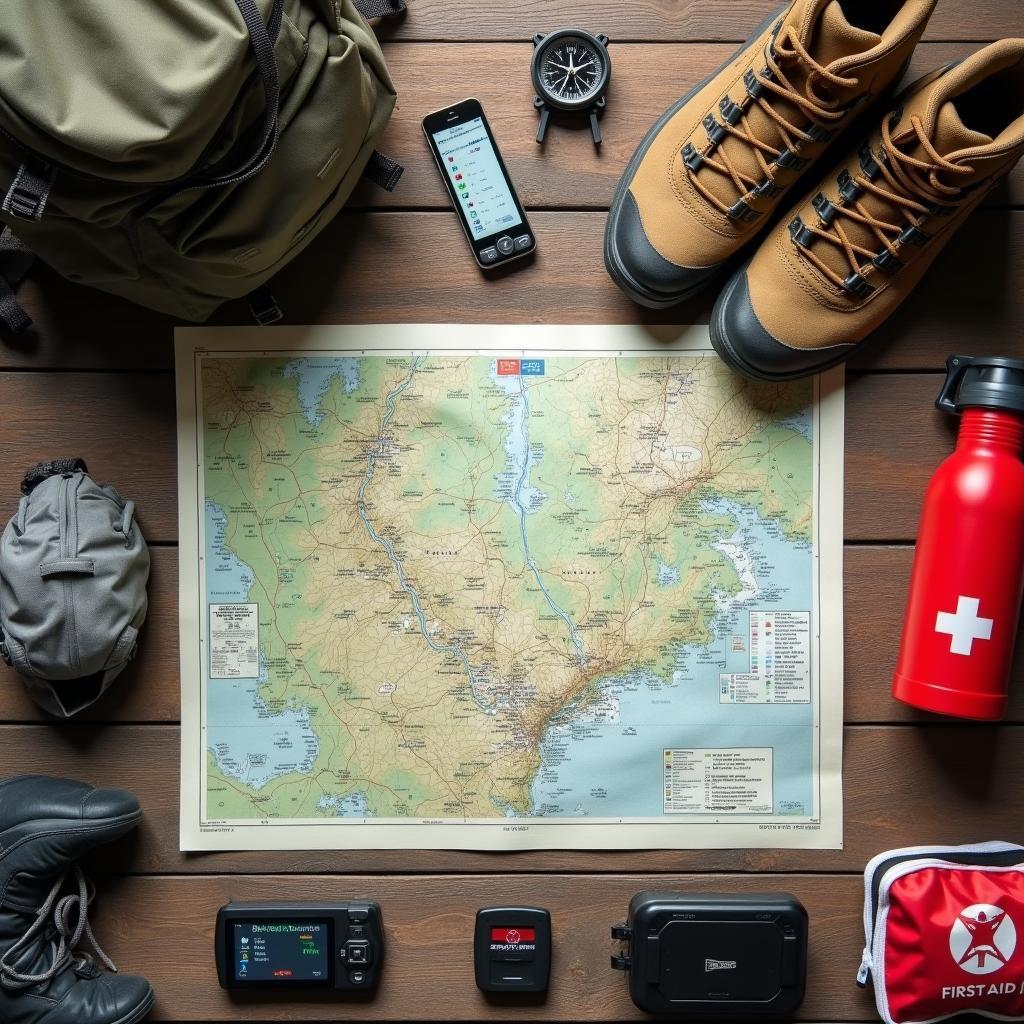 Bản đồ địa hình và các trang thiết bị cần thiết cho chuyến đi hiking an toàn
5. Gerund Phrases (Cụm danh động từ):
- As subject: “Spending extended periods in nature has transformative effects on mental health.” – Gerund làm chủ ngữ
- After prepositions: “I’m passionate about exploring remote wilderness areas.” – Gerund sau giới từ
Nếu bạn tìm hiểu thêm về describe a person who has encouraged you to pursue your passions, các kỹ năng mô tả nhân vật có thể áp dụng để kể về người đồng hành trong chuyến hiking.
6. Participle Clauses (Mệnh đề phân từ):
- Present participle: “Reaching the summit after hours of climbing, I felt an overwhelming sense of achievement.” – Thể hiện hành động xảy ra đồng thời
- Perfect participle: “Having completed several challenging treks, I now feel confident tackling more difficult routes.” – Thể hiện hành động xảy ra trước hành động chính
7. Inversion for Emphasis:
- Not only…but also: “Not only does hiking improve physical fitness, but it also enhances mental well-being.” – Nhấn mạnh cả hai khía cạnh
- Rarely/Seldom: “Rarely have I experienced such a profound connection with nature.” – Nhấn mạnh sự hiếm hoi
8. Subjunctive Mood (Thức giả định):
- It is essential/crucial/important that…: “It’s essential that hikers be properly prepared before attempting challenging trails.” – Diễn đạt sự cần thiết
- I suggest/recommend that…: “I recommend that beginners start with easier trails.” – Đưa ra lời khuyên formal
Khi so sánh với describe a time when you experienced something new, trải nghiệm hiking lần đầu cũng mang những cảm xúc và bài học tương tự về việc vượt qua thử thách mới.
Bài viết này đã cung cấp cho bạn một hướng dẫn toàn diện về cách xử lý chủ đề “Describe a place where you would like to go hiking” trong IELTS Speaking. Từ các câu hỏi Part 1 cơ bản đến câu trả lời Part 2 chi tiết với nhiều band điểm khác nhau, và các câu hỏi thảo luận sâu trong Part 3, bạn đã có trong tay một bộ công cụ hoàn chỉnh để tự tin bước vào phòng thi.
Hãy nhớ rằng, chìa khóa để đạt điểm cao không chỉ nằm ở việc học thuộc các bài mẫu, mà là hiểu rõ cách phát triển ý tưởng, sử dụng từ vựng phong phú một cách tự nhiên, và thể hiện khả năng tư duy phản biện. Luyện tập thường xuyên với các chủ đề khác nhau, ghi âm và nghe lại để tự đánh giá, và đừng ngại thử nghiệm với các cấu trúc ngữ pháp phức tạp hơn. Với sự chuẩn bị kỹ lưỡng và mindset đúng đắn, band điểm mơ ước của bạn hoàn toàn trong tầm tay.