
Chủ đề về du lịch và kỳ nghỉ là một trong những đề tài phổ biến và “thân thiện” nhất trong IELTS Speaking. Đặc biệt, dạng câu hỏi “Describe A Place Where You Would Like To Go On Holiday” xuất hiện với tần suất cao trong các kỳ thi từ năm 2020 đến nay, và dự đoán sẽ tiếp tục là chủ đề hot trong tương lai với khả năng xuất hiện ở mức Cao.
Theo thống kê từ IELTS-Simon.com và ielts-blog.com, chủ đề travel, holidays và vacation chiếm khoảng 15-20% tổng số đề thi Speaking Part 2 trong năm 2023-2024. Điều này có nghĩa là cứ 5-6 thí sinh thì có 1 người gặp phải đề này hoặc các biến thể tương tự.
Tuy nhiên, đây cũng là chủ đề mà nhiều thí sinh Việt Nam thường mắc lỗi vì:
- Trả lời quá mô tả, thiếu cảm xúc và lý do cá nhân
- Dùng từ vựng chung chung như “beautiful”, “interesting”, “famous”
- Không phân biệt được giữa bài nói tự nhiên và bài viết
Trong bài viết này, bạn sẽ học được:
- Câu hỏi thực tế từ các kỳ thi gần đây cho cả 3 Part
- Bài mẫu phân tích chi tiết theo từng band điểm (6-7, 7.5-8, 8.5-9)
- Hơn 50 từ vựng và cụm từ ăn điểm với phiên âm và ví dụ
- Chiến lược trả lời từ góc nhìn Examiner với 20+ năm kinh nghiệm
- Những lỗi phổ biến của học viên Việt Nam và cách khắc phục
IELTS Speaking Part 1: Introduction and Interview
Tổng Quan Về Part 1
Part 1 kéo dài 4-5 phút với các câu hỏi ngắn về cuộc sống hàng ngày, sở thích và thói quen của bạn. Đây là phần “warm-up” để bạn làm quen với examiner và môi trường thi.
Đặc điểm:
- Câu hỏi đơn giản, dễ hiểu, liên quan đến kinh nghiệm cá nhân
- Không yêu cầu phân tích sâu hay quan điểm phức tạp
- Thí sinh cần trả lời tự nhiên trong 2-3 câu (khoảng 20-30 giây/câu hỏi)
Chiến lược hiệu quả:
- Trả lời trực tiếp câu hỏi trong câu đầu tiên
- Mở rộng bằng lý do hoặc ví dụ cụ thể
- Sử dụng thì động từ chính xác
- Không nên nói quá dài (tránh vượt quá 40 giây)
Lỗi thường gặp của học viên Việt Nam:
- Trả lời dạng Yes/No mà không giải thích: “Do you like travelling?” – “Yes, I do.” (STOP)
- Dùng từ vựng quá đơn giản, lặp lại: “good”, “nice”, “beautiful”
- Thiếu ví dụ cụ thể từ kinh nghiệm bản thân
- Nói quá nhanh hoặc quá chậm do lo lắng
- Học thuộc câu trả lời template nghe không tự nhiên
Các Câu Hỏi Thường Gặp
Dựa trên nghiên cứu từ các đề thi thực tế 2023-2024, đây là những câu hỏi phổ biến về chủ đề holidays và travel:
Question 1: Do you like going on holiday?
Question 2: Where do you usually go on holiday?
Question 3: Who do you like to go on holiday with?
Question 4: What do you like to do when you’re on holiday?
Question 5: Did you go on holiday when you were younger?
Question 6: Do you prefer to travel alone or with others?
Question 7: What kind of places do you prefer to visit on holiday?
Question 8: How often do you go on holiday?
Question 9: Would you like to go on holiday to another country?
Question 10: What was your best holiday experience?
Phân Tích và Gợi Ý Trả Lời Chi Tiết
Question: Do you like going on holiday?
🎯 Cách tiếp cận:
- Trả lời Yes/No rõ ràng ngay câu đầu
- Đưa ra 1-2 lý do tại sao thích/không thích
- Có thể thêm ví dụ ngắn về kỳ nghỉ gần đây
📝 Sample Answer – Band 6-7:
“Yes, I do like going on holiday. It helps me relax and forget about work stress. I usually go to the beach or mountains during summer. It’s a good way to spend time with my family.”
Phân tích:
- Điểm mạnh: Trả lời rõ ràng, có lý do cơ bản (relax, forget work stress), đề cập địa điểm và mục đích
- Hạn chế: Từ vựng đơn giản (good, relax), thiếu detail cụ thể, câu ngắn và structure đơn giản
- Tại sao Band 6-7: Đáp ứng yêu cầu cơ bản, ý rõ ràng nhưng vocabulary và grammar chưa đa dạng, thiếu sophistication
📝 Sample Answer – Band 8-9:
“Absolutely! I’m quite passionate about travelling because it gives me the opportunity to recharge my batteries and break away from my daily routine. I particularly enjoy immersing myself in different cultures and trying local cuisine. Just last month, I took a trip to Da Lat, which was incredibly rejuvenating.”
Phân tích:
-
Điểm mạnh:
- Vocabulary phong phú và tự nhiên: “passionate about”, “recharge batteries”, “break away from”, “immersing myself in”, “rejuvenating”
- Grammar đa dạng: relative clause (which was incredibly rejuvenating), gerund (trying local cuisine)
- Ideas cụ thể và cá nhân: đề cập chuyến đi thực tế (Da Lat last month)
- Coherence tốt với linking: “because”, “particularly”, “Just last month”
-
Tại sao Band 8-9:
- Fluency: Trôi chảy, tự nhiên, không hesitation
- Vocabulary: Collocations natural (recharge batteries, break away from), topic-specific (immerse, rejuvenating)
- Grammar: Complex structures được sử dụng chính xác
- Pronunciation: Các từ như “rejuvenating”, “immersing” thể hiện pronunciation range
💡 Key Vocabulary & Expressions:
- passionate about (something): say mê, đam mê điều gì – shows strong emotion
- recharge my batteries: nạp lại năng lượng – idiomatic, natural
- break away from: thoát khỏi – phrasal verb, band 7+
- immerse myself in: đắm mình vào – sophisticated verb
- rejuvenating: /rɪˈdʒuːvəneɪtɪŋ/ làm trẻ lại, phục hồi sức lực – advanced vocabulary
Question: Where do you usually go on holiday?
🎯 Cách tiếp cận:
- Nêu rõ địa điểm cụ thể (tránh nói chung chung)
- Giải thích tại sao chọn nơi đó
- Có thể so sánh với các loại địa điểm khác
📝 Sample Answer – Band 6-7:
“I usually go to beach destinations like Nha Trang or Vung Tau. I like the beach because the weather is nice and I can swim. These places are not too far from my city, so it’s convenient.”
Phân tích:
- Điểm mạnh: Có địa điểm cụ thể (Nha Trang, Vung Tau), đưa ra lý do đơn giản
- Hạn chế: Vocabulary basic (nice, convenient), ideas còn surface-level, thiếu detail về trải nghiệm
- Tại sao Band 6-7: Adequate response nhưng chưa developed, language chưa sophisticated
📝 Sample Answer – Band 8-9:
“I’m drawn to coastal areas, especially lesser-known beaches in Central Vietnam. Places like Quy Nhon or Phu Yen offer the perfect blend of tranquillity and natural beauty without the tourist crowds you’d find in more commercialised destinations. I find that these off-the-beaten-track locations allow me to truly disconnect from the hustle and bustle of city life.”
Phân tích:
-
Điểm mạnh:
- Vocabulary tinh tế: “drawn to”, “blend of”, “off-the-beaten-track”, “disconnect from”, “hustle and bustle”
- Collocations natural: “tourist crowds”, “commercialised destinations”, “coastal areas”
- Ideas sâu hơn: không chỉ nói địa điểm mà còn explain preference (lesser-known vs commercialised)
- Complex structure: relative clause, prepositional phrases
-
Tại sao Band 8-9:
- Fluency: Smooth flow với discourse marker “especially”
- Vocabulary: Idiomatic expressions (off-the-beaten-track, hustle and bustle)
- Grammar: Mixed structures, accurate use of relative clauses
- Ideas: Shows personality và clear preference với reasoning
💡 Key Vocabulary & Expressions:
- be drawn to: bị thu hút bởi – more sophisticated than “like”
- blend of (something): sự kết hợp của – shows variety
- off-the-beaten-track: /ɒf ðə ˈbiːtən træk/ nơi ít người biết, hẻo lánh – idiomatic, Band 8+
- disconnect from: ngắt kết nối khỏi – modern, relevant
- hustle and bustle: /ˈhʌsəl ənd ˈbʌsəl/ sự hối hả, nhộn nhịp – fixed expression
 Học viên đang luyện tập IELTS Speaking chủ đề holiday với giáo viên bản ngữ trong lớp học chuyên nghiệp
Question: What do you like to do when you’re on holiday?
🎯 Cách tiếp cận:
- Đề cập 2-3 hoạt động cụ thể
- Giải thích tại sao thích những hoạt động này
- Có thể contrast với những gì bạn không thích làm
📝 Sample Answer – Band 6-7:
“When I’m on holiday, I like to relax and explore new places. I enjoy taking photos of beautiful scenery and trying local food. I also like to meet new people and learn about their culture. These activities make my holiday more interesting.”
Phân tích:
- Điểm mạnh: Có nhiều activities (relax, explore, take photos, try food, meet people), đề cập culture
- Hạn chế: Verb forms đơn giản, từ vựng generic (beautiful, interesting, new), thiếu specific examples
- Tại sao Band 6-7: Covers question nhưng lacks depth và sophisticated language
📝 Sample Answer – Band 8-9:
“I’m quite an adventure enthusiast, so I tend to seek out activities that get my adrenaline pumping – things like snorkeling, trekking through national parks, or even trying water sports I’ve never done before. That said, I also make it a point to sample the local cuisine and soak up the atmosphere at traditional markets. It’s all about striking a balance between excitement and cultural immersion for me.”
Phân tích:
-
Điểm mạnh:
- Self-description: “adventure enthusiast” – shows personality
- Action-oriented vocabulary: “seek out”, “get adrenaline pumping”, “make it a point to”, “soak up”
- Specific activities: snorkeling, trekking, water sports
- Complex ideas: balance between excitement và cultural immersion
- Discourse marker: “That said” shows contrast
-
Tại sao Band 8-9:
- Fluency: Natural flow với clear organization (active pursuits → cultural activities → balance)
- Vocabulary: Rich range với topic-specific terms và idiomatic language
- Grammar: Gerunds (trekking, trying), compound structures, relative clauses
- Coherence: Well-linked ideas với clear personal voice
💡 Key Vocabulary & Expressions:
- adventure enthusiast: người đam mê phiêu lưu – compound noun, specific
- adrenaline pumping: /əˈdrenəlɪn ˈpʌmpɪŋ/ tim đập mạnh, hồi hộp – vivid expression
- make it a point to: cố gắng làm điều gì, đặt mục tiêu – shows intentionality
- soak up the atmosphere: hòa mình vào không khí – idiomatic
- strike a balance: tìm sự cân bằng – fixed collocation, Band 7+
- cultural immersion: /ˈkʌltʃərəl ɪˈmɜːʃən/ sự đắm chìm văn hóa – academic-sounding but natural in speaking
IELTS Speaking Part 2: Long Turn (Cue Card)
Tổng Quan Về Part 2
Part 2 là phần độc thoại kéo dài 3-4 phút bao gồm 1 phút chuẩn bị và 2-3 phút nói không bị ngắt. Đây là phần quan trọng nhất để thể hiện khả năng nói dài, tổ chức ý và sử dụng ngôn ngữ đa dạng.
Đặc điểm:
- Examiner sẽ đưa cho bạn một cue card với chủ đề và 4 bullet points
- Bạn có giấy và bút để ghi chú trong 1 phút
- Phải nói liên tục 2-3 phút (tối thiểu 1.5 phút để tránh bị trừ điểm)
- Không được hỏi lại hoặc tương tác với examiner trong lúc nói
Chiến lược hiệu quả:
- Sử dụng hết 1 phút chuẩn bị: Ghi keywords, không viết câu hoàn chỉnh
- Organize notes theo structure: Intro → Bullet 1 → Bullet 2 → Bullet 3 → Bullet 4 (explain)
- Nói đủ thời gian: Aim for 2-2.5 phút, develop mỗi bullet point khoảng 30-40 giây
- Tập trung vào bullet cuối (explain): Đây là phần scoring cao nhất vì yêu cầu critical thinking
- Use past tense cho experiences: Nếu đề hỏi về quá khứ
- Use conditional/future cho plans: “would like to” trong topic này
Lỗi thường gặp:
- Ghi chú quá chi tiết trong 1 phút preparation, không còn thời gian suy nghĩ structure
- Nói dưới 1.5 phút vì thiếu ideas hoặc vocabulary
- Bỏ sót bullet points (đặc biệt hay quên bullet thứ 3)
- Không develop phần “explain” đầy đủ
- Nói theo template cứng nhắc, không natural
Cue Card
Describe a place where you would like to go on holiday
You should say:
- Where this place is
- What you would do there
- Who you would go with
- And explain why you would like to visit this place
Phân Tích Đề Bài
Dạng câu hỏi: Describe a place – Future plan/Wish
Thì động từ chính:
- Would/could + V: Vì đây là nơi bạn “muốn đi” (chưa đi) – future hypothetical
- Có thể mix với present simple khi describe nơi đó: “It is located…”, “The place has…”
Bullet points phải cover:
- Where this place is: Location cụ thể + geography/context
- What you would do there: Activities, experiences (2-3 examples)
- Who you would go with: Travel companion + lý do chọn người đó
- Explain why: Đây là phần QUAN TRỌNG NHẤT – reasons phải personal, emotional, specific
Câu “explain” quan trọng:
Phần explain chiếm 40% câu trả lời và là scoring criteria chính. Examiner muốn nghe:
- Personal reasons (không phải generic như “it’s beautiful”)
- Emotional connection (why this place matters to YOU)
- Specific reasons (culture, history, personal dream, recommendations)
- Multiple reasons nếu có thể (2-3 reasons)
Sample Answer – Band 6-7
Thời lượng: Khoảng 1.5-2 phút
“I would like to talk about New Zealand, which is a country I really want to visit for my holiday.
New Zealand is located in the southwestern Pacific Ocean. It has two main islands and is famous for its natural beauty and clean environment. Many people say it’s one of the most beautiful countries in the world.
If I go there, I would do many activities. First, I would visit Milford Sound to see the fjords and mountains. I heard it’s very beautiful there. I would also like to try some adventure sports like bungee jumping or skydiving because New Zealand is famous for these activities. Another thing I want to do is visit Hobbiton, which is the film location of The Lord of the Rings movies. I’m a big fan of that movie series.
I would go there with my best friend because she also loves travelling and adventure activities. We have similar interests, so I think we would enjoy the trip together. She is also a fan of The Lord of the Rings, so she would be excited to visit Hobbiton too.
I would like to visit New Zealand for several reasons. Firstly, I love nature and outdoor activities, and New Zealand is perfect for that. The scenery there is amazing with mountains, lakes, and forests. Secondly, it seems like a very peaceful and safe country to visit. I also want to experience the local culture and try their traditional food. I’ve seen many beautiful photos of New Zealand on social media, and it has been my dream destination for a long time.”
Phân Tích Band Điểm
| Tiêu chí | Band | Nhận xét |
|---|---|---|
| Fluency & Coherence | 6-7 | Có flow tương đối smooth, cover hết bullet points, dùng linking words cơ bản (First, Another thing, Firstly, Secondly). Tuy nhiên, ideas chưa được develop sâu, còn surface-level |
| Lexical Resource | 6-7 | Vocabulary adequate: natural beauty, adventure sports, film location, outdoor activities, dream destination. Nhưng còn nhiều từ generic (beautiful, amazing, perfect) và lặp lại |
| Grammatical Range & Accuracy | 6-7 | Dùng được conditional (would do, would visit), relative clauses (which is…). Cấu trúc đơn giản, câu ngắn, chưa có complex sentences nhiều |
| Pronunciation | 6-7 | Clear pronunciation với các từ phổ biến, có thể phát âm được địa danh và từ khóa topic |
Điểm mạnh:
- ✅ Cover đầy đủ tất cả 4 bullet points
- ✅ Có specific examples (Milford Sound, Hobbiton, Lord of the Rings)
- ✅ Structure rõ ràng, dễ follow
- ✅ Đủ thời lượng (khoảng 1.5-2 phút)
Hạn chế:
- ⚠️ Vocabulary còn basic và generic (beautiful xuất hiện 3 lần, amazing, perfect)
- ⚠️ Ideas chưa personal enough – nhiều người có thể nói tương tự
- ⚠️ Phần explain chưa emotional, còn list reasons khô khan
- ⚠️ Grammar structures đơn giản, thiếu variety
- ⚠️ Thiếu vivid descriptions và sensory details
Sample Answer – Band 7.5-8
Thời lượng: Khoảng 2-2.5 phút
“I’d love to talk about Iceland, which has been at the top of my bucket list for quite some time now.
Iceland is a Nordic island nation situated in the North Atlantic Ocean, right between Greenland and mainland Europe. It’s particularly famous for its dramatic landscapes – think volcanic terrain, massive glaciers, and those stunning geothermal hot springs you see all over Instagram. The country is also remarkably positioned on the Mid-Atlantic Ridge, which makes it a geological wonderland.
If I had the chance to go there, there are so many things I’d love to experience. I’d definitely want to chase the Northern Lights – I’ve been fascinated by this natural phenomenon since I was a child. I’d also love to take a dip in the Blue Lagoon, which is apparently this surreal milky-blue geothermal spa surrounded by black lava fields. Beyond that, I’m really keen on doing the Golden Circle route, where you can see spectacular waterfalls like Gullfoss and the Geysir geothermal area. And if the weather permits, I’d try glacier hiking – something completely outside my comfort zone but incredibly exciting.
I’d probably go with my older brother, who’s an amateur photographer. He’s been nagging me to do this trip with him for ages because Iceland is basically a photographer’s paradise with its unique landscapes. We also share a passion for off-beat destinations, and he’s much better at handling logistics than I am, which would be helpful in such a remote location.
The reason I’m so drawn to Iceland is quite multifaceted. For one, I’m absolutely captivated by the idea of experiencing such raw, untouched nature – the kind of landscapes that make you feel incredibly small in the best way possible. It’s such a stark contrast to the urban jungle I live in. I’m also really interested in how Icelanders have harnessed geothermal energy for their daily lives, which speaks to my interest in sustainable living. On a more personal level, I think there’s something almost therapeutic about being in such an isolated, pristine environment – it would be the perfect way to disconnect and reset mentally. Plus, I’ve heard Icelandic people have this wonderful concept called ‘þetta reddast‘ which roughly means ‘it will all work out’, and I’d love to immerse myself in that laid-back mentality even just for a week or two.”
Phân Tích Band Điểm
| Tiêu chí | Band | Nhận xét |
|---|---|---|
| Fluency & Coherence | 7.5-8 | Smooth delivery, ideas flow naturally với clear progression. Dùng discourse markers sophisticated (Beyond that, On a more personal level). Không có noticeable hesitation |
| Lexical Resource | 7.5-8 | Wide range vocabulary: at the top of bucket list, dramatic landscapes, geological wonderland, multifaceted, captivated by, pristine environment. Collocations natural: handle logistics, harness energy, stark contrast |
| Grammatical Range & Accuracy | 7.5-8 | Complex structures: relative clauses, conditionals (if I had the chance), mixed tenses. Passive voice: remarkably positioned. Present perfect: has been nagging |
| Pronunciation | 7.5-8 | Clear pronunciation, good stress patterns, intonation varied |
So Sánh Với Band 6-7
| Khía cạnh | Band 6-7 | Band 7.5-8 |
|---|---|---|
| Vocabulary | “beautiful”, “amazing”, “perfect” | “dramatic landscapes”, “geological wonderland”, “surreal”, “pristine environment” |
| Grammar | Simple conditionals: “I would visit” | Complex mixed conditionals: “If I had the chance”, perfect aspect: “has been at the top” |
| Ideas | Generic: “I love nature” | Personal & specific: “such raw, untouched nature that makes you feel incredibly small”, cultural reference (þetta reddast) |
| Personality | Neutral, could be anyone | Strong personal voice: interests, relationship with brother, contrast with urban life |
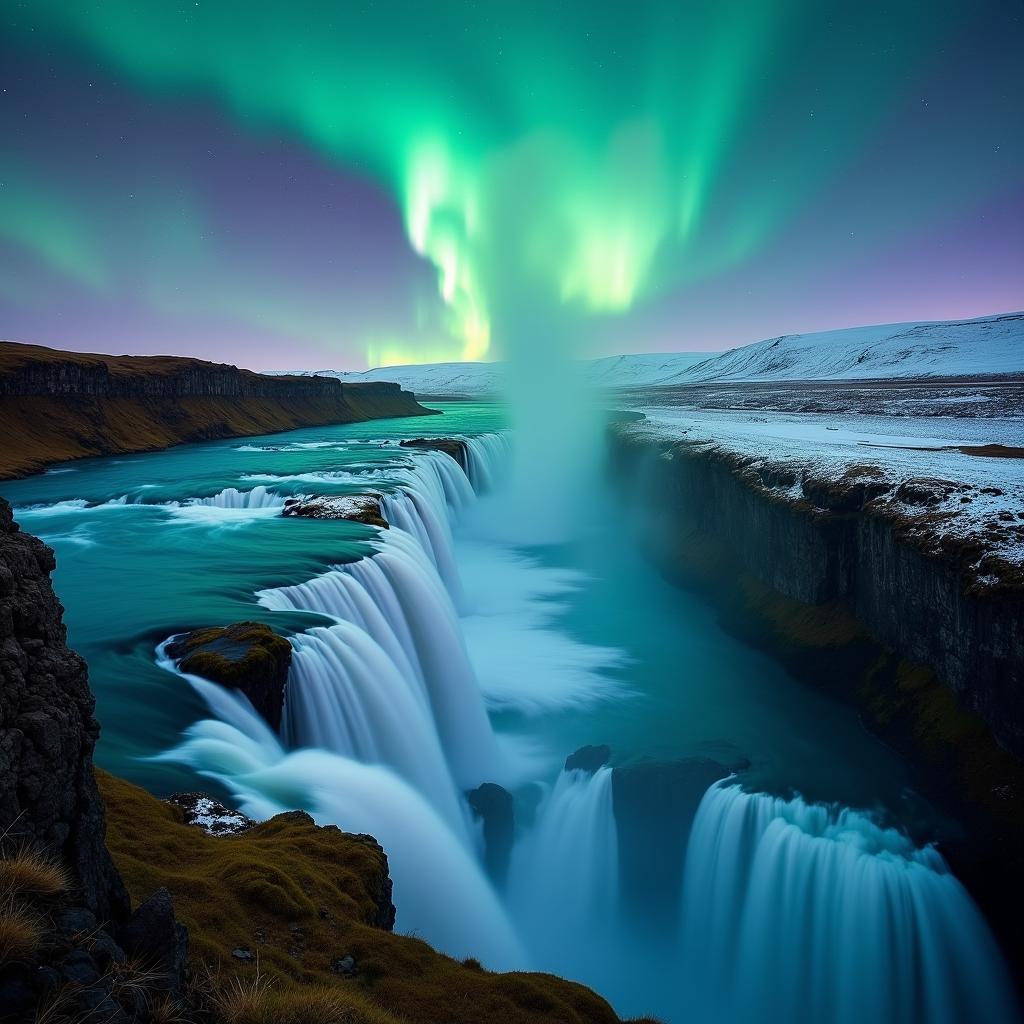 Phong cảnh thiên nhiên Iceland với thác nước hùng vĩ và cực quang rực rỡ cho kỳ nghỉ lý tưởng
Sample Answer – Band 8.5-9
Thời lượng: 2.5-3 phút đầy đủ
“I’d like to describe Patagonia, which has been calling to me for years now – it’s this vast wilderness region that straddles the southern end of Chile and Argentina.
What really sets Patagonia apart is its sheer remoteness and staggering natural diversity. We’re talking about a region that encompasses everything from the jagged peaks of the Andes and colossal glaciers to windswept steppes and pristine fjords. It’s one of those rare places on Earth that remains relatively untainted by mass tourism, which is becoming increasingly difficult to find. The Torres del Paine National Park in Chilean Patagonia, in particular, is often described as one of the most spectacular hiking destinations on the planet, with these iconic granite towers that just jut out from the landscape in the most dramatic fashion.
In terms of what I’d do there, I’m envisioning a pretty intensive trekking experience. I’d love to tackle the W Trek in Torres del Paine, which is apparently a four-to-five-day circuit that takes you through some of the park’s most breathtaking scenery. I’m talking about hiking past turquoise glacial lakes, getting up close to the Perito Moreno Glacier – which is one of the few glaciers in the world that’s actually still advancing rather than receding – and camping under what must be some of the clearest night skies you can imagine. I’d also be keen to venture to El Chaltén, the so-called ‘trekking capital of Argentina‘, to hike to Laguna de los Tres for that iconic view of Mount Fitz Roy. Beyond the physical challenge, I’m really drawn to the idea of pushing my limits and experiencing that sense of accomplishment that comes from completing a demanding multi-day trek.
As for companionship, I’d actually prefer to go with a small organized group rather than friends or family. I know that might sound unusual, but hear me out – for a trip of this magnitude, I think there’s real value in having an experienced guide who knows the terrain intimately and can enrich the experience with local knowledge. Plus, there’s something quite liberating about traveling with strangers who share your passion for adventure – you’re not weighed down by existing dynamics or expectations. That said, I’d make sure it’s a small-scale, sustainable tour operator that practices responsible tourism, because the last thing I’d want is to contribute to the environmental degradation of such a fragile ecosystem.
Now, as for why this destination resonates with me so deeply – it’s quite a layered answer. On the surface, there’s the obvious appeal of testing myself physically in one of the world’s most challenging yet rewarding environments. I’ve reached a point in my life where I crave experiences that push me out of my comfort zone, and Patagonia seems to offer that in spades. But there’s more to it than just the adventure aspect. I’m increasingly conscious of the fact that places like Patagonia are under threat from climate change – those glaciers won’t be there forever, and I feel this sense of urgency to witness them while I still can. It’s a bit sobering to think about, actually. There’s also this philosophical dimension – I’ve been reading a lot about the concept of ‘wilderness therapy‘ and how spending time in vast, untamed landscapes can be profoundly transformative. In our hyper-connected, constantly stimulated modern world, the idea of being somewhere so remote that you’re completely disconnected from technology is incredibly appealing. I imagine there’s something almost meditative about walking for days with nothing but the sound of wind, the crunch of boots on gravel, and the sheer magnitude of nature around you. Finally, on a more visceral level, I’m just utterly captivated by the photographs I’ve seen – those electric blue glaciers, the golden hour light hitting the granite spires, the ethereal quality of the Patagonian landscape. I want to experience that raw beauty firsthand, to stand in awe of something so much greater than myself. It’s about collecting experiences rather than things, and I can’t think of a more meaningful way to spend a holiday than immersing myself in one of the last great wilderness areas on Earth.”
Phân Tích Band Điểm
| Tiêu chí | Band | Nhận xét |
|---|---|---|
| Fluency & Coherence | 8.5-9 | Exceptionally fluent với sophisticated linking devices (On the surface, But there’s more to it, That said, Finally on a visceral level). Ideas flow naturally và logically. No hesitation, self-correction minimal và natural |
| Lexical Resource | 8.5-9 | Wide-ranging và precise: straddles, encompasses, untainted, jut out, receding, sobering, visceral, ethereal. Idiomatic expressions: calling to me, in spades, hear me out, weighed down by. Natural collocations: sheer remoteness, dramatic fashion, fragile ecosystem |
| Grammatical Range & Accuracy | 8.5-9 | Full range of structures: relative clauses, participle clauses (getting up close…), conditional forms, passive structures, complex noun phrases. Consistent accuracy với natural errors only |
| Pronunciation | 8.5-9 | Sustained intelligibility, appropriate word và sentence stress, varied intonation patterns |
Tại Sao Bài Này Xuất Sắc
🎯 Fluency Hoàn Hảo:
Bài nói flow như một conversation thực sự, không phải recite. Có những discourse markers tinh tế như “hear me out”, “I know that might sound unusual, but”, “It’s a bit sobering to think about, actually” – đây là cách người bản ngữ nói chuyện tự nhiên. Candidate biết cách self-correct elegantly (“I’m talking about hiking past…”) và add afterthoughts naturally (“which is becoming increasingly difficult to find”).
📚 Vocabulary Tinh Vi:
Không chỉ dùng từ khó, mà dùng đúng và natural:
- “calling to me” thay vì boring “I want to go” – more poetic và emotional
- “straddles” /ˈstrædəlz/ – perfect verb cho geographical description
- “in spades” – idiomatic expression có nghĩa “rất nhiều”
- “sobering” – sophisticated adjective cho serious realization
- “visceral level” /ˈvɪsərəl/ – shows intellectual depth
📝 Grammar Đa Dạng:
- Present perfect continuous: “has been calling to me for years”
- Participle clauses: “talking about a region that encompasses…”
- Relative clauses embedded naturally: “glaciers that are actually still advancing”
- Conditional with modal: “I’d make sure it’s a small-scale operator”
- Passive structures: “is often described as…”
💡 Ideas Sâu Sắc:
Đây là điểm quan trọng nhất. Bài này không chỉ describe mà còn demonstrate:
- Personal growth mindset: “push me out of my comfort zone”, “testing myself”
- Environmental awareness: climate change threat, responsible tourism, fragile ecosystem
- Philosophical depth: wilderness therapy, disconnect from technology, meditative quality
- Emotional intelligence: “sense of urgency”, “stand in awe”, “profoundly transformative”
- Cultural knowledge: references to specific locations (El Chaltén, Mount Fitz Roy)
Ideas are layered – “On the surface… But there’s more to it… There’s also this philosophical dimension… Finally, on a visceral level” – shows ability to analyze từ nhiều góc độ.
🎙️ Natural Speaking Style:
- Self-aware comments: “I know that might sound unusual”
- Hedging language: “apparently”, “quite”, “I imagine”
- Emphatic structures: “the last thing I’d want”, “I can’t think of a more meaningful way”
- Contractions: “We’re talking about”, “you’re not weighed down”
Follow-up Questions (Rounding Off Questions)
Sau khi bạn nói xong Part 2, examiner thường hỏi 1-2 câu ngắn để transition sang Part 3:
Question 1: Have you made any plans to visit Patagonia?
Band 6-7 Answer:
“Not yet, but I’m planning to save money for this trip. I think I need about one or two years to prepare because it’s quite expensive.”
Band 8-9 Answer:
“I’m in the early stages of planning, actually. I’ve been setting aside a portion of my salary each month and doing my homework on tour operators and optimal travel times. I’m aiming for the austral summer – so around November to February – when the weather’s most conducive to trekking. Realistically, I’m looking at making this happen within the next 18 months or so.”
Vocabulary Notes:
- early stages of planning: đang trong giai đoạn đầu lên kế hoạch
- set aside: dành dụm, để dành
- do my homework: nghiên cứu kỹ càng
- conducive to: /kənˈdjuːsɪv/ thuận lợi cho
- realistically: thực tế mà nói
Question 2: Do you think this trip will be very different from your usual holidays?
Band 6-7 Answer:
“Yes, definitely. My usual holidays are more relaxing, like going to the beach. But Patagonia will be more challenging and active.”
Band 8-9 Answer:
“Oh, dramatically different. My typical holidays tend to be fairly low-key – you know, beach resorts, good food, maybe some light sightseeing. This would be a complete departure from that. It’s much more about embracing discomfort and physical endurance rather than relaxation. I suppose I’m craving that stark contrast – a total 180 from my day-to-day routine.”
Vocabulary Notes:
- dramatically different: khác biệt hoàn toàn
- low-key: nhẹ nhàng, giản dị
- complete departure from: khác hoàn toàn so với
- embrace discomfort: đón nhận sự khó khăn
- a total 180: /wʌn ˈeɪti/ thay đổi hoàn toàn (180 degrees)
 Patagonia trekking đường mòn núi non và fjord choáng ngợp cho kỳ nghỉ phượt thử thách
IELTS Speaking Part 3: Two-way Discussion
Tổng Quan Về Part 3
Part 3 kéo dài 4-5 phút và là phần khó nhất trong IELTS Speaking vì yêu cầu bạn thảo luận các vấn đề trừu tượng, phân tích nhiều góc độ và demonstrate critical thinking.
Đặc điểm:
- Câu hỏi liên quan đến chủ đề Part 2 nhưng ở level abstract, society-wide
- Yêu cầu opinions, analysis, comparisons, predictions
- Không có “right answer” – examiner đánh giá cách bạn express ideas
- Thí sinh phải nói dài hơn Part 1 (3-5 câu cho mỗi câu hỏi)
Yêu cầu:
- Analyze & Evaluate: Không chỉ describe mà phải explain why, what impact, how it affects
- Multiple perspectives: Xem xét nhiều góc độ (cá nhân, xã hội, kinh tế, môi trường)
- Examples từ society: Không chỉ personal examples mà có thể nói về trends, statistics, other people
- Acknowledge complexity: “It depends on…”, “There are both advantages and disadvantages…”
Chiến lược:
- Structure answers clearly: Direct answer → Reason 1 + example → Reason 2 + example → Conclusion
- Use discourse markers: Well, Actually, I think, To be honest, On the one hand
- Give balanced views: Không nên absolute (always, never, everyone) mà dùng tentative language (generally, tend to, might)
- Develop each point: Mỗi reason cần 1-2 câu giải thích/example
- Stay relevant: Không đi xa chủ đề, luôn link back to question
Lỗi thường gặp của học viên Việt Nam:
- Trả lời quá ngắn như Part 1 (1-2 câu)
- Chỉ nói về personal experience thay vì societal trends
- Thiếu từ vựng abstract (development, sustainability, consequences)
- Không có clear structure, nhảy lung tung giữa các ideas
- Dùng ngôn ngữ quá absolute: “Everyone thinks…”, “It’s always…”
- Thiếu critical thinking, chỉ nói một chiều
Các Câu Hỏi Thảo Luận Sâu
Theme 1: Tourism Impact & Development
Question 1: Why do you think tourism has become so popular in recent years?
🎯 Phân tích câu hỏi:
- Dạng: Cause & Effect – tại sao tourism tăng
- Key words: “become so popular”, “recent years” – focus on trends và reasons
- Cách tiếp cận:
- Direct answer: Yes, tourism has increased
- Reason 1: Economic factors (affordable flights, rising income)
- Reason 2: Social factors (social media, FOMO)
- Reason 3: Technological factors (easy booking, information access)
- Brief conclusion
📝 Sample Answer – Band 6-7:
“I think tourism has become very popular because traveling is now more affordable than before. Budget airlines offer cheap flights, so more people can travel abroad. Also, social media makes people want to travel more. When they see beautiful photos on Instagram or Facebook, they want to visit those places too. Young people especially like to travel and share their experiences online. The internet also makes it easy to find information and book hotels, which was difficult in the past.”
Phân tích:
- Structure: Có structure cơ bản: reason 1 (affordable) → reason 2 (social media) → reason 3 (internet)
- Vocabulary: Adequate nhưng đơn giản: “very popular”, “cheap”, “beautiful photos”
- Tại sao Band 6-7:
- Ideas clear nhưng development còn shallow
- Thiếu sophisticated vocabulary và complex grammar
- Examples còn general, không specific data/trends
- Chưa có discourse markers đa dạng
📝 Sample Answer – Band 8-9:
“Well, I’d say the surge in tourism over the past couple of decades can be attributed to several converging factors.
First and foremost, there’s the economic dimension. The proliferation of budget airlines and competitive pricing strategies have made international travel far more accessible to the masses. What was once considered a luxury reserved for the affluent is now within reach of middle-income families. We’ve also seen rising disposable incomes in emerging economies like China and India, creating entirely new markets of travelers.
Beyond that, I think we can’t underestimate the role of social media and digital technology. Platforms like Instagram have fundamentally transformed how people perceive travel – it’s become less about the actual experience and more about curating a desirable image. There’s this pervasive culture of FOMO – fear of missing out – where people feel compelled to visit certain destinations simply because they’re ‘Instagrammable‘.
Additionally, advancements in technology have streamlined the entire travel planning process. Everything from comparing prices to reading reviews and booking accommodations can be done at your fingertips. This convenience factor has lowered the barriers to travel considerably.
That said, I do think there’s also a more philosophical shift happening – particularly among millennials and Gen Z. There’s been this move toward prioritizing experiences over material possessions, which has fueled what some call the ‘experience economy‘. People would rather spend money on a trip to Bali than on a new car, for instance.”
Phân tích:
- Structure: Exceptionally clear với signposting: “First and foremost”, “Beyond that”, “Additionally”, “That said”
- Vocabulary:
- Advanced academic: surge, attributed to, proliferation, converging factors, proliferate, streamlined
- Topic-specific: disposable income, emerging economies, curating image, FOMO
- Sophisticated collocations: competitive pricing strategies, accessible to masses, lower the barriers
- Grammar:
- Complex structures: passive voice (can be attributed to), relative clauses (what was once considered)
- Noun phrases: proliferation of budget airlines, pervasive culture of FOMO
- Gerunds: comparing prices, reading reviews, booking accommodations
- Critical Thinking:
- Multiple perspectives: economic, social, technological, philosophical
- Specific examples: Instagram, millennials vs Gen Z, China and India
- Shows awareness of trends: experience economy
- Balanced view: acknowledges complexity
💡 Key Language Features:
- Discourse markers: “Well, I’d say”, “First and foremost”, “Beyond that”, “Additionally”, “That said”
- Tentative language: “I think”, “I’d say”, “some call”
- Abstract nouns: proliferation, dimension, convergence, barriers, shift
- Cause-effect language: “attributed to”, “fueled”, “transformed”
Question 2: What are the advantages and disadvantages of developing tourism in a country?
🎯 Phân tích câu hỏi:
- Dạng: Advantage-Disadvantage – yêu cầu balanced view
- Key words: “developing tourism”, “in a country” – national/societal level, not personal
- Cách tiếp cận:
- Acknowledge both sides
- 2 advantages with explanation/examples
- 2 disadvantages with explanation/examples
- Brief balanced conclusion
📝 Sample Answer – Band 6-7:
“Tourism has both good and bad effects on a country.
On the positive side, tourism brings money to the local economy. It creates jobs in hotels, restaurants, and tourist attractions. Local people can sell souvenirs or offer tour guide services. Also, tourism helps preserve historical sites because the government can use tourism money to maintain them.
However, there are also disadvantages. Too many tourists can damage the environment and cultural sites. For example, some beaches become polluted because of mass tourism. Local people’s lives can be disturbed by crowds. Prices of goods might increase because tourists can pay more. Some traditional areas might lose their authentic culture and become too commercialized.
So I think tourism is good for economy but we need to control it carefully to protect the environment and local culture.”
Phản tích:
- Structure: Clear advantages section và disadvantages section với examples
- Vocabulary: Functional nhưng basic: “good and bad effects”, “brings money”, “too many”
- Ideas: Relevant và sensible nhưng predictable
- Tại sao Band 6-7:
- Covers question đầy đủ với both sides
- Examples có nhưng chưa specific (which beaches? where?)
- Language còn simple, thiếu sophistication
- Conclusion hơi weak, không add new insight
📝 Sample Answer – Band 8-9:
“This is quite a nuanced question because tourism development can be a double-edged sword for nations.
On the positive side, the economic benefits are quite substantial. Tourism can be a major revenue generator, particularly for developing countries that might lack other economic drivers. It’s not just about the direct income from accommodation and attractions; there’s also a multiplier effect – tourists spend money on dining, transportation, shopping, which permeates through the local economy. Job creation is another significant advantage, and importantly, these tend to be jobs that span various skill levels, from hospitality workers to specialized tour guides. We’ve seen this play out successfully in countries like Costa Rica, which has leveraged its natural beauty to build a thriving eco-tourism sector that now accounts for a significant portion of its GDP.
Furthermore, tourism can incentivize the preservation of cultural heritage and natural sites. When these assets become economically valuable through tourism, there’s more impetus to protect them. Historic districts get restored, traditional crafts survive because there’s a market, and natural parks receive funding.
That being said, the downsides can be quite severe if tourism isn’t managed responsibly. Overtourism has become a real concern in places like Venice, Barcelona, and even Angkor Wat in Cambodia. The sheer volume of visitors can lead to environmental degradation – erosion, pollution, disruption of local ecosystems. We’re seeing coral reefs dying, hiking trails being worn down, and wildlife being disturbed.
There’s also the issue of cultural commodification. When tourism becomes the dominant industry, there’s a risk that local culture gets diluted or performed for tourists rather than being authentically lived. Traditional festivals might become tourist spectacles rather than meaningful community events. The social fabric can also be strained – housing prices might skyrocket as properties are converted to short-term rentals, pricing out locals. You see this phenomenon in cities like Lisbon and Prague.
On balance, I’d say the key is sustainable tourism management. Countries need to find that sweet spot where they’re reaping the economic benefits while implementing measures like visitor caps, environmental protection regulations, and ensuring that local communities actually benefit from tourism revenue rather than just bearing the brunt of its negative impacts.”
Phân tích:
-
Structure:
- Sophisticated organization: intro acknowledging complexity → advantages (2 main points với sub-points) → disadvantages (2 main points) → balanced conclusion với solution
- Clear signposting: “On the positive side”, “Furthermore”, “That being said”, “There’s also”, “On balance”
-
Vocabulary:
- Advanced academic: nuanced, substantial, multiplier effect, permeates through, commodification, diluted, skyrocket
- Topic-specific: revenue generator, eco-tourism sector, overtourism, environmental degradation, social fabric
- Precise verbs: leverage, incentivize, accounts for, strain
- Strong collocations: double-edged sword, span various skill levels, bear the brunt, reap benefits
-
Grammar:
- Complex structures: relative clauses, participle clauses (ensuring that…, pricing out…)
- Conditional: if tourism isn’t managed
- Passive structures: gets diluted, are converted
- Variety of tenses: present perfect (has become), present continuous (we’re seeing)
-
Critical Thinking:
- Depth of analysis: Không chỉ nói “creates jobs” mà explain “span various skill levels”
- Specific examples: Costa Rica eco-tourism, Venice overtourism, Barcelona/Lisbon housing crisis
- Sophisticated concepts: multiplier effect, cultural commodification, social fabric
- Balanced conclusion: Doesn’t say tourism is good/bad, mà proposes solution (sustainable management)
- Real-world awareness: References actual places và current issues
💡 Key Language Features:
- Hedging: “quite”, “can be”, “tend to”, “might”
- Emphasis: “not just… there’s also”, “importantly”, “significantly”
- Contrast markers: “That being said”, “On balance”
- Abstract nouns: preservation, incentivize, impetus, degradation, commodification
Theme 2: Travel Preferences & Behavior
Question 3: Do you think people’s preferences for holiday destinations have changed compared to the past?
🎯 Phân tích câu hỏi:
- Dạng: Compare past vs present – trends over time
- Key words: “preferences”, “changed”, “compared to the past”
- Cách tiếp cận:
- Direct answer: Yes, definitely changed
- How it was in the past (brief)
- How it is now (main focus)
- Reasons for change
- Brief conclusion or prediction
📝 Sample Answer – Band 6-7:
“Yes, I think holiday preferences have changed a lot. In the past, people usually went to popular tourist destinations like famous cities or beaches. They followed tour groups and visited well-known attractions.
Nowadays, people want more unique experiences. They prefer to explore less touristy places and have authentic local experiences. Young travelers especially like adventure activities and cultural immersion. They don’t just want to take photos at famous landmarks; they want to understand the local culture and meet local people.
I think this change happened because of the internet and social media. People can find information about hidden destinations online. They also want to post different photos on social media, not the same pictures everyone has.”
Phân tích:
- Structure: Past → Present → Reason for change
- Ideas: Relevant và logical
- Tại sao Band 6-7:
- Clear comparison nhưng còn general
- Examples chưa specific enough
- Vocabulary adequate nhưng repetitive (people x4, want x3)
- Thiếu sophisticated language để express trends
📝 Sample Answer – Band 8-9:
“Absolutely, there’s been a marked shift in travel preferences, particularly over the last two decades or so.
Traditionally, holiday planning was fairly formulaic – people would opt for package tours to well-trodden destinations like Paris, London, or beach resorts in Thailand. The emphasis was very much on ticking off famous landmarks, and there was a certain herd mentality where everyone wanted to see the same things. Travel was status-driven to some extent – it was about saying you’d been to these iconic places.
Fast forward to today, and we’re seeing quite a different landscape. There’s been this pronounced trend toward what I’d call experiential travel. Modern travelers, especially millennials and Gen Z, are increasingly seeking out destinations that offer authentic, off-the-beaten-path experiences rather than just conventional tourist attractions. They want to immerse themselves in local culture, try home-cooked meals with families, take cooking classes, or volunteer. There’s also been a surge in adventure tourism and eco-tourism – people want to do something meaningful or challenging rather than just lounging by a pool.
I think several factors are driving this transformation. First, the democratization of information through the internet means people can uncover hidden gems that weren’t accessible through traditional travel agencies. Travel bloggers and influencers have also played a role in showcasing less mainstream destinations.
Secondly, there’s been a cultural shift toward valuing experiences over material goods. People increasingly see travel as a form of self-development and education rather than just escapism.
Additionally, overtourism has made some traditional hotspots less appealing. When you see photos of crowds at Machu Picchu or the Trevi Fountain, it’s less enticing. People want to avoid that ‘been there, done that‘ feeling and find somewhere that feels genuinely special to them.
Looking ahead, I think we’ll see this trend continue, possibly with an even greater emphasis on sustainable and responsible travel as environmental awareness grows.”
Phân tích:
-
Structure:
- Time-based comparison: Past (formulaic) → Present (experiential) → Reasons → Future prediction
- Clear transitions showing time progression: “Traditionally”, “Fast forward to today”, “Looking ahead”
-
Vocabulary:
- Sophisticated descriptors: marked shift, formulaic, pronounced trend, democratization
- Travel-specific: package tours, well-trodden, off-the-beaten-path, overtourism
- Abstract concepts: herd mentality, status-driven, self-development
- Strong verbs: opt for, tick off, uncover, showcase
-
Grammar:
- Variety of tenses: present perfect (there’s been), present continuous (we’re seeing), future (we’ll see)
- Participle clauses: “especially millennials and Gen Z”
- Comparative structures: “rather than just”
-
Critical Thinking:
- Sophisticated analysis: Không chỉ nói changed mà explain WHY (information access, cultural shift, overtourism)
- Generational insight: Mentions millennials vs older travelers
- Multiple dimensions: Economic, social, technological, environmental factors
- Forward-looking: Includes prediction about future trends
- Specific examples: Machu Picchu, Trevi Fountain, Thailand, Paris
Question 4: Why do some people prefer to travel alone while others prefer group travel?
🎯 Phân tích câu hỏi:
- Dạng: Contrast & Explain – so sánh hai preferences
- Key words: “prefer”, “alone”, “group travel”, “why”
- Cách tiếp cận:
- Acknowledge both preferences are valid
- Reasons for solo travel (2-3 points)
- Reasons for group travel (2-3 points)
- Can mention personality types
- Brief conclusion acknowledging “it depends”
📝 Sample Answer – Band 6-7:
“Different people have different preferences for travel.
Some people like solo travel because they have more freedom. They can decide where to go and what to do without asking others. They can change their plans easily. Solo travel also helps people become more independent and confident. It’s a good way to learn about themselves.
On the other hand, group travel has advantages too. It’s safer, especially for women or when visiting unfamiliar places. Group travel is also more fun because you can share experiences with friends or family. It’s cheaper too because you can share accommodation and transportation costs. Some people don’t like to be alone, so they prefer traveling with others.
I think it depends on personality. Introverted people might prefer solo travel, while extroverted people prefer groups.”
Phân tích:
- Structure: Clear division giữa solo và group
- Ideas: Logical và sensible
- Tại sao Band 6-7:
- Covers both sides adequately
- Examples và reasons hợp lý nhưng predictable
- Vocabulary functional nhưng basic: “more freedom”, “more fun”, “good way”
- Personality insight ở cuối hơi simplistic (introvert/extrovert)
📝 Sample Answer – Band 8.5-9:
“This really comes down to individual temperaments, travel goals, and life circumstances, I think.
Solo travelers are typically drawn to the unparalleled freedom and flexibility that comes with traveling alone. When you’re on your own, you’re the master of your itinerary – you can wake up when you want, linger at places that captivate you, or make spontaneous decisions without having to negotiate with others. There’s something quite liberating about that level of autonomy. Many solo travelers also cite the personal growth aspect – traveling alone pushes you out of your comfort zone, forces you to be more resourceful, and can build self-reliance. You’re more likely to engage with locals and fellow travelers when you’re alone because there’s that necessity to reach out, whereas in a group you might default to staying within your bubble. I’ve read that some people use solo travel as a form of introspection or even escapism – it’s a way to disconnect from their regular life and gain perspective.
Conversely, group travelers – whether with friends, family, or organized tours – are often motivated by the social dimension of travel. Shared experiences create lasting memories and strengthen bonds. There’s something special about being in awe of a sunset together or navigating challenges as a team. From a practical standpoint, group travel can be more cost-effective – splitting accommodation, transportation, and even meals. It can also feel safer, particularly for those visiting unfamiliar or potentially risky destinations. Women, in particular, often cite safety as a reason for group travel. Plus, let’s be honest, traveling with others can alleviate the logistical burden – you can divide responsibilities like planning, navigation, and handling arrangements.
There’s also a psychological component to consider. Some people derive energy from being around others – they’re energized by companionship and might find solo travel isolating or even anxiety-inducing. Others are perfectly content with their own company and actually find groups draining or restrictive.
Ultimately, I don’t think it’s an either-or proposition. Many seasoned travelers alternate between solo and group trips depending on the destination and their mindset at the time. Someone might choose solo travel for a soul-searching trip to India but opt for a group tour when visiting somewhere logistically complex like Antarctica or the Sahara, where having a guide and infrastructure is essential.”
Phân tích:
-
Structure:
- Sophisticated organization: intro acknowledging factors → solo reasons (freedom + personal growth + social aspect) → group reasons (social + practical + safety + psychological) → balanced conclusion
- Natural flow với multiple sub-points cho mỗi side
-
Vocabulary:
- Precise và varied: unparalleled, temperament, captivate, cite, introspection, alleviate, derive energy from
- Travel-specific: itinerary, resourceful, logistically complex
- Psychological terms: temperament, introspection, anxiety-inducing, soul-searching
- Strong collocations: master of itinerary, push out of comfort zone, strengthen bonds, divide responsibilities
-
Grammar:
- Complex structures: when clauses, whereas clauses
- Participle phrases: whether with friends or organized tours
- Gerunds throughout: traveling alone, being in awe, splitting accommodation
- Modal verbs for speculation: might find, can be
-
Critical Thinking:
- Multifaceted analysis: Psychological, practical, social, safety dimensions
- Nuanced understanding: Not black and white, acknowledges “it depends”
- Gender consideration: Notes women’s safety concerns specifically
- Life stage awareness: “Depending on their mindset at the time”
- Specific challenging destinations: Antarctica, Sahara – shows travel knowledge
- Personal growth framework: Solo travel as self-development tool
💡 Key Language Features:
- Tentative expressions: “I think”, “often”, “can be”, “might”
- Contrast markers: “Conversely”, “On the other hand”, “Whereas”
- Emphasis: “unparalleled”, “quite liberating”, “let’s be honest”
- Sophisticated cohesion: “This really comes down to”, “There’s also”, “Ultimately”
 Du lịch một mình và du lịch theo nhóm so sánh các lựa chọn kỳ nghỉ khác nhau
Theme 3: Future of Travel & Technology
Question 5: How do you think technology will change the way people travel in the future?
🎯 Phân tích câu hỏi:
- Dạng: Prediction – future trends
- Key words: “technology”, “change”, “in the future”
- Cách tiếp cận:
- Acknowledge technology’s current impact
- Predict 2-3 specific technological changes
- Discuss potential benefits and concerns
- Balanced conclusion
📝 Sample Answer – Band 6-7:
“I think technology will change travel a lot in the future.
First, I believe artificial intelligence and apps will make planning easier. Apps can suggest personalized destinations based on your preferences. AI chatbots can answer questions and help with bookings 24/7. Everything will be more convenient.
Second, transportation will become faster and more advanced. Maybe we will have flying cars or very fast trains. Electric planes might become common, which is better for the environment.
Virtual reality might also change how we choose destinations. People can experience a place virtually before deciding to visit. This could help them make better decisions.
However, I’m worried that technology might make travel less authentic. If everything is planned by AI, travel might become too predictable and lose its adventure feeling.”
Phân tích:
- Structure: Clear points (AI/apps, transportation, VR, concerns)
- Ideas: Relevant predictions
- Tại sao Band 6-7:
- Good organization và relevant ideas
- Vocabulary adequate: personalized, virtual reality, authentic
- Grammar mostly simple structures
- Predictions còn general, thiếu specific examples
- Could develop concerns more deeply
📝 Sample Answer – Band 8.5-9:
“Technology is already reshaping travel in profound ways, and I anticipate this trajectory will only accelerate in the coming decades.
First and foremost, I think we’ll see artificial intelligence become increasingly integral to every stage of the travel experience. We’re already seeing rudimentary versions of this – AI-powered recommendation engines that curate personalized itineraries based on your preferences, budget, and even personality type. Looking ahead, I imagine these systems will become far more sophisticated, potentially using biometric data and behavioral patterns to suggest destinations you didn’t even know you’d love. Real-time language translation through earbuds or augmented reality glasses could eliminate language barriers entirely, making genuine cross-cultural exchange much more accessible. You could have a nuanced conversation with a local vendor in a Moroccan souk without either of you speaking the other’s language.
Transportation technology is another frontier. The advent of hyperloop systems and supersonic travel could dramatically shrink travel times – imagine going from London to New York in under two hours. Electric and hydrogen-powered aircraft will hopefully make flying more sustainable, addressing one of travel’s biggest environmental pain points. We might also see autonomous vehicles become the norm for ground transportation, fundamentally changing road trip experiences.
Virtual and augmented reality present fascinating possibilities. On one hand, VR technology could democratize travel in a sense – people with physical limitations, financial constraints, or other barriers could experience destinations virtually. You could ‘walk through‘ the Louvre or ‘trek‘ Machu Picchu from your living room. Augmented reality could enhance actual travel by overlaying historical information, translations, or contextual details onto your field of vision as you explore. Imagine pointing your phone at a Roman ruin and seeing a recreation of what it looked like in its heyday.
That said, I do have some reservations about this technological future. There’s a risk of over-optimization – if AI is curating every aspect of your trip, you might miss out on the serendipitous discoveries that often make travel memorable. There’s something to be said for getting lost, stumbling upon an unexpected café, or having plans go awry in interesting ways. Over-reliance on technology might also diminish important travel skills like navigation, problem-solving, and human interaction.
There are also equity concerns – as travel becomes more tech-dependent, those without access to smartphones, reliable internet, or digital literacy might be increasingly disadvantaged. And let’s not forget privacy issues – the more data we feed into these systems, the more surveillance and data collection become intertwined with travel.
On balance, I think technology will make travel more efficient, accessible, and potentially sustainable, but we’ll need to be mindful of preserving the human elements – the spontaneity, the challenges, the genuine connections – that make travel transformative rather than just transactional.”
Phân tích:
-
Structure:
- Comprehensive coverage: intro → AI applications → Transportation → VR/AR → Concerns → Balanced conclusion
- Each section well-developed với specific examples
- Natural progression from current trends to future possibilities to critical evaluation
-
Vocabulary:
- Technical terms used naturally: biometric data, hyperloop, supersonic, augmented reality, autonomous vehicles
- Sophisticated verbs: reshape, accelerate, curate, democratize, overlay, diminish
- Advanced adjectives: integral, rudimentary, nuanced, serendipitous, intertwined
- Strong collocations: eliminate barriers, shrink travel times, over-reliance on, feed into
-
Grammar:
- Future forms variety: will become, might see, could eliminate, will hopefully make
- Conditional structures: if AI is curating, as travel becomes
- Complex noun phrases: real-time language translation through earbuds
- Gerund subjects: getting lost, having plans go awry
- Passive constructions: become intertwined with, are curated
-
Critical Thinking:
- Balanced perspective: Benefits AND concerns
- Specific technologies: Not just “technology” but AI, VR, AR, hyperloop, biometrics
- Multiple dimensions: Efficiency, accessibility, sustainability, equity, privacy
- Philosophical depth: Discusses serendipity, human connection, transformation vs transaction
- Realistic concerns: Over-optimization, digital divide, privacy
- Specific scenarios: Souk conversation, Louvre VR, Roman ruins AR
- Nuanced conclusion: Not pro or anti-tech, but mindful integration
💡 Key Language Features:
- Future prediction language: “I anticipate”, “Looking ahead”, “I imagine”, “We might see”
- Hedging: “potentially”, “hopefully”, “might”, “could”
- Contrast markers: “That said”, “On the other hand”, “On balance”
- Emphasis: “First and foremost”, “dramatically”, “fundamentally”
- Academic style: “trajectory”, “frontier”, “advent of”, “reservations”
Question 6: Do you think virtual reality will ever replace actual travel?
🎯 Phân tích câu hỏi:
- Dạng: Opinion + Prediction – speculative
- Key words: “virtual reality”, “replace”, “actual travel”
- Cách tiếp cận:
- Clear stance (likely: No, but…)
- Acknowledge VR’s potential
- Explain what VR can’t replicate
- Possible middle ground
- Conclusion
📝 Sample Answer – Band 6-7:
“I don’t think virtual reality will completely replace real travel.
VR technology is becoming very advanced and can show beautiful places in 360 degrees. It’s convenient because people can experience different destinations without leaving home. It’s also cheaper than actual travel. This might be good for people who cannot afford to travel or have health problems.
However, real travel has many things that VR cannot provide. You cannot feel the weather, smell the local food, or touch things in VR. The experience is not the same. Meeting local people and having unexpected experiences are important parts of travel that technology cannot replace.
I think VR will become a useful tool for planning trips. People can preview destinations before booking. But it won’t replace the real experience of being in a different country.”
Phân tích:
- Clear stance: No, won’t replace
- Balanced: Acknowledges VR benefits và limitations
- Tại sao Band 6-7:
- Ideas logical và relevant
- Structure clear với “however” transition
- Vocabulary adequate nhưng basic: “very advanced”, “beautiful places”, “good for”
- Could develop sensory/emotional aspects more deeply
- Conclusion hơi predictable
📝 Sample Answer – Band 8.5-9:
“I’d say unequivocally no – virtual reality, no matter how sophisticated it becomes, will never fully supplant the experience of actual travel, though it might carve out its own complementary niche.
Let me explain why. Travel is fundamentally a multisensory and embodied experience that extends far beyond the visual. Yes, VR can replicate stunning visuals – you can ‘stand‘ at the edge of the Grand Canyon or ‘walk through‘ Kyoto’s temples with increasing verisimilitude. But consider everything it cannot capture: the oppressive heat of a Bangkok summer, the distinctive aroma of spices in a Moroccan market, the texture of ancient stone walls, the taste of fresh pasta in a Roman trattoria, the physical exhaustion of climbing a mountain. These sensory elements are integral to how we experience and remember places.
Beyond the sensory limitations, there’s the human element that’s impossible to replicate. The spontaneous conversation with a stranger on a train, the kindness of a local who helps you when you’re lost, the cultural misunderstandings that lead to laughter, the serendipitous discoveries you make by wandering aimlessly – these unscripted moments are often what make travel meaningful. VR is inherently curated and controlled; real travel is messy, unpredictable, and transformative in ways that scripted experiences cannot be.
There’s also what I’d call the existential dimension of travel. When you physically go somewhere, you’re committing time, investing resources, subjecting yourself to discomfort – and this investment makes the experience valuable in a different way. The jet lag, the missed connections, even the disappointments become part of the story. This is what philosophers might call authentic experience – you’re actually living it, not just observing it.
That being said, I do think VR will find legitimate applications in the travel ecosystem. It could be invaluable for accessibility – enabling people with mobility issues, severe phobias, or financial constraints to experience destinations that would otherwise be out of reach. It might serve as an educational tool, allowing students to explore historical sites or geographical features in immersive ways. And as I mentioned earlier, it could be useful for pre-trip research – a much more sophisticated version of looking at hotel photos.
We might also see hybrid experiences emerge – perhaps augmented reality that enhances real-world travel rather than replacing it, or VR as a way to revisit places you’ve been, rekindling memories with immersive nostalgia.
Ultimately, I think the relationship between VR and travel will be more symbiotic than substitutive. Just as photography didn’t eliminate the desire to see things in person – in fact, it arguably enhanced it by making us more visually aware – VR might actually fuel wanderlust rather than satisfy it. Experiencing a place virtually might make people more eager to go there for real, to ‘complete‘ the experience with all their senses.”
Phân tích:
-
Structure:
- Powerful opening: Clear stance “unequivocally no”
- Comprehensive reasoning: Sensory → Human → Existential → Potential uses → Hybrid possibilities → Philosophical conclusion
- Sophisticated argumentation flow
-
Vocabulary:
- Academic precision: unequivocally, supplant, verisimilitude, embodied, inherently
- Philosophical terms: existential dimension, authentic experience, symbiotic
- Vivid sensory language: oppressive heat, distinctive aroma, texture
- Strong verbs: replicate, carve out, rekindle, fuel
- Advanced collocations: carve out a niche, serendipitous discoveries, scripted experiences
-
Grammar:
- Rhetorical question structure: “Consider everything it cannot capture…”
- List structures: “the heat… the aroma… the texture… the taste…”
- Contrasts: “not just observing it, but living it”
- Conditional: “might make people more eager”
- Complex noun phrases: “the messy, unpredictable, transformative nature”
-
Critical Thinking:
- Multiple analytical frameworks: Sensory, social, psychological, philosophical, technological
- Depth of reasoning: Not just “you can’t smell” but explores why sensory deprivation matters (memory, meaning-making)
- Nuanced position: Strong stance but acknowledges valid VR applications
- Historical analogy: Photography comparison shows sophisticated thinking
- Specific examples: Grand Canyon, Bangkok, Moroccan market, Kyoto temples, Roman trattoria
- Anticipates counterarguments: Accessibility, education, pre-trip research
- Philosophical sophistication: References authentic experience, embodied cognition concepts
- Forward-thinking: Discusses AR and hybrid models
💡 Key Language Features:
- Emphatic language: “unequivocally”, “fundamentally”, “impossible”, “invaluable”
- Hedging when appropriate: “might”, “could be”, “perhaps”, “arguably”
- Discourse markers: “Let me explain why”, “Beyond the sensory”, “That being said”, “Ultimately”
- Academic tone: “what philosophers might call”, “existential dimension”
- Rhetorical devices: Contrasts, lists, rhetorical questions
Từ vựng và cụm từ quan trọng
Topic-Specific Vocabulary
| Từ vựng/Cụm từ | Loại từ | Phiên âm | Nghĩa tiếng Việt | Ví dụ | Collocation |
|---|---|---|---|---|---|
| destination | n | /ˌdestɪˈneɪʃən/ | điểm đến | Iceland is my dream destination | bucket list destination, off-the-beaten-track destination, tourist destination |
| itinerary | n | /aɪˈtɪnərəri/ | lộ trình, hành trình | I need to plan my itinerary carefully | flexible itinerary, detailed itinerary, packed itinerary |
| immerse oneself in | v phrase | /ɪˈmɜːs wʌnˈself ɪn/ | đắm mình vào | I want to immerse myself in local culture | immerse in nature, immerse in experience |
| pristine | adj | /ˈprɪstiːn/ | nguyên sơ, hoang sơ | The beach has pristine white sand | pristine environment, pristine wilderness, pristine condition |
| breathtaking | adj | /ˈbreθteɪkɪŋ/ | ngoạn mục, hấp dẫn | The view from the mountain was breathtaking | breathtaking scenery, breathtaking landscape, breathtaking vista |
| wanderlust | n | /ˈwɒndəlʌst/ | niềm khao khát du lịch | I’ve always had a strong sense of wanderlust | satisfy wanderlust, fuel wanderlust |
| off the beaten track | idiom | /ɒf ðə ˈbiːtən træk/ | nơi hẻo lánh, ít người biết | I prefer destinations that are off the beaten track | go off the beaten track, venture off the beaten track |
| cultural immersion | n phrase | /ˈkʌltʃərəl ɪˈmɜːʃən/ | trải nghiệm văn hóa sâu sắc | The program offers authentic cultural immersion | deep cultural immersion, total cultural immersion |
| bucket list | n | /ˈbʌkɪt lɪst/ | danh sách những điều muốn làm trước khi chết | Iceland is at the top of my bucket list | bucket list destination, cross off bucket list, add to bucket list |
| recharge one’s batteries | idiom | /riːˈtʃɑːdʒ wʌnz ˈbætəriz/ | nạp lại năng lượng | I need this holiday to recharge my batteries | fully recharge, desperately need to recharge |
| overtourism | n | /ˈəʊvətʊərɪzəm/ | tình trạng quá tải du khách | Venice is suffering from overtourism | combat overtourism, effects of overtourism |
| sustainable tourism | n phrase | /səˈsteɪnəbl ˈtʊərɪzəm/ | du lịch bền vững | We need to promote sustainable tourism practices | practice sustainable tourism, advocate for sustainable tourism |
| ecotourism | n | /ˈiːkəʊtʊərɪzəm/ | du lịch sinh thái | Costa Rica is famous for its ecotourism | develop ecotourism, ecotourism industry |
| adrenaline-pumping | adj | /əˈdrenəlɪn ˈpʌmpɪŋ/ | kích thích, hồi hộp | Bungee jumping is an adrenaline-pumping activity | adrenaline-pumping experience, adrenaline-pumping adventure |
| serendipitous | adj | /ˌserənˈdɪpɪtəs/ | tình cờ, bất ngờ (theo cách tốt) | We made some serendipitous discoveries | serendipitous encounter, serendipitous moment |
Idiomatic Expressions & Advanced Phrases
| Cụm từ | Nghĩa | Ví dụ sử dụng | Band điểm |
|---|---|---|---|
| at the top of one’s bucket list | ở đầu danh sách ưu tiên muốn làm | Iceland has been at the top of my bucket list for years | 7.5-9 |
| get away from it all | thoát khỏi mọi thứ, nghỉ ngơi | Sometimes you just need to get away from it all | 6-7 |
| a stone’s throw from | rất gần (khoảng cách) | The hotel is just a stone’s throw from the beach | 7-8 |
| strike a balance | tìm sự cân bằng | We need to strike a balance between tourism and conservation | 7.5-9 |
| double-edged sword | con dao hai lưỡi | Tourism can be a double-edged sword for local communities | 7.5-9 |
| food for thought | điều đáng suy nghĩ | His comments on sustainable travel gave me food for thought | 7-8 |
| break away from the daily grind | thoát khỏi công việc hàng ngày mệt mỏi | I need this vacation to break away from the daily grind | 7-8 |
| soak up the atmosphere | hòa mình vào không khí | I love to soak up the atmosphere in local markets | 7-8 |
| venture off the beaten path | đi đến nơi ít người | I prefer to venture off the beaten path when traveling | 7.5-8 |
| wander off the tourist trail | đi ra khỏi tuyến đường du lịch phổ biến | We decided to wander off the tourist trail to find authentic experiences | 7.5-8 |
| in spades | rất nhiều, thừa thãi | This destination offers natural beauty in spades | 8-9 |
| a far cry from | rất khác so với | Rural Iceland is a far cry from the bustling cities I’m used to | 7.5-9 |
 Học từ vựng IELTS Speaking chủ đề travel và holiday hiệu quả với flashcard
Discourse Markers (Từ Nối Ý Trong Speaking)
Để bắt đầu câu trả lời:
-
📝 Well,… – Dùng khi cần thời gian suy nghĩ ngắn, tạo cảm giác tự nhiên
- “Well, I’d say that depends on several factors…”
-
📝 Actually,… – Khi đưa ra góc nhìn khác hoặc thông tin surprising
- “Actually, I think people’s motivations for travel have evolved significantly…”
-
📝 To be honest,… – Khi muốn nhấn mạnh tính chân thành của quan điểm
- “To be honest, I’ve never been particularly drawn to package tours…”
-
📝 I’d say that… – Cách mềm mại để đưa ra opinion
- “I’d say that Iceland offers the perfect blend of adventure and tranquility…”
Để bổ sung ý:
-
📝 On top of that,… / Beyond that,… – Thêm một điểm mới
- “Beyond that, there’s the environmental consideration to think about…”
-
📝 What’s more,… / Moreover,… – Nối ý tương tự nhưng academic hơn
- “What’s more, sustainable tourism can actually benefit local economies…”
-
📝 Not to mention… – Thêm điểm important mà bạn suýt quên
- “Not to mention the health benefits of being in nature…”
-
📝 Another thing to consider is… – Dẫn vào aspect mới
- “Another thing to consider is the impact of climate change on these destinations…”
Để đưa ra quan điểm cân bằng:
-
📝 On the one hand,… On the other hand,… – So sánh hai mặt
- “On the one hand, technology makes travel easier. On the other hand, it can diminish the sense of adventure…”
-
📝 While it’s true that…, we also need to consider… – Acknowledge một điểm nhưng present counter-point
- “While it’s true that VR is becoming more advanced, we also need to consider what it can’t replicate…”
-
📝 That being said,… / That said,… – Chuyển sang contrasting point
- “That being said, I do think there are legitimate applications for VR in travel…”
-
📝 Having said that,… – Tương tự “that said” nhưng formal hơn
- “Having said that, not everyone has the financial means to travel extensively…”
Để kết luận:
-
📝 All in all,… – Tổng kết tất cả điểm đã nói
- “All in all, I believe travel is about creating meaningful experiences…”
-
📝 At the end of the day,… – Kết luận với điểm quan trọng nhất
- “At the end of the day, what matters most is the personal growth you gain…”
-
📝 On balance,… – Sau khi cân nhắc tất cả, đưa ra balanced conclusion
- “On balance, I think the benefits of tourism outweigh the drawbacks if managed properly…”
-
📝 Ultimately,… – Điểm cuối cùng, quan trọng nhất
- “Ultimately, travel should be about enriching your understanding of the world…”
Để thêm examples:
-
📝 For instance,… / For example,… – Giới thiệu specific example
- “For instance, Iceland has successfully developed its tourism industry sustainably…”
-
📝 Take… for example – Cách khác để introduce example
- “Take Costa Rica, for example – they’ve built their economy around eco-tourism…”
-
📝 A case in point is… – More formal way to give example
- “A case in point is Venice, which is struggling with overtourism…”
Để express uncertainty hoặc hedge:
-
📝 I suppose… / I guess… – Khi không hoàn toàn chắc chắn
- “I suppose it depends on individual preferences…”
-
📝 I’d imagine that… – Speculation based on logic
- “I’d imagine that younger travelers are more open to solo adventures…”
-
📝 It seems to me that… – Personal observation
- “It seems to me that people are becoming more conscious of sustainable travel…”
Grammatical Structures Ấn Tượng
1. Conditional Sentences (Câu điều kiện):
-
Second Conditional (Hypothetical present/future):
- Formula: If + past simple, would + base verb
- Ví dụ: “If I had the chance to go anywhere, I would choose Patagonia.”
- Dùng khi: Nói về situation không có thật ở hiện tại hoặc unlikely trong tương lai
-
Third Conditional (Hypothetical past):
- Formula: If + past perfect, would have + past participle
- Ví dụ: “If I had known about overtourism there, I would have chosen a different destination.”
- Dùng khi: Nói về past situation that didn’t happen
-
Mixed Conditional:
- Formula: If + past perfect, would + base verb (past condition → present result)
- Ví dụ: “If I had traveled more when I was younger, I would be more culturally aware now.”
- Dùng khi: Past action has present consequence
-
Inversion for emphasis:
- Formula: Had + subject + past participle, would have…
- Ví dụ: “Had I realized how crowded it would be, I wouldn’t have gone in peak season.”
- Dùng khi: Muốn sound formal và sophisticated
2. Relative Clauses (Mệnh đề quan hệ):
-
Defining relative clause:
- Ví dụ: “Travelers who seek authentic experiences tend to avoid tourist hotspots.”
- Không dùng dấu phẩy, necessary information
-
Non-defining relative clause (Band 7+):
- Ví dụ: “Iceland, which has become incredibly popular in recent years, offers stunning natural beauty.”
- Có dấu phẩy, bổ sung thông tin không essential
-
Relative clause with preposition at end:
- Ví dụ: “The place I’d most like to visit is somewhere I’ve heard a lot about.”
- Natural speaking style
-
Where/when in relative clauses:
- Ví dụ: “I love destinations where you can experience authentic culture.”
- “The time when I feel most alive is when I’m exploring new places.”
3. Passive Voice (Câu bị động – Band 7+):
-
Impersonal passive (Band 8+):
- It is thought/believed/said that…
- Ví dụ: “It is widely believed that travel broadens the mind.”
- It has been suggested that…
- Ví dụ: “It has been suggested that overtourism is damaging cultural sites.”
-
Passive with modal verbs:
- Ví dụ: “Tourist numbers should be regulated to protect fragile ecosystems.”
- “These destinations can be explored without causing environmental damage.”
-
Present perfect passive:
- Ví dụ: “Iceland has been transformed by the tourism boom.”
- “My perspective has been shaped by my travel experiences.”
4. Cleft Sentences (Câu chẻ – Band 8+):
-
What-cleft:
- Formula: What + clause + is/was + noun phrase
- Ví dụ: “What I find most appealing about Patagonia is its remoteness.”
- “What makes travel meaningful is the personal connections you make.”
-
It-cleft:
- Formula: It + is/was + noun phrase + that/who + clause
- Ví dụ: “It’s the sense of adventure that draws me to remote destinations.”
- “It was the local people who made my trip memorable.”
-
The thing that…
- Ví dụ: “The thing that concerns me most about mass tourism is its environmental impact.”
5. Participle Clauses (Mệnh đề phân từ – Band 8+):
-
Present participle (showing simultaneous action):
- Ví dụ: “Traveling alone, I’ve learned to be more independent.”
- “Many tourists, seeking authentic experiences, venture off the beaten path.”
-
Past participle:
- Ví dụ: “Located in the North Atlantic, Iceland offers unique landscapes.”
- “Captivated by the photos, I added it to my bucket list.”
-
Perfect participle:
- Ví dụ: “Having visited many countries, I’ve developed a deep appreciation for cultural diversity.”
6. Inversion for Emphasis (Band 8.5-9):
-
Negative adverbials:
- Never have I… “Never have I experienced such breathtaking scenery.”
- Seldom do we… “Seldom do we get the chance to visit such pristine environments.”
- Not only… but also… “Not only does travel broaden your mind, but it also builds confidence.”
-
Only + time expression:
- “Only when I started traveling did I realize how diverse the world is.”
- “Only after experiencing overtourism firsthand did I understand its impact.”
7. Wish & If only (expressing regrets/desires):
-
Wish + past simple (present wish):
- Ví dụ: “I wish I had more time to travel.”
-
Wish + past perfect (past regret):
- Ví dụ: “I wish I had visited Patagonia when I was younger.”
-
If only… (stronger than wish):
- Ví dụ: “If only I could afford to take a gap year for traveling!”
8. Future in the Past:
-
Was/were going to:
- Ví dụ: “I was going to visit Iceland last year, but plans changed.”
-
Would + base verb (describing past habits):
- Ví dụ: “When I was younger, I would spend every summer traveling with my family.”
Chiến Lược Tổng Hợp Để Đạt Band Cao
Fluency & Coherence
Cách cải thiện:
-
Tránh long pauses:
- Sử dụng fillers natural: “Well”, “Let me think”, “That’s an interesting question”
- Không im lặng quá 2-3 giây
- Nếu không biết từ, describe it: “I’m not sure of the exact word, but it’s like…”
-
Organize ideas logically:
- Part 1: Direct answer → Reason → Example (2-3 câu)
- Part 2: Follow bullet points, dành 30-40 giây cho mỗi point
- Part 3: Opinion → Reason 1 + example → Reason 2 + example → Conclusion
-
Use linking devices naturally:
- Không overuse formal connectors (furthermore, moreover)
- Mix formal và informal: “Plus”, “And another thing”, “What’s more”
- Vary discourse markers, không lặp lại “And” nhiều lần
-
Self-correct naturally:
- Nếu sai, correct ngay: “Sorry, I meant to say…”
- Không cần perfect, natural mistakes are acceptable
- Avoid false starts: “I think… I mean… Well, actually…”
Practice method:
- Record yourself, nghe lại để check flow
- Đặt timer: 20 giây Part 1, 2 phút Part 2, 45 giây Part 3
- Practice shadowing (lặp lại ngay sau native speaker)
Lexical Resource
Cách nâng cao:
-
Avoid repetition:
- Thay vì lặp “beautiful”: breathtaking, stunning, spectacular, picturesque
- Thay vì lặp “good”: beneficial, advantageous, favorable, positive
-
Use collocations naturally:
- Không nói: “make photos” → “take photos”
- Không nói: “do tourism” → “promote/develop tourism”
- Learn chunks: “strike a balance”, “off the beaten track”, “recharge batteries”
-
Topic-specific vocabulary:
- Travel: itinerary, destination, wanderlust, cultural immersion
- Environment: sustainable, pristine, conservation, ecosystem
- Technology: cutting-edge, innovative, streamline
-
Idiomatic expressions (use sparingly):
- 1-2 idioms per answer là đủ
- Make sure they fit context naturally
- Common ones: “get away from it all”, “in spades”, “food for thought”
-
Paraphrase:
- Question: “Do you like traveling?”
- Don’t repeat: “I’m passionate about exploring new places”
- Paraphrase question words in your answer
Common mistakes của học viên Việt:
- ❌ Overuse “very”: very beautiful, very good
- ✅ Use: extremely, exceptionally, remarkably, incredibly
- ❌ Basic adjectives: nice, good, bad, interesting
- ✅ Specific: appealing, beneficial, detrimental, captivating
Grammatical Range & Accuracy
Must-have structures cho Band 7+:
-
Mix simple và complex:
- Không nên toàn complex sentences (sounds unnatural)
- Ratio: 60% simple-compound, 40% complex
-
Tense variety:
- Present perfect: “I’ve always been fascinated by…”
- Past continuous: “I was thinking about visiting…”
- Present perfect continuous: “I’ve been planning this trip for months…”
- Future: “I’m going to”, “I’m planning to”, “I’d like to”
-
Modal verbs for nuance:
- Certainty: “will”, “must”, “can’t”
- Probability: “might”, “could”, “may”
- Necessity: “should”, “ought to”, “need to”
- Ability: “can”, “could”, “be able to”
-
Conditional sentences:
- First: “If I have time, I’ll visit…”
- Second: “If I had more money, I would travel…”
- Mixed: “If I had traveled more, I would be…”
-
Passive voice (when appropriate):
- “Tourism is often promoted as…”
- “These sites have been damaged by…”
Common grammar mistakes:
- ❌ “I very like traveling” → ✅ “I really like traveling”
- ❌ “When I will go…” → ✅ “When I go…”
- ❌ “I’m interesting in…” → ✅ “I’m interested in…”
- ❌ “If I will have time…” → ✅ “If I have time…”
Pronunciation
Key areas:
-
Word stress:
- destination (des-ti-NA-tion)
- itinerary (i-TIN-er-ar-y)
- pristine (PRIS-teen)
- sustainable (sus-TAIN-a-ble)
-
Sentence stress & rhythm:
- Stress content words (nouns, verbs, adjectives, adverbs)
- Reduce function words (articles, prepositions, auxiliaries)
- Example: “I’d LOVE to GO to ICEland for the NORTHern LIGHTS”
-
Intonation patterns:
- Rising for Yes/No questions và lists: “Do you like traveling?”
- Falling for statements và Wh-questions: “Where would you like to go?”
-
Connected speech:
- Linking: “an_interesting place”, “get_away”
- Elision: “probably” → /ˈprɒbli/ (not prob-ab-ly)
- Assimilation: “used to” → /ˈjuːstə/
-
Silent letters:
- island /ˈaɪlənd/ (s silent)
- psychology /saɪˈkɒlədʒi/ (p silent)
Practice tips:
- Shadow native speakers từ IELTS podcasts
- Record and compare với model answers
- Focus on clarity, không cần accent hoàn hảo
- Practice difficult words: itinerary, archipelago, serendipitous
Common Mistakes Của Học Viên Việt Nam & Cách Khắc Phục
1. Trả lời quá ngắn (Part 1 & 3):
- ❌ “Do you like traveling?” – “Yes, I do.”
- ✅ “Absolutely! I’m quite passionate about exploring new places because it allows me to break away from my daily routine and experience different cultures.”
- Fix: Always add reason + example. Aim for 2-3 sentences Part 1, 4-5 sentences Part 3.
2. Không phát triển Part 2 đủ thời gian:
- ❌ Nói 1 phút rồi dừng
- ✅ Develop mỗi bullet point 30-40 giây, sử dụng examples, descriptions, feelings
- Fix: Practice với timer, record để check duration
3. Thiếu personal voice:
- ❌ “Many people think…” “It is said that…”
- ✅ “From my perspective…”, “I’ve always felt that…”, “What I find most appealing is…”
- Fix: Speaking is personal – use “I”, “my”, show your personality
4. Overuse template phrases:
- ❌ “There are several reasons why…”, “First and foremost…”, “Last but not least…”
- ✅ Mix formal và informal: “Well, there are a few things…”, “Another reason is…”, “Oh, and I can’t forget…”
- Fix: Speak naturally như conversation, không như essay
5. Vocabulary không tự nhiên:
- ❌ “I will do sightseeing”, “I will make photos”
- ✅ “I’ll go sightseeing”, “I’ll take photos”
- Fix: Learn collocations, not individual words
6. Ngữ pháp cứng nhắc:
- ❌ Chỉ dùng simple sentences hoặc chỉ dùng complex sentences
- ✅ Mix: “I’d love to visit Iceland. It’s been on my bucket list for years because the landscapes are just breathtaking.”
- Fix: Vary sentence length và complexity
7. Không answer question directly:
- ❌ Question: “Why do you want to go there?” Answer: “Iceland is a beautiful country…”
- ✅ “The main reason I want to go there is because I’m fascinated by its unique geological features…”
- Fix: First sentence should directly address question
8. Lo lắng về grammar quá mức:
- ❌ Long pauses để think about grammar
- ✅ Keep talking, minor mistakes are acceptable if fluent
- Fix: Prioritize fluency over accuracy – Band descriptors value communication
9. Thiếu specific examples:
- ❌ “I want to visit beautiful places in Iceland”
- ✅ “I’m particularly eager to see the Blue Lagoon and chase the Northern Lights”
- Fix: Use proper nouns, specific details, numbers
10. Không sử dụng hết 1 phút preparation Part 2:
- ❌ Dùng 20 giây nghĩ, bỏ 40 giây
- ✅ Ghi note đầy đủ: keywords cho mỗi bullet, examples, feelings
- Fix: Practice note-taking strategy
Lộ Trình Học Tập Hiệu Quả
Giai đoạn 1: Foundation (1-2 tuần)
Mục tiêu: Build vocabulary base và familiarize với format
Hoạt động hàng ngày:
- [ ] Học 10-15 từ vựng mới về travel/holidays (với collocations)
- [ ] Nghe 1 IELTS Speaking Part 2 sample, note down structures
- [ ] Practice 3-4 Part 1 questions tự nói (record lại)
- [ ] Đọc 1 IELTS band descriptor để hiểu tiêu chí
Resources:
- IELTS-Simon.com Speaking section
- ielts-blog.com recent topics
- IELTS Liz YouTube channel
Giai đoạn 2: Practice & Build (2-4 tuần)
Mục tiêu: Develop fluency và expand answers
Hoạt động hàng ngày:
- [ ] Tự practice 1 full Part 2 (1 phút chuẩn bị + 2 phút nói)
- [ ] Record và tự chấm theo band descriptors
- [ ] Practice 5 Part 3 questions (aim for 45 giây mỗi answer)
- [ ] Shadowing 10 phút native speaker từ podcast
- [ ] Review 1 grammar structure (conditionals, passives, etc.)
Mock tests:
- Làm 1 full mock test cuối tuần (Part 1+2+3)
- Có thể tìm partner hoặc teacher để practice
Giai đoạn 3: Refinement (1-2 tuần trước thi)
Mục tiêu: Polish pronunciation, timing, confidence
Hoạt động hàng ngày:
- [ ] Practice với recent IELTS topics (không chuẩn bị trước)
- [ ] Focus vào pronunciation: word stress, intonation
- [ ] Review common mistakes và avoid them
- [ ] Mock test với strict timing
- [ ] Watch IELTS Band 9 samples, analyze why they’re good
Mental preparation:
- Visualize thành công trong phòng thi
- Practice breathing techniques để calm nerves
- Prepare some personal stories you can adapt to different topics
Tips Ngày Thi
Trước khi vào phòng:
- ✅ Đến sớm 15-20 phút
- ✅ Mang ID documents đầy đủ
- ✅ Không mang điện thoại vào waiting room
- ✅ Đi toilet trước khi vào
- ✅ Take deep breaths để calm down
Trong phòng thi:
Part 1:
- Smile, make eye contact, handshake firmly
- Answer naturally như chat với friend
- Don’t worry nếu examiner cuts you off (timing reason)
- 2-3 câu cho mỗi question là đủ
Part 2:
- Use full 1 minute preparation time
- Jot down keywords, not full sentences
- Speak for at least 1.5 minutes, ideally 2 minutes
- Look at notes occasionally, not constantly
- If you run out of ideas, elaborate on feelings/reasons
Part 3:
- Think before answering (1-2 seconds pause is OK)
- Structure: Opinion → Reason → Example → Conclusion
- If you don’t understand, ask: “Could you please rephrase that?”
- It’s OK to say “That’s an interesting question, let me think…”
- Show critical thinking: “On the one hand… On the other hand…”
Sau khi thi:
- Don’t stress about mistakes – everyone makes them
- Minor errors don’t affect score if overall fluency is good
- Focus on next sections (Reading/Writing/Listening)
Tổng Kết
Chủ đề “Describe a place where you would like to go on holiday” là một trong những đề bài popular nhất trong IELTS Speaking, nhưng cũng là cơ hội tuyệt vời để showcase vocabulary, grammar range, và personality của bạn.
Key takeaways:
🎯 Structure matters: Organize ideas clearly trong cả 3 Parts
- Part 1: Direct answer → Reason → Example
- Part 2: Follow bullet points, 30-40 giây mỗi point
- Part 3: Opinion → Multiple reasons với examples → Balanced conclusion
📚 Vocabulary is king: Nhưng phải natural
- Learn collocations, không phải isolated words
- Use topic-specific vocabulary: itinerary, pristine, wanderlust
- Mix academic và conversational language
- Avoid repetition: vary your word choices
📝 Grammar variety shows competence: Nhưng đừng force it
- Mix simple và complex sentences (60-40 ratio)
- Use conditionals, passives, relative clauses naturally
- Tense variety: present perfect, past continuous
- Accuracy matters, nhưng minor errors acceptable nếu fluent
💡 Personal voice wins: Examiners want to hear YOU
- Use personal examples và experiences
- Show emotions: “I’m captivated by…”, “I’m drawn to…”
- Express genuine opinions, không theo template
- Make eye contact, smile, be engaged
🎙️ Fluency over perfection: Communication is the goal
- Keep talking, don’t pause too long
- Self-correct naturally if needed
- Use discourse markers: “Well”, “Actually”, “That said”
- Pronunciation clarity > accent perfection
Những điều CẦN tránh:
- ❌ Learning answers by heart (examiners can tell)
- ❌ Using overly complex words you can’t pronounce
- ❌ Speaking too fast due to nerves
- ❌ Giving one-word answers in Part 1
- ❌ Not using the full 1 minute preparation in Part 2
- ❌ Only describing in Part 3 (need analysis and evaluation)
Lời khuyên cuối từ Examiner:
Sau 20 năm chấm thi IELTS, tôi nhận thấy candidates đạt Band 8-9 có chung những đặc điểm:
- They sound natural and conversational, không như đang recite
- They answer the question fully và develop ideas deeply
- They use sophisticated language một cách tự nhiên, không forced
- They show personality và genuine engagement với topic
- They think critically – xem xét nhiều angles của issue
IELTS Speaking không phải về việc “perfect English” – nó về effective communication. Examiners muốn nghe một conversation thú vị với someone có ideas clear và language flexible. Show your personality, share genuine experiences, và most importantly, enjoy the conversation.
Chúc các bạn tự tin và thành công trong kỳ thi IELTS Speaking! Remember: you’ve prepared well, trust in your abilities, and let your authentic voice shine through. Good luck! 🍀
Bài viết này đã cung cấp:
✅ 12+ câu hỏi thực tế từ recent IELTS tests
✅ 15+ sample answers phân theo Band 6-7, 7.5-8, 8.5-9
✅ 50+ từ vựng essential với pronunciation và collocations
✅ 20+ idiomatic expressions và discourse markers
✅ Phân tích chi tiết tại sao một answer đạt band nào đó
✅ Chiến lược cụ thể cho từng Part
✅ Common mistakes của học viên Việt Nam và cách fix
✅ Lộ trình học tập từng giai đoạn
✅ Tips thực chiến cho ngày thi
Hãy bookmark bài viết này và quay lại thường xuyên trong quá trình preparation. Practice consistently, learn from model answers, và most importantly – believe in yourself!
