
Mở bài
Chủ đề về family tradition là một trong những đề tài phổ biến và thân thiện nhất trong IELTS Speaking. Đề tài này không chỉ cho phép bạn chia sẻ những trải nghiệm cá nhân gần gũi mà còn thể hiện khả năng sử dụng từ vựng liên quan đến văn hóa, gia đình và các hoạt động xã hội.
Theo thống kê từ các trung tâm thi IELTS tại Việt Nam và các nguồn như IELTS-Blog.com, chủ đề về gia đình và truyền thống xuất hiện với tần suất khá cao trong các kỳ thi từ 2022 đến 2024, đặc biệt trong Part 2 và Part 3. Dự đoán khả năng xuất hiện trong tương lai vẫn ở mức cao do tính universal và khả năng đánh giá toàn diện năng lực của thí sinh.
Trong bài viết này, bạn sẽ học được:
- Các câu hỏi thường gặp về family traditions trong cả 3 Part của IELTS Speaking
- Bài mẫu chi tiết theo các band điểm 6-7, 7.5-8, và 8.5-9 với phân tích cụ thể
- Kho từ vựng và cụm từ ăn điểm liên quan đến văn hóa và truyền thống gia đình
- Chiến lược trả lời hiệu quả từ góc nhìn của một IELTS Examiner
- Những lỗi phổ biến của thí sinh Việt Nam và cách khắc phục
IELTS Speaking Part 1: Introduction and Interview
Tổng Quan Về Part 1
Part 1 của IELTS Speaking kéo dài 4-5 phút với các câu hỏi ngắn về cuộc sống hàng ngày, sở thích và trải nghiệm cá nhân. Với chủ đề family traditions, examiner thường hỏi những câu hỏi khởi động để bạn làm quen với đề tài.
Đặc điểm của Part 1:
- Câu hỏi đời sống, dễ tiếp cận
- Yêu cầu trả lời tự nhiên, mở rộng 2-3 câu
- Không cần quá phức tạp về từ vựng hay ngữ pháp
Lỗi thường gặp của học viên Việt Nam:
- Trả lời quá ngắn gọn (chỉ Yes/No)
- Sử dụng từ vựng đơn điệu, lặp lại
- Thiếu ví dụ cụ thể từ kinh nghiệm bản thân
- Không mở rộng ý một cách tự nhiên
Các Câu Hỏi Thường Gặp
Question 1: Do you have any family traditions?
Question 2: How important are family traditions in your culture?
Question 3: Did you celebrate any special family events recently?
Question 4: What family traditions did you have when you were a child?
Question 5: Do you think family traditions are changing in modern society?
Question 6: Who usually organizes family gatherings in your family?
Question 7: Do you prefer small family gatherings or large family celebrations?
Question 8: What’s your favorite family tradition?
Phân Tích và Gợi Ý Trả Lời Chi Tiết
Question: Do you have any family traditions?
🎯 Cách tiếp cận:
- Trả lời trực tiếp có hay không
- Đưa ra một ví dụ cụ thể
- Giải thích tại sao truyền thống đó có ý nghĩa
📝 Sample Answer – Band 6-7:
“Yes, we have some traditions. Every Tet holiday, my family gathers together for dinner. We eat traditional food and visit our grandparents. It’s very important for us.”
Phân tích:
- Điểm mạnh: Trả lời rõ ràng, có ví dụ cụ thể về Tet holiday
- Hạn chế: Từ vựng còn basic (gather together, traditional food), cấu trúc câu đơn giản
- Tại sao Band 6-7: Đủ thông tin nhưng thiếu độ sophisticated trong cách diễn đạt, chưa có linking words hay collocations nâng cao
📝 Sample Answer – Band 8-9:
“Absolutely! We have quite a strong tradition of gathering for extended family reunions during Tet. What makes it special is that we always kick off the celebration with a ceremonial meal where my grandmother prepares ancestral dishes that have been passed down through generations. It’s a meaningful ritual that really reinforces our family bonds.”
Phân tích:
- Điểm mạnh:
- Sử dụng discourse marker tự nhiên (Absolutely!)
- Collocations chính xác (strong tradition, extended family reunions, ceremonial meal)
- Cụm từ văn hóa (passed down through generations, reinforces family bonds)
- Cấu trúc “What makes it special is that…” cho thấy khả năng paraphrase
- Tại sao Band 8-9: Fluent, natural với vocabulary precise và topic-specific. Câu trả lời có depth với việc giải thích why it matters.
💡 Key Vocabulary & Expressions:
- strong tradition: truyền thống bền vững, lâu đời
- extended family reunion: sum họp đại gia đình
- kick off: bắt đầu (cách nói tự nhiên, informal)
- ceremonial meal: bữa ăn mang tính nghi lễ
- ancestral dishes: món ăn tổ tiên
- passed down through generations: truyền từ thế hệ này sang thế hệ khác
- meaningful ritual: nghi lễ có ý nghĩa
- reinforce family bonds: củng cố mối quan hệ gia đình
Question: How important are family traditions in your culture?
🎯 Cách tiếp cận:
- Đưa ra đánh giá về mức độ quan trọng
- Giải thích lý do văn hóa
- Có thể so sánh với các nền văn hóa khác hoặc thế hệ trẻ
📝 Sample Answer – Band 6-7:
“Family traditions are very important in Vietnam. Vietnamese people respect their ancestors and like to keep old customs. Young people still follow these traditions because they want to show respect to their family.”
Phân tích:
- Điểm mạnh: Có context về văn hóa Việt Nam, đề cập đến ancestors và respect
- Hạn chế: Từ “very important” quá general, thiếu examples cụ thể, cấu trúc lặp lại “traditions”
- Tại sao Band 6-7: Clear communication nhưng vocabulary range hạn chế, chưa có sophisticated language
📝 Sample Answer – Band 8-9:
“I’d say they’re deeply ingrained in Vietnamese culture. We’re a society that places tremendous value on filial piety and maintaining cultural continuity. For instance, even tech-savvy millennials in urban areas still make it a point to observe ancestral worship rituals during important festivals. This shows how these traditions serve as cultural anchors that give us a sense of identity and belonging, especially in today’s rapidly globalizing world.”
Phân tích:
- Điểm mạnh:
- Discourse marker (I’d say) tạo sự natural
- Abstract vocabulary (filial piety, cultural continuity, cultural anchors)
- Specific example (tech-savvy millennials)
- Complex idea về vai trò của tradition trong modern context
- Cấu trúc “This shows how…” để develop idea
- Tại sao Band 8-9: Demonstrates ability to discuss abstract concepts với sophisticated vocabulary và cohesive argument structure
💡 Key Vocabulary & Expressions:
- deeply ingrained: ăn sâu, bám rễ sâu trong văn hóa
- tremendous value: giá trị to lớn
- filial piety: hiếu đạo, lòng thành kính với cha mẹ
- maintaining cultural continuity: duy trì sự liên tục văn hóa
- tech-savvy millennials: thế hệ millennials am hiểu công nghệ
- observe ancestral worship rituals: thực hiện nghi lễ thờ cúng tổ tiên
- cultural anchors: neo đậu văn hóa
- sense of identity and belonging: cảm giác về bản sắc và sự thuộc về
- globalizing world: thế giới toàn cầu hóa
Question: What family traditions did you have when you were a child?
🎯 Cách tiếp cận:
- Sử dụng thì quá khứ (used to, would)
- Kể một hoặc hai traditions cụ thể
- Có thể so sánh với hiện tại
📝 Sample Answer – Band 6-7:
“When I was a child, we used to have big family dinners every Sunday. My grandmother cooked many dishes and all relatives came to our house. I remember playing with my cousins after dinner. It was fun.”
Phân tích:
- Điểm mạnh: Sử dụng “used to” đúng, có specific memory
- Hạn chế: Vocabulary basic (big, many, fun), thiếu emotional connection
- Tại sao Band 6-7: Adequate response với past tense correct nhưng lacks descriptive language
📝 Sample Answer – Band 8-9:
“One tradition that stands out in my memory is our weekly Sunday feasts. My grandmother, who was an amazing cook, would spend hours preparing elaborate meals featuring both everyday comfort food and special delicacies. What made it truly memorable was the warm, lively atmosphere – cousins running around, adults engaged in animated conversations, and that wonderful aroma of home-cooked food filling the house. Looking back, those gatherings shaped my appreciation for quality family time, something that’s become increasingly rare in our fast-paced modern lives.”
Phân tích:
- Điểm mạnh:
- Opening phrase tự nhiên (stands out in my memory)
- Descriptive language (elaborate meals, warm lively atmosphere, wonderful aroma)
- Relative clause (who was an amazing cook)
- Present participles (cousins running around, filling the house)
- Reflective conclusion về significance
- Time contrast (then vs now)
- Tại sao Band 8-9: Rich descriptive vocabulary, complex grammar structures, và shows ability to reflect meaningfully trên past experiences
💡 Key Vocabulary & Expressions:
- stands out in my memory: nổi bật trong ký ức
- weekly Sunday feasts: bữa tiệc hàng tuần vào Chủ Nhật
- amazing cook: người nấu ăn tuyệt vời
- elaborate meals: bữa ăn cầu kỳ, công phu
- everyday comfort food: món ăn quen thuộc, thoải mái
- special delicacies: đặc sản
- warm, lively atmosphere: bầu không khí ấm cúng, sôi động
- engaged in animated conversations: tham gia vào những cuộc trò chuyện sôi nổi
- shaped my appreciation: hình thành sự trân trọng của tôi
- quality family time: thời gian chất lượng bên gia đình
- fast-paced modern lives: cuộc sống hiện đại bận rộn
 Học viên IELTS Speaking luyện tập chủ đề truyền thống gia đình với giáo viên
IELTS Speaking Part 2: Long Turn (Cue Card)
Tổng Quan Về Part 2
Part 2 là phần thử thách nhất của IELTS Speaking với yêu cầu nói liên tục 2-3 phút về một chủ đề cụ thể. Bạn có 1 phút chuẩn bị và nên sử dụng thời gian này một cách khôn ngoan.
Thời gian:
- Chuẩn bị: 1 phút
- Trình bày: 2-3 phút (không bị ngắt)
Đặc điểm:
- Độc thoại, tự phát triển ý tưởng
- Phải cover đầy đủ tất cả bullet points
- Cần duy trì fluency và coherence
- Thể hiện khả năng organize ideas logically
Chiến lược:
- Ghi chú keywords, không viết câu hoàn chỉnh
- Lên kế hoạch cho các bullet points và phần explain
- Sử dụng đúng thì (thường là quá khứ cho events)
- Nói đủ 2 phút, tối thiểu 1.5 phút
- Mở rộng câu cuối “explain” vì đây là phần ghi điểm cao
Lỗi thường gặp:
- Không tận dụng hết 1 phút chuẩn bị
- Nói quá ngắn (dưới 1.5 phút)
- Bỏ sót bullet points
- Nói quá nhanh vì lo sợ hết ý tưởng
- Không develop phần “explain” đầy đủ
Cue Card
Describe A Recent Family Tradition You Celebrated
You should say:
- What the tradition was
- When and where you celebrated it
- Who was involved in the celebration
- And explain why this tradition is important to your family
Phân Tích Đề Bài
Dạng câu hỏi: Describe an event/experience
Thì động từ: Quá khứ đơn và quá khứ tiếp diễn (vì là “recent” event đã xảy ra)
Bullet points phải cover:
- What the tradition was – Mô tả ngắn gọn truyền thống đó là gì
- When and where – Thời gian và địa điểm cụ thể
- Who was involved – Những người tham gia
- Explain why important – Đây là phần quan trọng nhất, cần chiếm 30-40% thời gian
Câu “explain” quan trọng: Phần này cho thấy khả năng phân tích, suy nghĩ sâu sắc của bạn. Đây là nơi bạn demonstrate vocabulary range và critical thinking. Đừng chỉ nói “it’s important” mà phải giải thích reasons, impacts, feelings.
📝 Sample Answer – Band 6-7
Thời lượng: Khoảng 1.5-2 phút
I’d like to talk about a family tradition we celebrated recently, which is our Mid-Autumn Festival gathering. This happened last month, in September, at my grandparents’ house in the countryside.
The tradition is that all family members come together on the evening of the Mid-Autumn Festival. We prepare traditional mooncakes, fruits, and tea. The children carry colourful lanterns and we all sit outside in the garden to watch the full moon.
About 20 people were involved in this celebration, including my parents, aunts, uncles, cousins, and of course my grandparents. My grandmother prepared the food while my grandfather told us stories about the festival when he was young. The children were very excited because they could play with their lanterns and eat mooncakes.
This tradition is important to my family for several reasons. First, it’s a chance for everyone to reunite because we are all busy with work and study during the year. Second, it helps us maintain our cultural identity and teach younger generations about Vietnamese customs. Finally, these gatherings create happy memories and strengthen our family bonds. When we sit together under the moonlight, sharing food and stories, I feel very connected to my family and our heritage.
Phân Tích Band Điểm
| Tiêu chí | Band | Nhận xét |
|---|---|---|
| Fluency & Coherence | 6-7 | Có sequencing rõ ràng, covers tất cả bullet points. Sử dụng basic linking words (First, Second, Finally). Flow ổn định nhưng thiếu sophisticated discourse markers |
| Lexical Resource | 6-7 | Vocabulary adequate cho topic (family gathering, cultural identity, family bonds). Có một số collocations đúng nhưng còn basic. Thiếu less common vocabulary |
| Grammatical Range & Accuracy | 6-7 | Sử dụng đúng past tense. Có relative clauses đơn giản (which is). Mix simple và complex sentences nhưng chưa nhiều variety |
| Pronunciation | 6-7 | Clear pronunciation, có thể hiểu tốt. Natural pausing giữa các ideas |
Điểm mạnh:
- ✅ Cover đầy đủ tất cả bullet points
- ✅ Structure rõ ràng, dễ follow
- ✅ Có specific details (20 people, September, grandparents’ house)
- ✅ Đủ thời lượng (khoảng 1.5-2 phút)
Hạn chế:
- ⚠️ Vocabulary còn basic (very excited, very connected, happy memories)
- ⚠️ Thiếu descriptive language để tạo vivid picture
- ⚠️ Phần explain chưa đủ depth, còn surface-level
📝 Sample Answer – Band 7.5-8
Thời lượng: Khoảng 2-2.5 phút
I’d like to share with you a meaningful family tradition that we recently celebrated, which was our annual Mid-Autumn Festival reunion. This took place last month, specifically on the 15th day of the eighth lunar month, at my grandparents’ ancestral home in a quiet village about 50 kilometers from the city.
This is a time-honored tradition that has been passed down for generations in my family. The celebration typically involves an elaborate feast featuring traditional delicacies, particularly various types of mooncakes and seasonal fruits. What makes it special is that we follow the ritual of offering food to our ancestors before the family meal, and then all the children carry beautifully crafted lanterns while parading around the garden under the full moon.
Approximately 25 family members gathered for this occasion, spanning three generations. My grandmother, who’s the matriarch of the family, took charge of preparing the ceremonial offerings, while my aunts pitched in with cooking the feast. The younger generation, including myself and my cousins, were responsible for entertaining the children and organizing traditional games like dragon dances and lantern-making competitions.
This tradition holds tremendous significance for our family for multiple reasons. Primarily, it serves as a rare opportunity for our extended family to reconnect, particularly since many of us have scattered across different cities pursuing our careers. Beyond that, it plays a crucial role in preserving our cultural heritage – through these gatherings, younger family members absorb stories, customs, and values that might otherwise be lost in our increasingly Westernized lifestyle. What I find most valuable, though, is the sense of continuity it provides. When we’re all together under that luminous full moon, sharing stories and laughter, I feel deeply rooted in something larger than myself, a living connection to both my ancestors and future generations. Similar to how describe a time when you felt very proud of an achievement, this celebration gives me a profound sense of pride in my cultural identity.
Phân Tích Band Điểm
| Tiêu chí | Band | Nhận xét |
|---|---|---|
| Fluency & Coherence | 7.5-8 | Smooth flow với sophisticated discourse markers (Primarily, Beyond that, What I find most valuable). Well-organized với clear progression. Minimal hesitation |
| Lexical Resource | 7.5-8 | Strong range: time-honored tradition, matriarch, scattered across, absorb, Westernized lifestyle. Good use of collocations (elaborate feast, ceremonial offerings). Some less common vocabulary |
| Grammatical Range & Accuracy | 7.5-8 | Variety of complex structures: relative clauses, participles (spanning three generations), conditionals implied. Consistent accuracy với occasional minor errors |
| Pronunciation | 7.5-8 | Clear articulation, good word stress, natural intonation patterns |
So Sánh Với Band 6-7
| Khía cạnh | Band 6-7 | Band 7.5-8 |
|---|---|---|
| Vocabulary | “family gathering”, “happy memories” | “annual reunion”, “time-honored tradition”, “sense of continuity” |
| Grammar | “This tradition is important because…” | “What makes it special is that…”, “What I find most valuable, though, is…” |
| Ideas | Basic reasons (chance to reunite, maintain culture) | Deeper analysis (cultural preservation in Westernized context, connection across generations) |
📝 Sample Answer – Band 8.5-9
Thời lượng: 2.5-3 phút đầy đủ
I’d like to tell you about a particularly poignant family tradition we observed just last month – our annual Mid-Autumn Festival celebration, which has been a cornerstone of our family life for as long as I can remember. This gathering took place on the 15th of September, coinciding with the full moon of the eighth lunar month, at my grandparents’ century-old ancestral home nestled in a serene village in the Red River Delta.
This tradition is steeped in cultural significance and multilayered symbolism. It’s not merely a festival; it’s an intricate tapestry of rituals that have been meticulously preserved across generations. The celebration kicks off in the late afternoon with the preparation of an elaborate altar, laden with mooncakes, pomelos, dragon fruits, and other seasonal offerings. What distinguishes our family’s version of this festival is our unique ritual of having each family member contribute a dish that holds personal significance, creating what my grandmother calls “a feast of memories.” As dusk falls, we perform ancestral worship ceremonies, and then the children, adorned in traditional attire, engage in a lantern procession that winds through the village paths, their colorful lanterns casting dancing shadows on the old brick walls.
The gathering brought together roughly 30 family members spanning four generations – from my 98-year-old great-grandmother, who’s the undisputed matriarch, down to my youngest cousin, just six months old. My grandmother orchestrated the entire event with remarkable precision, while various family members assumed different roles – some oversaw the ceremonial aspects, others coordinated the feast, and the younger generation facilitated games and entertainment for the children. What struck me most was witnessing my tech-obsessed teenage cousins completely engrossed in traditional activities, temporarily disconnected from their digital devices.
The profound importance of this tradition operates on multiple dimensions. On the surface level, it provides an invaluable opportunity for our increasingly dispersed family to reconvene and reaffirm our bonds – particularly crucial given that we’re now scattered across three continents pursuing diverse life paths. However, the deeper significance lies in its role as a cultural transmission mechanism. Through these gatherings, younger generations don’t just learn about traditions intellectually; they internalize them through lived experience, absorbing the subtle nuances of customs, values, and family narratives that no textbook could adequately convey.
What resonates with me most profoundly, though, is the tradition’s function as an anchor in our rapidly modernizing society. In an era where Vietnamese culture increasingly intersects with global influences, these moments serve as powerful reminders of our distinctive heritage. When we’re all gathered under that resplendent full moon, spanning generations, sharing stories in our melodic Vietnamese dialect, I experience an overwhelming sense of rootedness and continuity. It’s a tangible connection to both my ancestors who performed these same rituals centuries ago and to future generations who will, hopefully, carry this torch forward. Much like when describe a time when you took part in a charity event where collective participation strengthens community bonds, these family traditions create an irreplaceable sense of belonging that transcends individual experiences.
Phân Tích Band Điểm
| Tiêu chí | Band | Nhận xét |
|---|---|---|
| Fluency & Coherence | 8.5-9 | Effortlessly fluent với sophisticated discourse management. Multiple layers of meaning developed coherently. Advanced discourse markers (On the surface level, However, What resonates with me most profoundly) |
| Lexical Resource | 8.5-9 | Wide range of sophisticated vocabulary: poignant, cornerstone, steeped in, multilayered symbolism, intricate tapestry, undisputed matriarch, resplendent. Natural collocations và idiomatic expressions. Precise và nuanced word choice |
| Grammatical Range & Accuracy | 8.5-9 | Full range of structures used naturally: complex relative clauses, participle clauses, passive constructions, cleft sentences. Consistently accurate với apenas occasional slips that don’t impede communication |
| Pronunciation | 8.5-9 | Fully operational command với natural prosodic features. Effective use of intonation, stress và rhythm |
Tại Sao Bài Này Xuất Sắc
🎯 Fluency Hoàn Hảo:
- Không hesitation, ideas flow tự nhiên từ description sang explanation
- Sophisticated signposting giúp listener dễ dàng follow complex ideas
- Maintains coherence trong suốt 2.5-3 phút
📚 Vocabulary Tinh Vi:
- “steeped in cultural significance” – shows deep understanding of cultural context, không chỉ “very important”
- “intricate tapestry of rituals” – metaphorical language creates vivid imagery
- “temporarily disconnected from their digital devices” – contemporary observation về modern life
- “cultural transmission mechanism” – academic-level precision trong describing function
📝 Grammar Đa Dạng:
- “What distinguishes our family’s version… is our unique ritual of…” – cleft sentence for emphasis
- “their colorful lanterns casting dancing shadows” – present participle creating vivid scene
- Phức hợp nhiều clauses: “When we’re all gathered… spanning generations… sharing stories…, I experience…” – demonstrates control of complex syntax
💡 Ideas Sâu Sắc:
- Không chỉ describe sự kiện mà còn analyze cultural significance trong context of modernization
- Compare “surface level” và “deeper significance” – shows critical thinking
- Observation về teenagers disconnecting from devices – contemporary, relatable insight
- Concept of tradition as “anchor” và “cultural transmission mechanism” – sophisticated analytical thinking
Follow-up Questions (Rounding Off Questions)
Sau Part 2, examiner thường hỏi 1-2 câu ngắn để transition sang Part 3:
Question 1: Do all your family members enjoy this tradition?
Band 6-7 Answer:
“Yes, most of them do. The children especially love it because they can play with lanterns. Some younger adults might find it a bit old-fashioned, but they still come because it’s important to the family.”
Band 8-9 Answer:
“For the most part, yes, though I’d say there’s a spectrum of enthusiasm. The older generation and young children are wholeheartedly engaged – for different reasons, of course. However, some of my millennial cousins initially approached it with a degree of reluctance, viewing it as somewhat antiquated. Interestingly though, once they’re immersed in the celebration, even the most skeptical ones seem to genuinely appreciate the experience. I think it’s about rediscovering value in traditions when you experience them authentically rather than viewing them through a purely modern lens.”
Question 2: Has this tradition changed over the years?
Band 6-7 Answer:
“Yes, it has changed a little bit. Now we use electric lanterns instead of candles because it’s safer. Also, we take many photos with our phones to share on social media. But the main activities are still the same.”
Band 8-9 Answer:
“Inevitably, yes – traditions evolve while retaining their core essence. We’ve made pragmatic adaptations to modern life, like swapping traditional candles for LED lanterns for safety reasons, and we now incorporate technology by live-streaming parts of the celebration for overseas relatives. However, what’s fascinating is that these surface-level modifications haven’t diluted the fundamental spirit of the tradition. If anything, they’ve made it more accessible and inclusive, allowing even geographically distant family members to participate virtually and maintain that sense of connection.”
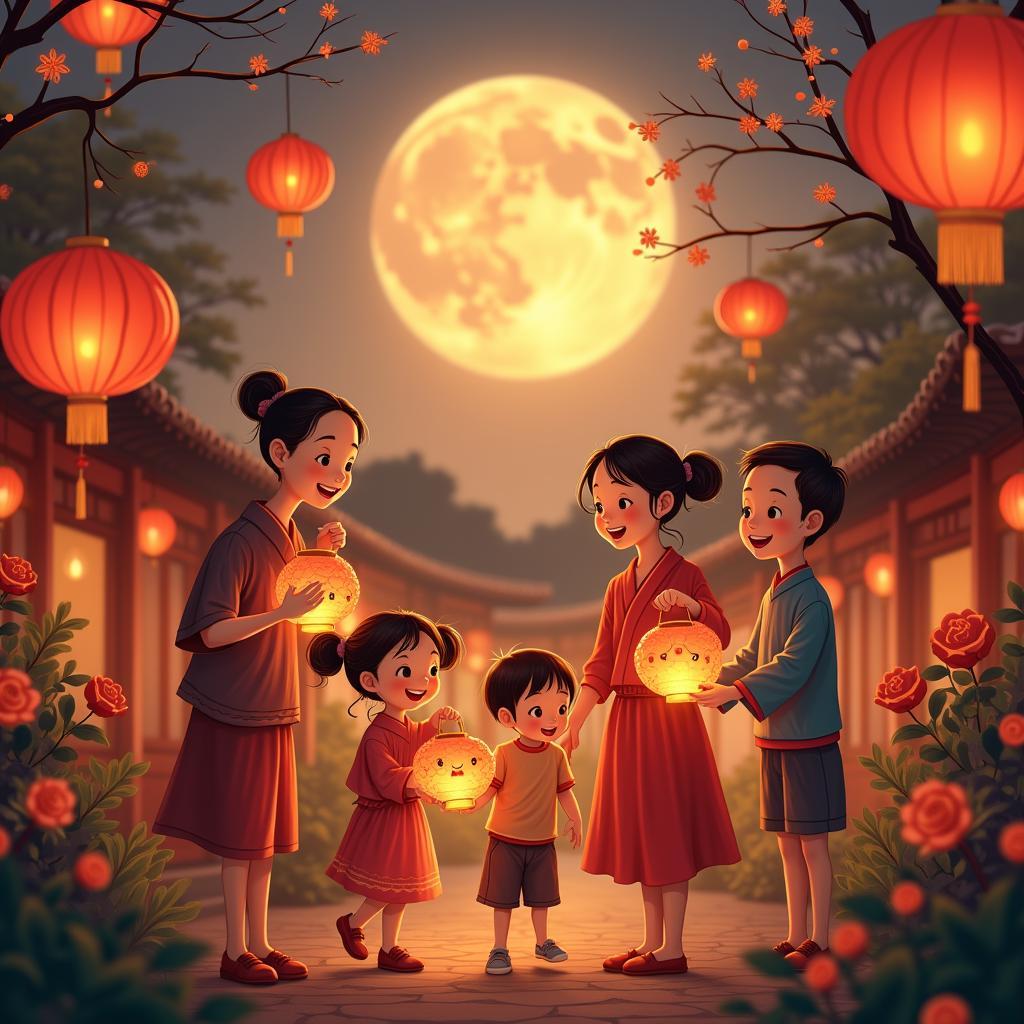 Gia đình Việt Nam rước đèn Tết Trung Thu theo truyền thống tại sân vườn nhà cổ
IELTS Speaking Part 3: Two-way Discussion
Tổng Quan Về Part 3
Part 3 là phần thảo luận sâu nhất của IELTS Speaking, kéo dài 4-5 phút với các câu hỏi trừu tượng và phân tích. Đây là nơi bạn thể hiện khả năng critical thinking và discuss complex ideas.
Thời gian: 4-5 phút
Đặc điểm:
- Câu hỏi abstract, liên quan đến chủ đề Part 2 nhưng ở level rộng hơn
- Yêu cầu phân tích, so sánh, đánh giá
- Cần đưa ra opinions có lý lẽ vững chắc
- Xem xét nhiều perspectives của vấn đề
Yêu cầu:
- Mở rộng câu trả lời (3-5 câu minimum)
- Sử dụng examples từ society, không chỉ personal experiences
- Demonstrate ability to discuss both sides của issue
- Show awareness of complexity trong social issues
Chiến lược:
- Sử dụng discourse markers để structure response (Well, Actually, From my perspective)
- Đưa ra tentative language khi appropriate (It seems to me, I would say)
- Acknowledge different viewpoints trước khi present own opinion
- Support arguments với reasons và examples
- Don’t be afraid to ask for clarification nếu không hiểu câu hỏi
Lỗi thường gặp của học viên Việt Nam:
- Trả lời quá ngắn, chỉ 1-2 câu
- Không develop arguments với reasons và examples
- Thiếu từ vựng abstract để discuss complex ideas
- Chỉ nêu opinion mà không explain why
- Không acknowledge complexity của issues
Các Câu Hỏi Thảo Luận Sâu
Theme 1: Social and Cultural Impact
Question 1: Why do you think family traditions are becoming less common in modern society?
🎯 Phân tích câu hỏi:
- Dạng: Cause-Effect (tại sao một xu hướng đang xảy ra)
- Key words: becoming less common, modern society
- Cách tiếp cận:
- Acknowledge the trend
- Identify 2-3 main reasons
- Provide examples cho mỗi reason
- Có thể mention consequences nếu còn thời gian
📝 Sample Answer – Band 6-7:
“I think there are several reasons. First, people are busier now with work and don’t have much time for family gatherings. Second, many young people move to cities for jobs, so they live far from their families. Third, Western culture influences young people, so they are less interested in traditional customs. For example, many young people prefer celebrating Christmas more than traditional festivals.”
Phân tích:
- Structure: Clear với First, Second, Third
- Vocabulary: Adequate nhưng basic (busier, don’t have time, influences)
- Tại sao Band 6-7: Đủ reasons nhưng thiếu depth trong analysis. Examples còn general, chưa có sophisticated language để discuss social trends
📝 Sample Answer – Band 8-9:
“Well, I think this is a multifaceted phenomenon driven by several interconnected factors. Primarily, there’s the issue of urbanization and geographical dispersion – as economic opportunities increasingly concentrate in major cities, families fragment across different locations, making regular gatherings logistically challenging. Beyond the practical constraints, I’d argue there’s also a deeper cultural shift at play. The relentless pace of modern life, combined with the demands of career advancement, has fundamentally altered our priorities. Where previous generations placed immense value on collective family experiences, today’s achievement-oriented culture often prioritizes individual pursuits.
Additionally, we’re witnessing what I’d call a cultural homogenization effect brought about by globalization. Younger generations, who are constantly exposed to global media and international lifestyles, sometimes perceive traditional practices as somewhat antiquated or incompatible with their modern identities. This doesn’t necessarily mean they reject their heritage entirely, but rather that traditional customs compete for attention with a multitude of other cultural influences. That said, I think it’s worth noting that this trend isn’t universally negative – some families are creatively adapting traditions to fit contemporary lifestyles rather than abandoning them altogether.”
Phân tích:
- Structure: Well-organized với clear progression: Primarily → Beyond that → Additionally → That said (showing balanced view)
- Vocabulary: Sophisticated và precise: multifaceted phenomenon, geographical dispersion, relentless pace, cultural homogenization, antiquated
- Grammar: Complex structures: relative clauses, passive voice (are constantly exposed), participles (brought about by)
- Critical Thinking: Shows nuanced understanding – acknowledges both practical và cultural factors, ends với balanced observation về adaptation
💡 Key Language Features:
- Discourse markers: Well, Primarily, Beyond the practical constraints, Additionally, That said
- Tentative language: I’d argue, I think, sometimes perceive
- Abstract nouns: urbanization, phenomenon, dispersion, homogenization, pursuits
- Hedging expressions: somewhat antiquated, isn’t universally negative
Question 2: Do you think governments should do anything to help preserve family traditions?
🎯 Phân tích câu hỏi:
- Dạng: Opinion + Suggestion (should governments…)
- Key words: governments, preserve, family traditions
- Cách tiếp cận:
- State clear position (yes/no/to some extent)
- Explain rationale
- Provide specific suggestions nếu agree
- Acknowledge potential limitations hoặc counterarguments
📝 Sample Answer – Band 6-7:
“Yes, I think governments should help preserve traditions. They can organize cultural festivals where families can learn about traditional customs. They can also include traditional culture in school education so children understand their heritage. However, governments shouldn’t force people because traditions should be voluntary. People should choose if they want to follow them or not.”
Phân tích:
- Structure: Clear position → suggestions → caveat
- Vocabulary: Basic (organize, learn about, force, voluntary)
- Tại sao Band 6-7: Has relevant ideas nhưng lacks sophisticated reasoning. Suggestions còn surface-level, chưa có nuanced discussion về government role
📝 Sample Answer – Band 8-9:
“I’d say to some extent, yes, though the government’s role should be facilitative rather than prescriptive. On the one hand, there’s a compelling argument for state-sponsored initiatives that make it easier for families to maintain traditions. For instance, governments could designate specific cultural festivals as public holidays, alleviating the time constraints that often prevent family gatherings. They could also provide subsidies for cultural organizations that promote traditional practices or incorporate more comprehensive cultural education into the national curriculum.
On the other hand, there’s a delicate balance to strike here. Traditions are inherently organic – they derive their meaning from authentic, voluntary participation rather than top-down mandates. Heavy-handed government intervention risks turning living customs into museum pieces or performative displays that lack genuine emotional connection. What I find more promising is an approach where governments create enabling conditions – things like funding community centers, supporting intergenerational programs, or providing tax incentives for businesses that accommodate cultural observances – while leaving the actual practice and evolution of traditions to families themselves.
Ultimately, I think the most effective role for government is as a catalyst rather than a director, fostering an environment where traditions can thrive naturally rather than imposing them artificially. This approach respects individual autonomy while still acknowledging the broader social value of cultural continuity.”
Phân tích:
- Structure: Sophisticated với On the one hand → On the other hand → Ultimately structure showing balanced analysis
- Vocabulary: High-level: facilitative vs prescriptive, state-sponsored initiatives, alleviating constraints, top-down mandates, performative displays, catalyst
- Grammar: Complex: relative clauses (that make it easier), participles (alleviating the time constraints), passives
- Critical Thinking: Shows deep analysis – distinguishes between different types of government intervention, acknowledges tensions between preservation và authenticity, proposes nuanced solution
💡 Key Language Features:
- Balanced language: On the one hand… On the other hand
- Tentative opinions: I’d say, I think, I find more promising
- Academic vocabulary: facilitative, prescriptive, inherently organic, catalyst vs director
- Qualification: to some extent, rather than, while
Theme 2: Generational Differences
Question 3: How do you think attitudes towards family traditions differ between older and younger generations?
🎯 Phân tích câu hỏi:
- Dạng: Compare and Contrast (differences between groups)
- Key words: attitudes, differ, older vs younger generations
- Cách tiếp cận:
- Describe older generation’s perspective
- Describe younger generation’s perspective
- Explain reasons cho differences
- Possibly mention implications
📝 Sample Answer – Band 6-7:
“There are quite big differences. Older people usually think traditions are very important and always want to follow them. They believe traditions connect them to their ancestors and culture. Younger people are more flexible. Some still respect traditions but they want to change some parts to make them more modern. They think some traditions are old-fashioned and not suitable for modern life.”
Phân tích:
- Structure: Comparison present nhưng basic
- Vocabulary: Limited range (very important, old-fashioned, modern)
- Tại sao Band 6-7: Covers both groups nhưng analysis shallow, thiếu specific examples và sophisticated explanation
📝 Sample Answer – Band 8-9:
“There’s definitely a marked generational divide in how traditions are perceived and valued, though I’d caution against oversimplifying this as merely “old vs young.” Generally speaking, older generations tend to view traditions through a lens of reverence and unwavering commitment. For them, these practices represent tangible links to ancestors and embody cultural values that sustained communities through challenging times. There’s often an emotional investment that goes beyond rational analysis – traditions provide a sense of continuity and rootedness in an otherwise changing world.
In contrast, younger generations often adopt what I’d call a more pragmatic or selectively engaged approach. They’re not necessarily dismissive of traditions, but they tend to evaluate them more critically, asking whether specific practices remain relevant or align with contemporary values. For instance, many young people I know are keen to preserve the core spirit of traditions while adapting the surface elements – perhaps incorporating technology to include distant relatives or reimagining traditional activities to be more inclusive.
What’s interesting, though, is that this isn’t simply about rejection versus preservation. Research suggests that many young people experience a renewed appreciation for traditions as they mature, particularly when they start their own families. It might be more accurate to say that young people are negotiating their cultural identity rather than abandoning it. They’re asking, quite legitimately, how traditions can coexist with their globally connected, fast-paced lifestyles. This generational tension, while sometimes uncomfortable, might actually be healthy – it’s how traditions evolve and remain dynamic rather than becoming static relics.”
Phân tích:
- Structure: Complex với General trends → Contrast → Deeper insight → Nuanced conclusion
- Vocabulary: Sophisticated: marked generational divide, lens of reverence, unwavering commitment, tangible links, selectively engaged, static relics
- Grammar: Full range: participle phrases, relative clauses, conditionals implied
- Critical Thinking: Avoids stereotypes, acknowledges complexity, mentions research, discusses evolution của attitudes
💡 Key Language Features:
- Qualifying language: Generally speaking, I’d caution against, might be more accurate
- Sophisticated comparisons: through a lens of… vs adopt a more pragmatic approach
- Academic tone: Research suggests, This generational tension
- Nuanced conclusions: rather than abandoning it, might actually be healthy
Question 4: In what ways might family traditions benefit children’s development?
🎯 Phân tích câu hỏi:
- Dạng: Benefits/Advantages (in what ways…)
- Key words: benefit, children’s development
- Cách tiếp cận:
- Identify multiple types of benefits (psychological, social, cultural)
- Explain mechanisms of how benefits occur
- Provide examples hoặc evidence
- Possibly compare with children who lack traditions
📝 Sample Answer – Band 6-7:
“Family traditions are good for children in many ways. First, they learn about their culture and history. Second, they spend quality time with family members, which makes them feel loved and secure. Third, traditions teach children important values like respect for elders. Also, participating in traditions helps children develop their identity and understand who they are.”
Phân tích:
- Structure: Lists benefits clearly
- Vocabulary: Basic but appropriate (quality time, feel loved, respect for elders)
- Tại sao Band 6-7: Identifies relevant benefits nhưng explanations superficial, thiếu depth trong how mechanisms work
📝 Sample Answer – Band 8-9:
“Family traditions can play a remarkably influential role in children’s development across multiple dimensions. From a psychological standpoint, regular family rituals provide what researchers call “anchoring experiences” – predictable, meaningful events that give children a sense of stability and emotional security. In an increasingly uncertain world, knowing that certain traditions will occur creates a comforting pattern that helps children develop resilience and cope with change.
Cognitively and culturally, traditions serve as powerful learning mechanisms. When children participate in heritage practices, they’re not merely going through motions – they’re absorbing complex narratives about their cultural identity, family history, and community values. This kind of experiential learning is often more impactful than formal education because it’s embedded in emotional contexts and reinforced through repeated participation. For example, a child who helps prepare ancestral dishes alongside grandparents isn’t just learning a recipe – they’re internalizing stories, values, and intergenerational connections that shape their worldview.
Socially, traditions foster what psychologists term “collective efficacy” – the sense of working together toward shared goals. When families collaborate on traditional activities, children learn cooperation, role-taking, and the satisfaction that comes from contributing to something larger than themselves. This is particularly valuable given that modern life often isolates individuals into separate spheres of work, school, and digital entertainment. When people discuss Describe a person who has a special talent, we often see how such talents are nurtured through family traditions and practices passed down through generations.
Moreover, there’s an identity-formation aspect that shouldn’t be overlooked. In multicultural societies, children often navigate multiple cultural influences. Family traditions provide a stable reference point – a clear answer to questions like “Where do I come from?” and “What makes my family unique?” This grounding can be especially crucial during adolescence when young people are actively constructing their sense of self.”
Phân tích:
- Structure: Sophisticated organization by dimensions (psychological → cognitive/cultural → social → identity)
- Vocabulary: Academic và precise: remarkably influential, anchoring experiences, experiential learning, collective efficacy, identity-formation
- Grammar: Complex structures throughout, natural integration của academic language
- Critical Thinking: Shows awareness của research (researchers call, psychologists term), explains mechanisms not just outcomes, connects to broader social context
💡 Key Language Features:
- Academic discourse: From a psychological standpoint, Moreover, This is particularly valuable
- Research references: what researchers call, psychologists term
- Technical vocabulary: anchoring experiences, collective efficacy, experiential learning
- Explanatory phrases: they’re not merely… – they’re actually…, isn’t just… – they’re…
Theme 3: Future Trends and Changes
Question 5: How do you think technology is affecting the way people celebrate family traditions?
🎯 Phân tích câu hỏi:
- Dạng: Impact analysis (How is X affecting Y)
- Key words: technology, affecting, celebrate family traditions
- Cách tiếp cận:
- Acknowledge both positive và negative impacts
- Give specific examples của technology’s role
- Discuss implications cho future
- Show balanced perspective
📝 Sample Answer – Band 6-7:
“Technology has both positive and negative effects. On the positive side, people can use video calls to include family members who live far away, so everyone can join the celebration. They can also share photos and videos on social media to remember special moments. However, technology can be negative too. Some people spend too much time on their phones during gatherings instead of talking to each other. This makes traditions less meaningful.”
Phân tích:
- Structure: Basic positive-negative format
- Vocabulary: Simple (video calls, share photos, spend time on phones)
- Tại sao Band 6-7: Covers both sides nhưng analysis basic, examples generic
📝 Sample Answer – Band 8-9:
“Technology has introduced a fascinating paradox into how we celebrate traditions – it’s simultaneously facilitating and disrupting these practices in ways we’re still coming to terms with. On the facilitative side, digital tools have dramatically expanded the possibilities for inclusion. Virtual platforms allow geographically dispersed families to participate in real-time celebrations they’d otherwise miss entirely. I’ve witnessed this firsthand during our family gatherings where we live-stream key moments for relatives stationed overseas. This technological integration preserves the communal aspect of traditions even when physical proximity isn’t possible.
Furthermore, technology serves as a powerful preservation tool. Digital photography, video recording, and even social media documentation create permanent records of traditions that previous generations could only transmit orally or through fleeting memories. This archival function means that intricate details of customs – specific recipes, ceremonial sequences, family stories – can be preserved with unprecedented accuracy for future generations.
However, there’s an undeniable dark side to this technological integration. The most obvious concern is what I’d call “present-absence” – people who are physically present at gatherings but mentally tethered to their devices, constantly distracted by notifications or the urge to document rather than experience the moment. This creates what some sociologists have termed “the performance culture,” where events are staged and filtered for social media consumption rather than genuinely lived.
More subtly, there’s a question about whether technology might fundamentally alter the nature of traditions. When a ritual is mediated through screens, does it retain the same emotional resonance? Can a virtual family dinner replicate the sensory richness – the aromas, the physical proximity, the spontaneous interactions – of in-person gatherings? I think this is still an open question, and the answer likely varies depending on the specific tradition and how thoughtfully technology is integrated.
Looking ahead, I suspect the key will be what I’d call “intentional technology use” – consciously deciding which aspects of celebrations benefit from technological enhancement and which should remain tech-free to preserve their authentic essence. Families that navigate this balance well will likely find that technology enriches rather than diminishes their traditions.”
Phân tích:
- Structure: Highly sophisticated – presents paradox → facilitating aspects → preservation function → negative impacts → deeper questions → forward-looking conclusion
- Vocabulary: Advanced và precise: fascinating paradox, geographically dispersed, archival function, present-absence, mediated through screens, sensory richness, intentional technology use
- Grammar: Full range seamlessly integrated: cleft sentences, participle clauses, conditionals, passives
- Critical Thinking: Exceptional depth – identifies paradox, uses sociological concepts, raises philosophical questions, proposes nuanced solution
💡 Key Language Features:
- Academic framing: introduces a fascinating paradox, what I’d call, what some sociologists have termed
- Balanced discussion: On the facilitative side → However → More subtly → Looking ahead
- Philosophical questions: Can a virtual dinner replicate…? Does it retain…?
- Forward-looking language: I suspect, Looking ahead, will likely find
Question 6: Do you think family traditions will become more or less important in the future?
🎯 Phân tích câu hỏi:
- Dạng: Prediction + Opinion (future trends)
- Key words: future, more or less important
- Cách tiếp cận:
- State prediction với reasons
- Consider factors that might influence trajectory
- Acknowledge uncertainty
- Possibly discuss conditions under which different outcomes might occur
📝 Sample Answer – Band 6-7:
“I think family traditions might become more important in the future. Although people are busy now, many young people are starting to realize that traditions are valuable for keeping families together. With globalization, people want to maintain their cultural identity, so they will pay more attention to traditions. However, traditions might change and become more modern to fit with contemporary life.”
Phân tích:
- Structure: Clear prediction với basic reasoning
- Vocabulary: Adequate (valuable, cultural identity, contemporary life)
- Tại sao Band 6-7: Makes prediction nhưng reasoning somewhat simplistic, lacks nuanced analysis of competing forces
📝 Sample Answer – Band 8-9:
“This is a genuinely difficult question to answer because we’re seeing contradictory forces at play that could pull the trajectory in different directions. If I had to venture a prediction, I’d say traditions will likely become more important, but in evolved forms rather than their traditional incarnations – and here’s my reasoning.
On the one hand, we’re witnessing accelerating social fragmentation – families scattered across continents, work patterns that disrupt regular contact, digital lives that substitute for face-to-face interaction. These forces would seem to work against traditional practices that require physical presence and sustained commitment. Additionally, as societies become more pluralistic and multicultural, the unified cultural frameworks that once undergirded traditions are eroding.
However, I’d argue that these very challenges might actually spark a renewed appreciation for traditions, almost as a counterbalance to modern life’s atomization. There’s growing evidence that people are experiencing what psychologists call “social disconnection” – despite being “connected” through technology, many feel profoundly isolated. In this context, traditions could take on heightened significance as rare opportunities for authentic connection and face-to-face community. Similar to how describe a famous restaurant in your city might preserve traditional recipes and methods as a response to fast food culture, families may increasingly value traditions as anchors in a fast-paced world.
What I find particularly interesting is emerging research suggesting that younger generations, despite their tech-immersed lifestyles, actually crave meaningful rituals and collective experiences. The popularity of everything from wellness retreats to craft movements suggests a hunger for authenticity and tangible connections that traditions inherently provide.
That said, I don’t think we’ll see traditions preserved in amber. Rather, they’ll likely undergo what anthropologists call “adaptive transformation” – keeping core elements that provide meaning while shedding aspects that don’t resonate with contemporary values. For instance, gender roles within traditional celebrations might become more egalitarian, or celebrations might incorporate elements from multiple cultures in increasingly diverse families.
Ultimately, I believe traditions will become more important precisely because they offer something that modern life increasingly lacks – rhythm, meaning, continuity, and genuine human connection. However, which specific traditions survive and how they manifest will depend on their ability to adapt while retaining their essential character. Those that ossify into rigid forms will likely fade away, but those that evolve organically will probably thrive.”
Phân tích:
- Structure: Exceptional sophistication – acknowledges difficulty → presents contradictory forces → argues for renewed importance → discusses transformation → concludes with conditions for success
- Vocabulary: Highly sophisticated: contradictory forces, evolved forms, undergirded, atomization, profoundly isolated, preserved in amber, adaptive transformation, ossify
- Grammar: Full command với natural use of complex structures throughout
- Critical Thinking: Outstanding – acknowledges complexity, references research, uses anthropological concepts, makes conditional predictions, shows systems thinking
💡 Key Language Features:
- Epistemic modality: If I had to venture, I’d say, I’d argue, I believe
- Academic references: what psychologists call, what anthropologists call, emerging research suggesting
- Contrasting discourse: On the one hand → However → That said → Ultimately
- Conditional reasoning: will depend on, Those that ossify… will fade, those that evolve… will thrive
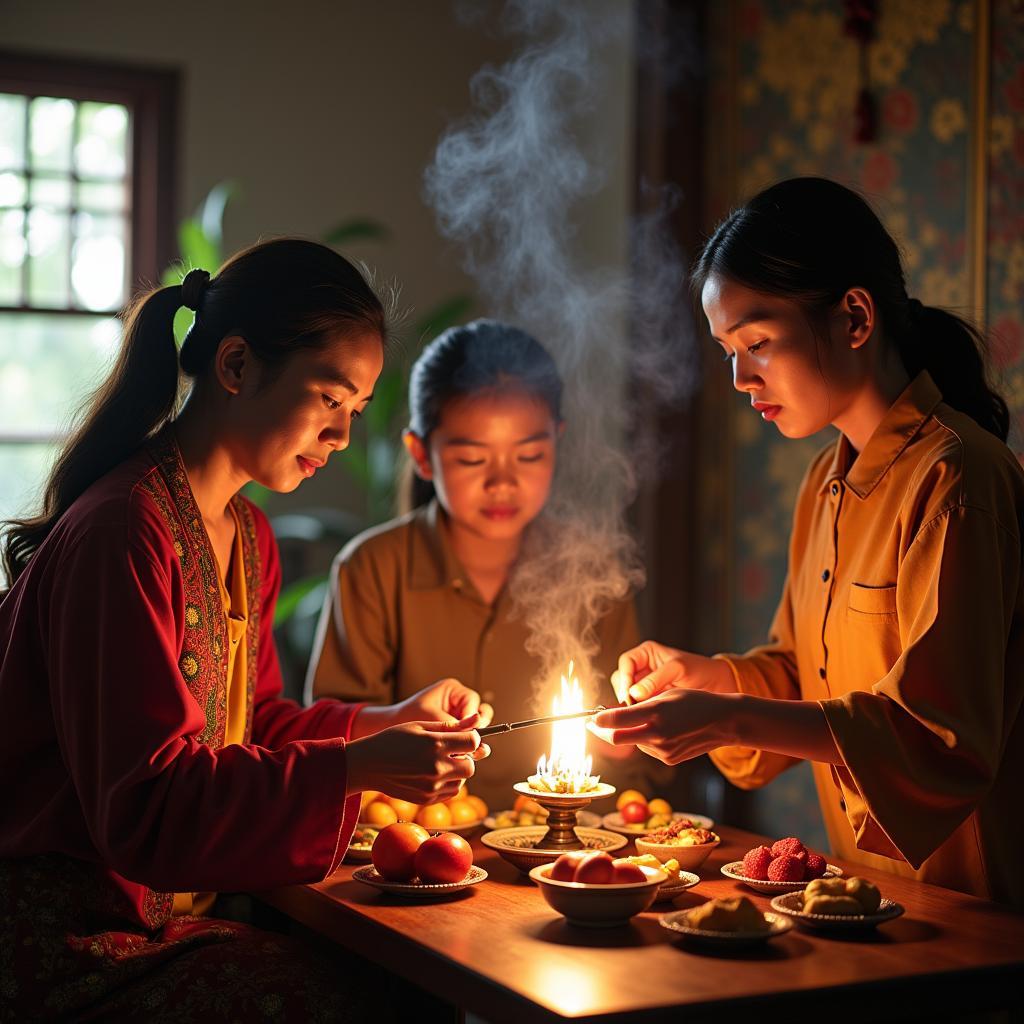 Nhiều thế hệ gia đình Việt chung sức tổ chức lễ giỗ tổ tiên truyền thống
Từ vựng và cụm từ quan trọng
Topic-Specific Vocabulary
| Từ vựng/Cụm từ | Loại từ | Phiên âm | Nghĩa tiếng Việt | Ví dụ | Collocation |
|---|---|---|---|---|---|
| ancestral worship | n. phrase | /ænˈsestrəl ˈwɜːʃɪp/ | thờ cúng tổ tiên | Our family performs ancestral worship on every death anniversary. | perform/practice ancestral worship, ancestral worship ritual/ceremony |
| time-honored tradition | n. phrase | /taɪm ˈɒnəd trəˈdɪʃən/ | truyền thống lâu đời | The Mid-Autumn Festival is a time-honored tradition in Asian cultures. | preserve/maintain/uphold a time-honored tradition |
| family reunion | n. phrase | /ˈfæməli riːˈjuːniən/ | họp mặt gia đình | We have a big family reunion every Lunar New Year. | annual/extended family reunion, attend/organize a family reunion |
| ceremonial | adj | /ˌserɪˈməʊniəl/ | thuộc về nghi lễ | The ceremonial meal is an important part of the festival. | ceremonial occasion/event/meal/offering |
| pass down | phrasal v | /pɑːs daʊn/ | truyền lại | These recipes have been passed down through generations. | pass down traditions/customs/knowledge/stories |
| reinforce | v | /ˌriːɪnˈfɔːs/ | củng cố, tăng cường | Family gatherings reinforce our bonds. | reinforce bonds/values/identity/connections |
| filial piety | n. phrase | /ˈfɪliəl ˈpaɪəti/ | hiếu đạo | Filial piety is deeply valued in Confucian cultures. | demonstrate/practice filial piety, sense of filial piety |
| cultural continuity | n. phrase | /ˈkʌltʃərəl ˌkɒntɪˈnjuːəti/ | sự liên tục văn hóa | Traditions ensure cultural continuity across generations. | maintain/preserve cultural continuity, sense of cultural continuity |
| elaborate feast | n. phrase | /ɪˈlæbərət fiːst/ | bữa tiệc cầu kỳ | My grandmother prepared an elaborate feast for the occasion. | prepare/host an elaborate feast |
| matriarch | n | /ˈmeɪtriɑːk/ | bà trưởng, người nữ đứng đầu | My grandmother is the matriarch of our family. | family matriarch, respected matriarch |
| observe | v | /əbˈzɜːv/ | thực hiện (nghi lễ) | We observe traditional customs during festivals. | observe traditions/customs/rituals/practices |
| geographically dispersed | adj phrase | /ˌdʒiːəˈɡræfɪkli dɪˈspɜːst/ | phân tán về mặt địa lý | Our family is geographically dispersed across three continents. | geographically dispersed family/relatives |
| meaningful ritual | n. phrase | /ˈmiːnɪŋfl ˈrɪtʃuəl/ | nghi lễ có ý nghĩa | These meaningful rituals connect us to our heritage. | perform/engage in meaningful rituals |
| cultural heritage | n. phrase | /ˈkʌltʃərəl ˈherɪtɪdʒ/ | di sản văn hóa | We’re proud of our rich cultural heritage. | preserve/celebrate/honor cultural heritage |
| sense of belonging | n. phrase | /sens əv bɪˈlɒŋɪŋ/ | cảm giác thuộc về | Traditions give us a sense of belonging. | strong/deep sense of belonging, foster/create a sense of belonging |
| intergenerational | adj | /ˌɪntədʒenəˈreɪʃənl/ | liên thế hệ | Intergenerational activities strengthen family bonds. | intergenerational connection/interaction/knowledge transfer |
| adapt | v | /əˈdæpt/ | thích nghi, điều chỉnh | We’ve adapted our traditions to fit modern life. | adapt traditions/customs/practices to modern life |
| commemorate | v | /kəˈmeməreɪt/ | tưởng nhớ | We commemorate our ancestors during special festivals. | commemorate ancestors/events/occasions |
Idiomatic Expressions & Advanced Phrases
| Cụm từ | Nghĩa | Ví dụ sử dụng | Band điểm |
|---|---|---|---|
| kick off | bắt đầu (informal) | We kick off the celebration with a ceremonial meal. | 7.5-8 |
| take on heightened significance | trở nên quan trọng hơn | Traditions take on heightened significance in uncertain times. | 8-9 |
| stands out in my memory | nổi bật trong ký ức | That particular celebration stands out in my memory. | 7.5-8 |
| steeped in (culture/tradition) | đậm đà văn hóa/truyền thống | Our festival is steeped in ancient traditions. | 8-9 |
| a sense of rootedness | cảm giác gốc rễ, nơi thuộc về | These rituals give me a sense of rootedness. | 8-9 |
| span generations | trải qua nhiều thế hệ | This tradition spans three generations in our family. | 7.5-8 |
| the fabric of society | kết cấu xã hội | Family traditions are part of the fabric of society. | 8-9 |
| come to terms with | chấp nhận, thích nghi với | We’re still coming to terms with how technology affects traditions. | 8-9 |
| strike a balance | tìm được sự cân bằng | We need to strike a balance between old and new customs. | 7.5-8 |
| carry the torch forward | nối tiếp, truyền lửa | The younger generation will carry the torch forward. | 8-9 |
| at the heart of | ở trung tâm của | Family is at the heart of Vietnamese culture. | 7.5-8 |
| fade into obscurity | mờ nhạt, bị lãng quên | Some traditions risk fading into obscurity. | 8-9 |
Discourse Markers (Từ Nối Ý Trong Speaking)
Để bắt đầu câu trả lời:
- 📝 Well,… – Sử dụng khi cần thời gian suy nghĩ ngắn
- 📝 Actually,… – Khi đưa ra góc nhìn khác với kỳ vọng thông thường
- 📝 To be honest,… – Khi chia sẻ quan điểm chân thực
- 📝 I’d say that… – Cách lịch sự đưa ra ý kiến
- 📝 From my perspective,… – Nhấn mạnh đây là quan điểm cá nhân
Để bổ sung ý:
- 📝 On top of that,… – Thêm vào đó
- 📝 What’s more,… – Hơn nữa
- 📝 Not to mention… – Chưa kể đến
- 📝 Beyond that,… – Ngoài điều đó ra
- 📝 Additionally,… – Ngoài ra
Để đưa ra quan điểm cân bằng:
- 📝 On the one hand,… On the other hand,… – Một mặt… mặt khác…
- 📝 While it’s true that…, we also need to consider… – Mặc dù đúng là… nhưng ta cũng cần xem xét…
- 📝 That said,… – Tuy nhiên, điều đó đã nói
- 📝 Having said that,… – Tuy đã nói như vậy nhưng…
Để kết luận:
- 📝 All in all,… – Tóm lại
- 📝 At the end of the day,… – Cuối cùng thì
- 📝 Ultimately,… – Rốt cuộc, sau cùng
- 📝 Looking ahead,… – Nhìn về tương lai
Để làm rõ hoặc nhấn mạnh:
- 📝 What I mean is… – Ý tôi là…
- 📝 In other words,… – Nói cách khác
- 📝 What I find most interesting is… – Điều tôi thấy thú vị nhất là…
- 📝 The key point here is… – Điểm mấu chốt ở đây là…
Grammatical Structures Ấn Tượng
1. Conditional Sentences (Câu điều kiện):
Mixed conditional:
- Formula: If + past perfect, would + infinitive (mixing different time frames)
- Ví dụ: “If we hadn’t maintained these traditions, we would feel disconnected from our heritage today.”
Inversion for emphasis:
- Formula: Had/Were/Should + subject + verb…
- Ví dụ: “Had my grandmother not insisted on these gatherings, our family wouldn’t be as close.”
2. Relative Clauses (Mệnh đề quan hệ):
Non-defining relative clauses:
- Formula: noun + , which/who + verb…
- Ví dụ: “My grandmother, who is the matriarch of our family, organized the entire celebration.”
Reduced relative clauses:
- Formula: noun + present/past participle
- Ví dụ: “The traditions passed down through generations remain relevant today.”
3. Passive Voice (Câu bị động):
Impersonal passive:
- It is thought/believed/said that…
- Ví dụ: “It is widely believed that family traditions strengthen social cohesion.”
Get passive (informal):
- Formula: get + past participle
- Ví dụ: “Children get involved in preparing for festivals from a young age.”
4. Cleft Sentences (Câu chẻ):
What-cleft for emphasis:
- Formula: What + clause + is/was…
- Ví dụ: “What makes these traditions meaningful is the sense of connection they provide.”
It-cleft:
- Formula: It is/was… that/who…
- Ví dụ: “It was my grandmother who taught us the importance of maintaining traditions.”
5. Advanced Participle Constructions:
Present participle:
- Ví dụ: “Having celebrated this tradition for decades, my family deeply values its significance.”
Past participle:
- Ví dụ: “Surrounded by family members, I felt a profound sense of belonging.”
6. Subjunctive Mood:
It is essential/important/crucial that + subject + base form:
- Ví dụ: “It’s essential that younger generations understand the significance of these customs.”
7. Inversion After Negative Adverbials:
- Ví dụ: “Not only do traditions connect us to the past, but they also shape our future identity.”
- Ví dụ: “Rarely do we have such meaningful opportunities for family connection.”
Chiến Lược Trả Lời Hiệu Quả
Strategies Từ Góc Nhìn Examiner
1. PREP Method cho Part 1 & 3:
- P – Point: Trả lời trực tiếp câu hỏi
- R – Reason: Đưa ra lý do
- E – Example: Cho ví dụ cụ thể
- P – Point (restate): Nhắc lại quan điểm
Ví dụ áp dụng:
- Q: Are family traditions important?
- Point: Yes, I believe they’re extremely important.
- Reason: They help maintain our cultural identity and strengthen family bonds.
- Example: In my family, our Tet celebrations bring together relatives who rarely see each other throughout the year.
- Point: So traditions definitely play a vital role in keeping families connected.
2. STAR Method cho Part 2 (kể chuyện):
- S – Situation: Set the scene
- T – Task/Theme: What was involved
- A – Action: What happened
- R – Result/Reflection: Impact and feelings
3. Dealing With Difficult Questions:
Nếu không hiểu câu hỏi:
- “Could you please repeat that?”
- “I’m not sure I understand. Do you mean…?”
- “Could you rephrase the question?”
Nếu không có ý tưởng ngay:
- “That’s an interesting question. Let me think…”
- “Well, I haven’t thought about this before, but…”
- “That’s a complex issue. I’d say…”
Nếu không biết từ vựng cụ thể:
- Paraphrase: “It’s like…” / “It’s similar to…”
- Mô tả: “It’s a kind of ceremony where…”
- Thừa nhận: “I’m not sure of the exact English term, but it’s when…”
4. Time Management:
Part 1 (4-5 phút):
- Mỗi câu trả lời: 15-30 giây
- Aim for 2-3 câu mỗi response
- Không quá dài, giữ năng lượng cho Part 2 & 3
Part 2 (3-4 phút total):
- Chuẩn bị: 1 phút (use it fully!)
- Nói: 2-3 phút minimum
- Structure notes như mindmap, không viết câu
Part 3 (4-5 phút):
- Mỗi câu trả lời: 30-45 giây
- Aim for 4-6 câu với developed ideas
- Show depth của thinking
Common Mistakes của Học Viên Việt Nam
1. Over-preparation:
- ❌ Học thuộc templates và sounds robotic
- ✅ Học ideas và vocabulary, but speak naturally
2. Translation thinking:
- ❌ Suy nghĩ bằng tiếng Việt rồi dịch sang tiếng Anh
- ✅ Train yourself to think in English, even if simple
3. Vocabulary showing off:
- ❌ Sử dụng từ phức tạp không phù hợp context
- ✅ Dùng từ chính xác và tự nhiên cho situation
4. Yes/No answers:
- ❌ “Yes.” hoặc “No.” rồi dừng
- ✅ “Yes, definitely…” và develop idea
5. Apologizing unnecessarily:
- ❌ “Sorry, my English is not good.”
- ✅ Just continue, examiners assess language not perfection
6. Silent thinking:
- ❌ Long pauses không nói gì
- ✅ Use fillers: “Let me see…”, “That’s interesting…”
7. Memorized answers:
- ❌ Reciting prepared scripts word-for-word
- ✅ Have ideas ready but express them freshly
Tips để Đạt Band 8+
Fluency & Coherence:
- Speak at natural pace, không quá nhanh
- Use discourse markers naturally
- Develop ideas fully trước khi move on
- Self-correct naturally (not obsessively)
Lexical Resource:
- Use topic-specific vocabulary appropriately
- Include some less common words/phrases
- Use collocations correctly
- Paraphrase rather than repeat same words
Grammatical Range & Accuracy:
- Mix simple và complex sentences
- Use variety of tenses appropriately
- Include conditionals, relative clauses, passives
- Self-correct major errors if noticed
Pronunciation:
- Clear individual sounds
- Natural word stress
- Sentence stress for emphasis
- Natural intonation (not flat)
- Linking words smoothly
Mindset:
- Treat it like a conversation, not an interrogation
- Be yourself, show personality
- Don’t panic if you make mistakes
- Engage with the topic enthusiastically
 Giám khảo IELTS đánh giá thí sinh Speaking trong phòng thi chuyên nghiệp
Lộ Trình Học Tập Hiệu Quả
Giai Đoạn 1: Foundation (2-4 tuần)
Mục tiêu: Build vocabulary và comfort với topic
Activities:
- Học 10-15 từ vựng mới mỗi ngày liên quan đến family, culture, traditions
- Record yourself trả lời 3 Part 1 questions mỗi ngày
- Listen back và identify improvement areas
- Practice với Describe a time when you had to manage a project under pressure để rèn kỹ năng structure câu chuyện
Resources:
- IELTS-Simon.com cho sample answers
- Quizlet cho vocabulary flashcards
- Voice recording app để track progress
Giai Đoạn 2: Development (4-6 tuần)
Mục tiêu: Improve fluency và complexity
Activities:
- Practice Part 2 với timer (1 phút prep, 2-3 phút speak)
- Record và transcribe responses để spot errors
- Learn 3-5 advanced structures mỗi tuần
- Practice Part 3 questions với friends hoặc tutor
- Shadow native speakers’ pronunciation
Focus areas:
- Extending answers naturally
- Using discourse markers
- Reducing hesitation
- Incorporating complex grammar
Giai Đoạn 3: Refinement (2-3 tuần trước thi)
Mục tiêu: Polish performance và build confidence
Activities:
- Full mock tests với feedback từ teacher/tutor
- Review common topics và prepare ideas (not scripts)
- Practice với actual IELTS questions từ recent tests
- Work on specific weaknesses identified in mocks
- Maintain vocabulary review
Mental preparation:
- Visualize successful test experience
- Practice relaxation techniques
- Ensure adequate sleep và nutrition
- Arrive early on test day để settle nerves
Câu Hỏi Thường Gặp (FAQ)
Q1: Có nên học thuộc bài mẫu không?
A: Không nên học thuộc lòng. Examiners trained để nhận ra memorized answers và điều này seriously affects điểm của bạn. Thay vào đó, học ideas, vocabulary, và structures, nhưng express them trong own words mỗi lần practice.
Q2: Tôi nên nói nhanh để show fluency không?
A: Không. Fluency không có nghĩa là nói nhanh. Fluency là về speaking smoothly với natural pace, minimal hesitation, và good flow. Nói quá nhanh có thể lead đến errors và unclear pronunciation.
Q3: Nếu tôi không hiểu câu hỏi thì làm sao?
A: Hỏi examiner. Bạn có quyền ask for clarification. Say: “Could you please repeat that?” hoặc “I’m not sure I understand the question.” Đây không bị trừ điểm.
Q4: Tôi có cần nói về personal experience thật không?
A: Không nhất thiết. Bạn có thể invent reasonable stories nếu cần. Examiners đánh giá English ability của bạn, không phải truthfulness. However, speaking about real experiences often sounds more natural.
Q5: Làm sao để improve pronunciation trong thời gian ngắn?
A: Focus on:
- Word stress (important hơn individual sounds)
- Sentence stress và intonation
- Linking words trong connected speech
- Practice shadowing native speakers
- Record và compare với native pronunciation
Q6: Part nào quan trọng nhất?
A: Cả 3 parts đều quan trọng, nhưng Part 3 thường carry more weight vì đây là nơi bạn demonstrate ability to discuss abstract ideas và complex topics. However, poor performance trong bất kỳ part nào cũng affect overall band.
Q7: Tôi nên correct errors của mình không?
A: Natural self-correction is fine và shows awareness. But don’t obsessively correct every small mistake – điều này disrupts fluency. Chỉ correct major errors that affect meaning.
Q8: Accent của tôi có ảnh hưởng điểm không?
A: Không, miễn là clear và understandable. IELTS accepts tất cả accents (British, American, Australian, etc.) và Vietnamese accent không bị penalty. Focus on clarity rather than trying to sound native.
Kết Luận
Chủ đề “Describe a recent family tradition you celebrated” là một trong những topics thân thiện và accessible nhất trong IELTS Speaking, nhưng để đạt band điểm cao, bạn cần demonstrate:
✅ Rich vocabulary specific cho cultural và family topics
✅ Varied grammatical structures used accurately
✅ Well-developed ideas với depth và examples
✅ Natural fluency với appropriate discourse markers
✅ Clear pronunciation với good stress và intonation
Key takeaways:
- Don’t memorize scripts – Learn ideas và vocabulary, express them naturally
- Extend answers – Aim for 2-3 câu Part 1, 2-3 phút Part 2, 4-6 câu Part 3
- Use specific examples – Details make answers convincing và interesting
- Show critical thinking – Especially important trong Part 3
- Practice regularly – Consistency is key để build fluency
- Record yourself – Self-assessment helps identify improvement areas
- Stay calm – Treat it như conversation, not interrogation
Với preparation đúng cách, practice đầy đủ, và mindset tích cực, bạn hoàn toàn có thể achieve target band trong IELTS Speaking. Remember, examiners want you to succeed – they’re assessing your English ability, not trying to trick you.
Chúc bạn học tập hiệu quả và đạt kết quả cao trong kỳ thi IELTS sắp tới! Hãy confident, be yourself, và let your preparation shine through in the test.

