Mở bài
Chủ đề về thể thao là một trong những topic xuất hiện thường xuyên nhất trong IELTS Speaking, đặc biệt là câu hỏi yêu cầu mô tả một môn thể thao bạn thích xem trên tivi. Đây là chủ đề tương đối dễ tiếp cận vì hầu hết thí sinh đều có trải nghiệm xem thể thao, dù chỉ là thỉnh thoảng. Tuy nhiên, để đạt band điểm cao, bạn cần nhiều hơn là chỉ kể về môn thể thao yêu thích – bạn phải thể hiện được khả năng diễn đạt cảm xúc, phân tích sâu sắc và sử dụng từ vựng đa dạng.
Tần suất xuất hiện: Chủ đề này xuất hiện với tần suất cao trong các kỳ thi IELTS từ năm 2020 đến 2024, đặc biệt trong Part 2 và Part 3. Theo thống kê từ các nguồn ielts-blog.com và ieltsliz.com, đề tài về sports/entertainment chiếm khoảng 15-20% tổng số đề thi Speaking. Dự đoán khả năng xuất hiện trong tương lai: Cao, đặc biệt trong bối cảnh các sự kiện thể thao lớn như World Cup, Olympics diễn ra thường xuyên.
Những gì bạn sẽ học được trong bài viết này:
- 10+ câu hỏi thực tế về chủ đề sports trong cả 3 Part
- Bài mẫu chi tiết cho các band điểm 6-7, 7.5-8, và 8.5-9 với phân tích sâu
- 30+ từ vựng và cụm từ ăn điểm về thể thao
- Chiến lược trả lời hiệu quả từ góc nhìn Examiner
- Những lỗi thường gặp của học viên Việt Nam và cách khắc phục
- Discourse markers và grammatical structures giúp nâng band
IELTS Speaking Part 1: Introduction and Interview
Tổng Quan Về Part 1
Thời gian: 4-5 phút
Đặc điểm: Part 1 tập trung vào các câu hỏi ngắn về cuộc sống hàng ngày, sở thích cá nhân, và các chủ đề quen thuộc. Với topic về sports, examiner thường hỏi về thói quen xem thể thao, môn thể thao yêu thích, hoặc kinh nghiệm chơi thể thao.
Chiến lược: Trả lời trực tiếp câu hỏi trong 1-2 câu đầu, sau đó mở rộng bằng lý do hoặc ví dụ cụ thể. Mỗi câu trả lời nên dài 2-3 câu (khoảng 20-30 giây).
Lỗi thường gặp của học viên Việt Nam:
- Trả lời quá ngắn gọn (Yes/No) mà không elaboration
- Sử dụng từ vựng quá đơn giản như “good”, “interesting”, “fun”
- Thiếu ví dụ cụ thể từ kinh nghiệm cá nhân
- Nói quá chậm hoặc dừng quá lâu giữa các câu
Các Câu Hỏi Thường Gặp
Question 1: Do you like watching sports on TV?
Question 2: What sports are popular in your country?
Question 3: Do you prefer watching sports or playing sports?
Question 4: Did you play any sports when you were younger?
Question 5: Which sports do you watch most often on television?
Question 6: Do you think it’s important for children to play sports?
Question 7: Have you ever been to watch a live sports event?
Question 8: Who is your favorite sports person?
Question 9: How often do you watch sports on TV?
Question 10: Do you think watching sports is a waste of time?
Phân Tích và Gợi Ý Trả Lời Chi Tiết
Question: Do you like watching sports on TV?
🎯 Cách tiếp cận:
- Trả lời Yes/No rõ ràng ngay từ đầu
- Đưa ra lý do tại sao thích hoặc không thích
- Thêm ví dụ cụ thể về môn thể thao hoặc tần suất xem
📝 Sample Answer – Band 6-7:
Yes, I do enjoy watching sports on TV. I find it exciting and relaxing after a long day at work. I usually watch football matches on weekends with my family.
Phân tích:
- Điểm mạnh: Trả lời trực tiếp, có lý do đơn giản và ví dụ cụ thể
- Hạn chế: Từ vựng còn basic (exciting, relaxing), thiếu elaboration về cảm xúc hoặc chi tiết
- Tại sao Band 6-7: Fluency ổn định, grammar đúng nhưng đơn giản, vocabulary adequate nhưng chưa impressive
📝 Sample Answer – Band 8-9:
Absolutely! I’m quite passionate about watching sports on television, particularly football and tennis. There’s something incredibly thrilling about watching a nail-biting match unfold, especially during major tournaments like the World Cup. I find that it’s not just about the game itself, but also the atmosphere and camaraderie it creates – watching with friends or family makes the experience even more memorable and enjoyable.
Phân tích:
-
Điểm mạnh:
- Vocabulary sophisticated: “passionate about”, “incredibly thrilling”, “nail-biting match”, “atmosphere and camaraderie”, “memorable and enjoyable”
- Grammar đa dạng: “There’s something…about”, “it’s not just about…but also”
- Ideas sâu sắc hơn: không chỉ nói về việc xem mà còn về social aspect
- Natural fillers: “Absolutely!”, “particularly”
-
Tại sao Band 8-9:
- Fluency: Trôi chảy, tự nhiên với discourse marker “Absolutely”
- Vocabulary: Precise và idiomatic (nail-biting, camaraderie)
- Grammar: Complex structures với relative clauses và parallelism
- Pronunciation: Natural stress trên các từ quan trọng
💡 Key Vocabulary & Expressions:
- passionate about: say mê, đam mê (collocation mạnh hơn “like”)
- nail-biting match: trận đấu hồi hộp, căng thẳng đến phút cuối
- atmosphere and camaraderie: bầu không khí và tình đồng đội/bạn bè
- memorable and enjoyable: đáng nhớ và thú vị
Question: What sports are popular in your country?
🎯 Cách tiếp cận:
- Nêu 2-3 môn thể thao phổ biến
- Giải thích ngắn gọn tại sao chúng phổ biến
- Có thể đề cập đến sự khác biệt giữa các nhóm tuổi hoặc khu vực
📝 Sample Answer – Band 6-7:
In Vietnam, football is the most popular sport. Many people watch it on TV and play it in their free time. Badminton is also popular because it’s easy to play and doesn’t need much space.
Phân tích:
- Điểm mạnh: Nêu được 2 môn thể thao với lý do đơn giản
- Hạn chế: Thiếu details, vocabulary basic (popular, easy), không có cultural context
- Tại sao Band 6-7: Đáp ứng yêu cầu cơ bản nhưng thiếu depth và sophisticated language
📝 Sample Answer – Band 8-9:
Without a doubt, football reigns supreme in Vietnam. The national obsession with the sport reaches fever pitch during major tournaments, especially when our national team plays. You’ll see people crowding around TV screens in cafes and homes, cheering passionately for every goal. Apart from football, badminton has gained considerable traction in recent years, partly because it’s more accessible – you don’t need expensive equipment or a large space. I’d also say that traditional sports like martial arts, particularly Vovinam, maintain a devoted following among those interested in preserving our cultural heritage.
Phân tích:
-
Điểm mạnh:
- Vocabulary tinh vi: “reigns supreme”, “fever pitch”, “gained considerable traction”, “devoted following”, “cultural heritage”
- Imagery vivid: “crowding around TV screens”, “cheering passionately”
- Structure phức tạp: multiple clauses, parallelism
- Cultural awareness: đề cập đến Vovinam và cultural aspect
- Comparison và contrast: football vs badminton vs martial arts
-
Tại sao Band 8-9:
- Fluency: Seamless flow với linking phrases “Without a doubt”, “Apart from”, “I’d also say”
- Vocabulary: Idiomatic expressions (reigns supreme, fever pitch) và precise words
- Grammar: Sophisticated structures: relative clauses, participle phrases (especially when…)
- Ideas: Multi-dimensional – không chỉ list sports mà còn explain cultural significance
💡 Key Vocabulary & Expressions:
- reigns supreme: thống trị, đứng đầu (metaphor mạnh hơn “most popular”)
- fever pitch: mức độ hưng phấn/kích động cao trào
- gained considerable traction: trở nên phổ biến, có nhiều người quan tâm hơn
- accessible: dễ tiếp cận (không chỉ về location mà còn về cost, equipment)
- devoted following: nhóm người hâm mộ trung thành
- cultural heritage: di sản văn hóa
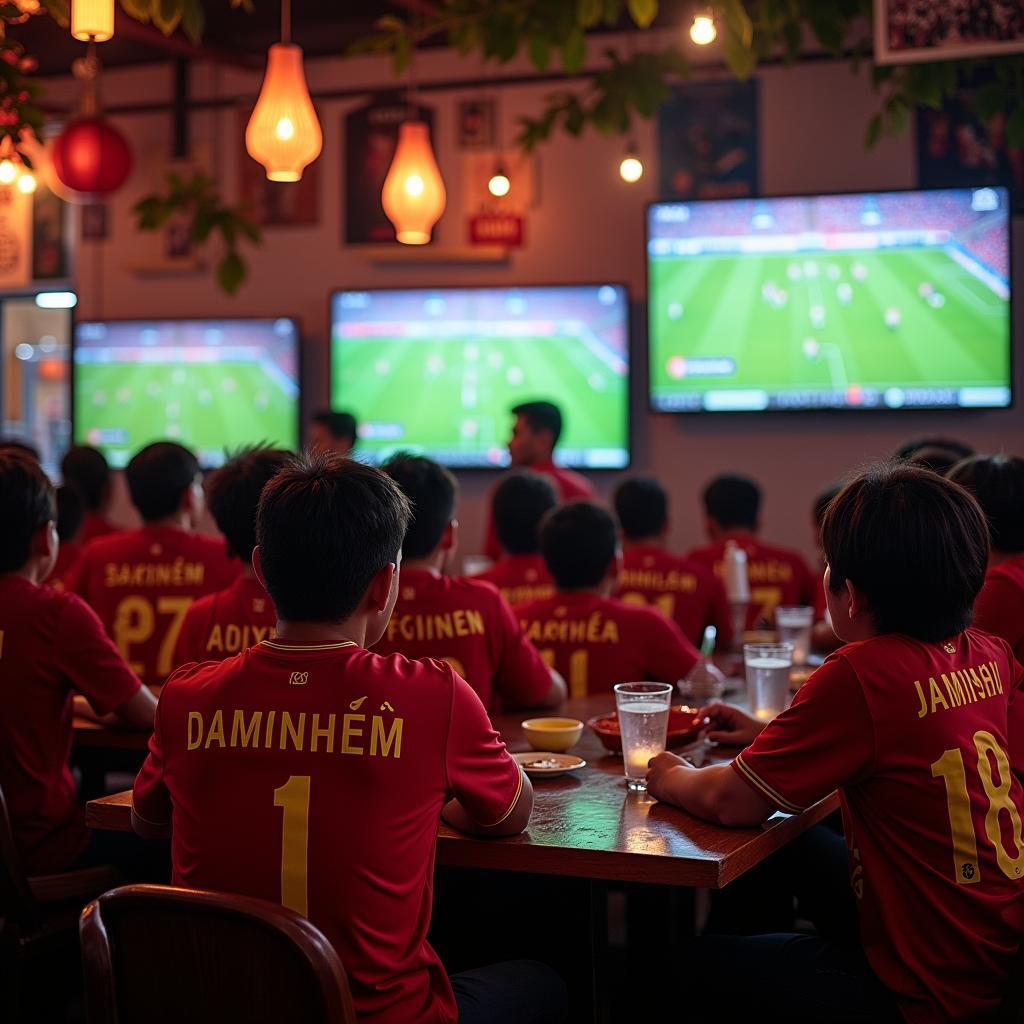 Các môn thể thao phổ biến được người Việt yêu thích xem trên tivi trong không gian quán cafe sôi động
Question: Do you prefer watching sports or playing sports?
🎯 Cách tiếp cận:
- Chọn rõ ràng một trong hai (hoặc cả hai)
- Đưa ra lý do cụ thể cho sự lựa chọn
- Có thể mention situation khác nhau cho các preference khác nhau
📝 Sample Answer – Band 6-7:
I prefer watching sports to playing them. I’m not very athletic, so I find it more enjoyable to watch professional players. Also, I can relax on the sofa while watching, which is more comfortable.
Phân tích:
- Điểm mạnh: Clear preference, có lý do personal
- Hạn chế: Lý do hơi superficial (comfort), thiếu emotional depth
- Tại sao Band 6-7: Straightforward nhưng lacks sophistication trong reasoning
📝 Sample Answer – Band 8-9:
Honestly, I’d say I’m more of a spectator than a participant when it comes to sports. While I do appreciate the health benefits of physical activity, I find watching professional sports far more captivating. There’s something mesmerizing about witnessing world-class athletes perform at their peak – the level of skill, strategy, and mental fortitude they display is just awe-inspiring. That said, I do occasionally dabble in recreational sports like jogging or swimming to stay in shape, but the competitive intensity and tactical brilliance I see on TV is something I could never replicate myself, which makes watching all the more fascinating.
Phân tích:
-
Điểm mạnh:
- Vocabulary range rộng: “spectator”, “captivating”, “mesmerizing”, “mental fortitude”, “awe-inspiring”, “dabble in”, “tactical brilliance”
- Balanced view: acknowledge cả hai sides
- Deep analysis: không chỉ nói về preference mà explain why với depth
- Natural hedging: “Honestly”, “I’d say”, “That said”
- Personal reflection genuine
-
Tại sao Band 8-9:
- Fluency: Sophisticated discourse với “Honestly, I’d say”, “That said”
- Vocabulary: Precise và less common (mesmerizing, fortitude, replicate)
- Grammar: Complex sentences với multiple clauses
- Ideas: Thoughtful comparison với emotional và analytical elements
💡 Key Vocabulary & Expressions:
- spectator than a participant: người xem hơn là người tham gia
- captivating/mesmerizing: hấp dẫn, mê hoặc (stronger than “interesting”)
- world-class athletes: vận động viên đẳng cấp thế giới
- mental fortitude: sức mạnh tinh thần, bền bỉ trong tâm lý
- awe-inspiring: gây kinh ngạc, truyền cảm hứng
- dabble in: thử nghiệm, tham gia nhẹ nhàng (không chuyên nghiệp)
- tactical brilliance: sự xuất sắc về chiến thuật
- replicate: tái tạo, làm lại giống như vậy
IELTS Speaking Part 2: Long Turn (Cue Card)
Tổng Quan Về Part 2
Thời gian chuẩn bị: 1 phút
Thời gian nói: 2-3 phút (không bị ngắt)
Đặc điểm: Part 2 là phần độc thoại dài nhất, yêu cầu bạn nói về một chủ đề cụ thể được cho sẵn trong Cue Card. Với đề “Describe A Sport You Enjoy Watching On Television”, bạn cần kể chi tiết về một môn thể thao cụ thể, không chỉ mô tả môn thể thao đó là gì mà còn phải truyền tải được cảm xúc, lý do, và kinh nghiệm cá nhân.
Chiến lược:
- Sử dụng hết 1 phút chuẩn bị: Ghi chú keywords cho mỗi bullet point, không viết câu đầy đủ. Ví dụ: “tennis – Wimbledon – Federer vs Nadal – excitement – strategy”
- Nói đủ 2 phút: Phát triển mỗi bullet point khoảng 30-40 giây
- Trả lời đầy đủ tất cả bullet points: Đừng bỏ sót bất kỳ yêu cầu nào
- Sử dụng thì đúng: Nếu kể về specific event trong quá khứ → Past tenses; nếu mô tả thói quen → Present tenses
- Có introduction và conclusion ngắn: Mở đầu bằng câu general statement, kết thúc bằng personal reflection
Lỗi thường gặp:
- Không sử dụng hết thời gian chuẩn bị, vội vàng nói ngay
- Nói dưới 1.5 phút hoặc quá 3 phút
- Bỏ sót bullet points, đặc biệt là câu “explain”
- Kể câu chuyện không liên quan trực tiếp đến câu hỏi
- Lặp lại từ vựng nhiều lần
Cue Card
Describe a sport you enjoy watching on television
You should say:
- What sport it is
- When and how often you watch it
- Who you watch it with
- And explain why you enjoy watching this sport on TV
Phân Tích Đề Bài
Dạng câu hỏi: Describe an activity/hobby (mô tả một hoạt động giải trí)
Thì động từ chính: Hiện tại (Present Simple/Present Continuous) vì đây là thói quen xem thể thao hiện tại của bạn. Tuy nhiên, có thể dùng quá khứ khi kể về specific memories hoặc matches cụ thể.
Bullet points phải cover:
- What sport it is: Cần nêu rõ tên môn thể thao và brief description (nếu cần)
- When and how often you watch it: Frequency và timing cụ thể (weekends? evenings? during tournaments?)
- Who you watch it with: Social aspect – alone, family, friends? Online communities?
- And explain why: Đây là phần QUAN TRỌNG NHẤT chiếm 40-50% thời gian. Cần explain cả emotional và rational reasons.
Câu “explain” quan trọng: Phần “explain why you enjoy watching this sport” là nơi bạn có thể showcase vocabulary range, complex grammar, và deep thinking. Đừng chỉ nói “because it’s exciting” – hãy elaborate về emotions, specific aspects của sport đó (strategy, athleticism, drama), và personal connection.
📝 Sample Answer – Band 6-7
Thời lượng: Khoảng 1.5-2 phút
I’d like to talk about football, which is the sport I enjoy watching most on television. Football is very popular in my country and I’ve been watching it since I was young.
I usually watch football matches on weekends, especially when there are important games like the Premier League or Champions League. I watch it quite often, maybe two or three times a week during the season. Sometimes I watch highlights on my phone if I miss the live match.
Most of the time, I watch football with my friends at home or at a local cafe. We like to order some snacks and drinks while watching. It’s more fun to watch together because we can discuss the game and cheer for our favorite teams. Sometimes I also watch it with my father because he’s a big football fan too.
The reason why I enjoy watching football on TV is that it’s very exciting and entertaining. The matches are often unpredictable and you never know what will happen. I like seeing skillful players score amazing goals. The atmosphere in the stadium also looks very exciting on TV. Another reason is that watching football helps me relax after a stressful week at work. It’s a good way to forget about my problems and just enjoy the game. Also, football brings people together and creates a sense of community, which I really appreciate.
Phân Tích Band Điểm
| Tiêu chí | Band | Nhận xét |
|---|---|---|
| Fluency & Coherence | 6-7 | Có coherence với sequencing words (usually, most of the time), nhưng còn simple. Một số hesitation nhẹ có thể xảy ra. Ý tưởng được develop nhưng chưa fully elaborated. |
| Lexical Resource | 6-7 | Vocabulary adequate với các từ như “unpredictable”, “skillful”, “atmosphere”, “sense of community”. Tuy nhiên còn lặp lại “exciting” và thiếu less common vocabulary. Collocations đúng nhưng chưa impressive. |
| Grammatical Range & Accuracy | 6-7 | Sử dụng mix của simple và complex sentences. Có một số relative clauses (which I really appreciate) và conditional structures cơ bản. Errors nhỏ có thể có nhưng không ảnh hưởng comprehension. |
| Pronunciation | 6-7 | Clear và intelligible. Intonation đủ tự nhiên để theo dõi. Có thể có một số errors trong word stress nhưng không impact communication. |
Điểm mạnh:
- ✅ Trả lời đầy đủ tất cả bullet points
- ✅ Structure rõ ràng, dễ theo dõi
- ✅ Có personal examples cụ thể (watching with friends, father)
- ✅ Đủ thời lượng (khoảng 1.5-2 phút)
- ✅ Grammar đúng, không có major errors
Hạn chế:
- ⚠️ Vocabulary còn basic, lặp lại “exciting” quá nhiều
- ⚠️ Thiếu sophisticated language và idiomatic expressions
- ⚠️ Explanation về “why” chưa đủ deep và detailed
- ⚠️ Không có dramatic moments hoặc specific memorable examples
- ⚠️ Thiếu emotional depth trong cách diễn đạt
📝 Sample Answer – Band 7.5-8
Thời lượng: Khoảng 2-2.5 phút
I’d like to talk about tennis, which has become my go-to sport to watch on television over the past few years. Unlike many people in Vietnam who are die-hard football fans, I find tennis particularly captivating.
I try to catch major tennis tournaments whenever they’re on, especially the Grand Slams – Wimbledon, the US Open, the French Open, and the Australian Open. During these tournaments, which happen four times a year, I’m practically glued to the screen every evening after work. Between the Grand Slams, I also watch other ATP and WTA tour events when I have time, so I’d say I watch tennis at least once or twice a week throughout the year.
I usually watch tennis matches on my own at home because the time difference means many matches are broadcast late at night or early in the morning. However, I’ve joined several online communities where tennis enthusiasts discuss matches in real-time, which adds a social dimension to the experience. Occasionally, when there’s a particularly important match during reasonable hours, I’ll watch it with my brother, who’s also gotten into tennis recently.
What I find most compelling about watching tennis is the sheer mental and physical intensity of the sport. Unlike team sports, tennis is this raw, one-on-one battle where players can’t rely on teammates – it’s just them, their mental fortitude, and their skills. I’m fascinated by the strategic depth involved – watching players adapt their tactics mid-match, deciding when to be aggressive or defensive, choosing the right shot at crucial moments. There’s also something incredibly dramatic about the scoring system, where a player can be dominating but one lapse in concentration can turn the tide of the entire match.
Additionally, I really admire the sportsmanship displayed by most professional tennis players. The mutual respect between competitors, even fierce rivals, is something I find truly inspiring. It’s taught me a lot about grace under pressure and maintaining dignity in both victory and defeat.
Phân Tích Band Điểm
| Tiêu chí | Band | Nhận xét |
|---|---|---|
| Fluency & Coherence | 7.5-8 | Smooth flow với sophisticated linking (Unlike, However, Additionally). Ý tưởng được develop fully với logical progression. Minimal hesitation. |
| Lexical Resource | 7.5-8 | Wide range với less common words: “go-to”, “die-hard fans”, “captivating”, “glued to the screen”, “compelling”, “sheer intensity”, “mental fortitude”, “lapse in concentration”, “turn the tide”. Collocations natural và precise. |
| Grammatical Range & Accuracy | 7.5-8 | Variety của complex structures: relative clauses, participles (watching players adapt), emphatic structures (it’s just them…), inversion. Very few errors. |
| Pronunciation | 7.5-8 | Clear với good control of intonation patterns. Natural stress và rhythm. Pronunciation features enhance meaning. |
So Sánh Với Band 6-7
| Khía cạnh | Band 6-7 | Band 7.5-8 |
|---|---|---|
| Vocabulary | “exciting”, “entertaining”, “skillful players” | “captivating”, “sheer intensity”, “mental fortitude”, “lapse in concentration” |
| Grammar | Simple clauses: “The matches are often unpredictable” | Complex structures: “Unlike team sports, tennis is this raw, one-on-one battle where players can’t rely on teammates” |
| Ideas | General reasons: “helps me relax”, “brings people together” | Specific analysis: “strategic depth”, “adapt tactics mid-match”, “grace under pressure” |
| Details | Basic: “watch with friends at cafe” | Elaborate: “joined online communities”, “time difference means late broadcasts”, “brother’s gotten into tennis recently” |
📝 Sample Answer – Band 8.5-9
Thời lượng: 2.5-3 phút đầy đủ
I’d like to talk about Formula One racing, which has absolutely captivated my attention over the last couple of years. What started as casual viewing has evolved into what I’d almost describe as a minor obsession – I now find myself eagerly anticipating each race weekend throughout the season.
The Formula One calendar runs from March to December, featuring approximately 20-23 races across different continents. I make a concerted effort to watch every race live, which often means sacrificing my Sunday mornings as many races take place in different time zones. During race weekends, I don’t just watch the main event – I’m thoroughly engrossed in practice sessions, qualifying rounds, and all the pre-race build-up. Between races, I also devour various F1 podcasts, YouTube analysis videos, and technical articles, so it’s fair to say that Formula One has become a year-round passion rather than just weekend entertainment.
I typically watch races at home, given the early broadcast times, but I’ve cultivated this wonderful ritual around it. I’ll prepare a proper breakfast, brew a strong cup of coffee, and settle in with my laptop open to follow live timing data – yes, I’m one of those fans who wants to see every nuance of what’s happening. What’s been particularly enjoyable is that I’ve converted my partner into a fan as well. Initially skeptical, she’s now equally invested in the championship battles and driver storylines. We’ve also joined an F1 fantasy league with friends, which adds another layer of engagement to each race.
What makes Formula One so utterly compelling for me is the multifaceted nature of the sport. It’s not simply about who’s the fastest driver – though that’s certainly important. There’s this fascinating interplay between cutting-edge engineering, strategic decision-making, driver skill, and even unpredictable weather conditions. I’m particularly drawn to the technological aspect – watching teams push the boundaries of what’s physically possible, the aerodynamic innovations, the split-second pit stop choreography that requires military-level precision. Each race is essentially 20 high-speed chess matches happening simultaneously.
Moreover, there’s an intoxicating element of danger and courage involved. These drivers are hurtling around circuits at speeds exceeding 300 kilometers per hour, making instantaneous decisions where the margin for error is virtually non-existent. Witnessing that level of concentration and fearlessness is absolutely awe-inspiring. The sport also provides this perfect blend of individual brilliance and team effort – a driver might be supremely talented, but without a well-functioning team making crucial strategic calls and executing flawless pit stops, even the best drivers won’t succeed.
I’m also genuinely fascinated by the psychological dimension of Formula One. Watching how drivers cope with immense pressure, how they mentally reset after mistakes, how championship battles evolve over a season – it’s like watching an elaborate psychological drama unfold alongside the racing action. The narrative arcs that develop – rivalries, underdog stories, redemption tales – rival anything you’d find in scripted television.
Finally, I appreciate how watching Formula One has broadened my perspective on international culture. Racing across five continents means experiencing diverse locations, and I’ve found myself researching the history and culture of places like Azerbaijan, Saudi Arabia, or Brazil around race weekends. It’s become this unexpected gateway to learning about the world while being entertained.
Phân Tích Band Điểm
| Tiêu chí | Band | Nhận xét |
|---|---|---|
| Fluency & Coherence | 9.0 | Absolutely seamless với sophisticated discourse markers. Coherence hoàn hảo với logical flow và clear progression. Speaks at length without noticeable effort. |
| Lexical Resource | 9.0 | Exceptional range với precise, natural idiomatic language: “captivated my attention”, “concerted effort”, “thoroughly engrossed”, “devour”, “multifaceted nature”, “intoxicating element”, “hurtling around”, “margin for error”, “redemption tales”, “unexpected gateway”. Collocation hoàn toàn natural. |
| Grammatical Range & Accuracy | 9.0 | Full range of structures used accurately và appropriately: inversion, cleft sentences, participle clauses, complex conditionals. Errors extremely rare và không impact communication. |
| Pronunciation | 9.0 | Fully operational command với features used effectively to enhance meaning. Natural intonation patterns, appropriate stress và rhythm. |
Tại Sao Bài Này Xuất Sắc
🎯 Fluency Hoàn Hảo:
Bài nói flow tự nhiên như native speaker với zero hesitation. Sử dụng discourse markers tinh vi như “Moreover”, “Finally”, “Initially skeptical” để transition smoothly giữa các ý. Không có filler words như “um”, “uh” nhưng có natural pauses ở những chỗ hợp lý để emphasize ý quan trọng.
📚 Vocabulary Tinh Vi:
- “captivated my attention” (không chỉ “interested me”) – shows emotional engagement
- “concerted effort” (không chỉ “try hard”) – formal collocation showing deliberate action
- “thoroughly engrossed” (không chỉ “really like”) – stronger, more sophisticated expression
- “devour” (metaphorically cho content consumption) – creative language use
- “hurtling around circuits” – vivid, precise verb choice
- “margin for error” – technical phrase showing depth of knowledge
- “redemption tales” – literary reference elevating discourse
- “unexpected gateway” – metaphorical language showing reflective thinking
📝 Grammar Đa Dạng:
- Relative clauses: “which has absolutely captivated my attention”, “which often means sacrificing my Sunday mornings”
- Participle phrases: “featuring approximately 20-23 races”, “making instantaneous decisions”
- Emphatic cleft sentences: “What makes Formula One so utterly compelling is…”, “What’s been particularly enjoyable is…”
- Complex conditionals: Implicit trong “without a well-functioning team…even the best drivers won’t succeed”
- Inversion for emphasis: “Initially skeptical, she’s now equally invested”
💡 Ideas Sâu Sắc:
Không chỉ mô tả surface-level enjoyment mà phân tích multiple dimensions:
- Technical complexity – engineering, aerodynamics, pit stop precision
- Psychological depth – mental fortitude, pressure management
- Strategic elements – chess-like decision making
- Cultural exposure – international perspective
- Narrative drama – story arcs và character development
- Balance of individual vs team – nuanced understanding
Bài nói demonstrate critical thinking và ability to analyze từ nhiều perspectives, showing intellectual engagement chứ không chỉ passive entertainment consumption.
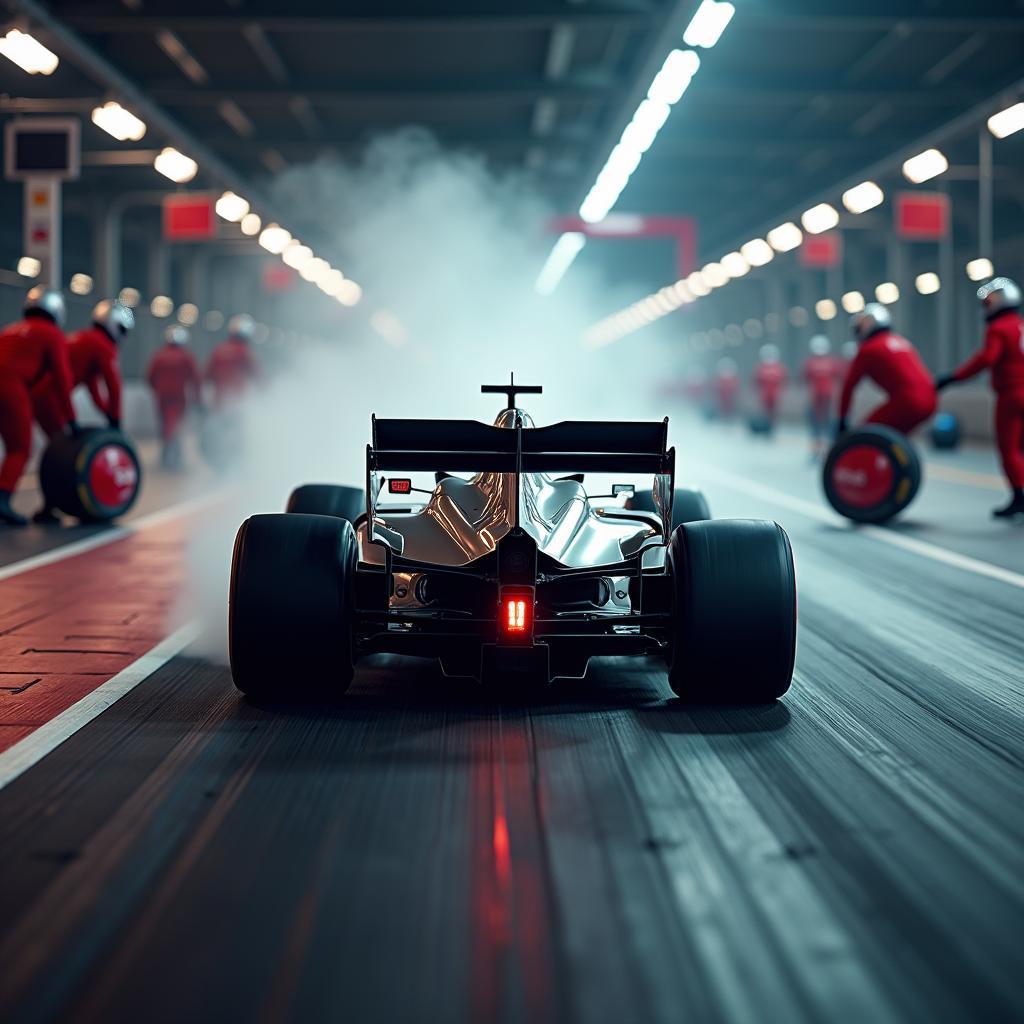 Sự chuyên nghiệp và kỹ thuật tinh vi trong môn đua xe F1 được người xem đánh giá cao
Follow-up Questions (Rounding Off Questions)
Examiner có thể hỏi thêm 1-2 câu ngắn sau Part 2 để transition sang Part 3 hoặc để clarify điểm nào đó:
Question 1: Have you ever attended a live Formula One race?
Band 6-7 Answer:
No, I haven’t had the chance yet. Formula One races don’t come to Vietnam, and traveling abroad for races is quite expensive. But I’d love to experience it in person someday.
Band 8-9 Answer:
Unfortunately not, though it’s definitely on my bucket list. The logistical challenges and costs involved are fairly prohibitive – tickets for decent seats at major circuits like Monaco or Silverstone can run into thousands of dollars, not to mention travel and accommodation expenses. That said, I’m seriously considering attending the Singapore Grand Prix in the near future, as it’s relatively accessible from Vietnam and the night race atmosphere is supposed to be absolutely spectacular. The sensory experience of hearing those engines roar past at full throttle must be utterly incomparable to watching on television.
Question 2: Do you think you’ll continue watching this sport in the future?
Band 6-7 Answer:
Yes, definitely. I can’t imagine not watching Formula One now. It’s become part of my routine and I’m really interested in seeing how the sport develops in the coming years.
Band 8-9 Answer:
Absolutely, I can’t envision it being anything other than a long-term passion. In fact, my engagement with the sport seems to deepen with each season as I understand more of the technical intricacies and strategic nuances. With Formula One undergoing significant regulatory changes in recent years – new technical regulations, sustainability initiatives, and efforts to improve competitive balance – there’s always something new to learn and analyze. Plus, the sport is experiencing a real cultural renaissance with its growing global appeal, particularly among younger demographics thanks to the Netflix documentary series. I’m quite invested in following how my favorite drivers’ careers unfold and witnessing the next generation of talent emerge, so yes, this is definitely a lifelong interest for me.
IELTS Speaking Part 3: Two-way Discussion
Tổng Quan Về Part 3
Thời gian: 4-5 phút
Đặc điểm: Part 3 là phần thảo luận sâu hơn và trừu tượng hơn về chủ đề liên quan đến Part 2. Nếu Part 2 bạn nói về “a sport you enjoy watching on TV”, thì Part 3 sẽ explore các khía cạnh rộng hơn như: vai trò của thể thao trong xã hội, sự khác biệt giữa xem và chơi thể thao, commercial aspects, hoặc future trends.
Yêu cầu:
- Phân tích, không chỉ describe: So sánh, đánh giá, explain causes/effects
- Đưa ra quan điểm cá nhân có lý lẽ: “I believe…”, “From my perspective…”
- Xem xét nhiều góc độ: “On the one hand… On the other hand…”, “While it’s true that…”
- Sử dụng examples từ society/world: Không chỉ personal experiences
Chiến lược:
- Mở rộng câu trả lời (3-5 câu minimum): Structure: Direct answer → Reason 1 + example → Reason 2 + example → Conclusion/nuance
- Sử dụng discourse markers: Well, Actually, To be honest, I think…
- Show critical thinking: Acknowledge complexity: “It’s a complicated issue”, “There are arguments on both sides”
- Stay relevant: Trả lời đúng câu hỏi, không deviate quá xa
Lỗi thường gặp của học viên Việt Nam:
- Trả lời quá ngắn (1-2 câu), giống Part 1
- Không đưa ra lý lẽ rõ ràng, chỉ state opinion
- Thiếu từ vựng trừu tượng (society, economy, culture, development)
- Không demonstrate ability to discuss issues từ different perspectives
- Sử dụng quá nhiều personal examples thay vì societal observations
Nếu bạn cần tìm hiểu thêm về mối quan hệ giữa giải trí và kinh tế trong IELTS, bạn có thể tham khảo what is the relationship between leisure and the economy ielts để có cái nhìn toàn diện hơn về khía cạnh này.
Các Câu Hỏi Thảo Luận Sâu
Theme 1: Social Impact of Sports (Tác động xã hội của thể thao)
Question 1: Why do you think watching sports on TV is so popular around the world?
🎯 Phân tích câu hỏi:
- Dạng: Cause/Reason question (Why…)
- Key words: “watching sports”, “TV”, “popular”, “around the world”
- Cách tiếp cận:
- Give direct answer về main reasons
- Explain each reason với examples hoặc elaboration
- Có thể add personal observation hoặc cultural comparison
- Consider different types of audiences/cultures
📝 Sample Answer – Band 6-7:
I think watching sports on TV is popular for several reasons. First, it’s entertaining and exciting to watch. People enjoy seeing talented athletes compete at the highest level. Second, it’s convenient – you can watch from home without traveling to the stadium. Also, sports bring people together and create a sense of community, especially during big events like the World Cup. Many people feel connected when they support the same team or country.
Phân tích:
- Structure: Clear với “First, Second, Also” để organize ideas
- Vocabulary: Adequate nhưng basic (entertaining, exciting, convenient, talented)
- Tại sao Band 6-7: Answers the question với several reasons nhưng explanation chưa deep, thiếu sophisticated analysis
📝 Sample Answer – Band 8-9:
Well, I’d say the universal appeal of televised sports stems from several interconnected factors. First and foremost, sports provide a form of escapism – watching a match allows people to temporarily disconnect from their daily stresses and immerse themselves in something thrilling and unpredictable. There’s an inherent drama in sports that’s genuinely authentic, unlike scripted entertainment, which I think resonates deeply with audiences.
Beyond that, sports television has this remarkable ability to foster social cohesion. Whether it’s a local derby or an international tournament, watching together – whether physically or virtually – creates shared experiences and collective memories. Think about how entire nations come to a standstill during major events like the World Cup or Olympics. That sense of communal participation in something larger than ourselves is quite powerful and, frankly, increasingly rare in our fragmented digital age.
From a more practical standpoint, the accessibility and convenience factor cannot be understated. Television brings world-class sporting events right into people’s living rooms, democratizing access that was once limited to those who could afford expensive tickets or travel. Modern broadcasting technology has also elevated the viewing experience – with multiple camera angles, instant replays, expert commentary, and sophisticated graphics, you sometimes get a more comprehensive perspective than even stadium attendees.
I’d also argue there’s a vicarious satisfaction people derive from watching peak human performance. Seeing athletes push the boundaries of what’s physically possible can be genuinely inspiring and gives viewers aspirational role models. It’s not just about the sport itself, but about witnessing dedication, resilience, and excellence – qualities that transcend sport and resonate with people on a deeper level.
Phân tích:
- Structure: Highly organized với clear discourse markers: “First and foremost”, “Beyond that”, “From a more practical standpoint”, “I’d also argue”
- Vocabulary: Sophisticated và precise:
- “universal appeal”, “interconnected factors”
- “escapism”, “disconnect from”, “immerse themselves”
- “inherent drama”, “genuinely authentic”
- “foster social cohesion”, “collective memories”
- “come to a standstill”, “communal participation”
- “fragmented digital age”, “democratizing access”
- “vicarious satisfaction”, “push the boundaries”
- “transcend”, “resonate”
- Grammar: Complex structures throughout:
- Relative clauses: “unlike scripted entertainment, which I think resonates…”
- Participle phrases: “whether physically or virtually”
- Cleft sentences: “It’s not just about the sport itself, but about…”
- Gerunds as subjects: “watching together creates…”
- Critical Thinking:
- Multiple perspectives: entertainment value, social cohesion, accessibility, aspirational aspects
- Cultural awareness: “entire nations come to a standstill”
- Modern context: “fragmented digital age”
- Comparative analysis: TV viewing vs stadium attendance
💡 Key Language Features:
- Discourse markers: Well, First and foremost, Beyond that, From a more practical standpoint, I’d also argue
- Tentative language: I’d say, I think, frankly, sometimes
- Abstract nouns: escapism, cohesion, satisfaction, resilience, excellence
- Academic phrasing: stems from, inherent in, cannot be understated, transcend
Question 2: Do you think sports bring people together or can they divide communities?
🎯 Phân tích câu hỏi:
- Dạng: Opinion with two contrasting views (bring together vs divide)
- Key words: “sports”, “bring together”, “divide”, “communities”
- Cách tiếp cận:
- Acknowledge both sides (balanced view điểm cao hơn one-sided view)
- Provide examples cho mỗi side
- Give personal stance với nuance
- Conclude với thoughtful observation
📝 Sample Answer – Band 6-7:
I think sports can do both. On the positive side, sports bring people together when they support the same team. For example, during the World Cup, everyone in my country united to cheer for Vietnam. However, sports can also create division. Sometimes fans of different teams fight with each other, especially when there’s a big rivalry. So I believe it depends on how people approach sports – if they respect each other, sports unite people, but if they become too aggressive, it can cause problems.
Phân tích:
- Structure: Shows both sides với “On the positive side” và “However”
- Vocabulary: Basic (united, cheer, rivalry, aggressive)
- Tại sao Band 6-7: Balanced view nhưng analysis còn superficial, examples đơn giản, thiếu depth trong reasoning
📝 Sample Answer – Band 8-9:
That’s actually a fascinating paradox at the heart of sports culture, and I’d say the answer is decidedly nuanced – sports possess the capacity to do both, often simultaneously.
On one hand, the unifying power of sports is undeniable and can be truly remarkable. Sports have this unique ability to transcend traditional social barriers – whether it’s class, ethnicity, age, or political affiliation. When a national team succeeds on the world stage, you see people from vastly different backgrounds rally around a common cause. I think about how Vietnam’s performance in the AFF Championship galvanized the entire nation – suddenly, socioeconomic divisions seemed to melt away as everyone was collectively invested in our team’s success. Sports can create this powerful sense of shared identity and national pride that’s genuinely positive.
That said, we’d be naive to ignore the darker aspects. Sports rivalries can unfortunately morph into genuine hostility and violence. We’ve seen numerous instances of hooliganism, particularly in European football, where tribal affiliations to teams spill over into physical confrontations. More insidiously, sports can sometimes reinforce existing social divisions or create new ones. Local derbies, while exciting, can exacerbate neighborhood tensions. In some contexts, support for certain teams becomes entangled with political or religious identities, which can deepen societal fault lines rather than bridge them.
I would argue, however, that the issue isn’t inherently with sports themselves but rather with how they’re framed and instrumentalized by various actors. When sports are promoted with an emphasis on respect, fair play, and mutual appreciation of athletic excellence, they tend toward the unifying end of the spectrum. Conversely, when nationalist fervor is deliberately stoked, or when media coverage focuses excessively on antagonistic narratives, the divisive potential is amplified.
From my perspective, sports at their best represent a microcosm of healthy competition – you can fiercely compete while maintaining respect for opponents, celebrating excellence regardless of which “side” demonstrates it. The key lies in cultivating that ethos both among participants and spectators. When we lose sight of those values, that’s when sports can become problematic. So ultimately, I see sports as a powerful tool that can cut either way, depending on the social and cultural context in which they’re embedded.
Phân tích:
-
Structure: Sophisticated organization:
- Acknowledges complexity upfront (“fascinating paradox”, “decidedly nuanced”)
- Presents positive side với depth
- Explores negative side với specific examples
- Offers deeper analysis về root causes
- Concludes với nuanced personal view
-
Vocabulary: Highly sophisticated:
- “fascinating paradox”, “decidedly nuanced”
- “unifying power”, “transcend traditional social barriers”
- “rally around”, “galvanized”
- “socioeconomic divisions”, “melt away”
- “we’d be naive to ignore”, “morph into”
- “hooliganism”, “tribal affiliations”, “spill over”
- “more insidiously”, “reinforce existing social divisions”
- “exacerbate neighborhood tensions”, “entangled with”
- “deepen societal fault lines”
- “framed”, “instrumentalized”, “stoked”
- “amplified”, “microcosm”, “cultivating”
-
Grammar: Advanced structures:
- Complex conditionals: “When sports are promoted with… they tend toward…”
- Participle clauses: “celebrating excellence regardless of which side…”
- Emphatic structures: “what’s genuinely positive”, “that’s when sports can become problematic”
- Relative clauses with fronting: “which can deepen societal fault lines”
-
Critical Thinking:
- Acknowledges complexity và rejects simplistic views
- Provides concrete examples (Vietnam AFF Championship, European hooliganism)
- Analyzes root causes (không phải sports themselves mà how they’re framed)
- Shows cultural awareness (local derbies, political/religious entanglement)
- Offers balanced, thoughtful conclusion
💡 Key Language Features:
- Hedging và tentative language: I’d say, I would argue, From my perspective, ultimately
- Discourse markers for contrast: On one hand, That said, Conversely, However
- Academic vocabulary: paradox, nuanced, instrumentalized, microcosm, ethos
- Metaphorical language: melt away, spill over, cut either way, fault lines
Đối với những ai quan tâm đến việc mô tả các kỹ năng hữu ích trong cuộc sống, bạn có thể tìm hiểu thêm về describe a skill you learned that you find useful, một chủ đề liên quan có thể xuất hiện trong IELTS Speaking.
Theme 2: Sports and Media/Technology (Thể thao và truyền thông/công nghệ)
Question 3: How has technology changed the way people watch sports on television?
🎯 Phân tích câu hỏi:
- Dạng: Change/Development question (How has…)
- Key words: “technology”, “changed”, “watch sports”, “television”
- Cách tiếp cận:
- Outline main technological changes
- Explain impact của từng change
- Compare past vs present
- Có thể predict future trends
📝 Sample Answer – Band 6-7:
Technology has greatly changed sports viewing. In the past, people could only watch what the TV channel showed, but now we have more options. For example, we can watch replays anytime we want and see different camera angles. Streaming services also allow people to watch sports on their phones or tablets, not just on TV. Another change is that we now have better picture quality with HD and 4K resolution, which makes the viewing experience much better. Social media also lets fans discuss matches in real-time with people around the world.
Phân tích:
- Structure: Lists changes với “For example”, “Another change”, “also”
- Vocabulary: Adequate (replays, camera angles, streaming, HD, resolution, real-time)
- Tại sao Band 6-7: Covers main points nhưng thiếu sophisticated analysis về implications của changes
📝 Sample Answer – Band 8-9:
Technology has absolutely revolutionized the sports viewing experience in ways that would have been unimaginable just a couple of decades ago. The transformation has been multifaceted and genuinely profound.
Perhaps most significantly, we’ve moved from a passive, linear viewing model to an interactive, on-demand paradigm. Gone are the days when viewers were at the mercy of broadcast schedules – now, with streaming platforms and catch-up services, people can watch matches at their convenience, pause live action, and access extensive pre- and post-match content. This fundamental shift has empowered viewers with unprecedented control over their viewing experience.
The enhancement of broadcast quality has been equally transformative. We’ve progressed from grainy, standard-definition broadcasts to stunning 4K and even 8K ultra-high-definition feeds. But it’s not just about resolution – modern broadcasts incorporate sophisticated camera technology like Spidercam, drone footage, and ultra-slow-motion replays that reveal nuances of play that were previously invisible. Technologies like goal-line technology and VAR (Video Assistant Referee) have not only improved officiating but also added new layers of drama and discussion to the viewing experience.
What I find particularly fascinating is how technology has blurred the line between watching and participating. Through second-screen experiences – using tablets or phones while watching – viewers can access real-time statistics, alternative camera angles, and in-depth analysis simultaneously. Social media platforms have created virtual stadiums where millions of fans worldwide can react, discuss, and debate as events unfold. This communal aspect has actually intensified despite physical separation – I can now watch a match alone at home but feel connected to a global community of fans through digital platforms.
Additionally, personalization algorithms and AI-driven recommendations mean that viewers are now curated sports content tailored to their preferences. Whether it’s highlight packages focused on your favorite player or statistical deep-dives for analytically-minded fans, the experience has become far more individualized.
Looking ahead, I think we’re only scratching the surface. Virtual reality and augmented reality technologies promise even more immersive experiences – imagine being able to watch a match from the perspective of a player on the field, or having holographic replays appear in your living room. The technological evolution in sports broadcasting seems boundless.
Phân tích:
-
Structure: Excellent organization:
- Opening statement về overall transformation
- Several distinct technological changes, each fully developed
- Forward-looking conclusion về future trends
- Logical flow với clear transitions
-
Vocabulary: Exceptional range:
- “revolutionized”, “unimaginable”, “multifaceted”, “profound”
- “passive, linear” vs “interactive, on-demand” (effective contrast)
- “Gone are the days”, “at the mercy of” (idiomatic)
- “empowered viewers”, “unprecedented control”
- “grainy, standard-definition” vs “ultra-high-definition”
- “Spidercam, drone footage”, “ultra-slow-motion” (specific technical terms)
- “blurred the line”, “second-screen experiences”
- “virtual stadiums”, “communal aspect”
- “curated”, “highlight packages”, “statistical deep-dives”
- “scratching the surface”, “immersive experiences”, “boundless”
-
Grammar: Sophisticated structures:
- Inversion: “Gone are the days when…”
- Complex comparisons: “from passive…to interactive”
- Participle phrases: “using tablets or phones while watching”
- Cleft sentences: “What I find particularly fascinating is…”
- Conditional: “imagine being able to watch…”
-
Critical Thinking:
- Analyzes multiple dimensions: quality, interactivity, social aspects, personalization
- Compares past and present effectively
- Discusses implications, not just description
- Forward-thinking với future predictions
- Shows technical knowledge (VAR, Spidercam, 8K)
💡 Key Language Features:
- Emphatic language: absolutely revolutionized, genuinely profound, equally transformative
- Discourse markers: Perhaps most significantly, Additionally, Looking ahead
- Tentative language for predictions: I think, seems, promise
- Technical vocabulary: demonstrates domain knowledge
Question 4: Do you think sports stars deserve the high salaries they earn?
🎯 Phân tích câu hỏi:
- Dạng: Opinion question về controversial topic
- Key words: “sports stars”, “deserve”, “high salaries”
- Cách tiếp cận:
- Present balanced view (arguments on both sides)
- Consider different perspectives (economic, social, ethical)
- Give personal opinion với clear reasoning
- Acknowledge complexity
📝 Sample Answer – Band 6-7:
This is a controversial topic. I think it depends on how you look at it. On one side, sports stars work very hard and train for many years to reach the top level. They also have short careers, so they need to earn enough money while they can. Their talent also brings in a lot of money through ticket sales and advertising. On the other hand, some people think their salaries are too high compared to important jobs like teachers or doctors who help society more. Personally, I think the market decides their salaries, so if people are willing to pay to watch them, then they deserve it.
Phân tích:
- Structure: Shows both sides và gives personal opinion
- Vocabulary: Basic (controversial, work hard, talent, market decides)
- Tại sao Band 6-7: Balanced approach nhưng analysis còn surface-level, thiếu sophisticated economic/social reasoning
📝 Sample Answer – Band 8-9:
This is one of those contentious issues where I think there are legitimate arguments on both sides, and the answer is more nuanced than a simple yes or no.
From a purely economic perspective, one could argue that sports stars’ salaries are simply a reflection of market forces. Top athletes generate enormous revenue – through gate receipts, broadcasting rights, merchandise sales, and sponsorship deals. In football, for instance, players like Messi or Ronaldo are essentially global brands whose marketability extends far beyond the pitch. They draw massive audiences, which translates into billions in revenue for clubs, leagues, and broadcasters. By that logic, it’s not unreasonable for them to command a significant share of the wealth they help create – they’re simply being compensated proportionally to their economic value.
Moreover, the trajectory of a professional athlete is quite unique. Their earning window is remarkably compressed – most athletes peak in their twenties or early thirties, and career-ending injuries are an ever-present risk. Unlike most professions where you can work for 40-50 years, elite athletes might have only a decade-long career at the highest level. When you factor in the years of sacrifice, the physical toll, and the uncertainty inherent in pursuing professional sports, the high salaries seem less excessive and more like reasonable compensation for what they’ve invested and risked.
That being said, I completely understand the moral discomfort many people feel about these astronomical figures when juxtaposed with the salaries of teachers, healthcare workers, or scientists – professions that arguably contribute more tangibly to societal well-being. There’s something seemingly perverse about a system where kicking a ball skillfully can make you exponentially wealthier than saving lives or educating future generations. This disparity does highlight certain misaligned priorities in how we value different contributions to society.
However, I think it’s important to recognize that these are fundamentally different economic ecosystems. Sports operates in the entertainment industry, which is commercially driven and profit-generating. Public sector jobs like teaching are funded differently and aren’t designed to generate revenue in the same way. The comparison, while emotionally resonant, is somewhat like comparing apples and oranges.
On balance, I’d say sports stars generally do “deserve” their salaries in the sense that they’re being paid what the market naturally determines – it’s a direct result of their rare talents meeting enormous demand. That doesn’t mean the broader system doesn’t have issues, or that we shouldn’t strive to value and compensate professions like teaching and healthcare more generously. But targeting athletes’ earnings rather than addressing systemic economic inequalities seems like misplaced criticism. The problem isn’t that athletes earn too much – it’s perhaps that other vital professions are chronically undervalued, and that’s a much larger structural issue about how societies allocate resources and reward contributions.
Phân tích:
-
Structure: Exceptionally well-organized:
- Establishes complexity upfront
- Economic argument với detailed reasoning
- Unique circumstances của athletic careers
- Moral/ethical counterargument
- Economic ecosystem explanation
- Nuanced personal conclusion addressing broader systemic issues
-
Vocabulary: Sophisticated và precise:
- “contentious issues”, “legitimate arguments”, “nuanced”
- “reflection of market forces”, “enormous revenue”
- “marketability extends far beyond”, “draw massive audiences”
- “compensated proportionally”, “economic value”
- “trajectory”, “earning window”, “remarkably compressed”
- “ever-present risk”, “decade-long career”
- “when you factor in”, “physical toll”, “uncertainty”
- “moral discomfort”, “astronomical figures”, “juxtaposed with”
- “tangibly”, “seemingly perverse”, “exponentially wealthier”
- “disparity”, “misaligned priorities”
- “fundamentally different economic ecosystems”
- “commercially driven”, “profit-generating”
- “emotionally resonant”, “comparing apples and oranges”
- “rare talents meeting enormous demand”
- “systemic economic inequalities”, “misplaced criticism”
- “chronically undervalued”, “structural issue”, “allocate resources”
-
Grammar: Complex và varied:
- Conditionals: “When you factor in…”
- Participle phrases: “unlike most professions where you can work…”
- Cleft sentences: “The problem isn’t that… it’s perhaps that…”
- Concessive clauses: “while emotionally resonant…”
- Comparative structures: “more nuanced than…”, “less excessive and more like…”
-
Critical Thinking:
- Analyzes từ multiple perspectives: economic, moral, structural
- Distinguishes between different types of arguments (market-based vs values-based)
- Recognizes complexity và avoids simplistic conclusions
- Redirects criticism từ symptoms đến root causes
- Shows economic literacy (market forces, revenue generation, economic ecosystems)
- Demonstrates social awareness (undervalued professions, systemic inequality)
💡 Key Language Features:
- Hedging extensively: I think, one could argue, it’s not unreasonable, I’d say, perhaps
- Concessive language: That being said, However, On balance, That doesn’t mean
- Signposting: From a purely economic perspective, Moreover, That being said, However, On balance
- Academic register: juxtaposed with, tangibly, perverse, disparity, allocate resources
Tương tự như cách chúng ta mô tả những trải nghiệm thể thao ấn tượng, bạn cũng có thể tham khảo describe a live sports match that you have watched để thấy được sự khác biệt giữa xem thể thao trực tiếp và qua tivi.
 Cầu thủ bóng đá chuyên nghiệp với mức lương cao và các hợp đồng thương mại
Theme 3: Future Trends and Cultural Aspects (Xu hướng tương lai và khía cạnh văn hóa)
Question 5: How do you think sports viewing will change in the next 10-20 years?
🎯 Phân tích câu hỏi:
- Dạng: Future prediction question
- Key words: “sports viewing”, “change”, “next 10-20 years”
- Cách tiếp cận:
- Identify current trends that will likely continue/accelerate
- Predict specific technological/social changes
- Use tentative language (will probably, might, could, I expect)
- Consider both opportunities và challenges
📝 Sample Answer – Band 6-7:
I think sports viewing will become more digital in the future. More people will watch on streaming services rather than traditional TV. Virtual reality might become popular, so people can feel like they’re in the stadium. Also, I expect more personalization – viewers will be able to choose which camera angles they want to see. Social media will probably be even more integrated with watching sports, so people can interact more during matches. Overall, technology will make the experience more interactive and personal.
Phân tích:
- Structure: Lists several predictions với examples
- Vocabulary: Adequate (streaming, virtual reality, personalization, interactive)
- Tại sao Band 6-7: Makes reasonable predictions nhưng lacks sophisticated analysis về implications, thiếu specific examples và deeper reasoning
📝 Sample Answer – Band 8-9:
I think we’re on the cusp of some truly revolutionary changes in how people consume sports, driven primarily by emerging technologies and evolving viewer expectations.
First and foremost, I expect the viewing experience to become radically more immersive through virtual and augmented reality. We’re already seeing early iterations of VR sports broadcasting, but I anticipate this will mature significantly. Imagine being able to virtually sit courtside at an NBA game from your living room in Hanoi, with 360-degree perspectives and the ability to look around freely as if you were physically present. Or having augmented reality overlays that provide real-time statistics, player biometrics, and tactical analysis superimposed directly onto the action you’re watching. The line between physical attendance and remote viewing will increasingly blur, potentially democratizing access to premium viewing experiences that are currently economically prohibitive for most people.
I also predict a fundamental shift toward hyper-personalization. Rather than everyone watching the same broadcast, AI-powered systems will curate individualized experiences based on your preferences. If you’re a tactics enthusiast, your feed might emphasize strategic camera angles and analytical commentary. If you’re emotionally invested in particular players, the broadcast could automatically prioritize coverage of them. You might even toggle between different commentary languages or styles – from serious analytical to entertaining casual – mid-match.
Another trend I foresee is the continued fragmentation and decentralization of sports broadcasting. Traditional broadcasters are losing their monopoly as sports leagues experiment with direct-to-consumer streaming. This could ultimately benefit fans through greater accessibility and potentially lower costs, though there’s a countervailing risk of content becoming scattered across numerous subscription services, creating what’s been called “subscription fatigue”. We might see the emergence of new aggregation platforms to address this.
Interestingly, I also anticipate sports viewing will become even more social, but in digitally mediated ways. We might see virtual watch parties where friends from different countries can avatarize and watch together in virtual environments. Real-time translation technology could facilitate international fan communities discussing matches despite language barriers. The parasocial relationships between fans and athletes will likely intensify through more direct digital engagement – imagine athletes streaming their perspectives during training or providing commentary on their own matches.
Esports will undoubtedly continue to rise, potentially rivaling or even surpassing traditional sports in viewership among younger demographics. The distinction between “real” sports and digital competitions may become increasingly irrelevant, and broadcasters will need to adapt to audiences that consume both seamlessly.
However, I do think there might be some pushback or counter-trends. As viewing becomes more technologically mediated and individually customized, some people might crave the communal, shared experience of watching together in traditional ways. We might see a bifurcation where tech-forward viewers embrace all these innovations while others opt for simpler, more traditional viewing modes – similar to how vinyl records have experienced a resurgence despite digital music streaming.
Ultimately, the next two decades will likely see sports viewing become more accessible, more immersive, more personalized, and more interactive – but hopefully without completely losing the communal and authentic elements that make sports compelling in the first place.
Phân tích:
-
Structure: Exceptionally comprehensive:
- Multiple distinct predictions, each fully developed
- Considers technological, social, và economic dimensions
- Includes potential downsides và counter-trends
- Thoughtful conclusion balancing innovation with tradition
- Logical progression of ideas
-
Vocabulary: Highly sophisticated:
- “on the cusp of”, “revolutionary changes”, “emerging technologies”
- “radically more immersive”, “early iterations”, “mature significantly”
- “virtually sit courtside”, “360-degree perspectives”
- “augmented reality overlays”, “superimposed directly”
- “increasingly blur”, “democratizing access”, “economically prohibitive”
- “hyper-personalization”, “curate individualized experiences”
- “tactics enthusiast”, “toggle between”
- “fragmentation”, “decentralization”, “losing their monopoly”
- “direct-to-consumer streaming”, “countervailing risk”
- “scattered across”, “subscription fatigue”, “aggregation platforms”
- “digitally mediated ways”, “avatarize”, “virtual environments”
- “parasocial relationships”, “intensify”
- “rivaling”, “surpassing”, “consume both seamlessly”
- “pushback”, “counter-trends”, “bifurcation”
- “experienced a resurgence”
-
Grammar: Complex và sophisticated:
- Future predictions với varied structures: “I expect”, “I anticipate”, “I predict”, “I foresee”
- Modal verbs for speculation: will, might, could, may
- Conditional structures: “If you’re a tactics enthusiast…”
- Participle phrases: “driven primarily by…”, “creating what’s been called…”
- Comparative structures: “even more social”, “increasingly irrelevant”
-
Critical Thinking:
- Multiple dimensions explored: VR/AR, personalization, business models, social aspects, esports, counter-trends
- Specific, concrete examples (NBA courtside VR, real-time stats)
- Considers both opportunities và challenges (subscription fatigue)
- Acknowledges different audience segments
- Balanced view: innovation vs tradition
- Shows technological literacy và cultural awareness
💡 Key Language Features:
- Future prediction language: I expect, I anticipate, I predict, I foresee, will undoubtedly, might see
- Hedging appropriately: probably, potentially, likely, may, could
- Signposting: First and foremost, Also, Another trend, Interestingly, However, Ultimately
- Technical vocabulary: demonstrates knowledge of current trends
- Sophisticated expressions: on the cusp of, early iterations, countervailing risk, parasocial relationships, bifurcation
Nếu bạn muốn tìm hiểu về cách mô tả những địa điểm yên tĩnh trong khu phố, một chủ đề tương phản thú vị với sự sôi động của thể thao, hãy xem describe a peaceful place in your neighborhood.
Question 6: Are there any cultural differences in which sports people prefer to watch?
🎯 Phân tích câu hỏi:
- Dạng: Yes/No + Explanation về cultural differences
- Key words: “cultural differences”, “sports”, “prefer to watch”
- Cách tiếp cận:
- Confirm có differences
- Provide specific examples từ different cultures/regions
- Explain reasons behind differences (historical, geographical, colonial influence, media)
- Show cultural awareness và avoid stereotypes
📝 Sample Answer – Band 6-7:
Yes, definitely. Different countries prefer different sports based on their culture and history. For example, Americans love American football and basketball, while Europeans are crazy about soccer. In Asian countries like India, cricket is very popular because of British colonial history. Geography also matters – countries with mountains often prefer winter sports like skiing. These preferences are also influenced by which sports their countries are good at and which ones are shown on TV.
Phân tích:
- Structure: Clear với examples từ different regions
- Vocabulary: Basic (love, crazy about, popular, prefer)
- Tại sao Band 6-7: Covers main points với examples nhưng analysis còn shallow, thiếu sophisticated cultural insight
📝 Sample Answer – Band 8-9:
Absolutely – there are profound cultural variations in sports preferences that stem from a complex interplay of historical, geographical, economic, and sociocultural factors.
Perhaps most obviously, colonial legacies have left an indelible mark on sports cultures globally. Cricket, for instance, dominates in the Indian subcontinent, the Caribbean, and Australia – all former British colonies where the sport was introduced and subsequently indigenized. These nations didn’t just adopt cricket; they transformed it into something deeply embedded in their national identities. Similarly, baseball’s popularity in countries like Japan, South Korea, and various Caribbean and Latin American nations reflects American cultural and economic influence in those regions.
Geographical and climatic factors play an undeniable role as well. It’s hardly surprising that Nordic countries have passionate followings for winter sports like cross-country skiing and ice hockey – these sports are intrinsically linked to their environment and lifestyle. Conversely, surfing culture thrives in coastal nations with appropriate wave conditions, like Australia, Hawaii, and parts of South America. The sports people watch often mirror what they can feasibly practice themselves, creating virtuous cycles of participation and viewership.
Economic development also factors significantly. Wealthier nations with robust sports infrastructure tend to have more diversified sports viewing habits, as they can sustain professional leagues across multiple disciplines. In contrast, in developing nations, sports with lower barriers to entry – like football, which requires minimal equipment – tend to dominate both participation and viewership. Football’s truly global reach is partly attributable to its accessibility.
Media influence cannot be understated. The sports that receive extensive coverage and hefty broadcasting investments naturally gain prominence. The NBA’s strategic push into the Chinese market, for example, has dramatically elevated basketball’s profile there. Similarly, the English Premier League’s aggressive international broadcasting strategy has cultivated football fanbases in regions without strong domestic leagues.
There are also fascinating subcultural variations within countries. In the United States, for instance, American football reigns supreme nationally, but you’ll find pockets where hockey dominates (northern states), or where soccer is ascendant (younger, urban demographics). Class and ethnic backgrounds often correlate with sports preferences – rugby union in England has traditionally been associated with middle and upper classes, while rugby league has working-class roots.
What I find particularly interesting is how globalization is both homogenizing and diversifying sports viewership simultaneously. On one hand, mega-events like the Olympics and World Cup create shared global viewing experiences. Major leagues like the NBA and Premier League have cultivated truly international audiences. Yet simultaneously, niche sports are finding dedicated fanbases globally thanks to streaming platforms – someone in Vietnam can now easily follow Australian Rules Football or American college basketball, which would have been virtually impossible two decades ago.
Moreover, there’s an emerging generational divide in sports preferences that transcends traditional cultural boundaries. Younger viewers globally are increasingly drawn to fast-paced, digitally-integrated sports and esports, while older generations maintain preferences for traditional sports prevalent in their cultures. This generational shift might ultimately prove more impactful than geographic cultural differences in shaping future sports viewership patterns.
In essence, while cultural differences in sports preferences remain stark and significant, they’re the product of multifaceted influences that continue to evolve in our increasingly interconnected world.
Phân tích:
-
Structure: Comprehensive và sophisticated:
- Opening confirmation với thesis
- Multiple factors analyzed systematically (colonial, geographical, economic, media)
- Within-country variations discussed
- Globalization’s dual impact
- Generational considerations
- Thoughtful synthesis
-
Vocabulary: Exceptional range và precision:
- “profound cultural variations”, “complex interplay”
- “colonial legacies”, “left an indelible mark”, “indigenized”
- “deeply embedded”, “intrinsically linked”
- “thrives”, “mirror”, “feasibly practice”, “virtuous cycles”
- “factors significantly”, “robust sports infrastructure”, “diversified”
- “lower barriers to entry”, “truly global reach”, “attributable to”
- “cannot be understated”, “hefty broadcasting investments”, “gain prominence”
- “strategic push”, “dramatically elevated”, “cultivated fanbases”
- “fascinating subcultural variations”, “reigns supreme”, “pockets”
- “correlate with”, “working-class roots”
- “homogenizing”, “diversifying”, “mega-events”
- “niche sports”, “dedicated fanbases”, “virtually impossible”
- “emerging generational divide”, “transcends”
- “fast-paced, digitally-integrated”, “generational shift”
- “stark and significant”, “multifaceted influences”, “increasingly interconnected”
-
Grammar: Sophisticated structures throughout:
- Relative clauses: “which requires minimal equipment”, “where hockey dominates”
- Participle phrases: “creating virtuous cycles”, “cultivated football fanbases”
- Cleft sentences: “What I find particularly interesting is…”
- Passive voice appropriately: “was introduced”, “cannot be understated”
- Comparative structures: “more impactful than…”
-
Critical Thinking:
- Analyzes multiple causative factors systematically
- Provides concrete, specific examples (cricket in India, NBA in China, surfing in coastal nations)
- Acknowledges complexity và nuance (within-country variations)
- Considers temporal dimension (historical influences, future trends)
- Shows awareness of class và generational factors
- Balanced view of globalization’s effects
- Demonstrates cultural sensitivity (avoids stereotypes, shows deep understanding)
💡 Key Language Features:
- Academic discourse: stem from, reflect, mirror, attributable to, factors significantly, correlate with, transcends
- Emphatic language: absolutely, profound, undeniable, cannot be understated, truly
- Hedging appropriately: perhaps, often, tend to, might ultimately prove
- Signposting complex ideas: Perhaps most obviously, Moreover, In essence, Yet simultaneously
- Sophisticated conjunctions: while, whereas, conversely, yet
Để hiểu thêm về cách mô tả các nhân vật ấn tượng trong phim, một lĩnh vực giải trí khác cũng thường xuất hiện trong IELTS, bạn có thể tham khảo describe a film character played by an actor or actress whom you admire.
 Sự đa dạng văn hóa thể thao được yêu thích trên các châu lục khác nhau
Từ vựng và cụm từ quan trọng
Topic-Specific Vocabulary
| Từ vựng/Cụm từ | Loại từ | Phiên âm | Nghĩa tiếng Việt | Ví dụ | Collocation |
|---|---|---|---|---|---|
| captivating | adj | /ˈkæptɪveɪtɪŋ/ | hấp dẫn, quyến rũ, thu hút hoàn toàn | The tennis match was absolutely captivating from start to finish. | captivating performance, utterly captivating, find something captivating |
| nail-biting | adj | /ˈneɪl baɪtɪŋ/ | hồi hộp, gay cấn, căng thẳng | It was a nail-biting finish with the score tied until the final seconds. | nail-biting match, nail-biting finish, nail-biting moment, nail-biting suspense |
| mental fortitude | n phrase | /ˈmentl ˈfɔːtɪtjuːd/ | sức mạnh tinh thần, bền bỉ về tâm lý | Professional athletes need mental fortitude to perform under pressure. | demonstrate mental fortitude, require mental fortitude, test someone’s mental fortitude |
| tactical brilliance | n phrase | /ˈtæktɪkl ˈbrɪliəns/ | sự xuất sắc về chiến thuật, tài năng chiến lược | The coach’s tactical brilliance was evident in how they adjusted their strategy. | display tactical brilliance, demonstrate tactical brilliance, moment of tactical brilliance |
| glued to the screen | idiom | /ɡluːd tuː ðə skriːn/ | dán mắt vào màn hình, xem chăm chú không rời mắt | I was glued to the screen during the entire championship game. | be glued to the screen, remain glued to the screen, keep someone glued to the screen |
| spectator | n | /spekˈteɪtə(r)/ | khán giả, người xem (thể thao) | Thousands of spectators filled the stadium to watch the final. | passionate spectator, casual spectator, spectator sport |
| awe-inspiring | adj | /ɔː ɪnˈspaɪərɪŋ/ | gây kinh ngạc, truyền cảm hứng mạnh mẽ | The athlete’s performance was truly awe-inspiring. | awe-inspiring display, awe-inspiring moment, truly awe-inspiring |
| unpredictable | adj | /ˌʌnprɪˈdɪktəbl/ | không thể đoán trước, bất ngờ | Football is exciting because it’s so unpredictable. | highly unpredictable, completely unpredictable, unpredictable nature |
| fierce competition | n phrase | /fɪəs ˌkɒmpəˈtɪʃn/ | cạnh tranh gay gắt, khốc liệt | The fierce competition between the two teams makes their matches must-watch TV. | face fierce competition, engage in fierce competition, fierce competition for |
| underdog | n | /ˈʌndədɒɡ/ | đội/người yếu thế, kẻ không được đánh giá cao | Everyone loves to see an underdog win against all odds. | support the underdog, underdog story, classic underdog |
| comeback | n | /ˈkʌmbæk/ | sự trở lại, sự đảo ngược tình thế | The team staged an amazing comeback in the second half. | stage a comeback, dramatic comeback, remarkable comeback, make a comeback |
| clinch | v | /klɪntʃ/ | giành được (chiến thắng), đảm bảo | They clinched the championship with their victory last night. | clinch victory, clinch the title, clinch a deal |
| dominate | v | /ˈdɒmɪneɪt/ | thống trị, áp đảo | She dominated the match from start to finish. | completely dominate, continue to dominate, dominate the game/match |
| riveting | adj | /ˈrɪvɪtɪŋ/ | hấp dẫn mãnh liệt, khó rời mắt | The championship game was absolutely riveting. | riveting performance, riveting display, find something riveting |
| athleticism | n | /æθˈletɪsɪzəm/ | khả năng thể thao, tài năng vận động | The players’ athleticism is incredible to watch. | raw athleticism, pure athleticism, display athleticism, exceptional athleticism |
| split-second decision | n phrase | /splɪt ˈsekənd dɪˈsɪʒn/ | quyết định trong tích tắc, quyết định trong nháy mắt | Athletes must make split-second decisions during fast-paced games. | make a split-second decision, require split-second decisions |
| sportsmanship | n | /ˈspɔːtsmənʃɪp/ | tinh thần thể thao, phong cách chơi fair | Good sportsmanship is as important as winning. | display sportsmanship, demonstrate sportsmanship, good/poor sportsmanship |
| live broadcast | n phrase | /laɪv ˈbrɔːdkɑːst/ | truyền hình trực tiếp | I prefer watching live broadcasts rather than recorded matches. | watch a live broadcast, live broadcast of, tune into a live broadcast |
| highlight reel | n phrase | /ˈhaɪlaɪt riːl/ | video tổng hợp những khoảnh khắc đỉnh cao | If I miss the match, I always watch the highlight reel later. | watch the highlight reel, check out the highlight reel, post a highlight reel |
| peak performance | n phrase | /piːk pəˈfɔːməns/ | phong độ đỉnh cao, màn trình diễn xuất sắc nhất | The athlete is currently at peak performance. | reach peak performance, maintain peak performance, at peak performance |
Idiomatic Expressions & Advanced Phrases
| Cụm từ | Nghĩa | Ví dụ sử dụng | Band điểm |
|---|---|---|---|
| go-to sport | môn thể thao yêu thích nhất, lựa chọn hàng đầu | Tennis has become my go-to sport to watch on weekends. | 7.5-9 |
| die-hard fan | người hâm mộ cuồng nhiệt, fan cứng | He’s a die-hard fan who never misses a match. | 7.5-9 |
| on the edge of one’s seat | hồi hộp đến mức ngồi không yên | The match had me on the edge of my seat until the final whistle. | 7.5-9 |
| turn the tide | đảo ngược tình thế, thay đổi cục diện | A single goal can turn the tide of the entire match. | 7.5-9 |
| against all odds | bất chấp mọi khó khăn, vượt qua mọi rào cản | The underdog team won against all odds. | 7.5-9 |
| raise the bar | nâng cao tiêu chuẩn, đặt ra mức chuẩn mới | Her performance raised the bar for all future athletes. | 7.5-9 |
| neck and neck | sít sao, ngang ngửa, đua tranh quyết liệt | The two teams were neck and neck throughout the entire season. | 7.5-9 |
| steal the show | thu hút mọi sự chú ý, là tâm điểm | The young player stole the show with his incredible goals. | 7.5-9 |
| in a league of their own | vượt trội hơn hẳn, không ai sánh bằng | Top athletes like Messi are truly in a league of their own. | 8-9 |
| push the boundaries | vượt qua giới hạn, phá vỡ kỷ lục | Modern athletes constantly push the boundaries of human performance. | 7.5-9 |
| at the top of their game | ở đỉnh cao phong độ | She’s currently at the top of her game and winning every tournament. | 7.5-9 |
| level playing field | điều kiện công bằng cho tất cả | New regulations aim to create a level playing field for all competitors. | 7.5-9 |
Discourse Markers (Từ Nối Ý Trong Speaking)
Để bắt đầu câu trả lời:
- 📝 Well,… – Sử dụng khi cần thời gian suy nghĩ ngắn hoặc khi đưa ra câu trả lời thoughtful
- 📝 Actually,… – Khi đưa ra góc nhìn khác hoặc correct một assumption
- 📝 To be honest,… – Khi nói thật về quan điểm cá nhân
- 📝 I’d say that… – Cách sophisticated để đưa ra opinion
- 📝 From my perspective,… – Formal way to introduce personal viewpoint
Để bổ sung ý:
- 📝 On top of that,… – Thêm vào đó, ngoài ra
- 📝 What’s more,… – Hơn nữa, còn nữa
- 📝 Not to mention… – Chưa kể đến, không kể đến việc
- 📝 Additionally,… – Thêm vào đó (formal)
- 📝 Moreover,… – Hơn thế nữa (academic tone)
- 📝 Furthermore,… – Xa hơn nữa (very formal)
Để đưa ra quan điểm cân bằng:
- 📝 On the one hand,… On the other hand,… – Một mặt…mặt khác
- 📝 While it’s true that…, we also need to consider… – Mặc dù đúng là…nhưng chúng ta cũng cần xem xét
- 📝 That being said,… – Dù vậy, mặc dù vậy
- 📝 Having said that,… – Đã nói như vậy nhưng
- 📝 Nevertheless,… – Tuy nhiên (formal)
- 📝 Conversely,… – Ngược lại (academic)
Để kết luận:
- 📝 All in all,… – Tóm lại, nhìn chung
- 📝 At the end of the day,… – Cuối cùng thì, xét cho cùng
- 📝 Ultimately,… – Cuối cùng, rốt cuộc
- 📝 In essence,… – Về bản chất, tóm lại
- 📝 On balance,… – Xét tổng thể, cân nhắc kỹ thì
Để nhấn mạnh:
- 📝 What I find most fascinating/interesting is… – Điều tôi thấy hấp dẫn nhất là
- 📝 The key point/issue here is… – Điểm/vấn đề chính ở đây là
- 📝 It’s worth noting that… – Đáng chú ý là
Grammatical Structures Ấn Tượng
1. Conditional Sentences (Câu điều kiện):
Mixed conditional:
- Formula: If + past perfect, would + infinitive
- Ví dụ: “If I had discovered tennis earlier, I would probably be a more passionate fan now.”
Inversion trong conditional (formal, impressive):
- Formula: Had/Were/Should + S + V, S + would/could…
- Ví dụ: “Had I known about Formula One earlier, I would have been following it for years.”
- Ví dụ: “Were sports more accessible on free TV, more people would watch regularly.”
2. Relative Clauses (Mệnh đề quan hệ):
Non-defining relative clause (adds extra information):
- Formula: …, which/who/where + clause,…
- Ví dụ: “Formula One, which has gained enormous popularity recently, combines technology and sport brilliantly.”
- Ví dụ: “My brother, who got me into tennis, now watches every Grand Slam.”
3. Passive Voice (Câu bị động):
Impersonal passive với It (academic style):
- Formula: It is thought/believed/said/considered that…
- Ví dụ: “It is widely believed that watching sports can reduce stress.”
- Ví dụ: “It has been suggested that sports viewership will become more personalized.”
4. Cleft Sentences (Câu chẻ – để nhấn mạnh):
What-cleft:
- Formula: What + S + V… is/was…
- Ví dụ: “What I find most compelling about tennis is the mental battle between players.”
- Ví dụ: “What makes Formula One fascinating is the combination of speed and strategy.”
It-cleft:
- Formula: It is/was… that/who…
- Ví dụ: “It was my father who introduced me to watching football on TV.”
5. Participle Clauses (Rút gọn mệnh đề):
Present participle (-ing):
- Ví dụ: “Watching sports regularly, I’ve learned a lot about teamwork and perseverance.”
- Ví dụ: “Having followed tennis for years, I can appreciate the tactical nuances.”
Past participle (-ed):
- Ví dụ: “Broadcast in over 200 countries, the World Cup is truly a global event.”
6. Inversion for emphasis:
- Ví dụ: “Never have I seen such an exciting match.”
- Ví dụ: “Rarely do you see such sportsmanship in professional sports.”
- Ví dụ: “Not only does watching sports entertain, but it also inspires.”
7. Emphatic structures:
- Ví dụ: “It’s the unpredictability that makes sports so exciting.”
- Ví dụ: “The thing that I love most about tennis is the individual nature of the competition.”
Chiến lược tổng quát để đạt Band 8-9
1. Về Fluency & Coherence
Làm gì:
- Speak at natural pace, không quá nhanh hoặc quá chậm
- Use a variety of discourse markers naturally (Well, Actually, Having said that)
- Develop ideas fully với clear progression
- Avoid unnecessary pauses và fillers (um, uh, you know)
Không làm gì:
- Học thuộc template và recite mechanically
- Pause quá lâu để suy nghĩ từng từ
- Lặp lại cùng một linking word nhiều lần
Tip từ Examiner:
Thay vì suy nghĩ từng từ, hãy suy nghĩ về ý tưởng và để words flow naturally. Nếu cần thời gian, dùng “Well” hoặc “That’s an interesting question” để buy time một cách tự nhiên.
2. Về Lexical Resource
Làm gì:
- Sử dụng less common vocabulary naturally (not forced)
- Use precise words thay vì general words (dominate vs win a lot)
- Include idiomatic expressions phù hợp (on the edge of my seat)
- Paraphrase thay vì lặp lại từ trong câu hỏi
- Use collocations correctly (fierce competition, nail-biting match)
Không làm gì:
- Show off vocabulary không phù hợp context
- Dùng từ phức tạp sai nghĩa
- Overuse academic vocabulary trong casual context
Tip từ Examiner:
Band 9 không có nghĩa là dùng từ khó nhất mà là dùng từ ĐÚNG NHẤT cho context. “Captivating match” tự nhiên hơn “an intellectually stimulating sporting contest.”
3. Về Grammatical Range & Accuracy
Làm gì:
- Mix simple và complex sentences naturally
- Use a variety of structures (conditionals, relative clauses, passives, cleft sentences)
- Maintain accuracy even in complex structures
- Use appropriate tenses (past for stories, present for habits, future for predictions)
Không làm gì:
- Use only simple sentences
- Make grammatical errors that impede communication
- Force complex grammar không tự nhiên
Tip từ Examiner:
Một câu complex đúng impressive hơn là ba câu complex sai. Don’t sacrifice accuracy for complexity.
4. Về Pronunciation
Làm gì:
- Speak clearly với natural intonation
- Use appropriate stress on content words
- Use intonation để convey meaning (rising tone for questions, falling for statements)
- Pronounce words correctly, đặc biệt từ vựng quan trọng
Không làm gì:
- Nói quá to hoặc quá nhỏ
- Monotone speaking (same tone throughout)
- Rush through words
Tip từ Examiner:
Pronunciation không phải về accent. Bạn có thể có Vietnamese accent và vẫn đạt 9. Quan trọng là intelligibility và how you use intonation to enhance meaning.
5. Về Ideas & Content
Làm gì:
- Answer the question directly
- Develop ideas fully với examples và reasons
- Show critical thinking (consider multiple perspectives)
- Demonstrate knowledge về topic
- Be authentic và personal khi appropriate
Không làm gì:
- Deviate từ topic
- Give shallow, undeveloped answers
- Make up obvious lies
- Be too general without specific examples
Tip từ Examiner:
Band 9 candidates show they can think deeply về topics. They don’t just describe things; they analyze, compare, evaluate. They show intellectual engagement.
Lỗi thường gặp của học viên Việt Nam và cách khắc phục
Lỗi 1: Trả lời quá ngắn, đặc biệt trong Part 1 và Part 3
Vấn đề:
Học viên Việt trả lời “Yes” hoặc “No” rồi dừng lại, hoặc chỉ nói 1-2 câu.
Ví dụ sai:
Q: Do you like watching sports?
A: Yes, I do. Football is my favorite.
Cách sửa:
Luôn extend your answer với reason + example.
Ví dụ đúng:
“Yes, absolutely. I’m particularly passionate about watching football, especially during major tournaments like the World Cup. There’s something incredibly thrilling about the atmosphere and the unpredictability of the game. I usually watch matches with my friends, which makes the experience even more enjoyable because we can discuss tactics and celebrate goals together.”
Lỗi 2: Lạm dụng từ “very” và “really”
Vấn đề:
“Very interesting”, “really exciting”, “very good” xuất hiện quá nhiều.
Cách sửa:
Thay thế bằng stronger adjectives hoặc intensifiers khác.
Ví dụ:
- very interesting → captivating, fascinating, compelling
- really exciting → thrilling, exhilarating, nail-biting
- very good → excellent, outstanding, exceptional
- very tired → exhausted
- very important → crucial, vital, essential
Lỗi 3: Thiếu discourse markers và linking words
Vấn đề:
Câu nối câu không có từ nối, làm bài nói nghe choppy.
Cách sửa:
Use discourse markers naturally để guide the listener:
- Start: Well, Actually, To be honest
- Add: Moreover, Additionally, On top of that
- Contrast: However, That said, On the other hand
- Conclude: Ultimately, All in all, On balance
Lỗi 4: Không đưa ra specific examples
Vấn đề:
Nói quá general: “Sports are good for health” mà không có specific examples.
Cách sửa:
Always support general statements với specific examples:
General: “Watching sports can teach valuable life lessons.”
Better: “Watching sports can teach valuable life lessons. For instance, when I watched the Vietnamese football team’s performance in the AFF Championship, I was struck by their resilience – they came back from behind in several matches, which taught me the importance of never giving up even when circumstances seem unfavorable.”
Lỗi 5: Sử dụng vocabulary không tự nhiên
Vấn đề:
Force từ học thuộc không phù hợp context: “I utilized the television apparatus to spectate athletic competitions.”
Cách sửa:
Use natural, appropriate language: “I watched sports on TV.”
Sophisticated không có nghĩa là overly formal. Band 9 candidates sound natural, not like they’re reading from a textbook.
Lỗi 6: Thiếu personal voice và authenticity
Vấn đề:
Bài nói nghe giống template, không có personality.
Cách sửa:
Be genuine. Share real experiences, opinions, emotions:
Template-like:
“Many people enjoy watching sports for entertainment purposes.”
Authentic:
“Honestly, I used to find sports incredibly boring until my brother introduced me to Formula One last year. Now I’m completely hooked – I find myself analyzing race strategies and following driver rivalries like some kind of expert, which is quite amusing considering how dismissive I was before.”
Lỗi 7: Không acknowledge complexity trong Part 3
Vấn đề:
Give one-sided answers cho complex questions.
Cách sửa:
Show critical thinking bằng cách consider multiple perspectives:
Question: Should governments spend money on sports facilities?
Weak answer: “Yes, because sports are important for health.”
Strong answer: “That’s actually a nuanced issue with valid arguments on both sides. On the one hand, investing in sports infrastructure can promote public health, reduce healthcare costs long-term, and foster community cohesion. However, in countries with limited resources, there’s a legitimate question about whether those funds might be better allocated to more pressing needs like education or healthcare. I’d argue it comes down to striking a balance – prioritizing basic public services while still recognizing the broader societal benefits that accessible sports facilities can provide.”
Kết luận
Chủ đề “describe a sport you enjoy watching on television” là một topic vừa accessible vừa challenging trong IELTS Speaking. Để đạt band điểm cao (7.5-9), bạn cần:
- Demonstrate genuine passion và knowledge về sport bạn chọn
- Use sophisticated vocabulary naturally, không forced
- Structure ideas logically với clear progression
- Show critical thinking, đặc biệt trong Part 3
- Be authentic và personal trong cách diễn đạt
- Maintain fluency với minimal hesitation
- Use varied grammar structures accurately
Điều quan trọng nhất: IELTS Speaking không đánh giá knowledge về sports mà đánh giá English language ability. Bạn có thể không phải sports expert nhưng vẫn đạt band 9 nếu bạn communicate effectively, articulately, và naturally về topic này.
Practice strategy:
- Record yourself answering các câu hỏi trong bài
- Listen lại và identify areas for improvement
- Learn từ sample answers nhưng adapt to your own experiences
- Practice với partners hoặc tutors để get feedback
- Focus on natural expression hơn là memorization
Chúc các bạn học viên thành công trong kỳ thi IELTS Speaking. Với preparation đúng cách và practice đầy đủ, bạn hoàn toàn có thể đạt được band điểm mục tiêu của mình!