Trong thế giới hiện đại, công nghệ đã trở thành một phần không thể thiếu trong cuộc sống hàng ngày. Chủ đề “Describe A Technology That Has Changed Your Life” là một trong những đề tài phổ biến và thường xuyên xuất hiện trong kỳ thi IELTS Speaking, đặc biệt ở Part 2 và Part 3. Chủ đề này không chỉ yêu cầu bạn mô tả một công nghệ cụ thể mà còn đòi hỏi khả năng phân tích tác động của nó đến cuộc sống cá nhân và xã hội.
Tần suất xuất hiện: Chủ đề công nghệ xuất hiện với tần suất cao trong các kỳ thi IELTS từ năm 2020 đến nay, đặc biệt sau đại dịch COVID-19 khi công nghệ đóng vai trò then chốt trong giao tiếp và làm việc từ xa. Theo thống kê từ các diễn đàn IELTS uy tín như ielts-blog.com và ieltsliz.com, chủ đề này xuất hiện khoảng 15-20% trong tổng số đề thi Speaking. Dự đoán khả năng xuất hiện trong tương lai vẫn ở mức Cao do sự phát triển không ngừng của công nghệ.
Những gì bạn sẽ học được từ bài viết này:
- Tổng hợp 10-12 câu hỏi thực tế cho cả 3 Part của IELTS Speaking
- Bài mẫu chi tiết theo 3 band điểm khác nhau (6-7, 7.5-8, 8.5-9) với phân tích sâu
- Hơn 50 từ vựng và cụm từ ăn điểm liên quan đến công nghệ
- Chiến lược trả lời hiệu quả từ góc nhìn của Examiner chính thức
- Các lỗi thường gặp của học viên Việt Nam và cách khắc phục
- Kỹ thuật mở rộng ý tưởng và cấu trúc câu trả lời tự nhiên
IELTS Speaking Part 1: Introduction and Interview
Tổng Quan Về Part 1
Part 1 của IELTS Speaking thường kéo dài 4-5 phút với các câu hỏi ngắn gọn về cuộc sống hàng ngày. Đối với chủ đề công nghệ, examiner sẽ hỏi về thói quen sử dụng công nghệ, thiết bị yêu thích, hoặc ảnh hưởng của công nghệ trong sinh hoạt.
Đặc điểm của Part 1:
- Câu hỏi tập trung vào personal experience và daily routine
- Thời gian trả lời lý tưởng: 2-3 câu (khoảng 15-20 giây)
- Không cần trả lời quá dài hoặc quá phức tạp
- Nên thêm lý do và ví dụ ngắn gọn
Lỗi thường gặp của học viên Việt Nam:
- Trả lời quá ngắn chỉ “Yes” hoặc “No” mà không giải thích
- Sử dụng từ vựng quá đơn giản như “good”, “bad”, “like”
- Thiếu ví dụ cụ thể từ kinh nghiệm cá nhân
- Nói không tự nhiên, giống như đọc thuộc template
Các Câu Hỏi Thường Gặp
Question 1: Do you often use technology in your daily life?
Question 2: What technological device do you use most frequently?
Question 3: Has technology changed the way you communicate with others?
Question 4: Do you think you spend too much time on your phone or computer?
Question 5: What was the first piece of technology you remember using?
Question 6: Is there any technology you find difficult to use?
Question 7: How has technology changed your study or work?
Question 8: Do you prefer reading physical books or e-books?
Question 9: What do you think is the most important technological invention?
Question 10: Would you like to work in the technology industry?
Phân Tích và Gợi Ý Trả Lời Chi Tiết
Question: Do you often use technology in your daily life?
🎯 Cách tiếp cận:
- Trả lời trực tiếp: Yes hoặc No (hoặc It depends)
- Đưa ra lý do cụ thể
- Thêm ví dụ về thiết bị hoặc tình huống sử dụng
📝 Sample Answer – Band 6-7:
Yes, I use technology every day. I use my smartphone to check messages and social media. I also use my laptop for studying and watching movies. Technology is very important in my life.
Phân tích:
- Điểm mạnh: Trả lời trực tiếp câu hỏi, có ví dụ cụ thể về các thiết bị
- Hạn chế: Từ vựng còn đơn giản (very important, every day), câu văn ngắn và đơn điệu, thiếu depth trong việc giải thích
- Tại sao Band 6-7: Câu trả lời adequate và clear nhưng thiếu flexibility trong vocabulary và grammar. Ý tưởng còn basic.
📝 Sample Answer – Band 8-9:
Absolutely! Technology has become an integral part of my daily routine. I’m practically glued to my smartphone throughout the day for everything from staying connected with friends and family to managing my schedule and even tracking my fitness goals. Not to mention my laptop, which I rely heavily on for both work and entertainment. I’d say I’m quite tech-dependent, like most people my age.
Phân tích:
- Điểm mạnh:
- Vocabulary đa dạng và tự nhiên (integral part, practically glued to, rely heavily on, tech-dependent)
- Grammar phức tạp với cụm danh từ mở rộng (everything from… to… to…)
- Ý tưởng được mở rộng logic: từ smartphone → laptop → đánh giá chung
- Có personal touch với “like most people my age”
- Tại sao Band 8-9:
- Fluency: Câu văn trôi chảy với discourse marker “Absolutely!” và “Not to mention”
- Vocabulary: Sophisticated và colloquial (practically glued to, tech-dependent)
- Grammar: Complex structures với multiple clauses
- Pronunciation: Các từ nhấn mạnh tạo natural rhythm
💡 Key Vocabulary & Expressions:
- an integral part: một phần không thể thiếu
- practically glued to: gần như dán chặt vào (thành ngữ thể hiện sự phụ thuộc)
- staying connected: duy trì kết nối
- rely heavily on: phụ thuộc nhiều vào
- tech-dependent: phụ thuộc vào công nghệ
Question: What technological device do you use most frequently?
🎯 Cách tiếp cận:
- Chọn một thiết bị cụ thể
- Giải thích tần suất sử dụng
- Nêu mục đích sử dụng chính
📝 Sample Answer – Band 6-7:
I use my smartphone the most. I check it many times every day. I use it for texting my friends, checking social media like Facebook and Instagram, and listening to music. I think I can’t live without my phone.
Phân tích:
- Điểm mạnh: Trả lời cụ thể với examples về việc sử dụng
- Hạn chế: Cấu trúc câu lặp lại “I use/check”, từ vựng basic (many times, can’t live without)
- Tại sao Band 6-7: Đủ thông tin nhưng thiếu variety trong grammar và vocabulary
📝 Sample Answer – Band 8-9:
Without a doubt, my smartphone is my go-to device. I’d estimate I pick it up at least fifty times a day, if not more. It’s essentially my command center for everything – from instant messaging and scrolling through social feeds to streaming podcasts during my commute. What makes it indispensable is how it consolidates so many functions in one compact device. I honestly can’t imagine navigating modern life without it.
Phân tích:
- Điểm mạnh:
- Opening phrase mạnh mẽ: “Without a doubt”
- Quantification cụ thể: “at least fifty times a day”
- Metaphor sáng tạo: “command center”
- Vocabulary cao cấp: indispensable, consolidates, compact device, navigating modern life
- Grammar đa dạng: từ simple present đến gerunds và complex sentences
- Tại sao Band 8-9:
- Fluency: Natural flow với discourse markers
- Vocabulary: Precise và vivid (scrolling through, streaming, consolidates)
- Grammar: Variety trong structures (from…to, what makes it…, can’t imagine + gerund)
- Ideas: Sophisticated với ý tưởng về “consolidates functions”
💡 Key Vocabulary & Expressions:
- my go-to device: thiết bị tôi dùng đầu tiên/chính
- pick it up: cầm lên, kiểm tra
- command center: trung tâm điều khiển
- instant messaging: nhắn tin tức thì
- indispensable: không thể thiếu
- consolidates: hợp nhất, tích hợp
- navigating modern life: điều hướng/sống trong cuộc sống hiện đại
Question: Has technology changed the way you communicate with others?
🎯 Cách tiếp cận:
- So sánh quá khứ và hiện tại
- Đưa ra ví dụ cụ thể về sự thay đổi
- Có thể thêm cảm nhận cá nhân
📝 Sample Answer – Band 6-7:
Yes, technology has changed my communication a lot. Before, I used to call people or meet them face-to-face. Now I mostly text or use video calls. It’s more convenient but sometimes I miss talking in person.
Phân tích:
- Điểm mạnh: Có so sánh before/now, đưa ra personal feeling
- Hạn chế: Vocabulary đơn giản (a lot, more convenient), thiếu specific examples
- Tại sao Band 6-7: Structure rõ ràng nhưng lacks sophistication
📝 Sample Answer – Band 8-9:
Oh, dramatically so! The way I communicate has been completely transformed. In the past, I’d have to make elaborate plans to meet friends or wait days for a letter to arrive. These days, communication is virtually instantaneous – I can fire off a message and get a response within seconds, or hop on a video call with someone halfway across the world. While this immediacy is incredibly convenient, I do sometimes feel we’ve lost some of the thoughtfulness and anticipation that came with more deliberate forms of communication. It’s a trade-off, really.
Nếu bạn quan tâm đến việc vượt qua thử thách, bạn có thể tham khảo thêm về describe a recent challenge you overcame để học cách kể câu chuyện một cách thuyết phục trong phần thi Speaking.
Phân tích:
- Điểm mạnh:
- Opening dramatic: “Oh, dramatically so!”
- Contrast rõ ràng: past vs present
- Vocabulary sophisticated: transformed, elaborate, virtually instantaneous, immediacy, deliberate
- Balanced view: nhận ra cả advantages và disadvantages
- Concluding với “trade-off” thể hiện mature thinking
- Tại sao Band 8-9:
- Fluency: Excellent flow với varied sentence structures
- Vocabulary: Precise và nuanced (fire off, hop on, thoughtfulness, anticipation)
- Grammar: Complex với multiple clauses và perfect tenses
- Critical Thinking: Shows depth với balanced perspective
💡 Key Vocabulary & Expressions:
- dramatically: một cách đáng kể, rõ rệt
- completely transformed: hoàn toàn thay đổi
- make elaborate plans: lên kế hoạch công phu
- virtually instantaneous: gần như tức thì
- fire off: gửi đi nhanh chóng (message)
- hop on a video call: nhảy vào cuộc gọi video (informal)
- immediacy: tính tức thì
- thoughtfulness: sự chu đáo, suy nghĩ kỹ
- deliberate forms of communication: hình thức giao tiếp có chủ ý/cân nhắc
- trade-off: sự đánh đổi
 Kỹ thuật trả lời các câu hỏi IELTS Speaking Part 1 về công nghệ và thiết bị điện tử trong cuộc sống hàng ngày
IELTS Speaking Part 2: Long Turn (Cue Card)
Tổng Quan Về Part 2
Part 2 là phần độc thoại quan trọng nhất trong IELTS Speaking, nơi bạn có cơ hội thể hiện khả năng nói liên tục trong 2-3 phút. Đây là phần có tỷ trọng cao trong việc đánh giá band điểm tổng thể.
Thời gian và quy trình:
- 1 phút chuẩn bị: Đọc đề, ghi chú keywords (không viết câu hoàn chỉnh)
- 2-3 phút nói: Độc thoại không bị ngắt quãng
- Mục tiêu tối thiểu: 1.5 phút để tránh bị trừ điểm
Chiến lược hiệu quả:
- Sử dụng hết 1 phút chuẩn bị: Ghi chú cho mỗi bullet point, thêm 1-2 từ khóa cho phần explain
- Structure rõ ràng: Introduction → Bullet point 1 → 2 → 3 → Explain (phần quan trọng nhất)
- Time management: Phân bổ khoảng 30 giây cho mỗi bullet point, 45-60 giây cho phần explain
- Tense consistency: Chú ý thì động từ theo yêu cầu đề bài
Lỗi thường gặp:
- Không sử dụng đủ thời gian chuẩn bị → nói lúng túng
- Nói quá nhanh để “chạy” hết 2 phút → thiếu tự nhiên
- Bỏ sót bullet points → mất điểm content
- Phần “explain” quá ngắn → không thể hiện được depth of thinking
- Sử dụng thì sai (ví dụ: đề hỏi quá khứ nhưng dùng hiện tại)
Cue Card
Describe a technology that has changed your life
You should say:
- What the technology is
- When you started using it
- How you use it in your daily life
- And explain how it has changed your life
Phân Tích Đề Bài
Dạng câu hỏi: Describe an object/technology – thuộc nhóm đề miêu tả đồ vật/công nghệ
Thì động từ chính:
- Bullet 1-2: Present simple (what it is) và Past simple (when you started)
- Bullet 3: Present simple (how you use)
- Bullet 4 (explain): Present perfect và Present simple (how it has changed)
Bullet points phải cover:
- What: Xác định rõ công nghệ gì (smartphone, laptop, app, social media, etc.)
- When: Thời điểm bắt đầu sử dụng (cụ thể năm/tuổi nếu nhớ)
- How you use: Các cách sử dụng hàng ngày (minimum 2-3 cách)
- Explain: Đây là phần scoring cao nhất – cần nói về impact, changes, benefits, maybe drawbacks
Lưu ý quan trọng:
- Phần “explain” chiếm 40-50% thời gian nói
- Nên chọn technology quen thuộc để có nhiều điều nói
- Có thể kết hợp specific examples và personal stories
📝 Sample Answer – Band 6-7
Thời lượng: Khoảng 1.5-2 phút
I’d like to talk about smartphones, which is a technology that has really changed my life. I got my first smartphone about five years ago when I was in high school. It was an iPhone and I was very excited to have it.
I use my smartphone for many different things every day. First, I use it to communicate with my friends and family through messaging apps like Zalo and Messenger. I also use it to check my social media accounts like Facebook and Instagram. Another thing I do is listen to music and watch videos on YouTube when I have free time. Sometimes I use it for studying too, like looking up information or using dictionary apps.
This technology has changed my life in several ways. Before I had a smartphone, I had to use a computer to go online, which was not convenient. Now I can access the internet anywhere and anytime. It has made communication much easier and faster. I can contact people immediately instead of waiting. It also helps me with my studies because I can search for information quickly.
However, I think I spend too much time on my phone sometimes. I need to control my usage better. But overall, smartphones have made my life more convenient and connected.
Phân Tích Band Điểm
| Tiêu chí | Band | Nhận xét |
|---|---|---|
| Fluency & Coherence | 6-7 | Có thể nói liên tục nhưng đôi khi hesitation. Sử dụng basic linking words (first, also, another thing). Structure rõ ràng nhưng chưa sophisticated. |
| Lexical Resource | 6-7 | Vocabulary adequate cho topic (messaging apps, social media, access the internet) nhưng có repetition (use… for, I use it). Thiếu less common phrases và collocations. |
| Grammatical Range & Accuracy | 6-7 | Mix của simple và complex sentences. Sử dụng đúng thì (past simple, present simple). Có một số structures như “which was not convenient” nhưng overall còn basic. |
| Pronunciation | 6-7 | Rõ ràng và dễ hiểu với một số lỗi nhỏ không ảnh hưởng communication. |
Điểm mạnh:
- ✅ Trả lời đầy đủ tất cả bullet points
- ✅ Structure logic và dễ follow
- ✅ Có personal examples cụ thể
- ✅ Thời lượng đạt yêu cầu minimum
Hạn chế:
- ⚠️ Vocabulary repetitive (use, I use it, for)
- ⚠️ Thiếu sophisticated expressions và idioms
- ⚠️ Phần explain chưa đủ depth và detail
- ⚠️ Grammar structures còn đơn giản
📝 Sample Answer – Band 7.5-8
Thời lượng: Khoảng 2-2.5 phút
I’d like to describe how online learning platforms, particularly Coursera and YouTube educational channels, have revolutionized the way I acquire knowledge. I first got into these platforms about three years ago, during the pandemic, when traditional education shifted to remote learning.
What initially drew me to these technologies was their accessibility and flexibility. I use them in various ways throughout my day. In the morning, I might tune into a short TED-Ed video while having breakfast to kickstart my learning. During my commute, I often listen to podcast-style lectures from MIT OpenCourseWare. In the evening, I dedicate an hour or so to more structured courses on topics ranging from data science to creative writing. The beauty of these platforms is that they allow me to learn at my own pace without the constraints of a traditional classroom setting.
The impact on my life has been profound. Before discovering these resources, I was limited by the courses available at my university and the hefty fees associated with additional classes. Now, I have access to world-class education from leading institutions like Stanford and Harvard, completely free or at a fraction of the cost. This has broadened my horizons tremendously and even helped me pick up new skills that have been valuable in my part-time job.
More significantly, these platforms have fostered a love for lifelong learning in me. I’ve become more intellectually curious and self-directed in my education. Rather than passively consuming information, I actively seek out knowledge in areas that genuinely interest me. It’s transformed education from something mandatory to something I genuinely enjoy and pursue on my own terms.
Phân Tích Band Điểm
| Tiêu chí | Band | Nhận xét |
|---|---|---|
| Fluency & Coherence | 7.5-8 | Speaks fluently với minimal hesitation. Excellent use của discourse markers (particularly, what initially drew me, more significantly). Ideas được develop logically với clear progression. |
| Lexical Resource | 7.5-8 | Wide range của vocabulary với collocations (revolutionized, kickstart my learning, at my own pace, broaden my horizons). Sử dụng less common phrases (hefty fees, fraction of the cost). Có attempts to paraphrase. |
| Grammatical Range & Accuracy | 7.5-8 | Good variety của complex structures (relative clauses, participle clauses, conditional structures). Mostly accurate với occasional minor errors không ảnh hưởng communication. |
| Pronunciation | 7.5-8 | Clear pronunciation với good intonation và word stress. Easy to understand throughout. |
So Sánh Với Band 6-7
| Khía cạnh | Band 6-7 | Band 7.5-8 |
|---|---|---|
| Vocabulary | “changed my life”, “very convenient” | “revolutionized”, “profound impact”, “broadened horizons tremendously” |
| Grammar | “It has made communication easier” | “This has fostered a love for lifelong learning in me” (present perfect + complex noun phrase) |
| Ideas | “I can access internet anywhere” | “Transformed education from something mandatory to something I pursue on my own terms” (deeper, more reflective) |
| Collocations | “use for many things” | “kickstart my learning”, “learn at my own pace”, “seek out knowledge” |
📝 Sample Answer – Band 8.5-9
Thời lượng: 2.5-3 phút đầy đủ
I’d like to talk about artificial intelligence-powered language learning applications, specifically Duolingo and more recently, ChatGPT, which have fundamentally transformed my approach to acquiring foreign languages. I stumbled upon Duolingo about four years ago when I was grappling with learning French, and more recently, I’ve been leveraging ChatGPT for more nuanced language practice.
What makes these technologies particularly game-changing is their use of adaptive learning algorithms. Duolingo, for instance, tailors the difficulty level to my performance, ensuring I’m constantly challenged but not overwhelmed. I typically slot in 20-30 minute sessions during my daily commute, working through bite-sized lessons that incrementally build upon previous knowledge. With ChatGPT, I’ve found an incredibly patient conversation partner who never judges my grammatical blunders and can instantly clarify linguistic nuances that would take ages to look up in a traditional dictionary. I use it to simulate real-world conversations, from ordering food in a restaurant to debating philosophical concepts – all in my target language.
The transformation in my language learning journey has been nothing short of remarkable. Prior to these technologies, language learning was a rather tedious and isolating experience – poring over grammar textbooks, mechanically memorizing vocabulary lists, and having limited opportunities for authentic practice outside of expensive tutoring sessions. These AI-powered tools have democratized language education in ways I couldn’t have imagined. They’ve eliminated the geographical and financial barriers that once made learning languages accessible only to the privileged few.
What’s more profound, however, is how they’ve fundamentally altered my relationship with learning itself. The gamification elements – the streak counts, achievement badges, and progress bars – tap into my intrinsic motivation in ways traditional education never did. I’m no longer learning because I have to, but because I genuinely want to. The immediate feedback loops mean I can iterate and improve in real-time rather than waiting days for a teacher to grade my assignments.
Perhaps most significantly, these technologies have instilled in me a growth mindset regarding language acquisition. I’ve come to see mistakes not as failures but as valuable data points that the AI uses to calibrate future lessons. This shift in perspective has extended beyond language learning into other areas of my life, making me more resilient and adaptable when faced with challenges. In essence, what began as a simple app on my phone has catalyzed a broader transformation in how I approach personal development and lifelong learning.
Phân Tích Band Điểm
| Tiêu chí | Band | Nhận xét |
|---|---|---|
| Fluency & Coherence | 8.5-9 | Speaks fluently và coherently với no noticeable effort. Sophisticated use của discourse markers (specifically, what makes these, what’s more profound, perhaps most significantly). Ideas được develop fully với excellent progression và connection giữa các ý. |
| Lexical Resource | 8.5-9 | Wide range của sophisticated vocabulary với precise meaning (stumbled upon, grappling with, leveraging, nuanced, tailors, incrementally build upon). Natural use của idioms và collocations (game-changing, nothing short of remarkable, tap into intrinsic motivation). Skillful paraphrasing throughout. |
| Grammatical Range & Accuracy | 8.5-9 | Full range của structures used naturally và flexibly. Complex sentences với multiple clauses được handle accurately (relative clauses, participle phrases, conditional structures, passive voice). Rare minor errors. |
| Pronunciation | 8.5-9 | Fully operational command với sophisticated pronunciation features. Uses intonation effectively để enhance meaning. Sustained intelligibility throughout. |
Tại Sao Bài Này Xuất Sắc
🎯 Fluency Hoàn Hảo:
- Không có hesitation hay self-correction
- Natural flow với sophisticated discourse markers tạo cohesion
- Varied sentence length creates natural rhythm
- Time management xuất sắc – cover tất cả points với adequate detail
📚 Vocabulary Tinh Vi:
- “stumbled upon” (discovered by chance) – more vivid than “found”
- “grappling with” (struggling to deal with) – shows challenge
- “leveraging” (using to maximum advantage) – business-style sophisticated term
- “nuanced language practice” – shows depth of understanding
- “nothing short of remarkable” – emphatic expression
- “democratized language education” – abstract concept showing critical thinking
- “intrinsic motivation” – academic/psychological terminology
- “catalyzed a broader transformation” – scientific metaphor used naturally
📝 Grammar Đa Dạng:
- Complex relative clauses: “linguistic nuances that would take ages to look up”
- Participle phrases: “Prior to these technologies, language learning was a rather tedious experience – poring over grammar textbooks, mechanically memorizing…”
- Inverted structures: “What’s more profound, however, is how…”
- Conditional: “would take ages to look up”
- Perfect tenses: “has been nothing short of remarkable”, “have instilled in me”
💡 Ideas Sâu Sắc:
- Không chỉ describe mà còn analyze impact ở nhiều levels
- So sánh past vs present với specific examples
- Discuss cả practical benefits và psychological/philosophical impacts
- Show metacognition: “This shift in perspective has extended beyond language learning”
- Conclusion tie back to bigger theme của personal transformation
Để phát triển tư duy phản biện như trong bài mẫu này, bạn có thể tham khảo thêm về describe a situation where you were forced to think outside the box để học cách phân tích vấn đề từ nhiều góc độ khác nhau.
Follow-up Questions (Rounding Off Questions)
Sau khi bạn hoàn thành Part 2, examiner thường hỏi 1-2 câu ngắn để chuyển sang Part 3. Đây là câu hỏi bridge, không cần trả lời quá dài.
Question 1: Do you think this technology will continue to be important in the future?
Band 6-7 Answer:
Yes, I think it will be very important. More and more people are using smartphones and the internet every day. Technology is developing fast, so it will become even more important in our lives.
Band 8-9 Answer:
Absolutely, I’d say it’s only going to become more integral to our lives. We’re already seeing exponential growth in AI and machine learning applications. If anything, I think the technology will evolve in ways we can’t even imagine yet, potentially reshaping entire industries and how we interact with the world around us.
Question 2: Is there anything you don’t like about this technology?
Band 6-7 Answer:
Yes, sometimes I think I spend too much time on my phone. It can be distracting when I need to study or work. Also, I worry about my privacy because these apps collect a lot of personal data.
Band 8-9 Answer:
Well, I’d be remiss not to mention the privacy concerns and data collection practices that come with these platforms. There’s also the issue of algorithmic bias – the AI is only as good as the data it’s trained on. Plus, I sometimes worry about becoming overly reliant on technology for learning, potentially atrophying my ability to learn through more traditional, self-directed methods.
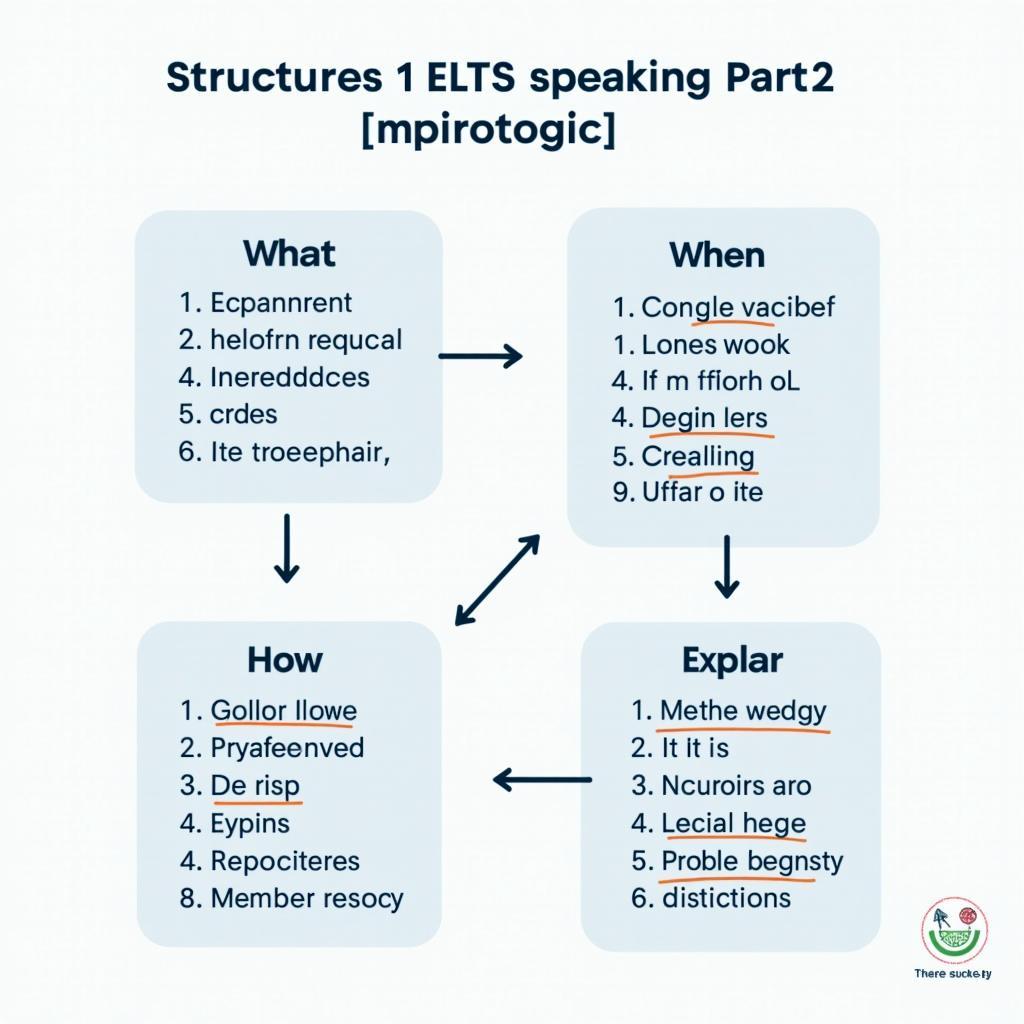 Bài mẫu IELTS Speaking Part 2 về công nghệ thay đổi cuộc sống với cấu trúc chi tiết
IELTS Speaking Part 3: Two-way Discussion
Tổng Quan Về Part 3
Part 3 là phần thách thức nhất của IELTS Speaking vì yêu cầu bạn phải thảo luận về các vấn đề trừu tượng và xã hội liên quan đến chủ đề Part 2. Đây là phần truly tests your ability to discuss, analyze, và express complex ideas.
Thời gian và đặc điểm:
- 4-5 phút: Discussion với examiner
- Abstract và theoretical: Không chỉ nói về personal experience
- Requires critical thinking: Phân tích cause-effect, compare-contrast, evaluate, predict
Yêu cầu cốt lõi:
- Develop ideas fully: Mỗi câu trả lời 3-5 câu, không ngắn như Part 1
- Support với examples: Từ society, not just personal
- Show different perspectives: Acknowledge complexity của issues
- Use sophisticated language: Abstract nouns, tentative language, discourse markers
Chiến lược trả lời hiệu quả:
- Direct answer first: Trả lời trực tiếp câu hỏi ngay
- Expand with reasons: Đưa ra 2-3 lý do
- Give examples: Từ society/world, not just yourself
- Consider other views: “However, some people might argue…”
- Conclude if appropriate: Mini conclusion cho long answers
Lỗi thường gặp của học viên Việt Nam:
- Trả lời quá ngắn như Part 1
- Chỉ nói về personal experience, không general
- Thiếu từ vựng abstract và academic
- Không đưa ra reasons và explanations đầy đủ
- Sợ disagree hoặc show multiple viewpoints
- Grammar errors khi express complex ideas
Các Câu Hỏi Thảo Luận Sâu
Theme 1: Technology and Society
Question 1: How has technology changed the way people work?
🎯 Phân tích câu hỏi:
- Dạng: Change/Compare (past vs present)
- Key words: changed, way people work
- Cách tiếp cận:
- Direct answer về overall change
- Specific examples của changes (remote work, automation, communication)
- Impact analysis (positive và negative)
- Optional: Future prediction
📝 Sample Answer – Band 6-7:
Technology has changed the way people work a lot. In the past, people had to go to the office every day, but now many people can work from home using computers and the internet. This is more convenient because they don’t need to commute.
Also, technology makes work faster and easier. For example, we can send emails instead of writing letters, and we can have video meetings with people in different countries. Some jobs have been replaced by machines and robots, which can be a problem for workers.
I think technology has made work more efficient, but it also creates some challenges like job loss.
Phân tích:
- Structure: Basic but clear: past vs present → examples → brief evaluation
- Vocabulary: Simple and repetitive (a lot, more convenient, faster and easier)
- Tại sao Band 6-7: Adequate ideas nhưng lacks depth và sophisticated language. Examples có nhưng not detailed.
📝 Sample Answer – Band 8-9:
Well, technology has fundamentally revolutionized the modern workplace in ways that would have been unimaginable just a generation ago. Perhaps the most visible transformation is the advent of remote work. The pandemic really accelerated this trend, but even before that, we were seeing a gradual shift toward more flexible working arrangements. Tools like Zoom, Slack, and cloud-based collaboration platforms have made it possible for teams to function seamlessly across different time zones and continents, breaking down geographical barriers that once constrained business operations.
Beyond just location flexibility, technology has dramatically enhanced productivity through automation and AI. Repetitive, mundane tasks that once consumed hours of human labor can now be handled by algorithms, freeing workers to focus on more creative and strategic work. In manufacturing, for instance, robotic process automation has streamlined production lines, while in white-collar jobs, AI assistants can sift through vast amounts of data to generate insights that would take humans days or weeks to produce.
However, this transformation isn’t without its challenges. There’s the very real concern about job displacement – certain roles, particularly those involving routine tasks, are increasingly becoming obsolete. We’re also seeing new issues like digital burnout emerge, as the boundaries between work and personal life become increasingly blurred when your office is just a laptop away. Additionally, not everyone has equal access to these technologies, which can exacerbate existing inequalities in the workforce.
Phân tích:
- Structure: Well-organized: Direct answer → Main change 1 (remote work) với details → Main change 2 (automation) với examples → Challenges (balanced view)
- Vocabulary: Sophisticated và precise (fundamentally revolutionized, advent of, seamless, constrained, exacerbate inequalities)
- Grammar: Complex structures với excellent variety (passive voice, relative clauses, participle phrases, conditionals)
- Critical Thinking: Shows nuanced understanding với both benefits và drawbacks, specific examples từ different industries
💡 Key Language Features:
- Discourse markers: Well, Perhaps the most, Beyond just, However, Additionally
- Tentative language: would have been, we’re seeing, can be
- Abstract nouns: transformation, advent, productivity, displacement, burnout, inequalities
- Collocations: fundamentally revolutionized, accelerated this trend, breaking down barriers, exacerbate inequalities
Question 2: Do you think older people find it difficult to adapt to new technology?
🎯 Phân tích câu hỏi:
- Dạng: Opinion + Generalization về age group
- Key words: older people, difficult, adapt, new technology
- Cách tiếp cận:
- Avoid overgeneralization (not all older people)
- Give reasons why some might struggle
- Acknowledge those who adapt well
- Factors affecting adaptation
📝 Sample Answer – Band 6-7:
I think some older people find technology difficult, but not all of them. Many older people didn’t grow up with computers and smartphones, so it’s new for them. They might not understand how to use apps or the internet easily.
However, some older people are very good with technology. My grandmother uses Facebook and video calls every day. I think it depends on the person and whether they want to learn. If they practice more, they can use technology well.
Technology companies should make their products easier for older people to use.
Phân tích:
- Structure: Opinion → reason → counter-example → conclusion/suggestion
- Vocabulary: Basic (difficult, good with, easier)
- Tại sao Band 6-7: Reasonable structure nhưng lacks sophistication. Personal example là good nhưng cần more general examples.
📝 Sample Answer – Band 8-9:
I think we need to be careful not to fall into the trap of stereotyping. While it’s true that some older individuals struggle with the learning curve associated with new technologies, this is far from universal. The challenge often stems from the fact that many seniors grew up in an analog world and are now being asked to navigate an increasingly digital landscape that operates on fundamentally different principles.
Several factors come into play here. First, there’s the issue of digital literacy – older generations often lack the foundational knowledge that younger people, who’ve been immersed in technology from birth, take for granted. Things like intuitive interface design that seems obvious to digital natives can be genuinely baffling to someone who’s never used a smartphone. There’s also a psychological component – some older people experience technology anxiety or feel intimidated by the pace of change, which can create a mental barrier to learning.
That said, I’ve seen plenty of counter-examples. Many seniors are remarkably tech-savvy and eagerly embrace new tools, particularly when they see clear practical benefits – like staying connected with grandchildren through video calls or managing their health through medical apps. What seems to make the difference is motivation, access to patient instruction, and perhaps most importantly, user-friendly design that accommodates different levels of technical proficiency.
In my view, the onus is partly on tech companies to design more inclusive interfaces and provide better onboarding support. We also need more intergenerational knowledge transfer – younger people helping older relatives navigate technology. It’s not that older people can’t adapt; it’s that we need to create better conditions for them to do so.
Phân tích:
- Structure: Sophisticated: Avoid stereotype → Explain challenges (factors) → Counterexamples → Solution-oriented conclusion
- Vocabulary: Advanced và precise (fall into the trap, stems from, digital literacy, baffling, tech-savvy, onus is on)
- Grammar: Excellent variety với complex structures và subordinate clauses
- Critical Thinking: Nuanced view acknowledging complexity, multiple factors, và solutions. Avoids overgeneralization.
💡 Key Language Features:
- Avoiding absolutes: “far from universal”, “some older individuals”, “many seniors”
- Academic phrases: “come into play”, “stems from”, “psychological component”
- Cause-effect language: “which can create”, “what seems to make the difference”
- Solution language: “the onus is on”, “we need to create better conditions”
Theme 2: Technology and Education
Question 3: What role should technology play in education?
🎯 Phân tích câu hỏi:
- Dạng: Opinion về appropriate role
- Key words: role, should, technology, education
- Cách tiếp cận:
- State your position
- Benefits của technology in education
- Limitations/concerns
- Balanced role (not too much, not too little)
📝 Sample Answer – Band 6-7:
I think technology should play an important role in education. It can make learning more interesting and interactive. For example, students can watch educational videos and use learning apps instead of just reading textbooks.
Technology also helps students access more information quickly. They can research online and learn about topics that their teachers might not cover in class. However, I don’t think technology should replace teachers completely because teachers are important for explaining things and helping students understand.
Students also need to learn how to write by hand and not just type on computers. So technology should be used together with traditional teaching methods.
Phân tích:
- Structure: Clear position → benefits → limitations → balanced conclusion
- Vocabulary: Adequate but simple (important role, more interesting, helps students)
- Tại sao Band 6-7: Ideas có structure nhưng lacks depth và sophisticated expression
📝 Sample Answer – Band 8-9:
I’d argue that technology should serve as a powerful complement to, rather than a replacement for, traditional educational methods. When leveraged effectively, it has the potential to transform the learning experience in several meaningful ways.
First and foremost, technology can facilitate personalized learning at a scale that would be impossible in conventional classrooms. Adaptive learning platforms can tailor content to individual students’ pace and proficiency levels, ensuring that high-achievers aren’t held back while struggling students receive additional support. This kind of differentiated instruction is something teachers have always aspired to provide but often couldn’t deliver due to practical constraints.
Moreover, technology democratizes access to educational resources. Students in remote or underserved areas can now access world-class lectures, virtual laboratory simulations, and collaborative learning opportunities that were previously the preserve of elite institutions. This has profound implications for educational equity.
That said, we need to be mindful of the limitations. There’s a danger of over-reliance on digital tools at the expense of fundamental skills like critical thinking, face-to-face communication, and handwriting. Studies have shown that students often retain information better when taking handwritten notes versus typing, for instance. There’s also the issue of screen time and its potential impact on children’s physical and mental wellbeing.
In my view, the ideal approach is a hybrid model that harnesses the strengths of both traditional and technological methods. Technology should be used to enhance engagement, provide supplementary resources, and enable personalized learning, while teachers continue to play the crucial role of mentors, facilitators, and critical thinking coaches. It’s about striking the right balance rather than swinging to one extreme or the other.
Nếu bạn quan tâm đến vai trò của giáo dục trong việc chuẩn bị cho tương lai, bạn có thể tìm hiểu thêm về how schools prepare children for their future life ielts để mở rộng vốn ý tưởng về chủ đề giáo dục.
Phân tích:
- Structure: Excellent organization: Clear thesis → Benefit 1 (personalization) → Benefit 2 (access) → Limitations → Balanced conclusion
- Vocabulary: Sophisticated và domain-specific (leverage effectively, adaptive learning platforms, differentiated instruction, democratizes access, hybrid model)
- Grammar: Wide range với accuracy (relative clauses, conditionals, passive constructions, complex noun phrases)
- Critical Thinking: Shows deep understanding với specific examples, acknowledges trade-offs, proposes balanced solution
💡 Key Language Features:
- Academic discourse: “I’d argue that”, “First and foremost”, “Moreover”, “That said”, “In my view”
- Nuanced expressions: “complement to rather than replacement for”, “when leveraged effectively”, “mindful of the limitations”
- Abstract nouns: personalization, equity, implications, wellbeing, facilitation
- Metaphors: “striking the right balance”, “swinging to one extreme”
Theme 3: Future of Technology
Question 4: What technological developments do you expect to see in the next 20 years?
🎯 Phân tích câu hỏi:
- Dạng: Prediction/Future trends
- Key words: developments, expect, next 20 years
- Cách tiếp cận:
- Identify 2-3 major trends
- Explain each với potential impact
- Show uncertainty (might, could, likely to)
- Potential challenges
📝 Sample Answer – Band 6-7:
I think we will see many new technologies in the future. First, artificial intelligence will become more advanced and will be used in many areas like healthcare and transportation. We might have self-driving cars everywhere.
Also, virtual reality might become more popular. People could use it for education, entertainment, and maybe even for work. I think smartphones will become even more powerful and might have new features we can’t imagine now.
Technology will probably make our lives more convenient, but we need to be careful about privacy and security issues.
Phân tích:
- Structure: Simple predictions với brief explanations
- Vocabulary: Basic future forms (will become, might have, could use)
- Tại sao Band 6-7: Has relevant ideas nhưng lacks specific details và sophisticated speculation
📝 Sample Answer – Band 8-9:
Looking ahead to the next two decades, I anticipate we’ll see several transformative technological shifts that could fundamentally alter how we live and work.
Artificial intelligence is likely to reach new levels of sophistication. We’re already seeing the early stages of this with tools like ChatGPT, but I expect AI will become far more integrated into every facet of our lives – from predictive healthcare that can diagnose diseases before symptoms appear, to hyper-personalized education systems that adapt in real-time to how each student learns best. The implications for productivity and efficiency are staggering, though this also raises thorny questions about workforce displacement and the need for massive retraining programs.
I also think we’ll see significant breakthroughs in biotechnology and genetic engineering. Technologies like CRISPR could potentially eradicate genetic diseases and extend human lifespans considerably. We might even see the blurring of lines between biological and technological enhancement – what some call transhumanism. This opens up fascinating possibilities but also profound ethical dilemmas about human enhancement and access equity.
Renewable energy and climate technology will likely undergo rapid advancement out of sheer necessity. I’d expect to see breakthroughs in energy storage, more efficient solar panels, and perhaps even fusion energy becoming commercially viable. The climate crisis will drive innovation in ways we haven’t seen before, potentially spurring a green technology revolution.
However, I think we need to be somewhat cautious in our predictions. Twenty years ago, we vastly overestimated how quickly things like flying cars and household robots would materialize, while underestimating the impact of mobile internet and social media. Technology often evolves in unexpected ways, so while I’m optimistic about these developments, I’m also cognizant that we might be surprised by entirely different innovations we haven’t even conceived of yet.
Phân tích:
- Structure: Sophisticated: Intro with thesis → Trend 1 (AI) với implications → Trend 2 (Biotech) với ethical considerations → Trend 3 (Green tech) → Cautious reflection
- Vocabulary: Advanced và precise (transformative shifts, integrated into every facet, staggering implications, thorny questions, profound ethical dilemmas)
- Grammar: Excellent future forms variety (will see, is likely to, could potentially, might even see) và complex structures
- Critical Thinking: Shows sophisticated understanding với specific examples, considers implications và limitations, acknowledges uncertainty
💡 Key Language Features:
- Tentative language: “I anticipate”, “likely to”, “I expect”, “might even see”, “could potentially”
- Hedging: “somewhat cautious”, “I’m cognizant that”
- Contrast markers: “However”, “while… also”
- Advanced vocabulary: eradicate, materialize, cognizant, conceived of, spurring
Question 5: Do you think technology is making people’s lives better or worse?
🎯 Phân tích câu hỏi:
- Dạng: Evaluate (better/worse) – yêu cầu balanced view
- Key words: making, lives, better or worse
- Cách tiếp cận:
- Acknowledge complexity (not simple better/worse)
- Benefits với examples
- Drawbacks với examples
- Nuanced conclusion (depends on how used)
📝 Sample Answer – Band 6-7:
This is a difficult question because technology has both good and bad effects. On the one hand, technology makes our lives more convenient. We can communicate with people easily, find information quickly, and do many things that were impossible before.
On the other hand, technology can cause problems. Many people spend too much time on their phones and computers, which is bad for their health. Social media can make people feel stressed or jealous when they compare themselves to others.
I think technology itself is not good or bad – it depends on how people use it. If we use technology in a balanced way, it can improve our lives.
Phân tích:
- Structure: Acknowledges complexity → positive side → negative side → balanced conclusion
- Vocabulary: Simple (good and bad effects, more convenient, cause problems)
- Tại sao Band 6-7: Structure tốt nhưng ideas lack depth và sophistication
📝 Sample Answer – Band 8-9:
I think this is one of the defining questions of our time, and I’d argue that it’s far too simplistic to say technology is making lives uniformly better or worse. The reality is much more nuanced and depends heavily on context, access, and usage patterns.
On the positive side, technology has undeniably enhanced quality of life in myriad ways. Medical technologies have dramatically increased life expectancy and improved treatment outcomes for countless diseases. Communication technologies have shrunk the world, allowing families separated by oceans to maintain close bonds. For people with disabilities, assistive technologies have been absolutely life-changing, providing unprecedented independence and opportunities. The democratization of information through the internet has empowered individuals in ways that would have been unthinkable a generation ago.
However, we’re also seeing significant downsides. There’s mounting evidence that excessive screen time is linked to mental health issues, particularly among young people. Social media, while connecting us, has also fostered echo chambers, amplified misinformation, and created new forms of social anxiety and comparison culture. The always-on culture enabled by smartphones has eroded work-life boundaries, contributing to widespread burnout. We’re also witnessing how technology can be weaponized – from surveillance capitalism to cyber warfare to the spread of disinformation that threatens democratic processes.
What I think is crucial is recognizing that technology is essentially a tool – it amplifies human capabilities and intentions, both good and bad. The determining factor isn’t the technology itself but how societies choose to deploy and regulate it. We need thoughtful governance, digital literacy education, and individual mindfulness about our relationship with technology. When used intentionally and ethically, technology can be profoundly beneficial. When used carelessly or maliciously, it can indeed diminish wellbeing.
So my answer would be: technology has the potential to make lives better, but realizing that potential requires conscious effort, wise regulation, and constant critical evaluation of how we’re using these powerful tools.
Phân tích:
- Structure: Masterful: Address complexity → Comprehensive benefits với specific examples → Comprehensive drawbacks với specific examples → Philosophical analysis (tool metaphor) → Nuanced conclusion với conditions
- Vocabulary: Sophisticated và varied (defining questions, myriad ways, mounting evidence, weaponized, surveillance capitalism, amplifies human capabilities)
- Grammar: Full range của complex structures accurately deployed
- Critical Thinking: Shows exceptional depth với balanced analysis, acknowledges complexity, considers multiple stakeholders, proposes solutions
💡 Key Language Features:
- Sophisticated discourse: “I’d argue that”, “On the positive side”, “However”, “What I think is crucial”
- Hedging và nuance: “far too simplistic”, “much more nuanced”, “has the potential”, “essentially a tool”
- Evidence language: “undeniably enhanced”, “mounting evidence”, “linked to”
- Abstract concepts: democratization, empowerment, surveillance capitalism, echo chambers, comparison culture
 Chiến lược trả lời IELTS Speaking Part 3 về công nghệ để đạt band điểm cao
Từ vựng và cụm từ quan trọng
Topic-Specific Vocabulary
| Từ vựng/Cụm từ | Loại từ | Phiên âm | Nghĩa tiếng Việt | Ví dụ | Collocation |
|---|---|---|---|---|---|
| revolutionize | v | /ˌrevəˈluːʃənaɪz/ | cách mạng hóa, thay đổi hoàn toàn | AI has revolutionized the healthcare industry. | revolutionize the way, revolutionize an industry, completely revolutionize |
| transformative | adj | /trænsˈfɔːrmətɪv/ | mang tính chất chuyển đổi | This was a transformative experience for me. | transformative impact, transformative technology, truly transformative |
| adaptive learning | n | /əˈdæptɪv ˈlɜːrnɪŋ/ | học tập thích ứng | Adaptive learning platforms adjust to student needs. | adaptive learning system, adaptive learning technology, personalized adaptive learning |
| game-changing | adj | /ˈɡeɪm ˌtʃeɪndʒɪŋ/ | thay đổi cuộc chơi, đột phá | This is a game-changing innovation. | game-changing technology, game-changing development, potentially game-changing |
| democratize | v | /dɪˈmɒkrətaɪz/ | dân chủ hóa, phổ cập | Technology has democratized access to education. | democratize access, democratize information, democratize knowledge |
| seamlessly | adv | /ˈsiːmləsli/ | liền mạch, không có rào cản | The apps integrate seamlessly with each other. | work seamlessly, integrate seamlessly, function seamlessly |
| leverage | v | /ˈlevərɪdʒ/ | tận dụng, khai thác tối đa | We need to leverage technology effectively. | leverage technology, leverage resources, leverage opportunities |
| nuanced | adj | /ˈnjuːɑːnst/ | tinh tế, có nhiều sắc thái | This requires a nuanced understanding. | nuanced approach, nuanced perspective, more nuanced |
| unprecedented | adj | /ʌnˈpresɪdentɪd/ | chưa từng có | This crisis is unprecedented in scale. | unprecedented access, unprecedented level, unprecedented opportunity |
| exponential growth | n | /ˌekspəˈnenʃl ɡrəʊθ/ | tăng trưởng theo cấp số nhân | AI is experiencing exponential growth. | exponential growth in, rapid exponential growth, see exponential growth |
| fostered | v | /ˈfɒstərd/ | nuôi dưỡng, thúc đẩy | Technology has fostered global collaboration. | foster innovation, foster creativity, foster connection |
| instantaneous | adj | /ˌɪnstənˈteɪniəs/ | tức thời, tức khắc | Communication is now virtually instantaneous. | instantaneous communication, instantaneous access, virtually instantaneous |
| proliferation | n | /prəˌlɪfəˈreɪʃn/ | sự gia tăng nhanh chóng | The proliferation of smartphones is remarkable. | proliferation of technology, rapid proliferation, nuclear proliferation |
| obsolete | adj | /ˌɒbsəˈliːt/ | lỗi thời, lạc hậu | Some jobs may become obsolete. | become obsolete, render obsolete, increasingly obsolete |
| mitigate | v | /ˈmɪtɪɡeɪt/ | giảm thiểu | We need to mitigate the negative effects. | mitigate risks, mitigate impact, help mitigate |
| user-friendly | adj | /ˈjuːzə ˌfrendli/ | thân thiện người dùng | The interface is very user-friendly. | user-friendly design, user-friendly interface, highly user-friendly |
| cutting-edge | adj | /ˌkʌtɪŋ ˈedʒ/ | tiên tiến nhất, tân tiến | They use cutting-edge technology. | cutting-edge technology, cutting-edge research, cutting-edge innovation |
| tech-savvy | adj | /ˈtek ˌsævi/ | am hiểu công nghệ | Young people are generally tech-savvy. | tech-savvy generation, tech-savvy users, increasingly tech-savvy |
| digital divide | n | /ˈdɪdʒɪtl dɪˈvaɪd/ | khoảng cách công nghệ số | We need to bridge the digital divide. | bridge the digital divide, widen the digital divide, address the digital divide |
| intrinsic motivation | n | /ɪnˈtrɪnsɪk ˌməʊtɪˈveɪʃn/ | động lực nội tại | Gamification taps into intrinsic motivation. | intrinsic motivation to, enhance intrinsic motivation, driven by intrinsic motivation |
Idiomatic Expressions & Advanced Phrases
| Cụm từ | Nghĩa | Ví dụ sử dụng | Band điểm |
|---|---|---|---|
| a double-edged sword | con dao hai lưỡi, có cả mặt tích cực và tiêu cực | Technology is a double-edged sword – it connects us but also isolates us. | 7.5-9 |
| the tip of the iceberg | phần nổi của tảng băng, chỉ một phần nhỏ | What we’re seeing now is just the tip of the iceberg in terms of AI capabilities. | 7.5-9 |
| fall into the trap of | rơi vào cái bẫy của | We shouldn’t fall into the trap of thinking all technology is beneficial. | 7.5-8.5 |
| at the forefront of | đi đầu, tiên phong trong | This company is at the forefront of green technology. | 7.5-8.5 |
| keep pace with | theo kịp với | Education systems struggle to keep pace with technological change. | 7-8 |
| strike a balance | đạt được sự cân bằng | We need to strike a balance between technology use and face-to-face interaction. | 7-8 |
| take for granted | coi là điều hiển nhiên | We take internet access for granted, but many still lack it. | 7-8 |
| stems from | bắt nguồn từ | The problem stems from inadequate digital literacy education. | 7.5-8.5 |
| nothing short of | không gì khác ngoài, thực sự là | The impact has been nothing short of revolutionary. | 8-9 |
| by leaps and bounds | tiến bộ vượt bậc | Technology is advancing by leaps and bounds. | 7.5-8.5 |
| have one’s finger on the pulse | nắm bắt xu hướng mới nhất | Tech companies need to have their finger on the pulse of consumer needs. | 8-9 |
| the jury is still out on | còn quá sớm để kết luận | The jury is still out on whether social media does more harm than good. | 8-9 |
Discourse Markers (Từ Nối Ý Trong Speaking)
Để bắt đầu câu trả lời:
- 📝 Well,… – dùng khi cần một chút thời gian suy nghĩ
- 📝 Actually,… – khi muốn đưa ra góc nhìn hoặc thông tin khác
- 📝 To be honest,… – khi muốn nói thật/thẳng thắn
- 📝 I’d say that… – cách formal để đưa ra quan điểm
- 📝 In my view,… – quan điểm cá nhân (formal)
- 📝 From my perspective,… – từ góc nhìn của tôi
Để bổ sung ý:
- 📝 On top of that,… – thêm vào đó (informal)
- 📝 What’s more,… – hơn nữa (formal)
- 📝 Not to mention… – chưa kể đến
- 📝 Moreover,… – hơn thế nữa (academic)
- 📝 Furthermore,… – xa hơn nữa (formal)
- 📝 Additionally,… – thêm vào đó (formal)
Để đưa ra quan điểm cân bằng:
- 📝 On the one hand,… On the other hand,… – một mặt… mặt khác
- 📝 While it’s true that…, we also need to consider… – mặc dù đúng là… nhưng ta cũng cần xem xét
- 📝 That said,… – dù vậy thì (để đưa ra ý đối lập)
- 📝 Having said that,… – nói như vậy thì (để balance quan điểm)
- 📝 Then again,… – mặt khác thì (informal)
Để kết luận:
- 📝 All in all,… – tóm lại, nhìn chung
- 📝 At the end of the day,… – cuối cùng thì
- 📝 In the final analysis,… – xét cho cùng (formal)
- 📝 To sum up,… – tóm lại
- 📝 Ultimately,… – cuối cùng, sau cùng
Để thể hiện uncertainty (rất quan trọng cho Band 8+):
- 📝 I would say… – tôi cho rằng (tentative)
- 📝 It seems to me that… – có vẻ như
- 📝 To some extent,… – ở một mức độ nào đó
- 📝 In some ways,… – theo một số cách
- 📝 I tend to think that… – tôi có xu hướng nghĩ rằng
Grammatical Structures Ấn Tượng
1. Conditional Sentences (Câu điều kiện):
Mixed conditional:
- Formula: If + past perfect, would/could + bare infinitive (hiện tại)
- Ví dụ: “If smartphones hadn’t been invented, we wouldn’t be able to communicate so easily today.”
Inversion (đảo ngữ):
- Formula: Were/Should/Had + subject + verb
- Ví dụ: “Were technology to disappear tomorrow, society would struggle to function.” (= If technology were to disappear…)
2. Relative Clauses (Mệnh đề quan hệ):
Non-defining relative clauses:
- Formula: …, which/who/where + clause, …
- Ví dụ: “Online learning platforms, which have become increasingly sophisticated, offer personalized education.”
Reduced relative clauses:
- Formula: Noun + participle phrase
- Ví dụ: “Students using adaptive learning software tend to perform better.” (= Students who use…)
3. Passive Voice (Câu bị động):
Impersonal passive (rất academic):
- It is thought/believed/said that…
- Ví dụ: “It is widely believed that AI will transform the job market.”
Passive with modal verbs:
- Formula: Modal + be + past participle
- Ví dụ: “Privacy concerns need to be addressed before implementing facial recognition.”
4. Cleft Sentences (Câu chẻ – để nhấn mạnh):
What-cleft:
- Formula: What + subject + verb + is/was + emphasized element
- Ví dụ: “What I find most impressive about smartphones is their versatility.”
It-cleft:
- Formula: It + is/was + emphasized element + that/who + clause
- Ví dụ: “It was the internet that truly revolutionized global communication.”
5. Participle Clauses (Mệnh đề phân từ):
Present participle (showing reason/time):
- Ví dụ: “Having grown up with technology, young people find it intuitive.” (= Because they have grown up…)
Past participle:
- Ví dụ: “Used effectively, technology can enhance learning outcomes.” (= If it is used effectively…)
6. Inversion for Emphasis:
Negative adverbials:
- Formula: Never/Rarely/Seldom + auxiliary + subject + verb
- Ví dụ: “Never before have we had such instant access to information.”
7. Subjunctive Mood (thức giả định):
Formal suggestions:
- Formula: It is essential/crucial/vital that + subject + base verb
- Ví dụ: “It is essential that schools teach digital literacy from an early age.”
8. Nominalization (Danh từ hóa – very academic):
Turning verbs into nouns:
- Instead of: “Technology develops rapidly”
- Advanced: “The rapid development of technology…”
- Ví dụ: “The integration of AI into education has sparked debate.” (not “AI is being integrated…”)
Việc thành thạo các cấu trúc này không chỉ giúp bạn đạt điểm cao ở tiêu chí Grammatical Range and Accuracy mà còn làm cho lời nói của bạn nghe sophisticated và natural hơn. Tuy nhiên, quan trọng nhất là sử dụng chúng một cách tự nhiên, không gượng ép. Trong quá trình chuẩn bị, hãy luyện tập integrate các structures này vào câu trả lời của bạn cho đến khi chúng trở nên automatic.
Khi nói về những trải nghiệm mới với công nghệ, bạn có thể tham khảo thêm Describe a time when you experienced something new để học cách kể về những lần đầu tiên thử nghiệm điều gì đó mới mẻ.
Nhớ rằng, mục tiêu không phải là sử dụng tất cả các structures phức tạp trong một câu trả lời, mà là demonstrate được variety và flexibility trong cách bạn sử dụng ngôn ngữ. Một câu trả lời tự nhiên với 2-3 complex structures được sử dụng đúng lúc sẽ impressive hơn là một câu trả lời “nhồi nhét” quá nhiều grammar mà mất đi sự tự nhiên.
Cuối cùng, công nghệ cũng ảnh hưởng đến nhiều khía cạnh khác của cuộc sống như thời tiết và tâm trạng. Nếu bạn muốn mở rộng vốn từ vựng về các yếu tố ảnh hưởng đến cuộc sống hàng ngày, hãy xem thêm does the weather affect your mood ielts để học cách thảo luận về các yếu tố tác động đến cảm xúc và hành vi.