Chủ đề “trải nghiệm điều mới lạ” là một trong những đề tài phổ biến và thường xuyên xuất hiện trong IELTS Speaking Part 2, đặc biệt từ năm 2020 đến nay. Đây là dạng câu hỏi yêu cầu thí sinh kể về một trải nghiệm cá nhân, điều này vừa dễ tiếp cận nhưng cũng đầy thử thách nếu bạn không chuẩn bị kỹ lưỡng.
Theo thống kê từ các trung tâm thi IELTS tại Việt Nam và các diễn đàn uy tín như IELTS-Blog.com, chủ đề này xuất hiện với tần suất cao (khoảng 15-20% các đề thi thực tế) và được dự đoán sẽ tiếp tục là xu hướng trong năm 2024-2025. Điểm đặc biệt của chủ đề này là examiner có thể khai thác theo nhiều hướng: từ trải nghiệm học tập, công việc, du lịch, đến các hoạt động giải trí hay phát triển bản thân.
Trong bài viết này, bạn sẽ học được cách xử lý chủ đề “Describe A Time When You Experienced Something New” một cách toàn diện qua cả 3 phần thi Speaking. Bạn sẽ được cung cấp câu hỏi thực tế từ các kỳ thi gần đây, bài mẫu chi tiết theo từng band điểm (6-7, 7.5-8, 8.5-9), kho từ vựng phong phú với hơn 50 từ và cụm từ ăn điểm, cùng chiến lược trả lời hiệu quả từ góc nhìn của một examiner giàu kinh nghiệm. Đặc biệt, tôi sẽ chỉ ra những lỗi điển hình mà học viên Việt Nam thường mắc phải và cách khắc phục chúng để tự tin đạt band điểm mục tiêu.
IELTS Speaking Part 1: Introduction and Interview
Tổng Quan Về Part 1
Part 1 kéo dài 4-5 phút với các câu hỏi ngắn về cuộc sống hàng ngày, sở thích, công việc hoặc học tập của bạn. Đây là phần “khởi động” để examiner đánh giá khả năng giao tiếp cơ bản của bạn trong những tình huống quen thuộc.
Chiến lược hiệu quả cho Part 1 là trả lời trực tiếp câu hỏi trong câu đầu tiên, sau đó mở rộng với lý do hoặc ví dụ cụ thể trong 1-2 câu tiếp theo. Tổng độ dài lý tưởng cho mỗi câu trả lời là 2-3 câu (khoảng 15-20 giây).
Lỗi thường gặp của học viên Việt Nam trong Part 1:
- Trả lời quá ngắn gọn chỉ “Yes” hoặc “No” mà không mở rộng
- Sử dụng từ vựng đơn giản ở cấp độ trung học phổ thông
- Thiếu ví dụ cụ thể từ kinh nghiệm bản thân
- Không duy trì được sự tự nhiên, nghe như đang đọc thuộc lòng
- Lạm dụng các cụm từ như “I think”, “maybe” mà không có nội dung thực chất
Các Câu Hỏi Thường Gặp
Dưới đây là 10 câu hỏi thực tế liên quan đến chủ đề “new experiences” thường xuất hiện trong Part 1:
Question 1: Do you like trying new things?
Question 2: What new things have you tried recently?
Question 3: Do you prefer trying new activities or doing familiar ones?
Question 4: How do you feel when you try something new for the first time?
Question 5: Have you learned any new skills lately?
Question 6: Do you think it’s important to try new experiences?
Question 7: What stops people from trying new things?
Question 8: Are you the type of person who likes adventures?
Question 9: When was the last time you did something for the first time?
Question 10: Do you think young people are more willing to try new things than older people?
Phân Tích và Gợi Ý Trả Lời Chi Tiết
Question: Do you like trying new things?
🎯 Cách tiếp cận:
- Trả lời trực tiếp có/không (nhưng nên chọn “có” để dễ phát triển ý)
- Đưa ra lý do cụ thể
- Thêm ví dụ ngắn gọn từ kinh nghiệm bản thân
📝 Sample Answer – Band 6-7:
“Yes, I like trying new things. I think it’s interesting because I can learn more about different activities. Last month, I tried rock climbing for the first time and it was quite fun.”
Phân tích:
- Điểm mạnh: Trả lời rõ ràng, có ví dụ cụ thể
- Hạn chế: Từ vựng cơ bản (interesting, quite fun), cấu trúc câu đơn giản
- Tại sao Band 6-7: Vocabulary đủ dùng nhưng chưa đa dạng, grammar đúng nhưng thiếu độ phức tạp, ý tưởng chưa được develop sâu
📝 Sample Answer – Band 8-9:
“Absolutely! I’m quite an adventurous person and I really enjoy stepping out of my comfort zone. I find that trying new experiences not only broadens my horizons but also helps me discover hidden talents. Just recently, I took up rock climbing, and I was pleasantly surprised to find that I have a natural aptitude for it.”
Phân tích:
- Điểm mạnh: Từ vựng phong phú và chính xác (adventurous, stepping out of comfort zone, broadens horizons, hidden talents, took up, pleasantly surprised, natural aptitude), cấu trúc ngữ pháp đa dạng với mệnh đề quan hệ rút gọn và verb patterns, ý tưởng được develop với nhiều layer (lý do → ví dụ → cảm nhận)
- Tại sao Band 8-9: Sử dụng collocation tự nhiên, grammar range rộng với infinitive và gerund, vocabulary precise và less common, câu trả lời flowing và coherent với linking words hiệu quả
💡 Key Vocabulary & Expressions:
- adventurous person: người thích phiêu lưu, khám phá
- stepping out of my comfort zone: vượt ra khỏi vùng an toàn
- broadens my horizons: mở rộng tầm nhìn
- discover hidden talents: khám phá tài năng tiềm ẩn
- took up: bắt đầu một hoạt động/sở thích mới
- pleasantly surprised: ngạc nhiên một cách thích thú
- natural aptitude: khiếu tự nhiên
Question: What new things have you tried recently?
🎯 Cách tiếp cận:
- Chọn một hoặc hai ví dụ cụ thể (tránh nói chung chung)
- Mô tả ngắn gọn về trải nghiệm đó
- Chia sẻ cảm nhận hoặc kết quả
📝 Sample Answer – Band 6-7:
“Recently, I tried learning how to cook Vietnamese traditional food. I started about two months ago. I learned from my mother and now I can make some simple dishes. It’s difficult but interesting.”
Phân tích:
- Điểm mạnh: Có timeframe rõ ràng, ví dụ cụ thể về Vietnamese food
- Hạn chế: Từ “difficult” và “interesting” quá basic, thiếu details về dishes hoặc feelings cụ thể
- Tại sao Band 6-7: Adequate vocabulary nhưng repetitive adjectives, grammar đúng nhưng đơn giản, ý tưởng chưa detailed enough
📝 Sample Answer – Band 8-9:
“Well, I’ve recently ventured into learning traditional Vietnamese cuisine, which I started about two months ago. I’ve been picking up techniques from my mother, who’s an exceptional cook, and I’m now able to whip up a few classic dishes like braised pork belly and spring rolls. It’s been quite challenging but incredibly rewarding, especially when my family compliments my cooking.”
Phân tích:
- Điểm mạnh: Vocabulary sophisticated (ventured into, picking up techniques, exceptional cook, whip up, challenging, rewarding, compliments), grammar đa dạng với present perfect continuous và relative clauses, details cụ thể (braised pork belly, spring rolls), cảm xúc được express một cách nuanced
- Tại sào Band 8-9: Demonstrates flexible use of verb patterns, collocations sound natural and idiomatic, shows ability to elaborate with specific examples, language flows smoothly with appropriate discourse markers
💡 Key Vocabulary & Expressions:
- ventured into: mạo hiểm thử sức với (formal hơn “tried”)
- picking up techniques: học hỏi kỹ thuật (informal, natural)
- exceptional cook: đầu bếp xuất sắc
- whip up: nấu nhanh một món (idiom)
- braised pork belly: thịt kho
- rewarding: đáng công, có ý nghĩa
- compliments: khen ngợi
Question: Do you think it’s important to try new experiences?
🎯 Cách tiếp cận:
- Đưa ra quan điểm rõ ràng (yes/no hoặc it depends)
- Giải thích với 1-2 reasons
- Có thể thêm một ví dụ ngắn để minh họa
📝 Sample Answer – Band 6-7:
“Yes, I think it’s very important. When we try new experiences, we can grow as a person. Also, we can meet new people and make friends. For example, when I joined a new sports club, I met many interesting people.”
Phân tích:
- Điểm mạnh: Opinion rõ ràng, có hai reasons và một example
- Hạn chế: Vocabulary ở mức basic (very important, grow as a person, interesting people), reasons chưa được elaborate deeply
- Tại sao Band 6-7: Communicates ideas clearly nhưng lacks sophistication, grammar accurate nhưng simple structures, vocabulary functional nhưng limited range
📝 Sample Answer – Band 8-9:
“Absolutely, I believe it’s crucial for personal development. Trying new experiences helps us break out of our routines and stimulates creativity and critical thinking. Moreover, it builds resilience because we learn to adapt to unfamiliar situations. From a social perspective, novel experiences often facilitate connections with diverse groups of people, which enriches our worldview.”
Phân tích:
- Điểm mạnh: Vocabulary academic và precise (crucial, personal development, break out of routines, stimulates creativity, critical thinking, builds resilience, adapt to, novel experiences, facilitate connections, enriches worldview), grammar sophisticated với complex sentences và parallel structures, multi-dimensional reasoning (personal + social perspectives), abstract concepts được express fluently
- Tại sao Band 8-9: Demonstrates wide vocabulary range with accurate collocation, uses less common lexical items skillfully, produces extended discourse coherently, shows full flexibility and precise use of language
💡 Key Vocabulary & Expressions:
- crucial: cực kỳ quan trọng (stronger than “important”)
- personal development: phát triển bản thân
- break out of our routines: thoát khỏi thói quen, lối mòn
- stimulates creativity: kích thích sáng tạo
- critical thinking: tư duy phản biện
- builds resilience: xây dựng khả năng phục hồi, bền bỉ
- adapt to unfamiliar situations: thích nghi với tình huống xa lạ
- novel experiences: trải nghiệm mới lạ (formal)
- facilitate connections: tạo điều kiện kết nối
- enriches our worldview: làm phong phú thế giới quan
IELTS Speaking Part 2: Long Turn (Cue Card)
Tổng Quan Về Part 2
Part 2 là phần độc thoại kéo dài 2-3 phút, trong đó bạn có 1 phút chuẩn bị để ghi chú trước khi nói. Đây là phần quan trọng nhất vì examiner có thể đánh giá đầy đủ khả năng duy trì câu chuyện liên tục của bạn mà không bị ngắt quãng.
Chiến lược hiệu quả:
- Sử dụng đúng và đủ 1 phút chuẩn bị: Ghi keywords cho từng bullet point, không viết câu hoàn chỉnh
- Nói đủ 2 phút: Nếu nói dưới 1.5 phút, bạn sẽ mất điểm Fluency nghiêm trọng
- Trả lời đầy đủ tất cả bullet points: Mỗi bullet nên được cover trong 20-30 giây
- Sử dụng thì động từ phù hợp: Với “describe a time”, bạn chủ yếu dùng past tenses
- Bullet point cuối “explain” là quan trọng nhất: Đây là nơi bạn thể hiện depth of thinking
Lỗi thường gặp:
- Không tận dụng hết 1 phút chuẩn bị, vội vàng bắt đầu
- Nói quá ngắn (dưới 1.5 phút) hoặc phải được examiner nhắc nhở
- Bỏ sót một hoặc nhiều bullet points
- Kể chuyện thiếu chi tiết, quá chung chung
- Không phát triển phần “explain” – chỉ nói vài câu rồi dừng
Cue Card
Describe a time when you experienced something new
You should say:
- When and where it happened
- What you did
- Who you were with
- And explain how you felt about this experience
Phân Tích Đề Bài
- Dạng câu hỏi: Describe an experience/event – kể về một trải nghiệm cá nhân trong quá khứ
- Thì động từ: Chủ yếu là Past Simple và Past Continuous để kể chuyện, có thể dùng Past Perfect để nói về context trước đó
- Bullet points phải cover:
- When and where: Time và location cụ thể (không nên mơ hồ)
- What you did: Action sequence – kể chi tiết những gì bạn làm
- Who you were with: Người đồng hành (có thể một mình nhưng nên có người khác để story thú vị hơn)
- Explain how you felt: Cảm xúc, suy nghĩ – phần này cần sâu sắc nhất
- Câu “explain” quan trọng: Đây là nơi bạn thể hiện ability to evaluate và reflect, không chỉ describe. Bạn nên nói về immediate feelings, long-term impact, hoặc lessons learned
📝 Sample Answer – Band 6-7
Thời lượng: Khoảng 1.5-2 phút
“I’d like to talk about the time when I tried scuba diving for the first time. It happened last summer, around July, when I went to Nha Trang with my friends.
We decided to try scuba diving because we saw an advertisement at our hotel. The diving center was near the beach, and they had professional instructors. On the first day, we had some training on the beach. The instructor taught us how to use the equipment and how to breathe underwater. I felt a bit nervous because I had never done anything like this before.
The next day, we went on a boat to the diving spot. When I jumped into the water and went down, I was really scared at first. But after a few minutes, I started to feel more comfortable. I could see many colorful fish and beautiful coral reefs. My friends were diving with me, and we communicated with hand signals. We stayed underwater for about 30 minutes.
This experience was very exciting for me. At first, I felt afraid because everything was new and strange. But when I saw the underwater world, I felt amazed and happy. After the dive, I felt proud of myself because I tried something challenging. This experience taught me that I should not be afraid to try new things. Now I want to try more water sports in the future.”
Phân Tích Band Điểm
| Tiêu chí | Band | Nhận xét |
|---|---|---|
| Fluency & Coherence | 6-7 | Có thể duy trì câu chuyện liên tục với ít hesitation, sử dụng một số linking words cơ bản (because, but, after), tuy nhiên thiếu discourse markers sophisticate hơn. Câu chuyện có structure rõ ràng nhưng chưa flowing |
| Lexical Resource | 6-7 | Vocabulary đủ để describe experience (scuba diving, equipment, breathe underwater, coral reefs, hand signals), có một số collocations đúng nhưng chủ yếu là common words (really scared, very exciting, feel comfortable). Thiếu less common vocabulary |
| Grammatical Range & Accuracy | 6-7 | Sử dụng đúng past tenses, có một số complex sentences với because/when, nhưng chủ yếu vẫn là simple và compound sentences. Không có lỗi ngữ pháp nghiêm trọng |
| Pronunciation | 6-7 | Giả định rằng pronunciation rõ ràng với một số natural features nhưng chưa có nhiều variation trong intonation |
Điểm mạnh:
- ✅ Trả lời đầy đủ tất cả bullet points
- ✅ Có timeline rõ ràng và logical sequence
- ✅ Sử dụng past tenses chính xác
- ✅ Có details cụ thể về location, activities và feelings
Hạn chế:
- ⚠️ Vocabulary chủ yếu ở level basic-intermediate (really scared, very exciting)
- ⚠️ Thiếu sophisticated expressions và idioms
- ⚠️ Grammar structures đơn giản, ít variety
- ⚠️ Phần “explain feelings” chưa được develop sâu với multiple layers
- ⚠️ Không có reflection về long-term impact hoặc deeper meaning
📝 Sample Answer – Band 7.5-8
Thời lượng: Khoảng 2-2.5 phút
“I’d like to share my experience of trying scuba diving for the first time, which was definitely one of the most memorable adventures I’ve ever had. This took place last July when I took a trip to Nha Trang, a coastal city in Vietnam, with a group of close friends.
We’d been planning this trip for months, and scuba diving was at the top of our bucket list. We enrolled in a beginner’s course at a reputable diving center near our hotel. The whole experience was spread over two days. On the first day, we received comprehensive training on the beach, where a certified instructor taught us the fundamentals – how to use the diving equipment properly, how to regulate our breathing underwater, and various hand signals for communication. I have to admit, I felt quite apprehensive at first because I’d never done anything this adventurous before.
The actual dive happened the following morning. We took a boat to a diving spot about 30 minutes offshore. When it was my turn to descend into the water, my heart was pounding with both excitement and fear. The first few meters down were quite overwhelming – the sensation of breathing underwater felt completely unnatural. However, once I got the hang of it and adjusted to the environment, everything changed. I found myself surrounded by an absolutely breathtaking underwater world – vibrant coral formations, schools of tropical fish, and even a sea turtle gliding gracefully past us. My friends were nearby, and we kept exchanging excited looks through our masks.
Looking back on this experience, I’d say it was genuinely transformative. Initially, I was consumed by anxiety about the potential risks and my own limitations. But as I immersed myself in that serene underwater environment, those fears simply melted away. What struck me most was the sense of accomplishment I felt afterward – I’d pushed myself beyond my comfort zone and discovered I was capable of much more than I’d thought. This experience really reinforced my belief that personal growth comes from embracing new challenges rather than avoiding them. It’s definitely sparked an interest in exploring more underwater adventures in the future.”
Phân Tích Band Điểm
| Tiêu chí | Band | Nhận xét |
|---|---|---|
| Fluency & Coherence | 7.5-8 | Speaks fluently với minimal hesitation, sử dụng cohesive devices hiệu quả (Looking back, Initially, However, What struck me most), có clear progression trong story, demonstrates ability to develop topics coherently |
| Lexical Resource | 7.5-8 | Wide range vocabulary với nhiều less common items (apprehensive, overwhelming, transformative, consumed by anxiety, melted away, spark an interest), collocations natural (bucket list, get the hang of, push beyond comfort zone), paraphrasing skillfully (scared → apprehensive → consumed by anxiety) |
| Grammatical Range & Accuracy | 7.5-8 | Variety of complex structures (relative clauses, participle clauses, past perfect), accurate use of tenses including past continuous for background và past perfect cho prior events, some sophisticated patterns (find myself + V-ing, have to admit) |
| Pronunciation | 7.5-8 | Giả định pronunciation rõ ràng với good range of features, effective use of stress và intonation patterns |
So Sánh Với Band 6-7
| Khía cạnh | Band 6-7 | Band 7.5-8 |
|---|---|---|
| Vocabulary | “really scared”, “very exciting”, “feel comfortable” | “apprehensive”, “overwhelming”, “transformative”, “consumed by anxiety” |
| Grammar | “I felt a bit nervous because…” | “I have to admit, I felt quite apprehensive…” (more sophisticated introductory phrase) |
| Ideas | “This experience taught me that I should not be afraid” | “This experience reinforced my belief that personal growth comes from embracing new challenges” (more profound reflection) |
| Details | “many colorful fish” | “vibrant coral formations, schools of tropical fish, even a sea turtle gliding gracefully” (more vivid, specific) |
📝 Sample Answer – Band 8.5-9
Thời lượng: 2.5-3 phút đầy đủ
“I’d like to recount an experience that genuinely pushed my boundaries and left an indelible mark on me – my first attempt at scuba diving, which took place during a memorable trip to Nha Trang last summer. This coastal gem in Vietnam has long been renowned for its pristine waters and thriving marine ecosystem, making it an ideal destination for aspiring divers.
The whole adventure was meticulously planned by my group of friends, who are all equally enthusiastic about stepping outside our comfort zones. We’d harbored this ambition for quite some time, and scuba diving topped our list of must-try experiences. We signed up with a highly acclaimed diving school that came highly recommended by previous visitors. The course was structured over two intensive days. The first day consisted of thorough theoretical and practical training on the beach, where our extremely patient and knowledgeable instructor walked us through the intricacies of diving equipment, the critical importance of controlled breathing underwater, and the standardized hand signals used for subsurface communication.
I must confess, I was wrestling with considerable anxiety beforehand. Despite being a reasonably confident swimmer, the prospect of breathing underwater seemed fundamentally at odds with my natural instincts, and I found myself plagued by doubts about whether I could actually go through with it. The theoretical part only heightened my nervousness as the instructor outlined various potential complications and emergency procedures.
The actual dive was scheduled for early the next morning. We embarked on a boat journey to a remote diving location approximately 30 minutes from the shore, where the water was notably clearer and the marine biodiversity was particularly rich. As I stood at the edge of the boat, about to make my descent, I experienced what I can only describe as a cocktail of emotions – exhilaration mixed with sheer terror. Those initial moments underwater were nothing short of surreal. The sensation was profoundly disorienting – every instinct was screaming at me to surface, yet I had to consciously override those impulses and trust in the equipment.
But then something remarkable happened. As I gradually acclimated to this alien environment, I began to perceive the experience through an entirely different lens. The underwater landscape was absolutely mesmerizing – intricate coral structures in every imaginable hue, countless species of tropical fish weaving between the reefs, and the most memorable sight: a majestic sea turtle that seemed to materialize out of nowhere, gracefully navigating through the water with effortless elegance. My friends were scattered around me, and I could see their wide-eyed wonder mirrored in their expressions. We communicated through basic hand signals, but there was also this unspoken sense of shared amazement at what we were witnessing.
Reflecting on this experience now, I realize it was far more significant than just a recreational activity – it was genuinely life-changing. What I found most profound was the dramatic shift in my emotional state. I’d gone from being paralyzed by fear to feeling completely at peace in a matter of minutes. This experience crystallized an important life lesson for me: that our perceived limitations are often largely self-imposed, and that extraordinary experiences often lie just beyond the threshold of our comfort zones. The sense of achievement I derived from conquering this fear has had a ripple effect on other areas of my life – I’m now much more willing to embrace uncertainty and take calculated risks. Moreover, it sparked a fascination with marine conservation, and I’ve since become more conscious of environmental issues affecting our oceans. Without a doubt, this experience reinforced my conviction that personal evolution comes not from playing it safe, but from actively seeking out experiences that challenge our preconceptions about what we’re capable of achieving.”
Phân Tích Band Điểm
| Tiêu chí | Band | Nhận xét |
|---|---|---|
| Fluency & Coherence | 8.5-9 | Speaks fluently with only rare repetition or self-correction, seamless flow với sophisticated cohesive devices (I must confess, But then something remarkable happened, Reflecting on), develops topics fully và appropriately, shows full flexibility trong extended discourse |
| Lexical Resource | 8.5-9 | Uses wide vocabulary range with natural và sophisticated control, precise collocation (indelible mark, pristine waters, wrestling with anxiety, at odds with, plagued by doubts, cocktail of emotions, ripple effect), idiomatic language used naturally, conveys precise meanings with lexical sophistication |
| Grammatical Range & Accuracy | 8.5-9 | Uses full range of structures naturally và appropriately, rare errors (none apparent in this sample), complex sentence structures throughout (embedded clauses, participial phrases, inversion), demonstrates complete grammatical control |
| Pronunciation | 8.5-9 | Giả định pronunciation features fully developed with sophisticated control of rhythm, intonation, stress patterns |
Tại Sao Bài Này Xuất Sắc
🎯 Fluency Hoàn Hảo:
- Không có hesitation hay repetition không cần thiết
- Flow tự nhiên như native speaker storytelling
- Extended discourse được maintain một cách effortless
- Transitional phrases sophisticated (I must confess, But then something remarkable happened)
📚 Vocabulary Tinh Vi:
- Ví dụ: “left an indelible mark on me” – idiom mạnh hơn nhiều so với “memorable”
- Ví dụ: “wrestling with considerable anxiety” – vivid metaphor thay vì simple “very worried”
- Ví dụ: “a cocktail of emotions” – creative expression cho mixed feelings
- Ví dụ: “profoundly disorienting” – precise adjective + adverb combination
- Paraphrasing xuất sắc: scared → anxiety → wrestling with doubts → paralyzed by fear
📝 Grammar Đa Dạng:
- Ví dụ: “Despite being a reasonably confident swimmer, the prospect of…” – concessive clause với gerund
- Ví dụ: “As I stood at the edge of the boat, about to make my descent…” – participle phrase cho simultaneous actions
- Ví dụ: “What I found most profound was the dramatic shift…” – cleft sentence for emphasis
- Ví dụ: “I realize it was far more significant than just a recreational activity” – comparative structure embedded in reported thought
💡 Ideas Sâu Sắc:
- Không chỉ describe mà còn analyze và reflect deeply
- Multiple layers of meaning: immediate experience → emotional transformation → life lessons → long-term impact
- Abstract concepts được express fluently (perceived limitations, self-imposed, personal evolution)
- Shows maturity in thinking: từ cá nhân experience đến broader implications về marine conservation
 Thí sinh IELTS đang ghi chú chuẩn bị cho Speaking Part 2 với chủ đề trải nghiệm mới
Follow-up Questions (Rounding Off Questions)
Examiner có thể hỏi thêm 1-2 câu ngắn sau Part 2 trước khi chuyển sang Part 3:
Question 1: Would you like to try scuba diving again in the future?
Band 6-7 Answer:
“Yes, definitely. I really enjoyed it and I want to explore more diving spots, maybe in other countries.”
Band 8-9 Answer:
“Absolutely! That initial experience really whetted my appetite for diving, and I’m keen to explore different dive sites around the world. I’m particularly drawn to the idea of wreck diving or perhaps diving in more challenging conditions like stronger currents to further develop my skills.”
Question 2: Was it expensive?
Band 6-7 Answer:
“It was quite expensive, around 2 million VND for the course, but I think it was worth the money because it was a great experience.”
Band 8-9 Answer:
“It was fairly pricey – around 2 million VND for the two-day certification course – but I’d say it was money well spent. The quality of instruction was top-notch, and the equipment was well-maintained. When you consider the unique experience and the level of expertise required to teach diving safely, the cost seems quite reasonable.”
IELTS Speaking Part 3: Two-way Discussion
Tổng Quan Về Part 3
Part 3 kéo dài 4-5 phút và là phần thách thức nhất của bài thi Speaking. Khác với Part 1 và Part 2, Part 3 yêu cầu bạn thảo luận về các vấn đề trừu tượng và rộng hơn liên quan đến chủ đề Part 2.
Yêu cầu:
- Đưa ra và defend quan điểm cá nhân với reasoning rõ ràng
- So sánh, contrast các khía cạnh khác nhau
- Phân tích causes, effects, solutions
- Xem xét vấn đề từ nhiều perspectives
- Sử dụng examples từ society, không chỉ personal experiences
Chiến lược:
- Mở rộng câu trả lời thành 3-5 câu (30-45 giây mỗi câu hỏi)
- Structure: Direct answer → Reason 1 + explain/example → Reason 2 + explain/example → Conclusion/Nuanced view
- Sử dụng discourse markers để organize ideas (Well, Actually, On the one hand)
- Thể hiện critical thinking bằng cách acknowledge complexity (It depends, There are both advantages and disadvantages)
- Sử dụng tentative language để sound academic và balanced (I would say, It seems to me, To some extent)
Lỗi thường gặp của học viên Việt Nam:
- Trả lời quá ngắn (1-2 câu) giống như Part 1
- Chỉ nêu opinion mà không có supporting reasons hoặc examples
- Thiếu từ vựng abstract và academic
- Không structure câu trả lời một cách logical
- Nói quá general, không có specific examples
- Không acknowledge different viewpoints
Các Câu Hỏi Thảo Luận Sâu
Theme 1: Benefits and Challenges of New Experiences
Question 1: What are the benefits of trying new experiences?
🎯 Phân tích câu hỏi:
- Dạng: Benefits/Advantages question – yêu cầu list và explain multiple benefits
- Key words: “benefits” – cần focus vào positive impacts
- Cách tiếp cận: Đưa ra 2-3 benefits chính, mỗi benefit có explanation và example. Có thể phân loại theo personal vs social benefits
📝 Sample Answer – Band 6-7:
“There are many benefits of trying new experiences. First, it helps people learn new skills and become more confident. For example, when someone tries a new sport, they can improve their physical health. Second, new experiences can help people make new friends because they meet others with similar interests. Finally, trying new things makes life more interesting and less boring.”
Phân tích:
- Structure: Có list 3 benefits với first, second, finally nhưng development của mỗi point còn shallow
- Vocabulary: Basic level (many benefits, more confident, less boring)
- Tại sao Band 6-7: Communicates main ideas clearly nhưng lacks depth, vocabulary adequate nhưng repetitive (new x3), examples không specific enough
📝 Câu trả lời mẫu – Band 8-9:
“Well, I’d say there are numerous advantages to stepping outside one’s comfort zone and embracing novel experiences.
From a personal development perspective, trying new things significantly enhances our skill set and broadens our capabilities. When we engage in unfamiliar activities, we’re essentially training our brain to adapt and problem-solve in different contexts, which cultivates resilience and mental flexibility. For instance, learning a new language doesn’t just give you communication skills – it actually rewires your cognitive processes and improves your overall mental agility.
On a social level, new experiences often serve as catalysts for expanding our social networks. When you venture into new activities or environments, you naturally encounter like-minded individuals who share similar interests, which can lead to meaningful connections and friendships.
Moreover, there’s also a psychological benefit that shouldn’t be overlooked – novel experiences help combat monotony and keep life stimulating. They trigger the release of dopamine, which is why we often feel that sense of excitement and renewed enthusiasm after trying something new. This is particularly crucial in today’s world where routine can easily lead to burnout and dissatisfaction.”
Phân tích:
- Structure: Exceptionally well-organized với clear signposting (From a personal development perspective, On a social level, Moreover), mỗi benefit được develop fully với explanation + specific example + deeper analysis
- Vocabulary: Sophisticated và precise (stepping outside comfort zone, cultivates resilience, mental flexibility, rewires cognitive processes, serve as catalysts, combat monotony, trigger the release of dopamine)
- Grammar: Wide range với relative clauses, participle phrases, parallel structures (enhance… and broaden, adapt and problem-solve)
- Critical Thinking: Multi-dimensional analysis (personal, social, psychological), uses scientific evidence (dopamine), shows depth of understanding
💡 Key Language Features:
- Discourse markers: “Well, I’d say”, “From a personal development perspective”, “On a social level”, “Moreover”
- Tentative language: “I’d say”, “essentially”, “often”, “can lead to”
- Abstract nouns: “resilience”, “mental flexibility”, “cognitive processes”, “mental agility”, “monotony”
- Academic collocations: “significantly enhances”, “cultivates resilience”, “serve as catalysts”, “trigger the release”
Question 2: Why do some people prefer to stick to familiar activities rather than try new things?
🎯 Phân tích câu hỏi:
- Dạng: Reason/Cause question – yêu cầu explain motivations và factors
- Key words: “prefer to stick”, “rather than” – cần so sánh và explain preference
- Cách tiếp cận: Analyze psychological, practical, và cultural factors. Acknowledge multiple reasons without judgment
📝 Sample Answer – Band 6-7:
“I think there are several reasons. Some people are afraid of failure, so they don’t want to try new things. Also, familiar activities are comfortable and safe. People already know what to expect, so there is no stress. Another reason is that trying new things can be expensive and time-consuming. For example, learning a new hobby needs money for equipment and lessons.”
Phân tích:
- Structure: Lists 3 reasons (fear, comfort, cost) nhưng chưa elaborate deeply
- Vocabulary: Adequate nhưng simple (afraid of failure, comfortable and safe, expensive and time-consuming)
- Tại sao Band 6-7: Clear communication nhưng lacks sophisticated analysis, reasons đúng nhưng surface-level
📝 Câu trả lời mẫu – Band 8-9:
“This is actually quite a nuanced issue with multiple underlying factors at play.
Psychologically speaking, humans are inherently risk-averse to varying degrees, and for some individuals, the perceived risks associated with new experiences far outweigh the potential benefits. There’s a deep-seated fear of failure or embarrassment that stems from concerns about competence and self-image. This is particularly pronounced in cultures with high emphasis on achievement, where failure is often stigmatized rather than seen as a learning opportunity.
From a practical standpoint, there’s also the comfort factor to consider. Familiar activities provide predictability and a sense of control, which can be psychologically reassuring, especially for people leading already stressful lives. When you know exactly what to expect, there’s minimal cognitive load and emotional investment required, which conserves mental energy for other demands.
Additionally, we shouldn’t overlook financial and time constraints. Novel experiences often entail significant investment – whether it’s enrolling in classes, purchasing equipment, or simply allocating time that might already be in short supply. For many people, especially those with family obligations or demanding careers, sticking to familiar routines is simply more practical and sustainable.
That said, I think there’s also a generational component here. Older individuals who have established their lifestyles might feel less inclined to disrupt what’s working for them, whereas younger people often have more flexibility and fewer responsibilities, making them more amenable to experimentation.”
Phân tích:
- Structure: Multi-layered analysis với clear categorization (psychological, practical, financial, generational), shows sophistication trong reasoning
- Vocabulary: Precise và academic (nuanced issue, inherently risk-averse, perceived risks, deep-seated fear, stigmatized, cognitive load, entail, amenable to)
- Grammar: Complex với conditionals, relative clauses, gerunds (stems from concerns, seen as learning, leading stressful lives)
- Critical Thinking: Balanced view acknowledging multiple perspectives, uses qualifiers (to varying degrees, particularly pronounced, often), shows awareness of cultural factors
💡 Key Language Features:
- Discourse markers: “Psychologically speaking”, “From a practical standpoint”, “Additionally”, “That said”
- Tentative language: “quite a nuanced issue”, “to varying degrees”, “can be”, “I think there’s also”
- Abstract nouns: “predictability”, “competence”, “stigmatized”, “flexibility”, “obligations”
- Academic phrases: “underlying factors at play”, “far outweigh”, “stems from”, “entail significant investment”
Theme 2: Age and New Experiences
Question 3: Do you think young people are more willing to try new experiences than older people?
🎯 Phân tích câu hỏi:
- Dạng: Compare/Contrast question – yêu cầu so sánh age groups
- Key words: “young people” vs “older people”, “more willing”
- Cách tiếp cận: Acknowledge general trend nhưng avoid stereotyping, provide reasons for differences, consider exceptions
📝 Sample Answer – Band 6-7:
“Yes, I think young people are usually more willing to try new things. They have more energy and less responsibilities, so they can take more risks. Older people are often busy with work and family, so they don’t have much time. Also, young people want to discover themselves and find what they like, but older people already know their preferences.”
Phân tích:
- Structure: Agree với general statement, cho 2-3 reasons cơ bản
- Vocabulary: Simple và repetitive (more energy, more risks, much time)
- Tại sao Band 6-7: Main ideas rõ ràng nhưng lacks nuance, không acknowledge exceptions, analysis còn superficial
📝 Câu trả lời mẫu – Band 8-9:
“Well, broadly speaking, I would say that younger individuals tend to exhibit greater openness to novel experiences, though I think it’s important to avoid overgeneralizing.
There are several factors that contribute to this trend. Biologically, young people often have higher energy levels and faster recovery times, which makes physically demanding or adventurous activities more appealing and accessible. Moreover, they typically have fewer financial obligations and family commitments, affording them more freedom to take calculated risks without jeopardizing their stability or others’ wellbeing.
From a psychological perspective, there’s also a developmental aspect to consider. Adolescence and early adulthood are formative periods characterized by identity exploration and self-discovery. Young people are essentially figuring out who they are and what they value, so trying diverse experiences is integral to that process. In contrast, older adults have typically already established their identities and preferences, so they may feel less compelled to seek out entirely new experiences.
However, I think we need to be careful not to paint all older people with the same brush. I’ve encountered many individuals in their 50s and 60s who are remarkably adventurous and open-minded – perhaps even more so than some younger people. For these individuals, accumulated life experience has actually instilled confidence rather than caution. They often have more disposable income and greater autonomy, having fulfilled major life obligations like raising children.
At the end of the day, I’d argue that willingness to embrace new experiences is less about age and more about mindset, personal circumstances, and individual personality traits.”
Phân tích:
- Structure: Balanced argument – acknowledge trend → reasons → counter-argument → nuanced conclusion
- Vocabulary: Sophisticated (exhibit greater openness, avoid overgeneralizing, calculated risks, jeopardizing stability, formative periods, integral to, paint with same brush, remarkably adventurous, instilled confidence, disposable income)
- Grammar: Varied structures including gerunds (figuring out, having fulfilled), participles (characterized by, having fulfilled), conditionals
- Critical Thinking: Demonstrates maturity by acknowledging complexity, provides exceptions, avoids stereotypes, concludes with balanced view
💡 Key Language Features:
- Discourse markers: “Broadly speaking”, “Moreover”, “From a psychological perspective”, “However”, “At the end of the day”
- Tentative language: “I would say”, “tend to”, “often”, “typically”, “may feel”, “I’d argue”
- Hedging phrases: “it’s important to avoid”, “we need to be careful not to”, “less about… more about”
- Academic expressions: “contribute to this trend”, “integral to that process”, “accumulated life experience”
Question 4: What new experiences do you think older people might be interested in?
🎯 Phân tích câu hỏi:
- Dạng: Speculation/Suggestion question
- Key words: “older people”, “might be interested”
- Cách tiếp cận: Suggest various categories of experiences suitable for older adults, explain why these appeal, consider different types of older people
📝 Sample Answer – Band 6-7:
“I think older people might be interested in learning new skills like painting or gardening. These activities are not too difficult physically and can be done at home. They might also want to travel to places they couldn’t visit when they were young and working. Some older people might try learning technology like using smartphones or computers to stay connected with their families.”
Phân tích:
- Structure: Lists 3 types với brief explanations
- Vocabulary: Basic (not too difficult, stay connected)
- Tại sao Band 6-7: Ideas appropriate nhưng development limited, vocabulary adequate nhưng not sophisticated
📝 Câu trả lời mẫu – Band 8-9:
“That’s an interesting question. I think the range of experiences that appeal to older adults is actually quite diverse and shouldn’t be underestimated.
One category that tends to resonate with many mature individuals is creative pursuits they might have postponed during their working years. Things like painting, pottery, creative writing, or learning a musical instrument can be immensely fulfilling. These activities offer cognitive stimulation while also providing artistic outlets for self-expression. What’s particularly appealing is that they can be pursued at one’s own pace and don’t necessarily require significant physical exertion.
Travel is another domain where I see considerable interest among older demographics. Many people who spent decades dedicated to their careers and raising families finally have the time and financial resources to explore destinations that were previously out of reach. However, the type of travel might differ – instead of backpacking or adventure tourism, they might gravitate toward more culturally immersive experiences, culinary tours, or heritage trails that offer enriching encounters with different cultures and histories.
Interestingly, I’ve also noticed a growing trend of older individuals embracing technology and digital literacy. While this might not seem like a traditional “new experience,” learning to navigate social media, video calling, or even online courses represents a significant departure from their usual comfort zones. This is particularly motivated by the desire to stay connected with younger family members and remain relevant in an increasingly digital world.
On a more adventurous note, some older people are also exploring activities like gentle hiking, yoga, tai chi, or even scuba diving – proving that age doesn’t necessarily preclude physical adventures, provided they’re adapted to one’s capabilities. What I find particularly admirable is that many older individuals approach new experiences with accumulated wisdom and realistic expectations, which often leads to more meaningful engagement compared to younger people who might approach things more recklessly.”
Phân tích:
- Structure: Comprehensive response với multiple categories (creative pursuits, travel, technology, physical activities), mỗi category được elaborate với reasons và examples
- Vocabulary: Sophisticated và topic-specific (resonate with, postponed, artistic outlets, gravitate toward, culturally immersive, enriching encounters, departure from, preclude, accumulated wisdom, meaningful engagement)
- Grammar: Complex với gerunds, relative clauses, passives (provided they’re adapted, shouldn’t be underestimated)
- Critical Thinking: Shows awareness of diversity among older adults, acknowledges changing trends, demonstrates respect và avoids ageism
💡 Key Language Features:
- Discourse markers: “One category”, “Another domain”, “Interestingly”, “On a more adventurous note”
- Tentative language: “I think”, “tends to”, “might have”, “can be”, “often”
- Categorization language: “One category that…”, “Another domain where…”, “A growing trend of…”
Theme 3: Cultural and Social Perspectives
Question 5: How have attitudes towards trying new things changed over the past few decades?
🎯 Phân tích câu hỏi:
- Dạng: Change over time question – yêu cầu compare past vs present
- Key words: “attitudes”, “changed”, “past few decades”
- Cách tiếp cận: Identify key shifts in societal attitudes, explain causes of these changes, provide specific examples
📝 Sample Answer – Band 6-7:
“I think attitudes have changed a lot. In the past, people were more traditional and preferred to follow the same path as their parents. But now, especially young people are more open to new experiences. This is because of globalization and the internet, which show people many different possibilities. Also, society is more accepting of people who try different things now.”
Phân tích:
- Structure: Compare past vs present, mention 2 causes (globalization, internet)
- Vocabulary: Basic (a lot, more traditional, more open)
- Tại sao Band 6-7: Main ideas present nhưng lacks depth, explanations superficial, no specific examples
📝 Câu trả lời mẫu – Band 8-9:
“I’d say there’s been a quite dramatic shift in societal attitudes towards new experiences over recent decades, driven by multiple interconnected factors.
Looking back to, say, the 1980s and 90s in Vietnam, there was a much stronger emphasis on conformity and following well-trodden paths. Career choices were often limited and heavily influenced by family expectations and social norms. Deviating from conventional routes – whether in career, lifestyle, or hobbies – was often met with skepticism or even social disapproval. People generally stuck to what was safe and proven, partly because limited exposure to alternative lifestyles made it difficult to even conceptualize different possibilities.
Fast forward to today, and we see a fundamentally different landscape. The proliferation of digital media and the internet has exponentially expanded people’s awareness of diverse lifestyles and opportunities. Young people in Vietnam today are exposed to global trends through platforms like YouTube, Instagram, and TikTok, which showcase everything from extreme sports to unconventional career paths like digital nomadism or content creation. This unprecedented access to information has normalized the idea that there are multiple valid ways to live one’s life.
Moreover, there’s been a significant economic transformation. Rising disposable incomes and improved living standards mean more people have the financial capacity to pursue hobbies and experiences beyond mere subsistence. The emergence of a robust middle class has created market demand for leisure activities, travel, and experiential services that simply didn’t exist decades ago.
Another crucial factor is the evolution in educational philosophy. Modern education increasingly emphasizes creativity, critical thinking, and personal development over rote learning and conformity. Schools and parents are more likely to encourage children to explore diverse interests and cultivate individual talents rather than forcing them into predetermined molds.
That being said, I think it’s important to note that this shift hasn’t been entirely uniform across all demographics. Urban, educated populations have embraced this change more readily than rural communities, where traditional values still hold considerable sway. So while the overall trajectory is toward greater openness, the pace and extent of change varies considerably depending on socioeconomic factors and geographic location.”
Phân tích:
- Structure: Comprehensive với clear chronological comparison (past → present), multiple explanations (digital media, economic, educational), acknowledges nuances
- Vocabulary: Sophisticated và varied (dramatic shift, well-trodden paths, deviating from, met with skepticism, proliferation of, exponentially expanded, unprecedented access, robust middle class, rote learning, hold considerable sway)
- Grammar: Complex với passives, relative clauses, participles, conditionals
- Critical Thinking: Multi-dimensional analysis covering social, economic, technological, educational factors; acknowledges variations within society; balanced conclusion
💡 Key Language Features:
- Time markers: “Looking back to”, “Fast forward to today”, “over recent decades”
- Cause-effect language: “driven by”, “has led to”, “this has resulted in”
- Contrast markers: “whereas”, “in contrast”, “That being said”
- Academic hedging: “I’d say”, “generally”, “often”, “increasingly”, “more likely to”
Question 6: Do you think social media has encouraged or discouraged people from trying new experiences?
🎯 Phân tích câu hỏi:
- Dạng: Opinion với two sides – encouraged vs discouraged
- Key words: “social media”, “encouraged or discouraged”
- Cách tiếp cận: Present both sides of the argument, provide specific examples, conclude with balanced view or personal stance
📝 Sample Answer – Band 6-7:
“I think social media has both encouraged and discouraged people. On the positive side, people can see others trying new things on Instagram or Facebook, which inspires them to do the same. But on the negative side, some people just post photos to get likes instead of really enjoying the experience. Also, people might feel pressure to do exciting things just for social media.”
Phân tích:
- Structure: Balanced view với positive và negative sides
- Vocabulary: Basic (positive side, negative side, get likes)
- Tại sao Band 6-7: Main ideas present và balanced nhưng lacks sophisticated analysis và specific examples
📝 Câu trả lời mẫu – Band 8-9:
“This is actually a double-edged sword, and I think social media’s impact has been simultaneously empowering and problematic in different ways.
On the positive side, social media has undeniably democratized access to information about diverse experiences and lowered the barrier to entry for many activities. Platforms like YouTube and Instagram serve as virtual guidebooks, offering step-by-step tutorials, reviews, and firsthand accounts that make new experiences seem more accessible and less intimidating. For instance, someone interested in rock climbing can readily find beginner guides, local climbing communities, and realistic portrayals of what to expect – information that would have been much harder to obtain in the pre-digital era. This transparency has emboldened countless individuals to take that first step toward trying something new.
Furthermore, social media fosters communities around niche interests, allowing people to connect with like-minded enthusiasts regardless of geographic boundaries. This sense of belonging and mutual support can be incredibly motivating when embarking on unfamiliar territory. I’ve seen numerous examples of people who discovered obscure hobbies through Instagram or Reddit and subsequently found entire communities ready to welcome and mentor them.
However, there’s a darker side to this dynamic. Social media has cultivated what I’d call an “experience economy” where activities are often undertaken primarily for their shareability rather than intrinsic enjoyment. The pressure to curate an exciting online persona can drive people to try new things for superficial reasons – essentially collecting experiences like trophies to boost their social media presence. This can undermine the authentic personal growth that comes from genuinely engaging with novel experiences.
Moreover, there’s the issue of unrealistic expectations. Social media typically showcases the highlight reels of people’s experiences – the Instagram-perfect moments – while filtering out the struggles, failures, and mundane realities. This distorted representation can actually discourage people who find their own attempts don’t measure up to the polished images they see online, leading to feelings of inadequacy or the belief that certain experiences are beyond their reach.
On balance, I’d argue that social media has been more encouraging than discouraging, but its positive potential is contingent upon how individuals choose to engage with it. When used as a genuine tool for learning and connection, it’s invaluable. When it becomes a performative platform for validation-seeking, it can detract from the authentic experience of trying something new.”
Phân tích:
- Structure: Sophisticated balanced argument – positive impacts với multiple examples → negative impacts với detailed analysis → nuanced conclusion
- Vocabulary: Highly sophisticated (double-edged sword, democratized access, lowered barrier to entry, firsthand accounts, emboldened, niche interests, cultivated, shareability, curate, undermine, contingent upon, performative platform, validation-seeking)
- Grammar: Wide range với passives, gerunds, relative clauses, conditionals, complex noun phrases
- Critical Thinking: Demonstrates deep analysis with multiple perspectives, acknowledges complexity, uses specific examples, reaches nuanced conclusion
💡 Key Language Features:
- Introducing contrasting views: “On the positive side”, “However”, “On balance”
- Qualifying language: “undeniably”, “simultaneously”, “typically”, “often”, “can be”
- Cause-effect expressions: “leading to”, “drive people to”, “contingent upon”
- Academic phrases: “democratized access”, “lowered barrier to entry”, “fosters communities”, “cultivated what I’d call”
Theme 4: Education and New Experiences
Question 7: Should schools encourage students to try more new activities? Why or why not?
🎯 Phân tích câu hỏi:
- Dạng: Should question – opinion với justification
- Key words: “schools”, “encourage”, “new activities”
- Cách tiếp cận: Take a clear stance (preferably yes), provide multiple reasons, acknowledge potential challenges, discuss implementation
📝 Sample Answer – Band 6-7:
“Yes, I think schools should encourage students to try new activities. This can help students discover their talents and interests. Also, it’s good for their development because they learn different skills. Some students might find something they really love and want to pursue in the future. Schools can organize clubs and events to give students these opportunities.”
Phân tích:
- Structure: Clear opinion với 2-3 reasons và suggestion
- Vocabulary: Basic (discover talents, good for development, really love)
- Tại sao Band 6-7: Stance clear và reasons adequate nhưng lacks depth, no acknowledgment of challenges, vocabulary simple
📝 Câu trả lời mẫu – Band 8-9:
“Absolutely, I’m firmly convinced that schools have a critical role to play in exposing students to diverse experiences, and this should be a fundamental component of modern education.
First and foremost, the traditional academic curriculum, while important, often provides a narrow lens through which students view their potential. Many children go through their entire schooling without discovering their natural aptitudes simply because they’ve never been exposed to certain activities. By systematically introducing students to a wide spectrum of experiences – whether it’s performing arts, STEM activities, community service, or outdoor education – schools can help young people uncover hidden talents and passions that might otherwise remain dormant. I’ve witnessed countless cases where students who struggled academically found their confidence and purpose through extra-curricular activities like drama, robotics, or environmental clubs.
Moreover, trying new experiences cultivates what educators call “soft skills” – resilience, adaptability, collaboration, and creative problem-solving – which are increasingly recognized as essential for success in the 21st century. When students step outside their comfort zones and grapple with unfamiliar challenges, they develop crucial life competencies that transcend specific subject knowledge. A student who learns to overcome stage fright in a debate club or persist through failures in a science competition is acquiring skills that will serve them well across all domains of life.
From a social-emotional perspective, diverse activities also help students develop a more robust sense of identity and self-efficacy. Adolescence is a formative period where young people are figuring out who they are, and having opportunities to explore different roles and capacities is integral to healthy identity development. Furthermore, shared participation in novel activities fosters social bonds and inclusive communities within schools, as students from different backgrounds and academic levels can find common ground through shared interests.
That being said, I do think implementation needs to be thoughtful. Schools shouldn’t overwhelming students with too many options or making participation mandatory in ways that create additional stress. The key is striking a balance – providing ample opportunities while respecting that students have varying levels of readiness and interest. Resource constraints are also a legitimate concern, particularly in under-funded schools, but I’d argue that even modest initiatives – like inviting guest speakers, organizing field trips, or facilitating peer-led clubs – can make a significant difference without requiring substantial financial investment.
In conclusion, schools that actively encourage students to try new experiences are investing in more well-rounded, resilient, and self-aware individuals who are better equipped to navigate the complexities of modern life.”
Phân tích:
- Structure: Comprehensive argument với clear stance → multiple detailed reasons (academic, skills, social-emotional) → acknowledgment of practical considerations → strong conclusion
- Vocabulary: Highly sophisticated và topic-specific (critical role to play, natural aptitudes, systematically introducing, uncover hidden talents, remain dormant, soft skills, grapple with, transcend, self-efficacy, formative period, legitimate concern, well-rounded)
- Grammar: Wide variety including passives, gerunds, relative clauses, conditionals, complex noun phrases
- Critical Thinking: Multi-layered reasoning covering educational, developmental, social perspectives; acknowledges practical challenges; demonstrates awareness of nuance (shouldn’t be mandatory); strong evidential support
💡 Key Language Features:
- Expressing strong opinion: “Absolutely”, “I’m firmly convinced”, “a critical role”, “should be a fundamental component”
- Organizing complex ideas: “First and foremost”, “Moreover”, “From a social-emotional perspective”, “That being said”, “In conclusion”
- Academic language: “cultivates”, “increasingly recognized as”, “transcend”, “integral to”, “legitimate concern”
- Hedging when appropriate: “I do think”, “can make”, “should be”, “I’d argue”
Từ vựng và cụm từ quan trọng
Topic-Specific Vocabulary
| Từ vựng/Cụm từ | Loại từ | Phiên âm | Nghĩa tiếng Việt | Ví dụ | Collocation |
|---|---|---|---|---|---|
| adventurous | adj | /ədˈven.tʃər.əs/ | thích phiêu lưu, mạo hiểm | She’s quite an adventurous person who loves trying extreme sports. | adventurous spirit, adventurous nature, feel adventurous |
| step out of comfort zone | phrase | /step aʊt əv ˈkʌm.fət zəʊn/ | vượt ra khỏi vùng an toàn | Trying scuba diving really helped me step out of my comfort zone. | push/step/move outside comfort zone, leave comfort zone |
| broaden horizons | phrase | /ˈbrɔː.dən həˈraɪ.zənz/ | mở rộng tầm nhìn, kiến thức | Traveling to different countries has broadened my horizons significantly. | broaden/expand/widen horizons |
| take up | phrasal verb | /teɪk ʌp/ | bắt đầu một sở thích/hoạt động mới | I took up rock climbing last year and absolutely love it. | take up a hobby, take up a sport, take up an interest |
| venture into | phrasal verb | /ˈven.tʃər ˈɪn.tuː/ | mạo hiểm thử sức với (formal) | She recently ventured into learning traditional cuisine. | venture into new territory, venture into business |
| whip up | phrasal verb | /wɪp ʌp/ | nấu nhanh một món (informal) | I can now whip up a few classic Vietnamese dishes. | whip up a meal, whip up dinner |
| rewarding | adj | /rɪˈwɔː.dɪŋ/ | đáng công, có ý nghĩa | Learning a new language is challenging but incredibly rewarding. | rewarding experience, financially rewarding, personally rewarding |
| crucial | adj | /ˈkruː.ʃəl/ | cực kỳ quan trọng | It’s crucial for personal development to try new things. | crucial role, crucial importance, absolutely crucial |
| stimulate | verb | /ˈstɪm.jə.leɪt/ | kích thích | New experiences stimulate creativity and critical thinking. | stimulate creativity, stimulate growth, stimulate interest |
| cultivate | verb | /ˈkʌl.tɪ.veɪt/ | nuôi dưỡng, phát triển | Trying new things helps cultivate resilience. | cultivate resilience, cultivate skills, cultivate relationships |
| resilience | noun | /rɪˈzɪl.i.əns/ | khả năng phục hồi, bền bỉ | Facing challenges builds resilience and character. | build resilience, develop resilience, show resilience |
| adapt to | verb phrase | /əˈdæpt tuː/ | thích nghi với | We need to learn to adapt to unfamiliar situations. | adapt to changes, adapt to circumstances, quickly adapt |
| novel | adj | /ˈnɒv.əl/ | mới lạ (formal) | Novel experiences often facilitate connections with others. | novel idea, novel approach, novel experience |
| facilitate | verb | /fəˈsɪl.ɪ.teɪt/ | tạo điều kiện, hỗ trợ | Shared activities facilitate connections between people. | facilitate communication, facilitate learning, facilitate cooperation |
| enrich | verb | /ɪnˈrɪtʃ/ | làm phong phú, giàu có thêm | Diverse experiences enrich our worldview. | enrich life, enrich understanding, culturally enrich |
| combat monotony | phrase | /ˈkɒm.bæt məˈnɒt.ə.ni/ | chống lại sự đơn điệu | Trying new things helps combat monotony in daily life. | break/combat/relieve monotony |
| apprehensive | adj | /ˌæp.rɪˈhen.sɪv/ | lo lắng, e ngại | I felt quite apprehensive before my first dive. | feel apprehensive, slightly apprehensive, apprehensive about |
| overwhelming | adj | /ˌəʊ.vəˈwel.mɪŋ/ | choáng ngợp | The experience was initially overwhelming but exciting. | feel overwhelming, absolutely overwhelming, overwhelming response |
| transformative | adj | /trænsˈfɔː.mə.tɪv/ | có tính chất thay đổi, biến đổi | It was a transformative experience that changed my perspective. | transformative experience, transformative power, truly transformative |
| push boundaries | phrase | /pʊʃ ˈbaʊn.dər.iz/ | vượt qua giới hạn | She loves pushing her boundaries and trying extreme activities. | push/test/expand boundaries |
Idiomatic Expressions & Advanced Phrases
| Cụm từ | Nghĩa | Ví dụ sử dụng | Band điểm |
|---|---|---|---|
| left an indelible mark | để lại dấu ấn không thể xóa nhòa | That experience left an indelible mark on my personality. | 8.5-9 |
| whet one’s appetite | làm tăng sự thích thú, khơi gợi mong muốn | My first dive really whetted my appetite for underwater exploration. | 7.5-8 |
| get the hang of | làm quen, nắm được cách làm | After a few tries, I got the hang of the equipment. | 7-7.5 |
| a baptism of fire | trải nghiệm khó khăn lần đầu | Starting my new job was a baptism of fire but I learned fast. | 7.5-8 |
| a steep learning curve | quá trình học tập khó khăn | Learning to dive had a steep learning curve initially. | 7.5-8 |
| throw oneself into | tham gia tích cực, nhiệt tình | She threw herself into learning the new skill. | 7.5-8 |
| at the end of the day | cuối cùng thì, xét cho cùng | At the end of the day, what matters is personal growth. | 7-7.5 |
| strike while the iron is hot | chớp lấy thời cơ | When opportunities arise, you should strike while the iron is hot. | 7.5-8 |
| break new ground | khám phá lĩnh vực mới, tiên phong | The program helps students break new ground in various fields. | 8-8.5 |
| uncharted territory | lĩnh vực chưa được khám phá | For me, public speaking was uncharted territory. | 7.5-8 |
| a double-edged sword | con dao hai lưỡi (có cả mặt tốt và xấu) | Social media is a double-edged sword when it comes to new experiences. | 8-8.5 |
| food for thought | điều đáng suy ngẫm | That discussion about education gave me much food for thought. | 7.5-8 |
Discourse Markers (Từ Nối Ý Trong Speaking)
Để bắt đầu câu trả lời:
- 📝 Well,… – Dùng khi cần một chút thời gian suy nghĩ hoặc khi câu trả lời phức tạp
- 📝 Actually,… – Khi muốn đưa ra góc nhìn khác hoặc thông tin bất ngờ
- 📝 To be honest,… / Honestly,… – Khi muốn thể hiện sự chân thành
- 📝 I’d say that… / I would say… – Cách lịch sự đưa ra quan điểm
- 📝 From my perspective,… / In my view,… – Nhấn mạnh đây là ý kiến cá nhân
Để bổ sung ý:
- 📝 On top of that,… / What’s more,… – Thêm vào đó (slightly informal)
- 📝 Moreover,… / Furthermore,… – Hơn nữa (formal)
- 📝 Not to mention… / Let alone… – Chưa kể đến
- 📝 In addition to that,… – Ngoài ra (formal)
- 📝 Another point worth mentioning is… – Một điểm đáng nói khác là
Để đưa ra quan điểm cân bằng:
- 📝 On the one hand,… On the other hand,… – Một mặt… mặt khác
- 📝 While it’s true that…, we also need to consider… – Mặc dù đúng là… nhưng cần xem xét
- 📝 Having said that,… / That being said,… – Tuy nhiên (sau khi nói điều gì đó)
- 📝 To be fair,… – Để công bằng thì…
Để kết luận:
- 📝 All in all,… / All things considered,… – Tóm lại, xét tất cả mọi yếu tố
- 📝 At the end of the day,… – Cuối cùng thì, xét cho cùng
- 📝 In conclusion,… / To sum up,… – Kết luận lại
- 📝 The bottom line is… – Điểm mấu chốt là
Để diễn đạt sự không chắc chắn (tentative language):
- 📝 I think… / I believe… / I feel… – Tôi nghĩ/tin/cảm thấy
- 📝 It seems to me that… – Có vẻ như với tôi
- 📝 I’d argue that… / I would argue… – Tôi cho rằng (formal)
- 📝 To some extent,… / To a certain degree,… – Ở một mức độ nào đó
- 📝 Generally speaking,… / Broadly speaking,… – Nói chung là
Grammatical Structures Ấn Tượng
1. Conditional Sentences (Câu điều kiện):
-
Mixed conditional: “If I hadn’t tried scuba diving, I wouldn’t be as confident as I am now.”
(Nếu tôi không thử lặn, tôi sẽ không tự tin như hiện tại – quá khứ ảnh hưởng đến hiện tại) -
Third conditional: “If I had known how amazing it would be, I would have tried it earlier.”
(Nếu tôi biết nó tuyệt vời thế, tôi đã thử sớm hơn – điều không có thật trong quá khứ) -
Inversion (formal): “Had I known about this opportunity earlier, I would have definitely participated.”
(Đảo ngữ câu điều kiện – rất formal và ấn tượng)
2. Relative Clauses (Mệnh đề quan hệ):
-
Non-defining relative clause: “My instructor, who had over 20 years of experience, made me feel very safe.”
(Người hướng dẫn của tôi, người có hơn 20 năm kinh nghiệm, khiến tôi cảm thấy rất an toàn) -
Reduced relative clause: “The experience gained from trying new things is invaluable.”
(Kinh nghiệm có được từ việc thử những điều mới là vô giá)
3. Passive Voice (Câu bị động):
-
Impersonal passive: “It is widely believed that new experiences contribute to personal growth.”
(Người ta tin rằng trải nghiệm mới góp phần vào sự phát triển cá nhân) -
Passive with reporting verbs: “New experiences are thought to enhance cognitive flexibility.”
(Trải nghiệm mới được cho là tăng cường tính linh hoạt nhận thức)
4. Cleft Sentences (Câu chẻ):
-
What-cleft: “What I found most challenging was overcoming my initial fear.”
(Điều tôi thấy khó nhất là vượt qua nỗi sợ ban đầu – nhấn mạnh object) -
It-cleft: “It was the sense of achievement that motivated me to try more.”
(Chính cảm giác thành tựu đã thúc đẩy tôi thử nhiều hơn – nhấn mạnh subject)
5. Participle Clauses (Mệnh đề phân từ):
-
Present participle: “Having tried scuba diving, I now want to explore other water sports.”
(Sau khi đã thử lặn, giờ tôi muốn khám phá các môn thể thao dưới nước khác) -
Past participle: “Encouraged by my first success, I became more willing to try new things.”
(Được khuyến khích bởi thành công đầu tiên, tôi trở nên sẵn sàng thử những điều mới hơn)
6. Inversion for Emphasis:
-
Negative inversion: “Never before had I experienced such an adrenaline rush.”
(Chưa bao giờ tôi trải qua cơn kích động adrenaline như vậy) -
Only + inversion: “Only by trying new experiences can we truly discover our potential.”
(Chỉ bằng cách thử trải nghiệm mới, chúng ta mới thực sự khám phá tiềm năng)
7. Gerunds and Infinitives (Danh động từ và Nguyên mẫu có to):
-
Gerund as subject: “Trying new experiences requires courage and open-mindedness.”
(Thử trải nghiệm mới đòi hỏi can đảm và cởi mở) -
Complex gerund phrase: “I was nervous about diving into the water for the first time.”
(Tôi lo lắng về việc nhảy xuống nước lần đầu tiên)
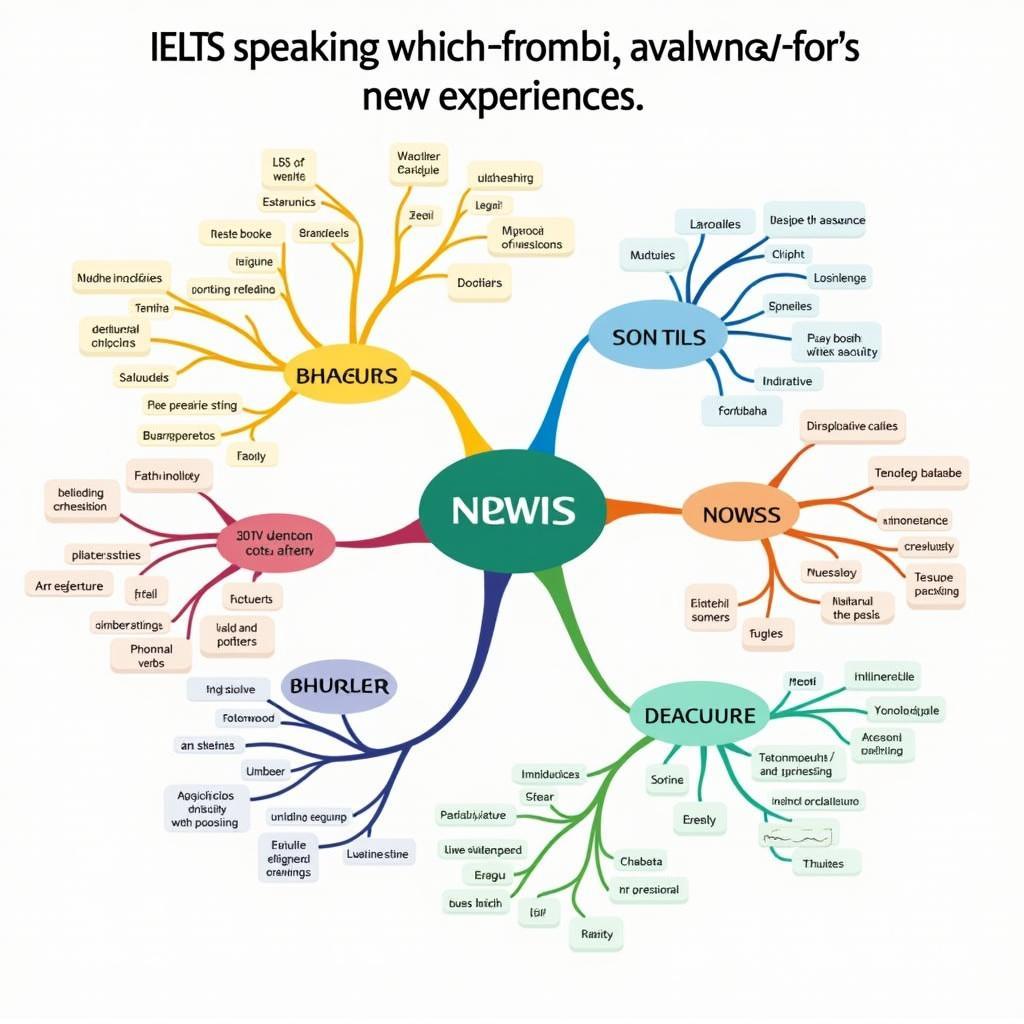 Sơ đồ tư duy từ vựng và ngữ pháp IELTS Speaking cho chủ đề trải nghiệm mới
Chiến lược trả lời hiệu quả và lời khuyên từ Examiner
Các lỗi phổ biến của học viên Việt Nam
1. Trả lời quá ngắn gọn:
- ❌ Sai: “Do you like trying new things?” → “Yes, I do.”
- ✅ Đúng: “Yes, I do. I’m quite an adventurous person and I find that trying new experiences helps me grow as a person. Just recently, I took up rock climbing and discovered I have a natural aptitude for it.”
2. Sử dụng từ vựng đơn giản, lặp lại:
- ❌ Sai: “It was very interesting and very exciting. I was very happy.”
- ✅ Đúng: “It was absolutely fascinating and genuinely thrilling. I felt an overwhelming sense of joy and accomplishment.”
3. Thiếu structure rõ ràng:
- ❌ Sai: Kể chuyện nhảy qua nhảy lại, không có timeline rõ ràng
- ✅ Đúng: Sử dụng sequencing language: “Initially… Then… After that… Eventually… Looking back…”
4. Không phát triển phần “explain” trong Part 2:
- ❌ Sai: “I felt happy because it was fun.” (quá shallow)
- ✅ Đúng: “This experience was genuinely transformative. Initially, I was consumed by anxiety, but as I immersed myself in the underwater environment, those fears simply melted away. What struck me most was the sense of accomplishment – I’d pushed myself beyond my comfort zone and discovered I was capable of much more than I’d thought.”
5. Không acknowledge complexity trong Part 3:
- ❌ Sai: “Yes, old people don’t like trying new things.” (quá absolute, stereotyping)
- ✅ Đúng: “Generally speaking, younger individuals tend to be more open to new experiences, though it’s important to avoid overgeneralizing. I’ve met many older people who are remarkably adventurous. At the end of the day, I’d argue it’s less about age and more about mindset.”
Tips từ góc nhìn Examiner
💡 Tip 1: Use the preparation time wisely in Part 2
Trong 1 phút chuẩn bị, KHÔNG viết câu hoàn chỉnh. Hãy ghi keywords theo format này:
When/Where: July 2023 / Nha Trang beach
What: scuba diving - first time
  - training (beach, equipment, breathing)
  - actual dive (boat, 30m offshore)
  - saw: corals, fish, turtle
Who: 3 close friends, instructor
Feelings:
  - Before: apprehensive, nervous
  - During: overwhelming → peaceful
  - After: proud, transformative
  - Lesson: push boundaries
💡 Tip 2: Show range of tenses naturally
Đừng cố gắng “nhồi nhét” tenses. Sử dụng chúng một cách tự nhiên:
- Past Simple cho main events: “I went to Nha Trang”
- Past Continuous cho background: “While I was descending, my heart was pounding”
- Past Perfect cho earlier context: “I had never done anything this adventurous before”
- Present Perfect cho present relevance: “This experience has changed my perspective”
💡 Tip 3: Develop your “explain” section with multiple layers
Cấu trúc cho phần explain (chiếm 40% thời gian nói):
- Immediate feelings (Cảm giác tức thì)
- Why you felt that way (Tại sao)
- Long-term impact (Ảnh hưởng lâu dài)
- Lesson learned or broader meaning (Bài học rút ra)
💡 Tip 4: Balance confidence with tentative language
- Quá confident (nghe arrogant): “Everyone should try new experiences. It’s definitely the best way to grow.”
- Quá tentative (nghe không confident): “Maybe… I think… possibly… perhaps…”
- Balanced: “I strongly believe that trying new experiences is crucial for personal growth. While it’s not for everyone, most people would benefit from stepping outside their comfort zones occasionally.”
💡 Tip 5: Use discourse markers to buy thinking time naturally
Thay vì “um… er…”, sử dụng:
- “Well, that’s an interesting question…”
- “Let me think about that for a moment…”
- “From my perspective…”
- “I’d say that…”
- “That’s a good point. I think…”
Lộ trình chuẩn bị 4 tuần
Tuần 1: Foundation (Nền tảng)
- Học thuộc 30 từ vựng cơ bản cho topic
- Luyện trả lời 10 câu Part 1 mỗi ngày
- Ghi âm và nghe lại để tự đánh giá
- Focus: Fluency và pronunciation
Tuần 2: Building Vocabulary (Xây dựng từ vựng)
- Học thêm 40 từ vựng nâng cao và idioms
- Tạo câu ví dụ cho mỗi từ
- Luyện 2 cue cards khác nhau về new experiences
- Focus: Lexical resource và grammar range
Tuần 3: Part 3 Deep Dive (Đi sâu Part 3)
- Luyện trả lời 20 câu Part 3 từ các góc độ khác nhau
- Practice structure: Opinion → Reason 1 → Example → Reason 2 → Nuance
- Học 15 discourse markers và practice sử dụng tự nhiên
- Focus: Coherence và critical thinking
Tuần 4: Mock Tests & Refinement (Thi thử và tinh chỉnh)
- Làm 3-4 bài full mock test với recording
- Phân tích mistakes và areas for improvement
- Fine-tune pronunciation và intonation
- Review tất cả vocabulary và structures
- Focus: Exam techniques và confidence
Mindset quan trọng
🎯 Đừng học thuộc template
Examiners được train để nhận ra memorized answers ngay lập tức. Điều này sẽ làm giảm điểm nghiêm trọng. Thay vào đó, học flexible phrases và practice adapting chúng cho different contexts.
🎯 Be yourself
Những câu trả lời chân thực, personal luôn tốt hơn những câu trả lời “perfect” nhưng không natural. Examiners đánh giá ngôn ngữ, không phải nội dung.
🎯 Embrace mistakes
Một vài minor errors không ảnh hưởng nhiều đến band điểm nếu bạn self-correct naturally và maintain fluency. Đừng panic khi mắc lỗi.
🎯 Practice, practice, practice
Không có con đường tắt. Bạn cần practice speaking ít nhất 30-45 phút mỗi ngày trong 2-3 tháng để cải thiện significantly.
Kết luận
Chủ đề “Describe a time when you experienced something new” là một trong những đề tài phổ biến và friendly nhất trong IELTS Speaking. Với preparation kỹ lưỡng và strategies đúng đắn, bạn hoàn toàn có thể tự tin đạt band điểm mục tiêu.
Hãy nhớ rằng key success factors là:
- Vocabulary range and accuracy – Sử dụng từ vựng đa dạng và chính xác
- Grammatical structures – Demonstrate variety và complexity
- Fluency and coherence – Nói trôi chảy với logical organization
- Pronunciation – Clear và understandable với good intonation
- Ideas and development – Phát triển ý sâu sắc, không superficial
Đừng quên rằng IELTS Speaking đánh giá khả năng giao tiếp thực tế của bạn, không phải khả năng recite memorized answers. Hãy tập trung vào việc phát triển genuine communication skills thông qua practice đều đặn với diverse topics.
Chúc bạn đạt được band điểm mong muốn trong kỳ thi IELTS Speaking! Remember: confidence comes from thorough preparation, và preparation comes from consistent practice.