
Chủ đề về hạnh phúc là một trong những đề tài được yêu thích và xuất hiện thường xuyên trong IELTS Speaking, đặc biệt là Part 2. Theo thống kê từ các trung tâm luyện thi IELTS và IELTS-Blog, chủ đề về cảm xúc tích cực như “Describe A Time When You Felt Truly Happy” xuất hiện với tần suất cao trong các kỳ thi từ năm 2020 đến 2024, và dự đoán sẽ tiếp tục là một đề tài phổ biến trong tương lai gần với khả năng xuất hiện ở mức cao.
Điều đặc biệt của chủ đề này là nó cho phép bạn chia sẻ những khoảnh khắc có ý nghĩa cá nhân, đồng thời thể hiện khả năng diễn đạt cảm xúc một cách tự nhiên và tinh tế. Các giám khảo thường đánh giá cao những câu trả lời chân thực, cảm xúc thật và được kể với sự nhiệt tình.
Những gì bạn sẽ học được từ bài viết này:
- Câu hỏi thường gặp về chủ đề hạnh phúc trong cả 3 phần thi Speaking
- Bài mẫu chi tiết theo nhiều band điểm từ 6-7, 7.5-8 đến 8.5-9 với phân tích sâu
- Kho từ vựng và cụm từ ăn điểm liên quan đến cảm xúc và trải nghiệm
- Chiến lược trả lời hiệu quả từ góc nhìn của giám khảo chính thức
- Những lỗi thường gặp của học viên Việt Nam và cách khắc phục
- Tips insider giúp bạn tự tin hơn khi đối mặt với đề tài này
IELTS Speaking Part 1: Introduction and Interview
Tổng Quan Về Part 1
Part 1 của bài thi IELTS Speaking thường kéo dài 4-5 phút với các câu hỏi ngắn gọn về đời sống hàng ngày và sở thích cá nhân. Đây là phần khởi động giúp bạn cảm thấy thoải mái trước khi đi vào các phần khó hơn.
Chiến lược hiệu quả cho Part 1:
- Trả lời trực tiếp câu hỏi ngay từ câu đầu tiên
- Mở rộng ý với 2-3 câu bổ sung (lý do, ví dụ, chi tiết)
- Giữ giọng nói tự nhiên, thân thiện như đang trò chuyện
- Không cần quá phức tạp, nhưng tránh trả lời quá ngắn
Lỗi thường gặp của học viên Việt Nam:
- Chỉ trả lời Yes/No mà không giải thích thêm
- Sử dụng từ vựng quá đơn giản như “very good”, “very bad”
- Thiếu ví dụ cụ thể từ kinh nghiệm bản thân
- Nói giọng quá flat, thiếu ngữ điệu tự nhiên
Các Câu Hỏi Thường Gặp
Question 1: What kinds of things make you happy in daily life?
Question 2: Do you think happiness is important in life?
Question 3: Is it easy for you to stay happy when you’re busy?
Question 4: What makes you happier, spending time with friends or family?
Question 5: Do you think people are happier now than in the past?
Question 6: What do you usually do when you feel happy?
Question 7: Can money buy happiness in your opinion?
Question 8: Do you share your happiness with others?
Phân Tích và Gợi Ý Trả Lời Chi Tiết
Question: What kinds of things make you happy in daily life?
🎯 Cách tiếp cận:
- Đưa ra 2-3 điều cụ thể khiến bạn vui
- Giải thích ngắn gọn tại sao
- Có thể thêm ví dụ ngắn minh họa
📝 Sample Answer – Band 6-7:
Well, I feel happy when I spend time with my family. We often have dinner together and talk about our day. Also, I like listening to music because it helps me relax after work.
Phân tích:
- Điểm mạnh: Trả lời đúng trọng tâm, có 2 ý rõ ràng, ngôn ngữ tự nhiên
- Hạn chế: Từ vựng còn basic (spend time, talk about, helps me relax), thiếu chi tiết sâu hơn
- Tại sao Band 6-7: Trả lời đầy đủ và mạch lạc nhưng chưa thể hiện được vocabulary range rộng hay cấu trúc câu phức tạp
📝 Sample Answer – Band 8-9:
Well, quite a few things brighten up my day, actually. First and foremost, I find genuine joy in those small moments with my family, like when we’re having a hearty meal together and catching up on each other’s lives. It’s these simple pleasures that really matter to me. On top of that, I’m absolutely passionate about music, and just putting on my favorite playlist can instantly lift my spirits, especially after a long, draining day at work.
Phân tích:
- Điểm mạnh:
- Vocabulary phong phú và tự nhiên: brighten up my day, genuine joy, hearty meal, catching up on
- Cấu trúc đa dạng: “First and foremost…”, “On top of that…”
- Diễn đạt cảm xúc chân thực với “absolutely passionate about”, “instantly lift my spirits”
- Tại sao Band 8-9:
- Fluency cao với discourse markers tự nhiên
- Lexical resource sophisticated với collocations như “simple pleasures”, “long, draining day”
- Grammar đa dạng với cấu trúc like when, especially after
- Ideas sâu sắc hơn, không chỉ liệt kê mà còn giải thích cảm xúc
💡 Key Vocabulary & Expressions:
- brighten up someone’s day: làm cho ngày của ai đó vui vẻ hơn
- genuine joy: niềm vui thực sự, chân thành
- hearty meal: bữa ăn thịnh soạn, ấm cúng
- catching up on: trò chuyện để cập nhật tin tức của nhau
- simple pleasures: những niềm vui giản đơn
- lift someone’s spirits: làm ai đó vui lên, phấn chấn hơn
Question: Do you think happiness is important in life?
🎯 Cách tiếp cận:
- Đưa ra quan điểm rõ ràng (Yes/Absolutely)
- Giải thích tầm quan trọng
- Có thể đưa ra hậu quả nếu thiếu hạnh phúc
📝 Sample Answer – Band 6-7:
Yes, I think happiness is very important. When people are happy, they can work better and have good relationships with others. If someone is always sad, their life will be difficult and they may have health problems.
Phân tích:
- Điểm mạnh: Có quan điểm rõ ràng, đưa ra lý do và hậu quả
- Hạn chế: Từ vựng basic (very important, work better, good relationships), cấu trúc đơn giản
- Tại sao Band 6-7: Ý tưởng đầy đủ nhưng cách diễn đạt chưa sophisticated
📝 Sample Answer – Band 8-9:
Absolutely, I’d say happiness is fundamental to our overall well-being. When we’re in a positive state of mind, we tend to be more productive, more resilient in the face of challenges, and we’re able to cultivate stronger bonds with people around us. Without happiness, life can feel quite monotonous and draining, and this can actually take a toll on both our mental and physical health. So yes, I believe pursuing happiness should be one of our life’s priorities.
Phân tích:
- Điểm mạnh:
- Vocabulary cao cấp: fundamental to, well-being, resilient, cultivate stronger bonds
- Cấu trúc phức tạp: “When we’re in…”, “Without happiness…”
- Diễn đạt nuanced với “tend to be”, “can actually”
- Ideas sâu sắc về physical và mental health
- Tại sao Band 8-9:
- Fluency xuất sắc với linking tự nhiên
- Lexical resource rất impressive với collocations như “take a toll on”, “pursuing happiness”
- Grammar range rộng với conditional, complex sentences
- Critical thinking thể hiện qua việc đưa ra nhiều góc độ
💡 Key Vocabulary & Expressions:
- fundamental to: có tính nền tảng, cơ bản cho
- well-being: sự khỏe mạnh toàn diện (cả thể chất lẫn tinh thần)
- resilient: kiên cường, có khả năng phục hồi
- cultivate stronger bonds: xây dựng mối quan hệ bền chặt hơn
- monotonous: đơn điệu, nhàm chán
- take a toll on: gây ảnh hưởng tiêu cực đến
- pursuing happiness: theo đuổi hạnh phúc
Question: What makes you happier, spending time with friends or family?
🎯 Cách tiếp cận:
- Chọn một hoặc nói cả hai đều quan trọng
- Giải thích lý do cụ thể cho lựa chọn
- Có thể so sánh hai loại hạnh phúc khác nhau
📝 Sample Answer – Band 6-7:
I think both are important, but I prefer spending time with family. My family always supports me when I have problems. Friends are also good, but family is more important because they know me better.
Phân tích:
- Điểm mạnh: Có lựa chọn rõ ràng, đưa ra so sánh
- Hạn chế: Vocabulary đơn giản (important, supports, know me better), thiếu depth trong giải thích
- Tại sao Band 6-7: Trả lời đầy đủ nhưng cách diễn đạt chưa sophisticated
📝 Sample Answer – Band 8-9:
That’s an interesting question. I’d say both bring different kinds of joy to my life, actually. Time with family gives me a sense of security and unconditional love – they’ve been there through thick and thin, and that deep connection is irreplaceable. On the other hand, hanging out with friends offers a different kind of happiness – it’s more about shared interests, spontaneous fun, and those carefree moments where we can just be ourselves without any expectations. If I had to choose, though, I’d lean towards family because that emotional anchor they provide is something truly special.
Phân tích:
- Điểm mạnh:
- Vocabulary tinh tế: bring different kinds of joy, sense of security, unconditional love
- Idiom tự nhiên: through thick and thin
- So sánh balanced với “On the other hand”
- Diễn đạt nuanced với “If I had to choose, I’d lean towards…”
- Tại sao Band 8-9:
- Fluency cao với hesitation tự nhiên “That’s an interesting question”
- Lexical resource xuất sắc với emotional anchor, carefree moments
- Grammar phức tạp với relative clauses
- Ideas sâu sắc về different types of happiness
💡 Key Vocabulary & Expressions:
- bring different kinds of joy: mang lại những niềm vui khác nhau
- sense of security: cảm giác an toàn
- unconditional love: tình yêu vô điều kiện
- through thick and thin: qua mọi giai đoạn khó khăn và thuận lợi
- deep connection: mối liên kết sâu sắc
- spontaneous fun: sự vui vẻ tự phát, tự nhiên
- carefree moments: những khoảnh khắc vô tư, không lo lắng
- emotional anchor: điểm tựa tinh thần
IELTS Speaking Part 2: Long Turn (Cue Card)
Tổng Quan Về Part 2
Part 2 là phần thử thách nhất của bài thi Speaking, kéo dài 3-4 phút bao gồm 1 phút chuẩn bị và 2-3 phút nói không bị ngắt. Đây là cơ hội để bạn thể hiện khả năng diễn đạt dài và mạch lạc của mình.
Chiến lược hiệu quả:
- Sử dụng hết 1 phút chuẩn bị để ghi chú keywords (KHÔNG viết câu hoàn chỉnh)
- Tổ chức ghi chú theo các bullet points của đề bài
- Nói tối thiểu 1.5 phút, lý tưởng là 2-2.5 phút
- Trả lời đầy đủ tất cả bullet points, đặc biệt là câu “explain” cuối cùng
- Sử dụng thì quá khứ khi kể về một sự kiện đã xảy ra
- Thêm chi tiết cảm xúc và miêu tả để làm câu chuyện sinh động
Lỗi thường gặp:
- Không tận dụng hết thời gian chuẩn bị, vội vàng bắt đầu
- Nói dưới 1.5 phút khiến examiner phải hỏi thêm
- Bỏ sót bullet points, đặc biệt là phần “explain”
- Kể chuyện quá chung chung, thiếu chi tiết cụ thể
- Lạc đề, nói về những thứ không liên quan
 Thí sinh IELTS Speaking Part 2 đang chuẩn bị ghi chú trong 1 phút
Cue Card
Describe a time when you felt truly happy
You should say:
- When and where it happened
- Who you were with
- What you were doing
- And explain why you felt truly happy at that time
Phân Tích Đề Bài
- Dạng câu hỏi: Describe an experience/event – kể về một trải nghiệm cụ thể trong quá khứ
- Thì động từ: Quá khứ đơn và quá khứ tiếp diễn chủ yếu
- Bullet points phải cover:
- When and where: Thời gian và địa điểm cụ thể (không cần chính xác ngày tháng, nhưng nên rõ ràng)
- Who you were with: Người đồng hành (có thể là một mình, nhưng tốt hơn là có người)
- What you were doing: Hoạt động, sự kiện diễn ra
- Explain why: ĐÂY LÀ PHẦN QUAN TRỌNG NHẤT – giải thích lý do tại sao bạn cảm thấy hạnh phúc, cảm xúc của bạn, ý nghĩa của khoảnh khắc đó
- Câu “explain” quan trọng: Phần này chiếm ít nhất 1/3 thời gian nói của bạn. Đây là nơi bạn thể hiện vocabulary về cảm xúc, khả năng phân tích sâu và critical thinking. Đừng chỉ nói “I was happy because…”, hãy mở rộng về cảm giác cụ thể, tác động lâu dài, ý nghĩa sâu xa.
Chủ đề liên quan đến cảm xúc như Describe a time when you felt very motivated cũng yêu cầu bạn diễn tả chi tiết những trải nghiệm tâm lý tương tự.
📝 Sample Answer – Band 6-7
Thời lượng: Khoảng 1.5-2 phút
I’d like to talk about a time when I felt really happy. It was about two years ago when I graduated from university. The ceremony took place at my school’s main hall in Ho Chi Minh City.
I was there with my family – my parents, my younger sister, and some of my close friends from university. We all dressed nicely for the occasion, and everyone was excited.
During the ceremony, I received my diploma on stage. It was a proud moment for me because I had worked hard for four years to get that degree. After the ceremony, we took many photos together. Then my family took me to a nice restaurant to celebrate. We had a big dinner and talked about the future.
I felt truly happy that day for several reasons. First, I was happy because I successfully finished my studies. It was not easy, especially during exam periods. Second, seeing my parents’ faces full of pride made me really emotional. They had supported me throughout my university years, and I knew this moment meant a lot to them too. Finally, celebrating with my friends reminded me of all the good memories we had created together. That day was special because it marked the end of one chapter and the beginning of a new one in my life.
Phân Tích Band Điểm
| Tiêu chí | Band | Nhận xét |
|---|---|---|
| Fluency & Coherence | 6-7 | Nói mạch lạc, có linking words cơ bản (First, Second, Finally), story flow rõ ràng nhưng khá predictable |
| Lexical Resource | 6-7 | Từ vựng adequate (dressed nicely, proud moment, close friends) nhưng chưa sophisticated, một số repetition (happy) |
| Grammatical Range & Accuracy | 6-7 | Cấu trúc đúng, có một vài complex sentences (because, when) nhưng chủ yếu là simple và compound |
| Pronunciation | 6-7 | Rõ ràng, dễ hiểu, có thể có accent nhẹ |
Điểm mạnh:
- ✅ Trả lời đầy đủ tất cả bullet points
- ✅ Có cấu trúc rõ ràng, dễ follow
- ✅ Thời lượng đủ 1.5-2 phút
- ✅ Story coherent và realistic
Hạn chế:
- ⚠️ Vocabulary chưa impressive, thiếu less common phrases
- ⚠️ Grammar chưa đa dạng, ít complex structures
- ⚠️ Ideas còn surface level, chưa đi sâu vào cảm xúc
📝 Sample Answer – Band 7.5-8
Thời lượng: Khoảng 2-2.5 phút
I’d love to share a memory that still brings a smile to my face whenever I think about it. This happened roughly two years ago when I finally graduated from university. The graduation ceremony was held at the main auditorium of my university in Ho Chi Minh City on a beautiful sunny morning in June.
I was surrounded by the people who mattered most to me – my parents, my younger sister, and a close-knit group of friends I’d made during my university years. Everyone was dressed to the nines, and you could feel the excitement and anticipation in the air.
The ceremony itself was quite elaborate. When my name was called and I walked across the stage to receive my diploma, I felt this incredible rush of accomplishment. It might sound simple, but that piece of paper represented four years of late-night study sessions, challenging exams, and countless moments of self-doubt. After the ceremony, we spent hours taking photographs – some formal ones and lots of candid shots with funny poses. Later, my family treated everyone to a celebratory dinner at an upscale Vietnamese restaurant, where we reminisced about the journey and talked about future plans.
What made me feel truly happy wasn’t just the graduation itself, but everything it represented. There was this overwhelming sense of achievement knowing that I’d actually made it through despite all the challenges. But more than that, seeing my parents’ eyes well up with tears of pride absolutely melted my heart. They’d sacrificed so much to support my education, and being able to give them this moment of joy felt incredibly rewarding. Additionally, sharing this milestone with my friends, who’d been my support system throughout university, made the happiness even more profound. It was one of those rare moments when everything just felt perfect.
Phân Tích Band Điểm
| Tiêu chí | Band | Nhận xét |
|---|---|---|
| Fluency & Coherence | 7.5-8 | Flow tự nhiên, ít hesitation, linking sophisticated (Additionally, But more than that), story engaging |
| Lexical Resource | 7.5-8 | Collocations tốt (brings a smile to my face, dressed to the nines, close-knit group), paraphrasing hiệu quả |
| Grammatical Range & Accuracy | 7.5-8 | Mix các structures tốt, có inversion (What made me…), relative clauses, complex sentences |
| Pronunciation | 7.5-8 | Clear, có stress và intonation tốt |
So Sánh Với Band 6-7
| Khía cạnh | Band 6-7 | Band 7.5-8 |
|---|---|---|
| Vocabulary | “really happy”, “proud moment” | “brings a smile to my face”, “incredible rush of accomplishment” |
| Grammar | Simple past dominant | Mixed tenses with complex structures |
| Ideas | Surface level – happy because graduated | Deeper – về sacrifice, representation, shared joy |
| Details | Basic description | Vivid details (sunny morning, candid shots, upscale restaurant) |
📝 Sample Answer – Band 8.5-9
Thời lượng: 2.5-3 phút đầy đủ
I’d like to recount a moment that remains etched in my memory as one of the happiest times of my life. This took place approximately two years ago on a glorious summer morning when I graduated from university. The ceremony was held at the grand auditorium of my university campus in Ho Chi Minh City, which was decked out with flowers and banners for the occasion.
I was fortunate to have my entire family there – my parents, who’d moved heaven and earth to support my education, my younger sister, and a tight-knit circle of university friends who’d become like family over the years. Everyone was dressed to impress, and there was this palpable sense of anticipation hanging in the air as we waited for the ceremony to begin.
The event itself was quite ceremonious, but what struck a chord with me was the moment my name echoed through the auditorium and I walked across that stage. As I clutched my diploma, I experienced this incredible surge of emotion – a complex mixture of relief, pride, and sheer exhilaration. That piece of parchment represented so much more than just academic achievement; it symbolized four years of grueling late-night study marathons, navigating through challenging coursework, and pushing through moments when I genuinely doubted my abilities. The post-ceremony celebration was equally memorable. We spent ages taking photographs, capturing both posed portraits and spontaneous moments of genuine joy. My family then hosted a lavish dinner at an elegant Vietnamese restaurant, where we toasted to the future while reflecting on the journey that had brought us there.
What made this experience profoundly meaningful wasn’t merely the academic milestone itself, but rather the confluence of emotions and realizations it triggered. There was this overwhelming wave of accomplishment washing over me, but what truly struck home was witnessing my parents’ reaction. When I caught sight of my mother dabbing tears from her eyes while my father’s face beamed with pride, I felt this deep sense of fulfillment that’s hard to put into words. It dawned on me that their joy was even greater than my own. They’d made considerable sacrifices throughout my university years – financial strain, countless worries, endless encouragement – and this moment was their reward too. Furthermore, celebrating with my friends, who’d been my emotional anchor through the rollercoaster ride of university life, made the happiness feel exponentially greater. It was this perfect convergence of personal achievement, familial pride, and shared joy with loved ones that created such an unforgettable sense of happiness. Looking back, I realize it was one of those defining moments that makes all the struggles worthwhile.
Phân Tích Band Điểm
| Tiêu chí | Band | Nhận xét |
|---|---|---|
| Fluency & Coherence | 8.5-9 | Hoàn toàn natural, không hesitation, sophisticated cohesion, story compelling và engaging |
| Lexical Resource | 8.5-9 | Idiomatic (moved heaven and earth, struck a chord), precise collocations, skillful paraphrasing |
| Grammatical Range & Accuracy | 8.5-9 | Full range of structures used naturally, complex sentences flow effortlessly, error-free |
| Pronunciation | 8.5-9 | Native-like features, excellent stress, rhythm và intonation |
Tại Sao Bài Này Xuất Sắc
🎯 Fluency Hoàn Hảo:
- Không có awkward pauses, mọi ý được nối liền tự nhiên
- Discourse markers được sử dụng một cách tinh tế (Furthermore, Looking back, What truly struck home)
- Story telling engaging, giữ được sự quan tâm của người nghe từ đầu đến cuối
📚 Vocabulary Tinh Vi:
- “etched in my memory” – cách nói sophisticated thay cho “I remember”
- “palpable sense of anticipation” – diễn tả cảm xúc collective một cách precise
- “confluence of emotions” – từ academic được dùng natural trong speaking
- “exponentially greater” – cách diễn đạt mathematical nhưng perfectly appropriate
📝 Grammar Đa Dạng:
- Complex relative clauses: “my friends, who’d been my emotional anchor”
- Participial phrases: “clutching my diploma”, “reflecting on the journey”
- Inverted structures: “What made this experience profoundly meaningful”
- Perfect tenses mixing naturally với simple past
💡 Ideas Sâu Sắc:
- Không chỉ describe surface events mà analyze deeper meaning
- Explore multiple layers: personal achievement → family’s joy → shared experience
- Show self-awareness: “It dawned on me”, “Looking back, I realize”
- Demonstrate emotional intelligence khi nói về parents’ sacrifices và friends’ support
Follow-up Questions (Rounding Off Questions)
Examiner có thể hỏi thêm 1-2 câu ngắn sau Part 2 để kết thúc phần này trước khi chuyển sang Part 3.
Question 1: Do you still feel happy when you think about that moment?
Band 6-7 Answer:
Yes, definitely. Whenever I remember that day, it makes me smile. It was a really important day in my life.
Band 8-9 Answer:
Absolutely! Even now, just reminiscing about that day never fails to put me in a good mood. It’s one of those cherished memories that serves as a source of motivation whenever I’m facing challenges, reminding me that hard work and perseverance really do pay off in the end.
Question 2: Have you experienced similar happiness since then?
Band 6-7 Answer:
Well, I’ve had other happy moments, but that day was very special. I think graduation only happens once, so it’s hard to have the same feeling again.
Band 8-9 Answer:
I’ve certainly had other moments of joy since then – landing my first job, achieving various professional milestones – but I’d say that graduation holds a unique place in my heart. There’s something about it being a culmination of years of effort and having my family there to witness it that makes it particularly special. That said, I’m optimistic that life will bring more opportunities for that level of happiness, perhaps when I reach other significant life goals.
IELTS Speaking Part 3: Two-way Discussion
Tổng Quan Về Part 3
Part 3 là phần thử thách trí tuệ nhất của bài thi Speaking, kéo dài 4-5 phút với những câu hỏi trừu tượng và sâu sắc liên quan đến chủ đề của Part 2. Đây không còn là kể chuyện cá nhân mà là thảo luận về các vấn đề xã hội, xu hướng, và quan điểm.
Yêu cầu:
- Phân tích vấn đề từ nhiều góc độ khác nhau
- So sánh và đối chiếu (quá khứ vs hiện tại, các nhóm người khác nhau)
- Đưa ra quan điểm có lý lẽ chặt chẽ và ví dụ cụ thể
- Thể hiện khả năng tư duy phản biện
Chiến lược:
- Mở rộng câu trả lời đến 3-5 câu (structure: direct answer → reason 1 + example → reason 2 + example → conclusion/nuance)
- Sử dụng discourse markers một cách tự nhiên (Well, Actually, To be honest…)
- Đưa ra examples từ xã hội, văn hóa, không chỉ cá nhân
- Thừa nhận sự phức tạp của vấn đề (It depends on, There are both advantages and disadvantages)
- Paraphrase lại câu hỏi trong câu trả lời để tránh repetition
Lỗi thường gặp của học viên Việt Nam:
- Trả lời quá ngắn, thiếu phân tích sâu
- Không đưa ra lý lẽ rõ ràng, chỉ nói chung chung
- Thiếu từ vựng trừu tượng để discuss complex ideas
- Không structure câu trả lời, nói lan man
- Sợ thừa nhận “I’m not sure” hoặc show uncertainty
Tương tự như describe a live sports match that you have watched, Part 3 yêu cầu bạn mở rộng từ trải nghiệm cá nhân sang phân tích xã hội.
Các Câu Hỏi Thảo Luận Sâu
Theme 1: Factors Influencing Happiness
Question 1: What factors do you think contribute most to a person’s happiness?
🎯 Phân tích câu hỏi:
- Dạng: Opinion + Identify factors
- Key words: factors, contribute most, happiness
- Cách tiếp cận: Đưa ra 2-3 factors quan trọng nhất, giải thích tại sao, có ví dụ minh họa
📝 Sample Answer – Band 6-7:
I think there are several important factors for happiness. First, having good relationships with family and friends is very important because people need love and support. Second, having a stable job and enough money helps people feel secure. Finally, good health is also necessary because if you are sick, you cannot enjoy life. These three things are the most important for happiness.
Phân tích:
- Structure: Có list 3 factors rõ ràng với First, Second, Finally
- Vocabulary: Basic (good relationships, stable job, enough money, good health)
- Tại sao Band 6-7: Clear và coherent nhưng thiếu depth và sophisticated language
📝 Câu trả lời mẫu – Band 8-9:
Well, I’d say happiness is quite multifaceted, but if I had to pinpoint the most crucial factors, I’d highlight several key elements. First and foremost, I believe meaningful relationships play an indispensable role – having a strong support network of family and friends provides emotional security and a sense of belonging that’s fundamental to well-being. Beyond that, I think having a sense of purpose and fulfillment in what we do, whether that’s our career or personal pursuits, is equally vital. When people feel they’re making a tangible contribution or progressing towards goals they care about, it generates a deep-seated satisfaction. Additionally, we can’t overlook the importance of financial stability – not necessarily being wealthy, but having enough to meet basic needs without constant stress. And last but not least, physical and mental health serve as the foundation for everything else. After all, it’s difficult to feel truly happy when you’re struggling with health issues. What’s interesting is that these factors often interconnect – for instance, strong relationships can buffer against financial stress, and good health enables us to pursue our goals more effectively.
Phân tích:
- Structure: Well-organized: Direct statement → Factor 1 + explanation → Factor 2 + explanation → Factor 3 → Factor 4 → Nuanced conclusion về interconnection
- Vocabulary: Highly sophisticated (multifaceted, indispensable role, tangible contribution, deep-seated satisfaction, buffer against)
- Grammar: Complex structures (whether that’s…, when people feel…, it’s difficult to…)
- Critical Thinking: Shows depth với observation về how factors interconnect, không chỉ list ra
💡 Key Language Features:
- Discourse markers: Well, First and foremost, Beyond that, Additionally, After all
- Tentative language: I’d say, I believe, I think (shows thoughtfulness, không quá absolute)
- Abstract nouns: fulfillment, contribution, stability, foundation
- Hedging language: quite, not necessarily (shows nuanced thinking)
Question 2: Do you think material possessions can bring lasting happiness?
🎯 Phân tích câu hỏi:
- Dạng: Opinion + Evaluate
- Key words: material possessions, lasting happiness
- Cách tiếp cận: Balanced view – acknowledge short-term pleasure nhưng question long-term fulfillment
📝 Sample Answer – Band 6-7:
I don’t think material things can make people happy for a long time. When we buy something new, we feel happy at first, but this feeling doesn’t last. For example, when I bought a new phone, I was excited for a few days, but then I got used to it. Real happiness comes from relationships and experiences, not from things we buy.
Phân tích:
- Structure: Clear opinion → example → conclusion
- Vocabulary: Simple (material things, feel happy, real happiness)
- Tại sao Band 6-7: Có ý tưởng đúng và example nhưng expression chưa sophisticated
📝 Câu trả lời mẫu – Band 8-9:
That’s a thought-provoking question. To be frank, I believe material possessions can certainly provide fleeting moments of joy, but they rarely deliver the kind of sustained happiness that people ultimately seek. There’s actually a well-documented phenomenon called hedonic adaptation, where we quickly get accustomed to new purchases and the initial excitement wears off remarkably fast. For instance, someone might feel elated when they buy a luxury car, but within weeks or months, it becomes just their regular mode of transportation.
That said, I wouldn’t completely dismiss the role of material things in our well-being. Having adequate material resources can certainly alleviate stress and provide opportunities for experiences that do bring happiness. The key distinction, I think, is between accumulating possessions for their own sake versus using resources to facilitate meaningful experiences. Research consistently shows that experiential purchases – like traveling, learning new skills, or creating memories with loved ones – tend to yield more enduring satisfaction than acquiring objects. So in essence, while material possessions have their place, lasting happiness is more likely to stem from intangible things like relationships, personal growth, and contributing to something larger than ourselves.
Phân tích:
- Structure: Nuanced opinion → Scientific backing → Example → Counter-argument → Key distinction → Conclusion
- Vocabulary: Academic but natural (hedonic adaptation, elated, adequate resources, experiential purchases)
- Grammar: Sophisticated (where we quickly get accustomed to, is between…versus, stem from)
- Critical Thinking: Shows awareness of research, makes distinctions, acknowledges complexity
💡 Key Language Features:
- Discourse markers: To be frank, That said, The key distinction, In essence
- Tentative language: I believe, I think, tend to, is more likely to
- Academic vocabulary: phenomenon, adaptation, facilitate, intangible
- Contrast structures: not…but, versus, rather than
Theme 2: Happiness Across Different Groups
Question 1: Do you think young people and older people find happiness in different things?
🎯 Phân tích câu hỏi:
- Dạng: Compare and contrast
- Key words: young people, older people, different things
- Cách tiếp cận: Compare sources of happiness cho hai nhóm, giải thích tại sao có sự khác biệt
📝 Sample Answer – Band 6-7:
Yes, I think they find happiness in different ways. Young people usually feel happy when they have fun with friends, go to parties, or buy new things. They like exciting activities. Older people are different. They feel happy when they spend time with family or have a peaceful life. This is because their priorities change when they get older.
Phân tích:
- Structure: Clear comparison với examples cho mỗi group
- Vocabulary: Basic (have fun, exciting activities, peaceful life)
- Tại sao Band 6-7: Comparison rõ ràng nhưng analysis shallow
📝 Câu trả lời mẫu – Band 8.5-9:
Absolutely, and I think this divergence is quite fascinating when you examine it closely. Generally speaking, younger individuals tend to derive happiness from more outward-focused and stimulation-seeking activities. They’re often in a phase of life characterized by exploration and novelty – whether that’s forging new friendships, pursuing adventure and excitement, achieving professional milestones, or even material acquisitions. There’s often this underlying drive to establish their identity and carve out their place in the world, which brings a certain type of fulfillment.
In contrast, older adults often find happiness in more introspective and connection-oriented sources. Having accumulated life experience, many older people place greater value on the quality of their relationships rather than the quantity, finding profound satisfaction in time spent with family, particularly grandchildren, or in nurturing long-standing friendships. There’s often a shift towards appreciating simple pleasures – a beautiful sunset, a quiet morning with coffee, or engaging in meaningful hobbies. This isn’t to say they don’t enjoy new experiences, but there’s typically less emphasis on constant stimulation.
I think this generational difference largely stems from where people are in their life trajectory. Younger people are building their lives, so achievement and external validation feel more important. Older individuals, having already established themselves, can afford to focus on what truly matters in a deeper sense. Additionally, research suggests that emotional regulation actually improves with age, meaning older adults may be better at savoring positive moments and letting go of negatives. So it’s not just about different preferences, but about fundamental shifts in priorities, perspectives, and even psychological capacity as we age.
Phân tích:
- Structure: Sophisticated: Intro → Young people detailed → Older people contrasted → Deep analysis of why these differences exist
- Vocabulary: Nuanced (divergence, derive happiness from, introspective, accumulated experience, life trajectory)
- Grammar: Advanced (Having accumulated…, This isn’t to say…, meaning older adults…)
- Critical Thinking: Goes beyond surface comparison to explore underlying psychological và developmental reasons
💡 Key Language Features:
- Discourse markers: Generally speaking, In contrast, Additionally
- Comparison language: tend to, whereas, less emphasis on, shift towards
- Academic vocabulary: divergence, trajectory, validation, regulation, capacity
- Hedging: often, typically, Generally speaking (shows thoughtful generalization)
Đối với những ai muốn tìm hiểu thêm về cách xử lý các chủ đề cảm xúc khác, describe a time when you received a compliment unexpectedly cũng là một chủ đề liên quan đáng tham khảo.
Question 2: Are people in your country generally happy? Why or why not?
🎯 Phân tích câu hỏi:
- Dạng: Evaluate + Explain
- Key words: people in your country, generally happy
- Cách tiếp cận: Balanced view về happiness level, factors contributing hoặc hindering happiness trong context Việt Nam
📝 Sample Answer – Band 6-7:
I think many people in Vietnam are happy, but not everyone. Young people are often happy because Vietnam is developing and they have many opportunities. They can find good jobs and enjoy modern life. However, some older people worry about money and health. Also, people in cities have more stress than people in countryside. So it depends on different situations.
Phân tích:
- Structure: Balanced view với examples
- Vocabulary: Basic (developing, many opportunities, worry about)
- Tại sao Band 6-7: Has relevant points nhưng lacks depth và sophisticated language
📝 Câu trả lời mẫu – Band 8.5-9:
That’s quite a nuanced question to answer because happiness levels really vary significantly across different demographics in Vietnam. On the whole, I’d say Vietnamese people tend to be quite resilient and find happiness despite challenges, partly due to our strong sense of community and family-oriented culture.
On the positive side, Vietnam has experienced remarkable economic growth over the past few decades, which has lifted millions out of poverty and created unprecedented opportunities, particularly for the younger generation. This upward mobility certainly contributes to a sense of optimism and satisfaction. Additionally, Vietnamese people have this inherent ability to find joy in simple, everyday moments – whether it’s gathering for meals, celebrating festivals, or just bonding over street food. This cultural trait serves as a protective factor against stress.
However, there are certainly factors that dampen overall happiness levels. The rapid pace of urbanization and economic development has brought its own set of challenges. Many people, especially in major cities like Hanoi and Ho Chi Minh City, face mounting pressure related to fierce competition in education and career advancement. The cost of living has skyrocketed, making it increasingly difficult for young people to afford housing or achieve financial independence. Moreover, there’s growing concern about work-life balance, as many Vietnamese workers put in long hours with limited time for personal life.
Environmental issues also take a toll on quality of life, with air pollution and urban congestion affecting daily well-being. And for the older generation, inadequate social security systems create anxiety about healthcare and retirement.
So to sum up, while Vietnamese people generally maintain a positive outlook and strong social connections that foster happiness, there are systemic challenges that prevent many from achieving the level of well-being they deserve. It’s a mixed picture, really, with happiness levels contingent on factors like age, socioeconomic status, and geographic location.
Phân tích:
- Structure: Comprehensive: Acknowledge complexity → Positive factors → Negative factors → Balanced conclusion
- Vocabulary: Sophisticated and topic-specific (upward mobility, protective factor, mounting pressure, skyrocketed)
- Grammar: Complex with various structures (which has lifted, making it increasingly difficult, with happiness levels contingent on)
- Critical Thinking: Shows deep understanding của Vietnamese society, balanced perspective, acknowledges various factors
💡 Key Language Features:
- Discourse markers: On the whole, On the positive side, However, Moreover, To sum up
- Hedging language: tend to be, quite, generally, really
- Academic collocations: remarkable growth, inherent ability, systemic challenges
- Vietnamese context: Specific references to Vietnam’s economic development, urban issues
Theme 3: The Pursuit of Happiness
Question 1: Do you think the pursuit of happiness has become more difficult in modern society?
🎯 Phân tích câu hỏi:
- Dạng: Opinion + Compare (modern vs past)
- Key words: pursuit of happiness, more difficult, modern society
- Cách tiếp cận: Compare challenges now vs past, analyze modern factors affecting happiness
📝 Sample Answer – Band 6-7:
Yes, I think it’s harder now than before. In the past, life was simpler and people didn’t have many choices. Now we have social media and we always compare ourselves to others, which makes us unhappy. Also, modern life is very busy and stressful. People work long hours and don’t have time to relax. So even though we have more money and technology, we might be less happy than people in the past.
Phân tích:
- Structure: Clear opinion → reasons (social media, busy life) → conclusion
- Vocabulary: Simple (simpler, compare ourselves, less happy)
- Tại sao Band 6-7: Valid points nhưng expression basic và analysis không deep
📝 Câu trả lời mẫu – Band 8.5-9:
This is a fascinating paradox to explore because, on the surface, we have unprecedented access to resources, information, and opportunities that previous generations could only dream of, yet studies suggest that happiness levels haven’t proportionally increased – and in some cases have actually declined.
I believe the pursuit of happiness has indeed become more complex and challenging in modern society, though for somewhat counterintuitive reasons. For one thing, we’re now constantly bombarded with images of what the “perfect life” should look like through social media. This creates a toxic culture of comparison where people measure their worth against carefully curated highlights of others’ lives, leading to chronic dissatisfaction and FOMO – fear of missing out. The bar for happiness seems to keep rising as we’re exposed to endless possibilities, making it harder to feel content with what we have.
Moreover, modern life has brought about paradox of choice. While having options is generally positive, research shows that an overabundance of choices can actually lead to decision paralysis and post-decision regret. People constantly wonder if they’re making the right life choices regarding career, relationships, lifestyle, which breeds anxiety rather than satisfaction.
The pace of modern life also plays a crucial role. Technology, while bringing convenience, has blurred the boundaries between work and personal life. Many people find themselves perpetually connected, unable to truly disconnect and recharge. This chronic state of busyness leaves little room for the kind of meaningful reflection and genuine connection that foster deep happiness.
That said, I don’t think it’s all doom and gloom. Modern society has also brought greater awareness of mental health, more resources for personal development, and increased social acceptance of pursuing unconventional paths to happiness. The key might be consciously opting out of the rat race and redefining success on one’s own terms – which is perhaps easier said than done but increasingly necessary.
So in essence, while we have more tools and resources at our disposal, we also face unique psychological and social pressures that make the pursuit of happiness more challenging. It requires greater intentionality and self-awareness to navigate these complexities successfully.
Phân tích:
- Structure: Highly sophisticated: Acknowledge paradox → Challenge 1 with depth → Challenge 2 → Challenge 3 → Counter-point về positive aspects → Nuanced conclusion
- Vocabulary: Advanced and precise (unprecedented access, counterintuitive, toxic culture, chronic dissatisfaction, paradox of choice)
- Grammar: Complex structures showcasing range (while having options…, which breeds…, easier said than done)
- Critical Thinking: Shows awareness of research, psychological concepts, balanced perspective despite main argument
💡 Key Language Features:
- Discourse markers: For one thing, Moreover, That said, In essence
- Academic vocabulary: paradox, proportionally, perpetually, intentionality
- Modern concepts: FOMO, curated content, work-life boundaries
- Nuanced language: somewhat counterintuitive, not all doom and gloom, easier said than done
Question 2: Should governments take responsibility for the happiness of their citizens?
🎯 Phân tích câu hỏi:
- Dạng: Opinion + Responsibility/Ethics
- Key words: governments, responsibility, happiness of citizens
- Cách tiếp cận: Balanced view về government role vs individual responsibility
📝 Sample Answer – Band 6-7:
I think governments should help people be happy, but they cannot control everything. Governments should provide good education, healthcare, and safe environment. These things are important for happiness. However, happiness is also personal. Each person must find their own happiness. So governments and people should both work together.
Phân tích:
- Structure: Balanced view với government role và personal responsibility
- Vocabulary: Basic (help people be happy, control everything, work together)
- Tại sao Band 6-7: Clear position nhưng lacks sophisticated reasoning
📝 Câu trả lời mẫu – Band 8.5-9:
This is a profoundly philosophical question that touches on the fundamental purpose of governance. I’d argue that while governments shouldn’t directly dictate what happiness means for individuals, they absolutely have a responsibility to create conditions conducive to citizen well-being.
On one hand, I believe governments have a clear obligation to establish the foundational infrastructure for happiness. This includes ensuring universal access to quality education, affordable healthcare, and economic opportunities – what we might call the enablers of happiness. When citizens are burdened by concerns about basic survival, healthcare costs, or crippling debt, it’s nearly impossible for them to pursue happiness in any meaningful way. Additionally, governments should safeguard personal freedoms, maintain social stability, and protect the environment – all factors that significantly impact quality of life. Some progressive nations like Bhutan have even adopted Gross National Happiness as a development metric alongside GDP, which I find quite forward-thinking.
Tương tự như describe a difficult task you completed at work or school that made you feel proud, việc đạt được hạnh phúc đòi hỏi sự nỗ lực cá nhân kết hợp với điều kiện thuận lợi.
However, there are important caveats to consider. Happiness is inherently subjective and personal – what brings joy to one person might not work for another. If governments attempt to prescribe happiness or impose a particular vision of “the good life,” it could veer into authoritarianism and stifle individual freedom. The role of government should be facilitative rather than directive – removing barriers rather than micromanaging people’s choices.
Furthermore, there’s a danger of infantilizing citizens if we expect governments to take full responsibility for happiness. Individual agency, personal responsibility, and the freedom to make one’s own choices – even mistakes – are crucial components of a fulfilling life. As the saying goes, “You can lead a horse to water, but you can’t make it drink.”
Striking the right balance is key. Governments should intervene to correct systemic inequalities, provide safety nets, and ensure equal opportunities. But beyond creating these preconditions, the actual pursuit and achievement of happiness must ultimately rest with individuals. It’s a shared responsibility where governments lay the groundwork and citizens build their own paths to fulfillment.
So to conclude, yes, governments have a significant responsibility, but it’s about enabling rather than guaranteeing happiness – providing the tools and conditions while respecting individual autonomy and diversity in what happiness means to different people.
Phân tích:
- Structure: Exceptional: Philosophical intro → Government responsibility detailed → Important caveats → Balance needed → Nuanced conclusion
- Vocabulary: Highly sophisticated (conducive to, enablers, crippling debt, forward-thinking, infantilizing, micromanaging)
- Grammar: Full range expertly deployed (what we might call…, all factors that…, if governments attempt to…)
- Critical Thinking: Shows awareness của philosophical dimensions, practical considerations, potential dangers, balanced perspective
💡 Key Language Features:
- Discourse markers: On one hand, However, Furthermore, To conclude
- Academic language: foundational infrastructure, systemic inequalities, individual autonomy
- Idiomatic expressions: lead a horse to water, veer into, lay the groundwork
- Hedging and precision: I’d argue, shouldn’t directly, absolutely have, inherently subjective
Từ vựng và cụm từ quan trọng
Topic-Specific Vocabulary
| Từ vựng/Cụm từ | Loại từ | Phiên âm | Nghĩa tiếng Việt | Ví dụ | Collocation |
|---|---|---|---|---|---|
| genuine joy | noun phrase | /ˈdʒenjuɪn dʒɔɪ/ | niềm vui chân thành | The birth of my nephew brought genuine joy to our family. | experience genuine joy, feel genuine joy, moment of genuine joy |
| overwhelmed with happiness | adj phrase | /ˌəʊvəˈwelmd wɪð ˈhæpinəs/ | tràn ngập hạnh phúc | I was overwhelmed with happiness when I received the acceptance letter. | be overwhelmed with happiness, feel overwhelmed, absolutely overwhelmed |
| sense of fulfillment | noun phrase | /sens əv fʊlˈfɪlmənt/ | cảm giác viên mãn, thỏa mãn | Completing the project gave me a deep sense of fulfillment. | deep sense of fulfillment, provide fulfillment, achieve fulfillment |
| cherished memory | noun phrase | /ˈtʃerɪʃt ˈmeməri/ | kỷ niệm trân quý | That vacation remains one of my most cherished memories. | cherished memory, create cherished memories, hold dear |
| elated | adj | /ɪˈleɪtɪd/ | phấn khởi, hân hoan | I felt absolutely elated when I heard the good news. | feel elated, absolutely elated, elated by/about |
| contentment | noun | /kənˈtentmənt/ | sự bằng lòng, thỏa mãn | Simple moments with family bring me true contentment. | feel contentment, sense of contentment, find contentment in |
| blissful | adj | /ˈblɪsfəl/ | hạnh phúc tuyệt vời, phúc lạc | We spent a blissful weekend at the beach. | blissful moment, blissful ignorance, blissful happiness |
| euphoric | adj | /juːˈfɒrɪk/ | hưng phấn cao độ | Winning the competition left me feeling euphoric. | feel euphoric, euphoric sensation, euphoric state |
| emotional anchor | noun phrase | /ɪˈməʊʃənl ˈæŋkə/ | điểm tựa tinh thần | My family has always been my emotional anchor. | serve as emotional anchor, provide anchor, need anchor |
| lift one’s spirits | verb phrase | /lɪft wʌnz ˈspɪrɪts/ | làm ai đó vui lên | Music never fails to lift my spirits. | lift spirits, help lift spirits, instantly lift |
| radiate happiness | verb phrase | /ˈreɪdieɪt ˈhæpinəs/ | tỏa ra hạnh phúc | She was radiating happiness on her wedding day. | radiate happiness/joy, radiate warmth, radiate positivity |
| profound satisfaction | noun phrase | /prəˈfaʊnd ˌsætɪsˈfækʃn/ | sự thỏa mãn sâu sắc | There’s a profound satisfaction in helping others. | profound satisfaction, derive satisfaction, deep satisfaction |
| heartwarming | adj | /ˈhɑːtwɔːmɪŋ/ | ấm áp lòng người, cảm động | It was heartwarming to see everyone gathered together. | heartwarming moment, heartwarming story, heartwarming experience |
| well-being | noun | /ˌwel ˈbiːɪŋ/ | sự khỏe mạnh, hạnh phúc toàn diện | Exercise contributes to both physical and mental well-being. | mental well-being, physical well-being, overall well-being, promote well-being |
| resilient | adj | /rɪˈzɪliənt/ | kiên cường, có khả năng phục hồi | Vietnamese people have proven to be remarkably resilient. | resilient spirit, resilient nature, remarkably resilient, become resilient |
Idiomatic Expressions & Advanced Phrases
| Cụm từ | Nghĩa | Ví dụ sử dụng | Band điểm |
|---|---|---|---|
| on cloud nine | cực kỳ hạnh phúc, sung sướng tột độ | After getting the promotion, I was on cloud nine for weeks. | 7.5-8 |
| over the moon | vô cùng vui sướng | My parents were over the moon when I graduated. | 7.5-8 |
| brighten someone’s day | làm ngày của ai đó vui hơn | A simple compliment can brighten someone’s day. | 7-7.5 |
| bring a smile to one’s face | khiến ai đó mỉm cười | Thinking about that moment still brings a smile to my face. | 7-7.5 |
| through thick and thin | qua mọi lúc khó khăn và thuận lợi | My family has supported me through thick and thin. | 8-8.5 |
| a burst of happiness | một tràng/cơn hạnh phúc bùng lên | I felt a burst of happiness when I saw my childhood friend. | 7.5-8 |
| count one’s blessings | trân trọng những điều tốt đẹp mình có | During difficult times, it’s important to count your blessings. | 7.5-8 |
| walking on air | cảm thấy nhẹ nhàng, vui sướng như bay | After the concert, I was walking on air all the way home. | 8-8.5 |
| make someone’s day | làm cho ngày của ai đó trở nên đặc biệt | Your kind words really made my day. | 7-7.5 |
| warm the cockles of one’s heart | làm ấm lòng, cảm động sâu sắc | Seeing the community come together warmed the cockles of my heart. | 8.5-9 |
| in seventh heaven | cực kỳ hạnh phúc | When I received the scholarship, I was in seventh heaven. | 8-8.5 |
| light up like a Christmas tree | sáng rỡ lên vì vui (mặt) | Her face lit up like a Christmas tree when she saw the surprise. | 7.5-8 |
Discourse Markers (Từ Nối Ý Trong Speaking)
Để bắt đầu câu trả lời:
- 📝 Well,… – Dùng khi cần thời gian suy nghĩ ngắn, rất tự nhiên trong speaking
- 📝 Actually,… – Khi đưa ra góc nhìn hơi bất ngờ hoặc khác với expected answer
- 📝 To be honest,… / To be frank,… – Khi muốn nói thật, thành thật
- 📝 I’d say that… – Khi đưa ra quan điểm cá nhân một cách thoughtful
- 📝 That’s an interesting question… – Để gain time và show engagement với câu hỏi
Để bổ sung ý:
- 📝 On top of that,… – Thêm vào đó (informal nhưng natural)
- 📝 What’s more,… – Hơn nữa
- 📝 Not to mention… – Chưa kể đến
- 📝 Additionally,… / Furthermore,… – Ngoài ra (formal hơn)
- 📝 Beyond that,… – Ngoài điều đó ra
Để đưa ra quan điểm cân bằng:
- 📝 On the one hand,… On the other hand,… – Một mặt… mặt khác
- 📝 While it’s true that…, we also need to consider… – Mặc dù đúng là… nhưng ta cũng cần xem xét
- 📝 That said,… – Tuy nhiên, dù vậy (để introduce contrasting point)
- 📝 Having said that,… – Nói như vậy thì (để qualify previous statement)
Để kết luận:
- 📝 All in all,… – Tóm lại, xét cho cùng
- 📝 At the end of the day,… – Cuối cùng thì, xét về căn bản
- 📝 In essence,… / Essentially,… – Về bản chất, về cơ bản
- 📝 So to sum up,… – Vậy tóm lại
- 📝 Looking at the bigger picture,… – Nhìn vào bức tranh tổng thể
Để show uncertainty hoặc hedging (rất quan trọng cho Band 8+):
- 📝 I would say… – Tôi sẽ nói rằng (less absolute than “I say”)
- 📝 It seems to me that… – Có vẻ với tôi rằng
- 📝 To some extent,… – Ở một mức độ nào đó
- 📝 Generally speaking,… – Nói chung thì
- 📝 In most cases,… – Trong hầu hết các trường hợp
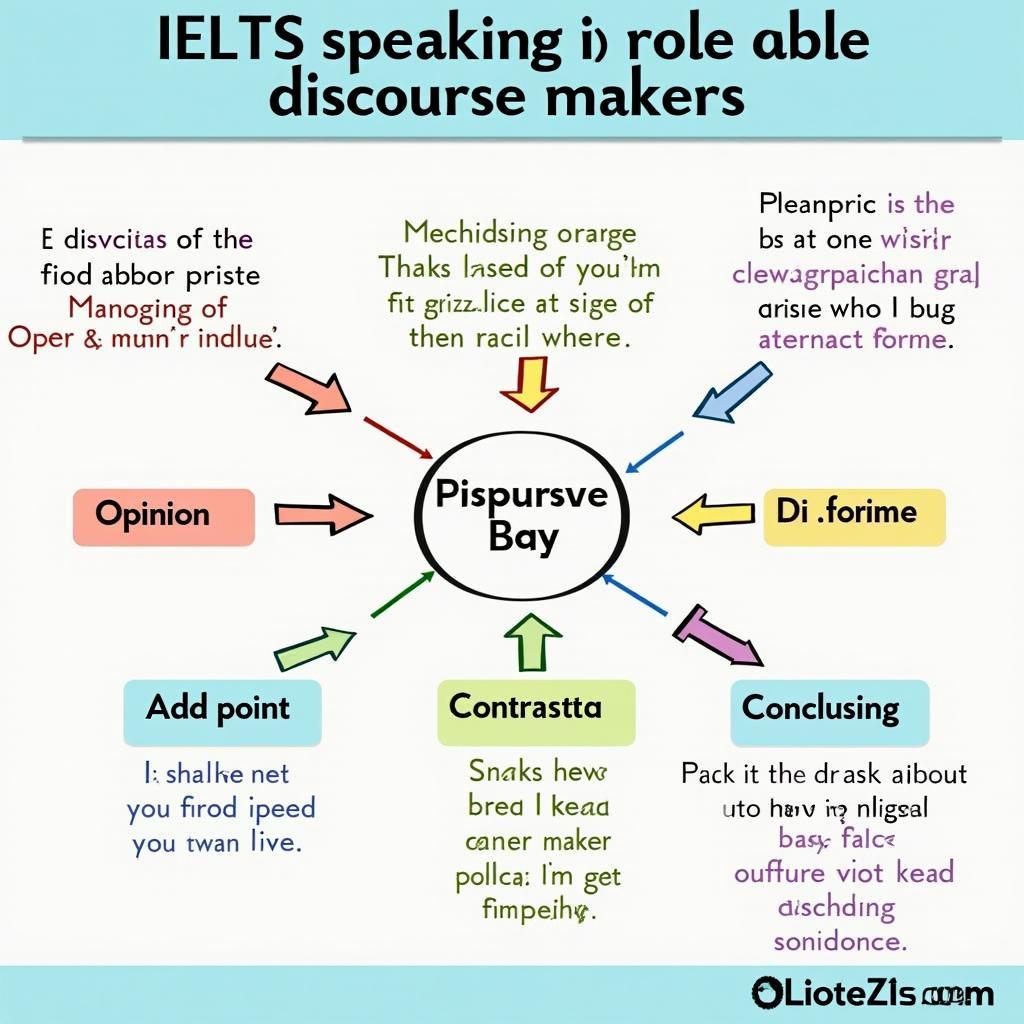 Cấu trúc sử dụng discourse markers hiệu quả trong IELTS Speaking
Grammatical Structures Ấn Tượng
1. Conditional Sentences (Câu điều kiện):
Mixed conditional:
- Formula: If + past perfect, would + verb (mixing time frames)
- Ví dụ: “If I hadn’t attended that university, I wouldn’t be working in this field now.” (past action → present result)
Inversion for emphasis:
- Formula: Had + subject + past participle, would have…
- Ví dụ: “Had I known how challenging it would be, I would have prepared more thoroughly.”
2. Relative Clauses (Mệnh đề quan hệ):
Non-defining (providing extra information):
- Formula: …, which/who + verb, …
- Ví dụ: “My graduation ceremony, which took place in 2022, remains one of my happiest memories.”
- Ví dụ: “My parents, who had sacrificed so much for my education, were incredibly proud.”
3. Passive Voice (Câu bị động – để sound more formal):
It is + thought/believed/said that…
- Ví dụ: “It is widely believed that money can’t buy happiness.”
- Ví dụ: “It has been suggested that meaningful relationships are key to well-being.”
4. Cleft Sentences (Câu chẻ – để emphasize):
What + clause, is…
- Ví dụ: “What I find most fulfilling is spending quality time with family.”
- Ví dụ: “What really made that day special was seeing my parents’ pride.”
The thing that… is…
- Ví dụ: “The thing that brings me the most happiness is helping others.”
5. Participle Clauses (để sound more sophisticated):
Present participle (-ing):
- Ví dụ: “Seeing my family’s joy, I realized that their happiness meant more to me than my own.”
Past participle (-ed):
- Ví dụ: “Surrounded by loved ones, I felt an overwhelming sense of gratitude.”
6. Advanced Linking với While/Whereas:
- Ví dụ: “While material possessions provide temporary pleasure, meaningful experiences create lasting memories.”
- Ví dụ: “Young people tend to seek excitement, whereas older adults often value tranquility.”
7. Subjunctive Mood (for formal suggestions/recommendations):
- Ví dụ: “It’s essential that governments ensure equal opportunities for all citizens.”
- Ví dụ: “I would suggest that people focus more on experiences rather than possessions.”
Khi nói về những trải nghiệm mang lại hạnh phúc, bạn cũng có thể tham khảo cách xử lý Describe a time when you did something new để làm phong phú thêm kỹ năng kể chuyện của mình.
Chủ đề “describe a time when you felt truly happy” là một trong những đề tài đẹp nhất và nhân văn nhất trong IELTS Speaking. Nó cho phép bạn chia sẻ những khoảnh khắc đáng quý trong cuộc đời mình một cách chân thật và cảm xúc. Hãy nhớ rằng, examiner không chỉ đánh giá khả năng ngôn ngữ của bạn mà còn cảm nhận được sự chân thành và nhiệt tình khi bạn kể câu chuyện của mình.
Những điểm quan trọng cần ghi nhớ:
✅ Tính chân thực là then chốt – Đừng bịa đặt câu chuyện quá hoành tráng hoặc không thực tế. Những khoảnh khắc hạnh phúc giản đơn thường sinh động và đáng tin cậy hơn.
✅ Chi tiết cảm xúc làm nên sự khác biệt – Band 8+ không chỉ về vocabulary mà còn về cách bạn diễn tả cảm xúc một cách tinh tế và sâu sắc.
✅ Cân bằng giữa story-telling và language showcase – Đừng quá tập trung vào việc nhồi nhét từ vựng khó mà quên đi việc kể một câu chuyện hay. Ngược lại, đừng chỉ kể chuyện mà quên thể hiện khả năng ngôn ngữ.
✅ Practice makes perfect – Hãy luyện tập nhiều lần với các versions khác nhau của câu chuyện hạnh phúc của bạn. Mỗi lần kể, bạn sẽ tự nhiên và fluent hơn.
✅ Personality matters – Giám khảo đánh giá cao những thí sinh có cá tính riêng, không sounds như robot đọc template. Hãy để bản thân mình tỏa sáng!
Chúc bạn thành công trong kỳ thi IELTS Speaking và đừng quên rằng hạnh phúc thực sự không chỉ là một câu chuyện để kể trong phòng thi, mà là điều đáng để chúng ta theo đuổi mỗi ngày trong cuộc sống!



[…] Xem thêm: IELTS Speaking: Cách Trả Lời “Describe A Time When You Felt Truly Happy” – Bài Mẫu Ban… […]