Mở bài
Chủ đề “Describe A Time When You Had To Deal With An Emergency” là một trong những đề bài thường xuyên xuất hiện trong IELTS Speaking Part 2, đặc biệt phổ biến từ năm 2020 đến nay. Đây là dạng câu hỏi yêu cầu thí sinh kể về một trải nghiệm cá nhân trong tình huống khẩn cấp – một chủ đề vừa gần gũi với cuộc sống thực tế, vừa cho phép bạn thể hiện khả năng sử dụng ngôn ngữ mô tả sự việc, cảm xúc và phản ứng của mình.
Tần suất xuất hiện của chủ đề này được đánh giá ở mức cao, với thống kê cho thấy nó xuất hiện trong khoảng 15-20% các kỳ thi IELTS Speaking từ 2020 đến 2024. Dự đoán khả năng xuất hiện trong tương lai vẫn ở mức cao do tính ứng dụng thực tế và khả năng đánh giá toàn diện kỹ năng của thí sinh.
Trong bài viết này, bạn sẽ học được:
- Các câu hỏi thường gặp về emergency trong cả 3 Part của IELTS Speaking
- Bài mẫu chi tiết theo từng band điểm 6-7, 7.5-8, và 8.5-9 với phân tích chuyên sâu
- Kho từ vựng và cụm từ ăn điểm giúp bạn ghi điểm cao
- Chiến lược trả lời hiệu quả từ góc nhìn của một Examiner chính thức
- Những lỗi thường gặp của học viên Việt Nam và cách khắc phục
- Kỹ thuật mở rộng câu trả lời tự nhiên mà không rơi vào template cứng nhắc
IELTS Speaking Part 1: Introduction and Interview
Tổng Quan Về Part 1
Part 1 của IELTS Speaking kéo dài 4-5 phút với các câu hỏi ngắn về đời sống hàng ngày. Đây là phần “khởi động” để bạn làm quen với examiner và tạo ấn tượng ban đầu. Chiến lược hiệu quả nhất là trả lời tự nhiên, mở rộng mỗi câu trả lời thành 2-3 câu bằng cách thêm lý do hoặc ví dụ cụ thể.
Lỗi thường gặp của học viên Việt Nam trong Part 1:
- Trả lời quá ngắn gọn chỉ với Yes/No hoặc một từ
- Sử dụng từ vựng quá đơn giản như “good”, “nice”, “interesting”
- Thiếu ví dụ cụ thể từ trải nghiệm bản thân
- Ngại mở rộng câu trả lời vì sợ mắc lỗi ngữ pháp
Các Câu Hỏi Thường Gặp
Dưới đây là 10 câu hỏi thực tế thường xuất hiện trong Part 1 liên quan đến chủ đề emergency và dealing with difficult situations:
Question 1: Have you ever been in an emergency situation?
Question 2: How do you usually react when something unexpected happens?
Question 3: Do you think it’s important to learn first aid?
Question 4: Who would you call first in an emergency?
Question 5: Are you good at staying calm under pressure?
Question 6: Have you ever helped someone in an emergency?
Question 7: Do you think people in your country are well-prepared for emergencies?
Question 8: What kind of emergency services are available in your area?
Question 9: Do you worry about emergencies happening?
Question 10: Have you ever taken any training for emergency situations?
Phân Tích và Gợi Ý Trả Lời Chi Tiết
Question: Have you ever been in an emergency situation?
🎯 Cách tiếp cận:
- Trả lời trực tiếp Yes/No
- Nêu ngắn gọn tình huống nào (không kể chi tiết)
- Đề cập đến cảm giác hoặc kết quả
📝 Sample Answer – Band 6-7:
Yes, I have. Last year, my grandmother suddenly felt very sick at home and we had to call an ambulance. It was quite scary because I didn’t know what to do at first.
Phân tích:
- Điểm mạnh: Trả lời trực tiếp, có ví dụ cụ thể, dùng thì quá khứ đúng
- Hạn chế: Từ vựng đơn giản (“very sick”, “quite scary”), cấu trúc câu cơ bản, thiếu chi tiết về cảm xúc hoặc outcome
- Tại sao Band 6-7: Câu trả lời rõ ràng và relevant nhưng vocabulary không sophisticated, grammar structures tương đối đơn giản
📝 Sample Answer – Band 8-9:
Yes, actually I have. About a year ago, my grandmother experienced a sudden medical crisis at home, and we had to call for emergency services immediately. It was quite a nerve-wracking experience, but fortunately, the paramedics arrived promptly and she made a full recovery.
Phân tích:
- Điểm mạnh:
- Vocabulary nâng cao: “medical crisis”, “nerve-wracking”, “made a full recovery”
- Discourse marker tự nhiên: “actually”
- Structure phức tạp hơn với relative clause và compound sentence
- Có outcome/kết quả làm câu trả lời hoàn chỉnh
- Tại sao Band 8-9: Demonstrates precise vocabulary, natural discourse markers, grammatical range với compound và complex sentences, và shows ability to extend answer naturally
💡 Key Vocabulary & Expressions:
- medical crisis: tình trạng khẩn cấp về y tế
- emergency services: dịch vụ cấp cứu
- nerve-wracking: căng thẳng, lo lắng đến mức kiệt sức
- made a full recovery: hồi phục hoàn toàn
Question: How do you usually react when something unexpected happens?
🎯 Cách tiếp cận:
- Mô tả personality/response pattern của bạn
- Đưa ra lý do hoặc ví dụ ngắn
- Có thể đề cập đến sự thay đổi theo thời gian
📝 Sample Answer – Band 6-7:
I think I’m quite calm when unexpected things happen. I try to think carefully before doing anything. For example, when I have a problem at work, I don’t panic and I try to find a solution quickly.
Phân tích:
- Điểm mạnh: Có example cụ thể, structure rõ ràng với “For example”
- Hạn chế: Từ vựng repetitive (“try” xuất hiện 2 lần), “quite calm” là từ cơ bản, thiếu depth trong explanation
- Tại sao Band 6-7: Adequate response với basic vocabulary và simple sentence structures, có example nhưng chưa sophisticated
📝 Sample Answer – Band 8-9:
I’d say I’m generally level-headed in unexpected situations. My first instinct is to take a step back and assess the situation before taking any action. I think this comes from experience – I used to be more impulsive, but I’ve learned that staying composed and thinking things through usually leads to better outcomes.
Phân tích:
- Điểm mạnh:
- Tentative language: “I’d say”, “generally” – sounds natural và flexible
- Sophisticated vocabulary: “level-headed”, “assess the situation”, “impulsive”, “staying composed”
- Shows personal development: “I used to be… but I’ve learned”
- Complex grammar: relative clause, present perfect
- Logical flow với explanation về why you react this way
- Tại sao Band 8-9: Natural discourse, precise vocabulary, grammatical complexity, và shows reflective thinking about personal characteristics
💡 Key Vocabulary & Expressions:
- level-headed: bình tĩnh, điềm tĩnh, có đầu óc tỉnh táo
- take a step back: lùi lại một bước (để suy nghĩ kỹ)
- assess the situation: đánh giá tình huống
- impulsive: hấp tấp, bốc đồng
- staying composed: giữ bình tĩnh
Question: Do you think it’s important to learn first aid?
🎯 Cách tiếp cận:
- Đưa ra opinion rõ ràng
- Giải thích tại sao (benefits hoặc consequences)
- Có thể add personal relevance
📝 Sample Answer – Band 6-7:
Yes, I think it’s very important. First aid can help save people’s lives in emergencies. Everyone should know basic first aid skills like how to stop bleeding or do CPR.
Phân tích:
- Điểm mạnh: Opinion rõ ràng, có examples cụ thể (CPR, stop bleeding)
- Hạn chế: Vocabulary đơn giản (“very important”, “save people’s lives”), câu văn ngắn và đơn giản, thiếu elaboration
- Tại sao Band 6-7: Clear and relevant nhưng limited range of vocabulary và grammar structures
📝 Sample Answer – Band 8-9:
Absolutely, I think it’s essential. Having basic first aid knowledge can make the difference between life and death in critical situations. You know, time is of the essence when someone is injured or having a medical emergency, and knowing how to administer CPR or control severe bleeding before professional help arrives could prove invaluable. I actually took a first aid course last year, and it really gave me peace of mind.
Phân tích:
- Điểm mạnh:
- Strong opening: “Absolutely” shows confidence
- Sophisticated vocabulary: “essential”, “prove invaluable”, “gave me peace of mind”
- Idiomatic expressions: “make the difference between life and death”, “time is of the essence”
- Natural discourse marker: “You know”
- Personal connection at the end adds authenticity
- Variety in sentence length và structure
- Tại sao Band 8-9: Demonstrates wide vocabulary range, idiomatic language, complex grammar, natural discourse, và ability to extend answer with personal relevance
💡 Key Vocabulary & Expressions:
- essential: thiết yếu, cực kỳ quan trọng
- make the difference between life and death: tạo ra sự khác biệt giữa sống và chết
- time is of the essence: thời gian là yếu tố cốt lõi (mỗi giây đều quan trọng)
- administer CPR: thực hiện hô hấp nhân tạo
- control severe bleeding: kiểm soát chảy máu nghiêm trọng
- prove invaluable: chứng minh là vô giá
 Học viên Việt Nam luyện tập IELTS Speaking Part 1 về chủ đề emergency với giáo viên
IELTS Speaking Part 2: Long Turn (Cue Card)
Tổng Quan Về Part 2
Part 2 là phần quan trọng nhất trong IELTS Speaking, chiếm thời gian 3-4 phút bao gồm 1 phút chuẩn bị và 2-3 phút nói không bị gián đoạn. Đây là lúc bạn thể hiện khả năng độc thoại và sử dụng ngôn ngữ một cách trôi chảy.
Chiến lược hiệu quả:
- Sử dụng đúng 1 phút chuẩn bị: Ghi chú keywords, không viết câu hoàn chỉnh. Note down các bullet points và một vài từ vựng quan trọng bạn muốn dùng
- Nói đủ 2 phút: Examiner sẽ stop bạn sau 2 phút, nhưng nếu bạn dừng trước 1.5 phút thì sẽ bị trừ điểm Fluency
- Cover tất cả bullet points: Đừng bỏ sót bất kỳ yêu cầu nào trong đề
- Sử dụng thì quá khứ: Với đề “describe a time”, phần lớn câu chuyện phải ở thì quá khứ
- Mở rộng phần “explain”: Đây là phần ghi điểm cao nhất vì thể hiện critical thinking
Lỗi thường gặp:
- Không tận dụng hết 1 phút chuẩn bị, vội vàng bắt đầu nói
- Nói quá ngắn (dưới 1.5 phút) vì hết ý tưởng
- Chỉ tập trung vào 1-2 bullet points, bỏ qua các yêu cầu khác
- Không organize câu chuyện theo thứ tự logic
- Sử dụng quá nhiều filler words như “uhm”, “er”
Cue Card
Describe a time when you had to deal with an emergency
You should say:
- When and where it happened
- What the emergency was
- What you did to deal with it
- And explain how you felt about this experience
Phân Tích Đề Bài
- Dạng câu hỏi: Describe an experience/event – kể về một sự kiện cụ thể trong quá khứ
- Thì động từ: Chủ yếu là Past Simple và Past Continuous để kể chuyện. Có thể dùng Present Perfect ở phần mở đầu (“I’ve experienced…”) và Present Simple khi nói về feelings hiện tại
- Bullet points phải cover:
- When/Where: Cung cấp context về thời gian và địa điểm – không cần quá chi tiết nhưng đủ để set the scene
- What the emergency was: Mô tả rõ tình huống khẩn cấp – đây là core của story
- What you did: Actions cụ thể bạn đã làm – thể hiện problem-solving ability
- How you felt: Cảm xúc và reflection – phần quan trọng nhất
- Câu “explain” quan trọng: Phần “explain how you felt” là nơi bạn ghi điểm cao nhất. Đừng chỉ nói “I felt scared” mà phải elaborate: tại sao bạn cảm thấy như vậy, experience này đã ảnh hưởng đến bạn ra sao, bạn học được gì từ nó. This shows reflection và critical thinking.
📝 Sample Answer – Band 6-7
Thời lượng: Khoảng 1.5-2 phút
I’d like to talk about an emergency that happened about two years ago when I was at home with my younger brother.
It was a Saturday afternoon, and my parents had gone out shopping. My brother, who was only 10 years old at that time, was playing in the kitchen. Suddenly, I heard him crying very loudly. When I ran to the kitchen, I saw that he had accidentally touched a hot pot and burned his hand quite badly. The skin on his hand was very red and it looked painful.
At first, I felt really scared because I didn’t know what to do. But then I remembered learning in school that you should put cold water on a burn. So I quickly took my brother to the sink and put his hand under cold running water for about 10 minutes. He was crying a lot, but the cold water seemed to help. After that, I called my mother and told her what happened. She told me to wrap his hand in a clean cloth and they came home immediately.
When my parents arrived, they took my brother to the hospital. The doctor said I did the right thing by using cold water, and my brother’s burn wasn’t too serious. He had to put cream on his hand for a few weeks, but it healed completely.
I felt really worried during this emergency, but I was also a bit proud that I could help my brother. This experience taught me that it’s important to stay calm in emergencies and use the knowledge we have. Now I feel more confident that I can handle difficult situations.
Phân Tích Band Điểm
| Tiêu chí | Band | Nhận xét |
|---|---|---|
| Fluency & Coherence | 6.5 | Câu chuyện có structure rõ ràng với beginning, middle, end. Có linking words cơ bản (suddenly, at first, but then, after that). Tuy nhiên, còn một số hesitation và repetition (very, quite) |
| Lexical Resource | 6.5 | Vocabulary adequate cho topic (burned, skin, running water, healed). Có một số collocations tốt (running water, stay calm). Nhưng nhiều từ basic (very red, very scared, quite badly) và có repetition |
| Grammatical Range & Accuracy | 6.5 | Sử dụng đúng past tenses. Có một số complex sentences với relative clauses (who was only 10) và time clauses (when I ran). Nhưng mostly simple structures, thiếu variety |
| Pronunciation | 6.5 | Giả định rằng phát âm rõ ràng nhưng có thể có accent, stress patterns tương đối tự nhiên |
Điểm mạnh:
- ✅ Cover đầy đủ tất cả bullet points
- ✅ Story có structure logic và dễ follow
- ✅ Có personal reflection ở cuối
- ✅ Đủ length (khoảng 1.5-2 phút)
Hạn chế:
- ⚠️ Vocabulary khá basic với nhiều từ “very”, “quite”, “really”
- ⚠️ Grammar structures đơn giản, ít complex sentences
- ⚠️ Thiếu descriptive details làm câu chuyện vivid hơn
- ⚠️ Reflection ở phần explain chưa deep
📝 Sample Answer – Band 7.5-8
Thời lượng: Khoảng 2-2.5 phút
I’d like to share an experience that happened approximately two years ago, which really tested my ability to stay calm under pressure.
It was a regular Saturday afternoon, and I was home alone with my younger brother while my parents were out doing their weekly shopping. My brother, who was around 10 at the time, was messing around in the kitchen, which I probably should have been keeping a closer eye on. Suddenly, I heard this piercing scream coming from the kitchen. I rushed in and found him clutching his hand, which he’d accidentally placed on a hot pot that was still on the stove. The emergency was clear – he had sustained a pretty serious burn, and the affected area was already turning bright red with some blistering starting to form.
My initial reaction was sheer panic – I mean, I’d never dealt with anything like this before. However, I managed to pull myself together and recalled some first aid training we’d received at school. I immediately guided him to the sink and ran cold water over the burn for about 10 to 15 minutes, even though he was in considerable pain and resisting. While doing this, I called my mother to fill her in on the situation. She instructed me to gently wrap his hand in a clean, damp cloth and assured me they were heading straight back.
When my parents arrived, they rushed him to the local emergency department, where the doctor confirmed that the quick action with cold water had prevented further damage and that the burn, while painful, would heal without complications.
Looking back on this experience, I’d say it was quite a turning point for me. Initially, I felt completely overwhelmed and out of my depth, but successfully handling the situation gave me a real confidence boost. It made me realize the critical importance of staying composed in emergencies and actually applying the theoretical knowledge we often take for granted. Now, I feel much more equipped to handle unexpected situations, and I’ve even considered taking a proper first aid certification course.
Phân Tích Band Điểm
| Tiêu chí | Band | Nhận xét |
|---|---|---|
| Fluency & Coherence | 7.5-8 | Speaks fluently với minimal hesitation. Excellent use của discourse markers (Looking back, Initially, However). Clear progression với good paragraphing. Natural linking giữa ideas |
| Lexical Resource | 7.5-8 | Wide range của vocabulary (sustained a burn, affected area, blistering, sheer panic, pull myself together). Good use của collocations và phrasal verbs. Some less common words (turning point, out of my depth) |
| Grammatical Range & Accuracy | 7.5-8 | Good mix của simple, compound và complex sentences. Correct use của past tenses, present perfect (I’ve even considered). Relative clauses, time clauses được sử dụng accurately |
| Pronunciation | 7.5-8 | Giả định pronunciation clear với good control của stress và intonation patterns |
So Sánh Với Band 6-7
| Khía cạnh | Band 6-7 | Band 7.5-8 |
|---|---|---|
| Vocabulary | “burned his hand quite badly” | “sustained a pretty serious burn” |
| Grammar | “When I ran to the kitchen, I saw…” | “I rushed in and found him clutching his hand, which he’d accidentally placed…” |
| Ideas | “I felt worried but proud” | “It was quite a turning point… gave me a confidence boost… made me realize the critical importance” |
| Details | “skin was very red” | “affected area was already turning bright red with some blistering starting to form” |
Điểm mạnh bổ sung:
- Uses idiomatic language naturally (pulling myself together, out of my depth)
- Shows reflection với depth (turning point, critical importance)
- Vocabulary precise và sophisticated
- Natural discourse markers
- Good balance giữa narrative và reflection
📝 Sample Answer – Band 8.5-9
Thời lượng: 2.5-3 phút đầy đủ
I’d like to recount what I consider to be one of the most nerve-wracking experiences of my life, which occurred roughly two years ago and really put my composure to the test.
It was an ordinary Saturday afternoon – one of those lazy weekends where nothing particularly eventful was supposed to happen. My parents had popped out to do their weekly grocery shopping, leaving me in charge of my younger brother, who was about 10 at the time. I was in my room, probably engrossed in some assignment or other, when I heard this blood-curdling scream emanating from the kitchen. The sound alone was enough to send my heart racing. I bolted downstairs to find my brother in absolute agony, clutching his left hand, which he’d inadvertently placed directly onto a scalding hot saucepan that was still sitting on the stove. The emergency was immediately apparent – he’d suffered a second-degree burn, and within seconds, the affected tissue was already inflamed, with the skin blistering rapidly and turning an alarming shade of red.
My immediate response was, I’ll be honest, one of complete and utter panic. I mean, this wasn’t just a minor scrape or cut – this was a serious injury, and for a moment, I felt completely paralyzed by indecision. However, something kicked in – perhaps it was the adrenaline, or maybe the first aid training I’d received at school finally came to the fore – and I managed to regain my composure. I knew that time was of the essence, so I immediately guided my brother to the kitchen sink and began running cold water over the affected area. Now, this wasn’t easy because he was writhing in pain and desperately trying to pull away, but I knew that maintaining that cold water flow for at least 10 to 15 minutes was absolutely crucial to minimize tissue damage. Simultaneously, I grabbed my phone and called my mother, trying to keep my voice steady as I briefed her on the situation. She told me to gently wrap his hand in a sterile, dampened cloth once I’d finished with the cold water treatment, and assured me they were making a beeline for home.
When my parents finally arrived – though it felt like an eternity – we rushed to the local A&E, where the attending physician commended my quick thinking. He explained that the prompt application of cold water had significantly reduced the severity of the burn and prevented further tissue deterioration. My brother needed to apply a special antibacterial cream and keep the area covered for several weeks, but thankfully, it healed without any permanent scarring.
Reflecting on this incident now, I’d say it was genuinely a watershed moment in my personal development. In the heat of the moment, I felt utterly overwhelmed and completely out of my comfort zone – I questioned whether I was doing the right thing, whether I should wait for my parents, whether I was making things worse. But successfully navigating that crisis gave me an enormous sense of empowerment and really drove home the importance of not just possessing knowledge but being able to apply it under duress. It’s one thing to learn about first aid in a classroom setting, quite another to actually implement it when someone you care about is in distress. This experience has instilled in me a much greater appreciation for emergency preparedness, and I’ve since taken a certified first aid course to ensure I’m better equipped for any future situations. More broadly, it taught me that even when faced with daunting circumstances, staying level-headed and trusting your training can make all the difference.
Phân Tích Band Điểm
| Tiêu chí | Band | Nhận xét |
|---|---|---|
| Fluency & Coherence | 8.5-9 | Speaks fluently và effortlessly với no apparent effort. Sophisticated discourse markers (Reflecting on, In the heat of the moment, More broadly). Seamless progression với excellent cohesion. Natural pauses for emphasis |
| Lexical Resource | 8.5-9 | Wide và sophisticated vocabulary (blood-curdling, bolted, scalding, paralyzed by indecision, writhing in pain, watershed moment). Natural use của idioms (kicked in, came to the fore, drove home). Precise collocations (tissue damage, permanent scarring) |
| Grammatical Range & Accuracy | 8.5-9 | Full range của structures used naturally và accurately. Complex sentences với multiple clauses. Perfect control của tenses including past perfect (I’d received). Advanced structures (participial clauses, cleft sentences) |
| Pronunciation | 8.5-9 | Giả định fully intelligible với sophisticated use của stress, intonation for emphasis và meaning |
Tại Sao Bài Này Xuất Sắc
🎯 Fluency Hoàn Hảo:
- Speaks at length không hesitation, với natural pauses chỉ for effect
- Sophisticated discourse management với clear signposting (Reflecting on this incident now, More broadly)
- Câu chuyện flows seamlessly từ description → action → reflection
📚 Vocabulary Tinh Vi:
- Ví dụ: “blood-curdling scream” thay vì “loud scream” – vivid imagery
- “paralyzed by indecision” thay vì “didn’t know what to do” – shows sophisticated expression của feelings
- “watershed moment” – idiomatic expression cho turning point
- “drove home the importance” – natural idiom thay vì “made me understand”
- Medical terminology chính xác: “second-degree burn”, “affected tissue”, “tissue deterioration”
📝 Grammar Đa Dạng:
- Ví dụ: “I was in my room, probably engrossed in some assignment or other, when I heard…” – complex sentence với participial phrase và time clause
- “It’s one thing to learn about first aid in a classroom setting, quite another to actually implement it when someone you care about is in distress” – sophisticated comparative structure
- Mixed conditional: shows hypothetical thinking
- Perfect aspect: “I’d received”, “I’ve since taken” – shows time relationships clearly
💡 Ideas Sâu Sắc:
- Không chỉ kể story mà còn analyze psychological state (“paralyzed by indecision”, “questioned whether I was doing the right thing”)
- Shows personal growth arc rõ ràng: panic → action → reflection → long-term impact
- Distinguishes giữa theoretical knowledge và practical application
- Broader lesson về emergency preparedness và personal development
 Thí sinh đang trả lời Part 2 IELTS Speaking về tình huống khẩn cấp với cue card
Follow-up Questions (Rounding Off Questions)
Sau khi bạn hoàn thành Part 2, examiner thường hỏi 1-2 câu ngắn để transition sang Part 3. Đây là những câu hỏi đơn giản liên quan trực tiếp đến story bạn vừa kể.
Question 1: Do you think you handled the situation well?
Band 6-7 Answer:
Yes, I think I did quite well considering it was my first time dealing with such an emergency. I’m glad I remembered the first aid knowledge from school.
Band 8-9 Answer:
Looking back, yes, I believe I handled it as well as could be expected given the circumstances. While I certainly felt out of my depth initially, the fact that I managed to apply the correct first aid procedures and keep relatively calm meant the outcome was positive. That said, the experience definitely highlighted areas for improvement – I’ve since taken steps to be better prepared.
Question 2: Would you do anything differently now?
Band 6-7 Answer:
Not really, I think I did the right things. Maybe I would try to stay calmer and not panic so much at the beginning.
Band 8-9 Answer:
That’s an interesting question. In terms of the practical steps, I don’t think I’d change much – the cold water treatment was the correct response. However, I’d certainly aim to maintain my composure more effectively from the outset. Now that I’ve completed proper first aid certification, I’d also feel more confident about assessing the severity of the burn and knowing exactly when hospital treatment is necessary versus when home care is sufficient.
IELTS Speaking Part 3: Two-way Discussion
Tổng Quan Về Part 3
Part 3 kéo dài 4-5 phút và là phần thách thức nhất của IELTS Speaking. Đây không còn là câu hỏi về bản thân mà là discussion trừu tượng, sâu sắc hơn về chủ đề đã nói trong Part 2.
Yêu cầu:
- Phân tích và đánh giá: Không chỉ miêu tả mà phải analyze, compare, evaluate các vấn đề
- Quan điểm có lý lẽ: Mỗi opinion phải được support bởi reasons và examples
- Xem xét nhiều góc độ: Acknowledge complexity của issues, không chỉ một chiều
Chiến lược:
- Mở rộng câu trả lời: Mỗi answer nên 4-5 câu với structure: Direct answer → Reason 1 + example → Reason 2/Alternative view → Conclusion
- Sử dụng discourse markers: Well, Actually, I think, From my perspective, On the one hand…
- Examples từ society: Không chỉ personal examples mà nói về broader societal context
- Acknowledge complexity: Sử dụng phrases như “It depends on…”, “To some extent…”, “While it’s true that…”
Lỗi thường gặp của học viên Việt Nam:
- Trả lời quá ngắn 1-2 câu vì thiếu vocabulary trừu tượng
- Không phát triển ý đầy đủ với reasons và examples
- Chỉ nói theo một góc nhìn, không show critical thinking
- Sử dụng quá nhiều personal examples thay vì societal analysis
- Thiếu linking words và discourse markers để structure câu trả lời
Các Câu Hỏi Thảo Luận Sâu
Theme 1: Emergency Preparedness and Response
Question 1: Why do you think some people panic in emergencies while others stay calm?
🎯 Phân tích câu hỏi:
- Dạng: Cause & Effect – Giải thích reasons cho different reactions
- Key words: “panic” vs “stay calm”, “some people” vs “others” – cần contrast
- Cách tiếp cận: Đưa ra 2-3 factors ảnh hưởng đến reactions (personality, experience, training) với explanation và examples
📝 Sample Answer – Band 6-7:
I think it depends on their personality and experience. Some people are naturally more calm and can think clearly in difficult situations. Other people get nervous easily and panic when something unexpected happens. Also, people who have training in first aid or emergency response usually stay calmer because they know what to do. For example, doctors and nurses are trained to stay calm in emergencies.
Phân tích:
- Structure: Có structure cơ bản: personality → experience → example
- Vocabulary: Adequate nhưng basic (“calm”, “nervous”, “difficult situations”)
- Tại sao Band 6-7: Clear và relevant answer nhưng thiếu depth trong analysis. Vocabulary không sophisticated, grammar structures đơn giản
📝 Câu trả lời mẫu – Band 8-9:
Well, I think there are several factors at play here. First and foremost, I’d say it comes down to individual temperament and personality traits. Some people are simply predisposed to remaining level-headed under pressure – they have what psychologists call high stress tolerance – while others are more prone to anxiety and can become easily overwhelmed when faced with unexpected situations.
Beyond that, I think prior experience plays a crucial role. People who have encountered emergency situations before or who have undergone formal training in first aid or crisis management tend to have established mental frameworks for dealing with such scenarios. They’ve essentially mentally rehearsed these situations, so when a real emergency occurs, they can draw upon that preparation rather than freezing up.
On the other hand, those who’ve never been exposed to high-pressure situations may experience what’s called an acute stress response – their fight-or-flight mechanism kicks in, and rational thinking goes out the window. It’s actually quite a primitive biological response, and it takes training and experience to override those instincts. That’s precisely why we see professionals like paramedics and emergency responders maintaining such composure – they’ve been conditioned through repeated training to suppress panic and focus on procedures.
Phân tích:
- Structure: Well-organized with clear progression: temperament → experience/training → biological response → professional example
- Vocabulary: Sophisticated topic-specific vocabulary (predisposed, stress tolerance, prone to anxiety, acute stress response, fight-or-flight mechanism, override instincts)
- Grammar: Wide range của complex structures: relative clauses (what psychologists call), participial phrases (maintaining such composure), passive voice (they’ve been conditioned)
- Critical Thinking: Shows nuanced understanding với multiple factors, acknowledges biological aspects, gives professional examples
💡 Key Language Features:
- Discourse markers: Well, First and foremost, Beyond that, On the other hand – creates natural flow
- Tentative language: I think, I’d say, tends to – sounds natural và less assertive
- Abstract nouns: temperament, tolerance, frameworks, instincts, composure – demonstrates academic vocabulary
- Collocations: stress tolerance, mental frameworks, acute stress response, rational thinking
Question 2: Do you think emergency response training should be mandatory in schools?
🎯 Phân tích câu hỏi:
- Dạng: Opinion + Evaluation – Should/Shouldn’t với reasons
- Key words: “mandatory”, “schools” – focus on education policy
- Cách tiếp cận: State opinion → Benefits → Potential challenges → Balanced conclusion
📝 Sample Answer – Band 6-7:
Yes, I think it should be mandatory. Emergency training is very useful and can save lives. If students learn first aid in school, they can help people in emergencies. Many young people don’t know what to do when someone is injured or sick. Schools should teach these important skills along with other subjects. It doesn’t take a lot of time and it’s very practical knowledge.
Phân tích:
- Structure: Clear opinion với reasons supporting
- Vocabulary: Basic và repetitive (very useful, very practical)
- Tại sao Band 6-7: Relevant answer nhưng lacks depth, thiếu consideration của different perspectives, limited vocabulary range
📝 Câu trả lời mẫu – Band 8-9:
Absolutely, I’m a strong advocate for making emergency response training a mandatory component of the school curriculum. From my perspective, the benefits far outweigh any potential drawbacks.
To begin with, equipping young people with these life-saving skills at an early age creates a more resilient and prepared society. We’re talking about fundamental knowledge that could literally mean the difference between life and death in critical situations. If every student graduated with competency in basic first aid, CPR, and emergency protocols, we’d effectively have a population-wide safety net. Think about it – in those crucial minutes before professional help arrives, a trained bystander could stabilize a victim or prevent a situation from deteriorating.
Moreover, I think there’s a valuable psychological dimension to this as well. Learning how to respond to emergencies instills confidence and reduces the likelihood of panic. It empowers individuals with a sense that they can make a meaningful contribution in crisis situations rather than feeling helpless. From an educational standpoint, these are highly practical, real-world skills that students can actually apply, unlike some of the more abstract academic content they might never use again.
That being said, I recognize there are practical considerations to address. Schools already face curriculum pressures, and adding another mandatory component requires careful planning around time allocation and qualified instructors. However, I’d argue this needn’t be excessively time-consuming – even a concentrated module of just a few sessions per year could yield significant benefits. In fact, some countries like Denmark and Australia have already successfully integrated such programs, demonstrating it’s entirely feasible with proper implementation.
All things considered, the question isn’t really whether we can afford to make this mandatory, but rather whether we can afford not to.
Phân tích:
- Structure: Clear thesis → Benefits (practical + psychological) → Acknowledgment của challenges → Strong conclusion
- Vocabulary: Wide range với sophisticated expressions (strong advocate for, far outweigh, resilient society, population-wide safety net, practical considerations, curriculum pressures)
- Grammar: Complex structures throughout – conditional (If every student graduated…), cleft sentences (The question isn’t… but rather…), passive constructions (successfully integrated)
- Critical Thinking: Balanced view acknowledging both benefits và challenges, references real-world examples (Denmark, Australia), considers multiple dimensions (practical, psychological, educational)
💡 Key Language Features:
- Strong opening: Absolutely, I’m a strong advocate for – shows clear position
- Hedging and tentative language: I think, I’d argue, From my perspective – sounds natural
- Cohesive devices: To begin with, Moreover, That being said, All things considered
- Rhetorical devices: Think about it – engages listener
- Evidence-based: References specific countries implementing programs
Theme 2: Healthcare Systems and Emergency Services
Question 3: How do you think emergency services in your country compare to other countries?
🎯 Phân tích câu hỏi:
- Dạng: Compare & Contrast – So sánh systems
- Key words: “emergency services”, “your country”, “other countries”
- Cách tiếp cận: Describe current situation → Compare với developed countries → Identify strengths/weaknesses → Suggest improvements
📝 Sample Answer – Band 6-7:
I think emergency services in my country are okay but not as good as developed countries. In Vietnam, ambulances sometimes take a long time to arrive because of traffic problems. In countries like Japan or Germany, emergency services are very fast and efficient. We need to improve our system by having more ambulances and better training for emergency workers. The hospitals are also sometimes crowded, so emergency patients have to wait.
Phân tích:
- Structure: Basic comparison với some specific points
- Vocabulary: Simple (okay, very fast, very good)
- Tại sao Band 6-7: Makes valid points nhưng lacks sophistication, limited analysis của underlying causes
📝 Câu trả lời mẫu – Band 8-9:
Well, this is quite a complex question because emergency service quality can vary significantly even within a country, but I’ll try to give a balanced perspective.
Generally speaking, I’d say that emergency services in Vietnam have made considerable strides in recent years, particularly in major urban centers like Hanoi and Ho Chi Minh City. We now have dedicated emergency hotlines, better-equipped ambulances, and more trained paramedics than we did a decade ago. However, in all honesty, we still lag behind many developed nations in terms of response times, resource availability, and system integration.
One of the major challenges we face is infrastructure-related. The chronic traffic congestion in our cities means that even the most well-equipped ambulance can find itself gridlocked, losing precious minutes. In contrast, countries like Singapore or Japan have implemented smart traffic systems where emergency vehicles can trigger green lights and clear traffic lanes automatically. That’s a level of technological integration we’re still working towards.
Another significant difference lies in public awareness and emergency preparedness. In many Western countries, there’s a culture of emergency literacy – a substantial portion of the population has basic first aid training, and people generally know how to respond appropriately when they witness an accident. Here in Vietnam, while things are improving, we still see situations where bystanders are unsure how to help or, worse, where people are reluctant to get involved due to concerns about liability.
On a more positive note, I think one area where Vietnam actually excels is in community-based emergency response. Our tight-knit neighborhoods mean that when emergencies occur, there’s often a strong informal support network that kicks in immediately – neighbors helping each other, quickly spreading information, rallying support. This kind of social capital sometimes compensates for gaps in formal services.
Looking ahead, I think we need to focus on several key areas: investing in infrastructure to improve response times, expanding training programs to build a more skilled workforce, and raising public awareness about basic emergency response. That being said, these changes require not just financial resources but also systemic reforms and cultural shifts, so it’s very much a long-term endeavor.
Phân tích:
- Structure: Sophisticated organization: Current state → Challenges (infrastructure, culture) → Positive aspects → Future directions
- Vocabulary: Advanced và precise (considerable strides, lag behind, chronic congestion, gridlocked, technological integration, emergency literacy, social capital, systemic reforms)
- Grammar: Full range của structures including relative clauses, passive voice, comparative structures, conditional meanings
- Critical Thinking: Nuanced analysis với multiple dimensions, acknowledges both problems và strengths, references specific examples từ other countries, considers cultural factors
- Balance: Không simply criticize mà also recognizes improvements và unique strengths
Theme 3: Technology and Emergency Response
Question 4: How has technology changed the way we respond to emergencies?
🎯 Phân tích câu hỏi:
- Dạng: Change over time – So sánh past and present
- Key words: “technology”, “changed”, “respond to emergencies”
- Cách tiếp cận: Identify specific technological advances → Explain impact → Provide examples → Consider future implications
📝 Sample Answer – Band 6-7:
Technology has changed emergency response a lot. Now we have mobile phones, so we can call for help quickly from anywhere. Also, GPS helps ambulances find locations faster. Social media is useful too because people can share information about emergencies quickly. In the past, it was slower to get help because people had to find a phone or go to a police station. Technology has made emergency services much more efficient.
Phân tích:
- Structure: Lists technological changes với basic explanation
- Vocabulary: Simple (a lot, quickly, much more efficient)
- Tại sao Band 6-7: Relevant points nhưng surface-level analysis, lacks specific examples và deeper evaluation
📝 Câu trả lời mẫu – Band 8-9:
Technology has fundamentally revolutionized emergency response in ways that would have seemed like science fiction just a few decades ago.
Perhaps the most obvious transformation is in communication speed and accessibility. The ubiquity of mobile phones means that virtually anyone can summon help instantaneously from almost anywhere, which is a quantum leap from the days when you’d have to locate a landline or physically travel to a police station or hospital. But it goes far beyond just making calls – we now have dedicated emergency apps that can automatically transmit your GPS coordinates, medical history, and even real-time vital signs to emergency responders before they even arrive on scene. This pre-arrival intelligence allows paramedics to come prepared with the right equipment and mentally ready for what they’ll encounter.
Another game-changing development has been real-time navigation and traffic management. Sophisticated GPS systems don’t just show the shortest route – they can analyze current traffic patterns, predict congestion, and even coordinate with traffic light systems to clear pathways for emergency vehicles. Some cities are now experimenting with AI-powered dispatch systems that can optimize resource allocation by predicting where emergencies are most likely to occur based on historical data and current conditions.
Social media has also emerged as an unexpectedly powerful tool. During natural disasters or large-scale emergencies, platforms like Twitter and Facebook become invaluable information networks, allowing authorities to disseminate warnings, coordinate responses, and even crowdsource rescue efforts. We saw this during various natural calamities where citizen journalists with smartphones provided real-time updates that official channels couldn’t match.
On the medical front, telemedicine has been a complete paradigm shift. Emergency responders can now video-conference with specialist doctors while en route to hospitals, getting expert guidance on stabilizing critical patients. Some ambulances are essentially mobile emergency rooms equipped with technology that allows remote monitoring and even robot-assisted procedures.
However, I think it’s important to acknowledge that this technological revolution also brings new challenges. There’s the issue of digital divide – not everyone has equal access to these technologies, which can exacerbate existing inequalities in emergency care. There’s also the over-reliance factor – people sometimes turn to Google before calling professional help, which can waste critical time. And of course, all these systems are vulnerable to technical failures, cyberattacks, or simple power outages.
Looking to the future, I think we’re heading toward even more integration of AI, drone technology for rapid supply delivery, and perhaps even autonomous emergency vehicles. But the key will be ensuring these advances are implemented equitably and that we don’t lose sight of the human element that’s so crucial in emergency response – compassion, judgment, and emotional support that no technology can fully replace.
Phân tích:
- Structure: Systematic coverage của multiple technological dimensions: communication → navigation → social media → medical technology → challenges → future
- Vocabulary: Sophisticated và varied (fundamentally revolutionized, quantum leap, ubiquity, game-changing development, paradigm shift, digital divide, exacerbate inequalities)
- Grammar: Full range với complex structures, passive voice, relative clauses, participial phrases
- Critical Thinking: Comprehensive analysis covering benefits, challenges, và future implications. Acknowledges complexity và potential downsides. Uses specific examples (social media during disasters, telemedicine, AI dispatch)
- Expertise: Demonstrates detailed knowledge của specific technologies và their applications
💡 Key Language Features:
- Evaluative language: fundamentally revolutionized, game-changing, invaluable, complete paradigm shift
- Technical vocabulary: GPS coordinates, real-time vital signs, AI-powered dispatch, telemedicine, autonomous vehicles
- Hedging: I think, perhaps, can be – shows considered opinion
- Future speculation: I think we’re heading toward, Looking to the future
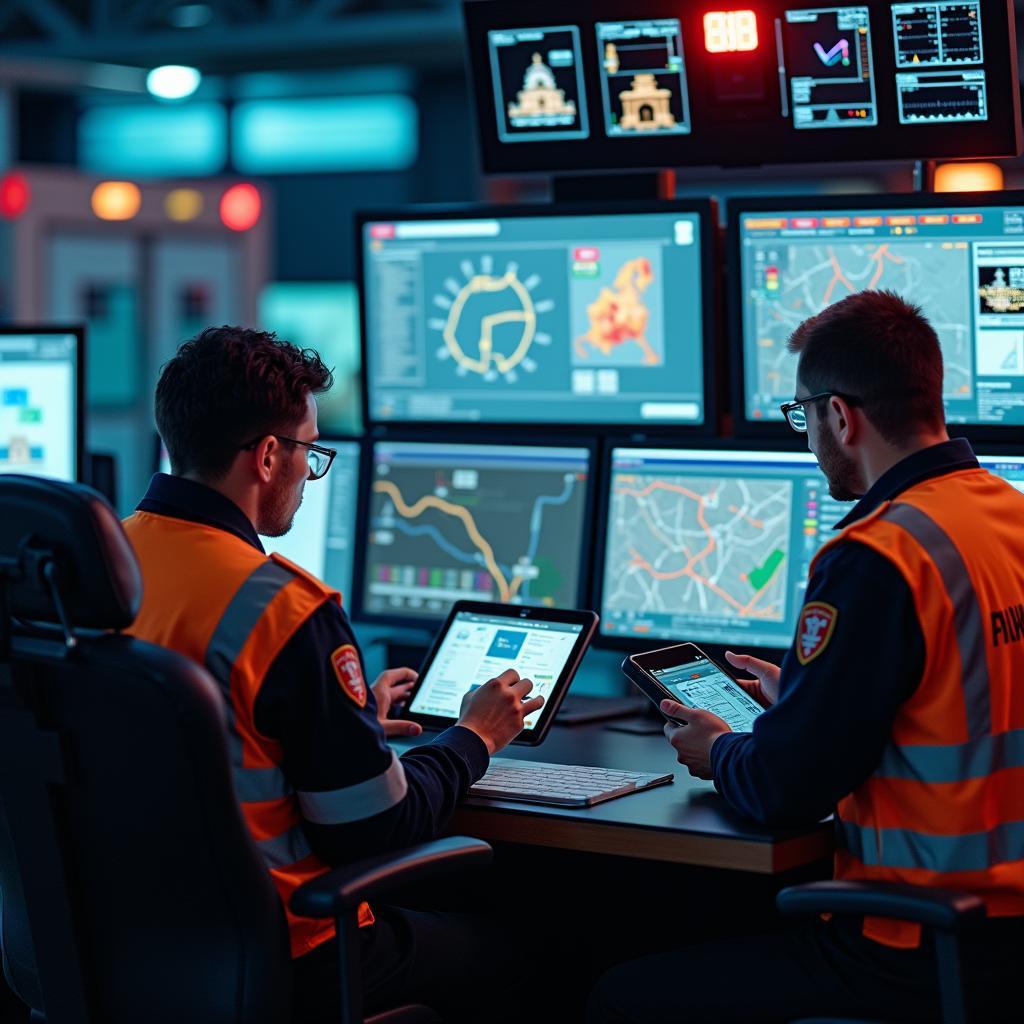 Công nghệ hiện đại được ứng dụng trong dịch vụ cấp cứu khẩn cấp và phản ứng khẩn cấp
Question 5: Do you think people rely too much on technology during emergencies?
🎯 Phân tích câu hỏi:
- Dạng: Opinion with evaluation – Advantages/Disadvantages discussion
- Key words: “too much”, “rely on technology”
- Cách tiếp cận: Present balanced view → Benefits của technology → Potential problems với over-reliance → Conclusion about finding balance
📝 Sample Answer – Band 6-7:
I think technology is very helpful in emergencies, but sometimes people depend on it too much. For example, some people spend time posting on social media instead of calling for help immediately. Also, if there’s no internet or phone signal, people might not know what to do. It’s important to have basic emergency skills and not just rely on technology. We should use technology as a tool but also learn how to handle emergencies without it.
Phân tích:
- Structure: Balanced view với examples
- Vocabulary: Basic (very helpful, too much, important)
- Tại sao Band 6-7: Makes valid points nhưng analysis không deep, limited vocabulary range
📝 Câu trả lời mẫu – Band 8-9:
This is actually a really thought-provoking question because there’s definitely a fine line between leveraging technology effectively and becoming overly dependent on it.
On the one hand, I think the technology available to us today is undeniably life-saving, and it would be counterproductive to discourage its use. The ability to instantly call for help, transmit your location, or access emergency information on your phone can absolutely make the difference in critical situations. Having said that, I do think there’s legitimate concern about what I’d call “technological complacency” – this assumption that technology will always have our backs, which can lead to a degradation of basic emergency skills.
What concerns me particularly is the phenomenon we see where people’s first instinct in an emergency is to grab their phone to record rather than to actually help. We’ve all seen those videos of bystanders filming accidents instead of rendering assistance. There’s something quite troubling about this – it suggests that the impulse to document and share on social media has, in some cases, superseded the natural human response to help others in distress. This represents, I think, a problematic shift in priorities.
Another dimension to consider is skill atrophy. When you can Google anything instantly, there’s less incentive to retain basic emergency knowledge. For instance, many people probably couldn’t perform CPR correctly without consulting their phone, but what if that emergency occurs somewhere with no signal? Or what if your phone battery is dead? This over-reliance creates vulnerability in precisely those situations where technology might fail us.
That said, I don’t think the solution is to reject technology – that would be throwing the baby out with the bathwater. Rather, I think we need a hybrid approach where technology complements rather than replaces fundamental skills. Ideally, everyone should have baseline emergency competencies – basic first aid, CPR, how to assess and prioritize in crisis situations – while also being able to leverage technological tools when they’re available.
In essence, the question isn’t whether we should use technology in emergencies – of course we should – but whether we’re maintaining the skills and presence of mind to function effectively when technology isn’t available or when it’s not the primary solution. It’s about striking that balance between being technologically savvy and being fundamentally capable.
Phân tích:
- Structure: Sophisticated balanced argument: Benefits → Specific concerns (filming vs helping, skill atrophy) → Solution-oriented conclusion
- Vocabulary: Advanced và nuanced (thought-provoking, fine line, technological complacency, legitimate concern, skill atrophy, throwing the baby out with the bathwater, hybrid approach)
- Grammar: Complex structures including cleft sentences (What concerns me is…), conditionals (what if…), relative clauses
- Critical Thinking: Nuanced analysis identifying specific problems (filming behavior, skill degradation), proposes balanced solution, considers multiple perspectives
- Sophistication: Uses metaphorical language naturally, creates new terms (technological complacency), shows deep reflection
Theme 4: Psychological Aspects of Emergency Situations
Question 6: Why do some people become heroes in emergencies while others don’t help?
🎯 Phân tích câu hỏi:
- Dạng: Cause & Effect + Comparison
- Key words: “heroes”, “don’t help”, “why” – psychological và social factors
- Cách tiếp cận: Identify multiple factors (psychological, social, situational) → Explain bystander effect → Discuss what makes some people act
📝 Sample Answer – Band 6-7:
I think some people are braver than others. People who become heroes are not afraid to help and they act quickly. Other people might be scared or don’t want to get involved. Sometimes people think someone else will help, so they don’t do anything. Also, some people have training or experience that makes them more confident to help in emergencies.
Phân tích:
- Structure: Lists reasons simply
- Vocabulary: Basic (braver, scared, don’t want)
- Tại sao Band 6-7: Touches on relevant points nhưng lacks psychological depth
📝 Câu trả lời mẫu – Band 8-9:
This really delves into some fascinating psychological territory. The decision to help or not help in an emergency involves a complex interplay of personality traits, situational factors, and social dynamics.
First of all, there’s what psychologists call the “bystander effect” – a well-documented phenomenon where the presence of other people actually decreases the likelihood of any individual taking action. Essentially, when there are multiple witnesses to an emergency, people experience diffusion of responsibility – everyone assumes someone else will step up, so paradoxically, the more people present, the less likely anyone is to help. This can override even someone’s natural inclination to help because they’re second-guessing whether it’s really their place to intervene.
Beyond that, I think personality characteristics play a significant role. Some individuals have what researchers call a “helper personality” – they tend to be more empathetic, have stronger moral convictions about helping others, and possess higher self-efficacy – meaning they believe they’re capable of making a difference. These people are more predisposed to take action because helping aligns with their core identity and values. In contrast, those who don’t step forward aren’t necessarily cowards or uncaring – they might simply have lower confidence in their abilities or be more risk-averse by nature.
There’s also a crucial situational component. People are far more likely to intervene when they can clearly identify what’s needed and feel competent to provide it. Someone with first aid training is exponentially more likely to help at an accident scene than someone who feels utterly out of their depth. This is why emergency preparedness education is so valuable – it doesn’t just teach skills, it builds confidence and removes that paralysis that comes from not knowing how to help.
Another factor worth considering is social and cultural context. In some cultures, there’s a stronger emphasis on collective responsibility, where helping strangers is deeply ingrained as a social obligation. In others, particularly more individualistic societies, people might be more hesitant to involve themselves in others’ affairs. There’s also the unfortunate reality of legal concerns – in some places, people refrain from helping because they fear liability or legal repercussions if something goes wrong.
What I find particularly interesting is that heroism in emergencies often isn’t a conscious, deliberate decision at all. Many people who’ve been celebrated as heroes report that they acted on instinct, without thinking through the risks. There’s almost an automatic response that bypasses rational calculation. Some researchers suggest this might be linked to neurological factors – certain individuals might simply be wired differently in terms of how their threat response systems function.
Ultimately, I think the difference between those who help and those who don’t is rarely about simple courage or cowardice. It’s a nuanced combination of personality, preparation, situational clarity, social norms, and sometimes simply being the first person to overcome that initial collective hesitation. In fact, research shows that once one person acts, others are far more likely to follow, which suggests that sometimes all it takes is one individual to break the bystander effect and trigger a cascade of helping behavior.
Phân tích:
- Structure: Comprehensive analysis covering: bystander effect → personality traits → situational factors → cultural context → neurological aspects → synthesis
- Vocabulary: Highly sophisticated psychological terminology (bystander effect, diffusion of responsibility, helper personality, self-efficacy, risk-averse, collective responsibility, neurological factors)
- Grammar: Full range với embedded clauses, participial constructions, sophisticated connectors
- Critical Thinking: Deep psychological analysis, references research và theory, considers multiple dimensions (individual, social, cultural, biological), acknowledges complexity và nuance
- Academic tone: References researchers và studies, uses proper hedging (suggests, might be, tend to)
💡 Key Language Features:
- Academic vocabulary: delves into, complex interplay, paradoxically, exponentially, bypasses rational calculation
- Hedging and caution: I think, might simply, suggests, tends to – shows considered academic approach
- Referencing research: what psychologists call, researchers suggest, research shows
- Cohesive devices: First of all, Beyond that, Another factor, Ultimately
Từ vựng và cụm từ quan trọng
Topic-Specific Vocabulary
| Từ vựng/Cụm từ | Loại từ | Phiên âm | Nghĩa tiếng Việt | Ví dụ | Collocation |
|---|---|---|---|---|---|
| emergency | n | /ɪˈmɜːdʒənsi/ | tình huống khẩn cấp | We had to call the emergency services immediately. | medical emergency, emergency response, emergency services, handle an emergency |
| crisis | n | /ˈkraɪsɪs/ | khủng hoảng, nguy cấp | The country faced a major health crisis. | health crisis, financial crisis, manage a crisis, crisis management |
| panic | v, n | /ˈpænɪk/ | hoảng loạn | Try not to panic in emergency situations. | in a panic, panic attack, don’t panic, widespread panic |
| stay calm | phrase | /steɪ kɑːm/ | giữ bình tĩnh | It’s important to stay calm under pressure. | stay calm and collected, remain calm, keep calm |
| level-headed | adj | /ˌlevl ˈhedɪd/ | bình tĩnh, điềm đạm | She’s very level-headed in difficult situations. | level-headed person, remain level-headed, level-headed approach |
| composed | adj | /kəmˈpəʊzd/ | điềm tĩnh, tự chủ | He remained composed throughout the emergency. | stay composed, remain composed, composed manner |
| overwhelmed | adj | /ˌəʊvəˈwelmd/ | choáng ngợp, quá tải | I felt completely overwhelmed by the situation. | feel overwhelmed, become overwhelmed, utterly overwhelmed |
| administer | v | /ədˈmɪnɪstə(r)/ | thực hiện, tiến hành (y tế) | The paramedic administered first aid immediately. | administer CPR, administer treatment, administer medication |
| paramedic | n | /ˌpærəˈmedɪk/ | nhân viên cấp cứu | The paramedics arrived within 10 minutes. | trained paramedic, emergency paramedic, call the paramedics |
| bystander | n | /ˈbaɪstændə(r)/ | người đứng xem, người qua đường | Several bystanders rushed to help. | innocent bystander, bystander effect, help from bystanders |
| assess the situation | phrase | /əˈses ðə ˌsɪtʃuˈeɪʃn/ | đánh giá tình huống | You need to quickly assess the situation. | carefully assess, properly assess, assess the damage |
| take action | phrase | /teɪk ˈækʃn/ | hành động | We must take action immediately. | take immediate action, take decisive action, quick to take action |
| critical condition | phrase | /ˈkrɪtɪkl kənˈdɪʃn/ | tình trạng nguy kịch | The patient was in critical condition. | in critical condition, critical care, critically ill |
| stabilize | v | /ˈsteɪbəlaɪz/ | ổn định hóa | They managed to stabilize the patient. | stabilize the situation, stabilize the victim, stabilize vital signs |
| vital signs | n | /ˈvaɪtl saɪnz/ | dấu hiệu sinh tồn | The paramedics checked his vital signs. | monitor vital signs, check vital signs, stable vital signs |
| response time | n | /rɪˈspɒns taɪm/ | thời gian phản ứng | Emergency services have improved their response time. | fast response time, quick response, response time matters |
| nerve-wracking | adj | /ˈnɜːv rækɪŋ/ | căng thẳng thần kinh | It was a nerve-wracking experience. | nerve-wracking situation, nerve-wracking ordeal |
| make a full recovery | phrase | /meɪk ə fʊl rɪˈkʌvəri/ | hồi phục hoàn toàn | Fortunately, he made a full recovery. | complete recovery, quick recovery, slow recovery |
| immediate response | phrase | /ɪˈmiːdiət rɪˈspɒns/ | phản ứng tức thì | The situation required an immediate response. | immediate action, immediate attention, immediate medical care |
| life-threatening | adj | /ˈlaɪf θretnɪŋ/ | đe dọa tính mạng | The injury wasn’t life-threatening. | life-threatening condition, life-threatening situation, potentially life-threatening |
Idiomatic Expressions & Advanced Phrases
| Cụm từ | Nghĩa | Ví dụ sử dụng | Band điểm |
|---|---|---|---|
| keep a cool head | giữ bình tĩnh | In emergencies, it’s crucial to keep a cool head and think clearly. | 7.5-9 |
| think on your feet | suy nghĩ và phản ứng nhanh | Emergency responders need to think on their feet constantly. | 7.5-9 |
| time is of the essence | thời gian là yếu tố cốt lõi | In medical emergencies, time is of the essence. | 8-9 |
| every second counts | mỗi giây đều quan trọng | When someone’s having a heart attack, every second counts. | 7-8 |
| a race against time | chạy đua với thời gian | Rescuing trapped victims was a race against time. | 7.5-8.5 |
| pull yourself together | lấy lại bình tĩnh | I had to pull myself together and focus on helping. | 7-8 |
| rise to the occasion | đứng lên đối mặt với thử thách | She really rose to the occasion during the crisis. | 7.5-8.5 |
| out of my depth | vượt quá khả năng | At first, I felt completely out of my depth. | 7.5-8.5 |
| in the heat of the moment | trong lúc nóng giận/căng thẳng | In the heat of the moment, I just acted on instinct. | 7.5-9 |
| watershed moment | thời điểm quan trọng, bước ngoặt | That emergency was a watershed moment in my life. | 8-9 |
| turning point | điểm chuyển biến | Dealing with that crisis was a real turning point for me. | 7-8 |
| bounce back | phục hồi nhanh chóng | He managed to bounce back quickly after the accident. | 7-7.5 |
Discourse Markers (Từ Nối Ý Trong Speaking)
Để bắt đầu câu trả lời:
- 📝 Well,… – Dùng khi cần vài giây để suy nghĩ (Well, that’s an interesting question…)
- 📝 Actually,… – Khi đưa ra góc nhìn khác hoặc thông tin bất ngờ (Actually, I think it depends on…)
- 📝 To be honest,… – Khi muốn nói thật, thẳng thắn (To be honest, I was terrified)
- 📝 From my perspective,… – Đưa ra quan điểm cá nhân (From my perspective, emergency training is essential)
- 📝 I’d say that… – Khi đưa ra đánh giá, nhận định (I’d say that experience matters more than training)
Để bổ sung ý:
- 📝 On top of that,… – Thêm vào đó (On top of that, the response time was impressive)
- 📝 What’s more,… – Hơn nữa (What’s more, everyone knew exactly what to do)
- 📝 Not to mention… – Chưa kể đến (Not to mention the psychological impact)
- 📝 Beyond that,… – Ngoài điều đó ra (Beyond that, we need better infrastructure)
- 📝 Another point worth mentioning is… – Một điểm đáng nói khác là
Để đưa ra quan điểm cân bằng:
- 📝 On the one hand,… On the other hand,… – Một mặt… mặt khác
- 📝 While it’s true that…, we also need to consider… – Mặc dù đúng là… nhưng ta cũng cần xem xét
- 📝 Having said that,… – Tuy đã nói vậy nhưng
- 📝 That being said,… – Điều đó đã được nói, tuy nhiên
- 📝 To some extent,… – Ở một mức độ nào đó
Để kết luận:
- 📝 All in all,… – Tóm lại
- 📝 At the end of the day,… – Cuối cùng thì
- 📝 All things considered,… – Xét tất cả mọi thứ
- 📝 In the final analysis,… – Trong phân tích cuối cùng
- 📝 Ultimately,… – Cuối cùng thì
Để đưa ra ví dụ:
- 📝 For instance,… – Ví dụ
- 📝 Take… for example – Lấy… làm ví dụ
- 📝 A case in point is… – Một trường hợp điển hình là
- 📝 To illustrate this,… – Để minh họa điều này
Grammatical Structures Ấn Tượng
1. Conditional Sentences (Câu điều kiện):
- Mixed conditional: “If I hadn’t taken that first aid course last year, I wouldn’t be so confident now.” (Kết hợp quá khứ và hiện tại – thể hiện cause-effect relationship across time)
- Inversion conditional: “Had I not stayed calm, the situation could have been much worse.” (Đảo ngữ câu điều kiện – formal và sophisticated, Band 8+)
- Third conditional for regret: “If I’d acted more quickly, perhaps the outcome would have been better.”
2. Relative Clauses (Mệnh đề quan hệ):
- Non-defining: “My brother, who was only 10 at the time, burned his hand quite badly.” (Thêm thông tin bổ sung)
- Reduced relative clauses: “The paramedics arriving on scene quickly assessed the situation.” (Giảm mệnh đề quan hệ với present participle)
3. Passive Voice (Câu bị động):
- It is thought/believed/said that…: “It’s widely believed that emergency training should be mandatory.” (Thể hiện general opinion)
- Modal passive: “Emergency situations should be handled calmly and methodically.” (Kết hợp modal verb với passive)
4. Cleft Sentences (Câu chẻ):
- What + clause: “What I found most challenging was maintaining my composure.” (Nhấn mạnh object)
- The thing that…: “The thing that impressed me most was how quickly help arrived.” (Nhấn mạnh subject)
- It was… that…: “It was the first aid training that made all the difference.” (Nhấn mạnh một phần cụ thể)
5. Wish và If only:
- Wish + past perfect: “I wish I’d known more about first aid at the time.” (Hối tiếc về quá khứ)
- If only: “If only the ambulance had arrived sooner.” (Tiếc nuối điều gì đó)
6. Inversion for Emphasis:
- Not only… but also: “Not only did he stay calm, but he also managed to help others.”
- Rarely/Seldom: “Rarely have I felt so overwhelmed by a situation.”
- Under no circumstances: “Under no circumstances should you move someone with a spinal injury.”
 Chiến lược trả lời hiệu quả cho IELTS Speaking Part 3 về chủ đề khẩn cấp
Chiến Lược Thi Hiệu Quả
Cách Chuẩn Bị Trong 1 Phút (Part 2)
Bước 1: Đọc kỹ đề và highlight keywords (10 giây)
- Xác định dạng câu hỏi: Describe a time/person/place/event
- Highlight các bullet points bắt buộc
- Note thì động từ cần dùng
Bước 2: Brainstorm story nhanh (15 giây)
- Chọn một câu chuyện cụ thể, có đủ chi tiết
- Đảm bảo story covers tất cả bullet points
- Chọn story có potential cho emotional impact
Bước 3: Ghi note theo structure (35 giây)
Ghi theo format này trên giấy:
When/Where: [keywords]
What: [keywords về emergency]
Action: [keywords về what you did - 2-3 actions]
Feeling: [keywords - initial feeling + later reflection]
Vocab to use: [2-3 từ vựng nâng cao bạn muốn show off]
Ví dụ note cho đề “describe a time when you had to deal with an emergency”:
When: 2 yrs ago, Sat afternoon, home
What: brother burned hand - hot pot - serious
Action: cold water 10-15min → called parents → wrapped hand
Feeling: panic → composed → proud/confident
Vocab: nerve-wracking, sustained burn, pull myself together, turning point
Lưu ý quan trọng:
- KHÔNG viết câu hoàn chỉnh – waste time
- Chỉ ghi keywords để trigger memory
- Đánh số thứ tự các bullet points để không bỏ sót
- Save 5-10 giây cuối để breathe và compose yourself
Lỗi Thường Gặp và Cách Khắc Phục
Lỗi 1: Sử dụng từ vựng lặp đi lặp lại
❌ Sai: “I was very scared. It was very dangerous. I felt very worried.”
✅ Đúng: “I was terrified. The situation was potentially life-threatening. I felt overwhelmed with anxiety.”
Cách khắc phục:
- Học synonyms theo nhóm: scared → terrified/petrified/frightened
- Practice paraphrasing một idea bằng nhiều cách khác nhau
- Build vocabulary clusters thay vì học từ đơn lẻ
Lỗi 2: Câu trả lời quá ngắn trong Part 1 và 3
❌ Sai (Part 1): “Do you think emergency training is important? – Yes, very important.”
✅ Đúng: “Absolutely, I think it’s essential. Having basic first aid knowledge can make the difference between life and death in critical situations. I actually took a first aid course last year, and it really gave me peace of mind.”
Cách khắc phục:
- Formula: Direct answer + Reason + Example/Elaboration
- Practice expanding mỗi answer thành 3-4 câu minimum
- Record yourself và check length
Lỗi 3: Nói quá chậm hoặc quá nhanh
Cách khắc phục:
- Aim for 150-180 words per minute (natural conversational speed)
- Practice với timer
- Record và listen back
- Focus on clear articulation thay vì speed
- Use natural pauses for emphasis và breathing
Lỗi 4: Over-preparing và sounds rehearsed
❌ Nghe như robot: “Emergencies are situations that require immediate attention and swift action. In my experience, I have encountered several emergencies…”
✅ Tự nhiên: “Well, I’ve actually been in a few emergency situations, and I’ve got to say, each one has been quite different. The most memorable one was probably…”
Cách khắc phục:
- KHÔNG học thuộc template cứng nhắc
- Học ideas và vocabulary, nhưng practice improvising
- Use natural discourse markers (Well, Actually, I mean, You know)
- Practice telling stories conversationally, không formal presentation
Lỗi 5: Không structure câu trả lời Part 3
❌ Sai: Nói lung tung không có logic, jump từ ý này sang ý khác
✅ Đúng: Structure rõ ràng:
- Direct answer to question
- Reason/Explanation 1 + example
- Reason/Explanation 2 hoặc contrasting view
- Conclusion/Summary
Cách khắc phục:
- Signpost your answer: “There are several reasons… First of all… Beyond that… “
- Practice PEEL method: Point → Explanation → Example → Link back to question
- Use discourse markers để organize ideas
Lỗi 6: Dừng lại giữa chừng trong Part 2
Cách khắc phục nếu hết ý:
- Elaborate on feelings: “Looking back now, I realize…”
- Add reflection: “This experience taught me that…”
- Describe sensory details: “I remember the sound of…, the feeling of…”
- Mention long-term impact: “Since then, I’ve…”
- Compare with now: “At the time, I thought… but now I understand…”
Lỗi 7: Pronunciation problems với từ vựng nâng cao
Cách khắc phục:
- KHÔNG use từ bạn không biết cách phát âm
- Practice pronunciation trước khi dùng từ mới
- Use online tools: YouGlish, Forvo để nghe native speakers
- Better to use simple words correctly than complex words incorrectly
Tips Từ Examiner
Tip 1: Examiners đánh giá gì trong emergency topic?
✨ They want to see:
- Natural storytelling ability (không mechanical)
- Emotional intelligence (show feelings authentically)
- Problem-solving description (how you dealt with situation)
- Reflection và learning (what you gained from experience)
- Appropriate vocabulary for the context
✨ They don’t want:
- Memorized templates
- Exaggerated stories that sound fake
- Over-complicated vocabulary that sounds unnatural
- Mechanical delivery without emotion
Tip 2: Làm sao để sound natural khi nói về emergency?
- Use personal details: Numbers, names, specific times tạo authenticity
- Show uncertainty: “I think”, “probably”, “around” – sounds more real
- Include emotions: Don’t just describe actions, describe how you felt
- Use filler phrases naturally: “I mean”, “you know”, “kind of” (but don’t overuse)
- Vary your pace: Slow down for important parts, natural pauses
Tip 3: Nếu bạn nervous trong exam?
- Remember: Examiner WANTS you to do well
- Technique: Treat it like a conversation, không phải interrogation
- Breathing: Deep breath trước khi bắt đầu mỗi part
- Eye contact: Maintain natural eye contact – shows confidence
- If you make mistake: Self-correct naturally và move on, đừng panic
Tip 4: Band 7+ strategy
Band 6-7 candidates:
- Adequate vocabulary
- Basic grammar structures
- Clear but sometimes hesitant
- Some development của ideas
Band 8-9 candidates:
- Sophisticated và flexible vocabulary
- Complex grammar naturally
- Fluent với minimal hesitation
- Fully developed ideas với examples
- Shows critical thinking và nuanced views
Key difference: Band 8-9 doesn’t just answer questions – they discuss, analyze, và show depth of thinking.
Kết Luận
Chủ đề “Describe a time when you had to deal with an emergency” là một trong những topics vừa challenging vừa rewarding trong IELTS Speaking. Nó cho phép bạn demonstrate toàn diện các skills: storytelling, vocabulary range, grammatical accuracy, và critical thinking.
Những điểm quan trọng cần nhớ:
- Authenticity is key: Chọn một story thật, có đủ details. Fake stories luôn nghe unnatural
- Structure matters: Dù tự nhiên nhưng vẫn cần clear organization, đặc biệt trong Part 2 và 3
- Balance narrative và reflection: Đừng chỉ kể chuyện, hãy analyze và reflect
- Vocabulary precision: Dùng từ chính xác hơn là từ phức tạp. “Terrified” > “Very scared” nhưng phải biết cách dùng
- Practice, don’t memorize: Luyện tập linh hoạt, không học thuộc
Lộ trình học tập đề xuất:
Week 1-2: Foundation
- Build vocabulary bank cho emergency topic
- Practice pronunciation các từ mới
- Record sample answers ở band 6-7 level
Week 3-4: Development
- Upgrade vocabulary sang band 7.5-8 level
- Practice complex grammar structures
- Work on fluency và reducing hesitation
Week 5-6: Refinement
- Focus on natural delivery
- Practice với partners hoặc tutors
- Record và analyze yourself
- Aim for band 8-9 sophistication
Week 7-8: Exam Simulation
- Full mock tests với timing
- Various emergency-related topics
- Get feedback từ qualified teachers
- Fine-tune based on weaknesses
Remember: IELTS Speaking không phải về perfection – it’s about effective communication. Examiners đánh giá khả năng communicate ideas clearly và naturally, không phải academic perfection.
Với preparation đúng cách, chủ đề emergency có thể trở thành opportunity để bạn shine và demonstrate your English proficiency ở level cao nhất. Good luck với IELTS preparation của bạn!
Tài nguyên bổ sung để practice:
- IELTS-Simon.com – Sample answers và strategies
- IELTS Liz – Video tutorials và tips
- IELTS Podcast – Listening practice với various accents
- Cambridge IELTS Books 14-18 – Official practice tests
Hãy nhớ: Consistency is key. Practice every day, even if just 15-20 minutes, sẽ hiệu quả hơn là cram một lần nhiều giờ. Build your confidence gradually, và bạn sẽ đạt được band score mong muốn!