Chủ đề làm việc dưới áp lực là một trong những đề tài phổ biến và thực tế nhất trong kỳ thi IELTS Speaking. Với hơn 20 năm kinh nghiệm chấm thi IELTS, tôi nhận thấy chủ đề này xuất hiện với tần suất cao trong các kỳ thi từ 2020 đến 2025, đặc biệt là ở Part 2 và Part 3. Dự đoán khả năng xuất hiện trong tương lai vẫn ở mức cao do tính phổ biến của tình huống này trong học tập, công việc và cuộc sống.
Điều làm nên thách thức của chủ đề này là nhiều thí sinh Việt Nam thường mô tả tình huống quá chung chung, thiếu chi tiết cụ thể về cảm xúc và cách xử lý. Họ cũng hay sử dụng từ vựng đơn giản như “stress”, “difficult” mà không biết các từ ngữ tinh tế hơn để diễn đạt mức độ áp lực khác nhau.
Trong bài viết này, bạn sẽ học được:
- 10+ câu hỏi thực tế cho cả 3 Part của IELTS Speaking về chủ đề áp lực
- Bài mẫu chi tiết theo 3 band điểm 6-7, 7.5-8, và 8.5-9 với phân tích cụ thể
- 25+ từ vựng và cụm từ ăn điểm để mô tả tình huống áp lực
- Chiến lược trả lời hiệu quả từ góc nhìn của examiner
- Những lỗi phổ biến cần tránh và cách khắc phục
IELTS Speaking Part 1: Introduction and Interview
Tổng Quan Về Part 1
Part 1 kéo dài 4-5 phút với các câu hỏi ngắn về cuộc sống hàng ngày. Đối với chủ đề áp lực, examiner thường hỏi về trải nghiệm cá nhân, thói quen và quan điểm của bạn về stress trong học tập hoặc công việc.
Chiến lược quan trọng:
- Trả lời trực tiếp câu hỏi trong 1-2 câu đầu
- Mở rộng bằng lý do hoặc ví dụ cụ thể
- Giữ câu trả lời trong khoảng 2-3 câu, không quá dài
Lỗi thường gặp của học viên Việt Nam:
- Trả lời Yes/No rồi im lặng, không mở rộng
- Dùng “very” quá nhiều thay vì từ vựng đa dạng
- Nói chung chung, không có ví dụ từ kinh nghiệm bản thân
- Sử dụng cấu trúc ngữ pháp đơn điệu (chỉ dùng present simple)
Các Câu Hỏi Thường Gặp
Question 1: Do you often feel under pressure in your studies/work?
Question 2: How do you usually deal with stressful situations?
Question 3: What kind of situations make you feel most pressured?
Question 4: Do you think young people today experience more pressure than in the past?
Question 5: Is it important to learn how to work under pressure?
Question 6: What helps you stay calm when you’re stressed?
Question 7: Do you prefer working under tight deadlines or having more time?
Question 8: Have you ever felt overwhelmed by too many tasks?
Phân Tích và Gợi Ý Trả Lời Chi Tiết
Question: Do you often feel under pressure in your studies/work?
🎯 Cách tiếp cận:
- Trả lời có/không rõ ràng
- Giải thích tần suất và nguyên nhân
- Đưa ví dụ cụ thể từ trải nghiệm gần đây
📝 Sample Answer – Band 6-7:
“Yes, I sometimes feel pressure in my studies. When I have many assignments at the same time, I feel stressed. For example, last month I had three exams in one week and I felt very nervous.”
Phân tích:
- Điểm mạnh: Trả lời trực tiếp, có ví dụ cụ thể về thời gian
- Hạn chế: Từ vựng cơ bản (stressed, nervous, very), cấu trúc câu đơn giản, thiếu chi tiết về cảm xúc
- Tại sao Band 6-7: Fluency ổn định nhưng vocabulary chưa đa dạng, grammar đơn giản với các thì cơ bản
📝 Sample Answer – Band 8-9:
“I’d say I experience pressure quite regularly in my studies, especially during peak exam periods. What tends to trigger stress for me most is when multiple deadlines coincide. For instance, just last semester, I had to juggle preparing for final exams while simultaneously working on a major research project, which was genuinely overwhelming at times.”
Phân tích:
-
Điểm mạnh:
- Vocabulary tinh tế: “quite regularly” thay vì “sometimes”, “trigger stress” thay vì “make stressed”
- Collocations tự nhiên: “peak exam periods”, “deadlines coincide”, “juggle preparing”
- Grammar đa dạng: relative clause (which was…), while + V-ing
- Chi tiết cụ thể và realistic
-
Tại sao Band 8-9:
- Fluency: Sử dụng discourse marker “I’d say” tự nhiên, không hesitation
- Vocabulary: Paraphrasing linh hoạt, collocations chính xác
- Grammar: Cấu trúc phức tạp được sử dụng chính xác
- Pronunciation: Các từ nhiều âm tiết như “simultaneously”, “overwhelming” thể hiện khả năng cao
💡 Key Vocabulary & Expressions:
- quite regularly: khá thường xuyên (formal hơn “often”)
- peak exam periods: thời kỳ cao điểm thi cử
- trigger stress: kích hoạt căng thẳng
- coincide: xảy ra đồng thời
- juggle (tasks): xoay sở với nhiều việc cùng lúc
- overwhelming: áp đảo, quá sức
Question: How do you usually deal with stressful situations?
🎯 Cách tiếp cận:
- Mô tả phương pháp cụ thể bạn sử dụng
- Giải thích tại sao phương pháp đó hiệu quả
- Có thể thêm ví dụ minh họa
📝 Sample Answer – Band 6-7:
“When I feel stressed, I usually take a break and listen to music. This helps me relax and feel better. Sometimes I also talk to my friends about my problems and they give me good advice.”
Phân tích:
- Điểm mạnh: Có 2 phương pháp cụ thể, giải thích tác dụng
- Hạn chế: Từ vựng basic (feel stressed, relax, feel better, good advice), thiếu collocations
- Tại sao Band 6-7: Câu trả lời đầy đủ nhưng lacks sophistication trong vocabulary và grammar
📝 Sample Answer – Band 8-9:
“My go-to strategy is actually quite simple but effective – I break down large tasks into manageable chunks. This prevents me from feeling paralyzed by overwhelm. I also find that stepping away from the situation temporarily, perhaps going for a short walk, helps me gain perspective and return with a clearer mindset. Additionally, I’m a firm believer in confiding in trusted friends, as talking things through often helps me process my emotions more effectively.”
Phân tích:
-
Điểm mạnh:
- Vocabulary nâng cao: “go-to strategy”, “manageable chunks”, “paralyzed by overwhelm”
- Phrasal verbs tự nhiên: “break down”, “stepping away”, “talking things through”
- Cấu trúc phức tạp: “This prevents me from feeling…”, “I’m a firm believer in…”
- Nhiều phương pháp với giải thích sâu
-
Tại sao Band 8-9:
- Fluency: Câu trả lời dài, mạch lạc với discourse markers (actually, additionally, as)
- Vocabulary: Idiomatic expressions (go-to strategy, gain perspective, firm believer)
- Grammar: Gerunds, complex noun phrases, relative clauses
- Ideas: Sophisticated reasoning về tại sao methods hiệu quả
💡 Key Vocabulary & Expressions:
- go-to strategy: chiến lược quen thuộc/ưa thích
- break down tasks: chia nhỏ công việc
- manageable chunks: phần nhỏ dễ quản lý
- paralyzed by overwhelm: bị tê liệt bởi sự quá tải
- gain perspective: có góc nhìn rõ ràng hơn
- confide in someone: tâm sự với ai đó
- process emotions: xử lý cảm xúc
 Chiến lược giảm stress hiệu quả khi học IELTS Speaking về chủ đề làm việc dưới áp lực
Question: What kind of situations make you feel most pressured?
🎯 Cách tiếp cận:
- Xác định 1-2 tình huống cụ thể
- Giải thích tại sao những tình huống đó tạo áp lực
- Có thể so sánh với các tình huống khác ít áp lực hơn
📝 Sample Answer – Band 6-7:
“I feel most pressure when I have to speak in front of many people. I am not confident about my English speaking skills, so presentations make me very nervous. I also feel stressed when I have too much homework to do.”
Phân tích:
- Điểm mạnh: Nêu 2 tình huống cụ thể, có lý do
- Hạn chế: “Very nervous”, “too much” là cách diễn đạt basic, thiếu depth trong giải thích
- Tại sao Band 6-7: Adequate communication nhưng limited range of vocabulary
📝 Sample Answer – Band 8-9:
“I’d say I find time-sensitive situations particularly challenging, especially when there’s little room for error. For instance, high-stakes presentations where I need to think on my feet and respond to unexpected questions create considerable pressure. What really amplifies the stress is when I’m accountable not just for my own performance but for team outcomes as well. That sense of collective responsibility can be quite daunting, though I’ve learned it also brings out the best in me.”
Phân tích:
-
Điểm mạnh:
- Vocabulary chính xác: “time-sensitive”, “little room for error”, “high-stakes”
- Collocations tự nhiên: “think on my feet”, “amplifies the stress”, “collective responsibility”
- Cấu trúc câu phức: “especially when…”, “What really amplifies…”, “That sense of…”
- Cho thấy self-awareness và personal growth
-
Tại sao Band 8-9:
- Fluency: Câu phức tạp được nối mạch lạc
- Vocabulary: Precise và sophisticated (daunting, accountable, amplifies)
- Grammar: Relative clauses, noun clauses used naturally
- Critical thinking: Nhận diện được yếu tố tâm lý (collective responsibility) và positive outcome
💡 Key Vocabulary & Expressions:
- time-sensitive situations: tình huống nhạy cảm về thời gian
- little room for error: ít được phép sai sót
- high-stakes presentations: thuyết trình quan trọng, có nhiều rủi ro
- think on my feet: xử lý tình huống nhanh, ứng biến
- amplify the stress: khuếch đại căng thẳng
- accountable: chịu trách nhiệm
- daunting: đáng sợ, khó khăn
- bring out the best in someone: mang lại điều tốt nhất ở ai đó
Tương tự như describe a person who taught you an important lesson, trải nghiệm làm việc dưới áp lực thường dạy chúng ta những bài học quý giá về khả năng vượt qua thách thức và phát triển bản thân.
IELTS Speaking Part 2: Long Turn (Cue Card)
Tổng Quan Về Part 2
Part 2 là phần độc thoại kéo dài 2-3 phút, trong đó bạn có 1 phút chuẩn bị. Đây là phần quan trọng nhất để thể hiện khả năng nói liên tục và tổ chức ý tưởng.
Chiến lược quan trọng:
- Sử dụng đầy đủ 1 phút chuẩn bị: Ghi chú keywords theo từng bullet point, không viết câu hoàn chỉnh
- Cấu trúc ghi chú mẫu:
- When/Where: exam week, May 2023
- What: 3 deadlines + part-time job
- How handled: prioritized, stayed late, asked help
- Feeling: stressed → proud
- Nói đủ 2 phút: Đây là yêu cầu tối thiểu, aim for 2-2.5 phút
- Trả lời đầy đủ tất cả bullet points: Đừng bỏ qua bất kỳ yêu cầu nào
- Sử dụng thì quá khứ: Vì đề bài yêu cầu “a time when”
Lỗi thường gặp:
- Chỉ nói được 1-1.5 phút rồi dừng
- Bỏ qua bullet point cuối (explain feelings/opinions)
- Mô tả chung chung, thiếu details cụ thể
- Lạc đề, nói về tình huống không liên quan đến “pressure”
Cue Card
Describe A Time When You Had To Work Under Pressure
You should say:
- When and where this happened
- What you had to do
- How you handled the pressure
- And explain how you felt about this experience
Phân Tích Đề Bài
-
Dạng câu hỏi: Describe an experience/event (kể về trải nghiệm)
-
Thì động từ chính: Past tenses (quá khứ đơn, quá khứ tiếp diễn, past perfect)
-
Bullet points phải cover:
- When/Where: Cần context cụ thể (tháng/năm, địa điểm)
- What you had to do: Mô tả nhiệm vụ/tình huống chi tiết
- How you handled: Đây là phần quan trọng – các bước hành động cụ thể
- Explain feelings: Phần này quyết định band điểm cao – cần reflection sâu
-
Câu “explain” quan trọng: Đây là nơi thể hiện vocabulary về emotions và ability to reflect. Candidates band 8-9 thường có sự thay đổi feelings (từ stressed → relieved/proud) và insights về bản thân.
📝 Sample Answer – Band 6-7
Thời lượng: Khoảng 1.5-2 phút
“I would like to talk about a time when I was under pressure during my final exams last year. It happened in June 2023, at my university in Ho Chi Minh City.
During that time, I had to prepare for five difficult exams in just two weeks. I also had a part-time job at a coffee shop, so I had to work and study at the same time. It was very difficult because I didn’t have much time to rest.
To handle this pressure, I made a study schedule. I studied different subjects every day and tried to focus on the important topics first. I also asked my teacher for help when I didn’t understand something. I reduced my working hours at the coffee shop to have more time for studying. Sometimes I stayed up late to finish my revision.
At first, I felt very stressed and worried that I couldn’t pass all the exams. I was tired all the time and sometimes I wanted to give up. But when I finished all the exams, I felt very happy and proud of myself. I learned that I can do difficult things if I work hard and manage my time well. This experience taught me to stay calm under pressure.”
Phân Tích Band Điểm
| Tiêu chí | Band | Nhận xét |
|---|---|---|
| Fluency & Coherence | 6-7 | Câu chuyện có cấu trúc rõ ràng theo bullet points, sử dụng linking words cơ bản (during that time, to handle, at first, but). Có một số hesitation với phrases lặp lại |
| Lexical Resource | 6-7 | Từ vựng adequate: “final exams”, “part-time job”, “study schedule”, “reduce working hours”. Thiếu collocations phức tạp và paraphrasing |
| Grammatical Range & Accuracy | 6-7 | Sử dụng đúng past tenses, có một số complex sentences với “when”, “because”, “so”. Còn nhiều simple sentences |
| Pronunciation | 6-7 | Rõ ràng, dễ hiểu, nhưng có thể thiếu intonation tự nhiên |
Điểm mạnh:
- ✅ Trả lời đầy đủ tất cả bullet points
- ✅ Có timeline rõ ràng và context cụ thể
- ✅ Mô tả actions và feelings
- ✅ Có conclusion với lesson learned
Hạn chế:
- ⚠️ Vocabulary repetitive (very stressed, very happy, very difficult)
- ⚠️ Grammar structures đơn giản
- ⚠️ Thiếu chi tiết cụ thể về emotions và challenges
- ⚠️ Câu chuyện hơi general, không unique
📝 Sample Answer – Band 7.5-8
Thời lượng: Khoảng 2-2.5 phút
“I’d like to share an experience from last spring when I found myself juggling multiple responsibilities during a particularly hectic period at university.
This happened in May 2023, right before my final exams. What made this situation exceptionally challenging was that I wasn’t just dealing with academic pressure. I had three major assignments due within the same week, including a 15,000-word research paper that accounted for 40% of my grade. On top of that, I was working part-time shifts at a local bookstore to cover my living expenses, which meant I could only study during odd hours – early mornings and late nights.
To navigate this demanding situation, I had to become quite strategic with my time. First, I created a detailed timetable, allocating specific hours to each assignment based on their complexity and deadlines. I prioritized the research paper since it carried the most weight. I also reached out to my manager at the bookstore and explained my situation, and fortunately, he was understanding enough to reduce my shifts temporarily. During study sessions, I used the Pomodoro technique – working in focused 25-minute intervals with short breaks, which really helped me maintain concentration.
Honestly, throughout this period, I experienced quite a rollercoaster of emotions. Initially, I felt completely overwhelmed and even had moments of self-doubt, questioning whether I could actually pull it off. The lack of sleep made everything feel more daunting. However, as I started ticking off tasks from my list, I gained momentum and confidence. When I finally submitted my last assignment, I felt this enormous sense of relief and accomplishment.
Looking back, this experience was genuinely transformative. It taught me that I’m more resilient than I thought and that pressure can actually enhance productivity when managed properly. I also learned the importance of asking for support rather than trying to handle everything solo. While I wouldn’t want to repeat such an intense period, I’m grateful for the valuable lessons it provided about time management and self-belief.”
Phân Tích Band Điểm
| Tiêu chí | Band | Nhận xét |
|---|---|---|
| Fluency & Coherence | 7.5-8 | Speaks at length smoothly, sử dụng cohesive devices tốt (On top of that, First, However, Looking back). Ít hesitation, ideas được develop tự nhiên |
| Lexical Resource | 7.5-8 | Wide range of vocabulary với collocations chính xác: “juggling responsibilities”, “hectic period”, “navigate demanding situation”, “rollercoaster of emotions”. Có paraphrasing và idiomatic language |
| Grammatical Range & Accuracy | 7.5-8 | Variety of complex structures: relative clauses, participle phrases, conditional meanings. Một số minor errors không ảnh hưởng communication |
| Pronunciation | 7.5-8 | Clear pronunciation với natural intonation patterns, word stress chính xác |
So Sánh Với Band 6-7
| Khía cạnh | Band 6-7 | Band 7.5-8 |
|---|---|---|
| Vocabulary | “very stressed”, “difficult exams” | “completely overwhelmed”, “exceptionally challenging”, “hectic period” |
| Grammar | “I had to work and study” | “I found myself juggling multiple responsibilities” |
| Ideas | Nêu facts đơn giản | Chi tiết cụ thể (15,000-word paper, 40% grade, Pomodoro technique) |
| Emotions | “felt very stressed… very happy” | “rollercoaster of emotions”, “self-doubt”, “enormous sense of relief” |
Điểm nổi bật:
- Vocabulary range rộng với nhiều collocations tự nhiên
- Mô tả chi tiết cụ thể (con số, phương pháp, timeline)
- Emotional journey được thể hiện rõ ràng
- Reflection sâu sắc về lessons learned
- Grammar structures đa dạng và accurate
📝 Sample Answer – Band 8.5-9
Thời lượng: 2.5-3 phút đầy đủ
“I’d like to recount a particularly pressure-intensive experience I encountered last semester that really tested my limits and ultimately reshaped my perspective on handling stress.
This took place during April and May of 2023, a period I now refer to as my ‘perfect storm’ of responsibilities. I was in my final year at university, and several critical deadlines converged simultaneously. Specifically, I was in the throes of completing my undergraduate dissertation – a comprehensive 20,000-word analysis of sustainable business practices – which represented 50% of my final grade. Simultaneously, I was co-organizing our university’s annual international conference, a role that involved liaising with speakers from five different countries, managing logistics, and troubleshooting last-minute complications. To compound matters, I was also holding down a part-time position as a research assistant, which, while flexible, still demanded approximately 15 hours per week.
Navigating this multifaceted challenge required me to adopt a highly methodical approach. I began by conducting a thorough audit of all my commitments and deadlines, then devised a strategic action plan that accounted for both fixed obligations and contingency time for unexpected issues. I implemented what I call ‘time-blocking‘ – dedicating uninterrupted chunks of time to high-priority tasks while relegating less urgent matters to designated slots. I also had to make some difficult but necessary decisions, such as temporarily stepping back from social commitments and communicating transparently with my research supervisor about adjusting my workload. Interestingly, I discovered that working in focused sprints followed by complete mental breaks – whether a short walk or even just gazing out the window – proved far more productive than marathon study sessions.
What struck me most was the psychological dimension of this experience. During the initial phase, I felt genuinely paralyzed by the sheer magnitude of what lay ahead. There were moments of acute anxiety, particularly late at night when I’d lie awake mentally cataloguing everything that still needed doing. I experienced what I can only describe as cognitive overload – that sensation where your mind feels simultaneously racing and frozen. However, there was a pivotal moment about two weeks in when I consciously reframed the situation. Instead of viewing it as an insurmountable obstacle, I started seeing it as an intensive training ground for skills I’d inevitably need in my professional life. This subtle shift in mindset made a remarkable difference – the pressure didn’t diminish, but my relationship with it changed.
In retrospect, while I wouldn’t actively seek out such an intense crucible again, I recognize it as an invaluable developmental experience. It illuminated my capacity for resilience in ways that easier circumstances never could have. I learned that pressure, paradoxically, can be both debilitating and galvanizing – the difference lies in how we conceptualize and respond to it. Perhaps most significantly, this period taught me that asking for help isn’t a sign of weakness but rather of strategic thinking. The experience also instilled in me a deep appreciation for proactive planning and the importance of maintaining perspective even when circumstances feel all-consuming. It was, without exaggeration, a defining chapter in my personal and academic journey.”
Phân Tích Band Điểm
| Tiêu chí | Band | Nhận xét |
|---|---|---|
| Fluency & Coherence | 8.5-9 | Speaks fluently với minimal hesitation, develops topics fully và coherently. Sophisticated discourse markers (Simultaneously, To compound matters, In retrospect). Progression of ideas logical và natural |
| Lexical Resource | 8.5-9 | Wide vocabulary range được sử dụng naturally và precisely. Idiomatic expressions (perfect storm, tested my limits, in the throes of). Less common lexis (liaising, contingency, insurmountable, galvanizing) used accurately. Collocations perfect (cognitive overload, acute anxiety, pivotal moment) |
| Grammatical Range & Accuracy | 8.5-9 | Full range of structures với full flexibility. Complex sentences với multiple clauses, participle phrases, inversion, cleft sentences. Errors extremely rare |
| Pronunciation | 8.5-9 | Pronunciation features không ảnh hưởng communication. Natural intonation patterns, word stress và sentence stress excellent |
Tại Sao Bài Này Xuất Sắc
🎯 Fluency Hoàn Hảo:
- Không có hesitation, ideas flow tự nhiên như native speaker
- Transitions mượt mà giữa các phần của story
- Length ideal (gần 3 phút) với density of information cao
📚 Vocabulary Tinh Vi:
- “Perfect storm” – idiom diễn tả nhiều vấn đề xảy ra cùng lúc
- “In the throes of” – đang ở giữa quá trình khó khăn
- “Cognitive overload” – technical term chính xác
- “Galvanizing” – từ sophisticated thay cho “motivating”
- “All-consuming” – descriptive compound adjective
- Paraphrasing liên tục: pressure → stress → challenge → demanding situation
📝 Grammar Đa Dạng:
- Relative clauses: “a role that involved liaising…”
- Participle phrases: “while flexible, still demanded…”
- Cleft sentences: “What struck me most was…”
- Inversion: “Interestingly, I discovered that…”
- Conditional meanings: “I wouldn’t actively seek out…”
- Compound-complex structures combining multiple ideas
💡 Ideas Sâu Sắc:
- Psychological depth: Mô tả chi tiết emotional journey từ paralyzed → anxious → reframed → resilient
- Self-awareness: “consciously reframed”, “relationship with it changed”
- Philosophical insight: “pressure, paradoxically, can be both debilitating and galvanizing”
- Mature reflection: Không chỉ kể chuyện mà analyze và draw meaningful conclusions
- Specificity: Con số cụ thể (20,000 words, 50%, 15 hours), tên phương pháp (time-blocking)
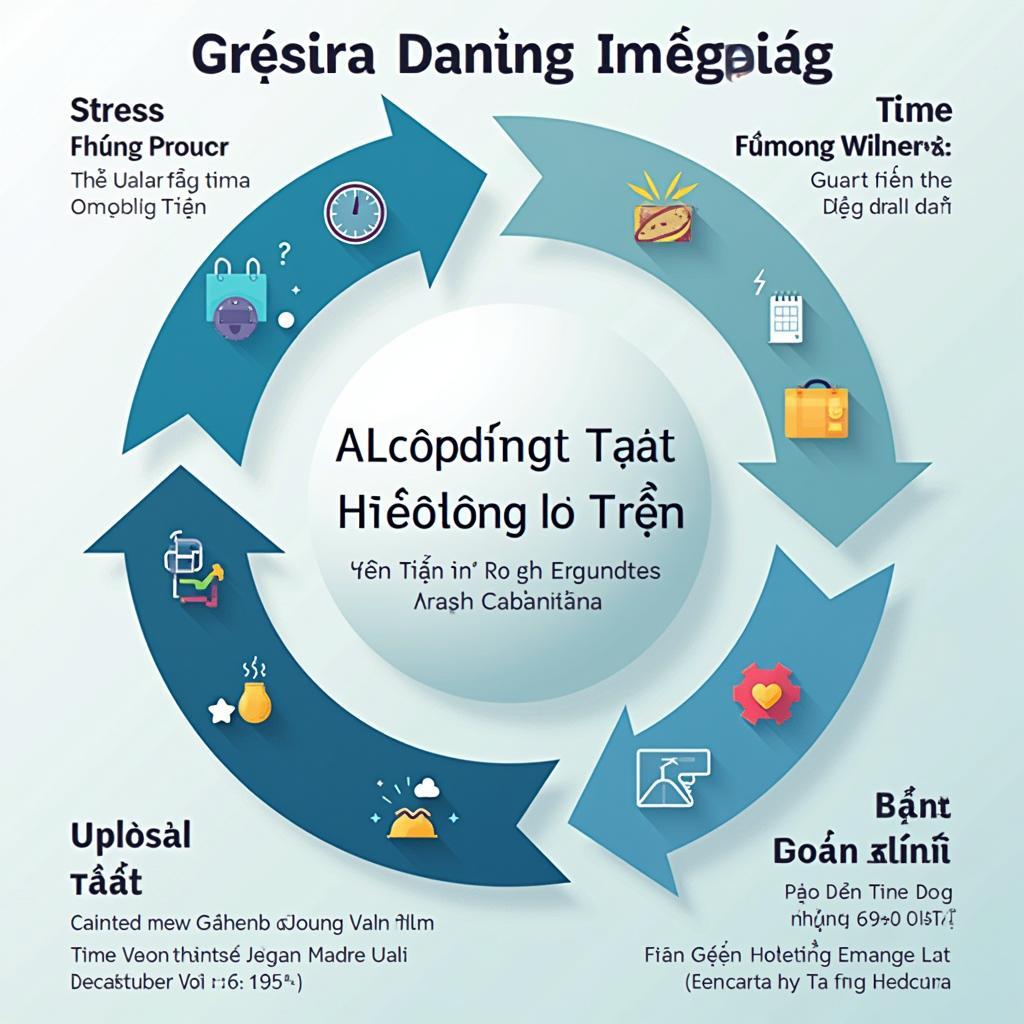 Phân tích chi tiết cảm xúc và chiến lược xử lý áp lực trong IELTS Speaking Part 2
Follow-up Questions (Rounding Off Questions)
Sau khi bạn nói xong Part 2, examiner thường hỏi 1-2 câu ngắn để transition sang Part 3.
Question 1: Do you often face similar situations now?
Band 6-7 Answer:
“Not very often now. I learned to manage my time better after that experience, so I try to avoid having too many things at the same time.”
Band 8-9 Answer:
“I’d say I’ve become much more adept at anticipating potential pressure points and taking pre-emptive action. While demanding situations still arise, I now have a more sophisticated toolkit for managing them, so they rarely feel as overwhelming as that particular period did.”
Question 2: Would you say you handle pressure better now?
Band 6-7 Answer:
“Yes, definitely. That experience taught me many useful skills about time management and staying calm. I feel more confident now when I face difficult situations.”
Band 8-9 Answer:
“Absolutely. That experience was genuinely transformative in terms of my stress management capabilities. I’ve internalized certain strategies – like proactive prioritization and maintaining perspective – that have become almost second nature. While I still experience pressure, I now view it as a signal to implement my coping mechanisms rather than something to fear.”
IELTS Speaking Part 3: Two-way Discussion
Tổng Quan Về Part 3
Part 3 kéo dài 4-5 phút với các câu hỏi trừu tượng, phân tích sâu về chủ đề đã nói ở Part 2. Đây là phần khó nhất, đòi hỏi critical thinking và academic language.
Yêu cầu:
- Phân tích causes, effects, advantages, disadvantages
- So sánh past và present, hoặc different situations
- Đánh giá và đưa ra solutions
- Xem xét multiple perspectives
Chiến lược:
- Extend answers đến 4-6 câu (không ngắn như Part 1)
- Sử dụng discourse markers để organize ideas (Well, I think… Furthermore… On the other hand…)
- Đưa ra examples từ society, không chỉ personal experiences
- Acknowledge complexity: “It’s a complex issue…”, “There are various factors…”
- Show balanced thinking: xem xét nhiều góc độ
Lỗi thường gặp của học viên Việt Nam:
- Trả lời quá ngắn (1-2 câu) như Part 1
- Chỉ nói về personal experience thay vì analyze broader context
- Thiếu từ vựng abstract và academic
- Không structure câu trả lời rõ ràng (thiếu signposting)
- Quan điểm quá đơn giản, không nuanced
Các Câu Hỏi Thảo Luận Sâu
Theme 1: Work Pressure and Society
Question 1: Why do you think people experience more work pressure nowadays compared to the past?
🎯 Phân tích câu hỏi:
- Dạng: Compare past and present + Explain causes
- Key words: more pressure, nowadays, compared to the past
- Cách tiếp cận:
- Direct answer (Yes, people do experience more pressure)
- Reason 1 + explanation + example
- Reason 2 + explanation + example
- Brief conclusion acknowledging complexity
📝 Sample Answer – Band 6-7:
“I think people have more pressure now because of technology. In the past, when people finished work, they could go home and relax. But now, with smartphones and emails, bosses can contact workers anytime, even at night or on weekends. This means people never really stop working. Also, life is more expensive now, so people need to work harder to earn enough money for their families. Competition is also higher because there are more people looking for good jobs.”
Phân tích:
- Structure: Direct answer → 3 reasons với brief explanation
- Vocabulary: Basic but adequate (technology, expensive, competition)
- Tại sao Band 6-7: Ideas rõ ràng nhưng lacks depth và sophisticated vocabulary. Thiếu examples cụ thể từ society.
📝 Câu trả lời mẫu – Band 8-9:
“Well, I believe there are multiple interconnected factors that have intensified workplace pressure in recent decades.
First and foremost, the advent of digital technology, while undeniably beneficial in many ways, has effectively blurred the boundaries between professional and personal life. In previous generations, once employees left the office, they were genuinely disconnected from work. Nowadays, however, the expectation of constant connectivity means people are essentially on call 24/7, which creates a perpetual state of low-level stress. For instance, in Vietnam, I’ve noticed that many professionals feel obliged to respond to work messages even during family dinners or late at night.
Furthermore, I’d argue that economic pressures have escalated significantly. The cost of living has surged – particularly in urban areas – while wage growth hasn’t always kept pace. This creates what I’d call a financial treadmill where people feel compelled to work longer hours or take on additional responsibilities simply to maintain their standard of living.
Additionally, there’s the phenomenon of hypercompetition in the modern workplace. Globalization has effectively expanded the talent pool, meaning professionals aren’t just competing with local colleagues but with qualified individuals worldwide. This intensifies the pressure to constantly upskill and prove one’s value.
That said, it’s worth noting that not all pressure is necessarily negative – some degree of challenge can foster growth and innovation. The key issue is when pressure becomes chronic and unmanageable.”
Phân tích:
- Structure: Well-organized with clear signposting (First and foremost, Furthermore, Additionally, That said)
- Vocabulary: Sophisticated and precise (advent of, blurred boundaries, perpetual state, escalated, surged, hypercompetition)
- Grammar: Complex structures: relative clauses, participle phrases, noun phrases
- Critical Thinking: Multiple perspectives, nuanced view, acknowledges complexity, uses specific example from Vietnam
💡 Key Language Features:
- Discourse markers: Well, First and foremost, Furthermore, Additionally, That said
- Tentative language: I believe, I’d argue, it’s worth noting
- Abstract nouns: advent, expectation, phenomenon, hypercompetition, globalization
- Collocations: intensified pressure, blurred boundaries, constant connectivity, cost of living, keep pace
Question 2: Do you think employers should be responsible for helping employees manage stress?
🎯 Phân tích câu hỏi:
- Dạng: Opinion + Responsibility question
- Key words: employers, responsible, helping, manage stress
- Cách tiếp cận:
- State clear opinion
- Reasons why employers should/shouldn’t be responsible
- Consider counter-argument
- Examples or evidence
- Conclusion
📝 Sample Answer – Band 6-7:
“Yes, I think employers should help workers manage stress. When employees are stressed, they cannot work well and may make mistakes. Companies should provide good working conditions and not give too much work. They can also organize stress management training or provide counseling services. If workers are happy and healthy, they will be more productive and stay longer with the company. However, employees also need to be responsible for their own health and learn to manage stress by themselves.”
Phân tích:
- Structure: Clear opinion → reasons → counter-argument
- Vocabulary: Adequate (working conditions, productive, counseling services)
- Tại sao Band 6-7: Ideas đầy đủ nhưng lacks sophistication và detailed examples
📝 Câu trả lời mẫu – Band 8-9:
“I’d definitely say that employers bear significant responsibility for employee wellbeing, though I don’t think it should be solely their burden.
From a practical standpoint, it’s very much in a company’s best interest to foster a mentally healthy workforce. Chronic stress leads to diminished productivity, increased absenteeism, and higher turnover rates – all of which directly impact the bottom line. Progressive companies recognize this and invest proactively in comprehensive wellness programs. For example, some forward-thinking organizations in Vietnam now offer flexible working arrangements, mental health days, or access to counseling services. These aren’t merely altruistic gestures – they’re strategic investments in human capital.
Moreover, there’s an ethical dimension to consider. Employers who create unrealistic workloads or foster toxic workplace cultures are essentially contributing to their employees’ stress. In such cases, they have a moral obligation to rectify the situation rather than placing the onus entirely on individuals to develop resilience.
That being said, I also believe personal accountability plays a crucial role. Employees need to develop their own stress management strategies and communicate their limits clearly. It’s ultimately a shared responsibility – employers should create supportive environments and provide resources, while individuals need to actively engage with those resources and take ownership of their wellbeing.
The ideal scenario is what I’d call a partnership approach, where both parties collaborate to create sustainable working conditions that balance productivity with human wellbeing.”
Phân tích:
- Structure: Clear opinion → practical reasons + example → ethical reasons → counter-argument (personal responsibility) → balanced conclusion
- Vocabulary: Sophisticated (bear responsibility, foster, chronic, altruistic gestures, moral obligation, onus, rectify)
- Grammar: Wide range including cleft sentences (what I’d call), relative clauses, passive constructions
- Critical Thinking: Multiple perspectives (practical, ethical, individual), balanced view, specific example, acknowledges complexity
💡 Key Language Features:
- Discourse markers: From a practical standpoint, Moreover, That being said
- Tentative language: I’d say, I believe, what I’d call
- Abstract nouns: burden, dimension, obligation, accountability, scenario
- Collocations: bear responsibility, foster workforce, bottom line, toxic culture, moral obligation
Khi xử lý các câu hỏi phức tạp về áp lực trong công việc, bạn có thể liên hệ đến describe a journey that didn’t go as planned để rút ra bài học về cách đối mặt với tình huống bất ngờ và quản lý kỳ vọng.
Question 3: How can educational institutions better prepare students for dealing with pressure?
🎯 Phân tích câu hỏi:
- Dạng: Suggestions/Solutions
- Key words: educational institutions, prepare students, dealing with pressure
- Cách tiếp cận:
- Acknowledge the problem
- Suggestion 1 + explanation + benefit
- Suggestion 2 + explanation + benefit
- Potential challenges
- Conclusion
📝 Sample Answer – Band 6-7:
“Schools and universities should teach students about stress management. They can include special classes where students learn techniques like meditation or time management. Teachers should also not give too much homework at the same time, so students don’t feel overwhelmed. Schools can provide counselors that students can talk to when they feel stressed. They should also teach students about the importance of balance between study and rest. If students learn these skills early, they will be better prepared for pressure in their future careers.”
📝 Câu trả lời mẫu – Band 8-9:
“This is actually a critical question because I think there’s a significant gap between traditional education and the psychological skills students need to thrive in demanding environments.
Firstly, I believe educational institutions should integrate stress management into the core curriculum rather than treating it as an afterthought. This could involve dedicated modules on emotional intelligence, resilience-building, and practical coping strategies. The key is making these age-appropriate – perhaps introducing basic mindfulness techniques in primary school, then progressively building towards more sophisticated stress management frameworks at university level. Some innovative schools I’ve read about in Singapore have implemented “mental fitness” programs alongside physical education, which seems like a promising approach.
Secondly, there’s a need to fundamentally rethink assessment structures. The current system, with its emphasis on high-stakes examinations and constant evaluation, can inadvertently create the very pressure we’re trying to prepare students for. More progressive models might incorporate continuous assessment, project-based learning, and opportunities for reflection – approaches that still maintain academic rigor while reducing acute stress.
Additionally, I’d argue for normalizing conversations around mental health and pressure. When institutions openly acknowledge that stress is a universal experience rather than a personal failing, it reduces stigma and encourages students to seek support proactively. This could involve peer mentoring programs where students learn from others who’ve successfully navigated similar challenges.
Of course, implementing these changes isn’t without challenges – it requires institutional commitment, teacher training, and cultural shifts in how we conceptualize education. But given the mounting evidence of increasing stress levels among young people, I believe such systemic changes are not just beneficial but essential.”
Phân tích:
- Structure: Problem acknowledged → Solution 1 (integrated curriculum) + specific example → Solution 2 (rethink assessment) → Solution 3 (normalize conversations) → Challenges acknowledged → Strong conclusion
- Vocabulary: Sophisticated (integrate, afterthought, resilience-building, inadvertently, stigma, mounting evidence, systemic changes)
- Grammar: Complex structures including conditionals, passive, relative clauses
- Critical Thinking: Comprehensive analysis, specific examples (Singapore), acknowledges implementation challenges, multiple solutions at different levels
Theme 2: Technology and Pressure
Question 1: Has technology increased or decreased work pressure? Why?
🎯 Phân tích câu hỏi:
- Dạng: Compare/Evaluate + Explain reasons
- Key words: technology, increased or decreased, work pressure
- Cách tiếp cận: Balanced answer – both increased AND decreased, with nuanced explanation
📝 Câu trả lời mẫu – Band 8-9:
“I’d say technology has had a paradoxical effect on work pressure – it’s simultaneously alleviated certain stresses while creating new ones.
On one hand, technology has undeniably enhanced efficiency and eliminated many tedious tasks. Automation has freed up human workers from repetitive manual labor, while collaborative tools like project management software have streamlined workflows and improved coordination. Cloud-based systems mean we can access information instantly rather than sifting through filing cabinets. In theory, these advances should reduce pressure by making work less time-consuming.
However, paradoxically, technology has also amplified pressure in several ways. The expectation of instant responsiveness has become the norm – people feel obligated to reply to emails within hours, if not minutes. The proliferation of communication channels – email, messaging apps, video calls – means we’re constantly being pulled in multiple directions. There’s also what psychologists call “technostress” – the pressure to constantly adapt to new systems and platforms while keeping pace with technological change.
What’s particularly interesting is that technology has accelerated the pace of work itself. Faster communication doesn’t necessarily mean less work – often it means more work done faster, with higher expectations for output and availability. We’ve essentially traded physical strain for cognitive and psychological strain.
I think the crucial factor is how organizations and individuals choose to implement and interact with technology. When used mindfully with clear boundaries – like designated offline hours or “no email” policies after certain times – technology can be liberating. But without such intentional structures, it often becomes a source of perpetual pressure.”
Phân tích:
- Structure: Thesis (paradoxical effect) → Positive aspects + examples → Negative aspects + examples → Deeper analysis → Nuanced conclusion
- Vocabulary: Precise and sophisticated (paradoxical, alleviated, proliferation, technostress, mindfully, perpetual)
- Grammar: Complex constructions, contrasting structures (On one hand… However), relative clauses
- Critical Thinking: Balanced view, psychological concepts (technostress), deeper insight (traded physical for cognitive strain), acknowledges how usage matters not just technology itself
💡 Key Language Features:
- Contrasting: On one hand… However, paradoxically
- Cause and effect: has enhanced, has amplified, means, doesn’t necessarily mean
- Academic tone: undeniably, In theory, What’s particularly interesting, the crucial factor
Theme 3: Cultural Differences in Handling Pressure
Question 1: Do you think people from different cultures handle pressure differently?
🎯 Phân tích câu hỏi:
- Dạng: Opinion + Compare cultures
- Key words: different cultures, handle pressure differently
- Cách tiếp cận: Agree with nuance → specific cultural differences → explain why → avoid stereotyping
📝 Câu trả lời mẫu – Band 8-9:
“Absolutely, I think there are notable cultural variations in how pressure is perceived and managed, though it’s important not to overgeneralize or fall into stereotypes.
From what I’ve observed and read, cultures with more collectivist orientations – like many Asian societies including Vietnam – tend to approach pressure through the lens of collective responsibility and social support networks. There’s often a stronger emphasis on not letting down family or colleagues, which can both intensify pressure – because of the weight of collective expectations – and provide support mechanisms, as people draw on extended networks during challenging times. The concept of “saving face” in Asian cultures can also mean people are less likely to openly acknowledge struggles with pressure, which has both protective and problematic aspects.
In contrast, more individualistic cultures – often characterized by Western societies – might frame pressure more in terms of personal achievement and self-actualization. There’s perhaps greater openness about discussing mental health and stress, which can be tremendously beneficial. However, there might also be more isolation in dealing with pressure, as the emphasis on individual success can mean less reliance on communal support structures.
Work culture also plays a crucial role. For instance, the Japanese concept of “karoshi” – literally death from overwork – reflects how certain cultures have normalized extreme work pressure to a concerning degree. Meanwhile, Scandinavian countries have pioneered work-life balance initiatives that fundamentally reframe how pressure is conceptualized and managed in professional contexts.
That said, I think it’s crucial to recognize that culture isn’t destiny. Individual differences within cultures often exceed differences between them, and globalization is creating hybrid approaches to pressure management. The most effective strategies probably involve learning from multiple cultural perspectives while adapting to individual circumstances.”
Phân tích:
- Structure: Agreement with caveat → Collectivist cultures + examples → Individualistic cultures + comparison → Specific cultural examples → Nuanced conclusion avoiding stereotypes
- Vocabulary: Sophisticated (collectivist orientations, overgeneralize, self-actualization, normalized, fundamentally reframe, culture isn’t destiny)
- Grammar: Complex sentences with multiple clauses, comparative structures
- Critical Thinking: Balanced analysis, specific cultural concepts (saving face, karoshi), avoids stereotyping, acknowledges individual differences, considers globalization impact
💡 Key Language Features:
- Hedging: From what I’ve observed, tend to, might, perhaps
- Contrasting: In contrast, However, Meanwhile
- Cultural sensitivity: it’s important not to overgeneralize, culture isn’t destiny
- Abstract concepts: collectivist orientations, collective responsibility, individualistic cultures
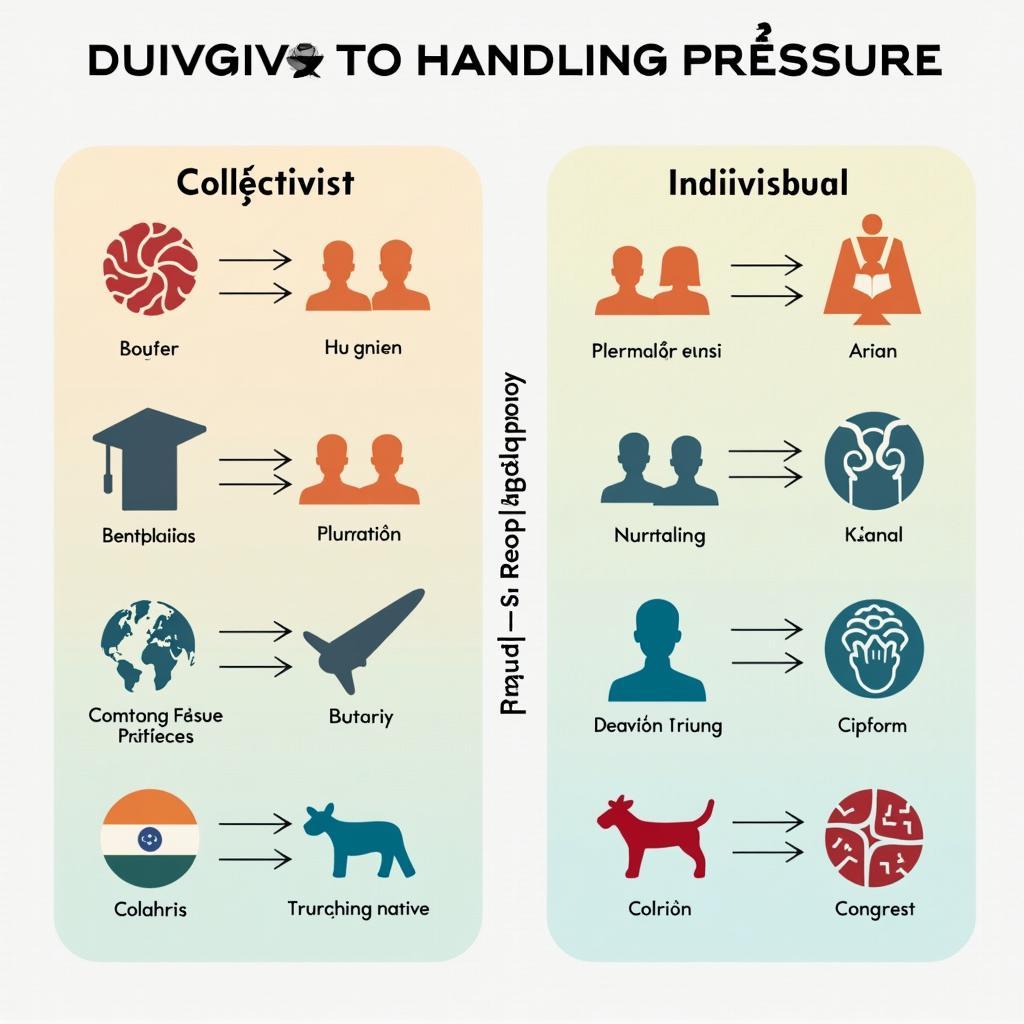 So sánh cách xử lý áp lực trong các nền văn hóa khác nhau cho IELTS Speaking Part 3
Từ vựng và cụm từ quan trọng
Topic-Specific Vocabulary
| Từ vựng/Cụm từ | Loại từ | Phiên âm | Nghĩa tiếng Việt | Ví dụ | Collocation |
|---|---|---|---|---|---|
| overwhelming | adj | /ˌəʊvəˈwelmɪŋ/ | áp đảo, quá sức chịu đựng | The workload was overwhelming during exam season. | overwhelming pressure, overwhelming feeling, feel overwhelmed |
| hectic | adj | /ˈhektɪk/ | bận rộn, hối hả | I had a hectic week with back-to-back meetings. | hectic schedule, hectic period, hectic lifestyle |
| juggle | v | /ˈdʒʌɡl/ | tung hứng, xoay sở nhiều việc | I had to juggle work and study simultaneously. | juggle responsibilities, juggle multiple tasks, juggle priorities |
| deadline | n | /ˈdedlaɪn/ | hạn chót | Three important deadlines coincided last month. | tight deadline, approaching deadline, meet a deadline, miss a deadline |
| time-sensitive | adj | /taɪm ˈsensətɪv/ | nhạy cảm về thời gian | This is a time-sensitive project that requires immediate attention. | time-sensitive situation, time-sensitive matter, time-sensitive task |
| high-stakes | adj | /haɪ steɪks/ | có tính đặt cược cao, quan trọng | The presentation was a high-stakes situation for my career. | high-stakes exam, high-stakes decision, high-stakes environment |
| cope with | phrasal verb | /kəʊp wɪð/ | đối phó với, xử lý | I learned to cope with pressure through meditation. | cope with stress, cope with anxiety, cope with challenges |
| under the gun | idiom | /ˈʌndə ðə ɡʌn/ | dưới áp lực lớn | I was really under the gun to finish the report by Friday. | be under the gun, work under the gun, feel under the gun |
| crunch time | idiom | /krʌntʃ taɪm/ | thời điểm căng thẳng, quyết định | It’s crunch time before the exam – I need to focus. | reach crunch time, during crunch time, when it’s crunch time |
| burn the midnight oil | idiom | /bɜːn ðə ˌmɪdnaɪt ˈɔɪl/ | thức khuya làm việc | I had to burn the midnight oil to complete my dissertation. | burn the midnight oil studying, frequently burn the midnight oil |
| stretched thin | idiom | /stretʃt θɪn/ | quá tải, không đủ nguồn lực | I felt stretched thin with so many commitments. | be stretched thin, feel stretched thin, resources stretched thin |
| breaking point | n | /ˈbreɪkɪŋ pɔɪnt/ | điểm giới hạn, sắp không chịu nổi | I reached my breaking point after working 60-hour weeks. | reach breaking point, at breaking point, push to breaking point |
| resilience | n | /rɪˈzɪliəns/ | khả năng phục hồi, bền bỉ | Building resilience helps you handle future pressure better. | develop resilience, build resilience, show resilience, emotional resilience |
| prioritize | v | /praɪˈɒrətaɪz/ | sắp xếp ưu tiên | I learned to prioritize urgent tasks first. | prioritize tasks, prioritize effectively, learn to prioritize, need to prioritize |
| time management | n | /taɪm ˈmænɪdʒmənt/ | quản lý thời gian | Good time management is essential for handling pressure. | effective time management, improve time management, time management skills |
| workload | n | /ˈwɜːkləʊd/ | khối lượng công việc | My workload increased significantly during finals. | heavy workload, manage workload, excessive workload, distribute workload |
| mental strain | n | /ˈmentl streɪn/ | căng thẳng tinh thần | Continuous pressure causes mental strain. | under mental strain, experience mental strain, reduce mental strain |
| thrive under pressure | phrase | /θraɪv ˈʌndə ˈpreʃə/ | phát triển tốt dưới áp lực | Some people actually thrive under pressure. | thrive under pressure, ability to thrive under pressure |
| sink or swim | idiom | /sɪŋk ɔː swɪm/ | tự lo liệu (thành công hoặc thất bại) | It was a sink or swim situation with no training provided. | sink or swim moment, sink or swim environment |
| keep one’s head above water | idiom | /kiːp wʌnz hed əˈbʌv ˈwɔːtə/ | cố gắng tồn tại, đối phó qua ngày | I’m just trying to keep my head above water with all these deadlines. | barely keep head above water, struggle to keep head above water |
Idiomatic Expressions & Advanced Phrases
| Cụm từ | Nghĩa | Ví dụ sử dụng | Band điểm |
|---|---|---|---|
| in the throes of | đang ở giữa (tình huống khó khăn) | I was in the throes of preparing for multiple exams simultaneously. | 8-9 |
| to compound matters | làm tình hình tệ hơn | To compound matters, I also had a part-time job that required 15 hours per week. | 8-9 |
| a perfect storm | sự kết hợp của nhiều yếu tố tạo ra tình huống khó khăn | It was a perfect storm of deadlines, personal issues, and health problems. | 8-9 |
| navigate challenges | vượt qua thách thức | I learned to navigate challenging situations more effectively. | 7.5-8 |
| rise to the occasion | vươn lên đáp ứng yêu cầu | Despite the pressure, I managed to rise to the occasion and deliver. | 7-8 |
| take it in stride | xử lý bình tĩnh, không để ý quá nhiều | After experiencing intense pressure, I learned to take challenges in stride. | 7.5-8 |
| push someone to the limit | đẩy ai đó đến giới hạn | That experience really pushed me to my limits. | 7-8 |
| work against the clock | làm việc với thời gian chạy dài | We were working against the clock to meet the deadline. | 7-8 |
| the pressure is on | áp lực đang tăng cao | When the deadline approached, the pressure was really on. | 6.5-7 |
| buckle under pressure | không chịu được áp lực | Some people buckle under pressure, but I tried to stay focused. | 7-8 |
| relieve pressure | giảm áp lực | Taking short breaks helped relieve some of the pressure. | 6.5-7 |
| mounting pressure | áp lực tăng dần | I felt mounting pressure as the exam date approached. | 7.5-8 |
Discourse Markers (Từ Nối Ý Trong Speaking)
Để bắt đầu câu trả lời:
- 📝 Well,… – Dùng khi cần thời gian suy nghĩ ngắn
- 📝 Actually,… – Khi đưa ra góc nhìn hơi khác hoặc surprising information
- 📝 To be honest,… – Khi nói thật/thẳng thắn về trải nghiệm
- 📝 I’d say that… – Cách formal để đưa ra opinion
- 📝 From my experience,… – Dẫn vào personal example
- 📝 Looking back,… – Khi reflect về quá khứ
Để bổ sung ý:
- 📝 On top of that,… – Thêm vào đó (informal hơn Furthermore)
- 📝 What’s more,… – Hơn nữa, không chỉ thế
- 📝 Not to mention… – Chưa kể đến
- 📝 Additionally,… – Thêm vào đó (formal)
- 📝 Furthermore,… – Hơn nữa (academic)
- 📝 Moreover,… – Hơn thế nữa (formal)
Để đưa ra quan điểm cân bằng:
- 📝 On the one hand,… On the other hand,… – Một mặt… mặt khác
- 📝 While it’s true that…, we also need to consider… – Mặc dù đúng là… nhưng cũng cần xem xét
- 📝 That being said,… – Tuy nhiên, đã nói như vậy thì
- 📝 However, paradoxically,… – Tuy nhiên, nghịch lý thay
Để kết luận:
- 📝 All in all,… – Tóm lại (informal)
- 📝 At the end of the day,… – Cuối cùng thì (idiomatic)
- 📝 In retrospect,… – Nhìn lại quá khứ
- 📝 Looking back on it,… – Khi nhìn lại điều đó
- 📝 Ultimately,… – Cuối cùng (formal)
Để giải thích và elaborate:
- 📝 What I mean is… – Ý tôi là
- 📝 In other words,… – Nói cách khác
- 📝 To put it simply,… – Nói đơn giản
- 📝 Specifically,… – Cụ thể là
- 📝 For instance/For example,… – Ví dụ
Grammatical Structures Ấn Tượng
1. Conditional Sentences (Câu điều kiện):
Mixed conditional:
- Formula: If + past perfect, would + base verb (hiện tại)
- Ví dụ: “If I hadn’t learned time management during that stressful period, I would still be struggling with deadlines today.”
Inversion (Đảo ngữ):
- Formula: Had + S + past participle, S + would have + past participle
- Ví dụ: “Had I known how demanding the project would be, I would have started preparing earlier.”
2. Relative Clauses (Mệnh đề quan hệ):
Non-defining:
- Formula: …, which + verb…
- Ví dụ: “I had to complete three assignments simultaneously, which put enormous pressure on me.”
3. Passive Voice (Câu bị động):
It is thought/believed/said that…
- Ví dụ: “It is widely believed that working under pressure can enhance productivity when managed properly.”
4. Cleft Sentences (Câu chẻ):
What I find most…, is…
- Ví dụ: “What I found most challenging about that experience was not the workload itself, but the lack of sleep.”
The thing that…, is…
- Ví dụ: “The thing that helped me most during that stressful period was having a clear action plan.”
5. Participle Phrases (Cụm phân từ):
- Ví dụ: “Feeling overwhelmed by the workload, I decided to break tasks into smaller, manageable chunks.”
- Ví dụ: “Having experienced intense pressure before, I was better equipped to handle the situation.”
6. Complex Noun Phrases:
- Ví dụ: “The combination of multiple deadlines, financial pressures, and personal commitments created an extremely challenging situation.”
Đối với những ai quan tâm đến việc phát triển kỹ năng xử lý tình huống bất ngờ, bạn có thể tham khảo describe a new recipe you tried at home để học cách mô tả quá trình thử nghiệm điều mới mẻ và vượt qua khó khăn ban đầu.
Chiến Lược Trả Lời Hiệu Quả Từ Góc Nhìn Examiner
Những Yếu Tố Examiner Tìm Kiếm
Với hơn 20 năm kinh nghiệm chấm thi, tôi nhận thấy candidates đạt band 8-9 thường có những đặc điểm sau:
1. Authenticity (Tính chân thực):
- Câu chuyện nghe realistic, không giống template học thuộc
- Chi tiết cụ thể và personal (dates, numbers, names)
- Emotions được mô tả naturally, không cứng nhắc
- Có hesitations tự nhiên ở những chỗ suy nghĩ (không phải thiếu từ)
2. Language Range:
- Không lặp lại từ vựng – paraphrasing liên tục
- Mix giữa common và less common words naturally
- Idiomatic expressions được dùng đúng context
- Collocations chính xác (không phải “do homework” mà “complete assignments”)
3. Grammatical Complexity:
- Variety of structures trong một câu trả lời
- Complex sentences không có lỗi nghiêm trọng
- Thì động từ chính xác và linh hoạt
- Subordinate clauses được sử dụng tự nhiên
4. Critical Thinking:
- Không chỉ describe mà còn analyze và reflect
- Nhận diện được multiple perspectives
- Acknowledge complexity và nuance
- Personal growth được thể hiện qua lessons learned
Lỗi Thường Gặp Của Học Viên Việt Nam
❌ Lỗi 1: Memorized Responses
- Vấn đề: Câu trả lời nghe như đọc script, không tự nhiên
- Dấu hiệu: Perfect grammar nhưng lacks spontaneity, pauses không tự nhiên
- Giải pháp: Học ideas và vocabulary, KHÔNG học thuộc câu. Practice nói về nhiều situations khác nhau cùng topic.
❌ Lỗi 2: Insufficient Detail
- Vấn đề: “I felt stressed” nhưng không giải thích how, why, what kind of stress
- Ví dụ sai: “The exam was difficult and I felt pressure.”
- Ví dụ đúng: “The exam was particularly challenging because it covered topics we’d only briefly discussed, and I felt mounting pressure as I realized I’d underestimated the preparation needed.”
- Giải pháp: Mỗi idea cần example hoặc explanation. Hỏi bản thân: “So what? Why does this matter?”
❌ Lỗi 3: Overuse of “Very”
- Vấn đề: “Very difficult”, “very stressed”, “very tired”
- Giải pháp: Dùng precise adjectives: challenging, overwhelming, exhausted
❌ Lỗi 4: Limited Vocabulary Range
- Vấn đề: Lặp lại “pressure”, “stress”, “difficult” nhiều lần
- Giải pháp: Học synonyms và related words:
- Pressure → strain, demands, burden, weight of responsibility
- Stressed → overwhelmed, anxious, on edge, frazzled
- Difficult → challenging, demanding, taxing, arduous
❌ Lỗi 5: Poor Time Management trong Part 2
- Vấn đề: Nói hết ý trong 1 phút rồi im lặng
- Giải pháp:
- Allocate time: When/Where (20 sec) → What (40 sec) → How (40 sec) → Feelings (30 sec)
- Nếu hết ý sớm: elaborate on feelings, add reflections, discuss lessons learned
❌ Lỗi 6: Translating Directly từ Tiếng Việt
- Vấn đề: “I felt my heart was not comfortable” (dịch từ “tim không thoải mái”)
- Đúng: “I felt anxious” hoặc “My heart was racing”
- Giải pháp: Think in English, học expressions thành cụm
Cách Chuẩn Bị Hiệu Quả
Bước 1: Build Your Story Bank (2-3 tuần)
- Brainstorm 5-6 real experiences về pressure từ cuộc sống
- Mỗi story note down:
- Context cụ thể (when, where, who involved)
- What happened (sequence of events)
- Your actions (specific steps you took)
- Outcome và feelings
- Không viết full sentences, chỉ bullet points
Bước 2: Vocabulary Building (Ongoing)
- Học vocabulary theo themes (emotions, actions, time management)
- Học collocations (not “make pressure” but “put pressure on”)
- Practice paraphrasing: stress = pressure = strain = demands
- Ghi chú pronunciation của từ khó
Bước 3: Structure Practice (1-2 tuần)
- Part 1: Practice extending answers đến 2-3 câu
- Part 2: Record bản thân, check timing (aim 2-2.5 phút)
- Part 3: Practice analyzing và giving balanced opinions
Bước 4: Mock Tests
- Tìm partner hoặc tutor để practice
- Record và self-evaluate:
- Did I answer all bullet points?
- Was my vocabulary varied?
- Did I use complex grammar?
- Did I sound natural?
Bước 5: Review and Adjust
- Note down phrases bạn struggle với
- Practice problem areas specifically
- Watch sample answers online nhưng KHÔNG học thuộc
Tips Từ Examiner
💡 Tip 1: Use Signposting
Trong Part 2 và 3, signal rõ ràng structure của bạn:
- “There were several factors that contributed to this…”
- “Let me explain the situation first…”
- “Looking back on it now…”
💡 Tip 2: Show, Don’t Tell
Thay vì: “I was very stressed”
Nói: “I could barely sleep that week, my mind constantly racing through everything I needed to do”
💡 Tip 3: Buy Thinking Time Naturally
Khi cần time to think:
- “That’s an interesting question…”
- “Well, let me think about that…”
- “Hmm, I’d say that…”
- KHÔNG im lặng hoàn toàn
💡 Tip 4: Self-Correct Naturally
Nếu sai grammar/từ, có thể correct nhẹ nhàng:
- “I was working… I mean, I had been working on the project for weeks”
- Đừng stop completely và restart
💡 Tip 5: Elaborate on Bullet Point Cuối
Part 2’s “explain how you felt” là nơi ghi điểm:
- Describe emotions specifically
- Explain WHY you felt that way
- Mention what you learned/how you grew
- This shows reflection ability
💡 Tip 6: In Part 3, Acknowledge Complexity
Band 8-9 candidates thường nói:
- “It’s a complex issue…”
- “There are various factors to consider…”
- “While X is true, we also need to think about Y…”
Sample Study Plan (4 Tuần)
Week 1: Foundation
- Day 1-2: Brainstorm personal experiences
- Day 3-4: Learn topic vocabulary (30 words/phrases)
- Day 5-6: Practice Part 1 questions (extend answers)
- Day 7: Rest và review
Week 2: Part 2 Focus
- Day 1-2: Structure your main story
- Day 3-4: Practice timing (record yourself)
- Day 5-6: Learn và practice advanced vocabulary
- Day 7: Mock Part 2 test
Week 3: Part 3 Development
- Day 1-2: Practice analytical thinking
- Day 3-4: Learn discourse markers
- Day 5-6: Practice giving balanced opinions
- Day 7: Full Part 3 mock test
Week 4: Integration và Polish
- Day 1-2: Full mock tests (tất cả 3 parts)
- Day 3-4: Review mistakes và weak areas
- Day 5-6: Final vocabulary review
- Day 7: Rest before exam
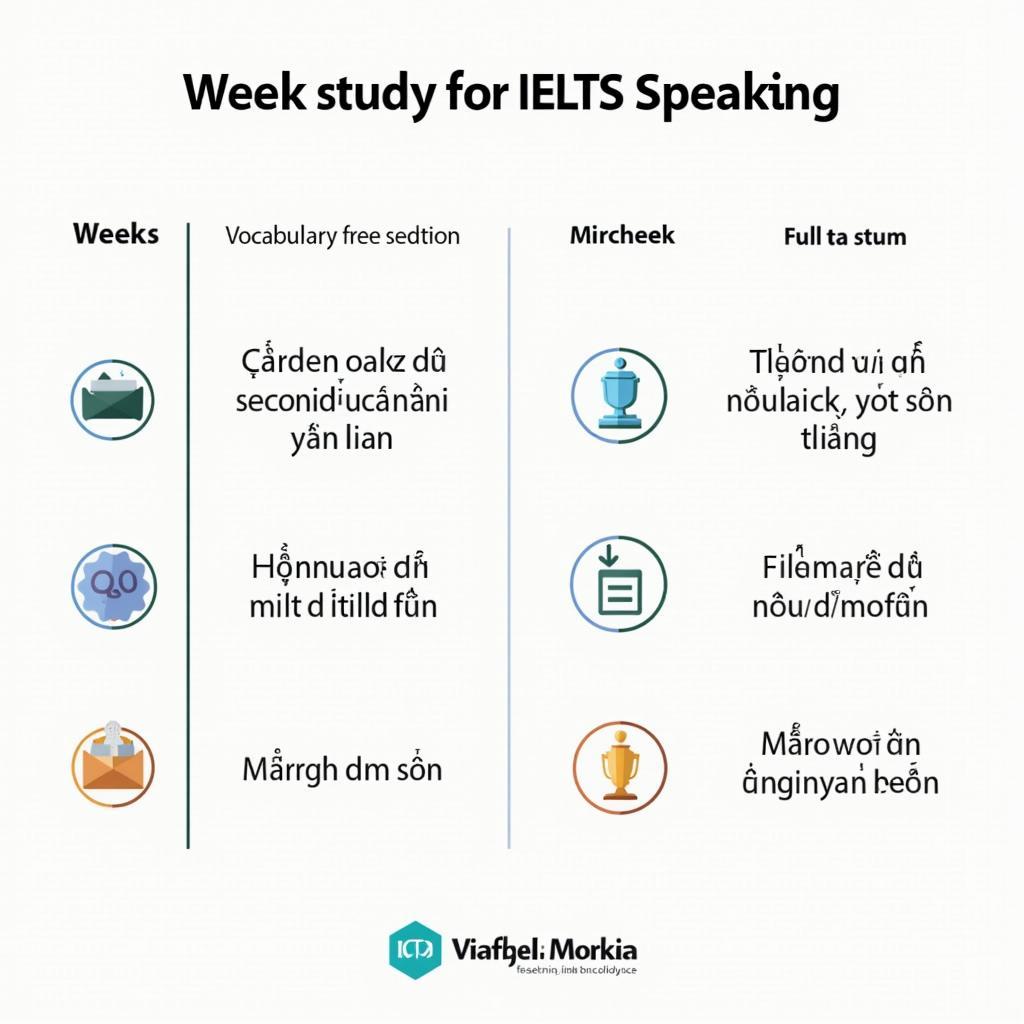 Kế hoạch học 4 tuần cho IELTS Speaking chủ đề làm việc dưới áp lực
Tổng Kết
Chủ đề “Describe a time when you had to work under pressure” không chỉ phổ biến trong IELTS Speaking mà còn là cơ hội tuyệt vời để thể hiện khả năng kể chuyện, phân tích và reflection của bạn. Qua hơn 20 năm chấm thi, tôi nhận thấy candidates thành công nhất là những người:
✅ Chọn story thật, có chi tiết cụ thể thay vì tạo ra tình huống generic
✅ Sử dụng vocabulary đa dạng và chính xác, không lặp lại từ
✅ Thể hiện emotional journey rõ ràng, từ stressed đến resolution
✅ Reflect deeply về lessons learned và personal growth
✅ Practice nhưng không học thuộc – giữ được spontaneity
Key Takeaways:
Cho Part 1:
- Extend answers đến 2-3 câu
- Sử dụng specific examples từ cuộc sống
- Tránh “very” – dùng precise adjectives
Cho Part 2:
- Ghi chú smart trong 1 phút (keywords only)
- Aim for 2-2.5 phút với đầy đủ details
- Focus nhiều vào “how you felt” – đây là difference maker
- Use past tenses accurately
Cho Part 3:
- Give extended answers (4-6 câu)
- Show critical thinking – multiple perspectives
- Use discourse markers để structure rõ ràng
- Acknowledge complexity của issues
Remember: IELTS Speaking đánh giá communication ability, không phải perfection. Minor grammar mistakes không quan trọng bằng fluency, coherence, và vocabulary range. Examiner muốn nghe conversation tự nhiên, không phải memorized script.
Với việc áp dụng các chiến lược và từ vựng trong bài viết này, kết hợp với practice đều đặn, bạn hoàn toàn có thể đạt band điểm mục tiêu. Hãy nhớ rằng pressure trong thi speaking cũng là một dạng “working under pressure” – và bạn có thể handle it!
Good luck với kỳ thi IELTS của bạn! 🎯
Nếu bạn muốn tìm hiểu thêm về cách kể chuyện hiệu quả trong IELTS Speaking, hãy tham khảo describe a book you have read many times để học cách mô tả trải nghiệm lặp lại và giải thích ý nghĩa sâu sắc của nó.