Chủ đề “Describe A Time When You Helped A Friend Solve A Problem” là một trong những đề bài điển hình trong IELTS Speaking Part 2, yêu cầu thí sinh kể về một trải nghiệm cá nhân cụ thể. Đây là dạng câu hỏi về “past experience” với tính ứng dụng cao, thường xuyên xuất hiện trong các kỳ thi IELTS thực tế.
Tần suất xuất hiện: Chủ đề về helping others và friendship xuất hiện với tần suất cao trong các đề thi IELTS từ năm 2020 đến nay, đặc biệt trong quý 1 và quý 3. Dự đoán khả năng xuất hiện trong tương lai: Cao, vì đây là chủ đề liên quan đến kỹ năng xã hội và giá trị nhân văn mà IELTS luôn quan tâm.
Những gì bạn sẽ học được từ bài viết này:
- Câu hỏi thường gặp về chủ đề helping friends trong cả 3 Part
- Bài mẫu chi tiết theo từng band điểm (6-7, 7.5-8, 8.5-9) với phân tích chuyên sâu
- Hơn 30 từ vựng và cụm từ ăn điểm cho chủ đề này
- Chiến lược trả lời hiệu quả từ góc nhìn Examiner
- Lời khuyên để tránh những lỗi thường gặp của học viên Việt Nam
- Cách phát triển ý tưởng và structure câu trả lời một cách tự nhiên
IELTS Speaking Part 1: Introduction and Interview
Tổng Quan Về Part 1
Part 1 kéo dài 4-5 phút với những câu hỏi ngắn về đời sống hàng ngày. Với chủ đề helping friends, examiner sẽ hỏi về thói quen và suy nghĩ của bạn một cách general trước khi đi sâu vào Part 2.
Đặc điểm quan trọng:
- Câu hỏi tập trung vào experiences, habits và opinions cá nhân
- Thời gian trả lời mỗi câu: 2-3 câu (khoảng 15-20 giây)
- Không cần elaboration quá dài như Part 3
Chiến lược hiệu quả:
- Trả lời trực tiếp câu hỏi ngay câu đầu tiên
- Bổ sung lý do hoặc ví dụ ngắn gọn
- Duy trì tone tự nhiên, conversation-like
Lỗi thường gặp của học viên Việt Nam:
- Trả lời quá ngắn, chỉ Yes/No mà không mở rộng
- Sử dụng từ vựng quá đơn giản (good, bad, nice)
- Thiếu specific examples khiến câu trả lời quá general
- Nói quá nhanh do nervous
- Dùng memorized answers nghe không tự nhiên
Các Câu Hỏi Thường Gặp
Question 1: Do you often help your friends?
Question 2: What kind of help do your friends usually ask you for?
Question 3: Do you prefer to help your friends or family members?
Question 4: Have you ever refused to help a friend?
Question 5: When was the last time you helped someone?
Question 6: Do you think it’s important to help friends when they have problems?
Question 7: What do you usually do when a friend asks you for advice?
Question 8: Are you good at giving advice to others?
Phân Tích và Gợi Ý Trả Lời Chi Tiết
Question: Do you often help your friends?
🎯 Cách tiếp cận:
- Trả lời Yes/No một cách clear
- Nêu tần suất hoặc tình huống cụ thể
- Thêm example ngắn gọn hoặc feeling về việc này
📝 Sample Answer – Band 6-7:
“Yes, I do. I usually help my friends when they need me. For example, sometimes they ask me for help with homework or when they have personal problems. I think helping friends is important because it makes our friendship stronger.”
Phân tích:
- Điểm mạnh: Trả lời rõ ràng với ví dụ cụ thể, có personal opinion
- Hạn chế: Từ vựng còn basic (important, stronger), cấu trúc câu đơn giản
- Tại sao Band 6-7: Câu trả lời adequate và relevant nhưng thiếu sophisticated vocabulary và complex structures. Ý tưởng được develop nhưng chưa impressive.
📝 Sample Answer – Band 8-9:
“Yes, definitely. I’m quite a dependable person, so my friends often turn to me when they’re going through a tough time. Just last week, I spent a couple of hours helping my roommate sort out some issues with his part-time job application. I find that being there for others not only strengthens our bond but also gives me a sense of fulfillment.”
Phân tích:
-
Điểm mạnh:
- Vocabulary range: dependable, turn to, going through, sort out, fulfillment
- Natural flow với discourse marker “definitely”
- Specific example với time reference “just last week”
- Personal reflection về benefit của việc giúp đỡ
- Collocation tự nhiên: “being there for others”, “strengthens our bond”
-
Tại sao Band 8-9:
- Fluency: Câu trả lời smooth, không hesitation, có connector tự nhiên
- Vocabulary: Less common phrases như “turn to me”, “going through a tough time”, “sense of fulfillment”
- Grammar: Variety của structures (present simple, present continuous context, gerund phrases)
- Task Response: Trả lời đầy đủ với example và personal insight
💡 Key Vocabulary & Expressions:
- dependable person: người đáng tin cậy, có thể dựa vào được
- turn to someone: tìm đến ai đó để được giúp đỡ
- going through a tough time: đang trải qua thời kỳ khó khăn
- sort out: giải quyết, sắp xếp (vấn đề)
- being there for someone: ở bên cạnh, sẵn sàng hỗ trợ ai đó
- strengthen the bond: củng cố mối quan hệ
- sense of fulfillment: cảm giác thỏa mãn, trọn vẹn
Question: What kind of help do your friends usually ask you for?
🎯 Cách tiếp cận:
- Classify các loại help (academic, emotional, practical)
- Đưa ra 2-3 examples cụ thể
- Có thể explain tại sao bạn được ask for những loại help này
📝 Sample Answer – Band 6-7:
“My friends usually ask me for help with studying because I’m good at some subjects like Math and English. Sometimes they also ask me for advice about their relationships. I try my best to help them solve their problems.”
Phân tích:
- Điểm mạnh: Có examples cụ thể (Math, English, relationships)
- Hạn chế: Vocabulary limited (good at, try my best), thiếu variety trong sentence structures
- Tại sao Band 6-7: Đủ information nhưng cách diễn đạt còn basic, chưa có sophisticated language
📝 Sample Answer – Band 8-9:
“Well, it really varies depending on their situation. Since I’m fairly tech-savvy, I often get requests to troubleshoot computer or smartphone issues. On the emotional side, quite a few friends confide in me when they’re dealing with stress at work or having relationship troubles. I suppose they value my ability to listen without judgment and offer practical perspectives rather than just empty reassurances.”
Phân tích:
-
Điểm mạnh:
- Range of vocabulary: tech-savvy, troubleshoot, confide in, dealing with stress
- Clear categorization: technical help và emotional support
- Natural discourse marker: “Well”, “On the emotional side”
- Self-awareness: “I suppose they value my ability…”
- Sophisticated expression: “empty reassurances”
-
Tại sao Band 8-9:
- Vocabulary: Precise và topic-specific (troubleshoot, confide in, practical perspectives)
- Coherence: Clear organization với categorization
- Grammar: Complex structures (relative clauses, gerund phrases)
- Ideas: Thoughtful reflection về why friends seek help from you
💡 Key Vocabulary & Expressions:
- varies depending on: thay đổi tùy thuộc vào
- tech-savvy: giỏi về công nghệ
- troubleshoot: khắc phục sự cố
- confide in someone: tâm sự, chia sẻ bí mật với ai đó
- dealing with stress: đối phó với stress
- relationship troubles: vấn đề trong các mối quan hệ
- listen without judgment: lắng nghe không phán xét
- practical perspectives: góc nhìn thực tế
- empty reassurances: lời an ủi rỗng tuếch, không thực chất
Question: Do you think it’s important to help friends when they have problems?
🎯 Cách tiếp cận:
- Đưa ra opinion rõ ràng (Yes/No với qualification)
- Explain reasons với examples
- Có thể mention balance (giúp nhưng không overdo)
📝 Sample Answer – Band 6-7:
“Yes, I think it’s very important. Friends are the people we care about, so we should help them when they need us. If we don’t help our friends, they might feel alone and sad. Good friendship means we support each other.”
Phân tích:
- Điểm mạnh: Opinion clear, có reasoning logic
- Hạn chế: Vocabulary repetitive (important, help, friends), ideas khá obvious
- Tại sao Band 6-7: Adequate response với basic reasoning nhưng thiếu depth và sophisticated language
📝 Sample Answer – Band 8-9:
“Absolutely, though I’d say it’s equally important to help in the right way. True friendship involves being supportive during difficult times, but genuine help means empowering them to solve their own problems rather than just doing everything for them. When we actively support our friends, we’re not only preserving the relationship but also helping them build resilience. That said, it’s crucial to recognize our own limits because overextending ourselves can lead to burnout and might even strain the friendship.”
Phân tích:
-
Điểm mạnh:
- Nuanced view: important BUT with qualification
- Advanced vocabulary: empowering, resilience, overextending, burnout
- Balanced perspective: benefits AND potential pitfalls
- Natural tentative language: “I’d say”, “That said”
- Complex ideas về quality of help, not just quantity
-
Tại sao Band 8-9:
- Critical Thinking: Shows depth với balanced argument
- Vocabulary: Sophisticated và precise (empowering, preserving, strain)
- Coherence: Well-structured với discourse markers
- Grammar: Variety of complex structures
- Examiner’s View: This answer shows maturity và thoughtfulness, qualities of Band 8-9 candidates
💡 Key Vocabulary & Expressions:
- in the right way: theo cách đúng đắn
- being supportive: hỗ trợ, động viên
- genuine help: sự giúp đỡ thực chất
- empower someone: trao quyền, giúp ai đó tự chủ
- build resilience: xây dựng khả năng phục hồi, bền bỉ
- recognize one’s limits: nhận ra giới hạn của bản thân
- overextend oneself: làm quá sức, vượt quá khả năng
- burnout: kiệt sức
- strain the friendship: làm căng thẳng mối quan hệ bạn bè
Tương tự như Describe a person who is very good at problem-solving, khi nói về việc giúp đỡ bạn bè giải quyết vấn đề, thí sinh cần thể hiện những phẩm chất và kỹ năng cụ thể đã sử dụng trong quá trình hỗ trợ.
 Thí sinh IELTS đang trả lời câu hỏi Part 1 về chủ đề giúp đỡ bạn bè một cách tự tin
IELTS Speaking Part 2: Long Turn (Cue Card)
Tổng Quan Về Part 2
Part 2 là phần độc thoại kéo dài 2-3 phút, yêu cầu thí sinh kể chi tiết về một trải nghiệm cụ thể. Đây là phần quan trọng nhất để demonstrating vocabulary range, fluency và storytelling ability.
Thời gian chuẩn bị: 1 phút
- Đừng lãng phí thời gian này
- Ghi chú keywords, không viết câu đầy đủ
- Note down names, dates, places để story authentic
Thời gian nói: 2-3 phút
- Minimum 1.5 phút (nếu dưới thời gian này sẽ bị trừ điểm Fluency)
- Lý tưởng: 2-2.5 phút
- Examiner sẽ ngắt lời sau 2 phút nếu bạn vẫn đang nói
Đặc điểm:
- Đây là phần duy nhất bạn không bị interrupt
- Past tense là main tense cho stories about past experiences
- Phải cover tất cả bullet points
Chiến lược:
- Sử dụng full 1 phút prep time một cách hiệu quả
- Plan structure: Situation → Action → Result
- Prepare một câu mở đầu engaging
- Đừng memorize scripts, chỉ note keywords
- Paraphrase các từ trong đề bài
Lỗi thường gặp:
- Nói dưới 1.5 phút do thiếu elaboration
- Bỏ sót bullet points, đặc biệt bullet cuối cùng
- Không sử dụng hết thời gian prep
- Nói quá general, thiếu specific details
- Dùng present tense khi nên dùng past tense
- Nhảy topic không có coherence
Cue Card
Describe a time when you helped a friend solve a problem
You should say:
- Who this friend was
- What the problem was
- How you helped them solve it
- And explain how you felt about helping them
Phân Tích Đề Bài
Dạng câu hỏi: Describe a past experience (event)
Thì động từ chính: Past Simple và Past Continuous (vì kể về sự việc trong quá khứ)
Bullet points phải cover:
- Who: Cần identify clearly người bạn này (relationship, context)
- What problem: Describe problem cụ thể, rõ ràng (academic/personal/work-related)
- How you helped: Đây là phần quan trọng nhất – detail about your actions, process
- Feelings: Đừng bỏ qua phần này – đây là phần “explain” giúp bạn show emotional intelligence
Câu “explain” quan trọng:
Đây là opportunity để demonstrate:
- Emotional vocabulary (fulfilled, rewarded, concerned)
- Complex ideas về friendship và personal values
- Reflection skills – không chỉ kể chuyện mà còn analyze impact
Lưu ý quan trọng:
- Problem nên realistic và relatable, không cần dramatic
- Your help nên practical và credible
- Avoid unrealistic stories (saved someone’s life, solved major crisis)
- Be authentic – examiner có thể phát hiện fake stories
📝 Sample Answer – Band 6-7
Thời lượng: Khoảng 1.5-2 phút
“I’d like to talk about a time when I helped my close friend Nam solve a problem. This happened about six months ago when we were in our final year at university.
Nam was having a difficult time with his final year project. He had to do a research project about marketing, but he didn’t know how to start. He felt very stressed because the deadline was coming soon, and he was afraid he would fail the subject.
When I knew about his situation, I decided to help him. First, I met him at a coffee shop and we talked about his project. I helped him make a plan for his research. Then, I showed him how to find information on the Internet and in the library. I also checked his grammar and gave him some advice about how to write a good report. We worked together for about two weeks, meeting three times a week after class.
In the end, Nam finished his project on time and got a good grade. He was very happy and thanked me many times. I felt really good about helping him because he is my best friend and I was glad I could help him when he needed me. It also made our friendship stronger. I think helping friends is very important because friends should support each other.”
Phân Tích Band Điểm
| Tiêu chí | Band | Nhận xét |
|---|---|---|
| Fluency & Coherence | 6-7 | Câu trả lời có structure clear với sequencing (First, Then, In the end). Có basic linking words nhưng còn repetitive. Nói được 1.5-2 phút đầy đủ. |
| Lexical Resource | 6-7 | Vocabulary adequate và relevant (final year project, deadline, research). Có attempts với less common words (grateful, support) nhưng còn nhiều basic vocabulary (very stressed, very happy, good grade). |
| Grammatical Range & Accuracy | 6-7 | Mix của simple và complex sentences. Có attempts với subordinate clauses. Một số lỗi minor nhưng không ảnh hưởng communication. Past tense được sử dụng consistent. |
| Pronunciation | 6-7 | Giả định rằng pronunciation clear và understandable với occasional mispronunciation không ảnh hưởng meaning. |
Điểm mạnh:
- ✅ Cover tất cả bullet points đầy đủ
- ✅ Story coherent với clear timeline
- ✅ Có specific details (final year, marketing project, met three times a week)
- ✅ Past tense được sử dụng correctly và consistently
Hạn chế:
- ⚠️ Vocabulary còn basic và repetitive (very stressed, very happy, good grade)
- ⚠️ Thiếu variety trong sentence structures
- ⚠️ Feelings được express một cách simple (felt really good, happy)
- ⚠️ Lack of sophisticated expressions và idioms
- ⚠️ Elaboration chưa đủ detail ở một số phần (particularly về process của việc help)
📝 Sample Answer – Band 7.5-8
Thời lượng: Khoảng 2-2.5 phút
“I’d like to share an experience when I helped my close friend, Linh, who was going through a really tough time with her career decision about a year ago.
The problem was quite serious for her. Linh had been working at a multinational company for three years, and she was offered a promotion to a management position. However, she was also accepted into a master’s program abroad that she had applied for months earlier. She was torn between these two options. On the one hand, the promotion meant financial stability and career progression in Vietnam. On the other hand, studying abroad was her long-term dream, but it required her to give up her current position and face significant financial pressure.
When she confided in me, I could see how overwhelmed she felt. I decided to help her by first sitting down with her and listing out the pros and cons of each option systematically. We discussed everything from financial implications to her long-term career goals. I also helped her reach out to several people who had made similar decisions, including my cousin who had pursued a master’s degree abroad and my former colleague who had chosen career advancement over further education. These conversations gave her different perspectives she hadn’t considered before.
What really helped was creating a five-year plan for both scenarios. We mapped out where each path might lead her and what opportunities or challenges she might face. After two weeks of thorough discussion and reflection, Linh decided to take the master’s program, and she’s currently thriving in Australia.
Looking back, I felt incredibly fulfilled knowing I’d played a part in such an important life decision. It wasn’t about telling her what to do, but rather helping her see things from different angles and make an informed choice. The experience strengthened our bond significantly, and it made me realize that sometimes the best help we can offer is just being a sounding board for someone to work through their thoughts. It was definitely one of the most rewarding experiences in our friendship.”
Phân Tích Band Điểm
| Tiêu chí | Band | Nhận xét |
|---|---|---|
| Fluency & Coherence | 7.5-8 | Speaks fluently với minimal hesitation. Ideas được organize logically với clear progression. Sử dụng variety of cohesive devices tự nhiên (On the one hand, Looking back, What really helped). |
| Lexical Resource | 7.5-8 | Wide range of vocabulary với flexibility (torn between, overwhelmed, thriving, sounding board). Có less common words và collocations (financial implications, career progression, work through thoughts). Some attempts với idiomatic expressions. |
| Grammatical Range & Accuracy | 7.5-8 | Wide range of structures với flexibility. Complex sentences được sử dụng appropriately. Majority của sentences error-free. Good control của tenses. |
| Pronunciation | 7.5-8 | Giả định pronunciation clear với good control of features (intonation, word stress, sentence stress). |
So Sánh Với Band 6-7
| Khía cạnh | Band 6-7 | Band 7.5-8 |
|---|---|---|
| Vocabulary | “having a difficult time”, “very stressed”, “good grade” | “going through a tough time”, “torn between”, “overwhelmed”, “thriving” |
| Grammar | Simple structures: “He felt very stressed because…” | Complex structures: “…required her to give up her current position and face…” |
| Ideas | Basic description: helped with project, met at coffee shop | Detailed process: systematic analysis, reaching out to others, creating five-year plan |
| Depth | Surface-level feelings: “felt really good” | Reflective insight: “It wasn’t about telling her what to do, but rather…” |
Điểm khác biệt chính:
Vocabulary Enhancement:
- Band 6-7: “difficult time” → Band 7.5-8: “going through a really tough time”
- Band 6-7: “didn’t know what to do” → Band 7.5-8: “torn between two options”
- Band 6-7: “felt very stressed” → Band 7.5-8: “felt overwhelmed”
- Band 6-7: “thanked me many times” → Band 7.5-8: “expressed her gratitude”
Structural Complexity:
- Band 7.5-8 sử dụng relative clauses effectively: “…my cousin who had pursued a master’s degree…”
- Band 7.5-8 có participial phrases: “Looking back, I felt…”
- Band 7.5-8 demonstrate reported speech và complex subordination
Content Depth:
- Band 6-7: Describe what happened
- Band 7.5-8: Describe what happened + analyze process + reflect on meaning
📝 Sample Answer – Band 8.5-9
Thời lượng: 2.5-3 phút đầy đủ
“I’d like to recount an experience from about eight months ago when I helped my childhood friend, Minh, navigate through what was arguably one of the most challenging periods of his life.
To give you some context, Minh and I go back about fifteen years, and he’s always been the kind of person who bottles up his emotions. The problem he was facing was multifaceted. He was struggling with severe anxiety and depression following a series of unfortunate events: he’d been let go from his job due to company downsizing, his long-term relationship had ended, and he was at a complete loss about what direction to take next. What made it particularly concerning was that he’d become increasingly withdrawn and isolated, barely responding to messages from friends.
When I finally managed to meet him in person, I could see he was in a really dark place mentally. Rather than offering quick fixes or unsolicited advice, I took a more holistic approach. Initially, I simply made myself available as someone he could open up to without fear of judgment. We started having regular coffee meetups where he could vent his frustrations and unpack his feelings. I made a conscious effort to practice active listening, which I’d learned is often more valuable than immediately jumping in with solutions.
As he began to regain some emotional stability, I gently encouraged him to seek professional help. This was actually quite tricky because there’s still a stigma around mental health in Vietnam. I did some groundwork by researching affordable counseling options and even accompanied him to his first therapy session for moral support. Simultaneously, I helped him restructure his daily routine to include healthier habits like morning walks and meditation, which we sometimes did together.
On the practical front, I assisted him with revamping his CV and preparing for job interviews. Having been through similar situations myself, I could offer insights into how to reframe his recent unemployment positively to potential employers. I also tapped into my professional network to help him find job opportunities that aligned with his skills and interests.
The whole process took about four months, and I’m pleased to say that Minh has made a remarkable turnaround. He secured a position that he’s genuinely excited about, and more importantly, he’s been proactively managing his mental health through regular therapy and self-care practices.
Reflecting on this experience, what strikes me most is how profoundly it affected both of us. Helping Minh through such a difficult time gave me an overwhelming sense of purpose and fulfillment. It reinforced my belief that genuine friendship transcends just sharing good times; it’s about showing up when things get tough. The experience also humbled me in many ways, as I realized that sometimes the most powerful form of help isn’t about having all the answers, but rather about being present and creating a safe space for someone to find their own path forward. What’s particularly gratifying is that our friendship has evolved into something deeper and more meaningful. Minh has told me that knowing someone had his back unconditionally made all the difference, and honestly, being able to make a tangible difference in someone’s life trajectory is one of the most rewarding things I’ve ever experienced.”
Phân Tích Band Điểm
| Tiêu chí | Band | Nhận xét |
|---|---|---|
| Fluency & Coherence | 8.5-9 | Speaks fluently với natural flow, không hesitation. Coherence xuất sắc với sophisticated linking và logical progression. Uses range của cohesive devices skillfully và flexibly. |
| Lexical Resource | 8.5-9 | Uses vocabulary với full flexibility và precision. Collocations hoàn toàn natural (bottles up emotions, make a tangible difference, dark place mentally). Idiomatic language sophisticated (had his back, made a remarkable turnaround). |
| Grammatical Range & Accuracy | 8.5-9 | Full range và control của grammatical structures. Consistent error-free sentences. Flexible use của complex structures (participial clauses, conditional, reported speech). |
| Pronunciation | 8.5-9 | Giả định pronunciation features được sử dụng với full range và control, demonstrating clear và effective communication. |
Tại Sao Bài Này Xuất Sắc
🎯 Fluency Hoàn Hảo:
- Natural speech flow với appropriate pausing for emphasis
- Sophisticated signposting: “To give you some context”, “On the practical front”, “Reflecting on this experience”
- Seamless transition giữa các ideas
- Elaboration ở perfect level: detailed enough nhưng không rambling
📚 Vocabulary Tinh Vi:
- Sophisticated collocations: “bottles up his emotions”, “navigate through”, “dark place mentally”, “made a remarkable turnaround”
- Idiomatic expressions: “had his back”, “at a complete loss”, “showing up”
- Precise verbs: recount, navigate, unpack, reframe, tap into
- Topic-specific language: holistic approach, active listening, proactively managing
- Abstract nouns demonstrating maturity: stigma, fulfillment, trajectory
📝 Grammar Đa Dạng:
- Complex sentences với multiple clauses: “What made it particularly concerning was that he’d become increasingly withdrawn and isolated, barely responding to messages…”
- Participial phrases: “Having been through similar situations myself…”
- Relative clauses: “…counseling options and even accompanied him to his first therapy session…”
- Passive constructions: “What strikes me most is how profoundly it affected both of us”
- Mixed conditionals và reported speech
- Perfect tense control showing time relationships: “he’d been let go”, “I’d learned”, “has made”
💡 Ideas Sâu Sắc:
- Psychological depth: Nhận thức về mental health stigma trong context Việt Nam
- Process sophistication: Không chỉ kể what happened mà explain methodology (active listening, holistic approach)
- Emotional intelligence: Reflection về both sides: impact on friend AND personal growth
- Cultural awareness: Subtle reference to Vietnamese cultural attitudes
- Mature perspective: Acknowledging that help isn’t about having answers nhưng creating space
- Long-term view: 4-month process, không phải instant solution
🎭 Natural Storytelling:
- Beginning với context-setting tự nhiên
- Building tension với description of problem severity
- Gradual progression showing process
- Resolution không phải instant miracle
- Thoughtful reflection at the end
Comparison With Lower Bands:
Band 6-7 sẽ nói: “My friend had problems with his job and relationship, so I helped him find a new job and feel better.”
Band 7.5-8 sẽ elaborate hơn về specific actions nhưng vẫn straightforward description.
Band 8.5-9 như bài này: Creates complete narrative với emotional arc, shows process complexity, demonstrates deep reflection, uses sophisticated language naturally.
Đối với những thí sinh muốn tìm hiểu thêm về cách trình bày các kỹ năng thích nghi trong bối cảnh khác, describe a time when you had to adapt to new online communication tools cung cấp góc nhìn bổ sung về cách xử lý thách thức và hỗ trợ người khác trong môi trường công nghệ.
 Minh họa sinh động về một người đang giúp bạn bè giải quyết vấn đề trong bài thi IELTS Speaking Part 2
Follow-up Questions (Rounding Off Questions)
Sau Part 2, examiner thường hỏi 1-2 câu ngắn liên quan trực tiếp đến story bạn vừa kể. Đây là transition sang Part 3.
Question 1: Was it easy to solve your friend’s problem?
Band 6-7 Answer:
“No, it wasn’t very easy. It took quite a long time and we had to work together many times. But in the end, we successfully solved the problem.”
Band 8-9 Answer:
“Well, it was certainly challenging, particularly because the situation was so emotionally charged. I’d say the trickiest part was helping him see beyond his immediate circumstances and maintain perspective. But what made it more manageable was his willingness to take action once we’d mapped out a clear plan.”
Question 2: Do you still keep in touch with this friend?
Band 6-7 Answer:
“Yes, we still talk regularly. We sometimes meet up and chat about our lives. Our friendship is still very strong.”
Band 8-9 Answer:
“Absolutely. If anything, we’re closer than ever. That experience really cemented our friendship because going through adversity together tends to forge stronger bonds. We catch up at least weekly, and he often tells me that period was a turning point in how he approaches challenges now.”
IELTS Speaking Part 3: Two-way Discussion
Tổng Quan Về Part 3
Part 3 là phần thảo luận hai chiều, nơi examiner và thí sinh engage trong deeper, more abstract conversation về topics liên quan đến Part 2. Đây là opportunity để demonstrate critical thinking và sophisticated language.
Thời gian: 4-5 phút
Đặc điểm:
- Câu hỏi abstract và general hơn Part 1
- Yêu cầu analysis, evaluation, speculation
- Không hỏi về personal experiences như Part 2
- Focus vào society, trends, comparisons
Yêu cầu:
- Extend câu trả lời (3-5 câu minimum)
- Provide reasons, examples, consequences
- Consider different perspectives
- Use speculative và tentative language
- Demonstrate ability to discuss abstract concepts
Chiến lược:
- Sử dụng discourse markers để có thinking time: “Well”, “That’s an interesting question”, “I’d say that”
- Structure câu trả lời: Direct answer → Reason 1 + example → Reason 2 + example → Conclusion/qualification
- Show balanced view: “On the one hand… On the other hand…”
- Use examples từ society/research, không chỉ personal experience
- Acknowledge complexity: “It depends on…”, “It varies…”
Lỗi thường gặp của học viên Việt Nam:
- Trả lời quá ngắn như Part 1
- Chỉ nói về personal experience thay vì general discussion
- Thiếu linking và coherence
- Không elaborate reasons đầy đủ
- Sử dụng vocabulary quá basic cho abstract topics
- Sợ disagree hoặc offer alternative views
- Speak too fast khi nervous
Các Câu Hỏi Thảo Luận Sâu
Theme 1: Helping Others in Modern Society
Question 1: Why do you think some people are more willing to help others than others?
🎯 Phân tích câu hỏi:
- Dạng: Cause and Effect / Explanation
- Key words: some people, more willing, why
- Cách tiếp cận:
- Identify 2-3 factors (personality, upbringing, culture, personal experience)
- Provide reasoning cho mỗi factor
- Give examples từ society
📝 Sample Answer – Band 6-7:
“I think there are several reasons for this. First, some people have a kind personality and they naturally like to help others. Second, their family education is important. If parents teach children to help people when they are young, they will continue this habit when they grow up. Also, some people have had experiences where others helped them before, so they want to help others too. Cultural background also matters because in some cultures, helping others is very important.”
Phân tích:
- Structure: Có multiple reasons listed systematically
- Vocabulary: Basic level (kind personality, family education)
- Tại sao Band 6-7: Adequate explanation với some development nhưng lacks sophistication trong language và depth trong analysis. Ideas relevant nhưng predictable.
📝 Câu trả lời mẫu – Band 8-9:
“Well, that’s quite a multifaceted question. I’d say the propensity to help others is shaped by a combination of factors. First and foremost, there’s undoubtedly a personality component – some individuals are simply more empathetic by nature and have what psychologists call a strong sense of social responsibility. They’re attuned to others’ needs and derive satisfaction from making a positive impact.
Beyond personality, upbringing plays a crucial role. Children who grow up in environments where altruism is modeled and prosocial behavior is reinforced tend to internalize these values. For instance, if parents regularly engage in charitable activities or simply demonstrate kindness in daily interactions, children are likely to adopt similar behavioral patterns.
There’s also a reciprocity element at play. People who’ve benefited from others’ generosity during difficult times often feel compelled to pay it forward. This creates what sociologists call a cycle of goodwill in communities.
That said, we shouldn’t overlook the fact that practical constraints also influence helping behavior. Someone struggling financially might genuinely want to help but simply lack the resources, while others might be time-poor due to demanding careers. So it’s not always about willingness per se, but also about capacity and opportunity.”
Phân tích:
-
Structure:
- Opening với tentative language: “Well, that’s quite a multifaceted question”
- Clear organization: personality → upbringing → reciprocity → constraints
- Sophisticated signposting: “First and foremost”, “Beyond personality”, “That said”
- Balanced conclusion acknowledging complexity
-
Vocabulary:
- Academic/sophisticated: propensity, multifaceted, altruism, prosocial behavior, internalize
- Collocations: shaped by, attuned to, derive satisfaction, pay it forward
- Field-specific: what psychologists call, what sociologists call (shows breadth of knowledge)
-
Grammar:
- Complex structures: relative clauses (“Children who grow up…”)
- Passive voice for academic tone: “is shaped by”, “is modeled”, “is reinforced”
- Conditional: “if parents regularly engage…”
- Present perfect: “who’ve benefited”
-
Critical Thinking:
- Multiple perspectives considered
- References to academic concepts (psychology, sociology)
- Acknowledges complexity and nuance
- Addresses potential counterarguments
💡 Key Language Features:
- Discourse markers: Well, First and foremost, Beyond personality, That said
- Tentative language: I’d say, undoubtedly, tend to, might
- Abstract nouns: propensity, empathy, altruism, reciprocity, constraints
- Hedging: quite a, some individuals, often feel
Question 2: Do you think people are less willing to help strangers now than in the past?
🎯 Phân tích câu hỏi:
- Dạng: Compare and Evaluate (Past vs Present)
- Key words: less willing, strangers, now, in the past
- Cách tiếp cận:
- Take a position (yes/no/depends)
- Provide reasons for change (or lack of change)
- Consider counterarguments
- Use examples from society
📝 Sample Answer – Band 6-7:
“Yes, I think people today are less helpful to strangers than before. In the past, communities were smaller and people knew each other better, so they trusted each other more. Now, especially in big cities, people are very busy and stressed with their work, so they don’t have time to help others. Also, there are many news stories about criminals who trick people, so people are afraid to help strangers because they worry about being cheated or getting into trouble.”
Phân tích:
- Structure: Clear position với supporting reasons
- Vocabulary: Adequate nhưng simple (helpful, trusted, busy, afraid)
- Tại sao Band 6-7: Relevant ideas và logical reasoning nhưng lacks nuanced analysis và sophisticated language. No consideration of counterarguments.
📝 Câu trả lời mẫu – Band 8-9:
“That’s a fascinating question, and I think the answer is more nuanced than a simple yes or no. On the surface, there does seem to be a growing reluctance to help strangers, particularly in urban environments, and I’d attribute this to several societal shifts.
The urbanization factor is significant. As communities have become larger and more impersonal, we’ve lost that sense of collective responsibility that was more prevalent in tight-knit rural communities. In cities, anonymity can breed both apathy and distrust. People are more guarded because they lack the social accountability that existed when everyone knew their neighbors.
The pace of modern life also plays a role. We’re living in an increasingly fast-paced society where people are constantly juggling work, family, and personal commitments. This time scarcity makes individuals less likely to go out of their way to assist strangers, not necessarily because they’re less compassionate, but because they feel overwhelmed by their own obligations.
Media influence can’t be ignored either. Sensationalized reporting of scams and crimes has heightened people’s wariness. When we’re constantly exposed to stories of good Samaritans being taken advantage of, it naturally makes people more cautious.
However, I’d argue there’s a flip side to this. Technology has actually opened up new avenues for helping strangers. Crowdfunding platforms, volunteer matching apps, and social media campaigns enable people to help others they’ve never met in ways that weren’t possible before. During the pandemic, we saw remarkable acts of community solidarity – neighbors helping elderly strangers with groceries, people coordinating relief efforts online.
So while face-to-face spontaneous helping might have declined, I’d say the capacity and willingness to help strangers hasn’t necessarily diminished – it’s just evolved to fit our contemporary context.”
Phân tích:
-
Structure:
- Sophisticated opening: refuses simple answer
- Clear progression: initial assessment → factors contributing to decline → counterargument → balanced conclusion
- Excellent coherence với discourse markers
-
Vocabulary:
- Abstract nouns: urbanization, anonymity, apathy, distrust, wariness, solidarity
- Advanced collocations: tight-knit communities, social accountability, time scarcity, good Samaritans
- Sophisticated verbs: attribute, breed, juggle, heighten
-
Grammar:
- Complex conditional: “not necessarily because… but because…”
- Passive constructions: “is attributed to”, “can’t be ignored”
- Present perfect for current relevance: “have become”, “has opened up”
- Relative clauses adding information
-
Critical Thinking:
- Refuses binary answer – shows sophistication
- Multiple perspectives: decline in some areas, increase in others
- Evidence-based: references pandemic as recent example
- Balanced conclusion: acknowledges evolution rather than simple decline
💡 Key Language Features:
- Discourse markers: On the surface, However, So while, I’d argue
- Tentative language: seems to be, I’d attribute, I’d say
- Contrasting language: On the surface… However, While… it’s just
- Hedging: more nuanced than, not necessarily, can’t be ignored
Khi thảo luận về xu hướng xã hội, việc học cách describe a time when you received great customer service có thể giúp bạn có thêm góc nhìn về văn hóa phục vụ và giúp đỡ trong xã hội hiện đại.
Theme 2: The Nature of Problems and Problem-Solving
Question 3: What kinds of problems do young people commonly face today?
🎯 Phân tích câu hỏi:
- Dạng: Describe/Categorize
- Key words: young people, commonly face, today
- Cách tiếp cận:
- Categorize problems (academic, career, social, mental health)
- Explain why these are prevalent today
- Provide contemporary examples
📝 Sample Answer – Band 6-7:
“Young people today face many different problems. First, they have a lot of pressure from their studies and exams. They need to get good grades to enter good universities. Second, they worry about finding jobs after graduation because competition is very high. Third, many young people have problems with social media and technology because they spend too much time online and this affects their mental health. Also, some young people have financial problems because everything is expensive now.”
Phân tích:
- Structure: Clear categorization of problems
- Vocabulary: Basic descriptive language
- Tại sao Band 6-7: Covers main points với relevant examples nhưng lacks depth và sophisticated analysis. No discussion of underlying causes hoặc contemporary context.
📝 Câu trả lời mẫu – Band 8-9:
“Well, I think young people today are grappling with a unique set of challenges that are quite different from what previous generations faced.
On the academic and career front, there’s immense pressure to succeed in an increasingly competitive landscape. Educational expectations have skyrocketed – what used to be considered good qualifications are now barely sufficient. Young people are caught in this cycle of credential inflation, where they need more degrees, more internships, more extracurriculars just to stand out. This often leads to chronic stress and burnout even before they enter the workforce. And once they do enter, they face the challenge of precarious employment – gig economy jobs, short-term contracts, and job insecurity that makes it difficult to plan for the future.
Mental health issues have also become alarmingly prevalent. I’d attribute this partly to the pressure I just mentioned, but also to the paradox of social media. While it promises connection, it often exacerbates feelings of inadequacy and fuels anxiety through constant comparison and the fear of missing out. Young people are essentially living dual lives – their actual reality and their curated online persona – which is mentally exhausting.
Financial challenges are another major concern. The cost of living has outpaced wage growth in many places. Young people in Vietnam, like elsewhere, are struggling with student debt, unaffordable housing, and the impossibility of achieving traditional markers of adulthood that their parents took for granted, like buying a home or achieving financial independence by their mid-twenties.
There’s also this existential dimension that I think is unique to this generation. Young people are coming of age amid climate crisis, political instability, and rapid technological disruption that’s making traditional career paths obsolete. This creates a sense of uncertainty about the future that’s quite pervasive.
What strikes me is that many of these problems are interconnected and often stem from broader systemic issues rather than individual failings. That’s why they’re so challenging to address.”
Phân tích:
-
Structure:
- Opening statement establishing uniqueness
- Clear categorization: academic/career → mental health → financial → existential
- Each category fully developed với causes và consequences
- Sophisticated conclusion tying themes together
-
Vocabulary:
- Topic-specific: credential inflation, gig economy, precarious employment, curated persona
- Advanced collocations: grappling with, skyrocketed, caught in this cycle, exacerbates feelings
- Abstract nouns: inadequacy, anxiety, uncertainty
- Precise verbs: fuels, outpaced, stem from
-
Grammar:
- Present perfect for current relevance: “have skyrocketed”, “have become”
- Participial phrases: “what used to be considered”
- Relative clauses adding complexity: “which is mentally exhausting”
- Comparative structures: “quite different from what previous generations faced”
-
Critical Thinking:
- Historical comparison (today vs previous generations)
- Cause-effect relationships explained
- Interconnection of issues recognized
- Systemic analysis rather than individual blame
- Contemporary context (climate crisis, technological disruption)
💡 Key Language Features:
- Discourse markers: On the academic front, There’s also, What strikes me
- Tentative language: I think, I’d attribute, quite different
- Hedging: often, partly, many of these
- Abstract language: paradox, existential dimension, pervasive
Question 4: Is it better to solve problems independently or ask others for help?
🎯 Phân tích câu hỏi:
- Dạng: Opinion/Compare (Which is better)
- Key words: better, solve independently, ask others for help
- Cách tiếp cận:
- Avoid absolute answer – acknowledge it depends
- Discuss benefits của both approaches
- Consider factors that influence the choice
- Provide balanced conclusion
📝 Sample Answer – Band 6-7:
“I think both ways have advantages. Solving problems by yourself is good because you can learn from your mistakes and become more independent. You don’t need to wait for others and you can find solutions quickly. However, asking for help is also important because other people might have more experience and knowledge. They can give you different perspectives that you didn’t think about. I believe the best approach is to try to solve the problem yourself first, but if you can’t, then you should ask for help.”
Phân tích:
- Structure: Balanced view với both perspectives
- Vocabulary: Basic comparative language
- Tại sao Band 6-7: Relevant ideas và logical structure nhưng lacks sophistication. Analysis superficial without detailed reasoning or examples.
📝 Câu trả lời mẫu – Band 8-9:
“That’s really a matter of context rather than an absolute choice. I’d argue that the optimal approach varies depending on the nature of the problem and one’s personal circumstances.
There’s definitely merit in trying to tackle challenges independently first. When you work through problems on your own, you develop critical thinking skills and build resilience. This process of trial and error, while sometimes frustrating, is actually invaluable for personal growth. It fosters self-reliance and gives you confidence that you can handle future challenges. In educational contexts, for instance, students who grapple with difficult concepts independently often retain understanding better than those who immediately seek help.
That said, there’s a fine line between healthy independence and counterproductive stubbornness. Knowing when to ask for help is actually a sign of maturity and wisdom, not weakness. Some problems are simply beyond our expertise or require resources we don’t possess. In professional settings, for example, seeking input from colleagues with relevant experience can save considerable time and help you avoid costly mistakes. The collective intelligence of a team almost always surpasses what any individual can achieve alone.
What I find particularly important is the concept of informed help-seeking. This means making a genuine effort to understand the problem yourself before reaching out, so when you do ask for assistance, you can ask targeted questions rather than expecting others to do all the work. This approach combines the benefits of both independence and collaboration.
Cultural factors also come into play. In collectivist societies like Vietnam, there’s traditionally been more emphasis on community support and interdependence, whereas Western cultures often valorize individual problem-solving. Neither approach is inherently superior – they simply reflect different values.
Ultimately, I’d say the wisest approach is developing what I’d call ‘intelligent help-seeking behavior’ – being self-reliant enough to handle what you can, but humble and pragmatic enough to recognize when external input would be beneficial. It’s about striking the right balance rather than adhering rigidly to either extreme.”
Phân tích:
-
Structure:
- Opens by rejecting binary choice
- Systematically explores both sides: independence benefits → when to seek help → synthesis approach
- Adds cultural dimension for depth
- Sophisticated conclusion with coined term “intelligent help-seeking”
-
Vocabulary:
- Nuanced expressions: there’s definitely merit in, fine line between, come into play
- Advanced collocations: build resilience, foster self-reliance, counterproductive stubbornness
- Academic language: optimal approach, collective intelligence, surpasses
- Precise verbs: grapple with, retain, valorize
-
Grammar:
- Conditional structures: “when you work through problems”
- Comparative forms: “almost always surpasses”
- Gerund phrases as subjects: “Knowing when to ask for help”
- Present perfect for experience: “there’s traditionally been”
- Complex relative clauses
-
Critical Thinking:
- Refuses simplistic answer
- Multiple dimensions: educational, professional, cultural
- Synthesis of perspectives into new concept
- Acknowledges context-dependency
- Meta-cognitive awareness (knowing when to ask for help)
💡 Key Language Features:
- Discourse markers: That said, What I find particularly important, Ultimately
- Tentative language: I’d argue, I’d say, often, almost always
- Contrasting: whereas, rather than, neither… nor
- Hedging: definitely merit, fine line, come into play
Theme 3: Skills and Education
Question 5: What skills do people need to develop to help others effectively?
🎯 Phân tích câu hỏi:
- Dạng: Describe/Explain
- Key words: skills, help others effectively
- Cách tiếp cận:
- Identify 3-4 key skills
- Explain why each skill is important
- Provide examples or scenarios
- Consider how these skills can be developed
📝 Sample Answer – Band 6-7:
“There are several important skills for helping others. First, communication skills are very important because you need to understand what problem the person has. You also need to explain your advice clearly. Second, patience is necessary because solving problems takes time and you need to listen carefully. Third, problem-solving skills help you find good solutions. Also, empathy is important so you can understand how the other person feels.”
Phân tích:
- Structure: Clear list of skills
- Vocabulary: Basic skill descriptions
- Tại sao Band 6-7: Identifies relevant skills with basic explanation nhưng lacks sophisticated reasoning và depth.
📝 Câu trả lời mẫu – Band 8-9:
“Well, effective helping is actually quite a nuanced art that requires a multifaceted skill set.
First and foremost, I’d say active listening is absolutely crucial. This goes beyond just hearing words – it involves picking up on nonverbal cues, asking clarifying questions, and demonstrating genuine interest in understanding the situation from the other person’s perspective. Many people make the mistake of immediately jumping into advice-giving mode without fully grasping the nuances of the problem. Active listening also involves knowing when to stay silent and simply hold space for someone to process their thoughts.
Emotional intelligence is another vital component. This encompasses empathy – the ability to put yourself in someone else’s shoes – but also emotional regulation. When helping others through difficult situations, you need to remain composed even if they’re distressed. You have to manage your own emotional responses so you can provide stable support rather than becoming overwhelmed yourself.
Critical thinking and problem-solving abilities are obviously essential, but what’s particularly important is knowing how to guide someone toward their own solutions rather than simply handing them answers. This involves asking thought-provoking questions, helping them weigh pros and cons, and facilitating their decision-making process. This approach is much more empowering than just telling people what to do.
I’d also highlight cultural sensitivity and adaptability. Different people have different communication styles, values, and problem-solving preferences based on their background. Being attuned to these differences and adjusting your approach accordingly is crucial for providing relevant support.
Boundaries and self-awareness are also critical, though they’re often overlooked. Effective helpers need to recognize their own limitations – when a problem is beyond their expertise or when helping is taking a toll on their own wellbeing. Knowing when to refer someone to professional help or when to step back is actually a mark of responsible helping.
Finally, I think resourcefulness shouldn’t be underestimated. This means being knowledgeable about available resources – whether that’s information, services, or other people who might help – and knowing how to connect people with what they need.
What’s interesting is that these skills are largely learnable. They can be developed through conscious practice, reflection, and sometimes formal training in areas like counseling or coaching, but even without that, genuine desire to help combined with mindful attention to how we interact with others can significantly enhance our helping effectiveness.”
Phân tích:
-
Structure:
- Sophisticated opening establishing complexity
- Systematic coverage: listening → emotional intelligence → problem-solving → cultural sensitivity → boundaries → resourcefulness
- Each skill thoroughly explained với rationale
- Concluding paragraph về learnability
-
Vocabulary:
- Advanced terms: nuanced art, multifaceted, emotional regulation, thought-provoking
- Professional jargon: active listening, emotional intelligence, cultural sensitivity
- Precise collocations: hold space, process thoughts, manage responses, taking a toll on
- Abstract nouns: empathy, adaptability, resourcefulness
-
Grammar:
- Complex sentences: “This goes beyond… it involves…”
- Gerund phrases: “knowing when to”, “being attuned to”
- Present simple for general truths
- Modal verbs for advice: need to, have to, should
- Relative clauses adding specificity
-
Critical Thinking:
- Goes beyond obvious skills (communication, patience)
- Distinguishes between related concepts (empathy vs emotional intelligence)
- Addresses often-overlooked aspects (boundaries, self-awareness)
- Metacognitive awareness (knowing when to refer to professionals)
- Developmental perspective (skills are learnable)
💡 Key Language Features:
- Discourse markers: First and foremost, Another vital component, Finally, What’s interesting
- Tentative language: I’d say, I think, often overlooked
- Emphasis: absolutely crucial, vital, critical
- Technical vocabulary: active listening, emotional intelligence, cultural sensitivity
Để làm sâu sắc thêm khả năng giải quyết vấn đề trong ngữ cảnh việc làm, bạn có thể tham khảo describe a time when you had to learn a new skill for work để hiểu rõ hơn về cách phát triển kỹ năng và áp dụng chúng trong tình huống thực tế.
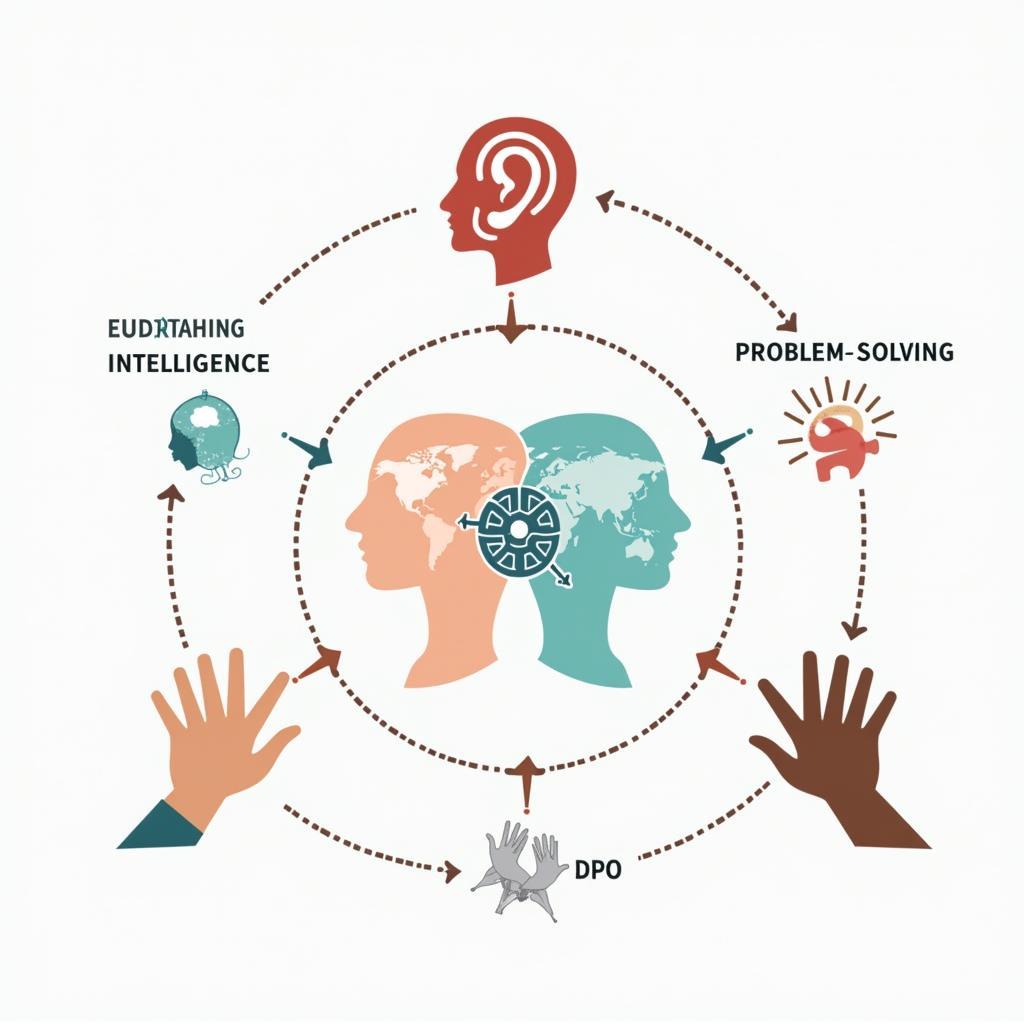 Biểu đồ trực quan về các kỹ năng cần thiết để giúp đỡ người khác hiệu quả trong IELTS Speaking Part 3
Question 6: Should schools teach students how to help others and solve problems?
🎯 Phân tích câu hỏi:
- Dạng: Opinion with Modal (Should)
- Key words: schools, teach, help others, solve problems
- Cách tiếp cận:
- State clear position (yes/no/to some extent)
- Provide reasons supporting your view
- Consider practical implications
- Address potential counterarguments
📝 Sample Answer – Band 6-7:
“Yes, definitely. I think schools should teach these skills because they are very important for life. Students need to learn how to work together and help each other, not just study academic subjects. Problem-solving is also important for their future careers. Schools can organize group activities and volunteer programs to teach these skills. This will help students become better people and contribute to society.”
Phân tích:
- Structure: Clear position với supporting reasons
- Vocabulary: Basic educational terminology
- Tại sao Band 6-7: Relevant response với logical reasoning nhưng lacks depth và sophisticated argumentation.
📝 Câu trả lời mẫu – Band 8-9:
“Absolutely, I believe this should be a core component of modern education, and I’d argue it’s arguably just as important as traditional academic subjects, if not more so in some respects.
The rationale is quite straightforward. While academic knowledge provides students with content expertise, skills like helping others and problem-solving are transferable competencies that cut across all domains of life. No matter what career path students pursue, they’ll inevitably need to collaborate with others, navigate interpersonal challenges, and tackle complex problems. Yet traditionally, these skills have been left to chance – we assume students will pick them up naturally, which isn’t always the case.
From a societal perspective, explicitly teaching these skills could help address many contemporary issues. We’re facing growing social fragmentation and declining civic engagement in many communities. If schools systematically cultivated values of mutual support and community responsibility from an early age, we might see a more cohesive society. Research in positive psychology has shown that prosocial behavior – helping others – actually correlates with greater personal wellbeing and life satisfaction, so we’d be serving students’ individual interests while also building social capital.
Practically speaking, this needn’t be a separate subject that adds to an already overburdened curriculum. Instead, these skills can be woven into existing subjects and school culture. For instance, project-based learning that requires collaborative problem-solving can achieve multiple objectives simultaneously. Service-learning programs that integrate community service with academic content can teach empathy and helping skills while reinforcing subject knowledge.
However, I’d acknowledge that implementation needs to be thoughtful. There’s a risk of these initiatives becoming superficial – box-ticking exercises that don’t genuinely develop the intended competencies. Teachers would need adequate training and support to facilitate these learning experiences effectively.
Moreover, we should recognize that families and communities also play crucial roles in developing these capacities. Schools can’t and shouldn’t bear sole responsibility. The most effective approach would involve partnerships between educational institutions, families, and community organizations, creating a comprehensive ecosystem that reinforces these values across different contexts.
In essence, I think the question isn’t whether schools should teach these skills, but how they can do so most effectively while balancing other educational priorities.”
Phân tích:
-
Structure:
- Strong opening with clear position
- Systematic development: rationale → societal benefits → practical implementation → challenges/caveats → broader ecosystem
- Sophisticated conclusion reframing the question
-
Vocabulary:
- Academic register: core component, rationale, transferable competencies, explicitly teaching
- Education-specific: project-based learning, service-learning, overburdened curriculum
- Social science terms: social fragmentation, civic engagement, prosocial behavior, social capital
- Precise verbs: cultivated, woven into, reinforcing, facilitate
-
Grammar:
- Complex conditionals: “If schools systematically cultivated…”
- Modal verbs showing degrees of certainty: should, would, might, can’t
- Passive constructions: “left to chance”, “these skills can be woven”
- Gerunds as subjects: “explicitly teaching these skills”
- Present perfect for current relevance: “has shown”
-
Critical Thinking:
- Multiple dimensions: individual, societal, practical
- Evidence-based: references research in positive psychology
- Acknowledges implementation challenges
- Recognizes multiple stakeholders (schools, families, communities)
- Reframes binary question into more sophisticated discussion
- Balanced view: benefits AND potential pitfalls
💡 Key Language Features:
- Discourse markers: While, From a societal perspective, Practically speaking, However, Moreover, In essence
- Tentative language: I believe, I’d argue, arguably, might
- Hedging: quite straightforward, in some respects, needs to be
- Emphatic language: absolutely, inevitably, crucial
Theme 4: Modern Communication and Support
Question 7: Has technology changed the way people help each other?
🎯 Phân tích câu hỏi:
- Dạng: Evaluate Change (How has X changed Y)
- Key words: technology, changed, help each other
- Cách tiếp cận:
- Acknowledge change has occurred
- Describe specific ways technology has changed helping behaviors
- Consider both positive and negative impacts
- Provide contemporary examples
📝 Sample Answer – Band 6-7:
“Yes, technology has changed how people help each other a lot. Now we can help people easily through the Internet. For example, we can donate money online to people who need help, or we can give advice through social media. During the pandemic, people used video calls to help elderly people. However, some people think face-to-face help is better because it is more personal. Technology makes helping faster and easier, but it might make relationships less close.”
Phân tích:
- Structure: Acknowledges change với examples
- Vocabulary: Basic technology terms
- Tại sao Band 6-7: Relevant examples và balanced view nhưng lacks sophisticated analysis của complexity.
📝 Câu trả lời mẫu – Band 8-9:
“Oh, absolutely – technology has fundamentally transformed the landscape of helping and mutual support in ways that would have been unimaginable just a generation ago.
On the practical level, technology has dramatically expanded both the reach and scale of helping behaviors. Crowdfunding platforms like GoFundMe have democratized charitable giving – anyone can now rally support for a cause or person in need, bypassing traditional gatekeepers like large charitable organizations. We saw this powerfully illustrated during natural disasters when grassroots fundraising efforts could be mobilized within hours. Similarly, platforms like LinkedIn have transformed career mentoring, allowing professionals to offer guidance to people across geographical boundaries they’d never have encountered otherwise.
The pandemic actually served as a fascinating case study in technology-enabled helping. When physical distancing was necessary, communities pivoted to digital solutions – virtual check-ins on elderly neighbors, online tutoring for students, coordinated grocery delivery for vulnerable populations, all facilitated by technology. Apps like Nextdoor fostered hyperlocal mutual aid networks that might not have formed as quickly through traditional means.
However, I think it’s crucial to recognize that technology has also introduced new complexities. On one hand, the immediacy and convenience of digital helping can be incredibly powerful. On the other hand, there’s a risk of what some researchers call “slacktivism” – where people feel they’ve helped by simply clicking a button or sharing a post, without engaging in more substantive forms of support. The psychological satisfaction of helping might be diminished when interactions are mediated by screens rather than occurring face-to-face.
There’s also an equity dimension worth considering. While technology has opened up new avenues for helping, it’s also created new barriers. People without digital literacy or reliable internet access – often the most vulnerable populations – may be excluded from both seeking and receiving help in increasingly digitized systems.
What’s particularly interesting is how technology hasn’t replaced traditional forms of helping but rather created a hybrid model. The most effective helping often now involves blending digital and in-person elements – perhaps connecting online initially, then meeting face-to-face, or using technology to coordinate physical volunteering efforts. This complementary approach seems to leverage the strengths of both modes.
Looking forward, I think we’ll continue to see evolution in this space, particularly with emerging technologies. AI-powered chatbots are already providing mental health support to people who might not access traditional counseling. Virtual reality is being explored for training empathy and cultural competence. The key will be ensuring these technological advances enhance rather than replace the fundamentally human elements that make helping meaningful.”
Phân tích:
-
Structure:
- Strong opening establishing magnitude of change
- Systematic exploration: practical changes → pandemic case study → complexities/drawbacks → equity issues → hybrid model → future trends
- Each section well-developed với specific examples
- Forward-looking conclusion
-
Vocabulary:
- Sophisticated expressions: fundamentally transformed, unimaginable, democratized, bypassing gatekeepers
- Technology-specific: crowdfunding platforms, hyperlocal networks, digital literacy, AI-powered chatbots
- Academic terms: mobilized, facilitated by, mediated by, equity dimension, complementary approach
- Nuanced language: slacktivism, substantive forms, psychological satisfaction
-
Grammar:
- Present perfect for changes up to now: “has transformed”, “has introduced”
- Modal verbs for speculation: would have been, might not have formed
- Passive voice: “was illustrated”, “be diminished”, “are being explored”
- Complex relative clauses: “people who might not access”
- Gerunds and infinitives showing purpose
-
Critical Thinking:
- Historical perspective (comparing to previous generation)
- Real-world evidence (pandemic as case study)
- Balanced analysis (benefits AND drawbacks)
- Equity considerations (who gets left behind)
- Nuanced conclusion (not replacement but evolution)
- Forward-looking (anticipating future developments)
- Academic awareness (references research on slacktivism)
💡 Key Language Features:
- Discourse markers: On the practical level, However, On one hand… On the other hand, What’s particularly interesting, Looking forward
- Tentative language: I think, seems to, might
- Emphatic language: absolutely, fundamentally, dramatically, crucial
- Academic hedging: some researchers call, worth considering
Trong bối cảnh của những thách thức hiện đại, việc hiểu rõ Describe a situation when you had to make a difficult choice cũng liên quan mật thiết đến khả năng hỗ trợ bản thân và người khác trong việc đưa ra quyết định quan trọng.
Question 8: Do you think professional help (like counselors or therapists) is always better than help from friends?
🎯 Phân tích câu hỏi:
- Dạng: Compare and Evaluate (với từ “always” cần careful consideration)
- Key words: professional help, always better, help from friends
- Cách tiếp cận:
- Challenge the “always” – avoid absolute answer
- Distinguish when each type of help is appropriate
- Consider different types of problems
- Acknowledge complementary nature
📝 Sample Answer – Band 6-7:
“I don’t think professional help is always better. It depends on the problem. For serious mental health problems, professional help from counselors is better because they have training and experience. They know the right methods to help people. However, for everyday problems like relationship issues or work stress, friends can give good help because they know you well and understand your situation. Also, talking to friends is easier and more comfortable than going to a therapist. I think both types of help are important for different situations.”
Phân tích:
- Structure: Rejects absolute answer, provides situational reasoning
- Vocabulary: Basic comparative language
- Tại sao Band 6-7: Logical distinction between types of help nhưng lacks sophisticated analysis và depth.
📝 Câu trả lời mẫu – Band 8-9:
“That’s a nuanced question that I think deserves a more complex answer than a simple yes or no, because the word ‘always’ really doesn’t capture the multifaceted nature of human support needs.
Professional help certainly has distinct advantages in specific contexts. Therapists and counselors bring specialized expertise, evidence-based techniques, and clinical training that friends simply don’t possess. For serious mental health conditions like clinical depression, trauma, or anxiety disorders, professional intervention isn’t just better – it’s often essential. These professionals can provide objective assessment, maintain therapeutic boundaries, and employ specific interventions like cognitive behavioral therapy that have been rigorously tested and validated. They’re also ethically bound to confidentiality in ways that informal support networks aren’t.
Moreover, professionals offer something that friends inherently cannot – objectivity. Because they’re outside your social circle, they can provide impartial perspectives uninfluenced by personal relationships or shared history. This can be invaluable when you need to examine your own role in problems without the emotional complexity that comes with discussing sensitive issues with people who are personally invested in your life.
That said, I’d argue against the notion that professional help is universally superior. Friends offer unique forms of support that professionals can’t replicate. The emotional intimacy and shared history you have with close friends means they can provide contextually relevant support based on deep understanding of your personality, values, and life circumstances. This lived knowledge of who you are can sometimes lead to insights that a professional who’s just getting to know you might miss.
Furthermore, there’s something deeply healing about feeling genuinely known and accepted by friends during difficult times. Authentic human connection serves fundamental psychological needs that transcend what can be achieved in a professional relationship, no matter how skilled the practitioner. Friends also provide ongoing, accessible support – you can reach out to them at 3 AM when you’re struggling, whereas therapists work within specific appointment windows.
From a practical standpoint, accessibility is a major consideration. Professional help can be prohibitively expensive and may not be readily available, especially in areas with limited mental health resources. Stigma around seeking therapy also remains a barrier in many cultures, including Vietnam. For many people, friends might be the only viable source of emotional support.
What I think makes most sense is viewing these as complementary rather than competing forms of support. The ideal scenario often involves both – having a therapist for clinical issues and structured intervention, while also maintaining strong friendships that provide day-to-day emotional sustenance and practical support. Different problems call for different responses. A friend might be perfect for working through everyday stress or providing perspective on a career dilemma, while a therapist is essential for processing trauma or managing chronic mental health conditions.
Ultimately, the best form of help is often the one you can access and feel comfortable utilizing. Effective support – whether professional or from friends – hinges on factors like trust, understanding, and the specific nature of the challenge at hand, rather than adhering to a rigid hierarchy of whose help is superior.”
Phân tích:
-
Structure:
- Opening challenges absolute premise
- Systematic exploration: advantages of professional help → what friends uniquely offer → practical considerations → complementary model → nuanced conclusion
- Each perspective thoroughly developed
- Sophisticated synthesis avoiding false dichotomy
-
Vocabulary:
- Professional terminology: evidence-based techniques, clinical training, cognitive behavioral therapy
- Psychological concepts: therapeutic boundaries, objectivity, emotional intimacy, authentic human connection
- Nuanced expressions: inherently cannot, universally superior, prohibitively expensive
- Academic language: rigorously tested, ethically bound, complementary rather than competing
-
Grammar:
- Modal verbs showing certainty/possibility: can, might, may
- Complex conditionals and subordination
- Passive constructions for academic tone
- Present perfect for current relevance
- Gerunds showing processes: “feeling genuinely known”
- Relative clauses adding specificity
-
Critical Thinking:
- Immediately challenges binary framing
- Multiple dimensions: clinical effectiveness, emotional aspects, practical accessibility, cultural factors
- Recognition of contextual factors
- Refuses hierarchy in favor of complementarity
- Acknowledges systemic barriers (cost, availability, stigma)
- Culturally aware (mentions Vietnam specifically)
- Patient-centered perspective (best help is what you can access and use)
💡 Key Language Features:
- Discourse markers: That said, Moreover, Furthermore, From a practical standpoint, Ultimately
- Tentative language: I think, I’d argue, might, often
- Contrasting: whereas, rather than, no matter how
- Hedging: certainly has, can be, often involves
- Emphatic language: distinctly, invaluable, deeply healing, fundamental
Từ vựng và cụm từ quan trọng
Topic-Specific Vocabulary
| Từ vựng/Cụm từ | Loại từ | Phiên âm | Nghĩa tiếng Việt | Ví dụ | Collocation |
|---|---|---|---|---|---|
| turn to someone | phrasal verb | /tɜːn tuː/ | tìm đến ai đó để được giúp đỡ | When I have problems, I always turn to my best friend for advice. | turn to sb for help/advice/support/guidance |
| go through a tough time | phrase | /ɡəʊ θruː ə tʌf taɪm/ | trải qua thời kỳ khó khăn | My colleague is going through a tough time after losing her job. | go through a difficult/hard/challenging time |
| sort out | phrasal verb | /sɔːt aʊt/ | giải quyết, sắp xếp (vấn đề) | It took us several meetings to sort out the misunderstanding. | sort out a problem/issue/situation/mess |
| confide in someone | phrasal verb | /kənˈfaɪd ɪn/ | tâm sự, chia sẻ bí mật với ai đó | She finally confided in me about her relationship troubles. | confide in a friend/someone you trust |
| empowering | adj | /ɪmˈpaʊərɪŋ/ | trao quyền, giúp tự chủ | Helping my friend find her own solution was more empowering than just telling her what to do. | empowering experience/approach/process |
| resilience | n | /rɪˈzɪliəns/ | khả năng phục hồi, sức bền bỉ | Building resilience helps people cope better with future challenges. | build/develop/show resilience |
| strain the relationship | phrase | /streɪn ðə rɪˈleɪʃnʃɪp/ | làm căng thẳng mối quan hệ | Borrowing money without repaying can strain the relationship with friends. | strain/damage/harm/hurt the relationship |
| sounding board | n | /ˈsaʊndɪŋ bɔːd/ | người để thảo luận, tham khảo ý kiến | I often use my mentor as a sounding board for new ideas. | act as/serve as/be a sounding board |
| torn between | adj phrase | /tɔːn bɪˈtwiːn/ | phân vân giữa (hai lựa chọn) | She was torn between accepting the job offer and pursuing further education. | torn between two options/choices |
| overwhelmed | adj | /ˌəʊvəˈwelmd/ | choáng ngợp, quá tải | He felt overwhelmed by the amount of work he had to complete. | feel/become overwhelmed |
| reach out to | phrasal verb | /riːtʃ aʊt tuː/ | liên hệ với, tìm đến | Don’t hesitate to reach out to me if you need any help. | reach out to sb for help/support/assistance |
| map out | phrasal verb | /mæp aʊt/ | vạch ra, lập kế hoạch chi tiết | We mapped out a clear strategy to achieve our goals. | map out a plan/strategy/route/path |
| fulfilled | adj | /fʊlˈfɪld/ | thỏa mãn, viên mãn | Helping others makes me feel fulfilled and purposeful. | feel/be fulfilled |
| see things from different angles | phrase | /siː θɪŋz frɒm ˈdɪfrənt ˈæŋɡlz/ | nhìn mọi thứ từ nhiều góc độ khác nhau | A good problem-solver can see things from different angles. | look at/view/see from different angles/perspectives |
| strengthen the bond | phrase | /ˈstreŋθən ðə bɒnd/ | củng cố mối quan hệ | Shared experiences strengthen the bond between friends. | strengthen/build/forge/deepen the bond |
| bottle up emotions | phrase | /ˈbɒtl ʌp ɪˈməʊʃnz/ | dồn nén cảm xúc | Bottling up emotions can lead to serious mental health problems. | bottle up feelings/emotions |
| navigate through | phrasal verb | /ˈnævɪɡeɪt θruː/ | vượt qua, giải quyết (tình huống khó khăn) | She successfully navigated through a difficult career transition. | navigate through difficulties/challenges/problems |
| dark place mentally | phrase | /dɑːk pleɪs ˈmentəli/ | tình trạng tinh thần tồi tệ | After the breakup, he was in a dark place mentally for months. | be in a dark/bad place mentally/emotionally |
| unsolicited advice | n | /ˌʌnsəˈlɪsɪtɪd ədˈvaɪs/ | lời khuyên không được yêu cầu | People often give unsolicited advice without understanding the full situation. | give/offer unsolicited advice |
| active listening | n | /ˈæktɪv ˈlɪsnɪŋ/ | lắng nghe tích cực | Active listening involves paying full attention and showing understanding. | practice/demonstrate/use active listening |
Idiomatic Expressions & Advanced Phrases
| Cụm từ | Nghĩa | Ví dụ sử dụng | Band điểm |
|---|---|---|---|
| have someone’s back | hỗ trợ, đứng về phía ai đó | True friends always have your back, no matter what happens. | 7.5-9 |
| at a complete loss | hoàn toàn bối rối, không biết phải làm gì | When my computer crashed with all my work, I was at a complete loss. | 7.5-9 |
| make a tangible difference | tạo ra sự khác biệt rõ rệt, cụ thể | Volunteering at the shelter made a tangible difference in those children’s lives. | 8-9 |
| be there for someone | ở bên cạnh, sẵn sàng hỗ trợ ai đó | She was always there for me during my difficult times. | 7-8 |
| pay it forward | giúp đỡ người khác như đã được giúp | After receiving help during hard times, I try to pay it forward by helping others. | 7.5-9 |
| work through | vượt qua, giải quyết (vấn đề) từng bước | It took months to work through the trust issues in their friendship. | 7-8 |
| a shoulder to cry on | người để dựa vào khi buồn | Everyone needs a shoulder to cry on during tough times. | 7-8 |
| in the same boat | trong cùng hoàn cảnh | We’re all in the same boat when it comes to dealing with stress. | 7-8 |
| see eye to eye | đồng ý, có cùng quan điểm | Although they don’t always see eye to eye, they respect each other’s opinions. | 7-8 |
| go the extra mile | nỗ lực thêm, làm nhiều hơn mong đợi | She really went the extra mile to help me prepare for my interview. | 7.5-8.5 |
| hit a rough patch | trải qua giai đoạn khó khăn | Our friendship hit a rough patch, but we managed to work things out. | 7.5-8.5 |
| pick someone’s brain | xin ý kiến, tham khảo kiến thức của ai đó | Can I pick your brain about marketing strategies? | 7.5-8.5 |
Discourse Markers (Từ Nối Ý Trong Speaking)
Để bắt đầu câu trả lời:
- 📝 Well,… – Sử dụng khi cần một chút thời gian suy nghĩ hoặc khi câu trả lời phức tạp
- 📝 Actually,… – Khi đưa ra góc nhìn khác với mong đợi hoặc correction
- 📝 To be honest,… – Khi nói thật về feelings hoặc opinions
- 📝 I’d say that… – Cách tentative để đưa ra quan điểm
- 📝 That’s an interesting question,… – Để có thời gian organize thoughts
- 📝 From my perspective,… – Để personal view rõ ràng
Để bổ sung ý:
- 📝 On top of that,… – Thêm vào đó, hơn nữa
- 📝 What’s more,… – Điều quan trọng nữa là
- 📝 Not to mention… – Chưa kể đến
- 📝 Beyond that,… – Ngoài ra
- 📝 Additionally,… – Thêm vào đó (formal hơn)
- 📝 Furthermore,… – Hơn nữa (academic)
Để đưa ra quan điểm cân bằng:
- 📝 On the one hand,… On the other hand,… – Một mặt… mặt khác
- 📝 While it’s true that…, we also need to consider… – Tuy đúng là… nhưng cũng cần xem xét
- 📝 That said,… – Tuy nhiên, mặc dù vậy
- 📝 Having said that,… – Nói như vậy thì (để contrast)
Để kết luận:
- 📝 All in all,… – Tóm lại
- 📝 At the end of the day,… – Cuối cùng thì, điều quan trọng là
- 📝 In essence,… – Về bản chất
- 📝 Ultimately,… – Sau cùng thì
- 📝 To sum up,… – Tóm tắt lại
Để clarify hoặc elaborate:
- 📝 What I mean is… – Ý tôi là
- 📝 To put it another way,… – Nói cách khác
- 📝 In other words,… – Nói cách khác
- 📝 To give you an example,… – Để cho bạn một ví dụ
Grammatical Structures Ấn Tượng
1. Conditional Sentences (Câu điều kiện):
Mixed conditional (kết hợp Type 2 và Type 3):
- Formula: If + past perfect, would/could + base verb
- Ví dụ: “If I hadn’t helped my friend with his job application, he wouldn’t be working at his dream company now.”
Inversion in conditionals (đảo ngữ trong câu điều kiện):
- Formula: Had + subject + past participle, would have + past participle
- Ví dụ: “Had I known how serious his situation was, I would have intervened sooner.”
2. Relative Clauses (Mệnh đề quan hệ):
Non-defining relative clauses:
- Formula: …, which/who…
- Ví dụ: “My friend Linh, who had been struggling with anxiety, finally sought professional help.”
Reduced relative clauses:
- Ví dụ: “The advice given by professionals can be more objective than that from friends.”
3. Passive Voice (Câu bị động):
Impersonal passive (để express general beliefs):
- It is thought/believed/said that…
- Ví dụ: “It is widely believed that helping others contributes to personal happiness.”
Passive with modals:
- Ví dụ: “Professional help should be sought when dealing with serious mental health issues.”
4. Cleft Sentences (Câu chẻ để nhấn mạnh):
What-cleft:
- Formula: What + subject + verb + is…
- Ví dụ: “What I find most rewarding about helping friends is seeing them overcome their challenges.”
It-cleft:
- Formula: It + is/was + emphasized element + that/who…
- Ví dụ: “It was his willingness to change that made my help effective.”
The thing that…, is…
- Ví dụ: “The thing that made the biggest difference was simply being there to listen.”
5. Participle Clauses (Mệnh đề phân từ):
Present participle (showing simultaneous action or reason):
- Ví dụ: “Having experienced similar problems myself, I could offer practical advice.”
Past participle (showing passive meaning):
- Ví dụ: “Overwhelmed by the situation, she didn’t know where to turn for help.”
6. Inversion for Emphasis:
Negative inversion:
- Ví dụ: “Not only did I help him solve the problem, but I also learned valuable lessons myself.”
- Ví dụ: “Rarely have I felt such satisfaction as when I helped my friend through that crisis.”
7. Subjunctive Mood (Thức giả định):
In suggestions/recommendations:
- Formula: It’s important/essential that + subject + base verb
- Ví dụ: “It’s crucial that people seek help when they need it, rather than suffering in silence.”
8. Nominalization (Danh từ hóa – academic style):
Instead of: “People who help others feel more satisfied”
Use: “Helping others contributes to greater life satisfaction”
Instead of: “When we understand different cultures, we can help more effectively”
Use: “Cultural understanding enhances helping effectiveness”
Những cấu trúc này giúp câu nói của bạn sophisticated và academic hơn, đồng thời demonstrate grammar range cho Band 7+.
Chiến Lược và Lời Khuyên Từ Examiner
Chuẩn Bị Hiệu Quả
Trước kỳ thi:
-
Practice storytelling naturally
- Đừng memorize scripts – examiners có thể phát hiện ngay
- Thay vào đó, prepare ideas và vocabulary cho common topics
- Practice kể same story theo different ways để build flexibility
-
Build topic vocabulary systematically
- Tạo vocabulary sets cho từng topic area
- Learn collocations, không học isolated words
- Practice using new vocabulary trong context
-
Record yourself
- Listen lại để identify hesitations, repetitions, grammar errors
- Pay attention đến pronunciation và intonation
- Compare với sample answers để identify gaps
-
Work on thinking time management
- Practice using discourse markers để gain thinking time naturally
- Learn to paraphrase questions để có thêm giây suy nghĩ
- Develop comfort với brief pauses – it’s natural
Trong phòng thi:
-
Part 1 Strategy:
- Trả lời direct nhưng extend với reasons/examples
- Aim cho 2-3 câu per answer
- Stay relevant – đừng digress quá xa
- Be conversational, không formal quá
-
Part 2 Strategy:
- Use full 1 minute prep time
- Note keywords only, không viết sentences
- Cover all bullet points – particularly “explain” part
- Aim cho 2-2.5 phút
- Use past tense consistently cho past events
- Add specific details (names, dates, places) cho authenticity
-
Part 3 Strategy:
- Extend answers với examples và reasoning
- Show different perspectives
- Use tentative language (I’d say, It seems that)
- Don’t just give personal opinions – discuss society
- It’s okay to say “That’s an interesting question” để gain thinking time
- Demonstrate critical thinking
Common Mistakes để Tránh
Fluency & Coherence:
- ❌ Nói quá nhanh do nervous – breathe và pace yourself
- ❌ Overuse “actually”, “basically” – diversify fillers
- ❌ Lack of linking words – use discourse markers
- ❌ Abrupt topic changes – use transitions
Lexical Resource:
- ❌ Repeating same words – paraphrase và use synonyms
- ❌ Using words incorrectly để impress – accuracy > complexity
- ❌ Too many basic adjectives (good, bad, nice) – use precise vocabulary
- ❌ Literal translation from Vietnamese – learn natural English expressions
Grammatical Range:
- ❌ Only simple sentences – mix simple, compound, complex
- ❌ Sticking to present simple – use variety of tenses appropriately
- ❌ Avoiding complex structures vì fear of errors – some errors ở Band 7+ là acceptable
- ❌ Incorrect verb patterns – learn common patterns (stop doing vs stop to do)
Pronunciation:
- ❌ Speaking too softly – project your voice
- ❌ Monotone delivery – vary intonation
- ❌ Vietnamese pronunciation patterns – work on problematic sounds
- ❌ Misplaced word stress – learn stress patterns
Những Lỗi Đặc Trưng Của Học Viên Việt Nam
1. Language Transfer Errors:
- Literal translation từ tiếng Việt: “I feel very comfortable” thay vì natural expression
- Word order issues: “I very like helping friends”
- Article errors: missing “a/an/the” hoặc using khi không cần
2. Cultural Influence:
- Quá modest, không express achievements clearly
- Hesitant to disagree hoặc express strong opinions
- Prefer harmony over debate – Part 3 cần show critical thinking
3. Exam-Specific:
- Memorized templates nghe unnatural
- Trying to use big words incorrectly
- Not utilizing full time trong Part 2
- Giving Part 1-style short answers trong Part 3
4. Pronunciation Challenges:
- Final consonants often dropped
- /th/ sounds (think, this)
- /v/ vs /w/ distinction
- /l/ vs /r/ in some regions
- Stress patterns in multi-syllable words
Timeline Chuẩn Bị Lý Tưởng
3 tháng trước:
- Build foundation vocabulary cho common topics
- Work on pronunciation issues systematically
- Practice recording và self-evaluation
- Study band descriptors để understand requirements
2 tháng trước:
- Intensive practice với recent actual tests
- Work on extending answers appropriately
- Develop personal examples bank cho common topics
- Focus on weak areas identified
1 tháng trước:
- Mock tests với feedback từ teacher/partner
- Fine-tune timing cho Part 2
- Polish frequently used expressions
- Work on confidence và fluency
1 tuần trước:
- Light practice – avoid burnout
- Review vocabulary lists
- Do mock tests để maintain form
- Focus on mental preparation
Ngày thi:
- Arrive early để settle nerves
- Warm up voice trước
- Stay positive và confident
- Remember: conversation, not interrogation
Mindset Tips
During the test:
- Treat it like friendly conversation
- Don’t panic nếu không hiểu câu hỏi – ask for clarification
- If you make a mistake, self-correct naturally và move on
- Smile và maintain eye contact với examiner
- Show enthusiasm về topics – energy matters
Remember:
- Examiners want you to succeed
- Small errors won’t destroy your score
- Band 7+ không cần perfect English
- Your ideas và communication matter more than perfection
- Preparation gives confidence, confidence gives fluency
Chủ đề “describe a time when you helped a friend solve a problem” là excellent opportunity để demonstrate không chỉ language skills mà còn emotional intelligence và social awareness. Với preparation đúng cách và mindset tích cực, bạn hoàn toàn có thể achieve target band của mình.
Chúc bạn thành công trong kỳ thi IELTS Speaking!