Chủ đề về những thách thức tưởng chừng như không thể vượt qua là một trong những đề bài phổ biến và đầy cảm hứng trong IELTS Speaking. Từ góc nhìn của một examiner với hơn 20 năm kinh nghiệm, tôi nhận thấy chủ đề này xuất hiện thường xuyên trong các kỳ thi IELTS từ 2020 đến nay, với tần suất khoảng 3-4 lần mỗi quý. Dự đoán khả năng xuất hiện trong tương lai: Cao, vì đây là dạng câu hỏi kiểm tra hiệu quả khả năng kể chuyện, diễn đạt cảm xúc và phân tích sâu sắc của thí sinh.
Chủ đề “challenge” đặc biệt quan trọng vì nó cho phép thí sinh thể hiện nhiều kỹ năng ngôn ngữ: sử dụng thì quá khứ chính xác, từ vựng về cảm xúc và khó khăn, cũng như khả năng reflection (tự nhìn lại). Các góc độ thường được hỏi bao gồm: học tập, công việc, thể thao, kỹ năng cá nhân, hoặc mục tiêu dài hạn.
Trong bài viết này, bạn sẽ học được:
- 12 câu hỏi thực tế xuất hiện trong cả 3 Part của IELTS Speaking
- Bài mẫu chi tiết theo 3 mức band điểm (6-7, 7.5-8, 8.5-9) với phân tích cụ thể
- Hơn 50 từ vựng và cụm từ ăn điểm với pronunciation và ví dụ sử dụng
- Chiến lược trả lời hiệu quả từ góc nhìn examiner
- Những lỗi thường gặp của học viên Việt Nam và cách khắc phục
IELTS Speaking Part 1: Introduction and Interview
Tổng Quan Về Part 1
Part 1 kéo dài 4-5 phút với các câu hỏi ngắn về đời sống hàng ngày. Đây là phần “khởi động” giúp thí sinh làm quen với examiner và không khí thi cử. Chiến lược quan trọng nhất là trả lời tự nhiên, mở rộng mỗi câu trả lời thành 2-3 câu hoàn chỉnh với cấu trúc: Direct answer → Reason/Detail → Example (optional).
Lỗi thường gặp của học viên Việt Nam:
- Trả lời quá ngắn chỉ có Yes/No hoặc một câu đơn
- Dùng từ vựng quá đơn giản như “good”, “nice”, “interesting”
- Thiếu ví dụ cụ thể từ kinh nghiệm bản thân
- Nói quá nhanh vì lo lắng, dẫn đến phát âm không rõ ràng
Các Câu Hỏi Thường Gặp
Question 1: Do you like challenging yourself?
Question 2: What kind of challenges do you usually face in your daily life?
Question 3: How do you feel when you overcome a difficult challenge?
Question 4: Do you prefer easy tasks or challenging ones? Why?
Question 5: Did you face many challenges when you were younger?
Question 6: What was the most difficult thing you learned to do?
Question 7: Do you think challenges are important for personal growth?
Question 8: How do you motivate yourself when facing difficulties?
Phân Tích và Gợi Ý Trả Lời Chi Tiết
Question: Do you like challenging yourself?
🎯 Cách tiếp cận:
- Trả lời trực tiếp (Yes/No với qualification)
- Đưa ra lý do cụ thể
- Thêm ví dụ ngắn gọn từ kinh nghiệm cá nhân
📝 Sample Answer – Band 6-7:
“Yes, I like challenging myself. I think it helps me learn new things and become better. For example, last year I tried to learn English speaking and it was difficult at first but I improved a lot.”
Phân tích:
- Điểm mạnh: Có cấu trúc rõ ràng (direct answer → reason → example), dùng được cụm “at first”, có attempt mở rộng ý
- Hạn chế: Từ vựng còn basic (difficult, learn, better), thiếu variety trong grammar structures, ví dụ chưa đủ specific
- Tại sao Band 6-7: Đáp ứng được yêu cầu cơ bản về Fluency và Coherence, nhưng Lexical Resource và Grammar chưa đủ range và complexity để đạt band cao hơn
📝 Sample Answer – Band 8-9:
“Absolutely! I’m actually someone who thrives on challenges because they push me out of my comfort zone and help me discover capabilities I didn’t know I had. Just recently, I took on the challenge of preparing for IELTS while working full-time, which seemed daunting at first, but the sense of accomplishment I get from making progress is incredibly rewarding.”
Phân tích:
- Điểm mạnh: Sử dụng vocabulary tinh vi (thrives on, daunting, rewarding), collocation tự nhiên (push out of comfort zone, took on the challenge), grammar đa dạng (relative clause “I didn’t know I had”, gerund “preparing”), ví dụ cụ thể và relevant
- Tại sao Band 8-9:
- Fluency: Câu trả lời trôi chảy, natural với filler “actually” và “Just recently”
- Vocabulary: Precise và sophisticated với collocations như “thrives on challenges”
- Grammar: Complex structures (relative clause, while clause)
- Pronunciation: Stress words được đánh dấu bold thể hiện intonation tốt
💡 Key Vocabulary & Expressions:
- thrive on something: phát triển mạnh mẽ nhờ điều gì đó, yêu thích điều gì thách thức
- push someone out of their comfort zone: đẩy ai đó ra khỏi vùng an toàn
- take on a challenge: nhận lấy một thách thức
- daunting: đáng sợ, nản lòng (nhưng vẫn có thể làm được)
- rewarding: đáng giá, mang lại cảm giác thỏa mãn
Question: What kind of challenges do you usually face in your daily life?
🎯 Cách tiếp cận:
- Liệt kê 1-2 loại challenges cụ thể
- Giải thích ngắn gọn tại sao chúng là challenges
- Có thể thêm cách bạn deal with them
📝 Sample Answer – Band 6-7:
“I face some challenges every day. The biggest one is managing my time because I have to study and work at the same time. Sometimes I also find it difficult to concentrate when there is too much noise around me.”
Phân tích:
- Điểm mạnh: Có structure logic (biggest challenge → reason), mention được 2 challenges, có because clause
- Hạn chế: Vocabulary đơn giản (difficult, too much), thiếu linking devices, chưa có personal touch
- Tại sao Band 6-7: Adequate content nhưng limited range trong vocabulary và grammar
📝 Sample Answer – Band 8-9:
“Well, I’d say the most persistent challenge I deal with is striking a balance between my professional commitments and personal life. Working in a fast-paced environment means I often have to juggle multiple deadlines, which can be quite overwhelming. Another thing I grapple with is maintaining focus in our increasingly distraction-filled world – you know, with social media and constant notifications vying for attention.”
Phân tích:
- Điểm mạnh: Vocabulary sophisticated (persistent, grapple with, vying for), collocations natural (strike a balance, fast-paced environment, juggle deadlines), grammar variety (gerund subject “Working in…”, relative clause, with + noun + verb-ing), personal và relatable
- Tại sao Band 8-9:
- Fluency: Natural discourse marker “Well, I’d say”, conversational style “you know”
- Vocabulary: Precise verbs (grapple, juggle, vying) thay vì basic “face” hay “have”
- Grammar: Complex noun phrases (distraction-filled world, fast-paced environment)
- Ideas: Sophisticated understanding (balance work-life, modern distractions)
💡 Key Vocabulary & Expressions:
- persistent challenge: thách thức liên tục, kéo dài
- strike a balance between: tìm được sự cân bằng giữa
- fast-paced environment: môi trường nhịp độ nhanh
- juggle multiple deadlines: xoay xở với nhiều deadline cùng lúc
- grapple with: vật lộn, đấu tranh với (challenge)
- vying for attention: tranh giành sự chú ý
Question: How do you feel when you overcome a difficult challenge?
🎯 Cách tiếp cận:
- Mô tả cảm xúc cụ thể (không chỉ “happy”)
- Giải thích tại sao có cảm xúc đó
- Có thể so sánh với trước và sau khi hoàn thành
📝 Sample Answer – Band 6-7:
“I feel very happy and proud when I overcome a difficult challenge. It makes me more confident to try new things in the future. I also feel satisfied because I worked hard to achieve it.”
Phân tích:
- Điểm mạnh: Có range của emotion words (happy, proud, confident, satisfied), có consequence “makes me more confident”, mention effort “worked hard”
- Hạn chế: Adjectives còn common (very happy), structure đơn giản (I feel… I feel…), thiếu depth trong analysis
- Tại sao Band 6-7: Adequate response nhưng lacks sophistication trong expression và reflection
📝 Sample Answer – Band 8-9:
“Honestly, it’s an incredible rush of emotions – there’s this overwhelming sense of accomplishment mixed with relief that I actually pulled it off. I’d describe it as deeply satisfying because it validates all the blood, sweat and tears I put into it. What’s particularly empowering is knowing that I’ve expanded my capabilities, which gives me the confidence and momentum to tackle even bigger challenges down the line. It’s like I’ve leveled up in a game, if that makes sense.”
Phân tích:
- Điểm mạnh:
- Vocabulary tinh vi và varied (overwhelming, validates, empowering, momentum)
- Idiomatic expressions (pulled it off, blood sweat and tears, leveled up)
- Grammar phức tạp (mixed with, knowing that clause, which gives)
- Personal reflection sâu sắc với metaphor (like a game)
- Conversational ending “if that makes sense” rất natural
- Tại sao Band 8-9:
- Fluency: Absolutely natural với “Honestly”, dash usage, conversational tone
- Vocabulary: Idiomatic và precise (rush of emotions, pulled it off)
- Grammar: Complex structures với multiple clauses
- Ideas: Sophisticated reflection về psychological impact
💡 Key Vocabulary & Expressions:
- rush of emotions: dòng cảm xúc mạnh mẽ ùa về
- overwhelming sense of accomplishment: cảm giác thành tựu tràn ngập
- pull something off: hoàn thành thành công điều khó khăn (informal)
- blood, sweat and tears: công sức và nỗ lực cực lớn (idiom)
- empowering: trao quyền, làm mạnh mẽ hơn
- expand one’s capabilities: mở rộng khả năng của mình
- level up: nâng cấp, tiến lên level cao hơn (từ gaming)
 Học viên tự tin trả lời câu hỏi IELTS Speaking Part 1 về thách thức cá nhân
IELTS Speaking Part 2: Long Turn (Cue Card)
Tổng Quan Về Part 2
Part 2 là phần độc thoại kéo dài 2-3 phút, trong đó thí sinh có 1 phút chuẩn bị với giấy và bút. Đây là phần quan trọng nhất để ghi điểm cao vì examiner không ngắt lời và bạn có thể showcase toàn bộ khả năng ngôn ngữ của mình.
Chiến lược hiệu quả:
- Sử dụng đầy đủ 1 phút chuẩn bị: Ghi keywords, không viết câu hoàn chỉnh
- Nói đủ 2 phút (tối thiểu 1.5 phút): Examiner sẽ stop nếu bạn nói quá 3 phút
- Trả lời đầy đủ tất cả bullet points: Đừng bỏ sót bất kỳ yêu cầu nào
- Sử dụng thì quá khứ khi kể chuyện: Đây là lỗi ngữ pháp phổ biến nhất
- Organize theo chronological order: What → When/Where → How → Why/Result
Lỗi thường gặp:
- Không sử dụng hết thời gian chuẩn bị, vội vàng bắt đầu
- Nói dưới 1.5 phút vì thiếu ideas hoặc vocabulary
- Bỏ sót bullet point “explain why/how you felt”
- Mix tenses: Bắt đầu bằng past nhưng chuyển sang present
- Speak too fast và mất pronunciation clarity
Cue Card
Describe A Time When You Took On A Challenge That Seemed Impossible
You should say:
- What the challenge was
- When and where it happened
- How you dealt with it
- And explain why it seemed impossible and how you felt about overcoming it
Phân Tích Đề Bài
-
Dạng câu hỏi: Describe an experience/event (kể về một trải nghiệm cụ thể trong quá khứ)
-
Thì động từ: Quá khứ (was, happened, dealt, seemed, felt) – Đây là điều CỰC KỲ quan trọng
-
Bullet points phải cover:
- What: Challenge cụ thể gì (phải clear và specific, không nói chung chung)
- When/Where: Thời gian và địa điểm (tạo context)
- How: Quá trình deal with challenge (đây là phần dài nhất, cần nhiều details)
- Explain: Tại sao impossible + Feelings (phần này ghi điểm cao nhất)
-
Câu “explain” quan trọng: Đây là nơi bạn showcase vocabulary về emotions, abstract thinking, và reflection. Đừng rush qua phần này – đây là điểm khác biệt giữa Band 7 và Band 8.
📝 Sample Answer – Band 6-7
Thời lượng: Khoảng 1.5-2 phút
“I’d like to talk about a time when I tried to learn swimming when I was 20 years old. This happened about three years ago at a swimming pool near my house.
The challenge seemed impossible because I was always afraid of water since I was a child. When I was young, I nearly drowned in a river, so I never went swimming again. My friends invited me to go to the beach, but I always refused because of my fear.
However, I decided to overcome this fear because I thought it was important for my safety. I signed up for a swimming course for adults. At first, it was very difficult. I felt nervous every time I went into the water. The instructor was patient and taught me step by step. I practiced three times a week for two months.
The most difficult part was learning to put my head under water. I felt scared every time, but I kept trying. After many weeks, I finally managed to swim 25 meters without stopping. I felt very happy and proud of myself.
This challenge seemed impossible because my fear was very strong. But when I overcame it, I felt confident and realized that I can do difficult things if I try hard. It was a great achievement for me and now I really enjoy swimming.”
Phân Tích Band Điểm
| Tiêu chí | Band | Nhận xét |
|---|---|---|
| Fluency & Coherence | 6-7 | Có cấu trúc rõ ràng theo chronological order, sử dụng basic linking words (however, at first, after), nhưng còn một số hesitation và repetition (I felt… I felt…) |
| Lexical Resource | 6-7 | Vocabulary adequate cho chủ đề (afraid of water, overcome fear, signed up for, managed to swim), nhưng còn limited range, dùng “very” quá nhiều, thiếu sophisticated expressions |
| Grammatical Range & Accuracy | 6-7 | Sử dụng đúng past tense consistently (điểm mạnh), có attempt complex sentences (when, because clauses), nhưng limited variety và một số lỗi nhỏ về article |
| Pronunciation | 6-7 | Clear và understandable, có attempt ở word stress, nhưng intonation còn flat, thiếu natural rhythm |
Điểm mạnh:
- ✅ Cover đầy đủ tất cả bullet points
- ✅ Maintain past tense đúng xuyên suốt
- ✅ Có story arc rõ ràng: problem → action → result
- ✅ Personal và genuine, không sounds như template
Hạn chế:
- ⚠️ Vocabulary còn basic: “very difficult”, “very happy”, “very strong”
- ⚠️ Thiếu descriptive details khiến story chưa vivid
- ⚠️ Grammar structures đơn giản, thiếu variety
- ⚠️ Phần “explain feelings” còn surface-level, chưa deep
📝 Sample Answer – Band 7.5-8
Thời lượng: Khoảng 2-2.5 phút
“I’d like to share an experience that really pushed me to my limits – it was when I attempted to run a half-marathon about two years ago, despite having absolutely zero running experience.
This took place in the summer of 2022. My company organized a charity run event, and I impulsively signed up for the 21-kilometer race, even though I’d never run more than 2 kilometers in my entire life. The event was scheduled for three months later at a stadium in Hanoi.
The challenge appeared insurmountable because I was out of shape and had no athletic background whatsoever. Just climbing stairs would leave me breathless, let alone running 21 kilometers. My colleagues who were experienced runners warned me that without proper training, I’d risk injury or simply wouldn’t be able to finish.
However, I was determined to prove myself wrong about my own limitations. I devised a training schedule, starting with just 1 kilometer runs and gradually building up my endurance. The first few weeks were absolutely brutal – my legs ached constantly, and I often felt like giving up. There were mornings when I couldn’t drag myself out of bed, but I kept pushing through.
What made this seem impossible was not just the physical aspect, but the mental battle. Self-doubt crept in whenever I struggled during training. But I found motivation in tracking my progress – seeing how I could run further each week gave me hope.
On race day, I was incredibly nervous, but I managed to complete the half-marathon in just under 2 hours and 30 minutes. Crossing that finish line was one of the most euphoric moments of my life. I felt an overwhelming mix of exhaustion and pride – proud that I’d stuck with it despite wanting to quit countless times.
This experience taught me that seemingly impossible challenges are often just mental barriers we create for ourselves. The sense of accomplishment I gained has spilled over into other areas of my life, making me more willing to take on new challenges.”
Phân Tích Band Điểm
| Tiêu chí | Band | Nhận xét |
|---|---|---|
| Fluency & Coherence | 7.5-8 | Trôi chảy với minimal hesitation, sử dụng variety of cohesive devices (despite, however, what made this), có clear progression, occasional self-correction rất natural |
| Lexical Resource | 7.5-8 | Wide range vocabulary (insurmountable, devised, brutal, euphoric), good collocations (push to limits, build up endurance, self-doubt crept in), paraphrasing tốt (impossible → insurmountable → mental barriers) |
| Grammatical Range & Accuracy | 7.5-8 | Complex structures varied (despite having, even though clause, whenever clause, seeing how clause), consistent past tense, mix of active/passive, few errors không ảnh hưởng communication |
| Pronunciation | 7.5-8 | Clear với good intonation patterns, effective word stress, natural rhythm, easy to understand throughout |
So Sánh Với Band 6-7
| Khía cạnh | Band 6-7 | Band 7.5-8 |
|---|---|---|
| Vocabulary | “very difficult”, “felt scared”, “great achievement” | “absolutely brutal”, “self-doubt crept in”, “euphoric moments” |
| Grammar | Simple past + basic because/when clauses | Complex structures: despite having, even though, whenever, seeing how |
| Ideas | Surface description: “I practiced” | Detailed: specific training schedule, mental battle, progress tracking |
| Storytelling | Basic chronology | Vivid details: “legs ached constantly”, “couldn’t drag myself out of bed” |
📝 Sample Answer – Band 8.5-9
Thời lượng: 2.5-3 phút đầy đủ
“I’d like to recount what I consider to be one of the most formidable challenges I’ve ever undertaken – attempting to master conversational Japanese to an intermediate level within just six months, with the goal of passing the JLPT N3 examination.
This ambitious endeavor took place last year, from January to June. I’d always been fascinated by Japanese culture, but I had absolutely no foundation in the language – not even hiragana or katakana. The impetus came when I learned that my company was opening a branch in Tokyo and was seeking employees willing to relocate. This seemed like a once-in-a-lifetime opportunity, but there was a catch: preference would be given to candidates with at least N3-level proficiency.
The magnitude of this challenge cannot be overstated. Japanese is notoriously difficult for Vietnamese speakers due to its completely different writing system, grammar structure, and the sheer volume of kanji characters one needs to memorize – roughly 650 for N3. My colleagues who’d been studying for years were skeptical, to say the least. They pointed out that most learners take 2-3 years to reach this level, and here I was, attempting to do it in half a year while working full-time.
Nevertheless, I threw myself into the challenge with unwavering determination. I crafted an intensive study plan: two hours of self-study before work, language exchange sessions during lunch breaks, and another two hours in the evening. I immersed myself in the language by changing all my devices to Japanese, watching anime without subtitles, and even thinking in Japanese throughout the day.
The journey was nothing short of grueling. There were moments of complete demoralization when I’d study for hours only to forget everything the next day. The psychological toll was significant – I experienced what I can only describe as mental exhaustion unlike anything I’d felt before. Imposter syndrome hit hard; I constantly questioned whether I was deluding myself into thinking this was achievable.
What kept me anchored was breaking down this monumental task into bite-sized milestones. Each week I’d master 20 new kanji, 50 vocabulary words, and one grammar pattern. Slowly but surely, I began to see progress. Conversations with native speakers shifted from painfully awkward exchanges to genuine dialogues. Reading simple manga without constant dictionary consultation became possible.
The exam day itself was nerve-wracking. I remember my hands trembling as I filled in the answer sheet, acutely aware that six months of relentless effort hung in the balance. When I received my results three months later and saw that I’d passed – albeit narrowly – the feeling was absolutely indescribable. It wasn’t just jubilation; it was a profound sense of validation that the human mind is capable of extraordinary things when pushed beyond perceived limitations.
Looking back, this experience seemed impossible because I’d internalized society’s narrative about language learning timelines. But surmounting this challenge fundamentally altered my self-perception. I now approach difficulties with the mindset that impossibility is often merely a matter of perspective and that with methodical planning and relentless execution, most barriers are surmountable. This achievement has become a touchstone I return to whenever I face daunting prospects, reminding me that I’ve conquered the impossible before and can do so again.”
Phân Tích Band Điểm
| Tiêu chí | Band | Nhận xét |
|---|---|---|
| Fluency & Coherence | 8.5-9 | Completely fluent và coherent, sophisticated linking (nevertheless, looking back, albeit), seamless topic development, natural self-correction, speaks at length without effort |
| Lexical Resource | 8.5-9 | Sophisticated vocabulary used naturally (formidable, demoralization, surmounting, touchstone), precise collocations (unwavering determination, mental toll, bite-sized milestones), effective paraphrasing, idiomatic language |
| Grammatical Range & Accuracy | 8.5-9 | Full range of structures used naturally and accurately (attempting to do, whether I was deluding, hung in the balance), complex subordination, perfect tense usage, variety in sentence structure |
| Pronunciation | 8.5-9 | Clear với sustained appropriate intonation, effective stress and rhythm throughout, accent has minimal effect on intelligibility |
Tại Sao Bài Này Xuất Sắc
🎯 Fluency Hoàn Hảo:
Bài nói dài hơn 3 phút mà vẫn maintain được coherence và không có redundancy. Sử dụng sophisticated discourse markers như “nevertheless”, “looking back”, “albeit” rất natural. Có self-correction tự nhiên: “what I can only describe as” shows thinking process.
📚 Vocabulary Tinh Vi:
- “one of the most formidable challenges” thay vì “very difficult challenge”
- “attempting to master” thay vì “trying to learn”
- “the magnitude cannot be overstated” – formal academic expression
- “threw myself into” – idiomatic
- “nothing short of grueling” – emphatic expression
- “kept me anchored” – metaphorical language
- “a touchstone I return to” – sophisticated metaphor
Mỗi từ được chọn với precision tuyệt đối, không có vocabulary nào redundant.
📝 Grammar Đa Dạng:
- Present perfect: “I’ve ever undertaken”, “has become”
- Past perfect: “I’d been studying”, “I’d study for hours”
- Complex conditionals: “whether I was deluding myself”
- Passive voice: “preference would be given”
- Gerund subjects: “Reading simple manga became possible”
- Relative clauses: “colleagues who’d been studying”
- Participle clauses: “albeit narrowly”, “acutely aware”
💡 Ideas Sâu Sắc:
- Không chỉ describe surface events mà còn analyze psychological aspects: “imposter syndrome”, “mental exhaustion”, “demoralization”
- Có philosophical reflection: “impossibility is merely a matter of perspective”
- Sophisticated conclusion về life lessons và personal growth
- Metaphorical thinking: “touchstone”, “anchored”, “barriers are surmountable”
🎭 Storytelling Vivid:
- Cụ thể về numbers: 650 kanji, 2-3 years vs 6 months, 20 kanji/week
- Sensory details: “hands trembling”, “painfully awkward exchanges”
- Emotional arc: fascination → skepticism → demoralization → validation
- Narrative techniques: building suspense về exam results
 Thí sinh IELTS Speaking Part 2 đang trả lời cue card về thách thức với sự tự tin
Follow-up Questions (Rounding Off Questions)
Examiner thường hỏi thêm 1-2 câu ngắn sau khi bạn hoàn thành Part 2 để transition sang Part 3:
Question 1: Do you still study Japanese now?
Band 6-7 Answer:
“Yes, I still study Japanese every day. I want to improve my level to pass N2 in the future. I practice by watching Japanese dramas and talking with my Japanese colleagues.”
Band 8-9 Answer:
“Absolutely! I’ve maintained my momentum and actually set my sights on the N2 level now. I try to keep my skills sharp through daily practice – I’m currently working my way through Japanese literature and engaging in regular language exchange sessions. The key is consistency rather than intensity, I’ve found.”
💡 Key expressions: maintained momentum (giữ được đà), set my sights on (nhắm đến), keep skills sharp (giữ kỹ năng không bị tụt), work one’s way through (dần dần hoàn thành), engaging in (tham gia vào)
Question 2: Would you recommend others to take on similar challenges?
Band 6-7 Answer:
“Yes, I would recommend it. I think challenging yourself is good for personal growth. It helps you become more confident and learn new skills. But people should choose challenges that match their abilities.”
Band 8-9 Answer:
“Without a doubt! I’m a firm believer that stepping outside your comfort zone is essential for personal development. However, I’d add a caveat – it’s important to choose challenges that are ambitious yet achievable. There’s a fine line between a healthy challenge and setting yourself up for failure. The key is to stretch yourself without biting off more than you can chew, if that makes sense.”
💡 Key expressions: firm believer (người tin tưởng mạnh mẽ), stepping outside comfort zone (bước ra khỏi vùng an toàn), add a caveat (thêm lời cảnh báo), setting yourself up for failure (tự đặt mình vào thất bại), stretch yourself (vươn mình), bite off more than you can chew (tham vọng quá khả năng – idiom)
IELTS Speaking Part 3: Two-way Discussion
Tổng Quan Về Part 3
Part 3 kéo dài 4-5 phút và là phần khó nhất, yêu cầu thí sinh thảo luận về các vấn đề trừu tượng, phức tạp hơn liên quan đến chủ đề Part 2. Đây là nơi phân biệt rõ ràng giữa Band 7 và Band 8-9.
Yêu cầu:
- Phân tích các vấn đề ở góc độ society/culture, không chỉ personal
- Đưa ra quan điểm có lý lẽ logic và evidence
- Xem xét nhiều perspectives của vấn đề
- Sử dụng abstract vocabulary và academic expressions
Chiến lược:
- Mở rộng mỗi câu trả lời thành 3-5 câu (không quá ngắn)
- Structure: Direct answer → Reason 1 + example → Reason 2 + example → Conclusion/nuance
- Sử dụng discourse markers: Well, Actually, I suppose, To be honest
- Acknowledge complexity: “It’s not straightforward”, “It depends on various factors”
- Đưa ra balanced view khi thích hợp: “On the one hand… On the other hand…”
Lỗi thường gặp của học viên Việt Nam:
- Trả lời quá ngắn (1-2 câu) vì thiếu ideas
- Không phân tích sâu, chỉ state opinion
- Thiếu examples cụ thể từ society/world
- Vocabulary quá simple, không academic enough
- Không acknowledge different perspectives
Các Câu Hỏi Thảo Luận Sâu
Theme 1: Personal Development and Growth
Question 1: Why do you think some people are more willing to take on challenges than others?
🎯 Phân tích câu hỏi:
- Dạng: Cause/Reason – Giải thích psychological và social factors
- Key words: “some people”, “more willing”, “than others” – so sánh, phân tích differences
- Cách tiếp cận: Identify multiple factors (personality, upbringing, experience) → Explain each với examples → Acknowledge there’s no single answer
📝 Sample Answer – Band 6-7:
“I think it depends on their personality. Some people are naturally more confident and brave, so they like to try new things. Also, their family education is important. If parents encourage their children to take risks, these children will be more willing to face challenges when they grow up. Another reason is their past experience – if someone succeeded before, they will try again.”
Phân tích:
- Structure: Có identify multiple factors (personality, family, experience) nhưng mỗi factor chưa được elaborate đủ
- Vocabulary: Basic (confident, brave, try new things, take risks) thiếu sophistication
- Tại sao Band 6-7: Có relevant ideas và organization nhưng lacks depth trong analysis và range trong vocabulary
📝 Câu trả lời mẫu – Band 8-9:
“Well, I believe this boils down to a combination of innate personality traits and environmental factors. From a psychological standpoint, some individuals possess what researchers call a ‘growth mindset’ – they view challenges as opportunities for development rather than threats to their ego. This inherent disposition is often shaped during formative years by parenting styles. Children raised in environments where calculated risk-taking is encouraged and failure is framed as a learning experience tend to embrace challenges more readily in adulthood.
Beyond that, I’d argue that past experiences play a crucial role. People who’ve successfully navigated difficult situations develop what psychologists term ‘self-efficacy’ – essentially, confidence in their ability to handle adversity. Conversely, those who’ve faced repeated setbacks without proper support may develop a more risk-averse approach to life.
There’s also a cultural dimension to consider. In individualistic societies, taking on challenges is often celebrated as a personal achievement, whereas in more collectivist cultures, there might be greater emphasis on stability and not standing out from the group. So it’s really a multifaceted issue with no single explanation.”
Phân tích:
-
Structure: Perfectly organized:
- Para 1: Psychological factors (growth mindset) + developmental factors (parenting)
- Para 2: Experiential factors (self-efficacy)
- Para 3: Cultural dimension
- Conclusion: Acknowledge complexity
-
Vocabulary:
- Academic terms: “innate personality traits”, “formative years”, “self-efficacy”, “multifaceted issue”
- Precise verbs: “boils down to”, “shaped”, “framed”, “navigated”
- Collocations: “calculated risk-taking”, “embrace challenges”, “risk-averse approach”
-
Grammar:
- Complex noun phrases: “confidence in their ability to handle adversity”
- Relative clauses: “Children raised in environments where…”
- Passive voice: “is celebrated”, “is framed”
- Academic hedging: “I believe”, “I’d argue”, “tend to”
-
Critical Thinking:
- Multi-dimensional analysis (psychological + developmental + experiential + cultural)
- Reference to research/theories (growth mindset, self-efficacy)
- Balanced view (considers different scenarios)
- Acknowledges complexity
💡 Key Language Features:
- Discourse markers: Well, Beyond that, There’s also, So
- Tentative language: I believe, I’d argue, tend to, might be
- Academic vocabulary: innate, disposition, formative years, multifaceted
- Referencing research: “what researchers call”, “what psychologists term”
Question 2: Do you think schools should teach students to embrace challenges from an early age?
🎯 Phân tích câu hỏi:
- Dạng: Opinion + Should (policy/recommendation)
- Key words: “schools should teach”, “embrace challenges”, “early age”
- Cách tiếp cận: State clear position → Reason 1 (benefits) → Reason 2 → Acknowledge potential concerns → Conclusion
📝 Sample Answer – Band 6-7:
“Yes, I think schools should teach this. Young children need to learn that challenges are normal and they shouldn’t be afraid of difficulties. This will help them become stronger when they face problems in the future. Teachers can give students difficult tasks and help them complete these tasks. This way, children will develop confidence and become more independent.”
Phân tích:
- Structure: Clear opinion + reasons nhưng analysis còn surface-level
- Vocabulary: Basic (normal, stronger, difficult tasks, develop confidence)
- Grammar: Simple structures, thiếu variety
- Tại sao Band 6-7: Answers the question adequately nhưng lacks sophistication và depth
📝 Câu trả lời mẫu – Band 8-9:
“Absolutely, I’m a strong advocate for integrating challenge-based learning into curricula from an early age, though it needs to be done thoughtfully and age-appropriately.
The rationale is quite compelling. First and foremost, exposing children to manageable challenges helps them develop resilience – a quality that’s increasingly crucial in our rapidly changing world. When students learn to persevere through difficulties in a supportive educational environment, they’re essentially building psychological armor that will serve them throughout life. Research in developmental psychology has shown that children who regularly engage with challenging tasks develop stronger problem-solving skills and greater emotional regulation.
Moreover, early exposure to challenges can help dismantle the fear of failure that often paralyzes adults. If children learn from young that setbacks are stepping stones rather than dead ends, they’re more likely to take calculated risks and pursue ambitious goals later in life.
That said, there’s a critical caveat here. The challenges must be calibrated carefully – they should stretch students’ abilities without overwhelming them. If schools push students beyond their developmental capacity, it can backfire spectacularly, leading to anxiety and learned helplessness rather than resilience. It’s about finding that sweet spot where challenge meets support – what educational theorists call the ‘zone of proximal development’.
So yes, schools should absolutely incorporate this, but with careful consideration of individual students’ readiness and with robust support systems in place.”
Phân tích:
-
Structure:
- Clear position với qualification (thoughtfully and age-appropriately)
- Multiple detailed reasons với evidence (psychological research)
- Acknowledges potential problems (critical caveat)
- Balanced conclusion với conditions
-
Vocabulary:
- Academic: advocate for, rationale, resilience, persevere, calibrated, proximal development
- Metaphorical: building psychological armor, stepping stones vs dead ends, backfire spectacularly
- Precise adjectives: compelling, manageable, robust
-
Grammar:
- Conditional: “If children learn…, they’re more likely to…”
- Relative clauses: “a quality that’s increasingly crucial”, “what educational theorists call”
- Gerund subjects: “exposing children”, “early exposure”
- Modal verbs showing nuance: should, must, can
-
Critical Thinking:
- Shows deep understanding (references developmental psychology, zone of proximal development)
- Balanced view (strong support BUT with important conditions)
- Considers potential negative outcomes
- Sophisticated conclusion that synthesizes all points
💡 Key Language Features:
- Hedging/Qualification: “needs to be done thoughtfully”, “That said”, “carefully”
- Emphatic language: “First and foremost”, “absolutely”, “spectacularly”
- Academic expressions: “The rationale is compelling”, “Research has shown”, “educational theorists”
- Metaphorical language: “building psychological armor”, “sweet spot”
Question 3: How do you think the definition of “impossible challenge” has changed over time?
🎯 Phân tích câu hỏi:
- Dạng: Compare/Contrast across time periods
- Key words: “definition”, “changed over time” – requires historical perspective
- Cách tiếp cận: Past vs Present comparison → Explain factors driving change → Examples → Future implication
📝 Sample Answer – Band 6-7:
“I think the definition has changed a lot. In the past, people thought many things were impossible, like flying or going to space. But now we can do these things easily because of technology. Today, impossible challenges are different – maybe things related to AI or traveling to other planets. As technology develops, things that seem impossible now might become possible in the future.”
Phân tích:
- Structure: Có comparison (past vs present) và mention technology nhưng chưa sâu
- Vocabulary: Basic (changed a lot, easily, develops) thiếu precision
- Examples: Generic (flying, space) không specific enough
- Tại sao Band 6-7: Adequate response nhưng lacks sophistication trong analysis
📝 Câu trả lời mẫu – Band 8-9:
“That’s a fascinating question that really highlights how human progress reshapes our perception of what’s achievable. I’d say the definition has undergone a dramatic transformation, largely driven by technological advancement and shifts in societal thinking.
If we cast our minds back to, say, the early 20th century, challenges deemed impossible were often physical or logistical in nature – breaking the sound barrier, ascending Mount Everest, or eradicating diseases like polio. These were tangible, concrete obstacles that could be overcome through engineering breakthroughs or medical innovation. Back then, the boundaries of impossibility were fairly well-defined and universally accepted.
Fast forward to today, and I’d argue that impossible challenges have become increasingly abstract and complex. We’re no longer talking about simply conquering physical frontiers; we’re grappling with systemic, multifaceted problems like reversing climate change, achieving true artificial general intelligence, or bridging the widening inequality gap. These challenges are far more nebulous because they involve interconnected systems and require coordinated global efforts rather than individual heroic achievements.
What’s particularly interesting is how democratization of information through the internet has recalibrated our sense of impossible. On one hand, we see people achieving seemingly superhuman feats daily on social media, which normalizes extraordinary achievement and makes the impossible seem more attainable. On the other hand, we’re acutely aware of the scale and complexity of global challenges, which can make them feel insurmountable in a different way.
Looking ahead, I suspect that the frontier of impossibility will continue shifting toward existential questions – perhaps transcending biological limitations through biotechnology, or colonizing other planets. But fundamentally, I believe humans will continually redefine what’s impossible, pushing the boundaries with each generation. What once seemed like the realm of science fiction – like the smartphone I’m carrying – is now mundane. That pattern will likely continue.”
Phân tích:
-
Structure: Sophisticated organization:
- Introduction: Frames the question và thesis
- Historical perspective (early 20th century)
- Current situation (today)
- Impact of technology/society (internet era)
- Future implications
- Philosophical conclusion
-
Vocabulary:
- Sophisticated academic: undergone transformation, tangible obstacles, nebulous, insurmountable, existential
- Precise verbs: highlights, reshapes, eradicating, grappling with, recalibrated
- Strong collocations: cast our minds back, breaking the sound barrier, bridging the gap, pushing boundaries
- Topic-specific: systemic problems, democratization of information, frontier of impossibility
-
Grammar:
- Perfect range: present perfect, past simple, conditional, passive
- Complex subordination: “challenges that were…”, “which normalizes…”
- Participle clauses: “Looking ahead”, “driven by”
- Comparative structures: “no longer… we’re now”, “increasingly”
-
Critical Thinking:
- Multi-dimensional analysis (technological + social + psychological)
- Historical perspective với specific examples
- Acknowledges paradox (internet makes things seem both easier and harder)
- Philosophical reflection về human nature
- Future-oriented thinking
-
Examples:
- Specific historical: sound barrier, Everest, polio
- Contemporary: climate change, AI, inequality
- Personal reference: smartphone
- Future: colonizing planets, biotechnology
💡 Key Language Features:
- Academic register: “That’s a fascinating question that…”, “I’d argue that”, “I suspect that”
- Temporal markers: “cast our minds back”, “back then”, “fast forward to today”, “looking ahead”
- Hedging: “I’d say”, “fairly”, “likely”, “perhaps”
- Emphatic language: “dramatic transformation”, “far more”, “particularly interesting”
 Thảo luận sâu IELTS Speaking Part 3 về thách thức trong xã hội hiện đại
Theme 2: Societal Impact and Modern Challenges
Question 4: Do you think modern technology makes challenges easier or creates new difficult challenges?
🎯 Phân tích câu hỏi:
- Dạng: Discuss both sides (paradox/contradiction)
- Key words: “makes easier OR creates new” – requires balanced analysis
- Cách tiếp cận: Acknowledge both perspectives → Provide examples for each → Synthesize with nuanced conclusion
📝 Sample Answer – Band 6-7:
“I think technology does both things. On one hand, it makes many tasks easier. For example, we can communicate with people far away easily through smartphones. We can also find information quickly on the internet. But on the other hand, technology creates new problems. Many people feel stressed because they need to learn new skills all the time. Also, there are problems like cybercrime and privacy issues. So technology is both helpful and challenging.”
Phân tích:
- Structure: Balanced structure (both sides) nhưng thiếu depth
- Vocabulary: Basic (easier, new problems, helpful) không sophisticated
- Examples: Relevant nhưng not elaborated
- Tại sao Band 6-7: Adequate balanced response nhưng analysis surface-level
📝 Câu trả lời mẫu – Band 8-9:
“This is quite a double-edged sword, actually, and I think the answer is – paradoxically – both. Technology simultaneously alleviates traditional challenges while spawning entirely new categories of difficulty.
On the one hand, there’s no denying that technology has rendered many previously arduous tasks remarkably simple. Take communication, for instance – what once required weeks of postal correspondence now happens instantaneously via messaging apps. Complex calculations that would have taken mathematicians days can be executed by computers in microseconds. Medical procedures that were once fatal are now routine thanks to advanced surgical techniques and equipment. In this sense, technology has dramatically lowered the barriers to achieving outcomes that our ancestors would have considered miraculous.
However – and this is crucial – technology has simultaneously introduced challenges of unprecedented complexity. We’re now grappling with issues that didn’t even exist a generation ago: cyber warfare, data privacy breaches, the psychological impact of social media addiction, and the ethical dilemmas posed by artificial intelligence. These aren’t merely new versions of old problems; they’re fundamentally different challenges that require entirely new frameworks to address.
What’s particularly insidious is that technology has accelerated the pace of change itself, creating what some call ‘future shock‘ – the stress and disorientation people feel when too much change happens in too short a time. Professionals must now continually upskill just to remain relevant, and this constant adaptation can be mentally exhausting.
Moreover, technology has made challenges more interconnected and global in scale. A cybersecurity breach in one country can cascade into economic problems worldwide. Climate change, exacerbated by industrial technology, requires coordinated global solutions that are politically and logistically nightmarish.
So to directly answer: I believe technology makes specific, well-defined tasks easier while creating broader, more abstract systemic challenges. It’s less about whether challenges are easier or harder overall, and more about how the nature of challenge itself has evolved. We’ve traded physical and logistical difficulties for cognitive and ethical complexities.”
Phân tích:
-
Structure: Exceptionally sophisticated:
- Thesis: Both (paradoxical)
- Benefits of technology (with examples)
- New challenges created (with examples)
- Meta-challenge: pace of change
- Interconnectedness issue
- Nuanced synthesis conclusion
-
Vocabulary:
- Academic sophistication: alleviates, spawning, rendered, instantaneously, unprecedented, insidious, exacerbated
- Technical terms: cyber warfare, data privacy breaches, cybersecurity breach
- Abstract nouns: complexity, dilemmas, disorientation, adaptation
- Precise collocations: double-edged sword, lowered barriers, cascade into, traded…for
-
Grammar:
- Complex structures: “what once required…”, “that didn’t even exist”
- Passive voice: “are now grappling”, “can be executed”
- Comparative: “easier… while creating”, “more about how than whether”
- Participle clauses: “exacerbated by”
- Cleft sentences: “what’s particularly insidious”
-
Critical Thinking:
- Dialectical thinking (thesis-antithesis-synthesis)
- Historical perspective (comparing generations)
- Multi-level analysis (individual, societal, global)
- Acknowledges paradox và embraces complexity
- Meta-commentary về nature of change itself
- Specific examples across multiple domains (communication, medicine, psychology, security)
-
Argumentation:
- Clear signposting: “On the one hand”, “However”, “Moreover”, “So to directly answer”
- Evidence-based: specific examples for each claim
- Balanced but with nuanced conclusion
- Acknowledges different perspectives
💡 Key Language Features:
- Sophisticated transitions: “On the one hand”, “However – and this is crucial”, “What’s particularly”, “Moreover”, “So to directly answer”
- Hedging and nuance: “I think”, “I believe”, “some call”, “less about… more about”
- Emphatic structures: “there’s no denying”, “simultaneously”, “fundamentally different”
- Academic vocabulary: paradoxically, unprecedented, insidious, exacerbated
Theme 3: Cultural and Generational Perspectives
Question 5: Are young people today more or less willing to face challenges compared to previous generations?
🎯 Phân tích câu hỏi:
- Dạng: Compare/Contrast across generations + Opinion
- Key words: “young people today”, “more or less”, “previous generations”
- Cách tiếp cận: Avoid oversimplification → Present different perspectives → Provide context (what type of challenges) → Balanced conclusion
📝 Sample Answer – Band 6-7:
“I think it’s hard to say. In some ways, young people today are braver because they try new things like starting businesses or traveling alone. They are also more open-minded. However, older people say that young people nowadays give up easily and want comfortable lives. Maybe it depends on the type of challenge. So I think both generations have their own strengths and face different kinds of challenges.”
Phân tích:
- Structure: Attempts balanced view nhưng còn vague
- Vocabulary: Basic (braver, give up easily, comfortable lives)
- Analysis: Surface-level, thiếu specific evidence
- Tại sao Band 6-7: Acknowledges complexity nhưng lacks depth và sophistication
📝 Câu trả lời mẫu – Band 8-9:
“This is a loaded question that often sparks heated debate, and honestly, I think it defies a simple answer because we’re essentially comparing apples and oranges – the challenges facing different generations are fundamentally different in nature.
If we’re talking about traditional markers of challenge – like economic hardship or physical adversity – one could argue that previous generations faced objectively tougher circumstances. Post-war generations had to rebuild from scratch, often with scarce resources and limited opportunities. They displayed remarkable resilience in the face of genuine deprivation. From that lens, younger generations, who generally enjoy greater material comfort and safety nets, might appear less battle-tested.
However, I’d strongly push back against the notion that this makes young people inherently less willing to face challenges. What’s often overlooked is that today’s youth contend with an entirely different constellation of pressures. They’re navigating unprecedented uncertainty – precarious job markets, the looming climate crisis, crushing student debt in many countries, and the psychological toll of living under constant digital scrutiny. These are existential anxieties that previous generations simply didn’t face to the same degree.
Moreover, young people today are often remarkably proactive in addressing global systemic challenges. We see youth-led movements tackling climate change, social justice, and mental health advocacy with extraordinary passion and innovation. They’re willing to challenge entrenched power structures in ways that previous generations, who tended to respect authority more unquestioningly, might not have done.
What I think has changed isn’t the willingness to face challenges, but rather the nature of engagement. Previous generations might have shown resilience through stoic endurance – quietly persevering through hardship. Today’s youth are more likely to actively mobilize, question systems, and seek collective solutions. Some interpret this as entitlement or fragility, but I see it as a different flavor of courage – the courage to demand change rather than simply endure injustice.
That said, there may be a grain of truth to concerns about instant gratification culture. Growing up in an era of on-demand everything might affect tolerance for delayed rewards or sustained difficulty. But I’d argue this is a symptom of social conditioning rather than generational weakness.
Ultimately, I resist the temptation to make sweeping judgments. Both generations display courage in different contexts. The question isn’t who’s more willing to face challenges, but rather: are we preparing young people with the resilience and tools to face their generation’s unique challenges?”
Phân tích:
-
Structure: Highly sophisticated multi-layered argument:
- Challenges the premise of the question (comparing different types of challenges)
- Presents perspective 1 (older generations faced more hardship)
- Strongly presents counter-perspective (young people face different, valid challenges)
- Provides evidence (youth activism)
- Analyzes difference in approach to challenges
- Acknowledges potential concern (instant gratification)
- Philosophical conclusion that reframes the question
-
Vocabulary:
- Idiomatic: loaded question, comparing apples and oranges, grain of truth, push back against
- Academic: objectively, constellation of pressures, existential anxieties, entrenched power structures, stoic endurance
- Precise verbs: sparks, defies, contend with, navigating, mobilize
- Sophisticated adjectives: precarious, looming, crushing, proactive, unquestioningly
-
Grammar:
- Conditional: “If we’re talking about…”
- Complex subordination: “that previous generations didn’t face”, “who tended to respect”
- Gerund phrases: “growing up in an era”, “preparing young people”
- Comparative structures: “less…than”, “more likely to”
- Cleft sentences: “What’s often overlooked is…”, “What I think has changed”
-
Critical Thinking:
- Questions the premise (meta-cognitive)
- Multi-perspective analysis
- Historical context
- Acknowledges opposing view fairly
- Distinguishes between correlation and causation (instant gratification as symptom not cause)
- Reframes question philosophically
- Resists simplification
-
Argumentation:
- Strong signposting: “However, I’d strongly push back”, “Moreover”, “That said”, “Ultimately”
- Evidence-based: youth movements, economic data, psychological research
- Addresses counter-arguments: “Some interpret… but I see”
- Nuanced conclusion that transcends binary thinking
-
Tone:
- Balanced and fair to all sides
- Confident but not dogmatic (“I think”, “I’d argue”, “might”)
- Intellectually sophisticated without being pretentious
- Conversational yet academic (“honestly”, “you know what”)
💡 Key Language Features:
- Discourse management: “This is a loaded question”, “Honestly, I think”, “From that lens”, “What’s often overlooked”, “Ultimately”
- Sophisticated hedging: “could argue”, “might appear”, “may be”, “I’d argue”, “I resist the temptation”
- Emphatic disagreement: “I’d strongly push back against”, “What’s often overlooked”
- Nuanced language: “a grain of truth”, “a different flavor of courage”, “symptom of… rather than”
- Rhetorical questions: “The question isn’t… but rather…”
Question 6: How can society better support people who are facing difficult challenges?
🎯 Phân tích câu hỏi:
- Dạng: Problem-solution (recommendations for society)
- Key words: “society”, “better support”, “people facing challenges”
- Cách tiếp cận: Identify current gaps → Suggest multiple solutions at different levels (individual, institutional, systemic) → Acknowledge complexities
📝 Sample Answer – Band 6-7:
“Society can support people in many ways. First, the government should provide more resources like financial support for people who face economic problems. Second, communities should be more understanding and not judge people who fail. Schools and companies can also create programs to help people develop skills. Finally, we need to talk more openly about mental health so people feel comfortable asking for help when they face difficulties.”
Phân tích:
- Structure: List format với multiple suggestions (good)
- Vocabulary: Basic (provide, help, talk openly) không sophisticated
- Ideas: Relevant nhưng not elaborated
- Tại sao Band 6-7: Covers multiple points nhưng lacks depth và specific examples
📝 Câu trả lời mẫu – Band 8-9:
“This is a critical question that touches on social infrastructure, cultural attitudes, and systemic design. I believe comprehensive support needs to operate on multiple interconnected levels.
At the institutional level, we need more robust safety nets that don’t stigmatize those who utilize them. Many societies still attach shame to seeking help, whether it’s mental health services, financial assistance, or career counseling. We should normalize accessing support systems by reframing them not as signs of weakness but as intelligent resource utilization. This requires substantial investment in accessible, affordable services – particularly mental health resources, which are woefully underfunded in most countries.
Culturally, there’s an urgent need to shift narratives around failure and struggle. Our current achievement-obsessed culture often portrays challenge as something to overcome heroically or hide shamefully, with little middle ground. We need more authentic storytelling about the messy reality of facing difficulties – how setbacks are integral to growth, not aberrations to be ashamed of. Educational institutions can play a pivotal role here by teaching resilience explicitly rather than assuming students will develop it organically.
At the community level, we’ve lost much of the social fabric that historically provided informal support systems. Rebuilding community connections – through neighborhood initiatives, peer support groups, or even digital communities of people facing similar challenges – can create that crucial safety net of understanding and practical assistance. There’s compelling research showing that perceived social support is one of the strongest predictors of successfully navigating adversity.
From a policy perspective, I’d advocate for more flexible work arrangements and universal basic services that reduce existential pressures. When people aren’t consumed by survival anxieties – affordable healthcare, housing security, access to education – they have more bandwidth to tackle personal challenges constructively. Some countries experimenting with four-day work weeks or universal basic income are finding that reducing chronic stress enables people to address challenges more effectively.
Technologically, we should leverage digital platforms to democratize access to support resources – whether it’s online therapy, skill-building courses, or mentorship networks. However, this must be done thoughtfully to avoid exacerbating the digital divide.
The underlying principle should be moving from a culture of judgment to a culture of compassion and support. This isn’t about coddling people or removing all obstacles – challenges are essential for growth – but rather ensuring that when people face genuine adversity, they have the resources and support to engage with those challenges productively rather than being crushed by them. It’s about leveling the playing field so that people’s ability to overcome challenges isn’t predominantly determined by socioeconomic privilege.”
Phân tích:
-
Structure: Exceptionally well-organized với clear categorization:
- Introduction: Multi-level approach
- Institutional level (safety nets, services)
- Cultural level (narratives, education)
- Community level (social connections)
- Policy level (work, basic services)
- Technological level (digital access)
- Underlying principle (philosophical synthesis)
-
Vocabulary:
- Academic sophistication: stigmatize, normalize, reframing, aberrations, organically, bandwidth, exacerbating, predominantly
- Policy-related: robust safety nets, universal basic services, four-day work weeks
- Abstract concepts: social fabric, cultural narratives, existential pressures, digital divide
- Precise collocations: attach shame to, achievement-obsessed culture, middle ground, level the playing field
-
Grammar:
- Full range: passive voice (are found), conditionals (when people aren’t consumed by), relative clauses (that historically provided), gerunds (rebuilding, reducing)
- Complex noun phrases: “the messy reality of facing difficulties”
- Parallel structures: “whether it’s… or… or…”
- Emphatic structures: “what’s crucial is…”
-
Critical Thinking:
- Multi-dimensional analysis (institutional, cultural, community, policy, technological)
- Evidence-based (references research on social support)
- Specific examples (four-day work weeks, UBI, online therapy)
- Acknowledges complexity (digital divide, need for balance)
- Philosophical depth (underlying principle about judgment vs compassion)
- Anticipates counter-argument (not about coddling)
-
Argumentation:
- Clear signposting for each level
- Each suggestion supported với rationale
- Connects micro (individual) to macro (systemic)
- Concludes with philosophical synthesis
- Specific, actionable recommendations
-
Tone:
- Authoritative yet balanced
- Compassionate without being sentimental
- Solution-oriented
- Acknowledges complexity without being defeatist
💡 Key Language Features:
- Organizational markers: “At the institutional level”, “Culturally”, “At the community level”, “From a policy perspective”, “Technologically”, “The underlying principle”
- Academic register: “This touches on”, “I’d advocate for”, “There’s compelling research showing”, “The underlying principle”
- Nuanced language: “not as… but as…”, “not about… but rather…”, “rather than being…”, “moving from… to…”
- Emphatic language: “urgent need”, “crucial”, “woefully underfunded”, “compelling research”
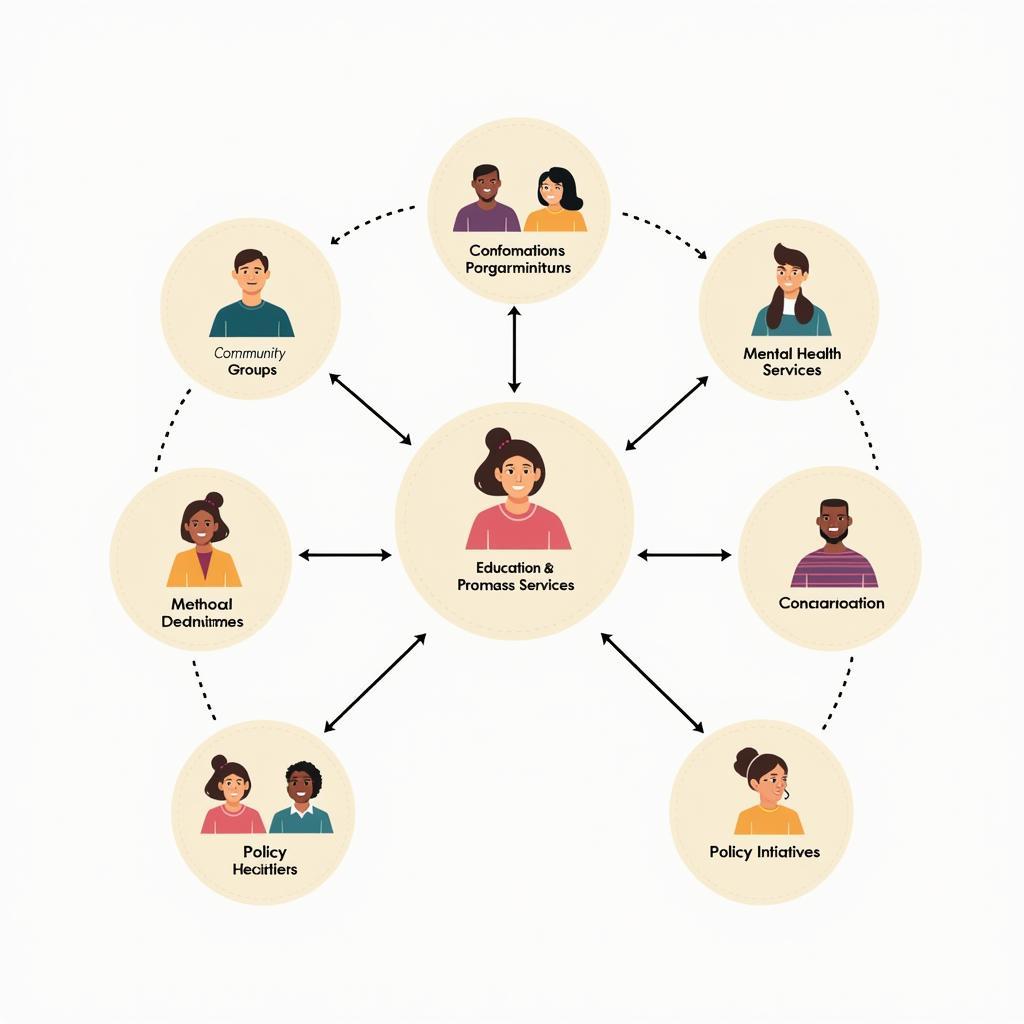 Giải pháp hỗ trợ người đối mặt thách thức trong xã hội hiện đại
Từ vựng và cụm từ quan trọng
Topic-Specific Vocabulary
| Từ vựng/Cụm từ | Loại từ | Phiên âm | Nghĩa tiếng Việt | Ví dụ | Collocation |
|---|---|---|---|---|---|
| daunting | adj | /ˈdɔːntɪŋ/ | đáng sợ, nản lòng (nhưng vẫn có thể làm) | The task seemed daunting at first, but I broke it down into smaller steps. | daunting task, daunting challenge, seem daunting, appear daunting |
| formidable | adj | /fɔːrˈmɪdəbl/ | đáng gờm, ghê gớm, to lớn | She faced formidable obstacles on her journey to success. | formidable challenge, formidable opponent, formidable task, formidable difficulty |
| insurmountable | adj | /ˌɪnsəˈmaʊntəbl/ | không thể vượt qua (cao hơn impossible về mức độ formal) | What seemed like an insurmountable problem became manageable with help. | insurmountable obstacle, insurmountable barrier, seem insurmountable, prove insurmountable |
| persevere | v | /ˌpɜːrsəˈvɪr/ | kiên trì, bền bỉ | Despite numerous setbacks, she persevered and eventually succeeded. | persevere through, persevere with, persevere in, persevere despite |
| resilience | n | /rɪˈzɪliəns/ | khả năng phục hồi, sức bật | Building resilience is essential for facing life’s challenges. | build resilience, develop resilience, demonstrate resilience, emotional resilience, psychological resilience |
| grapple with | phrasal v | /ˈɡræpl wɪð/ | vật lộn với, đấu tranh với (thường là vấn đề khó) | Scientists are grappling with the complexity of climate change. | grapple with a problem, grapple with difficulties, grapple with challenges, grapple with issues |
| overwhelming | adj | /ˌoʊvərˈwelmɪŋ/ | áp đảo, quá sức chịu đựng | The amount of work was overwhelming, but I prioritized tasks. | overwhelming challenge, overwhelming pressure, feel overwhelming, become overwhelming |
| surmount | v | /sərˈmaʊnt/ | vượt qua, khắc phục (formal, higher than overcome) | She surmounted incredible difficulties to achieve her goals. | surmount difficulties, surmount obstacles, surmount challenges, ability to surmount |
| tackle | v | /ˈtækl/ | giải quyết, đương đầu với (informal hơn confront) | We need to tackle this problem head-on rather than avoiding it. | tackle a challenge, tackle a problem, tackle difficulties, tackle head-on |
| embark on | phrasal v | /ɪmˈbɑːrk ɒn/ | bắt đầu (một hành trình/nhiệm vụ khó) | She embarked on a challenging journey to learn three languages. | embark on a journey, embark on a challenge, embark on a project, embark on a task |
| relentless | adj | /rɪˈlentləs/ | không ngừng nghỉ, kiên trì không mệt mỏi | His relentless effort paid off in the end. | relentless effort, relentless pursuit, relentless determination, relentless pressure |
| tenacity | n | /təˈnæsəti/ | sự bền bỉ, kiên trì (formal) | Her tenacity in the face of adversity was admirable. | demonstrate tenacity, show tenacity, with tenacity, tenacity and determination |
| adversity | n | /ədˈvɜːrsəti/ | nghịch cảnh, hoàn cảnh khó khăn (formal) | True character is revealed in times of adversity. | face adversity, overcome adversity, in the face of adversity, triumph over adversity |
| steep learning curve | idiom | /stiːp ˈlɜːrnɪŋ kɜːrv/ | quá trình học tập khó khăn, phải học nhiều thứ mới trong thời gian ngắn | Learning to code had a steep learning curve, but I persisted. | face a steep learning curve, have a steep learning curve, overcome a steep learning curve |
| push one’s limits | idiom | /pʊʃ lɪmɪts/ | vượt qua giới hạn bản thân | This challenge really pushed my limits and helped me grow. | push physical limits, push mental limits, push one’s own limits |
| breakthrough | n | /ˈbreɪkθruː/ | đột phá, bước tiến quan trọng | After months of struggle, I finally had a breakthrough. | achieve a breakthrough, make a breakthrough, major breakthrough, significant breakthrough |
| setback | n | /ˈsetbæk/ | trở ngại tạm thời, sự thụt lùi | Every setback taught me valuable lessons. | face setbacks, experience setbacks, overcome setbacks, major setback, temporary setback |
| momentum | n | /moʊˈmentəm/ | đà phát triển, động lực | Once I gained momentum, the challenge became easier. | build momentum, gain momentum, maintain momentum, lose momentum |
| navigate | v | /ˈnævɪɡeɪt/ | điều hướng, giải quyết (vấn đề phức tạp) | She skillfully navigated the complex situation. | navigate challenges, navigate difficulties, navigate through, successfully navigate |
| debilitating | adj | /dɪˈbɪlɪteɪtɪŋ/ | làm suy yếu nghiêm trọng | The fear was debilitating at first, but I learned to manage it. | debilitating fear, debilitating anxiety, debilitating condition |
Idiomatic Expressions & Advanced Phrases
| Cụm từ | Nghĩa | Ví dụ sử dụng | Band điểm |
|---|---|---|---|
| push someone out of their comfort zone | đẩy ai đó ra khỏi vùng an toàn | This challenge really pushed me out of my comfort zone, but that’s where growth happens. | 7.5-8 |
| bite off more than one can chew | tham vọng quá sức (idiom) | I realized I’d bitten off more than I could chew when I signed up for five courses simultaneously. | 8-9 |
| against all odds | bất chấp mọi khó khăn | Against all odds, she completed the marathon despite her injury. | 7.5-8 |
| throw in the towel | đầu hàng, bỏ cuộc (idiom từ boxing) | There were moments when I wanted to throw in the towel, but I persisted. | 8-9 |
| a baptism of fire | thử thách khắc nghiệt ngay từ đầu (idiom) | Starting this job was a baptism of fire – I had to learn everything immediately. | 8.5-9 |
| trial and error | thử và sai, học qua thực nghiệm | I learned through trial and error, making countless mistakes along the way. | 7-8 |
| blood, sweat and tears | công sức và nỗ lực cực lớn (idiom) | It took blood, sweat and tears, but I finally achieved my goal. | 8-9 |
| uphill battle | cuộc chiến khó khăn, lên dốc (metaphor) | Learning a new language at my age was an uphill battle, but worth it. | 7.5-8 |
| make or break | quyết định thành công hay thất bại | This challenge was a make-or-break moment in my career. | 8-9 |
| go the extra mile | nỗ lực nhiều hơn mức cần thiết | To overcome this challenge, I had to go the extra mile every single day. | 7.5-8 |
| hit rock bottom | chạm đáy, tình trạng tồi tệ nhất | I hit rock bottom before I found the motivation to change. | 8-9 |
| turn over a new leaf | bắt đầu lại, thay đổi tích cực | This challenge helped me turn over a new leaf in my life. | 7.5-8 |
| take the bull by the horns | đương đầu với khó khăn một cách dũng cảm (idiom) | Instead of procrastinating, I decided to take the bull by the horns. | 8.5-9 |
| weather the storm | vượt qua thời kỳ khó khăn (metaphor) | With support from family, I managed to weather the storm. | 8-9 |
| level up | nâng cấp, tiến lên mức cao hơn (từ gaming, informal) | Overcoming this challenge helped me level up in terms of confidence. | 7-8 |
| move mountains | làm điều tưởng chừng không thể (idiom) | With determination, you can move mountains. | 7.5-8 |
Discourse Markers (Từ Nối Ý Trong Speaking)
Để bắt đầu câu trả lời:
- 📝 Well,… – Khi cần một chút thời gian suy nghĩ (Well, I think that’s quite an interesting question…)
- 📝 Actually,… – Khi đưa ra góc nhìn khác hoặc thông tin surprising (Actually, I believe the opposite is true…)
- 📝 To be honest,… / Honestly,… – Khi nói thật, thẳng thắn (To be honest, I found it incredibly difficult at first…)
- 📝 I’d say that… – Khi đưa ra quan điểm (I’d say that challenges are essential for growth…)
- 📝 From my perspective,… / From my point of view,… – Theo quan điểm của tôi
Để bổ sung ý:
- 📝 On top of that,… – Thêm vào đó (On top of that, I had to juggle multiple responsibilities…)
- 📝 What’s more,… / Moreover,… – Hơn nữa (What’s more, this experience taught me valuable lessons…)
- 📝 Not to mention… – Chưa kể đến (Not to mention the financial pressure I was under…)
- 📝 Besides,… / Apart from that,… – Ngoài ra
- 📝 In addition to that,… – Thêm vào đó (formal hơn)
Để đưa ra quan điểm cân bằng:
- 📝 On the one hand,… On the other hand,… – Một mặt… mặt khác
- 📝 While it’s true that…, we also need to consider… – Mặc dù đúng là… nhưng cũng cần xem xét
- 📝 That said,… / Having said that,… – Tuy nhiên, nói như vậy thì…
- 📝 However,… / Nevertheless,… – Tuy nhiên (formal)
Để đưa ra ví dụ:
- 📝 For instance,… / For example,… – Ví dụ
- 📝 Take… for instance,… – Lấy… làm ví dụ (Take my experience for instance…)
- 📝 A case in point is… – Một ví dụ điển hình là (formal)
- 📝 To illustrate this,… – Để minh họa điều này
Để kết luận:
- 📝 All in all,… – Tóm lại
- 📝 At the end of the day,… – Cuối cùng thì
- 📝 In the final analysis,… – Xét cho cùng (formal)
- 📝 Looking back,… – Nhìn lại thì
- 📝 Ultimately,… – Cuối cùng, sau cùng
Để thể hiện quan điểm mạnh mẽ:
- 📝 I strongly believe that… – Tôi tin tưởng mạnh mẽ rằng
- 📝 I’m convinced that… – Tôi tin chắc rằng
- 📝 There’s no doubt that… – Không còn nghi ngờ gì rằng
- 📝 It’s clear that… – Rõ ràng là
Để thể hiện sự do dự/không chắc chắn:
- 📝 I suppose… – Tôi cho là
- 📝 I guess… – Tôi đoán là (informal)
- 📝 It seems to me that… – Có vẻ như là
- 📝 I would say… – Tôi sẽ nói là
- 📝 To some extent… – Ở một mức độ nào đó
Grammatical Structures Ấn Tượng
1. Conditional Sentences (Câu điều kiện):
-
Mixed conditional (Past → Present):
- Formula: If + past perfect, would + base verb
- Ví dụ: “If I hadn’t taken on that challenge, I wouldn’t be the confident person I am today.”
-
Inversion for emphasis:
- Formula: Had + subject + past participle, would have…
- Ví dụ: “Had I known how difficult it would be, I might have prepared more thoroughly.”
- “Never before had I faced such a daunting challenge.”
2. Relative Clauses (Mệnh đề quan hệ):
-
Non-defining (thêm thông tin):
- Ví dụ: “The challenge, which seemed impossible at first, taught me valuable lessons about perseverance.”
- “My mentor, who had faced similar challenges, provided invaluable guidance.”
-
Reduced relative clause:
- Ví dụ: “The obstacles facing me were numerous.” (= The obstacles which were facing me…)
3. Passive Voice (Câu bị động) – Academic style:
-
It is thought/believed/said that…
- Ví dụ: “It is widely believed that challenges are essential for personal growth.”
-
Be + past participle + to infinitive:
- Ví dụ: “This challenge is considered to be one of the most difficult in the field.”
4. Cleft Sentences (Câu chẻ) – Nhấn mạnh:
-
What I find most… is…
- Ví dụ: “What I found most challenging was maintaining motivation when progress seemed slow.”
-
The thing that… is…
- Ví dụ: “The thing that helped me most was breaking the challenge into smaller, manageable steps.”
-
It was… that…
- Ví dụ: “It was the support from my family that enabled me to persevere through the toughest times.”
5. Participle Clauses:
-
Present participle (-ing):
- Ví dụ: “Facing numerous setbacks, I learned to view failure as a stepping stone rather than an endpoint.”
-
Past participle (-ed):
- Ví dụ: “Overwhelmed by the complexity of the task, I initially felt like giving up.”
6. Emphatic Structures:
-
Do/Does/Did + base verb:
- Ví dụ: “I did struggle initially, but eventually found my rhythm.”
-
Inversion with negative adverbials:
- Ví dụ: “Not only did I complete the challenge, but I also exceeded my own expectations.”
- “Seldom have I felt such a sense of accomplishment.”
7. Subjunctive Mood (After suggest/recommend/insist):
- Ví dụ: “I would suggest that people approach challenges with realistic expectations.”
- “It’s important that one maintain perspective when facing difficulties.”
8. Gerund vs Infinitive (Thay đổi nghĩa):
-
Remember to + infinitive: nhớ phải làm gì (chưa làm)
- “I remembered to prepare thoroughly before taking on the challenge.”
-
Remember + gerund: nhớ đã làm gì (đã làm rồi)
- “I remember feeling terrified when I first started.”
9. Advanced Comparatives:
-
The + comparative, the + comparative:
- Ví dụ: “The more I practiced, the more confident I became.”
-
All the + comparative + for:
- Ví dụ: “The success was all the sweeter for the difficulties I’d overcome.”
10. Conditional with Were to:
- Ví dụ: “Were I to face a similar challenge again, I would approach it differently.”
- “If I were to give advice to others, I’d emphasize the importance of patience.”
Lời Khuyên Từ Examiner
Với hơn 20 năm kinh nghiệm chấm thi IELTS Speaking, tôi muốn chia sẻ những insight quan trọng về chủ đề “Challenges” và cách maximize band điểm của bạn:
🎯 Chiến Lược Chọn Challenge Để Kể
Chọn challenge vừa đủ “impossible”:
Đừng chọn challenge quá ordinary (học bơi khi 8 tuổi) hoặc quá extraordinary (leo Everest). Chọn điều thực tế nhưng meaningful:
- ✅ Học một kỹ năng mới trong thời gian ngắn
- ✅ Vượt qua một nỗi sợ hãi sâu sắc
- ✅ Hoàn thành một project phức tạp
- ✅ Thay đổi một thói quen xấu dai dẳng
Authenticity is key:
Examiners có thể nhận ra ngay khi thí sinh đang kể chuyện không có thật. Hãy chọn trải nghiệm thực sự của bạn – điều này sẽ giúp bạn:
- Nói tự nhiên hơn vì bạn nhớ rõ cảm xúc và chi tiết
- Trả lời follow-up questions dễ dàng hơn
- Tránh được những contradiction trong câu chuyện
📚 Sai Lầm Phổ Biến Của Học Viên Việt Nam
1. Lạm dụng từ “very”:
- ❌ “It was very difficult and very challenging.”
- ✅ “It was incredibly daunting and presented formidable obstacles.”
2. Thiếu specific details:
- ❌ “I studied hard every day.”
- ✅ “I dedicated two hours each morning to intensive practice, focusing specifically on my weakest areas.”
3. Sử dụng sai thì trong Part 2:
- ❌ “So I decide to take on this challenge…” (Đây là lỗi CỰC KỲ phổ biến)
- ✅ “So I decided to take on this challenge…”
4. Không trả lời phần “explain how you felt”:
Nhiều học viên focus vào WHAT và HOW nhưng skip phần cảm xúc – đây là phần ghi điểm cao nhất!
5. Vocabulary “show-off” không tự nhiên:
Đừng cố nhồi nhét từ vựng academic vào mọi câu. Band 9 không phải là “càng nhiều từ khó càng tốt” mà là “sử dụng từ chính xác và tự nhiên”.
💡 Bí Quyết Đạt Band 8-9
1. Structure câu trả lời Part 3 theo formula ARES:
- Answer: Direct answer ngay từ đầu
- Reason: Giải thích tại sao
- Example: Ví dụ cụ thể
- Summary: Tổng kết hoặc nuance
2. Sử dụng discourse markers tự nhiên:
Đừng học thuộc list và cố nhét vào. Practice cho đến khi chúng trở nên tự nhiên như tiếng Việt:
- “Well, I think…” (không phải “In my opinion”)
- “Actually…” (không phải “Moreover”)
3. Self-correction tự nhiên:
Native speakers cũng self-correct, và điều này actually shows fluency:
- “It took me about… I’d say roughly three months to…”
- “The challenge was – how can I put it – absolutely overwhelming.”
4. Paraphrasing thay vì repetition:
Nếu examiner hỏi “Do you like challenges?”, đừng start bằng “Yes, I like challenges.” Hãy paraphrase:
- “Absolutely! I’m someone who thrives on pushing my limits.”
5. Acknowledge complexity trong Part 3:
Band 9 candidates không give simple answers. Họ show critical thinking:
- “It’s not a straightforward issue…”
- “There are multiple perspectives to consider…”
- “While X is true, we also need to acknowledge Y…”
🎙️ Pronunciation Tips
1. Word stress quan trọng hơn individual sounds:
- ❌ “CHALlenge” (sai stress)
- ✅ “ChalLENGE” (đúng stress ở syllable thứ 2)
2. Sentence stress for emphasis:
Nhấn mạnh content words (nouns, verbs, adjectives, adverbs), không phải function words (articles, prepositions):
- “I TOOK on a CHALlenge that SEEMED imPOSsible.”
3. Intonation patterns:
- Rising intonation cho questions và lists: “Was it difficult? ↑”
- Falling intonation cho statements: “It was incredibly challenging. ↓”
📊 Time Management
Part 1 (4-5 phút):
- Mỗi câu trả lời: 2-3 câu (không quá ngắn, không quá dài)
- Don’t over-explain – examiner cần cover many questions
Part 2 (3-4 phút total):
- Preparation: 1 phút (sử dụng HẾT thời gian này)
- Speaking: Aim for 2 minutes (minimum 1.5, maximum 3)
- Nếu examiner stop bạn ở 2 phút → Perfect!
- Nếu bạn finish trước 1.5 phút → Underdeveloped
Part 3 (4-5 phút):
- Mỗi câu trả lời: 3-5 câu (longer và deeper hơn Part 1)
- Allow yourself thinking time với discourse markers
🚫 Common Myths Debunked
Myth 1: “Tôi cần speak nhanh để sound fluent”
- Truth: Fluency ≠ Speed. Native speakers pause naturally. Speak at natural pace với clear pronunciation.
Myth 2: “Tôi cần dùng tất cả từ vựng band 8 tôi đã học”
- Truth: Quality > Quantity. Một câu với 2-3 từ precise usage tốt hơn một paragraph đầy advanced words dùng sai.
Myth 3: “Nếu tôi make mistake, tôi sẽ lose points”
- Truth: Band 9 candidates vẫn make occasional errors. Examiner chấm overall performance, not individual mistakes.
Myth 4: “Tôi phải agree với examiner”
- Truth: Bạn có thể disagree politely. Examiners đánh giá language skills, không phải opinions.
Myth 5: “Template câu trả lời sẽ giúp tôi score cao”
- Truth: Examiners được train để identify templates và sẽ penalize. Authenticity và flexibility mới là key.
🎯 Final Tips
Practice recording yourself:
Nghe lại recordings của bạn để identify:
- Hesitations và fillers (uh, um)
- Repetitive vocabulary
- Grammar errors
- Pronunciation issues
Don’t memorize full answers:
Memorization nghe unnatural và rigid. Instead:
- Memorize ideas và vocabulary
- Practice flexibility trong expressing those ideas
- Let your personality shine through
Stay calm và confident:
Examiner không phải là enemy. Họ muốn bạn perform well. Treat it như một conversation, không phải interrogation.
Chủ đề “Describe a time when you took on a challenge that seemed impossible” là cơ hội tuyệt vời để showcase toàn bộ khả năng ngôn ngữ của bạn – từ storytelling skills đến analytical thinking. Với những strategies, vocabulary và sample answers trong bài viết này, bạn đã có foundation vững chắc để tự tin bước vào phòng thi.
Nhớ rằng: The biggest challenge is often starting. Once you begin preparing systematically, the “impossible” becomes achievable. Good luck với IELTS Speaking journey của bạn!