
Mở bài
Chủ đề về ẩm thực luôn là một trong những đề tài phổ biến và thú vị nhất trong kỳ thi IELTS Speaking. Đặc biệt, câu hỏi “Describe A Time When You Tried A New Cuisine” đã xuất hiện thường xuyên trong các kỳ thi IELTS thực tế từ năm 2020 đến nay, với tần suất xuất hiện cao ở cả ba phần thi. Theo thống kê từ IELTS-Simon.com và ielts-blog.com, chủ đề này xuất hiện trong khoảng 15-20% các đề thi Speaking Part 2 và thường được mở rộng thành các câu hỏi thảo luận sâu hơn ở Part 3.
Đây là một chủ đề tuyệt vời vì nó cho phép bạn chia sẻ trải nghiệm cá nhân một cách tự nhiên, đồng thời thể hiện khả năng sử dụng từ vựng liên quan đến ẩm thực, văn hóa và cảm xúc. Tần suất xuất hiện của chủ đề này được dự đoán vẫn duy trì ở mức cao trong tương lai gần do tính ứng dụng thực tế và khả năng khai thác đa dạng.
Trong bài viết này, bạn sẽ học được cách trả lời toàn diện cho cả ba phần thi Speaking với chủ đề ẩm thực, bao gồm 12 câu hỏi thường gặp ở Part 1, một cue card chi tiết ở Part 2 với ba mức độ bài mẫu khác nhau từ Band 6-7, 7.5-8 đến 8.5-9, cùng 8 câu hỏi thảo luận sâu ở Part 3. Bạn cũng sẽ được trang bị hơn 40 từ vựng và cụm từ chuyên ngành, các discourse markers quan trọng, cùng những chiến lược trả lời hiệu quả từ góc nhìn của một examiner giàu kinh nghiệm.
IELTS Speaking Part 1: Introduction and Interview
Tổng Quan Về Part 1
Part 1 của IELTS Speaking kéo dài 4-5 phút với các câu hỏi ngắn về cuộc sống hàng ngày. Đây là phần “warm-up” để bạn làm quen với examiner và không khí thi cử. Chiến lược quan trọng nhất là trả lời tự nhiên, mở rộng câu trả lời thành 2-3 câu với cấu trúc: Direct answer → Reason/Example → Additional detail.
Lỗi thường gặp của học viên Việt Nam ở phần này bao gồm trả lời quá ngắn gọn chỉ “Yes/No”, sử dụng từ vựng đơn điệu lặp đi lặp lại, và thiếu ví dụ cụ thể từ cuộc sống bản thân. Hãy nhớ rằng Part 1 không đòi hỏi vocabulary quá phức tạp, nhưng cần thể hiện sự tự nhiên và khả năng diễn đạt rõ ràng.
Các Câu Hỏi Thường Gặp
Question 1: Do you enjoy cooking?
Question 2: What kind of food do you like to eat?
Question 3: Did you learn to cook when you were younger?
Question 4: Do you prefer eating at home or in restaurants?
Question 5: What is your favorite dish?
Question 6: Have you ever tried foreign food?
Question 7: Is there any food you dislike?
Question 8: Do you think eating habits have changed in your country?
Question 9: Who usually cooks in your family?
Question 10: Would you like to try food from other countries?
Question 11: Do you think healthy eating is important?
Question 12: Have you ever cooked for others?
Phân Tích và Gợi Ý Trả Lời Chi Tiết
Question: Do you enjoy cooking?
🎯 Cách tiếp cận:
- Trả lời trực tiếp Yes/No
- Giải thích lý do (tại sao thích/không thích)
- Đưa ra ví dụ về món ăn hoặc tần suất nấu
📝 Sample Answer – Band 6-7:
Yes, I quite enjoy cooking, especially on weekends when I have more free time. I find it relaxing and I can make dishes that suit my taste. I usually cook simple meals like fried rice or pasta.
Phân tích:
- Điểm mạnh: Trả lời rõ ràng, có lý do và ví dụ cụ thể
- Hạn chế: Từ vựng còn cơ bản (quite enjoy, relaxing, simple meals), thiếu detail về cảm xúc hoặc kinh nghiệm
- Tại sao Band 6-7: Đáp ứng đủ yêu cầu với cấu trúc hoàn chỉnh nhưng chưa impressive về vocabulary và depth of ideas
📝 Sample Answer – Band 8-9:
Absolutely! I’m really passionate about cooking, particularly during weekends when I can experiment with different recipes. There’s something incredibly therapeutic about the whole process – from selecting fresh ingredients at the market to plating the final dish. Recently, I’ve been perfecting my Thai green curry recipe, which has become quite a crowd-pleaser among my friends.
Phân tích:
- Điểm mạnh: Từ vựng sophisticated (passionate about, experiment with, therapeutic, perfecting, crowd-pleaser), cấu trúc đa dạng với relative clause và gerund phrase, ý tưởng cụ thể và chi tiết về quy trình nấu ăn
- Tại sao Band 8-9: Thể hiện Fluency tự nhiên với từ nối hợp lý, Vocabulary range rộng với collocations chính xác, Grammar đa dạng với cấu trúc phức hợp, và ideas có chiều sâu về cảm xúc cá nhân
💡 Key Vocabulary & Expressions:
- passionate about: đam mê, say mê điều gì đó
- experiment with: thử nghiệm, thực nghiệm với
- therapeutic: có tác dụng thư giãn, chữa lành tâm hồn
- crowd-pleaser: món ăn/thứ gì đó được nhiều người yêu thích
Question: Have you ever tried foreign food?
🎯 Cách tiếp cận:
- Trả lời Yes với ví dụ cụ thể về loại cuisine
- Nêu địa điểm và thời điểm (không cần quá chi tiết)
- Chia sẻ cảm nhận ngắn gọn
📝 Sample Answer – Band 6-7:
Yes, I have. Last year, I tried Italian food at a restaurant in my city. I had pizza and spaghetti, which were very delicious. The flavors were quite different from Vietnamese food, and I really enjoyed the experience.
Phân tích:
- Điểm mạnh: Có timeline rõ ràng, đề cập địa điểm và món ăn cụ thể, có so sánh văn hóa
- Hạn chế: Miêu tả cảm xúc đơn giản (very delicious, really enjoyed), thiếu vocabulary về flavors và textures
- Tại sao Band 6-7: Đầy đủ thông tin cơ bản nhưng chưa show off vocabulary range và descriptive ability
📝 Sample Answer – Band 8-9:
Oh yes, definitely! One memorable experience was when I ventured into authentic Japanese cuisine at a highly-rated izakaya in Hanoi last summer. I was absolutely blown away by the freshness of the sashimi and the delicate balance of flavors in the ramen broth. It was quite a revelation compared to the Westernized versions I’d tried before – the attention to detail and presentation was just impeccable.
Phân tích:
- Điểm mạnh: Vocabulary sophisticated với food-specific terms (izakaya, sashimi, presentation), strong collocations (ventured into, blown away by, delicate balance, impeccable), cấu trúc phức tạp với past perfect và noun phrase, và ideas show cultural awareness
- Tại sao Band 8-9: Fluency xuất sắc với discourse marker “Oh yes, definitely!”, Lexical Resource đa dạng với từ vựng chuyên ngành ẩm thực, Grammar accuracy cao với mix của various tenses, và ideas nuanced về sự khác biệt văn hóa
💡 Key Vocabulary & Expressions:
- venture into: mạo hiểm thử điều gì mới mẻ
- blown away by: vô cùng ấn tượng, choáng ngợp bởi
- delicate balance: sự cân bằng tinh tế
- a revelation: một điều bất ngờ thú vị, mở mang tầm mắt
- impeccable: hoàn hảo, không thể chê vào đâu được
Question: What is your favorite dish?
🎯 Cách tiếp cận:
- Nêu tên món ăn cụ thể
- Giải thích tại sao thích (taste, memories, ingredients)
- Có thể đề cập khi nào thường ăn món này
📝 Sample Answer – Band 6-7:
My favorite dish is phở. It’s a traditional Vietnamese soup with rice noodles and beef or chicken. I love it because the broth is very tasty and it reminds me of home. I usually eat it for breakfast on cold days.
Phân tích:
- Điểm mạnh: Clear answer, basic description, personal connection
- Hạn chế: Descriptive language basic (very tasty), thiếu sensory details về aroma, texture
- Tại sao Band 6-7: Adequate response nhưng lacks sophistication trong vocabulary và depth of explanation
📝 Sample Answer – Band 8-9:
I’d have to say bún chả – it’s a Hanoi specialty that never fails to satisfy. What I love most is the harmonious combination of succulent grilled pork, tangy dipping sauce, and fresh herbs. There’s something incredibly comforting about that smoky aroma wafting from the charcoal grill. It’s not just food for me; it’s deeply intertwined with my childhood memories of family meals. Nếu bạn muốn khám phá thêm về những món ăn đặc trưng khác, describe a place in your country that is known for its food sẽ cung cấp góc nhìn sâu sắc hơn về văn hóa ẩm thực Việt Nam.
Phân tích:
- Điểm mạnh: Rich sensory vocabulary (succulent, tangy, smoky aroma), emotional connection expressed sophisticatedly (deeply intertwined with), collocation natural (never fails to satisfy, harmonious combination), và grammar với present participle phrase
- Tại sao Band 8-9: Demonstrates full range của lexical resource với food-specific adjectives, fluency với discourse marker “I’d have to say”, và ideas showing personal depth and cultural awareness
💡 Key Vocabulary & Expressions:
- never fails to satisfy: luôn làm hài lòng
- harmonious combination: sự kết hợp hài hòa
- succulent: mọng nước, ngon ngọt (thường dùng cho thịt)
- tangy: vị chua nhẹ, chua dịu
- deeply intertwined with: gắn bó sâu sắc với
- wafting from: tỏa ra từ (mùi, hương)
 Học viên IELTS Speaking luyện tập chủ đề ẩm thực với examiner trong phòng thi
IELTS Speaking Part 2: Long Turn (Cue Card)
Tổng Quan Về Part 2
Part 2 là phần độc thoại dài 2-3 phút, trong đó bạn có 1 phút chuẩn bị và ghi chú. Đây là phần quan trọng nhất để thể hiện khả năng nói liền mạch và tổ chức ý tưởng. Chiến lược thành công bao gồm sử dụng trọn vẹn 1 phút để brainstorm và ghi từ khóa quan trọng chứ không phải viết câu hoàn chỉnh. Bạn cần nói đủ 2 phút nhưng không quá 3 phút, trả lời đầy đủ tất cả các bullet points trong cue card.
Lỗi thường gặp nhất của học viên Việt Nam là không tận dụng hết thời gian chuẩn bị, dẫn đến nói thiếu tự tin và kết thúc sớm hơn 1.5 phút. Một lỗi khác là bỏ qua phần “explain” cuối cùng, trong khi đây mới chính là phần scoring cao nhất vì thể hiện khả năng phân tích và diễn đạt cảm xúc phức tạp. Với chủ đề về trải nghiệm trong quá khứ như thử món ăn mới, hãy nhớ sử dụng thì quá khứ đơn và quá khứ tiếp diễn một cách nhất quán.
Cue Card
Describe a time when you tried a new cuisine
You should say:
- What cuisine it was
- When and where you tried it
- Who you were with
- And explain how you felt about this experience
Phân Tích Đề Bài
Dạng câu hỏi: Describe an experience – kể về một trải nghiệm cụ thể trong quá khứ
Thì động từ: Chủ yếu là quá khứ đơn (Past Simple) cho các hành động đã hoàn thành, quá khứ tiếp diễn (Past Continuous) cho bối cảnh, và có thể dùng Present Perfect khi nói về ảnh hưởng đến hiện tại
Bullet points phải cover:
- What cuisine: Cần nêu rõ loại ẩm thực cụ thể (ví dụ: Mexican, Korean, Thai cuisine) chứ không nói chung chung
- When and where: Xác định thời điểm và địa điểm cụ thể để câu chuyện có tính xác thực
- Who you were with: Đề cập đến người đồng hành và có thể giải thích vai trò của họ trong trải nghiệm
- How you felt: Phần quan trọng nhất cần diễn đạt cảm xúc, suy nghĩ, và đánh giá về trải nghiệm
Câu “explain” quan trọng: Đây là phần ghi điểm cao nhất vì examiner muốn nghe bạn phân tích sâu về cảm xúc, lý do tại sao trải nghiệm đó đáng nhớ, và có thể so sánh với những gì bạn đã biết trước đó. Đừng chỉ miêu tả sự việc mà hãy giải thích WHY và HOW nó ảnh hưởng đến bạn.
📝 Sample Answer – Band 6-7
Thời lượng: Khoảng 1.5-2 phút
I’d like to talk about the time when I tried Indian cuisine for the first time. It was about two years ago when I visited a new Indian restaurant that had just opened in my neighborhood.
I went there with my close friend who loves trying different types of food. She had been to India before and recommended that we should try authentic Indian dishes. The restaurant had a nice atmosphere with traditional Indian decorations and music playing in the background.
We ordered several dishes including chicken tikka masala, naan bread, and vegetable biryani. When the food arrived, I was surprised by the bright colors and the strong smell of spices. The chicken tikka masala was quite spicy but very flavorful. The naan bread was soft and warm, and it was perfect for dipping into the curry sauce. The biryani rice had many different vegetables and spices mixed together.
At first, I was a bit nervous because the food looked very different from what I usually eat. Vietnamese food is not as spicy as Indian food. However, after trying the first bite, I found it delicious. The combination of spices created a unique taste that I had never experienced before.
I felt really happy about this experience because it opened my mind to a new type of food culture. The spices and cooking methods were completely different from Vietnamese cuisine. Since then, I have tried Indian food several more times and I always enjoy it. This experience taught me that trying new things can be exciting and rewarding.
Phân Tích Band Điểm
| Tiêu chí | Band | Nhận xét |
|---|---|---|
| Fluency & Coherence | 6-7 | Có sử dụng linking words cơ bản (when, however, since then), ý tưởng được sắp xếp logic theo timeline, nhưng còn một số hesitation và repetition |
| Lexical Resource | 6-7 | Từ vựng adequate cho topic (authentic, atmosphere, flavorful, spices), có một số collocations (close friend, bright colors), nhưng chưa sophisticated |
| Grammatical Range & Accuracy | 6-7 | Mix của simple và complex sentences, sử dụng đúng past tenses, có relative clauses, nhưng structures chưa đa dạng lắm |
| Pronunciation | 6-7 | Giả định rõ ràng, dễ hiểu với minimal mispronunciation |
Điểm mạnh:
- ✅ Trả lời đầy đủ tất cả bullet points trong cue card
- ✅ Có cấu trúc rõ ràng với introduction, main story, và conclusion
- ✅ Sử dụng specific examples về món ăn và miêu tả cảm giác
- ✅ Có personal reflection về ý nghĩa của trải nghiệm
Hạn chế:
- ⚠️ Vocabulary còn basic và repetitive (very different xuất hiện nhiều lần, delicious, nice)
- ⚠️ Thiếu sensory details chi tiết hơn về taste, texture, aroma
- ⚠️ Grammar structures chưa đủ sophisticated với limited use of complex sentences
📝 Sample Answer – Band 7.5-8
Thời lượng: Khoảng 2-2.5 phút
I’d like to share an experience that really stands out in my memory – the first time I delved into authentic Ethiopian cuisine. This happened roughly six months ago during a weekend trip to Ho Chi Minh City.
I was there with my university roommate, who’s quite the food enthusiast and had been raving about this particular Ethiopian restaurant she’d discovered. Initially, I was somewhat apprehensive because Ethiopian food was completely uncharted territory for me – I had virtually no idea what to expect in terms of flavors or eating customs.
The restaurant itself had an incredibly warm and inviting atmosphere, decorated with traditional Ethiopian artifacts and colorful textiles. What immediately caught my attention was the unique way of serving food. Instead of regular plates, everything was presented on a large piece of injera – this spongy, slightly sour flatbread that serves as both plate and utensil. We ordered a traditional combination platter featuring doro wat, which is a spicy chicken stew, along with various vegetable dishes and lentil curries.
The eating experience was fascinating. Using pieces of injera to scoop up the different stews required some practice, but it made the meal feel more communal and interactive. The flavors were absolutely exquisite – a complex blend of spices I’d never encountered before, with berbere spice giving everything this distinctive earthy, warming quality. The doro wat had a rich, deep flavor that was spicy but not overwhelming.
What struck me most was how this experience broadened my culinary horizons. Before trying Ethiopian food, I had a rather limited perspective on African cuisine. This meal completely challenged my preconceptions and made me realize how diverse and sophisticated food cultures can be. The whole experience felt like a mini cultural immersion – not just eating food, but understanding a different way of dining and sharing meals. It’s definitely sparked my interest in exploring more cuisines from different parts of the world.
Phân Tích Band Điểm
| Tiêu chí | Band | Nhận xét |
|---|---|---|
| Fluency & Coherence | 7.5-8 | Speaks fluently với minimal hesitation, discourse markers natural (Initially, What struck me most), ý tưởng progression logical và smooth |
| Lexical Resource | 7.5-8 | Wide range với less common vocabulary (delved into, apprehensive, uncharted territory, exquisite), collocations chính xác (stands out in memory, food enthusiast, communal and interactive) |
| Grammatical Range & Accuracy | 7.5-8 | Variety of complex structures (relative clauses, participle phrases, cleft sentences), consistent accuracy, appropriate tense usage |
| Pronunciation | 7.5-8 | Clear articulation với good intonation patterns |
So Sánh Với Band 6-7
| Khía cạnh | Band 6-7 | Band 7.5-8 |
|---|---|---|
| Vocabulary | “quite spicy”, “very different”, “unique taste” | “apprehensive”, “uncharted territory”, “exquisite”, “earthy, warming quality” |
| Grammar | Mostly simple sentences với một số compound: “The naan bread was soft and warm, and it was perfect…” | Complex structures: “What struck me most was how…”, “Before trying Ethiopian food, I had…” |
| Ideas | Basic description of food and feelings | Deeper reflection on cultural significance, challenging preconceptions, và long-term impact |
📝 Sample Answer – Band 8.5-9
Thời lượng: 2.5-3 phút đầy đủ
I’d like to recount a truly memorable culinary adventure that took place last autumn when I had the opportunity to experience authentic Persian cuisine for the first time. This happened during a business trip to Hanoi, where a colleague who’s of Iranian descent graciously invited me to a family gathering at his home.
What made this experience particularly special was that it wasn’t in a restaurant setting – I was actually immersed in a genuine Persian household, which gave me unprecedented access to not just the food, but the entire culture surrounding it. My colleague’s mother, who’d been cooking traditional Persian dishes for decades, had prepared an elaborate feast that I later learned was quite typical for family celebrations.
The meal itself was an absolute revelation. The centerpiece was tahdig – this gloriously crispy, golden layer of rice from the bottom of the pot that’s considered the pièce de résistance of Persian cooking. Alongside this, we had fesenjan, an extraordinary stew made with pomegranate molasses and ground walnuts that created this incredibly complex sweet-and-sour flavor profile. There was also kashke bademjan, which is an eggplant dish topped with kashk – a fermented whey product that added this distinctively tangy, umami-rich dimension I’d never encountered before.
What truly captivated me, beyond the exquisite flavors, was the ritualistic nature of the dining experience. The way dishes were presented, the emphasis on sharing from communal plates, and the integration of food with conversation and storytelling – it all felt incredibly deliberate and meaningful. The meal lasted nearly three hours, which initially surprised me given our Vietnamese tendency for quicker dining, but I came to appreciate how this leisurely pace facilitated deeper connections among diners.
Reflecting on this experience, what resonates most profoundly is how it fundamentally shifted my understanding of what cuisine represents. It’s not merely about sustenance or even taste – it’s a living expression of cultural identity, history, and values. The Persian emphasis on hospitality, the meticulous attention to layered flavors, and the way food serves as a vehicle for building community offered such a stark yet beautiful contrast to my own culinary background. Tương tự như trải nghiệm này, describe a weekend that you enjoyed cũng thường gắn liền với những kỷ niệm ẩm thực đáng nhớ.
This encounter has had a lasting impact on my approach to food and culture. It’s inspired me to be more adventurous and open-minded when encountering unfamiliar cuisines, and to look beyond the surface to understand the deeper narratives that food can tell. I’ve since made it a personal mission to explore cuisines from regions I know little about, because that evening taught me that every culinary tradition has profound stories to tell about the people who’ve preserved and passed it down through generations.
Phân Tích Band Điểm
| Tiêu chí | Band | Nhận xét |
|---|---|---|
| Fluency & Coherence | 8.5-9 | Speaks fluently với natural, effortless delivery, sophisticated discourse markers (What made this particularly special, Reflecting on this experience), logical progression với smooth transitions |
| Lexical Resource | 8.5-9 | Sophisticated vocabulary với precise usage (revelation, unprecedented access, pièce de résistance, ritualistic nature, profound narratives), natural collocations, idiomatic expressions |
| Grammatical Range & Accuracy | 8.5-9 | Full range of structures sử dụng naturally và accurately (relative clauses, participle phrases, cleft sentences, complex conditionals), error-free |
| Pronunciation | 8.5-9 | Pronunciation features fully effective với appropriate intonation, stress, và rhythm |
Tại Sao Bài Này Xuất Sắc
🎯 Fluency Hoàn Hảo:
Bài nói duy trì momentum liên tục không có hesitation đáng kể. Cách sử dụng discourse markers như “What made this particularly special”, “Reflecting on this experience” không chỉ natural mà còn sophisticated, showing clear signposting of ideas.
📚 Vocabulary Tinh Vi:
- “culinary adventure” thay vì “trying new food” – shows lexical sophistication
- “unprecedented access” – precise word choice cho ý nghĩa “unique opportunity”
- “pièce de résistance” – appropriate use của foreign phrase trong English context
- “umami-rich dimension” – technical culinary term sử dụng correctly
- “living expression of cultural identity” – abstract, conceptual language
📝 Grammar Đa Dạng:
- Cleft sentence: “What truly captivated me, beyond the exquisite flavors, was the ritualistic nature…”
- Relative clause: “…my colleague who’s of Iranian descent graciously invited me…”
- Participle phrase: “Reflecting on this experience, what resonates most profoundly is…”
- Complex sentence: “The way dishes were presented, the emphasis on sharing from communal plates, and the integration of food with conversation and storytelling – it all felt incredibly deliberate and meaningful.”
💡 Ideas Sâu Sắc:
Bài không chỉ describe món ăn mà còn analyze cultural significance, compare với Vietnamese culture, và reflect on personal growth. Shows critical thinking và ability to discuss abstract concepts như cultural identity và community building through food.
Follow-up Questions (Rounding Off Questions)
Question 1: Would you recommend this cuisine to others?
Band 6-7 Answer:
Yes, definitely. I think everyone should try Persian food because it’s very delicious and different from other cuisines. The flavors are unique and the experience was very interesting.
Band 8-9 Answer:
Absolutely, I’d wholeheartedly recommend it to anyone who’s open to culinary exploration. What makes Persian cuisine particularly worth experiencing is not just the distinctive flavor profiles, but the entire cultural context that comes with it. It’s one of those cuisines that truly rewards those willing to venture beyond their comfort zone.
Question 2: Do you think you’ll try this cuisine again?
Band 6-7 Answer:
Yes, I would like to try it again in the future. The food was really good and I want to try more dishes that I didn’t have before. Maybe I can visit an Iranian restaurant next time.
Band 8-9 Answer:
Without a doubt. In fact, this experience has sparked such curiosity that I’ve already been researching Persian restaurants in my area. I’m particularly keen to explore regional variations within Persian cuisine, as I’ve learned it’s incredibly diverse and regionally specific. I’d also love to learn some cooking techniques myself – that perfect tahdig has become something of a personal challenge I’m determined to master.
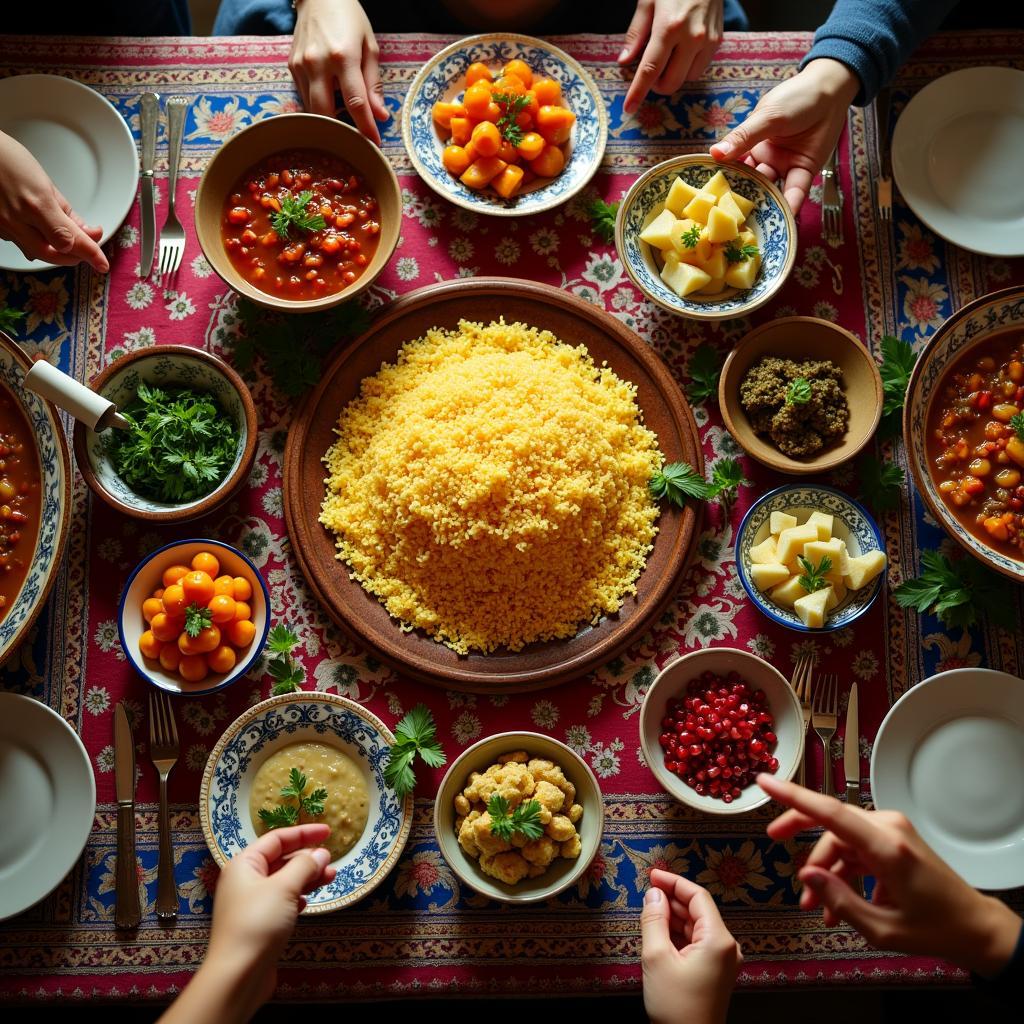 Bàn ăn Persian truyền thống với món tahdig và các món ăn kèm trong bối cảnh gia đình ấm cúng
IELTS Speaking Part 3: Two-way Discussion
Tổng Quan Về Part 3
Part 3 kéo dài 4-5 phút với các câu hỏi thảo luận mang tính trừu tượng và phân tích cao hơn nhiều so với Part 1 và 2. Đây là phần khó nhất vì examiner muốn test khả năng discuss abstract ideas, analyze trends, compare perspectives, và evaluate complex issues. Bạn cần demonstrate critical thinking chứ không chỉ personal experiences.
Yêu cầu cụ thể bao gồm đưa ra quan điểm có lý lẽ rõ ràng, phân tích nhiều góc độ của vấn đề, sử dụng examples từ society chứ không chỉ từ cá nhân, và acknowledge complexity của issues. Chiến lược hiệu quả là mở rộng câu trả lời thành 3-5 câu với structure: Direct answer → Reason 1 + example → Reason 2 + example → Conclusion/Nuance.
Lỗi thường gặp của học viên Việt Nam là trả lời quá ngắn thiếu elaboration, không đưa ra reasoning rõ ràng supporting opinion, và thiếu vocabulary để discuss abstract concepts. Một điểm quan trọng là bạn cần sound natural chứ không phải recite memorized answers – examiner có thể easily detect templates.
Các Câu Hỏi Thảo Luận Sâu
Theme 1: Food Culture and Society
Question 1: Why do you think people are increasingly interested in trying food from different cultures?
🎯 Phân tích câu hỏi:
- Dạng: Cause-Effect Analysis (phân tích nguyên nhân của xu hướng)
- Key words: increasingly interested, trying food, different cultures
- Cách tiếp cận: Identify multiple reasons (globalization, social media, travel) → Provide examples → Acknowledge potential counterarguments
📝 Sample Answer – Band 6-7:
I think there are several reasons for this trend. First, people can travel more easily now than before, so they have more chances to experience different types of food. Also, social media plays a big role because people share photos of interesting dishes from other countries, which makes others curious to try them. Another reason is that many international restaurants have opened in cities, so it’s easier to access foreign food. Young people especially like to try new things and they are more open-minded about different cultures.
Phân tích:
- Structure: Có listing reasons (First, Also, Another reason) nhưng somewhat mechanical
- Vocabulary: Adequate nhưng basic (more easily, play a big role, open-minded)
- Tại sao Band 6-7: Addresses the question với relevant points nhưng lacks depth of analysis và sophisticated language
📝 Câu trả lời mẫu – Band 8-9:
Well, I’d say this growing interest stems from several interconnected factors. Primarily, we’re living in an era of unprecedented globalization where cross-cultural exchange has become the norm rather than the exception. People are increasingly exposed to diverse culinary traditions through travel, migration, and digital media, which naturally cultivates curiosity and broadens palates.
What’s more, social media has played a transformative role in democratizing food culture. Platforms like Instagram have turned dining into a highly visual, shareable experience, and there’s definitely a social currency attached to being well-versed in international cuisines. You see influencers showcasing exotic dishes, and it creates this aspirational quality that drives people to seek out similar experiences.
I’d also argue there’s a deeper psychological dimension at play. In our increasingly interconnected yet fragmented world, food serves as a tangible, accessible gateway to understanding other cultures. It’s far less intimidating than learning a new language or studying history, yet it offers genuine cultural insight. To some extent, trying different cuisines has become a form of cultural capital – a way to signal openness, sophistication, and worldliness.
That said, we should acknowledge this trend isn’t universal – it’s largely concentrated among urban, middle-class demographics with disposable income and exposure to diversity.
Phân tích:
- Structure: Well-organized với clear progression: Main cause → Secondary factor → Deeper analysis → Acknowledgment of limitations
- Vocabulary: Sophisticated với precise academic terms (unprecedented globalization, cross-cultural exchange, democratizing, social currency, cultural capital)
- Grammar: Complex structures natural (Platforms like Instagram have turned…, You see influencers showcasing…, I’d also argue there’s…)
- Critical Thinking: Shows nuanced understanding với multiple perspectives, acknowledges complexity, uses hedging language appropriately
💡 Key Language Features:
- Discourse markers: Well, Primarily, What’s more, That said – natural và varied
- Tentative language: I’d say, I’d also argue, To some extent – shows academic sophistication
- Abstract nouns: globalization, cross-cultural exchange, social currency, cultural capital, disposable income
- Hedging: increasingly, largely, to some extent – appropriate academic caution
Question 2: How has globalization affected traditional food cultures?
🎯 Phân tích câu hỏi:
- Dạng: Cause-Effect + Evaluation (phân tích impact với positive và negative aspects)
- Key words: globalization, affected, traditional food cultures
- Cách tiếp cận: Acknowledge both positive and negative effects → Provide specific examples → Offer balanced conclusion
📝 Sample Answer – Band 6-7:
Globalization has affected traditional food in both good and bad ways. On the positive side, it helps people learn about foods from other countries and share their own traditional dishes with the world. For example, Vietnamese phở is now famous in many countries. However, there are also negative effects. Some traditional dishes are changing because restaurants want to make them suitable for international customers. Also, fast food chains from Western countries are very popular, which might make young people less interested in their own traditional food. Overall, I think globalization brings both opportunities and challenges for traditional food cultures.
Phân tích:
- Structure: Balanced view với positive và negative, có example nhưng chưa detailed
- Vocabulary: Simple (good and bad ways, very popular, less interested)
- Tại sao Band 6-7: Adequate response covering main points nhưng lacks sophisticated analysis và precise vocabulary
📝 Câu trả lời mẫu – Band 8-9:
This is quite a complex issue because globalization has had decidedly mixed effects on traditional food cultures. On one hand, it’s created unprecedented opportunities for culinary traditions to gain global recognition and commercial viability. Take Vietnamese cuisine as an example – dishes that were once hyperlocal have now become internationally celebrated, which has actually incentivized the preservation of traditional cooking methods and generated economic benefits for communities that maintain these practices.
On the flip side, there’s been considerable cultural dilution and homogenization. As traditional dishes are adapted for global palates, they often lose their authenticity and distinctive characteristics. You see this with the proliferation of fusion restaurants that, while innovative, sometimes result in what critics call “culinary appropriation” – where traditional foods are stripped of their cultural context and repackaged for commercial appeal. Additionally, nhiều người lo ngại về việc văn hóa ẩm thực địa phương đang dần mai một khi thế hệ trẻ bị thu hút bởi các thương hiệu toàn cầu, điều này có liên hệ với describe a dish from another country you would like to try và sự ảnh hưởng của xu hướng toàn cầu hóa.
Perhaps more concerning is the asymmetrical nature of this exchange. Dominant food cultures – particularly Western fast food – have penetrated markets globally, often displacing local food traditions and contributing to health issues and loss of culinary diversity. Meanwhile, non-Western cuisines often struggle for equal representation and face stereotyping or exoticization.
I think the key is finding balance – embracing the cross-cultural exchange that globalization enables while actively working to safeguard culinary heritage through education, documentation, and supporting local food systems.
Phân tích:
- Structure: Sophisticated analysis với balanced view (On one hand…On the flip side), specific examples, và thoughtful conclusion
- Vocabulary: Academic và precise (decidedly mixed effects, hyperlocal, cultural dilution, proliferation, culinary appropriation, asymmetrical nature)
- Grammar: Complex structures (Take Vietnamese cuisine as an example – dishes that were once hyperlocal have now become…, As traditional dishes are adapted…, they often lose…)
- Critical Thinking: Shows deep understanding of complexity, acknowledges power dynamics, offers nuanced perspective
💡 Key Language Features:
- Discourse markers: This is quite a complex issue, On one hand, On the flip side, Perhaps more concerning
- Tentative language: I think the key is, often, sometimes
- Abstract nouns: preservation, commercial viability, cultural dilution, homogenization, culinary appropriation, culinary diversity
Theme 2: Health and Dietary Trends
Question 3: Do you think traditional cuisine is generally healthier than modern fast food?
🎯 Phân tích câu hỏi:
- Dạng: Compare and Contrast + Opinion
- Key words: traditional cuisine, healthier, modern fast food
- Cách tiếp cận: Avoid absolute statements → Compare based on criteria → Provide examples → Acknowledge exceptions
📝 Câu trả lời mẫu – Band 8-9:
Well, this is a question that requires some nuance because the answer isn’t as straightforward as it might initially appear. Generally speaking, traditional cuisines do tend to have certain health advantages. They’re typically built around whole, minimally processed ingredients – fresh vegetables, grains, legumes, and lean proteins prepared using time-tested cooking methods. These dishes often reflect centuries of culinary wisdom about balanced nutrition and seasonal eating.
In contrast, modern fast food is characterized by high levels of processing, added sugars, unhealthy fats, and excessive sodium – all of which have been conclusively linked to various health issues like obesity, cardiovascular disease, and diabetes. The portion sizes are often deliberately inflated to maximize profit, and there’s typically a dearth of fresh vegetables and fiber.
However, I think we need to avoid romanticizing traditional foods too much. Not all traditional dishes are necessarily healthy – many are quite rich in saturated fats or sodium, particularly celebratory dishes that were historically meant to be consumed sparingly. Additionally, the health value of traditional cuisine often depends on how it’s prepared in contemporary settings. Restaurant versions of traditional dishes can be just as calorie-dense as fast food.
What really matters, in my view, is the overall dietary pattern rather than individual foods. Traditional cuisines that emphasize plant-based ingredients, variety, and moderation generally promote better health outcomes, whereas a diet dominated by ultra-processed fast food, regardless of its cultural origin, is inherently problematic. The key is mindful eating and maintaining connection to food’s nutritional purpose rather than treating it purely as convenience or entertainment.
💡 Key Language Features:
- Discourse markers: Well, this is a question that requires some nuance, Generally speaking, In contrast, However
- Academic vocabulary: straightforward, characterized by, conclusively linked to, deliberately inflated, dearth of
- Hedging: typically, often, generally, tend to
- Critical thinking vocabulary: avoid romanticizing, inherently problematic, mindful eating
Question 4: Why are people becoming more health-conscious about their food choices?
🎯 Phân tích câu hỏi:
- Dạng: Cause-Effect Analysis
- Key words: becoming more health-conscious, food choices
- Cách tiếp cận: Identify multiple causes (awareness, health crises, information access) → Provide contemporary examples → Consider demographic differences
📝 Câu trả lời mẫu – Band 8-9:
I think we’re witnessing a confluence of factors driving this heightened health consciousness. First and foremost, there’s been a dramatic increase in lifestyle-related diseases – obesity, diabetes, heart conditions – which has forced both individuals and health authorities to confront the connection between diet and chronic illness. When you see alarming statistics about these conditions, particularly among younger populations, it inevitably prompts self-reflection about dietary habits.
Secondly, we’re living in an information-rich environment where research about nutrition is more accessible than ever. People can easily educate themselves about the impact of processed foods, the importance of micronutrients, and various dietary approaches. Documentaries like “What the Health” or social media influencers advocating for plant-based diets have exponentially amplified this awareness.
There’s also an economic dimension. Rising healthcare costs in many countries have made people realize that prevention is more cost-effective than treatment. Investing in quality food is increasingly seen as a form of health insurance – albeit one you can control.
That being said, this trend is highly stratified. Health-conscious eating often requires time, knowledge, and financial resources that aren’t equally distributed. Affluent, educated demographics have disproportionate access to fresh, organic produce and the leisure to prepare nutritious meals, while lower-income communities often face “food deserts” where healthy options are scarce and expensive. So while the trend is real, we must acknowledge these disparities rather than presenting it as a universal shift.
💡 Key Language Features:
- Complex vocabulary: confluence of factors, lifestyle-related diseases, self-reflection, exponentially amplified, highly stratified
- Discourse markers: First and foremost, Secondly, That being said
- Tentative language: I think we’re witnessing, often requires, increasingly seen as
- Social awareness: Acknowledges inequality and different access to healthy food
 Người trẻ thế hệ mới đang chọn thực phẩm hữu cơ healthy tại siêu thị hiện đại
Theme 3: Cultural Identity and Food
Question 5: How important is food in maintaining cultural identity?
🎯 Phân tích câu hỏi:
- Dạng: Evaluation + Analysis (đánh giá significance)
- Key words: important, food, maintaining, cultural identity
- Cách tiếp cận: Establish importance → Explain mechanisms (transmission, rituals, memory) → Provide examples → Consider challenges
📝 Câu trả lời mẫu – Band 8-9:
I’d argue that food is absolutely fundamental to cultural identity – in fact, it might be one of the most powerful and enduring markers of culture. Unlike language or customs that can be lost within a generation or two, culinary traditions have this remarkable ability to persist across time and geography.
The reason for this resilience is multifaceted. Food operates on a deeply sensory level – taste, smell, and texture create visceral memories that are incredibly potent. A single dish can instantly transport someone back to their childhood or evoke a sense of belonging to a particular place or community. For diaspora communities, maintaining traditional foodways becomes a tangible link to their heritage, a way to literally taste their roots.
Moreover, food is intrinsically tied to rituals and celebrations that define cultural identity. Think about how specific dishes are inextricably associated with festivals, religious observances, or rites of passage. The Vietnamese bánh chưng during Tết, for instance, isn’t just food – it’s a repository of historical narratives, family traditions, and collective memory. The preparation itself becomes an intergenerational activity that transmits cultural knowledge from elders to youth.
However, I think we’re at a critical juncture where traditional food cultures face existential threats. Urbanization, globalization, and changing lifestyles are disrupting these transmission mechanisms. Younger generations often lack the time or knowledge to prepare traditional dishes, and there’s a very real risk of culinary heritage being lost. This is why initiatives to document traditional recipes, support local food systems, and integrate culinary education into schools are vitally important. Việc bảo tồn ẩm thực địa phương cũng gắn liền với việc duy trì các điểm đến văn hóa, như được đề cập trong describe a place in your country that you want to visit again, nơi mà du khách có thể trải nghiệm ẩm thực truyền thống đích thực.
In essence, if we lose our food traditions, we lose a crucial part of our cultural DNA – not just recipes, but the stories, values, and sense of continuity they embody.
💡 Key Language Features:
- Strong opinion language: absolutely fundamental, I’d argue that, In essence
- Abstract concepts: cultural identity, visceral memories, culinary heritage, cultural DNA, collective memory
- Academic structures: Unlike language or customs that…, The reason for this resilience is…, This is why initiatives to…
- Sophisticated vocabulary: multifaceted, intrinsically tied to, inextricably associated with, existential threats, transmission mechanisms
Question 6: Should governments take action to preserve traditional food cultures?
🎯 Phân tích câu hỏi:
- Dạng: Opinion + Justify (should question requiring position và reasoning)
- Key words: governments, take action, preserve, traditional food cultures
- Cách tiếp cận: State position → Provide reasons → Consider practical actions → Acknowledge counterarguments
📝 Câu trả lời mẫu – Band 8-9:
Yes, I firmly believe governments have a legitimate role to play in preserving traditional food cultures, though this needs to be approached thoughtfully rather than heavy-handedly.
The primary justification is that food heritage is a form of intangible cultural heritage that, once lost, is irretrievable. Unlike buildings that can be restored, culinary knowledge that disappears can’t be recovered. Governments already intervene to protect tangible heritage like monuments and artifacts, so it’s logically consistent to extend this protection to culinary traditions that are equally valuable.
From a practical standpoint, there are several non-intrusive ways governments can support this. They could establish grant programs to document traditional recipes and cooking techniques before they’re lost, particularly from elderly practitioners who are the last repositories of this knowledge. Funding culinary museums, supporting local food festivals, and incorporating food heritage into school curricula would raise awareness among younger generations. Providing economic incentives to restaurants that authentically prepare traditional dishes or to farmers growing heritage crop varieties would create market-based solutions rather than top-down mandates.
Additionally, there’s a compelling economic argument. Culinary tourism is a booming industry, and countries with well-preserved food traditions – think Thailand, Italy, or Japan – have successfully leveraged this into significant economic benefits. Investing in food culture preservation can yield tangible returns through tourism and export opportunities for specialty food products.
That said, we must be cautious about government overreach. The goal should be facilitation and support rather than prescriptive control. Food cultures are living, evolving traditions, not museum pieces, and excessive regulation could stifle the natural evolution and innovation that keep cuisines relevant. The government’s role should be to create conditions where traditional food cultures can thrive organically, not to artificially preserve them in frozen form.
💡 Key Language Features:
- Opinion markers: I firmly believe, The goal should be, we must be cautious about
- Formal vocabulary: legitimate role, heavy-handedly, intangible cultural heritage, irretrievable, non-intrusive ways
- Academic hedging: This needs to be approached thoughtfully, could establish, would raise awareness
- Persuasive structures: The primary justification is…, From a practical standpoint…, Additionally, there’s a compelling economic argument
Theme 4: Future of Food
Question 7: How do you think eating habits will change in the future?
🎯 Phân tích câu hỏi:
- Dạng: Prediction + Analysis (dự đoán future trends)
- Key words: eating habits, change, future
- Cách tiếp cận: Identify multiple trends → Explain driving forces → Consider implications → Show uncertainty appropriately
📝 Câu trả lời mẫu – Band 8-9:
I think we’re likely to see quite dramatic shifts in eating habits driven by several converging forces. Most significantly, environmental concerns will increasingly shape food choices. As awareness of climate change intensifies, there’ll probably be a substantial move toward plant-based diets and alternative protein sources like lab-grown meat or insect protein. This won’t necessarily be purely voluntary – we may see regulatory measures like carbon taxes on high-emission foods that effectively steer consumption patterns.
Technology will also play a transformative role. We’re already seeing the proliferation of personalized nutrition apps, and this will likely evolve into highly customized dietary recommendations based on individual genetic profiles and real-time health monitoring. Imagine receiving notifications that your microbiome needs certain nutrients, or having meals automatically adjusted based on your metabolic response. This datafication of eating could revolutionize how we think about food.
Another trend I anticipate is the continued blurring of culinary boundaries. Fusion cuisine will become even more sophisticated and ubiquitous, and the concept of “authentic” national cuisines may become increasingly fluid and contested. We might see the emergence of entirely new food categories that don’t fit traditional classifications.
However, I think there’ll also be a countermovement – a backlash against this hyper-technological, globalized food system. We’re already seeing interest in slow food movements, local sourcing, and heritage varieties. People may increasingly seek authenticity and simplicity as a counterbalance to the complexity and artificiality of modern food production.
Ultimately, I suspect eating habits will become more polarized – with some people embracing cutting-edge food technologies while others retreat into traditional, localized food systems. The challenge will be navigating this bifurcation in ways that are both sustainable and equitable.
💡 Key Language Features:
- Future prediction language: I think we’re likely to see, will probably be, I anticipate, I suspect
- Sophisticated vocabulary: converging forces, datafication of eating, ubiquitous, countermovement, backlash against, polarized, bifurcation
- Hedging: quite dramatic, probably, may see, increasingly
- Academic structures: As awareness intensifies…, This won’t necessarily be…, The challenge will be…
Question 8: What role will technology play in how we produce and consume food?
🎯 Phân tích câu hỏi:
- Dạng: Analysis + Prediction (vai trò của technology trong tương lai)
- Key words: technology, role, produce, consume, food
- Cách tiếp cận: Discuss production innovations → Address consumption changes → Consider benefits and concerns → Balanced conclusion
📝 Câu trả lời mẫu – Band 8-9:
Technology is poised to fundamentally reshape both food production and consumption in ways that would have seemed utterly science-fiction just a decade ago.
On the production side, we’re seeing revolutionary developments. Vertical farming and hydroponics are enabling year-round cultivation of crops in urban environments with drastically reduced water usage and no pesticides. Precision agriculture using drones, AI, and sensors can optimize everything from irrigation to fertilization, maximizing yields while minimizing environmental impact. Perhaps most provocatively, cellular agriculture – growing meat directly from cells without raising and slaughtering animals – could completely transform protein production and address both ethical and sustainability concerns.
Regarding consumption, technology is creating unprecedented convenience but also raising questions about our relationship with food. Delivery apps have already made restaurant-quality meals accessible at the touch of a button, and this will likely evolve into drone deliveries and autonomous food service. Smart kitchens with AI-powered appliances could walk novice cooks through complex recipes or automatically adjust cooking parameters for optimal results.
However, I’m somewhat ambivalent about these developments. While they offer tremendous benefits – potentially solving food security issues, reducing environmental impact, and improving nutrition – there are legitimate concerns. The increasing mediation of food through technology could further disconnect us from understanding where our food comes from and how it’s produced. There’s also the socioeconomic dimension – these technologies may initially be accessible only to privileged groups, potentially widening food inequality rather than narrowing it.
I think the ideal scenario involves harnessing technology to solve genuine problems – climate change, hunger, sustainability – while maintaining meaningful connections to food and ensuring equitable access. Technology should be a tool that empowers rather than alienates, but achieving this balance will require thoughtful policy and conscious choices about which innovations we embrace and how we implement them.
💡 Key Language Features:
- Technical vocabulary: vertical farming, hydroponics, precision agriculture, cellular agriculture, autonomous food service
- Academic phrases: is poised to, fundamentally reshape, unprecedented convenience, raising questions, legitimate concerns
- Balanced analysis: While they offer tremendous benefits…there are legitimate concerns
- Sophisticated grammar: growing meat directly from cells without raising and slaughtering animals, delivering apps have already made restaurant-quality meals accessible
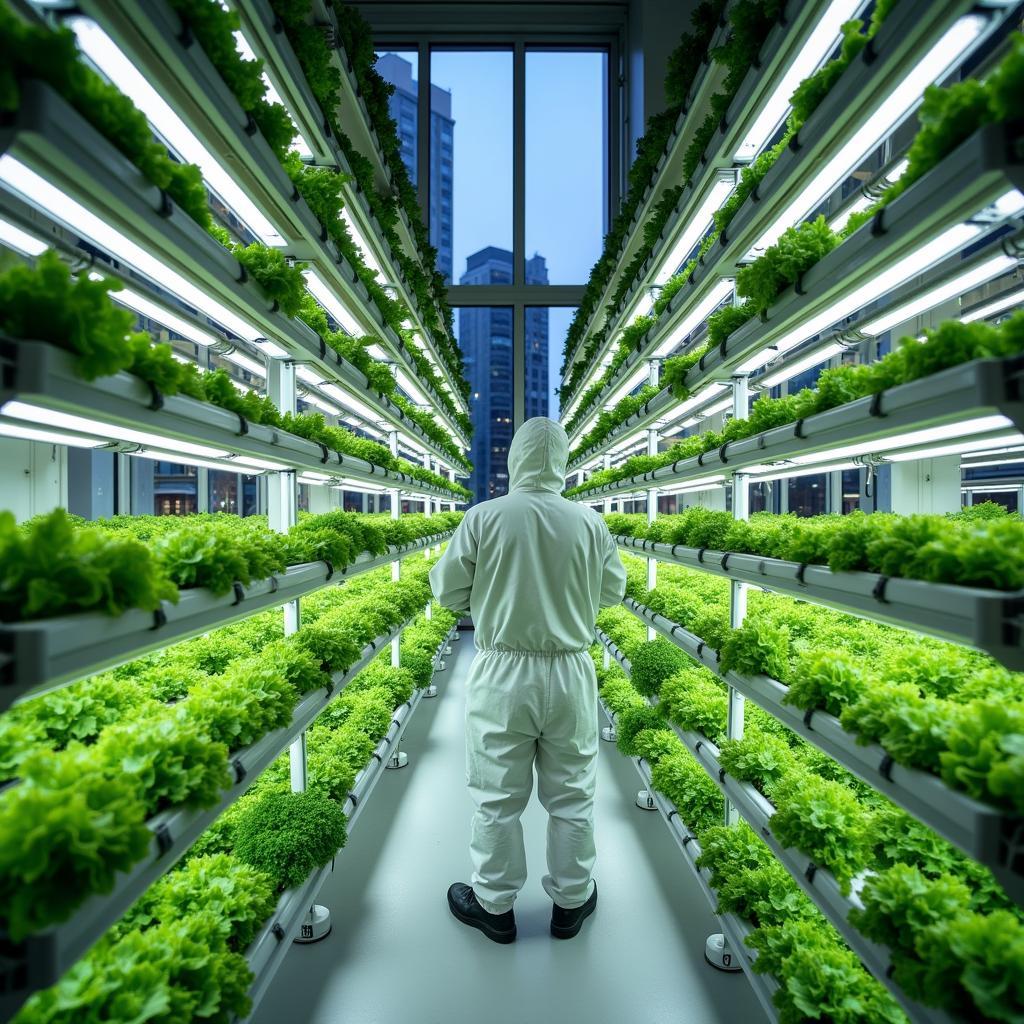 Hệ thống nông nghiệp công nghệ cao vertical farming trong môi trường đô thị hiện đại
Từ vựng và cụm từ quan trọng
Topic-Specific Vocabulary
| Từ vựng/Cụm từ | Loại từ | Phiên âm | Nghĩa tiếng Việt | Ví dụ | Collocation |
|---|---|---|---|---|---|
| authentic | adj | /ɔːˈθentɪk/ | đích thực, chính gốc | I’m always looking for authentic Vietnamese restaurants abroad. | authentic cuisine, authentic experience, authentic flavor |
| culinary | adj | /ˈkʌlɪnəri/ | thuộc về ẩm thực | She has extensive culinary knowledge from years of travel. | culinary tradition, culinary skills, culinary adventure |
| palate | n | /ˈpælət/ | khẩu vị, vị giác | This dish is perfect for those with an adventurous palate. | broaden one’s palate, refined palate, sophisticated palate |
| acquire a taste for | phrase | /əˈkwaɪə ə teɪst fɔː/ | dần làm quen và thích | It took me a while to acquire a taste for blue cheese. | gradually acquire, finally acquire |
| delicacy | n | /ˈdelɪkəsi/ | món ăn đặc sản, cao cấp | Sea urchin is considered a delicacy in Japanese cuisine. | local delicacy, regional delicacy, expensive delicacy |
| savory | adj | /ˈseɪvəri/ | mặn, có vị đậm đà | I prefer savory dishes over sweet ones. | savory flavor, savory dish, savory snack |
| succulent | adj | /ˈsʌkjʊlənt/ | mọng nước, ngon ngọt | The lamb was perfectly cooked and incredibly succulent. | succulent meat, succulent fruit |
| aromatic | adj | /ˌærəˈmætɪk/ | thơm, có hương vị | The aromatic spices filled the entire kitchen. | aromatic herbs, aromatic spices, aromatic rice |
| tangy | adj | /ˈtæŋi/ | chua nhẹ, chua dịu | The sauce had a tangy lime flavor. | tangy taste, tangy dressing |
| pungent | adj | /ˈpʌndʒənt/ | hăng, nồng (mùi/vị mạnh) | Blue cheese has quite a pungent aroma. | pungent smell, pungent flavor |
| bland | adj | /blænd/ | nhạt nhẽo, không vị | Without seasoning, the dish tasted rather bland. | bland food, taste bland |
| texture | n | /ˈtekstʃə/ | kết cấu, độ mịn/giòn | I love the crispy texture of tempura. | smooth texture, crunchy texture, creamy texture |
| garnish | n/v | /ˈɡɑːnɪʃ/ | đồ trang trí món ăn | The dish was garnished with fresh herbs. | garnish with, simple garnish, elegant garnish |
| marinade | n | /ˌmærɪˈneɪd/ | nước ướp thịt | The chicken was left in the marinade overnight. | flavorful marinade, prepare marinade |
| fusion cuisine | n | /ˈfjuːʒn kwɪˈziːn/ | ẩm thực kết hợp nhiều phong cách | This restaurant specializes in Asian-European fusion cuisine. | modern fusion, creative fusion |
| street food | n | /striːt fuːd/ | đồ ăn đường phố | Bangkok is famous for its incredible street food scene. | local street food, authentic street food |
| dining etiquette | n | /ˈdaɪnɪŋ ˈetɪket/ | nghi thức, phép tắc ăn uống | Different cultures have different dining etiquette. | proper dining etiquette, formal dining etiquette |
| food enthusiast | n | /fuːd ɪnˈθjuːziæst/ | người đam mê ẩm thực | As a food enthusiast, I love trying new restaurants. | passionate food enthusiast |
| gastronomic | adj | /ˌɡæstrəˈnɒmɪk/ | thuộc về ẩm thực (mang tính học thuật) | Paris offers an incredible gastronomic experience. | gastronomic delight, gastronomic adventure |
| comfort food | n | /ˈkʌmfət fuːd/ | đồ ăn mang lại cảm giác thoải mái, ấm cúng | Phở is my ultimate comfort food on rainy days. | favorite comfort food, traditional comfort food |
Idiomatic Expressions & Advanced Phrases
| Cụm từ | Nghĩa | Ví dụ sử dụng | Band điểm |
|---|---|---|---|
| food for thought | điều đáng để suy nghĩ | The documentary about food waste gave me real food for thought. | 7.5-9 |
| whet someone’s appetite | kích thích sự thèm muốn, làm tò mò | The travel show really whetted my appetite for trying Thai cuisine. | 7.5-9 |
| a feast for the eyes | đẹp mắt, bắt mắt (về món ăn) | The presentation was a feast for the eyes before we even tasted it. | 7.5-9 |
| culinary journey | hành trình khám phá ẩm thực | Trying different cuisines has been an incredible culinary journey. | 7-8.5 |
| broaden one’s horizons | mở rộng tầm hiểu biết | Traveling abroad really broadened my culinary horizons. | 7-8.5 |
| blow someone away | gây ấn tượng mạnh, làm choáng ngợp | The complexity of flavors in that dish absolutely blew me away. | 7.5-9 |
| an acquired taste | điều cần thời gian để làm quen và thích | Durian is definitely an acquired taste for most foreigners. | 7.5-9 |
| hit the spot | vừa ý, đúng những gì cần | After a long day, that bowl of ramen really hit the spot. | 7-8 |
| leave a lasting impression | để lại ấn tượng sâu sắc | That meal left a lasting impression on me. | 7-8.5 |
| venture into uncharted territory | mạo hiểm thử điều hoàn toàn mới | Trying Ethiopian food felt like venturing into uncharted territory. | 8-9 |
| open up a whole new world | mở ra một thế giới hoàn toàn mới | Learning about Persian cuisine opened up a whole new world for me. | 7.5-8.5 |
| deeply ingrained in culture | ăn sâu vào văn hóa | Food traditions are deeply ingrained in Vietnamese culture. | 8-9 |
Discourse Markers (Từ Nối Ý Trong Speaking)
Để bắt đầu câu trả lời:
- 📝 Well,… – Dùng khi cần một chút thời gian suy nghĩ, tạo sự tự nhiên
- 📝 Actually,… – Khi đưa ra một góc nhìn khác hoặc sự thật thú vị
- 📝 To be honest,… – Khi muốn nói thẳng thắn, chân thành
- 📝 I’d say that… – Cách mềm mại để đưa ra quan điểm cá nhân
- 📝 If I’m being completely frank,… – Khi muốn thể hiện sự thật thẳng thắn
Để bổ sung ý:
- 📝 On top of that,… – Thêm vào đó, ngoài ra
- 📝 What’s more,… – Hơn nữa, thêm nữa
- 📝 Not to mention… – Chưa kể đến, chưa nói tới
- 📝 Additionally,… – Thêm vào đó (formal hơn)
- 📝 Furthermore,… – Hơn thế nữa (academic)
Để đưa ra quan điểm cân bằng:
- 📝 On the one hand,… On the other hand,… – Mặt này…mặt kia
- 📝 While it’s true that…, we also need to consider… – Tuy đúng là…nhưng cũng cần xem xét
- 📝 Having said that,… – Tuy nhiên, mặc dù đã nói vậy
- 📝 That being said,… – Điều đó đã nói rồi (để chuyển sang ý khác)
Để kết luận:
- 📝 All in all,… – Tóm lại, nhìn chung
- 📝 At the end of the day,… – Cuối cùng thì, xét cho cùng
- 📝 In essence,… – Về bản chất, về cơ bản
- 📝 Ultimately,… – Cuối cùng, rốt cuộc
Để làm mềm quan điểm (Hedging):
- 📝 I’d say… – Tôi cho là
- 📝 I think… – Tôi nghĩ
- 📝 It seems to me that… – Có vẻ như với tôi
- 📝 To some extent,… – Ở một mức độ nào đó
Grammatical Structures Ấn Tượng
1. Conditional Sentences (Câu điều kiện):
- Mixed conditional: “If I hadn’t tried that Persian meal, I wouldn’t be so interested in Middle Eastern cuisine now.” (Kết hợp quá khứ và hiện tại)
- Inversion: “Had I known how spicy it would be, I would have ordered something milder.” (Đảo ngữ formal)
2. Relative Clauses (Mệnh đề quan hệ):
- Non-defining: “Ethiopian food, which I tried last year, has become one of my favorite cuisines.” (Bổ sung thông tin)
- Reduced relative clause: “The restaurant serving authentic Thai food has become very popular.” (Rút gọn mệnh đề quan hệ)
3. Passive Voice (Câu bị động):
- It is thought/believed/said that… – “It is widely believed that Mediterranean cuisine is one of the healthiest in the world.”
- Complex passive: “The dish was being prepared when we arrived at the restaurant.” (Passive continuous)
4. Cleft Sentences (Câu chẻ):
- What I find most…, is… – “What I find most fascinating about food culture is how it connects people across generations.”
- The thing that…, is… – “The thing that impressed me most was the attention to detail in Japanese cuisine.”
- It was…that… – “It was the complexity of flavors that really surprised me about Indian food.”
5. Participle Phrases (Cụm phân từ):
- Present participle: “Having tried many different cuisines, I can say that Vietnamese food is still my favorite.”
- Past participle: “Prepared with fresh ingredients, the dish tasted absolutely delicious.”
6. Gerunds and Infinitives:
- Gerund as subject: “Trying new cuisines broadens your cultural understanding.”
- Complex gerund phrase: “What I love about food is experiencing different cultures through their traditional dishes.”
Chủ đề “describe a time when you tried a new cuisine” là một trong những đề bài thú vị và thực tế nhất trong IELTS Speaking. Với sự chuẩn bị kỹ lưỡng về vocabulary, structures, và ideas, bạn hoàn toàn có thể tự tin đạt band điểm cao. Hãy nhớ rằng examiner không chỉ đánh giá khả năng ngôn ngữ mà còn cả khả năng tư duy phản biện và diễn đạt ý tưởng một cách mạch lạc.
Điều quan trọng nhất là hãy speaking naturally – đừng cố gắng nhồi nhét quá nhiều từ vựng phức tạp mà làm mất đi sự tự nhiên. Practice regularly, record yourself, và học cách develop ideas một cách logic. Chúc bạn thành công với kỳ thi IELTS Speaking của mình!



[…] Xem thêm: IELTS Speaking: Cách Trả Lời “Describe A Time When You Tried A New Cuisine” – Bài Mẫu … […]
[…] tự như những trải nghiệm thú vị khác, describe a time when you tried a new cuisine cũng yêu cầu khả năng kể lại chi tiết và giải thích cảm xúc của bạn – […]
[…] có thể tham khảo thêm về trải nghiệm ẩm thực trong bài viết describe a time when you tried a new cuisine để có thêm ý tưởng cho câu trả lời của […]
[…] về cách kể về các trải nghiệm ẩm thực khác nhau, bạn có thể tham khảo thêm describe a time when you tried a new cuisine với những góc nhìn thú vị về việc khám phá món ăn mới […]