
Mở bài
Chủ đề “Describe A Time When You Went Camping” là một đề bài Speaking Part 2 cực kỳ phổ biến trong IELTS, xuất hiện thường xuyên từ năm 2019 đến nay với tần suất trung bình-cao. Đây là dạng câu hỏi yêu cầu thí sinh kể về một trải nghiệm cụ thể liên quan đến hoạt động outdoor, một chủ đề mà nhiều học viên Việt Nam gặp khó khăn do không quen với văn hóa camping như các nước phương Tây.
Chủ đề này quan trọng vì nó thường đi kèm với các góc độ khác nhau: trải nghiệm thiên nhiên, hoạt động ngoài trời, du lịch mạo hiểm, và kỹ năng sống. Examiner có thể hỏi về camping trong các dạng Part 1 questions về hobbies và outdoor activities, hoặc mở rộng sang Part 3 về environmental awareness và lifestyle changes.
Dự đoán khả năng xuất hiện: Cao – đặc biệt trong Q1 và Q2 của năm thi.
Trong bài viết này, bạn sẽ học được:
- Các câu hỏi thực tế cho cả 3 Part về chủ đề camping và outdoor activities
- Bài mẫu chi tiết từ Band 6-7 đến Band 8.5-9 với phân tích chuyên sâu
- Hơn 50 từ vựng và cụm từ ăn điểm, đi kèm pronunciation và collocations
- Chiến lược trả lời hiệu quả từ góc nhìn Examiner
- Những lỗi phổ biến của học viên Việt Nam và cách khắc phục
Tương tự như describe an interesting outdoor activity you tried, chủ đề camping đòi hỏi bạn phải mô tả chi tiết về trải nghiệm và cảm xúc của bản thân một cách sinh động.
IELTS Speaking Part 1: Introduction and Interview
Tổng Quan Về Part 1
Thời gian: 4-5 phút với 8-12 câu hỏi
Part 1 là phần warm-up, nơi examiner muốn tạo sự thoải mái và đánh giá khả năng giao tiếp tự nhiên của bạn về các chủ đề đời sống hàng ngày. Đối với chủ đề camping và outdoor activities, câu hỏi thường xoay quanh sở thích cá nhân, thói quen, và trải nghiệm quá khứ.
Chiến lược:
- Trả lời trực tiếp câu hỏi trong 1-2 câu đầu
- Mở rộng với lý do hoặc ví dụ cụ thể (thêm 1-2 câu)
- Tránh trả lời dưới 3 câu hoặc quá dài (trên 5 câu)
- Giữ tone tự nhiên, như đang trò chuyện
Lỗi thường gặp của học viên Việt Nam:
- Trả lời quá ngắn chỉ với “Yes, I do” hoặc “No, I don’t”
- Sử dụng vocabulary quá academic không phù hợp với đời sống
- Thiếu personal examples khiến câu trả lời khô khan
- Không tận dụng thời gian để showcase language ability
Các Câu Hỏi Thường Gặp
Question 1: Do you like outdoor activities?
Question 2: Have you ever been camping?
Question 3: What outdoor activities are popular in your country?
Question 4: Do you prefer indoor or outdoor activities?
Question 5: When was the last time you did an outdoor activity?
Question 6: Would you like to try camping in the future?
Question 7: What do you think are the benefits of outdoor activities?
Question 8: Did you do many outdoor activities when you were a child?
Question 9: Do you think it’s important for children to spend time outdoors?
Question 10: What’s your favorite place to do outdoor activities?
Phân Tích và Gợi Ý Trả Lời Chi Tiết
Question: Have you ever been camping?
🎯 Cách tiếp cận:
- Answer directly (Yes/No)
- Provide specific details (when, where, with whom)
- Add your feeling or impression
📝 Sample Answer – Band 6-7:
“Yes, I have been camping once with my friends. We went to a mountain area near my city last summer. It was quite interesting but also challenging because we had to set up the tent by ourselves.”
Phân tích:
- Điểm mạnh: Trả lời trực tiếp, có basic details về thời gian, địa điểm, người đi cùng
- Hạn chế: Từ vựng đơn giản (interesting, challenging), thiếu specific vocabulary về camping, chưa có emotional depth
- Tại sao Band 6-7: Grammar đúng nhưng simple, vocabulary adequate nhưng chưa impressive, thiếu less common expressions
📝 Sample Answer – Band 8-9:
“Yes, I’ve had the opportunity to go camping a couple of times. The most memorable experience was when I went with my university friends to a secluded campsite by a lake about two years ago. We spent three days completely immersed in nature, which was quite refreshing after months of city life. I must say it was both exhilarating and slightly daunting at first, especially when we struggled to pitch our tent in the dark!”
Phân tích:
-
Điểm mạnh:
- Vocabulary tinh vi: memorable experience, secluded campsite, completely immersed in nature, exhilarating, daunting
- Grammar đa dạng: present perfect, past simple, compound adjectives
- Personal touch với humor cuối câu
- Natural flow với discourse markers “I must say”
-
Tại sao Band 8-9:
- Fluency: Câu nối mạch lạc, không hesitation
- Vocabulary: Less common words và collocations (secluded campsite, pitch tent)
- Grammar: Mixed tenses phù hợp, relative clause
- Content: Detailed, engaging với cả facts và feelings
💡 Key Vocabulary & Expressions:
- memorable experience: trải nghiệm đáng nhớ
- secluded campsite: khu cắm trại hẻo lánh, yên tĩnh
- immersed in nature: hòa mình vào thiên nhiên
- exhilarating: phấn khích, hứng khởi
- daunting: đáng sợ, nản lòng
- pitch a tent: dựng lều
Question: Do you prefer indoor or outdoor activities?
🎯 Cách tiếp cận:
- State your preference clearly
- Give 1-2 reasons why
- Acknowledge the other option briefly for balance
📝 Sample Answer – Band 6-7:
“I think I prefer indoor activities more. I like reading books and watching movies at home because it’s more comfortable. But sometimes I also enjoy going outside to get fresh air.”
Phân tích:
- Điểm mạnh: Clear preference, có lý do cụ thể
- Hạn chế:
- Vocabulary basic (comfortable, fresh air)
- Structure đơn giản
- Thiếu specificity và depth
- Tại sao Band 6-7: Adequate communication nhưng chưa có lexical sophistication
📝 Sample Answer – Band 8-9:
“Well, I’d say I’m more of an indoor person, to be honest. I find that activities like reading or working on creative projects at home allow me to fully concentrate without distractions. That being said, I do recognize the value of outdoor pursuits – they’re excellent for physical well-being and mental rejuvenation. So ideally, I try to strike a balance between the two, though I naturally gravitate towards indoor activities.”
Phân tích:
-
Điểm mạnh:
- Natural discourse markers: Well, to be honest, that being said
- Sophisticated vocabulary: indoor person, gravitate towards, mental rejuvenation
- Balanced view showing critical thinking
- Collocations: strike a balance, physical well-being
- Personal but articulate
-
Tại sao Band 8-9:
- Fluency: Natural hesitation device “Well”, smooth transitions
- Vocabulary: Precise expressions (gravitate towards, rejuvenation)
- Grammar: Complex sentences với relative clauses
- Ideas: Nuanced view, không absolute
💡 Key Vocabulary & Expressions:
- indoor person: người thích ở trong nhà
- fully concentrate: tập trung hoàn toàn
- outdoor pursuits: các hoạt động ngoài trời
- physical well-being: sức khỏe thể chất
- mental rejuvenation: sự trẻ hóa tinh thần
- strike a balance: cân bằng
- gravitate towards: có xu hướng thiên về
Question: What outdoor activities are popular in your country?
🎯 Cách tiếp cận:
- Name 2-3 specific activities
- Explain why they’re popular (climate, culture, lifestyle)
- Can add personal observation
📝 Sample Answer – Band 6-7:
“In Vietnam, many people like going to the park for exercise. Badminton is very popular, especially in the evening. Some people also go hiking on the weekends to enjoy nature.”
Phân tích:
- Điểm mạnh: Specific examples của activities, có time reference
- Hạn chế:
- Vocabulary repetitive (popular, people, go)
- Thiếu explanation về why
- Grammar simple
- Tại sao Band 6-7: Communicates adequately nhưng lacks depth và sophistication
📝 Sample Answer – Band 8-9:
“I’d say there’s quite a diverse range of outdoor activities that appeal to Vietnamese people. By far the most prevalent would be morning exercises in parks – you’ll see people of all ages doing tai chi, aerobics, or simply jogging along tree-lined paths. Badminton is another hugely popular pastime, particularly in residential areas where people set up makeshift courts on quiet streets in the evening. More recently, there’s been a growing trend towards hiking and trekking, especially among younger generations who are seeking to escape the urban hustle.”
Phân tích:
-
Điểm mạnh:
- Rich topic vocabulary: diverse range, prevalent, makeshift courts
- Specific cultural details: tai chi, residential areas
- Observation về trends
- Varied sentence structures
- Collocations: hugely popular pastime, growing trend, urban hustle
-
Tại sao Band 8-9:
- Fluency: Well-organized với clear progression
- Vocabulary: Topic-specific và precise
- Grammar: Mix của simple và complex structures
- Ideas: Insightful với cultural và generational observations
💡 Key Vocabulary & Expressions:
- diverse range: đa dạng
- appeal to somebody: hấp dẫn ai đó
- prevalent: phổ biến
- tree-lined paths: con đường rợp bóng cây
- hugely popular pastime: trò tiêu khiển cực kỳ phổ biến
- makeshift courts: sân tạm
- growing trend: xu hướng đang tăng
- urban hustle: sự hối hả ở thành phố
 Các hoạt động ngoài trời phổ biến ở Việt Nam như tập thể dục công viên và cầu lông
IELTS Speaking Part 2: Long Turn (Cue Card)
Tổng Quan Về Part 2
Thời gian chuẩn bị: 1 phút (60 giây)
Thời gian nói: 2-3 phút (không bị ngắt giữa chừng)
Part 2 là phần độc thoại, nơi bạn cần kể chi tiết về một chủ đề cụ thể. Đây là phần quan trọng nhất để showcase vocabulary range và ability để sustain speech.
Đặc điểm:
- Bạn nhận một cue card với topic và 3-4 bullet points
- 1 phút để ghi chú keywords (không viết câu hoàn chỉnh)
- Nói liên tục 2-3 phút
- Examiner không interrupt cho đến khi hết thời gian
Chiến lược:
- Sử dụng tất cả 1 phút chuẩn bị để ghi 10-15 keywords
- Ghi theo thứ tự của bullet points
- Note cả tense (thường là past tense cho experience)
- Aim for 2 phút minimum (dưới 1.5 phút = lower band)
- Trả lời đầy đủ tất cả bullet points
- Phần “explain” cuối cùng là key để ghi điểm cao – dành 30-40 giây
Lỗi thường gặp:
- Panic và không tận dụng 1 phút chuẩn bị
- Viết câu hoàn chỉnh thay vì keywords → lãng phí thời gian
- Nói dưới 1.5 phút → bị ngắt và hỏi follow-up → không đủ thời gian demonstrate language
- Bỏ sót bullet points hoặc không explain properly
- Tense confusion (kể story quá khứ nhưng dùng present)
Cue Card
Describe a time when you went camping
You should say:
- When and where you went camping
- Who you went with
- What you did during the camping trip
- And explain how you felt about this experience
Phân Tích Đề Bài
Dạng câu hỏi: Describe an experience/event (kể về một trải nghiệm cụ thể)
Thì động từ: Past tenses (Past Simple, Past Continuous, Past Perfect) vì đây là experience trong quá khứ
Bullet points phải cover:
- When and where: Specific time và location – có thể combine trong 2-3 câu đầu
- Who you went with: Companions và relationship
- What you did: Activities during camping – đây là phần dài nhất (40-50 giây)
- How you felt: Feelings và evaluation – phần “explain” này cực kỳ quan trọng để đạt band cao
Câu “explain” quan trọng:
Đây là phần tách biệt Band 6-7 với Band 8-9. Band cao không chỉ describe feelings đơn giản (happy, excited) mà phải show depth of reflection: why it was meaningful, what you learned, how it changed your perspective, mixed emotions, etc.
Lưu ý đặc biệt cho học viên Việt Nam:
Nhiều bạn chưa từng camping thực sự. Điều này hoàn toàn OK – bạn có thể nói về:
- Một chuyến đi picnic/overnight stay ở ngoài trời
- Camping simulation trong school trip
- Một trải nghiệm tương tự (staying in a homestay gần núi/rừng)
Examiner không verify facts, họ chỉ assess language ability.
📝 Sample Answer – Band 6-7
Thời lượng: Khoảng 1.5-2 phút
“I’d like to talk about a camping trip I went on last year. It was in August, during the summer holiday. We went to a mountain area called Ba Vi, which is about 60 kilometers from Hanoi.
I went with five of my close friends from university. We are all interested in outdoor activities, so we decided to try camping together for the first time.
We did many things during the trip. First, we set up our tents near a small stream. It was quite difficult because we didn’t have much experience. After that, we went hiking in the forest and saw many beautiful views. In the evening, we made a campfire and cooked dinner together. We grilled some meat and vegetables. We also sang songs and told stories around the fire. At night, we slept in the tents, and I could hear the sounds of nature.
I felt very happy about this experience. It was exciting to be in nature and away from the city. I also felt a bit scared at night because it was very dark and I heard strange sounds. But overall, it was a memorable trip. I enjoyed spending time with my friends and learning new things about camping. It made me appreciate nature more.”
Phân Tích Band Điểm
| Tiêu chí | Band | Nhận xét |
|---|---|---|
| Fluency & Coherence | 6.5 | Có flow ổn với sequencing (First, After that, In the evening, At night). Linking words basic. Một số hesitation và repetition nhẹ. |
| Lexical Resource | 6-6.5 | Vocabulary adequate (set up tents, campfire, grilled) nhưng mostly common words. Thiếu less common expressions và collocations. |
| Grammatical Range & Accuracy | 6.5 | Mix của simple và complex sentences. Past tense mostly accurate. Có relative clause đơn giản. Thiếu variety. |
| Pronunciation | 6-7 | Giả định clear và intelligible với occasional mispronunciation. |
Điểm mạnh:
- ✅ Cover đầy đủ tất cả bullet points
- ✅ Clear structure với chronological order
- ✅ Có personal feelings và evaluation
- ✅ Appropriate length (gần 2 phút)
Hạn chế:
- ⚠️ Vocabulary repetitive và basic (went, did, very, many)
- ⚠️ Thiếu descriptive language và sensory details
- ⚠️ Feelings đơn giản (happy, scared, memorable)
- ⚠️ Grammar không đủ complex structures
- ⚠️ Thiếu depth trong phần “explain” – chưa explore why it was meaningful
📝 Sample Answer – Band 7.5-8
Thời lượng: Khoảng 2-2.5 phút
“I’d like to share with you a memorable camping experience I had about a year and a half ago. It was during the Lunar New Year holiday, and my friends and I decided to escape the usual festive chaos by going camping in Ba Vi National Park, which is roughly an hour’s drive from Hanoi.
I went with a group of five close friends from university. We’d been talking about going camping for ages, and we finally took the plunge during that long weekend.
The camping trip itself was packed with activities. When we first arrived, we spent a good hour trying to pitch our tents by a picturesque stream – it was actually quite challenging as none of us were experienced campers, and we fumbled with the tent poles quite a bit. Once we’d set up our makeshift home, we went on a moderate hike through the forest trails. The scenery was absolutely breathtaking – lush greenery everywhere and the sound of birds chirping in the background.
As evening approached, we gathered wood and built a campfire. We grilled meat and vegetables, and I have to say, food has never tasted better! There’s something about cooking outdoors that makes everything more delicious. We spent hours around the fire, sharing stories and jokes, and just enjoying each other’s company. That night, sleeping in the tent was an interesting experience – I could hear all sorts of nocturnal sounds that were both fascinating and slightly unnerving.
Looking back on it now, I felt a real sense of freedom and connection with nature during that trip. It was incredibly refreshing to disconnect from technology and the daily grind. There were moments of discomfort – particularly the cold night and the basic facilities – but those challenges actually made the experience more rewarding. What I valued most was the quality time with my friends and the realization that we don’t need luxury to have a great time. It definitely sparked my interest in outdoor activities.”
Phân Tích Band Điểm
| Tiêu chí | Band | Nhận xét |
|---|---|---|
| Fluency & Coherence | 7.5-8 | Speech fluent với minimal hesitation. Có range of cohesive devices (Looking back, As evening approached). Clear progression. |
| Lexical Resource | 7.5-8 | Good range với less common vocabulary (took the plunge, fumbled with, nocturnal sounds, unnerving). Some collocations (quality time, sparked interest). |
| Grammatical Range & Accuracy | 7.5-8 | Wide range of structures: relative clauses, participle clauses (-ing phrases), past perfect. Generally accurate với few errors. |
| Pronunciation | 7-8 | Giả định clear với good control of features. |
So Sánh Với Band 6-7
| Khía cạnh | Band 6-7 | Band 7.5-8 |
|---|---|---|
| Vocabulary | “set up tents”, “beautiful views”, “strange sounds” | “pitch our tents”, “breathtaking scenery”, “nocturnal sounds”, “unnerving” |
| Grammar | Simple: “We went hiking in the forest” | Complex: “As evening approached, we gathered wood” |
| Ideas | Basic feelings: “I felt very happy” | Nuanced: “sense of freedom”, “refreshing to disconnect”, “challenges made it rewarding” |
| Descriptive language | Limited: “It was exciting” | Rich: “lush greenery everywhere”, “picturesque stream” |
Điểm mạnh bổ sung:
- ✅ Idiomatic expressions (took the plunge, daily grind)
- ✅ Sensory details (sound of birds, food taste, cold night)
- ✅ Reflection với insight (challenges made it rewarding)
- ✅ Personal growth element (sparked interest in outdoor activities)
Khi lên kế hoạch cho describe an exciting adventure you had, việc camping ở những địa điểm xa xôi cũng có thể trở thành nguồn cảm hứng tuyệt vời để kể về những trải nghiệm mạo hiểm của bản thân.
📝 Sample Answer – Band 8.5-9
Thời lượng: 2.5-3 phút đầy đủ
“I’d like to reminisce about a particularly transformative camping experience I had roughly two years ago, just before the pandemic restrictions kicked in. My friends and I ventured to Cuc Phuong National Park, one of Vietnam’s most pristine natural reserves, located in the northern region, about a three-hour drive from Hanoi.
I went with four of my closest friends from university – we’d been planning this trip for months as a sort of bonding experience before we all embarked on different career paths after graduation. We were quite a diverse group – some were experienced hikers while others, myself included, were relative novices to this kind of wilderness adventure.
The camping experience itself was incredibly immersive. Upon arrival, we embarked on the challenge of setting up camp in a designated area near the park’s core zone. I must admit, our first attempt at pitching the tents was rather comical – there was a lot of fumbling about with guy ropes and tent pegs, and at one point, one of the tents actually collapsed on my friend! But eventually, we got our makeshift campsite sorted.
What made this trip particularly memorable was the sheer variety of activities we engaged in. We spent the first afternoon trekking through dense jungle terrain, where we were fortunate enough to spot some indigenous wildlife – including a troop of langurs swinging through the canopy. The biodiversity was absolutely astounding. As dusk descended, we gathered around our campfire, which became the focal point of our evening. There’s something almost primal about sitting around a fire – it fostered such intimate conversations. We cooked a simple meal of grilled meat and vegetables, and I remember thinking how food never tastes quite so good as when you’re outdoors and slightly exhausted from hiking.
The night was perhaps the most profound part of the experience. Cocooned in our sleeping bags, we could hear the forest coming alive with nocturnal activity – the distant calls of owls, the rustling of leaves, and even what we suspected was a family of civets nearby. It was simultaneously exhilarating and humbling – you really become acutely aware of being just a small part of this vast ecosystem.
Reflecting on it now, what I felt during and after that trip was quite multifaceted. Initially, there was the sheer exhilaration of being completely immersed in nature, far removed from the digital distractions that dominate our daily lives. But beyond that, there was a deeper sense of perspective. The experience stripped away all the superficial concerns we normally preoccupy ourselves with – career anxieties, material possessions, social media validation. Out there, survival and comfort became remarkably simple – warmth, food, safety, and companionship.
What struck me most was how this experience strengthened our friendships. When you’re navigating challenges together – whether it’s setting up a tent in fading light or figuring out how to purify water – you develop a different kind of camaraderie. It also ignited a lasting passion for outdoor pursuits that I hadn’t realized I had. Since then, I’ve become much more conscious of environmental conservation and have made it a point to regularly disconnect from urban life to recharge in natural settings. That camping trip was truly a catalyst for a more balanced lifestyle.”
Phân Tích Band Điểm
| Tiêu chí | Band | Nhận xét |
|---|---|---|
| Fluency & Coherence | 9 | Speaks fluently với minimal hesitation. Sophisticated discourse markers (Reflecting on it now, What struck me most). Ideas logically sequenced với clear progression. Develops topics fully và coherently. |
| Lexical Resource | 9 | Uses vocabulary with full flexibility và precision. Wide range of less common và idiomatic language (transformative, pristine, comical, multifaceted, catalyst). Sophisticated collocations (sheer variety, biodiversity, environmental conservation). |
| Grammatical Range & Accuracy | 9 | Uses full range of structures naturally và appropriately. Complex sentences với subordinate clauses, participles, inversions. Rare errors nếu có. |
| Pronunciation | 8.5-9 | Giả định effortless to understand với full range of pronunciation features. Uses intonation effectively. |
Tại Sao Bài Này Xuất Sắc
🎯 Fluency Hoàn Hảo:
- Natural flow với sophisticated signposting (“What made this trip particularly memorable”, “Reflecting on it now”)
- Demonstrates ability to speak at length without strain
- Ideas develop organically với smooth transitions
📚 Vocabulary Tinh Vi:
- Precise word choices: “transformative” thay vì “good”, “pristine” thay vì “beautiful”, “immersive” thay vì “interesting”
- Academic yet natural collocations: sheer variety, dense jungle terrain, indigenous wildlife, environmental conservation
- Idiomatic expressions: took the plunge, fumbled about, coming alive, struck me most
- Advanced phrases: embarked on, cocooned in, stripped away, catalyst for
📝 Grammar Đa Dạng:
- Complex subordination: “When you’re navigating challenges together – whether it’s setting up a tent in fading light or figuring out how to purify water – you develop…”
- Participle clauses: “Cocooned in our sleeping bags, we could hear…”
- Relative clauses: “…where we were fortunate enough to spot…”
- Present perfect for relevance: “I’ve become much more conscious…”
- Passive voice naturally: “The biodiversity was absolutely astounding”
💡 Ideas Sâu Sắc:
- Not just describing what happened, but analyzing the significance
- Shows personal growth và transformation
- Philosophical reflection: “you really become acutely aware of being just a small part of this vast ecosystem”
- Long-term impact: Sparked ongoing interest in conservation
- Nuanced emotions: “simultaneously exhilarating and humbling”, “multifaceted feelings”
- Demonstrates critical thinking: connecting experience to broader life lessons
🎯 Cấu trúc logic cao cấp:
- Introduction: Context và setup
- Body 1: Arrival và setup (with humor)
- Body 2: Activities và experiences
- Body 3: Nighttime atmosphere
- Body 4: Deep reflection về meaning và impact
- Natural conclusion about lasting changes
Language features đặc biệt:
- Tentative language: “I must admit”, “I remember thinking”
- Emphasis devices: “absolutely astounding”, “remarkably simple”, “truly a catalyst”
- Descriptive precision: “dense jungle terrain”, “nocturnal activity”, “fading light”
Follow-up Questions (Rounding Off Questions)
Sau khi bạn nói xong 2-3 phút, examiner thường hỏi 1-2 câu ngắn để wrap up Part 2 trước khi chuyển sang Part 3. Đây là transitional questions, nên trả lời ngắn gọn (2-3 câu).
Question 1: Would you go camping again?
Band 6-7 Answer:
“Yes, definitely. I really enjoyed the experience and I want to try it again. Maybe next time I will go to a different place.”
Band 8-9 Answer:
“Absolutely, I’d jump at the chance to go again. In fact, that experience has whetted my appetite for outdoor adventures, and I’m already planning another trip to a more remote location – possibly in the Central Highlands. I think each camping trip offers unique experiences depending on the setting.”
Question 2: Was it expensive?
Band 6-7 Answer:
“No, it wasn’t very expensive. We shared the costs between friends, so it was quite cheap. The camping equipment was the most expensive thing.”
Band 8-9 Answer:
“Not particularly, which was actually one of the appealing aspects. We split the costs among the five of us, so individually it was quite budget-friendly – probably around 500,000 VND each for the entire weekend, including transportation and food. The initial investment in camping gear was the priciest part, but since we can reuse it for future trips, it’s quite cost-effective in the long run.”
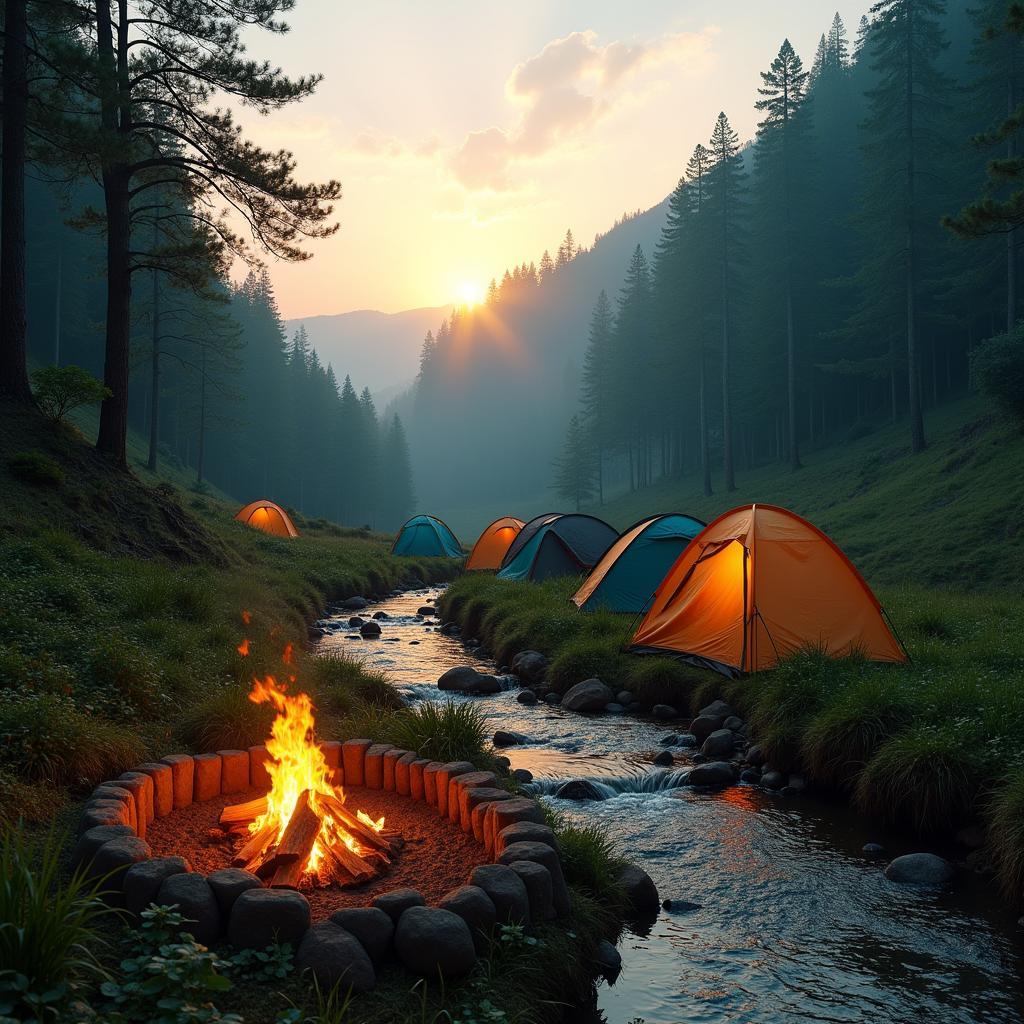 Trải nghiệm cắm trại giữa thiên nhiên với lều trại và lửa trại
IELTS Speaking Part 3: Two-way Discussion
Tổng Quan Về Part 3
Thời gian: 4-5 phút với 5-7 câu hỏi
Part 3 là phần khó nhất và quan trọng nhất để đạt Band 7+. Đây không còn là personal questions nữa mà là abstract discussion liên quan đến chủ đề Part 2, yêu cầu analytical thinking và broader perspective.
Đặc điểm:
- Câu hỏi mang tính trừu tượng, xã hội, triết học hơn
- Yêu cầu: analyze, evaluate, compare, predict, give opinions
- Không hỏi về personal experience mà về society, trends, values
- Đây là nơi tách biệt Band 6-7 với Band 8-9
Yêu cầu:
- Depth of ideas: Không chỉ answer mà phải explore issue từ nhiều góc độ
- Supporting arguments: Mỗi point cần có reasoning và examples
- Abstract vocabulary: Từ vựng phải ở level cao hơn, topic-specific và academic hơn
- Complex grammar: Show range với conditionals, subordinate clauses, passives
Chiến lược:
- Mở rộng câu trả lời (aim for 4-6 câu minimum)
- Structure: Direct answer → Reason 1 + example → Reason 2 + example → Nuance/Conclusion
- Sử dụng discourse markers nhiều hơn (Well, Actually, On the one hand…)
- Đưa ra examples từ society, không chỉ cá nhân
- Acknowledge complexity và different perspectives
- Không sợ pause to think (1-2 giây) – shows you’re thinking deeply
Lỗi thường gặp của học viên Việt Nam:
- Trả lời quá ngắn (1-2 câu) → không demonstrate language range
- Personal examples thay vì societal analysis
- Vocabulary còn ở level Part 1-2, không advance lên
- Quan điểm một chiều, không acknowledge different views
- Grammar không complex hơn Part 2
- Thiếu topic-specific vocabulary
Các Câu Hỏi Thảo Luận Sâu
Theme 1: Benefits and Impacts of Outdoor Activities
Question 1: Why do you think camping and outdoor activities have become more popular in recent years?
🎯 Phân tích câu hỏi:
- Dạng: Cause-Effect (explaining trends)
- Key words: camping, outdoor activities, become more popular, recent years
- Cách tiếp cận:
- Agree với premise (acknowledge the trend)
- Identify 2-3 main reasons
- Explain each reason với examples/elaboration
- Có thể add nuance về different demographics
📝 Sample Answer – Band 6-7:
“I think camping is more popular now because people are stressed from work and city life. They want to relax and enjoy nature. Also, social media makes camping look attractive, so more young people want to try it. Another reason is that people are becoming more health-conscious and outdoor activities are good for health.”
Phân tích:
- Structure: Có multiple reasons (stress, social media, health)
- Vocabulary: Basic words (stressed, relax, attractive, health-conscious)
- Tại sao Band 6-7:
- Ideas relevant nhưng chưa developed fully
- Thiếu specific examples và deeper analysis
- Grammar simple với basic connectors (because, also, another reason)
- Không có sophistication trong language
📝 Câu trả lời mẫu – Band 8-9:
“Well, I think there are several interconnected factors behind this trend. First and foremost, I’d say it’s largely a reaction to increasingly urbanized lifestyles. As more people live in densely populated cities and spend their days glued to screens, there’s a growing yearning for what we might call ‘digital detox‘ – a chance to disconnect from technology and reconnect with the natural world. Camping offers precisely that escape valve.
Moreover, the rise of social media has paradoxically both contributed to and benefited from this trend. Platforms like Instagram have popularized outdoor aesthetics – you know, those picture-perfect camping scenes with tents against mountain backdrops. This has made outdoor activities more aspirational, particularly among younger demographics who want to curate similar experiences for their online presence.
Beyond that, I think there’s also been a shift in values towards health consciousness and environmental awareness. People are increasingly recognizing that outdoor activities offer both physical benefits – cardiovascular exercise, fresh air, and so on – and mental health advantages. Studies have shown that spending time in nature can significantly reduce stress and anxiety levels. Additionally, engaging with nature fosters a greater appreciation for environmental conservation, which aligns with the growing eco-consciousness in society.
That said, it’s worth noting that this trend isn’t universally applicable – it tends to be more pronounced among middle-class urban dwellers who have both the disposable income and leisure time. For many, camping remains an inaccessible luxury due to financial or geographical constraints.”
Phân tích:
-
Structure:
- Well-organized với clear progression: urban lifestyle → social media → health/environment → nuance
- Each point fully developed với explanation và implications
- Sophisticated conclusion acknowledging limitations
-
Vocabulary:
- Precise collocations: interconnected factors, densely populated cities, growing yearning, digital detox, escape valve
- Academic phrases: first and foremost, paradoxically, beyond that, that said, worth noting
- Topic-specific terms: urbanized lifestyles, environmental awareness, eco-consciousness, disposable income
- Advanced expressions: glued to screens, curate experiences, foster appreciation
-
Grammar:
- Complex structures: “As more people live in densely populated cities and spend their days glued to screens, there’s a growing yearning…”
- Relative clauses: “among younger demographics who want to…”
- Passive voice: “Studies have shown that…”, “it tends to be more pronounced…”
- Participle phrases: “engaging with nature fosters…”
- Conditional implications: “it remains an inaccessible luxury due to…”
-
Critical Thinking:
- Multi-causal analysis (không chỉ một reason)
- Acknowledges paradox (social media both contributes và benefits)
- Recognizes different demographics
- Provides counter-argument (not universal)
- Balanced view với nuance
💡 Key Language Features:
- Discourse markers: Well, First and foremost, Moreover, Beyond that, That said
- Hedging/Tentative language: I’d say, I think, might call, tends to be
- Emphasizing: largely, precisely, increasingly, significantly
- Abstract nouns: urbanization, yearning, aesthetics, consciousness, constraints
- Collocations: densely populated, growing yearning, shift in values, disposable income
Question 2: What are the main benefits of outdoor activities for children?
🎯 Phân tích câu hỏi:
- Dạng: Benefits/Advantages (specific demographic: children)
- Key words: main benefits, outdoor activities, children
- Cách tiếp cận:
- Identify 3-4 key areas of benefit (physical, cognitive, social, emotional)
- Elaborate each với specific examples
- Compare with indoor alternatives nếu relevant
- Có thể mention implications for education/parenting
📝 Sample Answer – Band 6-7:
“Outdoor activities are very beneficial for children. First, they help children stay healthy and strong because they can exercise and move around. Second, children can learn about nature when they play outside. They also develop social skills when they play with other children outdoors. I think these activities are important for children’s development.”
Phân tích:
- Structure: Lists benefits (health, learning, social) – adequate
- Vocabulary: Basic (beneficial, healthy, develop, important)
- Tại sao Band 6-7:
- Ideas correct nhưng superficial
- Thiếu specific details và elaboration
- No comparison hoặc deeper analysis
- Grammar simple
📝 Câu trả lời mẫu – Band 8-9:
“I’d argue that outdoor activities offer multifaceted benefits for children’s development that are actually quite difficult to replicate in indoor settings. From a physical standpoint, the benefits are fairly obvious – outdoor play encourages gross motor skill development through activities like climbing, running, and jumping, which are crucial for building strength, coordination, and balance. But perhaps more importantly, regular outdoor activity helps combat the alarming rise in childhood obesity and sedentary lifestyle-related health issues that we’re seeing in many developed countries.
What’s equally significant, though often overlooked, are the cognitive benefits. Research has shown that unstructured outdoor play actually enhances children’s creativity and problem-solving abilities. When kids play outside without predetermined rules – say, building a fort from sticks or creating games with natural materials – they engage in what psychologists call ‘divergent thinking‘, which is fundamental to innovation and creativity. In contrast, many indoor activities, particularly screen-based ones, tend to be more passive and prescriptive.
Beyond the individual benefits, outdoor activities also foster crucial social competencies. When children play together outside, they learn to negotiate, take turns, and resolve conflicts – essentially developing emotional intelligence and interpersonal skills that will serve them throughout life. The natural environment also provides shared challenges that require cooperation, whether it’s climbing a tree or crossing a stream.
On a deeper level, I think early exposure to nature cultivates a sense of environmental stewardship that’s increasingly vital in our current climate crisis. Children who spend time outdoors develop an intrinsic connection to the natural world, which research suggests makes them more likely to engage in pro-environmental behaviors as adults. That’s something we really can’t afford to underestimate given the environmental challenges facing future generations.”
Phân tích:
-
Structure:
- Extremely well-organized: Physical → Cognitive → Social → Environmental/Future
- Each point thoroughly developed với research references
- Clear transitions between ideas
- Forward-looking conclusion
-
Vocabulary:
- Sophisticated collocations: multifaceted benefits, gross motor skill development, sedentary lifestyle, divergent thinking, emotional intelligence, environmental stewardship
- Academic language: from a standpoint, combat, replicate, prescriptive, cultivate, intrinsic
- Precise terminology: unstructured play, pro-environmental behaviors, interpersonal skills
- Advanced expressions: difficult to replicate, alarming rise, what’s equally significant
-
Grammar:
- Complex conditionals: “When kids play outside without predetermined rules…”
- Relative clauses: “which is fundamental to innovation”
- Participle clauses: “particularly screen-based ones”
- Cleft sentences: “What’s equally significant…”, “That’s something we really can’t…”
- Comparative structures: “In contrast, many indoor activities…”
-
Critical Thinking:
- References research (“Research has shown…”, “research suggests…”)
- Compares outdoor vs indoor explicitly
- Acknowledges broader societal issues (obesity crisis, climate crisis)
- Multi-dimensional analysis (physical, cognitive, social, environmental)
- Long-term perspective (impact on future behaviors)
- Shows cause-effect relationships clearly
💡 Key Language Features:
- Discourse markers: From a standpoint, What’s equally significant, Beyond that, On a deeper level
- Hedging: I’d argue, perhaps, tend to, suggests
- Emphasizing: quite difficult, fairly obvious, actually, increasingly vital
- Contrast markers: In contrast, though often overlooked
- Cohesive devices: That’s something, which, essentially
Tương tự như cách describe a memorable walk in a forest or nature trail có thể giúp trẻ em phát triển kỹ năng quan sát và khám phá, camping cũng mang lại những lợi ích tương tự trong việc nuôi dưỡng sự tò mò tự nhiên.
Theme 2: Modern Lifestyle and Nature
Question 3: Do you think people today spend less time in nature compared to the past? Why?
🎯 Phân tích câu hỏi:
- Dạng: Opinion + Compare (past vs present) + Causes
- Key words: people today, less time in nature, compared to the past
- Cách tiếp cận:
- Take a position (agree/partially agree)
- Compare past và present lifestyles
- Explain reasons for the change
- Acknowledge exceptions hoặc counter-examples
📝 Sample Answer – Band 6-7:
“Yes, I think people spend less time in nature now than before. In the past, people lived in more rural areas and worked in agriculture, so they were outside more. But now, many people live in cities and work in offices, so they stay inside most of the time. Also, technology like smartphones and computers keep people indoors for entertainment. This is a problem because people need nature for health.”
Phân tích:
- Structure: Clear comparison past vs present với reasons
- Vocabulary: Basic (rural, agriculture, cities, offices, indoors)
- Tại sao Band 6-7:
- Ideas straightforward và adequate
- Thiếu depth và specific examples
- Grammar simple với basic cause-effect
- Không có sophisticated analysis
📝 Câu trả lời mẫu – Band 8-9:
“Without a doubt, I think there’s been a dramatic decline in the amount of time people spend in natural environments, particularly in rapidly urbanizing societies like Vietnam. If we look back just a generation or two, the situation was fundamentally different – a significant proportion of the population lived in rural areas where daily life was intrinsically connected to natural cycles. People weren’t choosing to spend time in nature; it was simply an inherent part of their subsistence lifestyle, whether through agriculture, fishing, or other nature-dependent livelihoods.
The shift we’ve witnessed is really a byproduct of broader socioeconomic transformation. Urbanization has been absolutely unprecedented in its scale and speed – millions have migrated from rural to urban areas in search of better economic opportunities. Consequently, we now have a generation of city dwellers whose entire existence is largely contained within built environments – living in apartment blocks, working in air-conditioned offices, commuting in vehicles, and spending leisure time in shopping malls or indoor entertainment venues.
What’s exacerbated this trend is the digital revolution. The proliferation of smartphones, streaming services, and social media has created indoor-centric lifestyles where people can work, socialize, shop, and entertain themselves without ever stepping outside. For many people, particularly younger generations, the default setting is now indoor and virtual rather than outdoor and physical. Nature has become something you need to deliberately seek out rather than something you’re naturally immersed in.
That said, I should mention that there’s been a counter-movement in recent years, especially among health-conscious urban professionals who recognize this disconnection and are actively trying to rectify it through weekend hiking trips, outdoor fitness activities, and ecotourism. But these remain relatively niche pursuits rather than mainstream lifestyle patterns. The overarching trend is still towards less direct contact with nature, which is concerning given what we know about the psychological and physiological benefits of natural environments.”
Phân tích:
-
Structure:
- Sophisticated organization: Historical comparison → Urbanization causes → Technology factor → Counter-trend + conclusion
- Each paragraph develops one major theme thoroughly
- Acknowledges complexity và nuance
-
Vocabulary:
- Precise collocations: dramatic decline, rapidly urbanizing, intrinsically connected, subsistence lifestyle, unprecedented scale, indoor-centric lifestyles, counter-movement, niche pursuits
- Academic language: fundamental, byproduct, socioeconomic transformation, proliferation, exacerbated, rectify
- Topic-specific: urbanization, migration, built environments, digital revolution, ecotourism
- Abstract nouns: transformation, disconnection, mainstream patterns
-
Grammar:
- Conditional structures: “If we look back just a generation…”
- Relative clauses: “a generation of city dwellers whose entire existence…”
- Participle phrases: “living in apartment blocks, working in…, commuting in…”
- Passive voice: “The shift we’ve witnessed is really a byproduct…”
- Cleft sentences: “What’s exacerbated this trend is…”
- Complex noun phrases: “the psychological and physiological benefits of natural environments”
-
Critical Thinking:
- Historical perspective với specific timeframe
- Multi-causal analysis: urbanization + technology
- Distinguishes between deliberate choice vs circumstance
- Acknowledges counter-trends (not absolute statements)
- Evaluates significance (“concerning given…”)
- Compares different demographics (generations)
- Shows cause-effect chains clearly
💡 Key Language Features:
- Discourse markers: Without a doubt, If we look back, Consequently, What’s exacerbated, That said
- Hedging: I think, largely, relatively, tend to
- Emphasizing: absolutely unprecedented, entire existence, dramatically
- Contrast: That said, rather than, counter-movement
- Time expressions: a generation or two, in recent years, the default setting is now
Question 4: How can governments encourage people to spend more time outdoors?
🎯 Phân tích câu hỏi:
- Dạng: Problem-Solution/Suggestions (with specific agent: governments)
- Key words: governments, encourage, spend more time outdoors
- Cách tiếp cận:
- Suggest 3-4 practical measures
- Explain how each would work
- Give examples from specific countries nếu biết
- Acknowledge challenges hoặc limitations
📝 Sample Answer – Band 6-7:
“I think governments can do several things to encourage outdoor activities. First, they should build more parks and green spaces in cities where people can go. Second, they can organize free outdoor events like sports competitions or festivals to attract people. Also, schools should have more outdoor education programs. Finally, the government can use advertising campaigns to promote the benefits of outdoor activities.”
Phân tích:
- Structure: Lists multiple solutions – adequate
- Vocabulary: Functional (build, organize, promote) but basic
- Tại sao Band 6-7:
- Ideas practical và relevant
- Thiếu elaboration và specific examples
- No evaluation của effectiveness
- Grammar straightforward
📝 Câu trả lời mẫu – Band 8-9:
“Well, I think governments have multiple policy levers they could pull to encourage outdoor engagement, though the effectiveness would depend greatly on the specific context.
The most fundamental approach would be investing in infrastructure – specifically creating and maintaining accessible green spaces within urban areas. Singapore provides an excellent blueprint here; they’ve integrated parks, elevated walkways, and nature corridors throughout the city-state, making it possible for residents to access nature within a 10-minute walk from virtually anywhere. This kind of strategic urban planning lowers the barriers to outdoor activity significantly – it’s not just about having parks, but ensuring they’re well-distributed, well-maintained, and equipped with amenities that make them appealing.
Beyond infrastructure, I think policy incentives could be quite effective. Some Scandinavian countries have implemented programs where employers receive tax breaks for organizing outdoor team-building activities or providing subsidized outdoor equipment to employees. This creates a win-win situation – companies benefit financially while employees reap the health benefits. Similarly, governments could subsidize national park entry fees or provide vouchers for outdoor education programs, making these activities more financially accessible to lower-income demographics.
Education is another crucial lever. Mandating outdoor education in school curricula – not just theoretical environmental studies but actual outdoor experiences like camping trips, nature walks, or outdoor sports – would normalize outdoor activity from a young age. New Zealand’s education system incorporates this quite effectively, with many schools having dedicated outdoor education programs that teach both practical skills and environmental appreciation.
On a softer level, governments could leverage public awareness campaigns, though I’d say these are probably less effective unless coupled with the structural changes I mentioned. Campaigns highlighting the mental health benefits of nature, or featuring relatable role models engaging in outdoor activities, might shift social norms over time.
That being said, we need to recognize that policy measures alone have limitations. If people’s economic realities mean they’re working multiple jobs or extremely long hours just to make ends meet, they simply won’t have time for outdoor recreation regardless of how many parks are built. So any meaningful strategy would need to address broader issues of work-life balance and economic inequality as well.”
Phân tích:
-
Structure:
- Extremely sophisticated: Infrastructure → Incentives → Education → Awareness → Limitations
- Each solution thoroughly explained với examples và implications
- Acknowledges context-dependency
- Realistic assessment of limitations
-
Vocabulary:
- Precise collocations: multiple policy levers, accessible green spaces, strategic urban planning, policy incentives, tax breaks, win-win situation, lower-income demographics, dedicated programs, shift social norms, work-life balance
- Academic/Government language: implementing, mandating, subsidized, leverage, coupled with, address
- Topic-specific: infrastructure, urban planning, curricula, vouchers, awareness campaigns
- Sophisticated verbs: pull (levers), lower (barriers), reap (benefits), incorporate, normalize
-
Grammar:
- Complex conditionals: “If people’s economic realities mean…, they simply won’t…”
- Participle phrases: “making it possible for residents to…”, “featuring relatable role models…”
- Relative clauses: “programs where employers receive…”, “unless coupled with…”
- Passive constructions: “it’s not just about having parks, but ensuring they’re…”
- Noun phrases: “the mental health benefits of nature”
- Inversion for emphasis: “So any meaningful strategy would need to address…”
-
Critical Thinking:
- Multi-dimensional solutions (infrastructure, incentives, education, awareness)
- Concrete examples from specific countries (Singapore, Scandinavia, New Zealand)
- Evaluates effectiveness (“less effective unless coupled with…”)
- Acknowledges complexity (context-dependent, limitations)
- Systemic thinking (connects to broader issues like inequality)
- Comparative analysis (different approaches in different countries)
- Realistic assessment (not overly optimistic về solutions)
💡 Key Language Features:
- Discourse markers: Well, Beyond infrastructure, On a softer level, That being said
- Hedging: I think, could be, might shift, probably less effective
- Emphasizing: most fundamental, quite effective, crucial lever, simply won’t
- Conditional language: would depend, unless coupled with, if people’s economic realities
- Cohesive devices: This kind of, Similarly, So any meaningful strategy
Theme 3: Tourism and Environmental Impact
Question 5: What are the potential negative effects of camping and outdoor tourism on the environment?
🎯 Phân tích câu hỏi:
- Dạng: Negative effects/Problems (environmental focus)
- Key words: negative effects, camping, outdoor tourism, environment
- Cách tiếp cận:
- Acknowledge positive aspects trước để show balance
- Identify 3-4 major environmental concerns
- Explain mechanisms và provide examples
- Có thể suggest mitigations
📝 Sample Answer – Band 6-7:
“Although outdoor tourism is good for people, it can harm the environment. First, when too many tourists visit natural areas, they can damage plants and disturb animals. Also, people sometimes leave trash behind, which pollutes the environment. Campfires can cause forest fires if people are not careful. Building facilities like hotels and roads also destroys natural habitats. So we need to be careful about how we do outdoor tourism.”
Phân tích:
- Structure: Lists several problems – adequate coverage
- Vocabulary: Basic environmental vocabulary (damage, pollute, destroy, habitats)
- Tại sao Band 6-7:
- Ideas relevant và correct
- Thiếu technical terminology
- Explanations superficial
- No specific examples hoặc data
📝 Câu trả lời mẫu – Band 8-9:
“While I’m generally supportive of outdoor tourism for its health and economic benefits, we can’t turn a blind eye to its environmental ramifications, particularly when it occurs on a large scale without proper regulation.
Perhaps the most visible issue is what ecologists call ‘trampling damage’ or habitat degradation. When popular trails and campsites experience heavy foot traffic, the vegetation gets worn away, soil becomes compacted, and erosion accelerates. Take, for instance, heavily trafficked sites like Mount Fansipan in Vietnam or popular spots in national parks – the erosion paths are often quite severe, and it can take years, sometimes decades, for these areas to recover naturally. The problem is compounded when people venture off designated trails creating unofficial paths that multiply the damage.
Closely related to this is the issue of wildlife disturbance. Camping activities, particularly in sensitive ecosystems or during breeding seasons, can disrupt animal behavior – whether it’s nesting birds being scared away, or nocturnal animals having their patterns disrupted by campfires and human noise. Some species are particularly vulnerable to human presence, and sustained disturbance can even lead to localized population declines.
Then there’s the waste management challenge. Despite growing environmental awareness, many camping areas still suffer from littering and improper waste disposal. Plastic waste is particularly problematic as it persists in the environment for decades, posing threats to wildlife that might ingest it or become entangled. Even biodegradable materials like food scraps can disrupt local ecosystems when introduced in large quantities, as they can attract animals and alter their natural feeding behaviors.
Water pollution is another significant concern, particularly around popular camping lakes and rivers. Soap residues from washing, human waste from inadequate sanitation facilities, and chemical runoff from sunscreens and insect repellents can all degrade water quality, affecting both aquatic ecosystems and sometimes even downstream communities that depend on these water sources.
What makes this particularly challenging is that many of these impacts are cumulative – individual campers might think their impact is negligible, but when you have thousands of people doing the same thing, the aggregate effect becomes substantial. It’s what Garrett Hardin called ‘the tragedy of the commons’ – individual rational behavior collectively creating environmental degradation.
That said, I should emphasize that these problems aren’t inherent to outdoor tourism itself but rather stem from poor management and lack of environmental consciousness. With proper regulation, infrastructure like designated campsites, waste management systems, and visitor education, much of this damage could be mitigated or even prevented.”
Phân tích:
-
Structure:
- Exceptionally well-organized: Introduction with nuance → Trampling → Wildlife → Waste → Water → Cumulative effects → Solutions
- Each environmental impact fully explained với mechanisms
- Academic framework reference (tragedy of commons)
- Balanced conclusion về solutions
-
Vocabulary:
- Precise environmental terminology: trampling damage, habitat degradation, soil compaction, erosion, wildlife disturbance, localized population declines, biodegradable materials, aquatic ecosystems, cumulative impacts, aggregate effect, environmental degradation
- Academic collocations: turn a blind eye to, environmental ramifications, heavy foot traffic, sensitive ecosystems, breeding seasons, growing awareness, inadequate sanitation, chemical runoff
- Technical verbs: compacted, disrupted, ingest, entangled, degrade, mitigated, prevented
- Sophisticated expressions: can’t turn a blind eye, take for instance, closely related, what makes this challenging, that said, inherent to
-
Grammar:
- Complex conditionals: “when popular trails experience heavy foot traffic…”
- Passive constructions extensively: “vegetation gets worn away”, “it can take years for areas to recover”, “when introduced in large quantities”
- Participle clauses: “whether it’s nesting birds being scared away, or nocturnal animals having their patterns disrupted…”
- Relative clauses: “wildlife that might ingest it”, “communities that depend on these water sources”
- Cleft sentences: “What makes this particularly challenging is…”
- Nominalization: “the erosion paths”, “the aggregate effect”, “environmental degradation”
- Parallel structures: “Plastic waste…, biodegradable materials…, water pollution…”
-
Critical Thinking:
- Multi-dimensional analysis (physical, biological, chemical impacts)
- Specific mechanisms explained (not just “damages” but how)
- Scale considerations (individual vs cumulative)
- References academic concepts (tragedy of commons)
- Concrete examples (Mount Fansipan, aquatic ecosystems)
- Temporal dimension (decades to recover)
- Cause-effect chains clearly articulated
- Distinguishes inherent problems vs management issues
- Solutions-oriented conclusion
💡 Key Language Features:
- Discourse markers: While I’m generally supportive, Perhaps the most visible, Closely related, Then there’s, That said
- Hedging: can’t turn a blind eye, might think, could be mitigated
- Emphasizing: particularly, quite severe, significant concern, exceptionally
- Academic citations: “what ecologists call”, “what Garrett Hardin called”
- Exemplification: Take for instance, whether it’s…or…
- Cohesive devices: This, These impacts, What makes this challenging
Nếu bạn quan tâm đến vấn đề bảo vệ môi trường khi du lịch, describe a famous river or lake you visited cũng có thể giúp bạn thảo luận về tác động của con người đến các vùng nước tự nhiên.
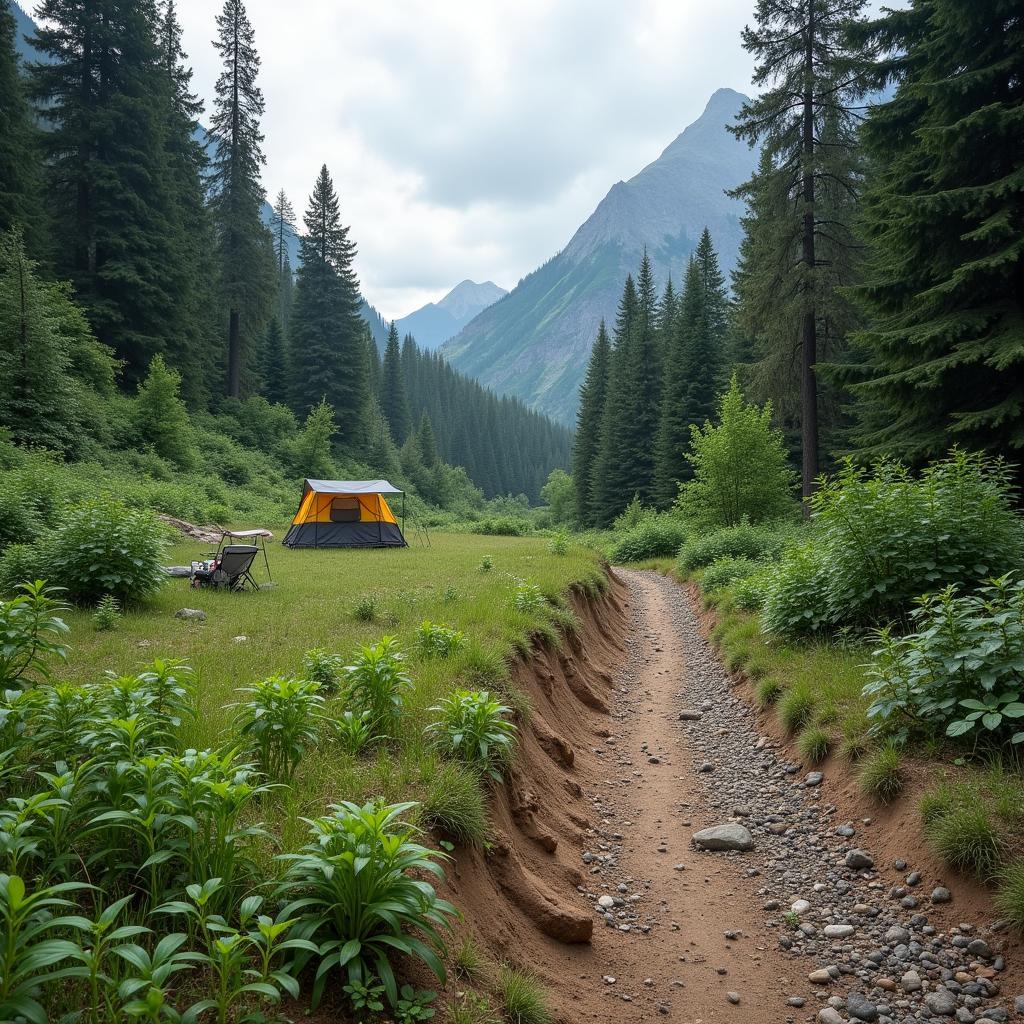 Tác động môi trường của hoạt động cắm trại và du lịch sinh thái
Question 6: How do you think camping habits might change in the future?
🎯 Phân tích câu hỏi:
- Dạng: Future prediction/speculation
- Key words: camping habits, change, future
- Cách tiếp cận:
- Identify current trends
- Predict 2-3 likely changes với reasons
- Consider technology influence
- Acknowledge uncertainty
📝 Sample Answer – Band 6-7:
“I think camping will become more modern in the future. People will use better equipment and technology, like solar panels for electricity. Maybe there will be more camping sites with better facilities like WiFi and showers. Also, I think more people will go camping because they want to escape from city stress. Camping might also become more expensive with better services.”
Phân tích:
- Structure: Lists several predictions
- Vocabulary: Basic (modern, better, expensive)
- Tại sao Band 6-7:
- Ideas reasonable
- Thiếu depth và specific technology examples
- Không có sophisticated speculation language
- Limited future forms
📝 Câu trả lời mẫu – Band 8-9:
“Well, I think we’re likely to see quite significant evolution in camping practices over the coming decades, driven by several converging factors.
First and foremost, I expect camping will become increasingly ‘tech-enabled‘ even while maintaining its fundamental connection to nature. We’re already seeing the emergence of ‘glamping’ – glamorous camping – which blurs the line between traditional camping and hotel accommodation. I imagine this trend will accelerate, with campsites offering high-speed internet, solar-powered facilities, and even smart tent technology that can regulate temperature or monitor weather conditions. Paradoxically, technology might actually facilitate more people getting outdoors by reducing some of the intimidating aspects of traditional camping.
Sustainability is another dimension that’s bound to become more prominent. As environmental consciousness grows and climate change impacts become more tangible, I think we’ll see greater demand for eco-certified campsites that implement leave-no-trace principles, use renewable energy, and perhaps even offset their carbon footprint. There might also be more restrictions on where and how people can camp to protect fragile ecosystems, similar to the permit systems already in place in some national parks.
In terms of demographics, camping is likely to become more mainstream and diverse. Traditionally in many Asian countries, camping has been somewhat niche, but I think the post-pandemic emphasis on outdoor activities will persist. We might see more multi-generational camping, with facilities catering to elderly people and families with young children who need more amenities. Urban camping or camping in peri-urban areas might also become more popular as people seek convenient escapes that don’t require extensive travel.
What I find particularly interesting is the potential for virtual and augmented reality to intersect with camping experiences. Perhaps in the future, campsites might offer augmented reality trails that overlay educational content about flora and fauna, or even historical information about the area. While this might sound contradictory to the spirit of unplugging, it could actually enhance environmental education and appreciation.
That said, I think there’ll also be a counter-movement of people seeking ultra-primitive or ‘wild camping’ experiences as a reaction against the commercialization and sanitization of outdoor experiences. Some people will gravitate towards more challenging, off-grid adventures that strip away modern conveniences entirely.
The economic dimension is also worth considering. As these enhanced facilities develop, camping might become increasingly bifurcated – you’ll have luxury glamping at premium prices and basic camping for budget-conscious travelers, with less middle ground. Accessibility could become a real concern if prices escalate too much.”
Phân tích:
-
Structure:
- Exceptional organization: Technology → Sustainability → Demographics → VR/AR → Counter-trends → Economics
- Each prediction well-developed với reasoning
- Acknowledges multiple scenarios (not single prediction)
- Sophisticated integration of current trends → future implications
-
Vocabulary:
- Precise future-oriented language: likely to see, bound to, is likely to, might become, will persist, potential for
- Advanced collocations: tech-enabled, emerging trend, blur the line, environmental consciousness, fragile ecosystems, post-pandemic emphasis, peri-urban areas, counter-movement, off-grid adventures, budget-conscious travelers
- Technical terms: glamping, smart tent technology, eco-certified, leave-no-trace principles, carbon footprint, permit systems, augmented reality, flora and fauna
- Sophisticated expressions: driven by converging factors, paradoxically, tangible impacts, intersect with, counter-movement, reaction against, strip away, bifurcated
-
Grammar:
- Future forms variety: will become, is likely to, might offer, could become, I expect… will, I imagine… will
- Conditional structures: “If prices escalate too much…”
- Participle phrases: “driven by several factors”, “maintaining its connection”
- Relative clauses: “technology that can regulate”, “facilities catering to elderly”
- Passive predictions: “restrictions might be implemented”, “these practices will be adopted”
- Complex noun phrases: “the post-pandemic emphasis on outdoor activities”
- Cleft sentences: “What I find particularly interesting is…”
-
Critical Thinking:
- Multi-dimensional predictions (technology, environment, society, economics)
- Acknowledges paradoxes (technology facilitating nature connection)
- Identifies counter-trends (not linear prediction)
- Considers multiple demographics
- Realistic speculation (not too futuristic)
- References current trends as basis for predictions
- Acknowledges uncertainty appropriately
- Considers negative implications (accessibility, bifurcation)
- Sophisticated cause-effect reasoning
💡 Key Language Features:
- Speculation language: I think, I expect, I imagine, perhaps, might, could, likely to
- Future markers: over the coming decades, in the future, will persist
- Discourse markers: First and foremost, In terms of, What I find interesting, That said
- Contrast: Paradoxically, While this might sound contradictory, counter-movement
- Emphasizing: quite significant, increasingly, particularly interesting
- Hedging: somewhat niche, might sound, could become
- Academic tone: driven by, bound to, facilitate, implement
Từ vựng và cụm từ quan trọng
Topic-Specific Vocabulary
| Từ vựng/Cụm từ | Loại từ | Phiên âm | Nghĩa tiếng Việt | Ví dụ | Collocation |
|---|---|---|---|---|---|
| pitch a tent | v. phrase | /pɪtʃ ə tent/ | dựng lều | We spent an hour trying to pitch our tent in the dark. | pitch a tent properly/successfully/quickly |
| campfire | n | /ˈkæmpfaɪə(r)/ | lửa trại | We sat around the campfire sharing stories. | build/make/light a campfire, sit around a campfire |
| wilderness | n | /ˈwɪldənəs/ | vùng hoang dã | We trekked through the wilderness for three days. | pristine/untouched/remote wilderness |
| secluded | adj | /sɪˈkluːdɪd/ | hẻo lánh, riêng tư | We found a secluded spot by the river to set up camp. | secluded location/area/spot/campsite |
| immersed in nature | adj. phrase | /ɪˈmɜːst ɪn ˈneɪtʃə(r)/ | hòa mình vào thiên nhiên | Being completely immersed in nature helped me relax. | completely/fully/totally immersed in nature |
| breathtaking scenery | n. phrase | /ˈbreθteɪkɪŋ ˈsiːnəri/ | phong cảnh ngoạn mục | The mountain offered breathtaking scenery at sunrise. | stunning/spectacular/breathtaking scenery |
| lush greenery | n. phrase | /lʌʃ ˈɡriːnəri/ | cây cối xanh tươi um tùm | The trail was surrounded by lush greenery. | lush greenery/vegetation/landscape |
| nocturnal | adj | /nɒkˈtɜːnl/ | về đêm, hoạt động ban đêm | We could hear nocturnal animals moving around our tent. | nocturnal animals/creatures/sounds/activity |
| biodiversity | n | /ˌbaɪəʊdaɪˈvɜːsəti/ | đa dạng sinh học | The national park is known for its rich biodiversity. | rich/remarkable/threatened biodiversity |
| ecosystem | n | /ˈiːkəʊsɪstəm/ | hệ sinh thái | Camping can damage fragile ecosystems if not done responsibly. | fragile/marine/forest/aquatic ecosystem |
| makeshift | adj | /ˈmeɪkʃɪft/ | tạm bợ, tạm thời | We built a makeshift shelter from branches. | makeshift shelter/tent/camp/solution |
| exhilarating | adj | /ɪɡˈzɪləreɪtɪŋ/ | phấn khích, hứng thú | The whole experience was absolutely exhilarating. | exhilarating experience/adventure/feeling |
| daunting | adj | /ˈdɔːntɪŋ/ | đáng sợ, nản lòng | Setting up camp in the rain was quite daunting. | daunting task/challenge/prospect/experience |
| rejuvenation | n | /rɪˌdʒuːvəˈneɪʃn/ | sự trẻ hóa, làm tươi mới | The camping trip provided much-needed mental rejuvenation. | mental/physical/spiritual rejuvenation |
| disconnect | v | /ˌdɪskəˈnekt/ | ngắt kết nối | We decided to disconnect from technology during the trip. | disconnect from technology/social media/routine |
| environmental consciousness | n. phrase | /ɪnˌvaɪrənˈmentl ˈkɒnʃəsnəs/ | ý thức môi trường | Growing environmental consciousness is changing camping habits. | growing/increasing/heightened environmental consciousness |
| pristine | adj | /ˈprɪstiːn/ | nguyên sơ, tinh khiết | We camped in a pristine natural area. | pristine condition/environment/wilderness/beach |
| venture | v | /ˈventʃə(r)/ | mạo hiểm đi đến | We ventured into the forest to explore. | venture into/out/forth, venture to do something |
| terrain | n | /təˈreɪn/ | địa hình | The mountainous terrain was challenging to navigate. | rough/mountainous/difficult/varied terrain |
| forage | v | /ˈfɒrɪdʒ/ | tìm kiếm thức ăn (trong tự nhiên) | We learned how to forage for edible plants. | forage for food/berries/supplies |
Idiomatic Expressions & Advanced Phrases
| Cụm từ | Nghĩa | Ví dụ sử dụng | Band điểm |
|---|---|---|---|
| take the plunge | quyết định làm điều gì đó sau khi do dự | After years of talking about it, we finally took the plunge and went camping. | 7.5-9 |
| escape the hustle and bustle | thoát khỏi sự hối hả, ồn ào | Camping allows you to escape the hustle and bustle of city life. | 7-8 |
| back to basics | trở về với những thứ đơn giản, cơ bản | Camping is all about getting back to basics. | 7-8 |
| off the beaten track | ngoài con đường thông thường, hẻo lánh | We prefer camping spots that are off the beaten track. | 7.5-8.5 |
| at one with nature | hòa hợp với thiên nhiên | Spending nights outdoors makes you feel at one with nature. | 7.5-8.5 |
| rough it | sống khó khăn, thiếu tiện nghi | We had to rough it without running water or electricity. | 7-8 |
| under the stars | dưới bầu trời sao | There’s something magical about sleeping under the stars. | 7-8 |
| the great outdoors | thiên nhiên rộng lớn | Camping is the perfect way to experience the great outdoors. | 7-8 |
| a breath of fresh air | làn gió mới, điều thú vị mới mẻ | The camping trip was a real breath of fresh air. | 7.5-8 |
| out of your comfort zone | ra khỏi vùng an toàn | Camping pushed me out of my comfort zone in a good way. | 7.5-8.5 |
| digital detox | cai nghiện công nghệ số | The camping trip served as a much-needed digital detox. | 8-9 |
| commune with nature | giao cảm với thiên nhiên | Camping allows you to commune with nature in a profound way. | 8-9 |
Discourse Markers (Từ Nối Ý Trong Speaking)
Để bắt đầu câu trả lời:
- 📝 Well,… – Khi cần một chút thời gian suy nghĩ, tạo tính tự nhiên
- 📝 Actually,… – Khi muốn đưa ra góc nhìn khác hoặc thông tin bất ngờ
- 📝 To be honest,… – Khi nói thật về quan điểm cá nhân
- 📝 I’d say that… – Cách lịch sự để đưa ra ý kiến
- 📝 From my perspective,… – Thể hiện đây là quan điểm cá nhân
- 📝 Looking back,… – Khi phản ánh về quá khứ
Để bổ sung ý:
- 📝 On top of that,… – Thêm vào đó, hơn nữa
- 📝 What’s more,… – Thêm nữa, không chỉ vậy
- 📝 Not to mention… – Chưa kể đến
- 📝 Beyond that,… – Ngoài ra
- 📝 Moreover,… – Hơn nữa (formal)
- 📝 In addition to that,… – Thêm vào đó
Để đưa ra quan điểm cân bằng:
- 📝 On the one hand,… On the other hand,… – Một mặt… mặt khác
- 📝 While it’s true that…, we also need to consider… – Mặc dù đúng là… nhưng cũng cần xét đến
- 📝 That said,… – Tuy nhiên, dù vậy
- 📝 Having said that,… – Nói như vậy thì (để chuyển sang ý đối lập)
Để kết luận:
- 📝 All in all,… – Tóm lại, nhìn chung
- 📝 At the end of the day,… – Cuối cùng thì, suy cho cùng
- 📝 Overall,… – Nhìn chung, tổng thể
- 📝 In the final analysis,… – Khi phân tích cuối cùng
Để đưa ra ví dụ:
- 📝 For instance,… – Ví dụ như
- 📝 Take… for example – Lấy… làm ví dụ
- 📝 A case in point is… – Một trường hợp điển hình là
 Các kỹ năng cắm trại thực tế cần thiết cho chuyến đi
Grammatical Structures Ấn Tượng
1. Conditional Sentences (Câu điều kiện):
Mixed conditional (Điều kiện hỗn hợp):
- Formula: If + Past Perfect, … would/could + verb (base)
- Ví dụ: “If we had brought warmer clothes, we wouldn’t be so cold now.”
- Khi dùng: Nói về điều kiện trong quá khứ ảnh hưởng đến hiện tại
Inversion (Đảo ngữ):
- Formula: Had + S + past participle, … would have…
- Ví dụ: “Had I known how challenging it would be, I would have prepared better.”
- Khi dùng: Formal way to express past unreal condition (Band 8+)
2. Relative Clauses (Mệnh đề quan hệ):
Non-defining relative clauses:
- Formula: …, which/who + verb, …
- Ví dụ: “We camped near Ba Vi National Park, which is known for its biodiversity.”
- Khi dùng: Thêm thông tin bổ sung (không thiết yếu)
Reduced relative clauses:
- Formula: … + V-ing/past participle
- Ví dụ: “The trail leading to the campsite was quite steep.” / “Equipment borrowed from friends proved unreliable.”
- Khi dùng: Rút gọn mệnh đề quan hệ (Band 7.5+)
3. Passive Voice (Câu bị động):
Impersonal passive (Bị động khách quan):
- Formula: It is thought/believed/said/considered that…
- Ví dụ: “It is widely believed that spending time in nature improves mental health.”
- Khi dùng: Đưa ra ý kiến chung không có chủ thể cụ thể (academic tone)
Passive with modals:
- Formula: Modal + be + past participle
- Ví dụ: “Camping sites should be booked in advance during peak season.”
- Khi dùng: Nói về khả năng, lời khuyên với passive voice
4. Cleft Sentences (Câu chẻ):
What-cleft:
- Formula: What + S + V + is/was…
- Ví dụ: “What I loved most about camping was the sense of freedom it provided.”
- Khi dùng: Nhấn mạnh một khía cạnh đặc biệt (Band 8+)
It-cleft:
- Formula: It + is/was + noun/pronoun + that/who…
- Ví dụ: “It was the night sky that impressed me the most.”
- Khi dùng: Focus vào một thành phần cụ thể trong câu
5. Participle Clauses (Mệnh đề phân từ):
Present participle (-ing):
- Formula: V-ing…, S + V
- Ví dụ: “Having never camped before, I was quite nervous about the experience.”
- Khi dùng: Diễn tả hành động xảy ra trước hoặc đồng thời (Band 7.5+)
Past participle:
- Formula: Past participle…, S + V
- Ví dụ: “Surrounded by mountains, the campsite offered spectacular views.”
- Khi dùng: Mô tả trạng thái hoặc hành động bị động
6. Inversion for Emphasis (Đảo ngữ để nhấn mạnh):
Negative adverbials:
- Formula: Not only + auxiliary + S + V, but also…
- Ví dụ: “Not only did the camping trip provide relaxation, but it also strengthened our friendships.”
- Khi dùng: Nhấn mạnh hai ý liên quan (Band 8+)
Only after/when/if:
- Formula: Only after/when + auxiliary + S + V…
- Ví dụ: “Only after spending a night outdoors did I realize how dependent I’d become on technology.”
- Khi dùng: Nhấn mạnh thứ tự thời gian hoặc điều kiện
Chiến Lược và Lời Khuyên Từ Examiner
Lỗi Thường Gặp Của Học Viên Việt Nam
1. Part 1 – Trả lời quá ngắn:
- ❌ Sai: “Yes, I like camping.”
- ✅ Đúng: “Yes, I do enjoy camping, though I don’t get the chance to do it very often. The last time was about six months ago when I went with some university friends to a mountain area near Hanoi.”
2. Part 2 – Không sử dụng hết thời gian:
- ❌ Sai: Nói xong sau 1 phút, bị examiner hỏi follow-up sớm
- ✅ Đúng: Chuẩn bị đủ content để nói 2-2.5 phút, elaborate each bullet point thoroughly
3. Part 3 – Personal examples thay vì societal analysis:
- ❌ Sai: “I think outdoor activities are good because I feel healthy when I do them.”
- ✅ Đúng: “I’d argue that outdoor activities offer significant societal benefits. From a public health perspective, they can help address rising obesity rates and mental health issues that are increasingly prevalent in urbanized populations.”
4. Vocabulary – Repetition và basic words:
- ❌ Sai: “The camping was very good. We had good weather and good food.”
- ✅ Đúng: “The camping experience was absolutely memorable. We were blessed with perfect weather conditions, and the meals we prepared over the campfire were surprisingly delicious.”
5. Grammar – Tense confusion khi kể story:
- ❌ Sai: “Last year I go camping with my friends. We have a great time and we see many beautiful places.”
- ✅ Đúng: “Last year I went camping with my friends. We had a great time and we saw many beautiful places. / We were having such a great time that we didn’t want to leave.”
6. Fluency – Không dùng discourse markers:
- ❌ Sai: “I like camping. It’s relaxing. It’s good for health.”
- ✅ Đúng: “Well, I really enjoy camping for several reasons. First of all, it’s incredibly relaxing. What’s more, it offers significant health benefits.”
Tips Để Đạt Band 8-9
Cho Part 1:
- Extend naturally: Mỗi answer nên có 3-4 câu (direct answer + reason + example/detail)
- Use less common vocabulary: Thay “very good” bằng “fantastic”, “memorable”, “rewarding”
- Add personal touch: Chia sẻ specific details làm câu trả lời unique
- Vary your structures: Không bắt đầu mọi câu với “I think” hoặc “I like”
Cho Part 2:
- Use all preparation time: Ghi 12-15 keywords theo structure
- Develop each bullet point: Mỗi point nên có 3-5 câu
- Tell a story: Dùng narrative techniques (setting, action, reflection)
- Rich descriptions: Sensory details (what you saw, heard, felt, smelled)
- Reflect deeply trong phần “explain”: Không chỉ “I felt happy” mà explain why it was meaningful
- Use past tenses confidently: Past simple, past continuous, past perfect appropriately
- Aim for 2+ minutes: Practice timing – too short loses marks
Cho Part 3:
- Think before speaking: 2-3 giây pause là OK (shows thoughtful consideration)
- Structure answers: Direct answer → Explanation → Example → Counter-point/Conclusion
- Use academic vocabulary: Abstract nouns, topic-specific terminology
- Show critical thinking: Acknowledge complexity, different perspectives
- Give societal examples: Không chỉ “I think” mà “Research shows”, “In many societies”
- Use tentative language: “I’d say”, “It seems to me”, “To some extent”
- Complex grammar naturally: Conditionals, relative clauses, passive voice (không force)
- Develop each answer: 5-7 câu minimum cho Part 3 questions
Lộ Trình Chuẩn Bị
4 tuần trước thi:
- Week 1: Học vocabulary topic-specific (20-30 từ/day), practice Part 1 questions
- Week 2: Practice Part 2 với timing (1 phút prep + 2 phút nói), record yourself
- Week 3: Focus on Part 3 – develop analytical thinking, complex structures
- Week 4: Full mock tests, refine pronunciation và fluency
Trong thi thực tế:
- Part 1: Relaxed, friendly tone – này là warm-up
- Part 2: Sử dụng HẾT 1 phút prep, breathe, structure thoughts
- Part 3: Don’t panic với difficult questions – pause, think, structure response
Common mistakes to avoid:
- Over-rehearsed answers (examiners can tell!)
- Memorized templates (loses marks for fluency)
- Switching to Vietnamese pronunciation cho từ tiếng Anh
- Apologizing for language (“Sorry, my English is not good”) – never do this!
- Giving up mid-answer nếu lost – just continue, paraphrase
Nếu bạn đang lên kế hoạch cho một chuyến đi với gia đình, Describe a place you would like to visit with your family có thể kết hợp với trải nghiệm camping để tạo ra những kỷ niệm đáng nhớ.
Kết Luận
Chủ đề “Describe a time when you went camping” là một đề tài phong phú cho phép bạn showcase nhiều khía cạnh language ability – từ storytelling trong Part 2 đến analytical thinking trong Part 3. Key để đạt band cao không chỉ là vocabulary range mà còn là ability để develop ideas thoroughly, use grammar structures appropriately, và demonstrate critical thinking.
Nhớ rằng IELTS Speaking đánh giá communication ability, không phải knowledge about camping. Examiner không care nếu bạn chưa từng camping thực sự – họ assess language quality. Focus vào:
✅ Fluency & Coherence: Speak smoothly với logical flow
✅ Lexical Resource: Use varied, precise vocabulary appropriately
✅ Grammatical Range & Accuracy: Mix simple và complex structures naturally
✅ Pronunciation: Clear, intelligible với good intonation
Đừng cố gắng sound như textbook – natural speech với occasional fillers (“Well”, “You know”) thực ra tốt hơn là perfect nhưng robotic answers. Good luck với preparation!


