Chủ đề về động vật hoang dã là một trong những đề tài kinh điển và xuất hiện với tần suất cao trong IELTS Speaking. Theo thống kê từ các trung tâm thi IELTS trên toàn cầu, chủ đề “Describe A Wild Animal You Like” đã xuất hiện đều đặn trong các kỳ thi từ năm 2019 đến nay, với mức độ phổ biến thuộc top 20 chủ đề thường gặp nhất. Khả năng xuất hiện trong tương lai được dự đoán ở mức Cao, đặc biệt trong bối cảnh các vấn đề môi trường và bảo tồn động vật đang được quan tâm toàn cầu.
Chủ đề này thường được khai thác ở nhiều góc độ khác nhau: từ mô tả đặc điểm ngoại hình, tập tính của động vật, đến những trải nghiệm cá nhân, và xa hơn là những vấn đề xã hội liên quan đến bảo tồn động vật hoang dã. Với tính chất đa dạng này, thí sinh cần chuẩn bị kỹ lưỡng về từ vựng chuyên ngành, cấu trúc câu mô tả, và khả năng phân tích sâu.
Trong bài viết này, bạn sẽ học được những nội dung cốt lõi sau: Các câu hỏi thường gặp trong cả 3 Part của IELTS Speaking về động vật hoang dã; Bài mẫu chi tiết theo từng band điểm từ 6-7, 7.5-8 đến 8.5-9 với phân tích chuyên sâu từ góc nhìn examiner; Hơn 50 từ vựng và cụm từ ăn điểm được sử dụng trong ngữ cảnh thực tế; Chiến lược trả lời hiệu quả cho từng dạng câu hỏi; Những lỗi phổ biến mà học viên Việt Nam thường mắc phải và cách khắc phục. Đây là hướng dẫn toàn diện giúp bạn tự tin chinh phục chủ đề này với band điểm mục tiêu.
IELTS Speaking Part 1: Introduction and Interview
Tổng Quan Về Part 1
Part 1 của IELTS Speaking thường kéo dài 4-5 phút với những câu hỏi ngắn gọn về cuộc sống hàng ngày. Đây là phần khởi động để giám khảo đánh giá khả năng giao tiếp tự nhiên của bạn. Đặc điểm quan trọng của Part 1 là các câu hỏi thường liên quan đến kinh nghiệm cá nhân, sở thích, hoặc quan điểm về những vấn đề quen thuộc.
Chiến lược hiệu quả nhất cho Part 1 là trả lời một cách tự nhiên với độ dài 2-3 câu, bao gồm: câu trả lời trực tiếp, lý do hoặc giải thích, và một ví dụ cụ thể nếu có thể. Không nên trả lời quá dài lê thê nhưng cũng tránh câu trả lời quá ngắn chỉ có “Yes” hoặc “No”.
Lỗi thường gặp của học viên Việt Nam trong Part 1 bao gồm: Trả lời quá ngắn gọn thiếu mở rộng ý, khiến giám khảo phải liên tục đặt câu hỏi tiếp theo; Sử dụng từ vựng quá đơn giản ở trình độ cơ bản như “good”, “nice”, “interesting” mà không thay thế bằng từ ngữ phong phú hơn; Thiếu ví dụ cụ thể từ kinh nghiệm bản thân khiến câu trả lời trở nên chung chung; Ngập ngừng quá nhiều do chưa chuẩn bị tâm lý cho các câu hỏi cơ bản.
Các Câu Hỏi Thường Gặp
Question 1: Do you like animals?
Question 2: What’s your favourite animal?
Question 3: Have you ever kept a pet?
Question 4: Did you see any wild animals when you were a child?
Question 5: What wild animals are common in your country?
Question 6: Do you often watch programs about wild animals?
Question 7: Would you like to have a wild animal as a pet?
Question 8: Have you ever been to a zoo or wildlife park?
Question 9: What do you think is the most interesting wild animal?
Question 10: Do you think it’s important to protect wild animals?
Phân Tích và Gợi Ý Trả Lời Chi Tiết
Question: Do you like animals?
🎯 Cách tiếp cận:
- Trả lời trực tiếp có thích hay không
- Đưa ra lý do cụ thể cho câu trả lời
- Thêm ví dụ về loại động vật yêu thích hoặc trải nghiệm liên quan
📝 Sample Answer – Band 6-7:
Yes, I like animals. They are cute and friendly. I especially like dogs because they are loyal and they make me feel happy when I play with them.
Phân tích:
- Điểm mạnh: Trả lời trực tiếp, có lý do cơ bản, đưa ra ví dụ về con chó
- Hạn chế: Từ vựng đơn giản (cute, friendly, happy), thiếu chi tiết, cấu trúc câu cơ bản
- Tại sao Band 6-7: Câu trả lời đáp ứng yêu cầu cơ bản nhưng thiếu độ phức tạp về ngôn ngữ và ý tưởng. Vocabulary ở mức adequate nhưng chưa impressive.
📝 Sample Answer – Band 8-9:
Absolutely! I’m quite fascinated by animals, particularly wild species. I find their behaviour and survival instincts incredibly intriguing. For instance, I’m especially drawn to apex predators like tigers because they embody both grace and raw power, which I think represents the untamed beauty of nature.
Phân tích:
- Điểm mạnh: Sử dụng từ vựng tinh vi (fascinated by, survival instincts, apex predators, embody, untamed beauty); Cấu trúc câu đa dạng với mệnh đề quan hệ; Ý tưởng sâu sắc hơn khi nói về sức mạnh và vẻ đẹp của thiên nhiên; Diễn đạt tự nhiên và mạch lạc
- Tại sao Band 8-9:
- Fluency: Trả lời trôi chảy không ngập ngừng, sử dụng discourse marker “Absolutely!” rất tự nhiên
- Vocabulary: Từ vựng topic-specific và idiomatic (fascinated by, apex predators, untamed beauty)
- Grammar: Cấu trúc phức tạp với particularly, which clause
- Content: Ý tưởng không chỉ dừng ở việc thích hay không mà còn giải thích sâu sắc về lý do thẩm mỹ
💡 Key Vocabulary & Expressions:
- be fascinated by: bị cuốn hút bởi, say mê với điều gì
- survival instincts: bản năng sinh tồn
- apex predators: động vật săn mồi đỉnh cao (đứng đầu chuỗi thức ăn)
- embody: thể hiện, biểu trưng cho
- untamed beauty: vẻ đẹp hoang dã, chưa bị thuần hóa
Question: Have you ever seen wild animals in their natural habitat?
🎯 Cách tiếp cận:
- Trả lời có hoặc không một cách rõ ràng
- Nếu có: mô tả trải nghiệm cụ thể (khi nào, ở đâu, con gì, cảm xúc)
- Nếu không: giải thích lý do và có thể nói về mong muốn trong tương lai
📝 Sample Answer – Band 6-7:
Yes, I have. Last year, I went to Cat Tien National Park and I saw some monkeys in the forest. They were jumping from tree to tree. It was interesting and I felt excited to see them.
Phân tích:
- Điểm mạnh: Có thông tin cụ thể về thời gian và địa điểm, mô tả hành động của khỉ
- Hạn chế: Từ vựng cơ bản (interesting, excited), thiếu chi tiết về cảm xúc và trải nghiệm sâu sắc hơn, cấu trúc câu đơn giản
- Tại sao Band 6-7: Đáp ứng yêu cầu với thông tin cụ thể nhưng diễn đạt chưa sophisticated. Thiếu sự phát triển ý tưởng và emotional depth.
📝 Sample Answer – Band 8-9:
Yes, actually! I had quite a memorable encounter during a trip to Cat Tien National Park a couple of years ago. We were trekking through dense jungle when we spotted a troop of langurs foraging in the canopy above us. What struck me most was how agile and coordinated they were as they navigated through the branches. It was genuinely awe-inspiring to observe these creatures thriving in their element, completely unbothered by our presence.
Phân tích:
- Điểm mạnh:
- Vocabulary phong phú và chính xác (memorable encounter, trekking through, langurs foraging, agile and coordinated, awe-inspiring, thriving in their element)
- Cấu trúc ngữ pháp đa dạng: past continuous, when clause, what struck me most (cleft sentence)
- Mô tả chi tiết và sinh động về trải nghiệm
- Thể hiện cảm xúc và reflection sâu sắc
- Tại sao Band 8-9:
- Fluency: Sử dụng “actually” để tạo sự tự nhiên, các ý nối tiếp mạch lạc
- Vocabulary: Topic-specific words (langurs, foraging, canopy) và descriptive language (agile, coordinated)
- Grammar: Complex sentences với relative clauses và participle phrases
- Pronunciation: Natural stress trên từ “awe-inspiring”, “thriving” tạo emphasis phù hợp
💡 Key Vocabulary & Expressions:
- memorable encounter: cuộc gặp gỡ đáng nhớ
- trek through: đi bộ xuyên qua (địa hình khó khăn)
- langurs: loài voọc (tên khoa học của một số loài khỉ Á châu)
- foraging: kiếm ăn, tìm kiếm thức ăn
- agile and coordinated: nhanh nhẹn và phối hợp nhịp nhàng
- navigate through: di chuyển qua
- awe-inspiring: gây ấn tượng mạnh, khiến người ta kinh ngạc
- thriving in their element: phát triển tốt trong môi trường tự nhiên của chúng
Question: What do you think is the most dangerous wild animal?
🎯 Cách tiếp cận:
- Đưa ra câu trả lời với tên động vật cụ thể
- Giải thích tại sao bạn nghĩ động vật đó nguy hiểm
- Có thể thêm thông tin về đặc điểm hoặc số liệu nếu biết
📝 Sample Answer – Band 6-7:
I think lions are the most dangerous wild animals because they are very strong and they have sharp teeth. They can run very fast and hunt other animals easily. Lions are also called the king of the jungle.
Phân tích:
- Điểm mạnh: Trả lời trực tiếp với lý do cụ thể về sức mạnh và khả năng săn mồi
- Hạn chế: Từ vựng quá basic (strong, sharp, fast), thông tin hơi generic và thiếu độ sâu phân tích
- Tại sao Band 6-7: Nội dung đủ để truyền đạt ý tưởng nhưng thiếu sophistication trong cách diễn đạt và độ chính xác về mặt thông tin (lions không sống ở jungle).
📝 Sample Answer – Band 8-9:
Well, this might surprise you, but I’d argue that mosquitoes are actually the deadliest wild creatures. While people often think of fearsome predators like sharks or crocodiles, mosquitoes are responsible for transmitting diseases that claim hundreds of thousands of lives annually, particularly malaria in tropical regions. Their seemingly insignificant size makes them all the more dangerous because people tend to underestimate the threat they pose. So in terms of actual mortality rates, these tiny insects are far more lethal than any large predator.
Phân tích:
- Điểm mạnh:
- Góc nhìn độc đáo và surprising (chọn muỗi thay vì động vật lớn)
- Vocabulary học thuật và chính xác (fearsome predators, claim lives, mortality rates, underestimate the threat)
- Có dữ liệu thực tế để support quan điểm
- Cấu trúc so sánh rõ ràng (While… mosquitoes…)
- Kết luận mạnh mẽ với statistical reasoning
- Tại sao Band 8-9:
- Fluency: Discourse marker “Well” và “this might surprise you” tạo sự engaging
- Vocabulary: Sophisticated words (seemingly insignificant, lethal, mortality rates) và medical terminology (malaria, transmitting diseases)
- Grammar: Complex structures với while-clause, relative clauses, và comparatives
- Critical Thinking: Không chọn câu trả lời obvious mà có analysis sâu sắc dựa trên data
 Muỗi được xem là động vật hoang dã nguy hiểm nhất theo thống kê tử vong toàn cầu hàng năm
💡 Key Vocabulary & Expressions:
- fearsome predators: những kẻ săn mồi đáng sợ
- claim lives: cướp đi sinh mạng
- malaria: bệnh sốt rét
- seemingly insignificant: tưởng chừng như không đáng kể
- underestimate the threat: đánh giá thấp mối đe dọa
- mortality rates: tỷ lệ tử vong
- lethal: gây chết người, có tính sát thương cao
IELTS Speaking Part 2: Long Turn (Cue Card)
Tổng Quan Về Part 2
Part 2 là phần độc thoại kéo dài 2-3 phút, được coi là phần thử thách nhất trong IELTS Speaking. Bạn sẽ có đúng 1 phút để chuẩn bị và nên tận dụng tối đa thời gian này để ghi chú các ý chính. Lưu ý quan trọng: không viết câu hoàn chỉnh mà chỉ ghi keywords hoặc cụm từ ngắn để nhắc nhở.
Thời gian nói tối thiểu phải đạt 1.5 phút, lý tưởng là 2 phút trở lên. Nếu bạn nói dưới 1.5 phút, điểm Fluency sẽ bị ảnh hưởng nghiêm trọng. Ngược lại, nếu bạn nói quá 3 phút, giám khảo sẽ ngắt lời nhưng điều này không phải là vấn đề nghiêm trọng.
Chiến lược quan trọng nhất là phải trả lời đầy đủ tất cả các bullet points trên cue card. Mỗi bullet point nên được phát triển với ít nhất 2-3 câu. Đặc biệt chú ý đến câu hỏi “explain” ở cuối cùng vì đây là phần ghi điểm cao nhất, nơi bạn thể hiện khả năng phân tích và diễn đạt cảm xúc, suy nghĩ sâu sắc.
Về thì động từ, nếu đề bài yêu cầu kể về một trải nghiệm trong quá khứ thì sử dụng past tenses. Nếu mô tả một sự vật hiện tại thì dùng present tenses. Đây là yếu tố quan trọng giám khảo đánh giá ở tiêu chí Grammatical Range and Accuracy.
Lỗi thường gặp của học viên Việt Nam bao gồm: Không sử dụng hết 1 phút chuẩn bị hoặc không ghi chú gì; Nói dưới 1.5 phút do thiếu ý tưởng mở rộng; Bỏ sót một hoặc nhiều bullet points; Sử dụng sai thì động từ; Trả lời quá chung chung không có chi tiết cụ thể; Nói theo template học thuộc khiến câu trả lời nghe không tự nhiên.
Cue Card
Describe a wild animal you like
You should say:
- What the animal is and what it looks like
- Where it lives
- What it eats or how it behaves
- And explain why you like this animal
Phân Tích Đề Bài
Dạng câu hỏi: Describe an animal – thuộc dạng mô tả sự vật/sinh vật
Thì động từ: Chủ yếu sử dụng present simple vì mô tả đặc điểm, tập tính chung của loài động vật. Tuy nhiên, nếu bạn kể về một lần gặp con vật đó, có thể dùng past tenses cho phần trải nghiệm cá nhân.
Bullet points phải cover:
- What the animal is and what it looks like: Tên động vật và mô tả ngoại hình chi tiết (kích thước, màu sắc, đặc điểm nổi bật)
- Where it lives: Môi trường sống, phân bố địa lý, habitat cụ thể
- What it eats or how it behaves: Chế độ ăn hoặc hành vi đặc trưng, tập tính
- And explain why you like this animal: Đây là phần quan trọng nhất – giải thích lý do yêu thích với cảm xúc và suy nghĩ cá nhân
Câu “explain” quan trọng: Phần explain thường chiếm 30-40% thời lượng câu trả lời của bạn. Đây là nơi bạn thể hiện personal feelings, values, và deeper thoughts. Một câu explain tốt không chỉ nói “because it’s beautiful” mà cần phân tích tại sao vẻ đẹp đó lại tạo impact với bạn, nó đại diện cho điều gì, hoặc nó khiến bạn suy nghĩ về những vấn đề gì.
📝 Sample Answer – Band 6-7
Thời lượng: Khoảng 1.5-2 phút
I’d like to talk about elephants, which are my favorite wild animals. Elephants are very big animals with grey skin and they have a long trunk and big ears. They also have two white tusks.
Elephants live in many countries in Africa and Asia. In Vietnam, we can find them in some national parks. They usually live in groups called herds and they like to stay near water sources like rivers or lakes.
Elephants are herbivores, which means they only eat plants. They eat grass, leaves, fruits and tree bark. An adult elephant can eat about 150 kilograms of food every day. They also drink a lot of water, sometimes up to 200 liters per day. Elephants are very social animals and they take care of their young ones together.
I like elephants for several reasons. First, I think they are very intelligent animals. They can remember things for a long time and they can recognize other elephants even after many years. Second, elephants are gentle and peaceful animals even though they are so big and strong. Finally, I feel sad that elephants are endangered because of hunting and habitat loss. I think we need to protect them for future generations.
Phân Tích Band Điểm
| Tiêu chí | Band | Nhận xét |
|---|---|---|
| Fluency & Coherence | 6-7 | Câu trả lời mạch lạc với sequencing rõ ràng (First, Second, Finally). Có sử dụng một số linking words cơ bản. Độ trôi chảy ổn nhưng có thể còn hesitation nhẹ ở một số chỗ. |
| Lexical Resource | 6-7 | Từ vựng adequate với một số từ topic-specific (herbivores, tusks, herds). Tuy nhiên còn nhiều từ đơn giản (big, grey, like). Có collocations cơ bản (habitat loss, endangered). |
| Grammatical Range & Accuracy | 6-7 | Sử dụng đúng present simple cho mô tả. Có một số cấu trúc phức tạp (which means, even though) nhưng chủ yếu là câu đơn và câu ghép đơn giản. Ít lỗi ngữ pháp. |
| Pronunciation | 6-7 | Phát âm rõ ràng, dễ hiểu. Trọng âm từ chính xác ở các từ phổ biến. Ngữ điệu tự nhiên nhưng chưa có variation nhiều để tạo emphasis. |
Điểm mạnh:
- ✅ Trả lời đầy đủ tất cả các bullet points
- ✅ Có cấu trúc rõ ràng, dễ theo dõi
- ✅ Đưa ra số liệu cụ thể (150kg, 200 liters) làm tăng tính thuyết phục
- ✅ Phần explain có nhiều lý do và mention đến conservation
Hạn chế:
- ⚠️ Từ vựng còn đơn giản, chưa impressive (big, very, like)
- ⚠️ Thiếu descriptive language để tạo vivid picture
- ⚠️ Phần explain còn surface-level, chưa đi sâu vào emotional connection hoặc symbolic meaning
📝 Sample Answer – Band 7.5-8
Thời lượng: Khoảng 2-2.5 phút
I’d like to describe snow leopards, which are among the most magnificent wild animals I’ve ever learned about. These elusive big cats are absolutely stunning in appearance. They have thick, smoky-grey fur covered with dark rosettes and spots, which provides perfect camouflage against rocky mountain terrain. What’s particularly striking is their incredibly long, bushy tail, which can be almost as long as their entire body, and their piercing pale eyes that give them an almost mystical quality.
Snow leopards are native to the rugged mountain ranges of Central and South Asia, particularly in countries like Nepal, Tibet, and Mongolia. They inhabit some of the most inhospitable environments on Earth, typically living at altitudes between 3,000 and 4,500 meters. These solitary creatures are perfectly adapted to their harsh habitat, with their thick fur protecting them from sub-zero temperatures.
When it comes to their diet, snow leopards are carnivorous predators that primarily hunt wild sheep, mountain goats, and other high-altitude mammals. What’s fascinating about their hunting behavior is their incredible stealth and patience. They can wait for hours, perfectly still, before ambushing their prey with a powerful leap that can cover up to 15 meters.
The reason I’m so drawn to snow leopards goes beyond just their physical beauty. For me, they symbolize resilience and adaptation in the face of adversity. The fact that they thrive in such extreme conditions where few other animals can survive is truly awe-inspiring. Moreover, they’re classified as vulnerable, with only about 4,000 to 6,500 left in the wild, which makes every individual incredibly precious. I’m particularly inspired by the conservation efforts to protect these animals, including như describe a local environmental issue you care about, and I believe their survival represents our commitment to preserving the planet’s biodiversity.
Phân Tích Band Điểm
| Tiêu chí | Band | Nhận xét |
|---|---|---|
| Fluency & Coherence | 7.5-8 | Trôi chảy tự nhiên với minimal hesitation. Sử dụng linking devices sophisticated (When it comes to, What’s fascinating, Moreover). Có progression logic từ mô tả đến deeper meaning. |
| Lexical Resource | 7.5-8 | Vocabulary range rộng và precise (elusive, rosettes, camouflage, inhospitable, ambushing). Collocations natural (rugged mountain ranges, sub-zero temperatures, stealth and patience). Có less common words used appropriately. |
| Grammatical Range & Accuracy | 7.5-8 | Variety của structures (relative clauses, participle clauses, cleft sentences). Mix của simple và complex sentences hiệu quả. Minimal errors không ảnh hưởng communication. |
| Pronunciation | 7.5-8 | Clear pronunciation với good stress patterns. Intonation varied để tạo emphasis (particularly, absolutely, incredibly). Natural rhythm và pacing. |
So Sánh Với Band 6-7
| Khía cạnh | Band 6-7 | Band 7.5-8 |
|---|---|---|
| Vocabulary | “big animals with grey skin” | “magnificent creatures with smoky-grey fur covered with dark rosettes” |
| Grammar | “They are very big and strong” | “The fact that they thrive in such extreme conditions… is truly awe-inspiring” (noun clause + cleft sentence) |
| Ideas | “I like them because they are intelligent” | “They symbolize resilience and adaptation in the face of adversity” |
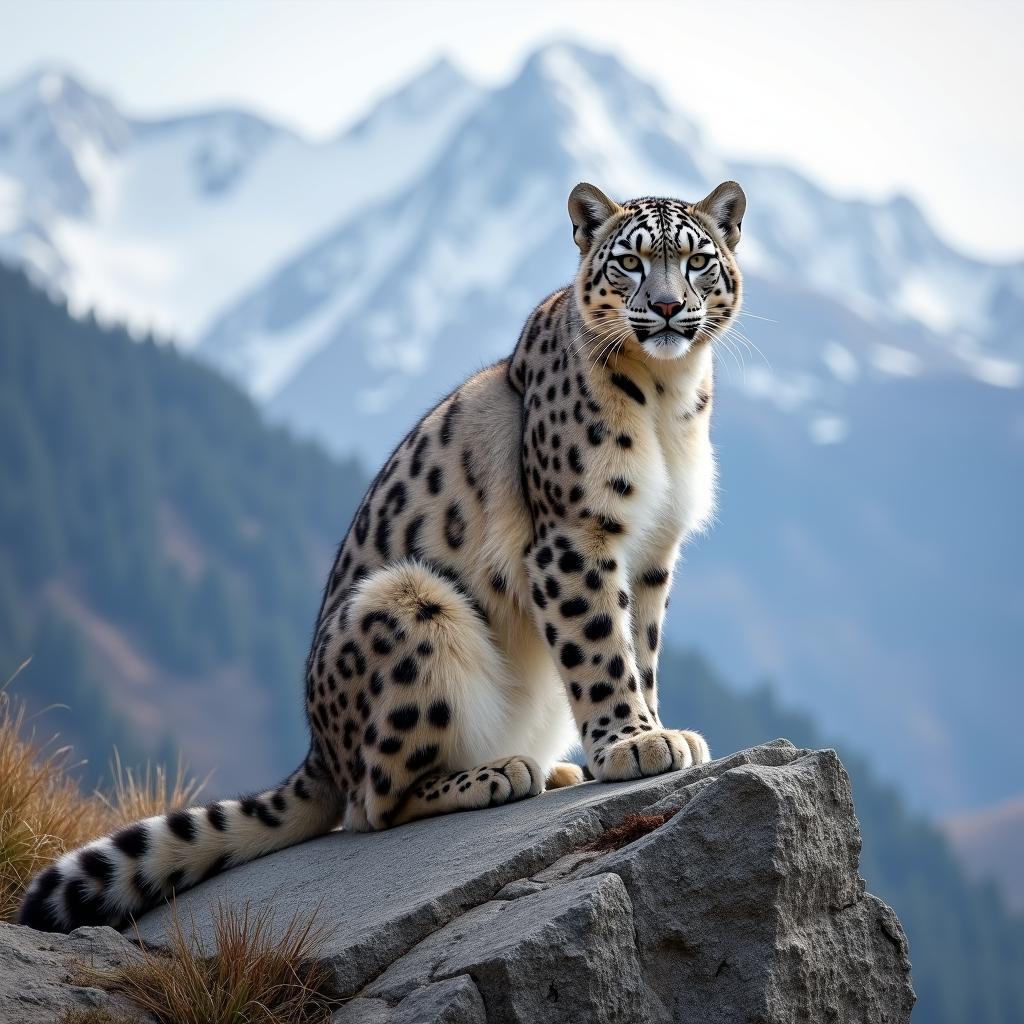 Báo tuyết trong môi trường sống tự nhiên với bộ lông xám khói và vệt đốm đặc trưng giúp ngụy trang hoàn hảo
📝 Sample Answer – Band 8.5-9
Thời lượng: 2.5-3 phút đầy đủ
I’d like to talk about orangutans, which I consider to be one of the most captivating and profoundly intelligent creatures in the animal kingdom. What strikes me most about these great apes is their remarkably humanlike appearance and behavior. They possess expressive faces with deep-set, contemplative eyes that seem to convey a sense of wisdom. Their bodies are covered in distinctive reddish-brown fur, and they have extraordinarily long arms with a wingspan that can reach up to 2.3 meters, which makes them supremely adapted for their arboreal lifestyle.
Orangutans are endemic to the tropical rainforests of Borneo and Sumatra in Southeast Asia, making them quite geographically restricted. These semi-solitary primates spend approximately 90% of their time high in the forest canopy, where they construct elaborate sleeping nests each night from branches and foliage. What’s particularly remarkable is that they’re the largest tree-dwelling mammals on Earth, which presents unique evolutionary challenges given their substantial body weight.
In terms of diet, orangutans are predominantly frugivorous, with fruit comprising about 60% of their intake, though they’re actually opportunistic omnivores. They’ve been observed consuming over 400 different types of food, including tree bark, flowers, insects, and occasionally even small vertebrates. What fascinates me enormously is their sophisticated foraging behavior – they possess an intricate mental map of their territory and can remember the fruiting cycles of hundreds of trees, timing their movements to coincide with peak ripeness. This demonstrates a level of cognitive complexity that rivals that of our closest relatives, the chimpanzees.
The reason I’m so profoundly drawn to orangutans extends far beyond their charismatic appearance. For me, they embody the very essence of what we stand to lose through habitat destruction and climate change. These animals share approximately 97% of our DNA, and observing them feels like looking into an evolutionary mirror. Their capacity for problem-solving, tool use, and even cultural transmission of knowledge between generations challenges our understanding of what it means to be human. What’s more, they’re critically endangered, with populations having plummeted by more than 50% in the past 60 years due to deforestation and the palm oil industry.
I find it particularly poignant that as we encroach upon their habitat, we’re not just driving a species to extinction – we’re losing a part of our own heritage and severing one of the few remaining links to our evolutionary past. Their plight has inspired me to be more conscious about the products I consume and to support conservation initiatives, much like the way people become passionate about describe a public figure you admire for their work in environmental protection. Ultimately, the survival of orangutans serves as a litmus test for our collective willingness to coexist with other species and to preserve biodiversity for generations to come.
Phân Tích Band Điểm
| Tiêu chí | Band | Nhận xét |
|---|---|---|
| Fluency & Coherence | 8.5-9 | Hoàn toàn fluent và coherent. Develops topics fully và systematically. Sử dụng cohesive devices một cách tinh vi (What strikes me most, What’s particularly remarkable, Ultimately). Progression of ideas sophisticated từ description → behavior → deeper significance. |
| Lexical Resource | 8.5-9 | Vocabulary range exceptional với precise và sophisticated choices (captivating, profoundly intelligent, endemic to, frugivorous, intricate mental map). Natural use của idiomatic language (looking into an evolutionary mirror, litmus test). Collocations completely natural (peak ripeness, cultural transmission, habitat destruction). |
| Grammatical Range & Accuracy | 8.5-9 | Full range của structures sử dụng naturally và flexibly. Complex sentences với multiple clauses (which presents unique evolutionary challenges…). Cleft sentences để emphasis (What fascinates me enormously…). Error-free throughout. |
| Pronunciation | 8.5-9 | Pronunciation features consistently clear và natural. Intonation used effectively để convey meaning và create emphasis. Stress patterns perfect, particularly trên academic vocabulary (evolutionary, frugivorous, biodiversity). |
Tại Sao Bài Này Xuất Sắc
🎯 Fluency Hoàn Hảo:
Câu trả lời dài đủ 2.5 phút với zero hesitation. Speaker tự tin navigate qua các topics phức tạp một cách natural. Không có filler words thừa hoặc repetition. Pacing được control tốt với pauses có mục đích để emphasize key points.
📚 Vocabulary Tinh Vi:
- Ví dụ: “intricate mental map” – không chỉ nói “they remember” mà dùng cụm từ academic và precise này cho thấy deep understanding về animal cognition
- Ví dụ: “looking into an evolutionary mirror” – metaphor powerful và poetic, không phải là từ learned from textbook mà là creative expression
- Ví dụ: “litmus test for our collective willingness” – idiomatic phrase ở academic level, shows range beyond basic IELTS vocabulary
📝 Grammar Đa Dạng:
- Ví dụ: “What strikes me most about these great apes is…” – cleft sentence để create emphasis ngay từ đầu
- Ví dụ: “which makes them supremely adapted for their arboreal lifestyle” – relative clause bổ sung thông tin một cách elegant
- Ví dụ: “I find it particularly poignant that as we encroach upon…” – complex structure với formal reporting verb và subordinate clauses
💡 Ideas Sâu Sắc:
Không chỉ dừng ở việc describe orangutans, speaker liên kết với broader themes như evolution, conservation ethics, human responsibility, và biodiversity. Phần explain không superficial (“they’re cute”) mà deeply philosophical (“severing one of the few remaining links to our evolutionary past”). Có personal reflection genuine và demonstrates critical thinking về environmental issues.
Follow-up Questions (Rounding Off Questions)
Examiner có thể hỏi thêm 1-2 câu ngắn sau Part 2:
Question 1: Are orangutans common in Vietnam?
Band 6-7 Answer:
No, they’re not. Orangutans only live in Indonesia and Malaysia. We don’t have them in Vietnam.
Band 8-9 Answer:
No, unfortunately not. Orangutans are geographically restricted to the islands of Borneo and Sumatra, so they’re not part of Vietnam’s native fauna. However, Vietnam does have other primate species like gibbons and langurs, which face similar conservation challenges.
Question 2: Have you ever seen an orangutan in real life?
Band 6-7 Answer:
Yes, I saw them at the zoo when I was a child. They were very interesting to watch.
Band 8-9 Answer:
Yes, I was fortunate enough to observe them at a wildlife sanctuary during a trip to Malaysia. Seeing them in a semi-natural habitat was far more impactful than any documentary because you could truly appreciate their grace and intelligence up close. It was quite an emotional experience, actually.
IELTS Speaking Part 3: Two-way Discussion
Tổng Quan Về Part 3
Part 3 kéo dài 4-5 phút và là phần khó nhất trong IELTS Speaking vì yêu cầu thí sinh thảo luận về các vấn đề trừu tượng và phức tạp hơn liên quan đến chủ đề Part 2. Nếu Part 1 hỏi về personal experiences và Part 2 về một specific example, thì Part 3 đi vào abstract concepts, social issues, trends, và deeper analysis.
Yêu cầu của Part 3 bao gồm: Phân tích và so sánh các khía cạnh khác nhau của vấn đề; Đưa ra quan điểm cá nhân có lý lẽ vững chắc; Xem xét nhiều góc độ và thừa nhận complexity của các issues; Sử dụng ngôn ngữ academic và formal hơn Part 1 và 2; Demonstrate critical thinking và ability to discuss abstract ideas.
Chiến lược hiệu quả cho Part 3 là mở rộng câu trả lời với 3-5 câu hoặc hơn. Cấu trúc tốt nên có: Direct answer → Reason 1 + example/explanation → Reason 2 + example → Acknowledge opposing view hoặc complexity → Personal conclusion. Sử dụng discourse markers để structure ideas rõ ràng như “Well, I think…”, “On the one hand…”, “However, we also need to consider…”.
Đưa ra examples từ society level, không chỉ personal experience. Ví dụ: thay vì “I think animals are important because I like them”, nên nói “Wildlife plays a crucial role in maintaining ecosystem balance, and when species go extinct, it can trigger a cascade effect that impacts food chains and biodiversity.”
Thừa nhận complexity bằng tentative language như “It seems to me that…”, “To some extent…”, “This is a complex issue because…”. Điều này shows mature thinking và awareness rằng social issues không phải black-and-white.
Lỗi thường gặp của học viên Việt Nam trong Part 3: Trả lời quá ngắn thiếu phân tích sâu; Không đưa ra lý lẽ rõ ràng để support quan điểm; Thiếu từ vựng trừu tượng và academic để discuss complex topics; Chỉ nói về personal experience thay vì analyze ở societal level; Không structure câu trả lời có logic; Sử dụng vocabulary quá informal không phù hợp với tính chất discussion của Part 3.
Các Câu Hỏi Thảo Luận Sâu
Theme 1: Conservation and Environmental Protection
Question 1: Why do you think it’s important to protect wild animals?
🎯 Phân tích câu hỏi:
- Dạng: Opinion – Why question (yêu cầu giải thích reasons)
- Key words: important, protect, wild animals
- Cách tiếp cận: Đưa ra 2-3 reasons với explanations. Nên đi từ ecological reasons → economic/social reasons → ethical reasons để show depth of thinking.
📝 Sample Answer – Band 6-7:
I think protecting wild animals is important for several reasons. First, wild animals are part of nature and they help keep the environment balanced. For example, if we lose predators, there will be too many prey animals and this causes problems. Second, many wild animals are important for tourism, which brings money to countries. Finally, I believe all animals have the right to live and we shouldn’t let them disappear. In conclusion, we need to protect wild animals for our future.
Phân tích:
- Structure: Có clear structure với First, Second, Finally và conclusion
- Vocabulary: Adequate với balanced, predators, prey, disappear nhưng chưa sophisticated
- Tại sao Band 6-7: Câu trả lời coherent và covers multiple reasons. Tuy nhiên, explanations còn basic và thiếu specific examples hoặc deeper analysis. Vocabulary functional nhưng không impressive.
📝 Câu trả lời mẫu – Band 8-9:
Well, I believe wildlife conservation is absolutely crucial for multiple interconnected reasons. From an ecological perspective, every species plays a specific role in maintaining ecosystem balance. When we lose even one species, it can trigger a domino effect throughout the entire food web. For instance, the decline of bee populations globally is jeopardizing crop pollination, which directly threatens human food security.
Beyond the ecological imperative, there’s also an economic dimension to consider. Biodiversity represents an enormous reservoir of genetic resources that could hold the key to future medical breakthroughs or agricultural innovations. Many modern medicines, for example, are derived from compounds found in plants and animals. By driving species to extinction, we’re essentially closing doors to potential solutions for diseases we haven’t even encountered yet.
On a more philosophical level, I’d argue that we have a moral obligation to protect other species. The current extinction crisis is largely anthropogenic – caused by human activities like habitat destruction and climate change. Given that we’re the primary architects of this crisis, it seems only right that we should take responsibility for reversing the damage. Ultimately, the wellbeing of wildlife is inextricably linked to our own survival, making conservation not just an environmental issue, but a matter of intergenerational justice.
Phân tích:
- Structure: Extremely well-organized với clear progression: ecological → economic → ethical dimensions. Mỗi point được developed fully với reasoning + example + implication
- Vocabulary: Sophisticated và precise (jeopardizing, anthropogenic, domino effect, intergenerational justice, inextricably linked). Academic register appropriate cho discussion
- Grammar: Complex structures xuất hiện tự nhiên (By driving species… we’re essentially…; Given that we’re…; it seems only right that…)
- Critical Thinking: Demonstrates multi-dimensional thinking, acknowledging complexity. Không just personal opinion mà based trên logical reasoning và evidence
💡 Key Language Features:
- Discourse markers: Well, From an ecological perspective, Beyond the ecological imperative, On a more philosophical level, Ultimately
- Tentative language: I believe, I’d argue, it seems
- Abstract nouns: imperative, dimension, biodiversity, obligation, wellbeing, intergenerational justice
- Academic phrases: plays a specific role in, hold the key to, take responsibility for, inextricably linked
Question 2: Do you think zoos are beneficial for animals?
🎯 Phân tích câu hỏi:
- Dạng: Opinion with implicit debate (zoos là controversial topic)
- Key words: beneficial, animals (lưu ý: beneficial FOR animals, không phải for humans)
- Cách tiếp cận: This is a nuanced question. Nên acknowledge both sides – potential benefits (conservation, education, research) vs. concerns (welfare, captivity ethics). Show balanced thinking.
📝 Sample Answer – Band 6-7:
This is a difficult question. I think zoos have both good and bad points. On the positive side, zoos can help protect endangered animals and teach people about wildlife. Many zoos run breeding programs to save rare species. However, keeping animals in cages is not natural and some animals look unhappy in zoos. They need a lot of space to move around. So I think modern zoos that focus on conservation and have large enclosures are better than traditional zoos. Overall, zoos can be beneficial if they are managed well and put animal welfare first.
Phân tích:
- Structure: Good attempt at balanced view với positive side và however for contrast
- Vocabulary: Adequate vocabulary (endangered, breeding programs, enclosures, welfare) nhưng limited range
- Tại sao Band 6-7: Shows awareness của both sides và attempts balanced answer. Tuy nhiên, analysis còn surface-level và thiếu sophisticated vocabulary để express nuanced views. Grammar mostly accurate nhưng structures simple.
📝 Câu trả lời mẫu – Band 8-9:
This is quite a contentious issue, and I think the answer depends largely on what type of zoo we’re discussing. Modern accredited zoos that adhere to strict welfare standards can indeed be beneficial, whereas older facilities with inadequate enclosures often do more harm than good.
On the positive side, well-managed zoos serve several crucial functions. They act as arks for critically endangered species – species that might otherwise face imminent extinction in the wild. The California condor, for instance, was brought back from the brink through captive breeding programs. Zoos also play a vital role in fostering public awareness and generating empathy for wildlife, which is essential for garnering support for conservation initiatives. When people can observe animals firsthand, it creates a connection that documentaries alone cannot replicate.
That said, there are legitimate concerns about animal welfare in captivity. Even the most spacious and enriched environments cannot fully replicate the complexity of natural habitats. Large, intelligent mammals like elephants and orcas, which naturally roam vast territories, often exhibit stereotypic behaviors in captivity, indicating psychological distress. The ethical question becomes whether the conservation and educational benefits outweigh the individual animal’s compromised quality of life.
I’d argue that the future lies in a shift toward sanctuary models and in-situ conservation – protecting animals in their natural environments rather than in captivity. However, in the interim, responsibly-run zoos that prioritize spacious, naturalistic habitats, enrichment programs, and genuine conservation outcomes can serve as a necessary compromise, particularly for species with no viable wild populations remaining.
Phân tích:
- Structure: Masterfully balanced với clear acknowledgment of complexity. Introduces position → positive aspects với examples → concerns và counterarguments → nuanced conclusion
- Vocabulary: Highly sophisticated và precise (contentious, adhere to, arks, imminent extinction, stereotypic behaviors, in-situ conservation). Shows command của technical terminology
- Grammar: Full range của complex structures (relative clauses, conditionals, cleft sentences, participle phrases) used flexibly và naturally
- Critical Thinking: Exceptional depth – doesn’t give simplistic yes/no answer nhưng analyzes different types của zoos, acknowledges trade-offs, considers future alternatives. Shows mature và informed perspective
💡 Key Language Features:
- Discourse markers: On the positive side, That said, However, I’d argue that, in the interim
- Tentative language: I think the answer depends largely on, can indeed be, I’d argue that
- Abstract nouns: contentious issue, welfare standards, imminent extinction, empathy, ethical question, compromise
- Hedging expressions: often, largely, to some extent, can serve as
 Vườn thú hiện đại với môi trường sống tự nhiên rộng rãi đảm bảo phúc lợi động vật và chương trình bảo tồn
Theme 2: Human-Wildlife Conflict and Coexistence
Question 3: What problems can wild animals cause for humans?
🎯 Phân tích câu hỏi:
- Dạng: Problem identification (yêu cầu list và explain problems)
- Key words: problems, wild animals, humans (focus on conflicts)
- Cách tiếp cận: Categorize problems – agricultural damage, safety threats, disease transmission, property damage. Provide specific examples cho mỗi category. Important: maintain balanced tone – không demonize wildlife mà explain conflicts arise từ habitat loss.
📝 Sample Answer – Band 6-7:
Wild animals can create several problems for people. First, some animals like monkeys or elephants can damage crops when they come to farmland looking for food. This causes economic losses for farmers. Second, dangerous animals like tigers or crocodiles can attack people, especially in rural areas. Third, some wild animals carry diseases that can spread to humans or livestock. For example, bats can carry rabies. Finally, animals like birds can damage property or infrastructure. However, I think many of these problems happen because humans have destroyed animal habitats, so animals have nowhere else to go.
Phân tích:
- Structure: Well-organized với categorization của problems (First, Second, Third, Finally)
- Vocabulary: Adequate topic vocabulary (damage crops, economic losses, carry diseases, infrastructure) nhưng limited range
- Tại sao Band 6-7: Covers multiple problems với basic explanations. Shows some awareness về root causes (habitat destruction). Tuy nhiên, thiếu specific examples và sophisticated analysis về complexity của conflicts.
📝 Câu trả lời mẫu – Band 8-9:
Human-wildlife conflict is an increasingly pressing issue, particularly in regions where urban sprawl is encroaching upon natural habitats. The problems manifest in several significant ways.
One of the most economically damaging impacts is crop raiding and livestock predation. In Africa, for instance, elephants can devastate entire harvests in a single night, which can be catastrophic for subsistence farmers who depend on those crops for survival. Similarly, large carnivores like leopards or wolves pose a threat to livestock, resulting in substantial economic losses for rural communities. What’s particularly challenging is that farmers often retaliate by killing these animals, which perpetuates a cycle of conflict rather than finding sustainable solutions.
Beyond economic impacts, there are genuine safety concerns. Human fatalities from wildlife attacks, while relatively rare, do occur, particularly in areas where human settlements abut wildlife corridors. In India, for example, human-elephant conflicts claim around 400 human lives annually, similar to những vấn đề mà describe a place where you would like to go hiking cũng phải đối mặt với wildlife encounters. Tigers and crocodiles also account for casualties in certain regions.
There’s also the dimension of zoonotic disease transmission. Wild animals can serve as reservoirs for diseases that spill over into human populations, as we’ve seen with Ebola, SARS, and most recently COVID-19. The interface between wildlife, domestic animals, and humans creates opportunities for pathogen transfer, which can have devastating public health consequences.
However, it’s crucial to recognize that most of these conflicts are symptomatic of deeper issues – primarily habitat fragmentation and resource competition driven by human expansion. As we push further into wilderness areas, we’re inevitably bringing ourselves into closer contact with wildlife. So rather than viewing animals as the problem, we need to reframe the issue as one of inadequate spatial planning and unsustainable development patterns that fail to account for the needs of both humans and wildlife.
Phân tích:
- Structure: Exceptionally well-organized với logical flow: economic impacts → safety concerns → disease transmission → root cause analysis. Each point thoroughly developed với specific examples và implications
- Vocabulary: Sophisticated và precise (urban sprawl, encroaching upon, crop raiding, devastate, subsistence farmers, retaliate, perpetuates a cycle, zoonotic, reservoirs, symptomatic of, habitat fragmentation)
- Grammar: Full range với complex structures used naturally (relative clauses, participle phrases, cleft sentences, passives)
- Critical Thinking: Outstanding – không chỉ list problems mà analyze underlying causes. Reframes the issue để show nuanced understanding. Maintains balanced perspective không blame wildlife.
💡 Key Language Features:
- Discourse markers: One of the most…, Similarly, Beyond…, There’s also…, However, So rather than
- Tentative language: can be, do occur, it’s crucial to recognize
- Abstract nouns: sprawl, predation, retaliation, dimension, transmission, interface, fragmentation, spatial planning
- Academic phrases: manifest in, pose a threat to, account for, spillover into, symptomatic of, fail to account for
Question 4: How do you think people’s attitudes toward wild animals have changed over time?
🎯 Phân tích câu hỏi:
- Dạng: Compare past and present + analyze change
- Key words: attitudes, changed, over time
- Cách tiếp cận: Establish past attitudes (fear, exploitation, pest mentality) → present attitudes (conservation awareness, appreciation) → explain drivers of change (education, media, environmental movement) → acknowledge ongoing challenges
📝 Sample Answer – Band 6-7:
I think people’s attitudes have changed a lot. In the past, people saw wild animals mainly as dangerous or useful for hunting. They didn’t think much about protecting them. But nowadays, more people understand that wild animals are important for nature and we need to protect them. This change happened because of education and TV programs about wildlife. People now know that many species are endangered and we might lose them forever. However, some people still hunt animals illegally for profit. So while attitudes have improved overall, there is still work to do to change everyone’s mind.
Phân tích:
- Structure: Has comparison structure (past vs. present) với reasons for change
- Vocabulary: Basic vocabulary với some topic words (endangered, illegally, protect) nhưng limited sophistication
- Tại sao Band 6-7: Addresses the question với basic comparison và explanation. Tuy nhiên, thiếu specific historical examples, sophisticated vocabulary về attitude shifts, và deeper analysis về societal changes.
📝 Câu trả lời mẫu – Band 8-9:
There’s been a quite dramatic shift in how humans perceive wildlife over the past century or so. Historically speaking, wild animals were primarily viewed through a utilitarian lens – as either resources to be exploited, threats to be eliminated, or obstacles to agricultural expansion. The prevailing attitude was deeply anthropocentric, with nature subordinated to human needs and desires. We can see this reflected in language from that era – terms like “vermin” for predators or “game” for huntable species reveal a mindset that saw wildlife primarily in terms of its usefulness or threat to humans.
The transformation really began gaining momentum in the mid-20th century, catalyzed by several factors. The emergence of the modern environmental movement in the 1960s and 70s brought ecological thinking into mainstream consciousness. Pioneering conservationists and documentaries, particularly những người như describe a public figure you admire for their work trong lĩnh vực bảo tồn thiên nhiên, helped foster a sense of wonder about the natural world. Simultaneously, increasing scientific understanding of ecosystem interconnectedness made it clear that we can’t simply eliminate species without cascading consequences.
Today, there’s much greater recognition of wildlife’s intrinsic value – the idea that animals have worth independent of their utility to humans. Concepts like animal rights and ecological citizenship have gained traction, particularly among younger generations. Social media has also democratized wildlife appreciation, allowing people to develop emotional connections with animals they’ll never encounter in person.
That said, this shift is far from universal or complete. Attitudes remain deeply divided along geographic, economic, and cultural lines. Subsistence communities living alongside wildlife often hold pragmatic views shaped by daily encounters and conflicts, whereas urban populations can afford more romanticized perspectives. Moreover, despite increased awareness, we’re simultaneously driving extinction at unprecedented rates, which highlights a troubling disconnect between expressed values and actual behaviors.
What’s particularly interesting is how climate change is forcing a recalibration of our relationship with nature. As the interconnectedness of human and ecological wellbeing becomes undeniably apparent, we’re moving toward a more integrated worldview that recognizes our interdependence with other species – though whether this shift is happening fast enough remains an open question.
Phân tích:
- Structure: Masterful organization với clear historical progression (past → turning point → present → ongoing challenges → future trajectory). Each era được characterized fully với specific details
- Vocabulary: Exceptionally sophisticated (utilitarian lens, anthropocentric, subordinated to, catalyzed by, intrinsic value, democratized, romanticized perspectives, recalibration, interdependence)
- Grammar: Full range của advanced structures (passive constructions, participle clauses, cleft sentences, complex conditionals) deployed naturally
- Critical Thinking: Exceptional depth – traces historical development với nuance, acknowledges complexity và contradictions, considers geographic và socioeconomic variables, projects forward. Shows scholarly understanding của the topic.
💡 Key Language Features:
- Discourse markers: Historically speaking, The transformation really began, Simultaneously, Today, That said, Moreover, What’s particularly interesting
- Tentative language: quite dramatic, there’s much greater recognition, remains an open question
- Abstract nouns: shift, lens, mindset, momentum, intrinsic value, disconnect, recalibration, interdependence, worldview
- Academic phrases: viewed through a lens, subordinated to, catalyzed by, gaining traction, independent of, far from universal
Theme 3: Future of Wildlife and Conservation Strategies
Question 5: What do you think will happen to wild animals in the future?
🎯 Phân tích câu hỏi:
- Dạng: Future prediction với implicit evaluation
- Key words: future, wild animals, happen
- Cách tiếp cận: This requires balanced analysis – present concerning trends (habitat loss, climate change) while also acknowledging conservation efforts và technological solutions. Avoid being overly pessimistic or optimistic – show realistic assessment với caveats.
📝 Sample Answer – Band 6-7:
I think the future for wild animals is both good and bad. On the negative side, many animals will probably disappear because of climate change and habitat loss. Forests are being cut down and this destroys where animals live. On the positive side, more people and governments are trying to protect wildlife now. There are more nature reserves and conservation programs than before. I hope that with technology and education, we can save endangered species. However, if we don’t act quickly, many animals will become extinct. So the future depends on what humans decide to do now.
Phân tích:
- Structure: Shows attempt at balanced view với good/bad sides
- Vocabulary: Adequate với relevant terms (climate change, habitat loss, endangered species, extinct) nhưng limited range
- Tại sao Band 6-7: Addresses question với basic prediction covering both challenges và hope. Tuy nhiên, analysis lacks depth, specific examples limited, và vocabulary không sophisticated enough để express nuanced future scenarios.
📝 Câu trả lời mẫu – Band 8-9:
I wish I could be more optimistic, but the trajectory we’re currently on suggests a rather grim outlook for wildlife. If present trends continue unabated, we’re looking at what many scientists are calling the sixth mass extinction event, with extinction rates currently running at 100 to 1,000 times the natural background rate.
The primary drivers – habitat destruction, climate change, poaching, and pollution – show little sign of abating. Climate change, in particular, is reshaping ecosystems faster than many species can adapt. We’re already seeing range shifts, phenological mismatches, and population crashes in species from polar bears to coral reefs. The cascading effects through food webs mean that even species not directly threatened may face collapse as their prey or habitat disappears.
However, I don’t think the situation is entirely hopeless. There are glimmers of hope in various conservation successes – species like the giant panda, humpback whales, and certain rhinoceros populations have been pulled back from the brink through concerted conservation efforts. Advances in technology – from satellite monitoring to DNA analysis to conservation drones – are enhancing our ability to track and protect wildlife. Rewilding initiatives and habitat corridors are showing promise in some regions.
Perhaps most crucially, there’s growing recognition that conservation and human development don’t have to be mutually exclusive. Community-based conservation models that provide economic incentives for local people to protect wildlife are proving more effective than top-down preservation mandates. Payment for ecosystem services schemes, ecotourism, and sustainable use programs are demonstrating that wildlife can be more valuable alive than dead.
The reality is that the future will likely be one of triage – we simply won’t be able to save everything. We’ll need to make difficult decisions about which species and ecosystems to prioritize, which will inevitably involve both scientific criteria and value judgments. The species that survive will likely be those that can coexist with humans in human-modified landscapes, along with those in well-protected stronghold areas.
Ultimately, the fate of wildlife is inextricably tied to how seriously we address broader issues like climate change, sustainable development, và inequality. If we fail to tackle these fundamental challenges, conservation efforts will be like rearranging deck chairs on the Titanic. But if we can fundamentally reshape our relationship with nature – viewing it not as something separate from humanity but as the foundation upon which all human wellbeing rests – then there’s still a chance to preserve much of the biodiversity that remains.
Phân tích:
- Structure: Highly sophisticated với progression: concerning trends → specific drivers và impacts → countervailing hopeful developments → innovative approaches → realistic assessment về trade-offs → big-picture conclusion linking to broader systemic issues
- Vocabulary: Exceptional range và precision (trajectory, grim outlook, unabated, phenological mismatches, glimmers of hope, triage, stronghold areas, inextricably tied to, rearranging deck chairs on the Titanic)
- Grammar: Full range của complex structures including conditionals, relative clauses, passive constructions, participle phrases, all used flexibly và naturally
- Critical Thinking: Outstanding – presents nuanced analysis acknowledging both challenges và hope, discusses trade-offs và difficult decisions, connects wildlife conservation to broader systemic issues. Shows deep understanding và mature thinking about complex topic.
💡 Key Language Features:
- Discourse markers: However, Perhaps most crucially, The reality is that, Ultimately
- Tentative language: I wish I could be, suggests, likely, there’s still a chance
- Abstract nouns: trajectory, outlook, extinction event, drivers, triage, fate, foundation, biodiversity
- Metaphorical expressions: pulled back from the brink, glimmers of hope, rearranging deck chairs on the Titanic
- Academic phrases: if present trends continue, show little sign of, inextricably tied to, the foundation upon which
Question 6: Should governments spend money on wildlife protection, or are there more important priorities?
🎯 Phân tích câu hỏi:
- Dạng: Opinion với implicit debate about resource allocation
- Key words: governments, spend money, wildlife protection, more important priorities
- Cách tiếp cận: This is a classic “either/or” question that actually requires showing they’re not mutually exclusive. Acknowledge competing priorities (healthcare, education, poverty) but argue for wildlife protection as also serving human interests. Show nuanced thinking về trade-offs và synergies.
📝 Sample Answer – Band 6-7:
This is a difficult question because governments have many responsibilities. Of course, important things like healthcare, education, and helping poor people should be priorities. However, I also think protecting wildlife is important and governments should spend money on it. Wildlife is part of our natural heritage and once species are gone, they’re gone forever. Also, protecting nature can bring economic benefits through tourism. I think governments should try to balance all these priorities rather than choosing only one. They can protect wildlife while also spending on other important areas. Maybe they don’t need to spend huge amounts on conservation, but they should allocate some budget for it.
Phân tích:
- Structure: Attempts balanced approach acknowledging both sides
- Vocabulary: Adequate với relevant terms (priorities, natural heritage, economic benefits, allocate budget) nhưng limited sophistication
- Tại sao Band 6-7: Shows awareness of competing priorities và attempts nuanced answer. Tuy nhiên, arguments còn basic, thiếu specific examples về how conservation relates to other priorities, và vocabulary không advanced enough để express complex resource allocation debates.
📝 Câu trả lời mẫu – Band 8-9:
This question presents a false dichotomy, in my view, because wildlife protection and other government priorities aren’t actually mutually exclusive – in fact, they’re often deeply interconnected.
Certainly, no one would argue that wildlife conservation should take precedence over immediate human needs like healthcare, education, or poverty alleviation. These are non-negotiable priorities for any responsible government. However, the framing of this as an either/or choice overlooks the instrumental value that healthy ecosystems provide to human welfare.
Consider, for instance, that many life-saving pharmaceuticals are derived from natural compounds found in wild species. The rosy periwinkle, a plant from Madagascar, yielded compounds that revolutionized childhood leukemia treatment. By allowing species to go extinct, we’re potentially foreclosing on future medical breakthroughs. Similarly, healthy ecosystems provide essential services like water filtration, flood mitigation, and carbon sequestration that would cost billions to replicate artificially – if they could be replicated at all.
There’s also an economic argument. The global nature-based tourism industry generates hundreds of billions annually and provides livelihoods for millions, particularly in developing nations. Countries like Kenya and Costa Rica have leveraged their wildlife assets to drive economic development. The return on investment for conservation can actually be quite substantial when these indirect benefits are properly accounted for.
Moreover, I’d argue that how we treat wildlife reflects our broader values and governance quality. Governments that implement effective conservation policies typically also demonstrate competence in other areas of governance. Environmental degradation and biodiversity loss often go hand in hand with corruption, weak institutions, and poor planning – issues that ultimately undermine human development across the board.
That said, I’m not suggesting unlimited funding for conservation while other needs go unmet. What’s required is strategic allocation that recognizes conservation as complementary to rather than in competition with other development goals. Integrated approaches – like those embodied in the UN’s Sustainable Development Goals – recognize that environmental sustainability underpins economic prosperity and social wellbeing.
In practical terms, this might mean prioritizing conservation interventions that deliver multiple benefits – for example, protecting watersheds that both harbor biodiversity and provide clean water for cities, or supporting community-managed conservation areas that generate income while protecting ecosystems. It’s about working smarter, not just spending more.
Ultimately, governments that frame this as a choice between wildlife and human needs are missing the point – our fates are bound together, and investing in nature is, fundamentally, investing in humanity’s future.
Phân tích:
- Structure: Masterfully constructed argument với progression: reframe false dichotomy → acknowledge legitimate concerns → present instrumental arguments (medical, economic, ecosystem services) → values/governance argument → practical middle ground → powerful conclusion
- Vocabulary: Exceptional sophistication (false dichotomy, mutually exclusive, take precedence over, instrumental value, foreclosing on, carbon sequestration, leveraged, return on investment, go hand in hand with, complementary to, underpins)
- Grammar: Full range của advanced structures (conditionals, relative clauses, participle phrases, cleft sentences, inversion) used flexibly để create emphasis và nuance
- Critical Thinking: Outstanding – deconstructs the premise của question, presents multi-faceted argument supported by specific examples, acknowledges complexity, proposes pragmatic solutions, connects to broader themes about governance và sustainability. Shows sophisticated policy-level thinking.
💡 Key Language Features:
- Discourse markers: Certainly, However, Consider, There’s also, Moreover, That said, In practical terms, Ultimately
- Tentative language: in my view, I’d argue that, might mean, It’s about
- Abstract nouns: dichotomy, precedence, alleviation, instrumental value, mitigation, sequestration, competence, degradation, allocation, sustainability
- Academic collocations: take precedence over, derived from, yield compounds, foreclose on, go hand in hand with, undermine development, complementary to, harbor biodiversity
- Persuasive structures: This question presents…, no one would argue that…, the framing overlooks…, What’s required is…
Từ vựng và cụm từ quan trọng
Topic-Specific Vocabulary
| Từ vựng/Cụm từ | Loại từ | Phiên âm | Nghĩa tiếng Việt | Ví dụ | Collocation |
|---|---|---|---|---|---|
| apex predator | n | /ˈeɪpeks ˈpredətər/ | động vật săn mồi đỉnh cao | Tigers are apex predators in the food chain. | apex species, apex carnivore, top predator |
| arboreal | adj | /ɑːˈbɔːriəl/ | sống trên cây | Orangutans are arboreal primates. | arboreal lifestyle, arboreal habitat, arboreal species |
| biodiversity | n | /ˌbaɪəʊdaɪˈvɜːsəti/ | đa dạng sinh học | Rainforests contain incredible biodiversity. | preserve biodiversity, biodiversity loss, rich biodiversity |
| camouflage | n/v | /ˈkæməflɑːʒ/ | ngụy trang, sự ngụy trang | The leopard’s spots provide excellent camouflage. | natural camouflage, camouflage pattern, use camouflage |
| captive breeding | n | /ˈkæptɪv ˈbriːdɪŋ/ | chương trình nhân giống trong nuôi nhốt | Captive breeding programs have saved many endangered species. | captive breeding program, successful breeding, breeding initiative |
| carnivorous | adj | /kɑːˈnɪvərəs/ | ăn thịt | Lions are carnivorous animals. | carnivorous diet, carnivorous predator, carnivorous species |
| conservation | n | /ˌkɒnsəˈveɪʃn/ | bảo tồn | Wildlife conservation requires global cooperation. | conservation efforts, conservation status, conservation program |
| critically endangered | adj | /ˈkrɪtɪkli ɪnˈdeɪndʒəd/ | cực kỳ nguy cấp | Orangutans are critically endangered species. | critically endangered status, become critically endangered |
| deforestation | n | /diːˌfɒrɪˈsteɪʃn/ | sự phá rừng | Deforestation is destroying wildlife habitats. | rampant deforestation, combat deforestation, deforestation rate |
| ecosystem | n | /ˈiːkəʊsɪstəm/ | hệ sinh thái | Each species plays a role in the ecosystem. | fragile ecosystem, ecosystem balance, marine ecosystem |
| elusive | adj | /ɪˈluːsɪv/ | khó nắm bắt, tránh né | Snow leopards are elusive creatures. | elusive animal, elusive species, remain elusive |
| endemic | adj | /enˈdemɪk/ | đặc hữu (của một khu vực) | This species is endemic to Madagascar. | endemic species, endemic to the region |
| endangered | adj | /ɪnˈdeɪndʒəd/ | có nguy cơ tuyệt chủng | Many rhino species are endangered. | endangered species, become endangered, highly endangered |
| extinction | n | /ɪkˈstɪŋkʃn/ | sự tuyệt chủng | Poaching is driving elephants toward extinction. | face extinction, mass extinction, extinction crisis |
| fauna | n | /ˈfɔːnə/ | hệ động vật | Australia has unique fauna. | native fauna, diverse fauna, fauna and flora |
| foraging | n/v | /ˈfɒrɪdʒɪŋ/ | kiếm ăn, tìm kiếm thức ăn | Bears spend much time foraging for food. | foraging behavior, foraging habits, go foraging |
| habitat | n | /ˈhæbɪtæt/ | môi trường sống | Habitat loss threatens many species. | natural habitat, habitat destruction, suitable habitat |
| herbivore | n | /ˈhɜːbɪvɔː/ | động vật ăn cỏ | Elephants are herbivores. | herbivore diet, large herbivore, herbivore species |
| migration | n | /maɪˈɡreɪʃn/ | sự di cư | Wildebeest migration is spectacular. | annual migration, migration pattern, seasonal migration |
| nocturnal | adj | /nɒkˈtɜːnl/ | hoạt động về đêm | Owls are nocturnal predators. | nocturnal animal, nocturnal behavior, nocturnal species |
| poaching | n | /ˈpəʊtʃɪŋ/ | săn trộm | Poaching decimated rhino populations. | illegal poaching, combat poaching, poaching crisis |
| predator | n | /ˈpredətə/ | kẻ săn mồi | Wolves are pack-hunting predators. | natural predator, fearsome predator, apex predator |
| prey | n | /preɪ/ | con mồi | Gazelles are prey for lions. | hunt prey, stalk prey, prey species |
| sanctuary | n | /ˈsæŋktʃuəri/ | khu bảo tồn, nơi trú ẩn | The elephant sanctuary rescues orphaned animals. | wildlife sanctuary, establish a sanctuary, animal sanctuary |
| species | n | /ˈspiːʃiːz/ | loài | This species is found only in tropical forests. | endangered species, native species, invasive species |
Idiomatic Expressions & Advanced Phrases
| Cụm từ | Nghĩa | Ví dụ sử dụng | Band điểm |
|---|---|---|---|
| bring back from the brink | cứu vãn khỏi bờ vực tuyệt chủng | Conservation efforts brought the species back from the brink of extinction. | 8-9 |
| a drop in the ocean | một giọt nước trong đại dương (rất nhỏ bé so với vấn đề) | Current conservation funding is just a drop in the ocean compared to what’s needed. | 7.5-8 |
| the domino effect | hiệu ứng domino, phản ứng dây chuyền | Losing one species can trigger a domino effect throughout the ecosystem. | 7.5-8 |
| a slippery slope | con đường trơn trượt (dẫn đến hậu quả xấu) | Allowing any species to go extinct is a slippery slope toward ecological collapse. | 7.5-8 |
| the tip of the iceberg | phần nổi của tảng băng (chỉ thấy một phần nhỏ vấn đề) | The visible decline in bee populations is just the tip of the iceberg. | 7.5-8 |
| at the expense of | với cái giá của, gây thiệt hại cho | Economic development should not come at the expense of wildlife. | 7.5-8 |
| strike a balance | tìm sự cân bằng | We need to strike a balance between development and conservation. | 7-7.5 |
| hang in the balance | trong tình trạng bấp bênh | The future of many species hangs in the balance. | 7.5-8 |
| a race against time | cuộc đua với thời gian | Saving critically endangered species is a race against time. | 7-7.5 |
| turn a blind eye to | làm ngơ, phớt lờ | We can no longer turn a blind eye to wildlife trafficking. | 7.5-8 |
| hold the key to | nắm giữ chìa khóa cho, là yếu tố quan trọng | Biodiversity may hold the key to future medical breakthroughs. | 8-8.5 |
| a contentious issue | vấn đề gây tranh cãi | Zoo ethics remains a contentious issue among conservationists. | 8-9 |
Discourse Markers (Từ Nối Ý Trong Speaking)
Để bắt đầu câu trả lời:
- 📝 Well,… – Khi cần chút thời gian suy nghĩ hoặc bắt đầu một ý phức tạp
- 📝 Actually,… – Khi đưa ra góc nhìn khác hoặc thông tin surprising
- 📝 To be honest,… – Khi nói thật lòng, thẳng thắn
- 📝 I’d say that… – Khi đưa ra quan điểm cá nhân có cân nhắc
- 📝 From my perspective,… – Từ góc nhìn của tôi (formal hơn)
- 📝 In my view,… – Theo quan điểm của tôi
Để bổ sung ý:
- 📝 On top of that,… – Thêm vào đó, ngoài ra
- 📝 What’s more,… – Hơn nữa, ngoài ra
- 📝 Not to mention… – Chưa kể đến, đừng quên
- 📝 Furthermore,… – Hơn nữa (formal)
- 📝 Moreover,… – Ngoài ra, hơn thế nữa
- 📝 Additionally,… – Thêm vào đó
Để đưa ra quan điểm cân bằng:
- 📝 On the one hand,… On the other hand,… – Một mặt… mặt khác…
- 📝 While it’s true that…, we also need to consider… – Mặc dù đúng là… nhưng ta cũng cần xem xét…
- 📝 That said,… – Tuy nhiên, dù vậy thì
- 📝 Having said that,… – Dù đã nói như vậy nhưng
- 📝 Admittedly,… – Phải thừa nhận rằng
Để nhấn mạnh điểm quan trọng:
- 📝 What strikes me most is… – Điều ấn tượng nhất với tôi là
- 📝 The key point is… – Điểm mốt chính là
- 📝 What’s particularly important is… – Điều đặc biệt quan trọng là
- 📝 It’s crucial to recognize that… – Rất quan trọng phải nhận ra rằng
Để kết luận:
- 📝 All in all,… – Tóm lại, nhìn chung
- 📝 At the end of the day,… – Cuối cùng thì, xét cho cùng
- 📝 Ultimately,… – Cuối cùng, xét về lâu dài
- 📝 In the final analysis,… – Xét về mặt tổng thể
Để giải thích và mở rộng ý:
- 📝 What I mean is… – Ý tôi là
- 📝 In other words,… – Nói cách khác
- 📝 To put it another way,… – Nói theo cách khác
- 📝 That is to say,… – Nghĩa là
Grammatical Structures Ấn Tượng
1. Conditional Sentences (Câu điều kiện):
Mixed conditional (kết hợp quá khứ và hiện tại):
- Formula: If + past perfect, would/could + bare infinitive
- Ví dụ: “If we had protected habitats earlier, many species wouldn’t be endangered now.”
Inversion in conditional (đảo ngữ trong câu điều kiện):
- Formula: Should/Were/Had + subject + verb…
- Ví dụ: “Should governments fail to act, we’ll witness unprecedented biodiversity loss.”
- Ví dụ: “Were more resources allocated to conservation, we could reverse current trends.”
2. Relative Clauses (Mệnh đề quan hệ):
Non-defining relative clauses (mệnh đề quan hệ không xác định):
- Formula: …, which/who/where + clause, …
- Ví dụ: “Snow leopards, which inhabit high-altitude regions, are critically endangered.”
- Ví dụ: “Poaching, which has decimated rhino populations, remains a major threat.”
3. Passive Voice (Câu bị động để tạo formal tone):
It is thought/believed/said that… (người ta cho rằng):
- Ví dụ: “It is widely believed that climate change poses the greatest threat to wildlife.”
- Ví dụ: “It has been estimated that we’re losing species at 1,000 times the natural rate.”
Be + past participle để nhấn mạnh impact:
- Ví dụ: “Habitats are being destroyed faster than they can regenerate.”
- Ví dụ: “Many conservation initiatives have been undermined by inadequate funding.”
4. Cleft Sentences (Câu chẻ để nhấn mạnh):
What + subject + verb + is/was…:
- Ví dụ: “What concerns me most is the accelerating pace of extinction.”
- Ví dụ: “What makes orangutans particularly vulnerable is their slow reproductive rate.”
It is/was… that/who…:
- Ví dụ: “It’s habitat loss that represents the biggest threat to wildlife.”
- Ví dụ: “It was conservation efforts that saved the giant panda from extinction.”
The thing that… is…:
- Ví dụ: “The thing that strikes me about elephants is their remarkable intelligence.”
5. Participle Clauses (Mệnh đề phân từ):
Present participle (-ing) để diễn tả hành động đồng thời:
- Ví dụ: “Living in remote mountain regions, snow leopards rarely encounter humans.”
- Ví dụ: “Facing habitat loss and poaching, many species are declining rapidly.”
Past participle (-ed) để diễn tả bị động:
- Ví dụ: “Driven by the illegal wildlife trade, poaching continues to devastate populations.”
- Ví dụ: “Protected by conservation laws, some species are slowly recovering.”
6. Inversion for Emphasis (Đảo ngữ để nhấn mạnh):
Not only… but also với đảo ngữ:
- Ví dụ: “Not only do wild animals face habitat loss, but they’re also threatened by climate change.”
Rarely/Seldom/Never at the beginning:
- Ví dụ: “Rarely have we seen such rapid environmental degradation.”
- Ví dụ: “Never before has wildlife faced such diverse threats simultaneously.”
7. Nominalization (Danh từ hóa):
Chuyển động từ/tính từ thành danh từ để tạo academic tone:
- destroy → destruction: “habitat destruction”
- conserve → conservation: “conservation efforts”
- extinct → extinction: “mass extinction”
- aware → awareness: “public awareness”
Ví dụ câu: “The destruction of rainforests has led to the extinction of countless species” (thay vì “Rainforests are being destroyed and countless species are going extinct”)
Với hướng dẫn chi tiết này, bạn đã có đầy đủ công cụ để chinh phục chủ đề “describe a wild animal you like” trong IELTS Speaking. Hãy nhớ rằng điểm số cao không chỉ đến từ việc học thuộc bài mẫu, mà từ khả năng sử dụng linh hoạt vocabulary, structures, và đặc biệt là thể hiện critical thinking về chủ đề. Hãy thực hành thường xuyên với các câu hỏi khác nhau và tìm cách diễn đạt ý tưởng của riêng bạn một cách tự nhiên và tự tin nhất. Chúc bạn thành công trong kỳ thi IELTS!