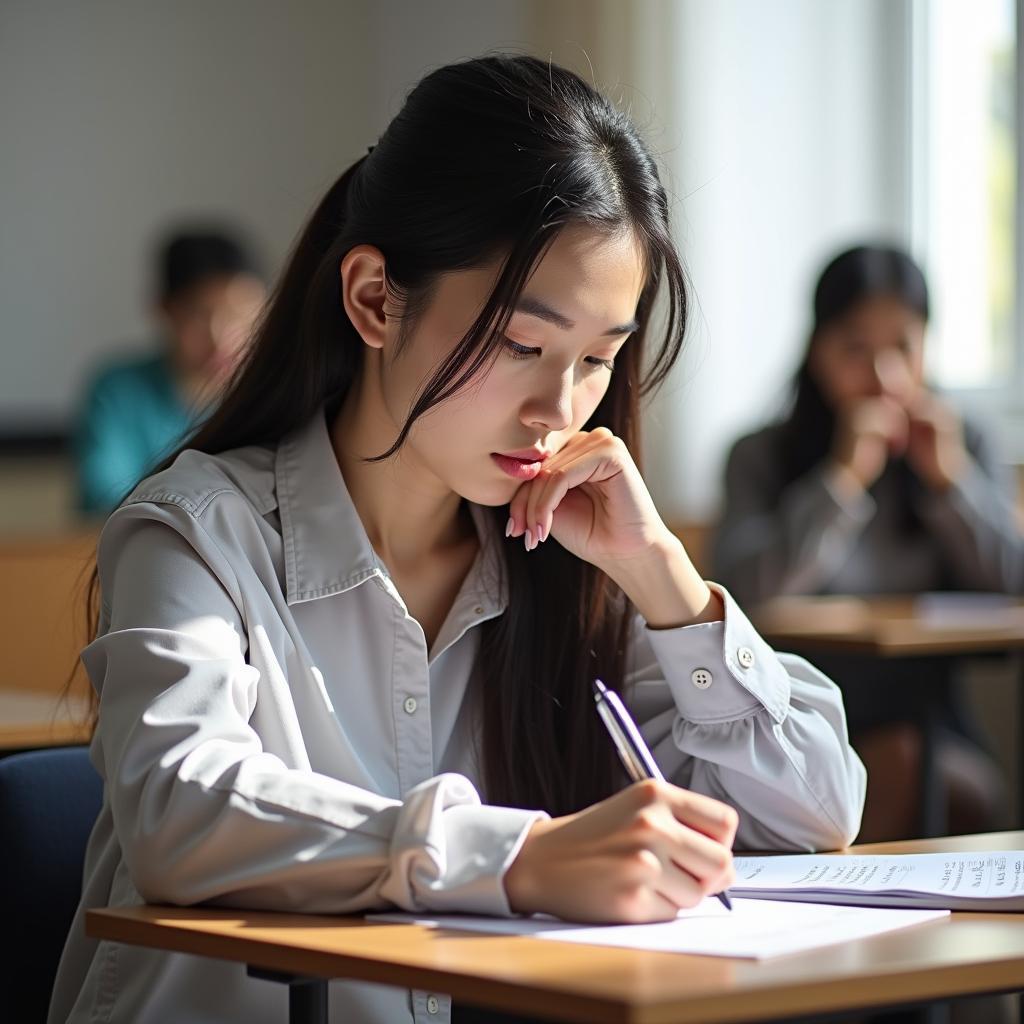
Trong hành trình chinh phục IELTS Speaking, chủ đề về các hoạt động thư giãn và giải tỏa căng thẳng là một trong những đề tài phổ biến nhất mà thí sinh thường gặp phải. Chủ đề “Describe An Activity You Do To Unwind” không chỉ xuất hiện với tần suất cao trong các kỳ thi IELTS thực tế từ năm 2020 đến nay, mà còn là cơ hội tuyệt vời để bạn thể hiện vốn từ vựng phong phú và khả năng diễn đạt tự nhiên về cuộc sống cá nhân.
Dựa trên kinh nghiệm chấm thi hơn 20 năm, tôi nhận thấy chủ đề này có khả năng xuất hiện ở mức độ cao trong tương lai, đặc biệt trong bối cảnh hậu đại dịch khi vấn đề sức khỏe tinh thần và cân bằng cuộc sống trở thành mối quan tâm toàn cầu. Các giám khảo IELTS thường sử dụng chủ đề này để đánh giá khả năng miêu tả trải nghiệm cá nhân, cảm xúc và lợi ích của các hoạt động thư giãn.
Trong bài viết này, bạn sẽ được trang bị đầy đủ kiến thức và kỹ năng để xử lý chủ đề này một cách tự tin và hiệu quả. Bạn sẽ học được 45+ câu hỏi thường gặp trong cả 3 Part, các bài mẫu chi tiết được phân tích theo từng band điểm từ 6.0 đến 9.0, hơn 100 từ vựng và cụm từ ăn điểm kèm phát âm chuẩn, chiến lược trả lời thông minh từ góc nhìn Examiner, và những lời khuyên thực tế giúp bạn tránh những lỗi phổ biến mà học viên Việt Nam thường mắc phải.
IELTS Speaking Part 1: Introduction and Interview
Tổng Quan Về Part 1
Part 1 của IELTS Speaking kéo dài 4-5 phút với các câu hỏi ngắn về cuộc sống hàng ngày và sở thích cá nhân. Đây là phần “làm nóng” giúp bạn cảm thấy thoải mái trước khi đi vào các phần khó hơn. Chiến lược hiệu quả nhất là trả lời trực tiếp câu hỏi, sau đó mở rộng với lý do và ví dụ cụ thể trong 2-3 câu.
Các lỗi thường gặp của học viên Việt Nam trong Part 1 bao gồm: trả lời quá ngắn gọn chỉ với “Yes” hoặc “No” mà không giải thích, sử dụng từ vựng quá đơn giản và lặp đi lặp lại, thiếu ví dụ cụ thể từ trải nghiệm bản thân, và có xu hướng trả lời theo kiểu học thuộc template thay vì tự nhiên. Hãy nhớ rằng, giám khảo đánh giá cao sự tự nhiên và tính cá nhân trong câu trả lời của bạn.
Các Câu Hỏi Thường Gặp
Question 1: Do you often feel stressed?
Question 2: What do you usually do to relax after a long day?
Question 3: What kind of activities help you unwind?
Question 4: Do you prefer to relax alone or with other people?
Question 5: How much time do you spend on relaxing activities each week?
Question 6: Have your relaxation habits changed over the years?
Question 7: Do you think people have enough time to relax nowadays?
Question 8: What do most people in your country do to de-stress?
Question 9: Is it easy for you to switch off from work or study?
Question 10: Do you think relaxation is important for health?
Phân Tích và Gợi Ý Trả Lời Chi Tiết
Question: What do you usually do to relax after a long day?
🎯 Cách tiếp cận:
- Đưa ra hoạt động cụ thể bạn thường làm
- Giải thích tại sao hoạt động đó giúp bạn thư giãn
- Thêm một chi tiết hoặc thói quen liên quan
📝 Sample Answer – Band 6-7:
“After a long day, I usually watch TV or listen to music. It helps me feel better and forget about my problems. Sometimes I also talk to my friends online.”
Phân tích:
- Điểm mạnh: Câu trả lời trực tiếp, có đưa ra hoạt động cụ thể và lý do cơ bản
- Hạn chế: Từ vựng đơn giản (feel better, problems), thiếu chi tiết cụ thể, cấu trúc câu đơn điệu
- Tại sao Band 6-7: Đủ để truyền đạt ý nhưng chưa thể hiện được vốn từ vựng phong phú hay cấu trúc ngữ pháp đa dạng
📝 Sample Answer – Band 8-9:
“Well, I’m quite particular about my evening routine. After a demanding day at work, I tend to unwind by immersing myself in a good book, preferably something light like contemporary fiction. There’s something incredibly therapeutic about getting lost in a different world, and it really helps me switch off from the day’s stresses. On occasion, I’ll also indulge in a relaxing bath with some aromatherapy oils, which I find absolutely rejuvenating.”
Phân tích:
- Điểm mạnh: Từ vựng sophisticated (particular about, demanding, therapeutic, immerse myself in, rejuvenating), cấu trúc đa dạng (There’s something…, I tend to…), ý tưởng chi tiết và cá nhân hóa
- Tại sao Band 8-9: Thể hiện Fluency (speaking naturally without hesitation), Lexical Resource (precise vocabulary and collocations), Grammatical Range (complex structures), và Coherence (well-organized ideas with clear connections)
💡 Key Vocabulary & Expressions:
- be particular about something: cầu kỳ, chú ý đặc biệt đến điều gì đó
- demanding day: ngày làm việc đòi hỏi nhiều công sức
- unwind by doing something: thư giãn bằng cách làm gì đó
- immerse myself in: đắm chìm vào, say mê với
- therapeutic: mang tính trị liệu, chữa lành
- switch off from: ngắt kết nối khỏi, quên đi
- indulge in: tự thưởng cho mình bằng, tận hưởng
- rejuvenating: giúp hồi phục năng lượng
Question: Do you prefer to relax alone or with other people?
🎯 Cách tiếp cận:
- Nêu rõ sở thích của bạn
- Giải thích lý do tại sao bạn thích cách thư giãn đó
- Có thể đề cập cả hai khía cạnh để thể hiện sự linh hoạt
📝 Sample Answer – Band 6-7:
“I prefer to relax alone because I can do whatever I want. When I’m with other people, I have to think about them. But sometimes it’s nice to relax with friends too.”
Phân tích:
- Điểm mạnh: Có position rõ ràng, đưa ra lý do cơ bản
- Hạn chế: Từ vựng basic (do whatever I want, think about them), thiếu depth trong giải thích, cấu trúc câu đơn giản
- Tại sao Band 6-7: Trả lời đủ ý nhưng chưa demonstrate được vocabulary range và grammatical complexity
📝 Sample Answer – Band 8-9:
“Actually, it depends on my mood and energy levels. Generally speaking, I’m more of an introvert, so I lean towards unwinding in solitude – it gives me the mental space I need to recharge my batteries. That said, there are times when catching up with close friends over coffee can be incredibly uplifting, especially if I’ve been cooped up alone for too long. I think striking a balance between the two is what works best for me.”
Phán tích:
- Điểm mạnh: Nuanced answer (không đơn giản chọn một bên), từ vựng precise (introvert, solitude, mental space, cooped up), expressions natural (it depends on, lean towards, that said), grammar sophisticated (conditional structures, relative clauses)
- Tại sao Band 8-9: Shows flexibility in thinking, uses less common vocabulary naturally, demonstrates complex grammatical structures accurately, và maintains coherence với discourse markers hiệu quả
💡 Key Vocabulary & Expressions:
- it depends on: tùy thuộc vào
- introvert: người hướng nội
- lean towards: có xu hướng, thiên về
- solitude: sự cô đơn, yên tĩnh (tích cực)
- mental space: không gian tinh thần
- recharge one’s batteries: nạp lại năng lượng
- catch up with someone: trò chuyện, gặp gỡ ai đó sau thời gian dài
- uplifting: nâng cao tinh thần
- be cooped up: bị nhốt trong nhà, bị giam hãm
- strike a balance: đạt được sự cân bằng
Question: Have your relaxation habits changed over the years?
🎯 Cách tiếp cận:
- So sánh thói quen trước và nay
- Giải thích lý do thay đổi
- Có thể đề cập đến sự trưởng thành hoặc thay đổi hoàn cảnh
📝 Sample Answer – Band 6-7:
“Yes, they have changed a lot. When I was younger, I liked playing video games to relax. But now I prefer reading books or going for walks. I think I changed because I got older.”
Phân tích:
- Điểm mạnh: Có so sánh rõ ràng giữa quá khứ và hiện tại, structure hợp lý
- Hạn chế: Lý do thay đổi quá vague (got older), từ vựng limited, thiếu specific details về quá trình thay đổi
- Tại sao Band 6-7: Adequate communication nhưng lacks the sophistication và depth cần thiết cho band cao hơn
📝 Sample Answer – Band 8-9:
“Absolutely, they’ve evolved quite dramatically. In my younger days, I was all about high-energy activities like playing competitive video games or going out with friends – I thrived on that kind of stimulation. However, as I’ve matured and taken on more responsibilities, I’ve found myself gravitating towards more low-key and mindful activities. These days, I’m much more inclined to practice yoga or simply sit in contemplation with a cup of tea. I suppose this shift reflects my growing appreciation for inner peace rather than external excitement. It’s also partly because my lifestyle has become more hectic, so I crave calmer forms of relaxation to counterbalance the chaos.”
Phân tích:
- Điểm mạnh: Detailed comparison với clear timeline, rich vocabulary (evolved dramatically, thrived on, gravitate towards, contemplation, counterbalance), sophisticated expressions (I’m all about, much more inclined to, growing appreciation for), insightful reflection about personal growth
- Tại sao Band 8-9: Demonstrates excellent lexical resource với precise and less common vocabulary, complex grammatical structures (cleft sentences, passive constructions), coherent organization với appropriate discourse markers, và shows critical thinking về personal development
💡 Key Vocabulary & Expressions:
- evolve dramatically: thay đổi một cách đáng kể
- be all about something: rất hứng thú, tập trung vào điều gì
- thrive on: phát triển mạnh nhờ, tận hưởng
- mature: trưởng thành
- gravitate towards: bị thu hút về phía, có xu hướng chuyển sang
- low-key: nhẹ nhàng, không ồn ào
- mindful: chánh niệm, tỉnh thức
- be inclined to: có xu hướng
- contemplation: sự chiêm nghiệm, suy ngẫm
- growing appreciation for: sự trân trọng ngày càng tăng đối với
- inner peace: bình an nội tâm
- hectic: bận rộn, hối hả
- crave: khao khát
- counterbalance: cân bằng, đối trọng
Describe a place where you go to de-stress là một chủ đề có liên quan chặt chẽ, giúp bạn mở rộng vốn từ vựng về không gian và môi trường thư giãn.
 Người trẻ đang thư giãn sau ngày làm việc căng thẳng bằng các hoạt động khác nhau như đọc sách và nghe nhạc
IELTS Speaking Part 2: Long Turn (Cue Card)
Tổng Quan Về Part 2
Part 2 là phần độc thoại kéo dài 2-3 phút, trong đó bạn có 1 phút chuẩn bị trước khi nói. Đây là phần quan trọng nhất để thể hiện khả năng diễn đạt liên tục và mạch lạc của bạn. Chiến lược hiệu quả là sử dụng tối đa 1 phút để ghi chú các từ khóa chính, không viết câu hoàn chỉnh. Hãy đảm bảo bạn nói đủ thời gian yêu cầu, tối thiểu là 1.5 phút nhưng lý tưởng là 2 phút đầy đủ.
Trong quá trình chuẩn bị, hãy ghi chú theo các bullet points trong đề bài, thêm một vài từ vựng đặc biệt bạn muốn sử dụng. Khi nói, hãy trả lời đầy đủ tất cả các yêu cầu trong cue card, đặc biệt chú ý đến phần “explain” vì đây là nơi bạn có thể ghi điểm cao nhất bằng cách thể hiện suy nghĩ sâu sắc và cảm xúc chân thực.
Các lỗi thường gặp của học viên Việt Nam trong Part 2 bao gồm: không tận dụng hết 1 phút chuẩn bị, nói dưới 1.5 phút, bỏ sót một hoặc nhiều bullet points, không maintain được sự liên tục trong lời nói, và sử dụng quá nhiều filler words như “uh”, “um” thay vì discourse markers tự nhiên.
Cue Card
Describe an activity you do to unwind
You should say:
- What the activity is
- When and where you usually do it
- How you started doing this activity
- And explain why this activity helps you relax
Phân Tích Đề Bài
- Dạng câu hỏi: Describe an activity (miêu tả một hoạt động cụ thể)
- Thì động từ: Hiện tại đơn (mô tả thói quen hiện tại) và quá khứ đơn (khi kể về việc bắt đầu)
- Bullet points phải cover: Đề bài có 4 yêu cầu rõ ràng cần trả lời đầy đủ. Điểm đặc biệt quan trọng là bullet thứ 3 (how you started) vì nhiều thí sinh hay bỏ qua phần này, và bullet thứ 4 (explain why) là phần ghi điểm cao nhất
- Câu “explain” quan trọng: Đây là cơ hội để bạn đi sâu vào cảm xúc, lợi ích, và ý nghĩa cá nhân của hoạt động. Đừng chỉ liệt kê lý do mà hãy elaborate với ví dụ cụ thể và reflection sâu sắc
📝 Sample Answer – Band 6-7
Thời lượng: Khoảng 1.5-2 phút
“I’d like to talk about listening to music, which is my favorite way to relax. I usually do this activity in the evening after I finish my work or study. I can listen to music anywhere, but I prefer to do it at home in my bedroom because it’s quiet there.
I started listening to music to relax about five years ago when I was in high school. At that time, I had a lot of stress from exams and homework. My friend told me that music could help me feel better, so I tried it. I found that it really worked for me.
I usually listen to different types of music depending on my mood. Sometimes I like pop music because it’s energetic and makes me feel happy. Other times, I prefer classical music or jazz because they are more peaceful and calm. I use my headphones so I can focus on the music and forget about my problems.
This activity helps me relax for several reasons. First, music takes my mind off stressful things. When I listen to music, I don’t think about work or problems anymore. Second, good music makes me feel peaceful and comfortable. It’s like the music washes away all my stress. Finally, I can do this activity anytime and anywhere, which is very convenient.
Listening to music has become an important part of my daily routine. It only takes 30 minutes or an hour, but it really helps me feel much better and ready for the next day.”
Phân Tích Band Điểm
| Tiêu chí | Band | Nhận xét |
|---|---|---|
| Fluency & Coherence | 6-7 | Có sequencing rõ ràng, sử dụng basic linking words (First, Second, Finally) nhưng còn một số pauses và repetition. Flow tương đối smooth nhưng chưa hoàn toàn natural |
| Lexical Resource | 6-7 | Từ vựng adequate để truyền đạt ý (takes my mind off, feel peaceful, daily routine) nhưng thiếu sophistication. Một số collocations chưa natural (music washes away stress) |
| Grammatical Range & Accuracy | 6-7 | Sử dụng mix của simple và complex structures, có một số errors nhỏ không ảnh hưởng communication. Đa dạng thì (present, past) nhưng structures chưa sophisticated |
| Pronunciation | 6-7 | Rõ ràng và dễ hiểu, có thể có accent nhẹ của người Việt nhưng không ảnh hưởng comprehension. Intonation tương đối natural |
Điểm mạnh:
- ✅ Trả lời đầy đủ tất cả bullet points trong cue card
- ✅ Có cấu trúc rõ ràng với introduction, development và conclusion
- ✅ Đưa ra nhiều lý do cụ thể tại sao hoạt động này giúp thư giãn
- ✅ Thời lượng phù hợp, nói đủ 1.5-2 phút
Hạn chế:
- ⚠️ Từ vựng còn basic, thiếu less common vocabulary
- ⚠️ Cấu trúc câu đơn điệu, chủ yếu là simple và compound sentences
- ⚠️ Thiếu personal details và emotional depth trong phần giải thích
📝 Sample Answer – Band 7.5-8
Thời lượng: Khoảng 2-2.5 phút
“I’d like to describe gardening, which has become my go-to activity for unwinding after a stressful day. This might sound unusual for someone my age, but I’ve found it to be incredibly therapeutic and rewarding.
Typically, I engage in this activity during the late afternoon or early evening, usually around 5 or 6 PM when the harsh sunlight has subsided. I have a small balcony garden at my apartment, which I’ve transformed into a little green oasis with various potted plants, herbs, and some flowering species. It’s not a large space, but it’s sufficient for my needs.
As for how I got into gardening, it actually started quite by chance about three years ago. During the pandemic lockdown, I was feeling quite cooped up and restless being indoors all the time. My mother suggested I try growing some herbs on my balcony, mainly basil and mint for cooking. I was skeptical at first, thinking it would be too time-consuming or complicated. However, once I started, I found myself completely absorbed in the process. There’s something quite meditative about tending to plants – watering them, pruning dead leaves, checking their growth progress. Before I knew it, I had expanded my little garden to include tomatoes, peppers, and even some ornamental flowers.
This activity helps me relax in multiple ways. Firstly, it provides a complete mental break from screens and digital devices, which dominate most of my day. Unlike scrolling through social media, gardening requires my full attention in a very grounding way. Secondly, there’s something profoundly satisfying about nurturing living things and watching them grow – it gives me a sense of accomplishment that’s often missing from my desk job. The physical aspect is also beneficial; the gentle movements involved in gardening help release tension from my body. Finally, being surrounded by greenery and soil somehow helps me feel more connected to nature, which I think we often lose touch with in our urban lifestyles.
I genuinely believe that everyone should find an activity like this – something that takes you out of your head and allows you to be present in the moment.”
Phân Tích Band Điểm
| Tiêu chí | Band | Nhận xét |
|---|---|---|
| Fluency & Coherence | 7.5-8 | Nói trôi chảy với minimal hesitation, sử dụng discourse markers hiệu quả (Typically, As for, Firstly, Finally). Ý tưởng được develop logically và coherently |
| Lexical Resource | 7.5-8 | Wide range of vocabulary sử dụng flexibly và precisely (go-to activity, therapeutic, by chance, cooped up, meditative, grounding, nurturing). Some less common expressions used naturally |
| Grammatical Range & Accuracy | 7.5-8 | Wide range of structures including complex sentences, relative clauses, conditionals. Mostly error-free với occasional minor slips |
| Pronunciation | 7.5-8 | Clear pronunciation với appropriate intonation và word stress. Natural rhythm và flow |
So Sánh Với Band 6-7
| Khía cạnh | Band 6-7 | Band 7.5-8 |
|---|---|---|
| Vocabulary | “feel better”, “peaceful and calm” | “therapeutic and rewarding”, “meditative”, “grounding”, “profoundly satisfying” |
| Grammar | “I started listening to music about five years ago” | “It actually started quite by chance about three years ago during the pandemic lockdown” |
| Ideas | “Music makes me feel peaceful” | “Being surrounded by greenery helps me feel more connected to nature, which we often lose touch with in urban lifestyles” |
📝 Sample Answer – Band 8.5-9
Thời lượng: 2.5-3 phút đầy đủ
“I’d like to talk about watercolor painting, which has become my sanctuary and primary means of unwinding over the past couple of years. It’s quite a departure from my usual routine as a marketing professional, but that’s precisely what makes it so effective as a stress-reliever.
I typically dedicate a couple of hours to painting on weekend afternoons, usually settling down at my dining table where the natural light is optimal. I’ve set up a modest studio corner with my supplies – various brushes, a palette, tubes of pigment, and watercolor paper. What I particularly appreciate is the ritualistic aspect of preparing my workspace: laying out the materials, filling my water jar, squeezing out fresh paint onto the palette. There’s something almost ceremonial about this preparation that helps me transition from my work mindset into a more creative and contemplative state.
My journey into watercolor painting actually has quite an interesting backstory. About three years ago, I was going through a particularly demanding period at work, juggling multiple projects with tight deadlines. I found myself experiencing chronic stress and even some burnout symptoms. A friend who’s an art therapist suggested I try some form of creative expression as a way to process my emotions. Initially, I dabbled in adult coloring books, but they felt too restrictive and mechanical. Then I stumbled upon a watercolor tutorial online, and I was captivated by the fluidity and unpredictability of the medium. Unlike the digital work I do professionally, watercolor has an organic quality – you can guide it, but you can’t completely control it. That element of surrendering control was exactly what I needed. I enrolled in some online classes and gradually honed my skills, though I’d still consider myself very much an amateur.
The reasons why this activity helps me unwind are quite multifaceted. On a cognitive level, painting requires a type of focused attention that psychologists call “flow state” – you’re completely immersed in the present moment, which naturally quiets the mental chatter and worries about work or other responsibilities. It’s a form of active meditation in many ways.
Emotionally, watercolor provides an outlet for feelings that I might struggle to articulate verbally. Sometimes I paint abstract forms that simply express my mood through colors and shapes, without any representational intent. There’s something deeply cathartic about translating inner emotions into visual forms.
Physically, the activity is quite soothing – the gentle movements of the brush, the rhythm of dipping into water and paint, even the tactile sensation of quality paper under my hand. It’s a far cry from the tense posture I maintain while working at my computer all day.
Perhaps most significantly, watercolor has taught me to embrace imperfection and uncertainty. In my professional life, I’m constantly striving for optimal results and measurable outcomes. But with watercolor, happy accidents often produce the most beautiful effects. A pigment bloom or an unexpected color blend can create something far more interesting than what I originally intended. This has actually translated into a more relaxed approach to life in general – I’m learning to be more accepting of things I cannot control.
Additionally, there’s a profound sense of accomplishment that comes from creating something tangible with your own hands. In the digital age, so much of what we do feels ephemeral and intangible. Having a finished painting I can hold, frame, or give as a gift provides a concrete reminder that I can create beauty and meaning outside of my professional identity.
Ultimately, watercolor painting has become more than just a hobby – it’s an integral part of my self-care routine and mental health maintenance. It’s taught me patience, mindfulness, and the value of dedicating time to activities that nourish the soul rather than just the résumé.”
Phân Tích Band Điểm
| Tiêu chí | Band | Nhận xét |
|---|---|---|
| Fluency & Coherence | 8.5-9 | Speaks fluently với minimal hesitation. Sophisticated use of discourse markers và cohesive devices. Ideas được develop fully với exceptional coherence |
| Lexical Resource | 8.5-9 | Wide vocabulary range sử dụng naturally và flexibly. Sophisticated lexical items (sanctuary, ritualistic, ceremonial, multifaceted, cathartic, ephemeral). Precise collocations và idiomatic language |
| Grammatical Range & Accuracy | 8.5-9 | Full range of structures với flexibility và accuracy. Complex sentences constructed naturally. Very rare errors không detract from communication |
| Pronunciation | 8.5-9 | Fully operational command với features của highly proficient speakers. Natural intonation patterns, appropriate stress và rhythm |
Tại Sao Bài Này Xuất Sắc
🎯 Fluency Hoàn Hảo:
Bài nói duy trì được sự trôi chảy suốt 3 phút mà không có awkward pauses hay hesitation. Các ý tưởng được nối với nhau một cách tự nhiên thông qua sophisticated discourse markers như “Additionally”, “Perhaps most significantly”, “Ultimately”.
📚 Vocabulary Tinh Vi:
Ví dụ: “my sanctuary and primary means of unwinding” – thay vì đơn giản nói “my way to relax”, thí sinh sử dụng metaphor “sanctuary” thể hiện không gian thiêng liêng cho bản thân, và collocation “primary means of” rất academic và natural. “Happy accidents” là một art term chuyên ngành, “ephemeral” là less common vocabulary, “nourish the soul” là figurative language rất ấn tượng.
📝 Grammar Đa Dạng:
Ví dụ: “Unlike the digital work I do professionally, watercolor has an organic quality – you can guide it, but you can’t completely control it.” – Câu này sử dụng prepositional phrase ở đầu, có dash để elaborate, và balanced contrasting clauses với parallel structure. “Having a finished painting I can hold, frame, or give as a gift provides a concrete reminder…” – Sử dụng gerund phrase làm subject, embedded relative clause, và series với parallel verbs.
💡 Ideas Sâu Sắc:
Thí sinh không chỉ describe hoạt động mà còn analyze psychological benefits (flow state, active meditation), emotional benefits (cathartic outlet), physical benefits (soothing movements), và philosophical lessons (embracing imperfection). Connection đến broader life lessons cho thấy reflective thinking ở level cao.
Describe a place where you feel most relaxed có thể bổ sung thêm góc nhìn về không gian vật lý phục vụ cho việc thư giãn, giúp bạn có thêm ý tưởng khi chuẩn bị cho Part 2.
 Không gian vẽ màu nước yên bình với bảng màu và cọ vẽ trên bàn làm việc
Follow-up Questions (Rounding Off Questions)
Examiner có thể hỏi thêm 1-2 câu ngắn sau Part 2 để conclude phần này trước khi chuyển sang Part 3:
Question 1: Would you recommend this activity to others?
Band 6-7 Answer:
“Yes, I would definitely recommend it. I think everyone should try to find an activity they enjoy for relaxing. It’s really important for health.”
Band 8-9 Answer:
“Absolutely, though I’d say it’s important to find what resonates with you personally. Watercolor might not be everyone’s cup of tea, but the underlying principle of having a creative outlet that allows you to disconnect from daily pressures is universally applicable. I’d encourage anyone to experiment with different activities until they find what truly speaks to them.”
Question 2: Do you think you’ll continue this activity in the future?
Band 6-7 Answer:
“Yes, I will definitely continue. I can’t imagine stopping because it helps me so much. Maybe I will get better at it over time.”
Band 8-9 Answer:
“Without a doubt. It’s become such an integral part of my life that I can’t imagine giving it up. If anything, I’d like to delve deeper into the practice – perhaps attending workshops or experimenting with different techniques. I even have aspirations to eventually exhibit some pieces, not professionally, but perhaps in local community spaces. It’s one of those rare activities that I believe will continue to evolve with me as I age.”
IELTS Speaking Part 3: Two-way Discussion
Tổng Quan Về Part 3
Part 3 kéo dài 4-5 phút với các câu hỏi mang tính trừu tượng và analytical hơn, yêu cầu thí sinh thảo luận về các vấn đề xã hội rộng lớn liên quan đến chủ đề Part 2. Đây là phần khó nhất trong IELTS Speaking vì không chỉ test English proficiency mà còn critical thinking ability.
Yêu cầu chính của Part 3 bao gồm: phân tích cause and effect, so sánh và đối chiếu các quan điểm khác nhau, đưa ra opinion có lý lẽ chặt chẽ, và xem xét vấn đề từ nhiều góc độ. Chiến lược hiệu quả là mở rộng câu trả lời đến 3-5 câu, sử dụng discourse markers một cách tự nhiên (Well, Actually, I think, From my perspective), đưa ra examples từ society chứ không chỉ personal experience, và thừa nhận complexity của issue thay vì chỉ give một simple answer.
Lỗi thường gặp của học viên Việt Nam trong Part 3 bao gồm: trả lời quá ngắn gọn và superficial, không đưa ra justification rõ ràng cho opinions, thiếu vocabulary để discuss abstract concepts, không acknowledge different perspectives, và có xu hướng generalize mà không support bằng evidence hoặc examples cụ thể.
Các Câu Hỏi Thảo Luận Sâu
Theme 1: Modern Stress and Lifestyle
Question 1: Why do you think people today are more stressed than in the past?
🎯 Phân tích câu hỏi:
- Dạng: Cause-Effect (phân tích nguyên nhân của hiện tượng)
- Key words: “today”, “more stressed”, “than in the past” – cần có comparison và historical perspective
- Cách tiếp cận: Acknowledge the premise, analyze 2-3 main causes với specific examples, có thể add nuance bằng cách note rằng past generations cũng had stresses (just different types)
📝 Sample Answer – Band 6-7:
“I think there are several reasons. First, modern life is very fast and busy. People have to work long hours and don’t have much time to rest. Second, technology makes it worse because we are always connected to work through phones and computers. In the past, people had simpler lives and didn’t worry about so many things.”
Phân tích:
- Structure: Có list ra reasons nhưng chưa elaborate deeply
- Vocabulary: Basic words (fast, busy, worse, simpler) thiếu sophisticated expressions
- Tại sao Band 6-7: Conveys main ideas nhưng lacks depth in analysis và sophisticated language. Comparison với past chưa nuanced.
📝 Câu trả lời mẫu – Band 8-9:
“Well, I think the perception that modern life is more stressful is somewhat debatable, but there are certainly unique stressors that characterize contemporary society.
First and foremost, the boundary between work and personal life has become increasingly blurred, largely due to digital connectivity. Previous generations could leave work at the office, but now we’re essentially on call 24/7 through smartphones and email. This constant accessibility creates an expectation of immediate responsiveness that’s mentally exhausting.
Beyond that, I’d argue that the pace of change itself is a major source of stress. Technology, career paths, and even social norms are evolving so rapidly that there’s a persistent pressure to adapt and upskill. What you learned five years ago might already be obsolete, which creates chronic uncertainty about the future.
Another factor worth considering is what psychologists call “the paradox of choice.” While having options is generally positive, the overwhelming abundance of choices in modern life – from career paths to lifestyle decisions – can lead to decision fatigue and constant second-guessing about whether we’ve made the right choices.
That said, I think it’s important to acknowledge that previous generations faced their own considerable stresses – poverty, limited opportunities, health challenges without modern medicine. The nature of stress has shifted rather than necessarily intensified. What’s changed is perhaps our awareness and discourse around mental health, making stress more visible and discussed than it was historically.”
Phân tích:
- Structure: Well-organized với clear introduction acknowledging complexity → Reason 1 + elaboration → Reason 2 + elaboration → Reason 3 + elaboration → Balanced conclusion với nuance
- Vocabulary: Sophisticated và precise (blurred, on call 24/7, mentally exhausting, obsolete, chronic uncertainty, paradox of choice, decision fatigue, considerable stresses)
- Grammar: Complex structures – passive voice (has become blurred), relative clauses, conditionals, noun phrases
- Critical Thinking: Shows balanced view, cites psychological concepts, acknowledges historical context, doesn’t oversimplify
💡 Key Language Features:
- Discourse markers: Well, First and foremost, Beyond that, Another factor, That said
- Tentative language: somewhat debatable, I’d argue that, I think it’s important to acknowledge
- Abstract nouns: perception, stressors, connectivity, accessibility, uncertainty, abundance, discourse
- Academic phrases: characterize contemporary society, the paradox of choice, decision fatigue
Question 2: Do you think the importance people place on relaxation has changed over time?
🎯 Phân tích câu hỏi:
- Dạng: Opinion + Comparison over time
- Key words: “importance”, “relaxation”, “changed over time”
- Cách tiếp cận: Compare attitudes toward relaxation in past vs present, analyze reasons for any shifts, consider whether this is positive/negative development
📝 Sample Answer – Band 6-7:
“Yes, I think it has changed. In the past, people didn’t talk much about relaxation. They just worked hard and thought rest was not important. Now, people understand that relaxation is necessary for health. Many companies even provide relaxation spaces for employees. This change is good because people are healthier now.”
Phân tích:
- Structure: Simple comparison có present position nhưng thiếu depth
- Vocabulary: Basic (worked hard, not important, necessary, healthier)
- Tại sao Band 6-7: Communicates basic idea nhưng lacks sophisticated analysis và nuanced understanding
📝 Câu trả lời mẫu – Band 8-9:
“Absolutely, there’s been a marked shift in how we conceptualize and prioritize relaxation, particularly in the last couple of decades.
Historically, particularly in many Asian cultures including Vietnam, there was a strong work-centric ethos where industriousness and self-sacrifice were paramount virtues. Relaxation was often viewed as indulgent or even frivolous – something to be relegated to occasional holidays rather than integrated into daily life. The prevailing mindset was very much “work hard now, rest later,” with that “later” sometimes never actually materializing.
However, we’re now seeing what I’d call a cultural recalibration. Several factors have driven this change. First, there’s been mounting scientific evidence about the detrimental effects of chronic stress and burnout on both physical and mental health. This has lent credibility to what might previously have been dismissed as “wellness fads.”
Secondly, the corporate world has begun to recognize – albeit sometimes more in rhetoric than practice – that employee wellbeing directly impacts productivity. Progressive companies now tout their wellness programs, meditation rooms, and flexible working arrangements as competitive advantages in attracting talent.
There’s also been a broader cultural shift toward prioritizing mental health and work-life balance, particularly among younger generations who’ve witnessed their parents’ generation sacrifice personal wellbeing for career advancement, sometimes with questionable returns.
That said, I think we should be cautiously optimistic about this trend. While the discourse has certainly shifted, the reality is that many people still face systemic pressures – economic insecurity, rising living costs, competitive job markets – that make genuine relaxation difficult. There’s also an interesting paradox where relaxation itself has become somewhat commodified and productivity-focused – people approach it with the same achievement-oriented mindset they bring to work, which rather defeats the purpose.
So while the cultural messaging around relaxation has definitely evolved, I think we’re still navigating how to authentically integrate it into our lives without it becoming just another item on our to-do list.”
Phân tích:
- Structure: Sophisticated organization – historical context → factors driving change (multiple reasons) → balanced critique of current situation → nuanced conclusion
- Vocabulary: Rich and precise (marked shift, conceptualize, work-centric ethos, paramount virtues, indulgent, frivolous, cultural recalibration, mounting evidence, detrimental effects, lent credibility, tout, commodified)
- Grammar: Full range including passive structures, conditionals, relative clauses, cleft sentences
- Critical Thinking: Multi-layered analysis, acknowledges complexity and paradoxes, avoids oversimplification, shows awareness of gap between rhetoric and reality
💡 Key Language Features:
- Discourse markers: Historically, However, First, Secondly, That said, So while
- Tentative/Hedging language: I’d call, albeit, sometimes, I think we should be cautiously optimistic
- Abstract expressions: cultural recalibration, prevailing mindset, detrimental effects, systemic pressures, achievement-oriented mindset
- Sophisticated verbs: conceptualize, prioritize, relegated to, tout, defeats the purpose, navigating
Theme 2: Types of Relaxation Activities
Question 3: What are the differences between how young people and older people relax?
🎯 Phân tích câu hỏi:
- Dạng: Compare and Contrast (so sánh hai groups)
- Key words: “differences”, “young people”, “older people”, “relax”
- Cách tiếp cận: Compare preferences, reasons behind differences, avoid stereotyping, acknowledge individual variations
📝 Sample Answer – Band 6-7:
“There are many differences. Young people usually like more active activities like playing video games, going to parties, or using social media. Older people prefer quiet activities like reading, watching TV, or gardening. I think this is because young people have more energy and older people want peace. Also, young people are more familiar with technology.”
Phân tích:
- Structure: Clear comparison với examples cho both groups
- Vocabulary: Adequate nhưng straightforward (active, quiet, familiar with)
- Tại sao Band 6-7: Gets the point across nhưng somewhat stereotypical và lacks sophisticated analysis
📝 Câu trả lời mẫu – Band 8-9:
“Well, while I’m hesitant to generalize since there’s considerable individual variation within any age group, there do seem to be some discernible patterns in how different generations approach relaxation.
From what I’ve observed, younger people – let’s say those in their teens and twenties – tend to gravitate toward more socially oriented and digitally mediated forms of relaxation. This might include scrolling through social media, binge-watching series on streaming platforms, or gaming – often simultaneously while chatting with friends online. There’s also a tendency toward high-stimulation activities like going to concerts, clubs, or adventure sports. I think this partly reflects their stage of life – they’re often establishing social identities and seeking novel experiences as part of their development.
In contrast, older adults, particularly those past middle age, often favor more contemplative and low-key activities. We’re talking about things like tending to gardens, reading physical books, taking leisurely walks, or engaging in crafts and hobbies they’ve cultivated over years. There seems to be more appreciation for solitude and slower-paced pursuits. This might stem from having already established their social circles and identities, so there’s less impetus for the social validation that younger people often seek.
Interestingly, technology plays a polarizing role across generations. While younger people are digital natives who’ve seamlessly integrated technology into their relaxation, many older adults view it more ambivalently – some embrace it enthusiastically while others deliberately eschew digital entertainment in favor of more traditional pastimes.
Another distinction worth noting is intentionality. Younger people often stumble into relaxation somewhat passively through their devices, whereas older adults tend to be more deliberate about carving out specific time for relaxation activities they find meaningful.
Of course, these generalizations have numerous exceptions, and we’re seeing interesting convergences as technology pervades all age groups and as wellness culture encourages people of all ages to be more mindful about how they unwind.”
Phân tích:
- Structure: Nuanced approach – disclaimer about generalizing → patterns in younger people → patterns in older people → technology’s role → intentionality factor → acknowledgment of exceptions
- Vocabulary: Sophisticated (hesitant to generalize, discernible patterns, gravitate toward, digitally mediated, contemplative, stem from, polarizing role, deliberately eschew, carving out, convergences, pervades)
- Grammar: Complex structures throughout, excellent use of gerunds, participle clauses, relative clauses
- Critical Thinking: Avoids stereotyping, provides psychological/sociological reasons, acknowledges complexity and exceptions, shows cultural awareness
Question 4: Are there any traditional relaxation methods in your culture that are still popular today?
🎯 Phân tích câu hỏi:
- Dạng: Description + Opinion về cultural practices
- Key words: “traditional”, “relaxation methods”, “your culture”, “still popular”
- Cách tiếp cận: Identify traditional methods, explain their cultural significance, discuss their current status, potentially compare with modern alternatives
📝 Sample Answer – Band 6-7:
“Yes, in Vietnam we have some traditional ways to relax. One popular method is drinking tea. Vietnamese people like to sit together, drink tea, and chat with friends. It’s very relaxing and peaceful. Another traditional way is going to the park in the morning for exercise like tai chi. Many older people still do this. I think these traditions are still popular because they are simple and healthy.”
Phân tích:
- Structure: Lists examples với basic explanation
- Vocabulary: Simple and direct (popular, peaceful, simple and healthy)
- Tại sao Band 6-7: Provides relevant cultural examples nhưng lacks depth in cultural analysis và sophisticated language
📝 Câu trả lời mẫu – Band 8-9:
“Absolutely, Vietnamese culture has several time-honored relaxation practices that have remarkably endured despite rapid modernization.
Perhaps the most emblematic is the tradition of tea drinking – not the quick, functional coffee culture that’s been imported from the West, but the more contemplative practice of sitting with a pot of lotus tea or traditional green tea, often in small street-side establishments where the primary activity is simply savoring the tea and engaging in unhurried conversation. There’s a particular concept in Vietnamese called “nếp sống thong thả” which roughly translates to a relaxed, unhurried way of living, and tea drinking epitomizes this philosophy. What’s fascinating is that even young people are rediscovering this tradition, with trendy tea houses emerging that blend traditional practices with contemporary aesthetics.
Another enduring tradition is the practice of morning exercise in public spaces – parks, lakesides, or open plazas. You’ll see people of all ages doing tai chi, aerobic dance to traditional music, or simply taking restorative walks. This reflects a collective approach to wellbeing rather than the individualistic gym culture you see in some Western countries. There’s a strong social dimension to this – people form regular groups and derive as much benefit from the community connection as from the physical activity itself.
Traditional massage and herbal baths are also deeply embedded in Vietnamese relaxation culture. These aren’t seen merely as indulgences but as preventative health measures rooted in traditional medicine principles. Many Vietnamese families still maintain herbal gardens with plants specifically used for therapeutic baths, particularly for children and postpartum women.
What’s interesting about these practices is their resilience in the face of modernization. Rather than being completely supplanted by contemporary stress-relief methods like going to gyms or spas, they’ve often coexisted alongside or even been reinvigorated through creative reinterpretations. I think this persistence speaks to their genuine efficacy and their deep integration into our cultural identity – they’re not just relaxation methods but expressions of values like community, balance with nature, and intergenerational connection.”
Phân tích:
- Structure: Comprehensive approach – introduces cultural context → detailed example 1 with cultural significance → example 2 with social dimension → example 3 with traditional medicine connection → analysis of why they endure
- Vocabulary: Rich and culturally specific (time-honored, emblematic, contemplative, savoring, epitomizes, restorative, collective approach, deeply embedded, supplanted by, resilience, coexisted alongside, reinvigorated, efficacy)
- Grammar: Full range of complex structures seamlessly integrated
- Critical Thinking: Goes beyond description to analyze cultural values, discusses adaptation and modernization, connects practices to broader philosophy
Describe a dish you like to prepare có thể cung cấp thêm insight về các hoạt động văn hóa Việt Nam có tính thư giãn, đặc biệt là việc chuẩn bị đồ ăn như một hình thức meditation.
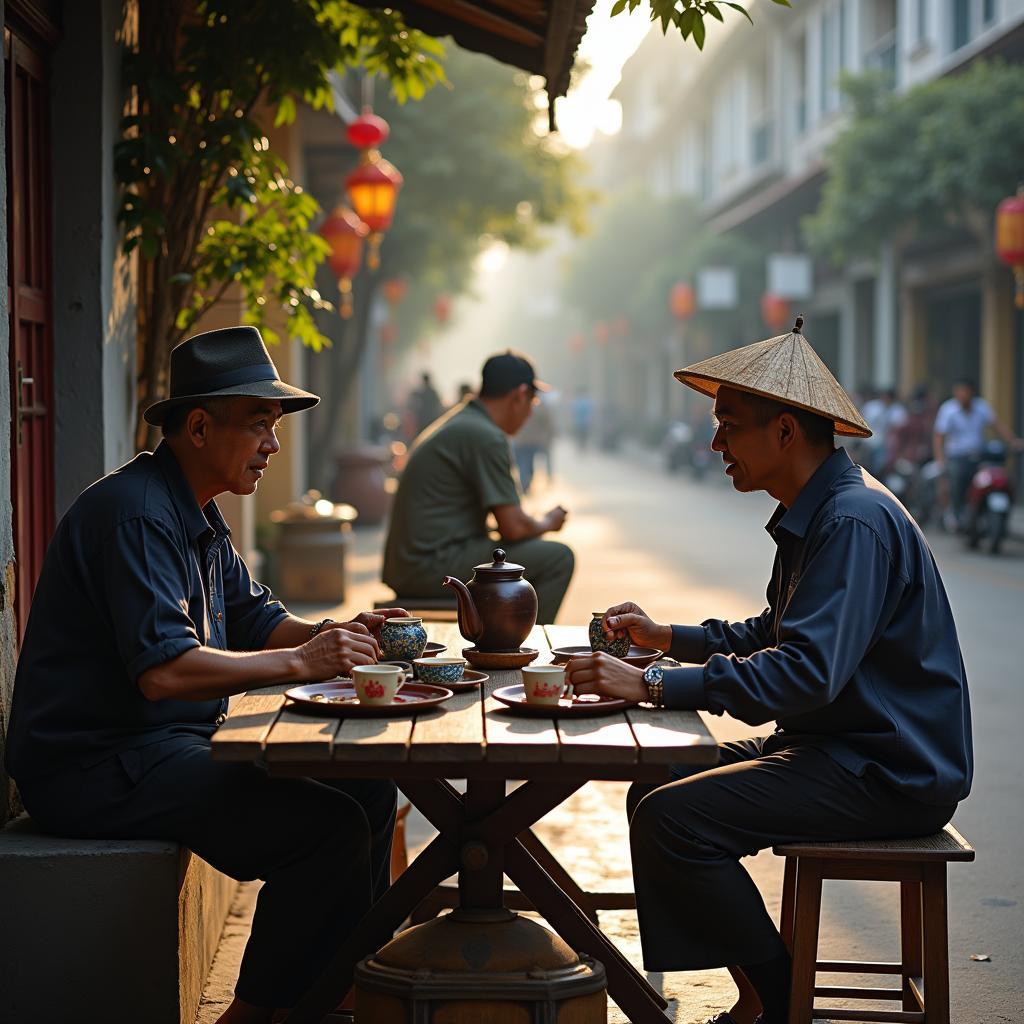 Cảnh uống trà truyền thống Việt Nam trên vỉa hè với không khí thư thái
Theme 3: Benefits and Impact of Relaxation
Question 5: Some people say that doing nothing is the best way to relax. Do you agree?
🎯 Phân tích câu hỏi:
- Dạng: Opinion với statement to respond to
- Key words: “doing nothing”, “best way”, “relax”
- Cách tiếp cận: Acknowledge different perspectives, define what “doing nothing” means, discuss benefits and potential drawbacks, provide nuanced opinion
📝 Sample Answer – Band 6-7:
“I partly agree with this. Sometimes doing nothing is good because your body and mind need rest. When you are very tired, you should just sleep or lie down. However, I think doing some relaxing activities is better than doing nothing. For example, light exercise or hobbies can help you feel refreshed. Doing absolutely nothing might make you feel bored or lazy.”
Phân tích:
- Structure: Balanced view với both sides nhưng chưa deeply explored
- Vocabulary: Basic expressions (need rest, feel refreshed, feel bored)
- Tại sao Band 6-7: Shows ability to present both sides nhưng analysis lacks sophistication và psychological depth
📝 Câu trả lời mẫu – Band 8-9:
“This is quite a nuanced question, and my answer would be: it depends on what we mean by “doing nothing” and on individual needs.
If we’re talking about genuine rest – lying down, perhaps staring at the ceiling, allowing your mind to wander without any goal-directed activity – then yes, I think this can be profoundly restorative, particularly in our achievement-obsessed culture. There’s actually a Dutch concept called “niksen” which means doing nothing without purpose, and research suggests it can reduce stress hormones and enhance creativity by allowing your mind to enter what neuroscientists call the “default mode network” – essentially a resting state where your brain consolidates memories and makes unexpected connections.
However, I’d make a distinction between intentional rest and what might be called “empty passivity.” If “doing nothing” means mindlessly scrolling through your phone or zoning out in front of television without genuine engagement, I’d argue that’s not truly relaxing – it’s more of a numbing mechanism that might provide temporary distraction but doesn’t actually replenish your mental and emotional resources.
From my perspective, the “best” way to relax is highly individual and context-dependent. Some people find that completely switching off is rejuvenating, while others find active rest – like gentle exercise, creative hobbies, or time in nature – more effective. The key factor seems to be what psychologists call “psychological detachment” from work and obligations, which can happen through various means.
I also think timing matters. After a period of intense cognitive exertion, your brain might genuinely benefit from unfocused downtime. But if you’ve spent all day in relatively passive activities, “doing nothing” might actually leave you feeling more sluggish rather than refreshed.
Ultimately, I’d say the best approach is developing self-awareness about what your mind and body actually need in different circumstances, rather than prescribing a one-size-fits-all solution. Sometimes that means embracing stillness, and sometimes it means engaging in rejuvenating activities – the wisdom lies in knowing which serves you better at any given time.”
Phân tích:
- Structure: Sophisticated multi-layered argument – clarifies the premise → argues for benefits of genuine rest (with scientific backing) → distinguishes from passive consumption → presents individual variation factor → adds context-dependency → nuanced conclusion
- Vocabulary: Advanced and precise (nuanced, goal-directed, profoundly restorative, achievement-obsessed, consolidates memories, numbing mechanism, replenish, psychological detachment, cognitive exertion, sluggish, self-awareness, one-size-fits-all)
- Grammar: Full range with seamless integration of complex structures
- Critical Thinking: References research and psychological concepts, makes important distinctions, acknowledges individual differences, avoids absolute statements, provides practical wisdom
💡 Key Language Features:
- Discourse markers: If we’re talking about, However, From my perspective, Ultimately
- Hedging and tentative language: I think this can be, I’d argue, seems to be, might actually
- Academic references: research suggests, neuroscientists call, psychologists call
- Sophisticated phrases: it depends on, make a distinction between, the key factor, the wisdom lies in
Question 6: How do work cultures in different countries view taking breaks and relaxation?
🎯 Phân tích câu hỏi:
- Dạng: Compare different cultural perspectives
- Key words: “work cultures”, “different countries”, “taking breaks”, “relaxation”
- Cách tiếp cận: Compare different cultural attitudes (có thể dùng specific countries as examples), analyze cultural and historical reasons for differences, discuss implications
📝 Sample Answer – Band 6-7:
“Different countries have different views about relaxation at work. In Western countries like America, people work very hard but they also value work-life balance. In Asian countries like Japan and Korea, people work very long hours and don’t take many breaks. European countries like France have more holidays and shorter working hours. I think culture and economy affect these differences. Some countries think working long hours shows dedication.”
Phân tích:
- Structure: Compares different regions với basic observations
- Vocabulary: Straightforward (work very hard, value, long hours, shows dedication)
- Tại sao Band 6-7: Covers the main points nhưng lacks depth in cultural analysis và nuanced understanding of underlying factors
📝 Câu trả lời mẫu – Band 8-9:
“This is a fascinating topic that reveals quite stark cultural divides rooted in different philosophical traditions and economic structures.
If we look at Northern European countries, particularly Scandinavia, there’s a strong emphasis on work-life integration rather than the adversarial relationship between work and personal life that exists in many other cultures. Countries like Denmark and Sweden enshrine generous vacation policies and reasonable working hours in law, reflecting a collective value system that sees employee wellbeing as integral to productivity rather than antithetical to it. This approach is underpinned by strong social safety nets that reduce the economic anxiety driving overwork in other countries.
In contrast, East Asian work cultures, particularly in Japan, South Korea, and to some extent China, have historically demonstrated what some scholars call a “presenteeism culture” where physical presence at work is equated with dedication and competence, regardless of actual productivity. The Japanese concept of “karoshi” – literally death from overwork – illustrates the extreme manifestation of this mindset. However, it’s worth noting that even within these countries, there’s growing pushback, particularly among younger generations, against these unsustainable practices.
The United States presents an interesting middle ground – there’s rhetorical emphasis on work-life balance, yet the reality often involves minimal vacation time (especially compared to Europe), a “hustle culture” that glorifies overwork, and significant economic precarity for many workers that makes taking breaks feel financially risky. The Protestant work ethic that shaped American culture historically valorized industry and regarded leisure with suspicion.
Latin American and Mediterranean cultures often have a different temporal rhythm entirely, with practices like the Spanish “siesta” reflecting a more integrated approach where short breaks are woven into the workday rather than deferred to annual vacations. There’s often less rigid separation between social and professional life.
Several factors drive these differences: historical religious and philosophical traditions (Protestant work ethic vs. Catholic holiday traditions vs. Confucian duty), economic security and social safety nets, labor union strength, legal protections, and even climate (the siesta tradition partly arose from midday heat).
What’s particularly interesting is how globalization and cross-cultural exchange are creating convergence in some areas while heightening awareness of alternatives. There’s growing recognition, bolstered by productivity research, that the correlation between long hours and output is not linear – often, better-rested employees are more productive.
However, translating cultural attitudes into actual practice remains challenging. Simply importing vacation policies without the supporting cultural and economic infrastructure often proves ineffective. Genuine change requires systemic shifts in how we conceptualize the relationship between work, life, and human value.”
Phân tích:
- Structure: Comprehensive comparative analysis – examines multiple cultural models systematically → identifies underlying factors → discusses global trends and implications → thoughtful conclusion about implementation challenges
- Vocabulary: Extremely sophisticated (stark cultural divides, enshrine, underpinned by, presenteeism, equated with, extreme manifestation, valorized, deferred to, convergence, bolstered by)
- Grammar: Full mastery with varied complex structures throughout
- Critical Thinking: Multi-dimensional analysis considering historical, economic, philosophical, and practical factors; acknowledges complexity and change over time; references academic concepts; avoids cultural stereotyping while identifying genuine patterns
Question 7: Do you think technology has made it easier or harder for people to truly relax?
🎯 Phân tích câu hỏi:
- Dạng: Opinion on paradoxical effects of technology
- Key words: “technology”, “easier or harder”, “truly relax”
- Cách tiếp cận: Present both sides of the argument, provide examples, conclude with nuanced position acknowledging complexity
📝 Sample Answer – Band 6-7:
“I think technology has both good and bad effects. On one hand, it makes relaxation easier because we can watch movies, play games, and listen to music easily. On the other hand, technology makes it harder to relax because we always check our phones and get messages from work. Many people can’t stop using their phones even when they should rest. So technology is both helpful and problematic.”
Phân tích:
- Structure: Balanced structure covering both sides
- Vocabulary: Basic expressions (good and bad effects, makes it easier/harder, helpful and problematic)
- Tại sao Band 6-7: Adequate coverage của main points nhưng lacks sophisticated analysis và specific examples
📝 Câu trả lời mẫu – Band 8-9:
“This is quite a paradoxical situation, and I think the answer is simultaneously both – technology has made certain forms of relaxation more accessible while simultaneously undermining our capacity for the deep rest we actually need.
On the surface, technology appears to be a boon for relaxation. We have unprecedented access to entertainment – streaming services with millions of shows, music libraries, games, meditation apps, virtual reality experiences. Geographic and financial barriers to relaxation resources have been significantly lowered. Someone in a remote area can now access guided meditations, yoga classes, or calming soundscapes that would have been unavailable a generation ago. In this sense, technology has democratized access to relaxation tools.
However, the reality is more insidious. What technology has created is what Cal Newport calls “the shallows” – we’re constantly engaged in low-level stimulation that prevents the kind of deep rest and mental consolidation that genuine relaxation requires. The compulsive checking of devices, the intermittent reinforcement of social media notifications, the perpetual availability through messaging apps – all of these create a state of continuous partial attention that’s antithetical to real relaxation.
There’s also the problem of blurred boundaries. Work emails follow us to the beach, Slack messages ping during dinner, and the cultural expectation of instant responsiveness means we’re never truly off the clock. Research by Gloria Mark at UC Irvine shows that knowledge workers check email and messaging apps every six minutes on average – this fragmented attention prevents the sustained disengagement necessary for genuine recuperation.
Moreover, there’s an interesting psychological dimension. The infinite scroll design of many platforms is engineered to maximize engagement – essentially hijacking our attention systems. What we think is relaxation – browsing Instagram, watching TikTok videos – is often pseudo-relaxation that doesn’t actually restore our cognitive resources. Studies measuring cortisol levels and brain activity show that much screen-based “relaxation” doesn’t produce the physiological markers of genuine rest.
That said, I don’t think technology is inherently detrimental. The issue is how we deploy it. Used mindfully – putting devices in airplane mode during relaxation time, using apps specifically designed for wellbeing like Headspace or Calm, or using technology to facilitate offline activities like finding hiking trails – it can genuinely enhance our ability to unwind.
Ultimately, I’d argue that technology has made superficial distraction easier but authentic relaxation harder. The challenge for individuals and society is developing what we might call “digital wisdom” – intentionality about when and how we engage with technology so that it serves our wellbeing rather than undermining it.”
Phân tích:
- Structure: Highly sophisticated argument – acknowledges paradox → presents positive side → pivots to deeper analysis of problems (with research citations) → discusses psychological mechanisms → provides nuanced conclusion with practical wisdom
- Vocabulary: Advanced and precise (paradoxical, boon, unprecedented, democratized, insidious, compulsive, antithetical to, fragmented attention, genuine recuperation, hijacking, pseudo-relaxation, inherently detrimental, deploy, digital wisdom)
- Grammar: Full mastery with variety of complex structures used naturally
- Critical Thinking: References research and experts, makes important distinctions (superficial vs. deep relaxation), analyzes psychological mechanisms, avoids simplistic technology-is-bad narrative, provides practical framework
Describe a hill or mountain that you would like to climb thể hiện một hoạt động thư giãn kết hợp với thiên nhiên, có thể bổ sung thêm ý tưởng về các hình thức relaxation không phụ thuộc vào technology.
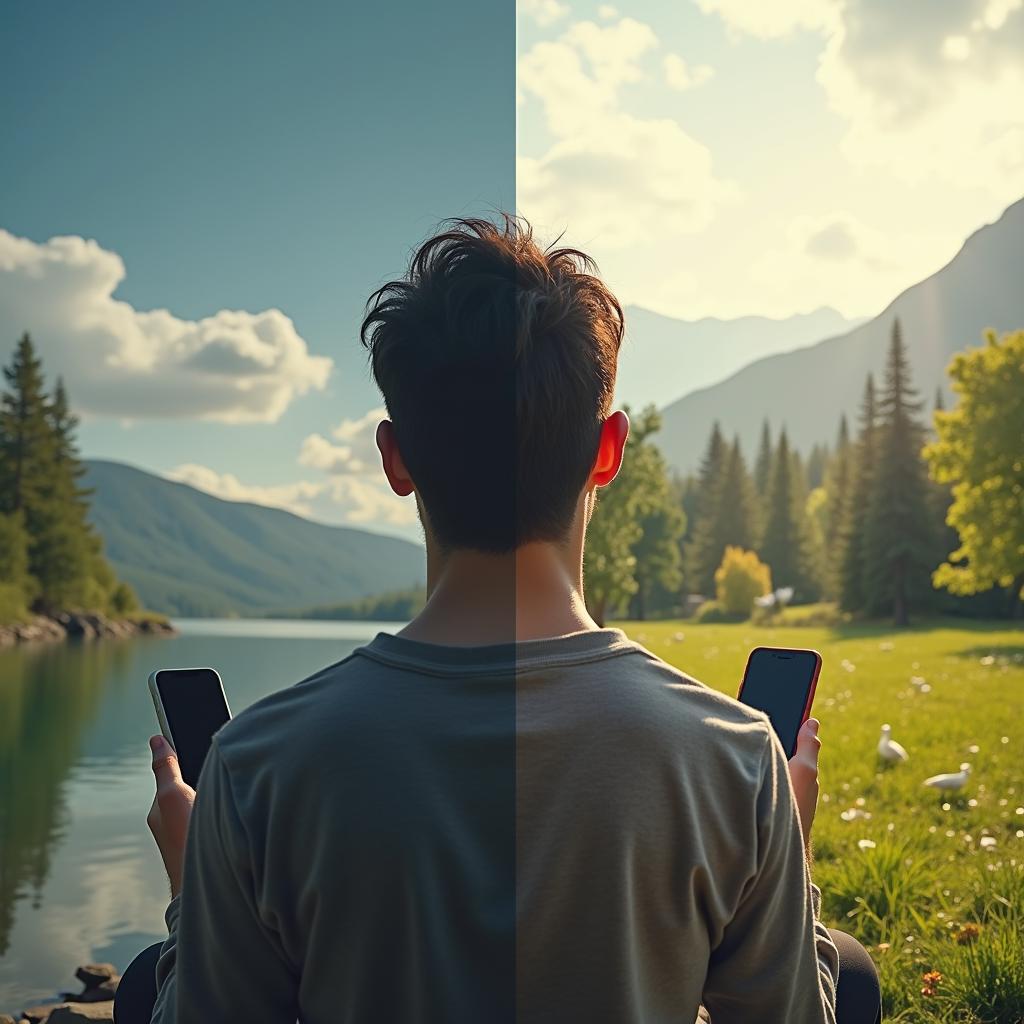 Hình ảnh đối lập giữa người dùng điện thoại liên tục và người thư giãn thiền định
Từ vựng và cụm từ quan trọng
Topic-Specific Vocabulary
| Từ vựng/Cụm từ | Loại từ | Phiên âm | Nghĩa tiếng Việt | Ví dụ | Collocation |
|---|---|---|---|---|---|
| unwind | v | /ʌnˈwaɪnd/ | thư giãn, xả stress | After a demanding day, I like to unwind by reading. | unwind after work, unwind with music, help someone unwind |
| de-stress | v | /diːˈstres/ | giải tỏa căng thẳng | Yoga is my preferred way to de-stress. | de-stress from work, de-stress activities, need to de-stress |
| therapeutic | adj | /ˌθerəˈpjuːtɪk/ | có tính trị liệu, chữa lành | I find gardening incredibly therapeutic. | therapeutic benefits, therapeutic effect, therapeutic activity |
| rejuvenating | adj | /rɪˈdʒuːvəneɪtɪŋ/ | làm tươi trẻ, phục hồi năng lượng | A hot bath is so rejuvenating after exercise. | rejuvenating experience, rejuvenating effect, feel rejuvenating |
| recharge one’s batteries | idiom | /ˌriːˈtʃɑːrdʒ wʌnz ˈbætəriz/ | nạp lại năng lượng | I need a vacation to recharge my batteries. | need to recharge, fully recharged, time to recharge |
| switch off | phrasal v | /swɪtʃ ɒf/ | ngắt kết nối, tắt đầu óc | I find it hard to switch off from work. | switch off from stress, can’t switch off, help you switch off |
| mental space | n | /ˈmentl speɪs/ | không gian tinh thần | I need mental space to think clearly. | create mental space, need mental space, lack mental space |
| solitude | n | /ˈsɒlɪtjuːd/ | sự tĩnh lặng, yên tĩnh một mình | I cherish moments of solitude. | seek solitude, enjoy solitude, peaceful solitude |
| contemplative | adj | /kənˈtemplətɪv/ | trầm tư, chiêm nghiệm | Reading poetry is a contemplative activity. | contemplative practice, contemplative mood, contemplative state |
| mindful | adj | /ˈmaɪndfəl/ | chánh niệm, tỉnh thức | I try to be more mindful when I eat. | mindful practice, mindful activities, become mindful |
| tranquility | n | /træŋˈkwɪləti/ | sự yên tĩnh, thanh thản | The garden offers a sense of tranquility. | inner tranquility, peaceful tranquility, sense of tranquility |
| unplug | v | /ʌnˈplʌɡ/ | ngắt kết nối (khỏi thiết bị điện tử) | I try to unplug from technology on weekends. | unplug from devices, need to unplug, fully unplugged |
| hectic | adj | /ˈhektɪk/ | hối hả, bận rộn | After a hectic week, I need downtime. | hectic schedule, hectic lifestyle, hectic pace |
| demanding | adj | /dɪˈmændɪŋ/ | đòi hỏi nhiều, căng thẳng | My job is quite demanding. | demanding work, demanding day, demanding schedule |
| burnout | n | /ˈbɜːnaʊt/ | kiệt sức, cạn kiệt năng lượng | Constant stress can lead to burnout. | prevent burnout, suffer from burnout, burnout symptoms |
| restorative | adj | /rɪˈstɒrətɪv/ | phục hồi, hồi sức | Sleep is the most restorative activity. | restorative effect, restorative power, restorative practice |
| cathartic | adj | /kəˈθɑːtɪk/ | thanh lọc cảm xúc, giải tỏa | Writing in my journal is cathartic. | cathartic experience, cathartic effect, feel cathartic |
| immerse oneself in | phrase | /ɪˈmɜːs wʌnˈself ɪn/ | đắm mình vào | I immerse myself in music to relax. | immerse in a book, completely immersed, immerse in nature |
| peace of mind | phrase | /piːs əv maɪnd/ | sự yên tâm, bình an | Meditation gives me peace of mind. | find peace of mind, need peace of mind, sense of peace |
| wind down | phrasal v | /waɪnd daʊn/ | từ từ thư giãn, dịu lại | I wind down with a cup of tea before bed. | wind down after work, help you wind down, need to wind down |
Idiomatic Expressions & Advanced Phrases
| Cụm từ | Nghĩa | Ví dụ sử dụng | Band điểm |
|---|---|---|---|
| be my go-to activity | là hoạt động ưa thích, thường làm nhất | Reading is my go-to activity when I need to unwind. | 7.5-9 |
| take the edge off | làm giảm bớt căng thẳng | A glass of wine takes the edge off after work. | 7.5-9 |
| get lost in something | say mê, đắm chìm vào cái gì đó | I get lost in a good book and forget all my worries. | 7-8 |
| clear one’s head | làm đầu óc tỉnh táo, sảng khoái | A walk in nature helps clear my head. | 7-8 |
| tune out | tắt đi, không để ý đến | Sometimes I need to tune out the world and focus on myself. | 7.5-8.5 |
| be cooped up | bị nhốt trong nhà, giam hãm | After being cooped up all day, I need fresh air. | 7.5-8.5 |
| at peace with oneself | bình an với chính mình | Meditation helps me feel at peace with myself. | 8-9 |
| strike a balance | đạt được sự cân bằng | I try to strike a balance between work and relaxation. | 7.5-8.5 |
| press the pause button | tạm dừng lại, nghỉ ngơi | Sometimes you need to press the pause button on life. | 8-9 |
| inner sanctuary | nơi thiêng liêng nội tâm, nơi trú ẩn | My garden is my inner sanctuary. | 8.5-9 |
| be in one’s element | trong trạng thái thoải mái nhất | I’m in my element when I’m painting. | 7.5-8.5 |
| zone out | tách biệt khỏi hiện thực, không tập trung | I zone out completely when listening to classical music. | 7-8 |
Discourse Markers (Từ Nối Ý Trong Speaking)
Để bắt đầu câu trả lời:
- 📝 Well,… – dùng khi cần một chút thời gian suy nghĩ hoặc để bắt đầu câu trả lời một cách tự nhiên
- 📝 Actually,… – khi đưa ra góc nhìn khác với những gì người khác nghĩ hoặc thông tin bất ngờ
- 📝 To be honest,… – khi muốn nói thật về feelings hoặc opinions
- 📝 From my perspective,… – để đưa ra quan điểm cá nhân một cách formal
- 📝 I’d say that… – cách mềm mại để đưa ra opinion
- 📝 If I’m being completely honest,… – nhấn mạnh sự chân thật trong câu trả lời
Để bổ sung ý:
- 📝 On top of that,… – thêm một reason hoặc point nữa
- 📝 What’s more,… – tương tự “moreover” nhưng conversational hơn
- 📝 Not to mention… – khi đề cập đến điều gì đó quan trọng mà chưa được nói
- 📝 Beyond that,… – để đi xa hơn trong argument
- 📝 Additionally,… – formal way để add information
- 📝 Another thing worth mentioning is… – introduce thêm một point quan trọng
Để đưa ra quan điểm cân bằng:
- 📝 On the one hand,… On the other hand,… – present hai sides của một issue
- 📝 While it’s true that…, we also need to consider… – acknowledge một điểm nhưng add nuance
- 📝 That said,… – để introduce contrasting point sau khi đã nói điều gì đó
- 📝 Having said that,… – tương tự “that said”
- 📝 Admittedly,… – thừa nhận một điều trước khi argue ngược lại
Để kết luận:
- 📝 All in all,… – tóm tắt main points
- 📝 At the end of the day,… – cuối cùng thì điều quan trọng nhất là
- 📝 Ultimately,… – để đưa ra final judgment hoặc conclusion
- 📝 In the final analysis,… – formal conclusion phrase
- 📝 All things considered,… – sau khi xem xét tất cả factors
Để làm rõ hoặc elaborate:
- 📝 What I mean is… – giải thích rõ hơn ý của mình
- 📝 In other words,… – paraphrase để làm rõ
- 📝 To put it another way,… – express cùng ý bằng cách khác
- 📝 Essentially,… – tóm tắt main idea
Grammatical Structures Ấn Tượng
1. Conditional Sentences (Câu điều kiện):
-
Mixed conditional: Kết hợp giữa past và present để show consequence kéo dài
- Formula: If + past perfect, would + base verb
- Ví dụ: “If I hadn’t discovered meditation three years ago, I would still be struggling with chronic stress today.”
-
Inversion for emphasis: Đảo ngữ để nhấn mạnh, rất formal và impressive
- Formula: Should/Were/Had + subject + verb…
- Ví dụ: “Should you ever feel overwhelmed, I’d highly recommend trying watercolor painting.”
- Ví dụ: “Had I known how therapeutic gardening could be, I would have started much earlier.”
2. Relative Clauses (Mệnh đề quan hệ):
- Non-defining relative clauses: Thêm thông tin, không essential cho meaning chính
- Formula: …, which/who/where + clause, …
- Ví dụ: “I usually paint on weekends, which gives me something to look forward to during busy weeks.”
- Ví dụ: “My friend Sarah, who introduced me to yoga, has been practicing for over a decade.”
3. Passive Voice (Câu bị động) – Academic Register:
- Impersonal structures: Thể hiện general beliefs hoặc research findings
- Formula: It is thought/believed/said/considered that…
- Ví dụ: “It is widely believed that regular relaxation practices can significantly reduce stress hormones.”
- Ví dụ: “It has been proven that mindfulness meditation alters brain structure over time.”
4. Cleft Sentences (Câu chẻ) – Emphasizing Information:
-
What-cleft: Nhấn mạnh object hoặc action
- Formula: What + subject + verb + is/was + emphasized element
- Ví dụ: “What I find most relaxing about painting is the complete absorption in the creative process.”
- Ví dụ: “What really helps me unwind is being surrounded by nature.”
-
It-cleft: Nhấn mạnh một element cụ thể trong câu
- Formula: It + be + emphasized element + that/who + rest of sentence
- Ví dụ: “It’s the ritualistic preparation of my painting supplies that helps me transition into a relaxed state.”
5. Participle Clauses (Mệnh đề phân từ):
- Present participle (-ing): Thay thế relative clauses hoặc show simultaneous actions
- Ví dụ: “Having spent years in a high-pressure job, I now prioritize activities that help me decompress.”
- Ví dụ: “Sitting by the lake, watching the sunset, I feel all my stress melting away.”
6. Advanced Comparative Structures:
-
The + comparative…, the + comparative…: Show correlation
- Ví dụ: “The more I practice mindfulness, the easier I find it to switch off from work stress.”
-
Not so much… as…: Sophisticated contrast
- Ví dụ: “Relaxation is not so much about doing nothing as about doing things that restore your energy.”
7. Subjunctive Mood (Thức giả định):
- For suggestions and importance: Formal structures
- Formula: It is essential/important/vital that + subject + base verb
- Ví dụ: “It’s essential that people find activities that genuinely help them unwind, rather than just providing distraction.”
Describe a place that you visited that was unlike any other có thể mở rộng vocabulary về địa điểm đặc biệt, giúp bạn có thêm ý tưởng khi mô tả các địa điểm thư giãn độc đáo.
Với những kiến thức và chiến lược được chia sẻ trong bài viết này, bạn đã có trong tay một bộ công cụ hoàn chỉnh để chinh phục chủ đề “describe an activity you do to unwind” trong kỳ thi IELTS Speaking. Hãy nhớ rằng, điều quan trọng nhất không phải là học thuộc lòng các câu trả lời mẫu, mà là hiểu được cách xây dựng câu trả lời tự nhiên, sử dụng từ vựng phong phú một cách chính xác, và thể hiện khả năng tư duy phản biện.
Thực hành thường xuyên với các câu hỏi thực tế, ghi âm lại câu trả lời của mình để tự đánh giá, và dần dần incorporate các từ vựng và cấu trúc nâng cao vào speaking repertoire của bạn. Đừng quên rằng giám khảo IELTS đánh giá cao sự tự nhiên và authenticity hơn là việc sử dụng những từ ngữ phức tạp một cách gượng ép.
Chúc bạn tự tin và thành công trong kỳ thi IELTS Speaking sắp tới!